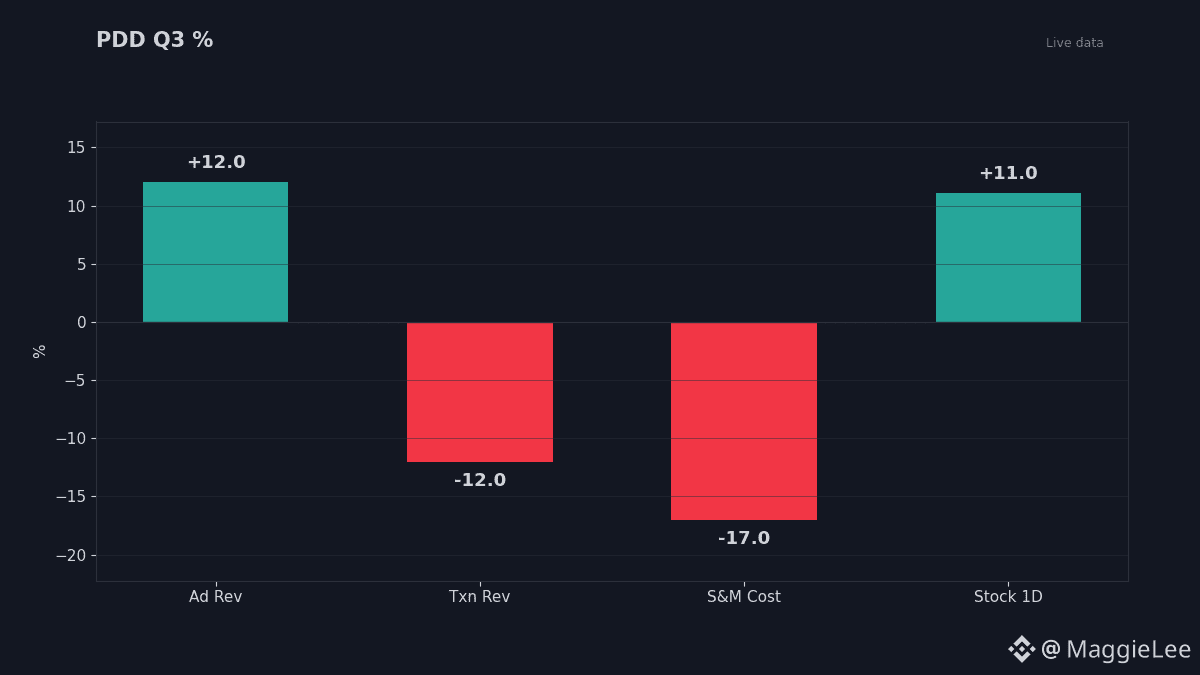
Revenue didn’t increase by a single cent, so why did the stock jump by more than 10% in a day? I read Pinduoduo’s earnings report three times, and the answer isn’t in the revenue line, it’s in the cost-saving line.
It closed at $86 last night, up by more than 10%; it opened at $82.52, hit an intraday high of $87.39, and trading volume was more than triple the previous day’s. After hours, it pulled back to $85.55.
The report itself looked pretty ordinary: total revenue was RMB 108.3 billion, exactly flat year over year, while analysts were looking for RMB 115.2 billion, so it missed. Transaction service revenue even fell by 12% to RMB 48.5 billion. In normal times, a report like this would get hammered.
But the market was focused on the other side: online marketing services revenue rose 12% to RMB 59.8 billion, sales expenses were cut by 17% to just RMB 24.9 billion, operating profit jumped by more than 20% to RMB 31.2 billion, and adjusted earnings per share came in at RMB 21.04 versus expectations of only RMB 18.54. The profit didn’t come from selling more goods, it came from spending less.
On the same day, Alibaba fell after earnings, while Pinduoduo surged. The difference is right there: one company’s cloud revenue rose 53% but it was still burning cash, while the other’s revenue was flat and profits came back first.
My take: saving money can rescue profits, but it can’t rescue growth. Revenue is standing still, and transaction services are still shrinking. This rally looks more like a valuation rebound after being oversold. The stock is still down 24% year to date, and it’s not far from the June 30 low of 71.94. Analysts have a target price above $93, but that has to be built on transaction services stabilizing first. Tonight, the first thing to watch is whether $86 can hold; if it can’t, then it’s just back to where it started. Binance Futures already has PDDUSDT perpetuals listed, launched at the end of August, with up to 20x leverage and 24/7 trading, so anyone who wants to ride this earnings move doesn’t have to wait for the U.S. market to open. Personal research, not investment advice.
$PDD $PDDUSDT
#拼多多 #美股 #earnings