
Alex cary
11.6k Posts

Alex cary
Open Trade
High-Frequency Trader
8.5 Months
3 Following
20.2K+ Followers
11.2K+ Liked
Posts
Portfolio
All
Quotes
Live
$MAGMA
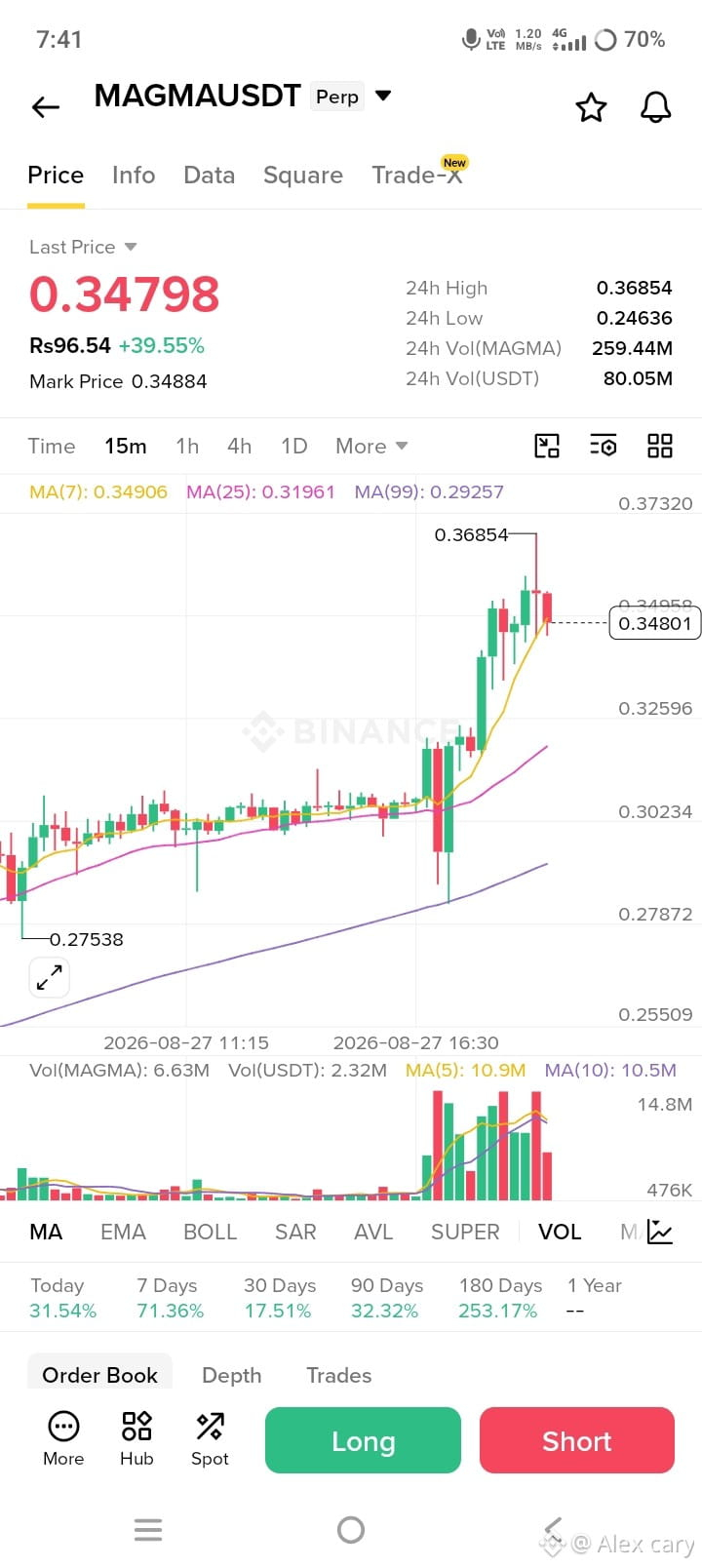
A is trading around 0.3480, up roughly 39.55% on the day. The move came with a clear volume expansion, so volatility is high here.
The important area now is 0.3495–0.3500. Price is sitting close to the 7-MA at 0.34906, while the 25-MA is around 0.31961.
LONG IDEA: Entry: 0.3500+ after a clean 15M close Resistance: 0.3685 Target 🎯: 0.3732 Stop Loss: 0.3380
If price gets rejected and loses 0.3380, the bullish setup weakens. In that case, downside levels around 0.3260 → 0.3196 become relevant.
My view: momentum is strong, but chasing a nearly 40% move is risky. I’d rather wait for confirmation than enter emotionally.
Not financial advice. Manage risk and position size carefully.
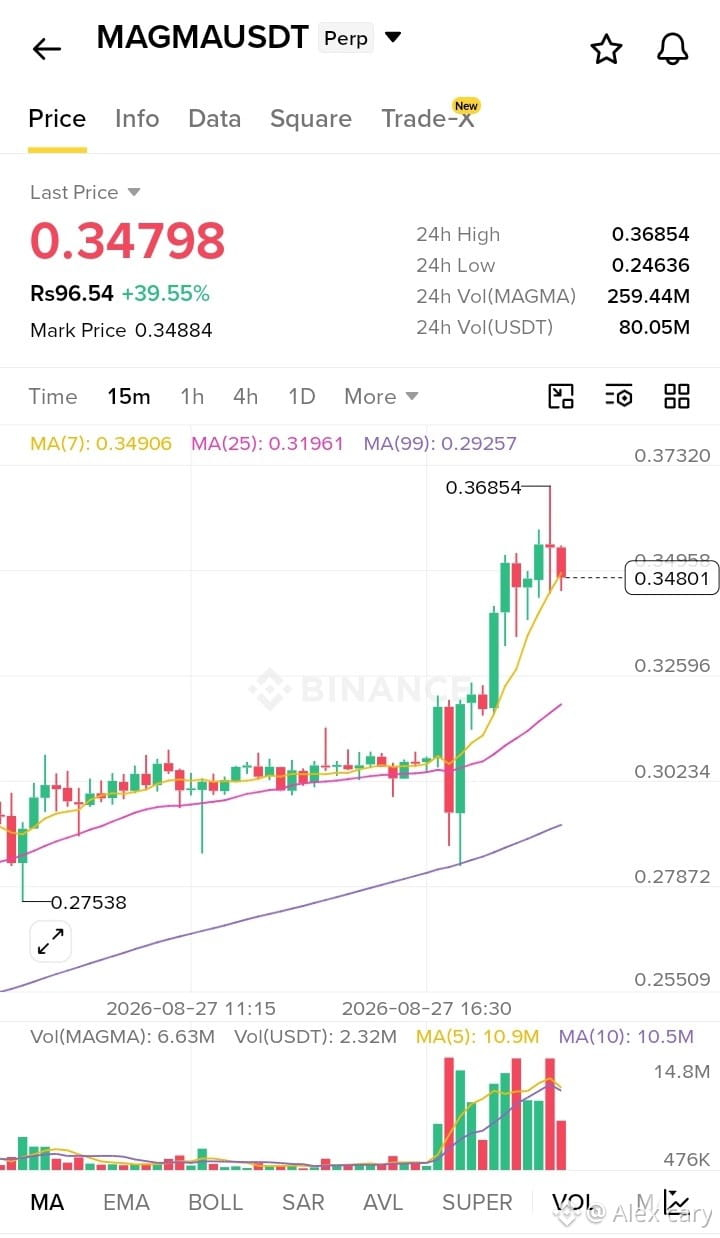
A is trading around 0.3480, up roughly 39.55% on the day. The move came with a clear volume expansion, so volatility is high here.
The important area now is 0.3495–0.3500. Price is sitting close to the 7-MA at 0.34906, while the 25-MA is around 0.31961.
LONG IDEA: Entry: 0.3500+ after a clean 15M close Resistance: 0.3685 Target 🎯: 0.3732 Stop Loss: 0.3380
If price gets rejected and loses 0.3380, the bullish setup weakens. In that case, downside levels around 0.3260 → 0.3196 become relevant.
My view: momentum is strong, but chasing a nearly 40% move is risky. I’d rather wait for confirmation than enter emotionally.
Not financial advice. Manage risk and position size carefully.
Verified
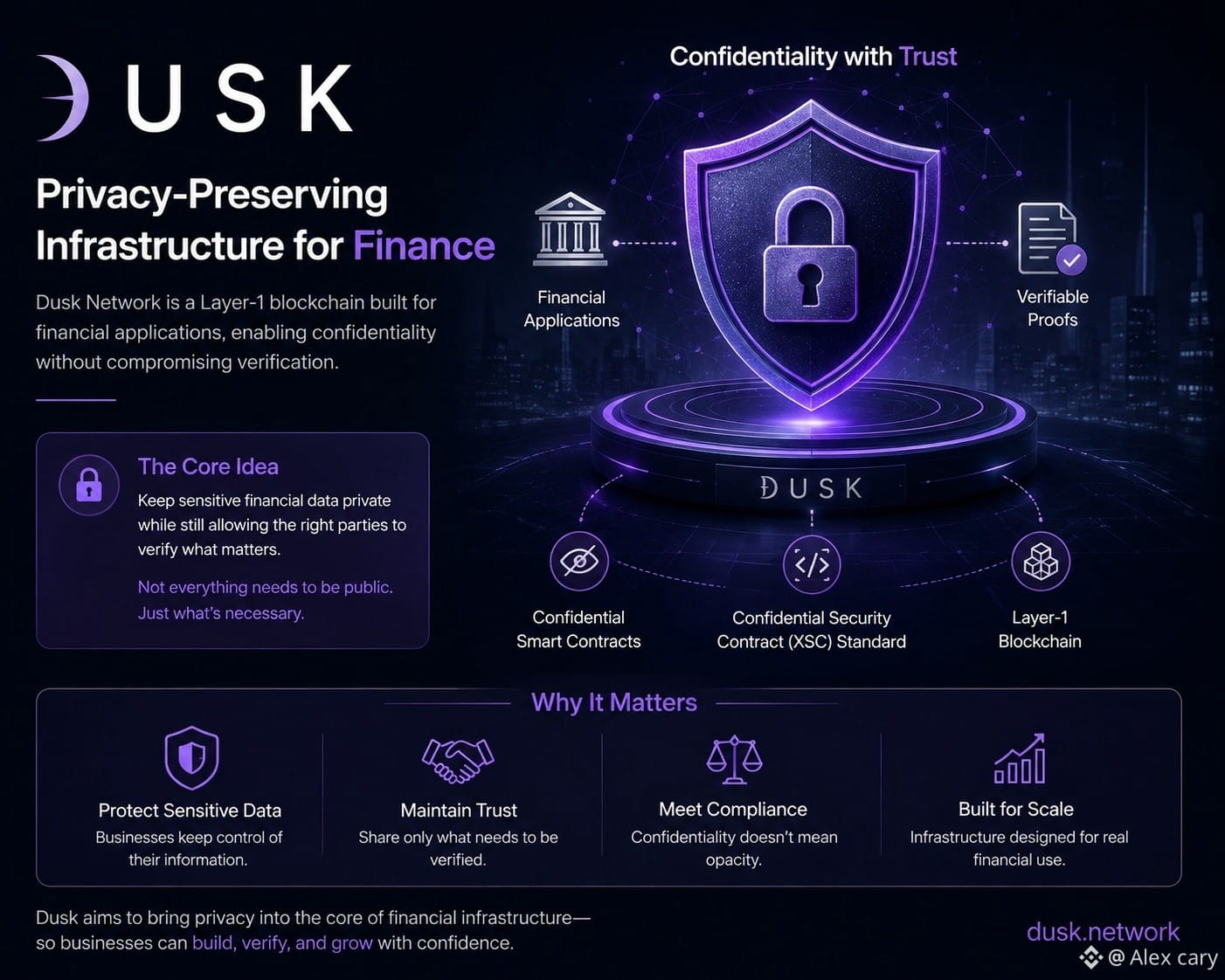
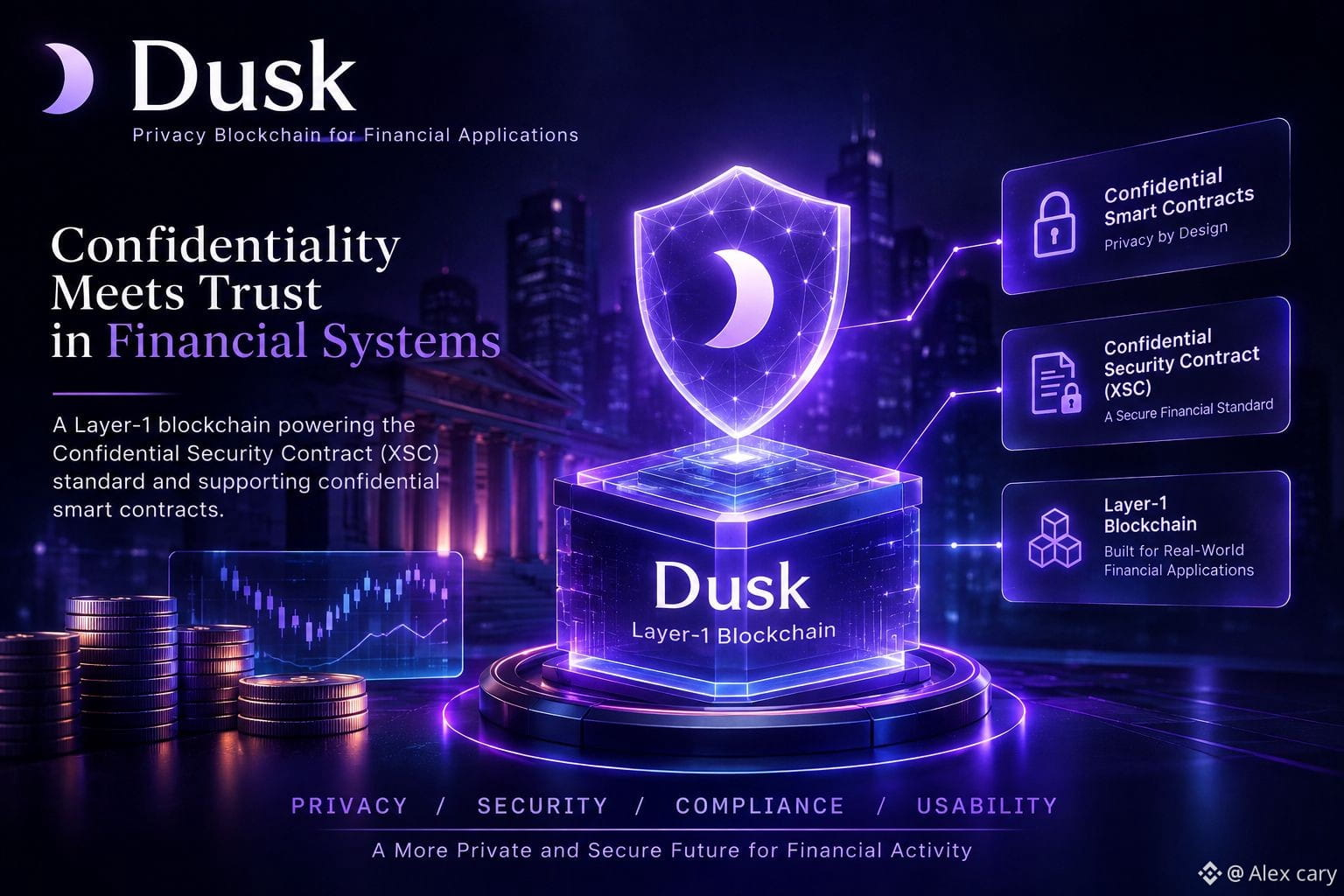
I’ve seen a lot of projects across blockchain, AI, and Web3 arrive with familiar narratives dressed up in new language. After a while, the messaging matters less to me than the problem underneath it. That’s what made Dusk stand out a little.
What caught my attention is the way it approaches privacy specifically through the lens of financial applications. Financial systems deal with information that simply isn’t meant for everyone’s eyes—balances, transactions, counterparties, and business activity can all be sensitive. If more financial activity moves onchain, putting everything into the open may not always be practical.
For me, the deeper idea is privacy as part of the underlying infrastructure, not something bolted on later. What I find interesting is Dusk’s Layer-1 architecture, confidential smart contracts, and the Confidential Security Contract (XSC) standard. But having the technology is only the beginning.
The real question is whether developers and institutions will find enough practical value to actually build around it. That means looking beyond technical milestones and watching usability, compliance, adoption, and sustained demand.
From my perspective, that’s why Dusk is worth following. I’m not interested in privacy simply because it sounds good as a narrative. I’m interested in whether it becomes necessary infrastructure when blockchain starts handling financial activity that has real-world consequences.
@Dusk $DUSK #dusk
What caught my attention is the way it approaches privacy specifically through the lens of financial applications. Financial systems deal with information that simply isn’t meant for everyone’s eyes—balances, transactions, counterparties, and business activity can all be sensitive. If more financial activity moves onchain, putting everything into the open may not always be practical.
For me, the deeper idea is privacy as part of the underlying infrastructure, not something bolted on later. What I find interesting is Dusk’s Layer-1 architecture, confidential smart contracts, and the Confidential Security Contract (XSC) standard. But having the technology is only the beginning.
The real question is whether developers and institutions will find enough practical value to actually build around it. That means looking beyond technical milestones and watching usability, compliance, adoption, and sustained demand.
From my perspective, that’s why Dusk is worth following. I’m not interested in privacy simply because it sounds good as a narrative. I’m interested in whether it becomes necessary infrastructure when blockchain starts handling financial activity that has real-world consequences.
@Dusk $DUSK #dusk
I’ve watched enough projects across blockchain, AI, and Web3 to see how quickly familiar narratives can become repetitive. Every cycle brings new terms, new branding, and similar promises. What matters to me is whether there is a real problem underneath the story.
That’s what caught my attention with Dusk.
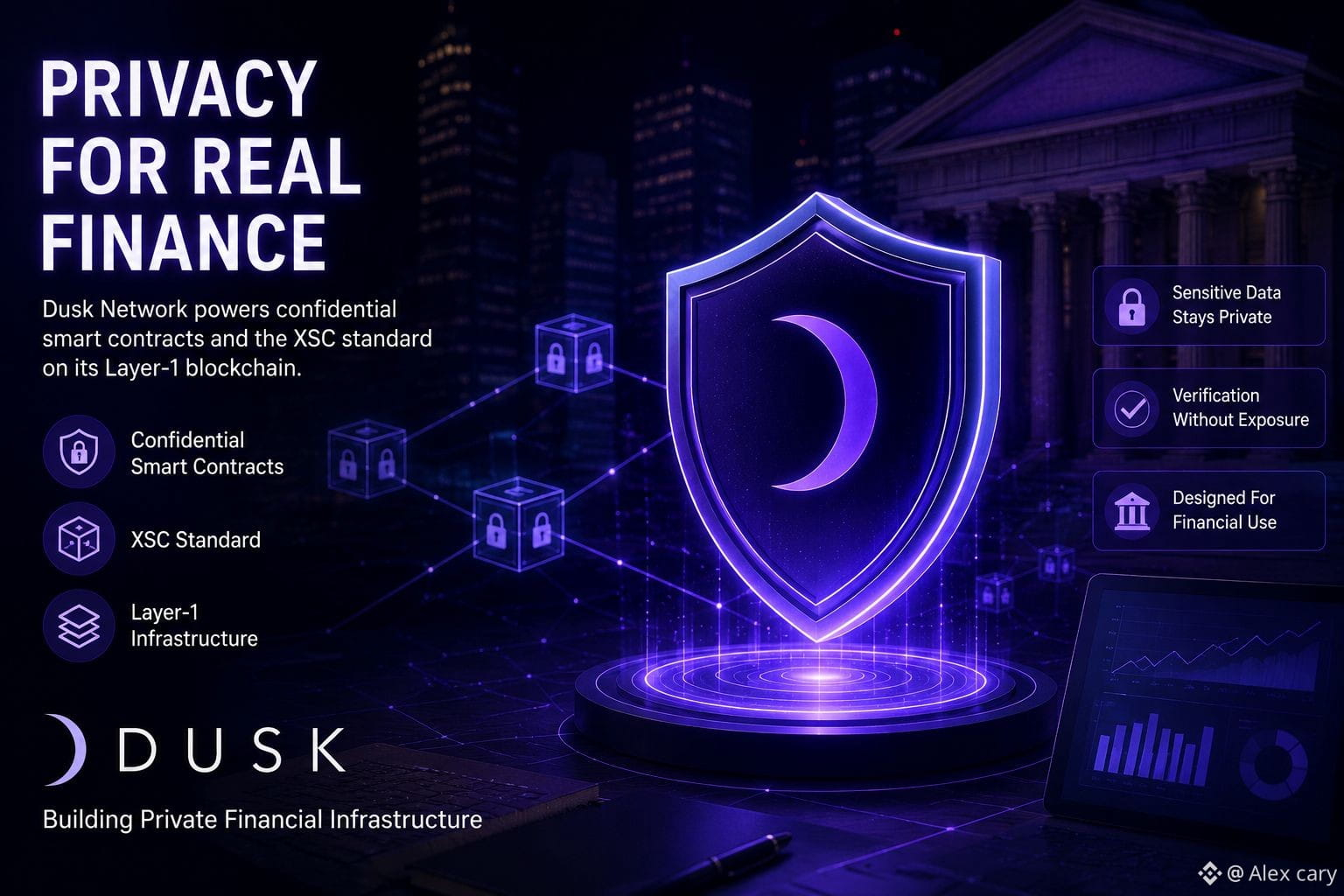
Its focus on privacy for financial applications feels connected to a genuine requirement. Financial institutions deal with sensitive balances, transactions, counterparties, and business information that cannot always be placed in full public view. If blockchain is going to support serious financial activity, transparency alone may not be enough.
What I find interesting is Dusk’s attempt to make confidentiality part of the infrastructure through its Layer-1 design, confidential smart contracts, and Confidential Security Contract standard. For me, the bigger question is how effectively privacy can coexist with verification, compliance, and usability.
I’m also careful not to confuse strong technology with guaranteed adoption. The commercial side still needs time to prove itself. Developers and institutions ultimately need clear reasons to build, integrate, and use these capabilities at scale.
That’s why I’m following Dusk. I’m less interested in another privacy narrative and more interested in whether privacy can become practical financial infrastructure. If that happens, the value proposition becomes much more meaningful than the marketing around it.
@Dusk $DUSK #dusk
That’s what caught my attention with Dusk.
Its focus on privacy for financial applications feels connected to a genuine requirement. Financial institutions deal with sensitive balances, transactions, counterparties, and business information that cannot always be placed in full public view. If blockchain is going to support serious financial activity, transparency alone may not be enough.
What I find interesting is Dusk’s attempt to make confidentiality part of the infrastructure through its Layer-1 design, confidential smart contracts, and Confidential Security Contract standard. For me, the bigger question is how effectively privacy can coexist with verification, compliance, and usability.
I’m also careful not to confuse strong technology with guaranteed adoption. The commercial side still needs time to prove itself. Developers and institutions ultimately need clear reasons to build, integrate, and use these capabilities at scale.
That’s why I’m following Dusk. I’m less interested in another privacy narrative and more interested in whether privacy can become practical financial infrastructure. If that happens, the value proposition becomes much more meaningful than the marketing around it.
@Dusk $DUSK #dusk
Verified
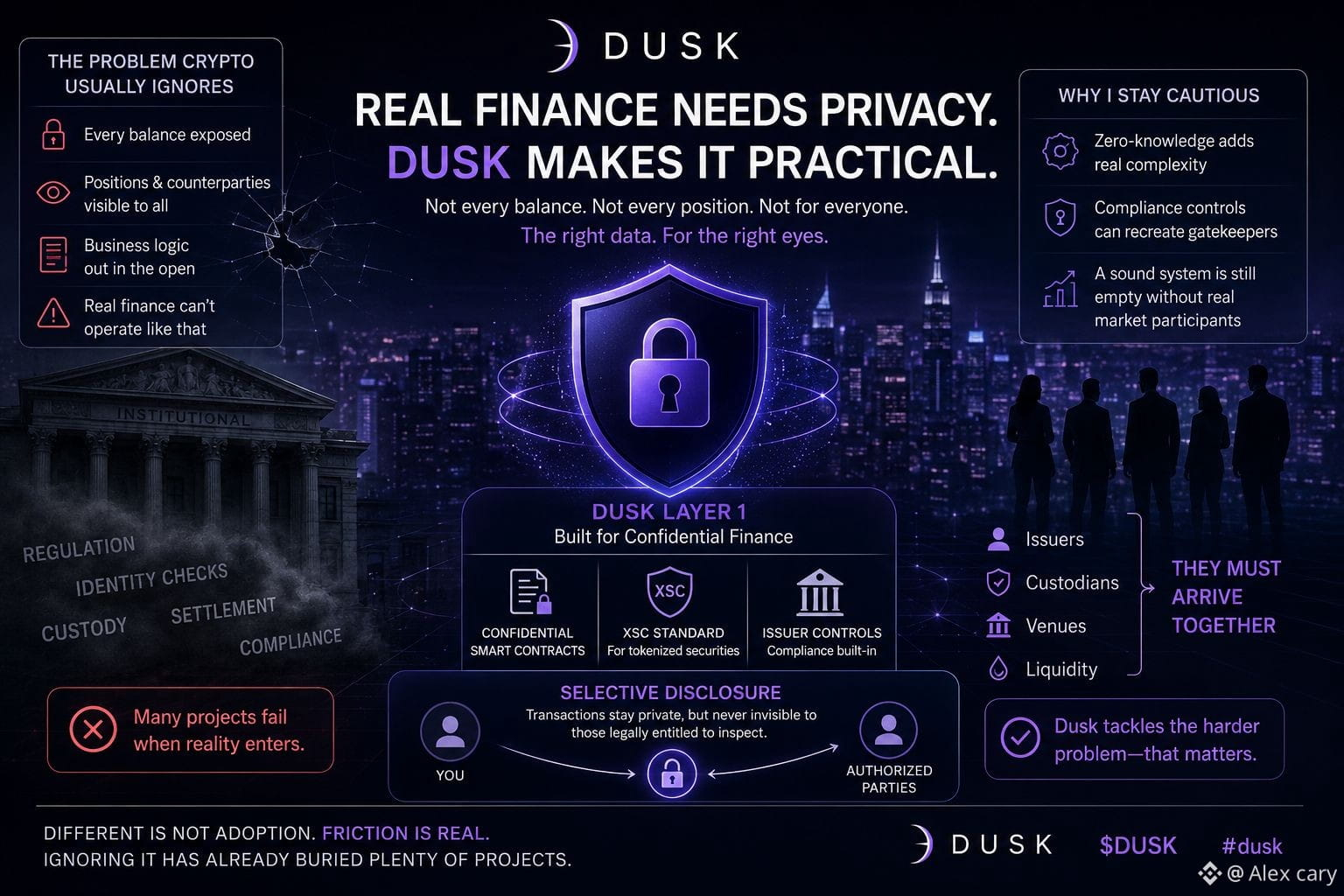
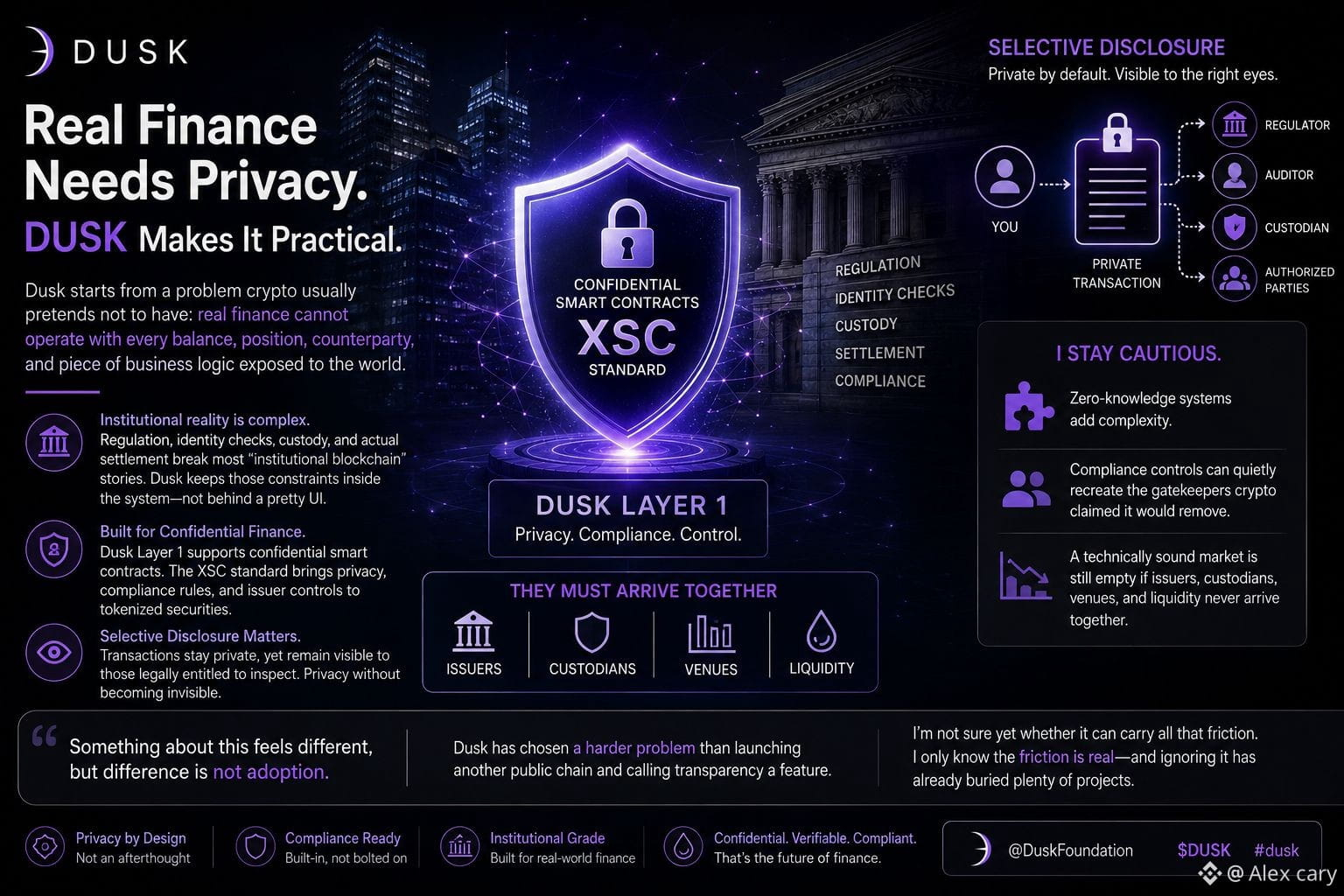
I’ve been noticing Dusk because it starts from a problem crypto usually pretends not to have: real finance cannot operate with every balance, position, counterparty, and piece of business logic exposed to the world.
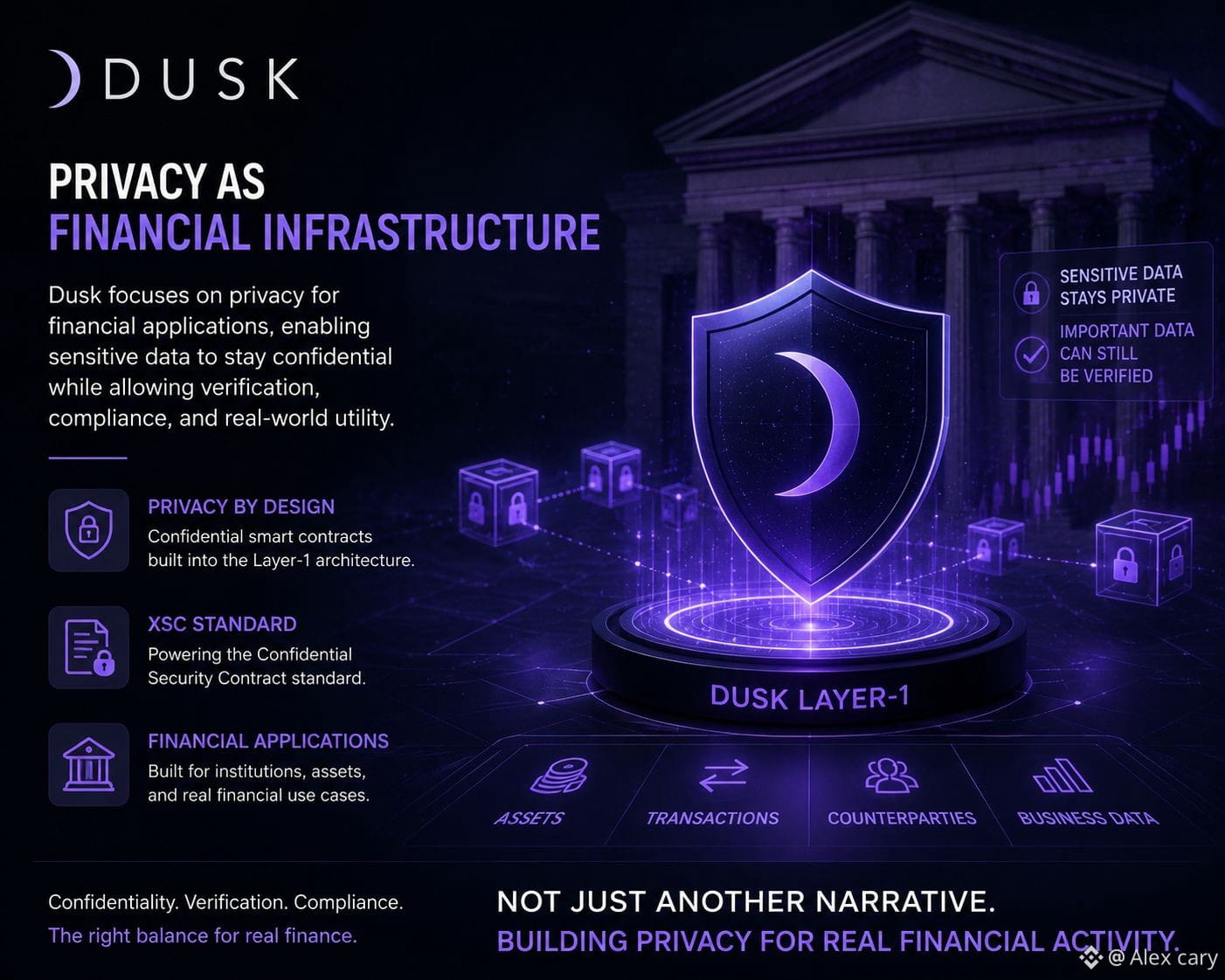
I’ve watched enough “institutional blockchain” stories fade once regulation, identity checks, custody, and actual settlement enter the room. Dusk is trying to keep those constraints inside the system rather than hiding them behind a polished dashboard. Its Layer 1 supports confidential smart contracts, while the XSC standard is meant to give tokenized securities privacy, compliance rules, and issuer controls. Selective disclosure is the part that keeps pulling me back—the idea that a transaction can remain private without becoming invisible to the parties legally entitled to inspect it.
Still, I don’t fully trust the neat version of that story. Zero-knowledge systems add complexity. Compliance controls can quietly recreate the same gatekeepers crypto claimed it would remove. And a technically sound market is still an empty market if issuers, custodians, venues, and liquidity never arrive together.
Something about this feels different, but difference is not adoption. Dusk has chosen a harder problem than launching another public chain and calling transparency a feature. I’m not sure yet whether it can carry all that friction. I only know the friction is real—and ignoring it has already buried plenty of projects.
@Dusk $DUSK #dusk
I’ve watched enough “institutional blockchain” stories fade once regulation, identity checks, custody, and actual settlement enter the room. Dusk is trying to keep those constraints inside the system rather than hiding them behind a polished dashboard. Its Layer 1 supports confidential smart contracts, while the XSC standard is meant to give tokenized securities privacy, compliance rules, and issuer controls. Selective disclosure is the part that keeps pulling me back—the idea that a transaction can remain private without becoming invisible to the parties legally entitled to inspect it.
Still, I don’t fully trust the neat version of that story. Zero-knowledge systems add complexity. Compliance controls can quietly recreate the same gatekeepers crypto claimed it would remove. And a technically sound market is still an empty market if issuers, custodians, venues, and liquidity never arrive together.
Something about this feels different, but difference is not adoption. Dusk has chosen a harder problem than launching another public chain and calling transparency a feature. I’m not sure yet whether it can carry all that friction. I only know the friction is real—and ignoring it has already buried plenty of projects.
@Dusk $DUSK #dusk
Verified
I’ve become more skeptical of blockchain projects that rely on familiar narratives without addressing the difficult problems underneath. Privacy is one of those ideas that sounds obvious until you consider how financial applications actually need to work.
That’s what caught my attention with Dusk.
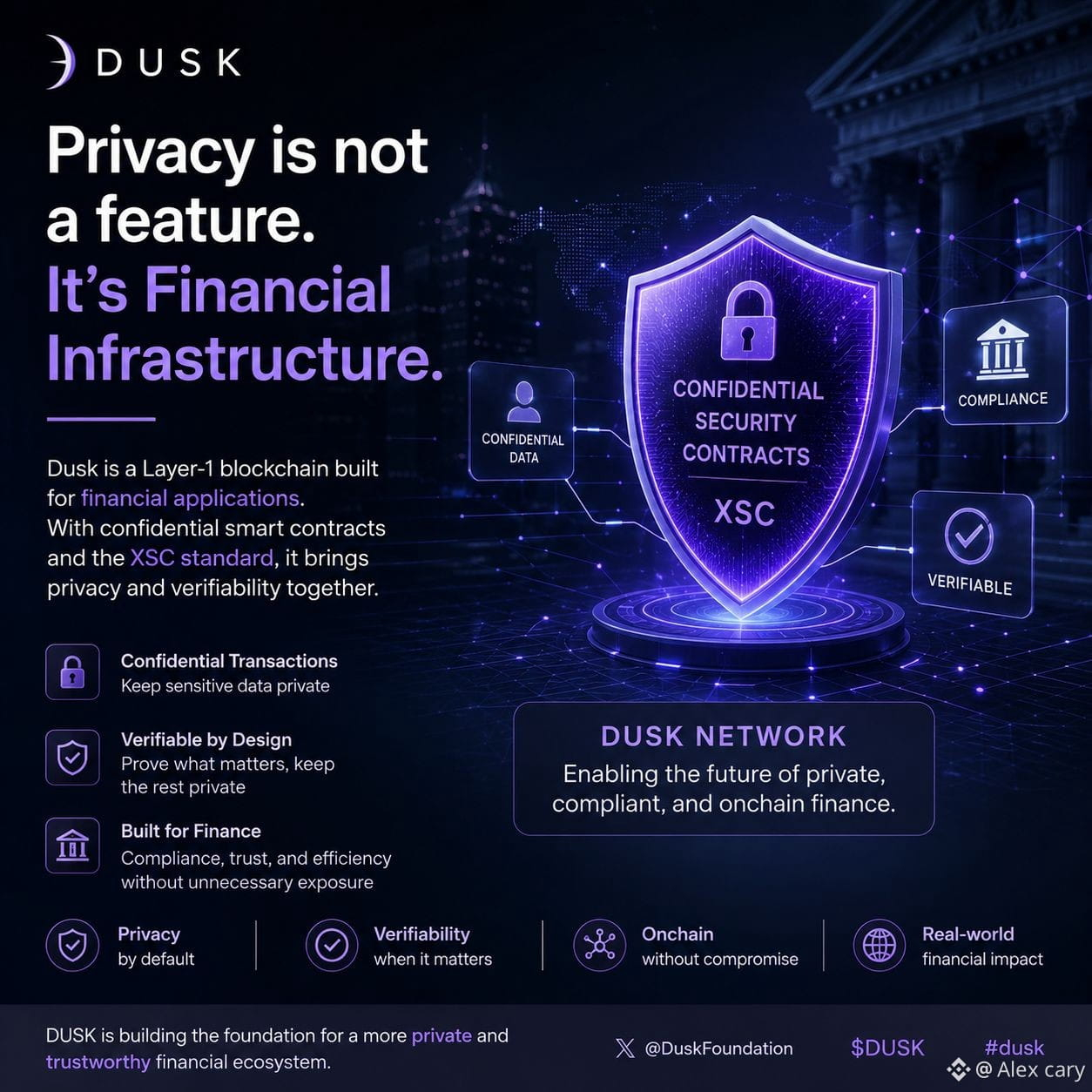
Dusk is a Layer-1 focused on financial applications, supporting confidential smart contracts and its Confidential Security Contract (XSC) standard. I find the underlying idea more interesting than the headline: making privacy part of financial infrastructure while still allowing important activity to remain verifiable.
For me, that balance is the real challenge. A company may want to keep sensitive financial information private, but it may still need to prove that transactions or activities are legitimate. Complete transparency can expose commercially sensitive information, while complete opacity creates problems around trust, compliance, and accountability.
I don’t think the technology alone determines whether Dusk succeeds. Developers need usable infrastructure, institutions need practical reasons to integrate it, and users need a clear understanding of what confidentiality actually provides.
Still, I think Dusk is worth watching because the problem is real. If blockchain becomes more deeply connected with financial markets, privacy may become less of an optional feature and more of an expected part of the infrastructure.
I’m watching the execution, adoption, and real-world usage—not just the narrative.
@Dusk $DUSK #dusk
That’s what caught my attention with Dusk.
Dusk is a Layer-1 focused on financial applications, supporting confidential smart contracts and its Confidential Security Contract (XSC) standard. I find the underlying idea more interesting than the headline: making privacy part of financial infrastructure while still allowing important activity to remain verifiable.
For me, that balance is the real challenge. A company may want to keep sensitive financial information private, but it may still need to prove that transactions or activities are legitimate. Complete transparency can expose commercially sensitive information, while complete opacity creates problems around trust, compliance, and accountability.
I don’t think the technology alone determines whether Dusk succeeds. Developers need usable infrastructure, institutions need practical reasons to integrate it, and users need a clear understanding of what confidentiality actually provides.
Still, I think Dusk is worth watching because the problem is real. If blockchain becomes more deeply connected with financial markets, privacy may become less of an optional feature and more of an expected part of the infrastructure.
I’m watching the execution, adoption, and real-world usage—not just the narrative.
@Dusk $DUSK #dusk
Verified
After spending enough time around Web3, you start noticing how often the same ideas return with slightly different packaging. Privacy, scalability, decentralization, and financial infrastructure are familiar themes. What made me pause with Dusk was that privacy here feels connected to an actual constraint rather than being used simply as a selling point.
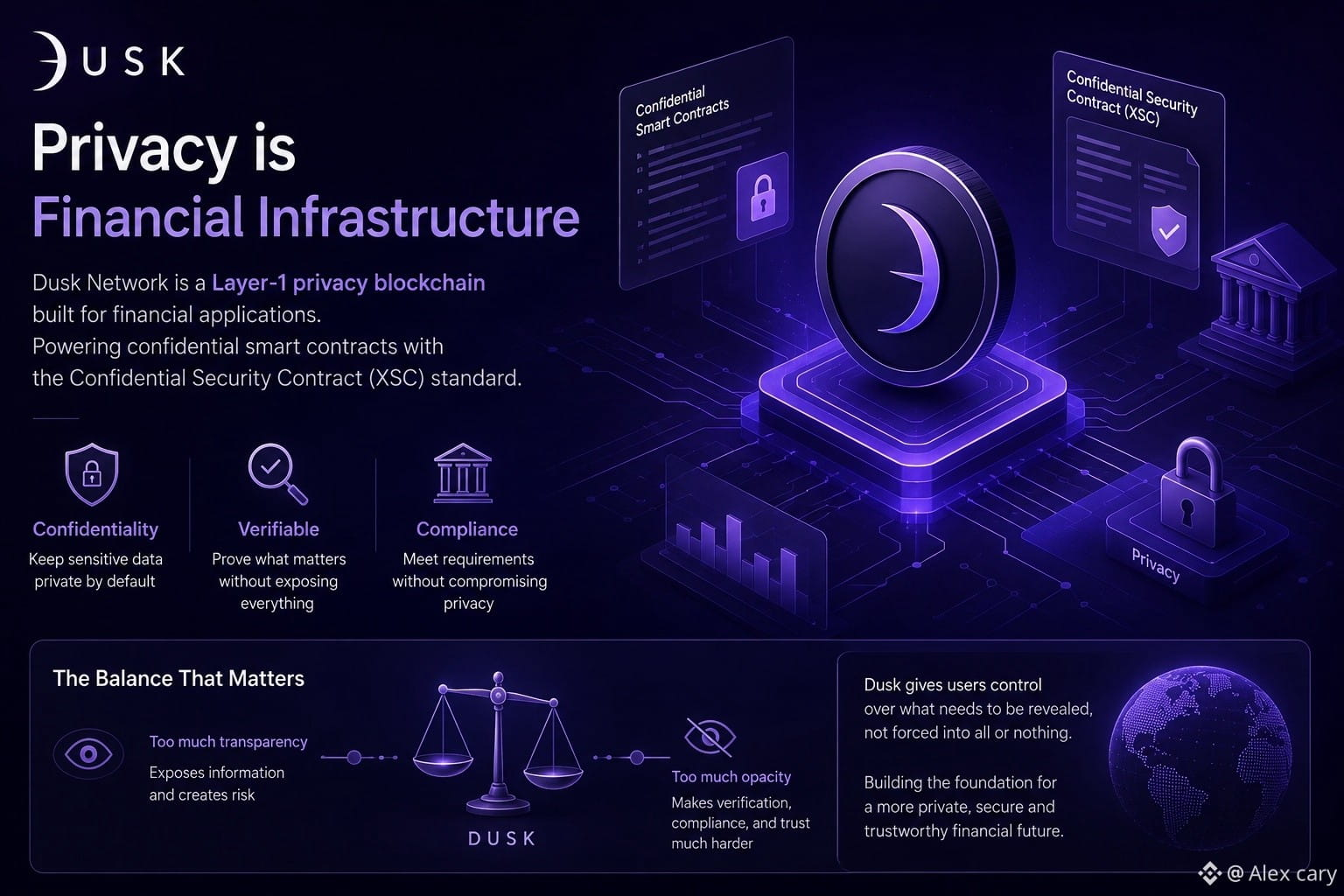
The interesting part, from my perspective, is where privacy meets financial activity. Dusk is building a Layer-1 designed for financial applications, with confidential smart contracts and its Confidential Security Contract (XSC) standard. That direction makes sense because financial information is rarely something businesses want completely exposed. At the same time, they cannot simply operate in a black box; certain facts still need to be verified.
That creates the real challenge. How do you keep sensitive information private while allowing the right parties to establish trust, meet requirements, and verify what matters? I find that question much more interesting than privacy as a standalone feature.
If blockchain adoption moves deeper into financial markets, this balance could become increasingly important. Businesses may want the benefits of onchain infrastructure without turning every operational detail into public information.
I’m not convinced technology alone determines whether Dusk succeeds. Usability, integration, compliance, liquidity, and actual demand will matter just as much. But the underlying problem is real, and that is why Dusk remains interesting to me beyond the usual Web3 hype cycle.
@Dusk $DUSK #dusk
The interesting part, from my perspective, is where privacy meets financial activity. Dusk is building a Layer-1 designed for financial applications, with confidential smart contracts and its Confidential Security Contract (XSC) standard. That direction makes sense because financial information is rarely something businesses want completely exposed. At the same time, they cannot simply operate in a black box; certain facts still need to be verified.
That creates the real challenge. How do you keep sensitive information private while allowing the right parties to establish trust, meet requirements, and verify what matters? I find that question much more interesting than privacy as a standalone feature.
If blockchain adoption moves deeper into financial markets, this balance could become increasingly important. Businesses may want the benefits of onchain infrastructure without turning every operational detail into public information.
I’m not convinced technology alone determines whether Dusk succeeds. Usability, integration, compliance, liquidity, and actual demand will matter just as much. But the underlying problem is real, and that is why Dusk remains interesting to me beyond the usual Web3 hype cycle.
@Dusk $DUSK #dusk
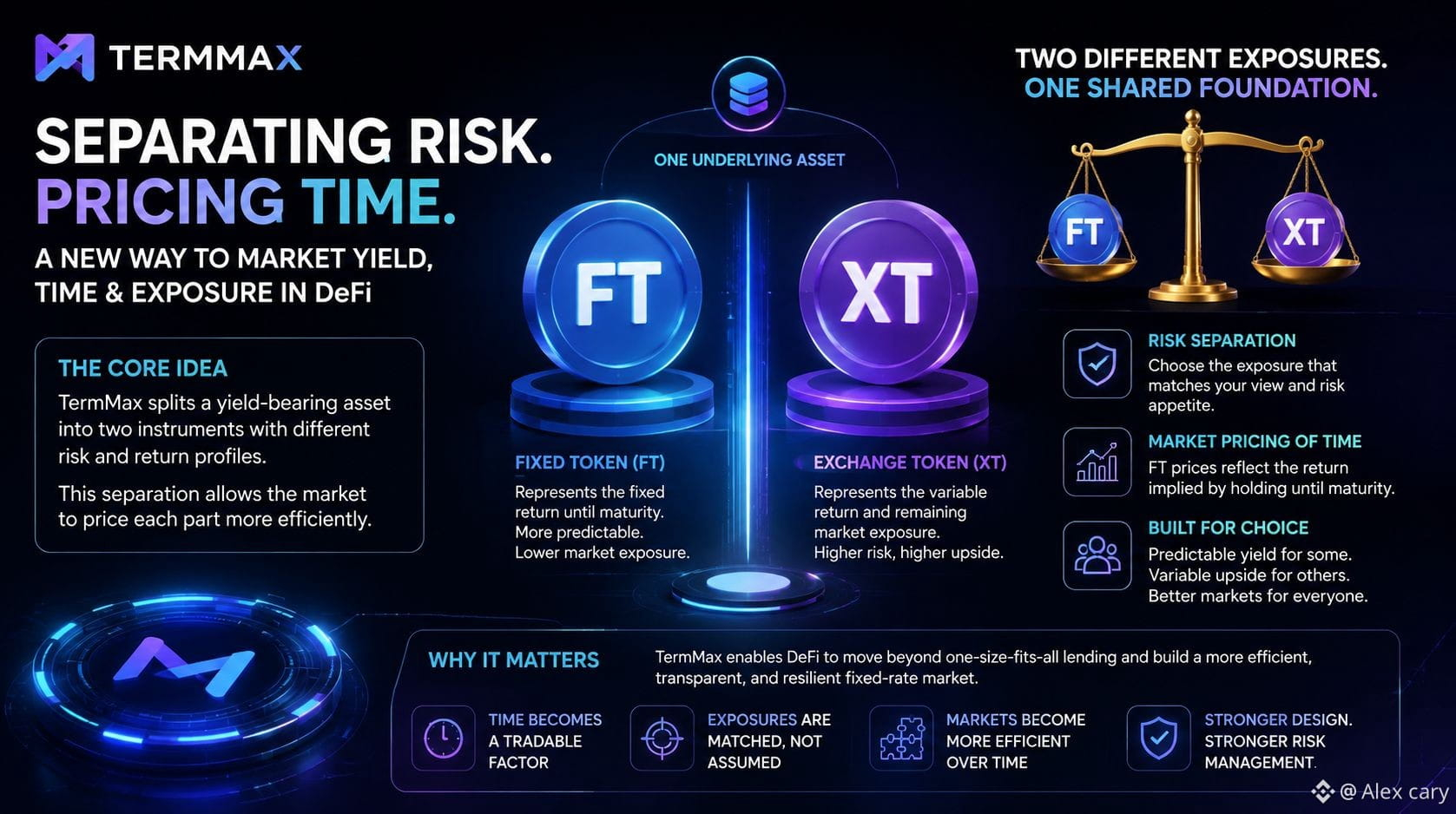
The more I look at TermMax, the more I think liquidity may be the real product being tested.
The FT/XT structure makes sense conceptually because it separates fixed and variable exposure.
But creating two different exposures is only useful if the market can actually price them efficiently.
That’s where things get interesting.
An FT isn’t valuable simply because it has a defined maturity claim.
Its real usefulness depends on whether someone can enter, hold, and eventually exit that position without paying too much for illiquidity.
The same applies to XT.
If one side of the market becomes difficult to trade, the theoretical separation of risk becomes much less useful in practice.
This is why I think TermMax is testing something deeper than fixed-rate DeFi.
It is testing whether different types of risk can develop their own liquidity and price discovery.
In traditional markets, duration, credit, and market exposure can be separated into instruments that different participants trade according to their preferences.
DeFi has often bundled these risks together.
TermMax is interesting because it is trying to make that separation native to the protocol.
But the real proof won’t come from the mechanism itself.
It will come when markets become volatile.
If FT and XT can continue discovering reasonable prices when conditions get difficult, that would be a much stronger validation of the design.
For me, that’s the metric worth watching:
not just whether TermMax can separate risk,
but whether the market can actually price each piece of that risk efficiently.
@TermMax #termmax
The FT/XT structure makes sense conceptually because it separates fixed and variable exposure.
But creating two different exposures is only useful if the market can actually price them efficiently.
That’s where things get interesting.
An FT isn’t valuable simply because it has a defined maturity claim.
Its real usefulness depends on whether someone can enter, hold, and eventually exit that position without paying too much for illiquidity.
The same applies to XT.
If one side of the market becomes difficult to trade, the theoretical separation of risk becomes much less useful in practice.
This is why I think TermMax is testing something deeper than fixed-rate DeFi.
It is testing whether different types of risk can develop their own liquidity and price discovery.
In traditional markets, duration, credit, and market exposure can be separated into instruments that different participants trade according to their preferences.
DeFi has often bundled these risks together.
TermMax is interesting because it is trying to make that separation native to the protocol.
But the real proof won’t come from the mechanism itself.
It will come when markets become volatile.
If FT and XT can continue discovering reasonable prices when conditions get difficult, that would be a much stronger validation of the design.
For me, that’s the metric worth watching:
not just whether TermMax can separate risk,
but whether the market can actually price each piece of that risk efficiently.
@TermMax #termmax
Verified
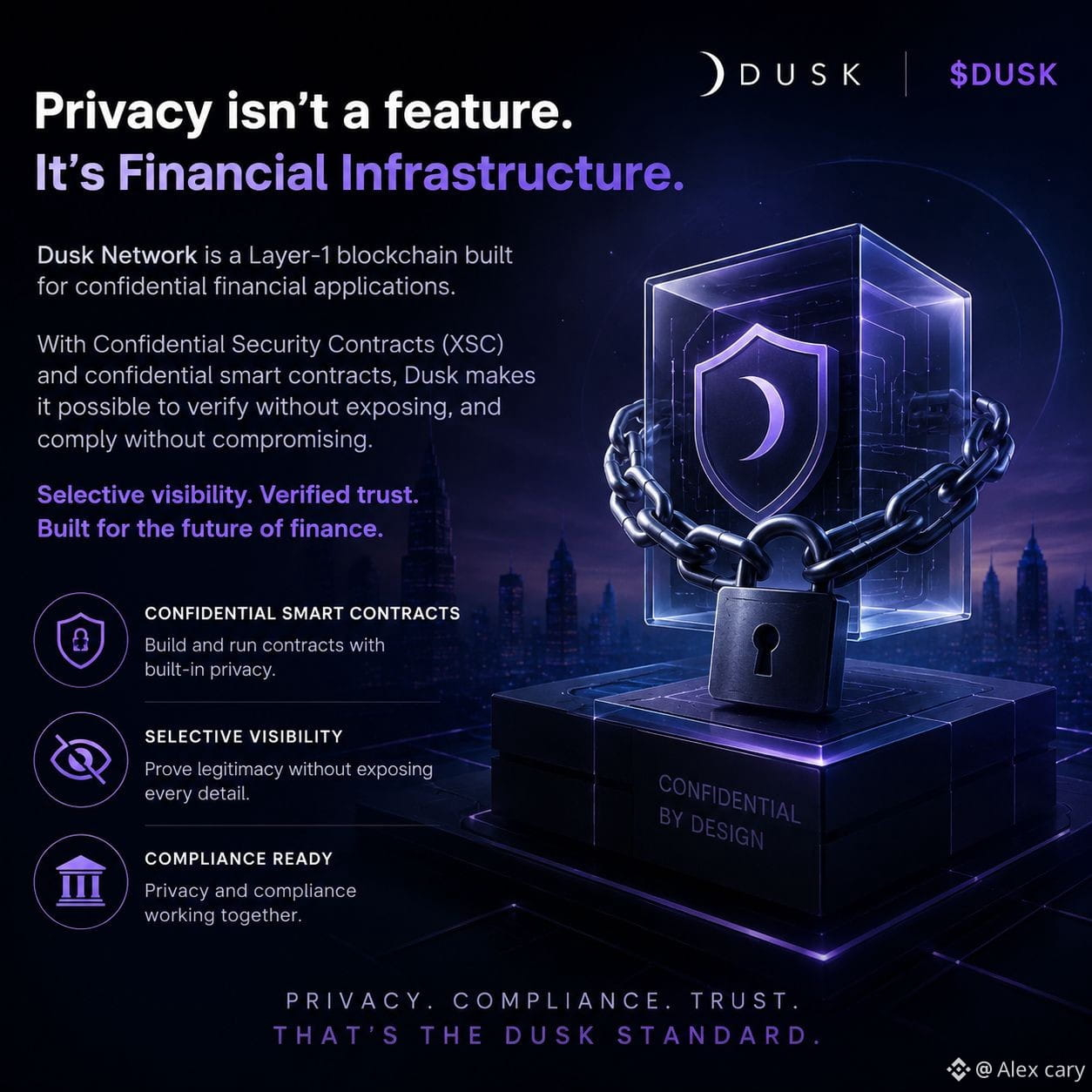
There’s a certain sameness across a lot of blockchain, AI, and Web3 projects. The terminology changes, the narratives get refreshed, but underneath it, many are still telling versions of the same story. What caught my attention with Dusk is that its focus feels less like a narrative and more like an answer to a practical constraint.
The core idea is privacy, but not privacy as a checkbox on a feature list. Dusk is building a Layer-1 aimed at financial applications, with confidential smart contracts and its Confidential Security Contract standard. For me, that distinction matters because financial information is often sensitive by default. Businesses may need to prove that an action or transaction is valid without putting every detail of their activity into public view.
That creates an interesting tension between confidentiality and verification. Too much transparency can expose information that should remain private, while too much privacy can make trust and compliance harder. If blockchain infrastructure is eventually used more seriously by institutions and businesses, finding a workable balance between those two sides could become increasingly important.
What I found interesting about Dusk is that the privacy thesis is tied to this broader infrastructure problem. Whether it succeeds will come down to execution, usability, adoption, and scale, not simply the technology itself.
From my perspective, that makes Dusk worth watching for a simple reason: it is working on a problem that could become more relevant as blockchain moves from experimentation toward practical financial use.
@Dusk $DUSK #dusk
The core idea is privacy, but not privacy as a checkbox on a feature list. Dusk is building a Layer-1 aimed at financial applications, with confidential smart contracts and its Confidential Security Contract standard. For me, that distinction matters because financial information is often sensitive by default. Businesses may need to prove that an action or transaction is valid without putting every detail of their activity into public view.
That creates an interesting tension between confidentiality and verification. Too much transparency can expose information that should remain private, while too much privacy can make trust and compliance harder. If blockchain infrastructure is eventually used more seriously by institutions and businesses, finding a workable balance between those two sides could become increasingly important.
What I found interesting about Dusk is that the privacy thesis is tied to this broader infrastructure problem. Whether it succeeds will come down to execution, usability, adoption, and scale, not simply the technology itself.
From my perspective, that makes Dusk worth watching for a simple reason: it is working on a problem that could become more relevant as blockchain moves from experimentation toward practical financial use.
@Dusk $DUSK #dusk
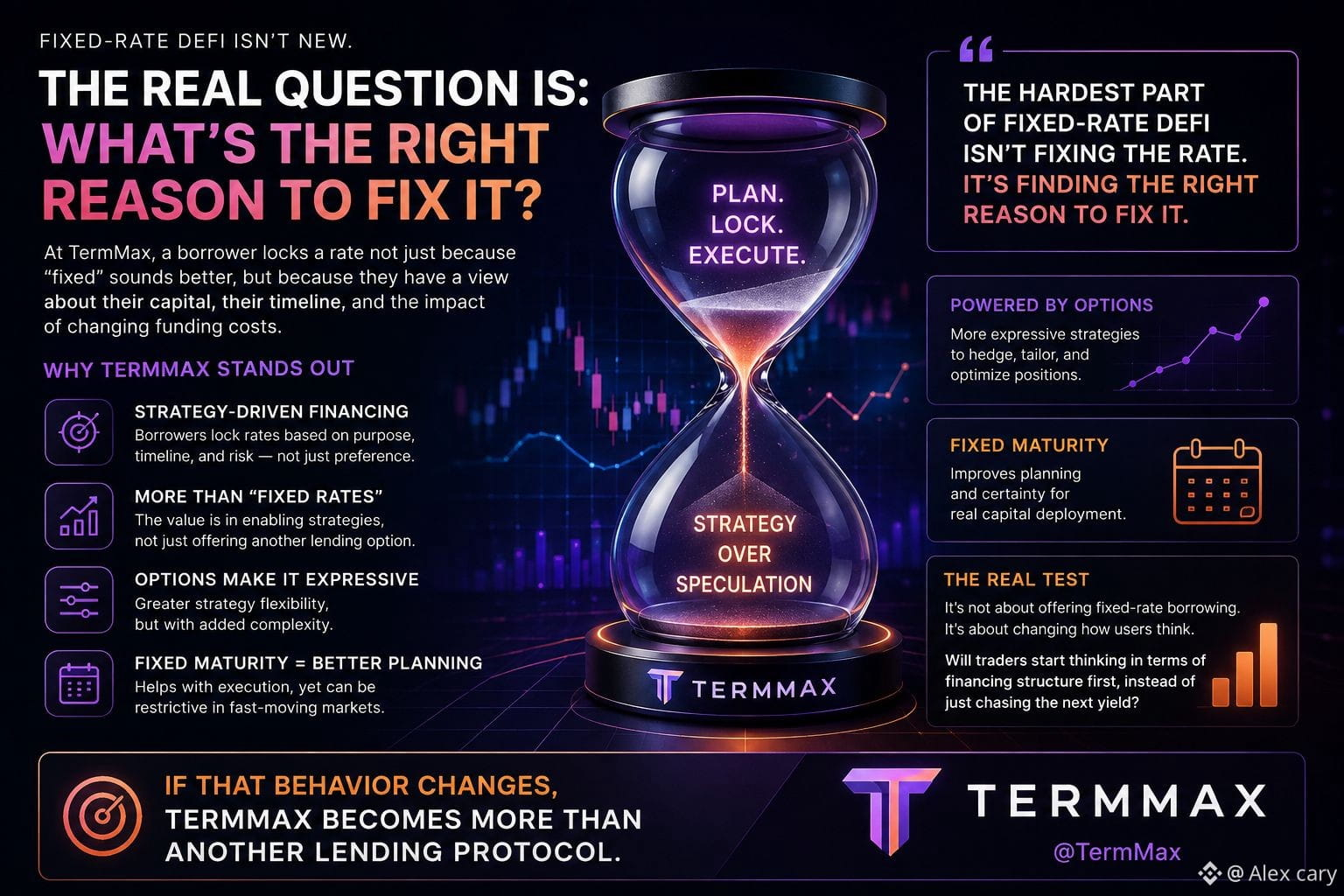
I’ve started thinking that the hardest part of fixed-rate DeFi isn’t fixing the rate.
It’s finding the right reason to fix it.
That’s what makes TermMax interesting to me.
A borrower doesn’t lock a rate just because “fixed” sounds better. They do it because they have a view about how long they need the capital, what that capital is being used for, and what changing funding costs could do to the position.
That changes the way I look at TermMax.
The product isn’t really interesting because fixed rates are new. They aren’t. What matters is whether fixed financing can become useful enough that traders actually build strategies around it, rather than treating it as another lending option sitting in a dashboard.
And that’s where I’m still watching carefully.
Options can make the strategy more expressive, but they also make the structure harder to evaluate. Fixed maturity can improve planning, but it can also become restrictive when the market moves faster than the position was designed for.
So I don’t think the question is whether TermMax can offer fixed-rate borrowing.
It can.
The harder question is whether users eventually start thinking in terms of financing structure first, instead of simply asking where the next yield is.
If that behavior changes, TermMax becomes more interesting than another lending protocol.
That’s the part I want to see happen in the market, not just on the product page.
@TermMax #termMax
It’s finding the right reason to fix it.
That’s what makes TermMax interesting to me.
A borrower doesn’t lock a rate just because “fixed” sounds better. They do it because they have a view about how long they need the capital, what that capital is being used for, and what changing funding costs could do to the position.
That changes the way I look at TermMax.
The product isn’t really interesting because fixed rates are new. They aren’t. What matters is whether fixed financing can become useful enough that traders actually build strategies around it, rather than treating it as another lending option sitting in a dashboard.
And that’s where I’m still watching carefully.
Options can make the strategy more expressive, but they also make the structure harder to evaluate. Fixed maturity can improve planning, but it can also become restrictive when the market moves faster than the position was designed for.
So I don’t think the question is whether TermMax can offer fixed-rate borrowing.
It can.
The harder question is whether users eventually start thinking in terms of financing structure first, instead of simply asking where the next yield is.
If that behavior changes, TermMax becomes more interesting than another lending protocol.
That’s the part I want to see happen in the market, not just on the product page.
@TermMax #termMax
Verified
A lot of blockchain, AI, and Web3 projects tend to arrive with a fresh coat of paint on ideas the industry has already heard many times. The terminology changes, the story gets sharper, but the underlying problem can remain surprisingly familiar. I usually become more interested when there is a practical constraint underneath the narrative.
That is what caught my attention with Dusk. Its focus on privacy for financial applications feels connected to a real requirement rather than simply another feature to promote. Financial information is often sensitive by nature. A company may need to prove that something is legitimate without putting every detail of its activity on display.
Dusk approaches that problem at the infrastructure level. Its Layer-1 blockchain supports the Confidential Security Contract (XSC) standard and confidential smart contracts, suggesting that privacy is being considered as part of how financial applications are built, not something bolted on afterward.
What I found interesting is the tension behind this idea. Privacy alone is not enough. Any system intended for serious financial use still has to deal with security, verification, compliance, usability, and eventually scale. Those requirements are much harder to balance than a simple privacy narrative suggests.
For me, that is the part worth watching. Dusk does not need to win attention through big claims; the more meaningful question is whether its approach can quietly make confidential financial activity more practical as blockchain adoption moves forward.
@Dusk $DUSK #dusk
That is what caught my attention with Dusk. Its focus on privacy for financial applications feels connected to a real requirement rather than simply another feature to promote. Financial information is often sensitive by nature. A company may need to prove that something is legitimate without putting every detail of its activity on display.
Dusk approaches that problem at the infrastructure level. Its Layer-1 blockchain supports the Confidential Security Contract (XSC) standard and confidential smart contracts, suggesting that privacy is being considered as part of how financial applications are built, not something bolted on afterward.
What I found interesting is the tension behind this idea. Privacy alone is not enough. Any system intended for serious financial use still has to deal with security, verification, compliance, usability, and eventually scale. Those requirements are much harder to balance than a simple privacy narrative suggests.
For me, that is the part worth watching. Dusk does not need to win attention through big claims; the more meaningful question is whether its approach can quietly make confidential financial activity more practical as blockchain adoption moves forward.
@Dusk $DUSK #dusk
I’ve been looking at TermMax less as another DeFi lending protocol and more as an attempt to separate parts of risk that are usually packaged together.
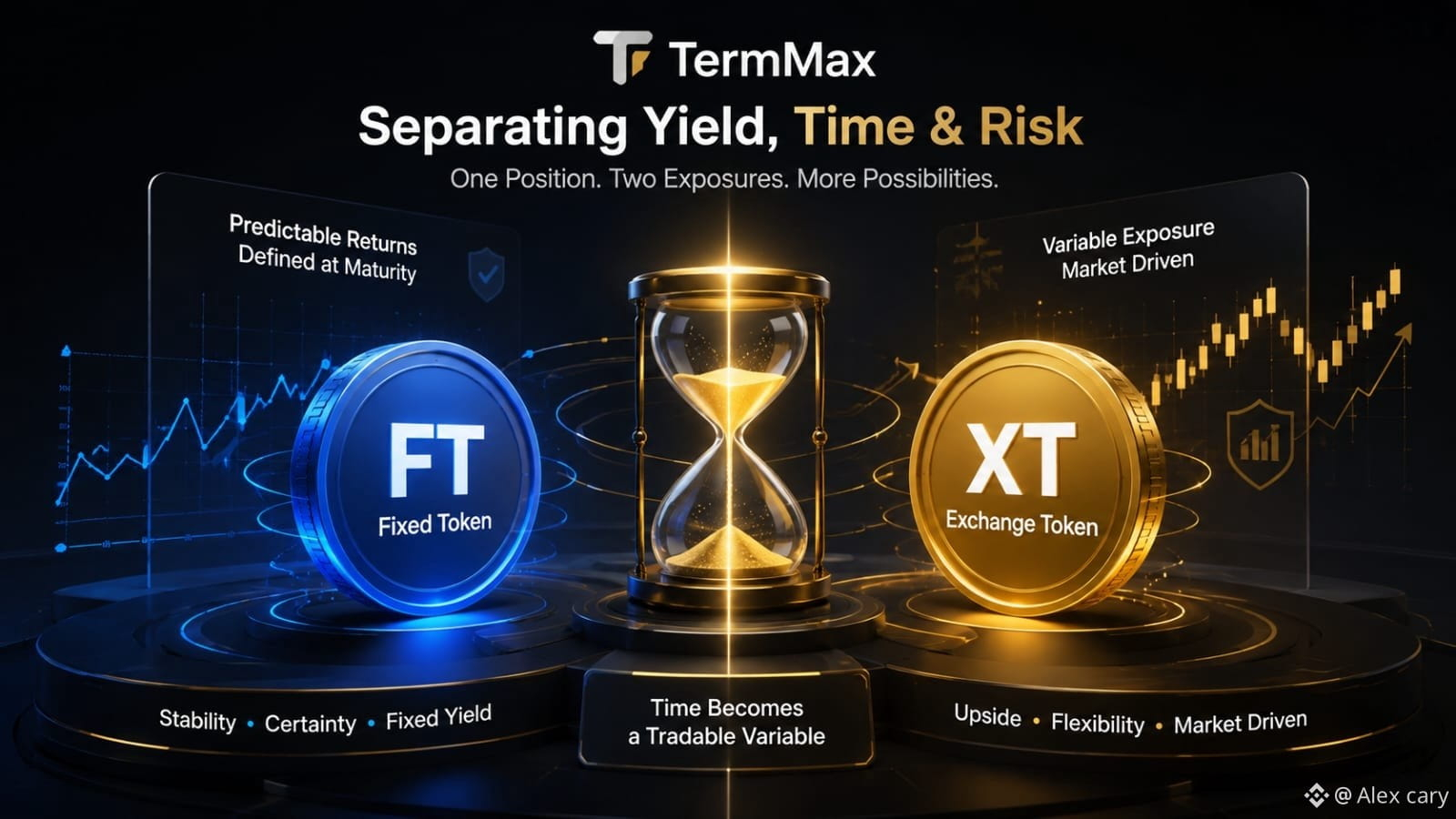
What caught my attention is the FT/XT structure.
Instead of treating one yield-bearing asset as a single position, TermMax splits the exposure into two different instruments. The Fixed Token gives a defined claim toward maturity, while the Exchange Token keeps the remaining variable exposure.
That separation is more interesting than the terminology suggests.
For me, the important idea is that time itself becomes something the market can price. If an FT trades below its maturity value, the difference can reflect the return implied by holding it until maturity. That makes the position conceptually closer to a fixed-income instrument than a typical floating-rate DeFi loan.
But I think the bigger question is risk separation.
A user may want predictable returns without taking the same level of market exposure as the underlying asset. Another participant may prefer the variable upside and accept the uncertainty. TermMax creates a framework where those preferences can potentially exist in separate markets.
Still, I wouldn’t judge the model only by how clean the mechanism looks on paper.
The harder test is liquidity.
What happens when volatility rises, buyers disappear, or FT and XT markets become inefficient? That is where the difference between an elegant financial structure and a resilient one becomes visible.
From my perspective, TermMax is interesting because it is experimenting with something DeFi has struggled to represent cleanly: the ability to separate yield, time, and asset exposure instead of treating them as one bundled risk.
That is the part worth watching.
@TermMax #TermMax
What caught my attention is the FT/XT structure.
Instead of treating one yield-bearing asset as a single position, TermMax splits the exposure into two different instruments. The Fixed Token gives a defined claim toward maturity, while the Exchange Token keeps the remaining variable exposure.
That separation is more interesting than the terminology suggests.
For me, the important idea is that time itself becomes something the market can price. If an FT trades below its maturity value, the difference can reflect the return implied by holding it until maturity. That makes the position conceptually closer to a fixed-income instrument than a typical floating-rate DeFi loan.
But I think the bigger question is risk separation.
A user may want predictable returns without taking the same level of market exposure as the underlying asset. Another participant may prefer the variable upside and accept the uncertainty. TermMax creates a framework where those preferences can potentially exist in separate markets.
Still, I wouldn’t judge the model only by how clean the mechanism looks on paper.
The harder test is liquidity.
What happens when volatility rises, buyers disappear, or FT and XT markets become inefficient? That is where the difference between an elegant financial structure and a resilient one becomes visible.
From my perspective, TermMax is interesting because it is experimenting with something DeFi has struggled to represent cleanly: the ability to separate yield, time, and asset exposure instead of treating them as one bundled risk.
That is the part worth watching.
@TermMax #TermMax
Verified
I’ve noticed that a lot of blockchain, AI, and Web3 projects tend to circle around the same familiar stories. The language changes, the branding changes, but underneath it, many ideas feel surprisingly similar. That’s why I pay more attention when a project starts with a practical problem rather than just a compelling narrative.
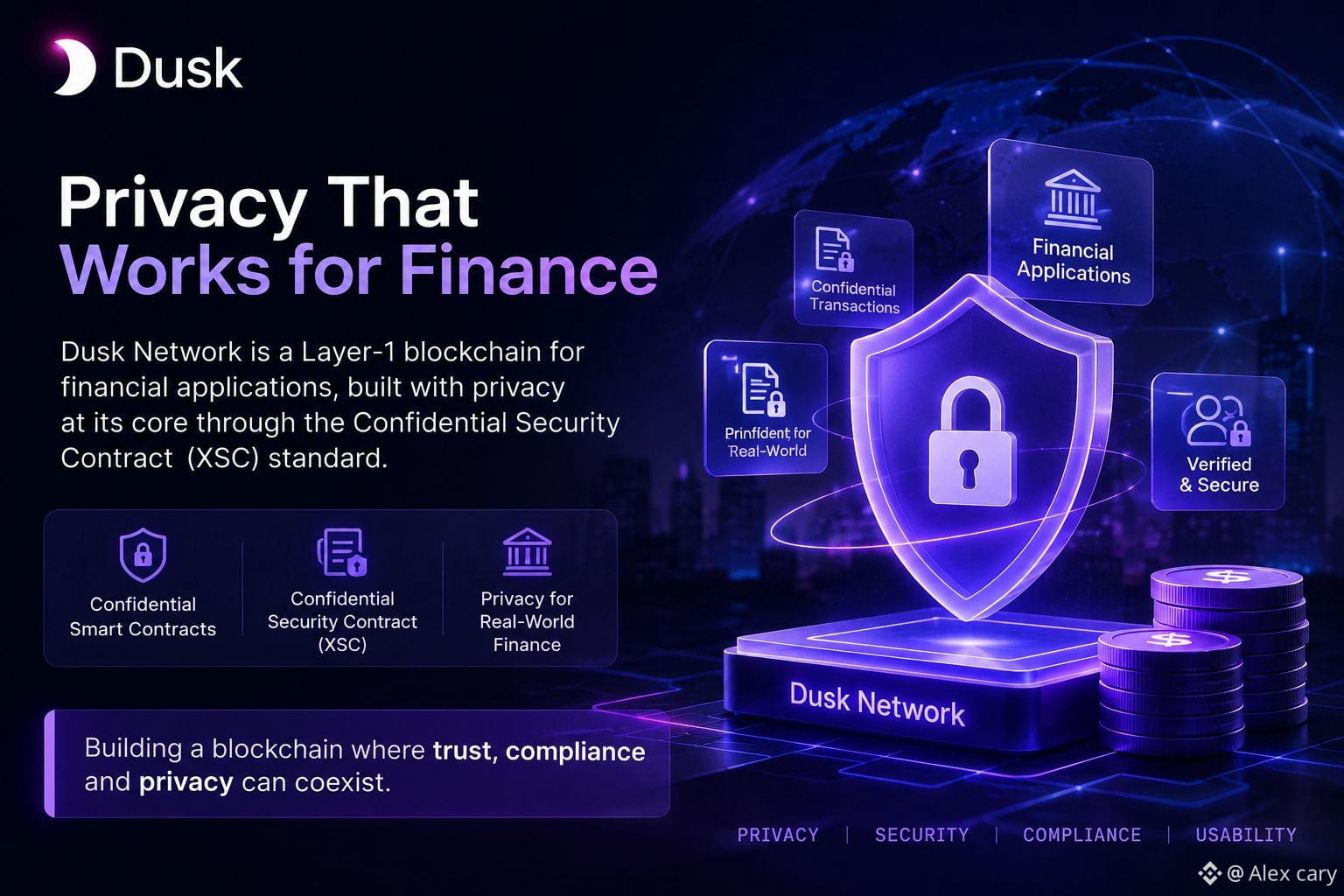
What caught my attention about Dusk is its focus on privacy as part of financial infrastructure. For me, privacy in finance is not about hiding everything. It is about deciding what should be visible, to whom, and under what conditions. A business may need to prove that something is valid or compliant without exposing every detail of the underlying activity.
That is where Dusk becomes interesting. Its Layer-1 architecture, Confidential Security Contract (XSC) standard, and confidential smart contracts suggest an approach where privacy is considered close to the foundation rather than added later.
I find that distinction meaningful because real adoption will eventually test whether privacy can coexist with verification, security, compliance, and usability. Those are harder problems than simply putting “privacy” into a project description.
From my perspective, Dusk is worth watching for that reason. The long-term question is not how impressive the narrative sounds today, but whether this kind of infrastructure can quietly solve problems that become more important as blockchain enters real financial use.
@Dusk $DUSK #dusk
What caught my attention about Dusk is its focus on privacy as part of financial infrastructure. For me, privacy in finance is not about hiding everything. It is about deciding what should be visible, to whom, and under what conditions. A business may need to prove that something is valid or compliant without exposing every detail of the underlying activity.
That is where Dusk becomes interesting. Its Layer-1 architecture, Confidential Security Contract (XSC) standard, and confidential smart contracts suggest an approach where privacy is considered close to the foundation rather than added later.
I find that distinction meaningful because real adoption will eventually test whether privacy can coexist with verification, security, compliance, and usability. Those are harder problems than simply putting “privacy” into a project description.
From my perspective, Dusk is worth watching for that reason. The long-term question is not how impressive the narrative sounds today, but whether this kind of infrastructure can quietly solve problems that become more important as blockchain enters real financial use.
@Dusk $DUSK #dusk
Disputed
I used to think capital efficiency in DeFi was mostly about getting more from the same amount of capital.
I’m starting to see it differently.
For me, real capital efficiency is also about knowing what my position is actually exposed to, how much financing will cost, and how those variables interact.
That’s where TermMax caught my attention.
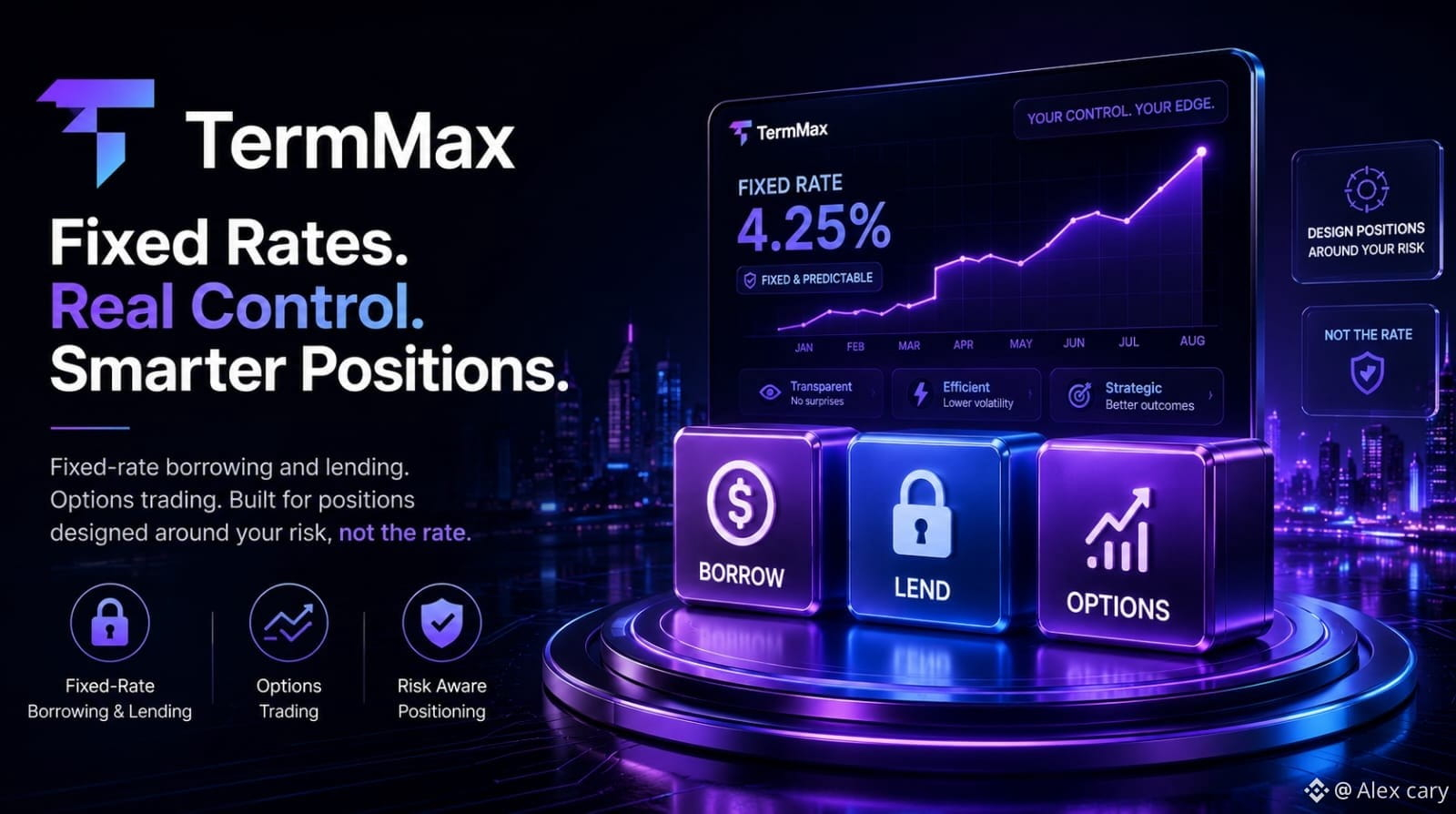
TermMax brings fixed-rate borrowing and lending together with options trading, and I think that combination deserves more attention. A fixed financing cost can make the structure of a position easier to understand, while options can give me another way to shape the exposure I actually want.
What interests me isn’t simply having more financial products in one place.
It’s the possibility of designing a position around a specific risk profile instead of constantly reacting to changing rates.
I’m still watching the important questions around TermMax: liquidity, execution, risk management, and whether users actually find this structure useful at scale.
But I like the problem TermMax is trying to solve.
Maybe the next step in DeFi isn’t making positions more complicated.
Maybe it’s giving users better control over the variables that already make those positions complicated.
That’s the part of TermMax I’ll be watching.
@TermMax #TermMax
I’m starting to see it differently.
For me, real capital efficiency is also about knowing what my position is actually exposed to, how much financing will cost, and how those variables interact.
That’s where TermMax caught my attention.
TermMax brings fixed-rate borrowing and lending together with options trading, and I think that combination deserves more attention. A fixed financing cost can make the structure of a position easier to understand, while options can give me another way to shape the exposure I actually want.
What interests me isn’t simply having more financial products in one place.
It’s the possibility of designing a position around a specific risk profile instead of constantly reacting to changing rates.
I’m still watching the important questions around TermMax: liquidity, execution, risk management, and whether users actually find this structure useful at scale.
But I like the problem TermMax is trying to solve.
Maybe the next step in DeFi isn’t making positions more complicated.
Maybe it’s giving users better control over the variables that already make those positions complicated.
That’s the part of TermMax I’ll be watching.
@TermMax #TermMax
Verified
I’ve watched enough blockchain, AI, and Web3 cycles to see how often familiar ideas return with new branding. The words change, but the underlying story can remain the same. That’s why I pay more attention to the actual problem a project is trying to solve.
What caught my attention about Dusk is its focus on privacy for financial applications. For me, privacy isn’t simply about hiding information. Financial systems need transparency and verification, but businesses and institutions also need to protect sensitive transactions, positions, and commercial data.
What I found interesting is how Dusk places confidentiality closer to the foundation of its Layer-1 network, with confidential smart contracts and the Confidential Security Contract standard. The important question, from my perspective, is whether privacy can work alongside security, compliance, usability, and scale without creating unnecessary friction.
I’m not assuming Dusk has solved that balance. The real test comes when developers build, users interact, and financial applications face real-world pressure. A strong concept only matters if the infrastructure proves dependable in practice.
Still, the problem feels increasingly relevant. If blockchain moves further into practical finance, privacy could become something users expect rather than an optional feature.
For me, that makes Dusk worth watching. Its long-term value will depend less on hype and more on whether it can make confidential financial activity genuinely useful.
@Dusk $DUSK #dusk
What caught my attention about Dusk is its focus on privacy for financial applications. For me, privacy isn’t simply about hiding information. Financial systems need transparency and verification, but businesses and institutions also need to protect sensitive transactions, positions, and commercial data.
What I found interesting is how Dusk places confidentiality closer to the foundation of its Layer-1 network, with confidential smart contracts and the Confidential Security Contract standard. The important question, from my perspective, is whether privacy can work alongside security, compliance, usability, and scale without creating unnecessary friction.
I’m not assuming Dusk has solved that balance. The real test comes when developers build, users interact, and financial applications face real-world pressure. A strong concept only matters if the infrastructure proves dependable in practice.
Still, the problem feels increasingly relevant. If blockchain moves further into practical finance, privacy could become something users expect rather than an optional feature.
For me, that makes Dusk worth watching. Its long-term value will depend less on hype and more on whether it can make confidential financial activity genuinely useful.
@Dusk $DUSK #dusk
Verified
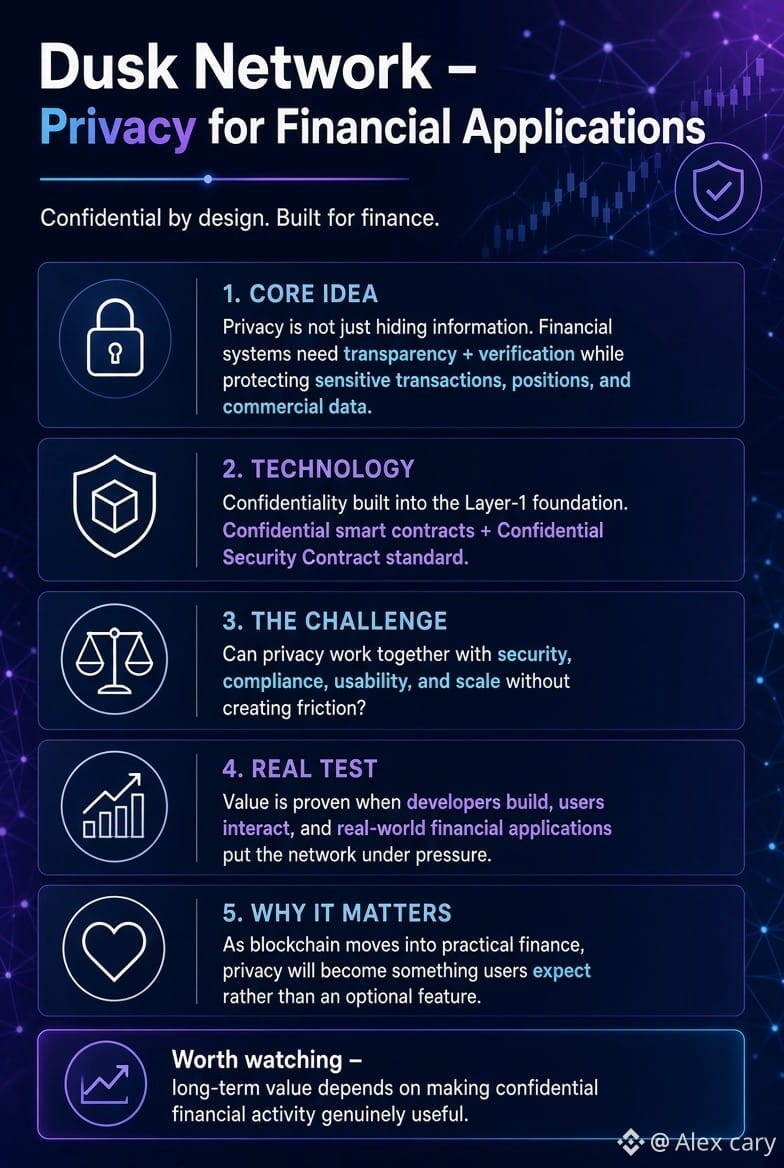
I’ve spent enough time around crypto to notice how often the same ideas return with different branding. Privacy, scalability, decentralization, institutional adoption all important, but sometimes the narrative gets more attention than the problem itself.
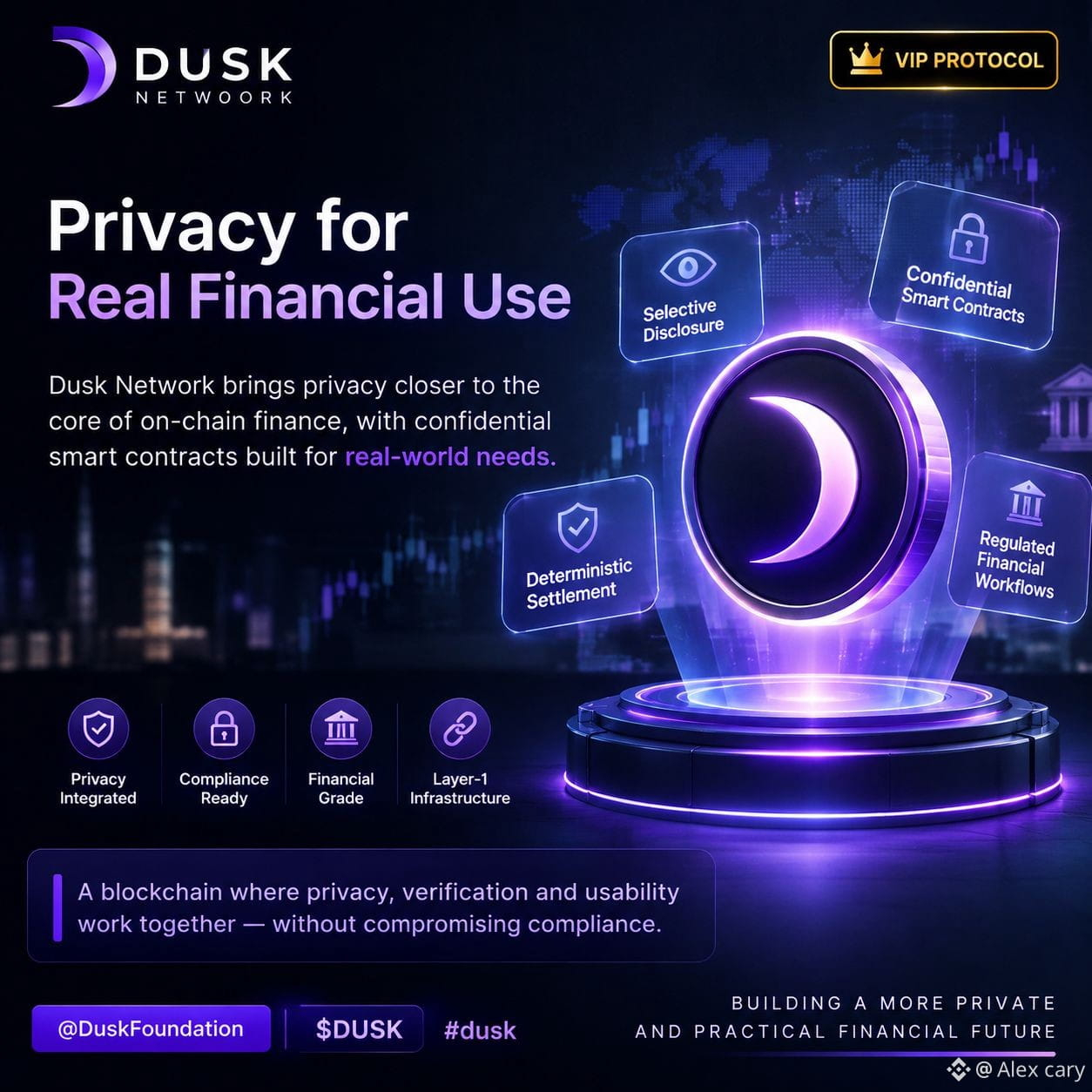
What caught my attention about Dusk is that privacy is closely connected to financial infrastructure. I don’t see the issue as simply choosing between transparency and secrecy. Financial markets need transactions to be verifiable, but businesses and institutions also handle sensitive positions, strategies, and commercial information that shouldn’t automatically become public.
That’s where Dusk feels different to me. Its Layer-1 architecture supports confidential smart contracts and the Confidential Security Contract standard, putting privacy much closer to the foundation rather than treating it as an extra feature.
I’m interested in what happens when this approach meets real adoption. Institutions have strict requirements, developers need usable infrastructure, and financial applications need reliability under pressure. Privacy alone doesn’t solve everything; it has to work alongside security, compliance, usability, and scale.
I’m not assuming Dusk has already solved that equation. The real proof will come from developers building on it, institutions trusting it, and users finding genuine value in the experience.
Still, the problem is becoming harder to ignore. If on-chain finance moves deeper into the real economy, controlled disclosure could become as important as transparency. That’s why I think Dusk is worth watching beyond short-term crypto narratives.
@Dusk $DUSK #dusk
What caught my attention about Dusk is that privacy is closely connected to financial infrastructure. I don’t see the issue as simply choosing between transparency and secrecy. Financial markets need transactions to be verifiable, but businesses and institutions also handle sensitive positions, strategies, and commercial information that shouldn’t automatically become public.
That’s where Dusk feels different to me. Its Layer-1 architecture supports confidential smart contracts and the Confidential Security Contract standard, putting privacy much closer to the foundation rather than treating it as an extra feature.
I’m interested in what happens when this approach meets real adoption. Institutions have strict requirements, developers need usable infrastructure, and financial applications need reliability under pressure. Privacy alone doesn’t solve everything; it has to work alongside security, compliance, usability, and scale.
I’m not assuming Dusk has already solved that equation. The real proof will come from developers building on it, institutions trusting it, and users finding genuine value in the experience.
Still, the problem is becoming harder to ignore. If on-chain finance moves deeper into the real economy, controlled disclosure could become as important as transparency. That’s why I think Dusk is worth watching beyond short-term crypto narratives.
@Dusk $DUSK #dusk
Verified
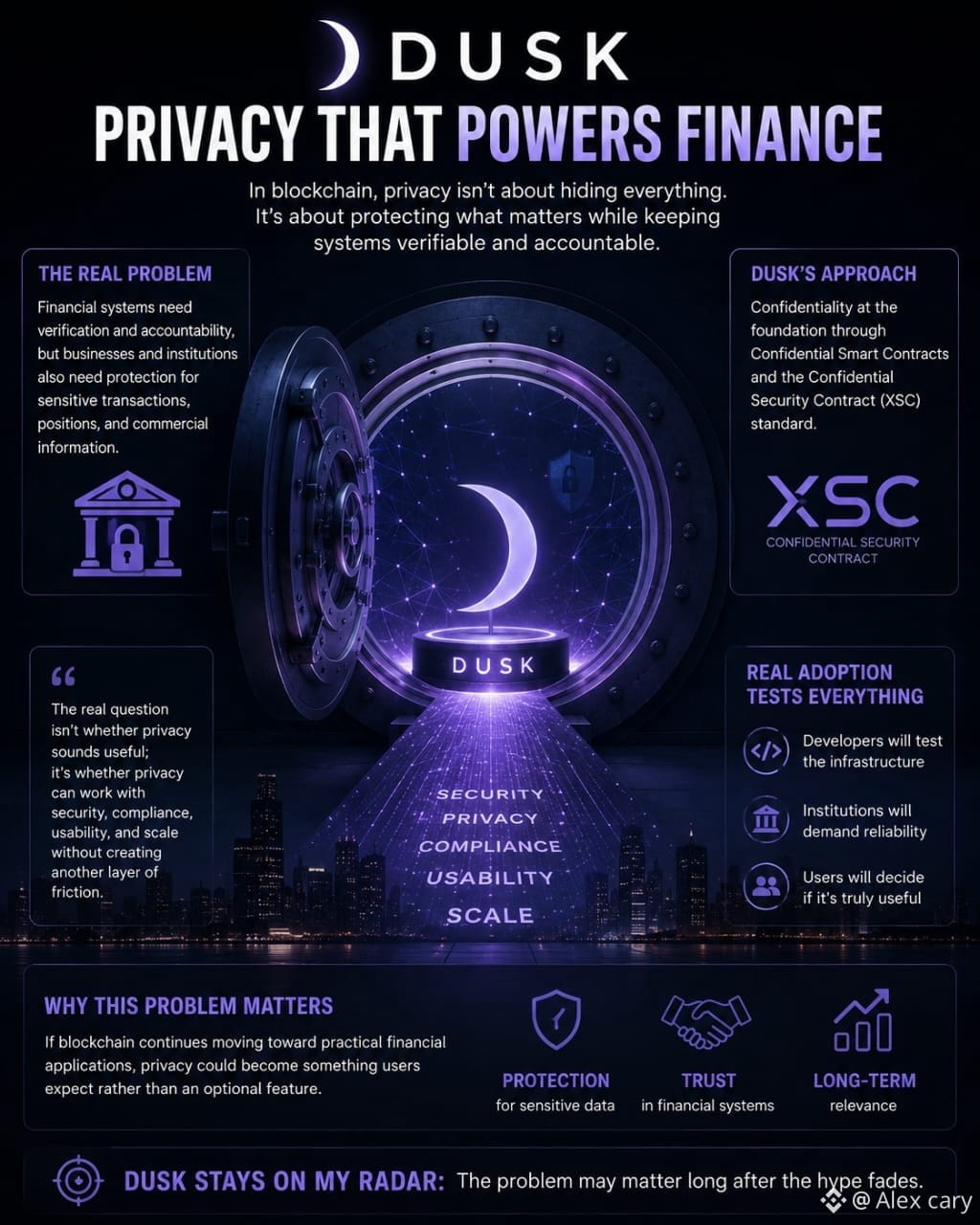
I’ve spent enough time watching blockchain, AI, and Web3 to notice how often the same narratives return with a different logo. Privacy, scalability, adoption, decentralization — important ideas, but sometimes the story is much bigger than the substance behind it. That’s why I tend to look for the problem first.
What caught my attention about Dusk is its focus on privacy for financial applications. For me, privacy isn’t about making everything invisible. Financial systems still need verification and accountability, but businesses and institutions also need protection for sensitive transactions, positions, and commercial information.
What I found interesting is that Dusk brings confidentiality closer to the foundation of its network through confidential smart contracts and the Confidential Security Contract standard. That makes the conversation more practical. The real question isn’t whether privacy sounds useful; it’s whether privacy can work alongside security, compliance, usability, and scale without creating another layer of friction.
I’m still watching how Dusk handles that in practice because real adoption is where every ambitious blockchain idea gets tested. Developers, institutions, and everyday users will ultimately decide whether the infrastructure is useful enough to matter.
Still, the underlying problem feels real. If blockchain continues moving toward practical financial applications, privacy could become something users expect rather than an optional feature.
That’s why Dusk stays on my radar: the problem may matter long after the hype fades.
@Dusk $DUSK #dusk
What caught my attention about Dusk is its focus on privacy for financial applications. For me, privacy isn’t about making everything invisible. Financial systems still need verification and accountability, but businesses and institutions also need protection for sensitive transactions, positions, and commercial information.
What I found interesting is that Dusk brings confidentiality closer to the foundation of its network through confidential smart contracts and the Confidential Security Contract standard. That makes the conversation more practical. The real question isn’t whether privacy sounds useful; it’s whether privacy can work alongside security, compliance, usability, and scale without creating another layer of friction.
I’m still watching how Dusk handles that in practice because real adoption is where every ambitious blockchain idea gets tested. Developers, institutions, and everyday users will ultimately decide whether the infrastructure is useful enough to matter.
Still, the underlying problem feels real. If blockchain continues moving toward practical financial applications, privacy could become something users expect rather than an optional feature.
That’s why Dusk stays on my radar: the problem may matter long after the hype fades.
@Dusk $DUSK #dusk
I’ve watched enough blockchain and Web3 cycles to become cautious when a project arrives wrapped in the same familiar words: privacy, scalability, adoption, institutional use. Sometimes the narrative sounds impressive, but once you look underneath, there isn’t much new there.
What caught my attention with Dusk is that privacy sits much closer to the actual foundation of the network. I think that matters because financial activity is not always something people want completely exposed on a public ledger. Transparency has its place, but businesses and institutions also need room to protect sensitive positions, transactions, and commercial information.
What I found interesting is Dusk’s approach to confidential smart contracts and its Confidential Security Contract standard. For me, the important question isn’t simply whether blockchain can offer privacy. It’s whether privacy can exist alongside verification, security, compliance, and usability without making the system impossible to work with.
I’m still watching how that plays out in practice. A strong technical idea is only the beginning. Developers need reasons to build, users need reasons to stay, and institutions need infrastructure they can actually depend on when the stakes become real.
That’s where I think Dusk has an interesting problem in front of it. If on-chain finance continues moving beyond speculation and into practical financial activity, privacy may stop being a nice extra and become something the infrastructure genuinely needs.
I’m not interested in calling that a guaranteed success. Crypto has taught me to wait for execution. But I do think Dusk is working on a problem that becomes more relevant as the industry matures, and that alone makes it worth keeping an eye on.
@Dusk $DUSK #dusk
What caught my attention with Dusk is that privacy sits much closer to the actual foundation of the network. I think that matters because financial activity is not always something people want completely exposed on a public ledger. Transparency has its place, but businesses and institutions also need room to protect sensitive positions, transactions, and commercial information.
What I found interesting is Dusk’s approach to confidential smart contracts and its Confidential Security Contract standard. For me, the important question isn’t simply whether blockchain can offer privacy. It’s whether privacy can exist alongside verification, security, compliance, and usability without making the system impossible to work with.
I’m still watching how that plays out in practice. A strong technical idea is only the beginning. Developers need reasons to build, users need reasons to stay, and institutions need infrastructure they can actually depend on when the stakes become real.
That’s where I think Dusk has an interesting problem in front of it. If on-chain finance continues moving beyond speculation and into practical financial activity, privacy may stop being a nice extra and become something the infrastructure genuinely needs.
I’m not interested in calling that a guaranteed success. Crypto has taught me to wait for execution. But I do think Dusk is working on a problem that becomes more relevant as the industry matures, and that alone makes it worth keeping an eye on.
@Dusk $DUSK #dusk
Verified
After spending enough time around blockchain, AI, and Web3, I’ve noticed how quickly the same ideas come back wearing different clothes. Privacy, scalability, decentralization, real-world utility all important words, but sometimes the substance behind them is surprisingly thin.
What caught my attention with Dusk is that privacy sits much closer to the core of what it is building. Financial activity is different from sending a simple token around. Not every transaction, balance, or piece of business information should necessarily be visible to the entire network just because it happens on-chain.
That’s where I find Dusk interesting. Its Layer-1 is designed around financial applications, with confidential smart contracts and the Confidential Security Contract standard forming part of that approach. From my perspective, the bigger idea isn’t simply “private blockchain.” It’s about giving financial applications a way to preserve verifiability while having more control over sensitive information.
Of course, the difficult part starts when real users arrive. Privacy has to work alongside security, compliance, usability, and scale. Those trade-offs are where many projects eventually get tested.
I’m still watching to see how Dusk handles that in practice, but the problem itself feels meaningful. If on-chain finance continues moving toward real-world use, privacy could become infrastructure rather than a feature people mention in a pitch. For me, that makes Dusk worth following beyond the noise of the current cycle.
$DUSK #dusk @Dusk
What caught my attention with Dusk is that privacy sits much closer to the core of what it is building. Financial activity is different from sending a simple token around. Not every transaction, balance, or piece of business information should necessarily be visible to the entire network just because it happens on-chain.
That’s where I find Dusk interesting. Its Layer-1 is designed around financial applications, with confidential smart contracts and the Confidential Security Contract standard forming part of that approach. From my perspective, the bigger idea isn’t simply “private blockchain.” It’s about giving financial applications a way to preserve verifiability while having more control over sensitive information.
Of course, the difficult part starts when real users arrive. Privacy has to work alongside security, compliance, usability, and scale. Those trade-offs are where many projects eventually get tested.
I’m still watching to see how Dusk handles that in practice, but the problem itself feels meaningful. If on-chain finance continues moving toward real-world use, privacy could become infrastructure rather than a feature people mention in a pitch. For me, that makes Dusk worth following beyond the noise of the current cycle.
$DUSK #dusk @Dusk
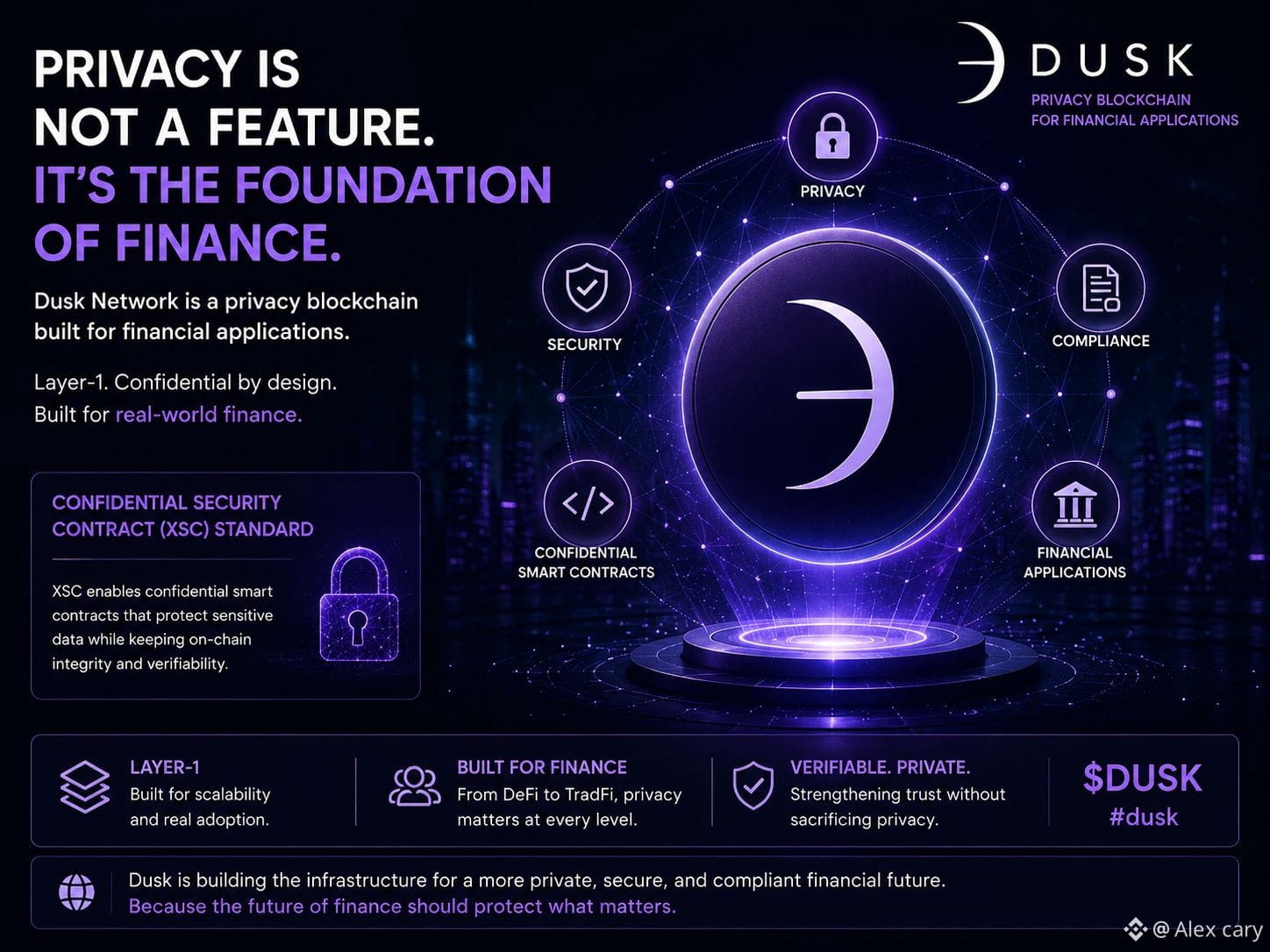
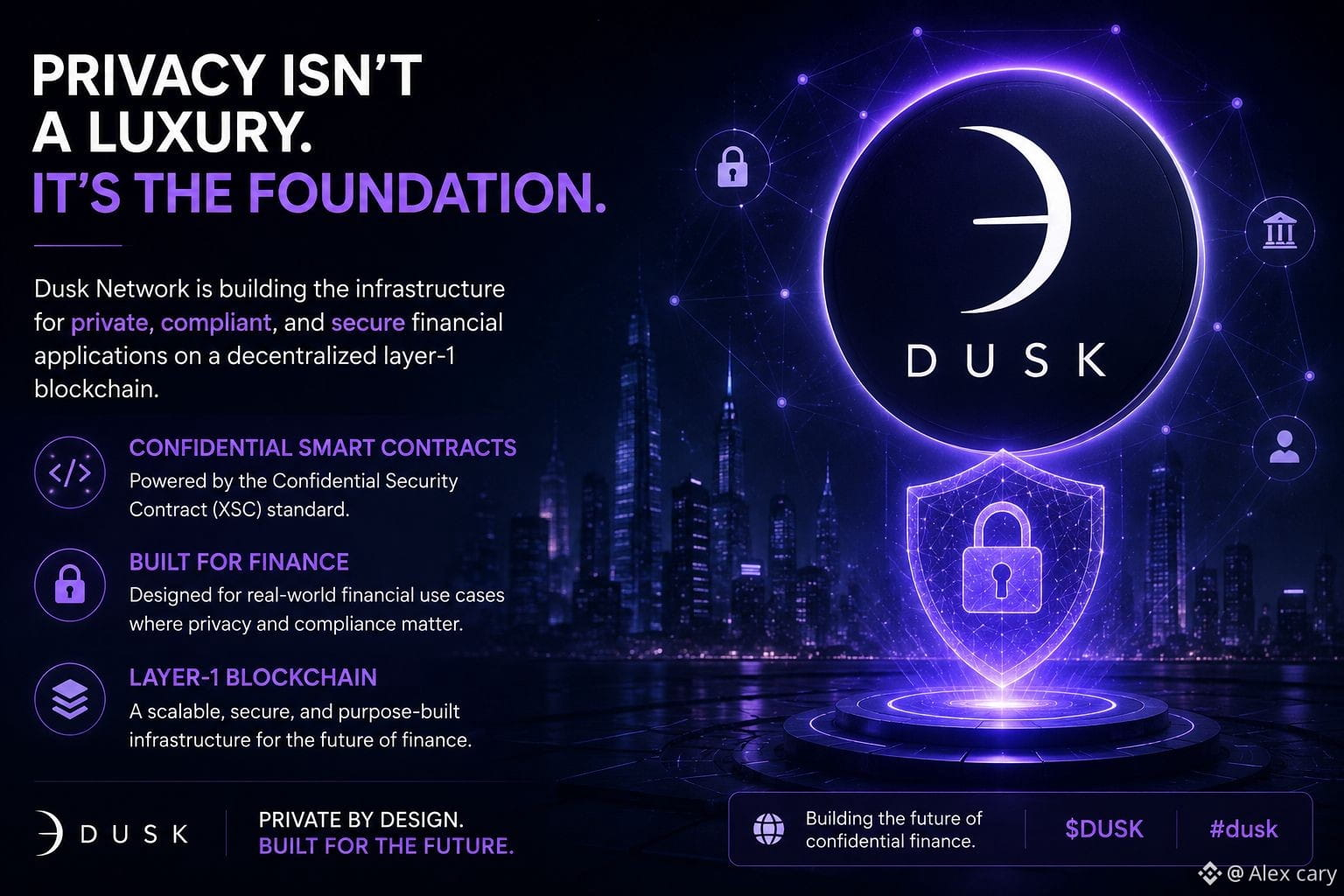
Verified
Most blockchain, AI, and Web3 projects eventually start sounding familiar. New names, new branding, but often the same ideas packaged in slightly different words. After watching enough of this space, I’ve become more interested in what remains useful when the excitement fades.
That’s what caught my attention about Dusk. Its focus on privacy for financial applications feels connected to a real problem rather than just another narrative. As more financial activity moves on-chain, putting everything into the open may not always be practical. Businesses can need transparency and verification while still protecting sensitive information.
What I found interesting is Dusk’s work around confidential smart contracts and its Confidential Security Contract standard. For me, the deeper idea here is privacy as infrastructure. It’s not simply about hiding information; it’s about creating a way for financial applications to operate with more control over what becomes publicly visible.
Of course, the real test comes with adoption. Technology can look convincing on paper, but actual users, institutions, compliance requirements, and scale tend to expose the difficult parts.
From my perspective, that’s why Dusk is worth watching. Not because of another big promise, but because privacy could become increasingly important as blockchain moves closer to practical financial use.
@Dusk $DUSK #dusk
That’s what caught my attention about Dusk. Its focus on privacy for financial applications feels connected to a real problem rather than just another narrative. As more financial activity moves on-chain, putting everything into the open may not always be practical. Businesses can need transparency and verification while still protecting sensitive information.
What I found interesting is Dusk’s work around confidential smart contracts and its Confidential Security Contract standard. For me, the deeper idea here is privacy as infrastructure. It’s not simply about hiding information; it’s about creating a way for financial applications to operate with more control over what becomes publicly visible.
Of course, the real test comes with adoption. Technology can look convincing on paper, but actual users, institutions, compliance requirements, and scale tend to expose the difficult parts.
From my perspective, that’s why Dusk is worth watching. Not because of another big promise, but because privacy could become increasingly important as blockchain moves closer to practical financial use.
@Dusk $DUSK #dusk
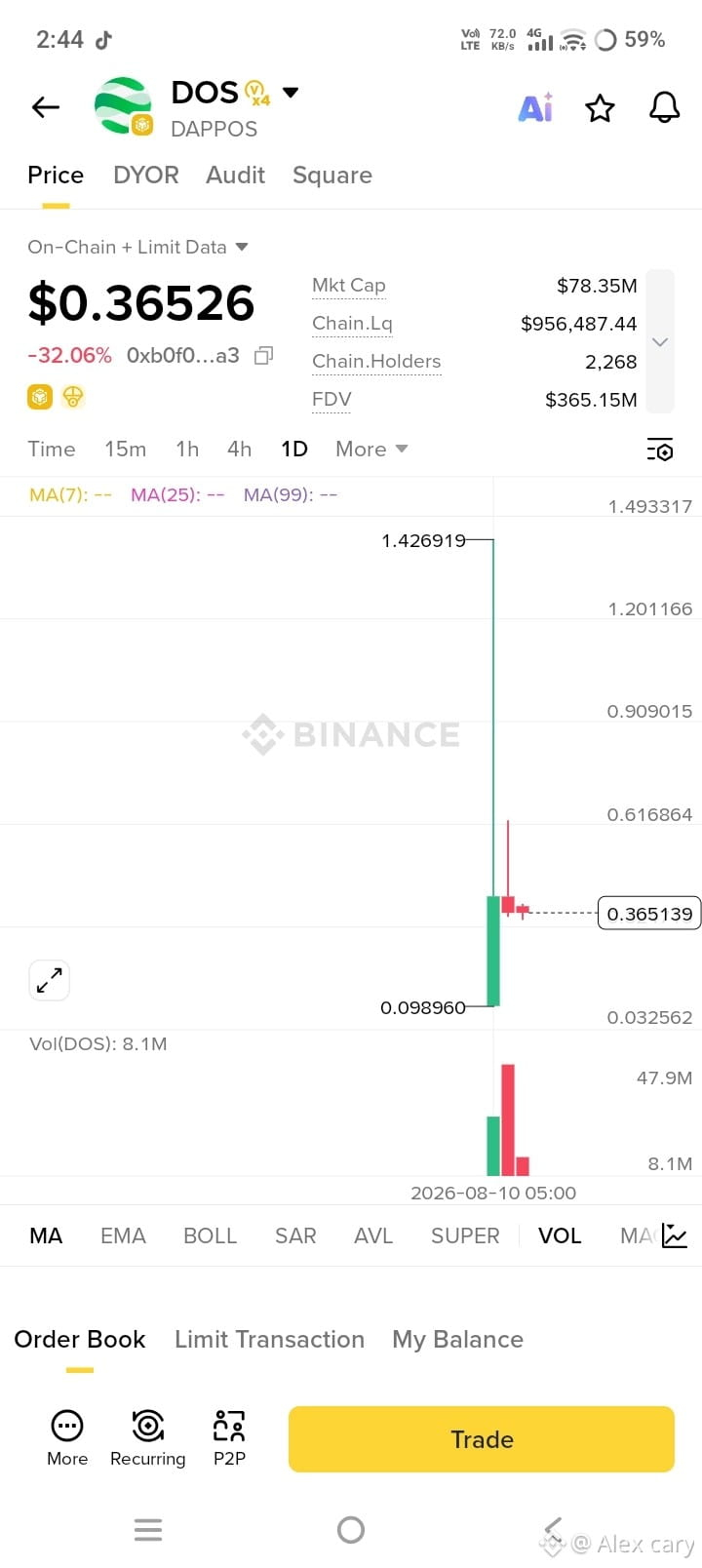
$DOGS HIGH VOLATILITY SETUP
Price: $0.365
24H: -32.06%
$DOS made a massive move from $0.099 → $1.42, then pulled back sharply. Volume is still elevated, so this is a high-risk, high-volatility setup.
📍 Entry: $0.34–$0.37
🛑 Stop Loss: $0.30
🎯 Resistance 1: $0.45
🎯 Resistance 2: $0.62
🎯 Resistance 3: $0.90
🚀 Major Target: $1.20+
A clean breakout above $0.45 with strong volume could open the way toward higher resistance. If $0.30 fails, step aside and wait for a new setup.
⚠️ Don’t chase the candle. Manage risk and let confirmation come first.
High risk. Trade smart. 📊🔥
Price: $0.365
24H: -32.06%
$DOS made a massive move from $0.099 → $1.42, then pulled back sharply. Volume is still elevated, so this is a high-risk, high-volatility setup.
📍 Entry: $0.34–$0.37
🛑 Stop Loss: $0.30
🎯 Resistance 1: $0.45
🎯 Resistance 2: $0.62
🎯 Resistance 3: $0.90
🚀 Major Target: $1.20+
A clean breakout above $0.45 with strong volume could open the way toward higher resistance. If $0.30 fails, step aside and wait for a new setup.
⚠️ Don’t chase the candle. Manage risk and let confirmation come first.
High risk. Trade smart. 📊🔥
Log in to explore more content