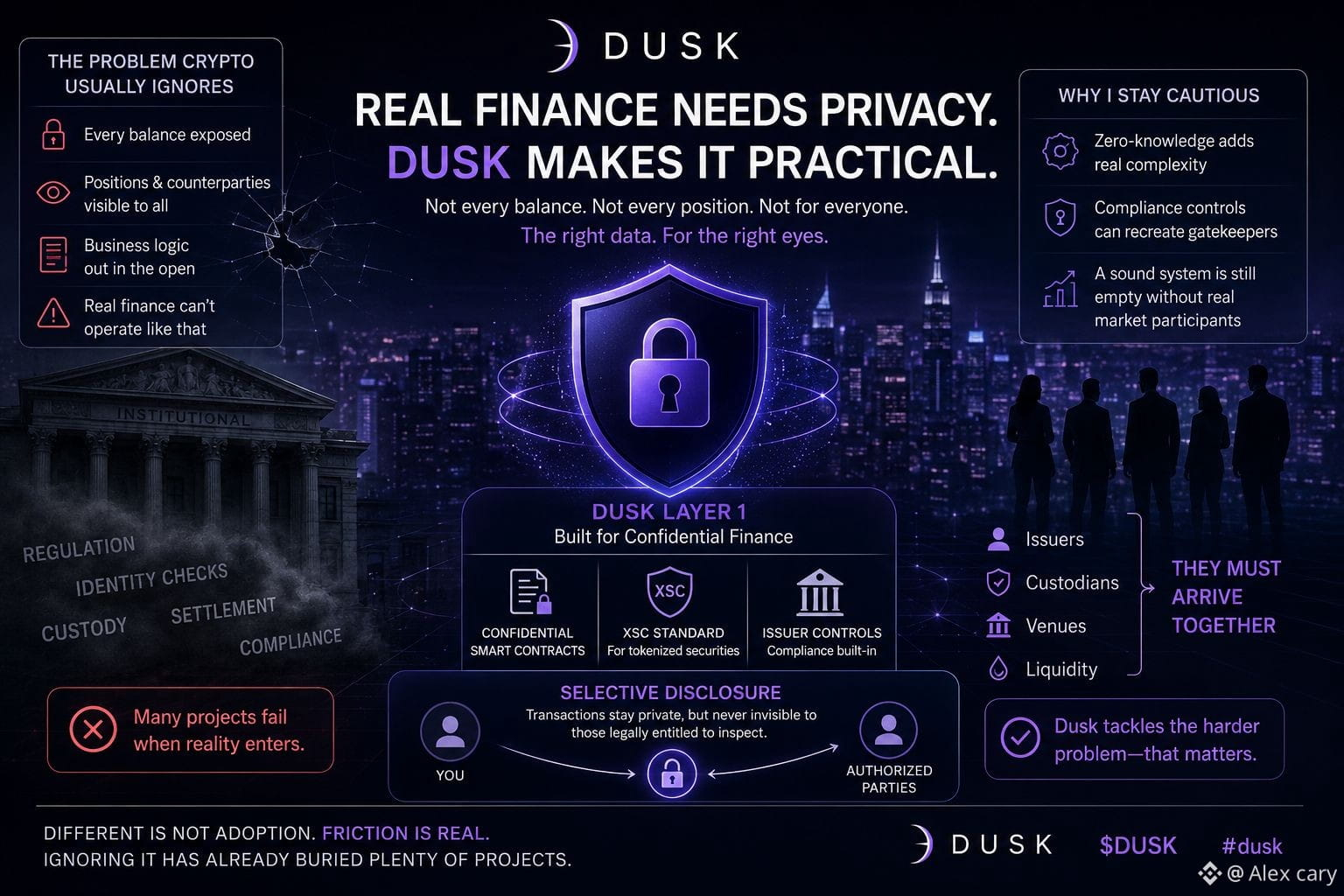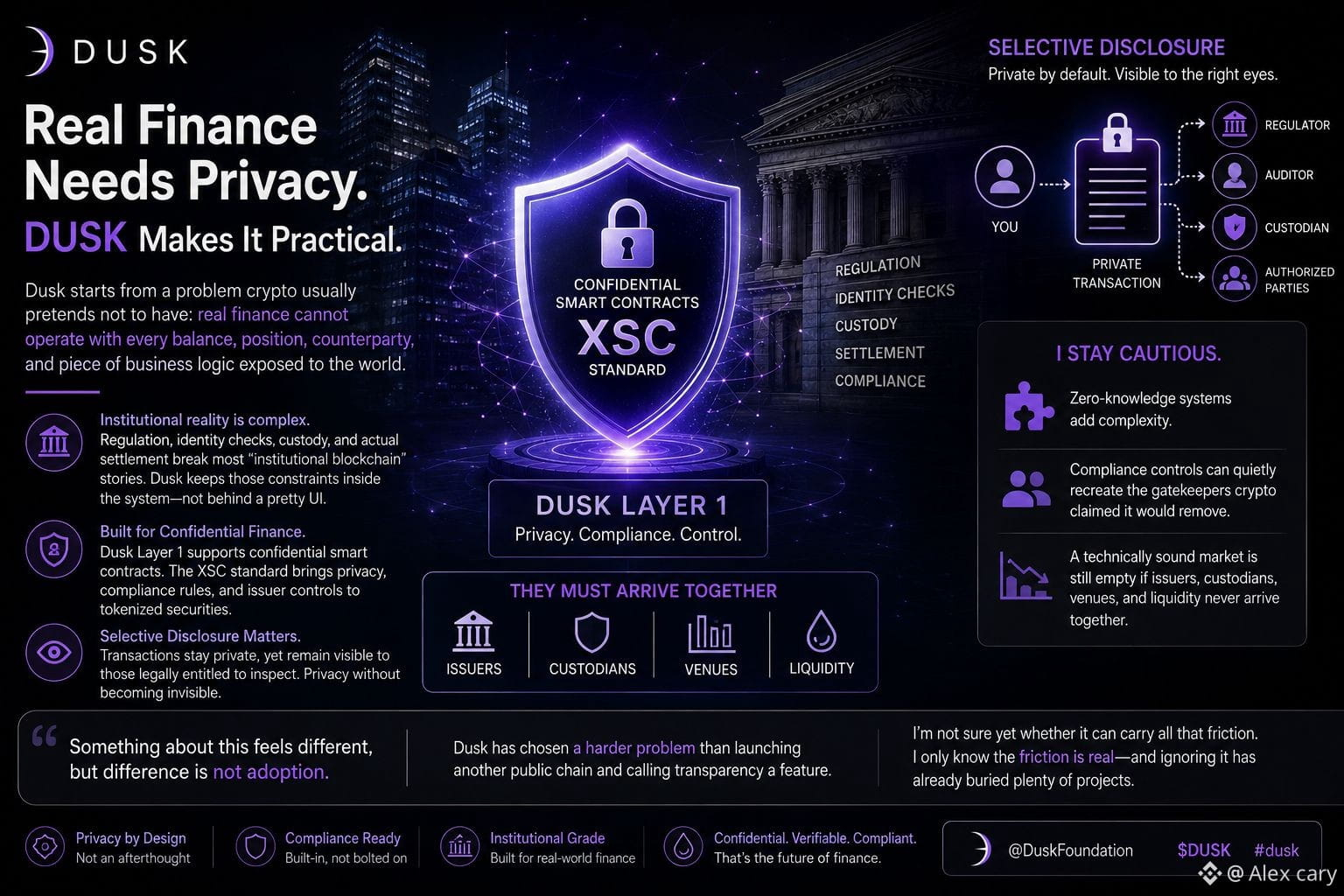
I’ve been noticing Dusk because it starts from a problem crypto usually pretends not to have: real finance cannot operate with every balance, position, counterparty, and piece of business logic exposed to the world.
I’ve watched enough “institutional blockchain” stories fade once regulation, identity checks, custody, and actual settlement enter the room. Dusk is trying to keep those constraints inside the system rather than hiding them behind a polished dashboard. Its Layer 1 supports confidential smart contracts, while the XSC standard is meant to give tokenized securities privacy, compliance rules, and issuer controls. Selective disclosure is the part that keeps pulling me back—the idea that a transaction can remain private without becoming invisible to the parties legally entitled to inspect it.
Still, I don’t fully trust the neat version of that story. Zero-knowledge systems add complexity. Compliance controls can quietly recreate the same gatekeepers crypto claimed it would remove. And a technically sound market is still an empty market if issuers, custodians, venues, and liquidity never arrive together.
Something about this feels different, but difference is not adoption. Dusk has chosen a harder problem than launching another public chain and calling transparency a feature. I’m not sure yet whether it can carry all that friction. I only know the friction is real—and ignoring it has already buried plenty of projects.
@Dusk $DUSK #dusk
I’ve watched enough “institutional blockchain” stories fade once regulation, identity checks, custody, and actual settlement enter the room. Dusk is trying to keep those constraints inside the system rather than hiding them behind a polished dashboard. Its Layer 1 supports confidential smart contracts, while the XSC standard is meant to give tokenized securities privacy, compliance rules, and issuer controls. Selective disclosure is the part that keeps pulling me back—the idea that a transaction can remain private without becoming invisible to the parties legally entitled to inspect it.
Still, I don’t fully trust the neat version of that story. Zero-knowledge systems add complexity. Compliance controls can quietly recreate the same gatekeepers crypto claimed it would remove. And a technically sound market is still an empty market if issuers, custodians, venues, and liquidity never arrive together.
Something about this feels different, but difference is not adoption. Dusk has chosen a harder problem than launching another public chain and calling transparency a feature. I’m not sure yet whether it can carry all that friction. I only know the friction is real—and ignoring it has already buried plenty of projects.
@Dusk $DUSK #dusk