
加密不甜
166 Posts
Posts
All
Quotes

Verified
Nick Timiraos: Waller stance shifts to a more moderate tone; whether to raise rates in September depends on August inflation
The Federal Reserve Governor Waller’s reaction path for the Sept. 15–16 policy meeting is already quite clear: if inflation continues trending toward the 2% target, keep interest rates unchanged; if the August inflation data comes in too high, consider a rate hike.
Wait for the August inflation data.
This round of sentiment rebound—it's all about whether $BTC can break above the previous high.
If it breaks through, then open a trade.
The Federal Reserve Governor Waller’s reaction path for the Sept. 15–16 policy meeting is already quite clear: if inflation continues trending toward the 2% target, keep interest rates unchanged; if the August inflation data comes in too high, consider a rate hike.
Wait for the August inflation data.
This round of sentiment rebound—it's all about whether $BTC can break above the previous high.
If it breaks through, then open a trade.
9 Meme Launchers on the Robinhood Chain
Collectors who love memes, save this
The logic of investing in a casino is definitely right
$HOOD
Collectors who love memes, save this
The logic of investing in a casino is definitely right
$HOOD
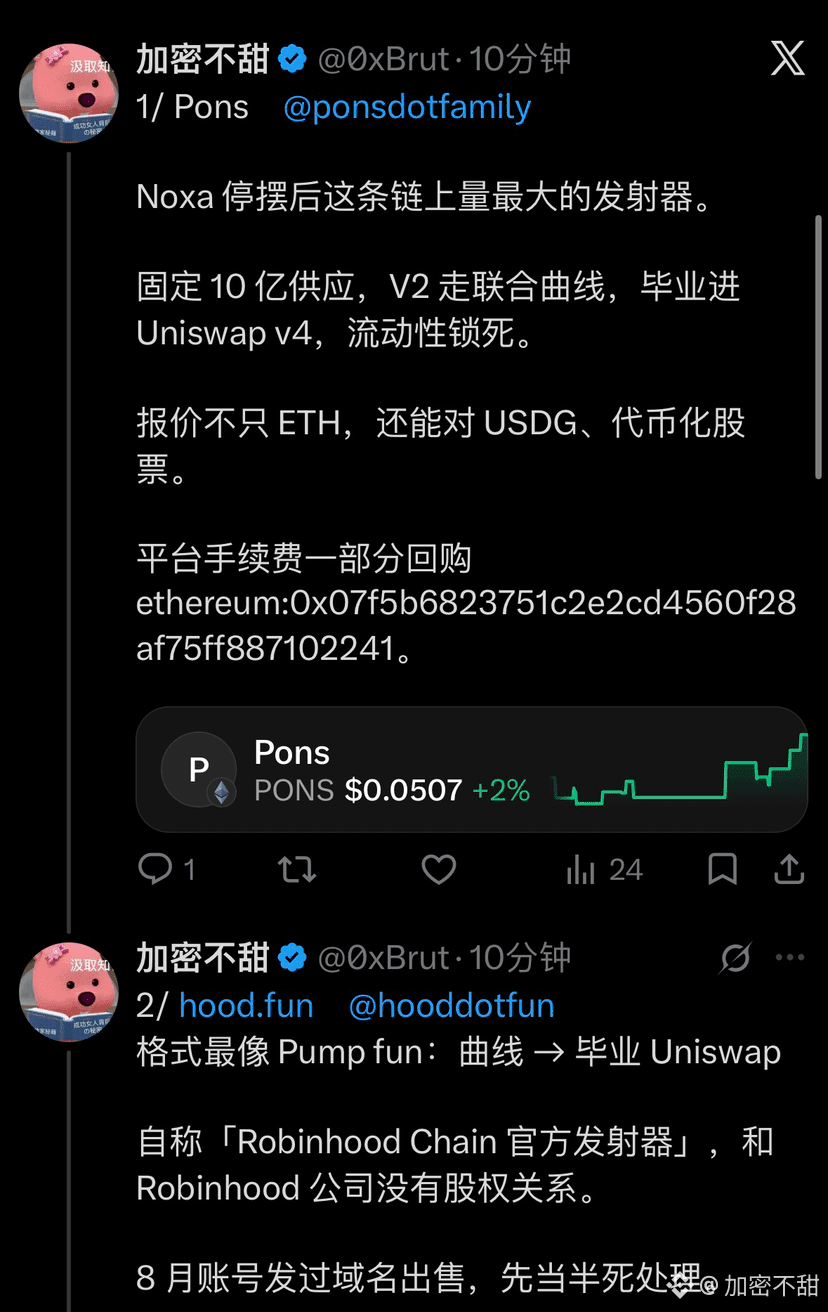
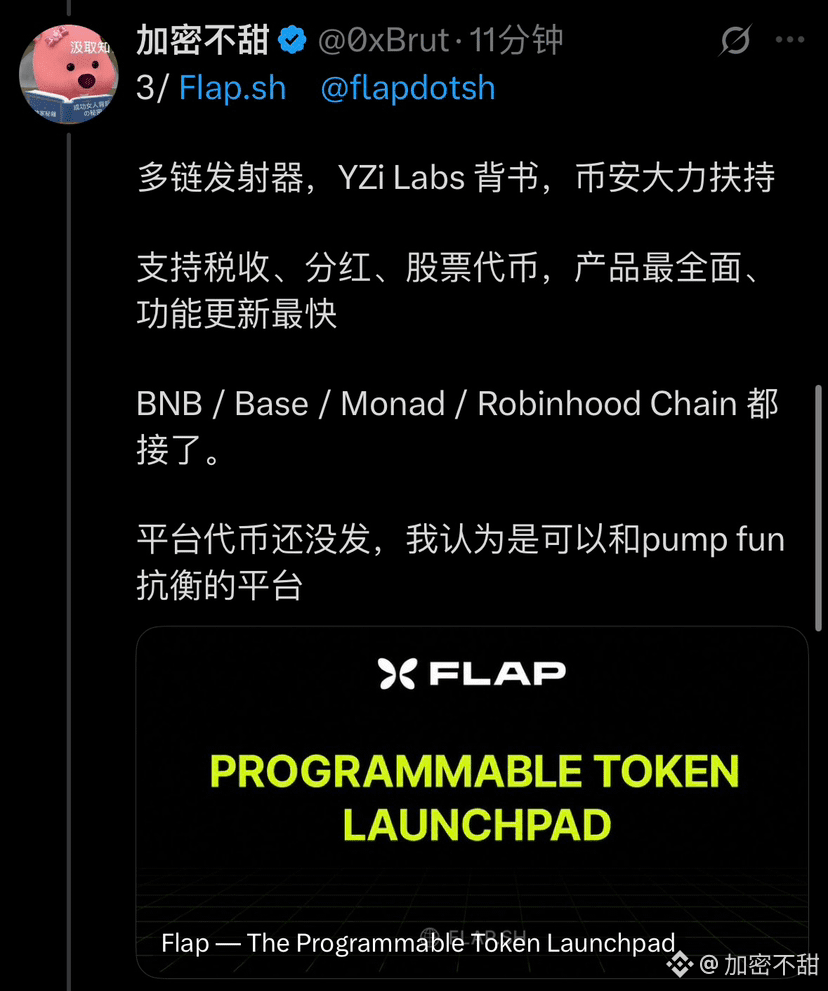
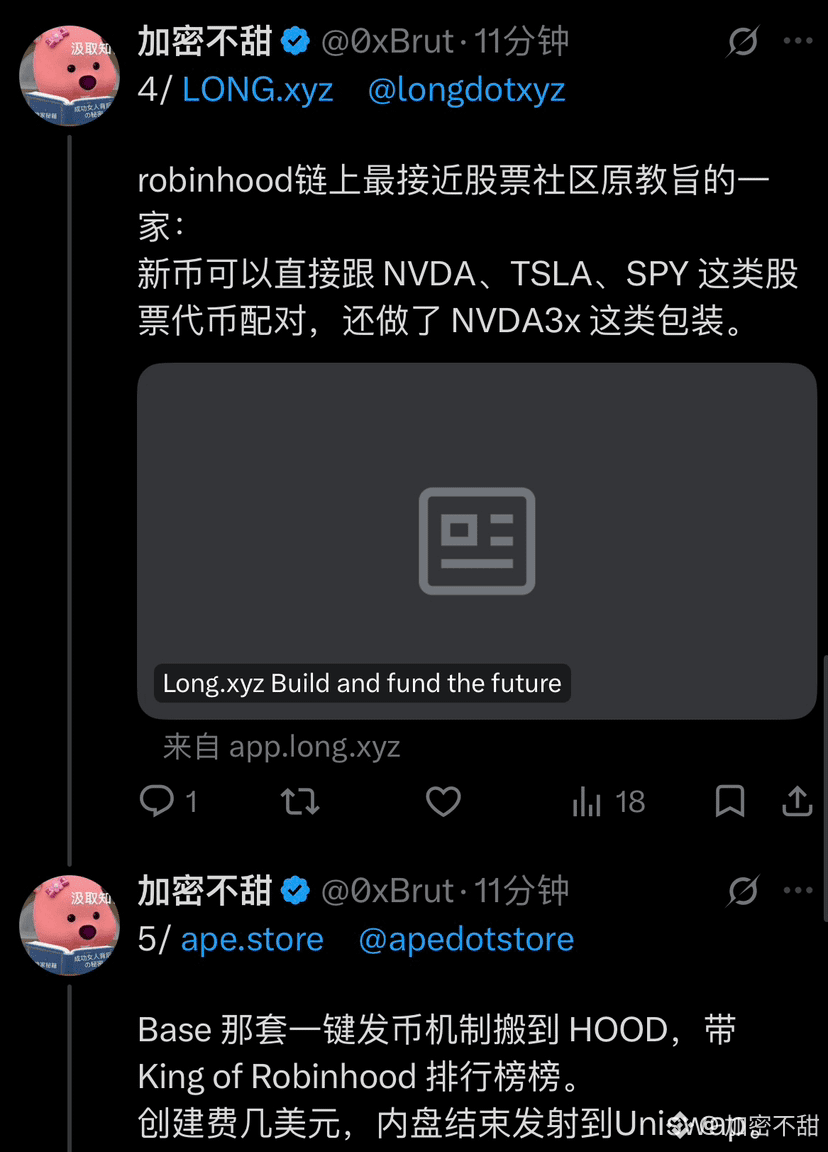
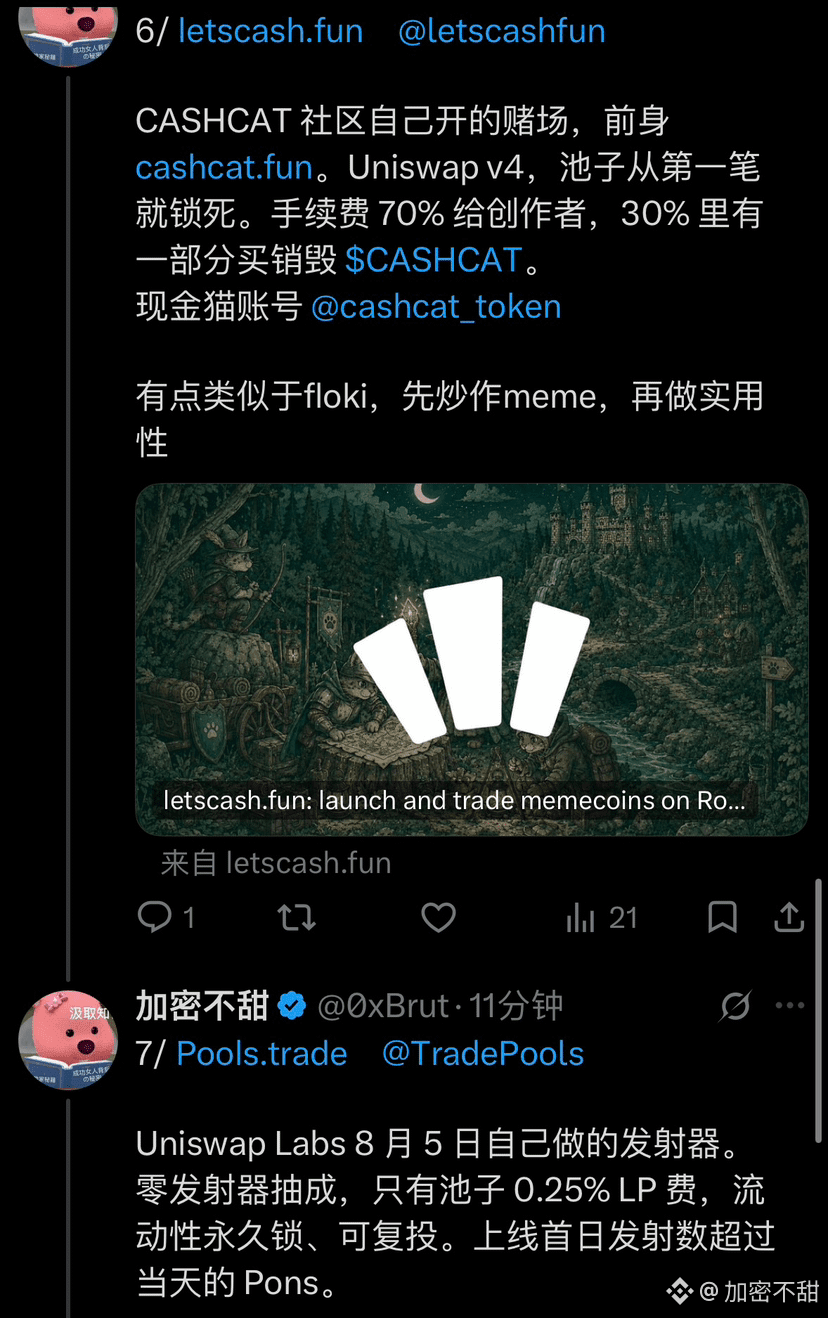
Verified
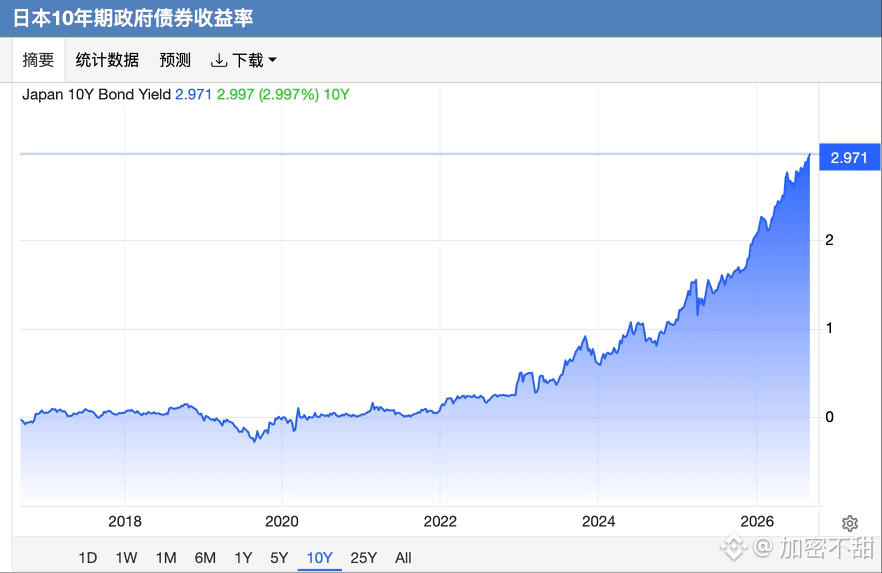
Japan 10-year government bond yield hits 3% for the first time in 30 years,
then falls back to 2.97%
Japanese bond yields have stayed at low levels for the past 30 years. During the past two years’ period of rising rates, they have continued to attract funds back into Japan to run carry trades.
On Wednesday, Japan Bank board member Hajime Takada raised the possibility of increasing or continuing rate hikes to curb upward inflation pressures.
There are two key points to watch:
The boom in Japanese equities driven by funds flowing back into Japan—focus on the RWA platform that will support trading Japanese equities.
U.S. Treasuries are being sold off, money is fleeing, the dollar keeps depreciating, and gold could still rise.
Japanese government bonds are the world’s third-largest bond market. Over the past 30 years, they have played a special role: a financing currency with the lowest cost globally.
As a result, large institutions have long been running arbitrage trades by borrowing Japanese yen and buying U.S. Treasuries, aiming for near-risk-free returns of about 3%-5%.
The Bank of Japan’s policy rate is already at 1%. The probability of the September 17–18 meeting raising it to 1.25% has been priced in at about 80–90%. Two-year government bond yields are around 1.85%, indicating that rate hikes are already being priced in.
Loose fiscal policy and expectations of additional debt issuance. The Saito Hayashi government is pursuing an aggressive fiscal stance, with a record budget request for the fiscal year 2027 of about 143 trillion yen. Debt/GDP remains above 230%.
Long-dated bonds are being dumped by risk-averse funds. Selling pressure leads to falling bond prices and rising yields to maturity. U.S. 10-year yields are around 4.8%, and U.K. and German yields have risen in sync to multi-year highs.
With the need for dollar depreciation, Finance Minister Besant—during the G20—openly expressed a hope that the Bank of Japan would take actions to “strengthen the yen,” lowering the USD/JPY exchange rate and improving the cost-effectiveness of buying dollars.
From this, it’s clear that there is also significant pressure on the dollar and U.S. Treasuries.
This time, when Japanese bond yields break 3%, it creates an opportunity for yen-denominated assets to compete for capital with dollar-denominated assets.$XAU
then falls back to 2.97%
Japanese bond yields have stayed at low levels for the past 30 years. During the past two years’ period of rising rates, they have continued to attract funds back into Japan to run carry trades.
On Wednesday, Japan Bank board member Hajime Takada raised the possibility of increasing or continuing rate hikes to curb upward inflation pressures.
There are two key points to watch:
The boom in Japanese equities driven by funds flowing back into Japan—focus on the RWA platform that will support trading Japanese equities.
U.S. Treasuries are being sold off, money is fleeing, the dollar keeps depreciating, and gold could still rise.
Japanese government bonds are the world’s third-largest bond market. Over the past 30 years, they have played a special role: a financing currency with the lowest cost globally.
As a result, large institutions have long been running arbitrage trades by borrowing Japanese yen and buying U.S. Treasuries, aiming for near-risk-free returns of about 3%-5%.
The Bank of Japan’s policy rate is already at 1%. The probability of the September 17–18 meeting raising it to 1.25% has been priced in at about 80–90%. Two-year government bond yields are around 1.85%, indicating that rate hikes are already being priced in.
Loose fiscal policy and expectations of additional debt issuance. The Saito Hayashi government is pursuing an aggressive fiscal stance, with a record budget request for the fiscal year 2027 of about 143 trillion yen. Debt/GDP remains above 230%.
Long-dated bonds are being dumped by risk-averse funds. Selling pressure leads to falling bond prices and rising yields to maturity. U.S. 10-year yields are around 4.8%, and U.K. and German yields have risen in sync to multi-year highs.
With the need for dollar depreciation, Finance Minister Besant—during the G20—openly expressed a hope that the Bank of Japan would take actions to “strengthen the yen,” lowering the USD/JPY exchange rate and improving the cost-effectiveness of buying dollars.
From this, it’s clear that there is also significant pressure on the dollar and U.S. Treasuries.
This time, when Japanese bond yields break 3%, it creates an opportunity for yen-denominated assets to compete for capital with dollar-denominated assets.$XAU
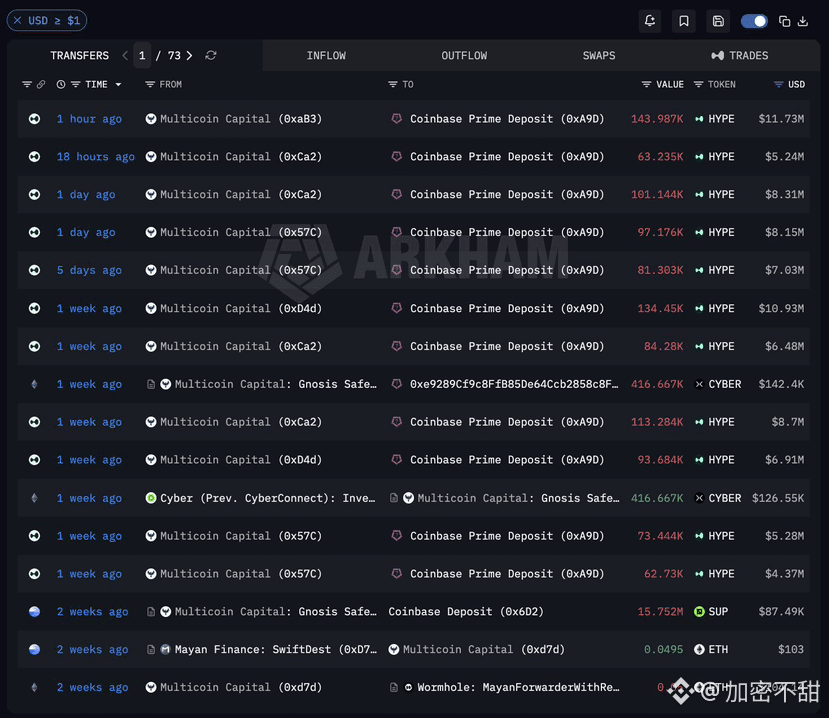
Multicoin just sold another 10% of their $HYPE holdings.
HYPE is Multicoin’s largest holding; its current value is $90.5 million.
Between February and March this year, they accumulated HYPE and now have held it for more than 6 months.
At its peak, they held 4 million HYPE tokens, and now they hold only 25% of the original amount.
HYPE is Multicoin’s largest holding; its current value is $90.5 million.
Between February and March this year, they accumulated HYPE and now have held it for more than 6 months.
At its peak, they held 4 million HYPE tokens, and now they hold only 25% of the original amount.
The rebound strength is still quite strong. I cashed out and took profit first.
Challenge: turn 100U into 10,000U.
Current progress: 931U.
8 PM tonight: I'll give everyone a red packet 🧧 with 1% of the profit.
Challenge: turn 100U into 10,000U.
Current progress: 931U.
8 PM tonight: I'll give everyone a red packet 🧧 with 1% of the profit.
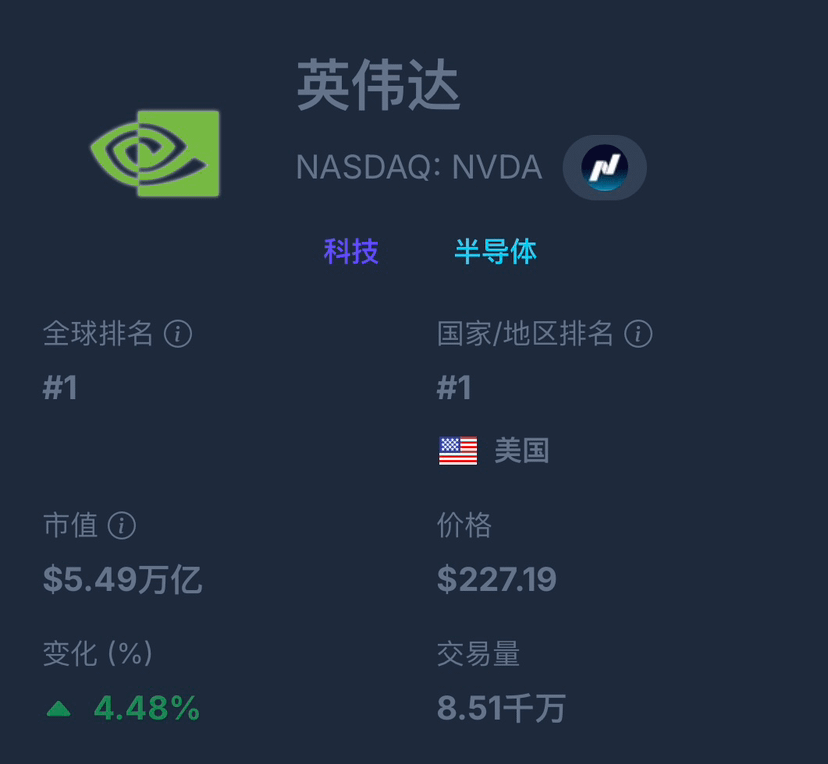
$NVDA Tell JP Morgan that their income could increase by 100% or more on a year-over-year basis without limits.
But in the end, they gave a growth forecast of about 70%, because that's the level Nvidia believes they can supply.
FY27 expected: about $401 billion in revenue...
FY28: $682 billion based on 70%, or more than $802 billion without limits.
Nvidia’s market cap has already surpassed $5 trillion, with a P/E ratio of less than 30.
If revenue grows another 100%, the market cap would be $10 trillion.
Hard to imagine such a universe’s No. 1 stock.
But in the end, they gave a growth forecast of about 70%, because that's the level Nvidia believes they can supply.
FY27 expected: about $401 billion in revenue...
FY28: $682 billion based on 70%, or more than $802 billion without limits.
Nvidia’s market cap has already surpassed $5 trillion, with a P/E ratio of less than 30.
If revenue grows another 100%, the market cap would be $10 trillion.
Hard to imagine such a universe’s No. 1 stock.
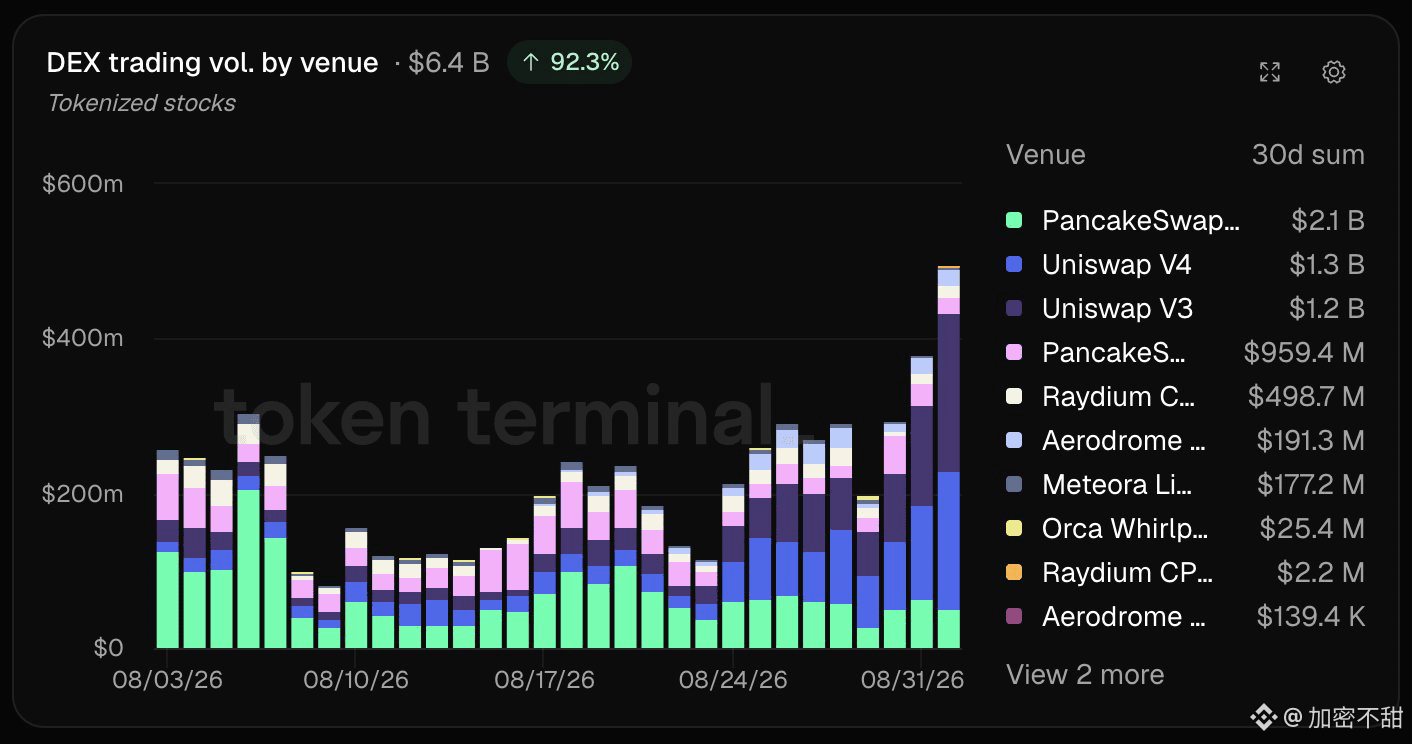
Tokenized stocks generated $6.4 billion in DEX trading volume over the past 30 days, up 92.3% from the previous period.
Across the different versions, PancakeSwap accounted for $3.1 billion and Uniswap for $2.5 billion.
Together, these two DEXes generated $5.6 billion in stock token trading volume.
But in the short term, buying these two offers very poor value for money. Now there are also some short-selling signals for Cake. Wait until the price drops.
$CAKE
$UNI
Across the different versions, PancakeSwap accounted for $3.1 billion and Uniswap for $2.5 billion.
Together, these two DEXes generated $5.6 billion in stock token trading volume.
But in the short term, buying these two offers very poor value for money. Now there are also some short-selling signals for Cake. Wait until the price drops.
$CAKE
$UNI
Save US stock research tools
Screen stocks, view charts, break down earnings reports, follow institutions, and look at executives
1. Fundamentals of listed companies
@KoyfinCharts
koyfin.com
Earnings reports, estimates, ETFs, and macro—an affordable version of a terminal.
@TIKRTeam
tikr.com
Deconstruct companies, compare peers, and review historical multiples.
@SeekingAlpha
seekingalpha.com
Long/short research reports + Quant—mixed quality, use it to cross-check viewpoints.
@MorningstarInc
morningstar.com
Moat analysis, fair value—more long-term oriented.
@simplywallst
simplywall.st
One chart to see whether this company is over/underpriced and whether it’s profitable.
2. Stock price and market data
@finviz
finviz.com
Heatmaps + rule-based stock screening—free is good enough.
@YahooFinance
finance.yahoo.com
Quotes, news, earnings calendar—default entry point for beginners.
@tradingview
tradingview.com
Best charts—research is more technical.
3. Big-player trading: who’s buying and who’s shorting
@whalewisdom
whalewisdom.com
Quarterly holdings of Buffett and Bridgewater.
@fintel_io
fintel.io
Institutions, short selling, unusual options activity, and ETF components.
@unusual_whales
unusualwhales.com
Large options orders, dark pool activity, and transactions by officials.
@QuiverQuant
quiverquant.com
Alternative data such as Congress, contracts, lobbying, and more.
@SECGov
sec.gov/edgar
Insider trades and US officials’ holdings
OpenInsider
openinsider.com
Executive holdings
$NVDA
Screen stocks, view charts, break down earnings reports, follow institutions, and look at executives
1. Fundamentals of listed companies
@KoyfinCharts
koyfin.com
Earnings reports, estimates, ETFs, and macro—an affordable version of a terminal.
@TIKRTeam
tikr.com
Deconstruct companies, compare peers, and review historical multiples.
@SeekingAlpha
seekingalpha.com
Long/short research reports + Quant—mixed quality, use it to cross-check viewpoints.
@MorningstarInc
morningstar.com
Moat analysis, fair value—more long-term oriented.
@simplywallst
simplywall.st
One chart to see whether this company is over/underpriced and whether it’s profitable.
2. Stock price and market data
@finviz
finviz.com
Heatmaps + rule-based stock screening—free is good enough.
@YahooFinance
finance.yahoo.com
Quotes, news, earnings calendar—default entry point for beginners.
@tradingview
tradingview.com
Best charts—research is more technical.
3. Big-player trading: who’s buying and who’s shorting
@whalewisdom
whalewisdom.com
Quarterly holdings of Buffett and Bridgewater.
@fintel_io
fintel.io
Institutions, short selling, unusual options activity, and ETF components.
@unusual_whales
unusualwhales.com
Large options orders, dark pool activity, and transactions by officials.
@QuiverQuant
quiverquant.com
Alternative data such as Congress, contracts, lobbying, and more.
@SECGov
sec.gov/edgar
Insider trades and US officials’ holdings
OpenInsider
openinsider.com
Executive holdings
$NVDA
#沙特称伊朗在霍尔木兹袭击其船只
Truly hard to deal with—should definitely stay bullish on crude oil
Next time, remember this: the event-driven commodity certainty is still very strong
$BZ
Truly hard to deal with—should definitely stay bullish on crude oil
Next time, remember this: the event-driven commodity certainty is still very strong
$BZ
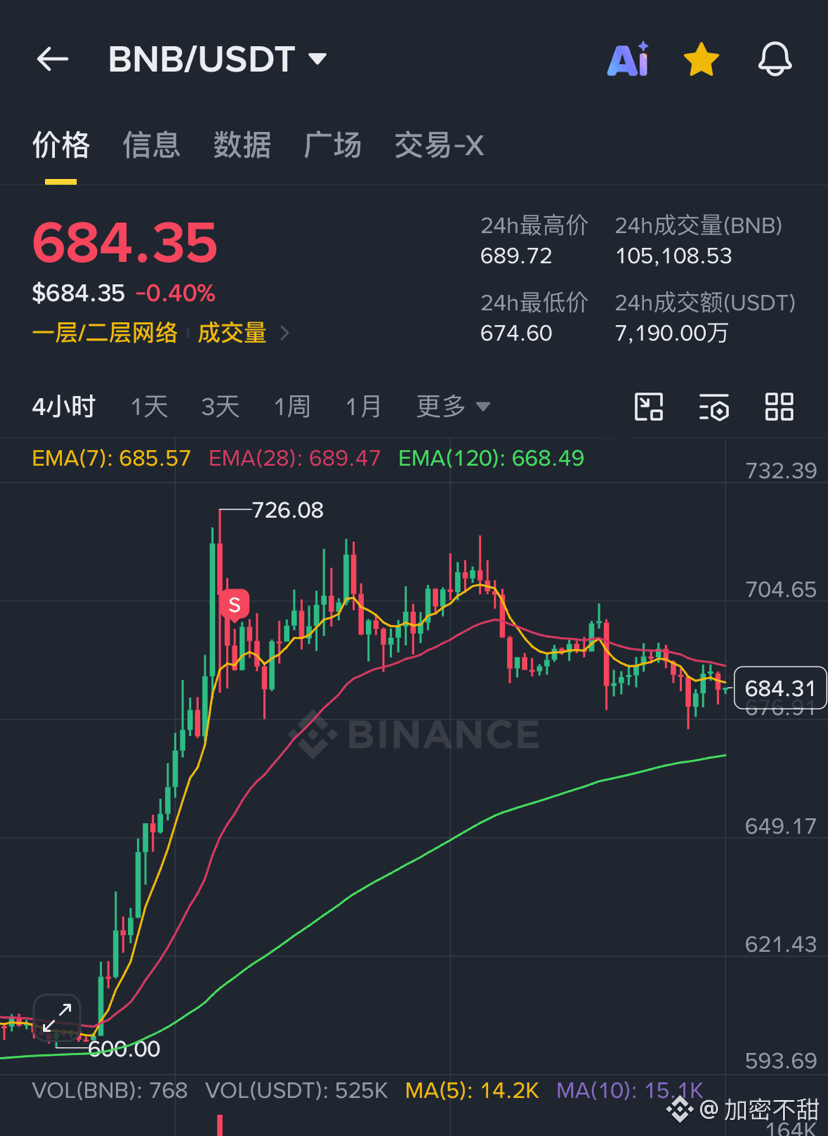
Keep your word — give everyone a 1% profit bonus in red envelopes
加密不甜
·
--
$WLD signal comparison is confusing; first exit and observe
Turn 100U into 10000U
Current progress is 854U
Give everyone a red packet with 1% of the profits—quick, join my red packet group
Compared to shorting, I still prefer going long
Turn 100U into 10000U
Current progress is 854U
Give everyone a red packet with 1% of the profits—quick, join my red packet group
Compared to shorting, I still prefer going long

大吉大利!
From 加密不甜
$WLD signal comparison is confusing; first exit and observe
Turn 100U into 10000U
Current progress is 854U
Give everyone a red packet with 1% of the profits—quick, join my red packet group
Compared to shorting, I still prefer going long
Turn 100U into 10000U
Current progress is 854U
Give everyone a red packet with 1% of the profits—quick, join my red packet group
Compared to shorting, I still prefer going long
$UNI
The unicorn is getting serious!
The unicorn is getting serious!
加密不甜
·
--
The market has been falling hard lately, and major coins are all crying out in despair.
Only $UNI is somewhat special: in two months it rose from 2.3 to nearly 4.6—almost a doubling.
Last December, Uniswap passed a proposal:
all the protocol’s revenue would be used to buy UNI and permanently burn it.
The day the news broke, it jumped nearly 50%, but when the broader market weakened, it slid back again.
The real turning point was July 1.
Robinhood Chain launched, and Uniswap deployed there the same day—V2, V3, and hooks all went live.
Within a few days, daily trading volume was pushed to 500 million, and the cumulative total broke 1 billion.
In the first week, it contributed nearly half of Uniswap’s fees.
Daily fees even reached as high as $5.2 million.
Protocol revenue rose by roughly three times: the amount burned per day went from 110,000 to more than 320,000.
Now many projects are doing buyback-and-burn.
So why did UNI rise so noticeably?
Look at the essence: it’s not the mechanism, it’s the structure of the order flow and holdings.
UNI is an old coin that was fully issued as far back as 2020. The supply is already widely distributed, with no large unlocks looming to apply pressure.
The buy pressure from the buybacks is real—directly hitting the secondary market.
For many new projects, the unlock volume is far larger than the buyback volume, so burning basically doesn’t matter.
Robinhood Chain subsidies continue, and $UNI ’s buybacks continue
#uniswap
Only $UNI is somewhat special: in two months it rose from 2.3 to nearly 4.6—almost a doubling.
Last December, Uniswap passed a proposal:
all the protocol’s revenue would be used to buy UNI and permanently burn it.
The day the news broke, it jumped nearly 50%, but when the broader market weakened, it slid back again.
The real turning point was July 1.
Robinhood Chain launched, and Uniswap deployed there the same day—V2, V3, and hooks all went live.
Within a few days, daily trading volume was pushed to 500 million, and the cumulative total broke 1 billion.
In the first week, it contributed nearly half of Uniswap’s fees.
Daily fees even reached as high as $5.2 million.
Protocol revenue rose by roughly three times: the amount burned per day went from 110,000 to more than 320,000.
Now many projects are doing buyback-and-burn.
So why did UNI rise so noticeably?
Look at the essence: it’s not the mechanism, it’s the structure of the order flow and holdings.
UNI is an old coin that was fully issued as far back as 2020. The supply is already widely distributed, with no large unlocks looming to apply pressure.
The buy pressure from the buybacks is real—directly hitting the secondary market.
For many new projects, the unlock volume is far larger than the buyback volume, so burning basically doesn’t matter.
Robinhood Chain subsidies continue, and $UNI ’s buybacks continue
#uniswap
Helping an elder lady down the stairs
Give everyone红包 with 1% of our profits—join the红包 group fast 🧧
Give everyone红包 with 1% of our profits—join the红包 group fast 🧧
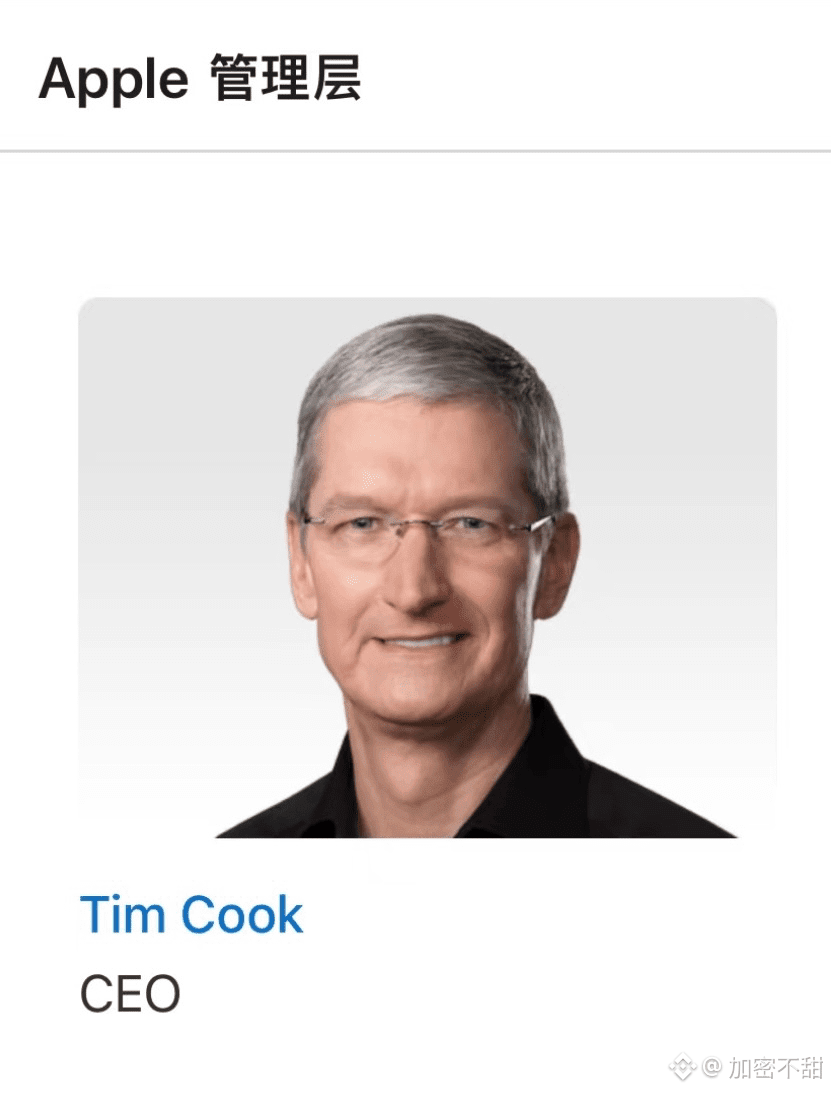
Tim Cook @tim_cook
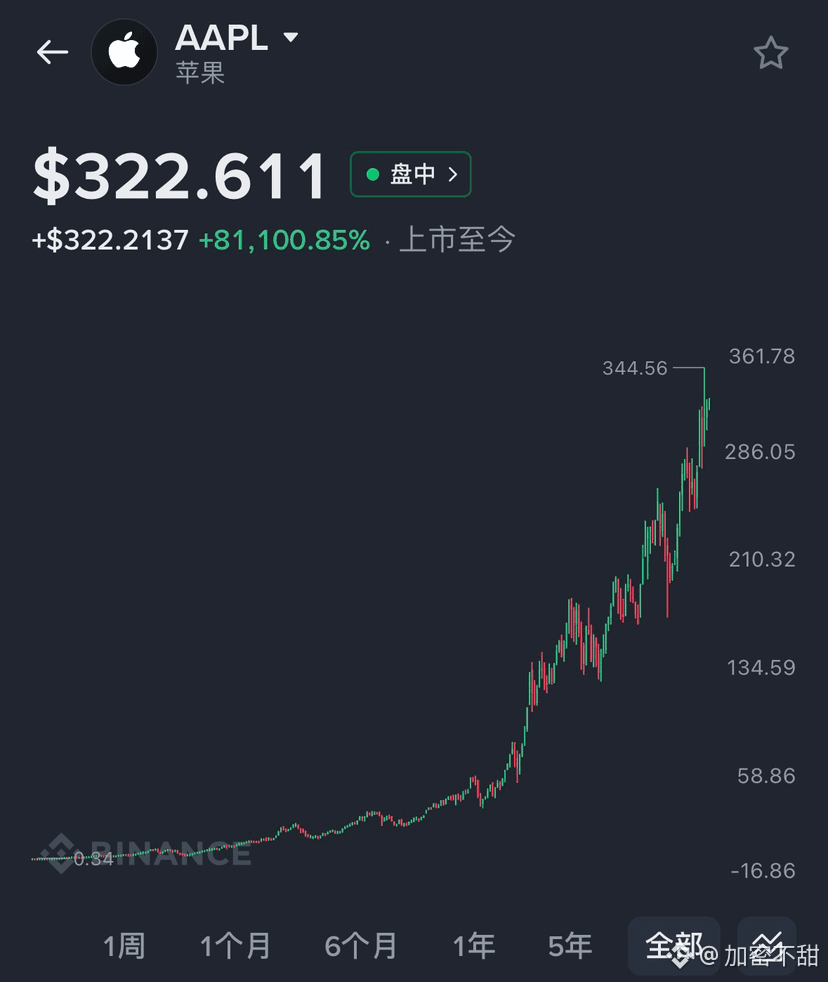
Leading Apple $AAPL toward a top-level CEO valuation of $4.6 trillion
Born on November 1, 1960, in Mobile, Alabama, USA, and raised in Robertsdale.
His father, Donald, worked in a shipyard; his mother, Geraldine, worked at a pharmacy. There were three brothers in the family, and he was the second.
As a teenager, he delivered newspapers, took jobs, and played the trumpet. He isn’t the kind of garage genius from the Silicon Valley myth—he’s an industrial engineer who came out of a small town in the American South.
After graduating high school in 1978, he enrolled at Auburn University, earning a bachelor’s degree in Industrial Engineering in 1982.
He then joined IBM, spending twelve years in the personal computer business and rising to become North America Fulfillment Director.
During that time, he pursued an MBA part-time at Duke University’s Fuqua School of Business, graduating in 1988.
He has always been more willing to see himself as an engineer than as a top-level manager who parachuted in from business school.
In 1994, he left IBM and became Chief Operating Officer of the distribution business for Intelligent Electronics; in 1997, he briefly joined Compaq as Vice President of Corporate Materials, staying for about half a year.
The turning point came in March 1998. Steve Jobs personally came knocking and asked him to go to Apple, which was still perched on the edge of a cliff, to overhaul global operations. Cook agreed. He compressed inventory, reshaped the supply chain, and turned production from chaos into a machine that could be scaled and replicated.
What the public remembers are iMac, iPod, and iPhone—few people see the capability behind it that locks together parts, factories, and delivery dates.
In 2005, he became Chief Operating Officer; when Jobs took leave due to illness, he temporarily served as CEO three times.
On August 24, 2011, Jobs resigned. Cook officially took over and joined the board. At that time, Apple’s market value was about $350 billion—most outsiders wondered: could an operations expert hold on to a company built on product imagination and personal charisma?
The answer given by fifteen years was another kind of greatness.
Apple didn’t have another Jobs-style single-point breakthrough, but it grew into a larger, steadier machine: its market value crossed $1T, $2T, and $3T in sequence; in 2025 to 2026 it even touched the $4T to $5T range.
Revenue rose from about $108 billion per year at the time he took over to exceeding that figure within a single quarter.
Leading Apple $AAPL toward a top-level CEO valuation of $4.6 trillion
Born on November 1, 1960, in Mobile, Alabama, USA, and raised in Robertsdale.
His father, Donald, worked in a shipyard; his mother, Geraldine, worked at a pharmacy. There were three brothers in the family, and he was the second.
As a teenager, he delivered newspapers, took jobs, and played the trumpet. He isn’t the kind of garage genius from the Silicon Valley myth—he’s an industrial engineer who came out of a small town in the American South.
After graduating high school in 1978, he enrolled at Auburn University, earning a bachelor’s degree in Industrial Engineering in 1982.
He then joined IBM, spending twelve years in the personal computer business and rising to become North America Fulfillment Director.
During that time, he pursued an MBA part-time at Duke University’s Fuqua School of Business, graduating in 1988.
He has always been more willing to see himself as an engineer than as a top-level manager who parachuted in from business school.
In 1994, he left IBM and became Chief Operating Officer of the distribution business for Intelligent Electronics; in 1997, he briefly joined Compaq as Vice President of Corporate Materials, staying for about half a year.
The turning point came in March 1998. Steve Jobs personally came knocking and asked him to go to Apple, which was still perched on the edge of a cliff, to overhaul global operations. Cook agreed. He compressed inventory, reshaped the supply chain, and turned production from chaos into a machine that could be scaled and replicated.
What the public remembers are iMac, iPod, and iPhone—few people see the capability behind it that locks together parts, factories, and delivery dates.
In 2005, he became Chief Operating Officer; when Jobs took leave due to illness, he temporarily served as CEO three times.
On August 24, 2011, Jobs resigned. Cook officially took over and joined the board. At that time, Apple’s market value was about $350 billion—most outsiders wondered: could an operations expert hold on to a company built on product imagination and personal charisma?
The answer given by fifteen years was another kind of greatness.
Apple didn’t have another Jobs-style single-point breakthrough, but it grew into a larger, steadier machine: its market value crossed $1T, $2T, and $3T in sequence; in 2025 to 2026 it even touched the $4T to $5T range.
Revenue rose from about $108 billion per year at the time he took over to exceeding that figure within a single quarter.
加密不甜
·
--
Sun Yuchen (Justin Sun) @justinsuntron
Nicknames: Sun Ge / Sun Ge (割)
Born in 1990, he is 36 years old this year.
TRON @trondao founder, and one of the most prominent—and most controversial—Chinese entrepreneurs in the crypto industry over the past decade.
In 2007, he won first prize in the 9th New Concept Essay Competition. This earned him eligibility for Peking University’s independent admissions. After the college entrance exam, he entered Peking University’s Chinese Language and Literature program, later transferred to the History Department, and graduated early in 2011 as the top student in his grade.
That same year, he appeared on the cover of Asia Weekly. He then went to the University of Pennsylvania in the United States to pursue a master’s degree in East Asian Studies. During his time at Penn, he became exposed to Bitcoin and began investing in crypto assets.
At the end of 2013, he joined Ripple Labs as the Chief Representative for Greater China, becoming one of the earlier blockchain evangelists in China. After returning to China, he founded the voice social app “Im With You” (陪我) and the related company Raybo (锐波). In 2015, he entered the first cohort of the Lake Benaissance Institute founded by Jack Ma, at the time the only post-1990s student in the program.
What truly changed his trajectory was 2017. He founded TRON, positioning it as a decentralized content and smart contract platform. On the eve of China’s comprehensive crackdown on ICOs, he completed the token issuance, raising about $70 million.
After that, TRON expanded rapidly: in 2018, it acquired BitTorrent for about $140 million; it promoted TRC20-USDT, making TRON one of the world’s most prominent stablecoin settlement networks; and it also formed deep ties with exchanges such as Poloniex and Huobi (later renamed HTX).
By the mid-2020s, TRON had hundreds of millions of accounts. The amount of stablecoins on-chain has long ranked near the top. In 2025, a related company obtained a Nasdaq listing via a reverse merger, and the stock code was changed to TRON.
He is very good at jumping on trending topics and doing marketing.
In 2019, he paid about $4.57 million to bid for the opportunity to have lunch with Warren Buffett, briefly setting a record. Later, he also became a focus of public attention due to controversy over his itinerary.
In 2024, he paid about $6.2 million to buy the artwork “Comedian,” a banana by Cárten stuck to a wall with tape, and then ate it in public.
In August 2025, he completed a suborbital flight aboard Blue Origin’s new Shepard.
From late 2021 to 2022, he also served as the Grenada ambassador to the World Trade Organization. In recent years, organizations such as Forbes have estimated his net worth at around $8 billion, with his wealth mainly coming from crypto assets and equity in related platforms.
$TRX
Nicknames: Sun Ge / Sun Ge (割)
Born in 1990, he is 36 years old this year.
TRON @trondao founder, and one of the most prominent—and most controversial—Chinese entrepreneurs in the crypto industry over the past decade.
In 2007, he won first prize in the 9th New Concept Essay Competition. This earned him eligibility for Peking University’s independent admissions. After the college entrance exam, he entered Peking University’s Chinese Language and Literature program, later transferred to the History Department, and graduated early in 2011 as the top student in his grade.
That same year, he appeared on the cover of Asia Weekly. He then went to the University of Pennsylvania in the United States to pursue a master’s degree in East Asian Studies. During his time at Penn, he became exposed to Bitcoin and began investing in crypto assets.
At the end of 2013, he joined Ripple Labs as the Chief Representative for Greater China, becoming one of the earlier blockchain evangelists in China. After returning to China, he founded the voice social app “Im With You” (陪我) and the related company Raybo (锐波). In 2015, he entered the first cohort of the Lake Benaissance Institute founded by Jack Ma, at the time the only post-1990s student in the program.
What truly changed his trajectory was 2017. He founded TRON, positioning it as a decentralized content and smart contract platform. On the eve of China’s comprehensive crackdown on ICOs, he completed the token issuance, raising about $70 million.
After that, TRON expanded rapidly: in 2018, it acquired BitTorrent for about $140 million; it promoted TRC20-USDT, making TRON one of the world’s most prominent stablecoin settlement networks; and it also formed deep ties with exchanges such as Poloniex and Huobi (later renamed HTX).
By the mid-2020s, TRON had hundreds of millions of accounts. The amount of stablecoins on-chain has long ranked near the top. In 2025, a related company obtained a Nasdaq listing via a reverse merger, and the stock code was changed to TRON.
He is very good at jumping on trending topics and doing marketing.
In 2019, he paid about $4.57 million to bid for the opportunity to have lunch with Warren Buffett, briefly setting a record. Later, he also became a focus of public attention due to controversy over his itinerary.
In 2024, he paid about $6.2 million to buy the artwork “Comedian,” a banana by Cárten stuck to a wall with tape, and then ate it in public.
In August 2025, he completed a suborbital flight aboard Blue Origin’s new Shepard.
From late 2021 to 2022, he also served as the Grenada ambassador to the World Trade Organization. In recent years, organizations such as Forbes have estimated his net worth at around $8 billion, with his wealth mainly coming from crypto assets and equity in related platforms.
$TRX
Partly True
Wosh’s speech
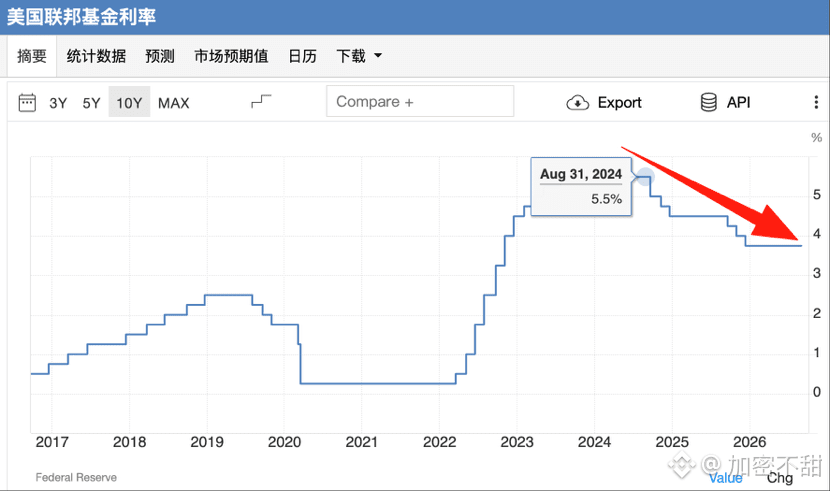
Caused the market to think the probability of a September rate hike rose from 30% to 50%-60%
But considering U.S. Treasury buybacks and the release of M2, I believe the Fed has carried out a two-year easing policy and will not reverse course within the next 6-12 months. It is still too early for a rate-hike cycle
In September, it is likely to maintain the current interest rate
One is that employment is under no pressure: the unemployment rate is about 4.1%, close to full employment; initial unemployment claims are at a multi-year low.
One is that July’s PCE is 3.7%, which refers to the Personal Consumption Expenditures Price Index in the U.S. The long-term target for PCE is 2%, with the purpose of controlling price growth.
But clearly, high growth and low prices cannot be compatible.
Currently, the Fed’s interest rate is 3.75%. At its current level, the PCE is basically at a balance line.
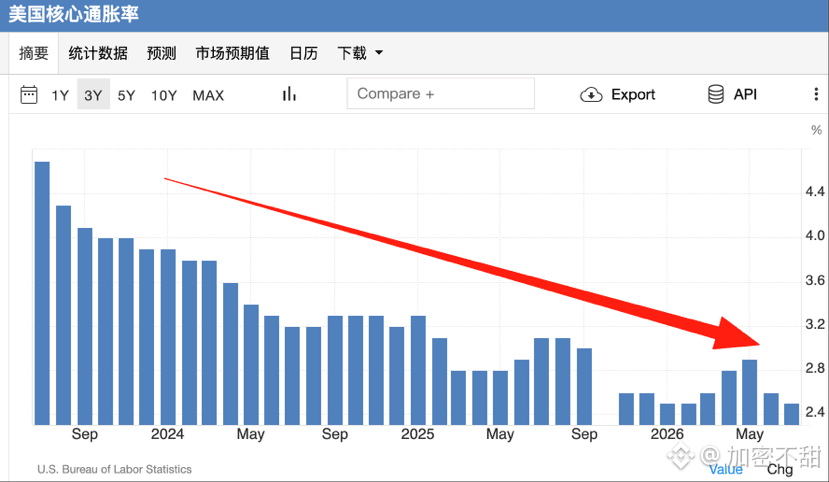
And the CPI consumer index’s data structure is more stable than the PCE: price weights are adjusted once a year, and it places more emphasis on housing. Using it to express inflation is more comprehensive. Currently, CPI is still maintained at a low level of 2.5%.
The economic growth and bull market brought by AI technology are still in the development phase, and it may be another 3-6 months before a peak.
High growth, low unemployment, and inflation that has not broken through the risk-free rate—everything is in a fairly balanced state. There is no need to disrupt that balance.
$NVDAB
Caused the market to think the probability of a September rate hike rose from 30% to 50%-60%
But considering U.S. Treasury buybacks and the release of M2, I believe the Fed has carried out a two-year easing policy and will not reverse course within the next 6-12 months. It is still too early for a rate-hike cycle
In September, it is likely to maintain the current interest rate
One is that employment is under no pressure: the unemployment rate is about 4.1%, close to full employment; initial unemployment claims are at a multi-year low.
One is that July’s PCE is 3.7%, which refers to the Personal Consumption Expenditures Price Index in the U.S. The long-term target for PCE is 2%, with the purpose of controlling price growth.
But clearly, high growth and low prices cannot be compatible.
Currently, the Fed’s interest rate is 3.75%. At its current level, the PCE is basically at a balance line.
And the CPI consumer index’s data structure is more stable than the PCE: price weights are adjusted once a year, and it places more emphasis on housing. Using it to express inflation is more comprehensive. Currently, CPI is still maintained at a low level of 2.5%.
The economic growth and bull market brought by AI technology are still in the development phase, and it may be another 3-6 months before a peak.
High growth, low unemployment, and inflation that has not broken through the risk-free rate—everything is in a fairly balanced state. There is no need to disrupt that balance.
$NVDAB
Log in to explore more content