
NDB37
46 Posts

NDB37
Report
Block User
Open Trade

U Holder
Frequent Trader
8.8 Years
6 Following
0 Followers
6 Liked
Posts
Portfolio
·
--
Bullish
If you focus only on predictions, you may miss other ways to accumulate Scores in Binance Pick.
The task categories announced by Binance include:
- Daily Check-in.
- Referrals.
- Spot/Convert/Futures Trading.
- Posting on Binance Square.
- Refill Station.
Specific tasks may vary by region and account. We recommend checking the campaign page directly every day.
#BinancePick $BTC $BNB
{future}(BTCUSDT)
If you focus only on predictions, you may miss other ways to accumulate Scores in Binance Pick.
The task categories announced by Binance include:
- Daily Check-in.
- Referrals.
- Spot/Convert/Futures Trading.
- Posting on Binance Square.
- Refill Station.
Specific tasks may vary by region and account. We recommend checking the campaign page directly every day.
#BinancePick $BTC $BNB
The task categories announced by Binance include:
- Daily Check-in.
- Referrals.
- Spot/Convert/Futures Trading.
- Posting on Binance Square.
- Refill Station.
Specific tasks may vary by region and account. We recommend checking the campaign page directly every day.
#BinancePick $BTC $BNB
247
·
--
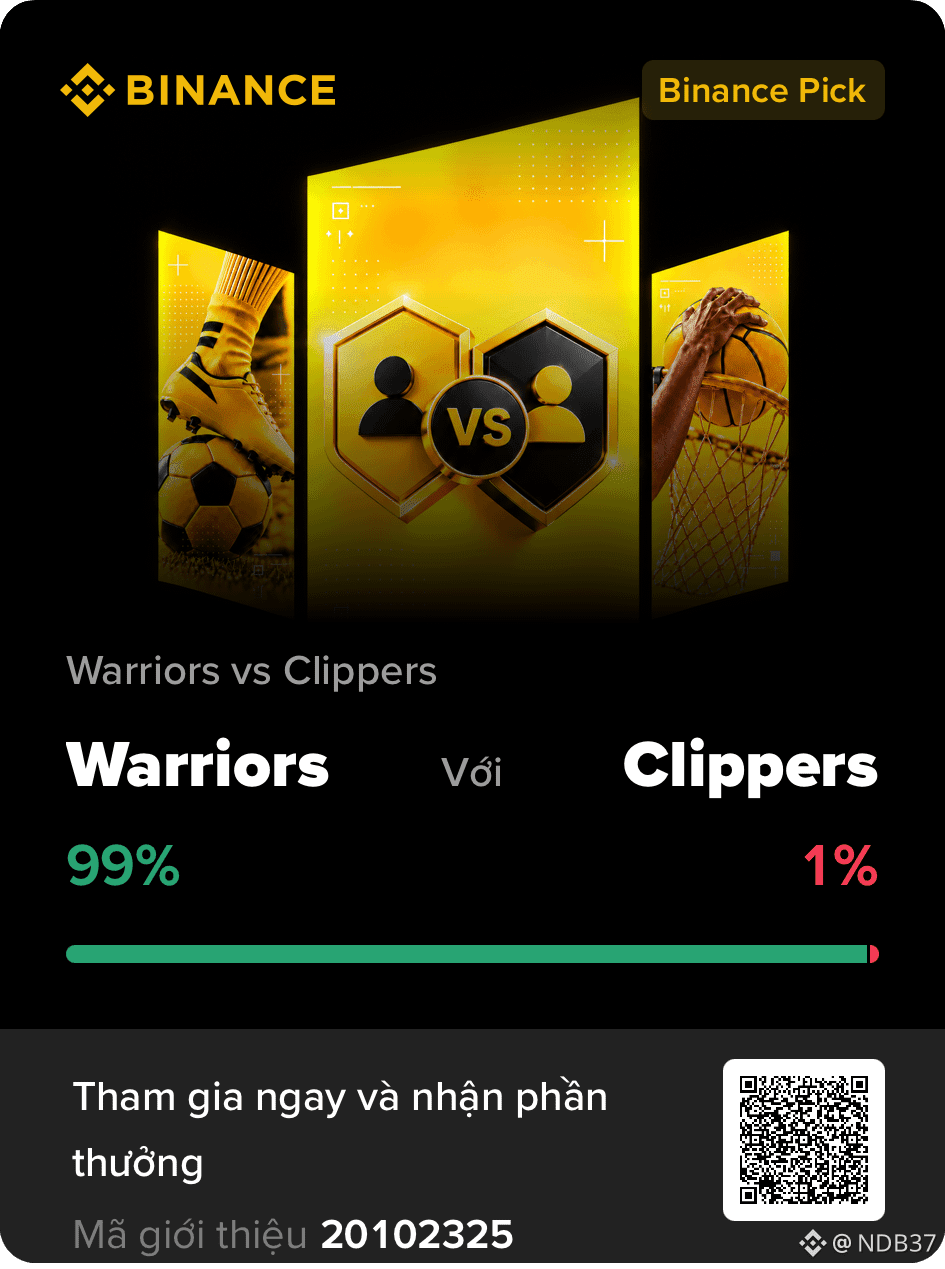
Not making it onto the leaderboard doesn’t mean you’re out of chances.
Binance Pick has set aside 100,000 USDC exclusively for Participation Rewards. Participants who don’t rank on the Season or Weekly Leaderboard and complete at least 5 check-ins during the season may be eligible to share the rewards.
The maximum is 5 USDC per person.
Sometimes, simple tasks are worth keeping up with every day.
#BinancePick
Not making it onto the leaderboard doesn’t mean you’re out of chances.
Binance Pick has set aside 100,000 USDC exclusively for Participation Rewards. Participants who don’t rank on the Season or Weekly Leaderboard and complete at least 5 check-ins during the season may be eligible to share the rewards.
The maximum is 5 USDC per person.
Sometimes, simple tasks are worth keeping up with every day.
#BinancePick
Binance Pick has set aside 100,000 USDC exclusively for Participation Rewards. Participants who don’t rank on the Season or Weekly Leaderboard and complete at least 5 check-ins during the season may be eligible to share the rewards.
The maximum is 5 USDC per person.
Sometimes, simple tasks are worth keeping up with every day.
#BinancePick
·
--
Bullish
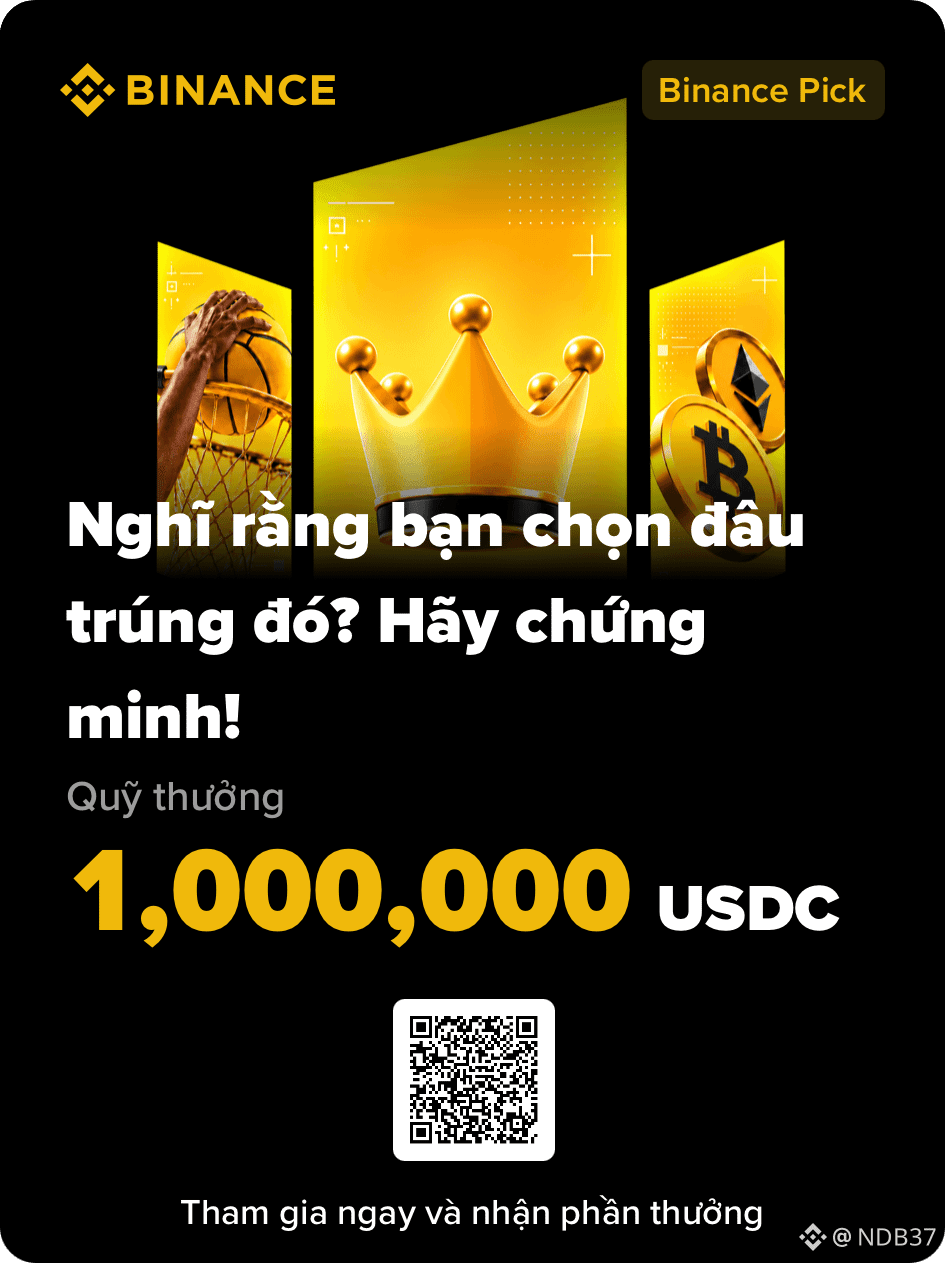
Even if you don’t make the leaderboard, you still have a chance to earn rewards from Binance Pick.
Users who aren’t ranked on the Season or Weekly Leaderboard and complete at least 5 check-ins during the season may be eligible to share the 100,000 USDC Participation Rewards pool.
The maximum reward is 5 USDC per person. Be sure to check the eligibility requirements!
#BinancePick
{future}(BNBUSDT)
Even if you don’t make the leaderboard, you still have a chance to earn rewards from Binance Pick.
Users who aren’t ranked on the Season or Weekly Leaderboard and complete at least 5 check-ins during the season may be eligible to share the 100,000 USDC Participation Rewards pool.
The maximum reward is 5 USDC per person. Be sure to check the eligibility requirements!
#BinancePick
Users who aren’t ranked on the Season or Weekly Leaderboard and complete at least 5 check-ins during the season may be eligible to share the 100,000 USDC Participation Rewards pool.
The maximum reward is 5 USDC per person. Be sure to check the eligibility requirements!
#BinancePick
·
--
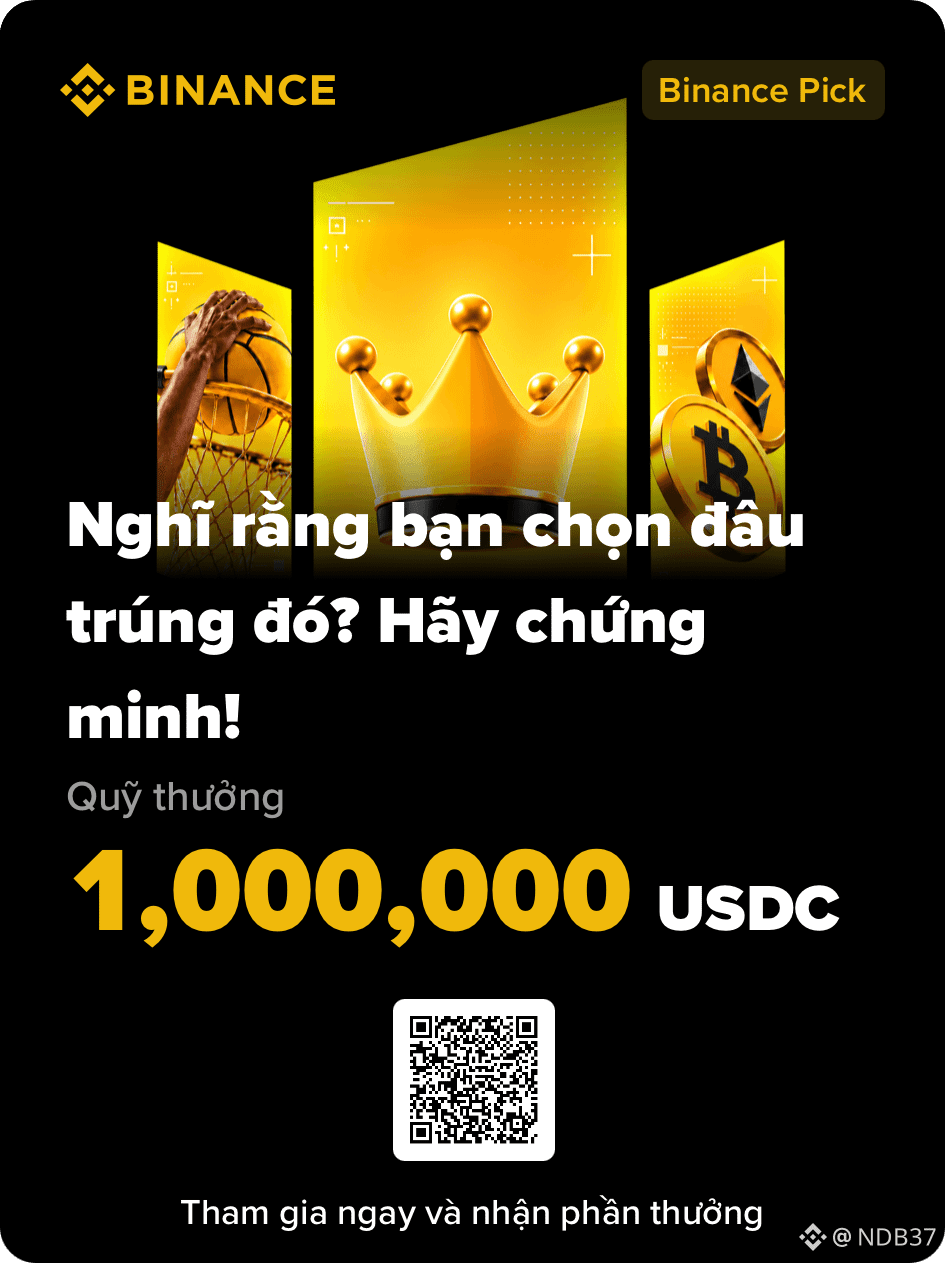
#BinancePick How did your picks go today, everyone? Let's try to earn this week's reward.
#BinancePick How did your picks go today, everyone? Let's try to earn this week's reward.
·
--
Bearish
There’s one detail in Dusk that I find more interesting than any headline about “regulated finance”.
That is: Dusk does not try to make every transaction public or every transaction private.
Moonlight and Phoenix exist side by side.
Moonlight allows balances and transfers to be observed publicly. Phoenix takes a shielded approach, using zero-knowledge proofs to prove that transactions are valid without disclosing the amount and all the related information. When an audit or disclosure is needed, viewing keys allow information to be revealed selectively.
This makes me think about a very practical issue in finance.
A fund may want to protect its positions from having every transaction visible to the entire market.
An investor may need to prove they are eligible to buy an asset.
A regulator, meanwhile, may need the ability to verify when there’s a legitimate reason.
These three requirements sound like they conflict.
But perhaps they don’t necessarily conflict if access to information is designed into the protocol from the start.
That’s also why Citadel and selective disclosure have become noteworthy in Dusk’s architecture. They don’t define privacy simply as “nobody can see,” but as controlling which data is disclosed and to whom.
I don’t think this is proof that Dusk has solved regulated finance completely.
But it gives me a different perspective:
Privacy probably isn’t the opposite of compliance. Privacy might be how compliance is implemented in a more nuanced way.
And that’s the part I’ll keep following at @Dusk_Foundation .
#dusk $DUSK
{future}(DUSKUSDT)
There’s one detail in Dusk that I find more interesting than any headline about “regulated finance”.
That is: Dusk does not try to make every transaction public or every transaction private.
Moonlight and Phoenix exist side by side.
Moonlight allows balances and transfers to be observed publicly. Phoenix takes a shielded approach, using zero-knowledge proofs to prove that transactions are valid without disclosing the amount and all the related information. When an audit or disclosure is needed, viewing keys allow information to be revealed selectively.
This makes me think about a very practical issue in finance.
A fund may want to protect its positions from having every transaction visible to the entire market.
An investor may need to prove they are eligible to buy an asset.
A regulator, meanwhile, may need the ability to verify when there’s a legitimate reason.
These three requirements sound like they conflict.
But perhaps they don’t necessarily conflict if access to information is designed into the protocol from the start.
That’s also why Citadel and selective disclosure have become noteworthy in Dusk’s architecture. They don’t define privacy simply as “nobody can see,” but as controlling which data is disclosed and to whom.
I don’t think this is proof that Dusk has solved regulated finance completely.
But it gives me a different perspective:
Privacy probably isn’t the opposite of compliance. Privacy might be how compliance is implemented in a more nuanced way.
And that’s the part I’ll keep following at @Dusk .
#dusk $DUSK
That is: Dusk does not try to make every transaction public or every transaction private.
Moonlight and Phoenix exist side by side.
Moonlight allows balances and transfers to be observed publicly. Phoenix takes a shielded approach, using zero-knowledge proofs to prove that transactions are valid without disclosing the amount and all the related information. When an audit or disclosure is needed, viewing keys allow information to be revealed selectively.
This makes me think about a very practical issue in finance.
A fund may want to protect its positions from having every transaction visible to the entire market.
An investor may need to prove they are eligible to buy an asset.
A regulator, meanwhile, may need the ability to verify when there’s a legitimate reason.
These three requirements sound like they conflict.
But perhaps they don’t necessarily conflict if access to information is designed into the protocol from the start.
That’s also why Citadel and selective disclosure have become noteworthy in Dusk’s architecture. They don’t define privacy simply as “nobody can see,” but as controlling which data is disclosed and to whom.
I don’t think this is proof that Dusk has solved regulated finance completely.
But it gives me a different perspective:
Privacy probably isn’t the opposite of compliance. Privacy might be how compliance is implemented in a more nuanced way.
And that’s the part I’ll keep following at @Dusk .
#dusk $DUSK
92
·
--
$TMX rác thật, nhìn cái chart chán đời, toàn xả.
$TMX rác thật, nhìn cái chart chán đời, toàn xả.
374
·
--
Bullish
There’s something I realized when looking at Dusk’s tokenomics: a gradually decreasing emission number may not be the most important part of the story.
According to the current documents, Dusk is expected to issue an additional 500 million $DUSK tr over 36 years. Emissions halve every 4 years: 250.48M in the early phase, then 125.24M, 62.62M, 31.31M… and down to about 0.98M in the final phase.
At a glance, the story is pretty straightforward:
Emission decreases → issuance pressure decreases → new supply grows more slowly.
But I think there’s a harder question underneath.
Who will pay to secure the network as the subsidy keeps getting smaller?
Dusk’s block reward doesn’t come only from newly issued DUSK. It also includes all transaction fees from the block.
This means that as emissions steadily decline, real activity on the network will become increasingly important to a validator’s economics.
A network that has millions of tokens issued to fund rewards can sustain incentives in the early stages.
But in the long run, a more sustainable model has to rely more on actual economic activity that generates fees.
That’s why I don’t just look at circulating supply or the emission schedule when researching $DUSK.
I want to know one more number:
How high will the actual fee revenue per block rise as emissions continue to decline?
If Dusk Trade, tokenized assets, and real financial applications create meaningful settlement demand, the story will be very different.
But if activity isn’t large enough, emission reduction simply means the subsidy portion of the rewards gets smaller.
For me, that’s the real long-term problem worth tracking with @Dusk_Foundation .
#dusk $BTC $ETH
{future}(DUSKUSDT)
There’s something I realized when looking at Dusk’s tokenomics: a gradually decreasing emission number may not be the most important part of the story.
According to the current documents, Dusk is expected to issue an additional 500 million $DUSK tr over 36 years. Emissions halve every 4 years: 250.48M in the early phase, then 125.24M, 62.62M, 31.31M… and down to about 0.98M in the final phase.
At a glance, the story is pretty straightforward:
Emission decreases → issuance pressure decreases → new supply grows more slowly.
But I think there’s a harder question underneath.
Who will pay to secure the network as the subsidy keeps getting smaller?
Dusk’s block reward doesn’t come only from newly issued DUSK. It also includes all transaction fees from the block.
This means that as emissions steadily decline, real activity on the network will become increasingly important to a validator’s economics.
A network that has millions of tokens issued to fund rewards can sustain incentives in the early stages.
But in the long run, a more sustainable model has to rely more on actual economic activity that generates fees.
That’s why I don’t just look at circulating supply or the emission schedule when researching $DUSK .
I want to know one more number:
How high will the actual fee revenue per block rise as emissions continue to decline?
If Dusk Trade, tokenized assets, and real financial applications create meaningful settlement demand, the story will be very different.
But if activity isn’t large enough, emission reduction simply means the subsidy portion of the rewards gets smaller.
For me, that’s the real long-term problem worth tracking with @Dusk .
#dusk $BTC $ETH
According to the current documents, Dusk is expected to issue an additional 500 million $DUSK tr over 36 years. Emissions halve every 4 years: 250.48M in the early phase, then 125.24M, 62.62M, 31.31M… and down to about 0.98M in the final phase.
At a glance, the story is pretty straightforward:
Emission decreases → issuance pressure decreases → new supply grows more slowly.
But I think there’s a harder question underneath.
Who will pay to secure the network as the subsidy keeps getting smaller?
Dusk’s block reward doesn’t come only from newly issued DUSK. It also includes all transaction fees from the block.
This means that as emissions steadily decline, real activity on the network will become increasingly important to a validator’s economics.
A network that has millions of tokens issued to fund rewards can sustain incentives in the early stages.
But in the long run, a more sustainable model has to rely more on actual economic activity that generates fees.
That’s why I don’t just look at circulating supply or the emission schedule when researching $DUSK .
I want to know one more number:
How high will the actual fee revenue per block rise as emissions continue to decline?
If Dusk Trade, tokenized assets, and real financial applications create meaningful settlement demand, the story will be very different.
But if activity isn’t large enough, emission reduction simply means the subsidy portion of the rewards gets smaller.
For me, that’s the real long-term problem worth tracking with @Dusk .
#dusk $BTC $ETH
85
·
--
#dusk $DUSK @Dusk_Foundation It’s something I find quite interesting when looking at Dusk’s privacy story: they seem not to try to make compliance the enemy of privacy.
Instead of choosing one of two extremes — making everything public or hiding everything — Dusk is building a middle model.
The clearest example is Citadel.
Citadel 2 allows users to prove they hold a valid credential without having to provide all personal information or reveal exactly which credential was used to the blockchain. The Service Provider is still the party that decides the access conditions, while the user only provides what the workflow actually requires.
I find this approach quite well suited to finance.
An organization may need to know that an investor is eligible to participate, but it doesn’t necessarily need to know all of that person’s personal data.
A trading system may need to verify residency or accreditation, but that doesn’t mean every participant on the blockchain has to see that information.
That’s why selective disclosure becomes important.
Privacy here is not:
“No one is allowed to check me.”
But closer to:
“I prove what needs to be proven, to the right party who needs to know.”
Dusk is placing Citadel alongside access control, smart contract logic, and other transaction models to build infrastructure for regulated markets.
I don’t think this automatically means Dusk will become a major financial infrastructure.
But it makes me ask another question:
If Web3 wants to enter markets with strict regulations, is privacy with proper controls more practical than absolute privacy?
$BTC $ETH
#dusk $DUSK @Dusk It’s something I find quite interesting when looking at Dusk’s privacy story: they seem not to try to make compliance the enemy of privacy.
Instead of choosing one of two extremes — making everything public or hiding everything — Dusk is building a middle model.
The clearest example is Citadel.
Citadel 2 allows users to prove they hold a valid credential without having to provide all personal information or reveal exactly which credential was used to the blockchain. The Service Provider is still the party that decides the access conditions, while the user only provides what the workflow actually requires.
I find this approach quite well suited to finance.
An organization may need to know that an investor is eligible to participate, but it doesn’t necessarily need to know all of that person’s personal data.
A trading system may need to verify residency or accreditation, but that doesn’t mean every participant on the blockchain has to see that information.
That’s why selective disclosure becomes important.
Privacy here is not:
“No one is allowed to check me.”
But closer to:
“I prove what needs to be proven, to the right party who needs to know.”
Dusk is placing Citadel alongside access control, smart contract logic, and other transaction models to build infrastructure for regulated markets.
I don’t think this automatically means Dusk will become a major financial infrastructure.
But it makes me ask another question:
If Web3 wants to enter markets with strict regulations, is privacy with proper controls more practical than absolute privacy?
$BTC $ETH
Instead of choosing one of two extremes — making everything public or hiding everything — Dusk is building a middle model.
The clearest example is Citadel.
Citadel 2 allows users to prove they hold a valid credential without having to provide all personal information or reveal exactly which credential was used to the blockchain. The Service Provider is still the party that decides the access conditions, while the user only provides what the workflow actually requires.
I find this approach quite well suited to finance.
An organization may need to know that an investor is eligible to participate, but it doesn’t necessarily need to know all of that person’s personal data.
A trading system may need to verify residency or accreditation, but that doesn’t mean every participant on the blockchain has to see that information.
That’s why selective disclosure becomes important.
Privacy here is not:
“No one is allowed to check me.”
But closer to:
“I prove what needs to be proven, to the right party who needs to know.”
Dusk is placing Citadel alongside access control, smart contract logic, and other transaction models to build infrastructure for regulated markets.
I don’t think this automatically means Dusk will become a major financial infrastructure.
But it makes me ask another question:
If Web3 wants to enter markets with strict regulations, is privacy with proper controls more practical than absolute privacy?
$BTC $ETH
203
·
--
I used to think privacy on the blockchain was only a story of “hiding transactions.”
But the more I learn about Dusk, the more I see that framing this issue is a bit too simple.
In managed finance, what needs protection isn’t just the funds. There are also identities, ownership, eligibility conditions, and data that not everyone on the internet needs to see.
Dusk tackles this problem with multiple layers.
Moonlight supports public account flows, while Phoenix provides shielded transfers to protect sensitive transaction information. Zero-knowledge proofs help verify the necessary conditions without necessarily disclosing all the underlying data.
But the part I find more interesting is selective disclosure.
Instead of choosing between “everything is public” and “everything is private,” Dusk aims to control which data is visible and who has access to it.
This fits regulated finance quite well.
An investor may need privacy, but issuers, auditors, or supervisors may still need evidence when they have the right to inspect. Dusk builds Citadel as an identity and access layer with selective disclosure to support this exact kind of workflow.
And privacy doesn’t stop at the transaction layer.
The Confidential Security Contract Standard (XSC) allows privacy and compliance to become part of smart contract logic, rather than just an external feature.
From there, I started looking at privacy in a different way:
Privacy doesn’t necessarily mean hiding everything.
Sometimes it simply means controlling exactly who knows what, when, and for what reason.
That’s probably the real hard problem when blockchain wants to go deeper into the financial market.
#dusk @Dusk_Foundation $DUSK
I used to think privacy on the blockchain was only a story of “hiding transactions.”
But the more I learn about Dusk, the more I see that framing this issue is a bit too simple.
In managed finance, what needs protection isn’t just the funds. There are also identities, ownership, eligibility conditions, and data that not everyone on the internet needs to see.
Dusk tackles this problem with multiple layers.
Moonlight supports public account flows, while Phoenix provides shielded transfers to protect sensitive transaction information. Zero-knowledge proofs help verify the necessary conditions without necessarily disclosing all the underlying data.
But the part I find more interesting is selective disclosure.
Instead of choosing between “everything is public” and “everything is private,” Dusk aims to control which data is visible and who has access to it.
This fits regulated finance quite well.
An investor may need privacy, but issuers, auditors, or supervisors may still need evidence when they have the right to inspect. Dusk builds Citadel as an identity and access layer with selective disclosure to support this exact kind of workflow.
And privacy doesn’t stop at the transaction layer.
The Confidential Security Contract Standard (XSC) allows privacy and compliance to become part of smart contract logic, rather than just an external feature.
From there, I started looking at privacy in a different way:
Privacy doesn’t necessarily mean hiding everything.
Sometimes it simply means controlling exactly who knows what, when, and for what reason.
That’s probably the real hard problem when blockchain wants to go deeper into the financial market.
#dusk @Dusk $DUSK
But the more I learn about Dusk, the more I see that framing this issue is a bit too simple.
In managed finance, what needs protection isn’t just the funds. There are also identities, ownership, eligibility conditions, and data that not everyone on the internet needs to see.
Dusk tackles this problem with multiple layers.
Moonlight supports public account flows, while Phoenix provides shielded transfers to protect sensitive transaction information. Zero-knowledge proofs help verify the necessary conditions without necessarily disclosing all the underlying data.
But the part I find more interesting is selective disclosure.
Instead of choosing between “everything is public” and “everything is private,” Dusk aims to control which data is visible and who has access to it.
This fits regulated finance quite well.
An investor may need privacy, but issuers, auditors, or supervisors may still need evidence when they have the right to inspect. Dusk builds Citadel as an identity and access layer with selective disclosure to support this exact kind of workflow.
And privacy doesn’t stop at the transaction layer.
The Confidential Security Contract Standard (XSC) allows privacy and compliance to become part of smart contract logic, rather than just an external feature.
From there, I started looking at privacy in a different way:
Privacy doesn’t necessarily mean hiding everything.
Sometimes it simply means controlling exactly who knows what, when, and for what reason.
That’s probably the real hard problem when blockchain wants to go deeper into the financial market.
#dusk @Dusk $DUSK
69
·
--
There’s a point in the tokenized assets market that I think is very easy to overlook:
Liquidity isn’t always the first issue.
If an asset is managed, putting it on the blockchain doesn’t mean that anyone can buy, hold, or transfer it to someone else.
You still need to know who the buyer is, which wallet belongs to them, whether they’re eligible to hold the asset, and whether the transaction meets the restrictions that have been set.
That’s why Dusk Trade caught my attention.
Dusk is building an application layer for tokenized financial assets with workflows such as investor onboarding, wallet binding, controlled transfers, payment coordination, and settlement. In other words, they’re looking at tokenized assets as a complete market process, not just as a token on the blockchain.
I think this approach makes a lot of sense.
Because for securities or private-market assets, the key questions aren’t only:
“Can this token be traded?”
But also:
“Who is allowed to trade this token, and how does the system enforce that?”
Dusk is trying to embed those rules directly into the market infrastructure.
Will this model really help reduce fragmentation between issuance, trading, and settlement? I think that’s the part worth watching.
#dusk @Dusk_Foundation $DUSK $BTC
{future}(BTCUSDT)
There’s a point in the tokenized assets market that I think is very easy to overlook:
Liquidity isn’t always the first issue.
If an asset is managed, putting it on the blockchain doesn’t mean that anyone can buy, hold, or transfer it to someone else.
You still need to know who the buyer is, which wallet belongs to them, whether they’re eligible to hold the asset, and whether the transaction meets the restrictions that have been set.
That’s why Dusk Trade caught my attention.
Dusk is building an application layer for tokenized financial assets with workflows such as investor onboarding, wallet binding, controlled transfers, payment coordination, and settlement. In other words, they’re looking at tokenized assets as a complete market process, not just as a token on the blockchain.
I think this approach makes a lot of sense.
Because for securities or private-market assets, the key questions aren’t only:
“Can this token be traded?”
But also:
“Who is allowed to trade this token, and how does the system enforce that?”
Dusk is trying to embed those rules directly into the market infrastructure.
Will this model really help reduce fragmentation between issuance, trading, and settlement? I think that’s the part worth watching.
#dusk @Dusk $DUSK $BTC
Liquidity isn’t always the first issue.
If an asset is managed, putting it on the blockchain doesn’t mean that anyone can buy, hold, or transfer it to someone else.
You still need to know who the buyer is, which wallet belongs to them, whether they’re eligible to hold the asset, and whether the transaction meets the restrictions that have been set.
That’s why Dusk Trade caught my attention.
Dusk is building an application layer for tokenized financial assets with workflows such as investor onboarding, wallet binding, controlled transfers, payment coordination, and settlement. In other words, they’re looking at tokenized assets as a complete market process, not just as a token on the blockchain.
I think this approach makes a lot of sense.
Because for securities or private-market assets, the key questions aren’t only:
“Can this token be traded?”
But also:
“Who is allowed to trade this token, and how does the system enforce that?”
Dusk is trying to embed those rules directly into the market infrastructure.
Will this model really help reduce fragmentation between issuance, trading, and settlement? I think that’s the part worth watching.
#dusk @Dusk $DUSK $BTC
81
·
--
Bullish
The more I research RWA, the clearer it becomes: tokenizing an asset is only the beginning.
Putting bonds, funds, or securities onto the blockchain doesn’t answer the more important questions:
Who is allowed to buy?
Who is allowed to hold?
When the asset is transferred, what conditions must be verified?
And finally, how will an asset with a payment obligation be settled?
That’s why the architecture of @Dusk_Foundation k caught my attention.
Dusk isn’t only focused on putting assets on-chain. Their infrastructure includes components for investor onboarding, wallet binding, controlled transfers, and settlement coordination—aiming to cover the entire workflow of a managed financial asset.
At the technical layer, DuskDS serves as settlement and data availability, while Dusk provides DuskEVM for Solidity/EVM tooling and DuskVM for Rust/WASM contracts running directly on L1.
I like this approach because it places RWA in the right context: a financial asset doesn’t just need a token—it needs infrastructure around that token.
Of course, a good architecture on paper doesn’t guarantee real-world adoption.
But this is exactly what I want to track with Dusk: whether primitives like compliance, privacy, access control, and deterministic settlement can come together into a truly useful onchain financial workflow.
#dusk $DUSK
{future}(DUSKUSDT)
The more I research RWA, the clearer it becomes: tokenizing an asset is only the beginning.
Putting bonds, funds, or securities onto the blockchain doesn’t answer the more important questions:
Who is allowed to buy?
Who is allowed to hold?
When the asset is transferred, what conditions must be verified?
And finally, how will an asset with a payment obligation be settled?
That’s why the architecture of @Dusk k caught my attention.
Dusk isn’t only focused on putting assets on-chain. Their infrastructure includes components for investor onboarding, wallet binding, controlled transfers, and settlement coordination—aiming to cover the entire workflow of a managed financial asset.
At the technical layer, DuskDS serves as settlement and data availability, while Dusk provides DuskEVM for Solidity/EVM tooling and DuskVM for Rust/WASM contracts running directly on L1.
I like this approach because it places RWA in the right context: a financial asset doesn’t just need a token—it needs infrastructure around that token.
Of course, a good architecture on paper doesn’t guarantee real-world adoption.
But this is exactly what I want to track with Dusk: whether primitives like compliance, privacy, access control, and deterministic settlement can come together into a truly useful onchain financial workflow.
#dusk $DUSK
Putting bonds, funds, or securities onto the blockchain doesn’t answer the more important questions:
Who is allowed to buy?
Who is allowed to hold?
When the asset is transferred, what conditions must be verified?
And finally, how will an asset with a payment obligation be settled?
That’s why the architecture of @Dusk k caught my attention.
Dusk isn’t only focused on putting assets on-chain. Their infrastructure includes components for investor onboarding, wallet binding, controlled transfers, and settlement coordination—aiming to cover the entire workflow of a managed financial asset.
At the technical layer, DuskDS serves as settlement and data availability, while Dusk provides DuskEVM for Solidity/EVM tooling and DuskVM for Rust/WASM contracts running directly on L1.
I like this approach because it places RWA in the right context: a financial asset doesn’t just need a token—it needs infrastructure around that token.
Of course, a good architecture on paper doesn’t guarantee real-world adoption.
But this is exactly what I want to track with Dusk: whether primitives like compliance, privacy, access control, and deterministic settlement can come together into a truly useful onchain financial workflow.
#dusk $DUSK
67
·
--
Bullish
DeFi has a rather interesting point: the more flexible the interest rates are, the harder it can sometimes be to plan your capital.
If you borrow today at a certain rate, a few days later when the market shifts, your cost of capital may also change. For strategies with clearly defined time horizons, this kind of volatility isn’t always pleasant.
That’s why I’ve been paying attention to how <c-1/> @termmax constructs fixed-rate and fixed-term lending.
Instead of looking only at a single pool where the interest rate changes continuously, TermMax designs markets with specific maturities. Lenders can access Fixed-Rate Tokens (FT), while the FT + XT mechanism is used to represent debt due by the maturity date.
What I find especially noteworthy is that interest rates are transformed into something that can be traded and priced across different terms.
Put simply: DeFi is no longer just a story of “what is the current interest rate?”, and it can start raising the question “how long do I want to lock in my cost or yield?”.
This is an approach worth keeping an eye on as fixed-income becomes an increasingly important piece of DeFi.
#termmax $BTC $ETH
{spot}(BTCUSDT)
DeFi has a rather interesting point: the more flexible the interest rates are, the harder it can sometimes be to plan your capital.
If you borrow today at a certain rate, a few days later when the market shifts, your cost of capital may also change. For strategies with clearly defined time horizons, this kind of volatility isn’t always pleasant.
That’s why I’ve been paying attention to how <c-1/> @TermMax constructs fixed-rate and fixed-term lending.
Instead of looking only at a single pool where the interest rate changes continuously, TermMax designs markets with specific maturities. Lenders can access Fixed-Rate Tokens (FT), while the FT + XT mechanism is used to represent debt due by the maturity date.
What I find especially noteworthy is that interest rates are transformed into something that can be traded and priced across different terms.
Put simply: DeFi is no longer just a story of “what is the current interest rate?”, and it can start raising the question “how long do I want to lock in my cost or yield?”.
This is an approach worth keeping an eye on as fixed-income becomes an increasingly important piece of DeFi.
#termmax $BTC $ETH
If you borrow today at a certain rate, a few days later when the market shifts, your cost of capital may also change. For strategies with clearly defined time horizons, this kind of volatility isn’t always pleasant.
That’s why I’ve been paying attention to how <c-1/> @TermMax constructs fixed-rate and fixed-term lending.
Instead of looking only at a single pool where the interest rate changes continuously, TermMax designs markets with specific maturities. Lenders can access Fixed-Rate Tokens (FT), while the FT + XT mechanism is used to represent debt due by the maturity date.
What I find especially noteworthy is that interest rates are transformed into something that can be traded and priced across different terms.
Put simply: DeFi is no longer just a story of “what is the current interest rate?”, and it can start raising the question “how long do I want to lock in my cost or yield?”.
This is an approach worth keeping an eye on as fixed-income becomes an increasingly important piece of DeFi.
#termmax $BTC $ETH
70
·
--
Bullish
I used to think an RWA blockchain had a fairly simple job.
Put the asset onchain.
Make it tradable.
Make settlement faster.
Done.
But the more I look into @Dusk_Foundation , the more I realize the token is probably the easy part.
Take a tokenized bond.
Before anyone can trade it, you still need to answer a surprisingly long list of questions.
Who is eligible to buy it?
Can the asset be transferred to any wallet?
What information does the investor need to provide?
Which parts of the transaction should be visible?
Who is allowed to review the underlying information?
How do the cash and asset legs actually settle?
That’s why Dusk Trade caught my attention.
The architecture isn’t only about creating a digital representation of an asset. It is designed around parts of the actual financial workflow: investor onboarding, wallet binding, transfer controls, disclosure and settlement coordination.
Then there is the underlying stack.
DuskEVM gives developers a familiar Solidity/EVM environment, while the broader Dusk architecture separates application execution from the settlement and data-availability layer.
I don’t think having more components automatically makes a blockchain better.
Actually, it creates more things that have to work correctly.
But it does make me ask a more interesting question about Dusk:
Can all those fragmented requirements of traditional finance eventually become one coherent onchain workflow?
Tokenization is only the beginning.
The real test is everything that happens after the token is created.
#dusk $DUSK
{spot}(DUSKUSDT)
I used to think an RWA blockchain had a fairly simple job.
Put the asset onchain.
Make it tradable.
Make settlement faster.
Done.
But the more I look into @Dusk , the more I realize the token is probably the easy part.
Take a tokenized bond.
Before anyone can trade it, you still need to answer a surprisingly long list of questions.
Who is eligible to buy it?
Can the asset be transferred to any wallet?
What information does the investor need to provide?
Which parts of the transaction should be visible?
Who is allowed to review the underlying information?
How do the cash and asset legs actually settle?
That’s why Dusk Trade caught my attention.
The architecture isn’t only about creating a digital representation of an asset. It is designed around parts of the actual financial workflow: investor onboarding, wallet binding, transfer controls, disclosure and settlement coordination.
Then there is the underlying stack.
DuskEVM gives developers a familiar Solidity/EVM environment, while the broader Dusk architecture separates application execution from the settlement and data-availability layer.
I don’t think having more components automatically makes a blockchain better.
Actually, it creates more things that have to work correctly.
But it does make me ask a more interesting question about Dusk:
Can all those fragmented requirements of traditional finance eventually become one coherent onchain workflow?
Tokenization is only the beginning.
The real test is everything that happens after the token is created.
#dusk $DUSK
Put the asset onchain.
Make it tradable.
Make settlement faster.
Done.
But the more I look into @Dusk , the more I realize the token is probably the easy part.
Take a tokenized bond.
Before anyone can trade it, you still need to answer a surprisingly long list of questions.
Who is eligible to buy it?
Can the asset be transferred to any wallet?
What information does the investor need to provide?
Which parts of the transaction should be visible?
Who is allowed to review the underlying information?
How do the cash and asset legs actually settle?
That’s why Dusk Trade caught my attention.
The architecture isn’t only about creating a digital representation of an asset. It is designed around parts of the actual financial workflow: investor onboarding, wallet binding, transfer controls, disclosure and settlement coordination.
Then there is the underlying stack.
DuskEVM gives developers a familiar Solidity/EVM environment, while the broader Dusk architecture separates application execution from the settlement and data-availability layer.
I don’t think having more components automatically makes a blockchain better.
Actually, it creates more things that have to work correctly.
But it does make me ask a more interesting question about Dusk:
Can all those fragmented requirements of traditional finance eventually become one coherent onchain workflow?
Tokenization is only the beginning.
The real test is everything that happens after the token is created.
#dusk $DUSK
39
·
--
P2P has a type of situation that I think gets worse the longer the trading goes: you shouldn’t handle it based on impulse. Money is transferred in for more than the value of the Order.
Suppose you’re selling 500 USDT, and the Order is recorded at around 13 million VND.
The money arrives in your account.
You open your banking app to check: 16 million.
The buyer immediately messages:
“ I transferred by mistake. Please send back the 3 million for me.”
It sounds very reasonable.
But I won’t transfer it back right away.
Because at this moment there are two different things:
One is that the money has truly entered the account.
Two is how I should deal with the excess amount so the transaction doesn’t become more complicated.
Especially if they ask me to refund the money to a different account, I’m even less likely to act on my own.
I will keep the Order as is, not create any separate transaction, and save the chat history and the transfer information. If it can’t be clearly verified, I will let Binance handle the process through the Appeal procedure.
For me, this is a fairly important principle:
A mistaken transfer doesn’t mean I must immediately transfer back in whatever direction the other party requests.
It could truly just be a transfer error.
But I don’t need to judge the entire story myself.
In P2P, there’s an Order, transaction history, and a support process to handle cases that are no longer straightforward.
See excess money → don’t rush to return it.
Check → keep evidence → verify → then handle.
#binancep2pantoan @Binance_Vietnam $BTC $ETH
P2P has a type of situation that I think gets worse the longer the trading goes: you shouldn’t handle it based on impulse. Money is transferred in for more than the value of the Order.
Suppose you’re selling 500 USDT, and the Order is recorded at around 13 million VND.
The money arrives in your account.
You open your banking app to check: 16 million.
The buyer immediately messages:
“ I transferred by mistake. Please send back the 3 million for me.”
It sounds very reasonable.
But I won’t transfer it back right away.
Because at this moment there are two different things:
One is that the money has truly entered the account.
Two is how I should deal with the excess amount so the transaction doesn’t become more complicated.
Especially if they ask me to refund the money to a different account, I’m even less likely to act on my own.
I will keep the Order as is, not create any separate transaction, and save the chat history and the transfer information. If it can’t be clearly verified, I will let Binance handle the process through the Appeal procedure.
For me, this is a fairly important principle:
A mistaken transfer doesn’t mean I must immediately transfer back in whatever direction the other party requests.
It could truly just be a transfer error.
But I don’t need to judge the entire story myself.
In P2P, there’s an Order, transaction history, and a support process to handle cases that are no longer straightforward.
See excess money → don’t rush to return it.
Check → keep evidence → verify → then handle.
#binancep2pantoan @Binance Vietnam $BTC $ETH
Suppose you’re selling 500 USDT, and the Order is recorded at around 13 million VND.
The money arrives in your account.
You open your banking app to check: 16 million.
The buyer immediately messages:
“ I transferred by mistake. Please send back the 3 million for me.”
It sounds very reasonable.
But I won’t transfer it back right away.
Because at this moment there are two different things:
One is that the money has truly entered the account.
Two is how I should deal with the excess amount so the transaction doesn’t become more complicated.
Especially if they ask me to refund the money to a different account, I’m even less likely to act on my own.
I will keep the Order as is, not create any separate transaction, and save the chat history and the transfer information. If it can’t be clearly verified, I will let Binance handle the process through the Appeal procedure.
For me, this is a fairly important principle:
A mistaken transfer doesn’t mean I must immediately transfer back in whatever direction the other party requests.
It could truly just be a transfer error.
But I don’t need to judge the entire story myself.
In P2P, there’s an Order, transaction history, and a support process to handle cases that are no longer straightforward.
See excess money → don’t rush to return it.
Check → keep evidence → verify → then handle.
#binancep2pantoan @Binance Vietnam $BTC $ETH
201
·
--
Partly True
I think I just found a more interesting confirmation around $TMX than another TGE announcement.
Someone updated the opening time directly on-chain.
The new BN Alpha pool for TMX/USDT has been initialized with:
• Pool ID: 0x119a…5ac99
• Token: TMX
• Pair: TMX / USDT
• Initial price: ~0.060 USDT per TMX
• Opening time: August 25, 10:00 UTC
• Hook: 0xb0bb…46af
The initialization transaction also gives us the starting sqrtPrice and tick, which makes the 0.06 USDT opening price something that can be derived from the pool state rather than simply copied from a social post.
For anyone in Vietnam, 10:00 UTC means 17:00 on August 25.
What I find interesting is the sequence here.
The pool wasn’t just announced.
The pool was initialized, the TMX/USDT pair was created, and the opening timestamp was subsequently configured on-chain.
That makes August 25 a much more concrete date to watch.
Of course, an initial pool price is NOT a guaranteed market price after trading begins.
Once the pool opens, actual liquidity, buy/sell pressure and market demand will determine where TMX trades.
So I’m not looking at $0.06 as a prediction.
I’m looking at it as the starting point of the market.
The real question begins after the clock reaches zero:
How much liquidity is actually there?
How much volume arrives in the first few minutes?
And most importantly, does the market accept the initial valuation?
On-chain data is sometimes more interesting than announcements.
#termmax @termmax $PRL $ETH
I think I just found a more interesting confirmation around $TMX than another TGE announcement.
Someone updated the opening time directly on-chain.
The new BN Alpha pool for TMX/USDT has been initialized with:
• Pool ID: 0x119a…5ac99
• Token: TMX
• Pair: TMX / USDT
• Initial price: ~0.060 USDT per TMX
• Opening time: August 25, 10:00 UTC
• Hook: 0xb0bb…46af
The initialization transaction also gives us the starting sqrtPrice and tick, which makes the 0.06 USDT opening price something that can be derived from the pool state rather than simply copied from a social post.
For anyone in Vietnam, 10:00 UTC means 17:00 on August 25.
What I find interesting is the sequence here.
The pool wasn’t just announced.
The pool was initialized, the TMX/USDT pair was created, and the opening timestamp was subsequently configured on-chain.
That makes August 25 a much more concrete date to watch.
Of course, an initial pool price is NOT a guaranteed market price after trading begins.
Once the pool opens, actual liquidity, buy/sell pressure and market demand will determine where TMX trades.
So I’m not looking at $0.06 as a prediction.
I’m looking at it as the starting point of the market.
The real question begins after the clock reaches zero:
How much liquidity is actually there?
How much volume arrives in the first few minutes?
And most importantly, does the market accept the initial valuation?
On-chain data is sometimes more interesting than announcements.
#termmax @TermMax $PRL $ETH
Someone updated the opening time directly on-chain.
The new BN Alpha pool for TMX/USDT has been initialized with:
• Pool ID: 0x119a…5ac99
• Token: TMX
• Pair: TMX / USDT
• Initial price: ~0.060 USDT per TMX
• Opening time: August 25, 10:00 UTC
• Hook: 0xb0bb…46af
The initialization transaction also gives us the starting sqrtPrice and tick, which makes the 0.06 USDT opening price something that can be derived from the pool state rather than simply copied from a social post.
For anyone in Vietnam, 10:00 UTC means 17:00 on August 25.
What I find interesting is the sequence here.
The pool wasn’t just announced.
The pool was initialized, the TMX/USDT pair was created, and the opening timestamp was subsequently configured on-chain.
That makes August 25 a much more concrete date to watch.
Of course, an initial pool price is NOT a guaranteed market price after trading begins.
Once the pool opens, actual liquidity, buy/sell pressure and market demand will determine where TMX trades.
So I’m not looking at $0.06 as a prediction.
I’m looking at it as the starting point of the market.
The real question begins after the clock reaches zero:
How much liquidity is actually there?
How much volume arrives in the first few minutes?
And most importantly, does the market accept the initial valuation?
On-chain data is sometimes more interesting than announcements.
#termmax @TermMax $PRL $ETH
Pump
60%
Dump
40%
10 votes • Voting closed
1
776
·
--
I kept coming back to TermMax’s 2% lending fee because the number looks much more expensive at first glance than it actually is.
The important detail is where that 2% is applied.
It is a fee on the interest layer, not 2% of the entire principal.
Take a simple example: a $10,000 loan at a 10% annual borrowing rate generates $1,000 in interest over a year. A 2% fee on that interest would be $20 — effectively 0.20% of the original principal.
And maturity changes the economics again.
A shorter-term position generates less interest, which means the absolute protocol fee becomes smaller.
This is why I think looking at the headline fee alone misses the bigger picture.
The real question for @termmax is whether borrowers are willing to trade some flexibility for predictable financing costs.
During calm markets, floating rates may be perfectly acceptable.
But when borrowing rates suddenly move, knowing your financing cost in advance can become much more valuable.
So I’m not watching the 2% number.
I’m watching whether users actually value certainty enough to keep coming back.
A good fee model can create revenue.
Only real demand can make it compound.
#termmax @TermMax
I kept coming back to TermMax’s 2% lending fee because the number looks much more expensive at first glance than it actually is.
The important detail is where that 2% is applied.
It is a fee on the interest layer, not 2% of the entire principal.
Take a simple example: a $10,000 loan at a 10% annual borrowing rate generates $1,000 in interest over a year. A 2% fee on that interest would be $20 — effectively 0.20% of the original principal.
And maturity changes the economics again.
A shorter-term position generates less interest, which means the absolute protocol fee becomes smaller.
This is why I think looking at the headline fee alone misses the bigger picture.
The real question for @TermMax is whether borrowers are willing to trade some flexibility for predictable financing costs.
During calm markets, floating rates may be perfectly acceptable.
But when borrowing rates suddenly move, knowing your financing cost in advance can become much more valuable.
So I’m not watching the 2% number.
I’m watching whether users actually value certainty enough to keep coming back.
A good fee model can create revenue.
Only real demand can make it compound.
#termmax @TermMax
The important detail is where that 2% is applied.
It is a fee on the interest layer, not 2% of the entire principal.
Take a simple example: a $10,000 loan at a 10% annual borrowing rate generates $1,000 in interest over a year. A 2% fee on that interest would be $20 — effectively 0.20% of the original principal.
And maturity changes the economics again.
A shorter-term position generates less interest, which means the absolute protocol fee becomes smaller.
This is why I think looking at the headline fee alone misses the bigger picture.
The real question for @TermMax is whether borrowers are willing to trade some flexibility for predictable financing costs.
During calm markets, floating rates may be perfectly acceptable.
But when borrowing rates suddenly move, knowing your financing cost in advance can become much more valuable.
So I’m not watching the 2% number.
I’m watching whether users actually value certainty enough to keep coming back.
A good fee model can create revenue.
Only real demand can make it compound.
#termmax @TermMax
51
·
--
I kept coming back to one question after reading more about @Dusk_Foundation :
What if the problem with putting financial markets onchain isn’t transparency itself…
but having no control over who gets to see what?
Think about a large institution buying a tokenized bond.
The blockchain could record the transaction perfectly. Everyone could verify that something happened. Settlement could be deterministic.
But why should every other market participant know the institution’s position, timing, size and trading history?
That’s where Dusk’s approach started making more sense to me.
Its idea of programmable privacy isn’t simply “hide everything.”
An authorized party can still verify what it needs to verify, while sensitive information doesn’t automatically become public information.
And that distinction becomes much more important when you move from crypto-native assets to regulated securities.
A regulator might need proof that an investor was eligible.
An exchange might need to verify a transfer.
A custodian might need settlement evidence.
None of them necessarily needs the entire financial history behind the transaction.
That’s a very different definition of transparency.
The more I think about it, the more I wonder whether the next generation of financial blockchains won’t compete on how much data they expose…
but on how precisely they can control disclosure without breaking verifiability.
That’s the part of Dusk I find genuinely interesting.
#dusk $DUSK $ACE
I kept coming back to one question after reading more about @Dusk :
What if the problem with putting financial markets onchain isn’t transparency itself…
but having no control over who gets to see what?
Think about a large institution buying a tokenized bond.
The blockchain could record the transaction perfectly. Everyone could verify that something happened. Settlement could be deterministic.
But why should every other market participant know the institution’s position, timing, size and trading history?
That’s where Dusk’s approach started making more sense to me.
Its idea of programmable privacy isn’t simply “hide everything.”
An authorized party can still verify what it needs to verify, while sensitive information doesn’t automatically become public information.
And that distinction becomes much more important when you move from crypto-native assets to regulated securities.
A regulator might need proof that an investor was eligible.
An exchange might need to verify a transfer.
A custodian might need settlement evidence.
None of them necessarily needs the entire financial history behind the transaction.
That’s a very different definition of transparency.
The more I think about it, the more I wonder whether the next generation of financial blockchains won’t compete on how much data they expose…
but on how precisely they can control disclosure without breaking verifiability.
That’s the part of Dusk I find genuinely interesting.
#dusk $DUSK $ACE
What if the problem with putting financial markets onchain isn’t transparency itself…
but having no control over who gets to see what?
Think about a large institution buying a tokenized bond.
The blockchain could record the transaction perfectly. Everyone could verify that something happened. Settlement could be deterministic.
But why should every other market participant know the institution’s position, timing, size and trading history?
That’s where Dusk’s approach started making more sense to me.
Its idea of programmable privacy isn’t simply “hide everything.”
An authorized party can still verify what it needs to verify, while sensitive information doesn’t automatically become public information.
And that distinction becomes much more important when you move from crypto-native assets to regulated securities.
A regulator might need proof that an investor was eligible.
An exchange might need to verify a transfer.
A custodian might need settlement evidence.
None of them necessarily needs the entire financial history behind the transaction.
That’s a very different definition of transparency.
The more I think about it, the more I wonder whether the next generation of financial blockchains won’t compete on how much data they expose…
but on how precisely they can control disclosure without breaking verifiability.
That’s the part of Dusk I find genuinely interesting.
#dusk $DUSK $ACE
1
1
66
·
--
Once I bought USDT via P2P. The money had already been deducted from my bank account, but the seller kept delaying the Release. That was when I realized patience is also a skill 😂
That day, I needed to buy a certain amount of USDT to prepare trading capital.
After selecting the Order, I transferred exactly the amount and then clicked “Paid”.
But after a few minutes… nothing happened.
10 minutes.
30 minutes.
Then over an hour.
At that point I was pretty restless because the money had already left my bank account, yet the crypto still hadn’t arrived.
I also thought about messaging the other party many times to push them to process it.
But then I chose to stay calmer.
I checked the Order again, kept the proof of the transfer, and communicated right there in the Order chat.
What I didn’t do was send extra money, cancel the transaction arbitrarily, or try to resolve it through Zalo/Telegram.
Maybe the seller was reconciling bank transactions, handling multiple Orders at the same time, or running into issues updating the payment.
Delays don’t necessarily mean they’re intentionally holding the funds.
If the issue can’t be resolved, Binance P2P has an Appeal mechanism where both sides can provide evidence and receive support to handle it.
After that, I learned a lesson:
When the money has been transferred but the crypto hasn’t arrived, the first thing to do is not panic.
Check the Order → keep the proof → communicate within the platform → and use Appeal if needed.
P2P trades sometimes aren’t as fast as I want.
But as long as I can control the process, waiting a bit longer is still better than creating a brand-new problem for myself.
#binancep2pantoan @Binance_Vietnam $BTW
{future}(BTWUSDT)
Once I bought USDT via P2P. The money had already been deducted from my bank account, but the seller kept delaying the Release. That was when I realized patience is also a skill 😂
That day, I needed to buy a certain amount of USDT to prepare trading capital.
After selecting the Order, I transferred exactly the amount and then clicked “Paid”.
But after a few minutes… nothing happened.
10 minutes.
30 minutes.
Then over an hour.
At that point I was pretty restless because the money had already left my bank account, yet the crypto still hadn’t arrived.
I also thought about messaging the other party many times to push them to process it.
But then I chose to stay calmer.
I checked the Order again, kept the proof of the transfer, and communicated right there in the Order chat.
What I didn’t do was send extra money, cancel the transaction arbitrarily, or try to resolve it through Zalo/Telegram.
Maybe the seller was reconciling bank transactions, handling multiple Orders at the same time, or running into issues updating the payment.
Delays don’t necessarily mean they’re intentionally holding the funds.
If the issue can’t be resolved, Binance P2P has an Appeal mechanism where both sides can provide evidence and receive support to handle it.
After that, I learned a lesson:
When the money has been transferred but the crypto hasn’t arrived, the first thing to do is not panic.
Check the Order → keep the proof → communicate within the platform → and use Appeal if needed.
P2P trades sometimes aren’t as fast as I want.
But as long as I can control the process, waiting a bit longer is still better than creating a brand-new problem for myself.
#binancep2pantoan @Binance Vietnam $BTW
That day, I needed to buy a certain amount of USDT to prepare trading capital.
After selecting the Order, I transferred exactly the amount and then clicked “Paid”.
But after a few minutes… nothing happened.
10 minutes.
30 minutes.
Then over an hour.
At that point I was pretty restless because the money had already left my bank account, yet the crypto still hadn’t arrived.
I also thought about messaging the other party many times to push them to process it.
But then I chose to stay calmer.
I checked the Order again, kept the proof of the transfer, and communicated right there in the Order chat.
What I didn’t do was send extra money, cancel the transaction arbitrarily, or try to resolve it through Zalo/Telegram.
Maybe the seller was reconciling bank transactions, handling multiple Orders at the same time, or running into issues updating the payment.
Delays don’t necessarily mean they’re intentionally holding the funds.
If the issue can’t be resolved, Binance P2P has an Appeal mechanism where both sides can provide evidence and receive support to handle it.
After that, I learned a lesson:
When the money has been transferred but the crypto hasn’t arrived, the first thing to do is not panic.
Check the Order → keep the proof → communicate within the platform → and use Appeal if needed.
P2P trades sometimes aren’t as fast as I want.
But as long as I can control the process, waiting a bit longer is still better than creating a brand-new problem for myself.
#binancep2pantoan @Binance Vietnam $BTW
227
Log in to explore more content
Join global crypto users on Binance Square
⚡️ Get latest and useful information about crypto.
💬 Trusted by the world’s largest crypto exchange.
👍 Discover real insights from verified creators.
Email / Phone number
Trending Topics
USOctoberNFP-AreRateCutsStillPossible
1,386 views
69 Discussing
#USOctoberNFP-AreRateCutsStillPossible 🚨 FED RATE CUTS UNLIKELY? HIGHER FOR LONGER COULD PRESSURE CRYPTO MARKETS
The Federal Reserve's latest policy decision signals a cautious approach to monetary easing, with inflation concerns and labor-market resilience keeping interest-rate expectations firmly in focus.
📊 FED POLICY UPDATE
Federal Funds Rate: 3.75%–4.00%
FOMC Vote: 10–2 split
October NFP Forecast: 65,000 new jobs
Potential Upside: 100,000 jobs
Unemployment Forecast: 4.2%
Average Hourly Earnings: +0.3% MoM
🇺🇸 NOVEMBER 6: THE NEXT BIG TEST
The October Nonfarm Payrolls (NFP) report could significantly influence the Fed's next policy decisions.
Three possible scenarios:
🟥 Hot NFP: Strong employment and wage growth could strengthen the US dollar, push Treasury yields higher and pressure Bitcoin, Ethereum and other risk assets.
🟡 In-Line NFP: Markets may remain cautious as investors wait for additional inflation and employment data.
🟢 Weak NFP: A weaker labor market could revive expectations of future rate cuts, potentially supporting precious metals and cryptocurrencies.
📉 WHAT THIS MEANS FOR CRYPTO
A higher-for-longer interest-rate environment generally creates challenging conditions for risk assets.
Investors should closely monitor:
US Dollar Index (DXY)
US 10-Year Treasury Yield
Gold (XAU)
Bitcoin (BTC)
Ethereum (ETH)
Federal Reserve policy signals
BOTTOM LINE
November 6 could be an important turning point for market expectations. A stronger NFP report may reinforce the Fed's cautious stance, while weaker employment data could reopen discussions about monetary easing.
⚠️ These are potential scenarios, not confirmed market outcomes. A single jobs report does not guarantee future rate hikes or eliminate the possibility of rate cuts.
Not financial advice. For educational purposes only. Cryptocurrency and financial markets involve significant risk.
#FederalReserve #NFP #InterestRates #HigherForLonger #CryptoMarket #Bitcoin #Ethereum #Gold #USD #Macroeconomics
CHASEPA SULUXù
·0 Likes
·218 views
AppleEarningsAhead-CanStockHitNewHigh
470 views
31 Discussing
Verify1to1BinanceReserves
3,476 views
114 Discussing