
Alice-007
3.1k Posts

Alice-007
 Square Verified+
Report
Block User
成年人要为自己的投资负责‖内容仅分享,不构成投资建议

SOL Holder
Frequent Trader
2.7 Years
505 Following
43.6K+ Followers
29.3K+ Liked
Posts
All
Quotes
Live
PINNED
·
--
Silver violently surged, has the bullish trend completely erupted?
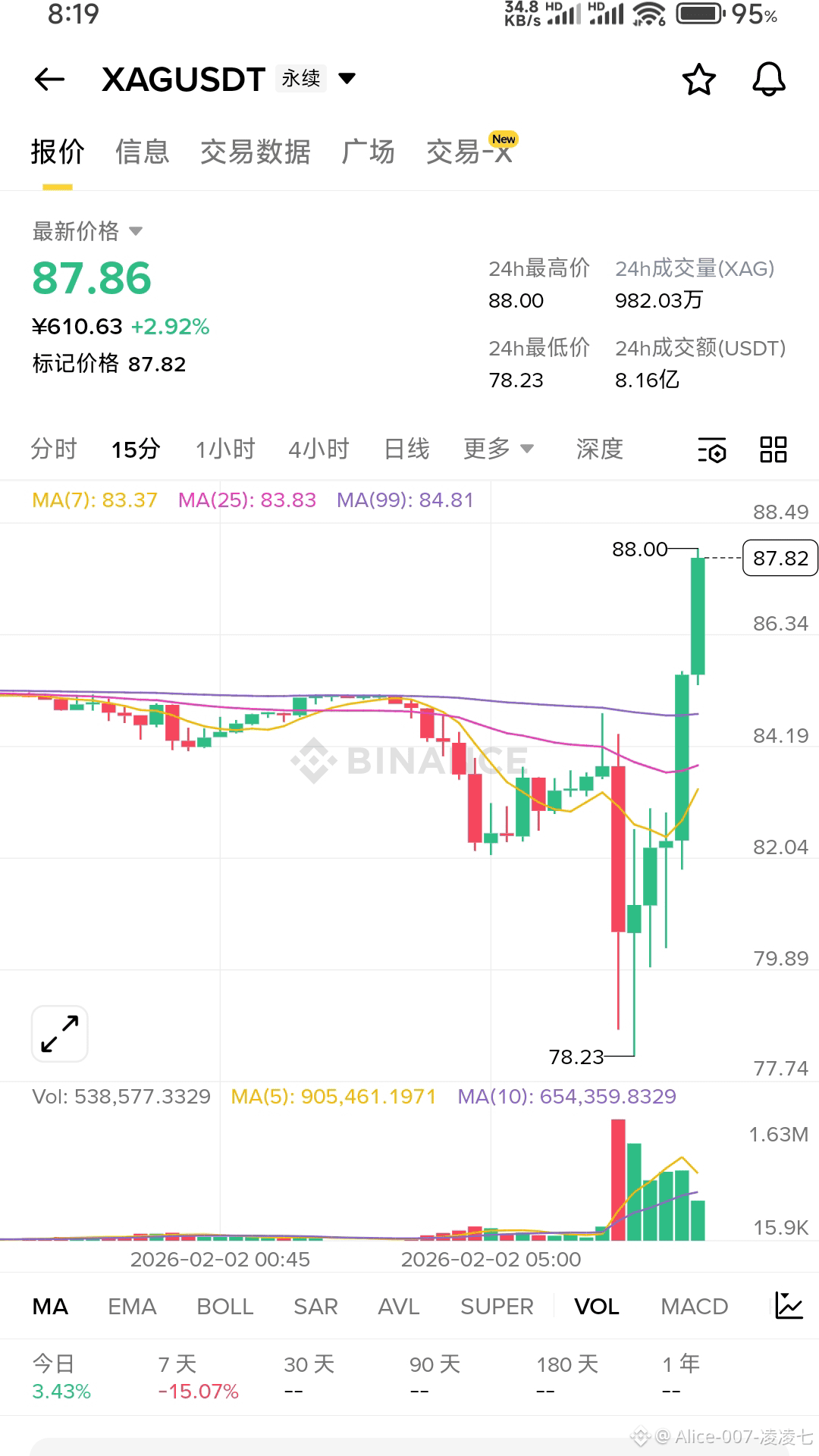
Just now, XAGUSDT (silver) staged a V-shaped reversal after hitting a low of 78.23, violently rising nearly 13% in the short term, directly breaking through the 88-dollar mark!
Current quote is 87.86, with a 24-hour increase of over 2.92%, and trading volume has also surged, with clear signals of capital inflow.
From the 15-minute view, the price has strongly stood above the MA7, MA25, and MA99 moving averages, is the bullish trend fully established?
Have you kept up with this surge?
$XAG
{future}(XAGUSDT)
Silver violently surged, has the bullish trend completely erupted?
Just now, XAGUSDT (silver) staged a V-shaped reversal after hitting a low of 78.23, violently rising nearly 13% in the short term, directly breaking through the 88-dollar mark!
Current quote is 87.86, with a 24-hour increase of over 2.92%, and trading volume has also surged, with clear signals of capital inflow.
From the 15-minute view, the price has strongly stood above the MA7, MA25, and MA99 moving averages, is the bullish trend fully established?
Have you kept up with this surge?
$XAG
23
11
141
64.1k
·
--
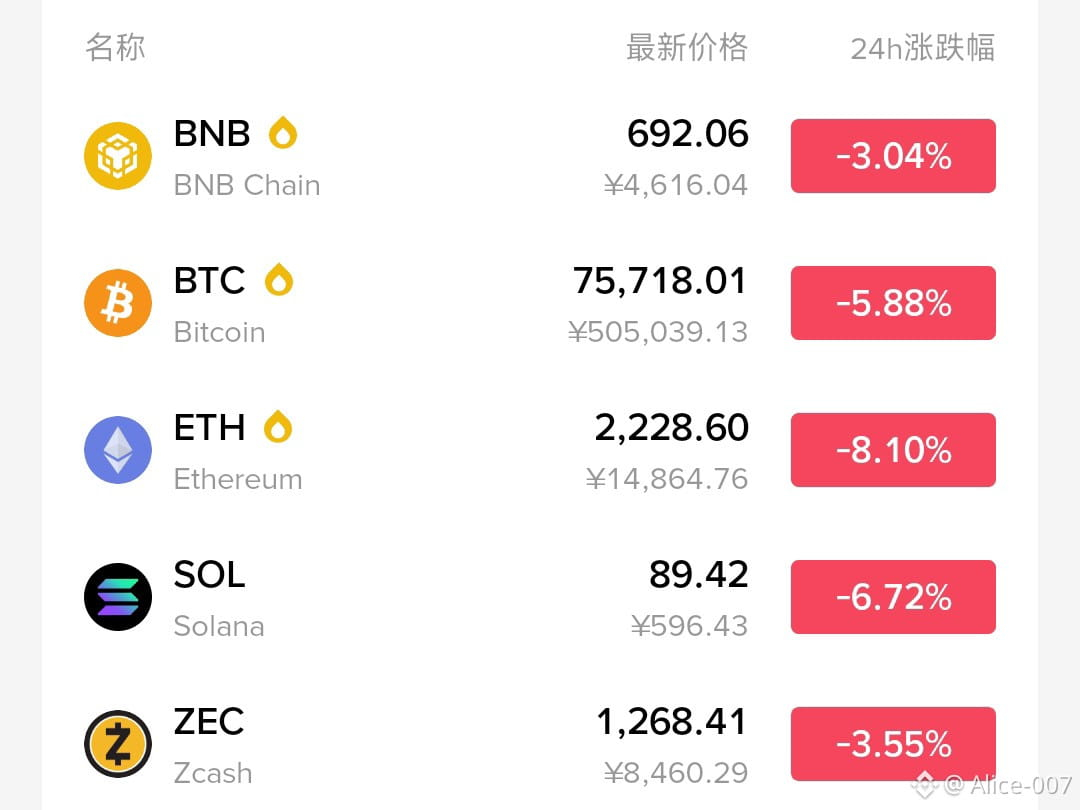
Holding $SOL 2.2K USDT
What's going on
My future is looking bleak
$BTC $SOL
What's going on
My future is looking bleak
$BTC $SOL
My future is looking bleak
$BTC $SOL
1
771
·
--
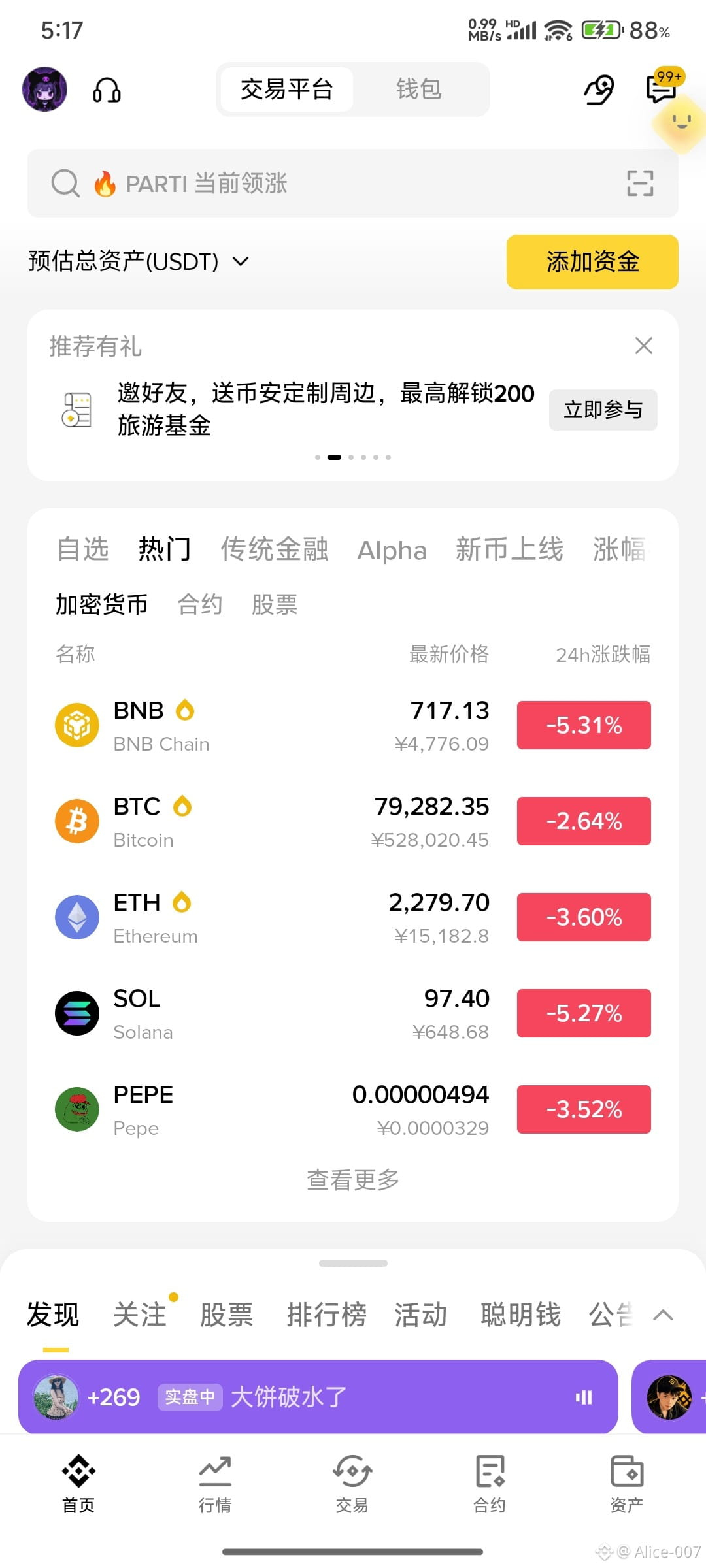
Woke up in the middle of the night
This market is going to be the death of me
Woke up in the middle of the night
This market is going to be the death of me
This market is going to be the death of me
1
1.3k
·
--
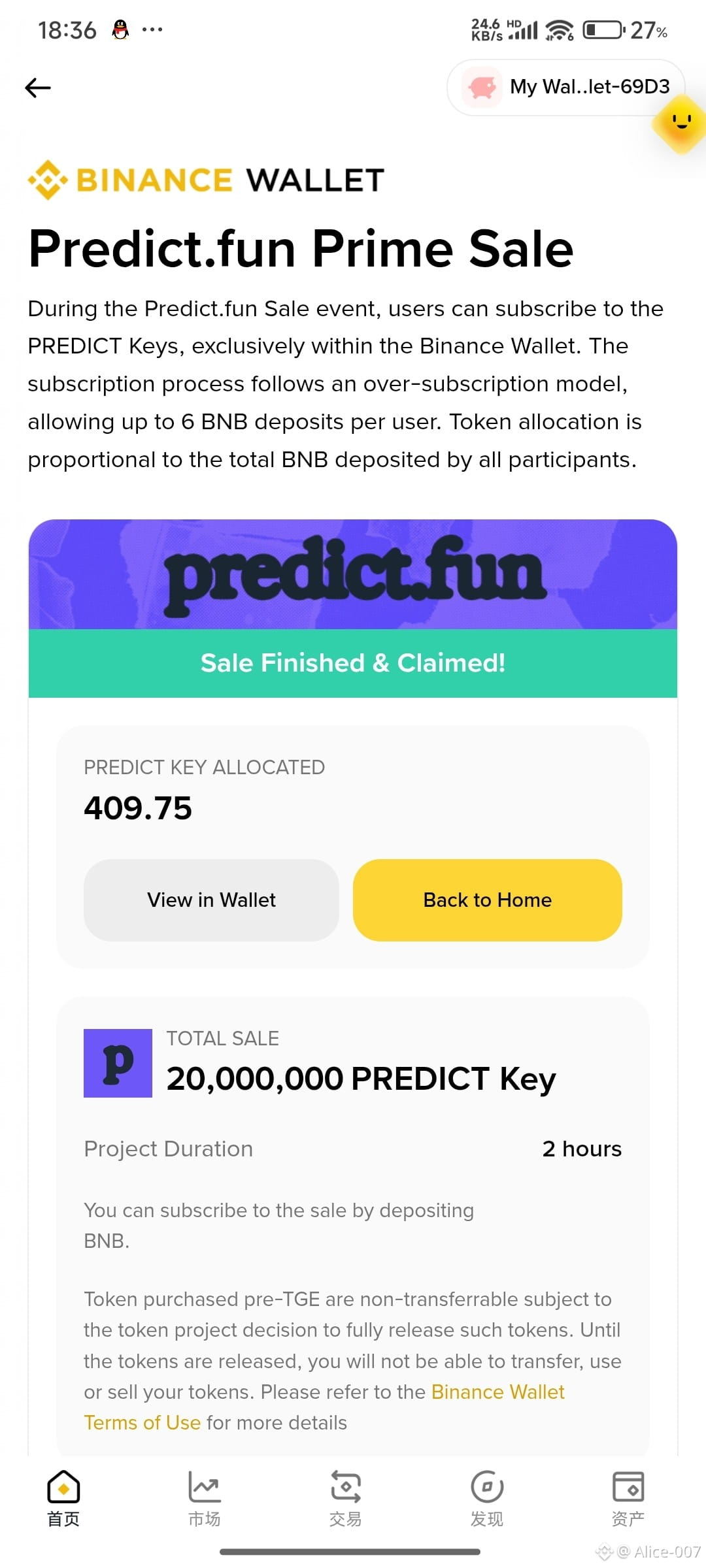
The market opens at 5 p.m. tomorrow.
Just waiting, just waiting—this should be a big one, right?
The market opens at 5 p.m. tomorrow.
Just waiting, just waiting—this should be a big one, right?
Just waiting, just waiting—this should be a big one, right?
1
2
893
·
--
You set a stop-loss order on a perpetual contract. The price hits your trigger exactly, your order fills, and then the market immediately rebounds.
That’s not bad luck. Your stop-loss price is sitting on-chain, and searchers scanning the liquidation map can see exactly where to trigger it. The market dips, takes your order, and moves on. On a transparent chain, others can see what you’re about to do before you do it.
Nillion’s Covenants solve this problem. A Covenant is an encrypted instruction that no one can read after it’s published on-chain—until it’s triggered. Write an instruction—sell at a certain price, bid in an auction, or release a payment at a certain time—bind it to a condition, and publish it. The instruction remains fully encrypted while it waits. When the condition is met, it decrypts and executes automatically.
No bots. No keeper services. No third party you have to trust not to peek.
Keys are distributed across multiple nodes, so no single node can access the full secret. Once a threshold number of nodes confirms that the condition has been met, on-chain reconstruction takes place, and the payload is verified against the commitment. No trust required. Nothing to exploit.
DUSK is live on Ethereum mainnet as of September 28, 2026. This isn’t a testnet. Anyone can create a Covenant, run a node, or build an application with the SDK right now.
There’s a lot you can do. Private stop-loss orders that sell when the price hits your trigger without revealing your exit point in advance. Sealed-bid auctions where all bids are revealed simultaneously at the end. Time-locked disclosures that become readable automatically when the time comes.
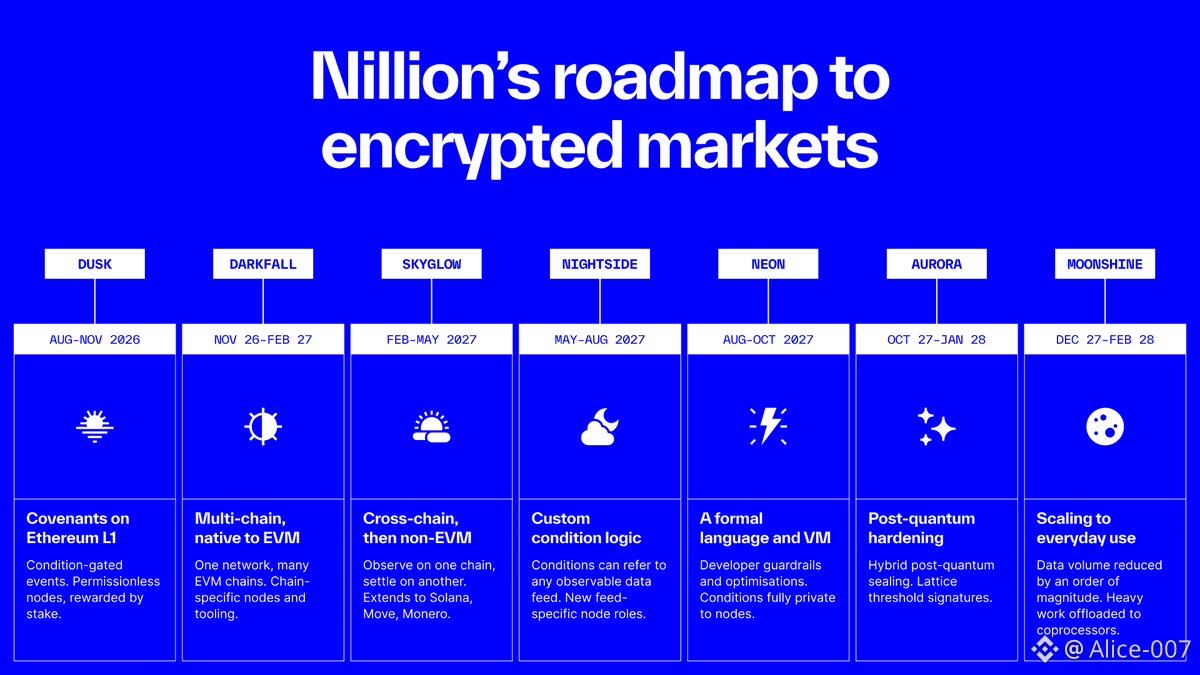
DUSK is just the first of seven eras on the roadmap. Darkfall lets a network of nodes serve multiple EVM chains at once. Skyglow separates condition monitoring from settlement, enabling cross-chain execution. Nightside expands the range of conditions to any provable fact—such as a shipment arriving or an auction ending. Neon introduces a formal Covenant language, making conditions invisible even to the nodes themselves. Aurora adds post-quantum security. Moonshine brings costs down and scales the system for everyday use.
If you’ve ever been stopped out by a stop-loss hunter, or watched your strategy get copied on the day you deployed it, you know what the problem is. Covenants change that.
#nil $NIL @nillionnetwork
You set a stop-loss order on a perpetual contract. The price hits your trigger exactly, your order fills, and then the market immediately rebounds.
That’s not bad luck. Your stop-loss price is sitting on-chain, and searchers scanning the liquidation map can see exactly where to trigger it. The market dips, takes your order, and moves on. On a transparent chain, others can see what you’re about to do before you do it.
Nillion’s Covenants solve this problem. A Covenant is an encrypted instruction that no one can read after it’s published on-chain—until it’s triggered. Write an instruction—sell at a certain price, bid in an auction, or release a payment at a certain time—bind it to a condition, and publish it. The instruction remains fully encrypted while it waits. When the condition is met, it decrypts and executes automatically.
No bots. No keeper services. No third party you have to trust not to peek.
Keys are distributed across multiple nodes, so no single node can access the full secret. Once a threshold number of nodes confirms that the condition has been met, on-chain reconstruction takes place, and the payload is verified against the commitment. No trust required. Nothing to exploit.
DUSK is live on Ethereum mainnet as of September 28, 2026. This isn’t a testnet. Anyone can create a Covenant, run a node, or build an application with the SDK right now.
There’s a lot you can do. Private stop-loss orders that sell when the price hits your trigger without revealing your exit point in advance. Sealed-bid auctions where all bids are revealed simultaneously at the end. Time-locked disclosures that become readable automatically when the time comes.
DUSK is just the first of seven eras on the roadmap. Darkfall lets a network of nodes serve multiple EVM chains at once. Skyglow separates condition monitoring from settlement, enabling cross-chain execution. Nightside expands the range of conditions to any provable fact—such as a shipment arriving or an auction ending. Neon introduces a formal Covenant language, making conditions invisible even to the nodes themselves. Aurora adds post-quantum security. Moonshine brings costs down and scales the system for everyday use.
If you’ve ever been stopped out by a stop-loss hunter, or watched your strategy get copied on the day you deployed it, you know what the problem is. Covenants change that.
#nil $NIL @Nillion
1
607
·
--
Article
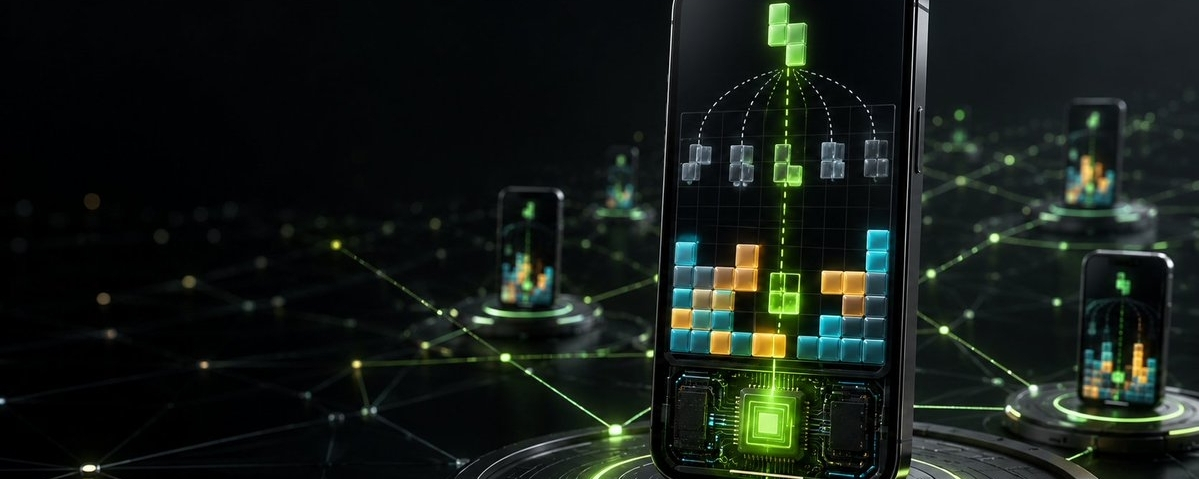
A Phone Plays Tetris—but Acurast Is Showing Off Something ElseWhile many AI projects are competing over parameter counts, GPU numbers, and model size, this demo from @Acurast Acurast takes a different approach: it lets an Android phone decide where the next Tetris piece should go.
At first glance, this looks like a pretty casual little game. But what I find interesting isn’t that “AI can play Tetris.” That’s old news. What’s really worth looking at is how it breaks an AI task down in a different way.
The game first generates five possible placements based on the current board, explaining the likely outcome of each choice—for example, whether it could clear a line or leave a gap. This information is then sent via an HTTP request to a phone in the Acurast network. A Laya model running on the phone’s CPU picks an option, and the result is sent back to the game.
A Phone Plays Tetris—but Acurast Is Showing Off Something Else
While many AI projects are competing over parameter counts, GPU numbers, and model size, this demo from @Acurast Acurast takes a different approach: it lets an Android phone decide where the next Tetris piece should go.
At first glance, this looks like a pretty casual little game. But what I find interesting isn’t that “AI can play Tetris.” That’s old news. What’s really worth looking at is how it breaks an AI task down in a different way.
The game first generates five possible placements based on the current board, explaining the likely outcome of each choice—for example, whether it could clear a line or leave a gap. This information is then sent via an HTTP request to a phone in the Acurast network. A Laya model running on the phone’s CPU picks an option, and the result is sent back to the game.
2
126
·
--
Article
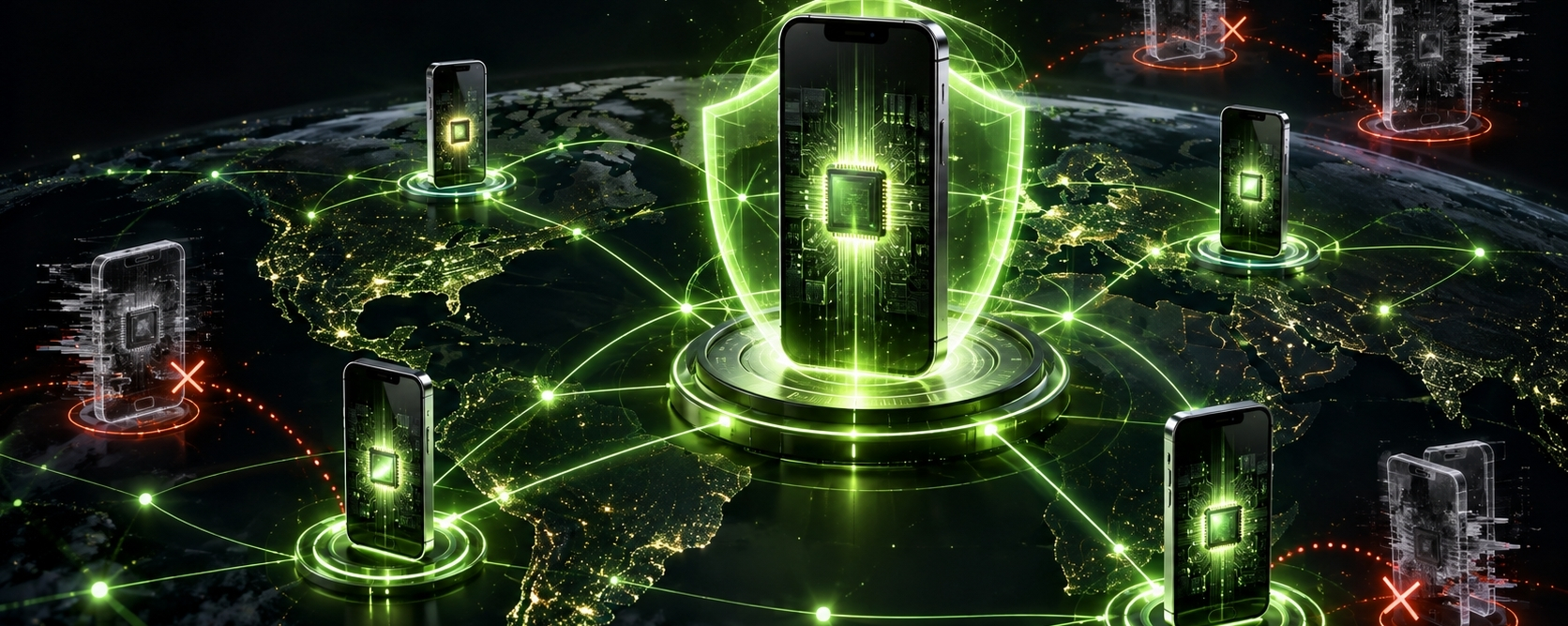
With 335,000 phones connected, how does Acurast prove they’re real?When I recently looked at Acurast’s network data, 335,000 phones across more than 175 countries certainly caught my eye at first glance.
But when I took a step back, what I really cared about wasn’t “how many devices are there?” but another question: Are these phones real?
This isn’t nitpicking. Any DePIN network that offers computational incentives has to contend with emulators, batches of fake devices, and spoofed online heartbeats. If a single script can pretend to be dozens of phones and keep claiming rewards, then even the most impressive node statistics could ultimately amount to numbers with no real computing power behind them.
With 335,000 phones connected, how does Acurast prove they’re real?
When I recently looked at Acurast’s network data, 335,000 phones across more than 175 countries certainly caught my eye at first glance.
But when I took a step back, what I really cared about wasn’t “how many devices are there?” but another question: Are these phones real?
This isn’t nitpicking. Any DePIN network that offers computational incentives has to contend with emulators, batches of fake devices, and spoofed online heartbeats. If a single script can pretend to be dozens of phones and keep claiming rewards, then even the most impressive node statistics could ultimately amount to numbers with no real computing power behind them.
2
276
·
--
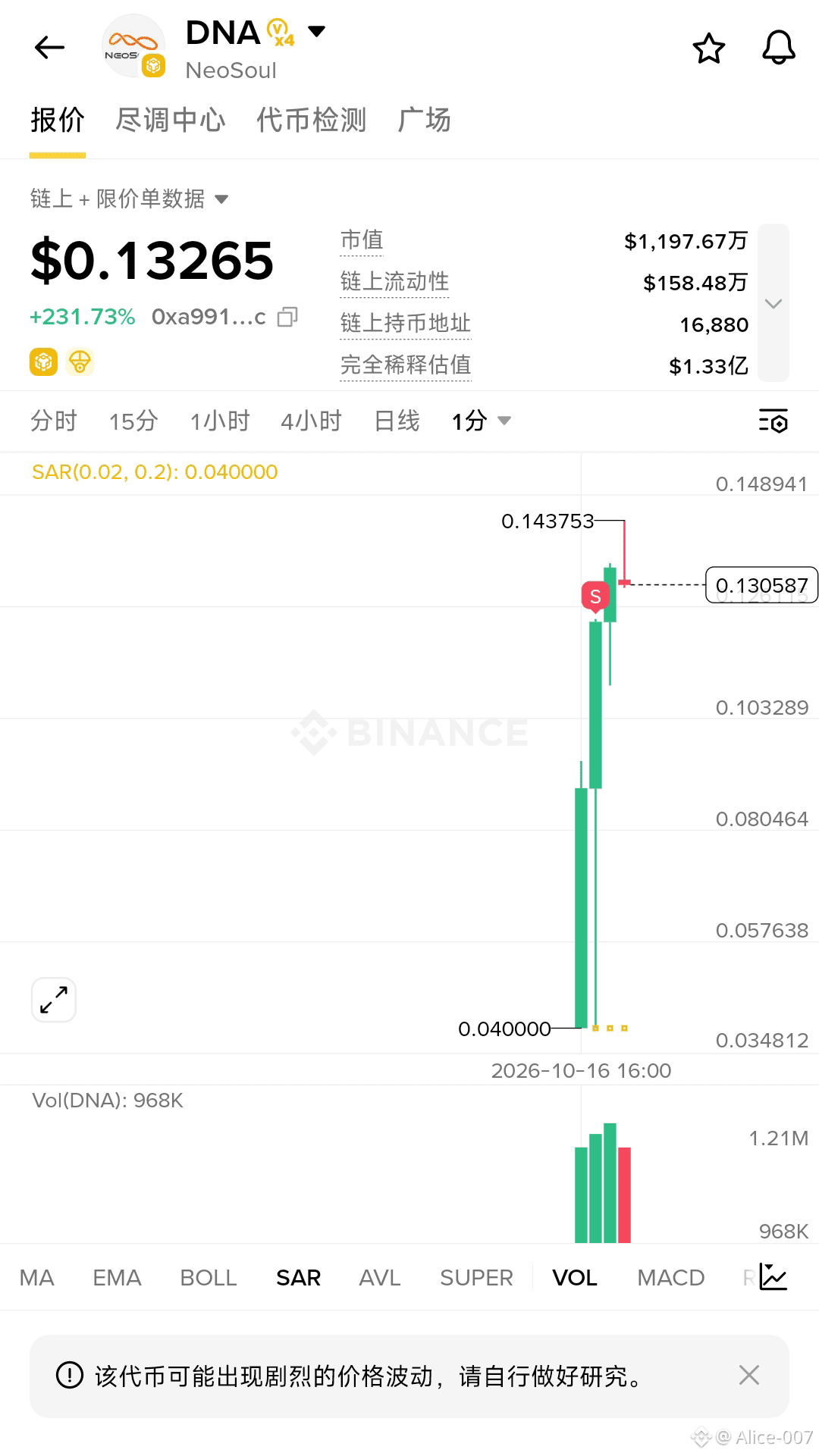
What coins are you all farming today?
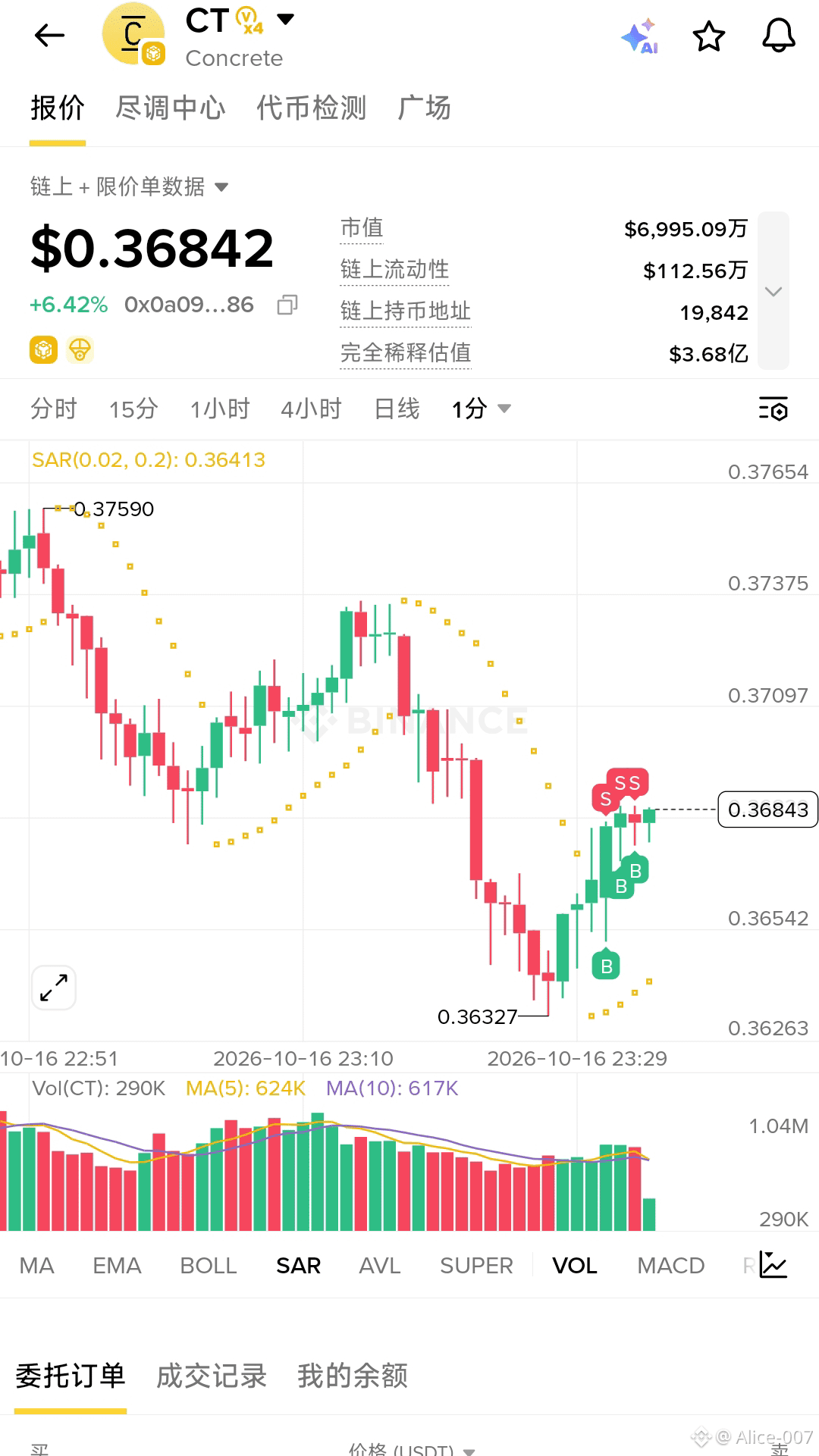
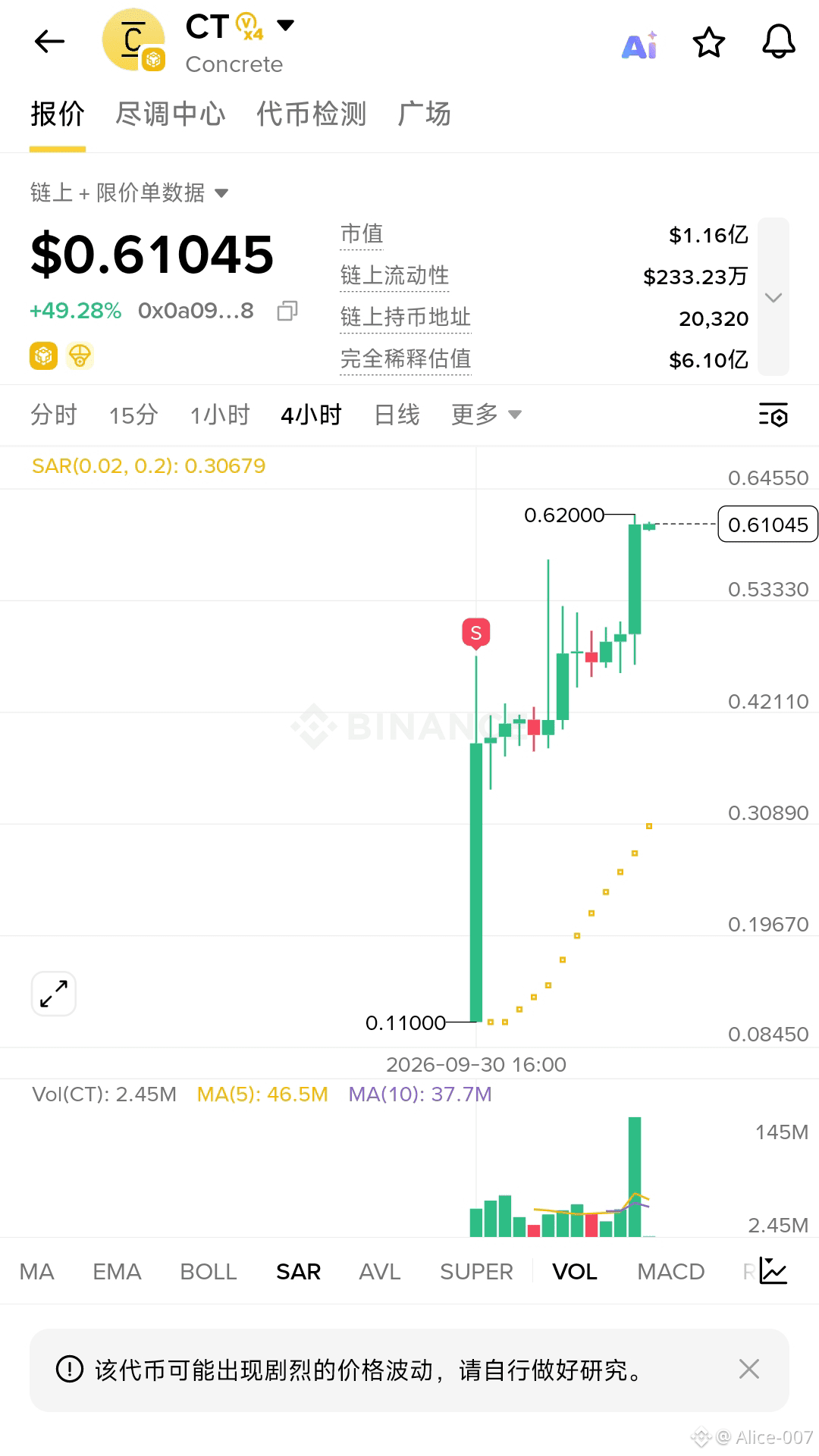
$CT cost me 3 bucks in wear.
What coins are you all farming today?
$CT cost me 3 bucks in wear.
$CT cost me 3 bucks in wear.
12
16
3k
·
--
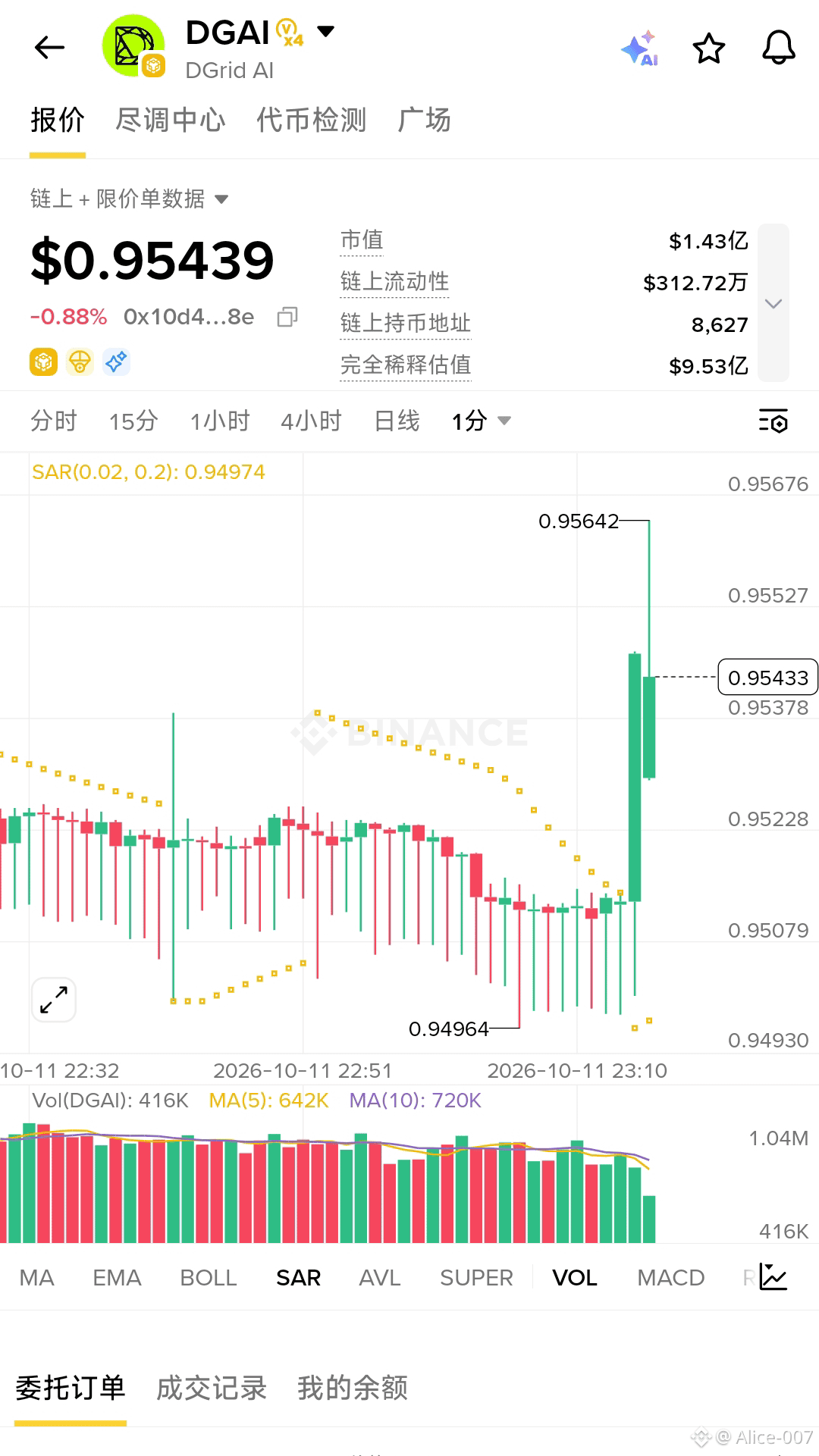
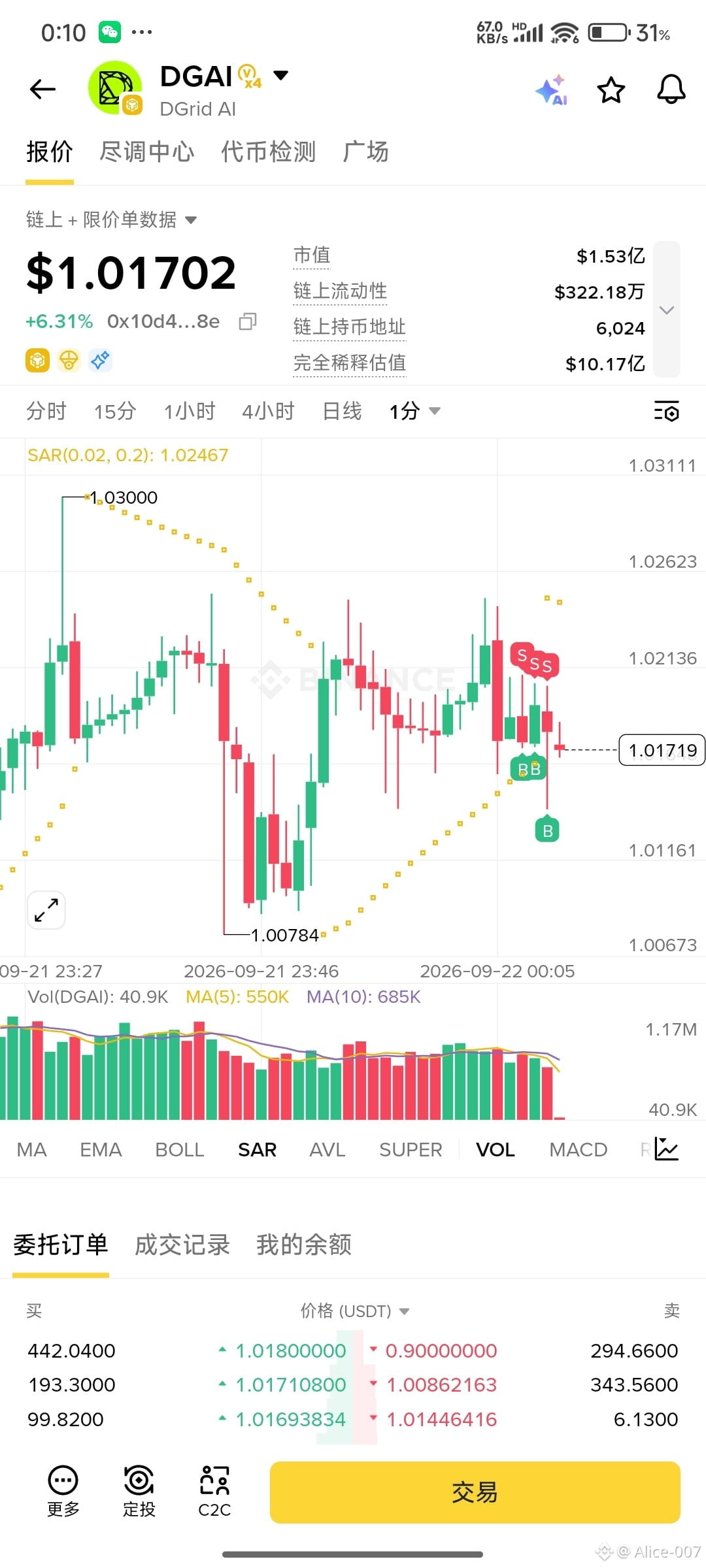
I can't do this anymore$DGAI
What kind of nonsense are you pulling?
I can't do this anymore$DGAI
What kind of nonsense are you pulling?
What kind of nonsense are you pulling?
1
1
724
·
--
Article
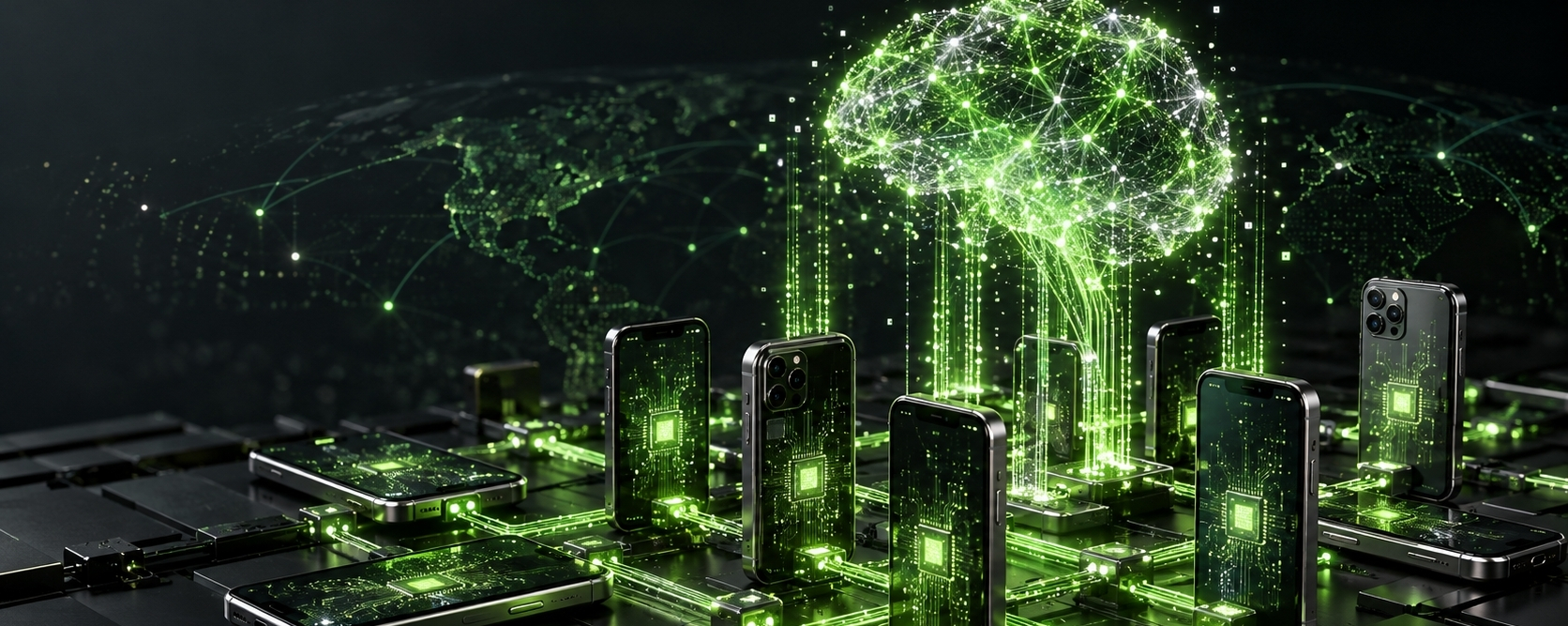
A New Opportunity at the Intersection of AI and DePIN: How Acurast Unlocks the Potential of Smartphone ComputingMany people have one or two old phones tucked away in a drawer. They may no longer be suitable as their primary devices, but their processors, security chips, and network connections still work. Meanwhile, AI applications increasingly need computing for inference, data processing, and tasks that run continuously online. Acurast aims to bring these two things together: turning phones scattered around the world into a computing network that developers can tap into.
Acurast isn’t looking to replace GPU clusters used to train large AI models with phones. Instead, it’s better suited to handling AI inference, agent backends, APIs, automation tasks, and privacy-preserving computing. Once a developer submits a task, the network matches it with devices based on their capabilities and the task’s requirements, and the phones carry out the actual work.
A New Opportunity at the Intersection of AI and DePIN: How Acurast Unlocks the Potential of Smartphone Computing
Many people have one or two old phones tucked away in a drawer. They may no longer be suitable as their primary devices, but their processors, security chips, and network connections still work. Meanwhile, AI applications increasingly need computing for inference, data processing, and tasks that run continuously online. Acurast aims to bring these two things together: turning phones scattered around the world into a computing network that developers can tap into.
Acurast isn’t looking to replace GPU clusters used to train large AI models with phones. Instead, it’s better suited to handling AI inference, agent backends, APIs, automation tasks, and privacy-preserving computing. Once a developer submits a task, the network matches it with devices based on their capabilities and the task’s requirements, and the phones carry out the actual work.
Acurast isn’t looking to replace GPU clusters used to train large AI models with phones. Instead, it’s better suited to handling AI inference, agent backends, APIs, automation tasks, and privacy-preserving computing. Once a developer submits a task, the network matches it with devices based on their capabilities and the task’s requirements, and the phones carry out the actual work.
1
163
·
--
Article
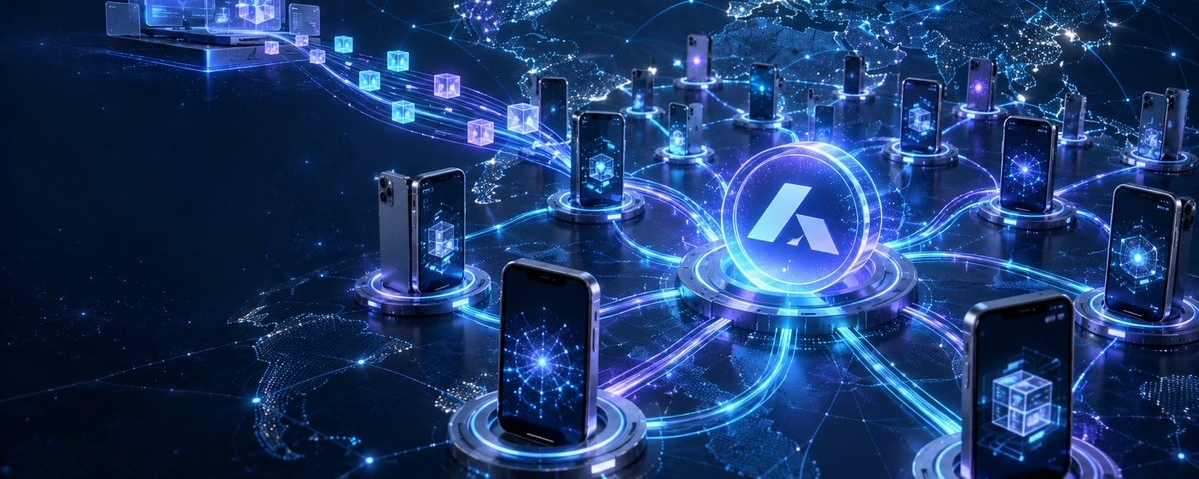
The Value Proposition of $ACU: A Network Token Connecting Real Computing Power NeedsWhen it comes to a computing power network, many people’s first instinct is servers and large data centers, but Acurast takes a different approach: turning smart phones distributed around the world into callable computing resources.
In simple terms, Acurast is a decentralized computing network. Developers can deploy automated tasks, APIs, data processing, AI inference, and privacy computing onto devices connected to the network, without having to rely entirely on traditional cloud service providers. Phones themselves have processors, secure chips, and trusted execution environments—so they can provide computing power while also allowing certain sensitive tasks to run in a relatively isolated environment. According to data disclosed by the project team in September 2026, Acurast has been connected to more than 313,000 dedicated smartphones.
The Value Proposition of $ACU: A Network Token Connecting Real Computing Power Needs
When it comes to a computing power network, many people’s first instinct is servers and large data centers, but Acurast takes a different approach: turning smart phones distributed around the world into callable computing resources.
In simple terms, Acurast is a decentralized computing network. Developers can deploy automated tasks, APIs, data processing, AI inference, and privacy computing onto devices connected to the network, without having to rely entirely on traditional cloud service providers. Phones themselves have processors, secure chips, and trusted execution environments—so they can provide computing power while also allowing certain sensitive tasks to run in a relatively isolated environment. According to data disclosed by the project team in September 2026, Acurast has been connected to more than 313,000 dedicated smartphones.
In simple terms, Acurast is a decentralized computing network. Developers can deploy automated tasks, APIs, data processing, AI inference, and privacy computing onto devices connected to the network, without having to rely entirely on traditional cloud service providers. Phones themselves have processors, secure chips, and trusted execution environments—so they can provide computing power while also allowing certain sensitive tasks to run in a relatively isolated environment. According to data disclosed by the project team in September 2026, Acurast has been connected to more than 313,000 dedicated smartphones.
1
206
·
--
The cooking smoke and laughter of ordinary people’s homes
always bring a sense of peace~
The cooking smoke and laughter of ordinary people’s homes
always bring a sense of peace~
always bring a sense of peace~

7
11
3.7k
·
--
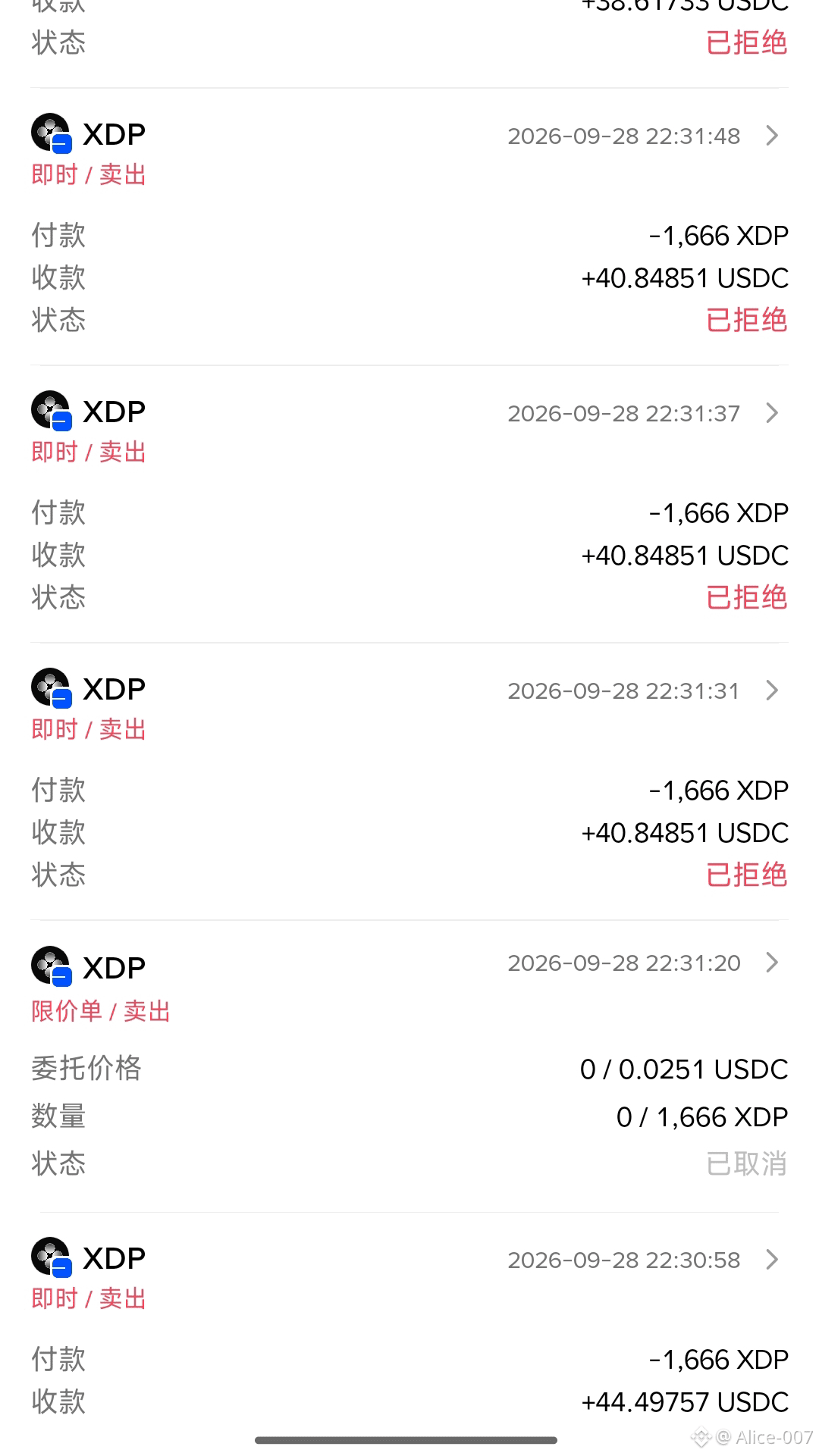
$CT 后知后觉
Can't fly any further after selling it
$CT 后知后觉
Can't fly any further after selling it
Can't fly any further after selling it
4
19
2.9k
·
--
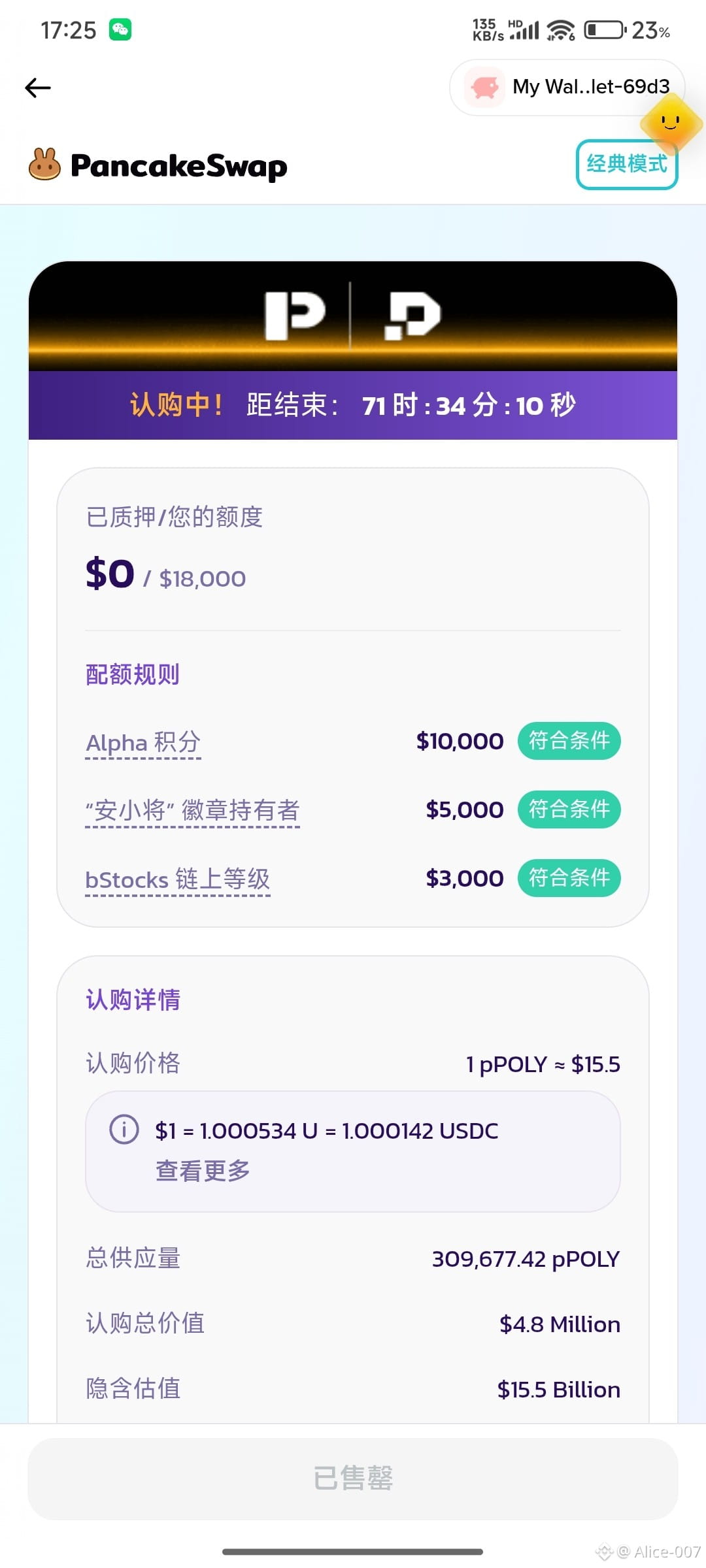
I’m holding all this credit
and it’s really useless
What’s the point of giving me three days?
I’m holding all this credit
and it’s really useless
What’s the point of giving me three days?
and it’s really useless
What’s the point of giving me three days?
24
44
31k
·
--
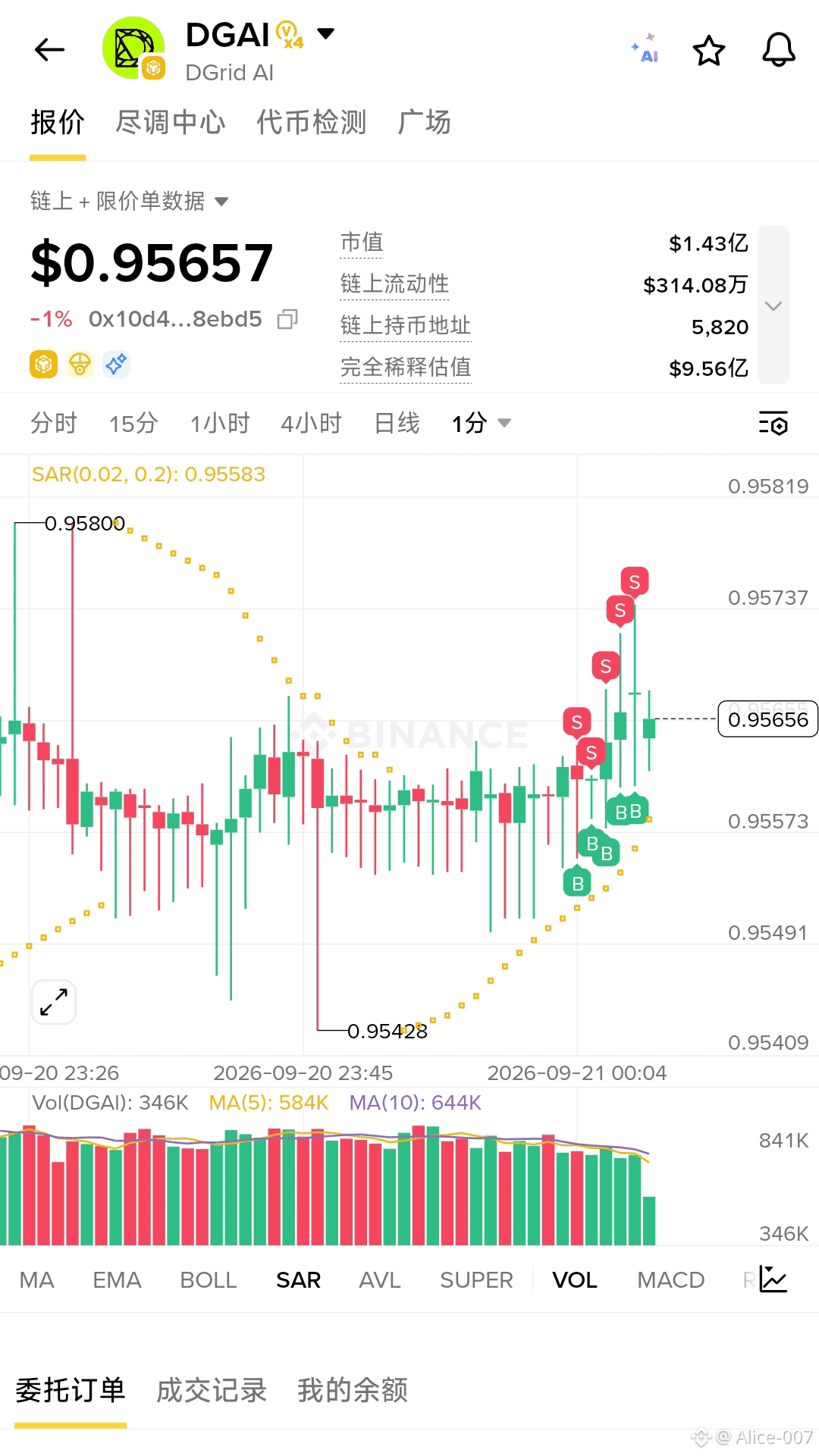
$DGAI Today feels smooth and convenient to use.
$DGAI Today feels smooth and convenient to use.
1
894
·
--
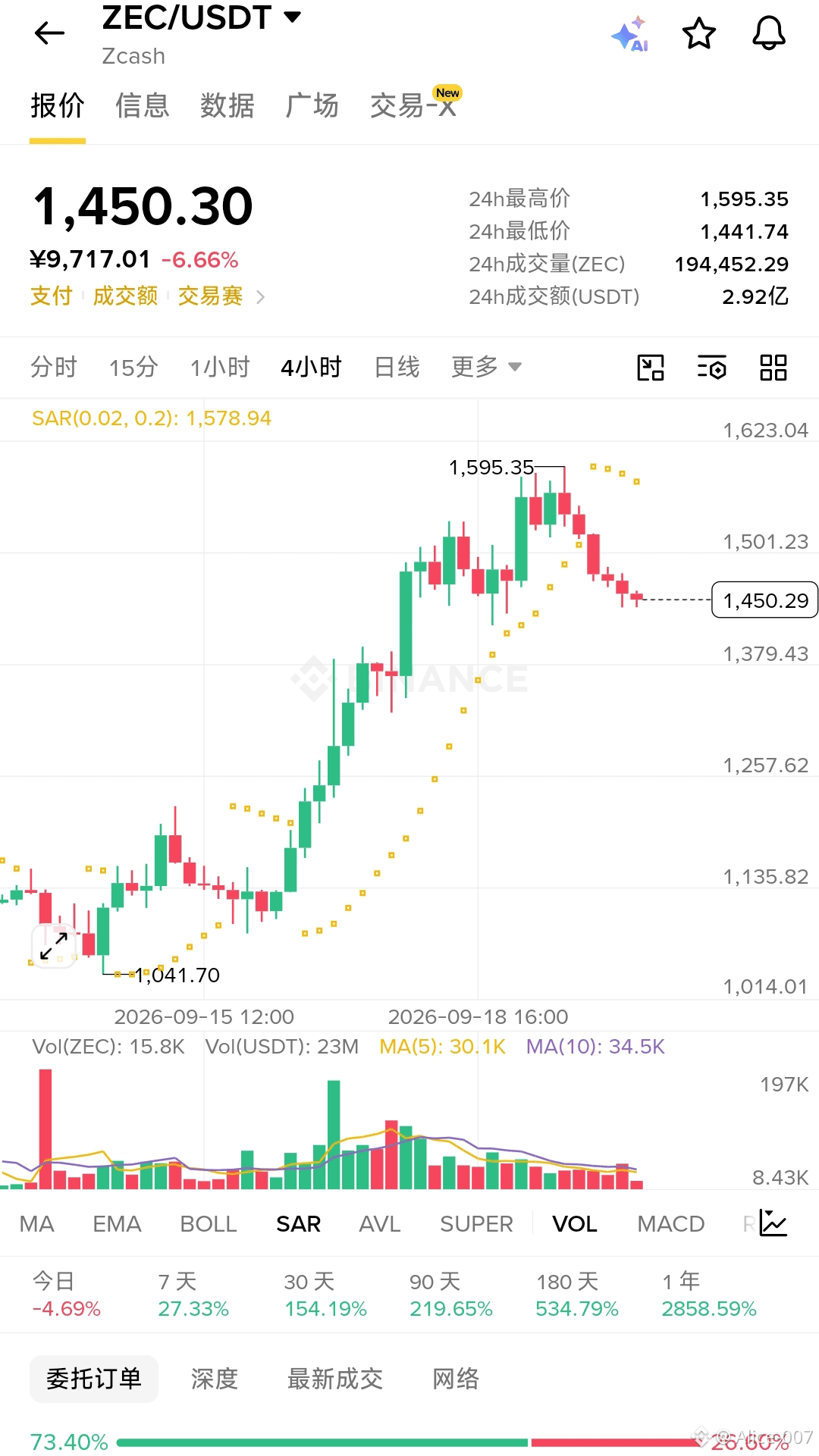
Daily Question $ZEC
Haven't you given up on targeting the Air Force yet?
Daily Question $ZEC
Haven't you given up on targeting the Air Force yet?
Haven't you given up on targeting the Air Force yet?
1
567
·
--
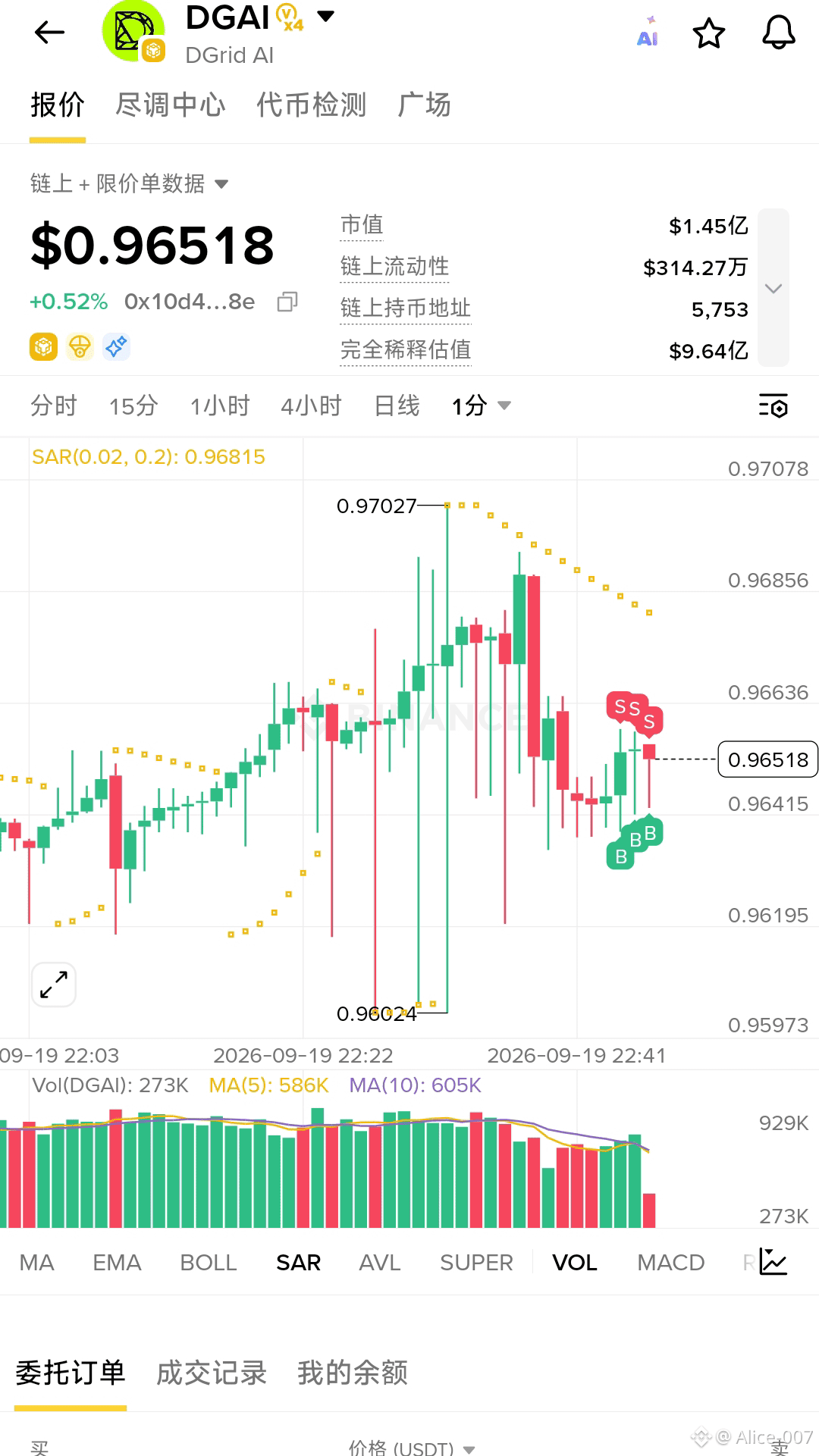
Today I’m getting $DGAI
33,000 wears 1.8
This wear is still okay
Today I’m getting $DGAI
33,000 wears 1.8
This wear is still okay
33,000 wears 1.8
This wear is still okay
1
9
1.2k
Log in to explore more content
Join global crypto users on Binance Square
⚡️ Get latest and useful information about crypto.
💬 Trusted by the world’s largest crypto exchange.
👍 Discover real insights from verified creators.
Email / Phone number
Trending Topics
NvidiaBeatsEstimatesWith$130BQ4Outlook
557 views
19 Discussing
Nvidia Beats With $115.8 Billion in Revenue, Guides to $130 Billion and Adds $150 Billion Buyback
Binance News
·19 Likes
·22k views
AnthropicIPOPriceCouldExceed$80
827 views
30 Discussing
CanNvidia’sDataCenterGrowthContinue?
1,466 views
60 Discussing