

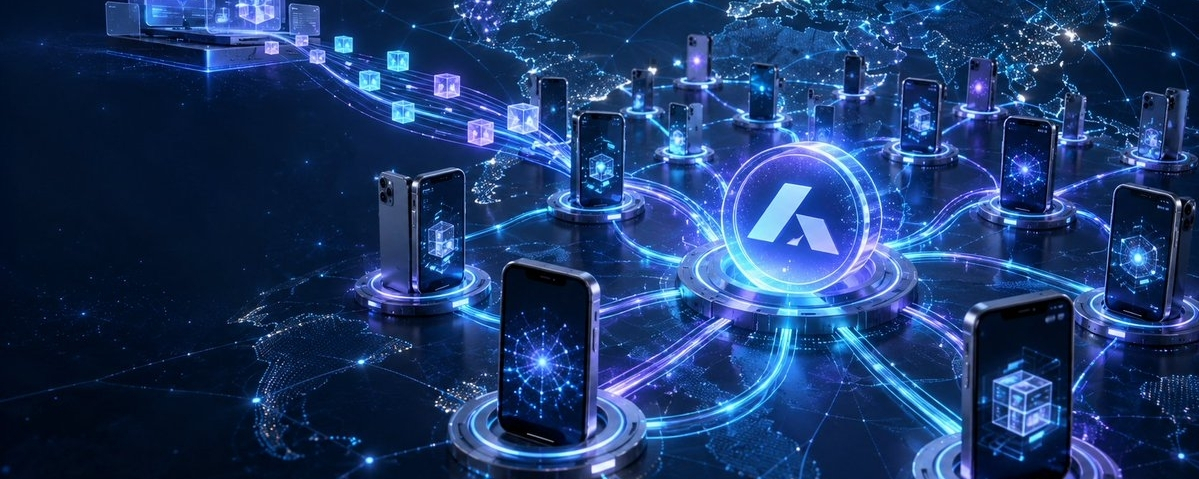


When it comes to a computing power network, many people’s first instinct is servers and large data centers, but Acurast takes a different approach: turning smart phones distributed around the world into callable computing resources.
In simple terms, Acurast is a decentralized computing network. Developers can deploy automated tasks, APIs, data processing, AI inference, and privacy computing onto devices connected to the network, without having to rely entirely on traditional cloud service providers. Phones themselves have processors, secure chips, and trusted execution environments—so they can provide computing power while also allowing certain sensitive tasks to run in a relatively isolated environment. According to data disclosed by the project team in September 2026, Acurast has been connected to more than 313,000 dedicated smartphones.
And $ACU is the core token that keeps this whole network running.
When developers publish computational tasks, they need to pay network and computing fees using $ACU . After the tasks are executed, the corresponding computing fees are burned. Devices that provide computing power receive incentives from the protocol’s reward pool, and completing tasks in practice can also increase the reward weight. In other words, the more real tasks there are in the network, the more opportunities there are for $ACU to be used and burned.
The rewards for contributing computing power in Acurast are not determined solely by the number of devices. Hardware performance, the size of the stake, the commitment duration, and whether the tasks are truly executed will all affect the rewards. Even token holders without devices can delegate the $ACU to computing power providers, but if the other party fails to deliver on their computing power commitment, both sides may face penalties. Therefore, staking here is more like a security deposit, meant to constrain computing quality and online stability.
$ACU also serves a governance function. Holders can participate in decisions such as protocol upgrades, computation parameter changes, and how treasury funds are used. The dynamic pricing mechanism launched earlier was also driven through on-chain governance, making computation prices more reflective of the devices’ real performance.
The initial supply of $ACU is 1 billion tokens. Under the current model, 5% new issuance occurs per year, used for staking computing power, baseline performance, treasury, and Collator rewards. Burning of computing fees can offset part of the newly added supply, but whether it can provide long-term support ultimately depends on whether real paid tasks can continue to grow.
So I think when observing $ACU, it’s not enough to look only at short-term price movements. Whether Acurast can enable more developers to truly use these phones to run automated tasks, AI inference, and privacy computing is the most important value foundation for this token.
This article is for project introduction and information sharing only and does not constitute any investment advice.