
橙子Joyce
719 Posts

橙子Joyce
 Square Verified+
Report
Block User
十年以上专注美股市场实战投资策略与资产管理|2015年入币圈.十年以上投资BTC.ETH.BNB.|直播北京时间晚上20:00—23:00|每日分享美股实盘与宏观盘面解盘|追踪美联储货币政策解读|前瞻·宏观数据点评·加密市场的联动分析|贵金属投资策略黄金.白银.铜|中长期价值投资者|✨星河社区联合创始人✨
NVDAB Holder
Frequent Trader
8.9 Years
2.7K+ Following
45.0K+ Followers
51.2K+ Liked
Posts
All
Quotes
Videos
Live
PINNED
·
--
🎙️ A whopping $17.8 billion donation! SpaceX secures the first “space data center license”
End
3k
USD1/USDT
Market/Buy
Filled
16
12
PINNED
·
--
Bullish
Verified
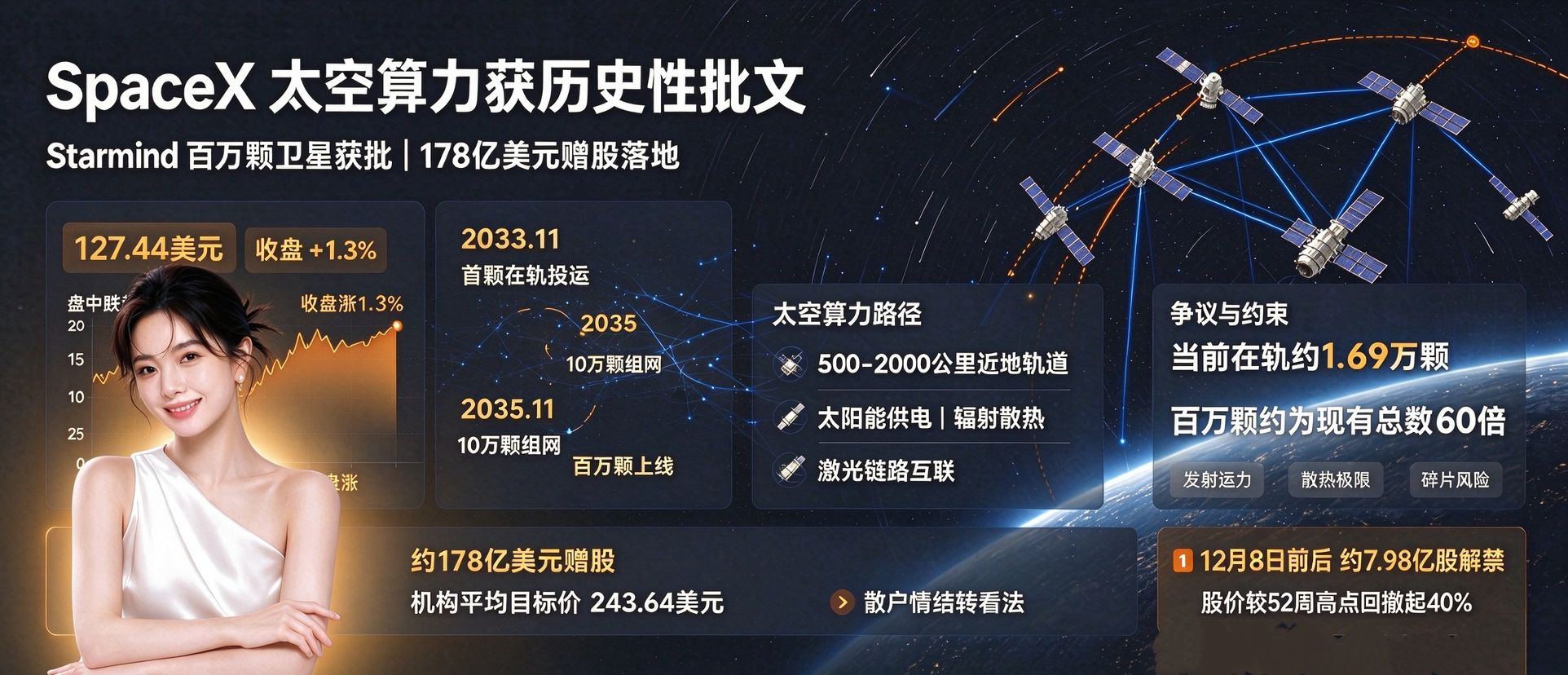
🚀 SpaceX’s space-based computing wins historic approval! “Starmind” plan sets the market alight as $17.8 billion in stock gifts roll out
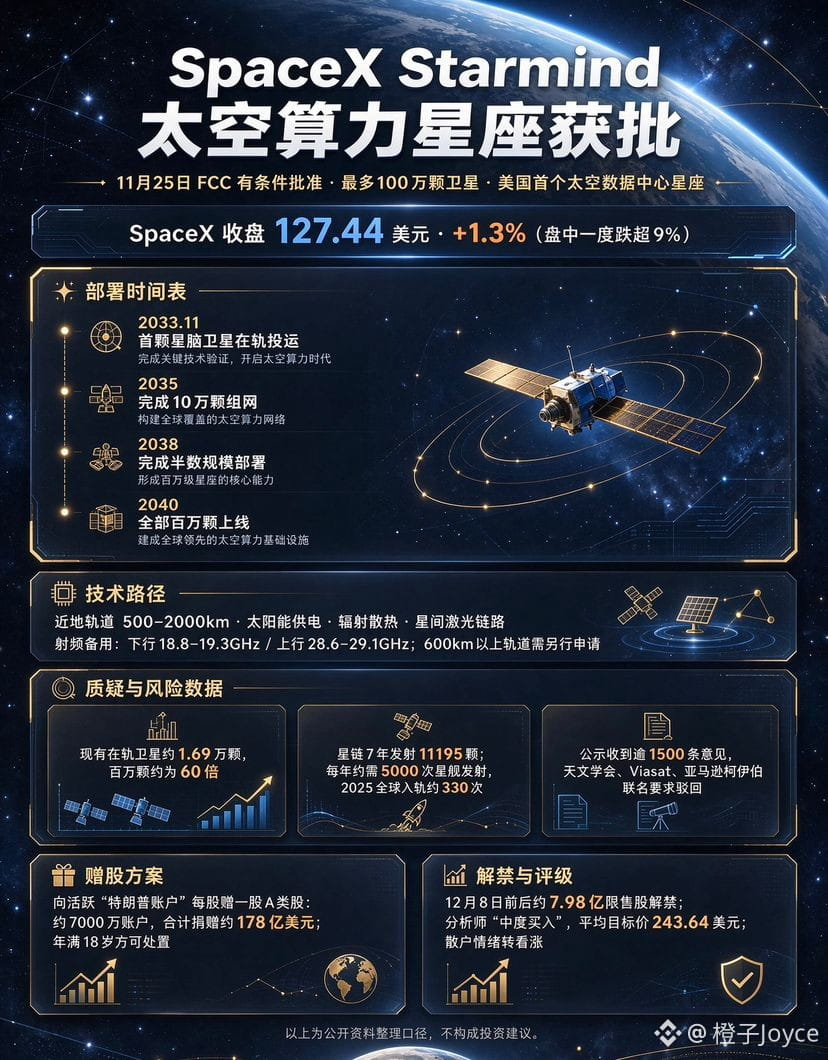
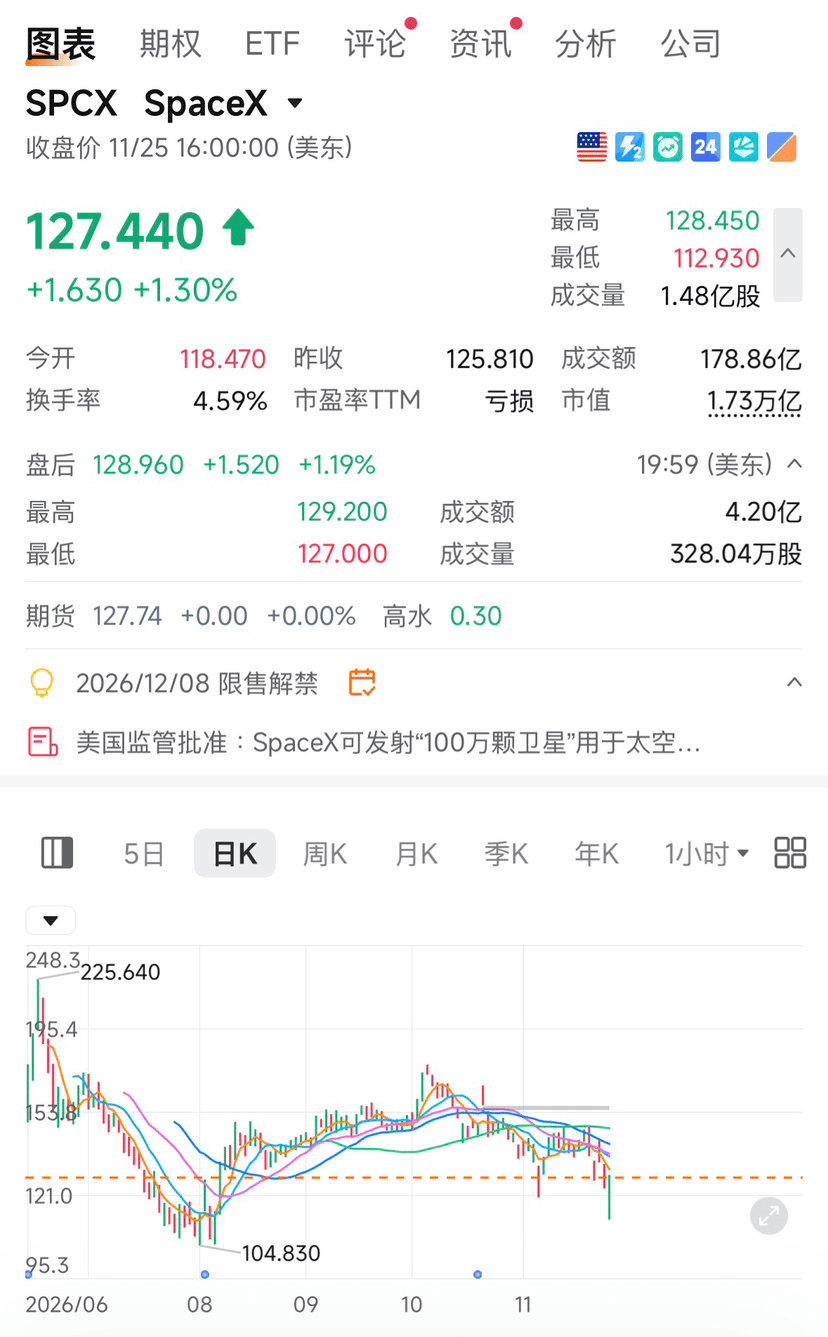
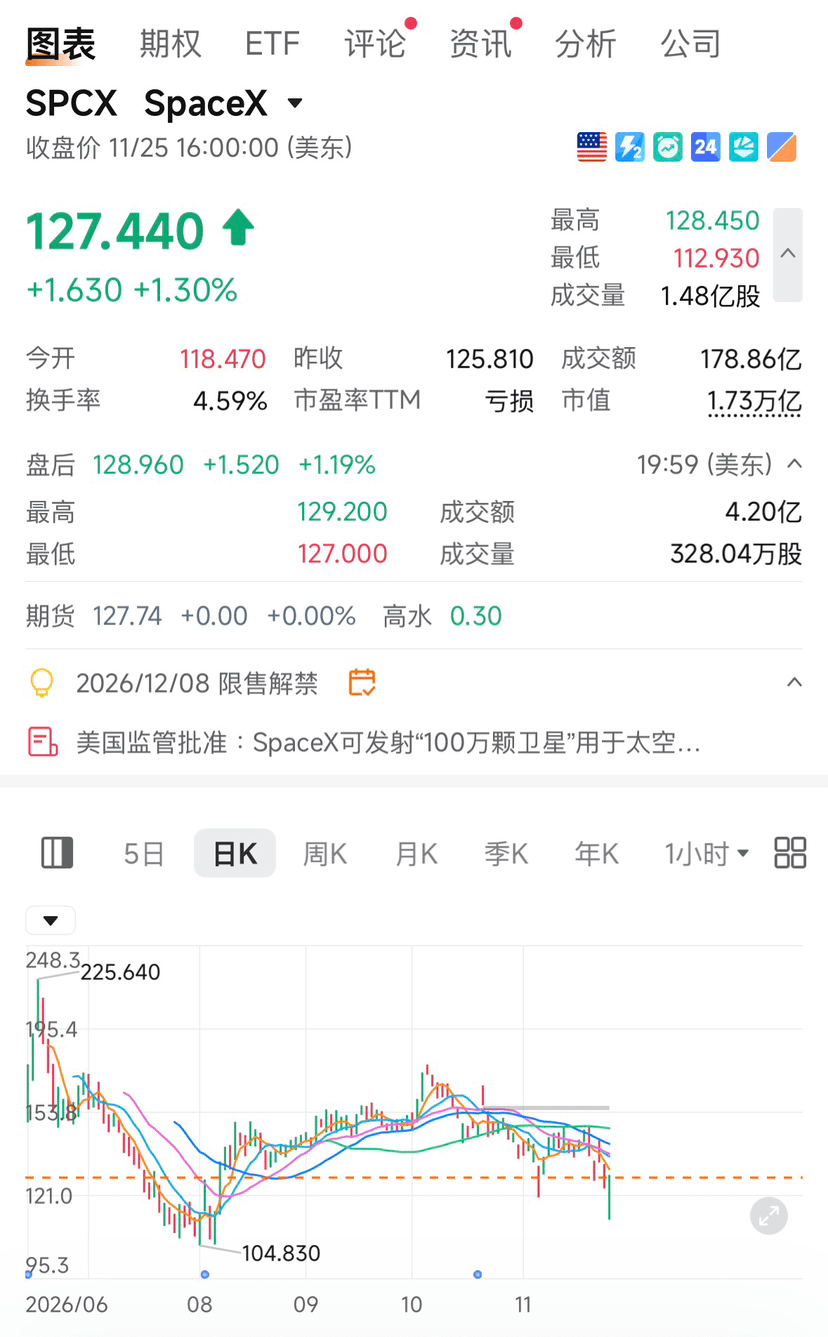
As terrestrial computing grapples with bottlenecks in power and water resources, space-based computing has achieved a landmark breakthrough! SpaceX (SPCX) fell more than 9% at one point intraday before staging a strong V-shaped recovery on the major positive news, closing up 1.3% at $127.44.
1. Approval for one million AI satellites; “Starmind” plan gets underway
* Regulatory breakthrough: The U.S. FCC has conditionally approved SpaceX’s plan to deploy up to one million satellites to build “Starmind,” a space-based data center. This is the first time in U.S. history that an orbital computing constellation has been approved.
* The core rationale: The satellites will operate in low Earth orbit at altitudes of 500–2,000 kilometers, using around-the-clock solar power and radiative heat dissipation in space, and connecting at high speeds via laser links. This would completely bypass the high water consumption and permitting constraints of terrestrial data centers.
* Rollout timeline and controversy: The first satellite must be operational by November 2033, the constellation must reach 100,000 satellites by 2035, and the full million-satellite network must be completed by 2040. However, there are currently only about 16,900 satellites in orbit worldwide, making a million-satellite constellation 60 times the current total. Academics and competitors such as Amazon (Kuiper) have raised serious concerns about launch capacity, the limits of heat dissipation in space, and debris risks.
2. Musk joins SpaceX in donating about $17.8 billion in stock to “Trump Accounts”
* Stock donation plan: SpaceX announced that it will donate one newly issued Class A share to each active investment account for a U.S. child (“Trump Account”), with Musk personally making an equal matching contribution. President Gwynne Shotwell will contribute an additional 2 million-plus shares. Based on an estimated 70 million accounts, the total donation would amount to as much as $17.8 billion.
* Market impact: The donated shares cannot be sold until the children turn 17–18, effectively locking them up for the long term. However, distributing ownership on such a large scale could also increase future corporate governance and coordination costs.
3. Trading outlook: Short-term investors should still be wary of selling pressure from lockup expirations
* Although retail investor sentiment has quickly turned “bullish,” and Wall Street has set an average price target of $243.64—implying considerable upside from the current price—SpaceX is due to see about 798 million restricted shares become eligible for trading around December 8. The stock is still down more than 40% from its 52-week high, so investors should beware of the offsetting pressure that a huge wave of newly tradable shares could place on positive sentiment in the near term.
#SpaceXSpaceDataCenterApproved,NewGrowthDriverForAIChipDemand?
4
2
6
5.1k

·
--
come
come
路人1688-luren
·
--
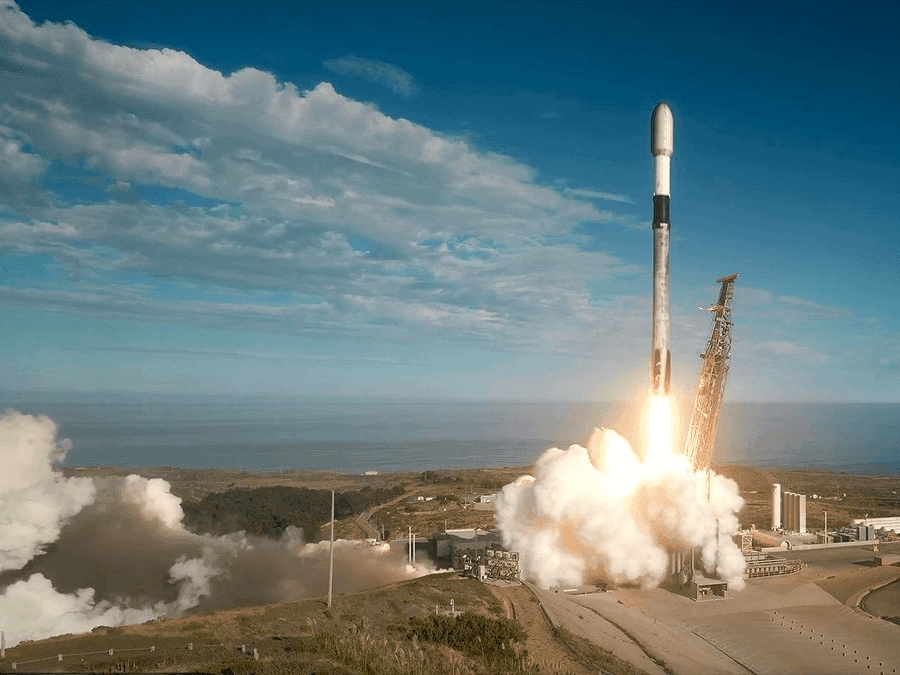
$SPCX There probably won't be another chance for a two-digit number of people to get on board! The FCC has approved SpaceX's application to build data centers in space, and one million satellites are about to be launched into orbit!
Moreover, the FCC is also reviewing applications from other competitors. So far, only SPCX has been approved, which shows that only SpaceX has the operational experience and launch capability. With Musk having gained this first-mover advantage, other companies have no chance of overtaking $SPCX .#SpaceX太空数据中心获批,AI芯片需求迎来新增长点?
Moreover, the FCC is also reviewing applications from other competitors. So far, only SPCX has been approved, which shows that only SpaceX has the operational experience and launch capability. With Musk having gained this first-mover advantage, other companies have no chance of overtaking $SPCX .#SpaceX太空数据中心获批,AI芯片需求迎来新增长点?



131

·
--

奋斗Hustle1688
·
--
[Replay] 🎙️ Build Binance Square BNB, BNCB
02 h 52 m 56 s · 6k listens
341
·
--
Verified
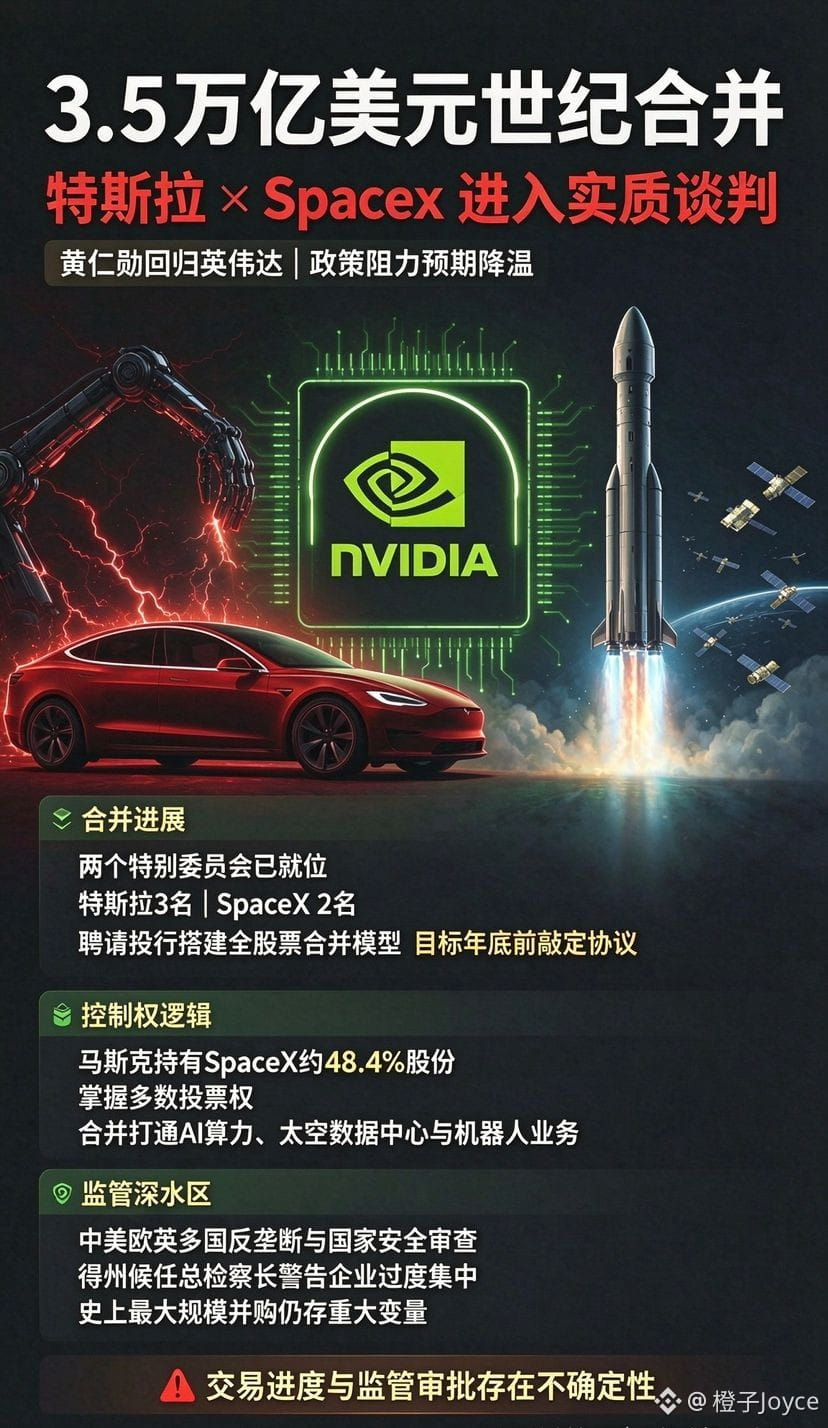
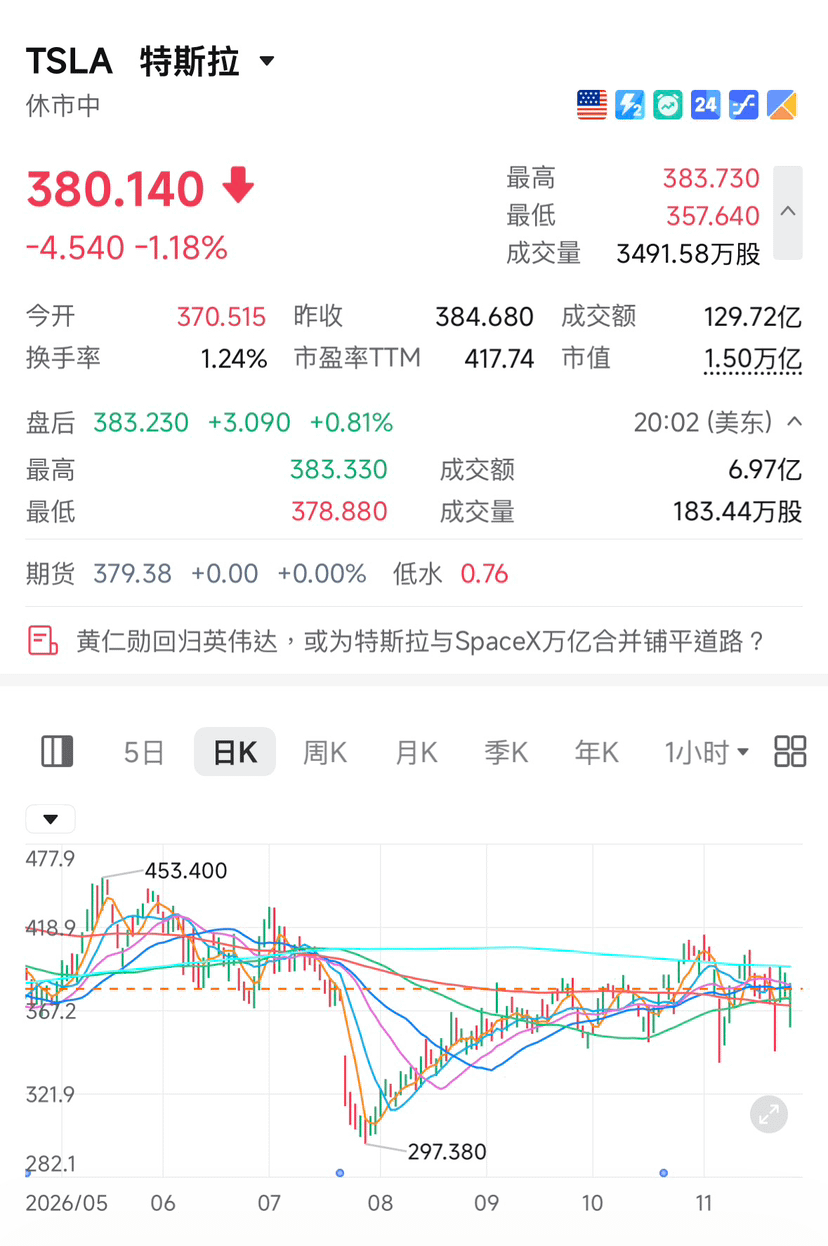
🚀 Tesla and SpaceX race toward a $3.5 trillion merger of the century! Jensen Huang’s dramatic return to Nvidia unexpectedly upends regulatory expectations
Epic twists keep unfolding in the world of U.S. tech stocks! After Jensen Huang took back the reins at Nvidia (NVDA) following Trump’s personal intervention, the market’s attention quickly shifted to the two trillion-dollar giants under Elon Musk—Tesla (TSLA) and SpaceX (SPCX)—whose merger is gaining momentum.
1. Merger enters a substantive phase: two independent committees are in place
* Negotiating framework takes shape: The two companies have formally appointed five directors (three from Tesla and two from SpaceX) to form two special committees, and have hired a Wall Street investment bank to build an all-stock merger financial model. Their goal is to finalize an agreement by the end of the year.
* Core interests and control: Musk currently owns about 48.4% of SpaceX (with majority voting control) and roughly 20% of Tesla’s voting power. A merger would not only connect their AI computing power, space data centers, and robotics businesses, but also help Musk secure majority control of his new empire. If the deal closes quickly enough, SpaceX could also gain early entry into the S&P 500 through the transaction.
2. Why is Huang’s return to Nvidia good news for Musk?
* Redefining the boundaries of “corporate governance”: Trump personally called to “persuade” Nvidia’s board to reinstate Huang, triggering a single-day surge of more than 30% in Nvidia shares and nearly $1 trillion in added market value.
* The White House’s signal is clear: The episode has radically reset market expectations around White House intervention in business decisions—if something aligns with what Trump considers the “national interest,” he is willing to break with convention for his tech allies. As a key Trump ally, Musk can now expect significantly less policy resistance as he pursues a mega-merger.
3. Deal watch: Global regulatory hurdles remain
* Although capital markets have high hopes for what would be the largest merger in history, the obstacles remain considerable: Tesla has substantial production capacity and a large market presence in China, while SpaceX is deeply tied to U.S. defense and aerospace operations. Antitrust and national security reviews in China, the U.S., Europe, and the U.K. will be the biggest wild cards. In addition, Texas’s attorney general-designate has warned about excessive corporate concentration.
Whether this $3.5 trillion business behemoth can successfully unite will be the ultimate test of the direction of future tech regulation.
#TeslaAndSpaceXMerger
1
3
1.3k
·
--
Bullish
Verified
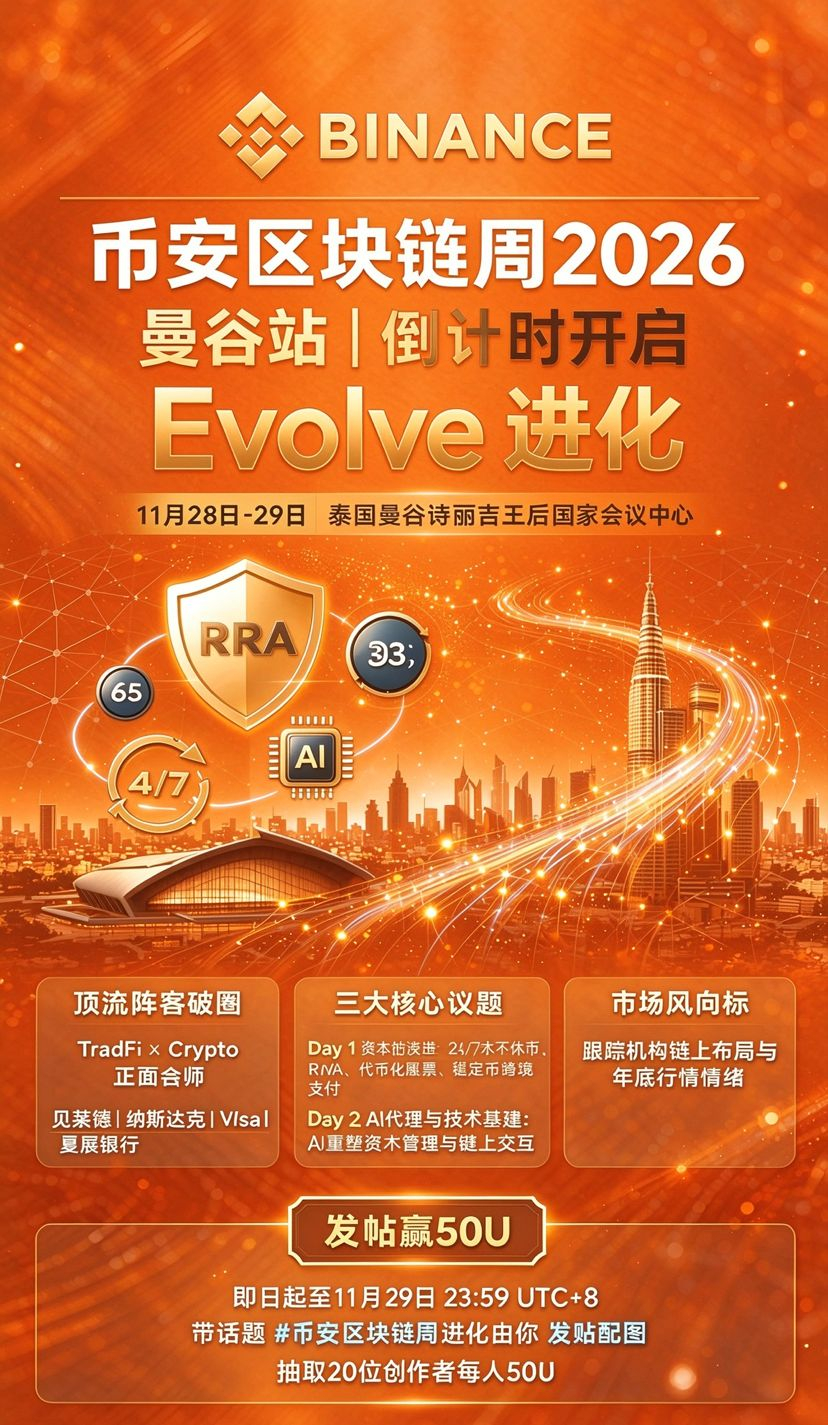
🌍 Binance Blockchain Week will take place on November 28–29. The 2026 Binance Blockchain Week is about to officially kick off at the Queen Sirikit National Convention Center in Bangkok, Thailand! This year’s theme is “Evolve”—moving beyond conversations confined to the crypto industry to focus on the deep integration of traditional finance and digital assets, AI-driven finance, and breakthroughs in global regulation.
Based on the latest agenda and speaker lineup released by the organizers, three key highlights are emerging:
1. A star-studded lineup breaks out of crypto: Wall Street giants and regulators from four countries share the stage
This Bangkok conference promises to be a face-to-face meeting between TradFi (traditional finance) and crypto. Alongside leading crypto figures including Binance Co-CEOs Richard Teng and He Yi, as well as CZ and Arthur Hayes, senior executives in Asia-Pacific and digital assets from traditional finance and payments giants such as BlackRock, Nasdaq, Franklin Templeton, Visa, and DBS will take the stage. Government and regulatory officials from Thailand, Kazakhstan, Bhutan, and Ghana will also attend in person to discuss how emerging jurisdictions can reshape the rules of digital finance.
2. Three key topics: From “24/7 markets that never close” to “AI financial agents”
* Day 1 focuses on “The Evolution of Capital”: Executives from BlackRock and Nasdaq will discuss “24/7 capital markets that never close.” RWA (real-world assets), tokenized stocks, next-generation ETF investment products, and cross-border stablecoin payments will take center stage.
* Day 2 focuses on “AI Agents and Technology Infrastructure”: Tech giants such as Alibaba Cloud and Google Cloud will explore how AI can reshape capital management and on-chain interactions, advancing Web3 toward large-scale real-world applications.
3. A market barometer: A catalyst for the year-end market?
Looking back at previous Binance Blockchain Weeks, major regulatory developments, institutional partnerships, and industry leaders’ assessments of macroeconomic cycles have often become important indicators of market sentiment toward the end of the fourth quarter. With U.S. stocks and crypto assets increasingly correlated, traders should pay close attention to the signals traditional asset management giants send from Bangkok about their on-chain plans.
#BinanceBlockchainWeekEvolveWithYou
3
1k
·
--
Bullish
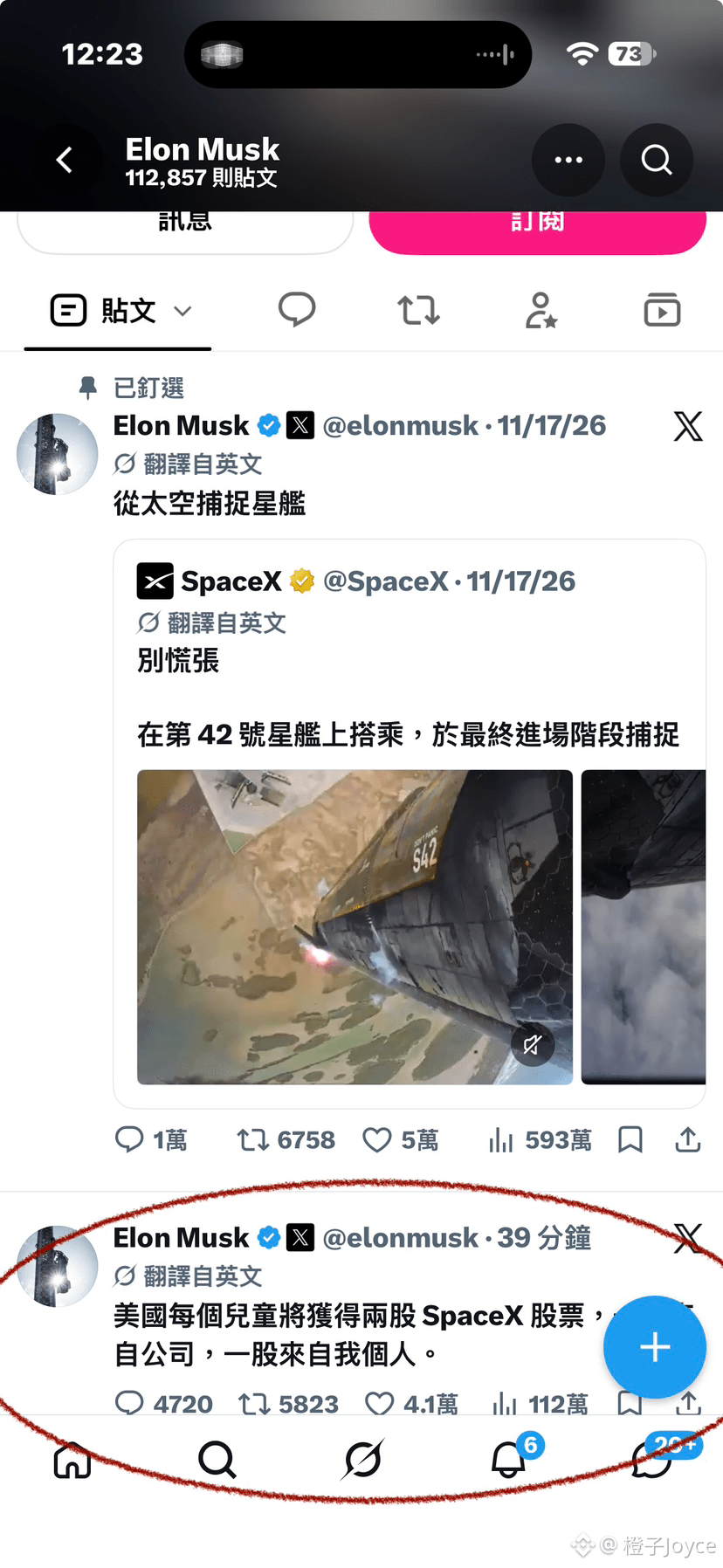
Musk: Every child in the U.S. will receive two shares of SpaceX stock—one from the company and one from me personally.
In addition, early this morning Beijing time, SpaceX posted on its official X account and published an announcement on its investor relations website, pledging to give one newly issued Class A common share to every currently active Trump Account. Trump Accounts are tax-advantaged investment accounts designed to help American children build long-term savings.
The announcement said that, as part of CEO Elon Musk’s existing commitment, Musk would personally match the number of shares donated by the company. In other words, for every share the company gives, Musk will personally donate one additional share.
President and Chief Operating Officer Gwynne Shotwell has separately announced a personal gift of more than 2 million SpaceX shares.
Based on SpaceX’s Wednesday closing price of $127.44 per share, donating shares to 70 million accounts would amount to $8.9 billion from each of SpaceX and Musk, or about $17.8 billion in total. According to U.S. Treasury officials, that amount is more than twice the total donations to Trump Accounts as of October.
Bloomberg estimates Musk’s current net worth at about $813 billion, making the donation’s impact on his wealth limited. Regulatory filings show that he holds 849.4 million Class A common shares in SpaceX, as well as billions of Class B shares with greater voting rights, and a substantial stake in Tesla.
#SpaceX donates a massive $17.8 billion to secure first space data center license
2
378
·
--
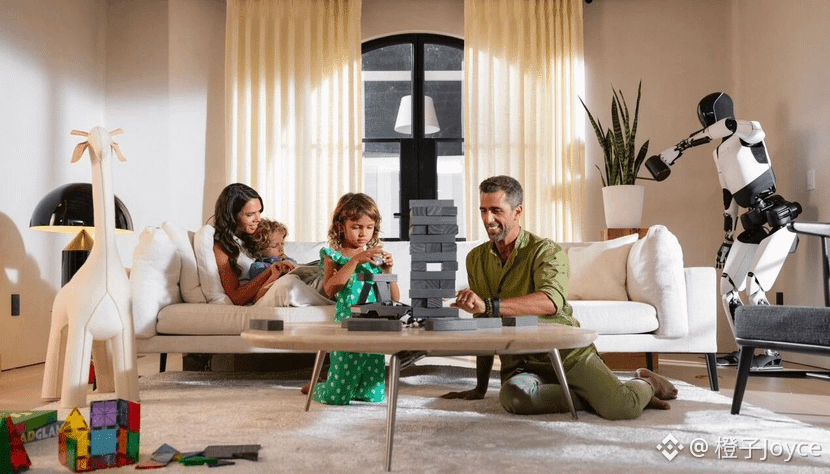
JPMorgan’s blockbuster report: The “ChatGPT moment” for Physical AI could arrive as early as 2027!
Humanoid robots and Physical AI are moving beyond “lab demonstrations” and accelerating toward real-world commercial deployment. JPMorgan’s latest in-depth report says the industry’s inflection point for scaling is arriving sooner than expected, with the sector on the eve of an S-curve takeoff.
Key takeaways:
The window for breakthroughs is moving up, and data is becoming an absolute moat. As multimodal large models such as Astra and Fable continue to evolve, robots’ ability to generalize from zero-shot learning could undergo a step change in 2027. But in complex real-world environments, “smart models” are only the starting point. The deciding factor is the data flywheel: whether real-world operations, human demonstrations, and simulation data can be efficiently combined, and whether hands-on training across hundreds of thousands of robots can deliver high reliability and genuine ROI (return on investment).
Technology architecture: Layered collaboration beats pure end-to-end
The industry consensus favors “large models for understanding intent and planning + specialized models for motion control and safety tasks.” This leaves significant room for differentiated gains among hardware and foundational-solution providers focused on specialized Physical AI capabilities.
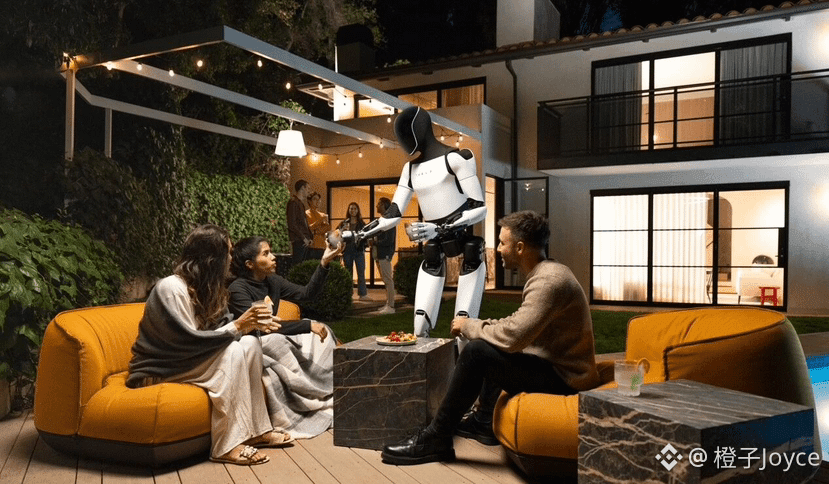
Tesla takes the lead: Unified architecture and production ramp-up. Tesla’s latest FSD V15 has unified the visual encoders and world models of FSD, Robotaxi, and Optimus, enabling data sharing across business lines. Before sales to external customers begin, Tesla plans to deploy 10,000 to 20,000 Optimus robots internally for hands-on training. Morgan Stanley expects Tesla’s weekly production capacity to ramp up to 2,000 units over the next 12–15 months (around 200,000 units annualized).
Policy push: From planning to binding implementation targets
China’s leading cities are accelerating efforts to secure a commanding position in the industry. Beijing plans to reach annual production capacity of 200,000 units by 2028 and accumulate more than 1 million hours of high-quality data. Shanghai aims to deploy 8,000 humanoid robots in factories by 2028. Meanwhile, bringing eldercare and childcare into the mix will also unlock incremental opportunities for service robots and exoskeletons.
Physical AI is following the same pre-boom playbook as large models did: “computing power/model infrastructure comes first \rightarrow real-world data loops build a moat \rightarrow leading manufacturers scale production and cut costs.” From AI infrastructure and robotics leaders in U.S. equities to on-chain AI agents and decentralized data/computing-power sectors, a new wave of valuation resets and narrative convergence is on the way.
#HumanoidRobotsAndPhysicalAIAreMovingFromTechDemosToRealWorldDeployment
2.3k
14
147
2.3k
·
--
Bullish
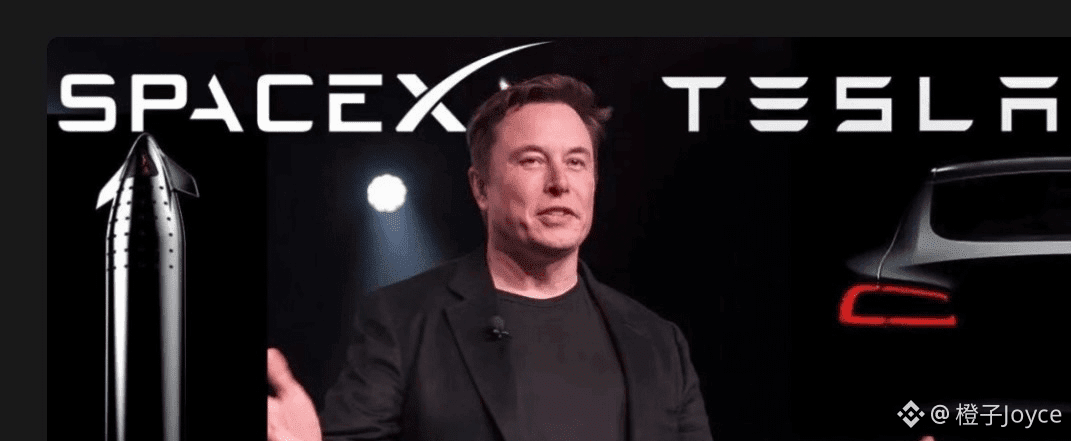
【Musk’s Business Empire Expands Again: 7 Mega-Campuses Reshape the Foundations of AI and Space Computing】
Elon Musk is recently accelerating the strategic integration of SpaceX and Tesla, while establishing seven mega-facilities across the southern United States. His aim is to connect the entire industrial chain, from foundational semiconductor manufacturing and ground-based supercomputing to AI data centers in low Earth orbit. For investors following AI infrastructure and U.S. hard-tech stocks, the scale and speed of this new wave of capital-intensive investment deserve close attention:
* The $119 billion “Terafab” chip factory takes shape in Texas: Backed by financing from SpaceX’s June IPO, Musk has launched construction of a semiconductor mega-factory in Grimes County, Texas, with an investment of up to $119 billion and a production area spanning 9 square kilometers. The project aims to begin mass production by 2028. Key equipment suppliers, including ASML, have already delivered equipment ahead of schedule. The goal is to fill a critical gap in securing an independent chip supply for AI robotics and autonomous driving.
* Nine launches a day! Louisiana to build a giant spaceport: To support the ambitious plan to deploy 1 million AI satellites in Earth orbit—creating space-based data centers to overcome ground-based energy constraints—SpaceX plans to invest at least $100 billion in a 505-square-kilometer “Starship” mega-launch site in Louisiana, with construction set to begin in 2027. The facility will meet future demand for thousands of launches and satellite replacements each year.
* Ground-based computing clusters continue to expand: In addition to space-based computing, two “Colossus” AI data centers near Memphis, Tennessee, are also being expanded in parallel, strengthening the foundational training capabilities for large AI models.
Since shifting its focus south in 2021, Texas and Louisiana have become the heartland of Musk’s hard-tech empire, thanks to low taxes, inexpensive land, and flexible labor policies. From chip manufacturing (Terafab) to energy and robotics (Tesla), and on to high-frequency space transportation and space-based computing (SpaceX), a super technology platform spanning Earth and space and integrating hardware and software is rapidly taking shape.
#马斯克帝国七大计划
$TSLA.US
{stock_us}(TSLA.US)
$NVDA.US
{stock_us}(NVDA.US)
$ASML.US
{stock_us}(ASML.US)
【Musk’s Business Empire Expands Again: 7 Mega-Campuses Reshape the Foundations of AI and Space Computing】
Elon Musk is recently accelerating the strategic integration of SpaceX and Tesla, while establishing seven mega-facilities across the southern United States. His aim is to connect the entire industrial chain, from foundational semiconductor manufacturing and ground-based supercomputing to AI data centers in low Earth orbit. For investors following AI infrastructure and U.S. hard-tech stocks, the scale and speed of this new wave of capital-intensive investment deserve close attention:
* The $119 billion “Terafab” chip factory takes shape in Texas: Backed by financing from SpaceX’s June IPO, Musk has launched construction of a semiconductor mega-factory in Grimes County, Texas, with an investment of up to $119 billion and a production area spanning 9 square kilometers. The project aims to begin mass production by 2028. Key equipment suppliers, including ASML, have already delivered equipment ahead of schedule. The goal is to fill a critical gap in securing an independent chip supply for AI robotics and autonomous driving.
* Nine launches a day! Louisiana to build a giant spaceport: To support the ambitious plan to deploy 1 million AI satellites in Earth orbit—creating space-based data centers to overcome ground-based energy constraints—SpaceX plans to invest at least $100 billion in a 505-square-kilometer “Starship” mega-launch site in Louisiana, with construction set to begin in 2027. The facility will meet future demand for thousands of launches and satellite replacements each year.
* Ground-based computing clusters continue to expand: In addition to space-based computing, two “Colossus” AI data centers near Memphis, Tennessee, are also being expanded in parallel, strengthening the foundational training capabilities for large AI models.
Since shifting its focus south in 2021, Texas and Louisiana have become the heartland of Musk’s hard-tech empire, thanks to low taxes, inexpensive land, and flexible labor policies. From chip manufacturing (Terafab) to energy and robotics (Tesla), and on to high-frequency space transportation and space-based computing (SpaceX), a super technology platform spanning Earth and space and integrating hardware and software is rapidly taking shape.
#马斯克帝国七大计划
$TSLA.US
$NVDA.US
$ASML.US
3
1.9k
·
--
Bullish
Verified
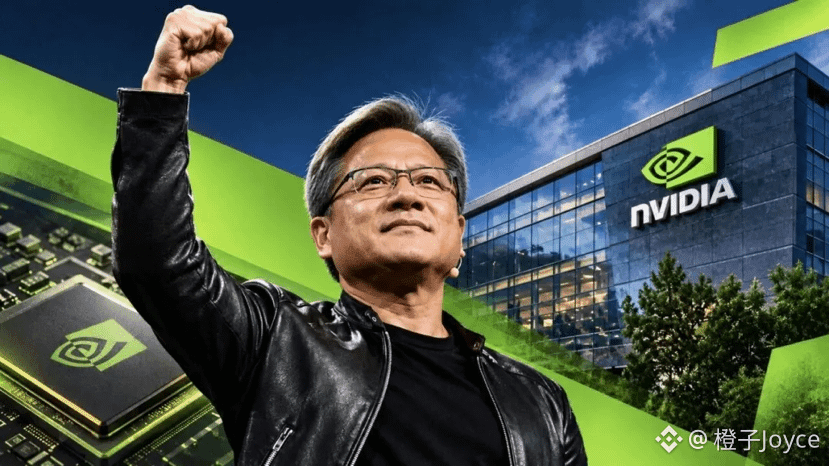
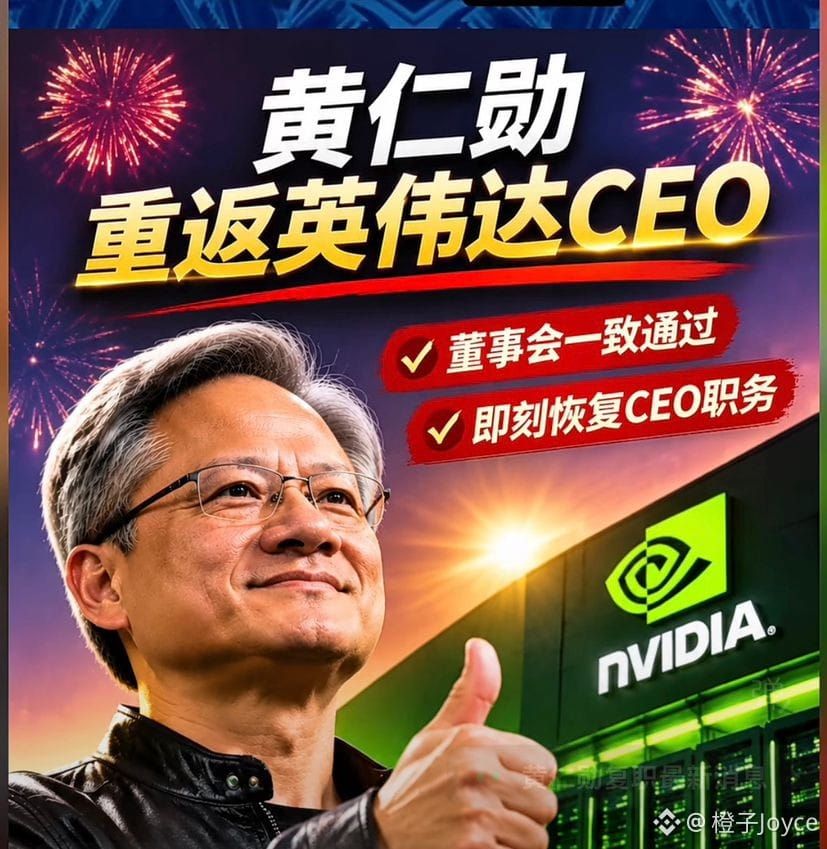
【Breaking】“Too big to fire”! Jensen Huang makes a lightning-fast return to Nvidia as shares surge 31.5%, setting off a rally in U.S. stocks 🚀
Less than two weeks after resigning over a personal scandal, Jensen Huang officially returned to Nvidia’s headquarters in Santa Clara on Monday! This dramatic “lightning comeback” not only set employees cheering, but also sent shockwaves through the financial markets:
📈 Market’s explosive reaction
* Nvidia takes off: Spurred by news of his return, NVDA shares surged 31.5% in a single day, directly lifting the broader U.S. stock market.
* AI ecosystem rebounds: AI computing-power stocks such as CoreWeave and Nebius, which had come under pressure after his departure, surged across the board, instantly restoring market confidence.
Business and political giants rally behind him, underscoring his influence
* Trump lends support: U.S. President Donald Trump played a key role in his comeback, publicly backing him and praising him as a “genius.”
* Musk gives his approval: Another tech titan, Elon Musk, also expressed strong support for his return. As one Wall Street analyst put it: “When he leaves, the whole industry falls apart; when he comes back, everything gets better.”
Concerns and power plays behind the celebration
* “Too big to fire”: Although Huang owns only about 3.6% of the company and has no super-voting rights, he personally oversees around 60 core engineers and is deeply entwined with the entire AI supply chain. This extreme dependence on a single leader has sparked widespread discussion about corporate governance and key-person risk.
* Controversy over circular financing: Wall Street remains wary of Nvidia investing in AI startups that then turn around and buy its chips—the “closed-loop” model. Some lawmakers from both parties have also opposed his return.
💡 Commentary
At the height of the race for AI computing power, the market has voted with its money, demonstrating that Jensen Huang is irreplaceable. But when a CEO truly becomes “too big to fire,” that is both a powerful source of certainty for investors and a concentration risk that cannot be ignored in the future.
#黄仁勋重返Nvidia大到不能解雇
$NVDA.US
{stock_us}(NVDA.US)
$TSM.US
{stock_us}(TSM.US)
$MU.US
{stock_us}(MU.US)
【Breaking】“Too big to fire”! Jensen Huang makes a lightning-fast return to Nvidia as shares surge 31.5%, setting off a rally in U.S. stocks 🚀
Less than two weeks after resigning over a personal scandal, Jensen Huang officially returned to Nvidia’s headquarters in Santa Clara on Monday! This dramatic “lightning comeback” not only set employees cheering, but also sent shockwaves through the financial markets:
📈 Market’s explosive reaction
* Nvidia takes off: Spurred by news of his return, NVDA shares surged 31.5% in a single day, directly lifting the broader U.S. stock market.
* AI ecosystem rebounds: AI computing-power stocks such as CoreWeave and Nebius, which had come under pressure after his departure, surged across the board, instantly restoring market confidence.
Business and political giants rally behind him, underscoring his influence
* Trump lends support: U.S. President Donald Trump played a key role in his comeback, publicly backing him and praising him as a “genius.”
* Musk gives his approval: Another tech titan, Elon Musk, also expressed strong support for his return. As one Wall Street analyst put it: “When he leaves, the whole industry falls apart; when he comes back, everything gets better.”
Concerns and power plays behind the celebration
* “Too big to fire”: Although Huang owns only about 3.6% of the company and has no super-voting rights, he personally oversees around 60 core engineers and is deeply entwined with the entire AI supply chain. This extreme dependence on a single leader has sparked widespread discussion about corporate governance and key-person risk.
* Controversy over circular financing: Wall Street remains wary of Nvidia investing in AI startups that then turn around and buy its chips—the “closed-loop” model. Some lawmakers from both parties have also opposed his return.
💡 Commentary
At the height of the race for AI computing power, the market has voted with its money, demonstrating that Jensen Huang is irreplaceable. But when a CEO truly becomes “too big to fire,” that is both a powerful source of certainty for investors and a concentration risk that cannot be ignored in the future.
#黄仁勋重返Nvidia大到不能解雇
$NVDA.US
$TSM.US
$MU.US
NVDAUS-2.72%
4
1.4k
·
--
Bullish
#SpaceX与特斯拉成立委员会探讨合并
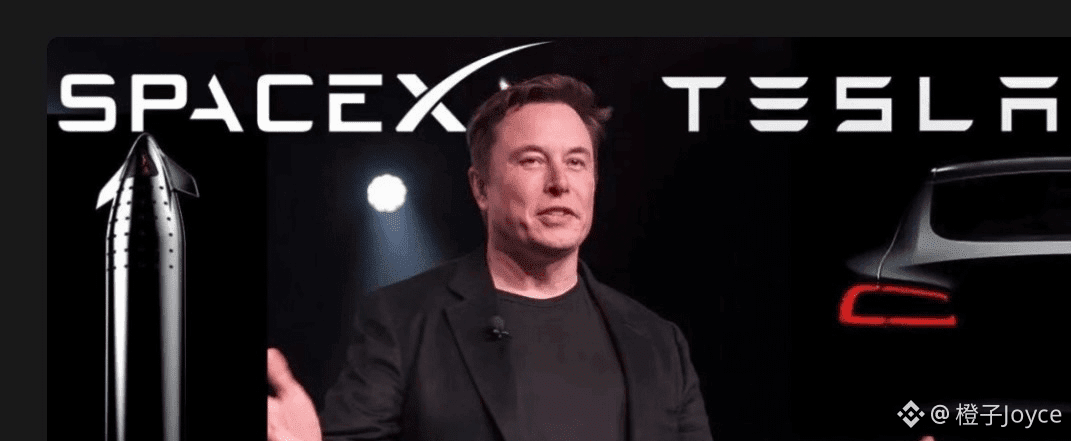
SpaceX and Tesla appoint five directors to oversee merger talks
Elon Musk’s two publicly traded companies have appointed five directors—three from Tesla and two from SpaceX—to guide the two special committees responsible for merger negotiations. The directors include Roelof Botha and Randy Glein from SpaceX, and Robyn Denholm, Kathleen Wilson-Thompson, and Jack Hartung from Tesla.
According to a November 24 report by the Financial Times Chinese website, the five executives have been tasked with combining Musk’s vast business empire into a commercial giant that could be valued at $3.5 trillion.
The report said SpaceX and Tesla had entrusted five directors with the fate of what would be the largest merger in history. The five are finalizing the terms of a potential $3.5 trillion merger and are aiming to complete the deal by the end of the year.
All five have longstanding ties to Musk and face a daunting task: working out how to integrate the two vast businesses, securing shareholder support, and protecting themselves from investor lawsuits. Previous deals involving Musk’s companies have repeatedly faced such lawsuits.
Establishing special committees is standard practice for transactions involving conflicts of interest. But this case is unusual: the two companies share a CEO, who is also the world’s richest person.
People familiar with the matter said the special committees had hired advisers.
SpaceX’s advisers include Morgan Stanley and Goldman Sachs, while Tesla’s adviser is Evercore. The advisers are refining financial models to support each company’s position in negotiations over an all-stock merger.
#SpaceX与特斯拉成立委员会探讨合并
$SPCX.US
{stock_us}(SPCX.US)
$TSLA.US
{stock_us}(TSLA.US)
$GOOG.US
{stock_us}(GOOG.US)
#SpaceX与特斯拉成立委员会探讨合并
SpaceX and Tesla appoint five directors to oversee merger talks
Elon Musk’s two publicly traded companies have appointed five directors—three from Tesla and two from SpaceX—to guide the two special committees responsible for merger negotiations. The directors include Roelof Botha and Randy Glein from SpaceX, and Robyn Denholm, Kathleen Wilson-Thompson, and Jack Hartung from Tesla.
According to a November 24 report by the Financial Times Chinese website, the five executives have been tasked with combining Musk’s vast business empire into a commercial giant that could be valued at $3.5 trillion.
The report said SpaceX and Tesla had entrusted five directors with the fate of what would be the largest merger in history. The five are finalizing the terms of a potential $3.5 trillion merger and are aiming to complete the deal by the end of the year.
All five have longstanding ties to Musk and face a daunting task: working out how to integrate the two vast businesses, securing shareholder support, and protecting themselves from investor lawsuits. Previous deals involving Musk’s companies have repeatedly faced such lawsuits.
Establishing special committees is standard practice for transactions involving conflicts of interest. But this case is unusual: the two companies share a CEO, who is also the world’s richest person.
People familiar with the matter said the special committees had hired advisers.
SpaceX’s advisers include Morgan Stanley and Goldman Sachs, while Tesla’s adviser is Evercore. The advisers are refining financial models to support each company’s position in negotiations over an all-stock merger.
#SpaceX与特斯拉成立委员会探讨合并
$SPCX.US
$TSLA.US
$GOOG.US
TSLAUS-0.37%
SPCXUS+2.45%
3
414
·
--
Bullish
Verified
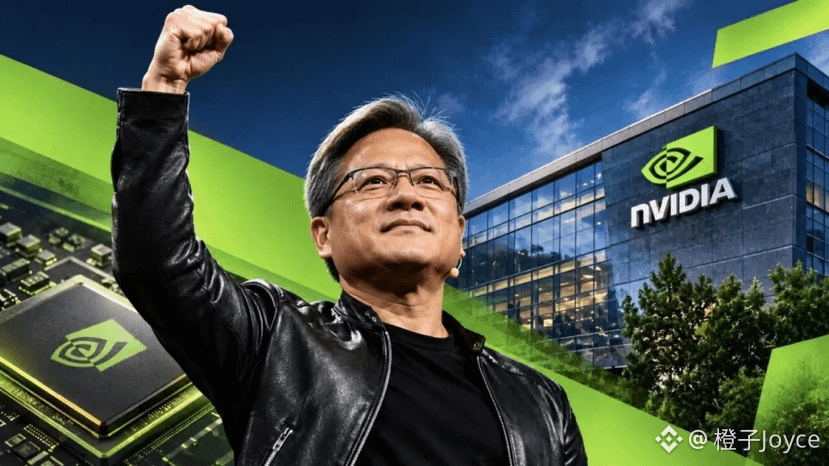
Wall Street stunned! Just 11 days after resigning, Jensen Huang makes a lightning-fast return as Nvidia surges 31% to set a global record! 🚀
U.S. stocks have just witnessed an earth-shaking reversal destined for the history books! Just 11 days after announcing his resignation, on November 23 local time in the United States, Nvidia’s board unanimously approved a resolution for Jensen Huang to officially return to Nvidia, fully resuming his roles as president, CEO, and board member.
The blockbuster good news sent market sentiment into a frenzy:
📈 Nvidia surged 31% in a single day (its biggest gain since May 2003), adding $952 billion to its market capitalization and setting a new all-time record for the largest one-day increase in an individual company’s market value in global capital markets!
🔥 A broad-based U.S. stock rally: The Dow rose 3% (+1,434 points), the S&P 500 gained 4.6%, and the Nasdaq jumped 6.2%, marking its best single-day performance since April 2025. The AI supply chain celebrated across the board: CoreWeave rose 20%, Micron Technology gained 19%, and AMD, Google, and Meta all climbed 6%; only Anthropic bucked the trend, slipping 1.43%.
🔍 Behind the reversal: White House intervention and Silicon Valley support
The dramatic turnaround was the result of a clash among multiple forces. U.S. President Donald Trump confirmed to CNBC that he personally called Nvidia’s board to persuade them, praising Huang as a “national treasure”; Elon Musk posted immediately, saying “the mistake has been corrected”; and OpenAI chief Sam Altman, who has weathered a similar storm, also posted his regards. After returning, Huang said he would be an even better CEO. Nvidia also announced that it would expedite the appointment of a chief compliance officer and continue cooperating with government inquiries.
💰 A tale of two investors: One makes 9,000%, while Cathie Wood sells too soon
* Mysterious options trade sparks insider-trading suspicions: On the eve of the reinstatement announcement, a $3.4 million Nvidia call-option trade appeared on the market (strike price: $160; expiration: November 23). As the stock soared, the position’s estimated value topped $312 million, delivering a return of nearly 9,000% on a single trade. The uncanny timing fueled intense Wall Street suspicions of insider trading.
* Cathie Wood sells just before the rally: Concerned that Huang might jump ship to Musk’s team and affect SpaceX’s orbital data center partnership, Ark Invest steadily reduced its holdings ahead of the surge (selling about $17 million worth on November 20 alone) and shifted the funds into SpaceX, missing the entire epic rally.
💡 Market watch
Huang’s return instantly restored confidence in the AI hardware ecosystem, but analysts also cautioned that the AI sector still faces challenges related to financing conditions, geopolitics, and the sustainability of earnings growth.
Did you catch this stunning reversal? What do you make of the mysterious options trade that returned nearly 9,000%?
#Nvidia reinstates Jensen Huang as CEO, markets sound the rallying cry
2
678
·
--
Bullish
Verified
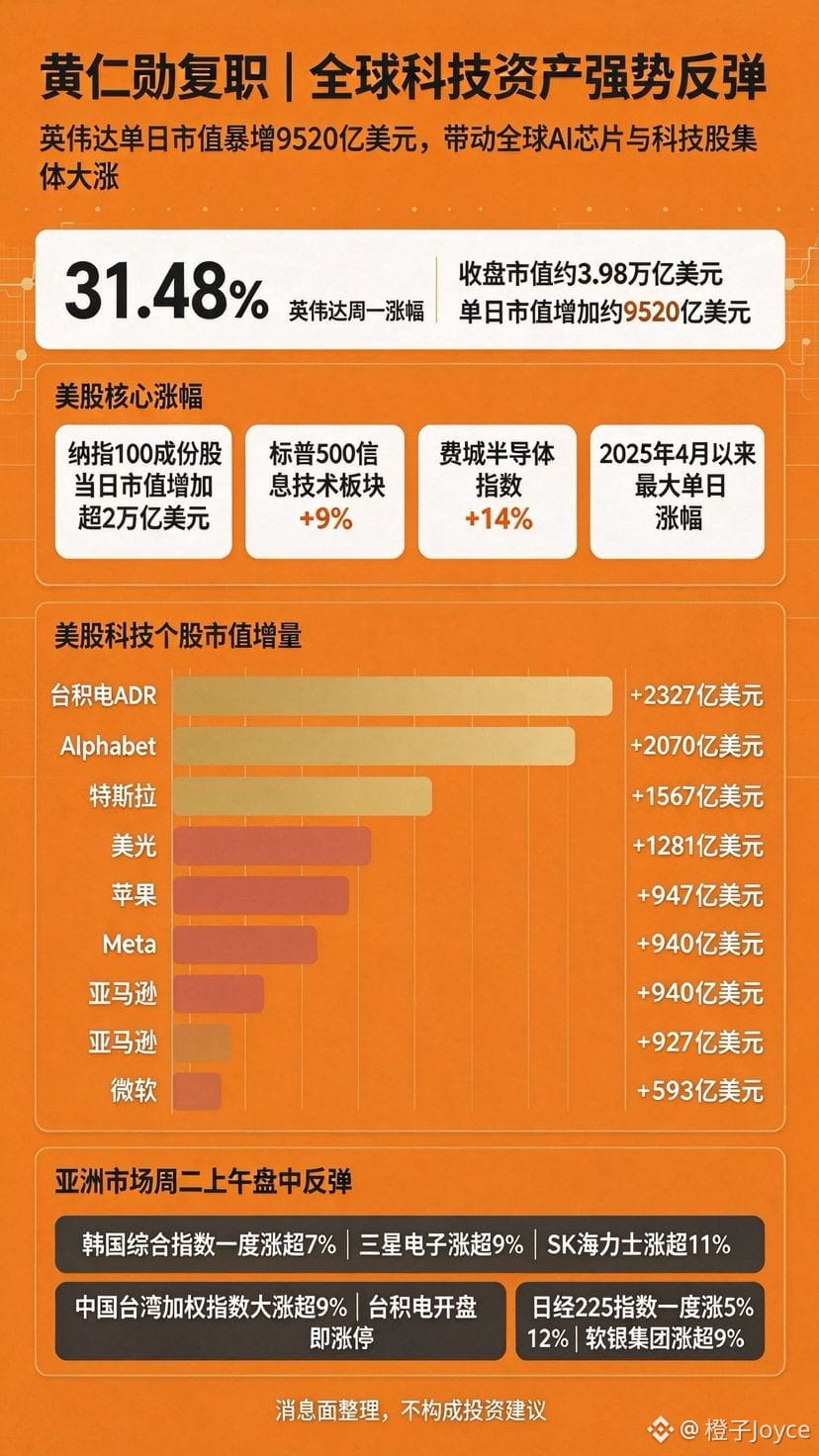
Global tech assets rebound sharply after Jensen Huang returns to his post; Nasdaq 100 market cap rises by more than $2 trillion overnight, while tech stocks in Japan and South Korea surge across the board
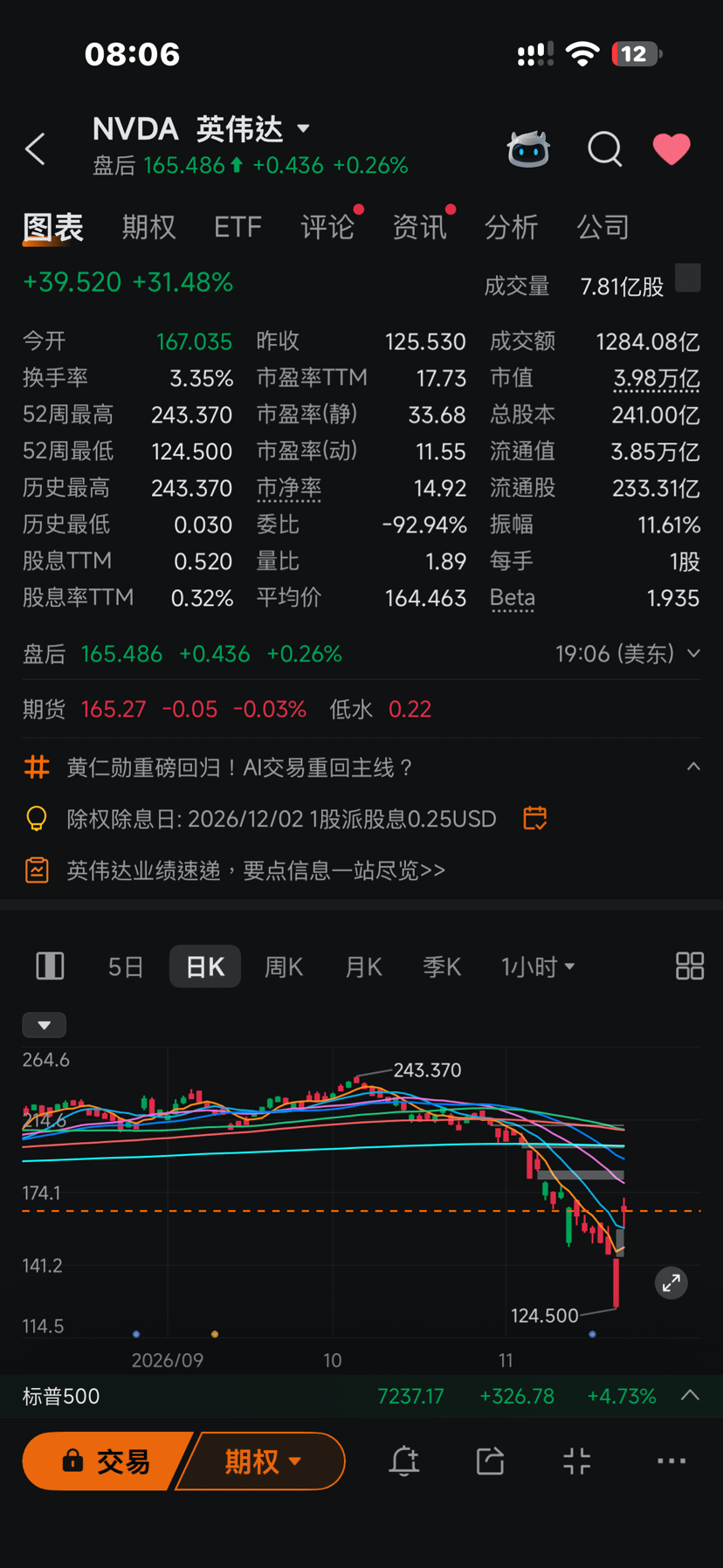
Nvidia CEO Jensen Huang’s return to his post sparked a rebound in global tech assets. Nvidia closed Monday with a market cap of about $3.98 trillion, up approximately $952 billion, or 31.48%.
The combined market cap of Nasdaq 100 constituents rose by more than $2 trillion that day.
The S&P 500 Information Technology sector gained 9% on Monday, while the Philadelphia Semiconductor Index rose 14%, its biggest single-day gain since April 2025.
Among tech stocks with the largest market-cap gains were:
The market cap of TSMC’s U.S.-listed ADRs rose by approximately $232.7 billion;
Alphabet, Google’s parent company, gained about $207 billion, estimated based on the rise in its Class A shares;
Tesla gained about $156.7 billion;
Micron gained about $128.1 billion;
Apple gained about $94.7 billion;
Meta gained about $94 billion;
Amazon gained about $92.7 billion;
Microsoft gained about $59.3 billion.
Asian markets rebounded strongly in Tuesday morning trading, with South Korea’s KOSPI briefly gaining more than 7%.
Samsung Electronics rose more than 9%,
SK Hynix rose more than 11%.
Taiwan’s Weighted Index surged more than 9%,
with TSMC hitting limit-up at the open.
The Nikkei 225 briefly rose 5%,
Kioxia surged more than 12%,
and SoftBank Group gained more than 9%.
On the A-share market, the STAR 50 and
ChiNext Index briefly rose more than 4%.
Nvidia-related stocks, CPO, PCB, semiconductors and other sectors led the gains.
#Nvidia reinstates Jensen Huang as CEO, sounding the market’s counteroffensive
2
879
·
--
Verified
Fed’s hawkish signals intensify: Williams concedes he “doesn’t rule out consecutive rate hikes”; AI and energy become twin drivers of inflation! 🚨
New remarks from New York Fed President Williams signal a tougher tightening stance, rapidly raising market expectations for consecutive rate hikes in December and January next year. Key points at a glance:
* Shift in core stance: Williams said plainly that the U.S. economy is more resilient than expected and inflation remains significantly above the 2% target. He “doesn’t rule out the possibility of raising rates at several consecutive policy meetings.” Earlier, Governor Waller even warned that a 50-basis-point hike at a single meeting may need to be considered.
* Three major drivers of inflation:
* Energy risks: Geopolitical tensions, including the situation in Iran, could keep oil prices elevated for an extended period. If rising gasoline prices push up overall prices further, the Fed will act more quickly.
* AI supply-demand imbalance: The AI infrastructure boom is fueling demand for chips and semiconductors, while current supply is clearly failing to keep pace, pushing up prices for related goods.
* A highly resilient economy: U.S. GDP growth is expected to remain around 2.75% this year and next. Overall inflation is projected to reach 3.5% this year and not return to the 2% target until 2028.
* Keeping a close eye on stocks and AI sentiment: Williams is closely monitoring recent volatility in tech stocks. He sees enthusiasm for AI investment as an important engine of the U.S. economy. A substantive reversal would directly change the Fed’s assessment of the policy path.
📅 Key upcoming dates:
* This Wednesday: October PCE price index released (a key indicator of underlying inflation).
* December 8–9: The Fed’s final policy meeting of the year. Markets are now pricing in a December rate hike, with another likely to follow in January 2027.
Macro liquidity is once again facing a test from tighter conditions. Near-term volatility in U.S. stocks and crypto markets is expected to rise, so pay attention to positioning and risk management! 📉📈
~~~~~~~~~~~~~~~~~~~~
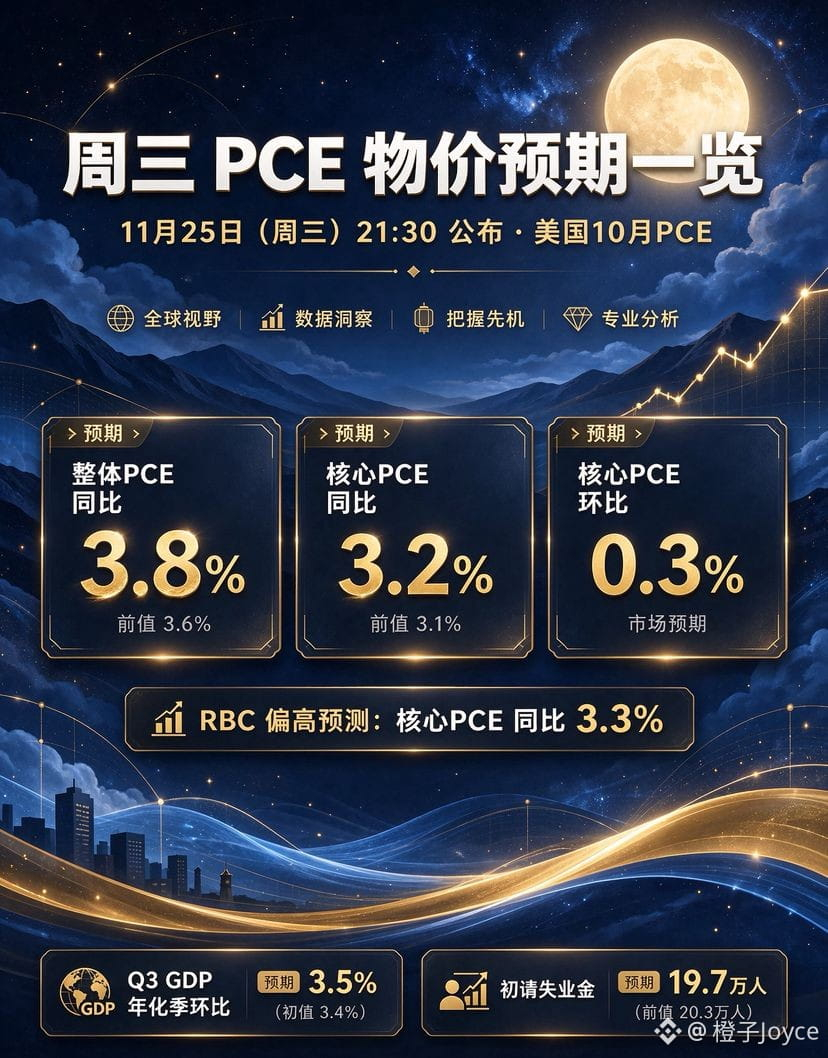
• Headline PCE year over year: 3.8% expected (previous: 3.6%)
• Core PCE year over year: 3.2% expected (previous: 3.1%)
• Core PCE month over month: 0.3% expected
• RBC’s higher estimate: Core PCE year over year at 3.3%
• Related data: Q3 GDP expected at 3.5%; initial jobless claims expected at 197,000
• Disclaimer at the bottom: Figures reflect institutional forecasts; actual results are subject to official releases. This is not investment advice.
#美国10月核心PCE即将揭晓,加息预期如何变化?
4
655
·
--
Bullish
Verified
Huang Renxun says, “I’ll do better the second time as CEO”; returns to Nvidia headquarters, where hundreds of employees line up to welcome him
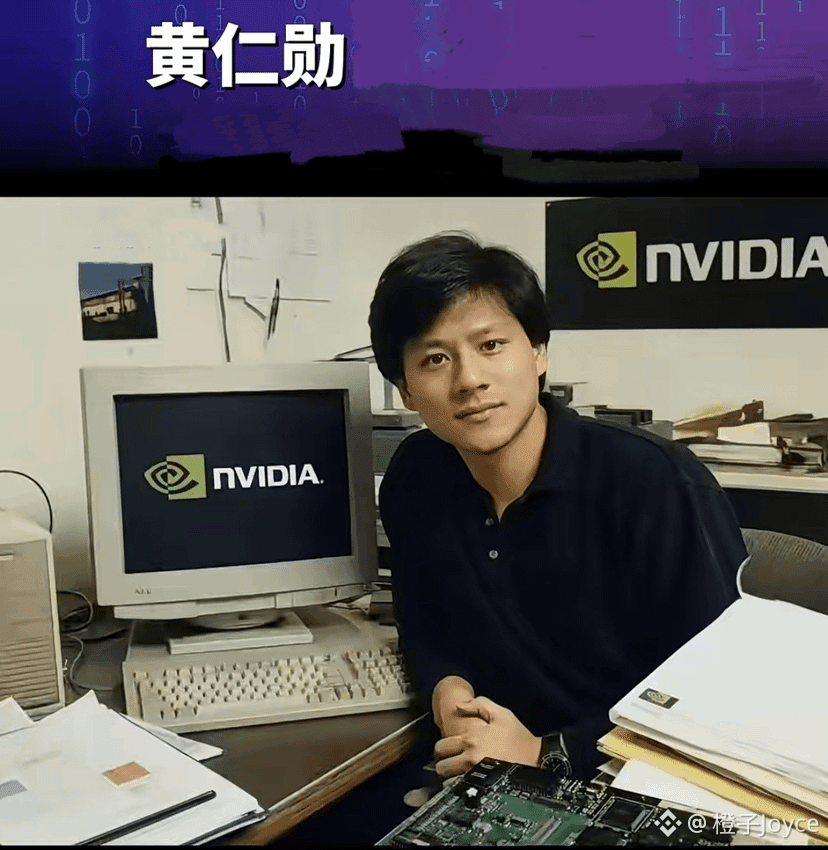
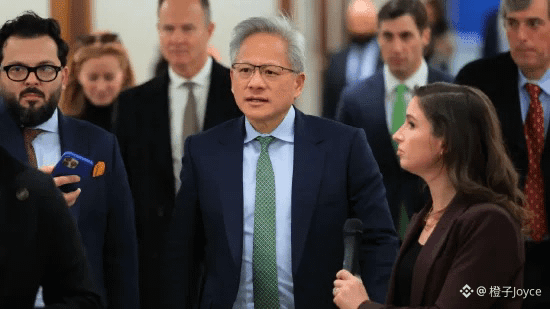
After Huang Renxun arrived at Nvidia’s headquarters in Santa Clara, California, he was warmly welcomed by hundreds of employees. He said publicly at the scene, “I’ll do better the second time as CEO.” This week, Huang will also appear at a congressional hearing, while an investigation involving Nvidia continues to move forward.
Huang Renxun returned to the company’s headquarters as $Nvidia (NVDA.US)$ CEO, bringing to an end a power struggle that had shaken the tech world and financial markets.
According to on-site video released by CNBC, Huang Renxun was warmly welcomed by hundreds of employees shortly after arriving at Nvidia’s headquarters in Santa Clara, California.
He said publicly at the scene, “I’ll do better the second time as CEO.” His remarks suggest that he has reflected on the events and is returning to the leadership role with a pragmatic approach.
Huang Renxun’s reinstatement boosted market sentiment. Nvidia rose as much as 35% on Monday and was up 32% at the time of writing. The share price performance was reportedly one of the key factors that prompted the board to bring him back.
Two board meetings over the weekend led to his reinstatement
Sources say Huang Renxun’s reinstatement followed a series of intense behind-the-scenes efforts. The events can be traced back to last Friday, when senior government officials made it clear to Nvidia’s board that Huang had not violated any national security laws.
This statement, together with pressure from the share price, prompted the board to reach out to Huang and hold two board meetings, on Saturday and Sunday.
Trump reportedly participated briefly in Sunday’s meeting. The board ultimately decided to reinstate Huang as CEO, and the announcement was officially released on Monday morning.
Congressional hearing and potential investigation remain unresolved
Huang Renxun’s return does not mean that external pressure has completely eased.
This week, he will also appear at a congressional hearing. Discussions about the ongoing investigation into matters related to Nvidia are continuing, and the details have yet to be clarified.
For investors, Huang Renxun’s return has temporarily stabilized uncertainty around the company’s governance, but the risk of a potential congressional investigation remains a factor to watch.
#英伟达恢复黄仁勋CEO职务,市场吹响反攻号角
NVDAUS-2.72%
4
17
6.1k
·
--
Bullish
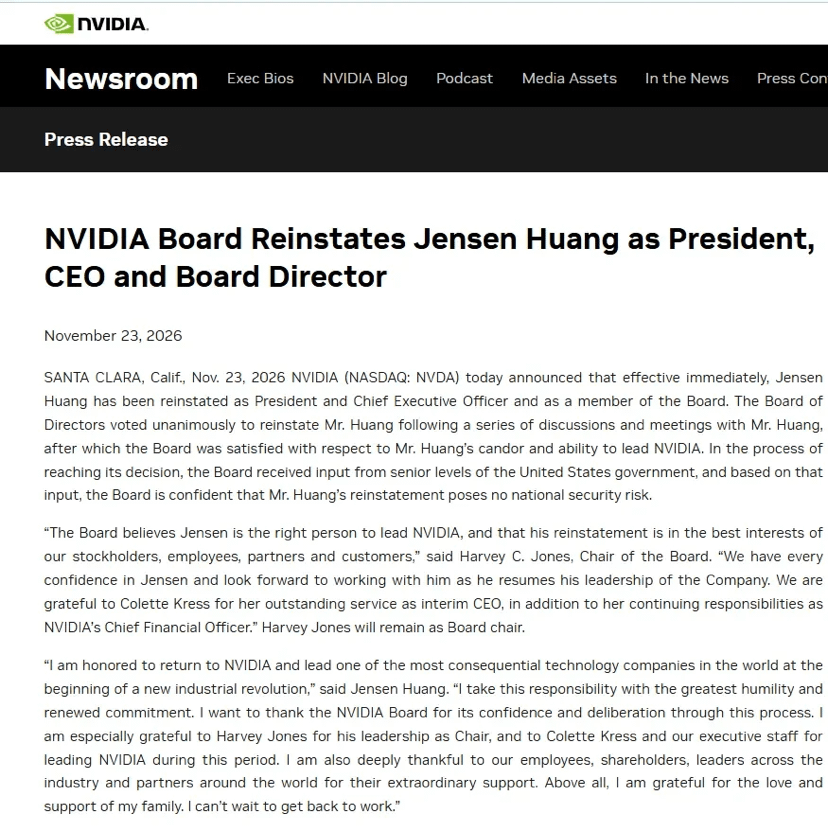
NVIDIA today announced that Jensen Huang has been reinstated as president and chief executive officer and as a member of the board of directors, effective immediately. Following a series of discussions and meetings with Mr. Huang, the board unanimously voted to reinstate him. The board is satisfied with Mr. Huang’s candor and his ability to lead NVIDIA. In reaching its decision, the board heard from senior U.S. government officials and, based on their input, is confident that Mr. Huang’s reinstatement poses no national security risk.
“The board believes Jensen is the right person to lead NVIDIA, and his reinstatement is in the best interests of our shareholders, employees, partners and customers,” said Harvey Jones, chairman of the board. “We have confidence in Jensen and look forward to working with him as he resumes leadership of the company. We thank Colette Kress for her outstanding service as interim CEO and for continuing in her role as NVIDIA’s chief financial officer.” Harvey Jones will continue to serve as chairman of the board.
“I am honored to return to NVIDIA and lead one of the world’s most influential technology companies at the dawn of a new industrial revolution,” said Jensen Huang. “I will take on this responsibility with great humility and even stronger determination. I want to thank the NVIDIA board for its confidence in me and its careful consideration throughout this process. I am especially grateful for Harvey Jones’s outstanding leadership as chairman, and for Colette Kress and our entire executive team for leading NVIDIA during this time. I am also deeply grateful to our employees, shareholders, industry leaders and partners around the world for their tremendous support. Most of all, I want to thank my family for their love and support. I can’t wait to get back to work.”
As previously announced, in light of recent reports that Mr. Huang had become a target of foreign intelligence services, the board formed a committee composed entirely of independent directors to conduct an investigation and engaged independent counsel to assist. The board reiterated that the committee’s investigation will continue until it is complete. Mr. Huang fully supports the investigation and has pledged to cooperate.
The board recently also formed a National Security and Export Controls Committee composed entirely of independent directors to oversee trade compliance and national security risks. The committee is engaging counsel with experience in national security matters, who will also retain advisers with expertise in national security matters. NVIDIA is beginning its search for a chief compliance officer, who will oversee NVIDIA’s compliance matters and report to the Nominating and Corporate Governance Committee. NVIDIA will continue to cooperate with ongoing government investigations and inquiries.
#英伟达恢复黄仁勋CEO职务,市场吹响反攻号角
1
2
12
500
Log in to explore more content
Join global crypto users on Binance Square
⚡️ Get latest and useful information about crypto.
💬 Trusted by the world’s largest crypto exchange.
👍 Discover real insights from verified creators.
Email / Phone number
Trending Topics
CanMarketsReboundAfterThanksgiving?
97,278 views
1,290 Discussing
Rate-Hike Bets Linger as US Markets Head Into Thanksgiving Closure
Binance News
·3 Likes
·3.4k views
CouldSpaceX’sOrbitalDataCentersBoostAIChipDemand?
45,677 views
810 Discussing
SouthKoreaProposesMandatoryDigitalAssetTransactionDisclosure
0 views
2 Discussing