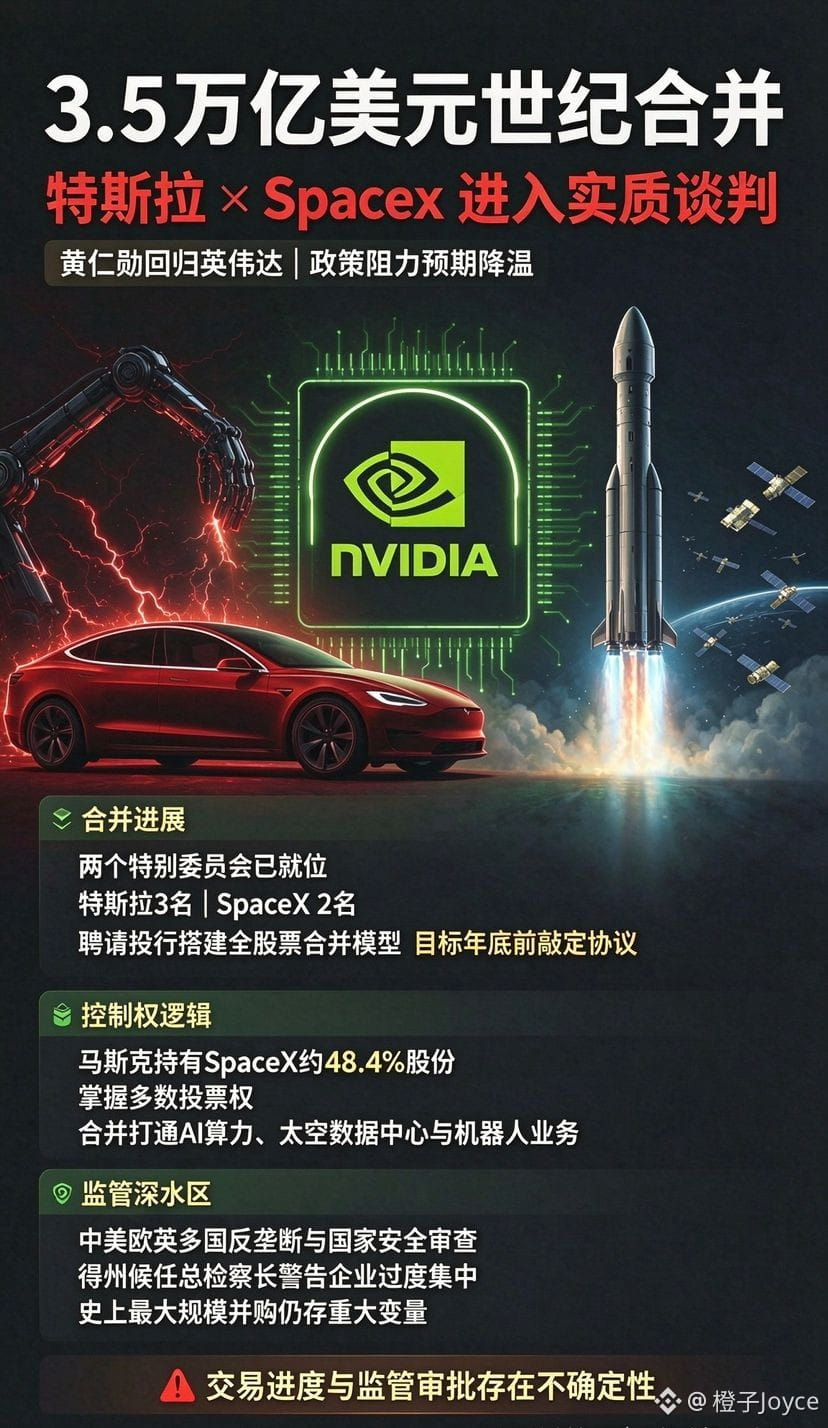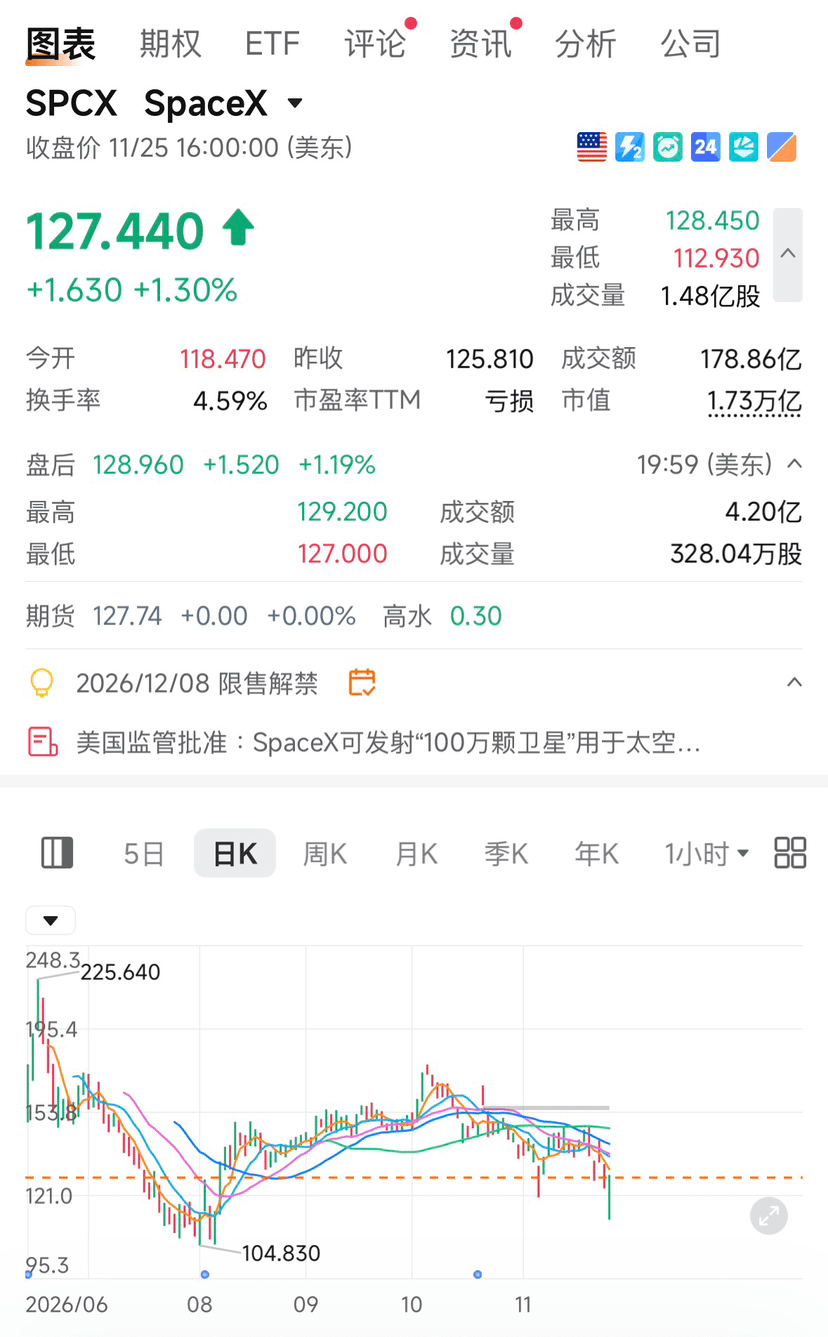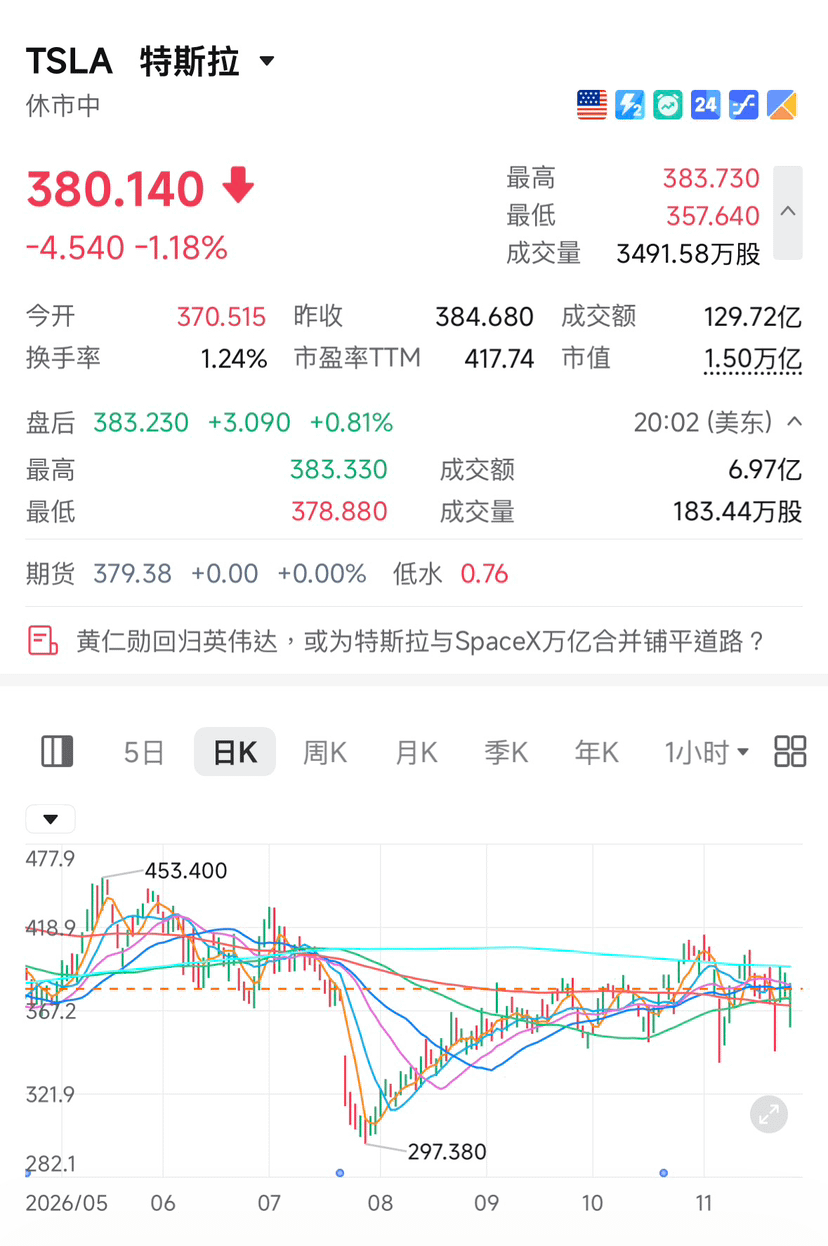

🚀 Tesla and SpaceX race toward a $3.5 trillion merger of the century! Jensen Huang’s dramatic return to Nvidia unexpectedly upends regulatory expectations
Epic twists keep unfolding in the world of U.S. tech stocks! After Jensen Huang took back the reins at Nvidia (NVDA) following Trump’s personal intervention, the market’s attention quickly shifted to the two trillion-dollar giants under Elon Musk—Tesla (TSLA) and SpaceX (SPCX)—whose merger is gaining momentum.
1. Merger enters a substantive phase: two independent committees are in place
* Negotiating framework takes shape: The two companies have formally appointed five directors (three from Tesla and two from SpaceX) to form two special committees, and have hired a Wall Street investment bank to build an all-stock merger financial model. Their goal is to finalize an agreement by the end of the year.
* Core interests and control: Musk currently owns about 48.4% of SpaceX (with majority voting control) and roughly 20% of Tesla’s voting power. A merger would not only connect their AI computing power, space data centers, and robotics businesses, but also help Musk secure majority control of his new empire. If the deal closes quickly enough, SpaceX could also gain early entry into the S&P 500 through the transaction.
2. Why is Huang’s return to Nvidia good news for Musk?
* Redefining the boundaries of “corporate governance”: Trump personally called to “persuade” Nvidia’s board to reinstate Huang, triggering a single-day surge of more than 30% in Nvidia shares and nearly $1 trillion in added market value.
* The White House’s signal is clear: The episode has radically reset market expectations around White House intervention in business decisions—if something aligns with what Trump considers the “national interest,” he is willing to break with convention for his tech allies. As a key Trump ally, Musk can now expect significantly less policy resistance as he pursues a mega-merger.
3. Deal watch: Global regulatory hurdles remain
* Although capital markets have high hopes for what would be the largest merger in history, the obstacles remain considerable: Tesla has substantial production capacity and a large market presence in China, while SpaceX is deeply tied to U.S. defense and aerospace operations. Antitrust and national security reviews in China, the U.S., Europe, and the U.K. will be the biggest wild cards. In addition, Texas’s attorney general-designate has warned about excessive corporate concentration.
Whether this $3.5 trillion business behemoth can successfully unite will be the ultimate test of the direction of future tech regulation.
#TeslaAndSpaceXMerger