
🚀 SpaceX’s space-based computing wins historic approval! “Starmind” plan sets the market alight as $17.8 billion in stock gifts roll out
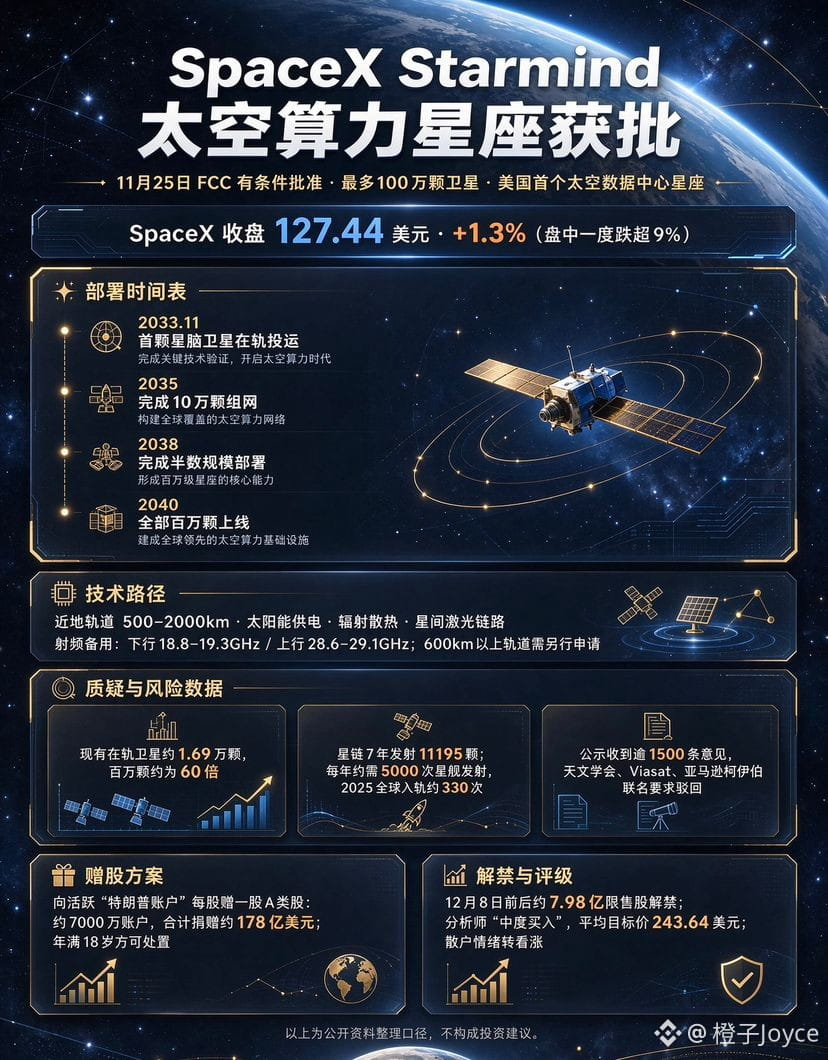
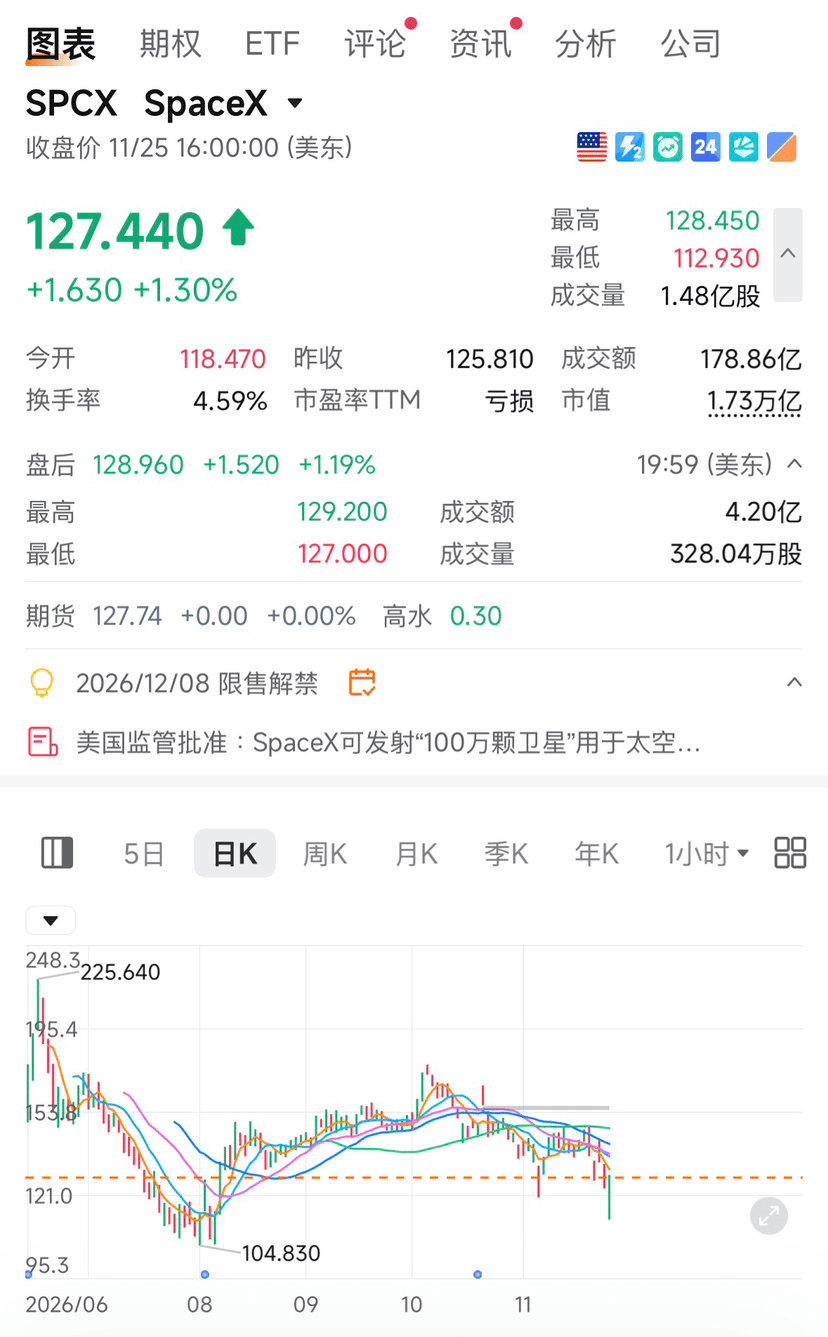
As terrestrial computing grapples with bottlenecks in power and water resources, space-based computing has achieved a landmark breakthrough! SpaceX (SPCX) fell more than 9% at one point intraday before staging a strong V-shaped recovery on the major positive news, closing up 1.3% at $127.44.
1. Approval for one million AI satellites; “Starmind” plan gets underway
* Regulatory breakthrough: The U.S. FCC has conditionally approved SpaceX’s plan to deploy up to one million satellites to build “Starmind,” a space-based data center. This is the first time in U.S. history that an orbital computing constellation has been approved.
* The core rationale: The satellites will operate in low Earth orbit at altitudes of 500–2,000 kilometers, using around-the-clock solar power and radiative heat dissipation in space, and connecting at high speeds via laser links. This would completely bypass the high water consumption and permitting constraints of terrestrial data centers.
* Rollout timeline and controversy: The first satellite must be operational by November 2033, the constellation must reach 100,000 satellites by 2035, and the full million-satellite network must be completed by 2040. However, there are currently only about 16,900 satellites in orbit worldwide, making a million-satellite constellation 60 times the current total. Academics and competitors such as Amazon (Kuiper) have raised serious concerns about launch capacity, the limits of heat dissipation in space, and debris risks.
2. Musk joins SpaceX in donating about $17.8 billion in stock to “Trump Accounts”
* Stock donation plan: SpaceX announced that it will donate one newly issued Class A share to each active investment account for a U.S. child (“Trump Account”), with Musk personally making an equal matching contribution. President Gwynne Shotwell will contribute an additional 2 million-plus shares. Based on an estimated 70 million accounts, the total donation would amount to as much as $17.8 billion.
* Market impact: The donated shares cannot be sold until the children turn 17–18, effectively locking them up for the long term. However, distributing ownership on such a large scale could also increase future corporate governance and coordination costs.
3. Trading outlook: Short-term investors should still be wary of selling pressure from lockup expirations
* Although retail investor sentiment has quickly turned “bullish,” and Wall Street has set an average price target of $243.64—implying considerable upside from the current price—SpaceX is due to see about 798 million restricted shares become eligible for trading around December 8. The stock is still down more than 40% from its 52-week high, so investors should beware of the offsetting pressure that a huge wave of newly tradable shares could place on positive sentiment in the near term.
#SpaceXSpaceDataCenterApproved,NewGrowthDriverForAIChipDemand?