


Bitcoin is experiencing its worst month since 2022
Traded at approximately $58,900. Over the past 24 hours $BTC fell by 1.6%, and over the week by 8.8%.
$ETH fell by 2.5%, to $1,640, and its monthly decline reached 29.5%. Total crypto market capitalization fell by 1.1%, to $2.09 trillion.
November's drop in $BTC was the steepest since June 2022. At that time, the market crashed following the collapse of the Terra project, which wiped out around $40 billion in market capitalization.
Selling pressure on prices is now intensifying due to outflows from exchange-traded funds. On November 24, investors withdrew $231 million from U.S. spot Bitcoin ETFs, bringing total outflows since the start of the month to a record $4.94 billion.
Ethereum ETFs saw another $64 million in outflows in a single day, and $1.23 billion for the month.
Over the past 24 hours, trader liquidations reached nearly $350 million. Long positions accounted for most of the losses, with about $277.81 million in longs forcibly closed. Short positions accounted for $71.56 million.
The Fear and Greed Index stands at 13 out of 100, corresponding to the extreme fear zone.
Bitcoin hash rate declines for the first time in five years
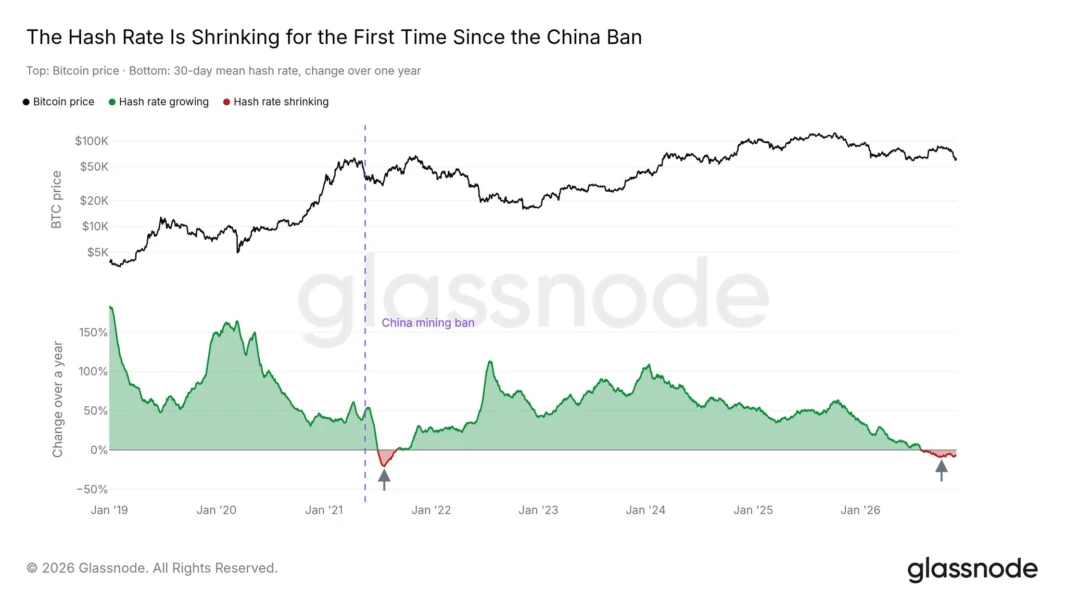
As the price falls, the network's computing power is also declining. According to Glassnode, Bitcoin's hash rate has fallen 8% over the past 30 days compared with the same period last year. This is the first year-over-year decline in the metric in five years.
Analysts attribute the trend to worsening mining economics. Hashprice, which reflects miners' revenue per unit of computing power, has hit an all-time low. Under these conditions, some equipment becomes unprofitable, so mining farm operators are switching off rigs whose operating costs exceed the revenue they generate.
Why miners' struggles matter for the price of BTC
Lower profitability could force mining companies to sell their accumulated Bitcoin to cover operating expenses. The additional supply on the market could put further pressure on the price of BTC, Glassnode analysts warn.
The last comparable decline in hash rate was observed in 2021. At the time, it was caused by restrictions on mining in China and the widespread shutdown of equipment. According to Glassnode, the current situation is primarily due to Bitcoin's low price and worsening mining economics.