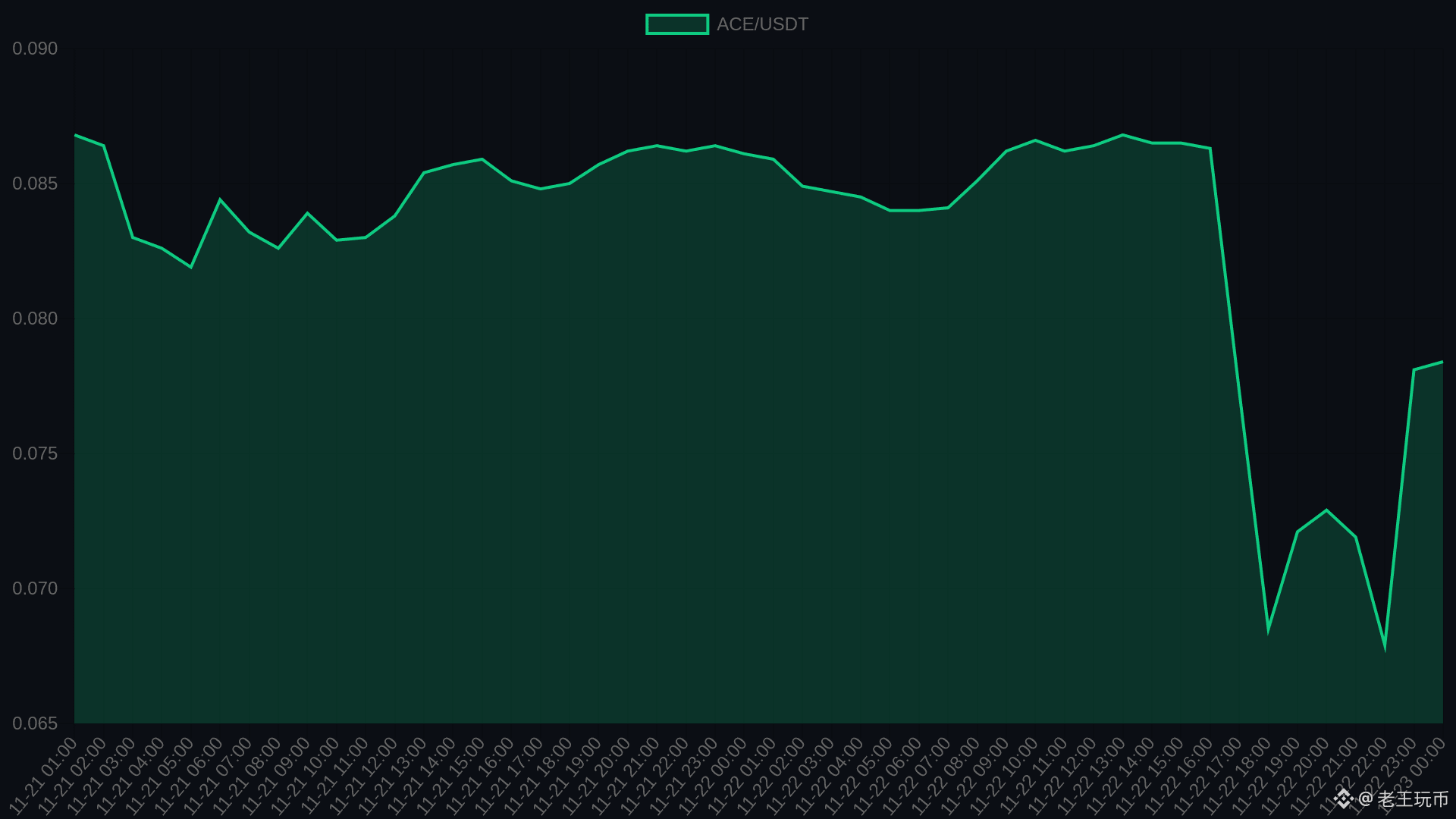
I always thought the biggest winner in this incident was the person who minted the fake coins. After reading the on-chain postmortem this morning, I realized he was just the first one through the door.
Someone used Fusionist’s cross-chain bridge’s privileged minting permissions to create a massive amount of uncollateralized ACE, crashing the price to $0.0001 while it was still trading at $0.04 on exchanges. The bridge didn’t pause; the rules kept running as usual: burn however much cheap ACE you had on BSC, and it would release the same amount of real ACE on Endurance. So 24 addresses lined up and drained the bridge of 53.7 million real tokens, worth about $3.7 million at the reported price. The bridge was left with just 0.08 tokens. Someone withdrew $50 from Binance, spent $10 testing the bridge and $40 buying 400,000 fake tokens, then swapped them for real tokens four minutes later and sold them for $17,670 after 12 minutes—a 350x return.
Don’t mistake this for good judgment. Those were two hours with the gates left open: it came down to who spotted it first, who dared to go all in, and who could get out faster than the rollback. After Gate rolled back ACE trades from 12:55 to 14:15, some sellers found their account balances had gone negative. On-chain, the rules ran to completion; off-chain, a single reversal rewrote the ledger. “Code is law” holds only as long as nobody rewrites the books. In the future, when looking at a bridge or treasury, ask one question first: who has the authority to shut the gates when something goes wrong? A bridge that can’t be shut is one where the hacker is simply the first one through the door.
#跨链桥 #链上安全 #Web3 #加密市场 $ACE $BNB $ETH