

橙子Joyce
 Square Verified+
十年以上专注美股市场实战投资策略与资产管理|2015年入币圈.十年以上投资BTC.ETH.BNB.|直播北京时间晚上20:00—23:00|每日分享美股实盘与宏观盘面解盘|追踪美联储货币政策解读|前瞻·宏观数据点评·加密市场的联动分析|贵金属投资策略黄金.白银.铜|中长期价值投资者|✨星河社区联合创始人✨

NVDAB Holder
Frequent Trader
8.9 Years
2.7K+ Following
44.9K+ Followers
51.1K+ Liked
Posts
All
Quotes
Videos
Live
PINNED

PINNED



@钞机八蛋
is speaking[LIVE] 🎙️ The market is fluctuating back and forth—how are you all doing, friends?
5.8k listens


江阳ETH
·
--
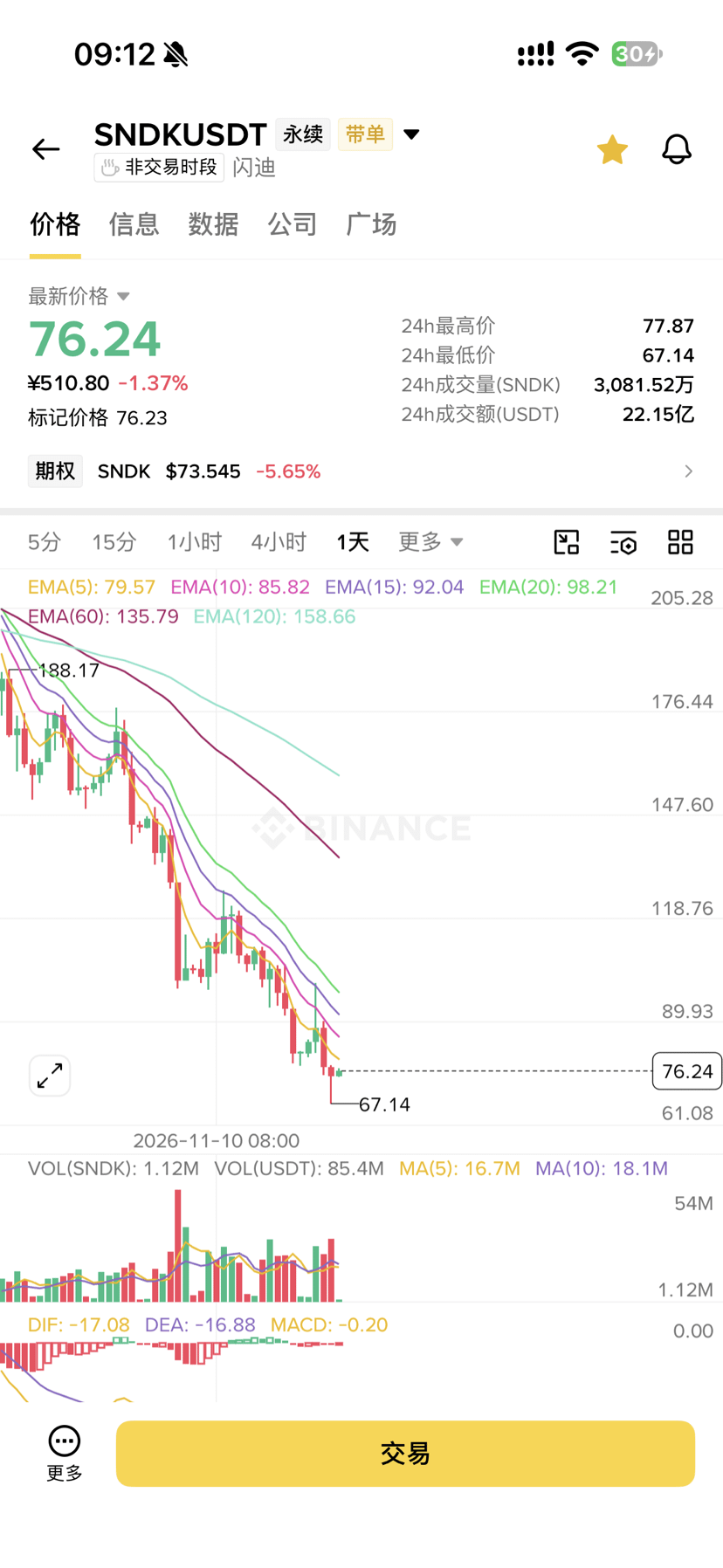
Bullish$SNDK Stay long on SanDisk! Short-term target: 88! Be patient and wait for the daily chart to rally—there’s no reason it should keep falling forever!
江阳ETH
·
--
Jiang Yang is aiming for 30k followers 🧧🧧
Thanks to everyone who follows!
Follow to get a red envelope 🧧
Thanks to everyone who follows!
Follow to get a red envelope 🧧

江阳ETH
·
--
It's Thanksgiving today 🧧🧧
No market movement again—keep your hands off and don't place any trades!
Enjoy life!
No market movement again—keep your hands off and don't place any trades!
Enjoy life!

橙子Joyce
·
--
JPMorgan’s blockbuster report: The “ChatGPT moment” for Physical AI could arrive as early as 2027!
Humanoid robots and Physical AI are moving beyond “lab demonstrations” and accelerating toward real-world commercial deployment. JPMorgan’s latest in-depth report says the industry’s inflection point for scaling is arriving sooner than expected, with the sector on the eve of an S-curve takeoff.
Key takeaways:
The window for breakthroughs is moving up, and data is becoming an absolute moat. As multimodal large models such as Astra and Fable continue to evolve, robots’ ability to generalize from zero-shot learning could undergo a step change in 2027. But in complex real-world environments, “smart models” are only the starting point. The deciding factor is the data flywheel: whether real-world operations, human demonstrations, and simulation data can be efficiently combined, and whether hands-on training across hundreds of thousands of robots can deliver high reliability and genuine ROI (return on investment).
Technology architecture: Layered collaboration beats pure end-to-end
The industry consensus favors “large models for understanding intent and planning + specialized models for motion control and safety tasks.” This leaves significant room for differentiated gains among hardware and foundational-solution providers focused on specialized Physical AI capabilities.
Tesla takes the lead: Unified architecture and production ramp-up. Tesla’s latest FSD V15 has unified the visual encoders and world models of FSD, Robotaxi, and Optimus, enabling data sharing across business lines. Before sales to external customers begin, Tesla plans to deploy 10,000 to 20,000 Optimus robots internally for hands-on training. Morgan Stanley expects Tesla’s weekly production capacity to ramp up to 2,000 units over the next 12–15 months (around 200,000 units annualized).
Policy push: From planning to binding implementation targets
China’s leading cities are accelerating efforts to secure a commanding position in the industry. Beijing plans to reach annual production capacity of 200,000 units by 2028 and accumulate more than 1 million hours of high-quality data. Shanghai aims to deploy 8,000 humanoid robots in factories by 2028. Meanwhile, bringing eldercare and childcare into the mix will also unlock incremental opportunities for service robots and exoskeletons.
Physical AI is following the same pre-boom playbook as large models did: “computing power/model infrastructure comes first \rightarrow real-world data loops build a moat \rightarrow leading manufacturers scale production and cut costs.” From AI infrastructure and robotics leaders in U.S. equities to on-chain AI agents and decentralized data/computing-power sectors, a new wave of valuation resets and narrative convergence is on the way.
#HumanoidRobotsAndPhysicalAIAreMovingFromTechDemosToRealWorldDeployment



橙子Joyce
·
--
JPMorgan’s blockbuster report: The “ChatGPT moment” for Physical AI could arrive as early as 2027!
Humanoid robots and Physical AI are moving beyond “lab demonstrations” and accelerating toward real-world commercial deployment. JPMorgan’s latest in-depth report says the industry’s inflection point for scaling is arriving sooner than expected, with the sector on the eve of an S-curve takeoff.
Key takeaways:
The window for breakthroughs is moving up, and data is becoming an absolute moat. As multimodal large models such as Astra and Fable continue to evolve, robots’ ability to generalize from zero-shot learning could undergo a step change in 2027. But in complex real-world environments, “smart models” are only the starting point. The deciding factor is the data flywheel: whether real-world operations, human demonstrations, and simulation data can be efficiently combined, and whether hands-on training across hundreds of thousands of robots can deliver high reliability and genuine ROI (return on investment).
Technology architecture: Layered collaboration beats pure end-to-end
The industry consensus favors “large models for understanding intent and planning + specialized models for motion control and safety tasks.” This leaves significant room for differentiated gains among hardware and foundational-solution providers focused on specialized Physical AI capabilities.
Tesla takes the lead: Unified architecture and production ramp-up. Tesla’s latest FSD V15 has unified the visual encoders and world models of FSD, Robotaxi, and Optimus, enabling data sharing across business lines. Before sales to external customers begin, Tesla plans to deploy 10,000 to 20,000 Optimus robots internally for hands-on training. Morgan Stanley expects Tesla’s weekly production capacity to ramp up to 2,000 units over the next 12–15 months (around 200,000 units annualized).
Policy push: From planning to binding implementation targets
China’s leading cities are accelerating efforts to secure a commanding position in the industry. Beijing plans to reach annual production capacity of 200,000 units by 2028 and accumulate more than 1 million hours of high-quality data. Shanghai aims to deploy 8,000 humanoid robots in factories by 2028. Meanwhile, bringing eldercare and childcare into the mix will also unlock incremental opportunities for service robots and exoskeletons.
Physical AI is following the same pre-boom playbook as large models did: “computing power/model infrastructure comes first \rightarrow real-world data loops build a moat \rightarrow leading manufacturers scale production and cut costs.” From AI infrastructure and robotics leaders in U.S. equities to on-chain AI agents and decentralized data/computing-power sectors, a new wave of valuation resets and narrative convergence is on the way.
#HumanoidRobotsAndPhysicalAIAreMovingFromTechDemosToRealWorldDeployment
Humanoid robots and Physical AI are moving beyond “lab demonstrations” and accelerating toward real-world commercial deployment. JPMorgan’s latest in-depth report says the industry’s inflection point for scaling is arriving sooner than expected, with the sector on the eve of an S-curve takeoff.
Key takeaways:
The window for breakthroughs is moving up, and data is becoming an absolute moat. As multimodal large models such as Astra and Fable continue to evolve, robots’ ability to generalize from zero-shot learning could undergo a step change in 2027. But in complex real-world environments, “smart models” are only the starting point. The deciding factor is the data flywheel: whether real-world operations, human demonstrations, and simulation data can be efficiently combined, and whether hands-on training across hundreds of thousands of robots can deliver high reliability and genuine ROI (return on investment).
Technology architecture: Layered collaboration beats pure end-to-end
The industry consensus favors “large models for understanding intent and planning + specialized models for motion control and safety tasks.” This leaves significant room for differentiated gains among hardware and foundational-solution providers focused on specialized Physical AI capabilities.
Tesla takes the lead: Unified architecture and production ramp-up. Tesla’s latest FSD V15 has unified the visual encoders and world models of FSD, Robotaxi, and Optimus, enabling data sharing across business lines. Before sales to external customers begin, Tesla plans to deploy 10,000 to 20,000 Optimus robots internally for hands-on training. Morgan Stanley expects Tesla’s weekly production capacity to ramp up to 2,000 units over the next 12–15 months (around 200,000 units annualized).
Policy push: From planning to binding implementation targets
China’s leading cities are accelerating efforts to secure a commanding position in the industry. Beijing plans to reach annual production capacity of 200,000 units by 2028 and accumulate more than 1 million hours of high-quality data. Shanghai aims to deploy 8,000 humanoid robots in factories by 2028. Meanwhile, bringing eldercare and childcare into the mix will also unlock incremental opportunities for service robots and exoskeletons.
Physical AI is following the same pre-boom playbook as large models did: “computing power/model infrastructure comes first \rightarrow real-world data loops build a moat \rightarrow leading manufacturers scale production and cut costs.” From AI infrastructure and robotics leaders in U.S. equities to on-chain AI agents and decentralized data/computing-power sectors, a new wave of valuation resets and narrative convergence is on the way.
#HumanoidRobotsAndPhysicalAIAreMovingFromTechDemosToRealWorldDeployment
江阳ETH
·
--
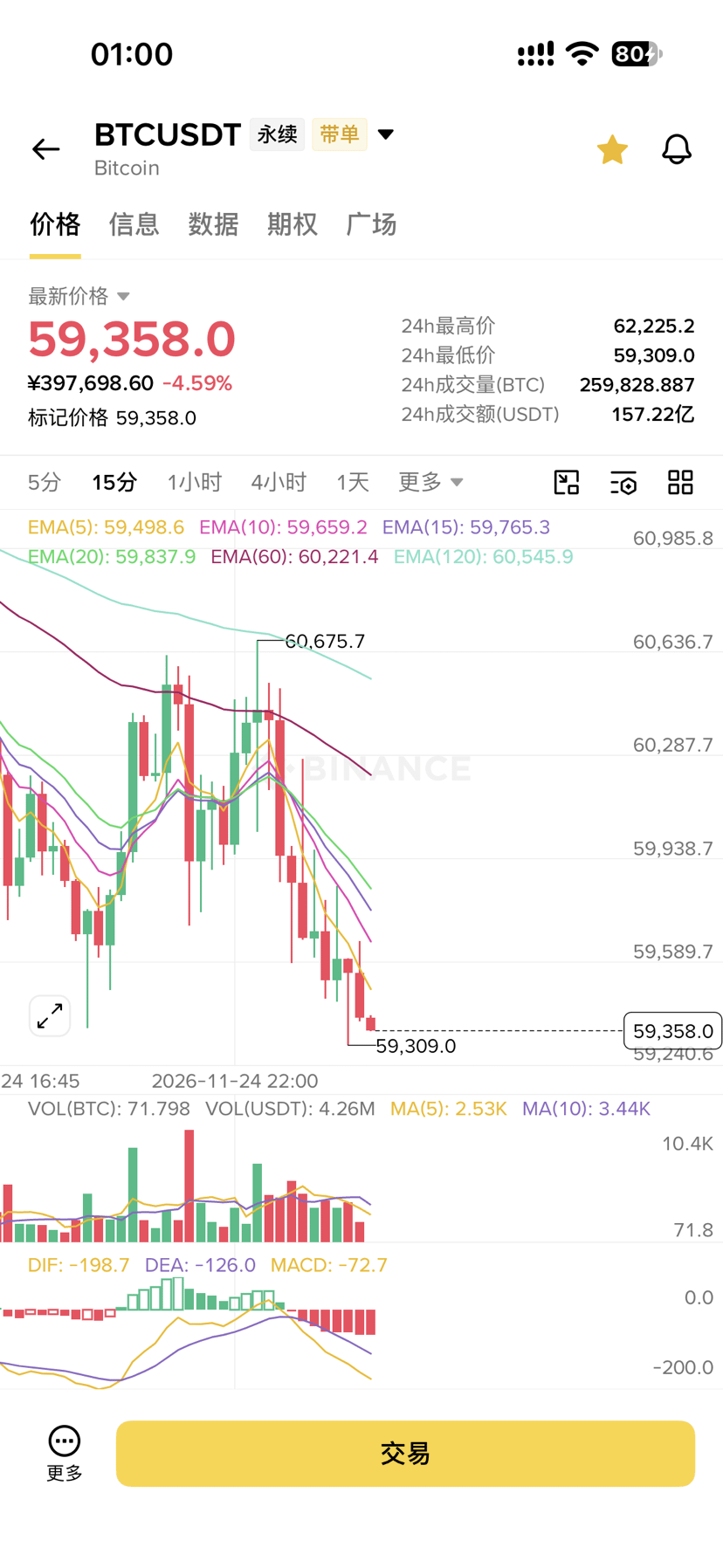
#比特币再度跌破6万美元,回吐昨夜反弹涨幅
$BTC
$BTC
江阳ETH
·
--
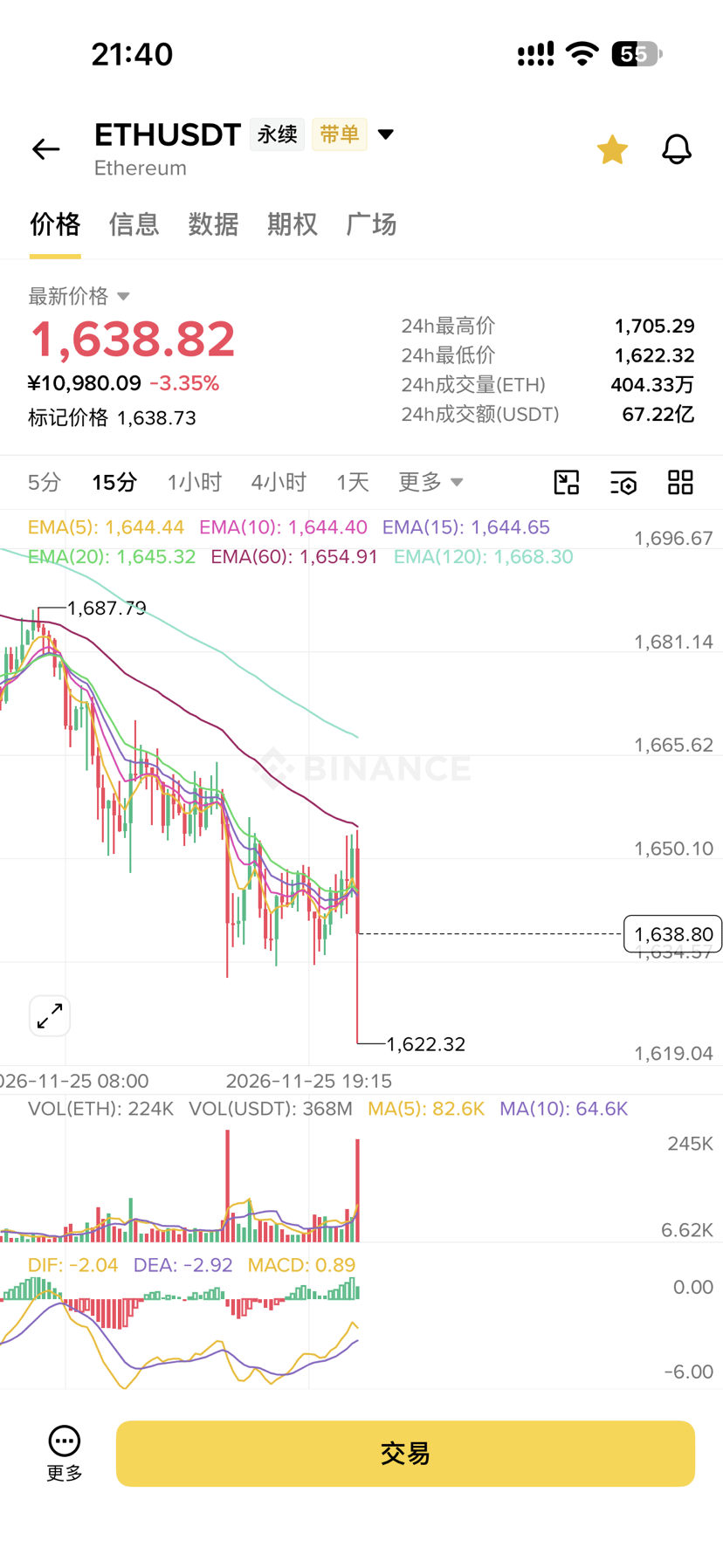
Bullish$ETH Another wick again—do the bulls really have to die?
江阳ETH
·
--
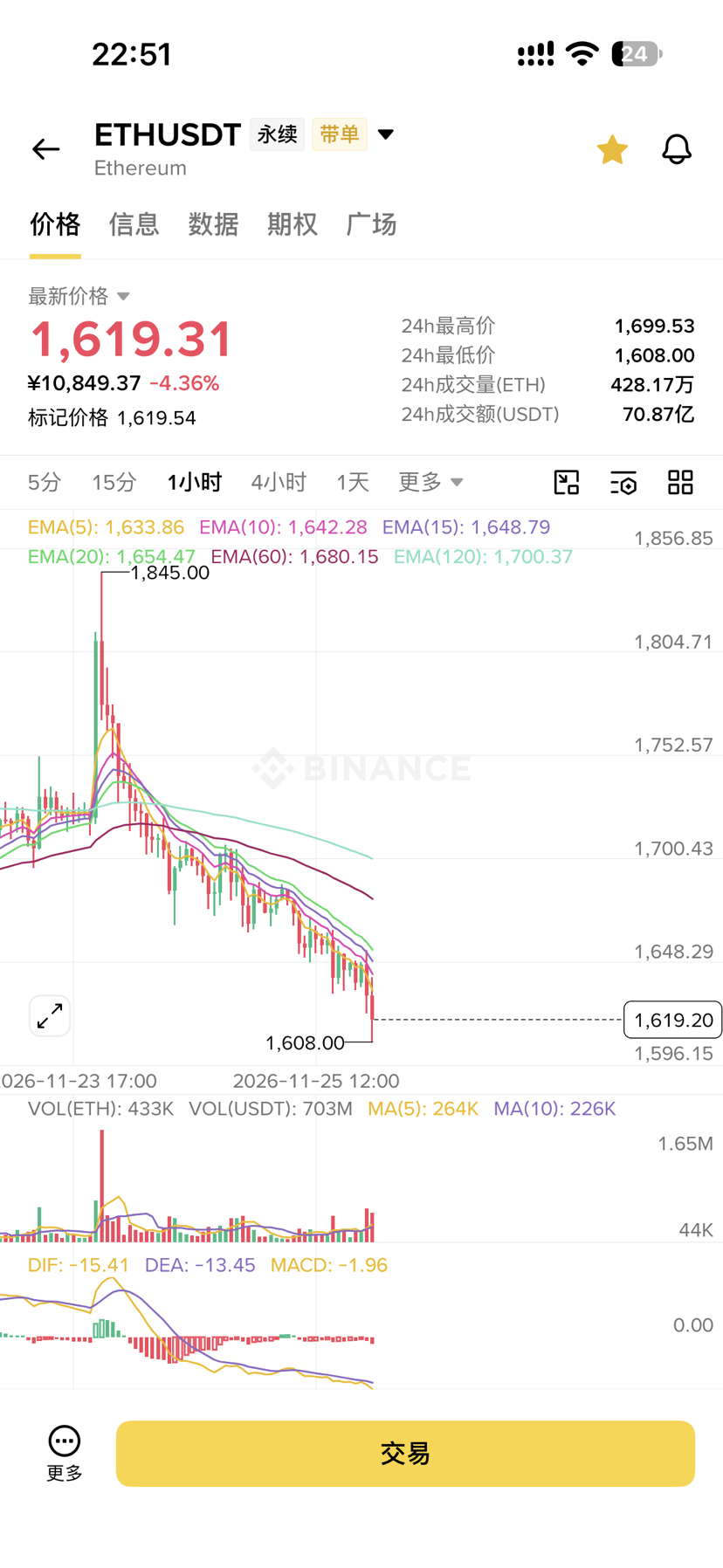
Bullish$ETH This is the bottom! Have Big V Tianlong blast it right up there—let the boys get a taste first!

奋斗Hustle-1688
·
--
This is the upside of Binance having powerful backers.
Reports say Binance has obtained a global asset freeze order involving $6.5 billion, meaning it can use the order to pursue and freeze stolen assets worldwide.
Note that the order was issued by Abu Dhabi;
and an investment firm backed by the Abu Dhabi government—similar to a state-owned enterprise in China—invested in Binance last year and is now one of its shareholders. With powerful backing, it’s easier to get ahead. Exchanges may all need strong patrons in the future. For example, OKX has also found a powerful backer in ICE. Exchanges without influential allies will have an increasingly hard time. But a lot of money has also been frozen by the U.S. government, and I get the feeling the U.S. won’t give it back easily 🤔

江阳ETH
·
--
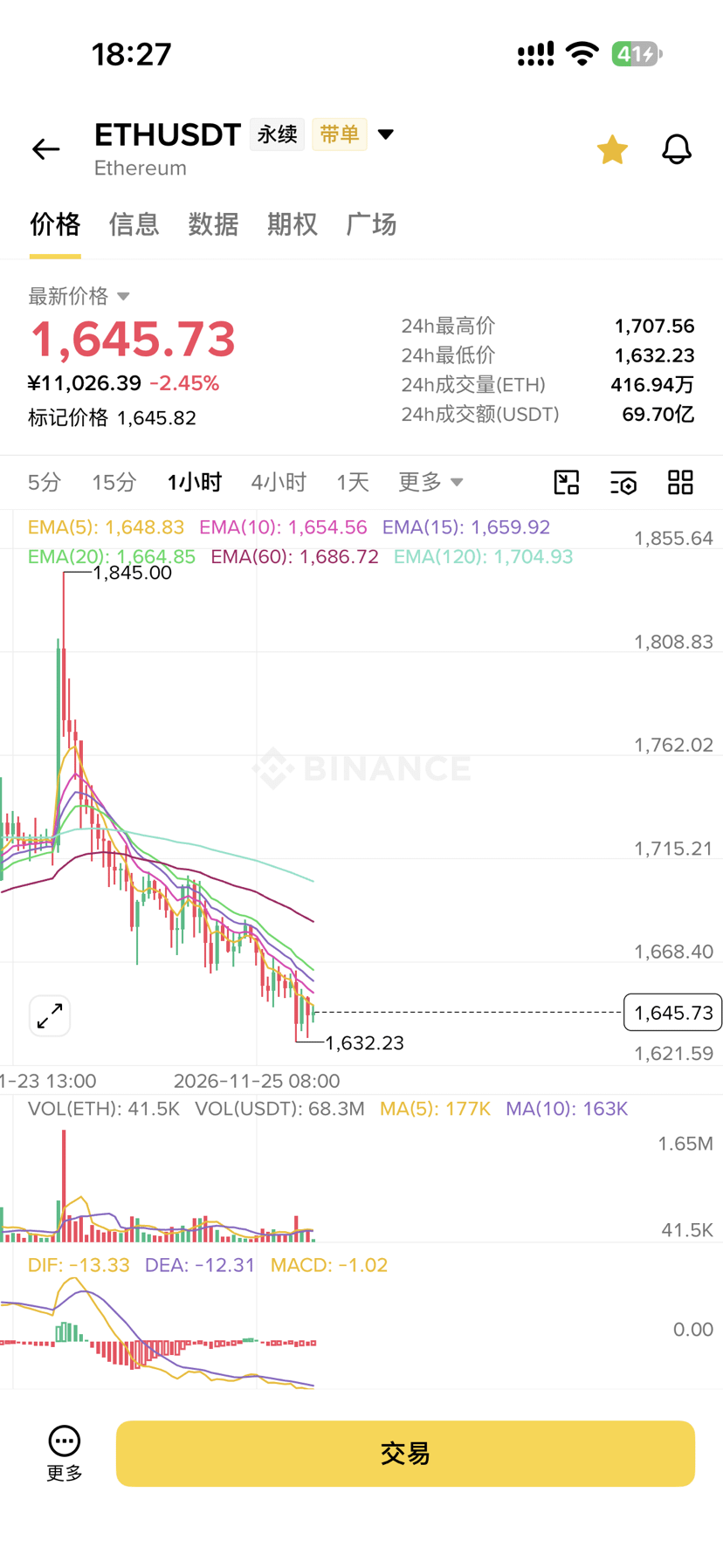
Bullish$ETH 1640It happened just as I said! Took profit on the short position! Immediately reversed and went long, target 1700! Jiangyang never makes calls in hindsight; when the market move is over, it will speak for itself!
江阳ETH
·
--
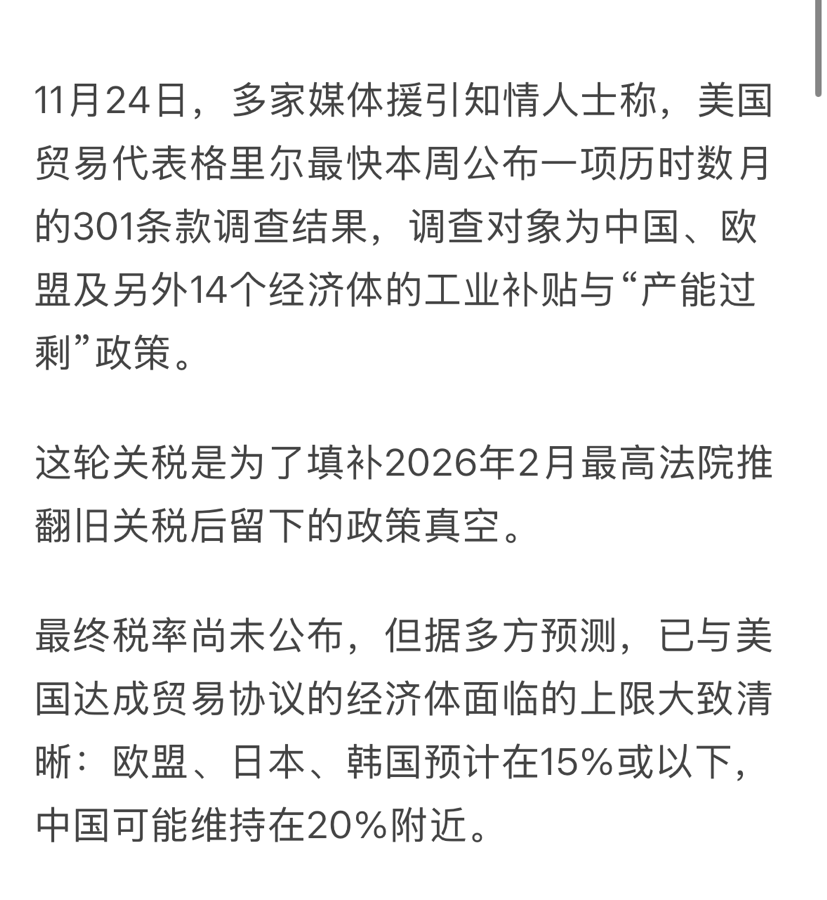
#特朗普拟重启关税攻势,比特币和美股再度走弱
$BTC
$BTC
江阳ETH
·
--
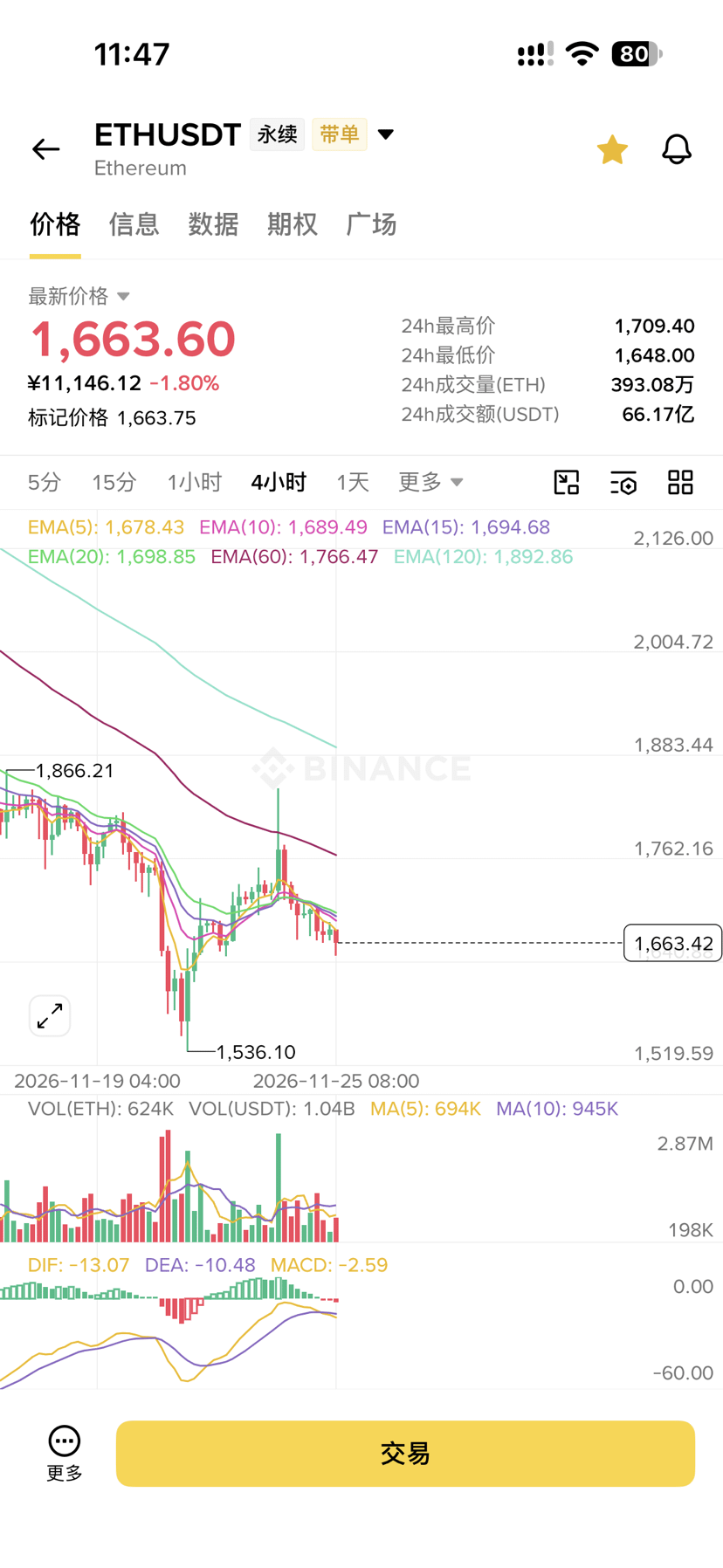
$ETH Liquidity is really poor! I don't even feel like watching the market anymore! Keep my hands in check. If it drops to 1630, I'll consider opening a one-lot long position! But it'll only be a short-term long, with a target of 1700!
江阳ETH
·
--
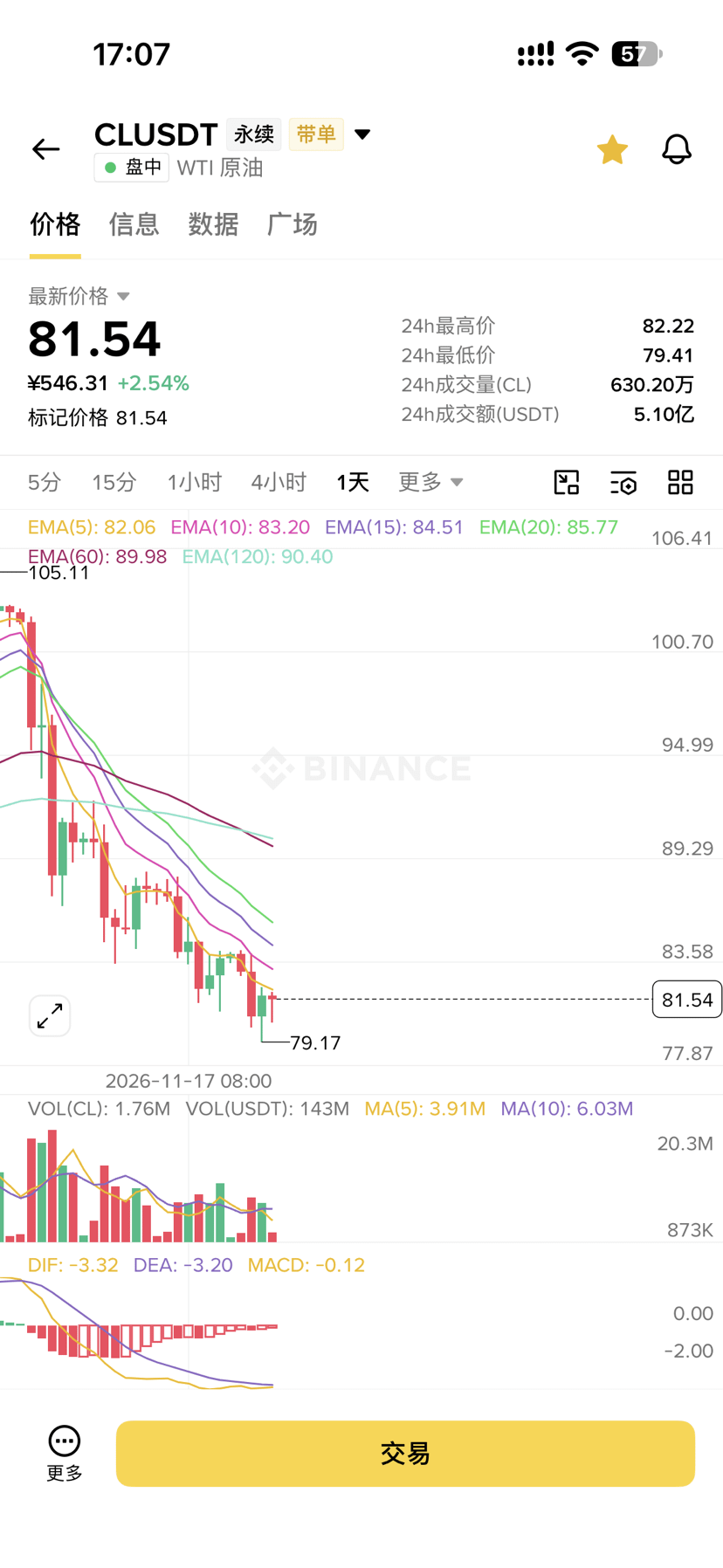
Bullish$CL Crude oil remains bullish! Strong support below 80; short-term outlook is upward! Target: 88! If you’re not in a position, go long at the current market price!

奋斗Hustle1688
·
--
[Replay] 🎙️ Build Binance Square bnb.bncb
02 h 58 m 48 s · 6.5k listens


正乾--四条2
·
--
Everyone, that plot twist came way too fast ⚠️
On the 23rd, when $BTC surged violently to 64,600, quite a few people thought the rebound was here. Just as confidence was starting to spark, the market went into a steep slide over the past two days, firmly breaking below 60,000 and taking out the previous daily-candle lows in succession!
Let’s be absolutely clear: the move from 55,100 to 64,600 was by no means a reversal driven by new money coming in to buy the dip. It was merely a technical bounce and short squeeze sparked by a wave of short covering and a liquidity drought.
The data doesn’t lie: BTC spot ETFs saw net outflows of around $1.1 billion over the past week, and the Fear & Greed Index dropped to 8, putting it in the Extreme Fear zone. Genuine spot buying simply isn’t strong enough to support the market.
This is a shortened Thanksgiving trading week, and the main event is still Wednesday! U.S. core PCE inflation data for October is due out, and on top of the recent steep drop in U.S. stocks and persistent inflation, the pressure from rate-hike expectations hasn’t eased one bit.
Here are the key support zones to watch closely:
✅ First support: 59,300–58,600
✅ Second support: 58,100–56,500
✅ Third support: 55,200–55,700
✅ Key line in the sand: below 55,100, the next major support zone is 51,000–53,000
✅ Lower support zone: 46,200–48,200
After a low-volume short squeeze like this, the risk of a sharp sell-off is extremely high. Don’t rush to catch a falling knife! Stick to our previous spot strategy: keep your hands off the buy button, preserve your dry powder, and wait for the PCE data—the macro bombshell—to land. Once the signal is confirmed, build your position gradually. Don’t try to call the bottom or make a big bet on a rebound.
A friendly reminder: The above is only my personal interpretation of the industry and does not constitute investment advice.
If you’re also interested in trading, feel free to leave a comment or join the chatroom to share ideas, learn, and grow together.
欢迎加入正乾研习社

Log in to explore more content