Tokenized stocks could become the next major narrative
In the past, when we talked about blockchain,
we were mostly discussing $BTC , $ETH , and various #defi protocols.
Now a new direction is developing rapidly: bringing traditional financial assets onto the blockchain.
Stocks, #etf , bonds, and even more real-world assets are starting to explore tokenization through blockchain.
This is no longer just a concept.
Take a look at Binance’s latest data.
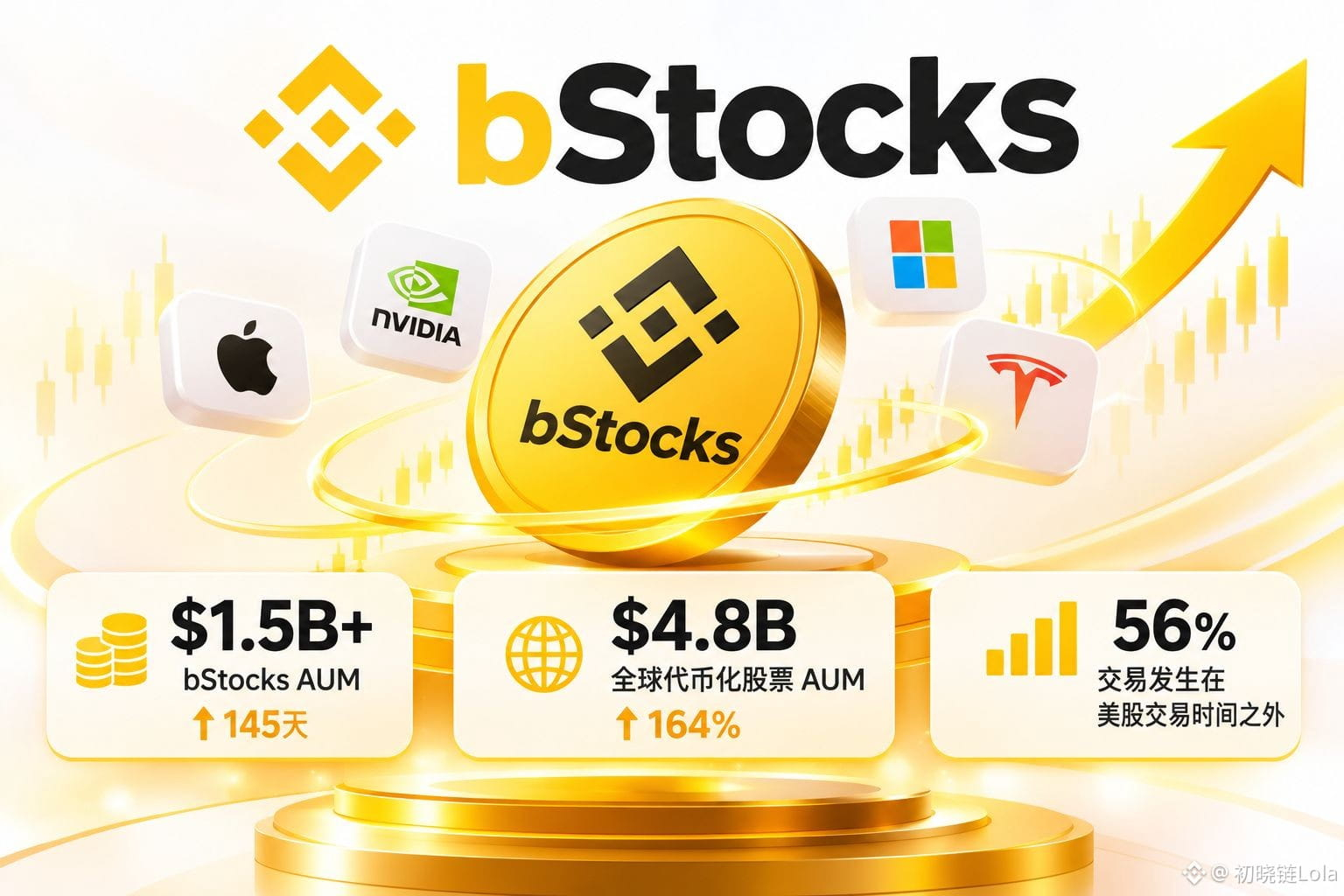
On November 10, 2026, Binance disclosed that assets under management in the global tokenized stock market had reached $4.8 billion, up 164% from June.
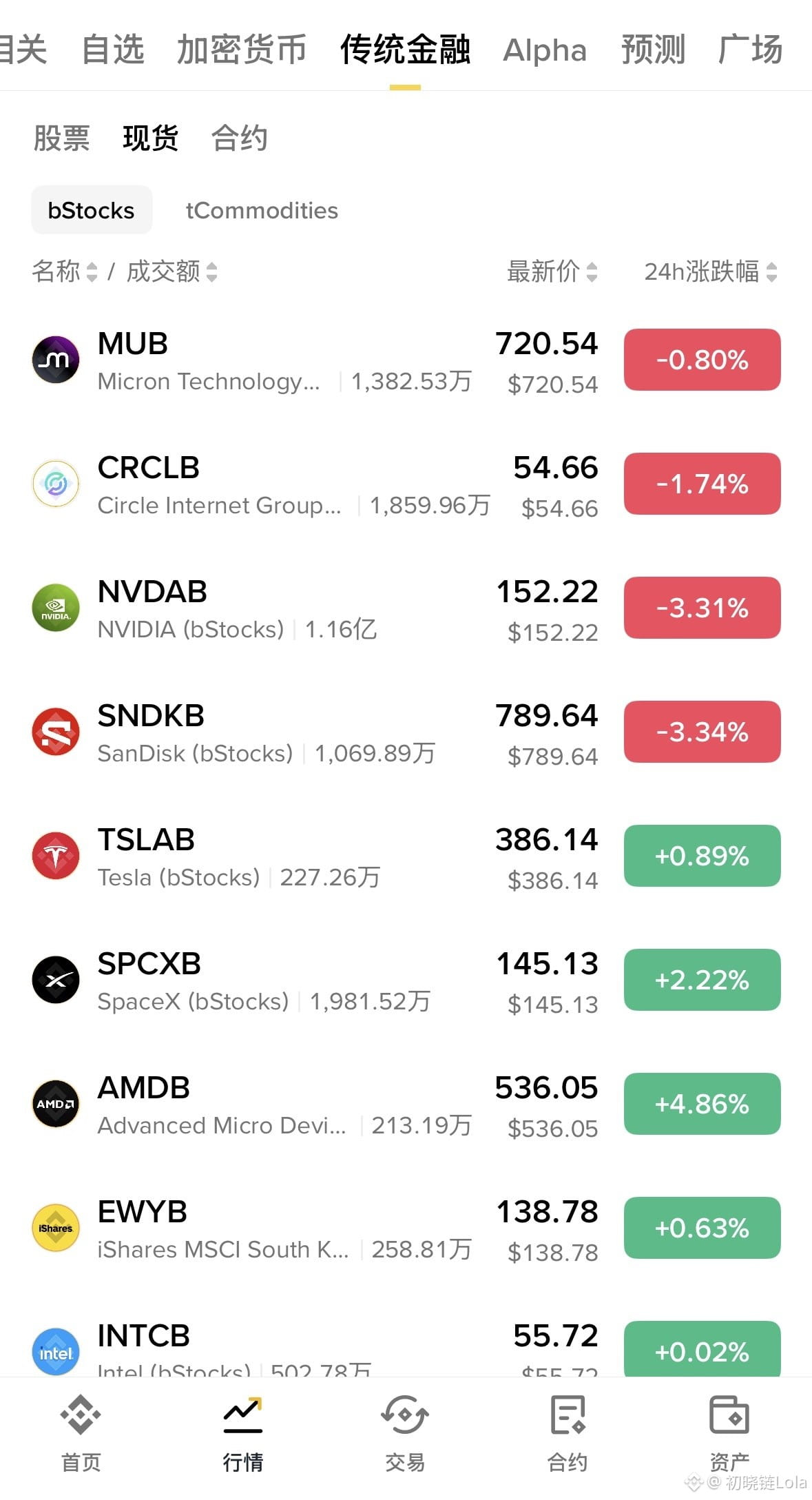
Among these, #BStocks , launched by Binance, surpassed $1.5 billion in assets under management just 145 days after launch, making it the world’s largest tokenized stock issuer at present.
Of that,
about 56% of bStocks trading volume takes place outside regular U.S. stock market hours,
emerging and frontier markets account for about 70% of trading volume.
Gen Z makes up 46% of users, indicating that young, crypto-native users are entering traditional stock markets.
This means that
traditional stock markets have trading-hour restrictions, while blockchain can enable more flexible trading and circulation of related assets.
For users around the world, tokenized stocks could lower the barriers to participating in traditional financial markets and create more connections between stock assets and ecosystems such as DeFi and on-chain liquidity.
Tokenization does not mean direct ownership of stocks, nor does it mean that every product comes with shareholder rights such as voting or dividends.
The legal structures, asset custody, and redemption mechanisms also vary between issuers.
In the past, blockchain mainly reshaped the financial system for native digital assets.
In the future, it may connect traditional financial markets as well.
Crypto investors used to speculate on all kinds of altcoins, but memes lack lasting liquidity and also carry the risk of projects disappearing with investors’ money.
By contrast, bStocks are backed by real stocks, with lower risks of exit scams or price manipulation, and a more open and fair environment for participation. Everyone starts on an equal footing, and profits and losses depend on each person’s own ability.
Of course, risk and return always go hand in hand, and every investment market carries risk.