


$BTC fell below $63,000 after Wall Street opened on Wednesday, as U.S. stocks declined amid inflation concerns.
Key takeaways:
Bitcoin's decline pushed its price down to $63,000 on Wednesday amid a weak start to U.S. stock trading.
Fed Governor Christopher Waller warned that in December officials may “have to shock people” with a 50-basis-point interest rate hike.
Analyst David Eng called selling pressure on Bitcoin “extreme,” citing a 30-day net capital outflow of $8.7 billion.
Waller: Fed may have to deliver an interest rate “shock”
TradingView data showed that $BTC was trading 3% below the start-of-day level, gradually declining for several hours before trading began in the U.S.
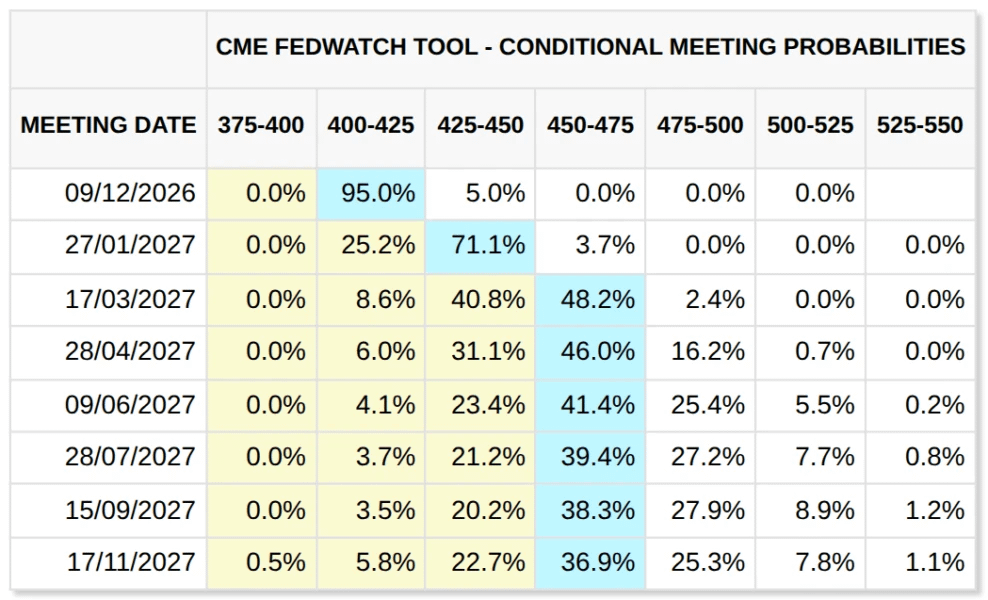
Not everyone shared confidence in the case for tightening policy. Commenting on the Fed’s hawkish stance, economist Robin Brooks said the recent decline in oil prices meant there was no need to strengthen commitments to raising rates.
“I don’t think any of the FOMC hawks have convincingly shown that core inflation — excluding supply shocks — remains high,” he wrote in a research note on Tuesday. Brooks called the prospect of further rate hikes a “terrible mistake.”
U.S. stocks opened lower, briefly attempting a reversal before slipping back into negative territory. The S&P 500 fell 0.3% on the day, while the tech-heavy Nasdaq Composite hovered around its opening level, failing to respond to renewed optimism about the AI sector after Nvidia beat its third-quarter earnings forecast.
$BTC still lacked a catalyst for a rally and looked set to break down out of the $64,000–$66,000 trading range that had formed on November 15.
Independent analyst David Eng warned that selling pressure at current price levels remained “extreme.” Eng cited capital outflows of $8.7 billion over the past 30 days, as well as net outflows of $2.1 billion from U.S. spot Bitcoin exchange-traded funds (ETFs) year to date.
“Bitcoin doesn’t need an additional $8.7 billion in buying every month to recover. The balance between buying and selling needs to improve. At the current pace, an improvement of $290 million per day over 30 days would eliminate the measured net outflow,” he wrote on X.