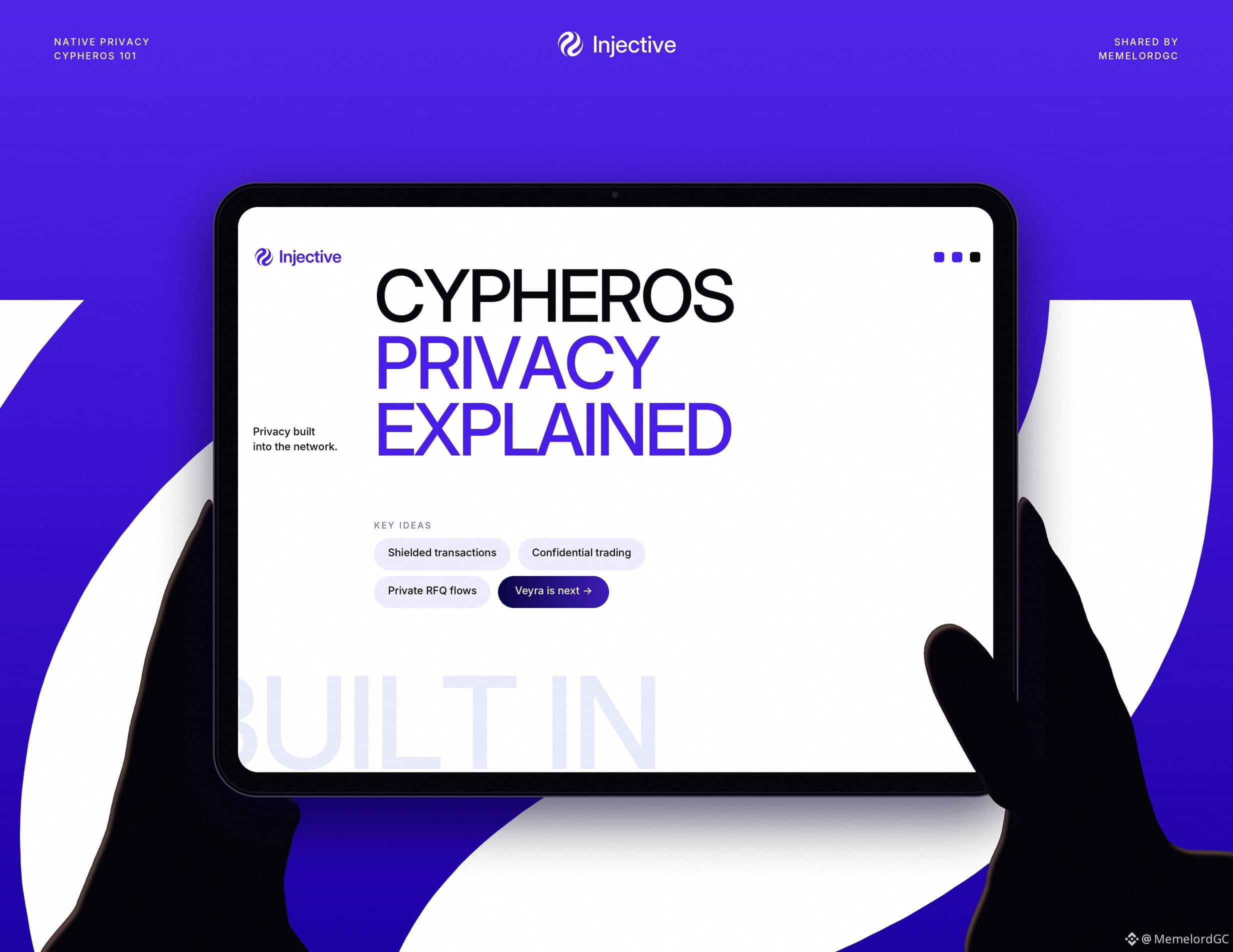
Blockchains are public by design. Anyone can see who sent what, to whom. That’s great for trust, but a real problem for banks and funds that can’t show their moves to the world. @Injective ’s answer is CypherOS. Let me explain it in plain words.
🔹 The problem
On a public chain, every transfer and trade is visible to everyone. For most users that’s fine. For an institution placing a large order, it means rivals can watch its moves.
🔹 What is CypherOS?
It’s Injective’s native onchain privacy layer, which means privacy built into the network rather than added later. Injective has described three goals:
1. Shielded transactions: hiding the details of a transfer from public view.
2. Confidential trading.
3. Private RFQ flows. RFQ means request for a quote: asking market makers for a price without showing the whole world.
🔹 Where it stands
Aug 25, 2026: Injective announced plans for native privacy.
Sep 24: the Meridian upgrade went live, with a private RFQ testnet alpha.
Sep 25: $INJ confirmed CypherOS is coming soon.
Oct 1: the first CypherOS demo went live.
Next: Veyra, now up for a vote, lays the foundation for native privacy with CypherOS. The full suite is expected in a later chain upgrade.
🔹 Worth knowing
“Native privacy” can mean different things. Hiding amounts is not the same as hiding addresses. So check Injective’s docs for the latest technical details.
🔹 See today’s transparency
Paste any transaction hash into [ injscan.com](//injscan.com) and you can see its sender, receiver and amount. That’s what shielded transactions are designed to change.
#Web3 #blockchain #injective #RWA #crypto