
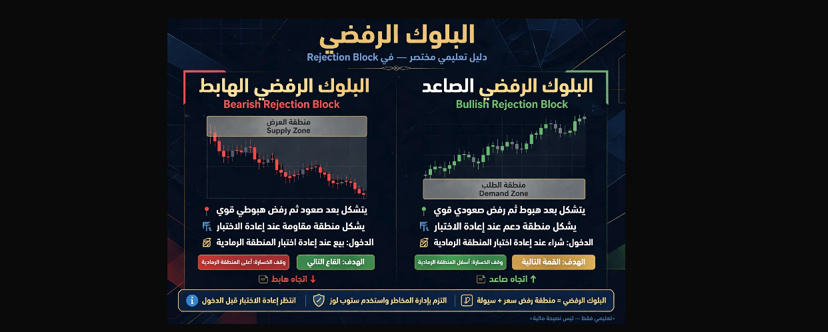

The rejection block is one of the most important concepts in modern technical analysis, as it identifies areas where price rejected further movement and reversed sharply. It is divided into two main types, each differing in its appearance and use.
First: Bearish Rejection Block
This type appears after an upward move, when price reaches a strong supply zone, is rejected from it, and then drops sharply.
Appearance: It is the last bullish candle before the strong downward move begins.
Use: It is used for selling opportunities.
Trading method: When the price returns to this area, we wait for a new rejection signal, such as a bearish engulfing candle, then enter a sell trade. The stop-loss is placed just above the block, and the target is the most recent low.
Second: The bullish rejection block
This is the exact opposite of the first type. It appears after a downward move, when the price reaches a strong demand zone and is rejected from it, then rises sharply.
Appearance: It is the last bearish candle before the strong upward move begins.
Use: It is used for buying opportunities.
Trading method: When the price returns to this area, we wait for a new rejection signal, such as a bullish engulfing candle, then enter a buy trade. The stop-loss is placed just below the block, and the target is the most recent high.
Why is the rejection block important?
1. High accuracy in identifying reversals
The rejection block is not based on a single touch, but on an area that has been tested and from which the price has already been rejected. Therefore, its success rate is higher than that of traditional support and resistance.
2. Excellent risk-to-reward ratio
When entering from a rejection block, the stop-loss is very small because it is placed just beyond the zone, while the target is large. This can result in a risk-to-reward ratio of 1:3 or more.
3. Reveals the intentions of market makers
The rejection block reveals where large sellers or buyers entered the market with force. When the price returns to the same area, they are likely to act the same way again.
4. Works across all timeframes and assets
It can be applied to Bitcoin, gold, and currencies across all timeframes, from the one-minute chart to the daily chart, with reliability increasing as the timeframe gets larger.
5. Reduces random entries
Instead of entering in the middle of a move, the rejection block teaches you to be patient and wait for the price to return to the right area. This is the essence of professional trading.
Conclusion
The bearish rejection block gives you an opportunity to sell near the high, while the bullish rejection block gives you an opportunity to buy near the low. Those who master the distinction between them and wait for confirmation of a second rejection trade with the market makers, not against them.
Have you used the rejection block in your analysis before, or have you relied only on support and resistance?
#Binance #BinanceSquareTalks #cryptouniverseofficial #bitcoin #Write2Earn


