


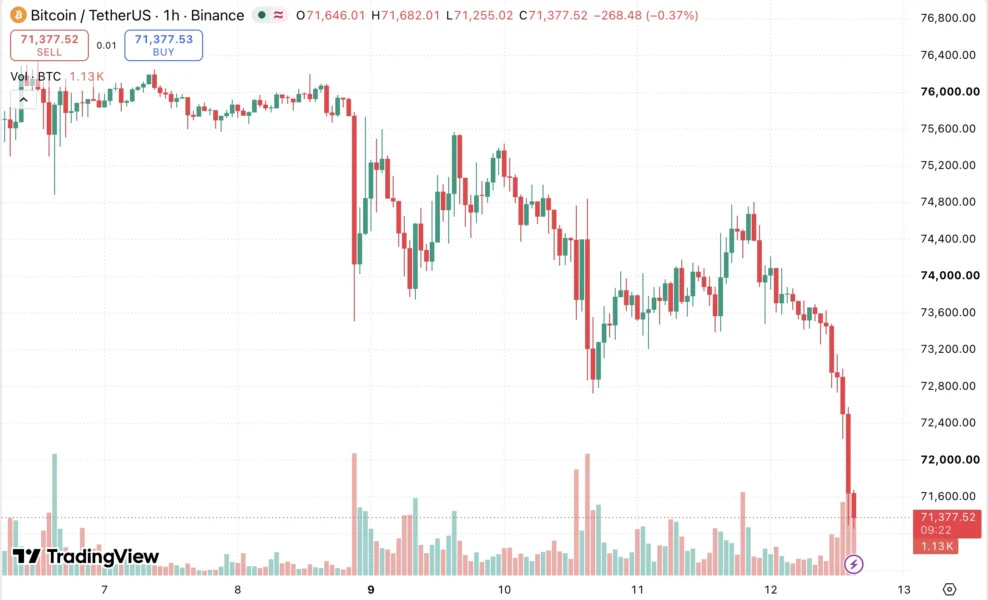
On November 12, the leading cryptocurrency continued to decline, falling to $71,300 — its lowest level since August. The market also came under pressure from Nvidia CEO Jensen Huang’s resignation, Strategy’s removal from MSCI indexes, outflows from spot ETFs, and expectations of further rate hikes in the US.
Over 24 hours, $BTC fell 3%. At the time of writing, the asset was trading around $71,400, after starting the week at $76,000.
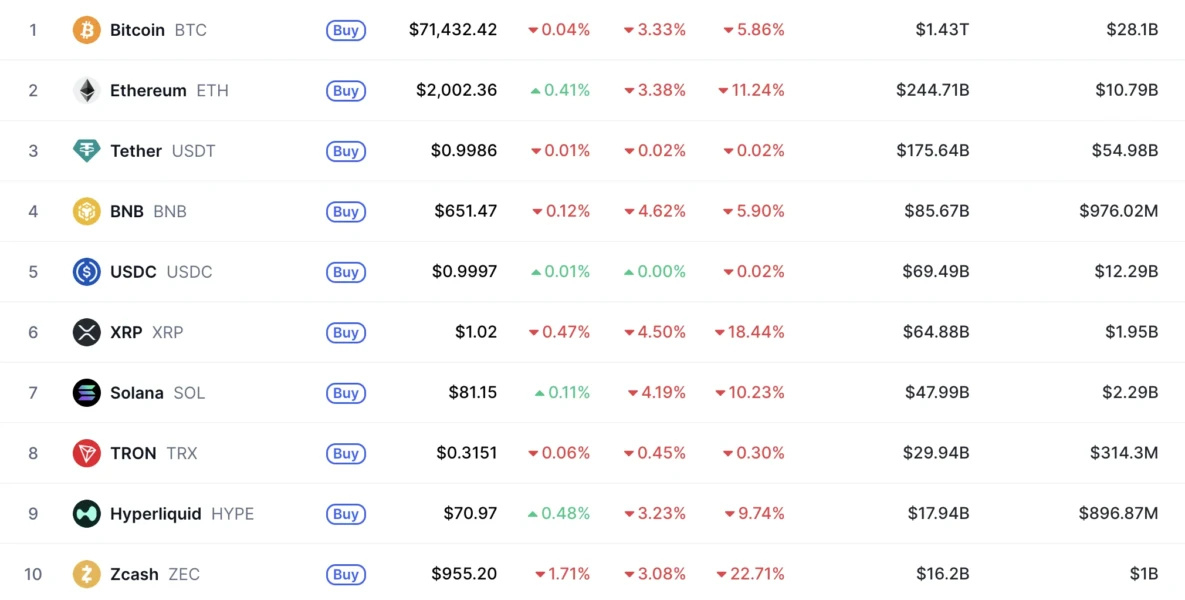
The largest altcoins also fell in the wake of the flagship cryptocurrency. Ethereum dropped to $2,000, Solana to $81, and $XRP to $1.02.
$GRAM (formerly Toncoin) stood out against the broader market, gaining nearly 5.6% in 24 hours. In recent days, Pavel Durov has actively supported the project with social media posts. On November 11, the entrepreneur reported that more than one million non-custodial GRAM wallets had been activated in 48 hours.

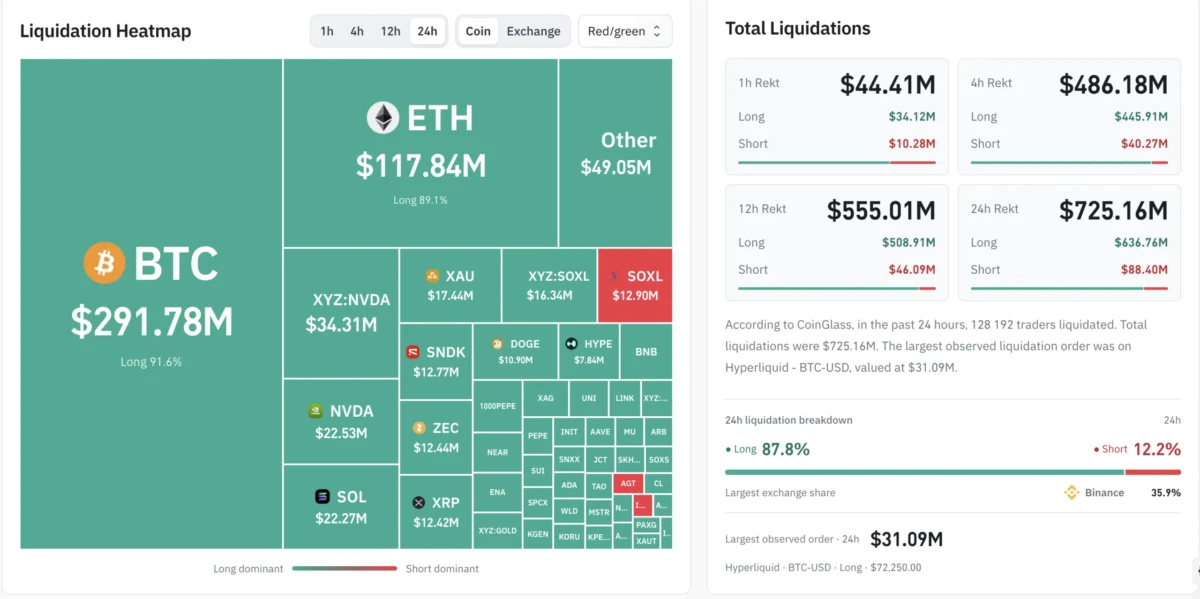
The sell-off was accompanied by forced position closures in the derivatives market. Liquidations exceeded $725 million over 24 hours, with $636 million in long positions.
What’s weighing on the crypto market
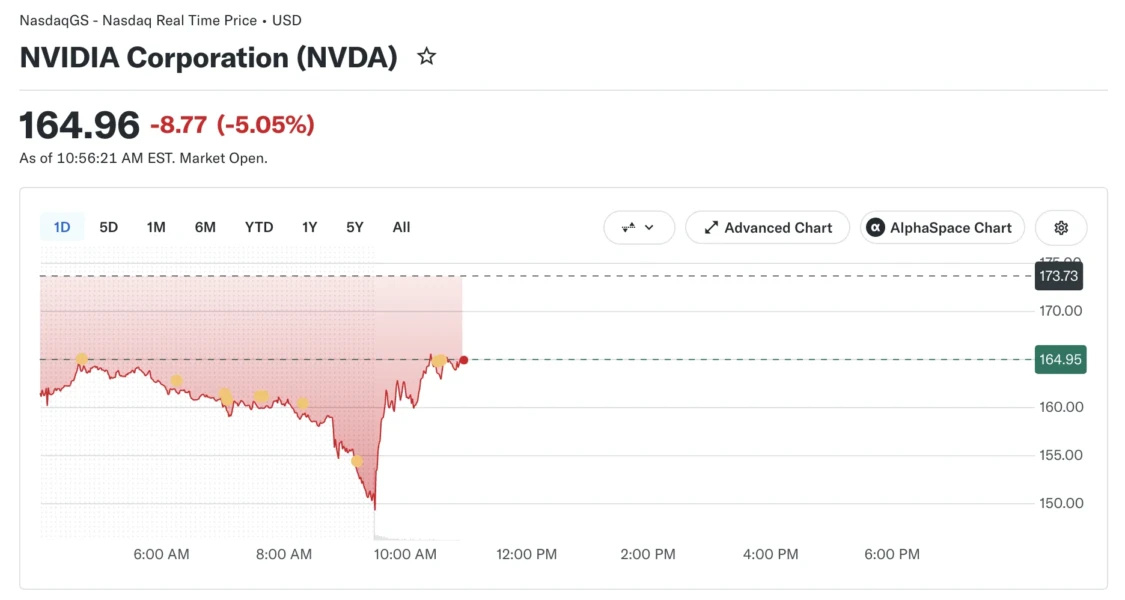
One factor was a sell-off in technology stocks following reports that Jensen Huang was leaving Nvidia. On November 12, the AI chipmaker confirmed that its founder was stepping down as president, CEO, and a member of the board of directors.
In premarket trading, the company’s shares fell about 7%, and they were down around 10% during the regular session. Negative sentiment spread to other AI-related assets. Nasdaq 100 futures fell by more than 1%.
Another blow to the cryptocurrency sector came from MSCI’s decision. The index provider will remove Strategy, the largest corporate holder of bitcoin, from its global indexes after the market close on November 30.
The company fell under new criteria. Under these, organizations without substantial operating assets may be classified as non-operating and excluded from equity indexes.
The decision could force passive funds tracking MSCI indexes to sell Strategy shares.
In 2025, JPMorgan estimated potential outflows of $2.8 billion. If other index providers impose similar restrictions, a further $8.8 billion could leave the company’s shares.
Strategy itself has said that funds tracking MSCI indexes own about 3.1% of its shares.
Removal from the indexes does not require the company to sell its bitcoins. The main risks are a possible decline in MSTR’s share price and reduced access to capital for further purchases of the leading cryptocurrency.
ETF outflows reach $1.44 billion
Weak institutional demand is also reflected in capital flows through exchange-traded funds. On November 11 alone, U.S. spot bitcoin ETFs recorded net outflows of $299.8 million.
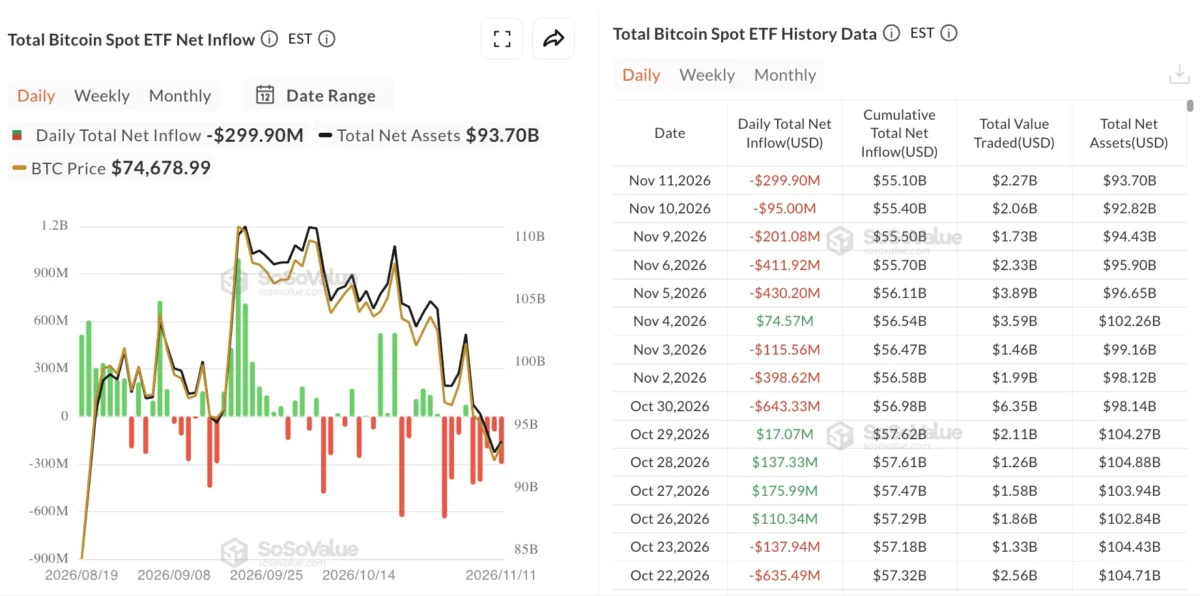
The negative trend has continued for five consecutive trading sessions. From November 5 to 11, investors withdrew about $1.44 billion from the funds.
U.S. monetary policy is also adding to the uncertainty. Data released on November 10 showed that consumer prices rose 0.4% in October. Analysts had expected 0.3%.
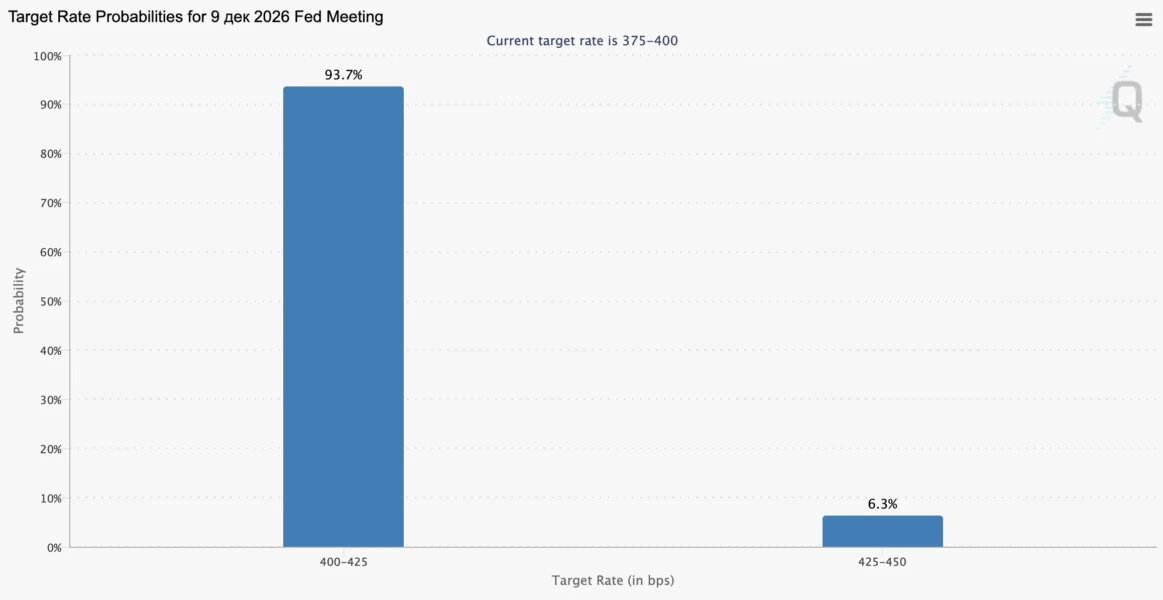
Following the report, investors raised the odds of Fed tightening. The market puts the probability of a 25-basis-point rate hike at the December meeting at around 94%.
On November 12, Cleveland Fed President Beth Hammack said restrictive monetary policy was needed amid persistent inflationary pressure. However, she advocated for small, gradual rate hikes.
Against this backdrop, the yield on two-year U.S. Treasury bonds rose to around 4.8%, while the DXY dollar index briefly topped 103 points, its highest level since March 2025.
A stronger U.S. currency and rising bond yields make risk assets, including cryptocurrencies, less attractive.
What’s next?
Analysts are divided on bitcoin’s future direction.
CryptoQuant researcher RugaResearch, who uses a pseudonym, recorded a decline in the aggregate 30-day demand estimate to -348,000 BTC as of November 10, its lowest level since the beginning of the month.
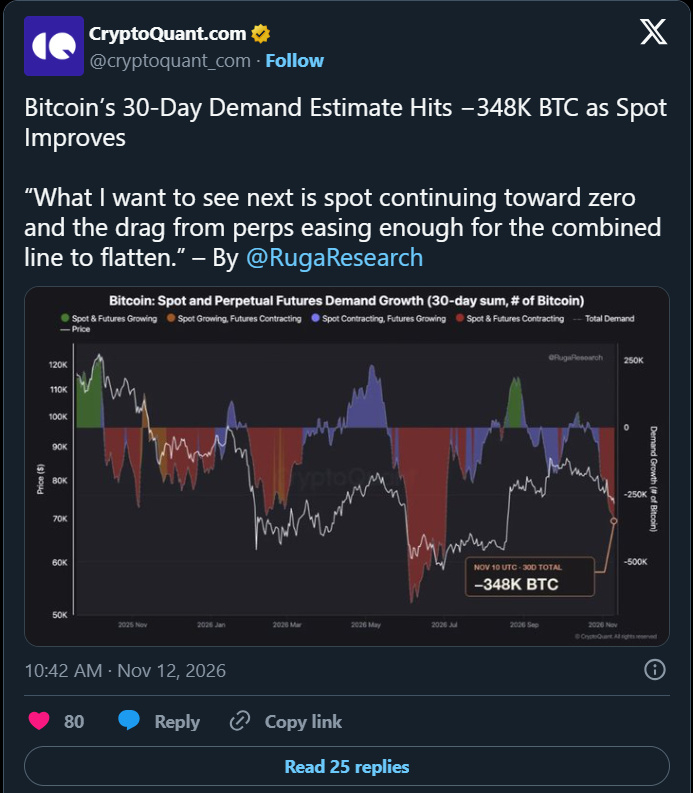
Meanwhile, the spot component of the indicator began to recover. Since November 7, it has improved by around 29,500 BTC, while the estimated demand for perpetual futures has deteriorated by 63,500 BTC. However, both indicators remained negative.
In the researcher’s view, a sustained price range requires a further recovery in spot demand and a reduction in pressure from derivatives.
The technical picture has also deteriorated. Bitcoin fell below its 50-week moving average, around $75,153, CoinDesk technical analysts noted. In September, some experts viewed a sustained move above this level as a sign that the uptrend might resume.
Wintermute maintains a cautious outlook while the price remains below the 50-week average. Analysts identify $68,000 as the next significant level if the decline continues. A move back above $80,000 could shift their assessment in favor of buyers, experts say.
Meanwhile, LMAX Group market strategist Joel Kruger stressed that much of the expected Fed hawkishness is already priced into the dollar. In his view, if the dollar’s strengthening slows, pressure on cryptocurrencies could ease.
Comments from Fed officials and U.S. producer price data, due to be released on November 13, should provide greater clarity.
On-chain analyst Willy Woo took a more optimistic stance, saying that fear spreading among investors does not in itself signal the start of a bear market.
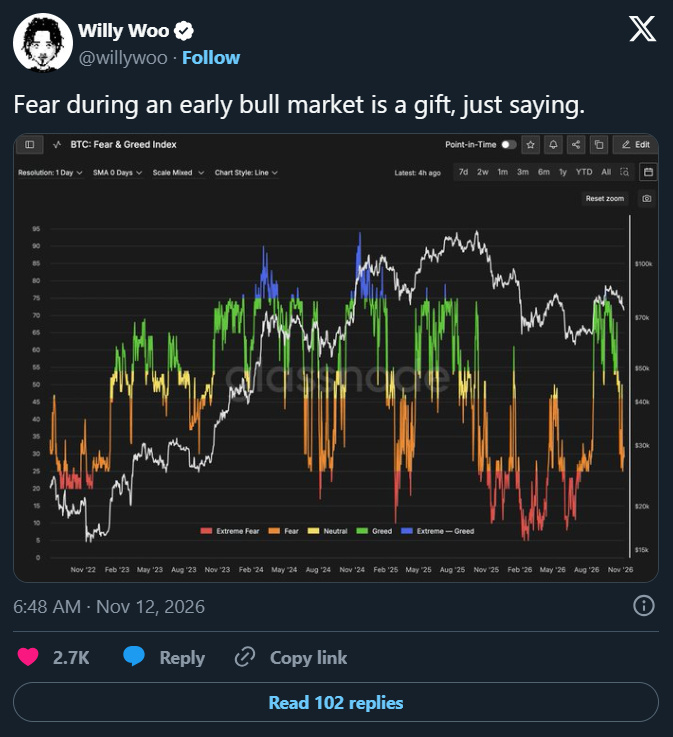
In his observation, sustained declines in previous cycles were accompanied by significant new price lows. Until that happens, the analyst views the current correction as a potential buying opportunity.
However, Woo acknowledged that new lows amid persistent fear would make him reassess his view.
Recall that on November 6, bitcoin fell below $76,000 following a U.S. stock market slump.