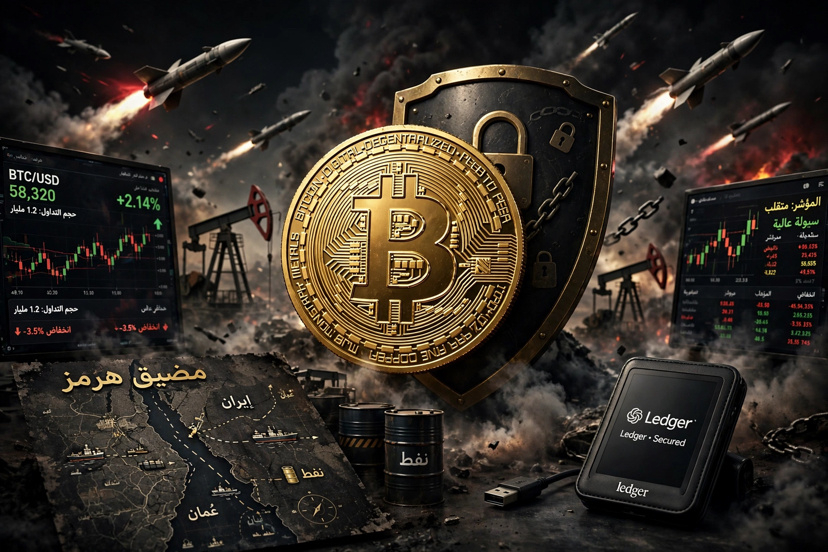

Anyone following the Middle East today can see that we are not facing a passing threat, but a scenario that could reshape the global economy. Talk of a possible strike on a fortified facility deep inside Iran, and the possibility of closing the Strait of Hormuz, means an immediate rise in oil prices, disrupted supply chains, bank shutdowns, and panic spreading through the markets. At moments like these, the cryptocurrency market is not shielded from the storm—it is at its very heart.
Recent history has taught us a powerful lesson. When the Russian-Ukrainian war broke out in February 2022, Bitcoin plunged by more than twenty percent in two days, then recovered and rose in the weeks that followed as an alternative haven when local currencies collapsed. The same was true during the confrontations between Israel and Iran: a sharp drop was the initial reaction, followed by a gradual rise for those with patience and a plan.
First: The pre-war phase, the most important stage
Wisdom dictates that you fortify your assets before the drums of war begin to beat. In this market, prevention is no less important than treatment.
The first step in fortifying your assets is to move your money off centralized platforms. However powerful a platform may be, it remains a centralized point of weakness, vulnerable to hacking, freezing, or being blocked due to sanctions. So move at least seventy percent of your assets to an offline cold wallet, such as Ledger or Trezor, and keep your recovery phrase written on paper in a safe place, away from your phone and computer.
The second step is thoughtful diversification. Don’t put all your eggs in one basket; divide your portfolio into three balanced baskets. The first basket is Bitcoin, at forty percent, because it is the most liquid asset and the quickest to rebound after crises. The second basket is stablecoins, at thirty percent, but split them between two different currencies, such as Tether and the digital dollar, and across two different networks, so your funds won’t be stranded if one network goes down. The third basket is actual cash in your bank account, at thirty percent. In wartime, cash is king and opens the door to opportunity.
The third and most dangerous step is to get rid of leverage. Trading futures contracts with five or ten times leverage is financial suicide in wartime, because liquidation shows no mercy and gives no warning. Close all your futures positions and return to spot trading; staying in the market matters more than making a quick profit.
Second: Zero hour and the first hours of panic
When the first news of the strike breaks, you’ll see red screens, a stream of notifications, and hearts pounding. At that very moment, whatever you do, don’t sell out of fear. Selling at the peak of panic is the decision ninety percent of traders regret.
During the first twelve hours, the market moves on emotion, not logic, so pause and watch. Don’t buy or sell until the first full daily candle closes. Keep an eye on two key indicators: the U.S. Dollar Index and the price of a barrel of oil. If the dollar rises above one hundred and five, and oil climbs above one hundred and twenty dollars, know that the decline isn’t over yet. But if gold stabilizes and Bitcoin begins to form a bottom, that’s a sign the shock has been absorbed.
Third: The post-shock phase and repositioning
Three days after the event, the market begins to separate the winners from the losers. This is where strategic repositioning comes into play.
If the closure of the Strait of Hormuz or an expansion of the war is confirmed, convert some of your stablecoins into digital gold, such as Paxos Gold, which typically rises with every military escalation. Spread your assets across at least two platforms in different geographic regions, so you don’t fall victim to sanctions or a sudden block. Make sure you have a backup internet plan: some countries cut off the network during wartime, and having an international SIM card or a satellite internet device could save your portfolio.
Remember, wars don’t destroy markets; they reprice them. The investor with a written plan before the war is the one who buys from the fearful at the bottom and sells to the greedy at the top.
The poet put it well when he spoke of caution and vigilance:
Do not overdo your caution where caution is called for,
For fate sometimes turns and schemes.
At times like these, caution is not cowardice; it is the height of financial courage.
#BTC #btc70k #Binance #bitcoin $BTC