



What happens to Long positions on trading platforms, and how does it affect the crypto market? Are we looking at something like a coordinated quasi-scam?
Every time the market suddenly drops, you see the same scene repeat: hundreds of millions of dollars are liquidated within minutes, and most of it goes to Longs buying positions. In just 2026, the market recorded more than 15 mass liquidation events exceeding 300 million dollars within 24 hours, and on some days it reached more than 600 million dollars—approaching nearly one billion dollars on highly volatile days.
The last of these waves happened at the end of September 2026, when about $309 million in Long positions were liquidated in one day, with the largest share on Binance, OKX, Bybit, and Hyperliquid. A few days earlier, on September 16, $571 million in buy-side positions was liquidated after the CLARITY Act failed to pass in the U.S. Senate—$190 million of that was for Bitcoin alone, and $190 million for Ethereum.
How does the liquidation mechanism work, and why does it hit Longs harder?
When you open a Long position with 10x leverage worth $10,000, you effectively control $100,000. If the price drops by just 10% against your expectation, you lose your margin entirely and the platform force-closes your position.
The problem is that these liquidations happen via immediate market sell orders. This selling drives the price down even further, which liquidates other positions as well, and so the market enters a vicious cycle called a Liquidation Cascade. Data suggests that 70–80% of liquidations during a decline are for Long positions, because most people tend to be optimistic and buy, leaving the market completely exposed to market makers’ attacks.
In a single event documented in 2026, liquidity in the order books dropped by 98%, and bid-ask spreads widened by more than 1,300 times in just one hour, and over $500 million was liquidated.
Do platforms manipulate? And what is the allegation of fraud?
Here the market splits into two opinions, and both have evidence:
1. The technical view: the market works as designed
There isn’t one single responsible party. Platforms apply an automatic liquidation system to protect themselves from losses. Open Interest rises to between $48 and $51 billion, while spot trading volume is far lower—meaning a large portion of the price is artificial and built on leverage, and any small shock can trigger it. This isn’t fraud, but rather structural fragility in the never-ending perpetual futures system.
2. The view that sees manipulation: Hunting Liquidity
Here the suspicions begin. Multiple reports from traders on OKX and Binance talk about the same pattern:
- Freezing the platform, suspending login, and canceling orders during critical moments—only small traders with Long positions are affected, while institutional accounts and short accounts operate normally, leaving them until their positions are blown up.
- Introducing a fake Wick candle: suddenly, a very sharp bearish candle appears on only one platform. It differs from the global price, triggers stop-losses for Long positions with precision, and then the price immediately returns to normal. Traders describe this process as “precise harvesting” by controlling a phantom order-book depth.
- The phenomenon of adding fake liquidity: as happened this week when Bitcoin dropped below $83,000 after suddenly more than $30 million worth of sell orders appeared at $85,700 to halt the price rally and drive it into liquidating $70 million worth of Longs.
Even Chris Marszalek, CEO of http://Crypto.com, called for urgent regulatory scrutiny after a record liquidation of $20 billion following Bitcoin’s 15% drop from $124,000 to $98,500. He discussed manipulation in the order books and printing abnormal prices during sell-offs, and urged the SEC and CFTC to investigate pricing mechanisms, delays, and margin systems.
Impact on the market
As a result of this system, the crypto market moves not based on project news, but based on where liquidity gathers. Market makers know exactly where highly leveraged Long positions accumulate under the price range of $83,000 to $78,000, and it becomes very cheap to insert a downward “pin” to liquidate billions of dollars at once. And when ETF fund buying slowed from $1 billion per day in September to just $15 million, the market lost its biggest support, making the liquidation of Longs inevitable.
The issue isn’t direct fraud like fake platforms that seize users’ money, but a system that allows major platforms to profit from liquidation fees, and from ADL that penalizes winning traders to cover the losses of bankrupt traders—a system that doesn’t exist in 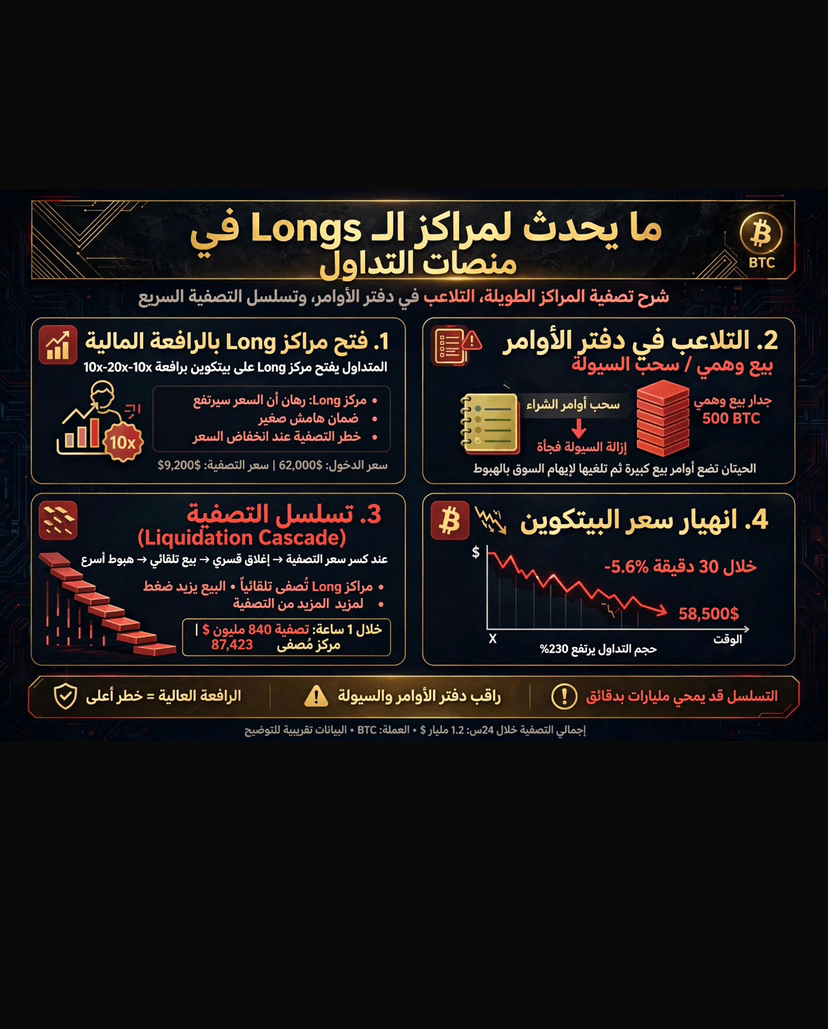 traditional markets and raises serious questions about market integrity.