
When we talk about $BTC we often only look at its price.
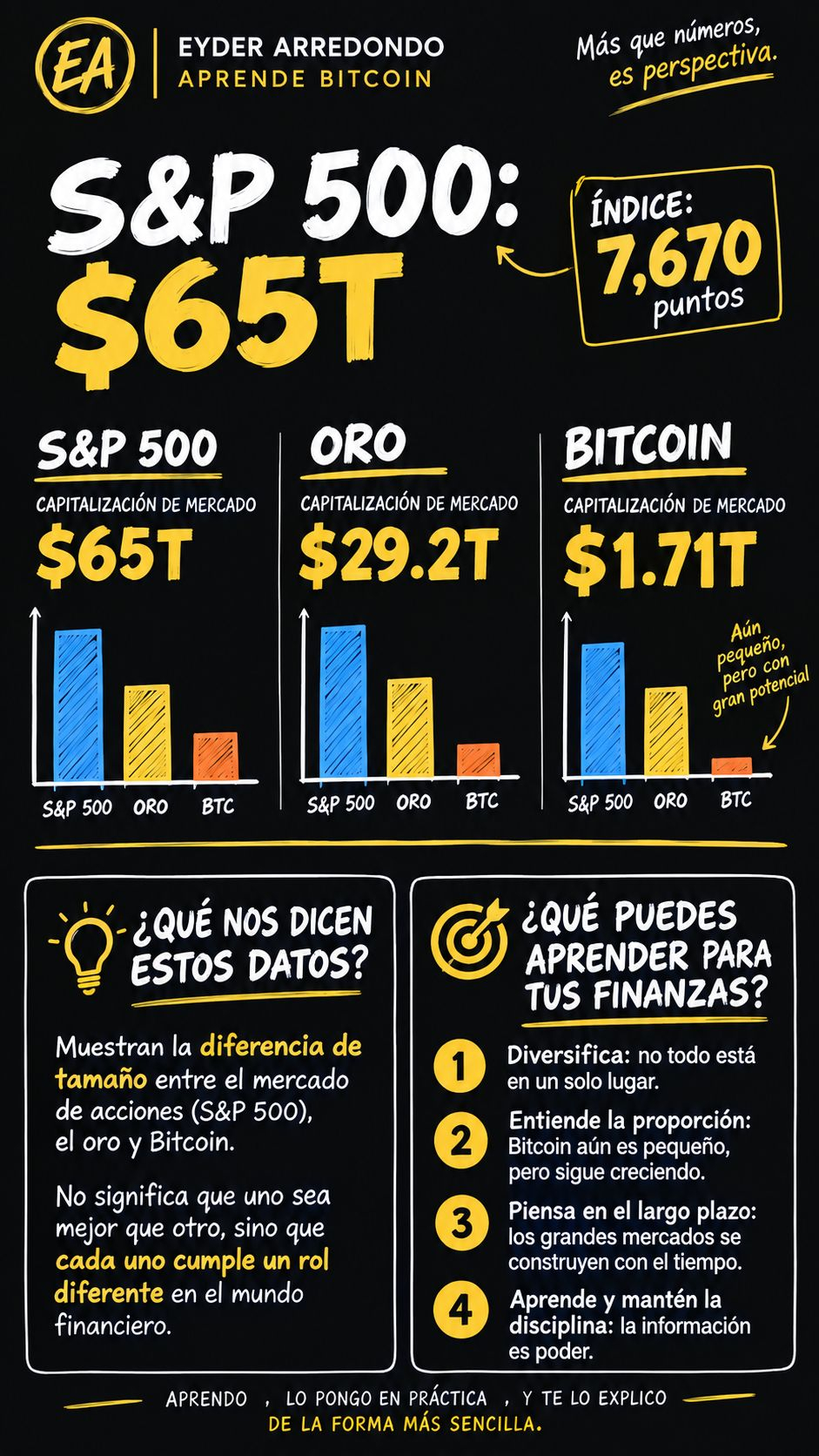
Today BTC is around US$83,000 and its market capitalization is around US$1.7 trillion.
But there’s a much more interesting question:
How big is Bitcoin compared to other markets?
Let’s look at the numbers approximately as of September 30, 2026:
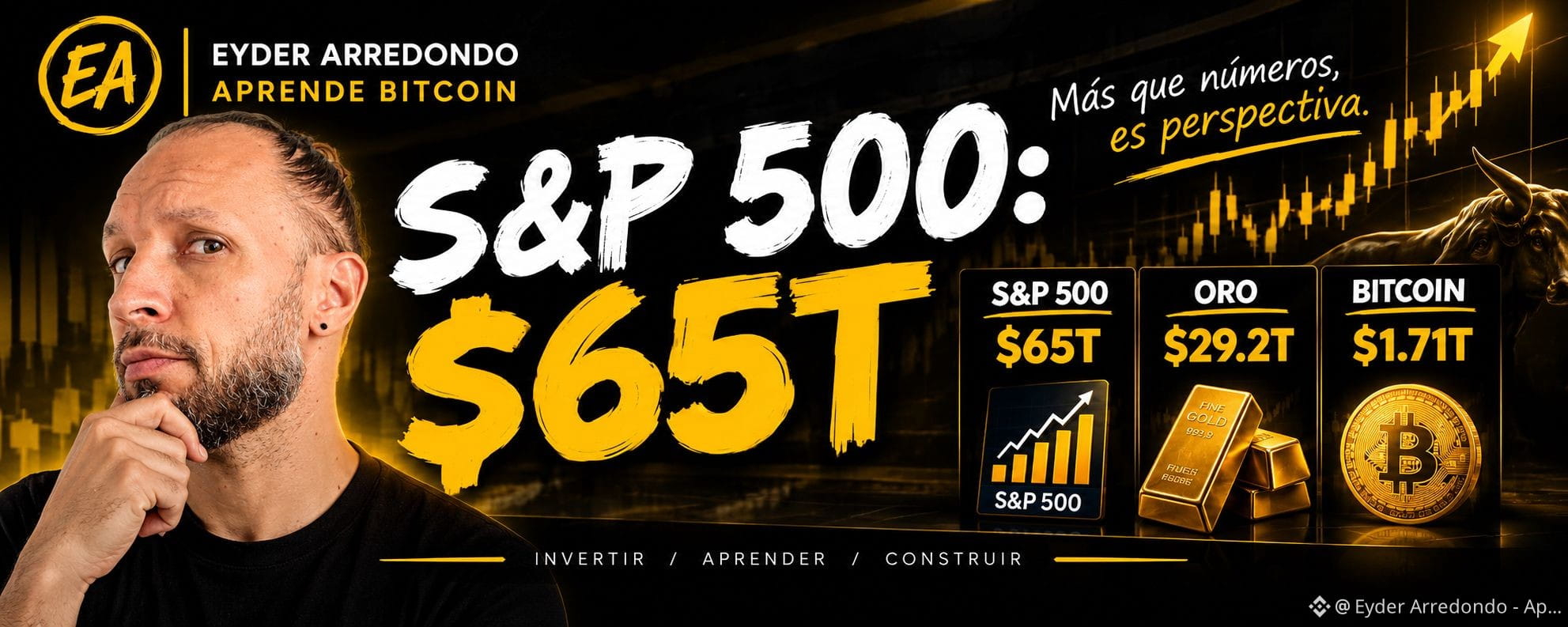
🟠 GOLD: ~US$29 trillion
🟠 BITCOIN: ~US$1.7 trillion
🔵 S&P 500 COMPANIES: ~US$60+ trillion
And this is where market capitalization starts to make sense.
What does it really mean?
Bitcoin’s market capitalization is calculated like this:
BTC price × amount of BTC in circulation = market capitalization
That’s why Bitcoin costing $83,000 doesn’t, by itself, tell us whether it’s “expensive” or “cheap.”
We also have to look at how much money the entire Bitcoin market represents.
And when we compare it to traditional assets and markets, an interesting perspective emerges:
Bitcoin still represents a fraction of the gold market size, and an even smaller fraction of the value added by the companies in the S&P 500.
That doesn’t mean Bitcoin will necessarily reach those sizes.
That means something different:
it lets us gauge which stage Bitcoin is in as an asset.
And here’s another important lesson:
The S&P 500 is not an asset like Bitcoin or gold. It’s an index that brings together 500 large U.S. companies. That’s why, when we talk about “S&P 500 market capitalization,” we’re really talking about the combined value of the companies that make it up.
So why do I care to learn this?
Because when I stop looking only at the price and start looking at:
price + supply + market cap
I start to understand the market much better.
For example:
Bitcoin could rise from $83,000 to $100,000, and that represents a significant change.
But to understand how far an asset could potentially grow, I also have to ask myself:
What market size would it have to reach to get there?
That’s where market capitalization becomes a much more useful tool than simply looking at the price.
It’s not about guessing what Bitcoin will be worth.
It’s about learning to think in terms of market size.
DYOR. RESEARCH IT YOURSELF
#bitcoin #AprendeBitcoin #EducaciónFinanciera