

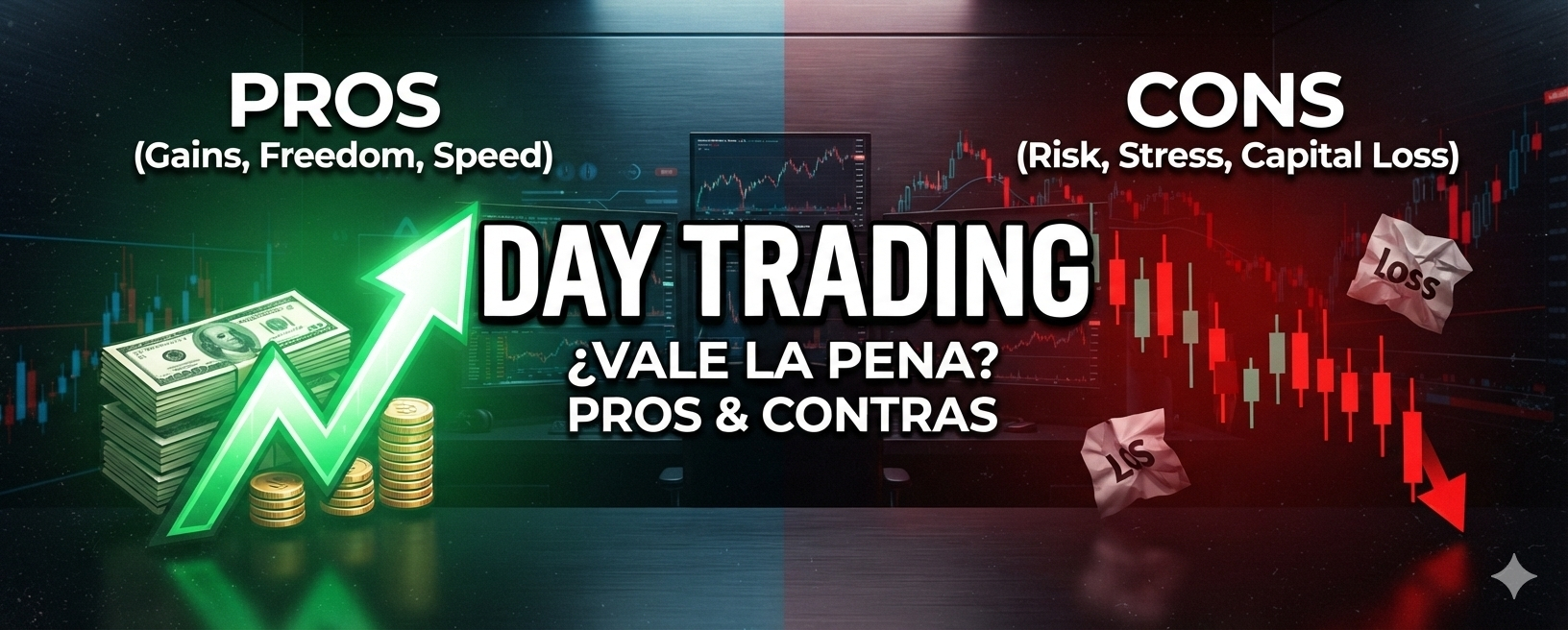

Day trading means opening and closing trades (buying and selling) within the same day, without holding positions from one day to the next. In crypto, this is especially popular because the market operates 24/7, with no closing hours like traditional exchanges.
Pros
1. Open market 24/7
There is no opening/closing schedule like in stock exchanges. You can trade at any time, which offers flexibility but also requires discipline to avoid trading without rest.
2. High volatility = more opportunities
Cryptocurrencies move much more in percentage terms per day than traditional assets (stocks, bonds). A 5–10% move in a day is common in crypto, rare in stocks. This means more opportunities to profit... and to lose.
3. High liquidity in the main coins
Bitcoin, Ethereum, and other large coins have a lot of volume, which allows you to enter and exit positions quickly without moving the price much (low *slippage*, meaning the difference between the expected price and the actual execution price).
4. You don’t rely on long-term trends
You can make money whether the market goes up or down in the short term, using strategies like *shorting* (betting that the price will fall), unlike only "buying and waiting."
5. Fast results and learning
When you close positions on the same day, you see results (gains or losses) almost immediately, which speeds up learning about what works and what doesn’t—even though that learning can be costly if risk isn’t controlled.
Cons
1. Very high risk of losses
The same volatility that creates opportunities also creates fast losses. It’s easy to lose a large part of your capital in just a few trades if risk management isn’t used (for example, *stop-loss*: an automatic order that sells if the price falls to a certain level).
2. Requires time and constant attention
It’s not passive. It requires monitoring charts, news, and orders for hours, which is exhausting and can lead to impulsive decisions from fatigue or stress.
3. Accumulated fees and *spread*
Each trade has a commission (fee) and a *spread* (the difference between the buy and sell price). Making many trades per day means these costs add up and can eat up a good portion of the profits.
4. More complicated taxes
In most countries, each closed trade is a taxable event that must be reported. Many trades per day = a lot of bookkeeping and potentially more taxes than with a long-term strategy.
5. Psychological bias and overtrading (*overtrading*)
The temptation to "recover" a loss by opening another trade right away is strong and usually leads to more losses. Day trading requires emotional discipline that most beginners don’t have yet.
6. Manipulation and low liquidity in small coins**
Outside the main cryptocurrencies, many tokens have low volume and are susceptible to manipulation (for example, *pump and dump* schemes: artificially inflating the price and then selling), making day trading even riskier.
7. Technical and platform risks**
Exchange crashes (the trading platform), internet connection issues, or hacks can prevent you from closing a position exactly when you need to the most.
In summary
|Good for | People with available time, risk tolerance, emotional discipline, and technical knowledge of chart analysis |
|Bad for | Beginners without experience, people with little time, or those who can’t afford to lose the invested capital |