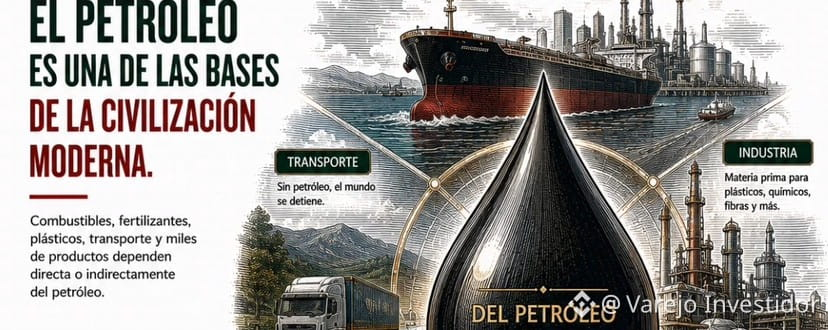

Oil is not just a fuel. It is part of an extensive economic chain that connects transportation, industry, agriculture, energy, and consumption.
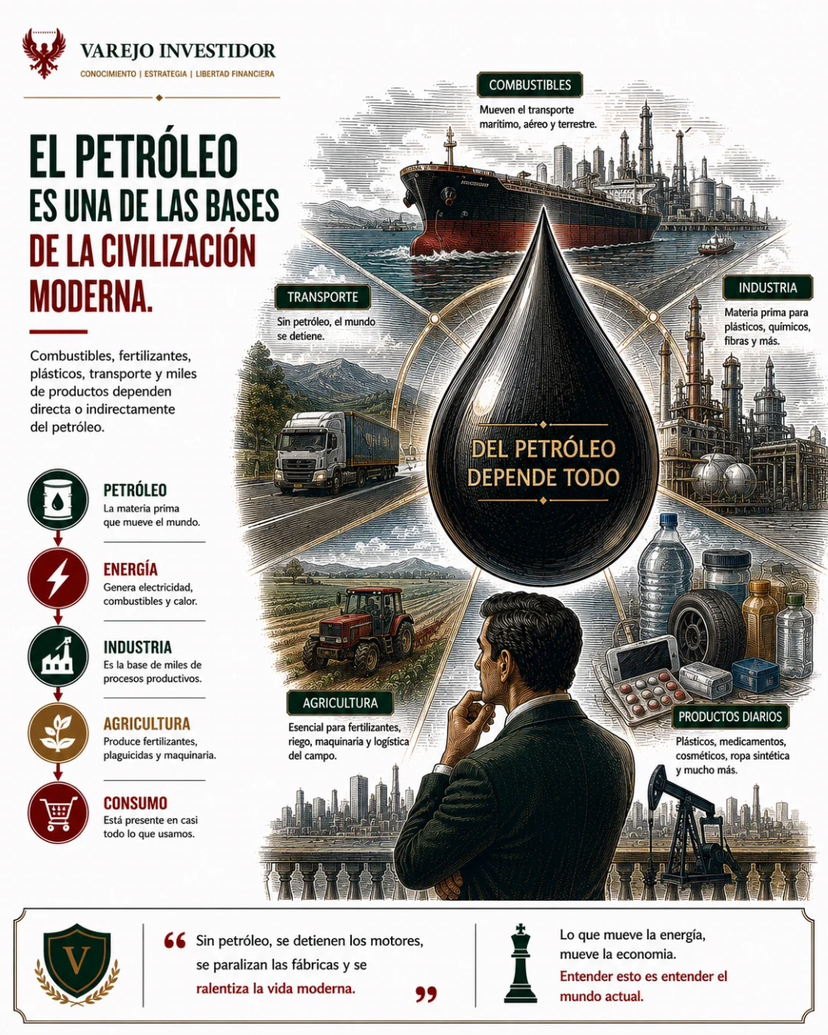
Its importance begins with the fuels used by sea, air, and land transport. But its role goes far beyond that. The petrochemical industry uses petroleum derivatives as raw materials to produce plastics, chemical products, synthetic fibers, medicines, and numerous goods used in everyday life.
Agriculture also depends indirectly on this chain. Agricultural machinery, transportation, logistics, and certain inputs are linked to the energy system and to petroleum derivatives.
That’s why a significant change in the supply or price of crude oil can be transmitted to different sectors. The mechanism can be summarized as follows:
Oil → energy and fuels → transport and industry → costs → prices → economy.
This effect also explains why oil has an important relationship with inflation. When energy and logistics costs rise, some companies may face higher production and transportation costs, while certain goods can become more expensive.
For markets, oil is also a relevant variable for analyzing economic growth, inflation, business margins, and monetary policy.
However, the modern economy does not depend exclusively on oil. The energy transition, electrification, and the development of new technologies are gradually changing the composition of the energy system.
The key issue for investors is to understand how energy connects different parts of the economy.
Because when the cost of energy changes, transportation, production, and consumption costs can also change.
#energy #oil #politica #español