

#energy
energy
508,249 views
2,784 Discussing
Hot
Latest

·
--
Verified
#earningsseason
🚨 Eni More Than Doubles Quarterly Profit and Expands Shareholder Payouts
Italian energy giant Eni delivered a powerful third-quarter report, with adjusted net profit more than doubling year over year to €2.8 billion, beating analysts’ expectations of €2.5 billion.
The company announced a €1.3 billion special dividend and increased its share buyback programme to €3.8 billion. It also raised its 2026 underlying operating cash flow forecast from €15 billion to €16.5 billion, signaling stronger confidence in its financial outlook.
Hydrocarbon production increased 7% year over year to 1.83 million barrels of oil equivalent per day. Stronger refining performance and higher energy prices helped support the results.
Investors responded positively, with Eni shares rising approximately 4% on Friday. The report highlights how elevated energy prices can boost profits and shareholder returns, although geopolitical risks and oil-price volatility remain major factors for the sector.
#energy #oil #stockmarket
#earningsseason
🚨 Eni More Than Doubles Quarterly Profit and Expands Shareholder Payouts
Italian energy giant Eni delivered a powerful third-quarter report, with adjusted net profit more than doubling year over year to €2.8 billion, beating analysts’ expectations of €2.5 billion.
The company announced a €1.3 billion special dividend and increased its share buyback programme to €3.8 billion. It also raised its 2026 underlying operating cash flow forecast from €15 billion to €16.5 billion, signaling stronger confidence in its financial outlook.
Hydrocarbon production increased 7% year over year to 1.83 million barrels of oil equivalent per day. Stronger refining performance and higher energy prices helped support the results.
Investors responded positively, with Eni shares rising approximately 4% on Friday. The report highlights how elevated energy prices can boost profits and shareholder returns, although geopolitical risks and oil-price volatility remain major factors for the sector.
#energy #oil #stockmarket
🚨 Eni More Than Doubles Quarterly Profit and Expands Shareholder Payouts
Italian energy giant Eni delivered a powerful third-quarter report, with adjusted net profit more than doubling year over year to €2.8 billion, beating analysts’ expectations of €2.5 billion.
The company announced a €1.3 billion special dividend and increased its share buyback programme to €3.8 billion. It also raised its 2026 underlying operating cash flow forecast from €15 billion to €16.5 billion, signaling stronger confidence in its financial outlook.
Hydrocarbon production increased 7% year over year to 1.83 million barrels of oil equivalent per day. Stronger refining performance and higher energy prices helped support the results.
Investors responded positively, with Eni shares rising approximately 4% on Friday. The report highlights how elevated energy prices can boost profits and shareholder returns, although geopolitical risks and oil-price volatility remain major factors for the sector.
#energy #oil #stockmarket

Timothy Bunson MTmu:
Yes, the is Elon
1
1
3.4k

·
--
📰 KazMunayGas plans to export 1.7 million tons of oil via BTC in 2026
Kazakhstan's national oil and gas company KazMunayGas (KMG) plans to export 1.7 million tons of oil through the Baku-Tbilisi-Ceyhan (BTC) pipeline in 2026, KMG Management Board Chairman Askhat Khasenov said.
Source : Report.az
Time : 2026-10-23 12:03:21
Credit : aydan aleskerli
#energy
$BTC
Share your opinion in the comment section below
📰 KazMunayGas plans to export 1.7 million tons of oil via BTC in 2026
Kazakhstan's national oil and gas company KazMunayGas (KMG) plans to export 1.7 million tons of oil through the Baku-Tbilisi-Ceyhan (BTC) pipeline in 2026, KMG Management Board Chairman Askhat Khasenov said.
Source : Report.az
Time : 2026-10-23 12:03:21
Credit : aydan aleskerli
#energy
$BTC
Share your opinion in the comment section below
Kazakhstan's national oil and gas company KazMunayGas (KMG) plans to export 1.7 million tons of oil through the Baku-Tbilisi-Ceyhan (BTC) pipeline in 2026, KMG Management Board Chairman Askhat Khasenov said.
Source : Report.az
Time : 2026-10-23 12:03:21
Credit : aydan aleskerli
#energy
$BTC
Share your opinion in the comment section below
73

Verified
#earningsseason
⚡ SLB Beats Earnings Forecasts as Energy Markets Face Rising Oil Prices
SLB ($SLB), formerly known as Schlumberger, reported third-quarter 2026 results on October 23, posting adjusted earnings per share of $0.64, above analysts’ expectations of $0.61.
Revenue reached $9.45 billion, increasing 6% year over year. The company also generated $828 million in free cash flow, highlighting its ability to generate cash amid a volatile energy market.
The results arrive as oil prices climb sharply, increasing attention on energy producers and the companies that provide drilling, equipment and oilfield services. However, higher crude prices do not automatically guarantee stronger profits for service providers, since spending decisions by energy companies remain crucial.
Investors will be watching international activity, customer spending and management’s outlook to determine whether SLB can maintain its momentum into the next quarter.
#stockmarket #energy #oil
#earningsseason
⚡ SLB Beats Earnings Forecasts as Energy Markets Face Rising Oil Prices
SLB ($SLB), formerly known as Schlumberger, reported third-quarter 2026 results on October 23, posting adjusted earnings per share of $0.64, above analysts’ expectations of $0.61.
Revenue reached $9.45 billion, increasing 6% year over year. The company also generated $828 million in free cash flow, highlighting its ability to generate cash amid a volatile energy market.
The results arrive as oil prices climb sharply, increasing attention on energy producers and the companies that provide drilling, equipment and oilfield services. However, higher crude prices do not automatically guarantee stronger profits for service providers, since spending decisions by energy companies remain crucial.
Investors will be watching international activity, customer spending and management’s outlook to determine whether SLB can maintain its momentum into the next quarter.
#stockmarket #energy #oil
⚡ SLB Beats Earnings Forecasts as Energy Markets Face Rising Oil Prices
SLB ($SLB), formerly known as Schlumberger, reported third-quarter 2026 results on October 23, posting adjusted earnings per share of $0.64, above analysts’ expectations of $0.61.
Revenue reached $9.45 billion, increasing 6% year over year. The company also generated $828 million in free cash flow, highlighting its ability to generate cash amid a volatile energy market.
The results arrive as oil prices climb sharply, increasing attention on energy producers and the companies that provide drilling, equipment and oilfield services. However, higher crude prices do not automatically guarantee stronger profits for service providers, since spending decisions by energy companies remain crucial.
Investors will be watching international activity, customer spending and management’s outlook to determine whether SLB can maintain its momentum into the next quarter.
#stockmarket #energy #oil

Felipe Brayner:
Excelente análise! ⚡
A SLB demonstrou uma resiliência operacional impressionante neste T3 de 2026. Bater o EPS esperado ($0,64 vs 0,61) e gerar **US 828 milhões em fluxo de caixa livre mostra que a eficiência operacional e a disciplina de capital estão a dar frutos, mesmo num cenário macroeconómico de forte volatilidade.SIGA ME 🇧🇷.
2
5
19.9k

Verified
🚨 BREAKING: RUSSIAN DIESEL IS HEADING BACK TO AMERICA.
A tanker carrying 40,000 metric tons of Russian diesel is reportedly heading to New York, with arrival expected on November 7.
If confirmed, it would mark the first US import of Russian petroleum products since the 2022 ban.
The reported Trump-Putin deal includes a US Treasury sanctions waiver through April 7, 2027, while Russia is expected to resume exports.
Trump has reportedly outlined shipments of 300,000 tons initially, followed by 500,000 tons and then 1 MILLION tons.
Why does this matter?
US diesel prices are reportedly averaging $6.31 per gallon, up 74% from $3.63 a year ago. Brent crude is above $115, while US crude has crossed $100.
With the November 3 midterm elections approaching, energy prices have become a major political pressure point.
The irony is striking: Washington banned Russian petroleum after the invasion of Ukraine, but soaring energy costs could now make Russian supplies part of the solution.
This is where geopolitics meets the energy market.
Will these shipments meaningfully lower US fuel prices, or is this only a temporary fix?
#Russia #Trump #OilPrices #Geopolitics #Energy
🚨 BREAKING: RUSSIAN DIESEL IS HEADING BACK TO AMERICA.
A tanker carrying 40,000 metric tons of Russian diesel is reportedly heading to New York, with arrival expected on November 7.
If confirmed, it would mark the first US import of Russian petroleum products since the 2022 ban.
The reported Trump-Putin deal includes a US Treasury sanctions waiver through April 7, 2027, while Russia is expected to resume exports.
Trump has reportedly outlined shipments of 300,000 tons initially, followed by 500,000 tons and then 1 MILLION tons.
Why does this matter?
US diesel prices are reportedly averaging $6.31 per gallon, up 74% from $3.63 a year ago. Brent crude is above $115, while US crude has crossed $100.
With the November 3 midterm elections approaching, energy prices have become a major political pressure point.
The irony is striking: Washington banned Russian petroleum after the invasion of Ukraine, but soaring energy costs could now make Russian supplies part of the solution.
This is where geopolitics meets the energy market.
Will these shipments meaningfully lower US fuel prices, or is this only a temporary fix?
#Russia #Trump #OilPrices #Geopolitics #Energy
A tanker carrying 40,000 metric tons of Russian diesel is reportedly heading to New York, with arrival expected on November 7.
If confirmed, it would mark the first US import of Russian petroleum products since the 2022 ban.
The reported Trump-Putin deal includes a US Treasury sanctions waiver through April 7, 2027, while Russia is expected to resume exports.
Trump has reportedly outlined shipments of 300,000 tons initially, followed by 500,000 tons and then 1 MILLION tons.
Why does this matter?
US diesel prices are reportedly averaging $6.31 per gallon, up 74% from $3.63 a year ago. Brent crude is above $115, while US crude has crossed $100.
With the November 3 midterm elections approaching, energy prices have become a major political pressure point.
The irony is striking: Washington banned Russian petroleum after the invasion of Ukraine, but soaring energy costs could now make Russian supplies part of the solution.
This is where geopolitics meets the energy market.
Will these shipments meaningfully lower US fuel prices, or is this only a temporary fix?
#Russia #Trump #OilPrices #Geopolitics #Energy

User-69ec038f:
还不一定到达大鹅随时变卦,拖到你中期选不上一脚踢开你个黄毛,阴你一把大的😀
1
1
667
·
--
Verified
#earningsseason
🚨 SLB Beats Earnings Estimates as Oilfield Demand Signals Stronger 2027
$SLBB SLB delivered stronger-than-expected Q3 2026 results, reporting adjusted earnings of $0.64 per share and revenue of $9.45 billion, above Wall Street estimates.
Revenue increased 6% year over year, supported by strong North American activity and a gradual recovery in Middle East operations. North American revenue surged 24% year over year to $2.40 billion, while Middle East and Asia revenue rose 9% sequentially.
Management also signaled a stronger outlook for 2027 as energy companies resume projects and increase investment in production capacity. SLB expects fourth-quarter revenue of approximately $10 billion, representing sequential growth of 5%–7%.
Shares jumped approximately 7% following the report, as investors welcomed the earnings beat and improving demand outlook.
The takeaway: energy infrastructure is benefiting from renewed investment, while the recovery in international markets could become a major growth driver next year.
#energy #stocks
#earningsseason
🚨 SLB Beats Earnings Estimates as Oilfield Demand Signals Stronger 2027
$SLBB SLB delivered stronger-than-expected Q3 2026 results, reporting adjusted earnings of $0.64 per share and revenue of $9.45 billion, above Wall Street estimates.
Revenue increased 6% year over year, supported by strong North American activity and a gradual recovery in Middle East operations. North American revenue surged 24% year over year to $2.40 billion, while Middle East and Asia revenue rose 9% sequentially.
Management also signaled a stronger outlook for 2027 as energy companies resume projects and increase investment in production capacity. SLB expects fourth-quarter revenue of approximately $10 billion, representing sequential growth of 5%–7%.
Shares jumped approximately 7% following the report, as investors welcomed the earnings beat and improving demand outlook.
The takeaway: energy infrastructure is benefiting from renewed investment, while the recovery in international markets could become a major growth driver next year.
#energy #stocks
🚨 SLB Beats Earnings Estimates as Oilfield Demand Signals Stronger 2027
$SLBB SLB delivered stronger-than-expected Q3 2026 results, reporting adjusted earnings of $0.64 per share and revenue of $9.45 billion, above Wall Street estimates.
Revenue increased 6% year over year, supported by strong North American activity and a gradual recovery in Middle East operations. North American revenue surged 24% year over year to $2.40 billion, while Middle East and Asia revenue rose 9% sequentially.
Management also signaled a stronger outlook for 2027 as energy companies resume projects and increase investment in production capacity. SLB expects fourth-quarter revenue of approximately $10 billion, representing sequential growth of 5%–7%.
Shares jumped approximately 7% following the report, as investors welcomed the earnings beat and improving demand outlook.
The takeaway: energy infrastructure is benefiting from renewed investment, while the recovery in international markets could become a major growth driver next year.
#energy #stocks

The _Trading _Geek:
🔥 Nice Post! 📈 Join my “CHAT ROOM” 📌 for FREE Trading Insights, LONG & SHORT Setups, and Market Updates 🎯🚀 Find it pinned at the top of my "PROFILE" 👑 Tap “JOIN NOW” and stay connected with the community for upcoming market opportunities! ⚡Hope to See you There😊👇
Click Here To Join "CHAT ROOM"
1
1
2
5.1k


Verified
#TrumpInvokesDefenseProductionActToExpandOilCapacity
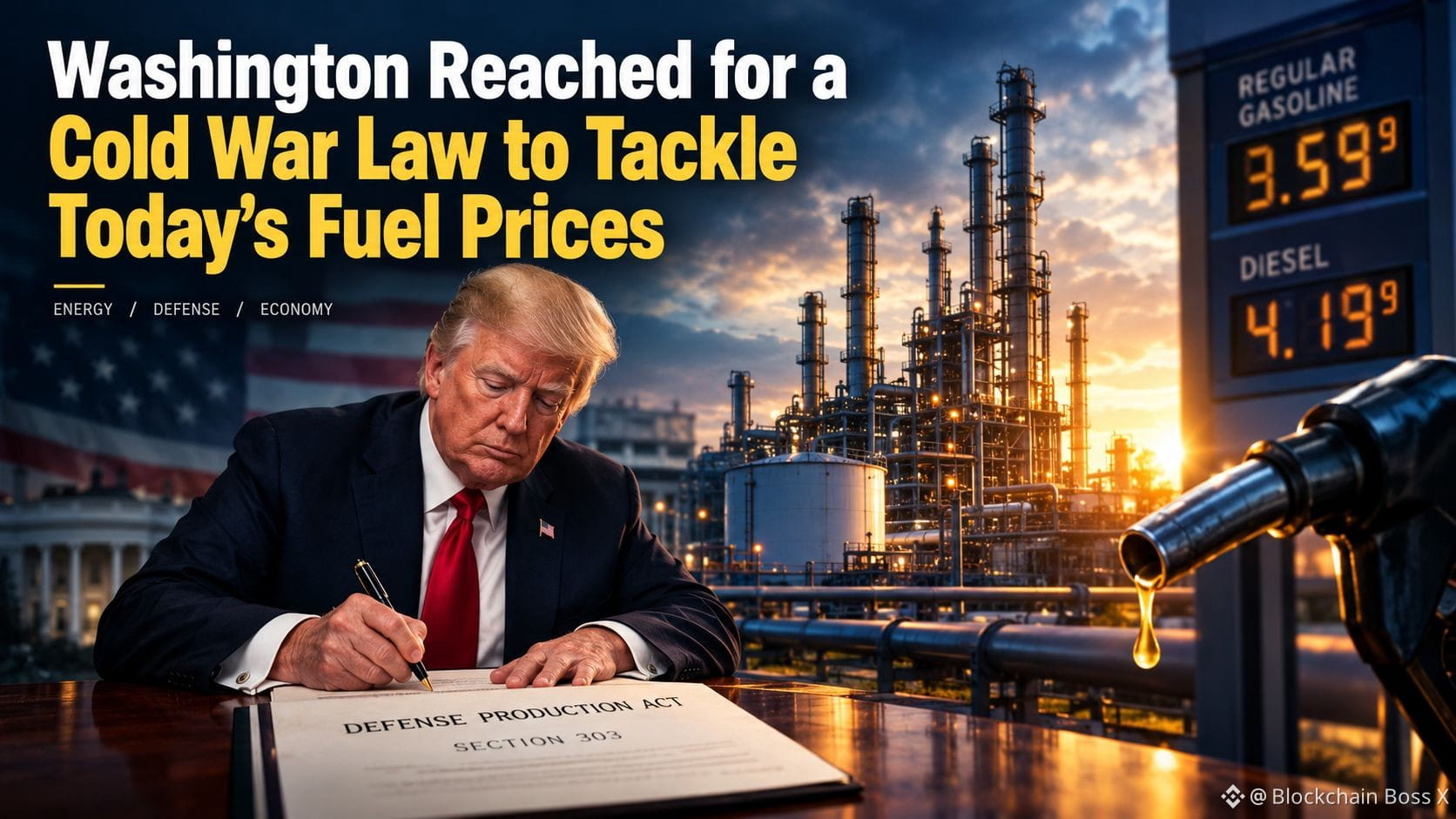
Washington Reached for a Cold War Law to Tackle Today's Fuel Prices
Diesel and gasoline prices have stayed elevated for months. This week, the White House turned to a Korean War-era statute to address them.
Here's what happened: on October 22, President Trump signed a memorandum invoking Section 303 of the Defense Production Act, declaring domestic petroleum production, refining, and logistics essential to national defense. It directs the War Department to use federal purchases, commitments, and financial support for oil exploration, pipelines, storage, and marine terminals. Trump also said $150 million would be released to expand refining capacity. The memo doesn't name projects or amounts, though Vice President Vance recently said the law would back an expansion at Delek's Tyler, Texas, refinery. It builds on an April determination handled through the Energy Department and $1 billion in DPA energy funding approved last year. Fuel prices have climbed since the US and Israel struck Iran at the end of February, and the move lands twelve days before the November 3 midterms.
Why does this matter? Analysts caution that $150 million is small relative to the cost of refinery projects, and that capacity additions take months or longer, so near-term pump prices are more likely to track geopolitics than this order. For markets, the effects would show up in refining margins over time rather than in crude prices today. Persistently high energy costs also feed inflation, which links back to Fed decisions that matter to risk assets.
Is a long-term capacity push the right tool for a short-term price problem? 🤔
#oil #energy #Macro
$IRYS $BTR $AKE
{future}(AKEUSDT)
{future}(BTRUSDT)
{future}(IRYSUSDT)
#TrumpInvokesDefenseProductionActToExpandOilCapacity
Washington Reached for a Cold War Law to Tackle Today's Fuel Prices
Diesel and gasoline prices have stayed elevated for months. This week, the White House turned to a Korean War-era statute to address them.
Here's what happened: on October 22, President Trump signed a memorandum invoking Section 303 of the Defense Production Act, declaring domestic petroleum production, refining, and logistics essential to national defense. It directs the War Department to use federal purchases, commitments, and financial support for oil exploration, pipelines, storage, and marine terminals. Trump also said $150 million would be released to expand refining capacity. The memo doesn't name projects or amounts, though Vice President Vance recently said the law would back an expansion at Delek's Tyler, Texas, refinery. It builds on an April determination handled through the Energy Department and $1 billion in DPA energy funding approved last year. Fuel prices have climbed since the US and Israel struck Iran at the end of February, and the move lands twelve days before the November 3 midterms.
Why does this matter? Analysts caution that $150 million is small relative to the cost of refinery projects, and that capacity additions take months or longer, so near-term pump prices are more likely to track geopolitics than this order. For markets, the effects would show up in refining margins over time rather than in crude prices today. Persistently high energy costs also feed inflation, which links back to Fed decisions that matter to risk assets.
Is a long-term capacity push the right tool for a short-term price problem? 🤔
#oil #energy #Macro
$IRYS $BTR $AKE
Washington Reached for a Cold War Law to Tackle Today's Fuel Prices
Diesel and gasoline prices have stayed elevated for months. This week, the White House turned to a Korean War-era statute to address them.
Here's what happened: on October 22, President Trump signed a memorandum invoking Section 303 of the Defense Production Act, declaring domestic petroleum production, refining, and logistics essential to national defense. It directs the War Department to use federal purchases, commitments, and financial support for oil exploration, pipelines, storage, and marine terminals. Trump also said $150 million would be released to expand refining capacity. The memo doesn't name projects or amounts, though Vice President Vance recently said the law would back an expansion at Delek's Tyler, Texas, refinery. It builds on an April determination handled through the Energy Department and $1 billion in DPA energy funding approved last year. Fuel prices have climbed since the US and Israel struck Iran at the end of February, and the move lands twelve days before the November 3 midterms.
Why does this matter? Analysts caution that $150 million is small relative to the cost of refinery projects, and that capacity additions take months or longer, so near-term pump prices are more likely to track geopolitics than this order. For markets, the effects would show up in refining margins over time rather than in crude prices today. Persistently high energy costs also feed inflation, which links back to Fed decisions that matter to risk assets.
Is a long-term capacity push the right tool for a short-term price problem? 🤔
#oil #energy #Macro
$IRYS $BTR $AKE
905
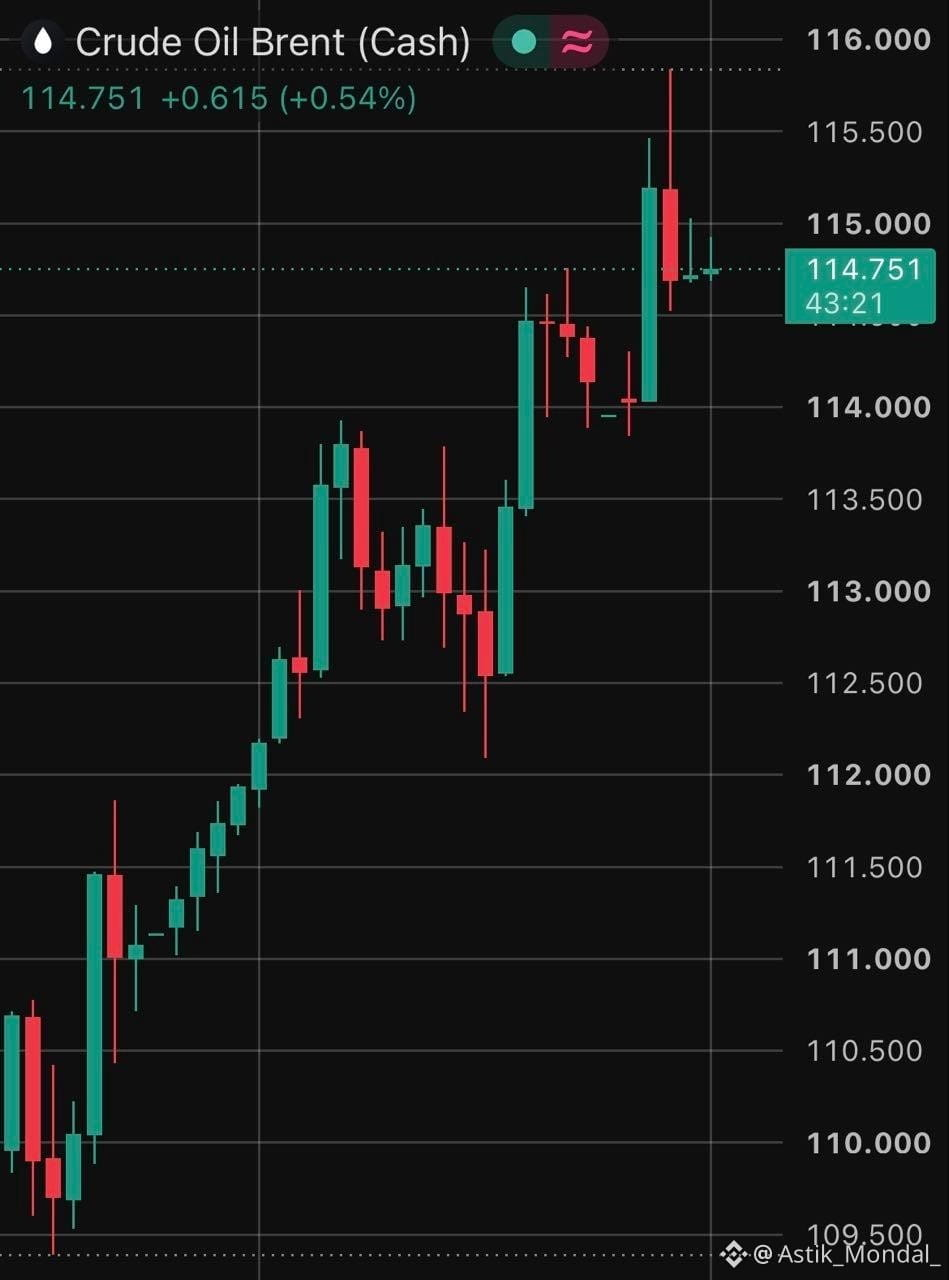
🚨BREAKING: Brent crude pushes above $115, extending its climb to the highest level since May as Gulf escalation fears intensify.
Brent settled Thursday at $113.17, up 4% and its highest close since May 4. Overnight it pushed higher, with the chart showing a peak near $115.84.
The trigger is a widening Houthi campaign against Saudi Arabia. The group claimed strikes on Aramco's Yanbu site, the Shaybah oil field and airports in Riyadh and Abha. Saudi authorities haven't confirmed those claims, and an Argus source says the Yanbu and Shaybah facilities are undamaged. Reuters reported at least one person killed and eight wounded at Dammam airport and two killed in a drone attack on a Saudi oil field.
Washington is taking it seriously. The State Department ordered non-emergency US staff and their families out of Saudi Arabia, while saying no Gulf-wide departure has been ordered. Aramco reportedly told staff to evacuate its Dhahran headquarters and work remotely. The New York Times also reported US and Israeli plans for renewed strikes on Iran after the November 3 midterms.
Shipping is under pressure too. Kpler counts at least 18 attacks on vessels in two weeks, and LSEG warns Iran is targeting tankers beyond Hormuz and into the Gulf of Oman, threatening loadings and ship-to-ship transfers.
Traders are pricing in a risk premium on both fronts, the fields that pump the oil and the sea lanes that carry it.
#Oil #Brent #SaudiArabia #Houthis #Energy $CL $BZ
🚨BREAKING: Brent crude pushes above $115, extending its climb to the highest level since May as Gulf escalation fears intensify.
Brent settled Thursday at $113.17, up 4% and its highest close since May 4. Overnight it pushed higher, with the chart showing a peak near $115.84.
The trigger is a widening Houthi campaign against Saudi Arabia. The group claimed strikes on Aramco's Yanbu site, the Shaybah oil field and airports in Riyadh and Abha. Saudi authorities haven't confirmed those claims, and an Argus source says the Yanbu and Shaybah facilities are undamaged. Reuters reported at least one person killed and eight wounded at Dammam airport and two killed in a drone attack on a Saudi oil field.
Washington is taking it seriously. The State Department ordered non-emergency US staff and their families out of Saudi Arabia, while saying no Gulf-wide departure has been ordered. Aramco reportedly told staff to evacuate its Dhahran headquarters and work remotely. The New York Times also reported US and Israeli plans for renewed strikes on Iran after the November 3 midterms.
Shipping is under pressure too. Kpler counts at least 18 attacks on vessels in two weeks, and LSEG warns Iran is targeting tankers beyond Hormuz and into the Gulf of Oman, threatening loadings and ship-to-ship transfers.
Traders are pricing in a risk premium on both fronts, the fields that pump the oil and the sea lanes that carry it.
#Oil #Brent #SaudiArabia #Houthis #Energy $CL $BZ
Brent settled Thursday at $113.17, up 4% and its highest close since May 4. Overnight it pushed higher, with the chart showing a peak near $115.84.
The trigger is a widening Houthi campaign against Saudi Arabia. The group claimed strikes on Aramco's Yanbu site, the Shaybah oil field and airports in Riyadh and Abha. Saudi authorities haven't confirmed those claims, and an Argus source says the Yanbu and Shaybah facilities are undamaged. Reuters reported at least one person killed and eight wounded at Dammam airport and two killed in a drone attack on a Saudi oil field.
Washington is taking it seriously. The State Department ordered non-emergency US staff and their families out of Saudi Arabia, while saying no Gulf-wide departure has been ordered. Aramco reportedly told staff to evacuate its Dhahran headquarters and work remotely. The New York Times also reported US and Israeli plans for renewed strikes on Iran after the November 3 midterms.
Shipping is under pressure too. Kpler counts at least 18 attacks on vessels in two weeks, and LSEG warns Iran is targeting tankers beyond Hormuz and into the Gulf of Oman, threatening loadings and ship-to-ship transfers.
Traders are pricing in a risk premium on both fronts, the fields that pump the oil and the sea lanes that carry it.
#Oil #Brent #SaudiArabia #Houthis #Energy $CL $BZ
高胜率财来:
涨得好
1
1
499

·
--
Kpler had about 14 million barrels a day going through Hormuz in the week to 18 October, Gulf of Oman transfers included, which is roughly 82% of prewar. The ship count looks a lot worse, with transits down around 70%... and I think both are right, because one counts barrels and the other counts hulls. Fewer tankers are sailing and they're sailing fuller, and in September about 40% of non-Iranian Gulf crude went around the strait against 17% before the war. Add the bypass routes back and Kpler has combined Gulf flows above prewar.
That's also why the premium has stayed in $BZ. Brent is the seaborne benchmark priced off Gulf flow and WTI is landlocked, so on Wednesday Dec Brent closed 108.82, up 0.03%, while Dec $CL fell 0.68% and the spread widened to $11.67.
Iran's Guards claimed on Thursday they hit four tankers doing ship-to-ship transfers in the northern Gulf. I think those transfers are part of what's keeping barrels near prewar, so I'm watching for one confirmed hit on a loaded tanker mid-transfer.
#Oil #Brent #Energy #Macro
Kpler had about 14 million barrels a day going through Hormuz in the week to 18 October, Gulf of Oman transfers included, which is roughly 82% of prewar. The ship count looks a lot worse, with transits down around 70%... and I think both are right, because one counts barrels and the other counts hulls. Fewer tankers are sailing and they're sailing fuller, and in September about 40% of non-Iranian Gulf crude went around the strait against 17% before the war. Add the bypass routes back and Kpler has combined Gulf flows above prewar.
That's also why the premium has stayed in $BZ . Brent is the seaborne benchmark priced off Gulf flow and WTI is landlocked, so on Wednesday Dec Brent closed 108.82, up 0.03%, while Dec $CL fell 0.68% and the spread widened to $11.67.
Iran's Guards claimed on Thursday they hit four tankers doing ship-to-ship transfers in the northern Gulf. I think those transfers are part of what's keeping barrels near prewar, so I'm watching for one confirmed hit on a loaded tanker mid-transfer.
#Oil #Brent #Energy #Macro
That's also why the premium has stayed in $BZ . Brent is the seaborne benchmark priced off Gulf flow and WTI is landlocked, so on Wednesday Dec Brent closed 108.82, up 0.03%, while Dec $CL fell 0.68% and the spread widened to $11.67.
Iran's Guards claimed on Thursday they hit four tankers doing ship-to-ship transfers in the northern Gulf. I think those transfers are part of what's keeping barrels near prewar, so I'm watching for one confirmed hit on a loaded tanker mid-transfer.
#Oil #Brent #Energy #Macro
481

·
--
🚨 OIL PRICES CLIMB AS U.S.–IRAN DIPLOMACY STALLS
Brent crude rose to $110.85 per barrel, while U.S.
WTI reached $99.95, according to Reuters.
Uncertainty over negotiations, regional security and falling U.S.
oil inventories is keeping energy markets on edge.
$BZ
{future}(BZUSDT)
$CL
{future}(CLUSDT)
#oil #energy #GlobalMarkets
🚨 OIL PRICES CLIMB AS U.S.–IRAN DIPLOMACY STALLS
Brent crude rose to $110.85 per barrel, while U.S.
WTI reached $99.95, according to Reuters.
Uncertainty over negotiations, regional security and falling U.S.
oil inventories is keeping energy markets on edge.
$BZ
$CL
#oil #energy #GlobalMarkets
Brent crude rose to $110.85 per barrel, while U.S.
WTI reached $99.95, according to Reuters.
Uncertainty over negotiations, regional security and falling U.S.
oil inventories is keeping energy markets on edge.
$BZ
$CL
#oil #energy #GlobalMarkets
420

·
--
Chevron price target raised to $252! Traditional institutions are bullish on energy, and mining needs energy too. Market sentiment is bullish across the board! #能源市场 #金融情绪 $BTC
Chevron target raised to $252! Big energy getting love, crypto mining needs energy too. Bullish vibes across the board! #Energy #MarketSentiment $BTC
Chevron price target raised to $252! Traditional institutions are bullish on energy, and mining needs energy too. Market sentiment is bullish across the board! #能源市场 #金融情绪 $BTC
Chevron target raised to $252! Big energy getting love, crypto mining needs energy too. Bullish vibes across the board! #Energy #MarketSentiment $BTC
Chevron target raised to $252! Big energy getting love, crypto mining needs energy too. Bullish vibes across the board! #Energy #MarketSentiment $BTC
39
·
--
Qatar gives Lebanon a huge gift! Two power plants + a 20-year natural gas supply deal—this energy aid is a real game changer. With energy supply stabilized, won't mining conditions improve? $BTC $ETH miners, are you seeing an opportunity? #Energy #Crypto
Qatar's power move for Lebanon: 2 new power plants + 20-year LNG supply deal. Stable energy = better mining conditions right? $BTC $ETH miners, opportunity knocking? #Energy #Crypto
Qatar gives Lebanon a huge gift! Two power plants + a 20-year natural gas supply deal—this energy aid is a real game changer. With energy supply stabilized, won't mining conditions improve? $BTC $ETH miners, are you seeing an opportunity? #Energy #Crypto
Qatar's power move for Lebanon: 2 new power plants + 20-year LNG supply deal. Stable energy = better mining conditions right? $BTC $ETH miners, opportunity knocking? #Energy #Crypto
Qatar's power move for Lebanon: 2 new power plants + 20-year LNG supply deal. Stable energy = better mining conditions right? $BTC $ETH miners, opportunity knocking? #Energy #Crypto
223
·
--
Greenpeace activists climbed onto Australian gas giant Woodside’s platform, bringing the project to a halt! Environmentalists vs. energy giants—what a spectacle. Environmentalists say the project threatens marine ecosystems and the climate, while the company complains that the protests are causing “high costs.” The clash between environmental protection and development—whose side are you on? #环保 #能源抗议 $ADA
Greenpeace activists stormed Woodside's gas platform in Australia, halting project operations! Eco-warriors vs energy giants - the drama unfolds. Protesters claim the project threatens marine ecosystems and climate change, while company complains of "high costs." Development vs environment - where do you stand? #EcoActivism #Energy $ADA
Greenpeace activists climbed onto Australian gas giant Woodside’s platform, bringing the project to a halt! Environmentalists vs. energy giants—what a spectacle. Environmentalists say the project threatens marine ecosystems and the climate, while the company complains that the protests are causing “high costs.” The clash between environmental protection and development—whose side are you on? #环保 #能源抗议 $ADA
Greenpeace activists stormed Woodside's gas platform in Australia, halting project operations! Eco-warriors vs energy giants - the drama unfolds. Protesters claim the project threatens marine ecosystems and climate change, while company complains of "high costs." Development vs environment - where do you stand? #EcoActivism #Energy $ADA
Greenpeace activists stormed Woodside's gas platform in Australia, halting project operations! Eco-warriors vs energy giants - the drama unfolds. Protesters claim the project threatens marine ecosystems and climate change, while company complains of "high costs." Development vs environment - where do you stand? #EcoActivism #Energy $ADA
133
·
--
Chinese version:
Natural gas surges 3%! BTC miners are trembling—are electricity bills about to skyrocket again? Energy prices directly affect mining costs. Watch out for potential selling pressure! #crypto #energy $BTC
English version:
Natural gas surges 3%! BTC miners sweating, electricity bills about to skyrocket? Energy prices directly impact mining costs, watch out for potential selling pressure! #crypto #energy $BTC
Chinese version:
Natural gas surges 3%! BTC miners are trembling—are electricity bills about to skyrocket again? Energy prices directly affect mining costs. Watch out for potential selling pressure! #crypto #energy $BTC
English version:
Natural gas surges 3%! BTC miners sweating, electricity bills about to skyrocket? Energy prices directly impact mining costs, watch out for potential selling pressure! #crypto #energy $BTC
Natural gas surges 3%! BTC miners are trembling—are electricity bills about to skyrocket again? Energy prices directly affect mining costs. Watch out for potential selling pressure! #crypto #energy $BTC
English version:
Natural gas surges 3%! BTC miners sweating, electricity bills about to skyrocket? Energy prices directly impact mining costs, watch out for potential selling pressure! #crypto #energy $BTC
778
·
--
📰 Oil jumps over $106: here's two reasons behind the rise
Oil prices jumped around 2% on Monday as geopolitical tensions continued to keep pressure on global energy markets. Brent crude futures rose roughly 2% to $106.73 at the time of writing, while West Texas Intermediate (WTI) crude futures climbed close to 2% to $93.72. The gains came despite hopes of de-escalation between the United States and Iran after President Donald Trump said last week that his administration had no plans to attack Iran before the November 3 midterm elections. However, fresh attacks in the region and continued disruption risks have kept traders focused on the possibility of further supply constraints. Developments in the Russia-Ukraine conflict have added another source of uncertainty for the oil market. Middle East escalation back on…
Source : Invezz
Time : 2026-10-12 14:04:36
Credit : gaurav thakur
#energy #commodities
$KEEP $ROSE $FLOW
📰 Oil jumps over $106: here's two reasons behind the rise
Oil prices jumped around 2% on Monday as geopolitical tensions continued to keep pressure on global energy markets. Brent crude futures rose roughly 2% to $106.73 at the time of writing, while West Texas Intermediate (WTI) crude futures climbed close to 2% to $93.72. The gains came despite hopes of de-escalation between the United States and Iran after President Donald Trump said last week that his administration had no plans to attack Iran before the November 3 midterm elections. However, fresh attacks in the region and continued disruption risks have kept traders focused on the possibility of further supply constraints. Developments in the Russia-Ukraine conflict have added another source of uncertainty for the oil market. Middle East escalation back on…
Source : Invezz
Time : 2026-10-12 14:04:36
Credit : gaurav thakur
#energy #commodities
$KEEP $ROSE $FLOW
Oil prices jumped around 2% on Monday as geopolitical tensions continued to keep pressure on global energy markets. Brent crude futures rose roughly 2% to $106.73 at the time of writing, while West Texas Intermediate (WTI) crude futures climbed close to 2% to $93.72. The gains came despite hopes of de-escalation between the United States and Iran after President Donald Trump said last week that his administration had no plans to attack Iran before the November 3 midterm elections. However, fresh attacks in the region and continued disruption risks have kept traders focused on the possibility of further supply constraints. Developments in the Russia-Ukraine conflict have added another source of uncertainty for the oil market. Middle East escalation back on…
Source : Invezz
Time : 2026-10-12 14:04:36
Credit : gaurav thakur
#energy #commodities
$KEEP $ROSE $FLOW
1
145

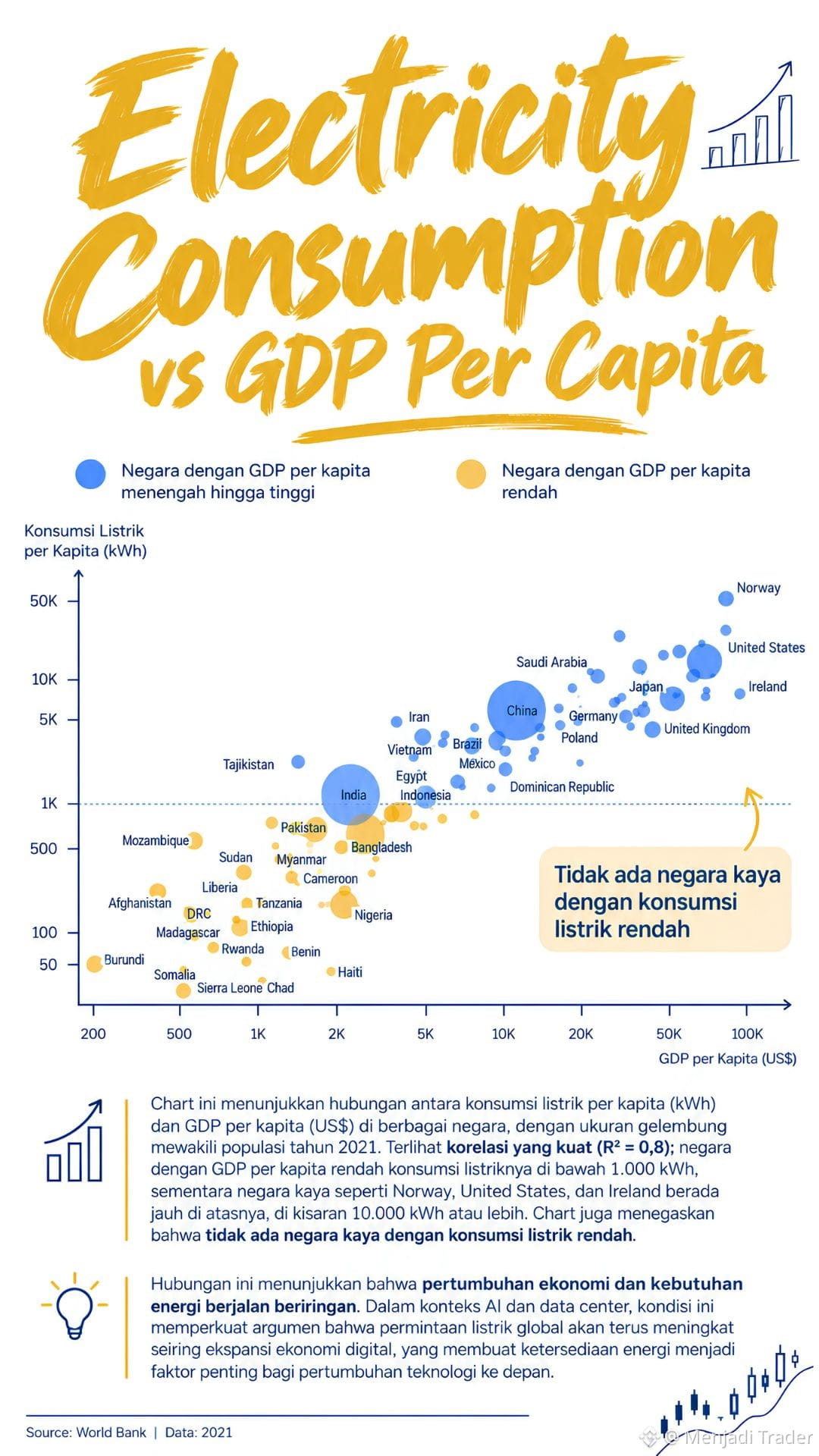
⚡ As the economy grows, electricity demand surges too!
Data shows a strong correlation (R² = 0.8) between GDP per capita and electricity consumption. As AI and data centers expand, energy will become one of the keys to digital economic growth.
The future of AI depends on energy.
#Electricity #GDP #AI #DataCenter #Energy
⚡ As the economy grows, electricity demand surges too!
Data shows a strong correlation (R² = 0.8) between GDP per capita and electricity consumption. As AI and data centers expand, energy will become one of the keys to digital economic growth.
The future of AI depends on energy.
#Electricity #GDP #AI #DataCenter #Energy
Data shows a strong correlation (R² = 0.8) between GDP per capita and electricity consumption. As AI and data centers expand, energy will become one of the keys to digital economic growth.
The future of AI depends on energy.
#Electricity #GDP #AI #DataCenter #Energy
239
·
--
Brent crude is up again! At $106.65 per barrel, it gained $1.93 in a day, nearly 2%. Could this latest surge in the oil market offer another glimmer of hope for a global economic recovery? #能源 #Commodities
$OIL $BTC
Oil prices are on the rise again! Brent crude hit $106.65 per barrel, up $1.93 or nearly 2% in a day. This oil surge could be another sign of global economic recovery? #Energy #Commodities
$OIL $BTC
Brent crude is up again! At $106.65 per barrel, it gained $1.93 in a day, nearly 2%. Could this latest surge in the oil market offer another glimmer of hope for a global economic recovery? #能源 #Commodities
$OIL $BTC
Oil prices are on the rise again! Brent crude hit $106.65 per barrel, up $1.93 or nearly 2% in a day. This oil surge could be another sign of global economic recovery? #Energy #Commodities
$OIL $BTC
$OIL $BTC
Oil prices are on the rise again! Brent crude hit $106.65 per barrel, up $1.93 or nearly 2% in a day. This oil surge could be another sign of global economic recovery? #Energy #Commodities
$OIL $BTC
291

#Talen #Energy rose after investors extended the reaction to Constellation’s nuclear agreement with Google into the broader power sector.
The move reflected renewed interest in dependable generation assets as AI and cloud demand raise expectations for electricity load growth. Peer names also advanced, reinforcing a sector-level rerating rather than a single-company event.
{stock_us}(TLN.US)
Attention now turns to whether Talen can convert the improved sentiment into stronger contracts, capacity revenues, and clearer margin progress.
$TLN.US #TLN #Nuclear #CoinVahini
#Talen #Energy rose after investors extended the reaction to Constellation’s nuclear agreement with Google into the broader power sector.
The move reflected renewed interest in dependable generation assets as AI and cloud demand raise expectations for electricity load growth. Peer names also advanced, reinforcing a sector-level rerating rather than a single-company event.
Attention now turns to whether Talen can convert the improved sentiment into stronger contracts, capacity revenues, and clearer margin progress.
$TLN.US #TLN #Nuclear #CoinVahini
The move reflected renewed interest in dependable generation assets as AI and cloud demand raise expectations for electricity load growth. Peer names also advanced, reinforcing a sector-level rerating rather than a single-company event.
Attention now turns to whether Talen can convert the improved sentiment into stronger contracts, capacity revenues, and clearer margin progress.
$TLN.US #TLN #Nuclear #CoinVahini
TLNUS+2.36%
21

Article
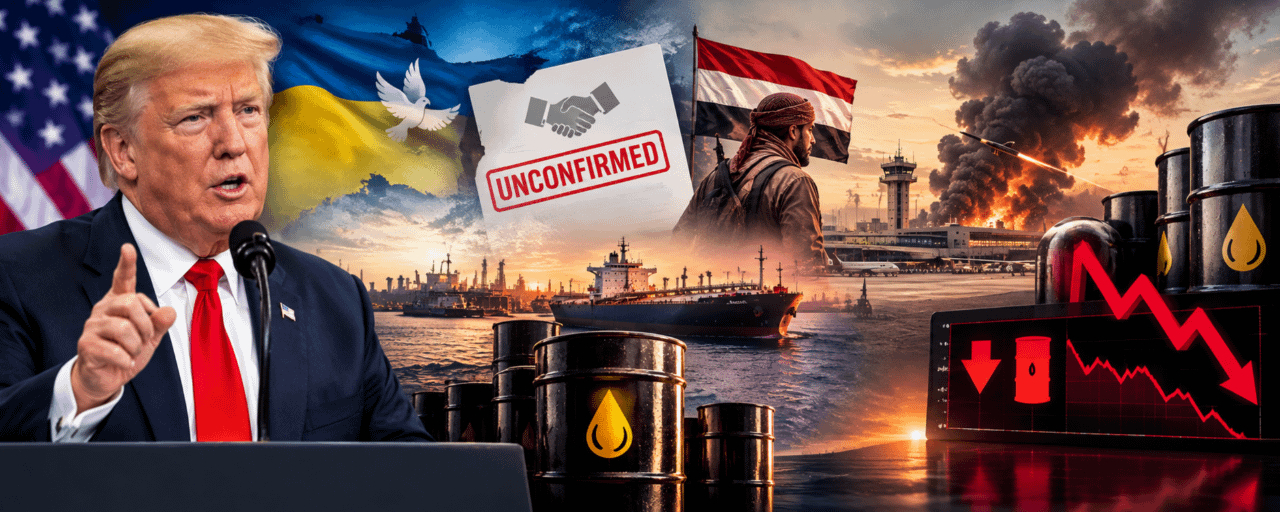
🚨 OIL PRICES DROP AS MIDDLE EAST TENSIONS EXPLODE — WHAT HAPPENS NEXT? 🔥📉 Crude oil is falling as Trump claims Russia and Ukraine have agreed to an energy ceasefire. However, neither side has fully confirmed the deal. �
Reuters +1
⚠️ Riyadh Airport and Strait of Hormuz remain major concerns. Further escalation could quickly change the market direction. �
AP News +1
🔥 Oil prices are caught between hopes for more supply and fears of disruption.
What do you think — will oil continue falling, or will rising tensions push prices higher again? 👇
#Oil #Energy #Trump #RussiaUkraine
🚨 OIL PRICES DROP AS MIDDLE EAST TENSIONS EXPLODE — WHAT HAPPENS NEXT? 🔥
📉 Crude oil is falling as Trump claims Russia and Ukraine have agreed to an energy ceasefire. However, neither side has fully confirmed the deal. �
Reuters +1
⚠️ Riyadh Airport and Strait of Hormuz remain major concerns. Further escalation could quickly change the market direction. �
AP News +1
🔥 Oil prices are caught between hopes for more supply and fears of disruption.
What do you think — will oil continue falling, or will rising tensions push prices higher again? 👇
#Oil #Energy #Trump #RussiaUkraine
Reuters +1
⚠️ Riyadh Airport and Strait of Hormuz remain major concerns. Further escalation could quickly change the market direction. �
AP News +1
🔥 Oil prices are caught between hopes for more supply and fears of disruption.
What do you think — will oil continue falling, or will rising tensions push prices higher again? 👇
#Oil #Energy #Trump #RussiaUkraine
297

·
--
Bullish
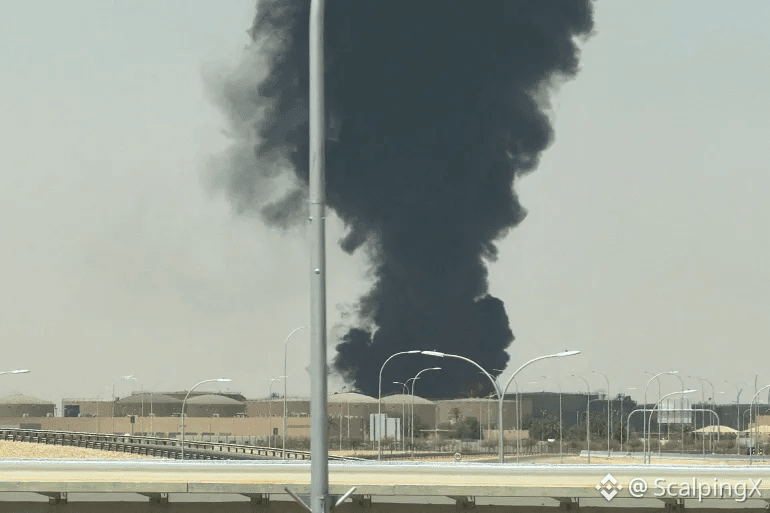
Saudi Arabia Faces Renewed Attacks as Risks to Energy Infrastructure Rise.
✈️ On October 11, King Khalid International Airport in Riyadh was attacked again, one day after a strike killed 13 people and injured more than 300. The latest attack caused a fire at Terminal 4, further disrupting airport operations.
⚠️ The Houthis claimed responsibility for the earlier strike and warned airlines to avoid Saudi airspace. The group also claimed attacks on Dammam Airport and Aramco facilities, although damage to the energy sites remains independently unverified.
🌍 The consecutive attacks come amid escalating fighting in Yemen, raising concerns over the security of Saudi Arabia's aviation and energy infrastructure.
🛢️ These developments could increase the geopolitical risk premium in Brent and WTI crude oil prices. The actual market impact will depend on potential supply disruptions, military responses, and further diplomatic efforts.
#Energy $CL $BZ $NATGAS
Saudi Arabia Faces Renewed Attacks as Risks to Energy Infrastructure Rise.
✈️ On October 11, King Khalid International Airport in Riyadh was attacked again, one day after a strike killed 13 people and injured more than 300. The latest attack caused a fire at Terminal 4, further disrupting airport operations.
⚠️ The Houthis claimed responsibility for the earlier strike and warned airlines to avoid Saudi airspace. The group also claimed attacks on Dammam Airport and Aramco facilities, although damage to the energy sites remains independently unverified.
🌍 The consecutive attacks come amid escalating fighting in Yemen, raising concerns over the security of Saudi Arabia's aviation and energy infrastructure.
🛢️ These developments could increase the geopolitical risk premium in Brent and WTI crude oil prices. The actual market impact will depend on potential supply disruptions, military responses, and further diplomatic efforts.
#Energy $CL $BZ $NATGAS
✈️ On October 11, King Khalid International Airport in Riyadh was attacked again, one day after a strike killed 13 people and injured more than 300. The latest attack caused a fire at Terminal 4, further disrupting airport operations.
⚠️ The Houthis claimed responsibility for the earlier strike and warned airlines to avoid Saudi airspace. The group also claimed attacks on Dammam Airport and Aramco facilities, although damage to the energy sites remains independently unverified.
🌍 The consecutive attacks come amid escalating fighting in Yemen, raising concerns over the security of Saudi Arabia's aviation and energy infrastructure.
🛢️ These developments could increase the geopolitical risk premium in Brent and WTI crude oil prices. The actual market impact will depend on potential supply disruptions, military responses, and further diplomatic efforts.
#Energy $CL $BZ $NATGAS
26
Log in to explore more content
Join global crypto users on Binance Square
⚡️ Get latest and useful information about crypto.
💬 Trusted by the world’s largest crypto exchange.
👍 Discover real insights from verified creators.
Email / Phone number
Trending Topics
1
#BinancePick
2.7M views
143,694 Discussing
2
#EarningsSeason
5M views
24,659 Discussing
3
#SouthKoreaReportedlyWeighsFourthCryptoTaxDelay
2,343 views
107 Discussing
4
#FranklinTempletonFilesForTwoDividendToBitcoinETFs
7,327 views
231 Discussing
5
#StrategyMSTRSurpassesNasdaqInMarketCap
6,861 views
193 Discussing
6
#CanadaProposesStablecoinRedemptionWithin3BusinessDays
229 views
17 Discussing
7
#ElectrumWalletBugLetRogueServersStealFunds
12,484 views
322 Discussing
8
#ArgentineCourtDismissesLIBRACaseAgainstMilei
22,736 views
382 Discussing
9
#SKHynixReportedlyPlansSpecialDividendFromKioxiaStakeSale
3,486 views
49 Discussing
10
#KeystoneWebsiteBreachExposesBuyersShippingAddresses
1,831 views
41 Discussing