$Jager When analyzing on-chain data for micro-cap tokens, individual transactions can easily be dismissed as random market noise. However, when you step back and cross-reference BscScan records, exchange wallet balances, and DEX liquidity shifts over the past few months for Jager, a distinct and deliberate technical sequence becomes visible. Everything indicates that the project is currently in the advanced stages of an infrastructure transition toward a V2 smart contract.
The fundamental driver behind this entire process is the state of the current V1 contract. Ownership of the V1 smart contract was renounced, rendering its underlying code permanently unchangeable. While this guarantees that nobody can tamper with taxes or minting functions on V1, it also creates a hard technical boundary. The administration has repeatedly referenced an expanded ecosystem loop involving Hunter Time and JagerBNB. Because the existing contract logic cannot be altered to support these new cross-token reward routers, deploying a completely new V2 smart contract on the BNB Chain is the only viable path forward.
The groundwork for this transition has been building on-chain for months. A few months ago, there was a sudden and sharp spike in new wallet creation, where hundreds of unique addresses appeared daily without any accompanying marketing campaigns or price expansions. In hindsight, this matches standard testnet-to-mainnet deployment behavior, where developers run stress tests to ensure the network can handle mass snapshot distributions and automated dividend routing across thousands of active addresses. Around that same period, clear treasury splitting was visible on-chain, where dedicated wallets were funded with identical chunks of roughly 40 trillion tokens. In professional development, batching supply into identical, isolated allocations is standard practice for risk mitigation, ensuring that dedicated reserves for exchange liquidity, marketing, and ecosystem rewards are secured prior to contract migration.
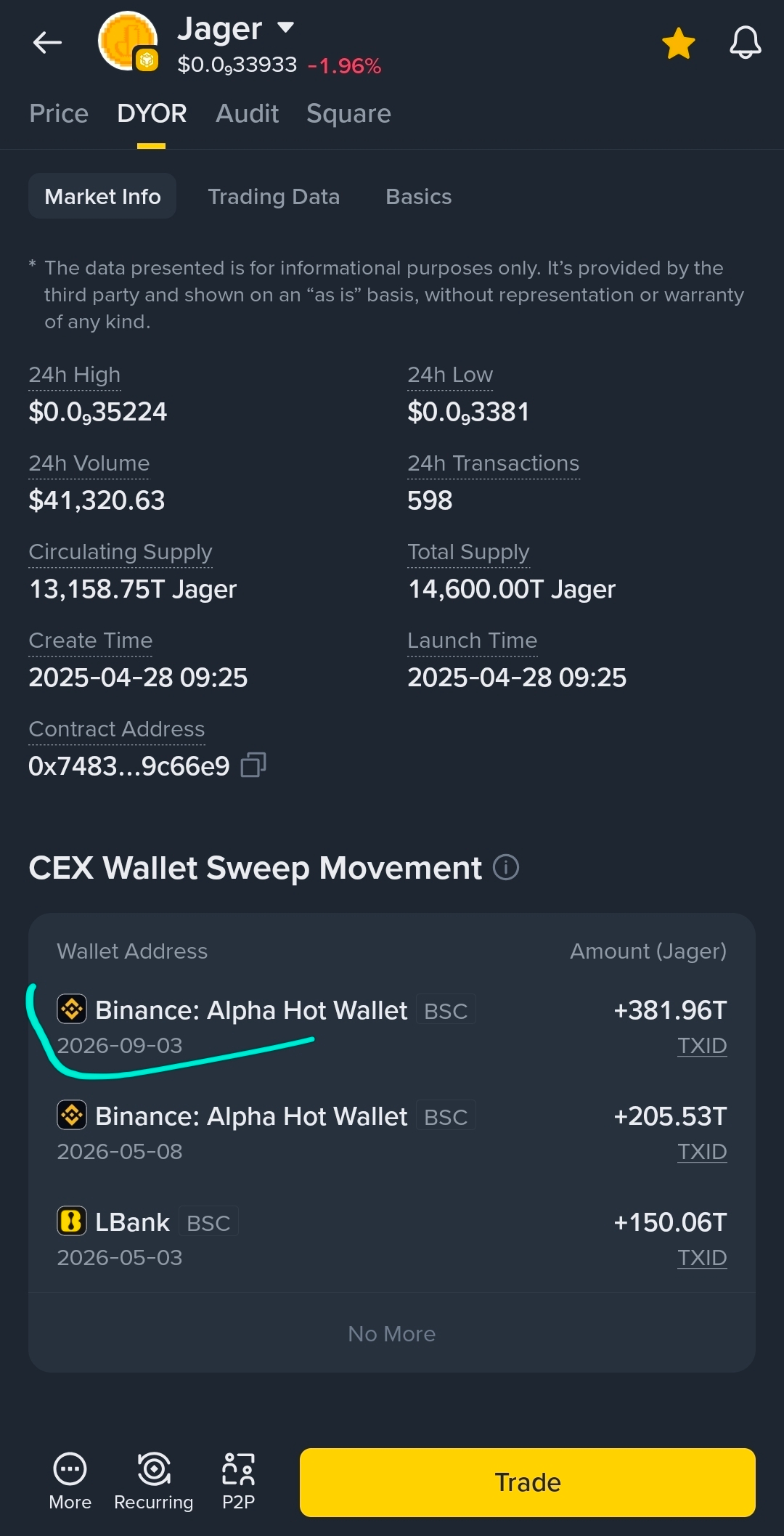
The most conclusive evidence of an impending migration lies in the activity across centralized exchange wallets. On-chain records show a series of massive token consolidations into exchange hot wallets. Following initial sweeps in May by LBank and Binance, Binance Alpha executed a massive sweep of 381.96 trillion tokens into its primary hot wallet on September 3. Currently, the Binance Alpha hot wallet holds over 5,717 trillion tokens, representing nearly 40% of the total circulating supply. Exchanges do not execute sweeps of this scale or incur the associated gas fees for routine maintenance. In token migration protocol, CEXs pull user deposits into a central hot wallet so that when the V2 contract goes live, the exchange can execute a single, seamless backend token swap for its entire user base without requiring manual intervention.
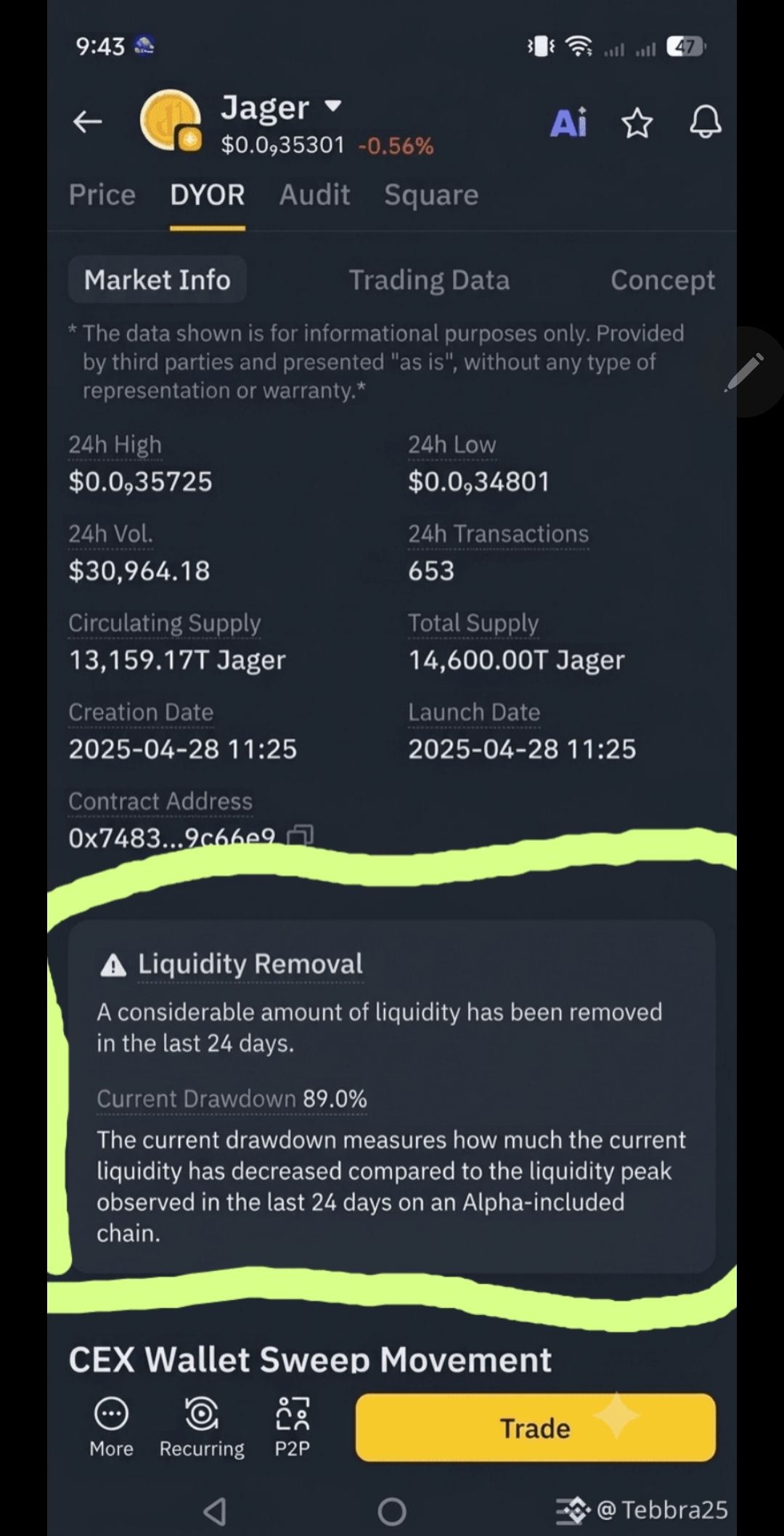
This CEX consolidation directly connects to the recurring liquidity removal alerts appearing on tracking platforms and the Binance app. Over the past few weeks, DEX liquidity on PancakeSwap has repeatedly dropped from its standard baseline of roughly $1.08 million down to around $100,000, before being re-injected shortly after. These sudden fluctuations are not display errors or market instability. Because the V1 contract is renounced, transferring liquidity from V1 to V2 requires testing specialized migration routers and smart contract arbitrage pathways. The developers are actively testing the mechanics of extracting V1 pool liquidity to ensure a smooth transfer into the new V2 liquidity pools upon launch.
Beyond the technical backend, this migration fundamentally alters the tokenomics. Any manual or time-sensitive migration creates a significant supply shock, as a notable percentage of inactive or dormant retail wallets will fail to swap their tokens, effectively burning that portion of the supply forever. Furthermore, implementing a token consolidation or reverse split alongside the V2 launch eliminates unnecessary decimal places. This improves contract execution efficiency for reward distributions and aligns the token's trading pair format with Tier-1 exchange listing standards. Combined with the active burning mechanics already in place, the V2 transition significantly tightens the circulating float.
When you connect these technical checkpoints—the immutable nature of V1, early wallet stress testing, treasury batching, CEX hot wallet sweeps, and live liquidity router testing—it becomes clear that this is a structured, multi-phase technical migration. Rather than stagnant price action, the data reveals active behind-the-scenes engineering designed to support the broader BNB Chain ecosystem integration.
#JAGER #BNBChain #DeFi #CryptoAnalysisUpdate #V2Migration #BinanceAlpha #CryptoTrading #Altcoins