

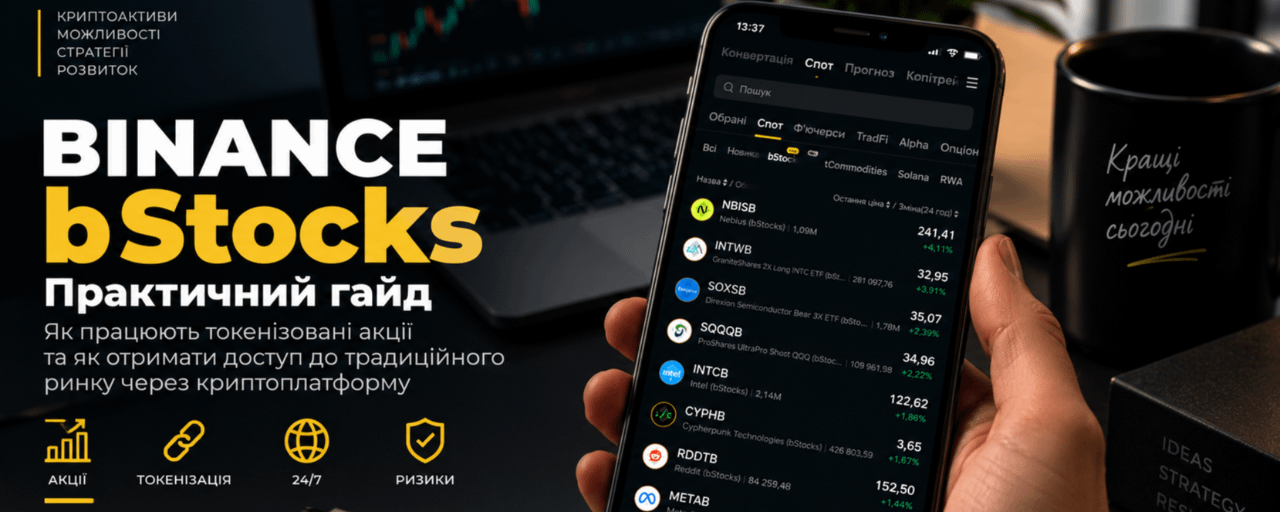

bStocks in simple terms: how to use tokenized stocks on a crypto platform
The cryptocurrency market is gradually converging with traditional finance. If previously crypto platforms mainly focused on BTC, ETH, and other digital assets, today users have access to tools related to stocks of well-known companies. One such direction is bStocks.
Let’s break it down in simple terms: what this instrument is, where you can find it, and what features you need to take into account.
1. What are bStocks?
bStocks belong to the segment of tokenized assets associated with the traditional stock market. Their main idea is to give the user price exposure to the corresponding traditional asset through digital infrastructure.
In the Binance app, there’s a separate bStocks category in the spot section. Here you can see instruments related to different companies and exchange products.
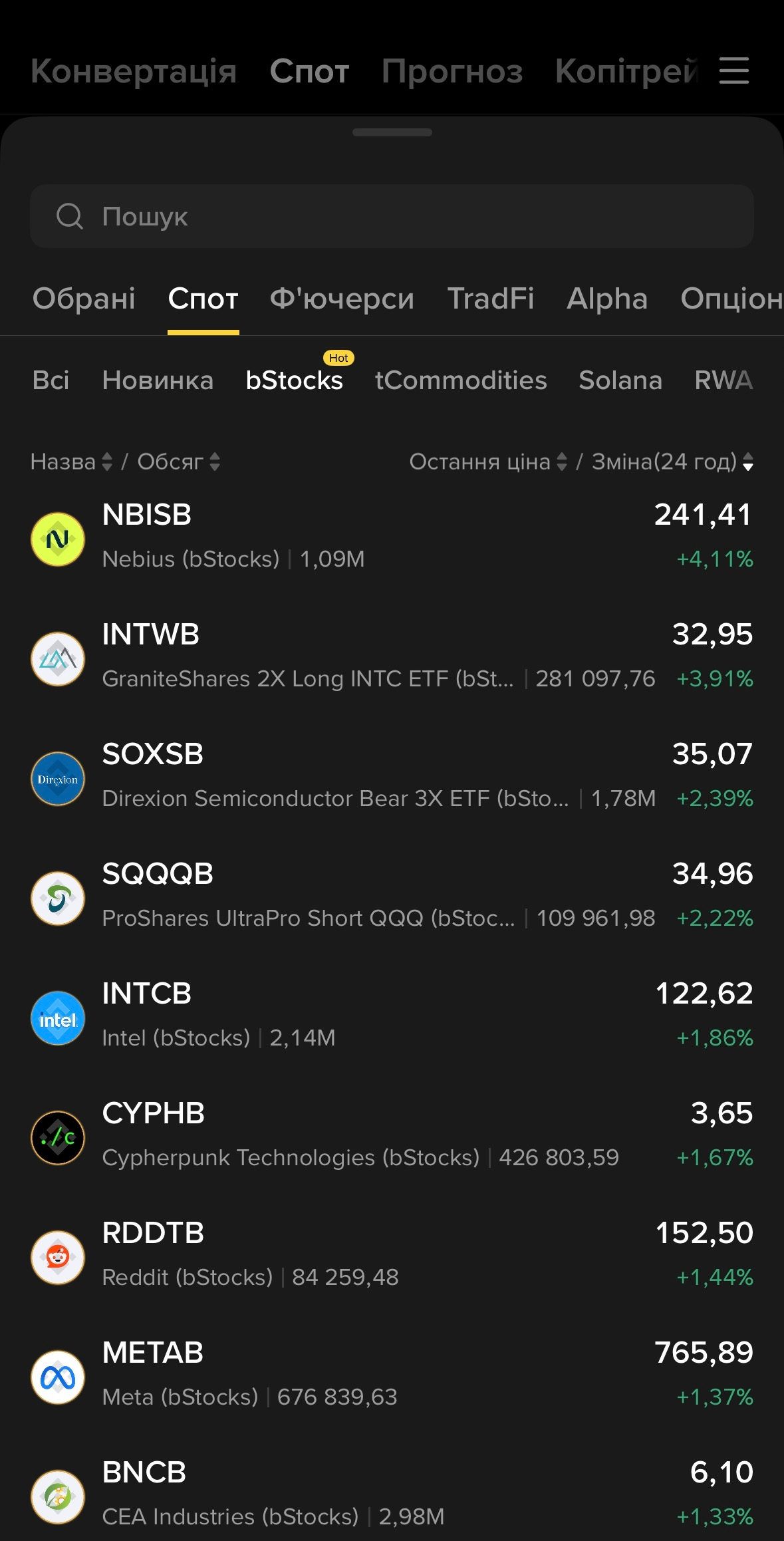
For example, the list includes METAB (Meta), RDDTB (Reddit), INTCB (Intel), NBISB (Nebius), and others. This allows a crypto platform user to work not only with classic crypto assets, but also explore a segment related to the traditional stock market.
2. How does tokenization work?
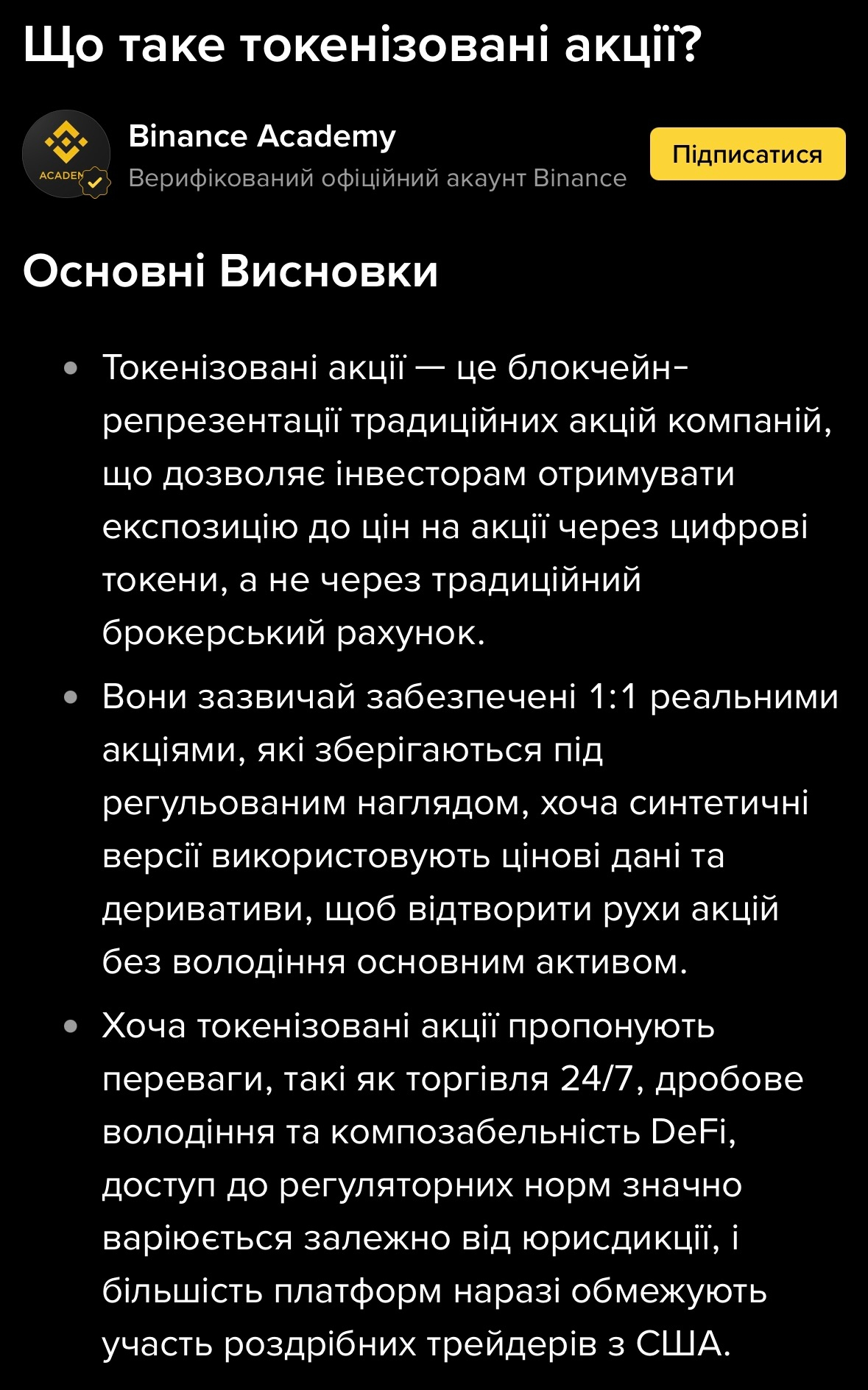
Tokenization makes it possible to transfer the economic characteristics of a traditional asset into a digital environment. Instead of the familiar broker interface, the user interacts with a digital instrument whose value is linked to the corresponding underlying asset.
At the same time, it’s important to distinguish between different tokenization models. Depending on the specific product, the token may be backed by a base asset or use another mechanism to replicate its price. Therefore, before using it, you should review the documentation for the specific instrument you’ve chosen.
For the user, this opens up an interesting format: within one digital environment, you can analyze both the cryptocurrency market and the traditional market.
3. How are bStocks different from regular shares?
This is an absolutely crucial question. You should not automatically equate a bStock with a share purchased through a traditional broker.
The terms of ownership, the user’s rights, collateral, trading availability, and regulatory features depend on the specific product. That’s why the name of a well-known company doesn’t mean that the digital instrument provides exactly the same rights as direct ownership of its share.
That’s why, before using bStocks, it’s advisable to check: what the underlying asset is, how the price is formed, what the collateral is, and what rights the owner of the digital asset receives.
4. bStocks as part of a wider shift toward TradFi
bStocks are also interesting because they show the general direction of development in the crypto industry—the gradual merging of Crypto and TradFi (Traditional Finance).
On Binance, you can already see separate categories of TradFi instruments alongside cryptocurrency products. This shows how quickly the technological boundary between the two markets is being erased.
That’s why I wouldn’t add the fourth screenshot with TradFi futures to this article. It relates to a different type of products and could distract from the main topic of bStocks.
5. What risks should be considered?
Tokenization makes traditional assets available in a new format, but it does not eliminate risks.
The price of the underlying share can go down; the liquidity of different bStocks may differ significantly; the terms of a specific product may change; availability depends on the user’s jurisdiction. Separately, it’s important to consider the risks of the digital infrastructure itself and the tokenization mechanism.
That’s why the logic “this is a share of a well-known company—so the risk is minimal” doesn’t work here.
Conclusion
bStocks are an interesting example of how traditional financial assets are gradually being integrated into crypto infrastructure. For the user, this is an opportunity to explore both digital assets and instruments related to the stock market within a single environment.
But the key is to understand what exactly lies behind a specific bStock, rather than relying only on the familiar company name.
In my opinion, tokenization can be one of the important directions for bringing traditional finance and the blockchain industry closer together.
And have you already used bStocks, or do you still prefer the classic stock or cryptocurrency market?
The material is for educational purposes and is not an individual financial recommendation. Before using a product, check its current terms, availability, and risks.