

币圈小贝贝
128 Posts

币圈小贝贝
Report
Block User
12 Following
1.7K+ Followers
892 Liked
Posts
All
Live
·
--
A regulatory commissioner about to depart left with a remark that conveniently points in the opposite direction to the last decade.. Her meaning was probably this: in the future, don’t collect so many identity materials.
[🔄 进群看机构动作](https://app.binance.com/uni-qr/6d5gRrvm)
Most people see it as “another official has offered a personal opinion,” with no rules being implemented, so they can glance at it and move on.. But what may be truly worth attention is that she broke two things apart—“identity verification” and “collecting information,” which were never the same thing.
What people do now is: if an institution needs to confirm you’re eligible, it has to keep your documents, address, and income.. To prove one fact, you shouldn’t have to hand over your entire draft—if they only need to know that “you’re over 18,” why must they also know your name and your address.
The tool she mentioned is zero-knowledge proofs. It sounds technical, but when you break it down, it’s actually straightforward: show the conclusion, don’t hand over the drafts.. Once this path works, identity verification shifts from “filing a closet full of photocopies” to “storing a proof”—data moves from being assets to becoming liabilities: the more you collect, the more you lose if you have a single leak. In the incidents these years, the things taken were never just money.
What’s even more interesting is the part it eliminates.. In the traditional process, every institution has to ask the same questions again, because nobody dares to simply trust the verification results from the upstream party.. If a proof can be reused, then what gets re-priced won’t be identity itself, but the verification step that can be shared.
From the perspective of capital rotation, this is a bit different.. Usually everyone watches returns and narratives, but what determines whether money can even get in the door is the identity process. Whoever can make compliance verification both cheaper and safer will collect tolls right at the entrance—roles like identity verification, custody, and auditing tools are often picked by capital first.
The bigger storyline is that privacy and compliance, which used to be treated as either-or, are now being layered together by someone: it’s not that they won’t collect, but they collect less and verify more precisely.. This is also where compliance begins shifting from being manpower-intensive to being cryptography-intensive.
But here’s the problem.. This is a personal opinion, not a rule, and none of the current requirements have changed—so there won’t be much market reaction in the short term.. What’s really worth watching isn’t what she said, but whether the first wave of institutions is willing to plug this into real business. Once they do, the “form” that’s acceptable will land before the rules do. And if, after a year, it’s still stuck in speeches, then the bottleneck won’t be technology—it’ll be responsibility: if something goes wrong, who signs.
Kind of interesting..
A regulatory commissioner about to depart left with a remark that conveniently points in the opposite direction to the last decade.. Her meaning was probably this: in the future, don’t collect so many identity materials.
🔄 进群看机构动作
Most people see it as “another official has offered a personal opinion,” with no rules being implemented, so they can glance at it and move on.. But what may be truly worth attention is that she broke two things apart—“identity verification” and “collecting information,” which were never the same thing.
What people do now is: if an institution needs to confirm you’re eligible, it has to keep your documents, address, and income.. To prove one fact, you shouldn’t have to hand over your entire draft—if they only need to know that “you’re over 18,” why must they also know your name and your address.
The tool she mentioned is zero-knowledge proofs. It sounds technical, but when you break it down, it’s actually straightforward: show the conclusion, don’t hand over the drafts.. Once this path works, identity verification shifts from “filing a closet full of photocopies” to “storing a proof”—data moves from being assets to becoming liabilities: the more you collect, the more you lose if you have a single leak. In the incidents these years, the things taken were never just money.
What’s even more interesting is the part it eliminates.. In the traditional process, every institution has to ask the same questions again, because nobody dares to simply trust the verification results from the upstream party.. If a proof can be reused, then what gets re-priced won’t be identity itself, but the verification step that can be shared.
From the perspective of capital rotation, this is a bit different.. Usually everyone watches returns and narratives, but what determines whether money can even get in the door is the identity process. Whoever can make compliance verification both cheaper and safer will collect tolls right at the entrance—roles like identity verification, custody, and auditing tools are often picked by capital first.
The bigger storyline is that privacy and compliance, which used to be treated as either-or, are now being layered together by someone: it’s not that they won’t collect, but they collect less and verify more precisely.. This is also where compliance begins shifting from being manpower-intensive to being cryptography-intensive.
But here’s the problem.. This is a personal opinion, not a rule, and none of the current requirements have changed—so there won’t be much market reaction in the short term.. What’s really worth watching isn’t what she said, but whether the first wave of institutions is willing to plug this into real business. Once they do, the “form” that’s acceptable will land before the rules do. And if, after a year, it’s still stuck in speeches, then the bottleneck won’t be technology—it’ll be responsibility: if something goes wrong, who signs.
Kind of interesting..
🔄 进群看机构动作
Most people see it as “another official has offered a personal opinion,” with no rules being implemented, so they can glance at it and move on.. But what may be truly worth attention is that she broke two things apart—“identity verification” and “collecting information,” which were never the same thing.
What people do now is: if an institution needs to confirm you’re eligible, it has to keep your documents, address, and income.. To prove one fact, you shouldn’t have to hand over your entire draft—if they only need to know that “you’re over 18,” why must they also know your name and your address.
The tool she mentioned is zero-knowledge proofs. It sounds technical, but when you break it down, it’s actually straightforward: show the conclusion, don’t hand over the drafts.. Once this path works, identity verification shifts from “filing a closet full of photocopies” to “storing a proof”—data moves from being assets to becoming liabilities: the more you collect, the more you lose if you have a single leak. In the incidents these years, the things taken were never just money.
What’s even more interesting is the part it eliminates.. In the traditional process, every institution has to ask the same questions again, because nobody dares to simply trust the verification results from the upstream party.. If a proof can be reused, then what gets re-priced won’t be identity itself, but the verification step that can be shared.
From the perspective of capital rotation, this is a bit different.. Usually everyone watches returns and narratives, but what determines whether money can even get in the door is the identity process. Whoever can make compliance verification both cheaper and safer will collect tolls right at the entrance—roles like identity verification, custody, and auditing tools are often picked by capital first.
The bigger storyline is that privacy and compliance, which used to be treated as either-or, are now being layered together by someone: it’s not that they won’t collect, but they collect less and verify more precisely.. This is also where compliance begins shifting from being manpower-intensive to being cryptography-intensive.
But here’s the problem.. This is a personal opinion, not a rule, and none of the current requirements have changed—so there won’t be much market reaction in the short term.. What’s really worth watching isn’t what she said, but whether the first wave of institutions is willing to plug this into real business. Once they do, the “form” that’s acceptable will land before the rules do. And if, after a year, it’s still stuck in speeches, then the bottleneck won’t be technology—it’ll be responsibility: if something goes wrong, who signs.
Kind of interesting..
201
·
--
#cftc更新受监管机构代币化资产指引
Many people’s attention these past few days has been on whether the 84,000 can be defended.. But what’s truly worth looking at might be another little thing that almost nobody is talking about—across the ocean, there’s a company whose stock jumped 15% in a single day, 77% over five days, and 158% in a month; and the business it’s in is exactly about moving assets onto the chain.
[⚖️ 进群蹲一手消息](https://app.binance.com/uni-qr/6d5gRrvm)
What most people see is the word “tokenization” heating up again—reports one after another, an alliance after another.. But what might actually be getting priced is not the asset being moved onto the chain; it could be the spot where the road is being laid.
What’s even more interesting is its books.. Its returns over half a year, within the year, and over a full year are all around 50%—meaning nearly the entire year’s increase gets squeezed into just this one month.. You earn back a whole year in one month; what’s rising isn’t the business, it’s a rule.
On September 17, the SEC granted a five-year innovation exemption: trading venues for tokenized securities don’t have to register as exchanges right away; the market makers providing liquidity to on-chain stock pools also don’t have to register as dealers right away.. The chair of the regulator said it very plainly: this is a “temporary bridge,” a way to move forward “within a permissive environment.”
That’s where things get a bit intriguing.. The market didn’t rush to buy the thing being moved onto the chain first; instead, it priced the “channel” first.. Whoever acts as the transfer agent, whoever serves as the compliance pipeline, and whoever hosts the trading venue—money runs to that position first.. Because the one that truly collects rent is never the asset itself; it’s the stretch of road that moves the asset over.
The bigger narrative was already written back in January this year: a joint statement from the SEC and the CFTC said that tokenization changes the “form” of securities, not their “legal status”.. What that sentence skips over is a whole lawsuit—tokenized stocks no longer have to fight over whether they count as securities; they just move straight into an existing compliant framework.. So competition shifts from “whose technology is more decentralized” to “whose licenses and pipelines are more complete.” In the same week, on the other side, there were also guides letting regulated institutions use clients’ money to buy tokenized forms of already-permitted assets.. Not one company is doing it.
But here’s the problem.. This exemption is for five years, and it’s also “temporary.” If there’s no follow-up after five years, the valuation that rose today would have to be repaid. And the words “permissive environment” in themselves suggest this road isn’t meant for everyone to take—at least not yet.
So what’s really worth watching isn’t the price of that stock; it’s how many truly real assets get moved onto the chain during these five years.. Once what’s been moved starts generating cash flows that can actually be verified, tokenization turns from a concept into a channel fee.. Conversely, if over five years it only drives valuation up but not assets, then this round of excitement will be like many before it—leaving behind a bunch of interfaces no one will mention again.
Kind of interesting..
#cftc更新受监管机构代币化资产指引
Many people’s attention these past few days has been on whether the 84,000 can be defended.. But what’s truly worth looking at might be another little thing that almost nobody is talking about—across the ocean, there’s a company whose stock jumped 15% in a single day, 77% over five days, and 158% in a month; and the business it’s in is exactly about moving assets onto the chain.
⚖️ 进群蹲一手消息
What most people see is the word “tokenization” heating up again—reports one after another, an alliance after another.. But what might actually be getting priced is not the asset being moved onto the chain; it could be the spot where the road is being laid.
What’s even more interesting is its books.. Its returns over half a year, within the year, and over a full year are all around 50%—meaning nearly the entire year’s increase gets squeezed into just this one month.. You earn back a whole year in one month; what’s rising isn’t the business, it’s a rule.
On September 17, the SEC granted a five-year innovation exemption: trading venues for tokenized securities don’t have to register as exchanges right away; the market makers providing liquidity to on-chain stock pools also don’t have to register as dealers right away.. The chair of the regulator said it very plainly: this is a “temporary bridge,” a way to move forward “within a permissive environment.”
That’s where things get a bit intriguing.. The market didn’t rush to buy the thing being moved onto the chain first; instead, it priced the “channel” first.. Whoever acts as the transfer agent, whoever serves as the compliance pipeline, and whoever hosts the trading venue—money runs to that position first.. Because the one that truly collects rent is never the asset itself; it’s the stretch of road that moves the asset over.
The bigger narrative was already written back in January this year: a joint statement from the SEC and the CFTC said that tokenization changes the “form” of securities, not their “legal status”.. What that sentence skips over is a whole lawsuit—tokenized stocks no longer have to fight over whether they count as securities; they just move straight into an existing compliant framework.. So competition shifts from “whose technology is more decentralized” to “whose licenses and pipelines are more complete.” In the same week, on the other side, there were also guides letting regulated institutions use clients’ money to buy tokenized forms of already-permitted assets.. Not one company is doing it.
But here’s the problem.. This exemption is for five years, and it’s also “temporary.” If there’s no follow-up after five years, the valuation that rose today would have to be repaid. And the words “permissive environment” in themselves suggest this road isn’t meant for everyone to take—at least not yet.
So what’s really worth watching isn’t the price of that stock; it’s how many truly real assets get moved onto the chain during these five years.. Once what’s been moved starts generating cash flows that can actually be verified, tokenization turns from a concept into a channel fee.. Conversely, if over five years it only drives valuation up but not assets, then this round of excitement will be like many before it—leaving behind a bunch of interfaces no one will mention again.
Kind of interesting..
Many people’s attention these past few days has been on whether the 84,000 can be defended.. But what’s truly worth looking at might be another little thing that almost nobody is talking about—across the ocean, there’s a company whose stock jumped 15% in a single day, 77% over five days, and 158% in a month; and the business it’s in is exactly about moving assets onto the chain.
⚖️ 进群蹲一手消息
What most people see is the word “tokenization” heating up again—reports one after another, an alliance after another.. But what might actually be getting priced is not the asset being moved onto the chain; it could be the spot where the road is being laid.
What’s even more interesting is its books.. Its returns over half a year, within the year, and over a full year are all around 50%—meaning nearly the entire year’s increase gets squeezed into just this one month.. You earn back a whole year in one month; what’s rising isn’t the business, it’s a rule.
On September 17, the SEC granted a five-year innovation exemption: trading venues for tokenized securities don’t have to register as exchanges right away; the market makers providing liquidity to on-chain stock pools also don’t have to register as dealers right away.. The chair of the regulator said it very plainly: this is a “temporary bridge,” a way to move forward “within a permissive environment.”
That’s where things get a bit intriguing.. The market didn’t rush to buy the thing being moved onto the chain first; instead, it priced the “channel” first.. Whoever acts as the transfer agent, whoever serves as the compliance pipeline, and whoever hosts the trading venue—money runs to that position first.. Because the one that truly collects rent is never the asset itself; it’s the stretch of road that moves the asset over.
The bigger narrative was already written back in January this year: a joint statement from the SEC and the CFTC said that tokenization changes the “form” of securities, not their “legal status”.. What that sentence skips over is a whole lawsuit—tokenized stocks no longer have to fight over whether they count as securities; they just move straight into an existing compliant framework.. So competition shifts from “whose technology is more decentralized” to “whose licenses and pipelines are more complete.” In the same week, on the other side, there were also guides letting regulated institutions use clients’ money to buy tokenized forms of already-permitted assets.. Not one company is doing it.
But here’s the problem.. This exemption is for five years, and it’s also “temporary.” If there’s no follow-up after five years, the valuation that rose today would have to be repaid. And the words “permissive environment” in themselves suggest this road isn’t meant for everyone to take—at least not yet.
So what’s really worth watching isn’t the price of that stock; it’s how many truly real assets get moved onto the chain during these five years.. Once what’s been moved starts generating cash flows that can actually be verified, tokenization turns from a concept into a channel fee.. Conversely, if over five years it only drives valuation up but not assets, then this round of excitement will be like many before it—leaving behind a bunch of interfaces no one will mention again.
Kind of interesting..

43
·
--
In that Thursday institutional survey, almost nobody is actually rotating.. It has nothing to do with the coin price, and nothing to do with spot funds. It’s about something more fundamental—where, exactly, institutions are recording Bitcoin in their own accounting ledger..
[🤖 进群看叙事](https://app.binance.com/uni-qr/6d5gRrvm)
Most people’s takeaway from the report is: "Institutions finally started viewing Bitcoin alongside gold, and the story of digital gold has been acknowledged.".. It sounds like good news.. But what’s truly worth watching is the latter half: which bucket these institutions put crypto assets into..
That’s where things get different..
The same survey asked 15 institutions that manage anywhere from hundreds of millions to over tens of billions of dollars in assets. One side’s messaging looks very good: Bitcoin is often paired with gold as a hedge against fiat currency devaluation. The other side is more concrete: in reality, most crypto-type assets are recorded in buckets related to venture capital, innovation, and technology..
One organization directly places Bitcoin into its own gold bucket, to use it as a currency hedge.. Another foundation doesn’t even recognize the "digital gold" framing, categorizing all crypto as disruptive technology.. And another one—the pension fund—puts crypto alongside artificial intelligence, life sciences, and space in the same box, treating it as part of an innovation allocation..
The same coin, placed into different buckets—within institutions, it becomes two completely different kinds of money..
In the gold bucket, what it’s measured against is central bank reserves, real interest rates, and whether the U.S. dollar is stable.. In the technology bucket, what it’s measured against is the growth curve, whether projects can actually get executed, and who manages that position..
Even more interesting is the question of who signs off.. The survey states it plainly: where an individual can make the decision, crypto can be allocated. Where a committee’s approval is needed, that’s often where it gets stuck.. The true weight of classification lies here—it’s not an academic issue, it’s a process issue..
Looking at the allocation ranges—from 0.5% to 13%—most fall between 1% and 2%.. The room looks huge.. But what truly determines how fast the allocation expands isn’t price. It’s this classification table. If you want the money to get through the door, you have to pass the classification hurdle first..
And there’s another set of data that I think matters far more than the phrase "institutions are bullish.".. During the downturn from October last year to April this year, none of these institutions reduced their allocations. And not a single one listed the price in its reasons for exiting..
That means their exit conditions have nothing to do with quotes.. It’s about what that money was originally recorded as. If it was booked as a long-term hedge, then when it drops, they don’t move. If it was booked as an exposure to growth, then they focus on whether progress is on track—not the price. So this round of buying pressure is stable not because of belief, but because of accounting conventions..
But the problem is this.. If classification keeps shifting further toward innovation and technology, what may ultimately cap the valuation of this asset might not be macro conditions, but an internal classification table within the institution..
The reverse is true as well.. That institution that placed Bitcoin in the gold bucket—once the "gold" line’s story gets repriced, it might be the first to move. Because what it bought at the time was a substitute for gold, not technology..
Same coin, different drawer—another piece of money.. What’s really worth watching isn’t how much they add next, but whether, over the course of this year, they’ll start changing their own classification..
In that Thursday institutional survey, almost nobody is actually rotating.. It has nothing to do with the coin price, and nothing to do with spot funds. It’s about something more fundamental—where, exactly, institutions are recording Bitcoin in their own accounting ledger..
🤖 进群看叙事
Most people’s takeaway from the report is: "Institutions finally started viewing Bitcoin alongside gold, and the story of digital gold has been acknowledged.".. It sounds like good news.. But what’s truly worth watching is the latter half: which bucket these institutions put crypto assets into..
That’s where things get different..
The same survey asked 15 institutions that manage anywhere from hundreds of millions to over tens of billions of dollars in assets. One side’s messaging looks very good: Bitcoin is often paired with gold as a hedge against fiat currency devaluation. The other side is more concrete: in reality, most crypto-type assets are recorded in buckets related to venture capital, innovation, and technology..
One organization directly places Bitcoin into its own gold bucket, to use it as a currency hedge.. Another foundation doesn’t even recognize the "digital gold" framing, categorizing all crypto as disruptive technology.. And another one—the pension fund—puts crypto alongside artificial intelligence, life sciences, and space in the same box, treating it as part of an innovation allocation..
The same coin, placed into different buckets—within institutions, it becomes two completely different kinds of money..
In the gold bucket, what it’s measured against is central bank reserves, real interest rates, and whether the U.S. dollar is stable.. In the technology bucket, what it’s measured against is the growth curve, whether projects can actually get executed, and who manages that position..
Even more interesting is the question of who signs off.. The survey states it plainly: where an individual can make the decision, crypto can be allocated. Where a committee’s approval is needed, that’s often where it gets stuck.. The true weight of classification lies here—it’s not an academic issue, it’s a process issue..
Looking at the allocation ranges—from 0.5% to 13%—most fall between 1% and 2%.. The room looks huge.. But what truly determines how fast the allocation expands isn’t price. It’s this classification table. If you want the money to get through the door, you have to pass the classification hurdle first..
And there’s another set of data that I think matters far more than the phrase "institutions are bullish.".. During the downturn from October last year to April this year, none of these institutions reduced their allocations. And not a single one listed the price in its reasons for exiting..
That means their exit conditions have nothing to do with quotes.. It’s about what that money was originally recorded as. If it was booked as a long-term hedge, then when it drops, they don’t move. If it was booked as an exposure to growth, then they focus on whether progress is on track—not the price. So this round of buying pressure is stable not because of belief, but because of accounting conventions..
But the problem is this.. If classification keeps shifting further toward innovation and technology, what may ultimately cap the valuation of this asset might not be macro conditions, but an internal classification table within the institution..
The reverse is true as well.. That institution that placed Bitcoin in the gold bucket—once the "gold" line’s story gets repriced, it might be the first to move. Because what it bought at the time was a substitute for gold, not technology..
Same coin, different drawer—another piece of money.. What’s really worth watching isn’t how much they add next, but whether, over the course of this year, they’ll start changing their own classification..
🤖 进群看叙事
Most people’s takeaway from the report is: "Institutions finally started viewing Bitcoin alongside gold, and the story of digital gold has been acknowledged.".. It sounds like good news.. But what’s truly worth watching is the latter half: which bucket these institutions put crypto assets into..
That’s where things get different..
The same survey asked 15 institutions that manage anywhere from hundreds of millions to over tens of billions of dollars in assets. One side’s messaging looks very good: Bitcoin is often paired with gold as a hedge against fiat currency devaluation. The other side is more concrete: in reality, most crypto-type assets are recorded in buckets related to venture capital, innovation, and technology..
One organization directly places Bitcoin into its own gold bucket, to use it as a currency hedge.. Another foundation doesn’t even recognize the "digital gold" framing, categorizing all crypto as disruptive technology.. And another one—the pension fund—puts crypto alongside artificial intelligence, life sciences, and space in the same box, treating it as part of an innovation allocation..
The same coin, placed into different buckets—within institutions, it becomes two completely different kinds of money..
In the gold bucket, what it’s measured against is central bank reserves, real interest rates, and whether the U.S. dollar is stable.. In the technology bucket, what it’s measured against is the growth curve, whether projects can actually get executed, and who manages that position..
Even more interesting is the question of who signs off.. The survey states it plainly: where an individual can make the decision, crypto can be allocated. Where a committee’s approval is needed, that’s often where it gets stuck.. The true weight of classification lies here—it’s not an academic issue, it’s a process issue..
Looking at the allocation ranges—from 0.5% to 13%—most fall between 1% and 2%.. The room looks huge.. But what truly determines how fast the allocation expands isn’t price. It’s this classification table. If you want the money to get through the door, you have to pass the classification hurdle first..
And there’s another set of data that I think matters far more than the phrase "institutions are bullish.".. During the downturn from October last year to April this year, none of these institutions reduced their allocations. And not a single one listed the price in its reasons for exiting..
That means their exit conditions have nothing to do with quotes.. It’s about what that money was originally recorded as. If it was booked as a long-term hedge, then when it drops, they don’t move. If it was booked as an exposure to growth, then they focus on whether progress is on track—not the price. So this round of buying pressure is stable not because of belief, but because of accounting conventions..
But the problem is this.. If classification keeps shifting further toward innovation and technology, what may ultimately cap the valuation of this asset might not be macro conditions, but an internal classification table within the institution..
The reverse is true as well.. That institution that placed Bitcoin in the gold bucket—once the "gold" line’s story gets repriced, it might be the first to move. Because what it bought at the time was a substitute for gold, not technology..
Same coin, different drawer—another piece of money.. What’s really worth watching isn’t how much they add next, but whether, over the course of this year, they’ll start changing their own classification..
226
·
--
A notice released on Thursday that almost nobody shared. .. It has nothing to do with the coin price, and nothing to do with the ETF. It talks about: “When AI buys things in the future, where does the money go to pay—what payment track does it follow?”..
[📢 最新消息群里说](https://app.binance.com/uni-qr/6d5gRrvm)
Most people who see a headline like this just swipe past, assuming another payment company has added some Bitcoin feature.. But what’s truly worth looking at isn’t who got integrated—it’s what got plugged into it: x402..
The name is kind of interesting too. It comes from HTTP status code 402, “Payment Required.”.. This code was written into the standard back in 1996—decades ago—and practically nobody used it. It just sat there unused.. Now it’s been repurposed for AI agents to check out and pay..
And that’s when things start to be different..
Let’s put it in plain words: in the past, for payments, the “subject” was a human.. The person opens the app, goes to the checkout page, verifies identity, enters a password, and goes through the whole UI flow.. But an AI agent doesn’t need a user interface—it just sends a web request, gets asked to pay, and after payment it continues fetching the data..
So payment, for the first time, has to be redesigned for a group of “customers who can’t be bothered to press buttons.”..
Even more interesting: this checkout page isn’t run by someone’s own company.. It’s hosted under an open-source foundation. Sitting in its membership are several of the biggest tech companies—most of the cloud players are there. Also included are an exchange and a blockchain foundation.. The one that came in this time is Block, a long-established payments company. It connected its own Bitcoin Lightning payment lane and said the reason is low fees and high throughput—exactly the kind of thing machines-to-machines and small, high-frequency transactions need..
That’s where it gets thought-provoking..
When everyone reads this news, what they care about is “Bitcoin has gotten another use case.”.. But the more valuable position is actually the checkout counter itself.. Whoever sets the default payment lane for machine checkouts gets to collect the toll at the next layer.. And on this lane, it could be Bitcoin—or stablecoins. Both sides are pushing to get into this position.. The competition isn’t just about which technology is better anymore; it’s about whose merchant network can be rolled out first..
From a capital perspective, this is where the real significance of the news lies.. In the past few days, everyone has been watching government bond yields, watching hacks, and watching who’s been allowed to issue stablecoins.. All of that has been stuck at the previous stops: the price of money, and money’s license.. But if you look a bit further downstream, there’s quietly another shift happening too: how money “gets spent.”..
The bigger narrative is hidden one layer below.. Humans need accounts, need identity, need banking hours to pay. Machines need only three things to pay: it can get paid out, it’s confirmed immediately, and it can be reconciled afterward.. Of these three, the first two favor the Lightning lane even more, while the last one is where stablecoins still have the edge..
What’s really worth watching isn’t that another company joined—it’s the day a real scenario runs where “an AI automatically spends a piece of money every day.”.. On that day, what payment lanes get placed on the checkout counter won’t be just a technical choice—it’ll be a choice about who gets the cuts of the money..
A notice released on Thursday that almost nobody shared. .. It has nothing to do with the coin price, and nothing to do with the ETF. It talks about: “When AI buys things in the future, where does the money go to pay—what payment track does it follow?”..
📢 最新消息群里说
Most people who see a headline like this just swipe past, assuming another payment company has added some Bitcoin feature.. But what’s truly worth looking at isn’t who got integrated—it’s what got plugged into it: x402..
The name is kind of interesting too. It comes from HTTP status code 402, “Payment Required.”.. This code was written into the standard back in 1996—decades ago—and practically nobody used it. It just sat there unused.. Now it’s been repurposed for AI agents to check out and pay..
And that’s when things start to be different..
Let’s put it in plain words: in the past, for payments, the “subject” was a human.. The person opens the app, goes to the checkout page, verifies identity, enters a password, and goes through the whole UI flow.. But an AI agent doesn’t need a user interface—it just sends a web request, gets asked to pay, and after payment it continues fetching the data..
So payment, for the first time, has to be redesigned for a group of “customers who can’t be bothered to press buttons.”..
Even more interesting: this checkout page isn’t run by someone’s own company.. It’s hosted under an open-source foundation. Sitting in its membership are several of the biggest tech companies—most of the cloud players are there. Also included are an exchange and a blockchain foundation.. The one that came in this time is Block, a long-established payments company. It connected its own Bitcoin Lightning payment lane and said the reason is low fees and high throughput—exactly the kind of thing machines-to-machines and small, high-frequency transactions need..
That’s where it gets thought-provoking..
When everyone reads this news, what they care about is “Bitcoin has gotten another use case.”.. But the more valuable position is actually the checkout counter itself.. Whoever sets the default payment lane for machine checkouts gets to collect the toll at the next layer.. And on this lane, it could be Bitcoin—or stablecoins. Both sides are pushing to get into this position.. The competition isn’t just about which technology is better anymore; it’s about whose merchant network can be rolled out first..
From a capital perspective, this is where the real significance of the news lies.. In the past few days, everyone has been watching government bond yields, watching hacks, and watching who’s been allowed to issue stablecoins.. All of that has been stuck at the previous stops: the price of money, and money’s license.. But if you look a bit further downstream, there’s quietly another shift happening too: how money “gets spent.”..
The bigger narrative is hidden one layer below.. Humans need accounts, need identity, need banking hours to pay. Machines need only three things to pay: it can get paid out, it’s confirmed immediately, and it can be reconciled afterward.. Of these three, the first two favor the Lightning lane even more, while the last one is where stablecoins still have the edge..
What’s really worth watching isn’t that another company joined—it’s the day a real scenario runs where “an AI automatically spends a piece of money every day.”.. On that day, what payment lanes get placed on the checkout counter won’t be just a technical choice—it’ll be a choice about who gets the cuts of the money..
📢 最新消息群里说
Most people who see a headline like this just swipe past, assuming another payment company has added some Bitcoin feature.. But what’s truly worth looking at isn’t who got integrated—it’s what got plugged into it: x402..
The name is kind of interesting too. It comes from HTTP status code 402, “Payment Required.”.. This code was written into the standard back in 1996—decades ago—and practically nobody used it. It just sat there unused.. Now it’s been repurposed for AI agents to check out and pay..
And that’s when things start to be different..
Let’s put it in plain words: in the past, for payments, the “subject” was a human.. The person opens the app, goes to the checkout page, verifies identity, enters a password, and goes through the whole UI flow.. But an AI agent doesn’t need a user interface—it just sends a web request, gets asked to pay, and after payment it continues fetching the data..
So payment, for the first time, has to be redesigned for a group of “customers who can’t be bothered to press buttons.”..
Even more interesting: this checkout page isn’t run by someone’s own company.. It’s hosted under an open-source foundation. Sitting in its membership are several of the biggest tech companies—most of the cloud players are there. Also included are an exchange and a blockchain foundation.. The one that came in this time is Block, a long-established payments company. It connected its own Bitcoin Lightning payment lane and said the reason is low fees and high throughput—exactly the kind of thing machines-to-machines and small, high-frequency transactions need..
That’s where it gets thought-provoking..
When everyone reads this news, what they care about is “Bitcoin has gotten another use case.”.. But the more valuable position is actually the checkout counter itself.. Whoever sets the default payment lane for machine checkouts gets to collect the toll at the next layer.. And on this lane, it could be Bitcoin—or stablecoins. Both sides are pushing to get into this position.. The competition isn’t just about which technology is better anymore; it’s about whose merchant network can be rolled out first..
From a capital perspective, this is where the real significance of the news lies.. In the past few days, everyone has been watching government bond yields, watching hacks, and watching who’s been allowed to issue stablecoins.. All of that has been stuck at the previous stops: the price of money, and money’s license.. But if you look a bit further downstream, there’s quietly another shift happening too: how money “gets spent.”..
The bigger narrative is hidden one layer below.. Humans need accounts, need identity, need banking hours to pay. Machines need only three things to pay: it can get paid out, it’s confirmed immediately, and it can be reconciled afterward.. Of these three, the first two favor the Lightning lane even more, while the last one is where stablecoins still have the edge..
What’s really worth watching isn’t that another company joined—it’s the day a real scenario runs where “an AI automatically spends a piece of money every day.”.. On that day, what payment lanes get placed on the checkout counter won’t be just a technical choice—it’ll be a choice about who gets the cuts of the money..

199
·
--
Verified
All eyes these past two days have been on a certain exchange’s $350 million.. and, in passing, on the U.S. Treasury yield hitting new highs.. But at the same time, another chain quietly passed a number that almost nobody bothered to transfer..
[⚖️ 消息第一时间](https://app.binance.com/uni-qr/6d5gRrvm)
TRON’s cumulative trading volume has surpassed $3 trillion.. Most people would just swipe past a data milestone like this, thinking it’s another chain showing off its performance report..
But what’s truly worth looking at isn’t the $3 trillion figure—it’s that it no longer treats itself as “just one blockchain”.. A line in the original text is crucial: it’s moving from being a blockchain into a “settlement network” with higher throughput..
And that’s where things start to look different..
$3 trillion is volume, not positions.. What really matters is the number of transactions: on this chain there have been more than 15.6 billion transactions, backed by over 405 million accounts, with more than $30 billion moving every day..
What’s even more interesting is the structure of the money.. The stablecoin supply on this chain has risen to about $94.3 billion, and roughly 98% of it is the same USD stablecoin.. In other words, its real business isn’t issuing its own token—it’s using the USD stablecoin as the rails, specifically responsible for keeping money moving along those rails..
The toll fees it collects aren’t too shabby either.. In the last 30 days, protocol revenue was about $226.5 million..
But here’s the catch: the shape of this business is different from what most people imagine.. Users can lock their own tokens to get energy and bandwidth, and the per-transaction fee can be kept very low—so its income doesn’t come from charging a lot per transaction; it comes from the transaction count continuously rising..
That’s where things get a bit thought-provoking.. The revenue curve is tied to “transfer transaction count” on the same rope, and transaction count moves along with stablecoin transfers.. If stablecoins slow down, it slows down too—and it has no other way to untie that rope..
From a capital perspective, this is where the real significance of the news lies.. These days, stablecoin-related news has been coming in thick and fast: on one side, regulations are rolling out requiring issuers to provide full backing and use reserves to buy short-term Treasury bills; on the other side, some countries want to push USD stablecoins outward.. People are watching “who is allowed to issue,” but the more downstream question is “where does the money run, on which rails?”..
The issuance side will look more and more like banking, while the circulation side will increasingly resemble a payments network.. And there are only a few rail lines—whoever has more money running on them collects the tolls..
The bigger narrative is underneath that layer.. A chain’s position in stablecoin settlement is actually worth more than its token value.. Once it holds that position, revenue follows real usage and stays steadier than the market行情; but conversely, if one day the issuer changes the rail setup themselves, or another place offers it cheaper, this revenue has no moat..
What’s really worth watching isn’t whether cumulative volume will reach $4 trillion—that’s just a counter, and the farther you go the easier it is to keep rising.. The real tell is the week when transaction counts start moving sideways in step with stablecoin growth rate—that’s when you can see the pricing power of these rails loosening..
And finally, a twist.. That 98% concentration looks like a moat, but in reality it’s more like single dependency.. A single rail ties its whole stake to the same issuer—every time that issuer changes its settlement strategy, that’s its problem.
All eyes these past two days have been on a certain exchange’s $350 million.. and, in passing, on the U.S. Treasury yield hitting new highs.. But at the same time, another chain quietly passed a number that almost nobody bothered to transfer..
⚖️ 消息第一时间
TRON’s cumulative trading volume has surpassed $3 trillion.. Most people would just swipe past a data milestone like this, thinking it’s another chain showing off its performance report..
But what’s truly worth looking at isn’t the $3 trillion figure—it’s that it no longer treats itself as “just one blockchain”.. A line in the original text is crucial: it’s moving from being a blockchain into a “settlement network” with higher throughput..
And that’s where things start to look different..
$3 trillion is volume, not positions.. What really matters is the number of transactions: on this chain there have been more than 15.6 billion transactions, backed by over 405 million accounts, with more than $30 billion moving every day..
What’s even more interesting is the structure of the money.. The stablecoin supply on this chain has risen to about $94.3 billion, and roughly 98% of it is the same USD stablecoin.. In other words, its real business isn’t issuing its own token—it’s using the USD stablecoin as the rails, specifically responsible for keeping money moving along those rails..
The toll fees it collects aren’t too shabby either.. In the last 30 days, protocol revenue was about $226.5 million..
But here’s the catch: the shape of this business is different from what most people imagine.. Users can lock their own tokens to get energy and bandwidth, and the per-transaction fee can be kept very low—so its income doesn’t come from charging a lot per transaction; it comes from the transaction count continuously rising..
That’s where things get a bit thought-provoking.. The revenue curve is tied to “transfer transaction count” on the same rope, and transaction count moves along with stablecoin transfers.. If stablecoins slow down, it slows down too—and it has no other way to untie that rope..
From a capital perspective, this is where the real significance of the news lies.. These days, stablecoin-related news has been coming in thick and fast: on one side, regulations are rolling out requiring issuers to provide full backing and use reserves to buy short-term Treasury bills; on the other side, some countries want to push USD stablecoins outward.. People are watching “who is allowed to issue,” but the more downstream question is “where does the money run, on which rails?”..
The issuance side will look more and more like banking, while the circulation side will increasingly resemble a payments network.. And there are only a few rail lines—whoever has more money running on them collects the tolls..
The bigger narrative is underneath that layer.. A chain’s position in stablecoin settlement is actually worth more than its token value.. Once it holds that position, revenue follows real usage and stays steadier than the market行情; but conversely, if one day the issuer changes the rail setup themselves, or another place offers it cheaper, this revenue has no moat..
What’s really worth watching isn’t whether cumulative volume will reach $4 trillion—that’s just a counter, and the farther you go the easier it is to keep rising.. The real tell is the week when transaction counts start moving sideways in step with stablecoin growth rate—that’s when you can see the pricing power of these rails loosening..
And finally, a twist.. That 98% concentration looks like a moat, but in reality it’s more like single dependency.. A single rail ties its whole stake to the same issuer—every time that issuer changes its settlement strategy, that’s its problem.
⚖️ 消息第一时间
TRON’s cumulative trading volume has surpassed $3 trillion.. Most people would just swipe past a data milestone like this, thinking it’s another chain showing off its performance report..
But what’s truly worth looking at isn’t the $3 trillion figure—it’s that it no longer treats itself as “just one blockchain”.. A line in the original text is crucial: it’s moving from being a blockchain into a “settlement network” with higher throughput..
And that’s where things start to look different..
$3 trillion is volume, not positions.. What really matters is the number of transactions: on this chain there have been more than 15.6 billion transactions, backed by over 405 million accounts, with more than $30 billion moving every day..
What’s even more interesting is the structure of the money.. The stablecoin supply on this chain has risen to about $94.3 billion, and roughly 98% of it is the same USD stablecoin.. In other words, its real business isn’t issuing its own token—it’s using the USD stablecoin as the rails, specifically responsible for keeping money moving along those rails..
The toll fees it collects aren’t too shabby either.. In the last 30 days, protocol revenue was about $226.5 million..
But here’s the catch: the shape of this business is different from what most people imagine.. Users can lock their own tokens to get energy and bandwidth, and the per-transaction fee can be kept very low—so its income doesn’t come from charging a lot per transaction; it comes from the transaction count continuously rising..
That’s where things get a bit thought-provoking.. The revenue curve is tied to “transfer transaction count” on the same rope, and transaction count moves along with stablecoin transfers.. If stablecoins slow down, it slows down too—and it has no other way to untie that rope..
From a capital perspective, this is where the real significance of the news lies.. These days, stablecoin-related news has been coming in thick and fast: on one side, regulations are rolling out requiring issuers to provide full backing and use reserves to buy short-term Treasury bills; on the other side, some countries want to push USD stablecoins outward.. People are watching “who is allowed to issue,” but the more downstream question is “where does the money run, on which rails?”..
The issuance side will look more and more like banking, while the circulation side will increasingly resemble a payments network.. And there are only a few rail lines—whoever has more money running on them collects the tolls..
The bigger narrative is underneath that layer.. A chain’s position in stablecoin settlement is actually worth more than its token value.. Once it holds that position, revenue follows real usage and stays steadier than the market行情; but conversely, if one day the issuer changes the rail setup themselves, or another place offers it cheaper, this revenue has no moat..
What’s really worth watching isn’t whether cumulative volume will reach $4 trillion—that’s just a counter, and the farther you go the easier it is to keep rising.. The real tell is the week when transaction counts start moving sideways in step with stablecoin growth rate—that’s when you can see the pricing power of these rails loosening..
And finally, a twist.. That 98% concentration looks like a moat, but in reality it’s more like single dependency.. A single rail ties its whole stake to the same issuer—every time that issuer changes its settlement strategy, that’s its problem.

2
2
1.1k
·
--
The Central Bank of Brazil on Wednesday issued two resolutions at once—588 and 589—effective from October 1. .. Most people swipe past anything that starts with “another country is tightening crypto,” because they’ve heard it all too often these past couple of years..
[📢 今日盘面群里聊](https://app.binance.com/uni-qr/6d5gRrvm)
But this time, what’s really worth watching isn’t the tightening—it’s the accounting.. The threshold in there is like this: transfers into and out of your own wallet via licensed institutions, if the equivalent is more than USD 10,000, must be reported..
Here’s the subtle misalignment.. What gets reported isn’t you—it’s the licensed institution that reports on your behalf.. In other words, what regulators want is the data on the self-custody side, yet the obligation to do the work gets pushed onto centralized institutions—basically making them the regulator’s eyes..
And that’s when things start to look different..
I’ve always thought the most comfortable part of self-custody is the quiet.. When a coin mentions your own wallet, there’s no customer support, no announcements, no one asking where you’re going.. Quietness itself is a selling point..
And this move isn’t a ban—it’s accounting.. You can still withdraw money as usual, but starting this month, withdrawing will become an archived record, which will be sent to Brazil’s financial intelligence authority—where it may accumulate into a holdings “picture” that can be searched by address..
This is where it gets intriguing.. Having data stored is one thing; whether it’s public is another.. It first serves enforcement, and afterward it will very likely be used to support research, risk control, and even taxes.. Something that was never measurable now has a way to be measured—meaning here is bigger than the rule itself..
But there’s the catch.. The other resolution, 589, tightens the opening from the middle: you’re not allowed to have counterparties with institutions that don’t have a license obtained in Brazil, and the unified deadline for licenses also falls on October 1—right now, only five companies have applied..
So with both ends pinched, the picture comes into focus.. On one side, anything above USD 10,000 must leave a trail; on the other, the channel for unlicensed entities is being shut down.. This isn’t driving people away—it’s squeezing them into those five companies.. The money doesn’t disappear; it just has fewer places to land..
Quick background: before the rules truly took “bite,” Brazil’s July crypto purchase volume had already dropped to $572 million—down about 80%.. Demand contraction and policy implementation landing at the same time will make the cadence look ugly..
From a capital perspective, the real changes usually aren’t in the headlines, but on both sides of the threshold.. Activities below the threshold aren’t affected; the big players above it will start figuring out how not to cross that line—splitting transactions, switching channels, or simply moving the action outside the reporting scope.. These responses don’t require anyone to teach them—once the cost is shown, they’ll happen on their own..
The bigger narrative sits underneath all this.. For years, “your coins can only be moved by you” has been the repeatedly promoted selling point. Now the thinking shifts slightly: your coins don’t have to be “offline,” but someone has to know where they are.. The former is about rights, the latter about observability—these aren’t in conflict, and they can even coexist..
What’s really worth watching is whether this model will be copied by other countries.. If it is, then in two or three years, looking back, self-custody addresses will move from an invisible corner to a kind of priced object—where on-chain analytics, compliance tools, and custody services all have to reshuffle their lineup around this new visibility..
The Central Bank of Brazil on Wednesday issued two resolutions at once—588 and 589—effective from October 1. .. Most people swipe past anything that starts with “another country is tightening crypto,” because they’ve heard it all too often these past couple of years..
📢 今日盘面群里聊
But this time, what’s really worth watching isn’t the tightening—it’s the accounting.. The threshold in there is like this: transfers into and out of your own wallet via licensed institutions, if the equivalent is more than USD 10,000, must be reported..
Here’s the subtle misalignment.. What gets reported isn’t you—it’s the licensed institution that reports on your behalf.. In other words, what regulators want is the data on the self-custody side, yet the obligation to do the work gets pushed onto centralized institutions—basically making them the regulator’s eyes..
And that’s when things start to look different..
I’ve always thought the most comfortable part of self-custody is the quiet.. When a coin mentions your own wallet, there’s no customer support, no announcements, no one asking where you’re going.. Quietness itself is a selling point..
And this move isn’t a ban—it’s accounting.. You can still withdraw money as usual, but starting this month, withdrawing will become an archived record, which will be sent to Brazil’s financial intelligence authority—where it may accumulate into a holdings “picture” that can be searched by address..
This is where it gets intriguing.. Having data stored is one thing; whether it’s public is another.. It first serves enforcement, and afterward it will very likely be used to support research, risk control, and even taxes.. Something that was never measurable now has a way to be measured—meaning here is bigger than the rule itself..
But there’s the catch.. The other resolution, 589, tightens the opening from the middle: you’re not allowed to have counterparties with institutions that don’t have a license obtained in Brazil, and the unified deadline for licenses also falls on October 1—right now, only five companies have applied..
So with both ends pinched, the picture comes into focus.. On one side, anything above USD 10,000 must leave a trail; on the other, the channel for unlicensed entities is being shut down.. This isn’t driving people away—it’s squeezing them into those five companies.. The money doesn’t disappear; it just has fewer places to land..
Quick background: before the rules truly took “bite,” Brazil’s July crypto purchase volume had already dropped to $572 million—down about 80%.. Demand contraction and policy implementation landing at the same time will make the cadence look ugly..
From a capital perspective, the real changes usually aren’t in the headlines, but on both sides of the threshold.. Activities below the threshold aren’t affected; the big players above it will start figuring out how not to cross that line—splitting transactions, switching channels, or simply moving the action outside the reporting scope.. These responses don’t require anyone to teach them—once the cost is shown, they’ll happen on their own..
The bigger narrative sits underneath all this.. For years, “your coins can only be moved by you” has been the repeatedly promoted selling point. Now the thinking shifts slightly: your coins don’t have to be “offline,” but someone has to know where they are.. The former is about rights, the latter about observability—these aren’t in conflict, and they can even coexist..
What’s really worth watching is whether this model will be copied by other countries.. If it is, then in two or three years, looking back, self-custody addresses will move from an invisible corner to a kind of priced object—where on-chain analytics, compliance tools, and custody services all have to reshuffle their lineup around this new visibility..
📢 今日盘面群里聊
But this time, what’s really worth watching isn’t the tightening—it’s the accounting.. The threshold in there is like this: transfers into and out of your own wallet via licensed institutions, if the equivalent is more than USD 10,000, must be reported..
Here’s the subtle misalignment.. What gets reported isn’t you—it’s the licensed institution that reports on your behalf.. In other words, what regulators want is the data on the self-custody side, yet the obligation to do the work gets pushed onto centralized institutions—basically making them the regulator’s eyes..
And that’s when things start to look different..
I’ve always thought the most comfortable part of self-custody is the quiet.. When a coin mentions your own wallet, there’s no customer support, no announcements, no one asking where you’re going.. Quietness itself is a selling point..
And this move isn’t a ban—it’s accounting.. You can still withdraw money as usual, but starting this month, withdrawing will become an archived record, which will be sent to Brazil’s financial intelligence authority—where it may accumulate into a holdings “picture” that can be searched by address..
This is where it gets intriguing.. Having data stored is one thing; whether it’s public is another.. It first serves enforcement, and afterward it will very likely be used to support research, risk control, and even taxes.. Something that was never measurable now has a way to be measured—meaning here is bigger than the rule itself..
But there’s the catch.. The other resolution, 589, tightens the opening from the middle: you’re not allowed to have counterparties with institutions that don’t have a license obtained in Brazil, and the unified deadline for licenses also falls on October 1—right now, only five companies have applied..
So with both ends pinched, the picture comes into focus.. On one side, anything above USD 10,000 must leave a trail; on the other, the channel for unlicensed entities is being shut down.. This isn’t driving people away—it’s squeezing them into those five companies.. The money doesn’t disappear; it just has fewer places to land..
Quick background: before the rules truly took “bite,” Brazil’s July crypto purchase volume had already dropped to $572 million—down about 80%.. Demand contraction and policy implementation landing at the same time will make the cadence look ugly..
From a capital perspective, the real changes usually aren’t in the headlines, but on both sides of the threshold.. Activities below the threshold aren’t affected; the big players above it will start figuring out how not to cross that line—splitting transactions, switching channels, or simply moving the action outside the reporting scope.. These responses don’t require anyone to teach them—once the cost is shown, they’ll happen on their own..
The bigger narrative sits underneath all this.. For years, “your coins can only be moved by you” has been the repeatedly promoted selling point. Now the thinking shifts slightly: your coins don’t have to be “offline,” but someone has to know where they are.. The former is about rights, the latter about observability—these aren’t in conflict, and they can even coexist..
What’s really worth watching is whether this model will be copied by other countries.. If it is, then in two or three years, looking back, self-custody addresses will move from an invisible corner to a kind of priced object—where on-chain analytics, compliance tools, and custody services all have to reshuffle their lineup around this new visibility..

3
5.4k
·
--
There was a message in the group today that blew up fast.. Everyone was staring at the figure of $350 million, but the first thing I noticed was something else: the withdrawal button has been turned off.
[📢 盘面异动群里说](https://app.binance.com/uni-qr/6d5gRrvm)
The situation itself isn’t complicated. At 18:31 UTC on September 24, a large exchange discovered unauthorized transfers from its hot wallet. Within minutes, it initiated an emergency process, then announced that about $351.6 million was affected, coming from “a portion of hot wallets and warm wallets.” Blockchain analysis firms picked up the traces earlier than the announcement: three hot wallets and one cold wallet were flagged; the funds were consolidated across multiple chains into the same address, involving ETH, BNB, AVAX, and USDT0. Fifteen transactions moved nearly $192 million, spanning seven assets—where Ethereum accounted for 44.4%.
The exchange’s account is: the cold wallet is intact, user balances are accurate, and the full loss is covered by a user protection fund exceeding $464 million. Deposits and trading continue as normal; withdrawals are temporarily suspended pending security review; it will provide a complete incident report within 24 hours.
Pretty interesting.. Most people’s first reaction to this news is, “So the exchange really isn’t safe.” But what actually has the cost written into everyone’s accounts is that line: “Withdrawals temporarily suspended.”
The hacker took the exchange’s money, while the withdrawal pause traps the users’ liquidity. These two things are completely different in nature— the former is backed by a protection fund; the latter is not. If you have a position in there and want to close or exit while the price is still moving, but the door is closed—this is the most real part of the risk. Hot wallets have to be connected to the transaction-processing system to work, so they’re exposed far more than cold wallets. This isn’t luck; it’s an architectural choice—every company has made the same choice, and today it’s just their turn.
Even more interesting is the timing. This is its eighth anniversary activities month, and at the same time it’s telling a new story externally: expanding from crypto exchanges to stocks and FX—building a “one-stop exchange.” During the months when the scale pushes outward, the most fragile layer is the first to fail.. And September’s industry losses, already exceeding April thanks to these $350 million, became the most expensive month of the year. Earlier this month, another Bitcoin sidechain network widely used by exchanges also lost roughly $320 million; at the time, the attacker claimed to be a white hat.
From a funds perspective, there’s a detail worth noting: among the stolen assets, Ethereum makes up more than 40%. The attacker didn’t just take whatever—they chose the batch that was the easiest to sell and deepest in liquidity.. Which direction the funds flow after being moved is the on-chain trail that’s truly worth watching in the next few days.
The bigger narrative is right here. Centralized custodians have been selling “convenience” for years. Between exchanges, competition is always over fees, listing speed, and promotional intensity. But today, this one cut puts another parameter on the stage: when it matters, can your money get out? This parameter normally doesn’t factor into pricing—it only gets priced into the few hours when something goes wrong. Once priced, it’s enough to make many people change their habits. We discussed the self-custody line a few days ago; what we were really talking about is the same thing—when you know the door will one day close, the money goes looking for somewhere it doesn’t need anyone else to open.
The reversal stays here.. Coverage by the protection fund doesn’t mean there’s no cost. The real signal isn’t who ultimately pays for the final $350 million—it’s how the “root cause” is written in that 24-hour report, and how long it takes to reopen withdrawals. If it’s restored in one or two days, the incident will be treated as a marketing cost absorption; if it drags on, or if the second or third exchange also posts “withdrawals paused” announcements one after another.. then the words “custody” will start getting re-priced.
There was a message in the group today that blew up fast.. Everyone was staring at the figure of $350 million, but the first thing I noticed was something else: the withdrawal button has been turned off.
📢 盘面异动群里说
The situation itself isn’t complicated. At 18:31 UTC on September 24, a large exchange discovered unauthorized transfers from its hot wallet. Within minutes, it initiated an emergency process, then announced that about $351.6 million was affected, coming from “a portion of hot wallets and warm wallets.” Blockchain analysis firms picked up the traces earlier than the announcement: three hot wallets and one cold wallet were flagged; the funds were consolidated across multiple chains into the same address, involving ETH, BNB, AVAX, and USDT0. Fifteen transactions moved nearly $192 million, spanning seven assets—where Ethereum accounted for 44.4%.
The exchange’s account is: the cold wallet is intact, user balances are accurate, and the full loss is covered by a user protection fund exceeding $464 million. Deposits and trading continue as normal; withdrawals are temporarily suspended pending security review; it will provide a complete incident report within 24 hours.
Pretty interesting.. Most people’s first reaction to this news is, “So the exchange really isn’t safe.” But what actually has the cost written into everyone’s accounts is that line: “Withdrawals temporarily suspended.”
The hacker took the exchange’s money, while the withdrawal pause traps the users’ liquidity. These two things are completely different in nature— the former is backed by a protection fund; the latter is not. If you have a position in there and want to close or exit while the price is still moving, but the door is closed—this is the most real part of the risk. Hot wallets have to be connected to the transaction-processing system to work, so they’re exposed far more than cold wallets. This isn’t luck; it’s an architectural choice—every company has made the same choice, and today it’s just their turn.
Even more interesting is the timing. This is its eighth anniversary activities month, and at the same time it’s telling a new story externally: expanding from crypto exchanges to stocks and FX—building a “one-stop exchange.” During the months when the scale pushes outward, the most fragile layer is the first to fail.. And September’s industry losses, already exceeding April thanks to these $350 million, became the most expensive month of the year. Earlier this month, another Bitcoin sidechain network widely used by exchanges also lost roughly $320 million; at the time, the attacker claimed to be a white hat.
From a funds perspective, there’s a detail worth noting: among the stolen assets, Ethereum makes up more than 40%. The attacker didn’t just take whatever—they chose the batch that was the easiest to sell and deepest in liquidity.. Which direction the funds flow after being moved is the on-chain trail that’s truly worth watching in the next few days.
The bigger narrative is right here. Centralized custodians have been selling “convenience” for years. Between exchanges, competition is always over fees, listing speed, and promotional intensity. But today, this one cut puts another parameter on the stage: when it matters, can your money get out? This parameter normally doesn’t factor into pricing—it only gets priced into the few hours when something goes wrong. Once priced, it’s enough to make many people change their habits. We discussed the self-custody line a few days ago; what we were really talking about is the same thing—when you know the door will one day close, the money goes looking for somewhere it doesn’t need anyone else to open.
The reversal stays here.. Coverage by the protection fund doesn’t mean there’s no cost. The real signal isn’t who ultimately pays for the final $350 million—it’s how the “root cause” is written in that 24-hour report, and how long it takes to reopen withdrawals. If it’s restored in one or two days, the incident will be treated as a marketing cost absorption; if it drags on, or if the second or third exchange also posts “withdrawals paused” announcements one after another.. then the words “custody” will start getting re-priced.
📢 盘面异动群里说
The situation itself isn’t complicated. At 18:31 UTC on September 24, a large exchange discovered unauthorized transfers from its hot wallet. Within minutes, it initiated an emergency process, then announced that about $351.6 million was affected, coming from “a portion of hot wallets and warm wallets.” Blockchain analysis firms picked up the traces earlier than the announcement: three hot wallets and one cold wallet were flagged; the funds were consolidated across multiple chains into the same address, involving ETH, BNB, AVAX, and USDT0. Fifteen transactions moved nearly $192 million, spanning seven assets—where Ethereum accounted for 44.4%.
The exchange’s account is: the cold wallet is intact, user balances are accurate, and the full loss is covered by a user protection fund exceeding $464 million. Deposits and trading continue as normal; withdrawals are temporarily suspended pending security review; it will provide a complete incident report within 24 hours.
Pretty interesting.. Most people’s first reaction to this news is, “So the exchange really isn’t safe.” But what actually has the cost written into everyone’s accounts is that line: “Withdrawals temporarily suspended.”
The hacker took the exchange’s money, while the withdrawal pause traps the users’ liquidity. These two things are completely different in nature— the former is backed by a protection fund; the latter is not. If you have a position in there and want to close or exit while the price is still moving, but the door is closed—this is the most real part of the risk. Hot wallets have to be connected to the transaction-processing system to work, so they’re exposed far more than cold wallets. This isn’t luck; it’s an architectural choice—every company has made the same choice, and today it’s just their turn.
Even more interesting is the timing. This is its eighth anniversary activities month, and at the same time it’s telling a new story externally: expanding from crypto exchanges to stocks and FX—building a “one-stop exchange.” During the months when the scale pushes outward, the most fragile layer is the first to fail.. And September’s industry losses, already exceeding April thanks to these $350 million, became the most expensive month of the year. Earlier this month, another Bitcoin sidechain network widely used by exchanges also lost roughly $320 million; at the time, the attacker claimed to be a white hat.
From a funds perspective, there’s a detail worth noting: among the stolen assets, Ethereum makes up more than 40%. The attacker didn’t just take whatever—they chose the batch that was the easiest to sell and deepest in liquidity.. Which direction the funds flow after being moved is the on-chain trail that’s truly worth watching in the next few days.
The bigger narrative is right here. Centralized custodians have been selling “convenience” for years. Between exchanges, competition is always over fees, listing speed, and promotional intensity. But today, this one cut puts another parameter on the stage: when it matters, can your money get out? This parameter normally doesn’t factor into pricing—it only gets priced into the few hours when something goes wrong. Once priced, it’s enough to make many people change their habits. We discussed the self-custody line a few days ago; what we were really talking about is the same thing—when you know the door will one day close, the money goes looking for somewhere it doesn’t need anyone else to open.
The reversal stays here.. Coverage by the protection fund doesn’t mean there’s no cost. The real signal isn’t who ultimately pays for the final $350 million—it’s how the “root cause” is written in that 24-hour report, and how long it takes to reopen withdrawals. If it’s restored in one or two days, the incident will be treated as a marketing cost absorption; if it drags on, or if the second or third exchange also posts “withdrawals paused” announcements one after another.. then the words “custody” will start getting re-priced.

1.5k
·
--
#美国拟推动美元稳定币海外使用
Two news stories came out in Washington almost simultaneously today, but most people will only remember one of them..
[📢 进群蹲一手消息](https://app.binance.com/uni-qr/6d5gRrvm)
The Federal Reserve has proposed new rules for stablecoin issuers, requiring them to provide full backing using short-term U.S. Treasury securities and other highly liquid assets, along with standardized capital requirements.. If banks want to issue their own coins, they also have to go through a separate application process..
On the same day, the CFTC also updated its guidance, saying that companies it regulates can invest clients’ money into tokenized assets; on-chain records can serve directly as official ledgers, and private blockchains don’t even need to keep an additional offline backup..
One is tightening, the other is loosening.. It’s kind of thought-provoking..
If you only see “the U.S. is issuing new crypto regulations again,” that’s just the surface.. What’s really worth looking at is that these two rules aren’t regulating the same kind of thing at all..
The stablecoin business, in essence, is doing work for the dollar. What the issuer holds are reserves, and those reserves buy short-term U.S. Treasuries.. So it’s treated like a quasi-bank: it needs enough capital, sufficiently solid assets, and processes that can be traced..
Tokenized assets, on the other hand, do work for brokers and exchanges. What they want is something that can be “put into accounts”.. So the threshold is broken down: as long as you ensure that token holders receive the same economic rights as with traditional assets..
The same technology, two doors opening in opposite directions.. Behind the doors stand different interests..
This actually connects to the previous thread.. When dollar stablecoins move outward, the question is who will buy the Treasuries. Now that the reserves are effectively locked into short-term Treasuries, each incremental increase in stablecoin size means a corresponding increase in the amount of short-term bills purchased..
Even more interesting is that the other end of the money is moving too.. On the same day, ARK moved a $1.3 billion venture capital fund on-chain; you can buy in with as little as $500. And a few brokerage and infrastructure firms formed an alliance to specifically push tokenized stocks backed by issuers..
The “go on-chain” leg of assets has already reached private placements and venture capital—it’s no longer just Treasury bills and gold..
But here’s the problem.. One thing not nailed down in the rules is who the interest generated by the reserves belongs to: the issuer, or the holders.. Once that’s decided, the entire stablecoin business model will need to be recalculated..
If this trend continues, there will be fewer issuers left standing with the licenses than there are now, and they will hold increasingly more short-term Treasuries..
There are two things really worth watching.. One is the final text on interest attribution. The other is the CFTC line: “legality and economic rights that are functionally equivalent”—in the future, all debates over tokenized assets will use this sentence as the measuring stick..
On the surface, this looks like regulatory activity.. But on a deeper level, it’s someone starting to draw two lanes for two kinds of money..
#美国拟推动美元稳定币海外使用
Two news stories came out in Washington almost simultaneously today, but most people will only remember one of them..
📢 进群蹲一手消息
The Federal Reserve has proposed new rules for stablecoin issuers, requiring them to provide full backing using short-term U.S. Treasury securities and other highly liquid assets, along with standardized capital requirements.. If banks want to issue their own coins, they also have to go through a separate application process..
On the same day, the CFTC also updated its guidance, saying that companies it regulates can invest clients’ money into tokenized assets; on-chain records can serve directly as official ledgers, and private blockchains don’t even need to keep an additional offline backup..
One is tightening, the other is loosening.. It’s kind of thought-provoking..
If you only see “the U.S. is issuing new crypto regulations again,” that’s just the surface.. What’s really worth looking at is that these two rules aren’t regulating the same kind of thing at all..
The stablecoin business, in essence, is doing work for the dollar. What the issuer holds are reserves, and those reserves buy short-term U.S. Treasuries.. So it’s treated like a quasi-bank: it needs enough capital, sufficiently solid assets, and processes that can be traced..
Tokenized assets, on the other hand, do work for brokers and exchanges. What they want is something that can be “put into accounts”.. So the threshold is broken down: as long as you ensure that token holders receive the same economic rights as with traditional assets..
The same technology, two doors opening in opposite directions.. Behind the doors stand different interests..
This actually connects to the previous thread.. When dollar stablecoins move outward, the question is who will buy the Treasuries. Now that the reserves are effectively locked into short-term Treasuries, each incremental increase in stablecoin size means a corresponding increase in the amount of short-term bills purchased..
Even more interesting is that the other end of the money is moving too.. On the same day, ARK moved a $1.3 billion venture capital fund on-chain; you can buy in with as little as $500. And a few brokerage and infrastructure firms formed an alliance to specifically push tokenized stocks backed by issuers..
The “go on-chain” leg of assets has already reached private placements and venture capital—it’s no longer just Treasury bills and gold..
But here’s the problem.. One thing not nailed down in the rules is who the interest generated by the reserves belongs to: the issuer, or the holders.. Once that’s decided, the entire stablecoin business model will need to be recalculated..
If this trend continues, there will be fewer issuers left standing with the licenses than there are now, and they will hold increasingly more short-term Treasuries..
There are two things really worth watching.. One is the final text on interest attribution. The other is the CFTC line: “legality and economic rights that are functionally equivalent”—in the future, all debates over tokenized assets will use this sentence as the measuring stick..
On the surface, this looks like regulatory activity.. But on a deeper level, it’s someone starting to draw two lanes for two kinds of money..
Two news stories came out in Washington almost simultaneously today, but most people will only remember one of them..
📢 进群蹲一手消息
The Federal Reserve has proposed new rules for stablecoin issuers, requiring them to provide full backing using short-term U.S. Treasury securities and other highly liquid assets, along with standardized capital requirements.. If banks want to issue their own coins, they also have to go through a separate application process..
On the same day, the CFTC also updated its guidance, saying that companies it regulates can invest clients’ money into tokenized assets; on-chain records can serve directly as official ledgers, and private blockchains don’t even need to keep an additional offline backup..
One is tightening, the other is loosening.. It’s kind of thought-provoking..
If you only see “the U.S. is issuing new crypto regulations again,” that’s just the surface.. What’s really worth looking at is that these two rules aren’t regulating the same kind of thing at all..
The stablecoin business, in essence, is doing work for the dollar. What the issuer holds are reserves, and those reserves buy short-term U.S. Treasuries.. So it’s treated like a quasi-bank: it needs enough capital, sufficiently solid assets, and processes that can be traced..
Tokenized assets, on the other hand, do work for brokers and exchanges. What they want is something that can be “put into accounts”.. So the threshold is broken down: as long as you ensure that token holders receive the same economic rights as with traditional assets..
The same technology, two doors opening in opposite directions.. Behind the doors stand different interests..
This actually connects to the previous thread.. When dollar stablecoins move outward, the question is who will buy the Treasuries. Now that the reserves are effectively locked into short-term Treasuries, each incremental increase in stablecoin size means a corresponding increase in the amount of short-term bills purchased..
Even more interesting is that the other end of the money is moving too.. On the same day, ARK moved a $1.3 billion venture capital fund on-chain; you can buy in with as little as $500. And a few brokerage and infrastructure firms formed an alliance to specifically push tokenized stocks backed by issuers..
The “go on-chain” leg of assets has already reached private placements and venture capital—it’s no longer just Treasury bills and gold..
But here’s the problem.. One thing not nailed down in the rules is who the interest generated by the reserves belongs to: the issuer, or the holders.. Once that’s decided, the entire stablecoin business model will need to be recalculated..
If this trend continues, there will be fewer issuers left standing with the licenses than there are now, and they will hold increasingly more short-term Treasuries..
There are two things really worth watching.. One is the final text on interest attribution. The other is the CFTC line: “legality and economic rights that are functionally equivalent”—in the future, all debates over tokenized assets will use this sentence as the measuring stick..
On the surface, this looks like regulatory activity.. But on a deeper level, it’s someone starting to draw two lanes for two kinds of money..
3.9k
·
--
#比特币24小时跌3.3%失守83000美元
In this round of decline, there is a number that’s actually a bit off..
[💰 进群看解读](https://app.binance.com/uni-qr/6d5gRrvm)
What everyone sees is Bitcoin falling back to around 84,000, down 3.3% over 24 hours—the first reaction is still that old saying: “The bear market is here.”..But what may be truly worth watching is another number: from this round’s peak in October last year, the deepest drawdown is roughly 55%..
For most markets, 55% would already count as a collapse..But for Bitcoin, this is a “moderate” figure..In the 2021 cycle, it fell from 69,000 to below 16,000, a drop of more than 75%..In the earlier cycles, the drops started at around 80%..
So that’s strange..Same asset—why did it fall more lightly this time..
Even more interesting are the disagreements among different explanations..A research head at an asset management firm believes it’s because ETFs replaced the holders: The share of Bitcoin positions given to clients by financial advisors is usually only about 2%, while crypto-native players can allocate 20% or 30%..With the same 50% drop, the former segment’s entire portfolio falls only about 1%, so he wouldn’t run; instead, they’d buy back during rebalancing..But the same group, when their position rises to 5%, will also sell according to discipline.
That means it’s not just the downside being smoothed, but also the upside..Volatility comes down, and so do returns—this isn’t free lunch..
However, a research director at another brokerage doesn’t quite agree that it’s “all the work of ETFs”..He says ETF buyers were mostly retail investors in the first place; the real variable is size..Bitcoin’s market value is now back around $2 trillion; to go up another 1x requires money entirely different in scale from the time when it was only a few hundred billion..Those astonishing multiples happen only when the base is small.
Here it gets a bit thought-provoking..One detail he gave is: the average cost basis of ETF holders is around $83,000, and for most of the year it stays clustered around that line..Meanwhile, the cost metric tracked by active spot players shifts in this round—from 78,000 up to around the mid-70,000s (around 70,000)..In other words, the ones taking the orders are on-chain veteran players, not that batch of “ETF buyers who won’t panic.”
So what’s really worth watching is that $83,000 line..If the price grinds below it for the long term, will the money that “loses only 1% even after a 50% drop” start to get nervous..Once the cost basis line shifts from a reference into a pressure point, discipline will change too.
The reversal is here..If even the bull market begins to turn mild, the portion of capital that feeds on volatility has to find somewhere else..Why have those old forks, on-chain perps, and high-beta corners suddenly gotten lively this time? The answer may not be in the news, but in the question of “where else can you still get a violent curve”..The flatter the curve, the more people want to hunt for that steep segment..
#比特币24小时跌3.3%失守83000美元
In this round of decline, there is a number that’s actually a bit off..
💰 进群看解读
What everyone sees is Bitcoin falling back to around 84,000, down 3.3% over 24 hours—the first reaction is still that old saying: “The bear market is here.”..But what may be truly worth watching is another number: from this round’s peak in October last year, the deepest drawdown is roughly 55%..
For most markets, 55% would already count as a collapse..But for Bitcoin, this is a “moderate” figure..In the 2021 cycle, it fell from 69,000 to below 16,000, a drop of more than 75%..In the earlier cycles, the drops started at around 80%..
So that’s strange..Same asset—why did it fall more lightly this time..
Even more interesting are the disagreements among different explanations..A research head at an asset management firm believes it’s because ETFs replaced the holders: The share of Bitcoin positions given to clients by financial advisors is usually only about 2%, while crypto-native players can allocate 20% or 30%..With the same 50% drop, the former segment’s entire portfolio falls only about 1%, so he wouldn’t run; instead, they’d buy back during rebalancing..But the same group, when their position rises to 5%, will also sell according to discipline.
That means it’s not just the downside being smoothed, but also the upside..Volatility comes down, and so do returns—this isn’t free lunch..
However, a research director at another brokerage doesn’t quite agree that it’s “all the work of ETFs”..He says ETF buyers were mostly retail investors in the first place; the real variable is size..Bitcoin’s market value is now back around $2 trillion; to go up another 1x requires money entirely different in scale from the time when it was only a few hundred billion..Those astonishing multiples happen only when the base is small.
Here it gets a bit thought-provoking..One detail he gave is: the average cost basis of ETF holders is around $83,000, and for most of the year it stays clustered around that line..Meanwhile, the cost metric tracked by active spot players shifts in this round—from 78,000 up to around the mid-70,000s (around 70,000)..In other words, the ones taking the orders are on-chain veteran players, not that batch of “ETF buyers who won’t panic.”
So what’s really worth watching is that $83,000 line..If the price grinds below it for the long term, will the money that “loses only 1% even after a 50% drop” start to get nervous..Once the cost basis line shifts from a reference into a pressure point, discipline will change too.
The reversal is here..If even the bull market begins to turn mild, the portion of capital that feeds on volatility has to find somewhere else..Why have those old forks, on-chain perps, and high-beta corners suddenly gotten lively this time? The answer may not be in the news, but in the question of “where else can you still get a violent curve”..The flatter the curve, the more people want to hunt for that steep segment..
In this round of decline, there is a number that’s actually a bit off..
💰 进群看解读
What everyone sees is Bitcoin falling back to around 84,000, down 3.3% over 24 hours—the first reaction is still that old saying: “The bear market is here.”..But what may be truly worth watching is another number: from this round’s peak in October last year, the deepest drawdown is roughly 55%..
For most markets, 55% would already count as a collapse..But for Bitcoin, this is a “moderate” figure..In the 2021 cycle, it fell from 69,000 to below 16,000, a drop of more than 75%..In the earlier cycles, the drops started at around 80%..
So that’s strange..Same asset—why did it fall more lightly this time..
Even more interesting are the disagreements among different explanations..A research head at an asset management firm believes it’s because ETFs replaced the holders: The share of Bitcoin positions given to clients by financial advisors is usually only about 2%, while crypto-native players can allocate 20% or 30%..With the same 50% drop, the former segment’s entire portfolio falls only about 1%, so he wouldn’t run; instead, they’d buy back during rebalancing..But the same group, when their position rises to 5%, will also sell according to discipline.
That means it’s not just the downside being smoothed, but also the upside..Volatility comes down, and so do returns—this isn’t free lunch..
However, a research director at another brokerage doesn’t quite agree that it’s “all the work of ETFs”..He says ETF buyers were mostly retail investors in the first place; the real variable is size..Bitcoin’s market value is now back around $2 trillion; to go up another 1x requires money entirely different in scale from the time when it was only a few hundred billion..Those astonishing multiples happen only when the base is small.
Here it gets a bit thought-provoking..One detail he gave is: the average cost basis of ETF holders is around $83,000, and for most of the year it stays clustered around that line..Meanwhile, the cost metric tracked by active spot players shifts in this round—from 78,000 up to around the mid-70,000s (around 70,000)..In other words, the ones taking the orders are on-chain veteran players, not that batch of “ETF buyers who won’t panic.”
So what’s really worth watching is that $83,000 line..If the price grinds below it for the long term, will the money that “loses only 1% even after a 50% drop” start to get nervous..Once the cost basis line shifts from a reference into a pressure point, discipline will change too.
The reversal is here..If even the bull market begins to turn mild, the portion of capital that feeds on volatility has to find somewhere else..Why have those old forks, on-chain perps, and high-beta corners suddenly gotten lively this time? The answer may not be in the news, but in the question of “where else can you still get a violent curve”..The flatter the curve, the more people want to hunt for that steep segment..
1
6
26.7k
·
--
#比特币本周回落至约84600美元
This news is actually a bit strange..
[🔄 进群看风向](https://app.binance.com/uni-qr/6d5gRrvm)
The broader market has been grinding back and forth around 84,000 these past two days, and everyone has been watching prices.. But what’s happening simultaneously—yet barely anyone is discussing—is a much smaller matter: an analysis has been produced that specifically tracks the strategy of “hoarding coins in one’s own company.” It compares the top 20 by scale: their stock prices versus the value of the coins they hold. Only 4 companies have stock prices that are still higher than the value of their reserves; the other 16 are all trading at a discount..
First, let’s clarify what these companies are doing.. Their way of making money is basically a loop: if the stock price is higher than the value of the coins they hold, they issue new shares, use the raised money to buy more coins. Since there are more coins per share, the stock price then has another reason to rise, and the loop continues.. This mechanism can only work if the stock price stays above the value of the coins.
So what’s “bad” about the discount isn’t the face—it’s the engine.. Once the stock price falls below the value of the coins, the same single step of issuing more shares turns “buy coins with extra cash” into “dilute existing shareholders.” The loop reverses on the spot.. What’s even more interesting is that two companies respond in completely opposite ways: one simply stops buying coins and also stops issuing shares; instead, it spends over $170 million to repurchase its own preferred stock, and even raises the repurchase authorization for digital-asset securities to $2 billion; the other keeps buying, using the $36.4 million-plus raised via preferred shares to acquire 469 bitcoins, bringing its holdings to 25,000 coins..
But the problem is..
A discount doesn’t equal a bargain.. That assessment didn’t factor in debt and preferred stock; it looks only at a single discount figure and assumes it’s cheap to buy assets, which makes it easy to misread the direction; plus these companies no longer rely solely on coin hoarding to justify their valuations—one earns more than 89% of its second-quarter revenue from cloud infrastructure, another puts more than 85% of its held Ethereum to earn interest, and another claims it has received a network-wide share of block rewards exceeding 18%.
What’s really worth watching is another number: how many coins are there per share.. In a premium era, that number should keep moving upward each quarter, because the coins acquired through dilution exceed the dilution itself. In a discount era, it should stop.. That’s why this becomes intriguing—over the next few months, if they generally stop pushing that number higher, it suggests the loop is truly reversed, not just a temporary emotional move in the stock price..
Going one layer deeper, the direction of capital rotation is also shifting.. In the early years, the premium that existed for this type of stock came in part from a “gateway gap”: institutions couldn’t buy coins directly and could only buy their stock. Now, with more regulated funds and custody options available, that entry gap has been leveled. The market has started to price them based on business operations and financing terms—not solely based on the number of coins they hold..
Next, watch two things: first, whether the number of coins held per share has stopped increasing; second, whether stock price rises and falls are increasingly determined by other lines of business. If the second comes true, whether these companies still qualify as “crypto treasury companies” would be quite interesting..
#比特币本周回落至约84600美元
This news is actually a bit strange..
🔄 进群看风向
The broader market has been grinding back and forth around 84,000 these past two days, and everyone has been watching prices.. But what’s happening simultaneously—yet barely anyone is discussing—is a much smaller matter: an analysis has been produced that specifically tracks the strategy of “hoarding coins in one’s own company.” It compares the top 20 by scale: their stock prices versus the value of the coins they hold. Only 4 companies have stock prices that are still higher than the value of their reserves; the other 16 are all trading at a discount..
First, let’s clarify what these companies are doing.. Their way of making money is basically a loop: if the stock price is higher than the value of the coins they hold, they issue new shares, use the raised money to buy more coins. Since there are more coins per share, the stock price then has another reason to rise, and the loop continues.. This mechanism can only work if the stock price stays above the value of the coins.
So what’s “bad” about the discount isn’t the face—it’s the engine.. Once the stock price falls below the value of the coins, the same single step of issuing more shares turns “buy coins with extra cash” into “dilute existing shareholders.” The loop reverses on the spot.. What’s even more interesting is that two companies respond in completely opposite ways: one simply stops buying coins and also stops issuing shares; instead, it spends over $170 million to repurchase its own preferred stock, and even raises the repurchase authorization for digital-asset securities to $2 billion; the other keeps buying, using the $36.4 million-plus raised via preferred shares to acquire 469 bitcoins, bringing its holdings to 25,000 coins..
But the problem is..
A discount doesn’t equal a bargain.. That assessment didn’t factor in debt and preferred stock; it looks only at a single discount figure and assumes it’s cheap to buy assets, which makes it easy to misread the direction; plus these companies no longer rely solely on coin hoarding to justify their valuations—one earns more than 89% of its second-quarter revenue from cloud infrastructure, another puts more than 85% of its held Ethereum to earn interest, and another claims it has received a network-wide share of block rewards exceeding 18%.
What’s really worth watching is another number: how many coins are there per share.. In a premium era, that number should keep moving upward each quarter, because the coins acquired through dilution exceed the dilution itself. In a discount era, it should stop.. That’s why this becomes intriguing—over the next few months, if they generally stop pushing that number higher, it suggests the loop is truly reversed, not just a temporary emotional move in the stock price..
Going one layer deeper, the direction of capital rotation is also shifting.. In the early years, the premium that existed for this type of stock came in part from a “gateway gap”: institutions couldn’t buy coins directly and could only buy their stock. Now, with more regulated funds and custody options available, that entry gap has been leveled. The market has started to price them based on business operations and financing terms—not solely based on the number of coins they hold..
Next, watch two things: first, whether the number of coins held per share has stopped increasing; second, whether stock price rises and falls are increasingly determined by other lines of business. If the second comes true, whether these companies still qualify as “crypto treasury companies” would be quite interesting..
This news is actually a bit strange..
🔄 进群看风向
The broader market has been grinding back and forth around 84,000 these past two days, and everyone has been watching prices.. But what’s happening simultaneously—yet barely anyone is discussing—is a much smaller matter: an analysis has been produced that specifically tracks the strategy of “hoarding coins in one’s own company.” It compares the top 20 by scale: their stock prices versus the value of the coins they hold. Only 4 companies have stock prices that are still higher than the value of their reserves; the other 16 are all trading at a discount..
First, let’s clarify what these companies are doing.. Their way of making money is basically a loop: if the stock price is higher than the value of the coins they hold, they issue new shares, use the raised money to buy more coins. Since there are more coins per share, the stock price then has another reason to rise, and the loop continues.. This mechanism can only work if the stock price stays above the value of the coins.
So what’s “bad” about the discount isn’t the face—it’s the engine.. Once the stock price falls below the value of the coins, the same single step of issuing more shares turns “buy coins with extra cash” into “dilute existing shareholders.” The loop reverses on the spot.. What’s even more interesting is that two companies respond in completely opposite ways: one simply stops buying coins and also stops issuing shares; instead, it spends over $170 million to repurchase its own preferred stock, and even raises the repurchase authorization for digital-asset securities to $2 billion; the other keeps buying, using the $36.4 million-plus raised via preferred shares to acquire 469 bitcoins, bringing its holdings to 25,000 coins..
But the problem is..
A discount doesn’t equal a bargain.. That assessment didn’t factor in debt and preferred stock; it looks only at a single discount figure and assumes it’s cheap to buy assets, which makes it easy to misread the direction; plus these companies no longer rely solely on coin hoarding to justify their valuations—one earns more than 89% of its second-quarter revenue from cloud infrastructure, another puts more than 85% of its held Ethereum to earn interest, and another claims it has received a network-wide share of block rewards exceeding 18%.
What’s really worth watching is another number: how many coins are there per share.. In a premium era, that number should keep moving upward each quarter, because the coins acquired through dilution exceed the dilution itself. In a discount era, it should stop.. That’s why this becomes intriguing—over the next few months, if they generally stop pushing that number higher, it suggests the loop is truly reversed, not just a temporary emotional move in the stock price..
Going one layer deeper, the direction of capital rotation is also shifting.. In the early years, the premium that existed for this type of stock came in part from a “gateway gap”: institutions couldn’t buy coins directly and could only buy their stock. Now, with more regulated funds and custody options available, that entry gap has been leveled. The market has started to price them based on business operations and financing terms—not solely based on the number of coins they hold..
Next, watch two things: first, whether the number of coins held per share has stopped increasing; second, whether stock price rises and falls are increasingly determined by other lines of business. If the second comes true, whether these companies still qualify as “crypto treasury companies” would be quite interesting..

684
·
--
Verified
This news is actually a bit strange..
[📢 消息第一时间](https://app.binance.com/uni-qr/6d5gRrvm)
Most people who scan this are seeing: “Ondo has released three more tokenized portfolio products”.. But what’s really worth watching isn’t Ondo—it’s BlackRock, for the first time, handing over its own “recipe.” And it’s not being given to broker channels; it’s being delivered directly to the on-chain world..
Let’s lay it out clearly.. The three portfolios launched today: each uses its own assets and initial weights, based on BlackRock’s configuration strategy specifically built for Ondo—one tilting toward yield, and two tilting toward growth.. The underlying holdings are tokenized stocks and ETFs; behind them are real securities and real market liquidity.. The allocation ratios, rebalancing, and fee logic are all written into the contract, running automatically on a fixed cycle. Users hold just one token, and they can subscribe and redeem at any time..
This is where it gets intriguing.. Over the past three years, what the on-chain ecosystem has been doing is moving “assets” onto the chain: dollars, stocks, ETFs—one by one packed into tokens.. But this time, what’s being moved up isn’t assets—it’s “how to allocate.” It’s not the components, but the service itself: investment management.. In other words, the shelves are now selling not just parts, but a complete machine already assembled for you..
Even more interesting is that the numbers are already moving.. In the past 24 hours, ONDO is up more than 20%, while the broader market during the same period is still grinding downward.. This suggests that some money has already started pricing in the act of “bringing the recipe on-chain,” not pricing a particular coin..
So the real thing to watch in this round is money changing tracks: from “what to buy” to “in what proportions to allocate.” Traditional ETFs have the advantage of being a well-known vehicle, but the issues are that they only operate during business hours, are constrained by geography, and mid-period holdings require waiting for periodic disclosures to know what’s inside.. The on-chain vault leg has a different issue: it’s basically mostly bond-type exposure, with little to no stock exposure, and redemptions often have to queue.. Now someone wants to combine the strengths of both legs: institutional-grade portfolio design, plus a token that can be freely transferred, used as collateral, and even wrapped again into another portfolio..
But here’s the problem.. Transparency doesn’t automatically mean it’s understandable, and a publicly shared recipe doesn’t automatically mean it will make money.. Ultimately, the portfolio’s returns still come from what it holds—stocks and ETFs, priced by the traditional market.. The extra layer added on-chain is financial leverage brought in by “composability” and “collateralization”: one token can go into a lending pool as margin, and it can also be wrapped again by another portfolio. The more openly the recipe is shared, the easier it is for risk to be modularized and synchronized across components..
As for the reversal.. The real thing to watch isn’t that three more tokens have appeared, but whether this recipe will become a standard.. On the traditional side, BlackRock sells the ETF container; on the on-chain side, for the first time it hands the step of “what to pick and how much to allocate” over to others.. If this portfolio can be placed on the default shelf of regular brokers or wallets, then what’s being sold on-chain won’t be assets anymore—it will be investment management itself.. And by then, whoever sets the recipe will also effectively set what’s on the shelf.
This news is actually a bit strange..
📢 消息第一时间
Most people who scan this are seeing: “Ondo has released three more tokenized portfolio products”.. But what’s really worth watching isn’t Ondo—it’s BlackRock, for the first time, handing over its own “recipe.” And it’s not being given to broker channels; it’s being delivered directly to the on-chain world..
Let’s lay it out clearly.. The three portfolios launched today: each uses its own assets and initial weights, based on BlackRock’s configuration strategy specifically built for Ondo—one tilting toward yield, and two tilting toward growth.. The underlying holdings are tokenized stocks and ETFs; behind them are real securities and real market liquidity.. The allocation ratios, rebalancing, and fee logic are all written into the contract, running automatically on a fixed cycle. Users hold just one token, and they can subscribe and redeem at any time..
This is where it gets intriguing.. Over the past three years, what the on-chain ecosystem has been doing is moving “assets” onto the chain: dollars, stocks, ETFs—one by one packed into tokens.. But this time, what’s being moved up isn’t assets—it’s “how to allocate.” It’s not the components, but the service itself: investment management.. In other words, the shelves are now selling not just parts, but a complete machine already assembled for you..
Even more interesting is that the numbers are already moving.. In the past 24 hours, ONDO is up more than 20%, while the broader market during the same period is still grinding downward.. This suggests that some money has already started pricing in the act of “bringing the recipe on-chain,” not pricing a particular coin..
So the real thing to watch in this round is money changing tracks: from “what to buy” to “in what proportions to allocate.” Traditional ETFs have the advantage of being a well-known vehicle, but the issues are that they only operate during business hours, are constrained by geography, and mid-period holdings require waiting for periodic disclosures to know what’s inside.. The on-chain vault leg has a different issue: it’s basically mostly bond-type exposure, with little to no stock exposure, and redemptions often have to queue.. Now someone wants to combine the strengths of both legs: institutional-grade portfolio design, plus a token that can be freely transferred, used as collateral, and even wrapped again into another portfolio..
But here’s the problem.. Transparency doesn’t automatically mean it’s understandable, and a publicly shared recipe doesn’t automatically mean it will make money.. Ultimately, the portfolio’s returns still come from what it holds—stocks and ETFs, priced by the traditional market.. The extra layer added on-chain is financial leverage brought in by “composability” and “collateralization”: one token can go into a lending pool as margin, and it can also be wrapped again by another portfolio. The more openly the recipe is shared, the easier it is for risk to be modularized and synchronized across components..
As for the reversal.. The real thing to watch isn’t that three more tokens have appeared, but whether this recipe will become a standard.. On the traditional side, BlackRock sells the ETF container; on the on-chain side, for the first time it hands the step of “what to pick and how much to allocate” over to others.. If this portfolio can be placed on the default shelf of regular brokers or wallets, then what’s being sold on-chain won’t be assets anymore—it will be investment management itself.. And by then, whoever sets the recipe will also effectively set what’s on the shelf.
📢 消息第一时间
Most people who scan this are seeing: “Ondo has released three more tokenized portfolio products”.. But what’s really worth watching isn’t Ondo—it’s BlackRock, for the first time, handing over its own “recipe.” And it’s not being given to broker channels; it’s being delivered directly to the on-chain world..
Let’s lay it out clearly.. The three portfolios launched today: each uses its own assets and initial weights, based on BlackRock’s configuration strategy specifically built for Ondo—one tilting toward yield, and two tilting toward growth.. The underlying holdings are tokenized stocks and ETFs; behind them are real securities and real market liquidity.. The allocation ratios, rebalancing, and fee logic are all written into the contract, running automatically on a fixed cycle. Users hold just one token, and they can subscribe and redeem at any time..
This is where it gets intriguing.. Over the past three years, what the on-chain ecosystem has been doing is moving “assets” onto the chain: dollars, stocks, ETFs—one by one packed into tokens.. But this time, what’s being moved up isn’t assets—it’s “how to allocate.” It’s not the components, but the service itself: investment management.. In other words, the shelves are now selling not just parts, but a complete machine already assembled for you..
Even more interesting is that the numbers are already moving.. In the past 24 hours, ONDO is up more than 20%, while the broader market during the same period is still grinding downward.. This suggests that some money has already started pricing in the act of “bringing the recipe on-chain,” not pricing a particular coin..
So the real thing to watch in this round is money changing tracks: from “what to buy” to “in what proportions to allocate.” Traditional ETFs have the advantage of being a well-known vehicle, but the issues are that they only operate during business hours, are constrained by geography, and mid-period holdings require waiting for periodic disclosures to know what’s inside.. The on-chain vault leg has a different issue: it’s basically mostly bond-type exposure, with little to no stock exposure, and redemptions often have to queue.. Now someone wants to combine the strengths of both legs: institutional-grade portfolio design, plus a token that can be freely transferred, used as collateral, and even wrapped again into another portfolio..
But here’s the problem.. Transparency doesn’t automatically mean it’s understandable, and a publicly shared recipe doesn’t automatically mean it will make money.. Ultimately, the portfolio’s returns still come from what it holds—stocks and ETFs, priced by the traditional market.. The extra layer added on-chain is financial leverage brought in by “composability” and “collateralization”: one token can go into a lending pool as margin, and it can also be wrapped again by another portfolio. The more openly the recipe is shared, the easier it is for risk to be modularized and synchronized across components..
As for the reversal.. The real thing to watch isn’t that three more tokens have appeared, but whether this recipe will become a standard.. On the traditional side, BlackRock sells the ETF container; on the on-chain side, for the first time it hands the step of “what to pick and how much to allocate” over to others.. If this portfolio can be placed on the default shelf of regular brokers or wallets, then what’s being sold on-chain won’t be assets anymore—it will be investment management itself.. And by then, whoever sets the recipe will also effectively set what’s on the shelf.

1.5k
·
--
Verified
This news looks like a corporate announcement.. IBM says it’s connected its own digital asset platform to Swift’s blockchain ledger, and even thrown in a test version that can be installed inside a bank’s own data center..
[📢 盘面异动群里说](https://app.binance.com/uni-qr/6d5gRrvm)
Most people skim right past it—more of those “institutional onboarding to the chain” buzzwords, with a bunch of acronyms in the headline.. But what’s really worth looking at isn’t IBM—it’s Swift..
Swift isn’t a single chain; it’s the network that global banks use to exchange cross-border payment instructions.. You send money from one side to the other, each bank records it on its own books, and in the middle they rely on this messaging system to notify each other.. Now this network is starting to connect to ledgers—and it’s doing it quietly..
What’s even more interesting is the way it’s done.. Banks don’t need to learn anything new. Using the ISO 20022 messaging format they already use, they can directly issue a transfer of a “tokenized deposit”.. It’s still the same money—only the process changes from “I record it here and send you a message” to “it’s a ledger both sides can read and write to.”.
And that’s where it gets thought-provoking.. A tokenized deposit isn’t new money—it’s deposits that already exist within the banking system, just transferred onto a different track.. And this track is really competing for the same thing as stablecoins: whoever can make money move on the track is the one who gets to collect the toll.. One is the deposit receipt issued by the bank itself, and the other is the token issued by the issuer—and now the former has first access to the most familiar interfaces inside banks..
Look one layer further up.. For the past half year, the market has been talking about putting assets on-chain: turning stocks, government bonds, and gold into tokens—that’s the “assets” leg.. Today’s development is about the “cash” leg. If money can’t move on the ledger around the clock, putting assets on-chain is always just a daytime business..
The progress is indeed moving.. In July, Swift said ledgers can be used in an initial capacity. After nine months of work by more than 40 institutions, the first batch of 17 banks comes from six continents, including several systemically important major banks.. By August, two banks had already completed the first live, two-bank cross-border transfer.. Today, IBM has provided another connection point that doesn’t require rewriting payment systems..
But here’s the problem.. Right now, all of this is still at the stage of “enabling clients to connect and instruct transactions.” The actual settlement still falls back to the original banking systems. What moves first on the ledger is only the record, and the final step still goes down the old path..
Once, later on, some systemically important bank runs a full real cross-border settlement end-to-end on this ledger, the nature of it will be completely different.. Before that, this news is more like building infrastructure for the idea that “money also needs to go on-chain.” We’re watching closely. The most convincing next signal won’t be that a few more parties connect—it will be whether, among those 17, anyone starts saying: I can use the original system less.
This news looks like a corporate announcement.. IBM says it’s connected its own digital asset platform to Swift’s blockchain ledger, and even thrown in a test version that can be installed inside a bank’s own data center..
📢 盘面异动群里说
Most people skim right past it—more of those “institutional onboarding to the chain” buzzwords, with a bunch of acronyms in the headline.. But what’s really worth looking at isn’t IBM—it’s Swift..
Swift isn’t a single chain; it’s the network that global banks use to exchange cross-border payment instructions.. You send money from one side to the other, each bank records it on its own books, and in the middle they rely on this messaging system to notify each other.. Now this network is starting to connect to ledgers—and it’s doing it quietly..
What’s even more interesting is the way it’s done.. Banks don’t need to learn anything new. Using the ISO 20022 messaging format they already use, they can directly issue a transfer of a “tokenized deposit”.. It’s still the same money—only the process changes from “I record it here and send you a message” to “it’s a ledger both sides can read and write to.”.
And that’s where it gets thought-provoking.. A tokenized deposit isn’t new money—it’s deposits that already exist within the banking system, just transferred onto a different track.. And this track is really competing for the same thing as stablecoins: whoever can make money move on the track is the one who gets to collect the toll.. One is the deposit receipt issued by the bank itself, and the other is the token issued by the issuer—and now the former has first access to the most familiar interfaces inside banks..
Look one layer further up.. For the past half year, the market has been talking about putting assets on-chain: turning stocks, government bonds, and gold into tokens—that’s the “assets” leg.. Today’s development is about the “cash” leg. If money can’t move on the ledger around the clock, putting assets on-chain is always just a daytime business..
The progress is indeed moving.. In July, Swift said ledgers can be used in an initial capacity. After nine months of work by more than 40 institutions, the first batch of 17 banks comes from six continents, including several systemically important major banks.. By August, two banks had already completed the first live, two-bank cross-border transfer.. Today, IBM has provided another connection point that doesn’t require rewriting payment systems..
But here’s the problem.. Right now, all of this is still at the stage of “enabling clients to connect and instruct transactions.” The actual settlement still falls back to the original banking systems. What moves first on the ledger is only the record, and the final step still goes down the old path..
Once, later on, some systemically important bank runs a full real cross-border settlement end-to-end on this ledger, the nature of it will be completely different.. Before that, this news is more like building infrastructure for the idea that “money also needs to go on-chain.” We’re watching closely. The most convincing next signal won’t be that a few more parties connect—it will be whether, among those 17, anyone starts saying: I can use the original system less.
📢 盘面异动群里说
Most people skim right past it—more of those “institutional onboarding to the chain” buzzwords, with a bunch of acronyms in the headline.. But what’s really worth looking at isn’t IBM—it’s Swift..
Swift isn’t a single chain; it’s the network that global banks use to exchange cross-border payment instructions.. You send money from one side to the other, each bank records it on its own books, and in the middle they rely on this messaging system to notify each other.. Now this network is starting to connect to ledgers—and it’s doing it quietly..
What’s even more interesting is the way it’s done.. Banks don’t need to learn anything new. Using the ISO 20022 messaging format they already use, they can directly issue a transfer of a “tokenized deposit”.. It’s still the same money—only the process changes from “I record it here and send you a message” to “it’s a ledger both sides can read and write to.”.
And that’s where it gets thought-provoking.. A tokenized deposit isn’t new money—it’s deposits that already exist within the banking system, just transferred onto a different track.. And this track is really competing for the same thing as stablecoins: whoever can make money move on the track is the one who gets to collect the toll.. One is the deposit receipt issued by the bank itself, and the other is the token issued by the issuer—and now the former has first access to the most familiar interfaces inside banks..
Look one layer further up.. For the past half year, the market has been talking about putting assets on-chain: turning stocks, government bonds, and gold into tokens—that’s the “assets” leg.. Today’s development is about the “cash” leg. If money can’t move on the ledger around the clock, putting assets on-chain is always just a daytime business..
The progress is indeed moving.. In July, Swift said ledgers can be used in an initial capacity. After nine months of work by more than 40 institutions, the first batch of 17 banks comes from six continents, including several systemically important major banks.. By August, two banks had already completed the first live, two-bank cross-border transfer.. Today, IBM has provided another connection point that doesn’t require rewriting payment systems..
But here’s the problem.. Right now, all of this is still at the stage of “enabling clients to connect and instruct transactions.” The actual settlement still falls back to the original banking systems. What moves first on the ledger is only the record, and the final step still goes down the old path..
Once, later on, some systemically important bank runs a full real cross-border settlement end-to-end on this ledger, the nature of it will be completely different.. Before that, this news is more like building infrastructure for the idea that “money also needs to go on-chain.” We’re watching closely. The most convincing next signal won’t be that a few more parties connect—it will be whether, among those 17, anyone starts saying: I can use the original system less.

3
989
·
--
#美债10年期收益率创19年新高
This news is actually a bit strange..
[🔄 进群看机构动作](https://app.binance.com/uni-qr/6d5gRrvm)
What everyone sees is Bitcoin breaking below $83,000, sliding all the way down from a prior peak of $87,500—so the first reaction is again, “Is crypto not working?”..
But what’s truly being repriced isn’t the coin—it’s the price of money itself..
CME FedWatch is now mapping out a path where, by June 2027, there will be four more rate hikes, pushing the federal funds rate to 4.75%–5%.. This month already had one hike.. The 20-year U.S. Treasury yield is approaching 5.5%, long-duration bond ETF TLT has fallen below $80 to a new all-time low.. The 10-year yield is back above 5.1%, the level last seen in 2007..
What’s even more interesting is that this isn’t just a U.S. story.. French, German, British, and Japanese bond yields are all under pressure.. The U.S. Dollar Index is back above 101, up 3% year-to-date.. The yen is back around 159..
And that’s where it gets intriguing.. Half a year ago, everyone was waiting for rate cuts, but now the market has changed the script to four more hikes.. The risk-free rate is the denominator for non-yielding assets—when the denominator keeps getting more expensive, the holding cost rises passively.. So both BTC and gold get squeezed: gold is down 25% from its January high.. This time, it’s not that crypto is being targeted alone—every non-yielding asset is being repriced at the same time..
So where did the money go.. Into short-duration debt, cash, and yield-bearing U.S. dollars.. That’s why you’ll see higher-beta assets bleed first: DOGE and various alts fall harder than BTC, too—capital isn’t exiting, it’s shifting from “betting on direction” to “collecting interest”..
What’s really worth watching isn’t how much it drops today, but once the rate-hike expectations are fully priced in.. When a softer data point appears, or an official lets slip something dovish, the first things to snap back are likely to be the same batch of high-beta assets.. When the denominator loosens, the numerator finally gets a chance..
The reversal is here.. If four more rate hikes are truly fully priced, then the day when the bad news is all used up is often also the day these assets are the least wanted.
#美债10年期收益率创19年新高
This news is actually a bit strange..
🔄 进群看机构动作
What everyone sees is Bitcoin breaking below $83,000, sliding all the way down from a prior peak of $87,500—so the first reaction is again, “Is crypto not working?”..
But what’s truly being repriced isn’t the coin—it’s the price of money itself..
CME FedWatch is now mapping out a path where, by June 2027, there will be four more rate hikes, pushing the federal funds rate to 4.75%–5%.. This month already had one hike.. The 20-year U.S. Treasury yield is approaching 5.5%, long-duration bond ETF TLT has fallen below $80 to a new all-time low.. The 10-year yield is back above 5.1%, the level last seen in 2007..
What’s even more interesting is that this isn’t just a U.S. story.. French, German, British, and Japanese bond yields are all under pressure.. The U.S. Dollar Index is back above 101, up 3% year-to-date.. The yen is back around 159..
And that’s where it gets intriguing.. Half a year ago, everyone was waiting for rate cuts, but now the market has changed the script to four more hikes.. The risk-free rate is the denominator for non-yielding assets—when the denominator keeps getting more expensive, the holding cost rises passively.. So both BTC and gold get squeezed: gold is down 25% from its January high.. This time, it’s not that crypto is being targeted alone—every non-yielding asset is being repriced at the same time..
So where did the money go.. Into short-duration debt, cash, and yield-bearing U.S. dollars.. That’s why you’ll see higher-beta assets bleed first: DOGE and various alts fall harder than BTC, too—capital isn’t exiting, it’s shifting from “betting on direction” to “collecting interest”..
What’s really worth watching isn’t how much it drops today, but once the rate-hike expectations are fully priced in.. When a softer data point appears, or an official lets slip something dovish, the first things to snap back are likely to be the same batch of high-beta assets.. When the denominator loosens, the numerator finally gets a chance..
The reversal is here.. If four more rate hikes are truly fully priced, then the day when the bad news is all used up is often also the day these assets are the least wanted.
This news is actually a bit strange..
🔄 进群看机构动作
What everyone sees is Bitcoin breaking below $83,000, sliding all the way down from a prior peak of $87,500—so the first reaction is again, “Is crypto not working?”..
But what’s truly being repriced isn’t the coin—it’s the price of money itself..
CME FedWatch is now mapping out a path where, by June 2027, there will be four more rate hikes, pushing the federal funds rate to 4.75%–5%.. This month already had one hike.. The 20-year U.S. Treasury yield is approaching 5.5%, long-duration bond ETF TLT has fallen below $80 to a new all-time low.. The 10-year yield is back above 5.1%, the level last seen in 2007..
What’s even more interesting is that this isn’t just a U.S. story.. French, German, British, and Japanese bond yields are all under pressure.. The U.S. Dollar Index is back above 101, up 3% year-to-date.. The yen is back around 159..
And that’s where it gets intriguing.. Half a year ago, everyone was waiting for rate cuts, but now the market has changed the script to four more hikes.. The risk-free rate is the denominator for non-yielding assets—when the denominator keeps getting more expensive, the holding cost rises passively.. So both BTC and gold get squeezed: gold is down 25% from its January high.. This time, it’s not that crypto is being targeted alone—every non-yielding asset is being repriced at the same time..
So where did the money go.. Into short-duration debt, cash, and yield-bearing U.S. dollars.. That’s why you’ll see higher-beta assets bleed first: DOGE and various alts fall harder than BTC, too—capital isn’t exiting, it’s shifting from “betting on direction” to “collecting interest”..
What’s really worth watching isn’t how much it drops today, but once the rate-hike expectations are fully priced in.. When a softer data point appears, or an official lets slip something dovish, the first things to snap back are likely to be the same batch of high-beta assets.. When the denominator loosens, the numerator finally gets a chance..
The reversal is here.. If four more rate hikes are truly fully priced, then the day when the bad news is all used up is often also the day these assets are the least wanted.
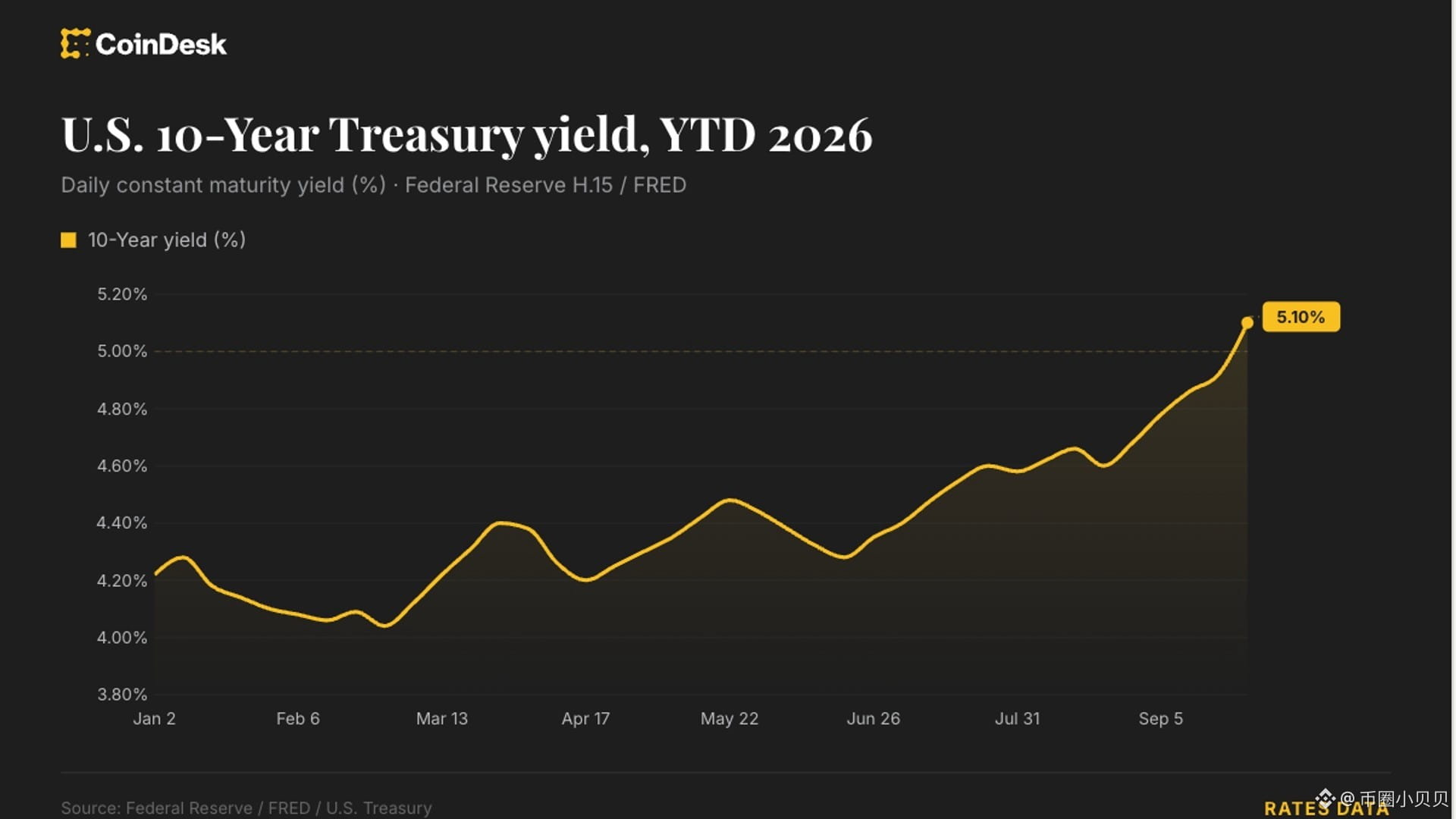
1
3
8.8k
·
--
This data is actually a bit strange..
[🏛️ 进群蹲一手消息](https://app.binance.com/uni-qr/6d5gRrvm)
UNI has piled up on exchanges to a historical high, but in the same week, whales were moving UNI out..
First, lay out the numbers.. UNI reserves across all exchanges reached 113.9 million coins, the highest on record; of that, the largest exchange holds 71.58 million coins—its highest in half a year, up by nearly 20% from the roughly 60 million level before.. Just on September 18 alone, net inflows were 2.60 million coins; on September 22, another 1.89 million came in. That week averaged net inflows of 0.95 million per day, and average daily trading value was also 162% higher than the quarterly average..
So most people see it as: "coins are running to exchanges, and sell pressure is coming"..
This interpretation isn’t wrong, but it’s only half right.. What’s more telling is that in the same week, several batches of large addresses were doing things in the opposite direction: withdrawing UNI from exchanges, and continuing to add more positions..
That’s where it starts to be different.. If the coins were only there to be sold, they should flow one way toward exchanges. But now both sides have volume, which means the composition of this reserve has changed—some coins coming in are inventory that can be sold at any time; other coins are coming in as margin, as shelf stock.. What truly determines direction is no longer whether the reserve is high, but who holds these coins and what they’re for..
If you pull the timeline forward, it gets more interesting.. This week, UNI first rose 11.9% because CME planned to list its futures, and then it followed the whole broader market down, dropping about 13% over 24 hours—now it’s around 8.8 to 9 dollars.. A product that’s about to gain an institutional futures channel is falling just as sharply as a coin with no story behind it.. What’s pressing it down isn’t the project itself—it’s the denominator—risk-free rates are still competing for money, and everyone is being measured on the same valuation ruler..
But here’s the twist.. The exchange balance metric used to be read blindly: "coins coming in equals sell pressure".. Now it starts to carry two kinds of people at the same time: those waiting to sell, and those preparing to take it for collateral and market making.. Reserves keep stacking, yet prices don’t keep falling—then this batch of coins isn’t waiting to be sold; it’s waiting to be taken.
Leave a reversal in place: if reserves continue to set new highs while prices hold steady, that means the number called "exchange balance" can no longer be directly read as sell pressure.. If you keep using it to scare yourself, the direction may end up being the opposite..
This data is actually a bit strange..
🏛️ 进群蹲一手消息
UNI has piled up on exchanges to a historical high, but in the same week, whales were moving UNI out..
First, lay out the numbers.. UNI reserves across all exchanges reached 113.9 million coins, the highest on record; of that, the largest exchange holds 71.58 million coins—its highest in half a year, up by nearly 20% from the roughly 60 million level before.. Just on September 18 alone, net inflows were 2.60 million coins; on September 22, another 1.89 million came in. That week averaged net inflows of 0.95 million per day, and average daily trading value was also 162% higher than the quarterly average..
So most people see it as: "coins are running to exchanges, and sell pressure is coming"..
This interpretation isn’t wrong, but it’s only half right.. What’s more telling is that in the same week, several batches of large addresses were doing things in the opposite direction: withdrawing UNI from exchanges, and continuing to add more positions..
That’s where it starts to be different.. If the coins were only there to be sold, they should flow one way toward exchanges. But now both sides have volume, which means the composition of this reserve has changed—some coins coming in are inventory that can be sold at any time; other coins are coming in as margin, as shelf stock.. What truly determines direction is no longer whether the reserve is high, but who holds these coins and what they’re for..
If you pull the timeline forward, it gets more interesting.. This week, UNI first rose 11.9% because CME planned to list its futures, and then it followed the whole broader market down, dropping about 13% over 24 hours—now it’s around 8.8 to 9 dollars.. A product that’s about to gain an institutional futures channel is falling just as sharply as a coin with no story behind it.. What’s pressing it down isn’t the project itself—it’s the denominator—risk-free rates are still competing for money, and everyone is being measured on the same valuation ruler..
But here’s the twist.. The exchange balance metric used to be read blindly: "coins coming in equals sell pressure".. Now it starts to carry two kinds of people at the same time: those waiting to sell, and those preparing to take it for collateral and market making.. Reserves keep stacking, yet prices don’t keep falling—then this batch of coins isn’t waiting to be sold; it’s waiting to be taken.
Leave a reversal in place: if reserves continue to set new highs while prices hold steady, that means the number called "exchange balance" can no longer be directly read as sell pressure.. If you keep using it to scare yourself, the direction may end up being the opposite..
🏛️ 进群蹲一手消息
UNI has piled up on exchanges to a historical high, but in the same week, whales were moving UNI out..
First, lay out the numbers.. UNI reserves across all exchanges reached 113.9 million coins, the highest on record; of that, the largest exchange holds 71.58 million coins—its highest in half a year, up by nearly 20% from the roughly 60 million level before.. Just on September 18 alone, net inflows were 2.60 million coins; on September 22, another 1.89 million came in. That week averaged net inflows of 0.95 million per day, and average daily trading value was also 162% higher than the quarterly average..
So most people see it as: "coins are running to exchanges, and sell pressure is coming"..
This interpretation isn’t wrong, but it’s only half right.. What’s more telling is that in the same week, several batches of large addresses were doing things in the opposite direction: withdrawing UNI from exchanges, and continuing to add more positions..
That’s where it starts to be different.. If the coins were only there to be sold, they should flow one way toward exchanges. But now both sides have volume, which means the composition of this reserve has changed—some coins coming in are inventory that can be sold at any time; other coins are coming in as margin, as shelf stock.. What truly determines direction is no longer whether the reserve is high, but who holds these coins and what they’re for..
If you pull the timeline forward, it gets more interesting.. This week, UNI first rose 11.9% because CME planned to list its futures, and then it followed the whole broader market down, dropping about 13% over 24 hours—now it’s around 8.8 to 9 dollars.. A product that’s about to gain an institutional futures channel is falling just as sharply as a coin with no story behind it.. What’s pressing it down isn’t the project itself—it’s the denominator—risk-free rates are still competing for money, and everyone is being measured on the same valuation ruler..
But here’s the twist.. The exchange balance metric used to be read blindly: "coins coming in equals sell pressure".. Now it starts to carry two kinds of people at the same time: those waiting to sell, and those preparing to take it for collateral and market making.. Reserves keep stacking, yet prices don’t keep falling—then this batch of coins isn’t waiting to be sold; it’s waiting to be taken.
Leave a reversal in place: if reserves continue to set new highs while prices hold steady, that means the number called "exchange balance" can no longer be directly read as sell pressure.. If you keep using it to scare yourself, the direction may end up being the opposite..

2
2.8k
·
--
This news is actually a bit strange..
[💬 有想法的进群聊](https://app.binance.com/uni-qr/6d5gRrvm)
In a newly released 2026 Digital Wealth Report, the survey asked 1,000 affluent investors: 67% of people have crypto assets in their hands.. Seeing that number, most would say “the industry has finally become mainstream”..
But the more telling figure in the same report is another one: 4.7%.. The report creates an “Integration Index,” scoring up to 10 points based on factors like position size, how long they’ve held it, and whether they have retirement planning in place.. The overall average is only 4.83 points; only 4.7% can cross the 7-point threshold and are deemed to have “truly been integrated into the financial system.”
67% is “have it,” and 4.7% is “integrated.”.. The middle 42.6% of people have crypto, but don’t plan to fold it into their overall financial arrangements..
The report says risk perception can explain just 13.6% of the variation in integration.. While practical factors like asset substitution and retirement planning explain 54.2%.. In plain terms, it’s not “fear” that holds them back—it’s “hassle.”..
If you treat that 42.6% as capital, things get interesting.. This is a batch already in the market, but not yet connected to the system.. Their next step isn’t buying—it’s getting the process connected: whether it can go into retirement accounts, how taxes are recorded, and how reports are produced..
Even more interesting is that the countries’ order is reversed.. Argentina has the highest holding rate at 74%, yet the lowest integration score at 4.62.. The United States has the lowest holding rate at 62.3%, but the integration score is actually the highest at 5.07.. Places with higher mainstreaming tend to be more “transactional,” not more “configurational.”..
That’s where it gets thought-provoking.. Even among the integrated 4.7%, the most common complaint is still fees—34%.. That means people who were convinced are also paying continuously for the privilege of “being able to use it.”..
So what’s truly worth watching isn’t the holding rate in the next report, but whether the integration index will move closer to the 7-point line.. Once those three areas—retirement accounts, tax rules, and standardized reporting—get connected, that 4.7% is the number that will need to be repriced.
Here’s the twist: this report was produced by a crypto lending platform itself. It surveyed 1,000 samples across three countries, which doesn’t represent everyone.. And even if the pipeline is fully set up, the money is only “more conveniently” brought in—it doesn’t mean it will remain there long-term. The lower bound of allocation might be fixed, but the upper bound still depends on other factors..
This news is actually a bit strange..
💬 有想法的进群聊
In a newly released 2026 Digital Wealth Report, the survey asked 1,000 affluent investors: 67% of people have crypto assets in their hands.. Seeing that number, most would say “the industry has finally become mainstream”..
But the more telling figure in the same report is another one: 4.7%.. The report creates an “Integration Index,” scoring up to 10 points based on factors like position size, how long they’ve held it, and whether they have retirement planning in place.. The overall average is only 4.83 points; only 4.7% can cross the 7-point threshold and are deemed to have “truly been integrated into the financial system.”
67% is “have it,” and 4.7% is “integrated.”.. The middle 42.6% of people have crypto, but don’t plan to fold it into their overall financial arrangements..
The report says risk perception can explain just 13.6% of the variation in integration.. While practical factors like asset substitution and retirement planning explain 54.2%.. In plain terms, it’s not “fear” that holds them back—it’s “hassle.”..
If you treat that 42.6% as capital, things get interesting.. This is a batch already in the market, but not yet connected to the system.. Their next step isn’t buying—it’s getting the process connected: whether it can go into retirement accounts, how taxes are recorded, and how reports are produced..
Even more interesting is that the countries’ order is reversed.. Argentina has the highest holding rate at 74%, yet the lowest integration score at 4.62.. The United States has the lowest holding rate at 62.3%, but the integration score is actually the highest at 5.07.. Places with higher mainstreaming tend to be more “transactional,” not more “configurational.”..
That’s where it gets thought-provoking.. Even among the integrated 4.7%, the most common complaint is still fees—34%.. That means people who were convinced are also paying continuously for the privilege of “being able to use it.”..
So what’s truly worth watching isn’t the holding rate in the next report, but whether the integration index will move closer to the 7-point line.. Once those three areas—retirement accounts, tax rules, and standardized reporting—get connected, that 4.7% is the number that will need to be repriced.
Here’s the twist: this report was produced by a crypto lending platform itself. It surveyed 1,000 samples across three countries, which doesn’t represent everyone.. And even if the pipeline is fully set up, the money is only “more conveniently” brought in—it doesn’t mean it will remain there long-term. The lower bound of allocation might be fixed, but the upper bound still depends on other factors..
💬 有想法的进群聊
In a newly released 2026 Digital Wealth Report, the survey asked 1,000 affluent investors: 67% of people have crypto assets in their hands.. Seeing that number, most would say “the industry has finally become mainstream”..
But the more telling figure in the same report is another one: 4.7%.. The report creates an “Integration Index,” scoring up to 10 points based on factors like position size, how long they’ve held it, and whether they have retirement planning in place.. The overall average is only 4.83 points; only 4.7% can cross the 7-point threshold and are deemed to have “truly been integrated into the financial system.”
67% is “have it,” and 4.7% is “integrated.”.. The middle 42.6% of people have crypto, but don’t plan to fold it into their overall financial arrangements..
The report says risk perception can explain just 13.6% of the variation in integration.. While practical factors like asset substitution and retirement planning explain 54.2%.. In plain terms, it’s not “fear” that holds them back—it’s “hassle.”..
If you treat that 42.6% as capital, things get interesting.. This is a batch already in the market, but not yet connected to the system.. Their next step isn’t buying—it’s getting the process connected: whether it can go into retirement accounts, how taxes are recorded, and how reports are produced..
Even more interesting is that the countries’ order is reversed.. Argentina has the highest holding rate at 74%, yet the lowest integration score at 4.62.. The United States has the lowest holding rate at 62.3%, but the integration score is actually the highest at 5.07.. Places with higher mainstreaming tend to be more “transactional,” not more “configurational.”..
That’s where it gets thought-provoking.. Even among the integrated 4.7%, the most common complaint is still fees—34%.. That means people who were convinced are also paying continuously for the privilege of “being able to use it.”..
So what’s truly worth watching isn’t the holding rate in the next report, but whether the integration index will move closer to the 7-point line.. Once those three areas—retirement accounts, tax rules, and standardized reporting—get connected, that 4.7% is the number that will need to be repriced.
Here’s the twist: this report was produced by a crypto lending platform itself. It surveyed 1,000 samples across three countries, which doesn’t represent everyone.. And even if the pipeline is fully set up, the money is only “more conveniently” brought in—it doesn’t mean it will remain there long-term. The lower bound of allocation might be fixed, but the upper bound still depends on other factors..

1.1k
·
--
Today everyone is watching BTC break below 84,000.. But at the same time, the world’s largest asset manager is discussing a deal that’s almost unrelated to crypto..
[🤖 进群看叙事](https://app.binance.com/uni-qr/6d5gRrvm)
BlackRock and IFM are in exclusive talks to buy a set of data center assets worth $25 billion.. This isn’t the first time. Earlier this year, in July, its GIP bought Aligned Data Centers for $40 billion, securing 51 campuses and 6.4 GW of capacity; it then partnered with Spain’s ACS on a joint venture of roughly $27 billion, and also struck a $14 billion, 1 GW data center deal in Texas at El Paso..
Many people see this as “crypto getting bled again”.. But what may be worth watching is something else: the money hasn’t left—it’s just changed targets..
Tech companies don’t want to put AI capital expenditures on their own balance sheets, so they look for “landlords” that can absorb the construction costs upfront.. And data center rents provide predictable cash flows—so they can be packaged, sliced into layers, and sold to institutions..
Doesn’t this sound familiar.. Back when Bitcoin was moved into brokerage accounts and turned into an ETF, the logic was the same: first reshape the asset into a form that institutions are willing to hold, and then charge a toll for running it through the pipeline..
Even more interesting is what happens downstream.. In this round, the money isn’t really chasing chips—it’s chasing rack space and power—so you’ll see mining firms convert their mining sites into AI hosting. The money for compute is converging with the money for electricity..
But the problem is also right there.. Today, the U.S. 10-year Treasury yield is at 5.11%, the highest since 2019.. The higher the risk-free rate, the more uncomfortable these long-payback, high-leverage infrastructure joint ventures become—financing costs are their weak spot..
So what’s truly worth monitoring isn’t whether this $25 billion deal can be signed, but whether the next transaction gets delayed, repriced, or simply falls apart.. That’s when this narrative first starts to really loosen..
One twist to keep in mind: if rates really top out, the first thing to bounce back might not be crypto—but these heavy assets whose costs of capital have been pinned down on the ground..
Today everyone is watching BTC break below 84,000.. But at the same time, the world’s largest asset manager is discussing a deal that’s almost unrelated to crypto..
🤖 进群看叙事
BlackRock and IFM are in exclusive talks to buy a set of data center assets worth $25 billion.. This isn’t the first time. Earlier this year, in July, its GIP bought Aligned Data Centers for $40 billion, securing 51 campuses and 6.4 GW of capacity; it then partnered with Spain’s ACS on a joint venture of roughly $27 billion, and also struck a $14 billion, 1 GW data center deal in Texas at El Paso..
Many people see this as “crypto getting bled again”.. But what may be worth watching is something else: the money hasn’t left—it’s just changed targets..
Tech companies don’t want to put AI capital expenditures on their own balance sheets, so they look for “landlords” that can absorb the construction costs upfront.. And data center rents provide predictable cash flows—so they can be packaged, sliced into layers, and sold to institutions..
Doesn’t this sound familiar.. Back when Bitcoin was moved into brokerage accounts and turned into an ETF, the logic was the same: first reshape the asset into a form that institutions are willing to hold, and then charge a toll for running it through the pipeline..
Even more interesting is what happens downstream.. In this round, the money isn’t really chasing chips—it’s chasing rack space and power—so you’ll see mining firms convert their mining sites into AI hosting. The money for compute is converging with the money for electricity..
But the problem is also right there.. Today, the U.S. 10-year Treasury yield is at 5.11%, the highest since 2019.. The higher the risk-free rate, the more uncomfortable these long-payback, high-leverage infrastructure joint ventures become—financing costs are their weak spot..
So what’s truly worth monitoring isn’t whether this $25 billion deal can be signed, but whether the next transaction gets delayed, repriced, or simply falls apart.. That’s when this narrative first starts to really loosen..
One twist to keep in mind: if rates really top out, the first thing to bounce back might not be crypto—but these heavy assets whose costs of capital have been pinned down on the ground..
🤖 进群看叙事
BlackRock and IFM are in exclusive talks to buy a set of data center assets worth $25 billion.. This isn’t the first time. Earlier this year, in July, its GIP bought Aligned Data Centers for $40 billion, securing 51 campuses and 6.4 GW of capacity; it then partnered with Spain’s ACS on a joint venture of roughly $27 billion, and also struck a $14 billion, 1 GW data center deal in Texas at El Paso..
Many people see this as “crypto getting bled again”.. But what may be worth watching is something else: the money hasn’t left—it’s just changed targets..
Tech companies don’t want to put AI capital expenditures on their own balance sheets, so they look for “landlords” that can absorb the construction costs upfront.. And data center rents provide predictable cash flows—so they can be packaged, sliced into layers, and sold to institutions..
Doesn’t this sound familiar.. Back when Bitcoin was moved into brokerage accounts and turned into an ETF, the logic was the same: first reshape the asset into a form that institutions are willing to hold, and then charge a toll for running it through the pipeline..
Even more interesting is what happens downstream.. In this round, the money isn’t really chasing chips—it’s chasing rack space and power—so you’ll see mining firms convert their mining sites into AI hosting. The money for compute is converging with the money for electricity..
But the problem is also right there.. Today, the U.S. 10-year Treasury yield is at 5.11%, the highest since 2019.. The higher the risk-free rate, the more uncomfortable these long-payback, high-leverage infrastructure joint ventures become—financing costs are their weak spot..
So what’s truly worth monitoring isn’t whether this $25 billion deal can be signed, but whether the next transaction gets delayed, repriced, or simply falls apart.. That’s when this narrative first starts to really loosen..
One twist to keep in mind: if rates really top out, the first thing to bounce back might not be crypto—but these heavy assets whose costs of capital have been pinned down on the ground..

3
1.6k
·
--
#比特币现货etf四日流入23.1亿美元
This data is actually a bit strange..
[💥 最新消息群里说](https://app.binance.com/uni-qr/6d5gRrvm)
Early this morning, Bitcoin broke below $84,000; Dogecoin fell 8% in a day. Worldcoin and Pepe led the declines. U.S. Treasury yields also hit the highest level since 2007.. Everyone is talking about the same thing: money is pulling out..
But on the same day, U.S. spot Bitcoin ETFs recorded net inflows of $347 million.. And this is the fifth consecutive trading day of net inflows..
Now things start to look different..
Let’s lay out the numbers.. On Sep 17: $159.5 million, Sep 18: $433 million, Sep 21: $999 million, and by Sep 23: $347 million. BlackRock’s IBIT alone took about $166 million—nearly half of the day’s total.. Even more interesting: on the same day, spot Ethereum ETFs also pulled in $105 million, with each ETHA taking $50.8 million. Together, the two types total roughly $452 million..
So what’s really worth watching isn’t “it fell,” but who is selling and who is buying..
This round of underperformance is led by DOGE, Worldcoin, and Pepe—what’s being sold is leveraged positions and sentiment-driven positions.. Meanwhile, the money in the ETF channel is passive buying that follows the calendar; it doesn’t care about today’s candlestick chart, and it doesn’t look at liquidation data.. One is money in trading accounts, and the other is money in brokerage accounts. The more urgent the price move, the more opposite these two groups’ actions become..
That’s where things get intriguing..
Bitcoin is currently being tugged by two forces at the same time.. One side is that the risk-free rate is being repriced, making the opportunity cost of holding non-yielding assets more expensive; the other side is that the regulated channel has been absorbing continuously for five days.. The former determines whether it’s worth holding; the latter determines whether anyone is there on the other side to catch the selling..
But here’s the question..
The inflows are actually cooling off.. From $999 million down to $347 million—shrinking by about two-thirds over the week. This looks more like a natural pullback after a concentrated build-up, not continued aggressive adds.. If one day this number flips to negative while the price hasn’t dropped enough, that’s when it becomes truly concerning..
What’s really worth tracking isn’t tonight’s candlesticks—it’s whether the ETF’s daily net inflows have broken..
Once inflows turn negative, both price and capital will turn around together—that’s when a turning point happens.. Conversely, if the price keeps grinding lower and inflows can still stay positive, then this move is just leveraged positions being flushed—not money exiting.
#比特币现货etf四日流入23.1亿美元
This data is actually a bit strange..
💥 最新消息群里说
Early this morning, Bitcoin broke below $84,000; Dogecoin fell 8% in a day. Worldcoin and Pepe led the declines. U.S. Treasury yields also hit the highest level since 2007.. Everyone is talking about the same thing: money is pulling out..
But on the same day, U.S. spot Bitcoin ETFs recorded net inflows of $347 million.. And this is the fifth consecutive trading day of net inflows..
Now things start to look different..
Let’s lay out the numbers.. On Sep 17: $159.5 million, Sep 18: $433 million, Sep 21: $999 million, and by Sep 23: $347 million. BlackRock’s IBIT alone took about $166 million—nearly half of the day’s total.. Even more interesting: on the same day, spot Ethereum ETFs also pulled in $105 million, with each ETHA taking $50.8 million. Together, the two types total roughly $452 million..
So what’s really worth watching isn’t “it fell,” but who is selling and who is buying..
This round of underperformance is led by DOGE, Worldcoin, and Pepe—what’s being sold is leveraged positions and sentiment-driven positions.. Meanwhile, the money in the ETF channel is passive buying that follows the calendar; it doesn’t care about today’s candlestick chart, and it doesn’t look at liquidation data.. One is money in trading accounts, and the other is money in brokerage accounts. The more urgent the price move, the more opposite these two groups’ actions become..
That’s where things get intriguing..
Bitcoin is currently being tugged by two forces at the same time.. One side is that the risk-free rate is being repriced, making the opportunity cost of holding non-yielding assets more expensive; the other side is that the regulated channel has been absorbing continuously for five days.. The former determines whether it’s worth holding; the latter determines whether anyone is there on the other side to catch the selling..
But here’s the question..
The inflows are actually cooling off.. From $999 million down to $347 million—shrinking by about two-thirds over the week. This looks more like a natural pullback after a concentrated build-up, not continued aggressive adds.. If one day this number flips to negative while the price hasn’t dropped enough, that’s when it becomes truly concerning..
What’s really worth tracking isn’t tonight’s candlesticks—it’s whether the ETF’s daily net inflows have broken..
Once inflows turn negative, both price and capital will turn around together—that’s when a turning point happens.. Conversely, if the price keeps grinding lower and inflows can still stay positive, then this move is just leveraged positions being flushed—not money exiting.
This data is actually a bit strange..
💥 最新消息群里说
Early this morning, Bitcoin broke below $84,000; Dogecoin fell 8% in a day. Worldcoin and Pepe led the declines. U.S. Treasury yields also hit the highest level since 2007.. Everyone is talking about the same thing: money is pulling out..
But on the same day, U.S. spot Bitcoin ETFs recorded net inflows of $347 million.. And this is the fifth consecutive trading day of net inflows..
Now things start to look different..
Let’s lay out the numbers.. On Sep 17: $159.5 million, Sep 18: $433 million, Sep 21: $999 million, and by Sep 23: $347 million. BlackRock’s IBIT alone took about $166 million—nearly half of the day’s total.. Even more interesting: on the same day, spot Ethereum ETFs also pulled in $105 million, with each ETHA taking $50.8 million. Together, the two types total roughly $452 million..
So what’s really worth watching isn’t “it fell,” but who is selling and who is buying..
This round of underperformance is led by DOGE, Worldcoin, and Pepe—what’s being sold is leveraged positions and sentiment-driven positions.. Meanwhile, the money in the ETF channel is passive buying that follows the calendar; it doesn’t care about today’s candlestick chart, and it doesn’t look at liquidation data.. One is money in trading accounts, and the other is money in brokerage accounts. The more urgent the price move, the more opposite these two groups’ actions become..
That’s where things get intriguing..
Bitcoin is currently being tugged by two forces at the same time.. One side is that the risk-free rate is being repriced, making the opportunity cost of holding non-yielding assets more expensive; the other side is that the regulated channel has been absorbing continuously for five days.. The former determines whether it’s worth holding; the latter determines whether anyone is there on the other side to catch the selling..
But here’s the question..
The inflows are actually cooling off.. From $999 million down to $347 million—shrinking by about two-thirds over the week. This looks more like a natural pullback after a concentrated build-up, not continued aggressive adds.. If one day this number flips to negative while the price hasn’t dropped enough, that’s when it becomes truly concerning..
What’s really worth tracking isn’t tonight’s candlesticks—it’s whether the ETF’s daily net inflows have broken..
Once inflows turn negative, both price and capital will turn around together—that’s when a turning point happens.. Conversely, if the price keeps grinding lower and inflows can still stay positive, then this move is just leveraged positions being flushed—not money exiting.
1
10
19.1k
·
--
#美债10年期收益率创19年新高
This news is actually a little strange..
[📢 今日盘面群里聊](https://app.binance.com/uni-qr/6d5gRrvm)
Bitcoin falls back below 84,000, yet the hardest hit is not it.. Dogecoin drops 7% in a day; ZEC, XRP, HYPE each fall 5% to 6%; Ethereum, SOL, BNB only slip 2% to 3%; TRX barely moves.. Most people see “crypto is once again following the pullback,” but what’s really worth watching may not even be on the crypto side..
At the same time, something else is happening.. The U.S. 10-year Treasury yield closes at 5.11%, jumps 15 basis points within a day, and sits at a near-20-year high.. And on that day, three things collide—Brent crude rebounds more than 4%, back near $104, ending a six-day losing streak; the U.S. business activity index rises to 58.4, the strongest in more than five years; and a $70 billion 5-year Treasury auction by the Treasury Department draws weak demand. The winning yield is 5.033%, the highest since 2006. Buyers also want a bit more return before they’ll take the deal..
Things start to look different from here.. When you can earn 5% just by doing nothing, you have to reprice the non-yielding assets.. Holding a single Bitcoin is, in essence, giving up the “risk-free rate” you could have earned. The higher the rate, the more expensive that foregone return becomes.. Meanwhile, positions piled up with leverage also get more expensive to finance.. So this round of declines isn’t because something happened on-chain—it’s because the denominator changed..
Even more interesting is the order of the selloff.. The segments priced more by sentiment and further away from cash flows bleed faster—Dogecoin, ZEC, XRP, HYPE are all on that line. By contrast, BTC, ETH—labeled with the tag of “assets”—fall the least.. This isn’t panic; it’s capital reorganizing itself by “tiers.”
Capital hasn’t left the market—it’s just switched places to collect interest.. The yields on short-term debt, cash, and money market funds are sitting right there. What gets siphoned off this time is exactly the kind of chips whose valuation is dominated by “story premium”.. Take a look at TRX, which falls the least—it doesn’t have much of a story and no real room for imagination, so it’s fine..
But the problem is.. This downward pressure doesn’t come from a single source.. The oil price rebound pushes rate-cut expectations further out; strong business activity gives justification for “no need to rush into rate cuts”; weak demand in the 5-year auction shows that even Treasuries themselves are being repriced upward in price/return—three lines pointing in the same direction makes it hard to call it mere coincidence..
What’s really worth watching comes down to two points.. One is the batch of options expiring on Friday—around $14 billion worth. A large block of call options with a strike around 85,000 is sitting above, capping upside. The price hovers below it, and the market makers’ hedging actions can amplify volatility.. Two is the outcome of the next few Treasury auctions—if they continue to come in cold, yields still have room to push higher..
The reversal is already here: if rates stay elevated for a while longer, the first crypto assets to be repriced won’t be BTC, but rather those that rely purely on narrative. But once the market starts confirming that rates have peaked, those high-Beta names that fell the hardest today are often also the first ones to bounce back.. What matters now isn’t who dropped the most—it’s how far this “risk-free rate stealing money” episode goes before it finally stops..
#美债10年期收益率创19年新高
This news is actually a little strange..
📢 今日盘面群里聊
Bitcoin falls back below 84,000, yet the hardest hit is not it.. Dogecoin drops 7% in a day; ZEC, XRP, HYPE each fall 5% to 6%; Ethereum, SOL, BNB only slip 2% to 3%; TRX barely moves.. Most people see “crypto is once again following the pullback,” but what’s really worth watching may not even be on the crypto side..
At the same time, something else is happening.. The U.S. 10-year Treasury yield closes at 5.11%, jumps 15 basis points within a day, and sits at a near-20-year high.. And on that day, three things collide—Brent crude rebounds more than 4%, back near $104, ending a six-day losing streak; the U.S. business activity index rises to 58.4, the strongest in more than five years; and a $70 billion 5-year Treasury auction by the Treasury Department draws weak demand. The winning yield is 5.033%, the highest since 2006. Buyers also want a bit more return before they’ll take the deal..
Things start to look different from here.. When you can earn 5% just by doing nothing, you have to reprice the non-yielding assets.. Holding a single Bitcoin is, in essence, giving up the “risk-free rate” you could have earned. The higher the rate, the more expensive that foregone return becomes.. Meanwhile, positions piled up with leverage also get more expensive to finance.. So this round of declines isn’t because something happened on-chain—it’s because the denominator changed..
Even more interesting is the order of the selloff.. The segments priced more by sentiment and further away from cash flows bleed faster—Dogecoin, ZEC, XRP, HYPE are all on that line. By contrast, BTC, ETH—labeled with the tag of “assets”—fall the least.. This isn’t panic; it’s capital reorganizing itself by “tiers.”
Capital hasn’t left the market—it’s just switched places to collect interest.. The yields on short-term debt, cash, and money market funds are sitting right there. What gets siphoned off this time is exactly the kind of chips whose valuation is dominated by “story premium”.. Take a look at TRX, which falls the least—it doesn’t have much of a story and no real room for imagination, so it’s fine..
But the problem is.. This downward pressure doesn’t come from a single source.. The oil price rebound pushes rate-cut expectations further out; strong business activity gives justification for “no need to rush into rate cuts”; weak demand in the 5-year auction shows that even Treasuries themselves are being repriced upward in price/return—three lines pointing in the same direction makes it hard to call it mere coincidence..
What’s really worth watching comes down to two points.. One is the batch of options expiring on Friday—around $14 billion worth. A large block of call options with a strike around 85,000 is sitting above, capping upside. The price hovers below it, and the market makers’ hedging actions can amplify volatility.. Two is the outcome of the next few Treasury auctions—if they continue to come in cold, yields still have room to push higher..
The reversal is already here: if rates stay elevated for a while longer, the first crypto assets to be repriced won’t be BTC, but rather those that rely purely on narrative. But once the market starts confirming that rates have peaked, those high-Beta names that fell the hardest today are often also the first ones to bounce back.. What matters now isn’t who dropped the most—it’s how far this “risk-free rate stealing money” episode goes before it finally stops..
This news is actually a little strange..
📢 今日盘面群里聊
Bitcoin falls back below 84,000, yet the hardest hit is not it.. Dogecoin drops 7% in a day; ZEC, XRP, HYPE each fall 5% to 6%; Ethereum, SOL, BNB only slip 2% to 3%; TRX barely moves.. Most people see “crypto is once again following the pullback,” but what’s really worth watching may not even be on the crypto side..
At the same time, something else is happening.. The U.S. 10-year Treasury yield closes at 5.11%, jumps 15 basis points within a day, and sits at a near-20-year high.. And on that day, three things collide—Brent crude rebounds more than 4%, back near $104, ending a six-day losing streak; the U.S. business activity index rises to 58.4, the strongest in more than five years; and a $70 billion 5-year Treasury auction by the Treasury Department draws weak demand. The winning yield is 5.033%, the highest since 2006. Buyers also want a bit more return before they’ll take the deal..
Things start to look different from here.. When you can earn 5% just by doing nothing, you have to reprice the non-yielding assets.. Holding a single Bitcoin is, in essence, giving up the “risk-free rate” you could have earned. The higher the rate, the more expensive that foregone return becomes.. Meanwhile, positions piled up with leverage also get more expensive to finance.. So this round of declines isn’t because something happened on-chain—it’s because the denominator changed..
Even more interesting is the order of the selloff.. The segments priced more by sentiment and further away from cash flows bleed faster—Dogecoin, ZEC, XRP, HYPE are all on that line. By contrast, BTC, ETH—labeled with the tag of “assets”—fall the least.. This isn’t panic; it’s capital reorganizing itself by “tiers.”
Capital hasn’t left the market—it’s just switched places to collect interest.. The yields on short-term debt, cash, and money market funds are sitting right there. What gets siphoned off this time is exactly the kind of chips whose valuation is dominated by “story premium”.. Take a look at TRX, which falls the least—it doesn’t have much of a story and no real room for imagination, so it’s fine..
But the problem is.. This downward pressure doesn’t come from a single source.. The oil price rebound pushes rate-cut expectations further out; strong business activity gives justification for “no need to rush into rate cuts”; weak demand in the 5-year auction shows that even Treasuries themselves are being repriced upward in price/return—three lines pointing in the same direction makes it hard to call it mere coincidence..
What’s really worth watching comes down to two points.. One is the batch of options expiring on Friday—around $14 billion worth. A large block of call options with a strike around 85,000 is sitting above, capping upside. The price hovers below it, and the market makers’ hedging actions can amplify volatility.. Two is the outcome of the next few Treasury auctions—if they continue to come in cold, yields still have room to push higher..
The reversal is already here: if rates stay elevated for a while longer, the first crypto assets to be repriced won’t be BTC, but rather those that rely purely on narrative. But once the market starts confirming that rates have peaked, those high-Beta names that fell the hardest today are often also the first ones to bounce back.. What matters now isn’t who dropped the most—it’s how far this “risk-free rate stealing money” episode goes before it finally stops..
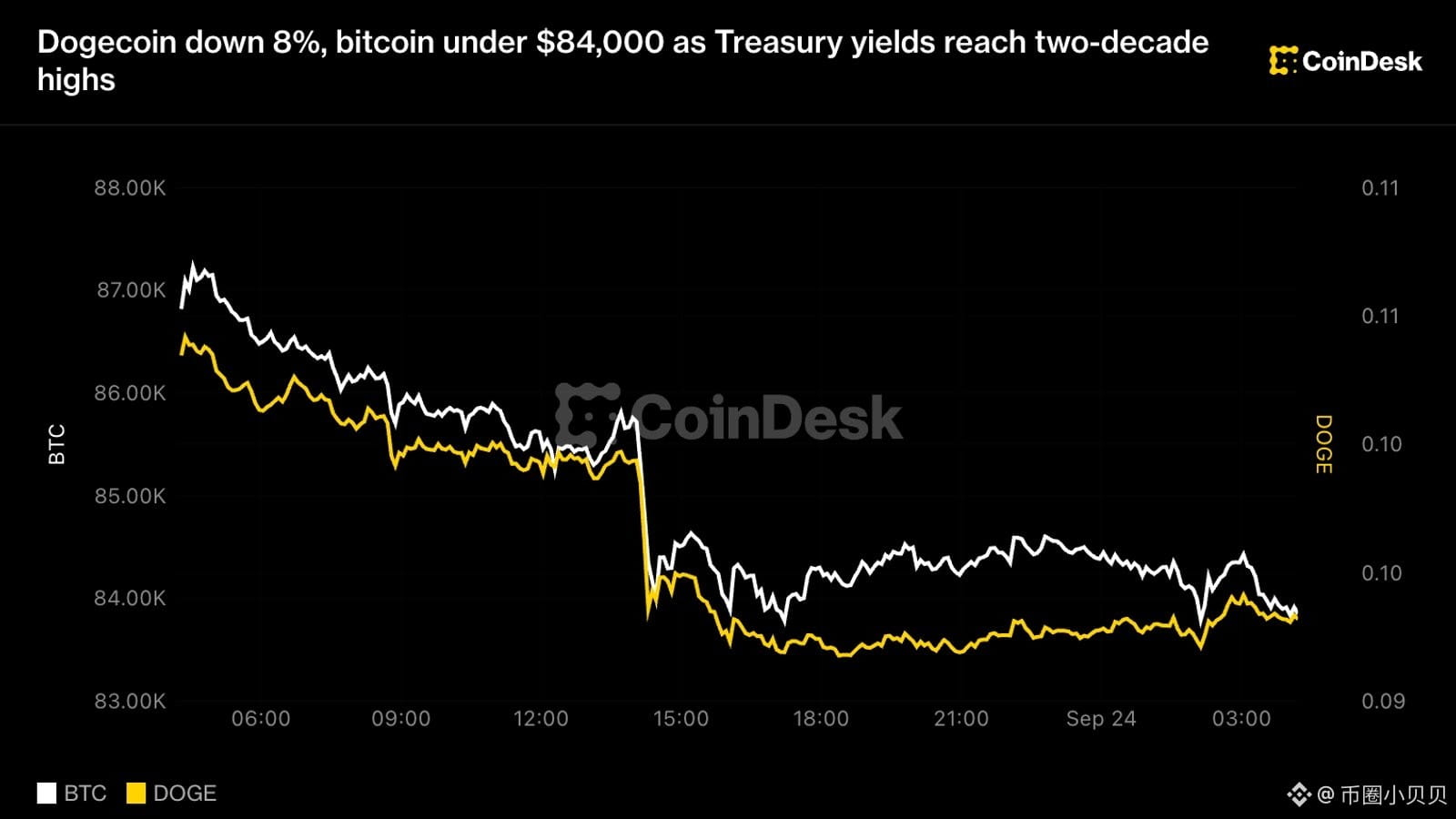
7
8.2k
·
--
#美国拟推动美元稳定币海外使用
This news is actually a bit strange..
[⚖️ 盘面异动群里说](https://app.binance.com/uni-qr/6d5gRrvm)
According to a report from Bloomberg, the US is considering pushing a dollar stablecoin to go overseas.. The participants could include the US Treasury, the US State Department, and a government financial institution that focuses specifically on overseas investment. The approach would be a public-private cooperative joint venture project..
Most people see this as: “The US has finally loosened up on stablecoins”.. But what’s really worth looking at might be the other side of this—what’s the biggest component in stablecoin reserves? It’s short-term US Treasuries.. So the larger the stablecoin is, the more it effectively opens up a batch of channels abroad to buy US Treasuries..
That’s where things start to look different.. Pushing a dollar stablecoin overseas, on the surface, expands the use of the US dollar; in reality, it provides US Treasuries with a new distribution channel.. For overseas holders who want dollars, they don’t necessarily need to open a US bank account—if they hold the stablecoin, the money flows from the issuer into US Treasuries..
And when you place this alongside the market picture of the past couple of days, the “flavor” becomes clearer.. The 10-year Treasury yield hit a new 19-year high, the US Dollar Index climbed back above 101 after two months, and Bitcoin kept testing between 84,000 and 87,000.. With the dollar tightening and Treasuries competing for cash, at this moment it’s hard to say this stablecoin push abroad is just a coincidence..
Even more interesting is how the narrative itself has changed.. Stablecoins used to be framed as “crypto payment tools,” but now they’re being used as a distribution channel for sovereign debt.. Once this positioning holds, looking at stablecoins isn’t just about on-chain activity anymore—it’s about how much sovereign-level demand it ends up serving behind the scenes..
But here’s the problem.. If this plan really moves forward, the most direct beneficiaries might not be the coins people are constantly talking about, but rather the few issuers holding the reserves—their scale would be directly amplified by policy. What’s truly worth watching is when the overseas compliance framework is implemented: who gets the licenses, and which entities are specifically named as partners..
The twist is this: if it stays in the “consideration” stage, then in two days nobody will remember this news.. But if it starts producing documents, laying out frameworks, then this line won’t be just a news story anymore—it will become a new pipeline that grows out of the US Treasury buying structure..
#美国拟推动美元稳定币海外使用
This news is actually a bit strange..
⚖️ 盘面异动群里说
According to a report from Bloomberg, the US is considering pushing a dollar stablecoin to go overseas.. The participants could include the US Treasury, the US State Department, and a government financial institution that focuses specifically on overseas investment. The approach would be a public-private cooperative joint venture project..
Most people see this as: “The US has finally loosened up on stablecoins”.. But what’s really worth looking at might be the other side of this—what’s the biggest component in stablecoin reserves? It’s short-term US Treasuries.. So the larger the stablecoin is, the more it effectively opens up a batch of channels abroad to buy US Treasuries..
That’s where things start to look different.. Pushing a dollar stablecoin overseas, on the surface, expands the use of the US dollar; in reality, it provides US Treasuries with a new distribution channel.. For overseas holders who want dollars, they don’t necessarily need to open a US bank account—if they hold the stablecoin, the money flows from the issuer into US Treasuries..
And when you place this alongside the market picture of the past couple of days, the “flavor” becomes clearer.. The 10-year Treasury yield hit a new 19-year high, the US Dollar Index climbed back above 101 after two months, and Bitcoin kept testing between 84,000 and 87,000.. With the dollar tightening and Treasuries competing for cash, at this moment it’s hard to say this stablecoin push abroad is just a coincidence..
Even more interesting is how the narrative itself has changed.. Stablecoins used to be framed as “crypto payment tools,” but now they’re being used as a distribution channel for sovereign debt.. Once this positioning holds, looking at stablecoins isn’t just about on-chain activity anymore—it’s about how much sovereign-level demand it ends up serving behind the scenes..
But here’s the problem.. If this plan really moves forward, the most direct beneficiaries might not be the coins people are constantly talking about, but rather the few issuers holding the reserves—their scale would be directly amplified by policy. What’s truly worth watching is when the overseas compliance framework is implemented: who gets the licenses, and which entities are specifically named as partners..
The twist is this: if it stays in the “consideration” stage, then in two days nobody will remember this news.. But if it starts producing documents, laying out frameworks, then this line won’t be just a news story anymore—it will become a new pipeline that grows out of the US Treasury buying structure..
This news is actually a bit strange..
⚖️ 盘面异动群里说
According to a report from Bloomberg, the US is considering pushing a dollar stablecoin to go overseas.. The participants could include the US Treasury, the US State Department, and a government financial institution that focuses specifically on overseas investment. The approach would be a public-private cooperative joint venture project..
Most people see this as: “The US has finally loosened up on stablecoins”.. But what’s really worth looking at might be the other side of this—what’s the biggest component in stablecoin reserves? It’s short-term US Treasuries.. So the larger the stablecoin is, the more it effectively opens up a batch of channels abroad to buy US Treasuries..
That’s where things start to look different.. Pushing a dollar stablecoin overseas, on the surface, expands the use of the US dollar; in reality, it provides US Treasuries with a new distribution channel.. For overseas holders who want dollars, they don’t necessarily need to open a US bank account—if they hold the stablecoin, the money flows from the issuer into US Treasuries..
And when you place this alongside the market picture of the past couple of days, the “flavor” becomes clearer.. The 10-year Treasury yield hit a new 19-year high, the US Dollar Index climbed back above 101 after two months, and Bitcoin kept testing between 84,000 and 87,000.. With the dollar tightening and Treasuries competing for cash, at this moment it’s hard to say this stablecoin push abroad is just a coincidence..
Even more interesting is how the narrative itself has changed.. Stablecoins used to be framed as “crypto payment tools,” but now they’re being used as a distribution channel for sovereign debt.. Once this positioning holds, looking at stablecoins isn’t just about on-chain activity anymore—it’s about how much sovereign-level demand it ends up serving behind the scenes..
But here’s the problem.. If this plan really moves forward, the most direct beneficiaries might not be the coins people are constantly talking about, but rather the few issuers holding the reserves—their scale would be directly amplified by policy. What’s truly worth watching is when the overseas compliance framework is implemented: who gets the licenses, and which entities are specifically named as partners..
The twist is this: if it stays in the “consideration” stage, then in two days nobody will remember this news.. But if it starts producing documents, laying out frameworks, then this line won’t be just a news story anymore—it will become a new pipeline that grows out of the US Treasury buying structure..

5
2.1k
·
--
This news is actually a bit strange...
[📊 热点新闻](https://app.binance.com/uni-qr/6d5gRrvm)
An iPhone app listed on the App Store advertises itself as an “on-chain monitoring” tool that is “read-only.” It doesn’t need you to connect a wallet, and it doesn’t ask you to enter a mnemonic phrase. But when a security team took it apart, they found modules hidden inside that can read data from other apps and even send it back to a remote server...
Many people see this as “yet another phishing app.” But what’s really worth paying attention to is this: the module appeared in two official versions, 1.1 and 1.2, and it was signed under the same Apple developer identity as the app itself. It wasn’t packaged again by someone else—the version you downloaded directly from the store already contained it...
That’s a little unsettling... The default rule everyone assumes is: “If it passes review, it’s clean.” This time, the thing that got pried open is exactly the earliest link in the chain of trust...
Even more interesting is how it goes about its attack. It doesn’t trick you into entering a mnemonic phrase. Instead, it first installs itself as a small tool that has nothing to do with your wallet, and then reaches into your phone to grab data from nearly twenty wallet- and notes-related apps. If you’re used to storing mnemonic phrases in the Notes app, the thing it’s looking for is conveniently sitting right there waiting...
Put it together with another message from these past few days, and the meaning changes... After $20 million worth of assets belonging to thousands of hardware wallet users was moved away, investigators found that the attacker used the very batch of keys that was “already known.” The common thread between the two incidents is very clear—what was “pried open” wasn’t the chain; it was the link where the key was discovered...
Step back one more level. Institutional money is pouring into “entry points”—buying licenses, grabbing custody, and stuffing tokenized assets into brokerage accounts. And at the same time, on the retail side, those entry points are being repeatedly breached. Pricing the entry point while also chiseling at it—that’s what makes both events meaningful...
But the problem is this... That malicious module was removed from the new version on September 17. However, the data that already got sent out won’t come back just because you uninstall the app. For anyone who used those two versions in the meantime, the mnemonic phrases and private keys on that machine are, by default, no longer secret. The security team’s recommended solution is also very straightforward: switch to a device that has never had it installed, create a new wallet, and move your assets over.
So what’s truly worth watching isn’t whether this app gets taken down. It’s the longer line—once your phone becomes a wallet, which “gap” actually counts as the real wallet: the operating system hole, the store review gate, or the Notes app where you store your mnemonic phrase?
As long as this line remains, the premium on the phrase “self-custody” won’t disappear. Every time something like this happens, the market re-tags the value of self-custody again.
This news is actually a bit strange...
📊 热点新闻
An iPhone app listed on the App Store advertises itself as an “on-chain monitoring” tool that is “read-only.” It doesn’t need you to connect a wallet, and it doesn’t ask you to enter a mnemonic phrase. But when a security team took it apart, they found modules hidden inside that can read data from other apps and even send it back to a remote server...
Many people see this as “yet another phishing app.” But what’s really worth paying attention to is this: the module appeared in two official versions, 1.1 and 1.2, and it was signed under the same Apple developer identity as the app itself. It wasn’t packaged again by someone else—the version you downloaded directly from the store already contained it...
That’s a little unsettling... The default rule everyone assumes is: “If it passes review, it’s clean.” This time, the thing that got pried open is exactly the earliest link in the chain of trust...
Even more interesting is how it goes about its attack. It doesn’t trick you into entering a mnemonic phrase. Instead, it first installs itself as a small tool that has nothing to do with your wallet, and then reaches into your phone to grab data from nearly twenty wallet- and notes-related apps. If you’re used to storing mnemonic phrases in the Notes app, the thing it’s looking for is conveniently sitting right there waiting...
Put it together with another message from these past few days, and the meaning changes... After $20 million worth of assets belonging to thousands of hardware wallet users was moved away, investigators found that the attacker used the very batch of keys that was “already known.” The common thread between the two incidents is very clear—what was “pried open” wasn’t the chain; it was the link where the key was discovered...
Step back one more level. Institutional money is pouring into “entry points”—buying licenses, grabbing custody, and stuffing tokenized assets into brokerage accounts. And at the same time, on the retail side, those entry points are being repeatedly breached. Pricing the entry point while also chiseling at it—that’s what makes both events meaningful...
But the problem is this... That malicious module was removed from the new version on September 17. However, the data that already got sent out won’t come back just because you uninstall the app. For anyone who used those two versions in the meantime, the mnemonic phrases and private keys on that machine are, by default, no longer secret. The security team’s recommended solution is also very straightforward: switch to a device that has never had it installed, create a new wallet, and move your assets over.
So what’s truly worth watching isn’t whether this app gets taken down. It’s the longer line—once your phone becomes a wallet, which “gap” actually counts as the real wallet: the operating system hole, the store review gate, or the Notes app where you store your mnemonic phrase?
As long as this line remains, the premium on the phrase “self-custody” won’t disappear. Every time something like this happens, the market re-tags the value of self-custody again.
📊 热点新闻
An iPhone app listed on the App Store advertises itself as an “on-chain monitoring” tool that is “read-only.” It doesn’t need you to connect a wallet, and it doesn’t ask you to enter a mnemonic phrase. But when a security team took it apart, they found modules hidden inside that can read data from other apps and even send it back to a remote server...
Many people see this as “yet another phishing app.” But what’s really worth paying attention to is this: the module appeared in two official versions, 1.1 and 1.2, and it was signed under the same Apple developer identity as the app itself. It wasn’t packaged again by someone else—the version you downloaded directly from the store already contained it...
That’s a little unsettling... The default rule everyone assumes is: “If it passes review, it’s clean.” This time, the thing that got pried open is exactly the earliest link in the chain of trust...
Even more interesting is how it goes about its attack. It doesn’t trick you into entering a mnemonic phrase. Instead, it first installs itself as a small tool that has nothing to do with your wallet, and then reaches into your phone to grab data from nearly twenty wallet- and notes-related apps. If you’re used to storing mnemonic phrases in the Notes app, the thing it’s looking for is conveniently sitting right there waiting...
Put it together with another message from these past few days, and the meaning changes... After $20 million worth of assets belonging to thousands of hardware wallet users was moved away, investigators found that the attacker used the very batch of keys that was “already known.” The common thread between the two incidents is very clear—what was “pried open” wasn’t the chain; it was the link where the key was discovered...
Step back one more level. Institutional money is pouring into “entry points”—buying licenses, grabbing custody, and stuffing tokenized assets into brokerage accounts. And at the same time, on the retail side, those entry points are being repeatedly breached. Pricing the entry point while also chiseling at it—that’s what makes both events meaningful...
But the problem is this... That malicious module was removed from the new version on September 17. However, the data that already got sent out won’t come back just because you uninstall the app. For anyone who used those two versions in the meantime, the mnemonic phrases and private keys on that machine are, by default, no longer secret. The security team’s recommended solution is also very straightforward: switch to a device that has never had it installed, create a new wallet, and move your assets over.
So what’s truly worth watching isn’t whether this app gets taken down. It’s the longer line—once your phone becomes a wallet, which “gap” actually counts as the real wallet: the operating system hole, the store review gate, or the Notes app where you store your mnemonic phrase?
As long as this line remains, the premium on the phrase “self-custody” won’t disappear. Every time something like this happens, the market re-tags the value of self-custody again.

1
1
1.5k
Log in to explore more content
Join global crypto users on Binance Square
⚡️ Get latest and useful information about crypto.
💬 Trusted by the world’s largest crypto exchange.
👍 Discover real insights from verified creators.
Email / Phone number