

## Rice is quoted in dollars: a symptom of the real economy
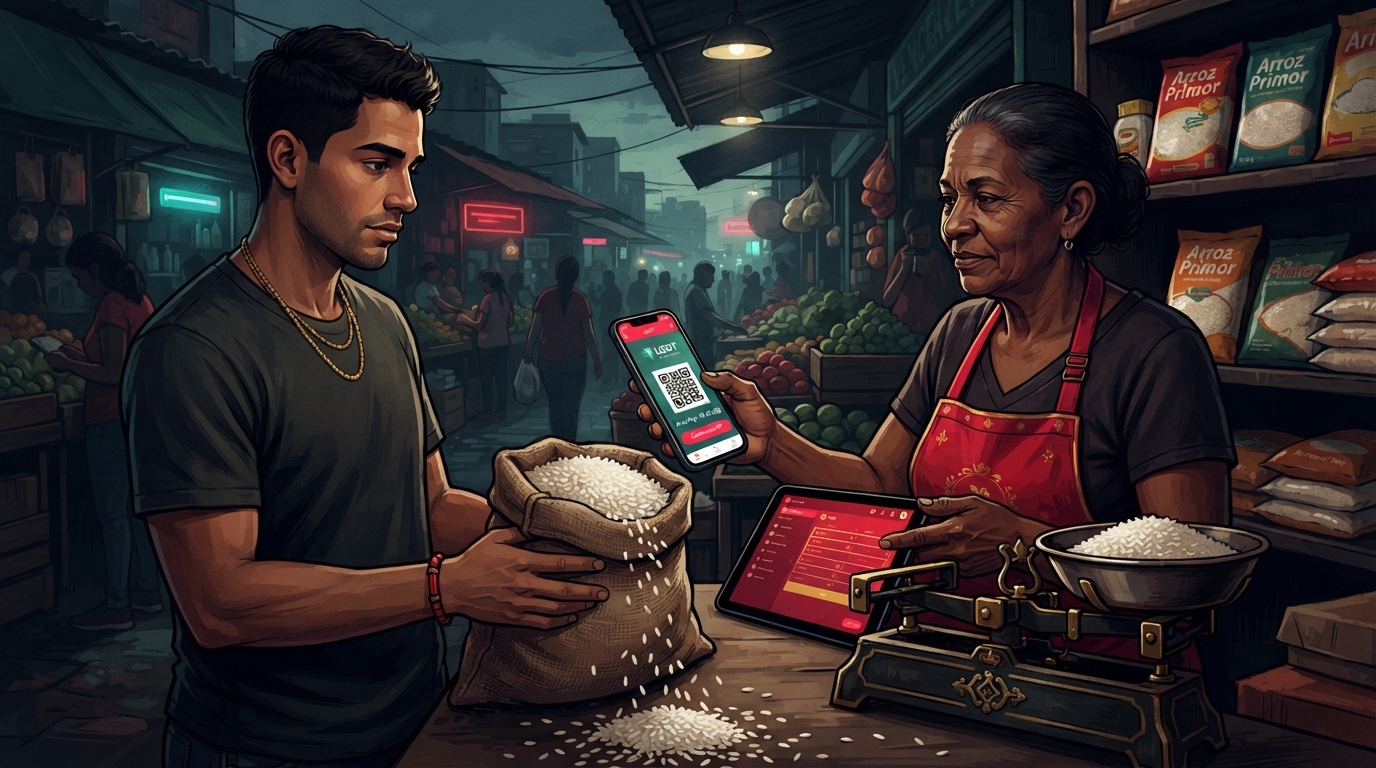
In Venezuela, more and more basic basket products are traded in dollars or indexed to the exchange rate. The proposal to set the price of rice at the producer level at US$0.64 per kilogram is not an isolated case: it reflects an economy that, while keeping the bolívar as legal tender, in practice operates under a scheme of transactional dollarization.
Rice, one of the most consumed foods by Venezuelans, would have a reference price in foreign currency. This not only affects producers and consumers in the agricultural sector, but also sends a clear signal to financial markets, including the P2P ecosystem of cryptocurrencies.
## What does it mean for the bolívar and the exchange rate?
When a staple food is priced in dollars, inflationary pressure in bolívares intensifies. Producers who receive US$0.64 per kilo will need to convert those earnings into bolívares to cover local costs, which in a context of accelerated devaluation leads them to seek refuge in assets like USDT. This behavior is replicated throughout the entire chain: transporters, wholesalers, and merchants all look to protect themselves against the loss of purchasing power.
The Venezuelan P2P market, where USDT is exchanged for bolívares at market rates, tends to react immediately to this kind of news. If the price of rice rises in dollars, inflation expectations increase, and with them the demand for stable cryptocurrencies like USDT, which has already become the “digital dollar” for millions of Venezuelans.
## Direct impact on P2P and USDT users
On platforms like Binance P2P, the USDT-to-bolívar exchange rate usually moves in step with economic news. The proposal to price rice at US$0.64 doesn’t only affect the food basket—it also shifts the expectations of traders who buy and sell cryptoassets.
Users who receive remittances in USDT or who save in this cryptocurrency look favorably on any signal of price dollarization, because it reduces exchange-rate uncertainty. However, it also means that the cost of living in bolívares will remain highly elevated, forcing them to convert a larger portion of their income into USDT to maintain their purchasing power.
## Digital banking and the official dollar
On the other hand, the BCV keeps an official rate that often falls behind market reality. With prices like rice being tied to the dollar, the gap between the official rate and the parallel one (reflected in P2P) could widen. This encourages speculation and arbitrage, and makes more people choose to operate in USDT to avoid losses from exchange-rate swings.
Venezuelan digital banking, which already offers foreign-currency accounts and operations with cryptoassets, could see an increase in demand for USDT intermediation services—especially if rice and other products continue down the same path.
## What should producers and consumers do?
For rice producers, setting prices in dollars is protection against inflation. But for consumers, who earn in bolívares, this adjustment can mean their wages go much less far. In this scenario, using USDT as a store of value and a means of payment is becoming increasingly common.
At PitbullChain, we recommend that our readers closely monitor the development of this measure. If it is implemented, it won’t only change the price of rice on store shelves—it will also reshape the financial strategies of thousands of Venezuelans who already live in an ecosystem where the dollar and crypto are the new rulers.
## The dollarization of food: an irreversible trend
The proposal to price rice at US$0.64 is not an isolated case. Meats, dairy, grains, and other categories are already being quoted in foreign currency in some parts of the country. The dynamics are clear: as the bolívar loses ground, the dollar and its digital equivalents, like USDT, gain prominence.
For the Venezuelan P2P market, this means that the volume of USDT transactions will continue to grow, and that demand for reliable mechanisms to exchange bolívares for crypto will keep increasing. The platforms that offer liquidity and a good rate will be the biggest beneficiaries.
In conclusion, the producer price of rice is much more than a number. It’s a real-economy indicator that drives financial digitalization and solidifies USDT as an essential tool for the economic survival of Venezuelans. At PitbullChain, we’ll keep an eye on upcoming measures and their impact on the crypto and P2P ecosystem.
📊 Live rates and analysis at https://pitbullchain.com
$USDT #arroz #dolarizacion #P2P #USDT #Venezuela