
全球零撸达人
3.1k Posts

全球零撸达人
🐲0撸达人网站:Burncion.xyz web3赚钱分享, 围绕币安平台进行深耕,擅长撸毛,喜欢就关注!

USD1 Holder
High-Frequency Trader
11.6 Months
485 Following
10.8K+ Followers
3.8K+ Liked
Posts
All
Quotes
Videos
Live
PINNED

PINNED




Elena神话MUA
·
--
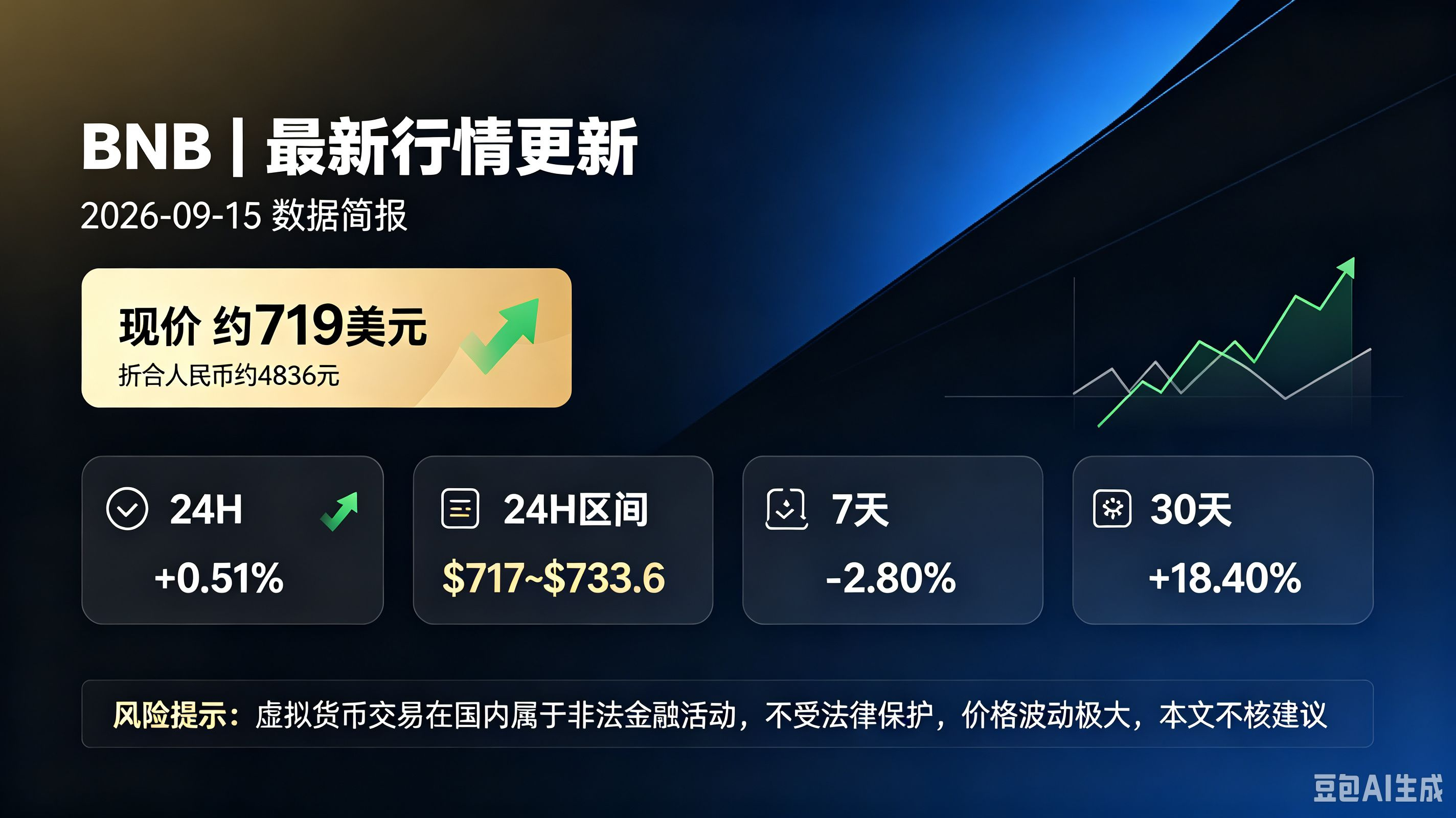
#MUA $BNB (BNB) market (2026-09-15)
- Current price: about $719 (equivalent to about RMB 4,836)
- 24 hours: slight increase of about +0.51%; 24H range $717~$733.6
- 7 days: -2.80%; 30 days: +18.40%
- Circulating market cap: about RMB 967.2 billion
Key points in the recent period
1. BNB is a platform token. Its price is heavily influenced by the Binance platform’s operations, regulatory news, and movements in the broader market, resulting in sharp volatility
2. Market news and regulatory policies can cause significant rises and falls at any time; the risks of futures trading are amplified by $BTC times
- Current price: about $719 (equivalent to about RMB 4,836)
- 24 hours: slight increase of about +0.51%; 24H range $717~$733.6
- 7 days: -2.80%; 30 days: +18.40%
- Circulating market cap: about RMB 967.2 billion
Key points in the recent period
1. BNB is a platform token. Its price is heavily influenced by the Binance platform’s operations, regulatory news, and movements in the broader market, resulting in sharp volatility
2. Market news and regulatory policies can cause significant rises and falls at any time; the risks of futures trading are amplified by $BTC times

心月势不可挡
·
--
In the early hours of September 16, Beijing time, the U.S. Senate delivered its result on a procedural vote regarding the “Clarity Act” for the digital assets market. The bill failed to clear the 60-vote threshold, so it cannot move on to the next stage of formal consideration. The highly anticipated crypto regulatory legislation—one that the industry had pinned great hopes on—has, for now, been stalled.
One point needs to be clarified: this time, the bill was not directly rejected. Instead, it failed at the procedural step required to advance. The bill remains on the congressional calendar, and in theory there is still a possibility of being brought back for reconsideration. However, given the pace of congressional proceedings, the likelihood of it being enacted again within 2026 has become extremely low.
What problem the bill was originally meant to address
The bill is widely seen as a landmark piece of legislation in the crypto industry. Its core goal is to clarify regulatory authority and responsibilities: to define the jurisdictional boundaries between the SEC and the CFTC; to lay out a federal-level compliance path for crypto exchanges and stablecoin projects; and to put an end to the long-standing situation where “regulation relies on enforcement actions and the rules are unclear.”
For a long time, the biggest pain point for the crypto industry has been vague and ambiguous rules. Institutional capital wants to enter the market but lacks a unified legal benchmark. Ordinary investors also face the risk of platform blowups and having no clear path to seek redress. Industry stakeholders from multiple sides have spent significant effort lobbying and negotiating, hoping that this bill could end the regulatory gray area.
Why it ultimately failed to clear the threshold
The bill was stalled due to irreconcilable disagreements between the two parties.
On the Democratic side, the view is that the existing version does not provide sufficient strength on consumer protection, anti-money laundering, and risk controls. They worry that the bill would give the industry overly relaxed space, sowing hidden financial risk vulnerabilities. Some Republican lawmakers, meanwhile, are concerned that expanding regulatory authority would raise compliance costs for businesses and dampen the innovative momentum of digital asset development.
Even though the legislative team revised the provisions multiple times and added patches such as interest-constraint measures for public officials, the core conflict still could not be bridged. In the end, the vote margin was clearly insufficient, and it failed to meet the Senate’s hard requirements to advance the bill.
One point needs to be clarified: this time, the bill was not directly rejected. Instead, it failed at the procedural step required to advance. The bill remains on the congressional calendar, and in theory there is still a possibility of being brought back for reconsideration. However, given the pace of congressional proceedings, the likelihood of it being enacted again within 2026 has become extremely low.
What problem the bill was originally meant to address
The bill is widely seen as a landmark piece of legislation in the crypto industry. Its core goal is to clarify regulatory authority and responsibilities: to define the jurisdictional boundaries between the SEC and the CFTC; to lay out a federal-level compliance path for crypto exchanges and stablecoin projects; and to put an end to the long-standing situation where “regulation relies on enforcement actions and the rules are unclear.”
For a long time, the biggest pain point for the crypto industry has been vague and ambiguous rules. Institutional capital wants to enter the market but lacks a unified legal benchmark. Ordinary investors also face the risk of platform blowups and having no clear path to seek redress. Industry stakeholders from multiple sides have spent significant effort lobbying and negotiating, hoping that this bill could end the regulatory gray area.
Why it ultimately failed to clear the threshold
The bill was stalled due to irreconcilable disagreements between the two parties.
On the Democratic side, the view is that the existing version does not provide sufficient strength on consumer protection, anti-money laundering, and risk controls. They worry that the bill would give the industry overly relaxed space, sowing hidden financial risk vulnerabilities. Some Republican lawmakers, meanwhile, are concerned that expanding regulatory authority would raise compliance costs for businesses and dampen the innovative momentum of digital asset development.
Even though the legislative team revised the provisions multiple times and added patches such as interest-constraint measures for public officials, the core conflict still could not be bridged. In the end, the vote margin was clearly insufficient, and it failed to meet the Senate’s hard requirements to advance the bill.


正乾商学--四条2
·
--
Are you really suited to making a living by trading?
Part Four
④ Is your personality suited to your current trading style?
This is also a very important question.
Everyone’s personality is different.
Some people are very impatient.
Some people have a lot of patience.
Some people like to see results quickly.
Some people can keep their position for several weeks and feel absolutely no anxiety.
So different people are naturally suited to different trading approaches.
For example:
People who are relatively fast and make decisions quickly
may be better suited for:
Scalping / ultra-short-term trading
because you like to judge quickly, execute quickly, and exit quickly.
People with a medium-paced rhythm
may be better suited for:
Day Trading / intraday trading
You don’t need to make decisions in just seconds or minutes,
but you also don’t need to hold your J-structure positions for days or even weeks.
People who are more patient and don’t like frequent trading
may be better suited for:
Swing Trading / swing trading
You’re willing to wait,
and you can also accept “not doing anything today.”
But many people’s biggest problem is that they force themselves to do a type of trading that doesn’t match their personality at all.
A person who is extremely impatient
yet forces themselves to do swing trading for two months.
Every day they want to open the exchange to check,
every day they want to adjust,
and in the end, they turn an originally correct trade into a bad one.
Or someone who naturally thinks more slowly and likes thorough analysis
but forces themselves to do one-minute K;Scalping.
That is also very painful.
So don’t start by asking:
“Which trading style is the most profitable?”
You should ask first:
“Which trading style is the best fit for me?”
If you’re interested in trading, feel free to leave a message in the comments or join the chat room to exchange ideas—learn together and grow together!
#比特币跌至7.6万美元
#美联储加息是否已成定局
Part Four
④ Is your personality suited to your current trading style?
This is also a very important question.
Everyone’s personality is different.
Some people are very impatient.
Some people have a lot of patience.
Some people like to see results quickly.
Some people can keep their position for several weeks and feel absolutely no anxiety.
So different people are naturally suited to different trading approaches.
For example:
People who are relatively fast and make decisions quickly
may be better suited for:
Scalping / ultra-short-term trading
because you like to judge quickly, execute quickly, and exit quickly.
People with a medium-paced rhythm
may be better suited for:
Day Trading / intraday trading
You don’t need to make decisions in just seconds or minutes,
but you also don’t need to hold your J-structure positions for days or even weeks.
People who are more patient and don’t like frequent trading
may be better suited for:
Swing Trading / swing trading
You’re willing to wait,
and you can also accept “not doing anything today.”
But many people’s biggest problem is that they force themselves to do a type of trading that doesn’t match their personality at all.
A person who is extremely impatient
yet forces themselves to do swing trading for two months.
Every day they want to open the exchange to check,
every day they want to adjust,
and in the end, they turn an originally correct trade into a bad one.
Or someone who naturally thinks more slowly and likes thorough analysis
but forces themselves to do one-minute K;Scalping.
That is also very painful.
So don’t start by asking:
“Which trading style is the most profitable?”
You should ask first:
“Which trading style is the best fit for me?”
If you’re interested in trading, feel free to leave a message in the comments or join the chat room to exchange ideas—learn together and grow together!
#比特币跌至7.6万美元
#美联储加息是否已成定局

Baoluo币商资本
·
--
#美联储加息是否已成定局
The results are not out yet. In theory, tightening could be possible, but the overall view is that they probably won’t raise rates. Whether they raise or not, neither option can solve the inflation problem.
$BTC
#美参议院否决CLARITY法案
The results are not out yet. In theory, tightening could be possible, but the overall view is that they probably won’t raise rates. Whether they raise or not, neither option can solve the inflation problem.
$BTC
#美参议院否决CLARITY法案

慢就是快Mike
·
--
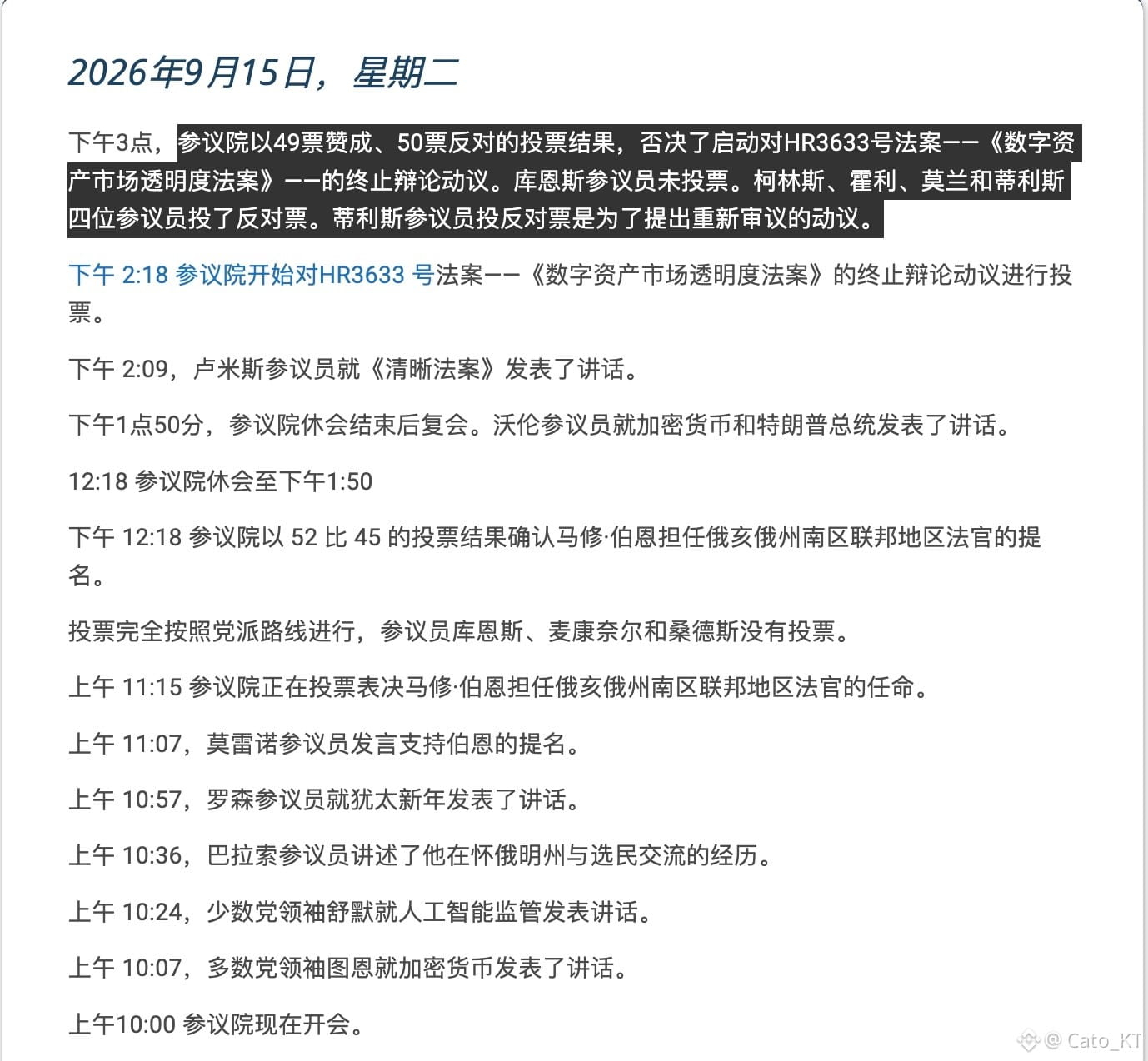
$XAU Let’s review tonight’s proposed vote result for the “Clear Bill.” In the end, 49 votes were in favor, 50 against—out of 99 total voters.
Clearly, this outcome is not simply because it didn’t reach 60 votes. Ultimately, it ended in temporary failure. Evidently, the threshold for pushing the bill is still quite high, making it a tough challenge.
Currently, there are 53 seats for the Republican Party in the Senate, 45 for the Democrats, and 2 for independents. This means that if the Republicans fully back it, they could at least secure 53 support votes.
But the real outcome directly contradicts that. Not only did the Democrats oppose it, but the Republicans also were not fully united in support—4 Republicans voted against.
Now look at the chart. Before the vote results came out, the broader market had already started a sharp pullback, indicating that the main funds likely weren’t optimistic, or had already anticipated the result in advance. Right now, it’s best not to rush in early to buy the dip or short. Wait until tomorrow’s rate-hike results are released, and then enter based on the K-line trend—it’ll be better!
Clearly, this outcome is not simply because it didn’t reach 60 votes. Ultimately, it ended in temporary failure. Evidently, the threshold for pushing the bill is still quite high, making it a tough challenge.
Currently, there are 53 seats for the Republican Party in the Senate, 45 for the Democrats, and 2 for independents. This means that if the Republicans fully back it, they could at least secure 53 support votes.
But the real outcome directly contradicts that. Not only did the Democrats oppose it, but the Republicans also were not fully united in support—4 Republicans voted against.
Now look at the chart. Before the vote results came out, the broader market had already started a sharp pullback, indicating that the main funds likely weren’t optimistic, or had already anticipated the result in advance. Right now, it’s best not to rush in early to buy the dip or short. Wait until tomorrow’s rate-hike results are released, and then enter based on the K-line trend—it’ll be better!


杨乐-光明社区
·
--
Every immortal has their own mountain,
and every bodhisattva has their own temple.
You must have your own place of practice.
This is a remedy of great value.
Good morning 🌻
and every bodhisattva has their own temple.
You must have your own place of practice.
This is a remedy of great value.
Good morning 🌻


黄泳程 8023
·
--
Different positions, fewer words are precious. Differences in cognition don’t require debate. Different values waste nothing but words.
Life is inherently different; there’s no need to force everyone to match your rhythm.
Once cognition is set, direction becomes clear; once your perspective expands, your height follows.
If your heart is simple and clean, you’ll naturally have fewer worries and feel more at ease.
Slowly you’ll realize that you can’t change anyone else—what changes is only yourself.
Gradually, come to a realization of your own cognition. You’ll know that living with clarity and having no burdens in your mind is the best state.
Life is inherently different; there’s no need to force everyone to match your rhythm.
Once cognition is set, direction becomes clear; once your perspective expands, your height follows.
If your heart is simple and clean, you’ll naturally have fewer worries and feel more at ease.
Slowly you’ll realize that you can’t change anyone else—what changes is only yourself.
Gradually, come to a realization of your own cognition. You’ll know that living with clarity and having no burdens in your mind is the best state.



静静Amily
·
--
[Ended] 🎙️ The market trend these days is confusing—what do you all think?
6.2k listens
慢就是快Mike
·
--
$XAU Let’s review tonight’s proposed vote result for the “Clear Bill.” In the end, 49 votes were in favor, 50 against—out of 99 total voters.
Clearly, this outcome is not simply because it didn’t reach 60 votes. Ultimately, it ended in temporary failure. Evidently, the threshold for pushing the bill is still quite high, making it a tough challenge.
Currently, there are 53 seats for the Republican Party in the Senate, 45 for the Democrats, and 2 for independents. This means that if the Republicans fully back it, they could at least secure 53 support votes.
But the real outcome directly contradicts that. Not only did the Democrats oppose it, but the Republicans also were not fully united in support—4 Republicans voted against.
Now look at the chart. Before the vote results came out, the broader market had already started a sharp pullback, indicating that the main funds likely weren’t optimistic, or had already anticipated the result in advance. Right now, it’s best not to rush in early to buy the dip or short. Wait until tomorrow’s rate-hike results are released, and then enter based on the K-line trend—it’ll be better!
Clearly, this outcome is not simply because it didn’t reach 60 votes. Ultimately, it ended in temporary failure. Evidently, the threshold for pushing the bill is still quite high, making it a tough challenge.
Currently, there are 53 seats for the Republican Party in the Senate, 45 for the Democrats, and 2 for independents. This means that if the Republicans fully back it, they could at least secure 53 support votes.
But the real outcome directly contradicts that. Not only did the Democrats oppose it, but the Republicans also were not fully united in support—4 Republicans voted against.
Now look at the chart. Before the vote results came out, the broader market had already started a sharp pullback, indicating that the main funds likely weren’t optimistic, or had already anticipated the result in advance. Right now, it’s best not to rush in early to buy the dip or short. Wait until tomorrow’s rate-hike results are released, and then enter based on the K-line trend—it’ll be better!

Mira小白桃
·
--
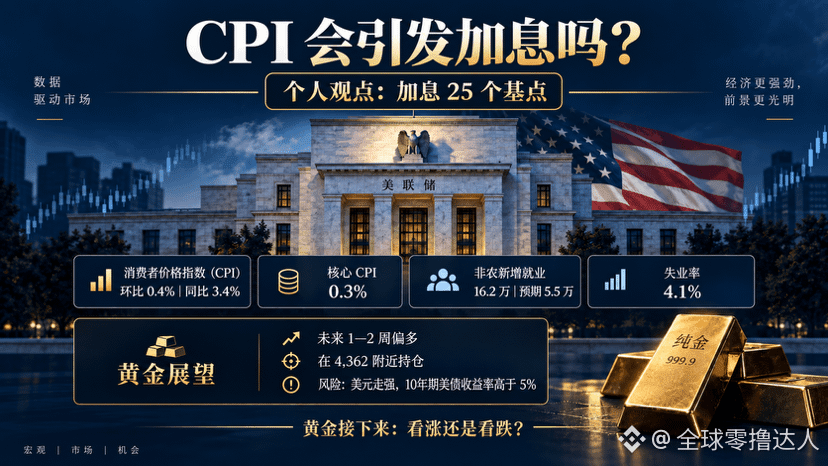
Crude Oil Rises—Why Is Gold Under Pressure Instead?
Recently, the market has been influenced at the same time by geopolitical risks, energy prices, and expectations for Federal Reserve policy.
At present, Brent crude is around $107, while WTI is around $105. Oil prices have remained at elevated levels. What the market is most worried about is not crude oil itself, but its impact on inflation expectations.
The logic is simple:
Oil prices rise → inflation pressure increases → the Fed’s room to cut rates is constrained → U.S. Treasury yields rise → gold comes under pressure.
So right now, gold is being pulled by two forces:
On one hand, safe-haven demand driven by geopolitical conditions supports gold;
On the other hand, higher oil prices boost inflation and rate-expectation pressures that suppress gold.
That’s also why you can’t simply understand it as:
“Geopolitical risk rises = gold must rise.”
In reality, gold’s short-term price action still depends on the U.S. dollar and U.S. Treasury yields.
Currently, the 10-year Treasury yield is already around 5%. If yields continue to move higher, gold’s short-term downside pressure could increase further.
Next, I will focus on three variables:
First, crude oil.
If oil prices keep rising quickly, inflation expectations may heat up further.
Second, Treasury yields.
If the 10-year yield keeps moving higher, gold may continue to be weighed down.
Third, the Federal Reserve.
Today’s FOMC rate decision is only the first step; more important is the policy guidance/signals after the meeting.
If the Fed releases more hawkish signals:
A stronger dollar and firmer yields → gold faces pressure.
If the policy statement is not as hawkish as the market expected:
Yields fall back → gold receives support.
So my view on gold now won’t be based solely on geopolitical news.
Crude oil determines inflation expectations, interest rates determine the cost of capital, and risk-off/safe-haven sentiment determines how much support is underneath gold.
Only when all three factors move at the same time is the key to understanding this round of the gold market.
$XAU
$CL
$BZ
Recently, the market has been influenced at the same time by geopolitical risks, energy prices, and expectations for Federal Reserve policy.
At present, Brent crude is around $107, while WTI is around $105. Oil prices have remained at elevated levels. What the market is most worried about is not crude oil itself, but its impact on inflation expectations.
The logic is simple:
Oil prices rise → inflation pressure increases → the Fed’s room to cut rates is constrained → U.S. Treasury yields rise → gold comes under pressure.
So right now, gold is being pulled by two forces:
On one hand, safe-haven demand driven by geopolitical conditions supports gold;
On the other hand, higher oil prices boost inflation and rate-expectation pressures that suppress gold.
That’s also why you can’t simply understand it as:
“Geopolitical risk rises = gold must rise.”
In reality, gold’s short-term price action still depends on the U.S. dollar and U.S. Treasury yields.
Currently, the 10-year Treasury yield is already around 5%. If yields continue to move higher, gold’s short-term downside pressure could increase further.
Next, I will focus on three variables:
First, crude oil.
If oil prices keep rising quickly, inflation expectations may heat up further.
Second, Treasury yields.
If the 10-year yield keeps moving higher, gold may continue to be weighed down.
Third, the Federal Reserve.
Today’s FOMC rate decision is only the first step; more important is the policy guidance/signals after the meeting.
If the Fed releases more hawkish signals:
A stronger dollar and firmer yields → gold faces pressure.
If the policy statement is not as hawkish as the market expected:
Yields fall back → gold receives support.
So my view on gold now won’t be based solely on geopolitical news.
Crude oil determines inflation expectations, interest rates determine the cost of capital, and risk-off/safe-haven sentiment determines how much support is underneath gold.
Only when all three factors move at the same time is the key to understanding this round of the gold market.
$XAU
$CL
$BZ


生蚝哥Oyster
·
--
Major news! The CLARITY Act’s procedural vote fails! U.S. crypto regulatory legislation falls short by 10 votes
September 16 | U.S. CLARITY crypto bill procedural vote fails, with industry hopes for near-term regulatory rollout dashed
In the late hours of September 15 (Beijing time in the early hours of September 16), the U.S. Senate held key procedural votes on the (Digital Assets Market Clarity Act) (the CLARITY Act). The purpose of this vote was to end debate and move the bill into formal consideration. Under Senate rules, the hard threshold for approval is 60 votes in favor.
The final vote outcome was set: 50 in favor, 49 against, and 1 absent. This was far below the 60-vote threshold, so the bill was stopped in its first round and could not enter the Senate’s review process in the near term. This failure does not completely reject the bill’s principles, but rather reflects a serious lack of bipartisan consensus—there was a full 10-vote gap. Legislative progress faces extremely strong resistance.
In the late hours of September 15 (Beijing time in the early hours of September 16), the U.S. Senate held key procedural votes on the (Digital Assets Market Clarity Act) (the CLARITY Act). The purpose of this vote was to end debate and move the bill into formal consideration. Under Senate rules, the hard threshold for approval is 60 votes in favor.
The final vote outcome was set: 50 in favor, 49 against, and 1 absent. This was far below the 60-vote threshold, so the bill was stopped in its first round and could not enter the Senate’s review process in the near term. This failure does not completely reject the bill’s principles, but rather reflects a serious lack of bipartisan consensus—there was a full 10-vote gap. Legislative progress faces extremely strong resistance.


奋斗Hustle-1688
·
--
$BTC Hike rates already—stop threatening people every day. Once the shoe drops, the bad news is exhausted, and it directly turns into positives.


加密交易叫兽
·
--
#BTC走势分析
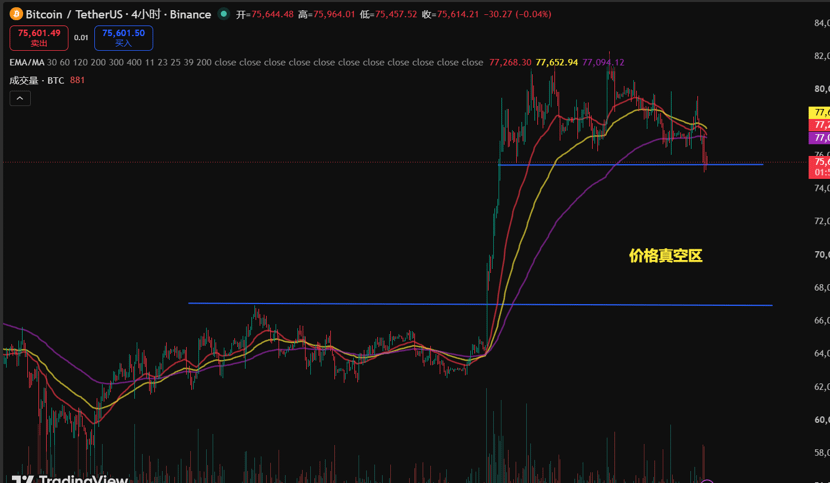
Overnight, affected by news, it plunged sharply and fell below 76,000. On the daily chart, it managed to stay barely above the EMA30, but from the secondary level of the 4-hour chart, there hasn’t been a corresponding bullish engulfing candle to reverse the move. Demand is insufficient, so during the day, be cautious of further downside. What’s more concerning is that from 75,400 to 67,000, there hasn’t been a clearly defined support zone. If today can’t reclaim 77,000, there will likely be even more room for further downside. This also confirms the earlier call not to rush into bottom-fishing. For intraday trading, it’s recommended to take only short positions, not many long ones.
Overnight, affected by news, it plunged sharply and fell below 76,000. On the daily chart, it managed to stay barely above the EMA30, but from the secondary level of the 4-hour chart, there hasn’t been a corresponding bullish engulfing candle to reverse the move. Demand is insufficient, so during the day, be cautious of further downside. What’s more concerning is that from 75,400 to 67,000, there hasn’t been a clearly defined support zone. If today can’t reclaim 77,000, there will likely be even more room for further downside. This also confirms the earlier call not to rush into bottom-fishing. For intraday trading, it’s recommended to take only short positions, not many long ones.

蒋雅琪1368
·
--
Bitcoin rebounds—will it continue to rise further?
✅ Reasons for the rebound: Price pulled back to support above the 75,000 level that has been confirmed multiple times in the past, triggering the rebound.
Rebound targets: First target at 78,500; next resistance at 80,500. For more cautious investors, take profit around 78,500; spot holdings can take profits in batches.
✅ My view: The market is highly uncertain right now, so it’s not suitable for long-term holding. Tomorrow’s bill, Wednesday’s interest rate hike, and officials’ remarks are all unknown variables. The priority is to lock in existing profits, then re-enter with a heavier position once the market becomes clearer.
During yesterday’s sharp sell-off, I advised setting up spot positions around 76,000; it has now risen nearly 2,000 points. Strategy logic: Buy at support to catch the rebound; take profit at resistance. Do not open positions unless support is reached; if the price continues to surge and approaches the resistance zone, you can try shorting.
Strong resistance is at 81,000–82,000. Attempt shorts in this range; the expected win rate is about 70%. Swing trade based on support and resistance—if the price breaks out, cut losses. In complex market conditions, I’ll keep digging for opportunities and synchronize my real-time trading mindset every day.
✅ Reasons for the rebound: Price pulled back to support above the 75,000 level that has been confirmed multiple times in the past, triggering the rebound.
Rebound targets: First target at 78,500; next resistance at 80,500. For more cautious investors, take profit around 78,500; spot holdings can take profits in batches.
✅ My view: The market is highly uncertain right now, so it’s not suitable for long-term holding. Tomorrow’s bill, Wednesday’s interest rate hike, and officials’ remarks are all unknown variables. The priority is to lock in existing profits, then re-enter with a heavier position once the market becomes clearer.
During yesterday’s sharp sell-off, I advised setting up spot positions around 76,000; it has now risen nearly 2,000 points. Strategy logic: Buy at support to catch the rebound; take profit at resistance. Do not open positions unless support is reached; if the price continues to surge and approaches the resistance zone, you can try shorting.
Strong resistance is at 81,000–82,000. Attempt shorts in this range; the expected win rate is about 70%. Swing trade based on support and resistance—if the price breaks out, cut losses. In complex market conditions, I’ll keep digging for opportunities and synchronize my real-time trading mindset every day.

大丽7613
·
--
[Replay] 🎙️ Let’s talk about the market—DCA into BNB
02 h 29 m 31 s · 17.8k listens
Log in to explore more content