

## A Venezuelan, once again, at the top of the batting charts
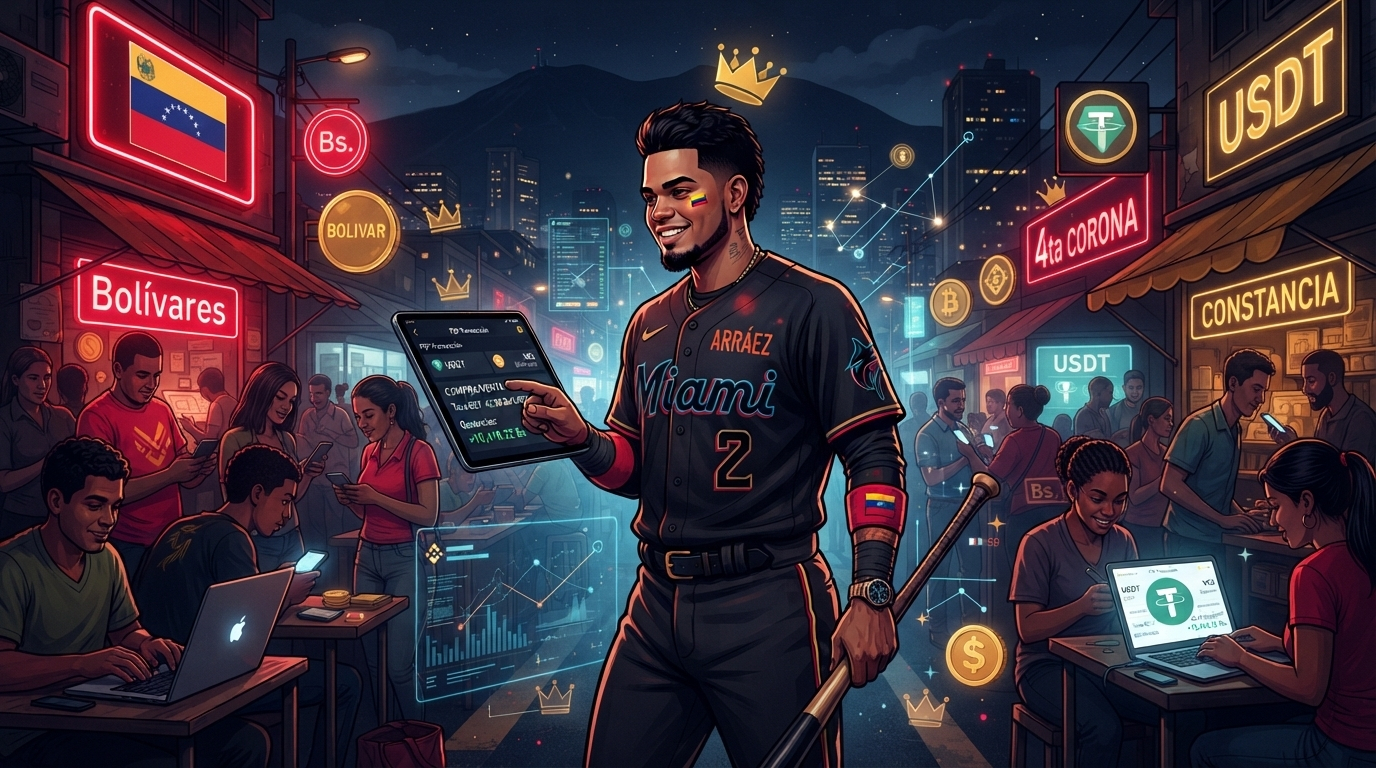
Luis Arráez woke up on September 15th with a .313 average and baseball’s batting lead in his pocket. He has just 12 games left with the Phillies of Philadelphia to close out the 2026 season, and if he maintains the pace, he’ll claim his fourth crown in five campaigns—tying Miguel Cabrera as the only Venezuelans with four batting titles in MLB history.
The path isn’t a coincidence. In 2022 he won the title with a .316 average while wearing the Minnesota Twins uniform; in 2023 he signed with the Miami Marlins, hitting .354 and becoming the first player to win two consecutive crowns in different leagues; and in 2024 he added the third with .314. His closest rival in this final stretch is Dominican Otto López, at .307, whom he leads by six points.
There is a stat that portrays the player better than any headline: since April 8 of last year, he hasn’t fallen below .300. In those 130 games, he’s hitting .315 (163 hits in 517 at-bats) with barely 22 strikeouts. In other words, he doesn’t live on an inspired month: he lives on a system that repeats every day.
## Twelve games and one single mission: don’t stray from the plan
Baseball has a cruel trap that any investor would recognize immediately: the outcome is measured at the end, but it’s built in every turn. Arráez can’t hit all 12 games at once, so he does the only thing that’s under his control: show up, see pitches, connect for line drives, and don’t give away the out. If the title comes, it will come as a consequence; if not, the average will continue to be that of a top-tier era player.
That process-over-result logic is exactly what separates those who survive in Venezuela’s FX exchange market from those who get desperate every time a new number appears at dawn.
## Consistency as an asset: what P2P teaches every day
At PitbullChain, we cover every day a market where consistency is worth more than a hunch. The Venezuelan who buys USDT in fractional amounts, week after week, in the P2P market isn’t betting on a single price: they’re averaging. And that average — that “average,” if you will — is what lets them sleep peacefully when the rate moves three points in an afternoon.
### The average isn’t improvised
No one earns a crown by hitting only in September, and no one protects their wealth by chasing the perfect dollar floor. The strategies that are most repeated among crypto users in Venezuela are the least spectacular: small, frequent amounts, orderly rotation between bolívares and stablecoins, and a USDT reserve that works as a cushion for big expenses. Sounds boring. It works.
The same goes for risk management in P2P: review the counterparty’s reputation, diversify across multiple merchants, don’t concentrate the entire operation in a single channel, and keep a record of every transaction. These are habits, not lucky breaks.
## Dollar, BCV, and USDT: three boards that don’t rest
While Arráez battles for average points, the country remains focused on other figures that also update without warning: the BCV’s official rate, the dollar price on the street, and the USDT quotes on exchanges and in digital banking. This coexistence of several markers forces Venezuelans, whether they like it or not, to become data analysts.
For the local P2P market, moments of currency tension often translate into more volume, more searching for liquidity, and more pressure on merchants to set their margins. When the spread between the official rate and the parallel market opens up, stablecoins stop being just a reserve instrument and become an operational tool for day-to-day life: to pay for services, to receive remittances, or simply to avoid losing purchasing power between the time you’re paid and the time you spend.
### Digital banking and remittances: the other championship
The Venezuelan diaspora has, for years, been one of the main engines of USDT demand in the country. Each family transfer is a cross-border operation that competes against the slowness, costs, and limits of traditional channels. That’s where digital banking and peer-to-peer protocols have gained ground—not because of tech fashion, but because they solve a specific problem: getting the money to arrive and be usable.
The pending challenge isn’t technology—it’s trust and education. Understanding how a wallet works, what it means to custody your own keys, how to spot a scam, and why it’s worth not operating outside platforms with verifiable reputations: that should be taught the same way you learn to read a bank statement.
## What PitbullChain will keep watching
Arráez has 12 games to write his fourth crown and get into the conversation with the great Latin hitters, behind Rod Carew and his historic record, alongside Cabrera. From here, we’ll keep focusing on the other scoreboard: the BCV’s, the parallel dollar’s, the USDT’s in P2P, and that Venezuelan banking system that keeps learning to live with the digital.
Because in the end, the lesson repeats in the diamond and on your phone screen: whoever has a method endures the entire season. Whoever improvises lives off a single lucky at-bat.
📊 Live rates and analysis at https://pitbullchain.com
$USDT #LuisArraez #MLB #USDT #mercadoP2PVenezuela #dolarBCV