
橙子Joyce
373 Posts

橙子Joyce
 Square Verified+
价值投资者:以十年为单位投资美股及BTC.ETH.BNB.SOL.推特X:@Joyce88ai
Frequent Trader
8.7 Years
798 Following
34.7K+ Followers
42.9K+ Liked
Posts
All
Quotes
Videos
Live
PINNED

SPCXUS-2.30%
橙子Joyce
·
--
BullishWill the Federal Reserve raise rates as expected this week? Wall Street is debating: will it end the U.S. stock bull market?
After an unexpectedly strong U.S. CPI report came out last Friday, traders generally expect the Federal Reserve to begin raising rates at this week’s policy meeting—marking the first rate hike in more than three years.
Historically, previous rounds of rate hikes have offered a reference point for today’s market. Based on past experience (though history of course can’t guarantee the future), U.S. stocks may first weaken, then rebound.
Among the six tightening cycles since 1994, during the first four months after the rate-hike cycle began, the S&P 500’s average return was negative.
This suggests that once the “rate-hike shoe” drops, U.S. stocks may look lackluster through the beginning of next year.
As of the close last Friday, the benchmark U.S. equity index, the S&P 500, is up nearly 12% year to date. Strong corporate earnings and a fairly resilient economy have provided solid support for bulls in the stock market.
If you extend the time horizon, the S&P 500’s performance tends to improve gradually: in the 12 months after the start of a rate-hiking cycle, the index’s average return is close to 7%, with a median return of about 11%. (Using median-based statistics helps remove distortions from extreme outliers—for example, the index surged more than 40% after hikes began in March 1997.)
If the Federal Reserve implements a rate hike this Wednesday, it will be the first hike since July 2023—when the Fed raised rates to a range of 5.25% to 5.50%.
Currently, the federal funds rate in the U.S. is at 3.50% to 3.75%. According to the CME Group’s FedWatch tool, futures traders currently assign an 86% probability to a 25-basis-point hike this week.
One positive factor for the market is that mega-scale cloud service providers are still driving growth in excess returns through large-scale AI spending. The S&P 500 component stocks’ forecast for earnings growth in 2027 is expected to reach double digits. If the outlook for AI spending remains unchanged, it may be enough to offset any cooling in optimistic sentiment caused by the rate hikes.
Another bright spot for equities is that although inflation remains sticky, it appears to be slowing. The inflation rate has fallen from a May peak of 4.2%. This should allow the Federal Reserve to take a more gradual approach, and the data shows that the pace of rate hikes is crucial for stock performance—slower pacing gives investors more time to absorb policy changes!
$BZ
$CL
Energy
After an unexpectedly strong U.S. CPI report came out last Friday, traders generally expect the Federal Reserve to begin raising rates at this week’s policy meeting—marking the first rate hike in more than three years.
Historically, previous rounds of rate hikes have offered a reference point for today’s market. Based on past experience (though history of course can’t guarantee the future), U.S. stocks may first weaken, then rebound.
Among the six tightening cycles since 1994, during the first four months after the rate-hike cycle began, the S&P 500’s average return was negative.
This suggests that once the “rate-hike shoe” drops, U.S. stocks may look lackluster through the beginning of next year.
As of the close last Friday, the benchmark U.S. equity index, the S&P 500, is up nearly 12% year to date. Strong corporate earnings and a fairly resilient economy have provided solid support for bulls in the stock market.
If you extend the time horizon, the S&P 500’s performance tends to improve gradually: in the 12 months after the start of a rate-hiking cycle, the index’s average return is close to 7%, with a median return of about 11%. (Using median-based statistics helps remove distortions from extreme outliers—for example, the index surged more than 40% after hikes began in March 1997.)
If the Federal Reserve implements a rate hike this Wednesday, it will be the first hike since July 2023—when the Fed raised rates to a range of 5.25% to 5.50%.
Currently, the federal funds rate in the U.S. is at 3.50% to 3.75%. According to the CME Group’s FedWatch tool, futures traders currently assign an 86% probability to a 25-basis-point hike this week.
One positive factor for the market is that mega-scale cloud service providers are still driving growth in excess returns through large-scale AI spending. The S&P 500 component stocks’ forecast for earnings growth in 2027 is expected to reach double digits. If the outlook for AI spending remains unchanged, it may be enough to offset any cooling in optimistic sentiment caused by the rate hikes.
Another bright spot for equities is that although inflation remains sticky, it appears to be slowing. The inflation rate has fallen from a May peak of 4.2%. This should allow the Federal Reserve to take a more gradual approach, and the data shows that the pace of rate hikes is crucial for stock performance—slower pacing gives investors more time to absorb policy changes!
$BZ
$CL
Energy
橙子Joyce
·
--
BullishWill the Federal Reserve raise rates as expected this week? Wall Street is debating: will it end the U.S. stock bull market?
After an unexpectedly strong U.S. CPI report came out last Friday, traders generally expect the Federal Reserve to begin raising rates at this week’s policy meeting—marking the first rate hike in more than three years.
Historically, previous rounds of rate hikes have offered a reference point for today’s market. Based on past experience (though history of course can’t guarantee the future), U.S. stocks may first weaken, then rebound.
Among the six tightening cycles since 1994, during the first four months after the rate-hike cycle began, the S&P 500’s average return was negative.
This suggests that once the “rate-hike shoe” drops, U.S. stocks may look lackluster through the beginning of next year.
As of the close last Friday, the benchmark U.S. equity index, the S&P 500, is up nearly 12% year to date. Strong corporate earnings and a fairly resilient economy have provided solid support for bulls in the stock market.
If you extend the time horizon, the S&P 500’s performance tends to improve gradually: in the 12 months after the start of a rate-hiking cycle, the index’s average return is close to 7%, with a median return of about 11%. (Using median-based statistics helps remove distortions from extreme outliers—for example, the index surged more than 40% after hikes began in March 1997.)
If the Federal Reserve implements a rate hike this Wednesday, it will be the first hike since July 2023—when the Fed raised rates to a range of 5.25% to 5.50%.
Currently, the federal funds rate in the U.S. is at 3.50% to 3.75%. According to the CME Group’s FedWatch tool, futures traders currently assign an 86% probability to a 25-basis-point hike this week.
One positive factor for the market is that mega-scale cloud service providers are still driving growth in excess returns through large-scale AI spending. The S&P 500 component stocks’ forecast for earnings growth in 2027 is expected to reach double digits. If the outlook for AI spending remains unchanged, it may be enough to offset any cooling in optimistic sentiment caused by the rate hikes.
Another bright spot for equities is that although inflation remains sticky, it appears to be slowing. The inflation rate has fallen from a May peak of 4.2%. This should allow the Federal Reserve to take a more gradual approach, and the data shows that the pace of rate hikes is crucial for stock performance—slower pacing gives investors more time to absorb policy changes!
$BZ
$CL
Energy
After an unexpectedly strong U.S. CPI report came out last Friday, traders generally expect the Federal Reserve to begin raising rates at this week’s policy meeting—marking the first rate hike in more than three years.
Historically, previous rounds of rate hikes have offered a reference point for today’s market. Based on past experience (though history of course can’t guarantee the future), U.S. stocks may first weaken, then rebound.
Among the six tightening cycles since 1994, during the first four months after the rate-hike cycle began, the S&P 500’s average return was negative.
This suggests that once the “rate-hike shoe” drops, U.S. stocks may look lackluster through the beginning of next year.
As of the close last Friday, the benchmark U.S. equity index, the S&P 500, is up nearly 12% year to date. Strong corporate earnings and a fairly resilient economy have provided solid support for bulls in the stock market.
If you extend the time horizon, the S&P 500’s performance tends to improve gradually: in the 12 months after the start of a rate-hiking cycle, the index’s average return is close to 7%, with a median return of about 11%. (Using median-based statistics helps remove distortions from extreme outliers—for example, the index surged more than 40% after hikes began in March 1997.)
If the Federal Reserve implements a rate hike this Wednesday, it will be the first hike since July 2023—when the Fed raised rates to a range of 5.25% to 5.50%.
Currently, the federal funds rate in the U.S. is at 3.50% to 3.75%. According to the CME Group’s FedWatch tool, futures traders currently assign an 86% probability to a 25-basis-point hike this week.
One positive factor for the market is that mega-scale cloud service providers are still driving growth in excess returns through large-scale AI spending. The S&P 500 component stocks’ forecast for earnings growth in 2027 is expected to reach double digits. If the outlook for AI spending remains unchanged, it may be enough to offset any cooling in optimistic sentiment caused by the rate hikes.
Another bright spot for equities is that although inflation remains sticky, it appears to be slowing. The inflation rate has fallen from a May peak of 4.2%. This should allow the Federal Reserve to take a more gradual approach, and the data shows that the pace of rate hikes is crucial for stock performance—slower pacing gives investors more time to absorb policy changes!
$BZ
$CL
Energy

oO小蝦米對抗大鯨魚Oo
·
--
[Ended] 🎙️ Crypto Words
515 listens

Anna-汤圆
·
--
[Replay] 🎙️ Finally Monday is here—will the US stock market open and we can feast on big gains today?
02 h 15 m 05 s · 9.3k listens

光明社区-千慧
·
--
BullishIn this world,
if it is light and warmth,
it must be brought by the sun.
if it is affection and love,
it must be brought by man and woman.
if it is wealth and happiness,
it must be brought by LUCiC and Card.
if it is light and warmth,
it must be brought by the sun.
if it is affection and love,
it must be brought by man and woman.
if it is wealth and happiness,
it must be brought by LUCiC and Card.


悠哉独自在
·
--
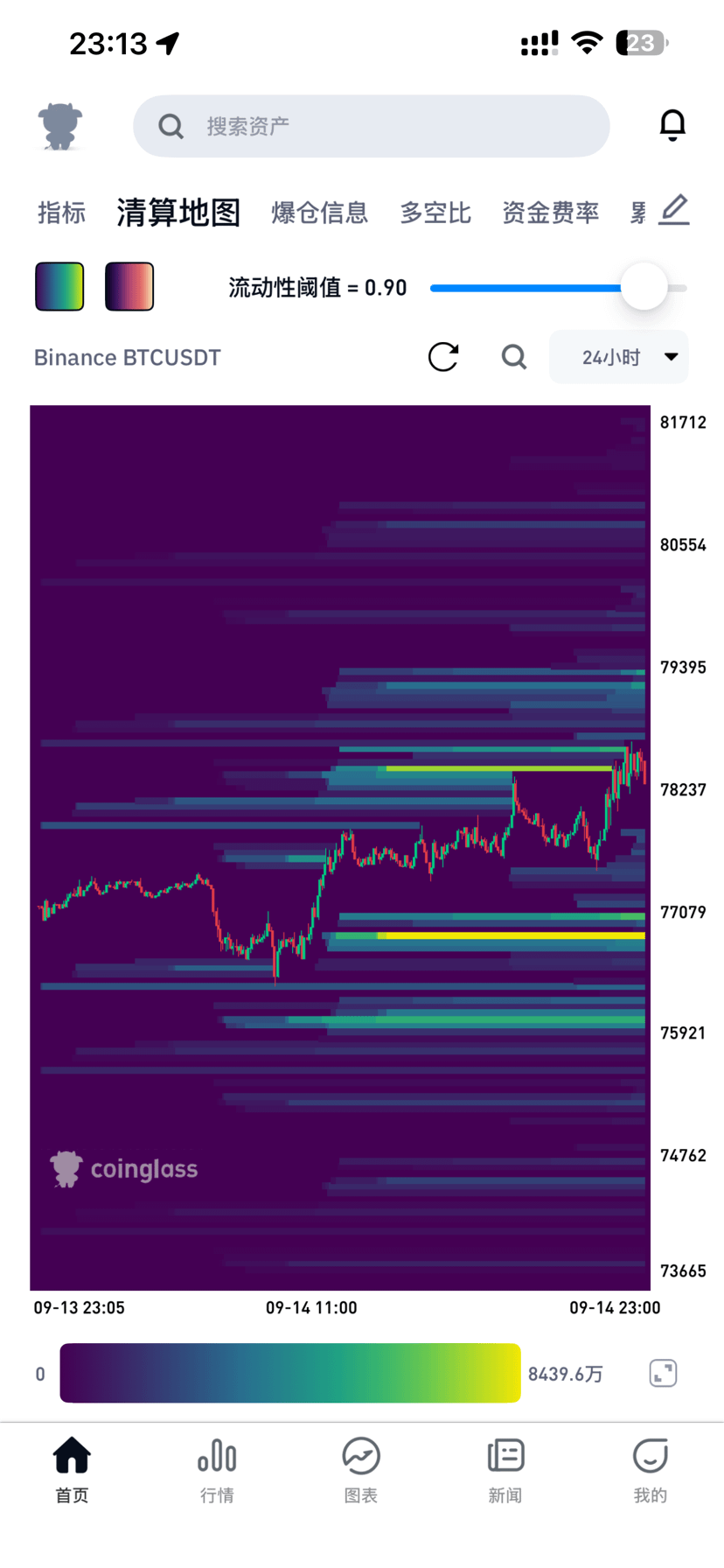
Bullish$BTC Since yesterday’s low of 76,350, it has been pulled back quietly all the way to 78,500. In the past 24 hours, it’s up 1.7%. On the surface, everything looks calm—but as soon as price dares to push up toward 79,000, the shorts will be forced to cover, turning into fuel.
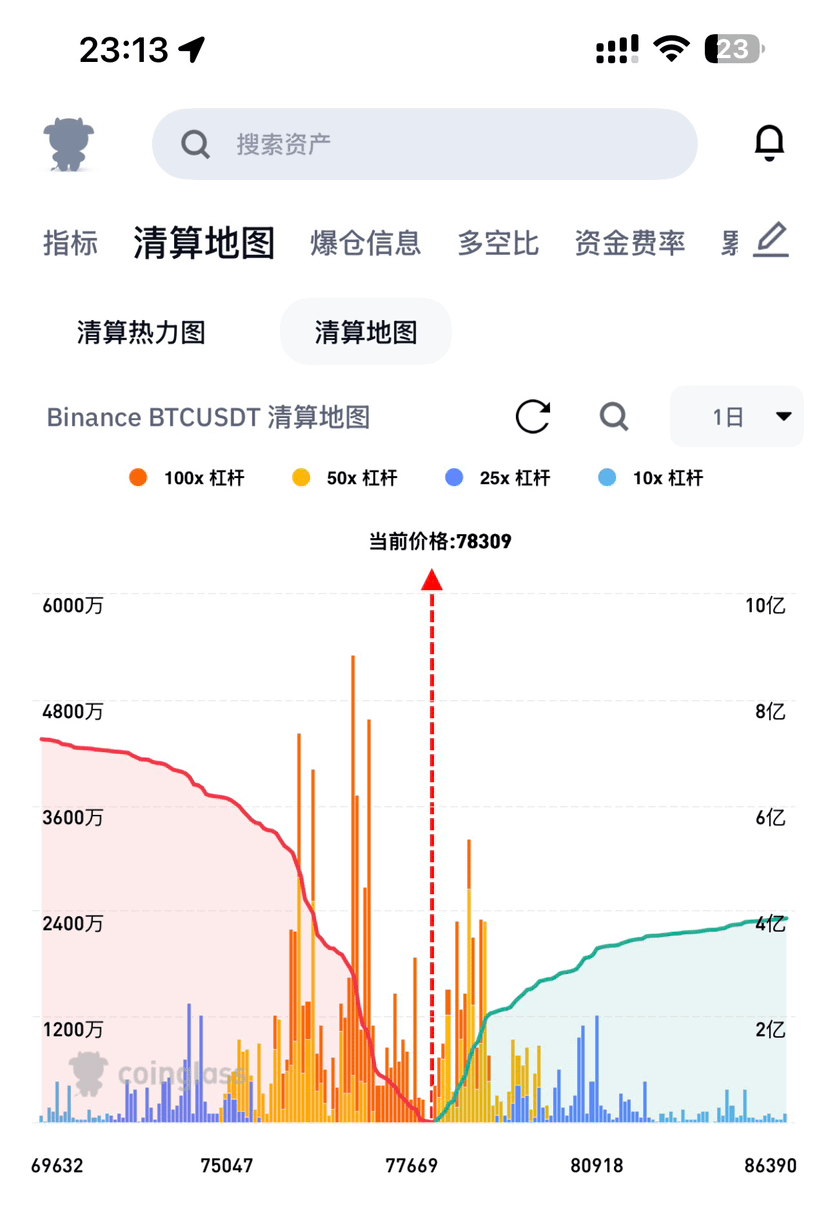
Take a look at the liquidation map: in the 79,000 to 81,000 range, the short liquidation “ammo” is piled up like a small mountain—dense, tightly packed yellow-orange bands. Especially from 79,000 to 80,000: as long as the bulls put in even a little effort, it can trigger a cascading squeeze. It would be no surprise if the price is instantly pushed up. The shorts would directly become fuel. Looking downward, below 77,000 down to 76,000, there’s also a big pile of long liquidation orders. In the chart, the green cumulative short liquidation line is very steep—once the shorts gain momentum and smash through 77,000, the bulls’ stampede would be extremely violent, essentially a waterfall.
Now, chasing longs doesn’t really seem appropriate. The 79,000 to 80,000 area is a genuine high-pressure zone with plenty of trapped positions ahead. Even though the 4-hour chart just formed a golden cross, the volume hasn’t fully caught up—no matter how you look at it, it looks like a bull trap designed to lure people in.
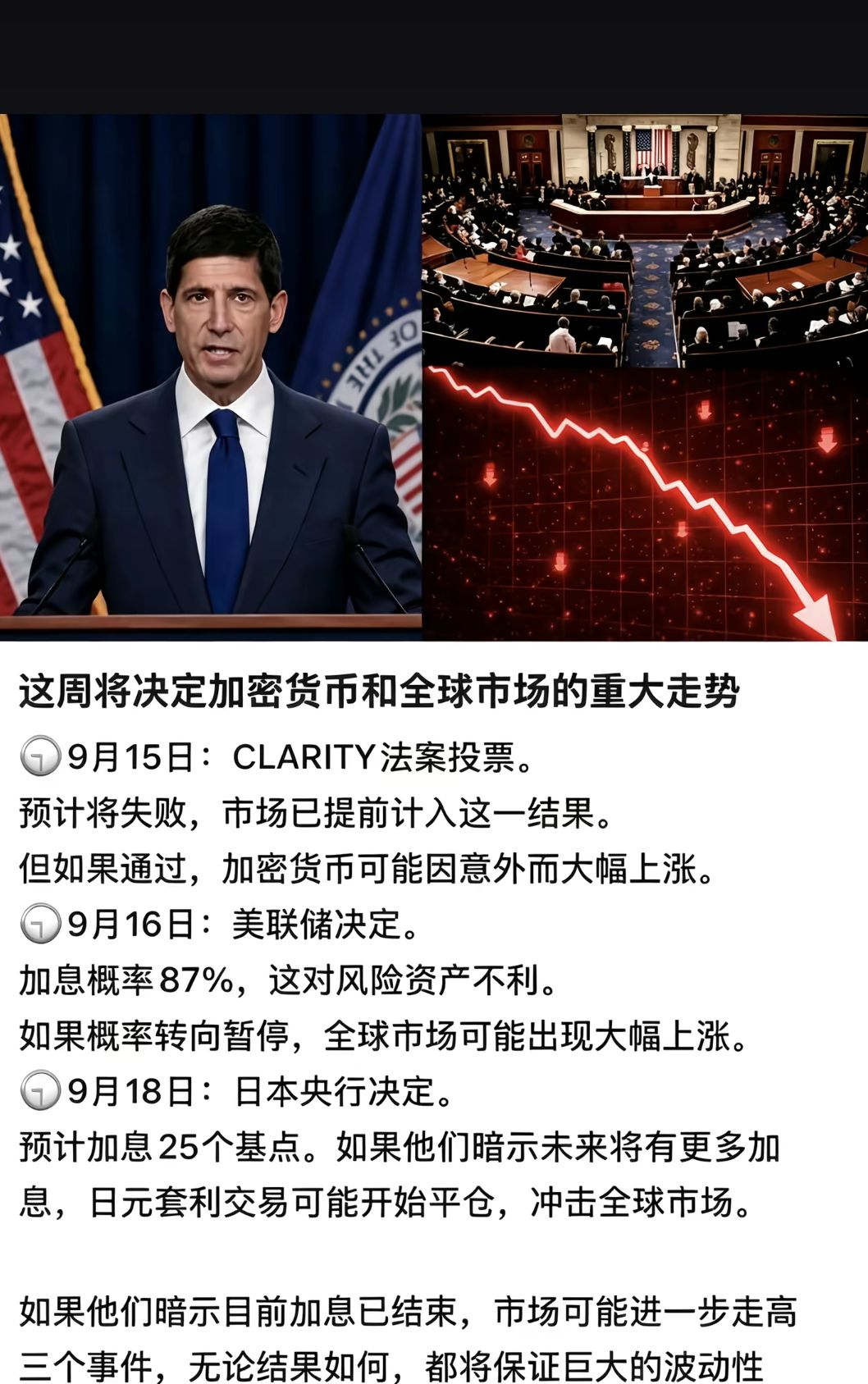
Most importantly, I checked this week’s macro calendar: on Tuesday there’s a CLARITY Act vote; on Thursday at 2:00 a.m. there’s the Fed FOMC decision; and on Friday the Bank of Japan announcement—each one is a big potential shock. In a super-central-bank week like this, the main players’ specialty is to poke both sides’ leverage repeatedly, blowing them up first, and only then choosing a direction.
My plan is very simple: I will not chase highs now. Wait until the Thursday early-morning news lands. If we pull back to around 77,000 and it can hold, then it’s not too late to re-enter.
What are you planning to do this week—stay mostly in cash to play it safe, or bet on a rate cut?
#比特币守稳77000美元上方 $BTC
Take a look at the liquidation map: in the 79,000 to 81,000 range, the short liquidation “ammo” is piled up like a small mountain—dense, tightly packed yellow-orange bands. Especially from 79,000 to 80,000: as long as the bulls put in even a little effort, it can trigger a cascading squeeze. It would be no surprise if the price is instantly pushed up. The shorts would directly become fuel. Looking downward, below 77,000 down to 76,000, there’s also a big pile of long liquidation orders. In the chart, the green cumulative short liquidation line is very steep—once the shorts gain momentum and smash through 77,000, the bulls’ stampede would be extremely violent, essentially a waterfall.
Now, chasing longs doesn’t really seem appropriate. The 79,000 to 80,000 area is a genuine high-pressure zone with plenty of trapped positions ahead. Even though the 4-hour chart just formed a golden cross, the volume hasn’t fully caught up—no matter how you look at it, it looks like a bull trap designed to lure people in.
Most importantly, I checked this week’s macro calendar: on Tuesday there’s a CLARITY Act vote; on Thursday at 2:00 a.m. there’s the Fed FOMC decision; and on Friday the Bank of Japan announcement—each one is a big potential shock. In a super-central-bank week like this, the main players’ specialty is to poke both sides’ leverage repeatedly, blowing them up first, and only then choosing a direction.
My plan is very simple: I will not chase highs now. Wait until the Thursday early-morning news lands. If we pull back to around 77,000 and it can hold, then it’s not too late to re-enter.
What are you planning to do this week—stay mostly in cash to play it safe, or bet on a rate cut?
#比特币守稳77000美元上方 $BTC


ZEHRi 泽日
·
--
🚀 2,000+FOLLOWERS & 5.000 USDT GIVEAWAY! 🚀
We’ve officially hit the 2,000 followers milestone! To celebrate and thank everyone for the incredible support, I am giving away 5,000 USDT to 1,000 LUCKY WINNERS! 💰✨
Here is how you can participate:
1️⃣ FOLLOW ME @ZEHRI
2️⃣ LIKE & REPOST THIS POST
3️⃣ TAG 2 FRIENDS in the comments below o 👇
.
.
Note: This visual concept was created using AI as a fun and creative way to support the community and celebrate our growth! ❤️
Good luck to everyone! 🙏🏆
#GIVEAWAY #usdtgiveaway #CryptoCommunitys #zehri #MilestoneCelebration $BTC
We’ve officially hit the 2,000 followers milestone! To celebrate and thank everyone for the incredible support, I am giving away 5,000 USDT to 1,000 LUCKY WINNERS! 💰✨
Here is how you can participate:
1️⃣ FOLLOW ME @ZEHRI
2️⃣ LIKE & REPOST THIS POST
3️⃣ TAG 2 FRIENDS in the comments below o 👇
.
.
Note: This visual concept was created using AI as a fun and creative way to support the community and celebrate our growth! ❤️
Good luck to everyone! 🙏🏆
#GIVEAWAY #usdtgiveaway #CryptoCommunitys #zehri #MilestoneCelebration $BTC


易琳Ten
·
--
Fishing—go where the fish are; cast your line there.
Trading—go where it’s easiest to make money; execute your orders there.
Go long—only with the strongest.
Go short—only with the weakest.
Don’t stubbornly hold your ground where there’s no fish, and don’t clash head-on with the market.
Follow the flow of capital, stand on the side of the strongest trend—making money naturally becomes much easier.
Trading isn’t about who’s smarter,
it’s about who understands better—where there’s fish, that’s where you cast your line. 🎣📈
Trading—go where it’s easiest to make money; execute your orders there.
Go long—only with the strongest.
Go short—only with the weakest.
Don’t stubbornly hold your ground where there’s no fish, and don’t clash head-on with the market.
Follow the flow of capital, stand on the side of the strongest trend—making money naturally becomes much easier.
Trading isn’t about who’s smarter,
it’s about who understands better—where there’s fish, that’s where you cast your line. 🎣📈



乘风Sunshine
·
--
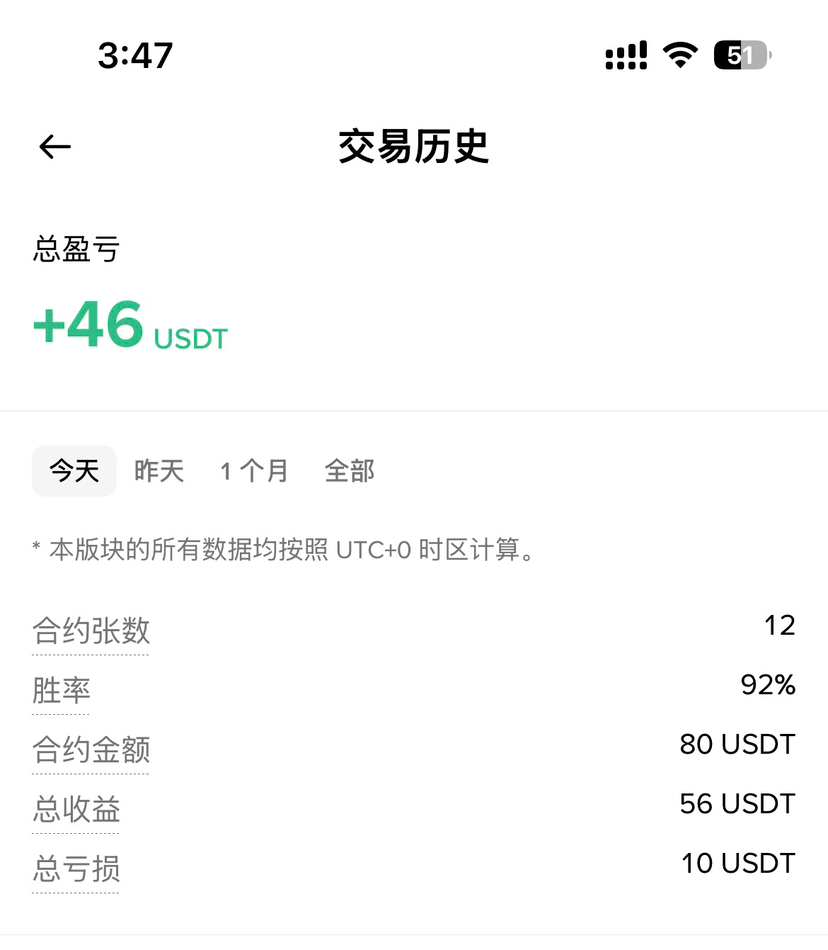
Combat power is still recovering. Number 12 clears number 11 alone—I'll be back to stream once I'm recovered, brothers. (ps: The estimated stream times are still the old schedule: 7 AM, 3 PM for event contracts, and 10 PM for perpetual contracts.)



阿婧1688
·
--
Cryptocurrency

光明社区-阿波罗
·
--
Rushing to mountains and seas, collecting every inch of light, letting beauty happen naturally in the scenery.
Chase mountains and shores, capture every ray, let beauty unfold naturally.
Chase mountains and shores, capture every ray, let beauty unfold naturally.


只会呐喊的尖刀手
·
--
【Product Name】Today’s Limited Edition·You
【Production Date】The moment you wake up this morning
【Ingredients】Sunlight, a gentle breeze, and a little stubbornness
【Indications】Specifically treats being unhappy, having no spirit, and wanting to just lie down and do nothing
【Directions】Use anytime, all day long—refill your “good mood” whenever you need it
【Precautions】Avoid using it together with “negative energy.” Do not suppress your frustrations on an empty stomach
【Shelf Life】Only valid for today. Please switch to the new version tomorrow
—Please store it properly; you are the limited edition.🏷️💖
【Production Date】The moment you wake up this morning
【Ingredients】Sunlight, a gentle breeze, and a little stubbornness
【Indications】Specifically treats being unhappy, having no spirit, and wanting to just lie down and do nothing
【Directions】Use anytime, all day long—refill your “good mood” whenever you need it
【Precautions】Avoid using it together with “negative energy.” Do not suppress your frustrations on an empty stomach
【Shelf Life】Only valid for today. Please switch to the new version tomorrow
—Please store it properly; you are the limited edition.🏷️💖


生蚝哥Oyster
·
--
BullishAI giants collectively shout “hit the brakes”! U.S. stock storage sector plunges before the bell
On September 14, the U.S. stock storage chip sector saw a collective drop before the opening bell.
SK Hynix ADR fell 7.13%, Seagate STX fell 6.17%, Micron MU fell 5.82%, SanDisk SNDK fell 5.73%, and Western Digital WDC fell 5.64%.
The spark came from an AI safety controversy: Anthropic CEO Dario Amodei called on the U.S. to push for slowing down AI development, urging AI companies to work together to set safety standards that would not be constrained by antitrust laws. The proposal was supported by Sam Altman, Musk, and Microsoft’s Nadella.
However, the White House takes the opposite stance. Trump’s team believes leadership in AI is crucial and advocates maintaining the U.S.’s competitive edge in AI; they have no plans to force the industry to hit the brakes.
Market concerns: If AI research slows down, it will directly weigh on storage and HBM demand, putting pressure on the storage sector.
On September 14, the U.S. stock storage chip sector saw a collective drop before the opening bell.
SK Hynix ADR fell 7.13%, Seagate STX fell 6.17%, Micron MU fell 5.82%, SanDisk SNDK fell 5.73%, and Western Digital WDC fell 5.64%.
The spark came from an AI safety controversy: Anthropic CEO Dario Amodei called on the U.S. to push for slowing down AI development, urging AI companies to work together to set safety standards that would not be constrained by antitrust laws. The proposal was supported by Sam Altman, Musk, and Microsoft’s Nadella.
However, the White House takes the opposite stance. Trump’s team believes leadership in AI is crucial and advocates maintaining the U.S.’s competitive edge in AI; they have no plans to force the industry to hit the brakes.
Market concerns: If AI research slows down, it will directly weigh on storage and HBM demand, putting pressure on the storage sector.

生蚝哥Oyster
·
--
BullishMaintain a peaceful mindset, stay calm, and wait for the right moment.
There's no need to rush for the moment—be patient and hold on steadfastly, and the beautiful things will surely arrive as promised ✨
There's no need to rush for the moment—be patient and hold on steadfastly, and the beautiful things will surely arrive as promised ✨


奋斗Hustle1688
·
--
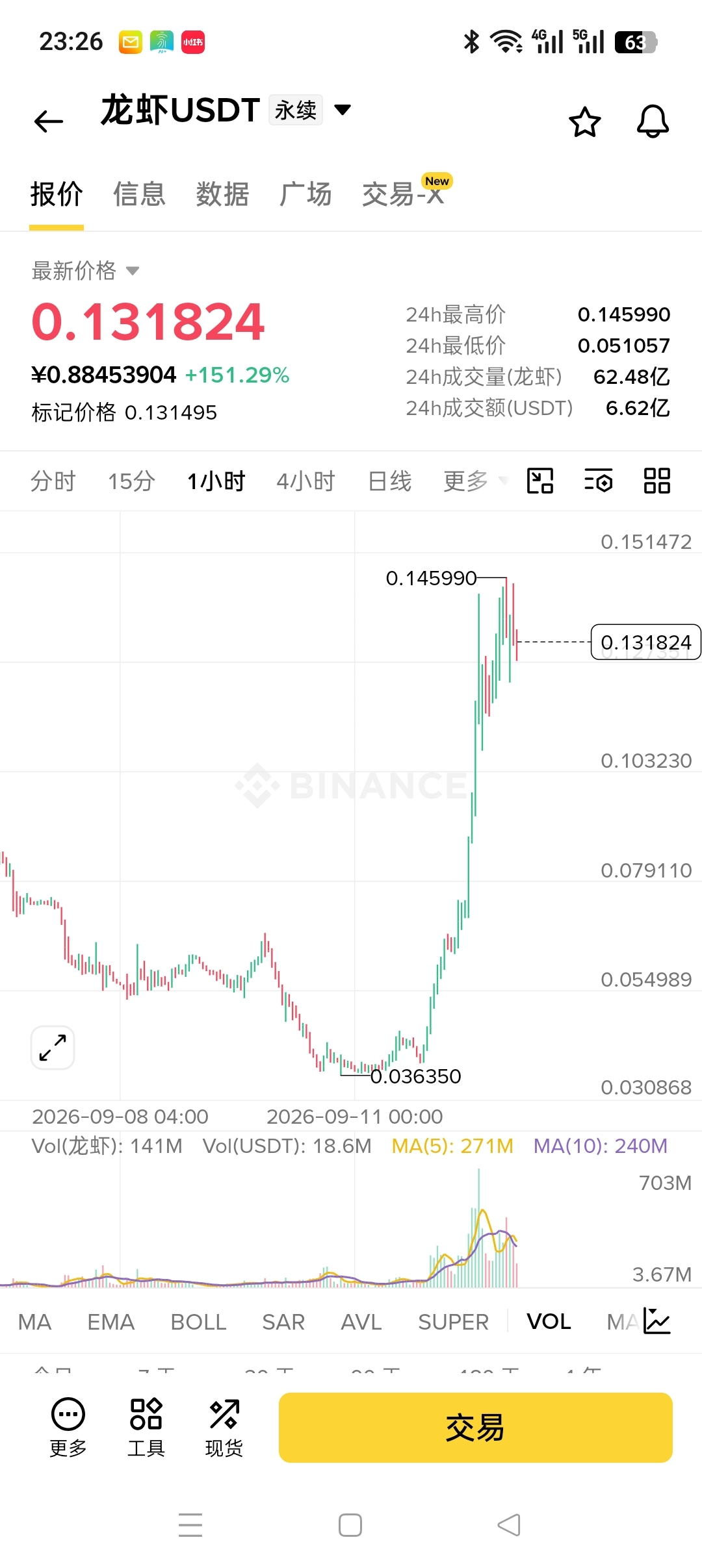
$龙虾 is insanely amazing, up by almost 20x, and it just broke the previous high again. Will it hit 1 USDT this time?
奋斗Hustle1688
·
--
[Replay] 🎙️ Build BNB and Binance Square together
03 h 06 m 34 s · 6.4k listens

燕寶Melissa
·
--
Bullish🔥 Binance Research:Tokenized stocks have moved from the "issuance race" to the "distribution and usage race"!
An important signal is emerging:
The real battleground for tokenized stocks may no longer be "who can issue more," but rather:
Who can bring users in? Who can retain liquidity? Who can make stocks truly used on-chain?
📊 Several sets of data are worth paying attention to:
① Active market cap surges 314% from the start of the year; the market cap of active tokenized stock tokens has grown to about $4 billion.
② Trading volume explodes Monthly trading volume rose from $237 million in January to $7.9 billion in August.
Turnover ratio also increased from 0.23x → 2.14x.
③ Platform share rapidly concentrates bStocks and Robinhood’s combined share of tracked issuer transaction volume:
In June: just 0.8% → In August: 82.3% → From September to now: 87.8%
What does this mean?
👉 The market is shifting from "how much is issued" to "where traffic and liquidity concentrate."
④ DeFi begins to absorb tokenized stocks Active tokenized stock DeFi TVL: $21.6 million → $289.1 million
As a share of active market cap: 2.2% → 7.2%
Of that:
💧 65.4% comes from liquidity pools
💰 28.1% comes from lending
This is the change that’s most worth watching.
Tokenizing traditional stocks is only the first step.
What truly determines the future landscape is whether it can move further into:
Trading → Liquidity → Lending → DeFi → Cross-product usage
💡 So when evaluating a tokenized stock platform in the future, don’t just look at "how much was issued".
You should focus on:
User retention rate Turnover ratio Market depth Net capital inflow DeFi utilization Cross-product conversion rate
One-sentence summary:
🔥 Issuance answers "whether it exists"; distribution answers "who is using it"; and on-chain applications determine "whether it can continuously generate value".
This may be the real next phase of competition for Tokenized Stocks.
#比特币涨1.64%突破78000美元
$BTC
$ETH
$BNB
An important signal is emerging:
The real battleground for tokenized stocks may no longer be "who can issue more," but rather:
Who can bring users in? Who can retain liquidity? Who can make stocks truly used on-chain?
📊 Several sets of data are worth paying attention to:
① Active market cap surges 314% from the start of the year; the market cap of active tokenized stock tokens has grown to about $4 billion.
② Trading volume explodes Monthly trading volume rose from $237 million in January to $7.9 billion in August.
Turnover ratio also increased from 0.23x → 2.14x.
③ Platform share rapidly concentrates bStocks and Robinhood’s combined share of tracked issuer transaction volume:
In June: just 0.8% → In August: 82.3% → From September to now: 87.8%
What does this mean?
👉 The market is shifting from "how much is issued" to "where traffic and liquidity concentrate."
④ DeFi begins to absorb tokenized stocks Active tokenized stock DeFi TVL: $21.6 million → $289.1 million
As a share of active market cap: 2.2% → 7.2%
Of that:
💧 65.4% comes from liquidity pools
💰 28.1% comes from lending
This is the change that’s most worth watching.
Tokenizing traditional stocks is only the first step.
What truly determines the future landscape is whether it can move further into:
Trading → Liquidity → Lending → DeFi → Cross-product usage
💡 So when evaluating a tokenized stock platform in the future, don’t just look at "how much was issued".
You should focus on:
User retention rate Turnover ratio Market depth Net capital inflow DeFi utilization Cross-product conversion rate
One-sentence summary:
🔥 Issuance answers "whether it exists"; distribution answers "who is using it"; and on-chain applications determine "whether it can continuously generate value".
This may be the real next phase of competition for Tokenized Stocks.
#比特币涨1.64%突破78000美元
$BTC
$ETH
$BNB

Log in to explore more content