
橙子Joyce
328 Posts

橙子Joyce
 Square Verified+
价值投资者:以十年为单位投资美股及BTC.ETH.BNB.SOL.推特X:@Joyce88ai

BNB Holder
Frequent Trader
8.7 Years
799 Following
34.7K+ Followers
43.0K+ Liked
Posts
All
Quotes
Videos
Live


长得帅不如跑的快1688
·
--
🚨 Tonight, don’t just stare at the BTC chart.
Something potentially much more important is happening in Washington.
$BTC continues to battle around the $77,000 area.
Treasury yields have pushed around 5%, oil remains elevated, and expectations for a Fed rate hike are extremely high.
Normally:
YIELDS ↑ + RATE EXPECTATIONS ↑ + MACRO PRESSURE ↑
should make life difficult for risk assets.
Yet Bitcoin still hasn’t completely broken down.
And that’s what makes tonight interesting.
Crypto is about to face two major tests:
🇺🇸 CLARITY ACT: THE 60-VOTE TEST
⬇️
🏦 FED: THE LIQUIDITY TEST
This isn’t simply another “good news vs. bad news” trade.
It’s:
REGULATION + LIQUIDITY BEING STRESS-TESTED TOGETHER.
I’m not even focused on whether BTC immediately returns to $80K.
I’m watching three reactions:
① What does BTC do AFTER the CLARITY result?
② If bad news hits, can $77K be reclaimed quickly?
③ If BTC stabilizes, does capital start front-running ETH, BNB and higher-beta assets?
That third one matters.
Because sometimes the next phase of a Crypto rally doesn’t begin with Bitcoin exploding higher every day.
It begins when:
BTC STOPS FALLING — AND CAPITAL STARTS LOOKING FOR MORE BETA.
So tonight I’m not calling the top.
I’m not calling the bottom.
I’m watching one simple signal:
IF ALL THIS PRESSURE CAN’T PUSH THE MARKET LOWER, WHERE DOES IT GO NEXT?
Sometimes the better question isn’t:
“Why isn’t Bitcoin pumping?”
It’s:
“WHY CAN’T THEY PUSH IT DOWN?”
Tonight’s U.S. session may give us the answer.
👇 What are you watching tonight?
BTC 🟠 / CLARITY 🇺🇸 / FED 🏦
#BTC #ETH #BNB
Something potentially much more important is happening in Washington.
$BTC continues to battle around the $77,000 area.
Treasury yields have pushed around 5%, oil remains elevated, and expectations for a Fed rate hike are extremely high.
Normally:
YIELDS ↑ + RATE EXPECTATIONS ↑ + MACRO PRESSURE ↑
should make life difficult for risk assets.
Yet Bitcoin still hasn’t completely broken down.
And that’s what makes tonight interesting.
Crypto is about to face two major tests:
🇺🇸 CLARITY ACT: THE 60-VOTE TEST
⬇️
🏦 FED: THE LIQUIDITY TEST
This isn’t simply another “good news vs. bad news” trade.
It’s:
REGULATION + LIQUIDITY BEING STRESS-TESTED TOGETHER.
I’m not even focused on whether BTC immediately returns to $80K.
I’m watching three reactions:
① What does BTC do AFTER the CLARITY result?
② If bad news hits, can $77K be reclaimed quickly?
③ If BTC stabilizes, does capital start front-running ETH, BNB and higher-beta assets?
That third one matters.
Because sometimes the next phase of a Crypto rally doesn’t begin with Bitcoin exploding higher every day.
It begins when:
BTC STOPS FALLING — AND CAPITAL STARTS LOOKING FOR MORE BETA.
So tonight I’m not calling the top.
I’m not calling the bottom.
I’m watching one simple signal:
IF ALL THIS PRESSURE CAN’T PUSH THE MARKET LOWER, WHERE DOES IT GO NEXT?
Sometimes the better question isn’t:
“Why isn’t Bitcoin pumping?”
It’s:
“WHY CAN’T THEY PUSH IT DOWN?”
Tonight’s U.S. session may give us the answer.
👇 What are you watching tonight?
BTC 🟠 / CLARITY 🇺🇸 / FED 🏦
#BTC #ETH #BNB


光明社区-亮总
·
--
In this life, you don’t have to force everything to be perfect. Accept the impermanence of the world, take things lightly when it comes to gains and losses and comings and goings, and keep your inner peace—this is the best state of living.

奕泽YIZZE
·
--
🧧🧧Explore the infinite possibilities of the digital economy. The blockchain wave is reshaping the value system. With strong underlying technology and ecosystem advantages, the LUCIC token shows tremendous growth potential. Join the core force of a united market-making syndicate to unlock exclusive card dividend rights—standing shoulder to shoulder with high-quality assets.
Follow, like, and share 🧧🧧🧧🎁🎁🎁
Follow, like, and share 🧧🧧🧧🎁🎁🎁


全球零撸达人
·
--
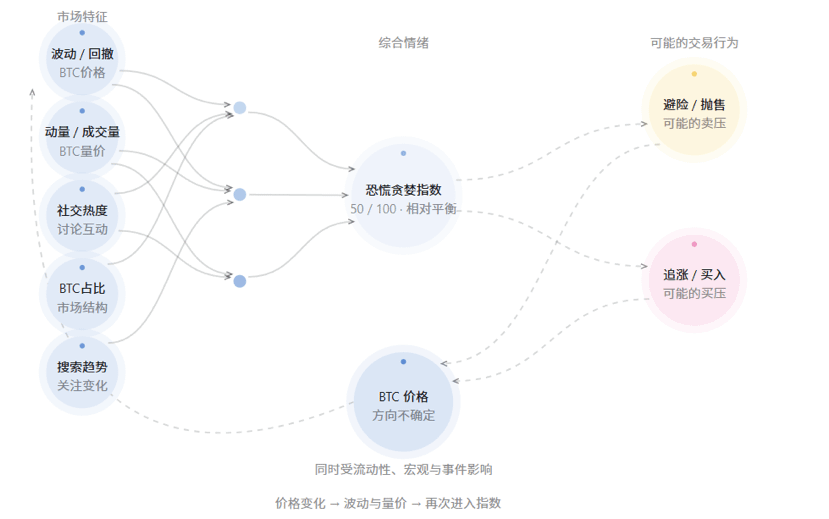
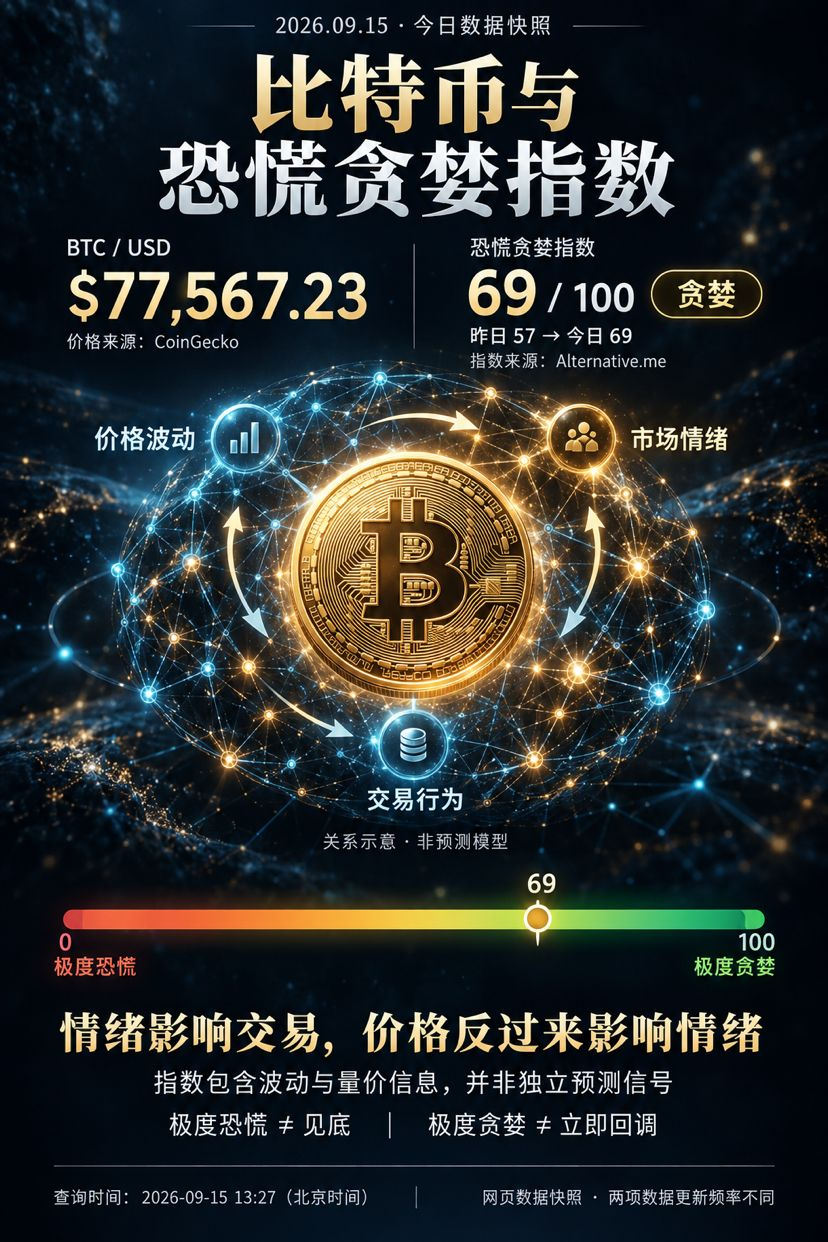
The panic index is increasing, and the greed index is decreasing!
Market sentiment is emotional, and it is very important for the market!$BTC
Market sentiment is emotional, and it is very important for the market!$BTC

Evie埃维利里什
·
--
Wishing you good health, good luck, and plenty of green candles!
RED PACKET DROP!
Follow
Like
Comment
$LSK
RED PACKET DROP!
Follow
Like
Comment
$LSK


币圈淘金小旋风
·
--
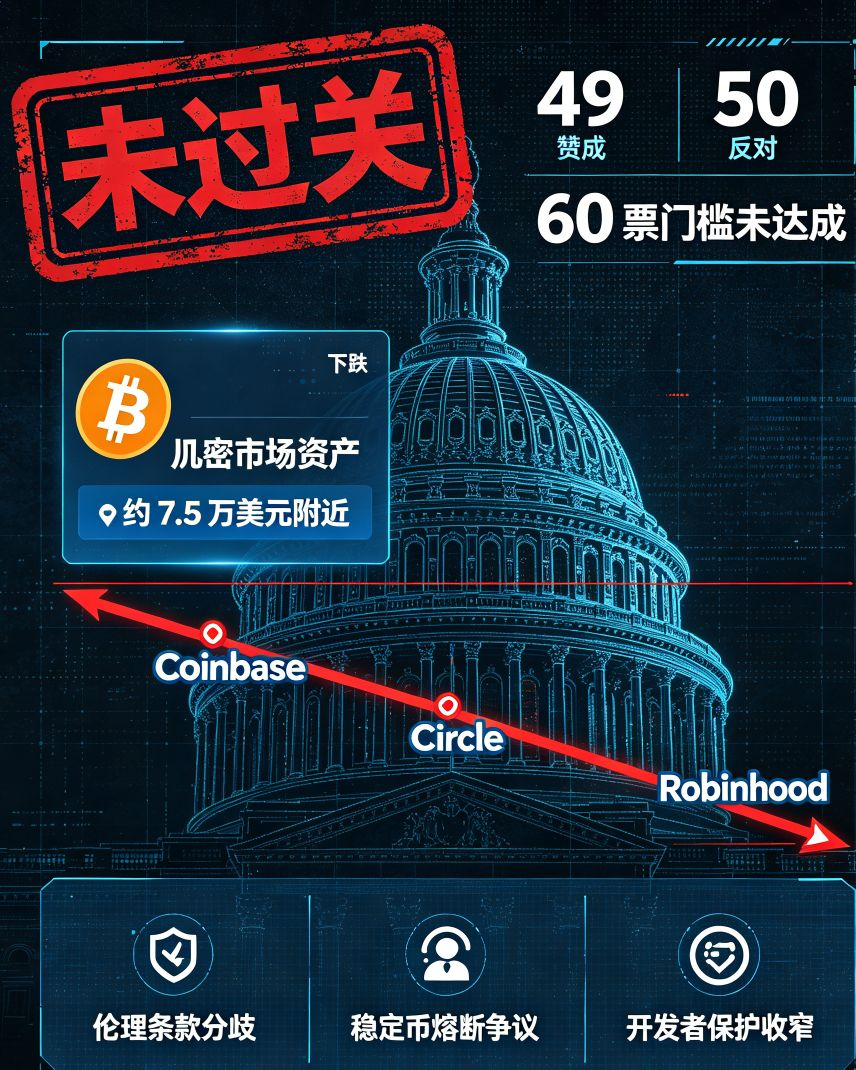
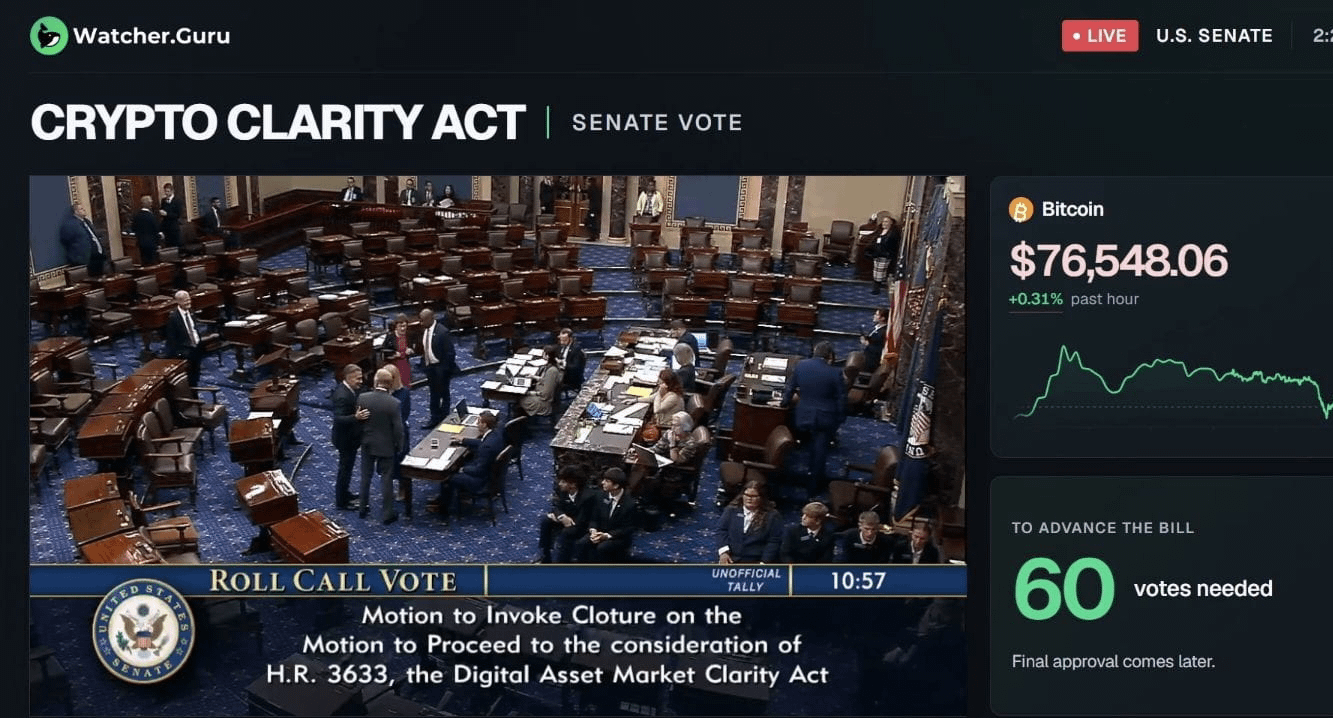
$ZEC $SOL Fellow folks, pay attention: early this morning, the U.S. Senate’s encrypted regulation bill hit a snag in the voting—it failed outright, with 49 in favor and 50 against. It missed the 60-vote threshold by a single breath, and was immediately stalled. After more than a year of back-and-forth and two postponements of the vote, it still couldn’t be enacted. As soon as the news broke, Bitcoin’s price dipped in the short term to around 75,000, and crypto-related stocks like Coinbase also fell across the board. 🚨
The core reason this time the bill got stuck is the ethics clause. The Democrats won’t accept the final proposal from the Republicans, and in the end neither side was willing to give an inch. The Republicans had already compromised on a number of points—adjusting officials’ holdings, stabilizing-coin circuit breakers, and protections for DeFi developers—but they still couldn’t win enough votes. 🚨
Many people think that if a bill doesn’t pass, regulation will completely loosen—don’t think that. The bill is only temporarily shelved, not permanently dead. Even if Congress can’t get legislation through, the SEC will still continue regulating the market under the existing rules. 🚨
The biggest impact of this incident is that market expectations cool off. Funds that had been betting on the bill’s passage are starting to withdraw. In the short term, price fluctuations will likely be amplified—don’t blindly try to bottom-fish. Going forward, keep an eye on whether both parties will restart negotiations, because news can trigger sudden surges and plunges at any time. Market risk is very high—everyone make sure to manage positions properly and control risk. 🚨#美联储加息是否已成定局 #以太坊跌破2400美元 #比特币跌至7.6万美元
The core reason this time the bill got stuck is the ethics clause. The Democrats won’t accept the final proposal from the Republicans, and in the end neither side was willing to give an inch. The Republicans had already compromised on a number of points—adjusting officials’ holdings, stabilizing-coin circuit breakers, and protections for DeFi developers—but they still couldn’t win enough votes. 🚨
Many people think that if a bill doesn’t pass, regulation will completely loosen—don’t think that. The bill is only temporarily shelved, not permanently dead. Even if Congress can’t get legislation through, the SEC will still continue regulating the market under the existing rules. 🚨
The biggest impact of this incident is that market expectations cool off. Funds that had been betting on the bill’s passage are starting to withdraw. In the short term, price fluctuations will likely be amplified—don’t blindly try to bottom-fish. Going forward, keep an eye on whether both parties will restart negotiations, because news can trigger sudden surges and plunges at any time. Market risk is very high—everyone make sure to manage positions properly and control risk. 🚨#美联储加息是否已成定局 #以太坊跌破2400美元 #比特币跌至7.6万美元


静姐6888
·
--
Dongguan promotes “Goose coming,” Tmall promotes “Cat coming,” and Mixue promotes “You love me, I love you.” What does Lucic promote? It promotes a card priced at 3.3 BNB, with permanent profit-sharing—sweeter than milk tea.


路人1688luren
·
--
#美联储加息是否已成定局
$BTC Make a bold prediction. If the clear bill is not passed tonight, and then the Fed rate hike is implemented as well, things will get extremely hawkish—double bearish pressure! Bitcoin will fall straight back into the 60s. $ETH Will directly break below 2000! Bear market, start!
$BTC Make a bold prediction. If the clear bill is not passed tonight, and then the Fed rate hike is implemented as well, things will get extremely hawkish—double bearish pressure! Bitcoin will fall straight back into the 60s. $ETH Will directly break below 2000! Bear market, start!



九千金-融易挣乾
·
--
New streamer’s first live broadcast—feel free to come watch


正乾商学--四条2
·
--
Are you really suited to making a living by trading?
Part Four
④ Is your personality suited to your current trading style?
This is also a very important question.
Everyone’s personality is different.
Some people are very impatient.
Some people have a lot of patience.
Some people like to see results quickly.
Some people can keep their position for several weeks and feel absolutely no anxiety.
So different people are naturally suited to different trading approaches.
For example:
People who are relatively fast and make decisions quickly
may be better suited for:
Scalping / ultra-short-term trading
because you like to judge quickly, execute quickly, and exit quickly.
People with a medium-paced rhythm
may be better suited for:
Day Trading / intraday trading
You don’t need to make decisions in just seconds or minutes,
but you also don’t need to hold your J-structure positions for days or even weeks.
People who are more patient and don’t like frequent trading
may be better suited for:
Swing Trading / swing trading
You’re willing to wait,
and you can also accept “not doing anything today.”
But many people’s biggest problem is that they force themselves to do a type of trading that doesn’t match their personality at all.
A person who is extremely impatient
yet forces themselves to do swing trading for two months.
Every day they want to open the exchange to check,
every day they want to adjust,
and in the end, they turn an originally correct trade into a bad one.
Or someone who naturally thinks more slowly and likes thorough analysis
but forces themselves to do one-minute K;Scalping.
That is also very painful.
So don’t start by asking:
“Which trading style is the most profitable?”
You should ask first:
“Which trading style is the best fit for me?”
If you’re interested in trading, feel free to leave a message in the comments or join the chat room to exchange ideas—learn together and grow together!
#比特币跌至7.6万美元
#美联储加息是否已成定局
Part Four
④ Is your personality suited to your current trading style?
This is also a very important question.
Everyone’s personality is different.
Some people are very impatient.
Some people have a lot of patience.
Some people like to see results quickly.
Some people can keep their position for several weeks and feel absolutely no anxiety.
So different people are naturally suited to different trading approaches.
For example:
People who are relatively fast and make decisions quickly
may be better suited for:
Scalping / ultra-short-term trading
because you like to judge quickly, execute quickly, and exit quickly.
People with a medium-paced rhythm
may be better suited for:
Day Trading / intraday trading
You don’t need to make decisions in just seconds or minutes,
but you also don’t need to hold your J-structure positions for days or even weeks.
People who are more patient and don’t like frequent trading
may be better suited for:
Swing Trading / swing trading
You’re willing to wait,
and you can also accept “not doing anything today.”
But many people’s biggest problem is that they force themselves to do a type of trading that doesn’t match their personality at all.
A person who is extremely impatient
yet forces themselves to do swing trading for two months.
Every day they want to open the exchange to check,
every day they want to adjust,
and in the end, they turn an originally correct trade into a bad one.
Or someone who naturally thinks more slowly and likes thorough analysis
but forces themselves to do one-minute K;Scalping.
That is also very painful.
So don’t start by asking:
“Which trading style is the most profitable?”
You should ask first:
“Which trading style is the best fit for me?”
If you’re interested in trading, feel free to leave a message in the comments or join the chat room to exchange ideas—learn together and grow together!
#比特币跌至7.6万美元
#美联储加息是否已成定局

生蚝哥Oyster
·
--
Major news! The CLARITY Act’s procedural vote fails! U.S. crypto regulatory legislation falls short by 10 votes
September 16 | U.S. CLARITY crypto bill procedural vote fails, with industry hopes for near-term regulatory rollout dashed
In the late hours of September 15 (Beijing time in the early hours of September 16), the U.S. Senate held key procedural votes on the (Digital Assets Market Clarity Act) (the CLARITY Act). The purpose of this vote was to end debate and move the bill into formal consideration. Under Senate rules, the hard threshold for approval is 60 votes in favor.
The final vote outcome was set: 50 in favor, 49 against, and 1 absent. This was far below the 60-vote threshold, so the bill was stopped in its first round and could not enter the Senate’s review process in the near term. This failure does not completely reject the bill’s principles, but rather reflects a serious lack of bipartisan consensus—there was a full 10-vote gap. Legislative progress faces extremely strong resistance.
In the late hours of September 15 (Beijing time in the early hours of September 16), the U.S. Senate held key procedural votes on the (Digital Assets Market Clarity Act) (the CLARITY Act). The purpose of this vote was to end debate and move the bill into formal consideration. Under Senate rules, the hard threshold for approval is 60 votes in favor.
The final vote outcome was set: 50 in favor, 49 against, and 1 absent. This was far below the 60-vote threshold, so the bill was stopped in its first round and could not enter the Senate’s review process in the near term. This failure does not completely reject the bill’s principles, but rather reflects a serious lack of bipartisan consensus—there was a full 10-vote gap. Legislative progress faces extremely strong resistance.

Aria Daisy 阿莉娅_黛西
·
--
🎉 PEPE GIVEAWAY — 1,000 PEPE UP FOR GRABS! 🐸
I’m excited to announce a special PEPE Coin Giveaway for the Binance community!
🎁 1,000 PEPE will be distributed among 10 lucky winners.
How to participate:
✅ Follow my profile
🔁 Repost this post
💬 Comment “ 1 ” below
That’s it! Simple, transparent, and open to everyone.
Thank you for your continued support and for being part of the community. 💚
🍀 Good luck to all participants!
Let’s grow support and succeed together. 🚀
#PEPE #GIVEAWAY🎁 #Binance
$PEPE $BABYSHARK
I’m excited to announce a special PEPE Coin Giveaway for the Binance community!
🎁 1,000 PEPE will be distributed among 10 lucky winners.
How to participate:
✅ Follow my profile
🔁 Repost this post
💬 Comment “ 1 ” below
That’s it! Simple, transparent, and open to everyone.
Thank you for your continued support and for being part of the community. 💚
🍀 Good luck to all participants!
Let’s grow support and succeed together. 🚀
#PEPE #GIVEAWAY🎁 #Binance
$PEPE $BABYSHARK


湖南交易员之家
·
--
Bearish#比特币跌至7.6万美元 🔥Major bombshell|US crypto bill vote fails, XRP hype expectations fall short
The CLARITY Act, which the market has been closely watching, fell short of the required threshold in a procedural vote on September 15 in the Senate and was unable to move forward with legislation!
✅ Vote result: 50 in favor, 49 against; the bill needs 60 votes to continue consideration
✅ Significance of the bill: Once enacted, it would clearly classify assets like XRP as digital commodities, define SEC and CFTC regulatory jurisdictions—also the key catalyst behind XRP’s strong rally earlier
✅ Current situation: The bill is stalled in the short term; with the midterm elections approaching, the probability of it being relaunched again before year-end is low
✅ Market read: Expectations dashed—BTC quickly dropped in the short term; the logic behind the XRP rally has weakened. Be alert for funds taking profits and exiting $NVDAB
The CLARITY Act, which the market has been closely watching, fell short of the required threshold in a procedural vote on September 15 in the Senate and was unable to move forward with legislation!
✅ Vote result: 50 in favor, 49 against; the bill needs 60 votes to continue consideration
✅ Significance of the bill: Once enacted, it would clearly classify assets like XRP as digital commodities, define SEC and CFTC regulatory jurisdictions—also the key catalyst behind XRP’s strong rally earlier
✅ Current situation: The bill is stalled in the short term; with the midterm elections approaching, the probability of it being relaunched again before year-end is low
✅ Market read: Expectations dashed—BTC quickly dropped in the short term; the logic behind the XRP rally has weakened. Be alert for funds taking profits and exiting $NVDAB


Shaheen 69
·
--
🎁 BNB Red Packet for My Community! ❤️
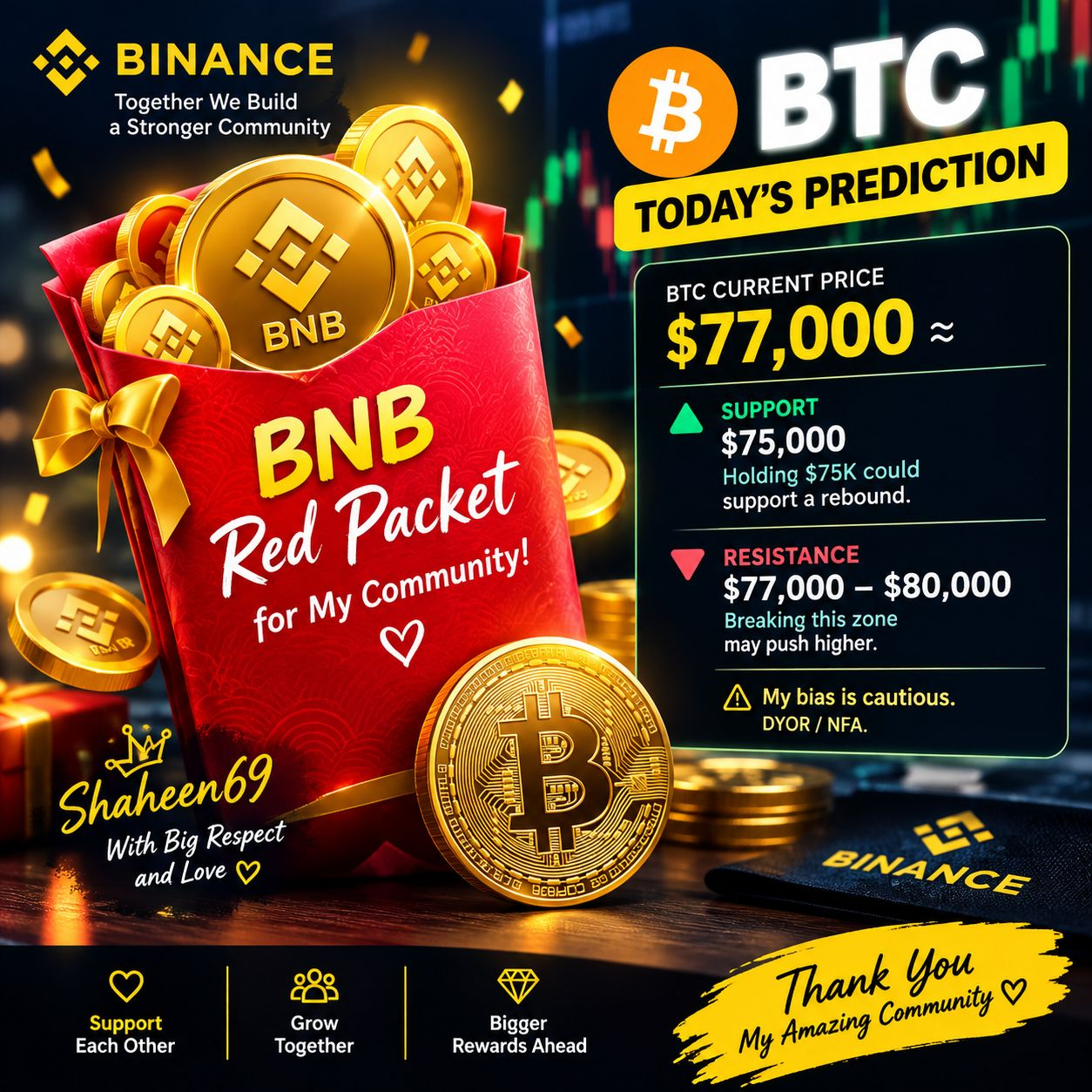
A small gift from Shaheen69 with big respect and love. 🙏 BTC is around $77K today; my bias is cautious. Holding $75K could support a rebound toward $80K, while losing it may bring deeper correction. DYOR/NFA.
$BTC
$BNB
A small gift from Shaheen69 with big respect and love. 🙏 BTC is around $77K today; my bias is cautious. Holding $75K could support a rebound toward $80K, while losing it may bring deeper correction. DYOR/NFA.
$BTC
$BNB

静心1688
·
--
💥 With grit and determination, we reach the mountains and seas; with hard work, we earn glory. May the road ahead be smooth, and may all things be possible to look forward to.
#贝森特支持CLARITY法案终稿 #美联储加息是否已成定局
#贝森特支持CLARITY法案终稿 #美联储加息是否已成定局


只会呐喊的尖刀手
·
--
Fell over
So naturally I kissed the earth
And, while I was at it, picked up
That candy that had just dropped
A moment ago
So naturally I kissed the earth
And, while I was at it, picked up
That candy that had just dropped
A moment ago


帮帮Bonnie
·
--
BullishLiving amidst the mortal world, drift and waver in it, yet keep one corner of clear-mindedness; don’t follow the ways of the world, don’t flatter vulgarity.
Floating in the mortal world, keep clarity in your heart. Don’t conform to vulgarity, and don’t cater to it.
#美联储加息是否已成定局
$PONS
Floating in the mortal world, keep clarity in your heart. Don’t conform to vulgarity, and don’t cater to it.
#美联储加息是否已成定局
$PONS

心月势不可挡
·
--
In the forest brook winding paths, I sit quietly and listen to the flowing water.
I hold a book and take a light sip, stealing half a day of leisure from passing life.
I ask nothing about the dust and bustle—only enjoy this moment of calm 🍃
I hold a book and take a light sip, stealing half a day of leisure from passing life.
I ask nothing about the dust and bustle—only enjoy this moment of calm 🍃

Log in to explore more content