
橙子Joyce
354 Posts

橙子Joyce
 Square Verified+
十年以上美股市场投研策略|WEB3项目投研|BTC.ETH.BNB.SOL|贵金属投资策略黄金.白银.铜|中长期价值投资者|推特X:@Joyce88AI

BNB Holder
Frequent Trader
8.7 Years
799 Following
34.7K+ Followers
43.0K+ Liked
Posts
All
Quotes
Videos
Live
See translation

Lily雪莉呀
·
--
Everything turns back in its own way; when we feel the aftertaste is bitter, please believe that everything will eventually become sweet.

@超人不会飞2020
is speaking[LIVE] 🎙️ Superman 100U DCA into BTC - Day 33
3.2k listens

@英鸿³³₇
is speaking[LIVE] 🎙️ So boring market—this market again needs a hot spot, BNB
3.4k listens

叮当 Doraemon
·
--
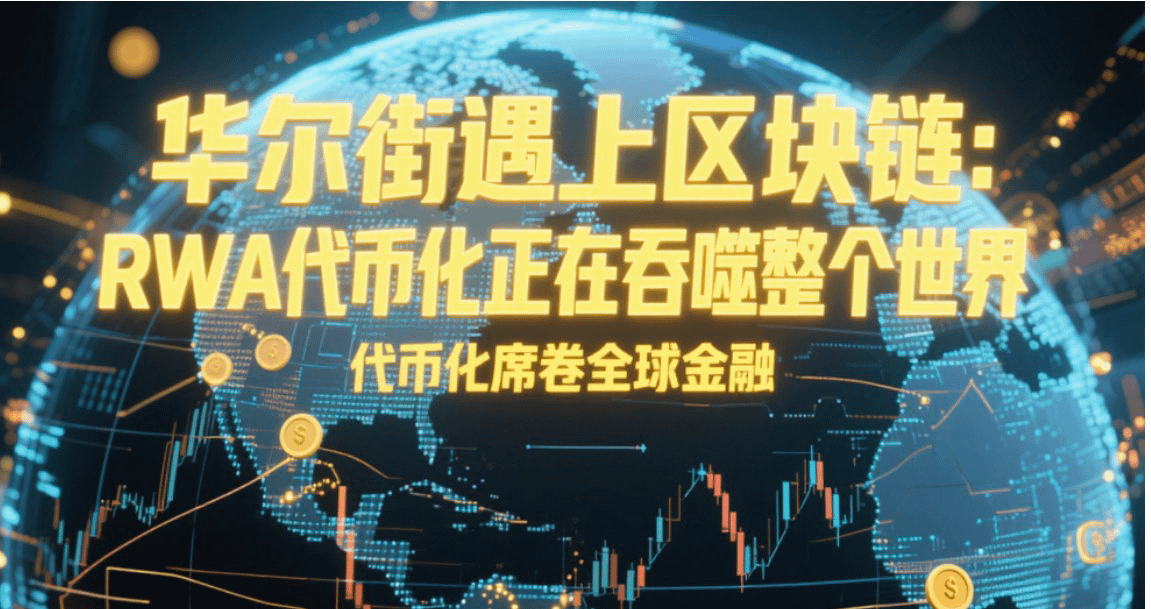
Circle’s Arc mainnet goes live.
This chain is a bit different.
It’s not simply about recreating another Layer 1. Instead, it directly sets its sights on institutional settlement, stablecoin payments, tokenized assets, and an always-on financial market.
More importantly, the first batch of validators includes traditional financial institutions such as BlackRock, DTCC, Visa, Mastercard, and ICE.
The list of 11 institutions that Circle previously released.
I think the real change worth studying here is this:
In the past, traditional finance was using blockchain.
Now, traditional finance is starting to participate in running blockchain.
These two are completely different concepts.
If in the future stocks, funds, payments, and settlement gradually move onto the chain, then blockchain may no longer be just the infrastructure of Crypto.
It may slowly become financial infrastructure itself.
With Arc going live today, I’d rather treat it as a signal:
Wall Street is moving from “researching Crypto” to “building Crypto”.
This chain is a bit different.
It’s not simply about recreating another Layer 1. Instead, it directly sets its sights on institutional settlement, stablecoin payments, tokenized assets, and an always-on financial market.
More importantly, the first batch of validators includes traditional financial institutions such as BlackRock, DTCC, Visa, Mastercard, and ICE.
The list of 11 institutions that Circle previously released.
I think the real change worth studying here is this:
In the past, traditional finance was using blockchain.
Now, traditional finance is starting to participate in running blockchain.
These two are completely different concepts.
If in the future stocks, funds, payments, and settlement gradually move onto the chain, then blockchain may no longer be just the infrastructure of Crypto.
It may slowly become financial infrastructure itself.
With Arc going live today, I’d rather treat it as a signal:
Wall Street is moving from “researching Crypto” to “building Crypto”.

心悦Joy
·
--
“Continuously making concessions,” the U.S. crypto bill still isn’t passed
In the early hours of September 16 Beijing time, the U.S. Senate held a procedural vote on the (Digital Assets Market Clarity Act) (CLARITY Act). The motion to end debate on the consideration motion passed failed: it received 49 votes in favor, 50 against, with 1 person not voting, not reaching the required 60 votes to advance.
This means the bill is temporarily unable to move into full Senate consideration as originally planned, and it has not yet reached the final vote on whether it will be passed or not.
Just before the vote, Republican supporters have released a 635-page revised draft, claiming it has incorporated 126 substantive changes proposed by the Democrats. Trump also agreed to tighten restrictions on encryption-related activities by public officials.
This means the bill is temporarily unable to move into full Senate consideration as originally planned, and it has not yet reached the final vote on whether it will be passed or not.
Just before the vote, Republican supporters have released a 635-page revised draft, claiming it has incorporated 126 substantive changes proposed by the Democrats. Trump also agreed to tighten restrictions on encryption-related activities by public officials.

奋斗Hustle-1688
·
--
$BTC Hike rates already—stop threatening people every day. Once the shoe drops, the bad news is exhausted, and it directly turns into positives.


大丽7613
·
--
Bitcoin rebounds, will it keep rising afterwards?
✅ Rebound reason: The price retraced to the support above 75,000 yuan that has been confirmed multiple times previously, triggering the rebound.
Rebound targets: First target 78,500 yuan; secondary resistance 80,500 yuan. Conservative traders can take profit around 78,500 yuan; spot holders can realize profits in batches.
✅ My take: The market has high uncertainty right now, so it’s not suitable for long-term holding. The bill tomorrow night, the interest rate hike on Wednesday, and officials’ remarks are all unknown variables. I will prioritize securing existing profits and then add heavier positions once the situation becomes clearer.
When the market plunged yesterday, I advised setting up spot positions around 76,000 yuan, and it has since risen by nearly 2,000 points. Strategy logic: buy the dip at support to catch the rebound; take profit at resistance. No trade without support—if the price continues to push higher, you can try shorting as it approaches the resistance zone.
Strong resistance is at 81,000–82,000 yuan. If it reaches that range, try short entries with an expected win rate of about 70%. Trade ranges based on support and resistance; if it breaks out, cut losses. In a complex market, opportunities are continuously uncovered—sync with my real-time trading mindset every day.
✅ Rebound reason: The price retraced to the support above 75,000 yuan that has been confirmed multiple times previously, triggering the rebound.
Rebound targets: First target 78,500 yuan; secondary resistance 80,500 yuan. Conservative traders can take profit around 78,500 yuan; spot holders can realize profits in batches.
✅ My take: The market has high uncertainty right now, so it’s not suitable for long-term holding. The bill tomorrow night, the interest rate hike on Wednesday, and officials’ remarks are all unknown variables. I will prioritize securing existing profits and then add heavier positions once the situation becomes clearer.
When the market plunged yesterday, I advised setting up spot positions around 76,000 yuan, and it has since risen by nearly 2,000 points. Strategy logic: buy the dip at support to catch the rebound; take profit at resistance. No trade without support—if the price continues to push higher, you can try shorting as it approaches the resistance zone.
Strong resistance is at 81,000–82,000 yuan. If it reaches that range, try short entries with an expected win rate of about 70%. Trade ranges based on support and resistance; if it breaks out, cut losses. In a complex market, opportunities are continuously uncovered—sync with my real-time trading mindset every day.
大丽7613
·
--
[Replay] 🎙️ Let’s talk about the market—DCA into BNB
02 h 29 m 31 s · 17.7k listens

王仔大王
·
--
Since the banquet can’t be avoided, then raise your cup to socialize and make sure favors are delivered properly—our bottom line won’t retreat. $NVDAB

心月势不可挡
·
--
In the forest brook winding paths, I sit quietly and listen to the flowing water.
I hold a book and take a light sip, stealing half a day of leisure from passing life.
I ask nothing about the dust and bustle—only enjoy this moment of calm 🍃
I hold a book and take a light sip, stealing half a day of leisure from passing life.
I ask nothing about the dust and bustle—only enjoy this moment of calm 🍃


K大宝
·
--
With goals, with mission, with vision!
Maintain ecological balance!
Spread the idea of freedom!
#HawkAmry
Maintain ecological balance!
Spread the idea of freedom!
#HawkAmry

@K大宝
is speaking[LIVE] 🎙️ Maintain ecological balance and build Binance Square
8k listens

MANO_加密 143
·
--
$XRP /USDT is one of those pairs that can move quickly when market momentum starts building. XRP has strong recognition in the crypto market, and its focus on fast, low-cost transactions keeps it on many traders’ watchlists.
Right now, I’d be watching XRP’s price action closely around major support and resistance levels. A clean breakout with strong volume could bring fresh buying pressure and potentially open the door for another upward move. On the other hand, if price gets rejected from resistance or loses an important support zone, a short-term pullback would be possible.
For me, the key is confirmation rather than chasing the move. Volume, candle structure and the overall BTC market trend can give a clearer picture before taking any position.
XRP can offer interesting opportunities, but volatility can be high. Always manage risk properly and keep a clear stop-loss in mind. Trade the setup, not the hype.
#TradingMindset #BinanceSquareFamily #XRPRises40 #btc70k
Right now, I’d be watching XRP’s price action closely around major support and resistance levels. A clean breakout with strong volume could bring fresh buying pressure and potentially open the door for another upward move. On the other hand, if price gets rejected from resistance or loses an important support zone, a short-term pullback would be possible.
For me, the key is confirmation rather than chasing the move. Volume, candle structure and the overall BTC market trend can give a clearer picture before taking any position.
XRP can offer interesting opportunities, but volatility can be high. Always manage risk properly and keep a clear stop-loss in mind. Trade the setup, not the hype.
#TradingMindset #BinanceSquareFamily #XRPRises40 #btc70k


周周1688
·
--
Finally breaking 100,000 followers 🚀🚀
Thank you, Binance Square
Thank you to everyone who supports Zhouzhou, brothers and sisters
Stay true to our hearts and minds; we walk together all the way
Love you all 💗💗
#1688家族family
@CZ
@币安广场
Thank you, Binance Square
Thank you to everyone who supports Zhouzhou, brothers and sisters
Stay true to our hearts and minds; we walk together all the way
Love you all 💗💗
#1688家族family
@CZ
@币安广场



白鲨观点VN
·
--
One evening, Lý Dương asked me:
“Mr. Bai, what does it take to be considered a good trader? Is it all about making a lot of money?”
I smiled: “Maybe not for sure.”
At the beginning, Lý Dương only had a few tens of thousands of dollars. He traded very carefully—if he made a profit, he felt happy; if he lost, he would look for the reasons. But when his account grew to a few hundred thousand dollars, everything gradually changed.
He traded more, with larger volumes. The profit of 5k—something that once made him happy—now felt too small. Losing 10k no longer led him to analyze; he only wanted to quickly make it back.
One day, he said: “Earlier, I traded to make money. Now I trade like I’m trying to prove that I’m right.”
I fell silent.
After that, Lý Dương started reducing the frequency and volume of his trades, pulling back some profits and spending more time on his life.
A few months later, he said: “I’m not making money as fast as before, but I sleep better.”
I thought, that’s the real maturity of a trader. Making money is a skill. Not letting money and emotions control you—that’s real class.
“Mr. Bai, what does it take to be considered a good trader? Is it all about making a lot of money?”
I smiled: “Maybe not for sure.”
At the beginning, Lý Dương only had a few tens of thousands of dollars. He traded very carefully—if he made a profit, he felt happy; if he lost, he would look for the reasons. But when his account grew to a few hundred thousand dollars, everything gradually changed.
He traded more, with larger volumes. The profit of 5k—something that once made him happy—now felt too small. Losing 10k no longer led him to analyze; he only wanted to quickly make it back.
One day, he said: “Earlier, I traded to make money. Now I trade like I’m trying to prove that I’m right.”
I fell silent.
After that, Lý Dương started reducing the frequency and volume of his trades, pulling back some profits and spending more time on his life.
A few months later, he said: “I’m not making money as fast as before, but I sleep better.”
I thought, that’s the real maturity of a trader. Making money is a skill. Not letting money and emotions control you—that’s real class.

加倉妹
·
--
Believe in yourself and move forward bravely!
Every effort will never be in vain, and every step of坚持 is accumulating strength. Don’t be afraid to go slow—only fear stopping; as long as you have a dream in your heart, you will surely be able to step into your own精彩人生!😊
Every effort will never be in vain, and every step of坚持 is accumulating strength. Don’t be afraid to go slow—only fear stopping; as long as you have a dream in your heart, you will surely be able to step into your own精彩人生!😊


Bitroot铄鸿
·
--
AI won’t slow down. The real question is how far our infrastructure can carry it.
Recently, Jensen Huang referred to data centers as the “oil” for the next 20–25 years, emphasizing that engineering and infrastructure will determine how far AI can actually scale.
At Bitroot, we believe the same principle applies to Web3:
The next wave won’t be won by narrative alone. It will be built on infrastructure.
Parallel execution. High-performance L1. AI-native infrastructure.
Build the rails—so the next generation of applications can run on top of them.
Recently, Jensen Huang referred to data centers as the “oil” for the next 20–25 years, emphasizing that engineering and infrastructure will determine how far AI can actually scale.
At Bitroot, we believe the same principle applies to Web3:
The next wave won’t be won by narrative alone. It will be built on infrastructure.
Parallel execution. High-performance L1. AI-native infrastructure.
Build the rails—so the next generation of applications can run on top of them.
Log in to explore more content