
96 không ngáo
30 Posts

96 không ngáo
Report
Block User
8 Following
3 Followers
2 Liked
Posts
Article
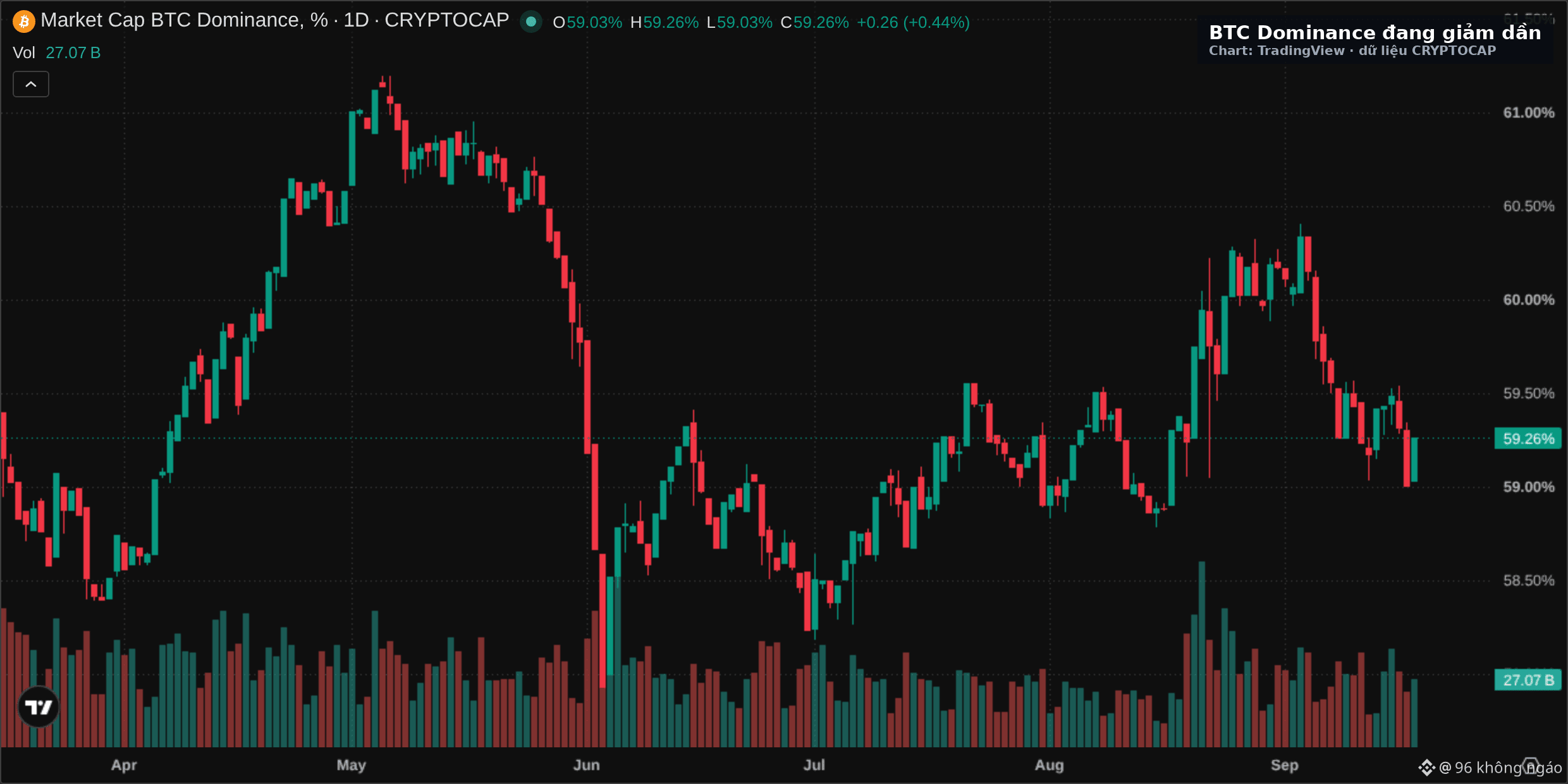
Altcoin open interest surpasses $BTC for the first time in 21 months: good signal or leverage trap?In early September, the total open interest (OI) of altcoin futures contracts for the first time surpassed Bitcoin since December 2024. This is a signal of strong capital flowing into altcoins, but it does not necessarily mean an altcoin season is guaranteed to arrive.
Open interest is the total value of open futures contracts that have not yet been closed. Increasing OI means new money is coming in, and it is usually new leverage being deployed into the market—not just old funds rotating back and forth between exchanges.
Altcoin open interest surpasses $BTC for the first time in 21 months: good signal or leverage trap?
In early September, the total open interest (OI) of altcoin futures contracts for the first time surpassed Bitcoin since December 2024. This is a signal of strong capital flowing into altcoins, but it does not necessarily mean an altcoin season is guaranteed to arrive.
Open interest is the total value of open futures contracts that have not yet been closed. Increasing OI means new money is coming in, and it is usually new leverage being deployed into the market—not just old funds rotating back and forth between exchanges.
Open interest is the total value of open futures contracts that have not yet been closed. Increasing OI means new money is coming in, and it is usually new leverage being deployed into the market—not just old funds rotating back and forth between exchanges.
177
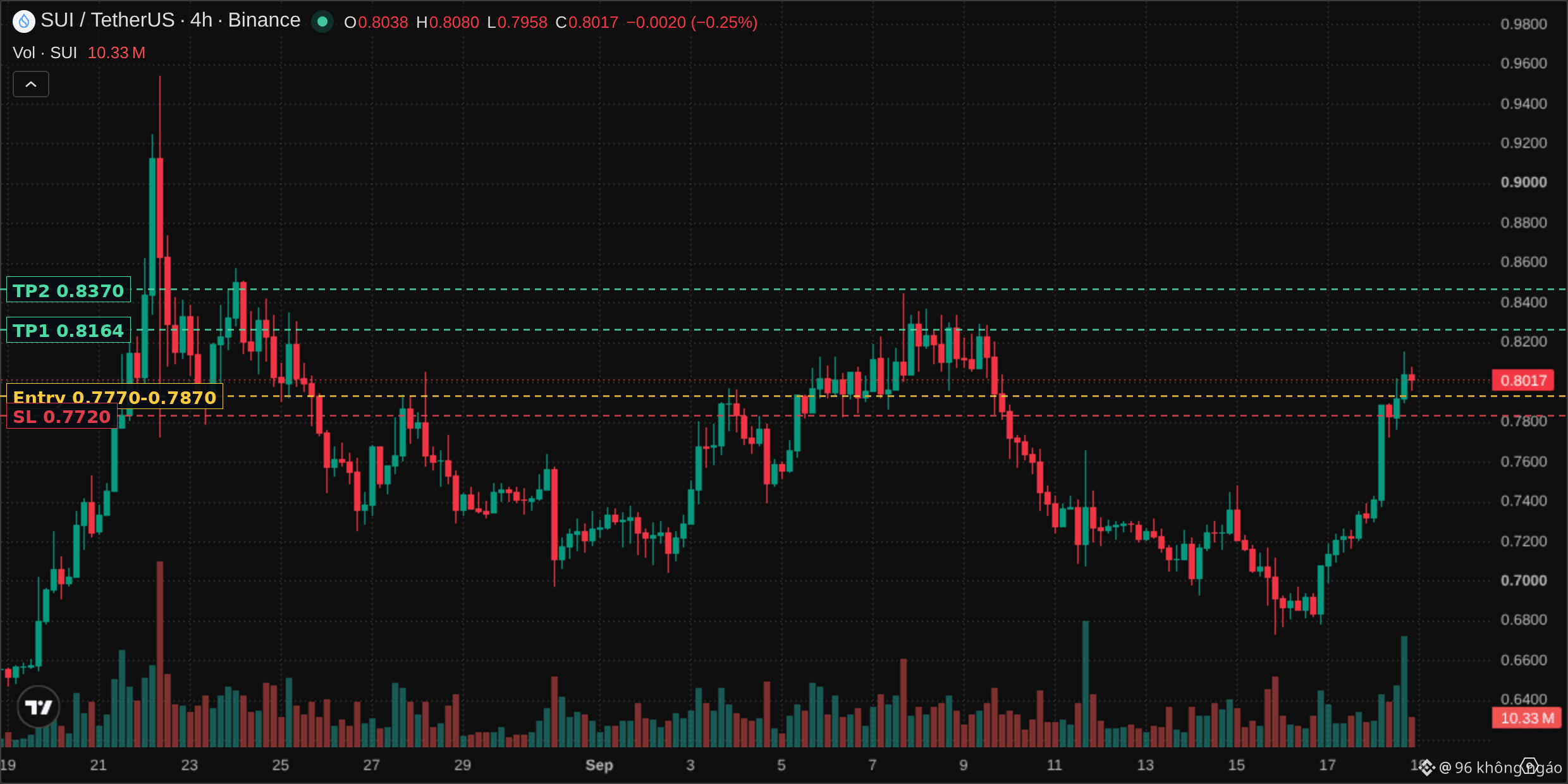
$SUI — LONG
Entry 0.7770 – 0.7870
SL 0.7720
TP1 0.8164
TP2 0.8370
All the market is green, and SUI is the darkest green today.
BTC and ETH are up only about 5.5%. $SUI is up nearly 9.5%, breaking above the highest level of the past eight sessions with $81 million volume—the heaviest in the week. Price stays above the EMA20/50 on both the 4H and 1H charts.
I’m waiting for a pullback to the 0.777 – 0.787 zone before entering. This is an area that has been tested 5 times. If 0.772 is lost, the order is canceled.
Personal observation only. Not investment advice.
#SUI #Altcoin #CryptoTrading #Breakout
$SUI — LONG
Entry 0.7770 – 0.7870
SL 0.7720
TP1 0.8164
TP2 0.8370
All the market is green, and SUI is the darkest green today.
BTC and ETH are up only about 5.5%. $SUI is up nearly 9.5%, breaking above the highest level of the past eight sessions with $81 million volume—the heaviest in the week. Price stays above the EMA20/50 on both the 4H and 1H charts.
I’m waiting for a pullback to the 0.777 – 0.787 zone before entering. This is an area that has been tested 5 times. If 0.772 is lost, the order is canceled.
Personal observation only. Not investment advice.
#SUI #Altcoin #CryptoTrading #Breakout
Entry 0.7770 – 0.7870
SL 0.7720
TP1 0.8164
TP2 0.8370
All the market is green, and SUI is the darkest green today.
BTC and ETH are up only about 5.5%. $SUI is up nearly 9.5%, breaking above the highest level of the past eight sessions with $81 million volume—the heaviest in the week. Price stays above the EMA20/50 on both the 4H and 1H charts.
I’m waiting for a pullback to the 0.777 – 0.787 zone before entering. This is an area that has been tested 5 times. If 0.772 is lost, the order is canceled.
Personal observation only. Not investment advice.
#SUI #Altcoin #CryptoTrading #Breakout
268
·
--
Bullish
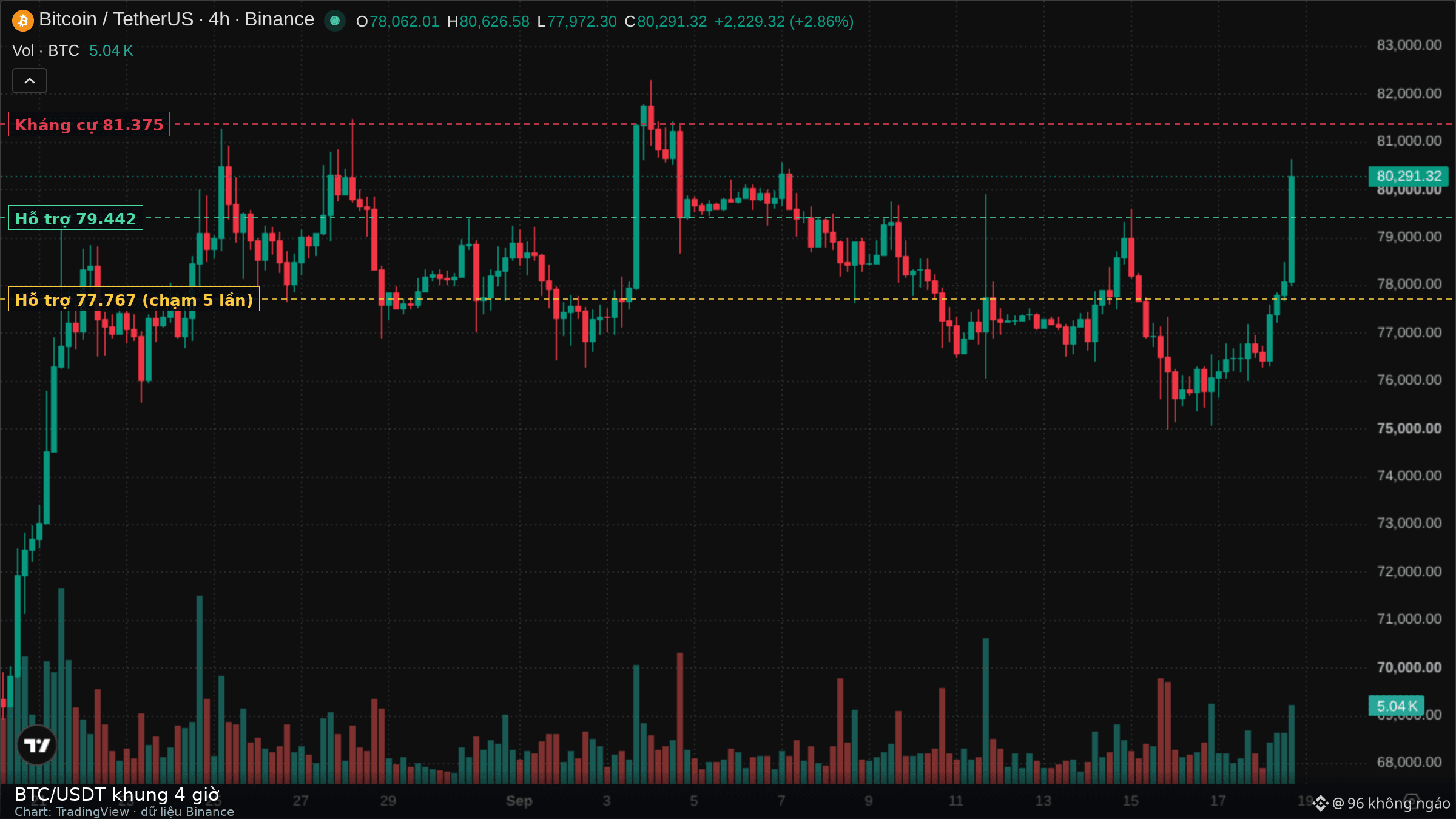
$BTC voted past the 80,000 level, up more than 5% in just one day.
From 09/09 to 09/17, BTC stayed mostly in the 75,600 – 78,200 USD range, with narrow fluctuations for nearly nine straight sessions. Today, the price broke straight up to 80,465 USD, and the daily candle closed up 5.31%—the strongest in the entire run.
The most recent 4-hour candle volume is about 1.8 times the average of the last 20 candles; over both the 4-hour and 1-hour charts, price is clearly above the EMA20 and EMA50. At the same time, ETH rose 4.45%, with BTC slightly outperforming.
The nearest resistance is at 81,375 USD; further out is 82,300 USD—this zone has only been tested once so far, so it’s not certain yet. Below, 78,857 USD and 77,767 USD (touched 5 times) are the two strongest support zones if the price turns back.
Will BTC keep flying higher?
Personal observation only. Not investment advice.
#BTC #Bitcoin #Crypto #CryptoNews
$BTC voted past the 80,000 level, up more than 5% in just one day.
From 09/09 to 09/17, BTC stayed mostly in the 75,600 – 78,200 USD range, with narrow fluctuations for nearly nine straight sessions. Today, the price broke straight up to 80,465 USD, and the daily candle closed up 5.31%—the strongest in the entire run.
The most recent 4-hour candle volume is about 1.8 times the average of the last 20 candles; over both the 4-hour and 1-hour charts, price is clearly above the EMA20 and EMA50. At the same time, ETH rose 4.45%, with BTC slightly outperforming.
The nearest resistance is at 81,375 USD; further out is 82,300 USD—this zone has only been tested once so far, so it’s not certain yet. Below, 78,857 USD and 77,767 USD (touched 5 times) are the two strongest support zones if the price turns back.
Will BTC keep flying higher?
Personal observation only. Not investment advice.
#BTC #Bitcoin #Crypto #CryptoNews
From 09/09 to 09/17, BTC stayed mostly in the 75,600 – 78,200 USD range, with narrow fluctuations for nearly nine straight sessions. Today, the price broke straight up to 80,465 USD, and the daily candle closed up 5.31%—the strongest in the entire run.
The most recent 4-hour candle volume is about 1.8 times the average of the last 20 candles; over both the 4-hour and 1-hour charts, price is clearly above the EMA20 and EMA50. At the same time, ETH rose 4.45%, with BTC slightly outperforming.
The nearest resistance is at 81,375 USD; further out is 82,300 USD—this zone has only been tested once so far, so it’s not certain yet. Below, 78,857 USD and 77,767 USD (touched 5 times) are the two strongest support zones if the price turns back.
Will BTC keep flying higher?
Personal observation only. Not investment advice.
#BTC #Bitcoin #Crypto #CryptoNews
505
$BTC keep $76,000 despite getting hit by a double shock from policy in a single week.
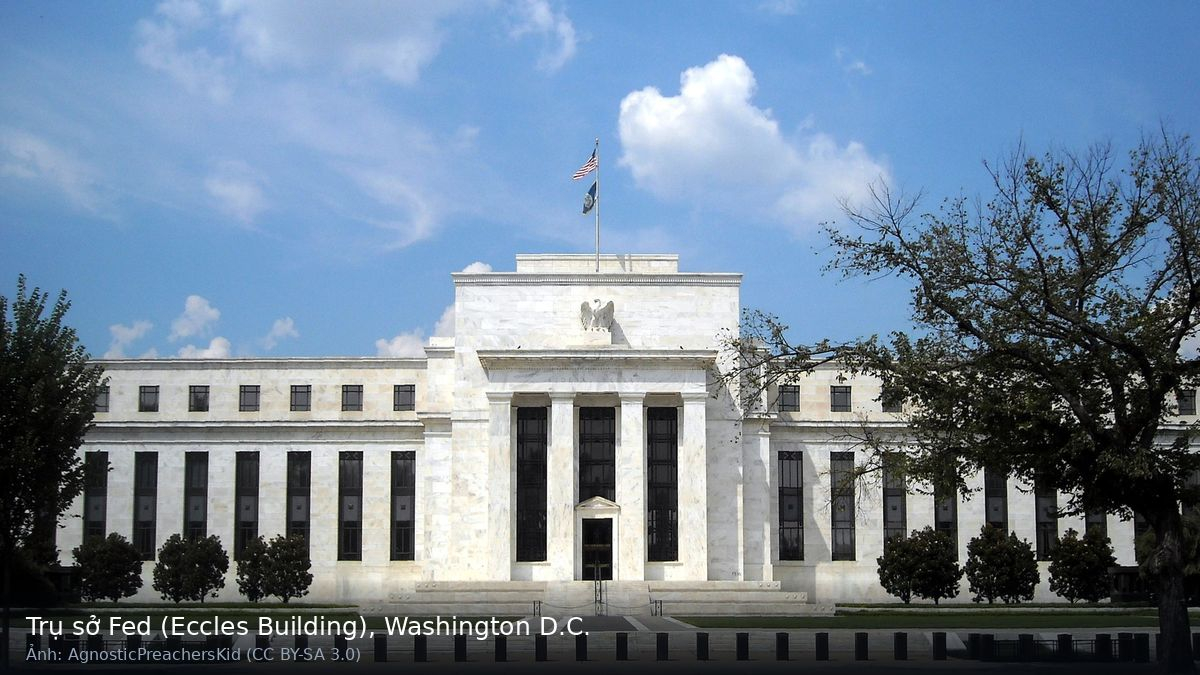
The U.S. Senate failed to reach 60 votes to pass the CLARITY Act, the regulatory framework that determines which coins are governed by the SEC or the CFTC, and did not take an official vote on September 15. Immediately after, the Fed raised interest rates by an additional 0.25 percentage point on September 17, confirming that the tightening cycle is still ongoing.
These two pieces of news should have been enough for the market to sell hard—unclear regulatory footing plus higher costs of capital. But $BTC only dipped slightly below $76,000 and held the level, liquidating overnight about $260 million—more of a shakeout than a crash.
At the same time, the SEC opened another door: a five-year exemption for U.S. stock trading platforms in tokenized form, even while the CLARITY Act is still pending. Crypto regulation in the U.S. is moving in two directions at once—one side tightening rules on who manages which coins, the other opening the door for tokenized stock.
What to watch next: whether the bill returns to the Senate or is pushed to 2027, and whether institutional money flows into newly launched tokenized stock exchanges.
Not investment advice. DYOR.
#BTC #Fed #ClarityAct #SEC #Crypto
$BTC keep $76,000 despite getting hit by a double shock from policy in a single week.
The U.S. Senate failed to reach 60 votes to pass the CLARITY Act, the regulatory framework that determines which coins are governed by the SEC or the CFTC, and did not take an official vote on September 15. Immediately after, the Fed raised interest rates by an additional 0.25 percentage point on September 17, confirming that the tightening cycle is still ongoing.
These two pieces of news should have been enough for the market to sell hard—unclear regulatory footing plus higher costs of capital. But $BTC only dipped slightly below $76,000 and held the level, liquidating overnight about $260 million—more of a shakeout than a crash.
At the same time, the SEC opened another door: a five-year exemption for U.S. stock trading platforms in tokenized form, even while the CLARITY Act is still pending. Crypto regulation in the U.S. is moving in two directions at once—one side tightening rules on who manages which coins, the other opening the door for tokenized stock.
What to watch next: whether the bill returns to the Senate or is pushed to 2027, and whether institutional money flows into newly launched tokenized stock exchanges.
Not investment advice. DYOR.
#BTC #Fed #ClarityAct #SEC #Crypto
The U.S. Senate failed to reach 60 votes to pass the CLARITY Act, the regulatory framework that determines which coins are governed by the SEC or the CFTC, and did not take an official vote on September 15. Immediately after, the Fed raised interest rates by an additional 0.25 percentage point on September 17, confirming that the tightening cycle is still ongoing.
These two pieces of news should have been enough for the market to sell hard—unclear regulatory footing plus higher costs of capital. But $BTC only dipped slightly below $76,000 and held the level, liquidating overnight about $260 million—more of a shakeout than a crash.
At the same time, the SEC opened another door: a five-year exemption for U.S. stock trading platforms in tokenized form, even while the CLARITY Act is still pending. Crypto regulation in the U.S. is moving in two directions at once—one side tightening rules on who manages which coins, the other opening the door for tokenized stock.
What to watch next: whether the bill returns to the Senate or is pushed to 2027, and whether institutional money flows into newly launched tokenized stock exchanges.
Not investment advice. DYOR.
#BTC #Fed #ClarityAct #SEC #Crypto
123
$JUSTICE surges 743% in 24 hours. Just because of a status update "I'm back" on X.
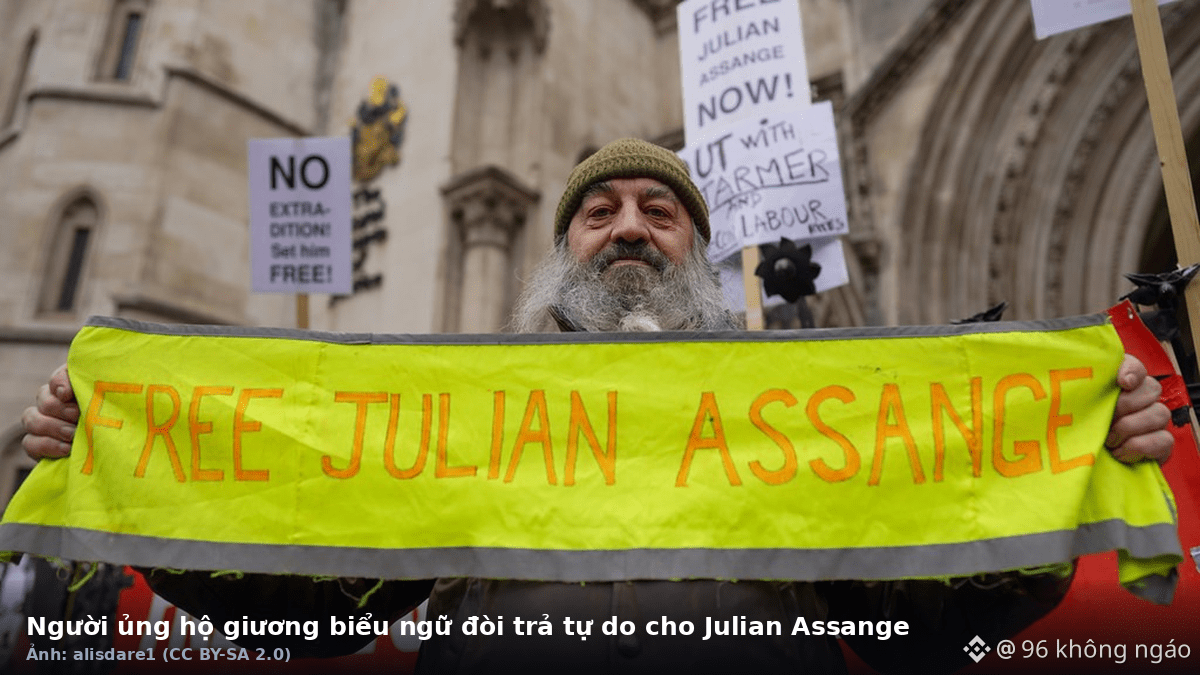
Julian Assange, the founder of WikiLeaks, has just posted the line "I'm back" on X after more than two years of silence, along with a photo taken in Sydney. According to social media monitoring units, this is his first personal post since 2018.
Right after that, AssangeDAO token, the code $JUSTICE, which was close to clinically dead, jumped 743% in only one day. Trading volume rose from under $800 a month to around $231,000 a day.
Assange has never mentioned this token in his post. No project or team has come forward to confirm anything related either.
This is exactly the kind of coin that rides on celebrity names: liquidity is so thin that even a single buy order of tens of thousands of dollars is enough to send the price soaring by hundreds of percent.
Something to watch today: Did Assange mention anything else about crypto, or is this just a brief celebrity-name pump that quickly fades out.
#JUSTICE #Crypto #CryptoNews #Altcoin #WikiLeaks
Not investment advice. DYOR.
$JUSTICE surges 743% in 24 hours. Just because of a status update "I'm back" on X.
Julian Assange, the founder of WikiLeaks, has just posted the line "I'm back" on X after more than two years of silence, along with a photo taken in Sydney. According to social media monitoring units, this is his first personal post since 2018.
Right after that, AssangeDAO token, the code $JUSTICE, which was close to clinically dead, jumped 743% in only one day. Trading volume rose from under $800 a month to around $231,000 a day.
Assange has never mentioned this token in his post. No project or team has come forward to confirm anything related either.
This is exactly the kind of coin that rides on celebrity names: liquidity is so thin that even a single buy order of tens of thousands of dollars is enough to send the price soaring by hundreds of percent.
Something to watch today: Did Assange mention anything else about crypto, or is this just a brief celebrity-name pump that quickly fades out.
#JUSTICE #Crypto #CryptoNews #Altcoin #WikiLeaks
Not investment advice. DYOR.
Julian Assange, the founder of WikiLeaks, has just posted the line "I'm back" on X after more than two years of silence, along with a photo taken in Sydney. According to social media monitoring units, this is his first personal post since 2018.
Right after that, AssangeDAO token, the code $JUSTICE, which was close to clinically dead, jumped 743% in only one day. Trading volume rose from under $800 a month to around $231,000 a day.
Assange has never mentioned this token in his post. No project or team has come forward to confirm anything related either.
This is exactly the kind of coin that rides on celebrity names: liquidity is so thin that even a single buy order of tens of thousands of dollars is enough to send the price soaring by hundreds of percent.
Something to watch today: Did Assange mention anything else about crypto, or is this just a brief celebrity-name pump that quickly fades out.
#JUSTICE #Crypto #CryptoNews #Altcoin #WikiLeaks
Not investment advice. DYOR.
94
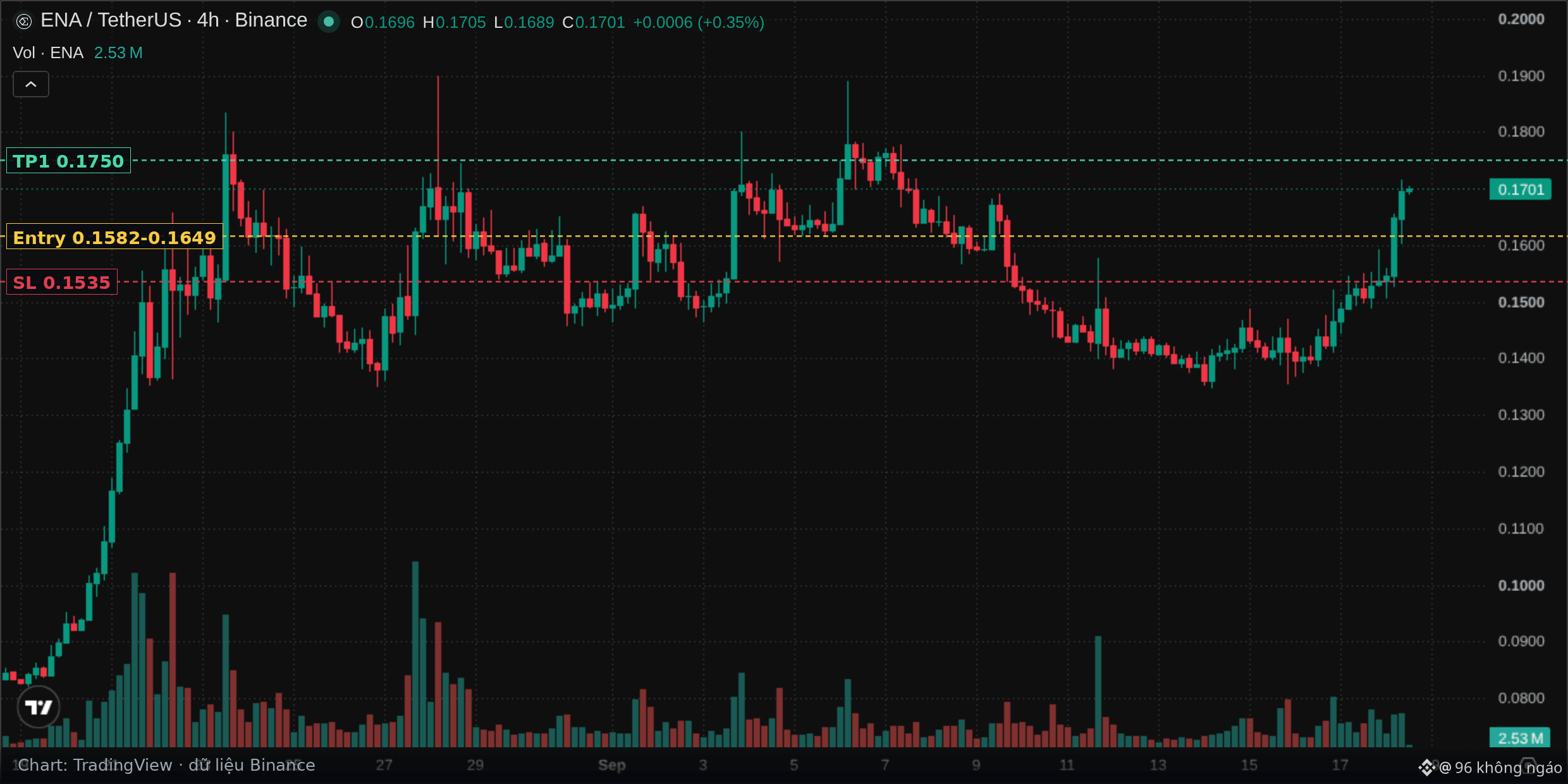
$ENA — LONG
Entry 0.1582 – 0.1649
SL 0.1535
TP1 0.1750
TP2 0.1818
Four consecutive green sessions, exiting a consolidation/accumulation zone that lasted two weeks.
From 09/09 to 15/09, $ENA hovered around 0.136 – 0.159, with volume below $35 million per session. The three most recent sessions bounced one after another by +6.66%, +3.90%, +9.83% — closing today near 0.17.
Both the 4h and 1h are above the EMA20/50, showing much stronger performance than BTC (+1.86%) and ETH (+2.08%) today. Wait for a pullback to 0.1582 – 0.1649 to enter; if it falls to 0.1535, cancel the order.
Personal observation only. Not investment advice.
#ENA #Ethena #Altcoin #CryptoTrading
$ENA — LONG
Entry 0.1582 – 0.1649
SL 0.1535
TP1 0.1750
TP2 0.1818
Four consecutive green sessions, exiting a consolidation/accumulation zone that lasted two weeks.
From 09/09 to 15/09, $ENA hovered around 0.136 – 0.159, with volume below $35 million per session. The three most recent sessions bounced one after another by +6.66%, +3.90%, +9.83% — closing today near 0.17.
Both the 4h and 1h are above the EMA20/50, showing much stronger performance than BTC (+1.86%) and ETH (+2.08%) today. Wait for a pullback to 0.1582 – 0.1649 to enter; if it falls to 0.1535, cancel the order.
Personal observation only. Not investment advice.
#ENA #Ethena #Altcoin #CryptoTrading
Entry 0.1582 – 0.1649
SL 0.1535
TP1 0.1750
TP2 0.1818
Four consecutive green sessions, exiting a consolidation/accumulation zone that lasted two weeks.
From 09/09 to 15/09, $ENA hovered around 0.136 – 0.159, with volume below $35 million per session. The three most recent sessions bounced one after another by +6.66%, +3.90%, +9.83% — closing today near 0.17.
Both the 4h and 1h are above the EMA20/50, showing much stronger performance than BTC (+1.86%) and ETH (+2.08%) today. Wait for a pullback to 0.1582 – 0.1649 to enter; if it falls to 0.1535, cancel the order.
Personal observation only. Not investment advice.
#ENA #Ethena #Altcoin #CryptoTrading
146
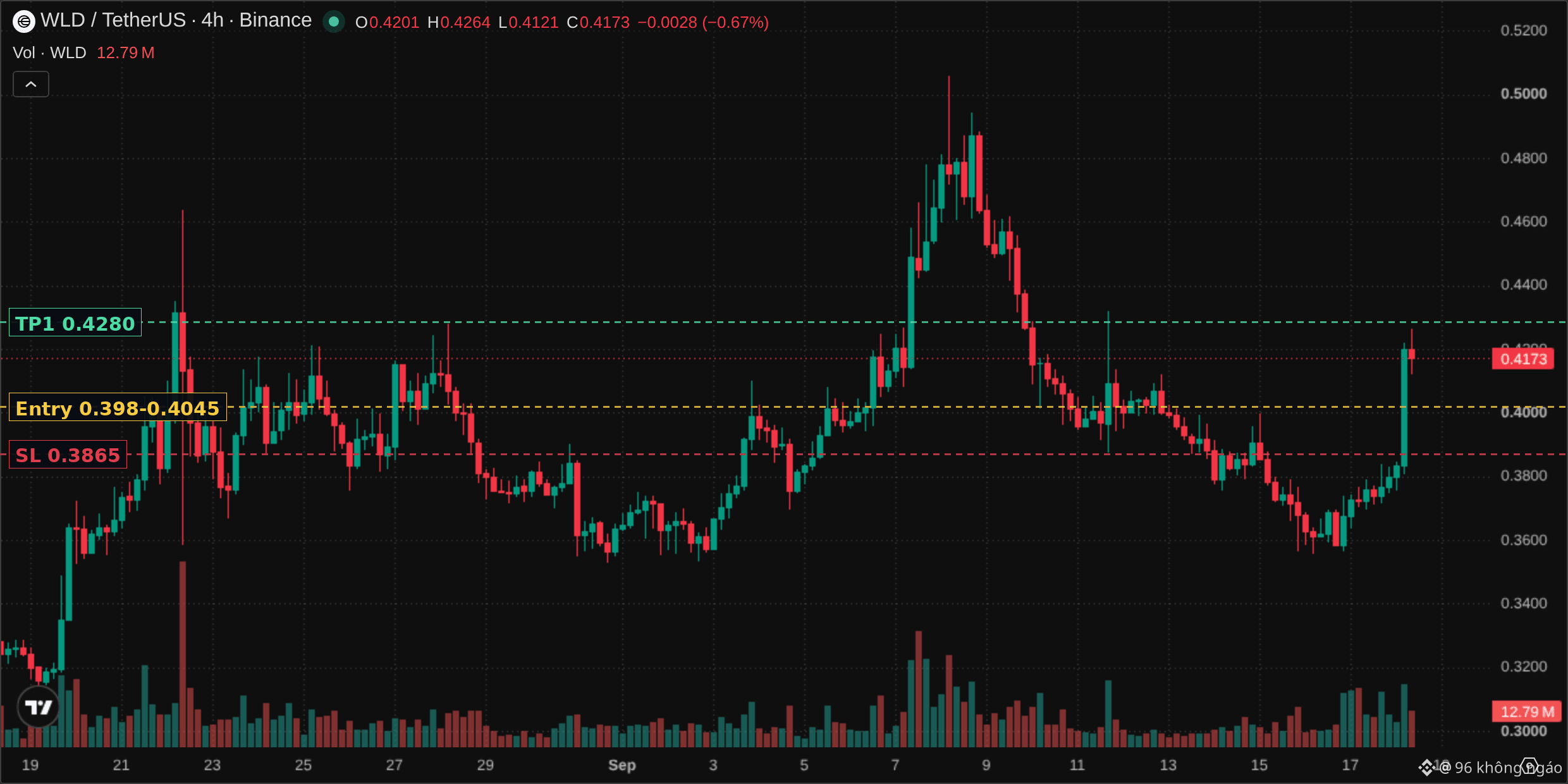
$WLD — LONG
Entry 0.3980 – 0.4045
SL 0.3865
TP1 0.4280
TP2 0.4625
Dropped for six consecutive sessions, then reversed upward by 8.7% in just one candle.
From the 0.4619 peak on 9/9, WLD fell to the 0.3564 low on 15/9—down more than 22%. The subsequent low is higher than the previous one; today’s breakout candle volume is more than 3x the average of the last 20 sessions.
Both the 4h and 1h charts are holding above the EMA20/50. BTC is up 1.4%, ETH is up 1.8% over 24h—while WLD is up more than 12%, clearly outperforming the market. Wait for a pullback to a new entry; if the 4h candle closes below 0.3900, cancel the order.
Personal observation only. Not investment advice.
#WLD #Worldcoin #Altcoin #CryptoTrading
$WLD — LONG
Entry 0.3980 – 0.4045
SL 0.3865
TP1 0.4280
TP2 0.4625
Dropped for six consecutive sessions, then reversed upward by 8.7% in just one candle.
From the 0.4619 peak on 9/9, WLD fell to the 0.3564 low on 15/9—down more than 22%. The subsequent low is higher than the previous one; today’s breakout candle volume is more than 3x the average of the last 20 sessions.
Both the 4h and 1h charts are holding above the EMA20/50. BTC is up 1.4%, ETH is up 1.8% over 24h—while WLD is up more than 12%, clearly outperforming the market. Wait for a pullback to a new entry; if the 4h candle closes below 0.3900, cancel the order.
Personal observation only. Not investment advice.
#WLD #Worldcoin #Altcoin #CryptoTrading
Entry 0.3980 – 0.4045
SL 0.3865
TP1 0.4280
TP2 0.4625
Dropped for six consecutive sessions, then reversed upward by 8.7% in just one candle.
From the 0.4619 peak on 9/9, WLD fell to the 0.3564 low on 15/9—down more than 22%. The subsequent low is higher than the previous one; today’s breakout candle volume is more than 3x the average of the last 20 sessions.
Both the 4h and 1h charts are holding above the EMA20/50. BTC is up 1.4%, ETH is up 1.8% over 24h—while WLD is up more than 12%, clearly outperforming the market. Wait for a pullback to a new entry; if the 4h candle closes below 0.3900, cancel the order.
Personal observation only. Not investment advice.
#WLD #Worldcoin #Altcoin #CryptoTrading
1.2k
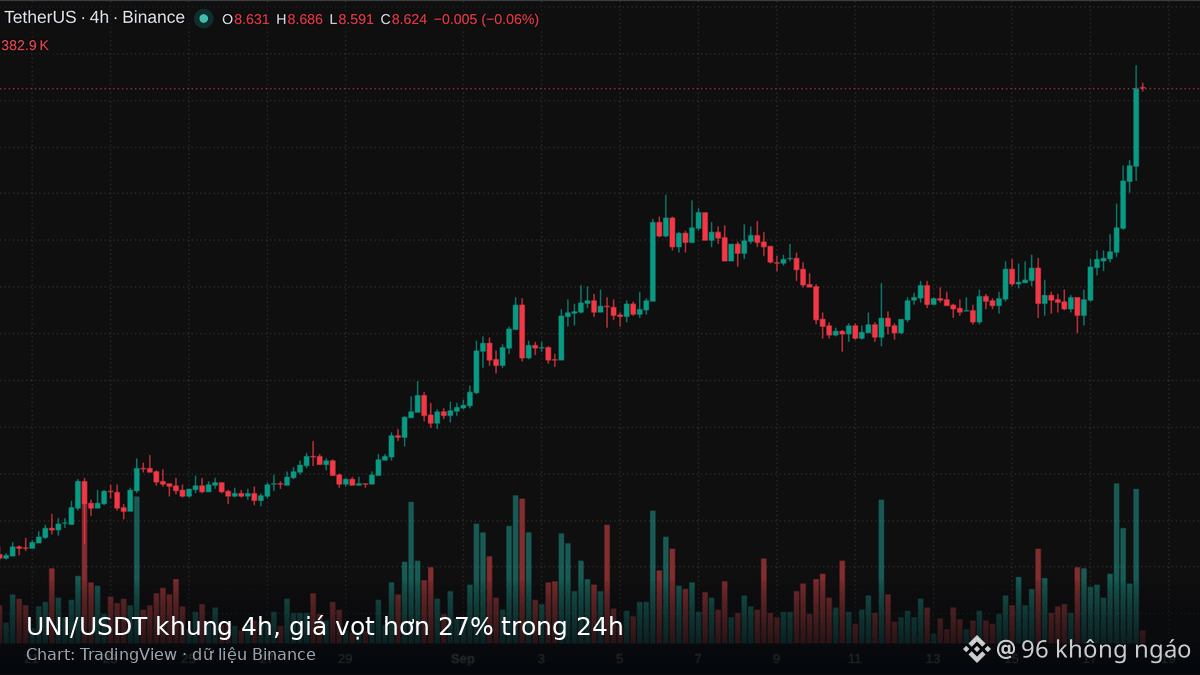
$UNI surges 27% in 24h, after Uniswap automatically recognized holding 80% of tokenized stock trading volume on the Robinhood Chain.
Uniswap has just announced that it is handling about 80% of the trading volume for tokenized stock on the Robinhood Chain, right as this chain sets a new volume record—nearly $3 billion in one day.
$UNI reacts immediately: the price jumps from $6.76 to a peak of $8.86, now around $8.6, up more than 27% in 24 hours on Binance.
The record volume on the Robinhood Chain and the UNI amount being burned—nearly $1 million per day—have been confirmed separately by several reliable finance sources.
The 80% figure is only what Uniswap has publicly stated so far; Robinhood has not commented or confirmed it in their own way.
If you’re holding UNI, this is a rare day after many months of sideways trading.
Worth watching today: whether Robinhood Chain volume can hold the $3B mark for a second consecutive day, or if it’s just a one-off peak.
Personal observation.
#UNI #Uniswap #RobinhoodChain #DeFi
$UNI surges 27% in 24h, after Uniswap automatically recognized holding 80% of tokenized stock trading volume on the Robinhood Chain.
Uniswap has just announced that it is handling about 80% of the trading volume for tokenized stock on the Robinhood Chain, right as this chain sets a new volume record—nearly $3 billion in one day.
$UNI reacts immediately: the price jumps from $6.76 to a peak of $8.86, now around $8.6, up more than 27% in 24 hours on Binance.
The record volume on the Robinhood Chain and the UNI amount being burned—nearly $1 million per day—have been confirmed separately by several reliable finance sources.
The 80% figure is only what Uniswap has publicly stated so far; Robinhood has not commented or confirmed it in their own way.
If you’re holding UNI, this is a rare day after many months of sideways trading.
Worth watching today: whether Robinhood Chain volume can hold the $3B mark for a second consecutive day, or if it’s just a one-off peak.
Personal observation.
#UNI #Uniswap #RobinhoodChain #DeFi
Uniswap has just announced that it is handling about 80% of the trading volume for tokenized stock on the Robinhood Chain, right as this chain sets a new volume record—nearly $3 billion in one day.
$UNI reacts immediately: the price jumps from $6.76 to a peak of $8.86, now around $8.6, up more than 27% in 24 hours on Binance.
The record volume on the Robinhood Chain and the UNI amount being burned—nearly $1 million per day—have been confirmed separately by several reliable finance sources.
The 80% figure is only what Uniswap has publicly stated so far; Robinhood has not commented or confirmed it in their own way.
If you’re holding UNI, this is a rare day after many months of sideways trading.
Worth watching today: whether Robinhood Chain volume can hold the $3B mark for a second consecutive day, or if it’s just a one-off peak.
Personal observation.
#UNI #Uniswap #RobinhoodChain #DeFi
175
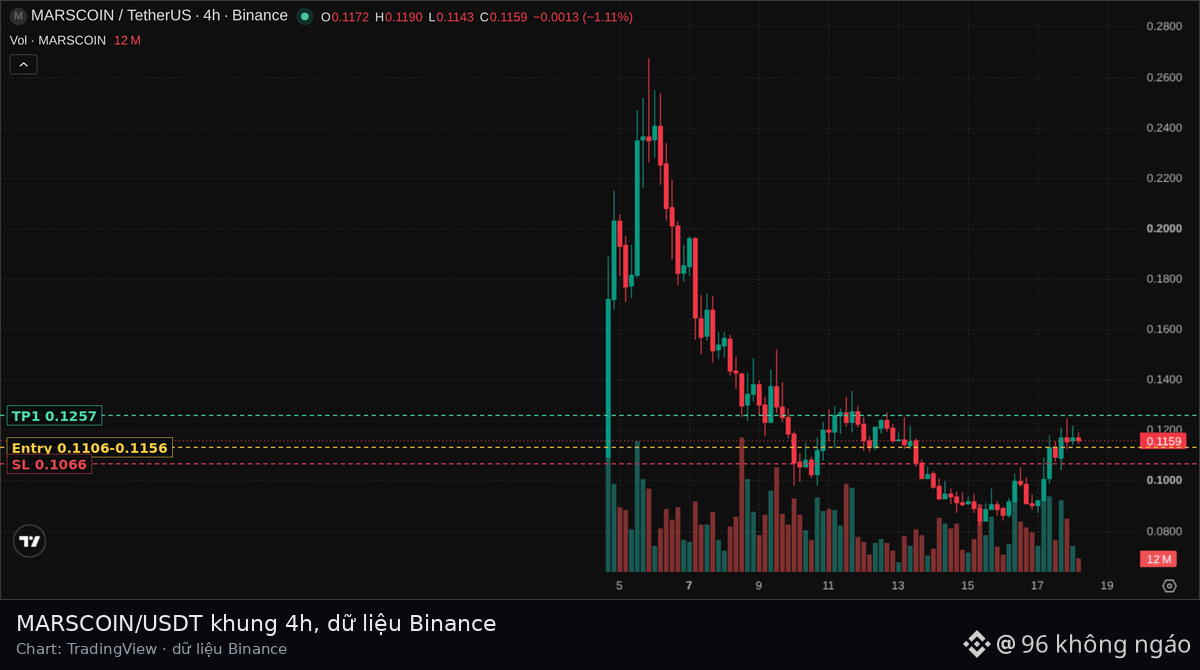
$MARSCOIN — LONG
Entry 0.1106 – 0.1156
SL 0.1066
TP1 0.1257
TP2 0.1503
Sold almost all of the pumped round on the listed chart, then it bounced back more than 27% in just two sessions.
On 13-15/09, the price dropped from 0.1163 to 0.0865, clearing the pump momentum right after it first listed. In the last two sessions, it rebounded by more than 27%; volume increased clearly, and the 1h candles stayed above the EMA20/50.
Since this is a newly listed coin, the range is still wide. I’m waiting for a pullback to the 0.11 area to enter; if the 4h candle closes below 0.1090, I’ll cancel the order.
Personal observation only. Not investment advice.
#MARSCOIN #Meme #Altcoin #CryptoTrading
$MARSCOIN — LONG
Entry 0.1106 – 0.1156
SL 0.1066
TP1 0.1257
TP2 0.1503
Sold almost all of the pumped round on the listed chart, then it bounced back more than 27% in just two sessions.
On 13-15/09, the price dropped from 0.1163 to 0.0865, clearing the pump momentum right after it first listed. In the last two sessions, it rebounded by more than 27%; volume increased clearly, and the 1h candles stayed above the EMA20/50.
Since this is a newly listed coin, the range is still wide. I’m waiting for a pullback to the 0.11 area to enter; if the 4h candle closes below 0.1090, I’ll cancel the order.
Personal observation only. Not investment advice.
#MARSCOIN #Meme #Altcoin #CryptoTrading
Entry 0.1106 – 0.1156
SL 0.1066
TP1 0.1257
TP2 0.1503
Sold almost all of the pumped round on the listed chart, then it bounced back more than 27% in just two sessions.
On 13-15/09, the price dropped from 0.1163 to 0.0865, clearing the pump momentum right after it first listed. In the last two sessions, it rebounded by more than 27%; volume increased clearly, and the 1h candles stayed above the EMA20/50.
Since this is a newly listed coin, the range is still wide. I’m waiting for a pullback to the 0.11 area to enter; if the 4h candle closes below 0.1090, I’ll cancel the order.
Personal observation only. Not investment advice.
#MARSCOIN #Meme #Altcoin #CryptoTrading
1
301
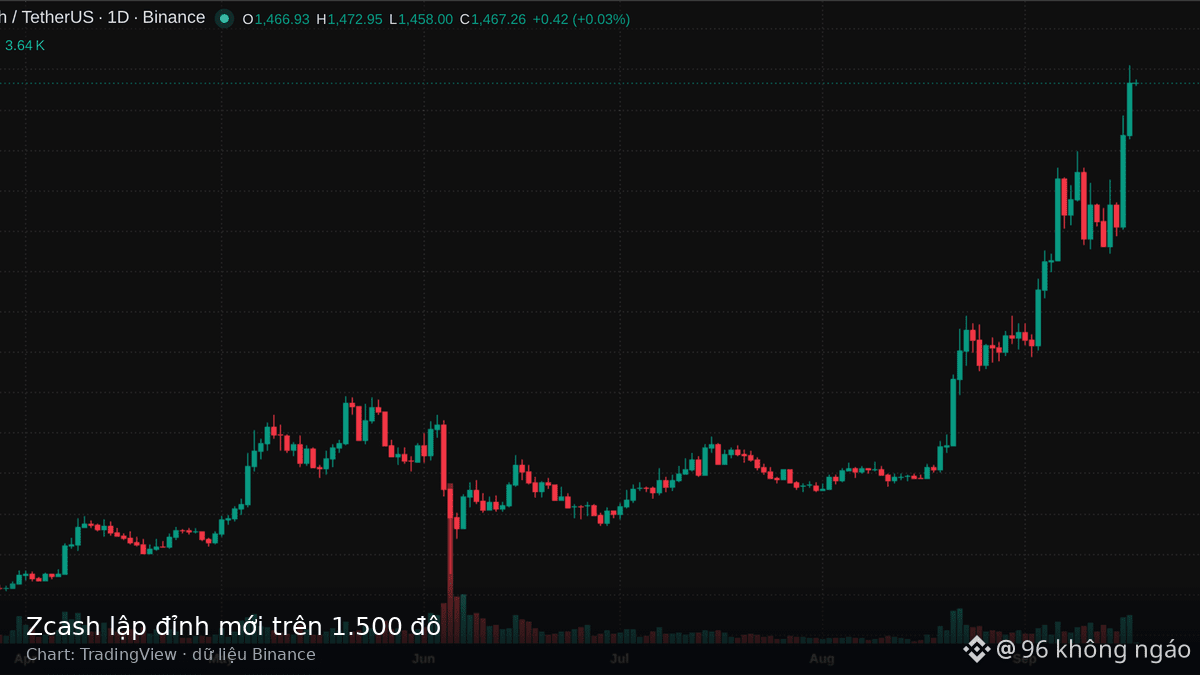
$ZEC surges past $1,500 in a single night, short-sellers lose nearly $345 million
Zcash, the long-forgotten privacy coin, has just touched a peak of $1,509 on Binance,
up nearly 10% in the past 24 hours alone. A day earlier, it had risen by nearly 20% in a single session.
This surge has triggered liquidation of a wave of short positions. CoinDesk reports roughly $345 million
in liquidation orders sweeping across the entire crypto market during the volatility spike, mostly from traders betting
that ZEC will fall.
The story behind it: Grayscale’s Zcash ETF opened about two weeks ago, turning
"a privacy coin" into the hottest theme of 2026 — and the whole group has risen by thousands of percent
since the start of the year.
What’s unclear: can this rally hold, or is it just a short squeeze before turning back?
ZEC has moved inversely—up to 20% in a single day—exactly like this, just a few sessions ago.
Whoever’s holding the privacy coin this season is laughing. Anyone who shorted has just learned an expensive lesson.
Watch today: $ZEC whether it can hold above $1,400, or drops back into the old range.
Not investment advice.
#ZEC #Zcash #Crypto #Bitcoin #Altcoin
$ZEC surges past $1,500 in a single night, short-sellers lose nearly $345 million
Zcash, the long-forgotten privacy coin, has just touched a peak of $1,509 on Binance,
up nearly 10% in the past 24 hours alone. A day earlier, it had risen by nearly 20% in a single session.
This surge has triggered liquidation of a wave of short positions. CoinDesk reports roughly $345 million
in liquidation orders sweeping across the entire crypto market during the volatility spike, mostly from traders betting
that ZEC will fall.
The story behind it: Grayscale’s Zcash ETF opened about two weeks ago, turning
"a privacy coin" into the hottest theme of 2026 — and the whole group has risen by thousands of percent
since the start of the year.
What’s unclear: can this rally hold, or is it just a short squeeze before turning back?
ZEC has moved inversely—up to 20% in a single day—exactly like this, just a few sessions ago.
Whoever’s holding the privacy coin this season is laughing. Anyone who shorted has just learned an expensive lesson.
Watch today: $ZEC whether it can hold above $1,400, or drops back into the old range.
Not investment advice.
#ZEC #Zcash #Crypto #Bitcoin #Altcoin
Zcash, the long-forgotten privacy coin, has just touched a peak of $1,509 on Binance,
up nearly 10% in the past 24 hours alone. A day earlier, it had risen by nearly 20% in a single session.
This surge has triggered liquidation of a wave of short positions. CoinDesk reports roughly $345 million
in liquidation orders sweeping across the entire crypto market during the volatility spike, mostly from traders betting
that ZEC will fall.
The story behind it: Grayscale’s Zcash ETF opened about two weeks ago, turning
"a privacy coin" into the hottest theme of 2026 — and the whole group has risen by thousands of percent
since the start of the year.
What’s unclear: can this rally hold, or is it just a short squeeze before turning back?
ZEC has moved inversely—up to 20% in a single day—exactly like this, just a few sessions ago.
Whoever’s holding the privacy coin this season is laughing. Anyone who shorted has just learned an expensive lesson.
Watch today: $ZEC whether it can hold above $1,400, or drops back into the old range.
Not investment advice.
#ZEC #Zcash #Crypto #Bitcoin #Altcoin
444
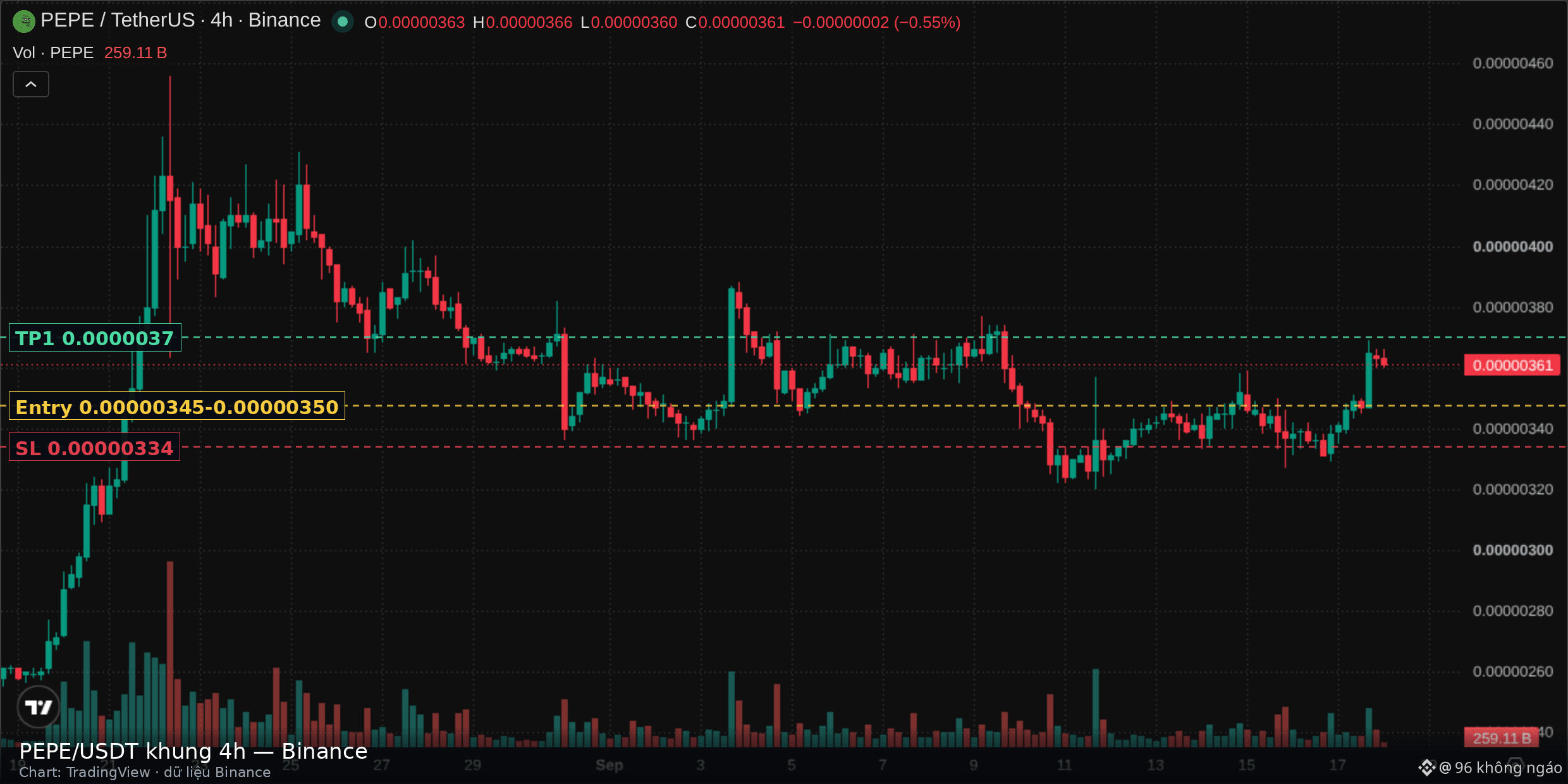
$PEPE — LONG
Entry 0.00000345 – 0.00000350
SL 0.00000334
TP1 0.0000037
TP2 0.00000381
The whole market is slightly green, and $PEPE has increased by nearly 9 times that range.
Today BTC is up only 0.89%, ETH is up 2.29%. $PEPE is up 8% in 24 hours, much stronger than the rest of the market.
Both the 4H and 1H timeframes are above the EMA20/50; the 0.00000346 zone has supported the price multiple times. I’m not chasing here—waiting for a pullback to the new entry zone. If the 4H candle closes below 0.00000337, then cancel the order.
Personal observation only. Not investment advice.
#PEPE #Meme #Altcoin #CryptoTrading
$PEPE — LONG
Entry 0.00000345 – 0.00000350
SL 0.00000334
TP1 0.0000037
TP2 0.00000381
The whole market is slightly green, and $PEPE has increased by nearly 9 times that range.
Today BTC is up only 0.89%, ETH is up 2.29%. $PEPE is up 8% in 24 hours, much stronger than the rest of the market.
Both the 4H and 1H timeframes are above the EMA20/50; the 0.00000346 zone has supported the price multiple times. I’m not chasing here—waiting for a pullback to the new entry zone. If the 4H candle closes below 0.00000337, then cancel the order.
Personal observation only. Not investment advice.
#PEPE #Meme #Altcoin #CryptoTrading
Entry 0.00000345 – 0.00000350
SL 0.00000334
TP1 0.0000037
TP2 0.00000381
The whole market is slightly green, and $PEPE has increased by nearly 9 times that range.
Today BTC is up only 0.89%, ETH is up 2.29%. $PEPE is up 8% in 24 hours, much stronger than the rest of the market.
Both the 4H and 1H timeframes are above the EMA20/50; the 0.00000346 zone has supported the price multiple times. I’m not chasing here—waiting for a pullback to the new entry zone. If the 4H candle closes below 0.00000337, then cancel the order.
Personal observation only. Not investment advice.
#PEPE #Meme #Altcoin #CryptoTrading
373
Article
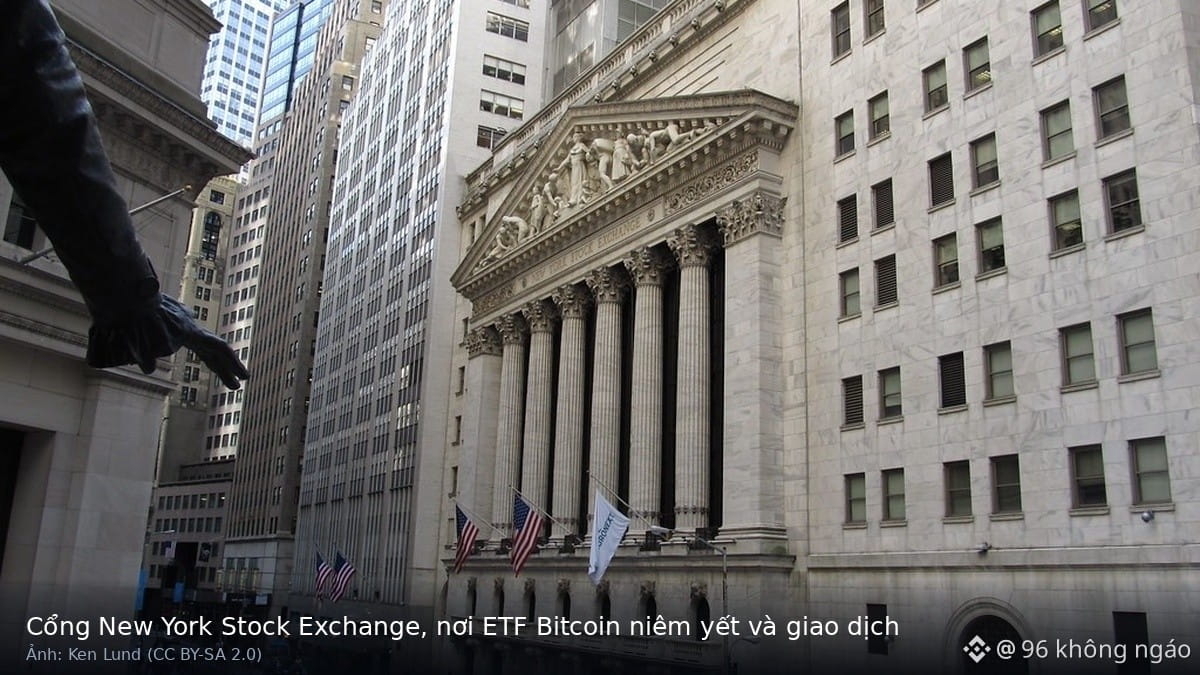
$1 billion is the gap that $BTC ETFs still need to close to reach break-even as of 2026.For over a year now, every time a Bitcoin ETF reports net inflows, people in the industry read it like a vote of confidence for $BTC. See a positive figure and feel happy; see a negative one and worry.
But the more closely I follow, the more it seems that most of that flow isn’t really long-term faith in the coin. Most of it is money chasing price discrepancies.
Back in October and November last year, the ETF $BTC $BTC was pulled for nearly $4 billion in just a few weeks. At the time, many people interpreted it as a signal that investors were rushing to flee Bitcoin.
$1 billion is the gap that $BTC ETFs still need to close to reach break-even as of 2026.
For over a year now, every time a Bitcoin ETF reports net inflows, people in the industry read it like a vote of confidence for $BTC . See a positive figure and feel happy; see a negative one and worry.
But the more closely I follow, the more it seems that most of that flow isn’t really long-term faith in the coin. Most of it is money chasing price discrepancies.
Back in October and November last year, the ETF $BTC $BTC was pulled for nearly $4 billion in just a few weeks. At the time, many people interpreted it as a signal that investors were rushing to flee Bitcoin.
But the more closely I follow, the more it seems that most of that flow isn’t really long-term faith in the coin. Most of it is money chasing price discrepancies.
Back in October and November last year, the ETF $BTC $BTC was pulled for nearly $4 billion in just a few weeks. At the time, many people interpreted it as a signal that investors were rushing to flee Bitcoin.
90
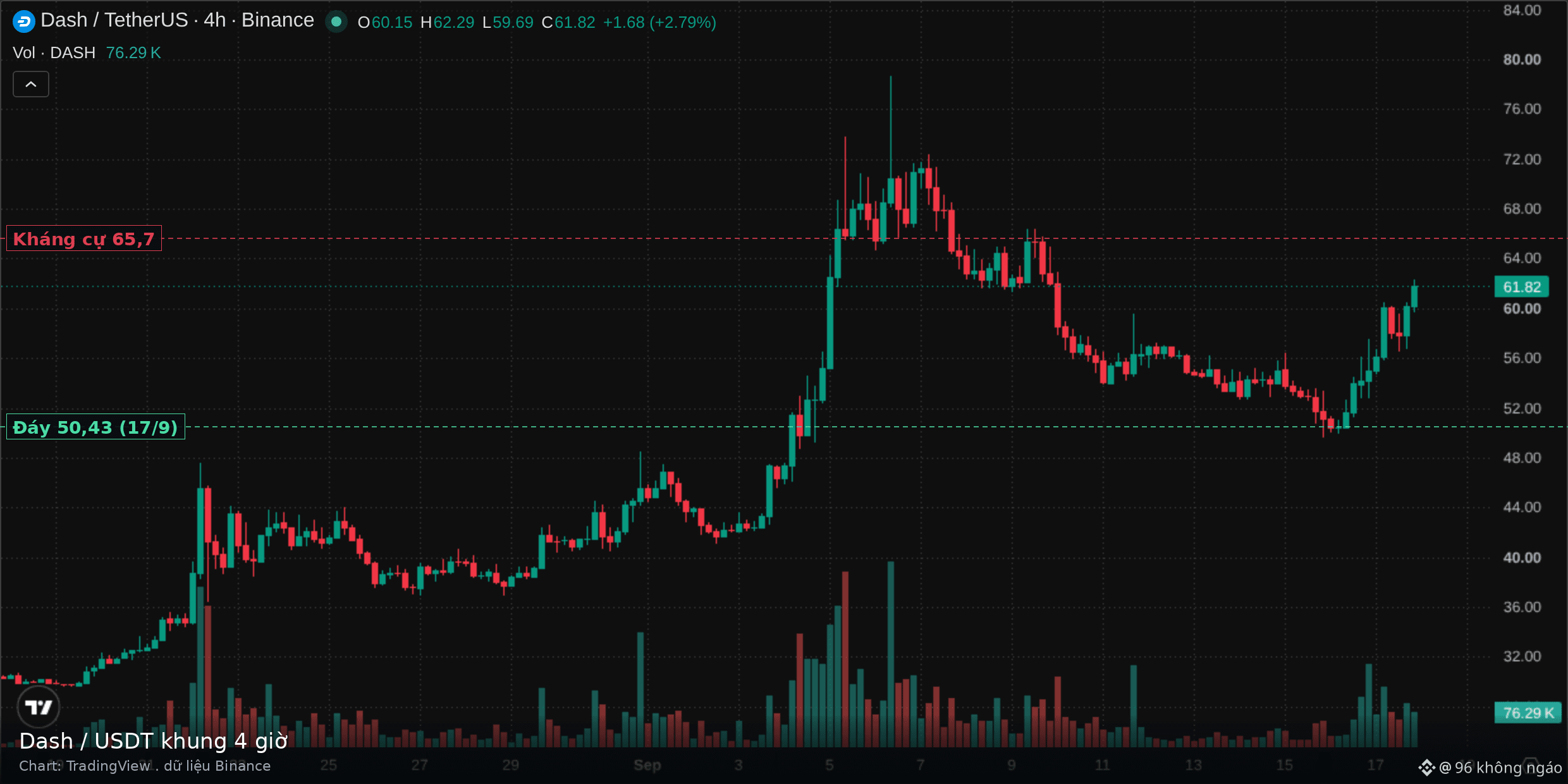
$DASH rose more than 20% after two consecutive sessions, leaving the one-month low behind.
From 8/9 to 15/9, $DASH declined steadily, from $62.8 to a low of $50.43—down nearly 20% in one week, with every session closing lower than the previous one.
On 16/9 and 17/9, it reversed strongly: two consecutive sessions jumped 11.3% and then 10.3%, bringing the price back to $61.8. The trading volume on 17/9 was three times that of the previous sessions.
The price is now tightly hovering just below the $65.7 zone—where upward momentum was previously blocked twice. At this moment, it’s only suitable for observing and managing finances optimally.
Not investment advice.
#DASH #Dash #Altcoin #CryptoNews
$DASH rose more than 20% after two consecutive sessions, leaving the one-month low behind.
From 8/9 to 15/9, $DASH declined steadily, from $62.8 to a low of $50.43—down nearly 20% in one week, with every session closing lower than the previous one.
On 16/9 and 17/9, it reversed strongly: two consecutive sessions jumped 11.3% and then 10.3%, bringing the price back to $61.8. The trading volume on 17/9 was three times that of the previous sessions.
The price is now tightly hovering just below the $65.7 zone—where upward momentum was previously blocked twice. At this moment, it’s only suitable for observing and managing finances optimally.
Not investment advice.
#DASH #Dash #Altcoin #CryptoNews
From 8/9 to 15/9, $DASH declined steadily, from $62.8 to a low of $50.43—down nearly 20% in one week, with every session closing lower than the previous one.
On 16/9 and 17/9, it reversed strongly: two consecutive sessions jumped 11.3% and then 10.3%, bringing the price back to $61.8. The trading volume on 17/9 was three times that of the previous sessions.
The price is now tightly hovering just below the $65.7 zone—where upward momentum was previously blocked twice. At this moment, it’s only suitable for observing and managing finances optimally.
Not investment advice.
#DASH #Dash #Altcoin #CryptoNews
146
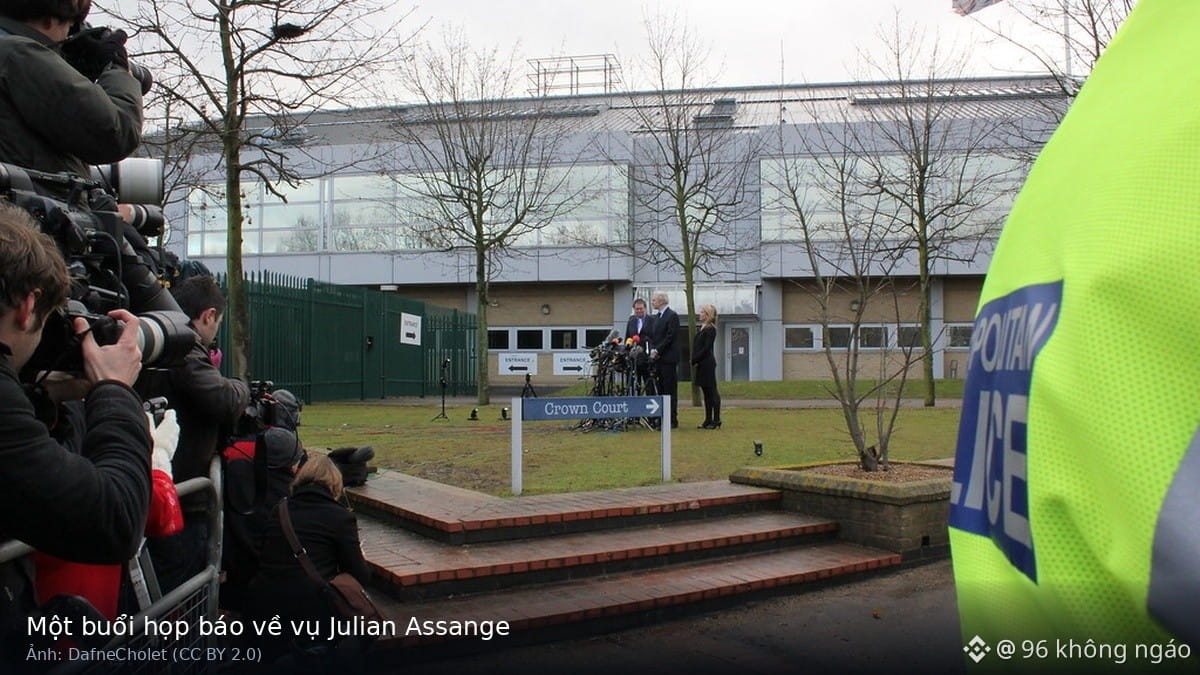
Julian Assange posted “I’m back” on X after more than 2 years of silence. The $BTC community is revisiting old stories.
The founder of WikiLeaks has just posted a short line with a photo taken in Sydney: “I’m back” — his first post after more than two years away from X.
Many international media outlets confirmed it at the same time today. WikiLeaks and Assange have not said anything further about the reason for his return.
It’s unclear whether this is only a personal update or the start of a new round of activity for WikiLeaks.
The $BTC community is recalling this as well: WikiLeaks was one of the first names to receive Bitcoin donations, right after Visa, Mastercard, and PayPal all blocked payments in 2010 — one of the pioneering stories behind the argument that “no one can stop money” with Bitcoin.
Something worth watching today: whether Assange mentions crypto in the following posts.
#BTC #Bitcoin #Crypto #CryptoNews
Julian Assange posted “I’m back” on X after more than 2 years of silence. The $BTC community is revisiting old stories.
The founder of WikiLeaks has just posted a short line with a photo taken in Sydney: “I’m back” — his first post after more than two years away from X.
Many international media outlets confirmed it at the same time today. WikiLeaks and Assange have not said anything further about the reason for his return.
It’s unclear whether this is only a personal update or the start of a new round of activity for WikiLeaks.
The $BTC community is recalling this as well: WikiLeaks was one of the first names to receive Bitcoin donations, right after Visa, Mastercard, and PayPal all blocked payments in 2010 — one of the pioneering stories behind the argument that “no one can stop money” with Bitcoin.
Something worth watching today: whether Assange mentions crypto in the following posts.
#BTC #Bitcoin #Crypto #CryptoNews
The founder of WikiLeaks has just posted a short line with a photo taken in Sydney: “I’m back” — his first post after more than two years away from X.
Many international media outlets confirmed it at the same time today. WikiLeaks and Assange have not said anything further about the reason for his return.
It’s unclear whether this is only a personal update or the start of a new round of activity for WikiLeaks.
The $BTC community is recalling this as well: WikiLeaks was one of the first names to receive Bitcoin donations, right after Visa, Mastercard, and PayPal all blocked payments in 2010 — one of the pioneering stories behind the argument that “no one can stop money” with Bitcoin.
Something worth watching today: whether Assange mentions crypto in the following posts.
#BTC #Bitcoin #Crypto #CryptoNews
204
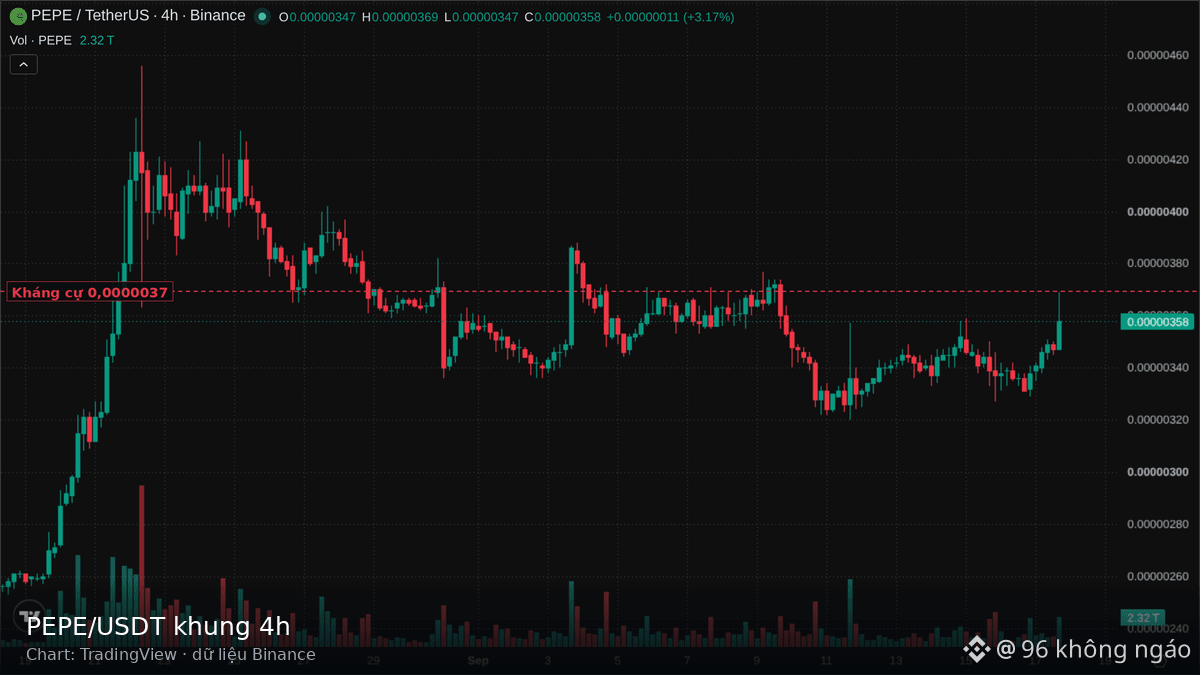
$PEPE up 8.1% in 24 hours, leaving behind both $BTC and $ETH.
Both the 4-hour and 1-hour charts are currently above the EMA20 and EMA50. The most recent candle’s volume is 2–3 times the average of the last 20 candles—money is flowing in for real, not just drifting price.
Right above is the resistance zone around 0,0000037—tested eight times already but still hasn’t broken through; it’s less than 3% away from the current price. Only if it breaks will a real breakout be considered; a pullback after a short run is normal.
Today BTC is only up 1.3%, while $ETH is up 3.3%—PEPE is leading the meme coin pack. I haven’t entered a trade here yet; I want to wait and see how price reacts to that resistance zone first.
Not investment advice.
#PEPE #Meme #Crypto #Altcoin
$PEPE up 8.1% in 24 hours, leaving behind both $BTC and $ETH .
Both the 4-hour and 1-hour charts are currently above the EMA20 and EMA50. The most recent candle’s volume is 2–3 times the average of the last 20 candles—money is flowing in for real, not just drifting price.
Right above is the resistance zone around 0,0000037—tested eight times already but still hasn’t broken through; it’s less than 3% away from the current price. Only if it breaks will a real breakout be considered; a pullback after a short run is normal.
Today BTC is only up 1.3%, while $ETH is up 3.3%—PEPE is leading the meme coin pack. I haven’t entered a trade here yet; I want to wait and see how price reacts to that resistance zone first.
Not investment advice.
#PEPE #Meme #Crypto #Altcoin
Both the 4-hour and 1-hour charts are currently above the EMA20 and EMA50. The most recent candle’s volume is 2–3 times the average of the last 20 candles—money is flowing in for real, not just drifting price.
Right above is the resistance zone around 0,0000037—tested eight times already but still hasn’t broken through; it’s less than 3% away from the current price. Only if it breaks will a real breakout be considered; a pullback after a short run is normal.
Today BTC is only up 1.3%, while $ETH is up 3.3%—PEPE is leading the meme coin pack. I haven’t entered a trade here yet; I want to wait and see how price reacts to that resistance zone first.
Not investment advice.
#PEPE #Meme #Crypto #Altcoin
1
528
Fed raises interest rates for the first time since 2023, $BTC losing 4% then bouncing back in 2 days.
The Fed just raised interest rates to the 3.75%-4.00% range after its meeting on Sept. 15-16, the first increase since 2023. This goes against market expectations, which were waiting for a round of rate cuts.
Fed Chair Kevin Warsh said directly that inflation is still too high compared with the 2% target. On the same day, JPMorgan CEO Jamie Dimon warned that it’s not certain the inflation problem has been “put down”; it could return.
Higher interest rates typically pull money away from risk assets like crypto, because savings accounts or bonds suddenly become more attractive.
The real figures: $BTC fell from $78,189 on Sept. 14 to a near-low of $74,968 on the very day the Fed met, down about 4%, then rebounded to $76,820 just two days later—up nearly 1% over the past 24 hours. The reaction was much milder than many had feared.
16 of 18 Fed officials are believed to still support further increases before the end of the year. It will be worth watching whether this is a one-off or the start of a streak.
#BTC #Fed #Bitcoin #CryptoNews #Macro
Fed raises interest rates for the first time since 2023, $BTC losing 4% then bouncing back in 2 days.
The Fed just raised interest rates to the 3.75%-4.00% range after its meeting on Sept. 15-16, the first increase since 2023. This goes against market expectations, which were waiting for a round of rate cuts.
Fed Chair Kevin Warsh said directly that inflation is still too high compared with the 2% target. On the same day, JPMorgan CEO Jamie Dimon warned that it’s not certain the inflation problem has been “put down”; it could return.
Higher interest rates typically pull money away from risk assets like crypto, because savings accounts or bonds suddenly become more attractive.
The real figures: $BTC fell from $78,189 on Sept. 14 to a near-low of $74,968 on the very day the Fed met, down about 4%, then rebounded to $76,820 just two days later—up nearly 1% over the past 24 hours. The reaction was much milder than many had feared.
16 of 18 Fed officials are believed to still support further increases before the end of the year. It will be worth watching whether this is a one-off or the start of a streak.
#BTC #Fed #Bitcoin #CryptoNews #Macro
The Fed just raised interest rates to the 3.75%-4.00% range after its meeting on Sept. 15-16, the first increase since 2023. This goes against market expectations, which were waiting for a round of rate cuts.
Fed Chair Kevin Warsh said directly that inflation is still too high compared with the 2% target. On the same day, JPMorgan CEO Jamie Dimon warned that it’s not certain the inflation problem has been “put down”; it could return.
Higher interest rates typically pull money away from risk assets like crypto, because savings accounts or bonds suddenly become more attractive.
The real figures: $BTC fell from $78,189 on Sept. 14 to a near-low of $74,968 on the very day the Fed met, down about 4%, then rebounded to $76,820 just two days later—up nearly 1% over the past 24 hours. The reaction was much milder than many had feared.
16 of 18 Fed officials are believed to still support further increases before the end of the year. It will be worth watching whether this is a one-off or the start of a streak.
#BTC #Fed #Bitcoin #CryptoNews #Macro

122
Verified
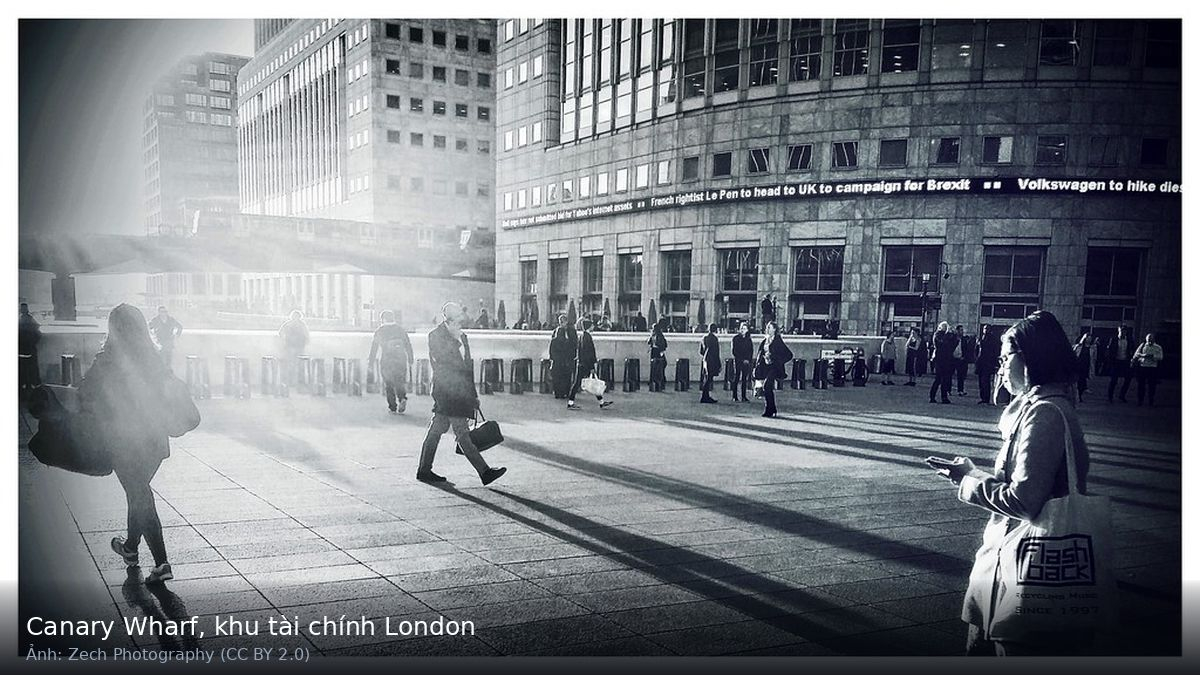
3 locations in London raided over suspected illegal cryptocurrency transactions $BTC , the second sweep of the year.
The UK Financial Conduct Authority (FCA), in coordination with HMRC and the London police, has just launched a new crackdown targeting unlicensed peer-to-peer crypto trading points. Three addresses were searched, suspected to be places where cash is exchanged for BTC and other off-the-books coins.
The FCA confirmed this is the second time, following the first raid in April when authorities simultaneously raided eight other locations also in London.
What’s unclear: the FCA has not announced whether anyone has been arrested or how much money was seized, nor has it named the locations or the related exchanges. I’ll believe it only when there are official figures.
For traders, this is a sign that the UK is tightening its crackdown on cash-for-crypto routes outside the exchange ecosystem that lack KYC.
What to watch: in the next few days, the FCA may publish the amount seized or the identities of those arrested.
#BTC #Crypto #FCA #CryptoNews #UK
3 locations in London raided over suspected illegal cryptocurrency transactions $BTC , the second sweep of the year.
The UK Financial Conduct Authority (FCA), in coordination with HMRC and the London police, has just launched a new crackdown targeting unlicensed peer-to-peer crypto trading points. Three addresses were searched, suspected to be places where cash is exchanged for BTC and other off-the-books coins.
The FCA confirmed this is the second time, following the first raid in April when authorities simultaneously raided eight other locations also in London.
What’s unclear: the FCA has not announced whether anyone has been arrested or how much money was seized, nor has it named the locations or the related exchanges. I’ll believe it only when there are official figures.
For traders, this is a sign that the UK is tightening its crackdown on cash-for-crypto routes outside the exchange ecosystem that lack KYC.
What to watch: in the next few days, the FCA may publish the amount seized or the identities of those arrested.
#BTC #Crypto #FCA #CryptoNews #UK
The UK Financial Conduct Authority (FCA), in coordination with HMRC and the London police, has just launched a new crackdown targeting unlicensed peer-to-peer crypto trading points. Three addresses were searched, suspected to be places where cash is exchanged for BTC and other off-the-books coins.
The FCA confirmed this is the second time, following the first raid in April when authorities simultaneously raided eight other locations also in London.
What’s unclear: the FCA has not announced whether anyone has been arrested or how much money was seized, nor has it named the locations or the related exchanges. I’ll believe it only when there are official figures.
For traders, this is a sign that the UK is tightening its crackdown on cash-for-crypto routes outside the exchange ecosystem that lack KYC.
What to watch: in the next few days, the FCA may publish the amount seized or the identities of those arrested.
#BTC #Crypto #FCA #CryptoNews #UK
1
326
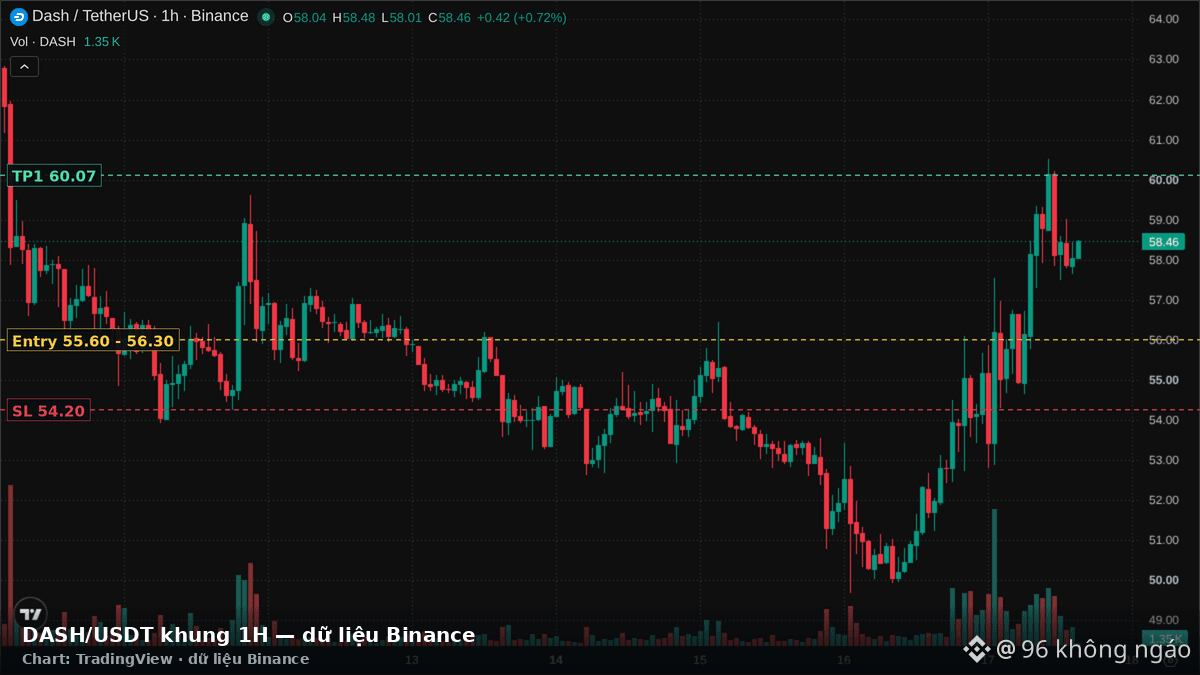
$DASH — LONG
Entry 55.60 – 56.30
SL 54.20
TP1 60.07
TP2 65.70
A week of continuous decline—one session of volume saved everything.
From 62.80$ on 8/9, $DASH dropped in a straight move to 50.43$ on 15/9, losing nearly 20% in a week.
But sell volume was also gradually running out—shrinking from 17–35 million dollars mid-week to 5.5–9 million dollars by the weekend.
On 16/9 it jumped 11.3% on volume of 25.8 million dollars, the heaviest session in nearly a week, and today continues green.
Not investment advice.
#DASH #Dash #Altcoin #CryptoTrading
$DASH — LONG
Entry 55.60 – 56.30
SL 54.20
TP1 60.07
TP2 65.70
A week of continuous decline—one session of volume saved everything.
From 62.80$ on 8/9, $DASH dropped in a straight move to 50.43$ on 15/9, losing nearly 20% in a week.
But sell volume was also gradually running out—shrinking from 17–35 million dollars mid-week to 5.5–9 million dollars by the weekend.
On 16/9 it jumped 11.3% on volume of 25.8 million dollars, the heaviest session in nearly a week, and today continues green.
Not investment advice.
#DASH #Dash #Altcoin #CryptoTrading
Entry 55.60 – 56.30
SL 54.20
TP1 60.07
TP2 65.70
A week of continuous decline—one session of volume saved everything.
From 62.80$ on 8/9, $DASH dropped in a straight move to 50.43$ on 15/9, losing nearly 20% in a week.
But sell volume was also gradually running out—shrinking from 17–35 million dollars mid-week to 5.5–9 million dollars by the weekend.
On 16/9 it jumped 11.3% on volume of 25.8 million dollars, the heaviest session in nearly a week, and today continues green.
Not investment advice.
#DASH #Dash #Altcoin #CryptoTrading
253
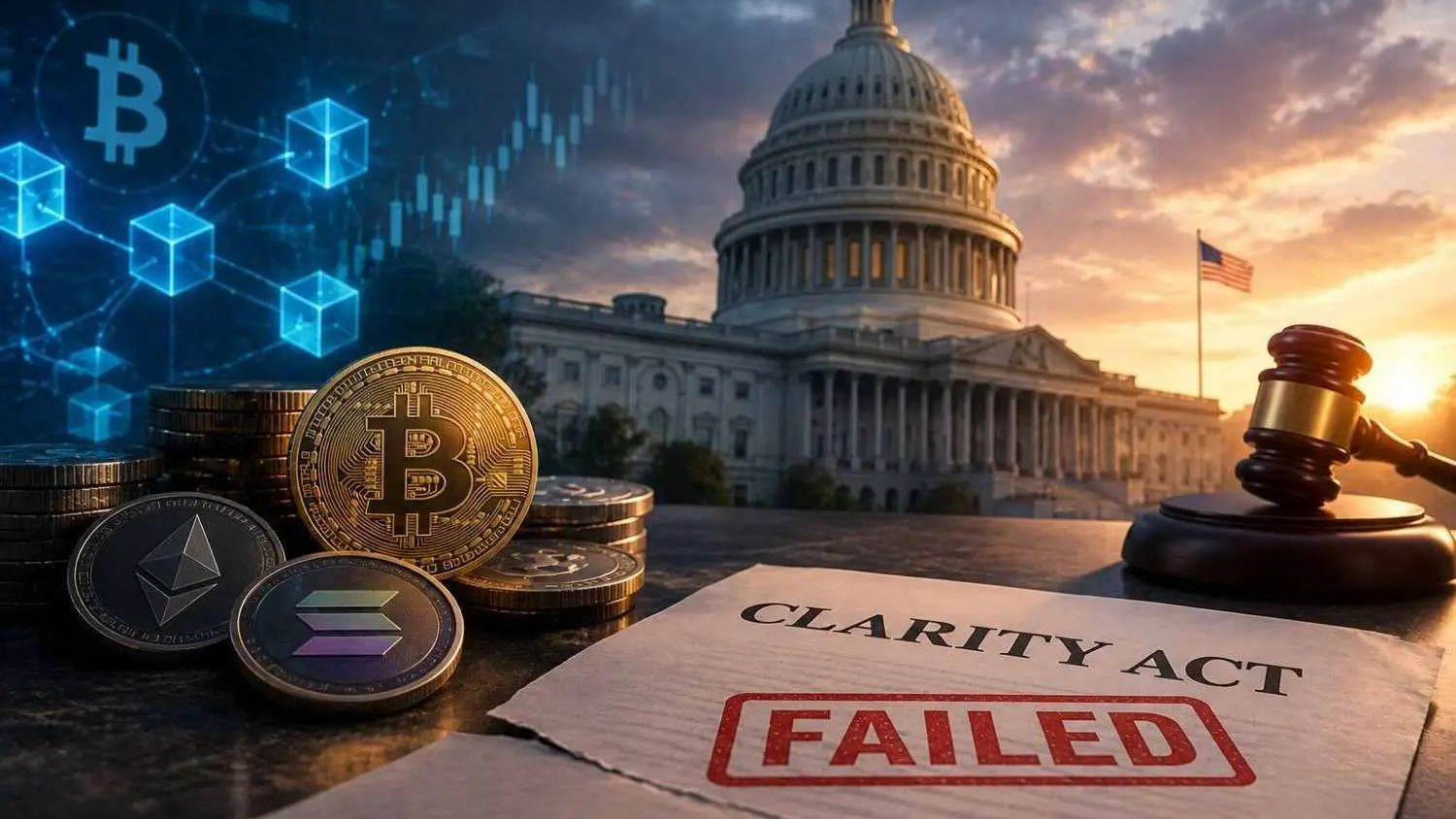
$BTC falls below the 80,000 level immediately when a bill fails in the Senate.
The U.S. Senate moved to procedural voting on the CLARITY Act, a bill that would establish a legal framework for the crypto market. The result was 49 in favor, 50 against—falling short of the 60 votes needed to break a filibuster.
All 50 Democratic lawmakers voted against it, citing a lack of a mechanism to control conflicts of interest related to the president.
Price reacted almost immediately, $BTC dropping from around $79,530 to $75,850—the lowest level since 21/8. $ETH down 3.9%, $SOL down 3%. XRP fell the most, by 7.6%.
With no regulatory framework, exchanges and funds remain stuck in a gray area, so institutional capital is therefore more cautious.
The Fed also added pressure: it is expected to announce interest rates today, the first hike in three years.
The crypto bill is still on the Senate calendar, but the chance of passing comprehensive legislation before 2027 is almost closed.
What to watch: tonight’s Fed meeting results, and whether the supporters of the CLARITY Act have enough votes to reopen the procedure.
Not investment advice. DYOR.
#BTC #Crypto #ClarityAct #CryptoNews #Fed
$BTC falls below the 80,000 level immediately when a bill fails in the Senate.
The U.S. Senate moved to procedural voting on the CLARITY Act, a bill that would establish a legal framework for the crypto market. The result was 49 in favor, 50 against—falling short of the 60 votes needed to break a filibuster.
All 50 Democratic lawmakers voted against it, citing a lack of a mechanism to control conflicts of interest related to the president.
Price reacted almost immediately, $BTC dropping from around $79,530 to $75,850—the lowest level since 21/8. $ETH down 3.9%, $SOL down 3%. XRP fell the most, by 7.6%.
With no regulatory framework, exchanges and funds remain stuck in a gray area, so institutional capital is therefore more cautious.
The Fed also added pressure: it is expected to announce interest rates today, the first hike in three years.
The crypto bill is still on the Senate calendar, but the chance of passing comprehensive legislation before 2027 is almost closed.
What to watch: tonight’s Fed meeting results, and whether the supporters of the CLARITY Act have enough votes to reopen the procedure.
Not investment advice. DYOR.
#BTC #Crypto #ClarityAct #CryptoNews #Fed
The U.S. Senate moved to procedural voting on the CLARITY Act, a bill that would establish a legal framework for the crypto market. The result was 49 in favor, 50 against—falling short of the 60 votes needed to break a filibuster.
All 50 Democratic lawmakers voted against it, citing a lack of a mechanism to control conflicts of interest related to the president.
Price reacted almost immediately, $BTC dropping from around $79,530 to $75,850—the lowest level since 21/8. $ETH down 3.9%, $SOL down 3%. XRP fell the most, by 7.6%.
With no regulatory framework, exchanges and funds remain stuck in a gray area, so institutional capital is therefore more cautious.
The Fed also added pressure: it is expected to announce interest rates today, the first hike in three years.
The crypto bill is still on the Senate calendar, but the chance of passing comprehensive legislation before 2027 is almost closed.
What to watch: tonight’s Fed meeting results, and whether the supporters of the CLARITY Act have enough votes to reopen the procedure.
Not investment advice. DYOR.
#BTC #Crypto #ClarityAct #CryptoNews #Fed
302
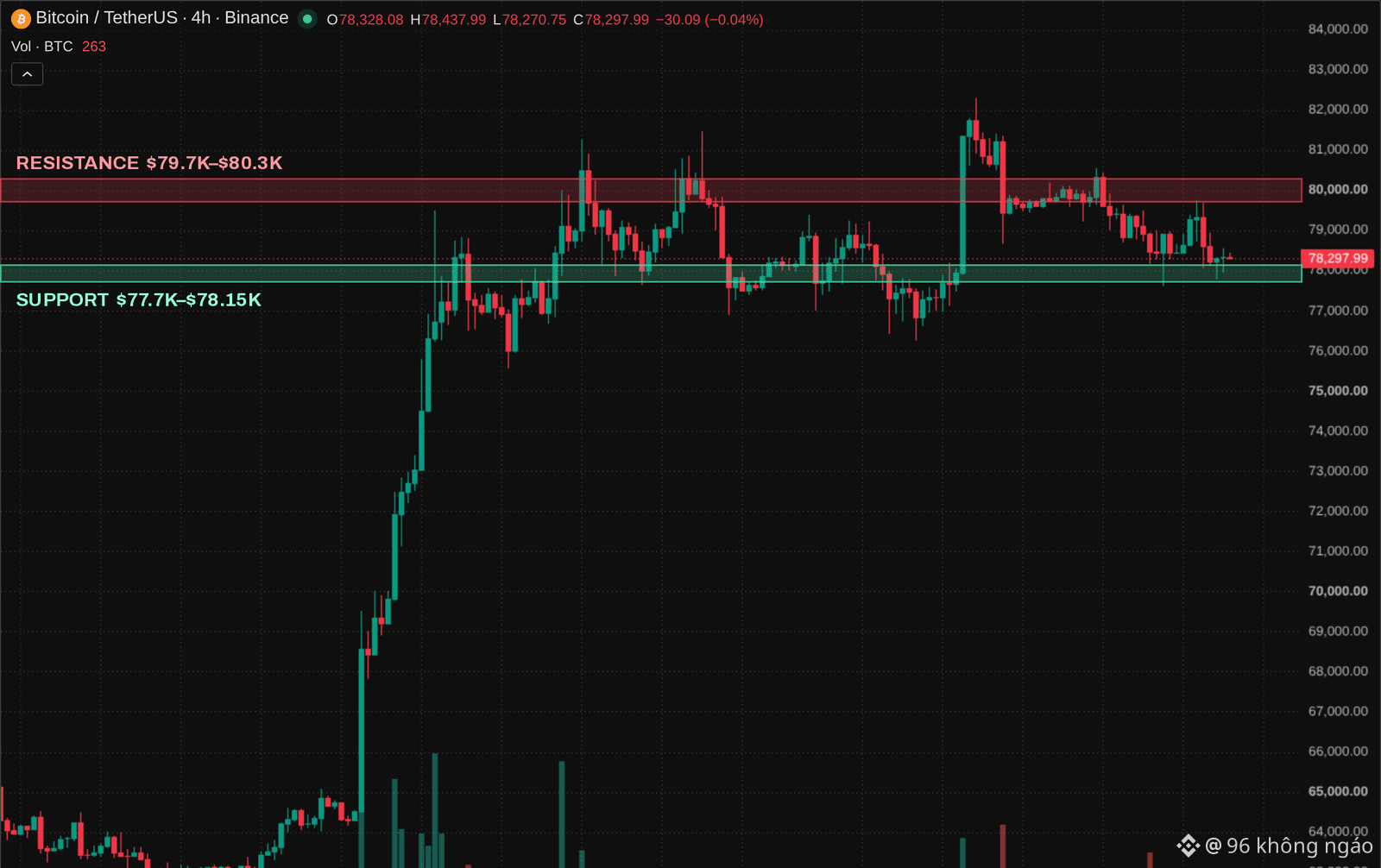
$BTC stuck under $78K. Even oil at $100 a barrel is dragging it down.
Bitcoin spiked to $82,300 last week, then gave almost all of it back. It has been glued near $78,300 for two days straight now.
Two things are doing the damage. Fed governor Kevin Warsh downplayed cooling inflation data at Jackson Hole, so traders pushed back their rate cut bets ahead of the September Fed decision. On top of that, oil just broke $100 a barrel and Asian tech stocks are selling off hard, Hong Kong's tech gauge slipped under 25,000 today. When yields rise and stocks wobble, Bitcoin usually feels it first.
Here is what people keep missing. ETF flows are not cleanly bearish. One week brought in $731M, the next saw almost $400M leave. That is not an exit, that is confusion.
I am watching whether $BTC holds $77,700 or breaks it clean. What is your read, adding here or waiting for the Fed?
Not financial advice, DYOR.
#OilAbove100 #BTC #Bitcoin #Crypto #Trading
$BTC stuck under $78K. Even oil at $100 a barrel is dragging it down.
Bitcoin spiked to $82,300 last week, then gave almost all of it back. It has been glued near $78,300 for two days straight now.
Two things are doing the damage. Fed governor Kevin Warsh downplayed cooling inflation data at Jackson Hole, so traders pushed back their rate cut bets ahead of the September Fed decision. On top of that, oil just broke $100 a barrel and Asian tech stocks are selling off hard, Hong Kong's tech gauge slipped under 25,000 today. When yields rise and stocks wobble, Bitcoin usually feels it first.
Here is what people keep missing. ETF flows are not cleanly bearish. One week brought in $731M, the next saw almost $400M leave. That is not an exit, that is confusion.
I am watching whether $BTC holds $77,700 or breaks it clean. What is your read, adding here or waiting for the Fed?
Not financial advice, DYOR.
#OilAbove100 #BTC #Bitcoin #Crypto #Trading
Bitcoin spiked to $82,300 last week, then gave almost all of it back. It has been glued near $78,300 for two days straight now.
Two things are doing the damage. Fed governor Kevin Warsh downplayed cooling inflation data at Jackson Hole, so traders pushed back their rate cut bets ahead of the September Fed decision. On top of that, oil just broke $100 a barrel and Asian tech stocks are selling off hard, Hong Kong's tech gauge slipped under 25,000 today. When yields rise and stocks wobble, Bitcoin usually feels it first.
Here is what people keep missing. ETF flows are not cleanly bearish. One week brought in $731M, the next saw almost $400M leave. That is not an exit, that is confusion.
I am watching whether $BTC holds $77,700 or breaks it clean. What is your read, adding here or waiting for the Fed?
Not financial advice, DYOR.
#OilAbove100 #BTC #Bitcoin #Crypto #Trading
89
Log in to explore more content
Join global crypto users on Binance Square
⚡️ Get latest and useful information about crypto.
💬 Trusted by the world’s largest crypto exchange.
👍 Discover real insights from verified creators.
Email / Phone number
Trending Topics
BTCBreaks80K
74,177 views
1,480 Discussing
$BTC
What price is BTC going to hit in 2026?
Spot is sitting at $80,748. 104 days to go
↑ $90k - 58%
↑ $100k - 24%
↓ $70k dip first - 48%
The bull case floating around the floor:
>August had a proper run from $62,275 up to $81,479 — up 31% bottom to top
>The CLARITY Act flopped its Senate cloture vote 49-50 on 15 Sept. BTC was already sliding well before the vote, touched $74,968 in that hour, and won it all back inside three days
>The Fed hiked rates on 16 Sept — first time since July 2023. Spot is currently floating 7.4% above that day's low
>The altcoins are proper outrunning it. 30-day view: SOL up 38%, XRP up 35%, ETH up 32% versus BTC up 23%
>The timeline is still packed with reasons why this ought to break down — and that’s precisely the wall of worry bull markets tend to climb
>The midterms land on 3 Nov, right smack in the middle of this market window
So, what would you put down for a punt at +24% in 104 days?
$ETH
$SOL
#BTCBreaks80K #solonapumping #ETH🔥🔥🔥🔥🔥🔥 #BullMarket📈
Wealthy bloke
·5 Likes
·4.9k views
BuffettBecomesBerkshireChairmanEmeritus
18,138 views
517 Discussing
ZcashSpotETFTops$230MMonthlyInflow
4,950 views
79 Discussing