

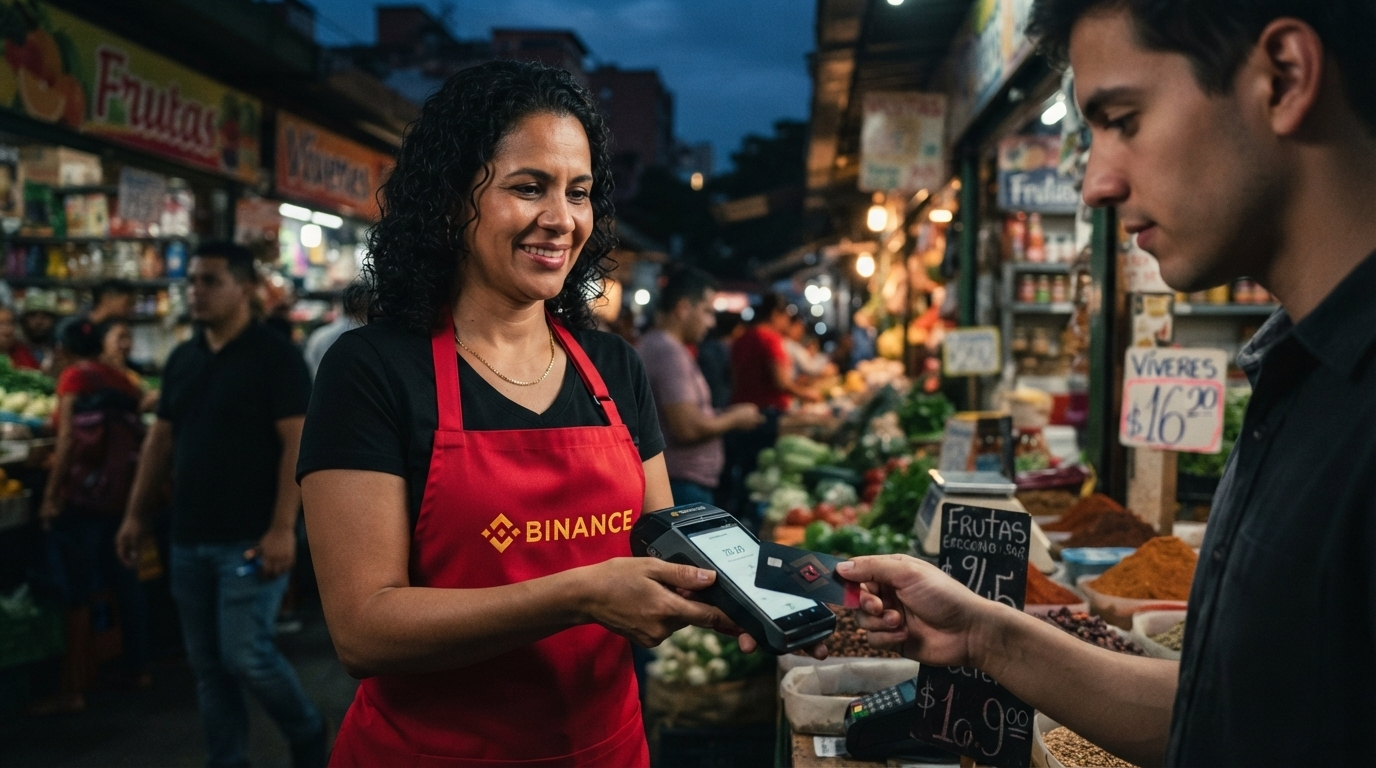
The news many were waiting for has become reality: Binance opened the waitlist for its card in Venezuela. According to Banca y Negocios, the announcement took place on August 12, 2026, and offers rewards in digital dollars to those who sign up. What looks like a simple launch comes in a much denser context: the digital bolívar is losing ground to USDT in daily transactions, and P2P data confirm it. PitbullChain Radar captured this September 5, 2026, a scenario in which USDT is trading at 992.90 bolívars for purchase and 938.57 for sale on average P2P. In other words, there is a spread of 54.32 bolívars (5.79%). Meanwhile, the BCV is at 813.74. The difference between P2P USDT and the official rate reaches 22.02%. These are numbers that explain why the crypto card is not just a payment tool, but a possible bridge between two parallel economies. What is the Binance Card and what does it offer Although Binance has not published all the details for Venezuela, the card allows users to spend their cryptocurrencies at merchants that accept traditional bank cards. The local waitlist comes with rewards in digital dollars, which means the platform wants to attract Venezuelan users from day one. The announcement fits into a regional trend. Also in 2026 the exchange other platforms and other platforms have accelerated the rollout of crypto cards in the country, according to Banca y Negocios. Venezuela has become a laboratory for these products because the use of stablecoins exceeds that of local currencies in many transactions. The live P2P market: numbers that matter At 6:00 am (UTC) on September 5, P2P Radar recorded 222 active offers across several banks. The order book shows a best buy price (ask) of 969.97 bolívars and a best sell price (bid) of 965.68. At that level, the spread narrows to 0.44%, a sign of high liquidity. However, the overall average is wider because not all listings adjust their prices immediately. The dominant banks in transaction flow are Banesco, Banco de Venezuela, Mercantil, and payment methods such as Pago Móvil. Banesco accounts for 25.9% of liquidity, according to Radar data. This means the Binance card could integrate with USDT balances and convert them into bolívars at the moment of payment, but the real cost will depend on the exchange rate Binance applies at settlement. Average P2P purchase price of USDT: 992.90 Bs Average P2P sale price of USDT: 938.57 Bs Average P2P spread: 5.79% BCV dollar: 813.74 Bs (for reference) Premium of P2P USDT against BCV: +22.02% In addition, Radar P2P's traffic light is yellow, with 69 points, which translates to "moderate caution." The wide spread is the main focus of attention, but overall liquidity remains high. The message is clear: if you are going to buy USDT with a card, check whether the spread at the moment offsets the benefit; and if you are going to sell, wait to see whether the gap narrows. Expected effect: will the card make USDT used for payments? In theory, a crypto card removes a mental step. Right now, a person who has USDT in their wallet needs to move it to a bank in bolívars to pay at the market. The card could allow spending that USDT directly, transforming it into bolívars at the point of sale or at the ATM. But here the spread factor appears: if Binance's internal exchange rate uses the P2P average, the user will be paying part of that 22% premium versus the BCV on each purchase. On the other hand, the card could encourage more merchants to accept "dollarized" electronic payments without needing to handle cash in dollars. The trend is already visible in cities such as Caracas and Maracaibo, where many businesses receive USDT through P2P transfers. A card mechanism would simplify the process and could reduce dependence on manual operations. However, adoption should not be confused with the elimination of costs. The card makes usage smoother, but it does not change the exchange-rate gap. If the gap between the parallel rate and the BCV exceeds double digits, the "card effect" will be positive for convenience, but it should not be read as automatic arbitrage. Venezuela remains a global case study According to a TRM Labs report cited by BeInCrypto, in the first quarter of 2026 Venezuela climbed in the global crypto adoption ranking, driven mainly by USDT. That flow reflects an economy where restrictions on traditional banking and inflation push citizens toward stablecoins. Crypto cards are not the origin of the phenomenon, but rather a layer that seeks to make that digital asset spendable with the same effort as a regular debit card. Current laws have given exchanges the green light to operate, although there are still pending issues in tax matters. The adjustment period is just beginning and the waitlist will be the first thermometer of real demand. Key points of the launch in Venezuela Binance opened the local waitlist, which does not mean everyone who signs up will be accepted. The card grants rewards in digital dollars to the first participants, an incentive to attract deposits. The settlement exchange rate will be the variable to watch: whether it uses the P2P average or an intermediate value. The BCV remains at 813.74 Bs, while the parallel rate is at 967.73 Bs and P2P USDT ranges around 970-990 Bs. There are at least 222 active offers on P2P, with the best opportunities at Banesco and Banco de Venezuela. Adoption of the Binance Card in Venezuela will depend on three elements: the number of merchants that support the Binance Pay ecosystem, settlement speed, and transparency in conversions. If the process is clear, Venezuela could become the testing ground for the USDT card model in Latin America. From PitbullChain's P2P Radar, we will continue monitoring the gap between rates and liquidity movements so you can make your own decisions with fresh data.
📊 Live rates and analysis at pitbullchain.com
$USDT #BinanceCard #Venezuela #stablecoins #USDT #P2P