
玖玖说Web3
612 Posts
 LIVE
LIVE玖玖说Web3
6年在圈子的经验,公众号:比特雷达。取每日CF资讯
8 Following
1.8K+ Followers
227 Liked
Posts
All
Live
🚨 The SEC puts “US stock 24/7 trading” on the table with a meeting scheduled for September 17—will it really happen?
Event intro: The U.S. Securities and Exchange Commission has officially released the roundtable agenda and guest list, with the theme directly targeting the “readiness for 24-hour stock trading.” The core controversy is whether the old U.S. stock-market rules—running only 6.5 hours on weekdays—can still meet global investors’ needs.
Making it concrete: Currently, regular U.S. stock trading lasts only about 6.5 hours per day, while the crypto market runs 7×24 without stopping. Platforms such as Robinhood already offer after-hours trading windows, and the share of trades executed during extended hours continues to rise. By publicly announcing a schedule now, regulators effectively put the issue formally on the agenda.
Cross analysis: This news may be more important to the crypto community than you’d think. If U.S. stocks truly run 24/7, traditional asset pricing efficiency may converge toward crypto, making cross-market arbitrage and capital rotation smoother. Conversely, crypto’s unique label of “never closing” could be diluted; in the future, it won’t be about “business hours,” but about liquidity and product strength. For ordinary investors, longer trading hours could mean more continuous pricing and less slippage, but it also puts greater pressure on discipline and risk-control habits.
Elevator line: Rules are changing, and so are players’ moats—understand the direction first, and you can get on board first.
Risk hedging: Note that this roundtable is just a discussion, and implementation is still far off. Don’t treat “expectations” as “facts” and go all-in.
👀 If U.S. stocks really open 24 hours a day, would you move your money from crypto back to the stock market?
Click the avatar to watch the livestream and join the Jiujiu chat group for daily strategies 🚀
#美股 #全球市场 #Binance Square
Group: 点击进入玖玖的粉丝群
Event intro: The U.S. Securities and Exchange Commission has officially released the roundtable agenda and guest list, with the theme directly targeting the “readiness for 24-hour stock trading.” The core controversy is whether the old U.S. stock-market rules—running only 6.5 hours on weekdays—can still meet global investors’ needs.
Making it concrete: Currently, regular U.S. stock trading lasts only about 6.5 hours per day, while the crypto market runs 7×24 without stopping. Platforms such as Robinhood already offer after-hours trading windows, and the share of trades executed during extended hours continues to rise. By publicly announcing a schedule now, regulators effectively put the issue formally on the agenda.
Cross analysis: This news may be more important to the crypto community than you’d think. If U.S. stocks truly run 24/7, traditional asset pricing efficiency may converge toward crypto, making cross-market arbitrage and capital rotation smoother. Conversely, crypto’s unique label of “never closing” could be diluted; in the future, it won’t be about “business hours,” but about liquidity and product strength. For ordinary investors, longer trading hours could mean more continuous pricing and less slippage, but it also puts greater pressure on discipline and risk-control habits.
Elevator line: Rules are changing, and so are players’ moats—understand the direction first, and you can get on board first.
Risk hedging: Note that this roundtable is just a discussion, and implementation is still far off. Don’t treat “expectations” as “facts” and go all-in.
👀 If U.S. stocks really open 24 hours a day, would you move your money from crypto back to the stock market?
Click the avatar to watch the livestream and join the Jiujiu chat group for daily strategies 🚀
#美股 #全球市场 #Binance Square
Group: 点击进入玖玖的粉丝群
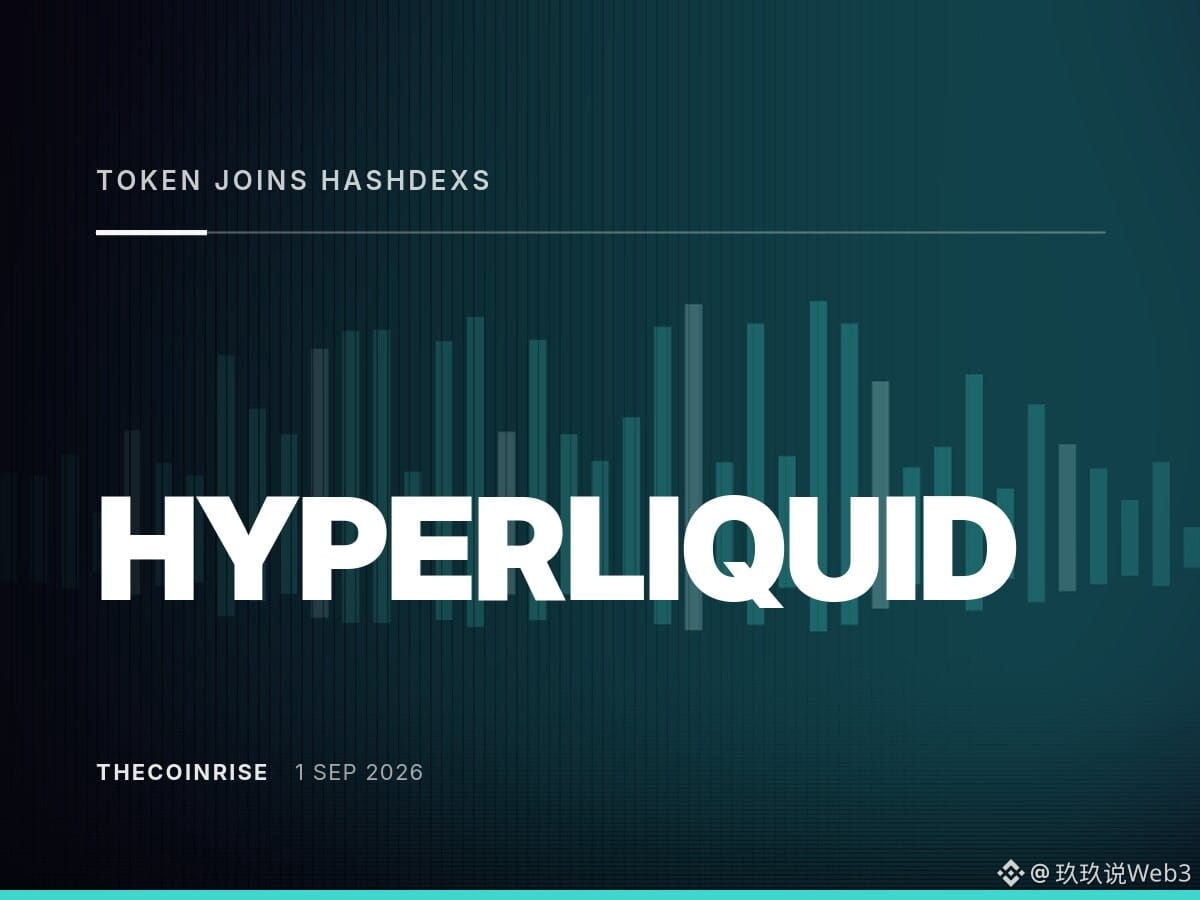
🚨 A major asset management giant quietly puts HYPE into a Nasdaq crypto index ETF, and the price jumps immediately—who will be the next one for institutions to “flip the switch”?
Event introduction: Brazilian asset manager Hashdex’s latest rebalancing has officially added Hyperliquid ecosystem token HYPE to its holdings in the Nasdaq crypto index ETF. The Nasdaq crypto index this ETF tracks has long been dominated by top assets like BTC and ETH, and HYPE is one of the few “new faces” that managed to squeeze into the list.
Making it concrete: After the news broke, HYPE surged noticeably in the short term, directly gaining institutional, index-level exposure. Previously, inflows into ETFs related to HYPE had already exceeded market expectations; now, with the index inclusion layered on top, it’s equivalent to upgrading from “community narrative” to “institutional allocation.”
Cross-analysis: This signal has two layers: first, the crypto index is no longer only watching the top ten by market cap—high-liquidity ecosystem tokens are being accepted by mainstream capital; second, Hashdex and other established asset managers are rebalancing frequently, suggesting that product innovation and compliance channels are opening up in tandem. HYPE isn’t an isolated case—more “outsider” tokens may be brought into the mainstream later.
Elevator pitch: Institutional entry is never a one-day event, but every time an index adds a token, it’s a “mainstreaming” vote for crypto assets.
Risk hedging: Reminder—index inclusion doesn’t automatically mean blind bullishness. Short-term price momentum can be volatile, so don’t let position management get ahead of you.
👀 Which ecosystem token do you think will be included in the next index? Let’s discuss in the comments.
Click the avatar to watch the live stream, and join the Jiujiu chat group to get daily strategies 🚀
#hype #DeFi #Web3
Group: 点击进入玖玖的粉丝群
Event introduction: Brazilian asset manager Hashdex’s latest rebalancing has officially added Hyperliquid ecosystem token HYPE to its holdings in the Nasdaq crypto index ETF. The Nasdaq crypto index this ETF tracks has long been dominated by top assets like BTC and ETH, and HYPE is one of the few “new faces” that managed to squeeze into the list.
Making it concrete: After the news broke, HYPE surged noticeably in the short term, directly gaining institutional, index-level exposure. Previously, inflows into ETFs related to HYPE had already exceeded market expectations; now, with the index inclusion layered on top, it’s equivalent to upgrading from “community narrative” to “institutional allocation.”
Cross-analysis: This signal has two layers: first, the crypto index is no longer only watching the top ten by market cap—high-liquidity ecosystem tokens are being accepted by mainstream capital; second, Hashdex and other established asset managers are rebalancing frequently, suggesting that product innovation and compliance channels are opening up in tandem. HYPE isn’t an isolated case—more “outsider” tokens may be brought into the mainstream later.
Elevator pitch: Institutional entry is never a one-day event, but every time an index adds a token, it’s a “mainstreaming” vote for crypto assets.
Risk hedging: Reminder—index inclusion doesn’t automatically mean blind bullishness. Short-term price momentum can be volatile, so don’t let position management get ahead of you.
👀 Which ecosystem token do you think will be included in the next index? Let’s discuss in the comments.
Click the avatar to watch the live stream, and join the Jiujiu chat group to get daily strategies 🚀
#hype #DeFi #Web3
Group: 点击进入玖玖的粉丝群
🚨 AVAX consolidates around $7.29 while Cashlink pushes forward with institutional tokenization on-chain—will the RWA narrative heat up again?
Event overview: Cashlink in the Avalanche ecosystem is expanding its institutional tokenization business, moving traditional assets onto the blockchain. This move lands squarely on the RWA tailwind. Meanwhile, AVAX’s price is trading around $7.29, forming a symmetrical triangle pattern.
Details: The $7.60–$7.70 zone above is the key resistance area. A breakout with volume would suggest alignment between technical and fundamental factors. Support is around $7.20, where buyers and sellers repeatedly battle within this range.
Cross-analysis: Institutional tokenization is one of the most certain narratives in the RWA space. From banks to asset-management giants, everyone is building tokenized assets on-chain. Avalanche’s technology stack is the infrastructure capable of serving these needs, and the size of tokenized assets within the ecosystem continues to grow steadily. For on-chain ecosystem adoption by institutions, it’s often more important than short-term price volatility.
When traditional capital starts taking on-chain seriously, the value of public chains is no longer just for speculation—the depth of infrastructure is what fuels a bull market.
Risk hedging: The symmetrical triangle could also break downward. Don’t chase until $7.60 holds. Waiting for directional confirmation is usually safer; controlling position sizing matters more than betting on direction.
👀 Do you think the RWA sector will bring attention back to AVAX? Would you dare to set up a position at this level?
Click the profile picture to watch the livestream and join the Jiujiu chat group to get daily strategies 🚀
#RWA #Web3
Group: 点击进入玖玖的粉丝群
Event overview: Cashlink in the Avalanche ecosystem is expanding its institutional tokenization business, moving traditional assets onto the blockchain. This move lands squarely on the RWA tailwind. Meanwhile, AVAX’s price is trading around $7.29, forming a symmetrical triangle pattern.
Details: The $7.60–$7.70 zone above is the key resistance area. A breakout with volume would suggest alignment between technical and fundamental factors. Support is around $7.20, where buyers and sellers repeatedly battle within this range.
Cross-analysis: Institutional tokenization is one of the most certain narratives in the RWA space. From banks to asset-management giants, everyone is building tokenized assets on-chain. Avalanche’s technology stack is the infrastructure capable of serving these needs, and the size of tokenized assets within the ecosystem continues to grow steadily. For on-chain ecosystem adoption by institutions, it’s often more important than short-term price volatility.
When traditional capital starts taking on-chain seriously, the value of public chains is no longer just for speculation—the depth of infrastructure is what fuels a bull market.
Risk hedging: The symmetrical triangle could also break downward. Don’t chase until $7.60 holds. Waiting for directional confirmation is usually safer; controlling position sizing matters more than betting on direction.
👀 Do you think the RWA sector will bring attention back to AVAX? Would you dare to set up a position at this level?
Click the profile picture to watch the livestream and join the Jiujiu chat group to get daily strategies 🚀
#RWA #Web3
Group: 点击进入玖玖的粉丝群

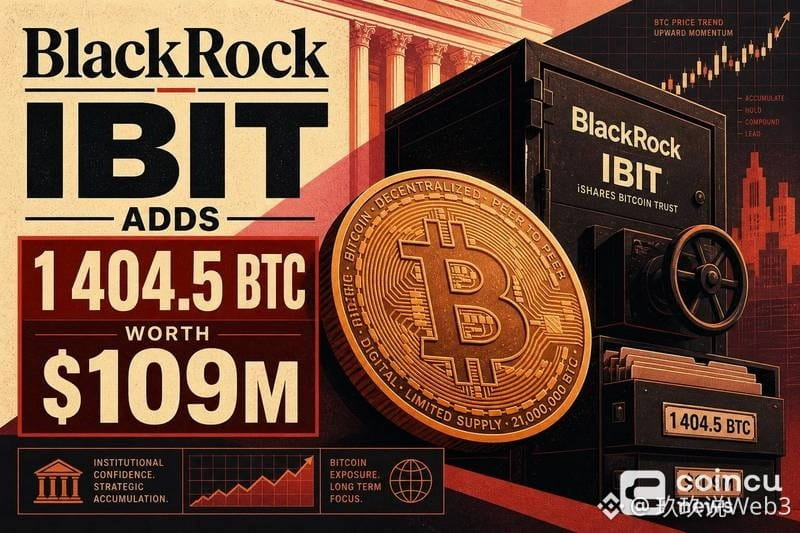
🚨 BlackRock’s iShares Bitcoin Trust (IBIT) added 1,404.5 BTC in a single day—worth about $109 million. When the market falls, the big players are scooping—are you game?
Right when Bitcoin dipped to around 77,000, it was reported that BlackRock’s iShares Bitcoin Trust (IBIT) saw a daily increase of 1,404.5 BTC. At the current price, that’s approximately $109 million. This isn’t pocket change—one buy can gobble up a lot of sell-side liquidity.
Let’s make it concrete: what does 1,404.5 BTC really mean? At $77,000 per coin, it’s about $108 million in hard cash—and that figure doesn’t even include inflows into other ETF funds at the same time. The moves of the world’s largest asset manager are always a gauge of institutional sentiment.
Cross-analysis: on the other side, Ethereum ETFs have already seen net inflows for 11 consecutive days. Both of the two mainstream asset ETFs are continuously attracting capital, suggesting that institutional money isn’t exiting—it’s using pullbacks to rotate and build positions. While retail traders panic-sell, the giants are quietly buying. Every sharp drop is essentially a reshuffling of position structures.
When retail traders are stuck debating short-term up or down, institutions are focused on the long-term logic of asset allocation. In the eyes of mainstream capital, Bitcoin’s position has already returned to what it should be—it’s not going back.
Risk hedging: note that this is a report not confirmed by official sources, and the single-day numbers may have errors. Don’t just go all-in based on one headline. Following along should be tied to your own position management—staggered entries are safer than a one-shot “all in.”
👀 BlackRock is already in—have you matched your position?
Click the avatar to watch the live stream, and join the Jiujiu chat group to get daily strategies 🚀
#以太坊ETF连续11日净流入 #Bitcoin August up 23% outperformed gold stock market
Group: 点击进入玖玖的粉丝群
Right when Bitcoin dipped to around 77,000, it was reported that BlackRock’s iShares Bitcoin Trust (IBIT) saw a daily increase of 1,404.5 BTC. At the current price, that’s approximately $109 million. This isn’t pocket change—one buy can gobble up a lot of sell-side liquidity.
Let’s make it concrete: what does 1,404.5 BTC really mean? At $77,000 per coin, it’s about $108 million in hard cash—and that figure doesn’t even include inflows into other ETF funds at the same time. The moves of the world’s largest asset manager are always a gauge of institutional sentiment.
Cross-analysis: on the other side, Ethereum ETFs have already seen net inflows for 11 consecutive days. Both of the two mainstream asset ETFs are continuously attracting capital, suggesting that institutional money isn’t exiting—it’s using pullbacks to rotate and build positions. While retail traders panic-sell, the giants are quietly buying. Every sharp drop is essentially a reshuffling of position structures.
When retail traders are stuck debating short-term up or down, institutions are focused on the long-term logic of asset allocation. In the eyes of mainstream capital, Bitcoin’s position has already returned to what it should be—it’s not going back.
Risk hedging: note that this is a report not confirmed by official sources, and the single-day numbers may have errors. Don’t just go all-in based on one headline. Following along should be tied to your own position management—staggered entries are safer than a one-shot “all in.”
👀 BlackRock is already in—have you matched your position?
Click the avatar to watch the live stream, and join the Jiujiu chat group to get daily strategies 🚀
#以太坊ETF连续11日净流入 #Bitcoin August up 23% outperformed gold stock market
Group: 点击进入玖玖的粉丝群
BTC-1.67%
IBITETF-2.15%
🚨 Bitcoin falls below $77,000, Ethereum loses $2,400, oil prices surge toward $95—yet Bitcoin ETFs are still seeing net inflows. What exactly is the market afraid of?
Tensions between Iran and the U.S. escalate; once news broke of missile strikes on a U.S. base, Brent crude jumped to around $95. U.S. Treasury yields also climbed to their highest levels since January 2025, and U.S. stock tech shares came under pressure at the same time. Bitcoin dropped below $77,000, while Ethereum slipped below the $2,400 mark.
Making it concrete: Oil surged sharply day over day, the 10-year U.S. Treasury yield hit a new high since the beginning of this year, and risk assets were broadly weighed down—yet Bitcoin ETFs continued to record net inflows. Money didn’t flee in panic.
Cross-analysis: Geopolitical conflict lifts oil prices and bond yields, directly suppressing valuations of risk assets; but ETF flows are still buying, suggesting institutions are accumulating in batches during the downturn. The contrast between retail panic and institutional accumulation is stark. Historically, sharp sell-offs triggered by geopolitical events often come and go quickly—the key is whether the conflict escalates further.
In the short term, geopolitics drives sentiment; in the long run, capital votes with its feet. What truly determines direction is liquidity.
Risk hedging: If tensions continue to escalate, oil could test $100, and risk assets may face another leg down. Don’t rush to go all-in—save your ammunition and add in stages. Position management matters more than prediction.
👀 Do you think this geopolitical shock is a chance to get in—or should you keep waiting?
Click the profile picture to watch the live stream, and join the Jiujiu chat group to get daily strategies🚀
#原油 #美联储9月加息概率升至57% #U.S. stocks
Group: 点击进入玖玖的粉丝群
Tensions between Iran and the U.S. escalate; once news broke of missile strikes on a U.S. base, Brent crude jumped to around $95. U.S. Treasury yields also climbed to their highest levels since January 2025, and U.S. stock tech shares came under pressure at the same time. Bitcoin dropped below $77,000, while Ethereum slipped below the $2,400 mark.
Making it concrete: Oil surged sharply day over day, the 10-year U.S. Treasury yield hit a new high since the beginning of this year, and risk assets were broadly weighed down—yet Bitcoin ETFs continued to record net inflows. Money didn’t flee in panic.
Cross-analysis: Geopolitical conflict lifts oil prices and bond yields, directly suppressing valuations of risk assets; but ETF flows are still buying, suggesting institutions are accumulating in batches during the downturn. The contrast between retail panic and institutional accumulation is stark. Historically, sharp sell-offs triggered by geopolitical events often come and go quickly—the key is whether the conflict escalates further.
In the short term, geopolitics drives sentiment; in the long run, capital votes with its feet. What truly determines direction is liquidity.
Risk hedging: If tensions continue to escalate, oil could test $100, and risk assets may face another leg down. Don’t rush to go all-in—save your ammunition and add in stages. Position management matters more than prediction.
👀 Do you think this geopolitical shock is a chance to get in—or should you keep waiting?
Click the profile picture to watch the live stream, and join the Jiujiu chat group to get daily strategies🚀
#原油 #美联储9月加息概率升至57% #U.S. stocks
Group: 点击进入玖玖的粉丝群

Verified
🚨 Solana processed 5.2 billion on-chain transactions in August, setting a new all-time high. Does SOL’s valuation logic need to change?
Data released: In August, Solana handled over 5.2 billion non-voting transactions, breaking the historical record across the entire network—up 23% month-over-month from July.
What does 5.2 billion transactions mean? It’s more than 160 million per day. It leaves the previous record far behind. On-chain activity is completely turned up, and ecosystem usage is still accelerating. This isn’t a one-off spike—it’s sustained high-level operation throughout the month.
Cross-check for a clearer picture: The share of DEX spot trading volume relative to centralized exchanges is already approaching the 24% historical milestone—liquidity is migrating from CEXs to the chain, and Solana is one of the biggest beneficiaries of this shift. Behind the record-breaking transaction volumes are real users completing payments, trades, and asset allocation on-chain.
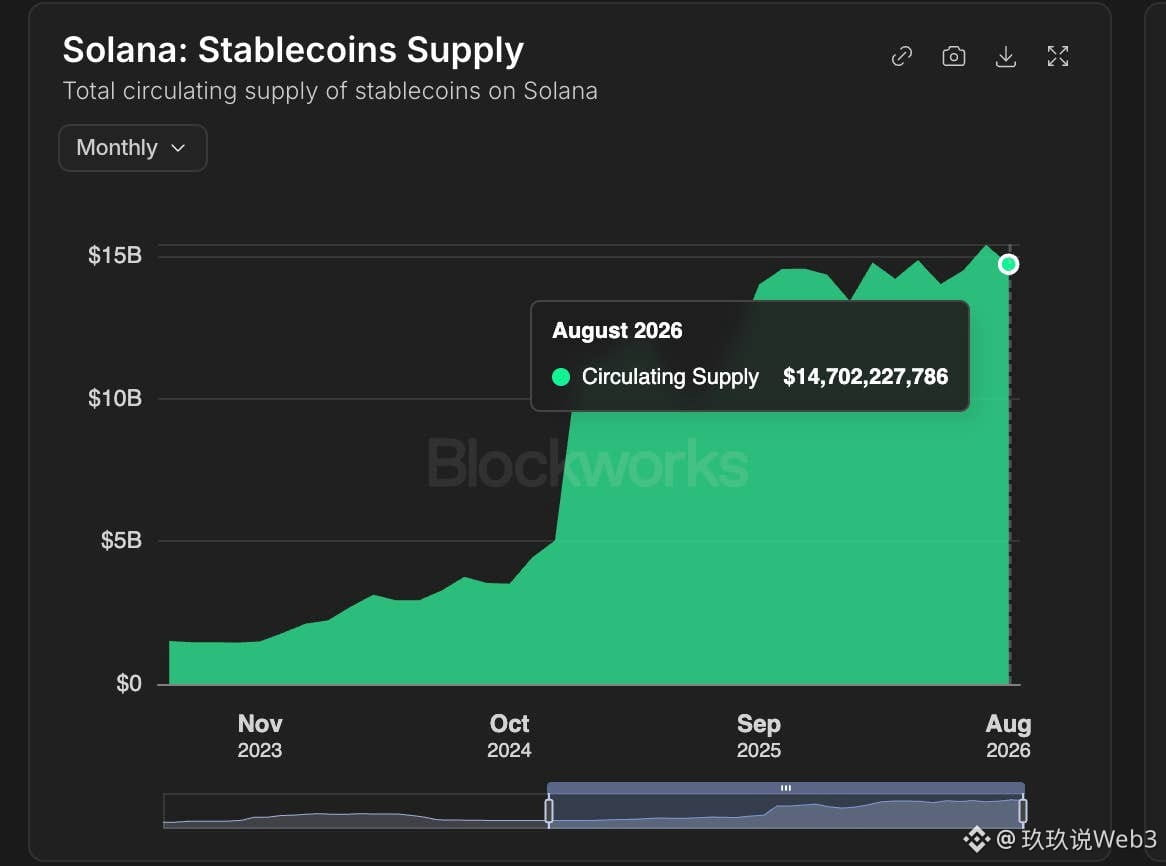
Look at the ecosystem structure as well: The circulation size of stablecoins on Solana continues to grow, and RWA projects are rolling out one after another. The “thickness” of the on-chain economy is completely different from two years ago, when things were mainly propped up by memes.
Usage is the most honest valuation anchor for a public chain. Solana is using data to prove that it’s not just “fast,” but that people truly are using it.
However, high transaction volume doesn’t automatically mean the token price must rise—ecosystem revenue, unlock supply, and sell-pressure all need close monitoring. Don’t get carried away just by a single month’s data; trend confirmation matters more than any one data point.
👀 Do you think this on-chain hype for Solana can support a new high for SOL?
Click the avatar to watch the livestream and join the Jiujiu chat group to get daily strategies 🚀
#solana #DeFi #Web3
Group: 点击进入玖玖的粉丝群
Data released: In August, Solana handled over 5.2 billion non-voting transactions, breaking the historical record across the entire network—up 23% month-over-month from July.
What does 5.2 billion transactions mean? It’s more than 160 million per day. It leaves the previous record far behind. On-chain activity is completely turned up, and ecosystem usage is still accelerating. This isn’t a one-off spike—it’s sustained high-level operation throughout the month.
Cross-check for a clearer picture: The share of DEX spot trading volume relative to centralized exchanges is already approaching the 24% historical milestone—liquidity is migrating from CEXs to the chain, and Solana is one of the biggest beneficiaries of this shift. Behind the record-breaking transaction volumes are real users completing payments, trades, and asset allocation on-chain.
Look at the ecosystem structure as well: The circulation size of stablecoins on Solana continues to grow, and RWA projects are rolling out one after another. The “thickness” of the on-chain economy is completely different from two years ago, when things were mainly propped up by memes.
Usage is the most honest valuation anchor for a public chain. Solana is using data to prove that it’s not just “fast,” but that people truly are using it.
However, high transaction volume doesn’t automatically mean the token price must rise—ecosystem revenue, unlock supply, and sell-pressure all need close monitoring. Don’t get carried away just by a single month’s data; trend confirmation matters more than any one data point.
👀 Do you think this on-chain hype for Solana can support a new high for SOL?
Click the avatar to watch the livestream and join the Jiujiu chat group to get daily strategies 🚀
#solana #DeFi #Web3
Group: 点击进入玖玖的粉丝群
Verified
🚨 XRP spot ETF net inflow in August hits $1.67 billion—Goldman has the biggest position. Can you still chase this move?
Institutional buy orders pushed the August inflows of the XRP spot ETF to $1.67 billion, with Goldman’s holdings now the largest in the entire market.
How big is $1.67 billion? It far surpasses any previous weekly record—Goldman alone became the biggest holder, and market-making giants like Jane Street are also continuously adding.
The ETF channel is becoming the hardest entry point for XRP capital. Institutional participation is no longer just a slogan—it’s real, with tangible positions.
Even more intriguing is the cross-data: XRP is up 40% over two weeks, yet open interest in futures contracts has actually declined—suggesting this rally is driven more by spot institutional buying than by leveraged speculation. The structure is healthier than many expect. Spot-driven upside also tends to make pullbacks more resilient.
Add Ripple’s continued rollout in institutional custody and tokenized assets, and XRP is building a “dual-wheel path” of ETF capital plus an institutional ecosystem.
Once Wall Street’s ETF funds begin queuing up, XRP’s narrative shifts from “litigation concept” to “institutional allocation of assets”—the biggest identity change of this cycle.
But monthly inflows don’t equal daily inflows, and ETF money can just as easily rotate out. Before chasing, think clearly about where your stop-loss level is—don’t treat an institution’s position as your own belief.
👀 Will you allocate to XRP alongside institutions, or wait for a pullback to get on board?
Click the avatar to watch the livestream, and join the Jiuji chat group to get daily strategies 🚀
#XRP两周上涨40%未平仓合约下降 #xrp #Ripple
Group: 点击进入玖玖的粉丝群
Institutional buy orders pushed the August inflows of the XRP spot ETF to $1.67 billion, with Goldman’s holdings now the largest in the entire market.
How big is $1.67 billion? It far surpasses any previous weekly record—Goldman alone became the biggest holder, and market-making giants like Jane Street are also continuously adding.
The ETF channel is becoming the hardest entry point for XRP capital. Institutional participation is no longer just a slogan—it’s real, with tangible positions.
Even more intriguing is the cross-data: XRP is up 40% over two weeks, yet open interest in futures contracts has actually declined—suggesting this rally is driven more by spot institutional buying than by leveraged speculation. The structure is healthier than many expect. Spot-driven upside also tends to make pullbacks more resilient.
Add Ripple’s continued rollout in institutional custody and tokenized assets, and XRP is building a “dual-wheel path” of ETF capital plus an institutional ecosystem.
Once Wall Street’s ETF funds begin queuing up, XRP’s narrative shifts from “litigation concept” to “institutional allocation of assets”—the biggest identity change of this cycle.
But monthly inflows don’t equal daily inflows, and ETF money can just as easily rotate out. Before chasing, think clearly about where your stop-loss level is—don’t treat an institution’s position as your own belief.
👀 Will you allocate to XRP alongside institutions, or wait for a pullback to get on board?
Click the avatar to watch the livestream, and join the Jiuji chat group to get daily strategies 🚀
#XRP两周上涨40%未平仓合约下降 #xrp #Ripple
Group: 点击进入玖玖的粉丝群

🚨 21 global financial giants team up to issue stablecoins—will the payments landscape be reshaped?
Goldman Sachs, Bank of America, Citigroup, and 21 other global financial institutions have announced the formation of a joint venture to jointly issue a USD stablecoin. The news immediately sent the stablecoin space into a frenzy.
This isn’t a small-scale move: with Goldman Sachs + Bank of America + Citigroup leading the charge and 21 institutions stepping in together, traditional banks finally stop standing on the sidelines—they’re moving in directly to grab a slice of the stablecoin “cake.”
Look closer and it gets more interesting. On one side, the Monetary Authority of Singapore has proposed 100% stablecoin reserves and a ban on paying interest, raising the compliance bar higher and higher. On the other side, banking giants are accelerating their entry in the opposite direction. The more compliance players there are, the more stablecoins start to resemble “digital USD 2.0,” and USDT and USDC’s existing inventory advantages may be gradually eroded.
For the crypto market, this is a double signal: in the short term, before bank-issued stablecoins launch, existing stablecoins remain the absolute mainstay and funding channels won’t change much. In the long term, once bank-issued stablecoins get fully operational, frictions for institutions entering and exiting crypto markets could drop significantly, and more traditional capital may flow in via these routes.
Banks moving in means stablecoins are evolving from a “crypto tool” into a “global payments infrastructure.” This could be one of the most worth-watching macro storylines over the next two years.
However, whether the joint venture can actually be implemented and whether regulators will approve it are still unknown. Don’t chase concepts in the short term—watch for subsequent developments and license progress.
👀 Do you think stablecoins issued by banks can shake USDT’s dominant position?
Click the avatar to watch the live stream and join the Jiujiu chat group to get daily strategies 🚀
#稳定币新规 #Web3
Group: 点击进入玖玖的粉丝群
Goldman Sachs, Bank of America, Citigroup, and 21 other global financial institutions have announced the formation of a joint venture to jointly issue a USD stablecoin. The news immediately sent the stablecoin space into a frenzy.
This isn’t a small-scale move: with Goldman Sachs + Bank of America + Citigroup leading the charge and 21 institutions stepping in together, traditional banks finally stop standing on the sidelines—they’re moving in directly to grab a slice of the stablecoin “cake.”
Look closer and it gets more interesting. On one side, the Monetary Authority of Singapore has proposed 100% stablecoin reserves and a ban on paying interest, raising the compliance bar higher and higher. On the other side, banking giants are accelerating their entry in the opposite direction. The more compliance players there are, the more stablecoins start to resemble “digital USD 2.0,” and USDT and USDC’s existing inventory advantages may be gradually eroded.
For the crypto market, this is a double signal: in the short term, before bank-issued stablecoins launch, existing stablecoins remain the absolute mainstay and funding channels won’t change much. In the long term, once bank-issued stablecoins get fully operational, frictions for institutions entering and exiting crypto markets could drop significantly, and more traditional capital may flow in via these routes.
Banks moving in means stablecoins are evolving from a “crypto tool” into a “global payments infrastructure.” This could be one of the most worth-watching macro storylines over the next two years.
However, whether the joint venture can actually be implemented and whether regulators will approve it are still unknown. Don’t chase concepts in the short term—watch for subsequent developments and license progress.
👀 Do you think stablecoins issued by banks can shake USDT’s dominant position?
Click the avatar to watch the live stream and join the Jiujiu chat group to get daily strategies 🚀
#稳定币新规 #Web3
Group: 点击进入玖玖的粉丝群

🚨Ripple pulls another move: team up with SettleMint to enter institutional-grade digital asset custody—how big is the tokenized outlook?
Group: 点击进入玖玖的粉丝群
Latest news: Ripple and SettleMint have partnered to jointly build institutional-grade digital asset custody, issuance, and tokenized asset management solutions. Just last week, the XRP ETF saw net inflows of $110 million, setting the strongest record in 2026 so far. Ripple also recruited the LME treasurer head to lead the tokenization business—momentum after momentum.
With custody + issuance + asset management all launched on three fronts, Ripple is shifting the label from “payment company” to “institutional infrastructure provider.” From funneling through the compliant XRP ETF channel to institutional custody absorbing incremental capital, the roadmap is clear: when traditional finance comes in, the first stop is custody and settlement. Whoever grabs the custody and settlement position first wins at the starting line.
What’s truly worth paying attention to isn’t just who Ripple partners with again, but the fact that RWA tokenization is becoming the shortest bridge between crypto and traditional finance. And on that bridge, the toll booths are the infrastructure pieces—custody, settlement, issuance. The one who locks down the custody slot will lock down the incremental capital of the next decade.
A bucket of cold water: turning the collaboration into revenue takes time. The RWA track is fiercely competitive—DTCC and BNB Chain are both jockeying for position. Whether Ripple can deliver still depends on execution. Don’t treat a partnership announcement as an immediate fundamental-positive catalyst.
👀Do you think Ripple’s move toward institutionalization is the right path? Will RWA be the next main theme? Leave your thoughts in the comments.
Click the avatar to watch tonight’s live stream and join the Jiuxi chat group to get daily strategies 🚀
#Ripple #RWA
Group: 点击进入玖玖的粉丝群
Latest news: Ripple and SettleMint have partnered to jointly build institutional-grade digital asset custody, issuance, and tokenized asset management solutions. Just last week, the XRP ETF saw net inflows of $110 million, setting the strongest record in 2026 so far. Ripple also recruited the LME treasurer head to lead the tokenization business—momentum after momentum.
With custody + issuance + asset management all launched on three fronts, Ripple is shifting the label from “payment company” to “institutional infrastructure provider.” From funneling through the compliant XRP ETF channel to institutional custody absorbing incremental capital, the roadmap is clear: when traditional finance comes in, the first stop is custody and settlement. Whoever grabs the custody and settlement position first wins at the starting line.
What’s truly worth paying attention to isn’t just who Ripple partners with again, but the fact that RWA tokenization is becoming the shortest bridge between crypto and traditional finance. And on that bridge, the toll booths are the infrastructure pieces—custody, settlement, issuance. The one who locks down the custody slot will lock down the incremental capital of the next decade.
A bucket of cold water: turning the collaboration into revenue takes time. The RWA track is fiercely competitive—DTCC and BNB Chain are both jockeying for position. Whether Ripple can deliver still depends on execution. Don’t treat a partnership announcement as an immediate fundamental-positive catalyst.
👀Do you think Ripple’s move toward institutionalization is the right path? Will RWA be the next main theme? Leave your thoughts in the comments.
Click the avatar to watch tonight’s live stream and join the Jiuxi chat group to get daily strategies 🚀
#Ripple #RWA

Verified
🚨Whales in Wall Street Expose XRP Holdings: Goldman Sachs Q2 Held an XRP ETF Exposure of $87.45M — Jane Street Also Bought $16.64M; What Game Are Institutions Playing?
Group: 点击进入玖玖的粉丝群
The latest disclosure documents show that in Q2, Goldman Sachs held an XRP ETF exposure of $87.45 million, while Jane Street’s position was $16.64 million. Combined, the two add up to over $104 million. The amount isn’t exactly shocking, but the signal matters far more than the numbers themselves—Wall Street investment banks and market makers are placing XRP into compliant allocation portfolios, something that would have been unimaginable just two years ago.
Looking back at recent developments: XRP has risen 40% over the past two weeks. The ETF recorded net inflows of $110 million in a week, setting the strongest record since 2026. Now that Goldman Sachs and Jane Street have appeared on the holdings list, it suggests this wave isn’t just retail investors chasing—institutions are quietly entering via the ETF channel too, and the chip structure is undergoing a real transformation.
What’s truly worth watching isn’t how much Goldman Sachs bought, but the fact that XRP is shifting from “a coin in the shadow of lawsuits” to “an asset on Wall Street’s ETF shelf.” The market narrative has changed, and with it the pricing logic has been rebuilt. Retail investors’ counterparty is no longer other retail—now it’s Wall Street.
Pour cold water: 13F filings have a reporting lag; Q2 positions don’t necessarily mean they were still held in Q3. After XRP surged, open contracts didn’t increase—they actually fell. The risk of short-term pullbacks and position unwinds remains. Don’t get carried away by a single data point; before chasing, think clearly about your exit level.
👀Wall Street big shots are moving in—do you think XRP is truly institutional-grade bullishness, or just another round of hype?
Click the avatar to watch tonight’s live stream and join the Jiuji chat group to get daily strategy 🚀
#XRP两周上涨40%未平仓合约下降 #xrp
Group: 点击进入玖玖的粉丝群
The latest disclosure documents show that in Q2, Goldman Sachs held an XRP ETF exposure of $87.45 million, while Jane Street’s position was $16.64 million. Combined, the two add up to over $104 million. The amount isn’t exactly shocking, but the signal matters far more than the numbers themselves—Wall Street investment banks and market makers are placing XRP into compliant allocation portfolios, something that would have been unimaginable just two years ago.
Looking back at recent developments: XRP has risen 40% over the past two weeks. The ETF recorded net inflows of $110 million in a week, setting the strongest record since 2026. Now that Goldman Sachs and Jane Street have appeared on the holdings list, it suggests this wave isn’t just retail investors chasing—institutions are quietly entering via the ETF channel too, and the chip structure is undergoing a real transformation.
What’s truly worth watching isn’t how much Goldman Sachs bought, but the fact that XRP is shifting from “a coin in the shadow of lawsuits” to “an asset on Wall Street’s ETF shelf.” The market narrative has changed, and with it the pricing logic has been rebuilt. Retail investors’ counterparty is no longer other retail—now it’s Wall Street.
Pour cold water: 13F filings have a reporting lag; Q2 positions don’t necessarily mean they were still held in Q3. After XRP surged, open contracts didn’t increase—they actually fell. The risk of short-term pullbacks and position unwinds remains. Don’t get carried away by a single data point; before chasing, think clearly about your exit level.
👀Wall Street big shots are moving in—do you think XRP is truly institutional-grade bullishness, or just another round of hype?
Click the avatar to watch tonight’s live stream and join the Jiuji chat group to get daily strategy 🚀
#XRP两周上涨40%未平仓合约下降 #xrp

🚨 Ethereum’s monthly chart has just flashed a key signal: the first confirmed “higher high” since the drop that began last August. Can ETH hold its ground this time?
Group: 点击进入玖玖的粉丝群
According to CryptoPotato’s latest analysis, the ETH monthly close has formed the first higher high since the downtrend began—an unmistakable technical strength shift. At the same time, Ethereum ETFs have recorded net inflows for 11 straight trading days, breaking the $100 million mark multiple times in a single day—fund flows and technical signals are rarely syncing like this.
Over the past 11 days, the inflow into Ethereum ETFs has been substantial. Institutions have continued to add through compliant channels, while on-chain “whale” addresses are also accumulating in parallel. ETF capital, on-chain holdings, and the monthly chart structure all point to the same direction: low-price coins are being absorbed systematically—every ETH sold by retail is being steadily picked up by institutions.
What really matters isn’t how much ETH can rise in the short term, but that this round of incoming capital is “allocation-based,” not “speculation-based.” Institutions are treating ETH as a long-term asset to accumulate—which is the hardest logic behind the monthly breakout, and the biggest difference from previous cycles.
But here’s the bucket of cold water: the monthly higher high is only the first step. If the Federal Reserve’s September rate hike lands (probability has risen to 57%), risk assets overall could face pressure, and ETH’s pullback room may also be significant. Chasing higher requires caution—position management matters more than direction guessing.
👀 Do you think this monthly breakout for ETH is a real start or a false breakout? Share your position logic in the comments.
Click the avatar to watch tonight’s live stream, and join the Jiujiu chat group to get daily strategies 🚀
#以太坊ETF连续11日净流入 #ETH
Group: 点击进入玖玖的粉丝群
According to CryptoPotato’s latest analysis, the ETH monthly close has formed the first higher high since the downtrend began—an unmistakable technical strength shift. At the same time, Ethereum ETFs have recorded net inflows for 11 straight trading days, breaking the $100 million mark multiple times in a single day—fund flows and technical signals are rarely syncing like this.
Over the past 11 days, the inflow into Ethereum ETFs has been substantial. Institutions have continued to add through compliant channels, while on-chain “whale” addresses are also accumulating in parallel. ETF capital, on-chain holdings, and the monthly chart structure all point to the same direction: low-price coins are being absorbed systematically—every ETH sold by retail is being steadily picked up by institutions.
What really matters isn’t how much ETH can rise in the short term, but that this round of incoming capital is “allocation-based,” not “speculation-based.” Institutions are treating ETH as a long-term asset to accumulate—which is the hardest logic behind the monthly breakout, and the biggest difference from previous cycles.
But here’s the bucket of cold water: the monthly higher high is only the first step. If the Federal Reserve’s September rate hike lands (probability has risen to 57%), risk assets overall could face pressure, and ETH’s pullback room may also be significant. Chasing higher requires caution—position management matters more than direction guessing.
👀 Do you think this monthly breakout for ETH is a real start or a false breakout? Share your position logic in the comments.
Click the avatar to watch tonight’s live stream, and join the Jiujiu chat group to get daily strategies 🚀
#以太坊ETF连续11日净流入 #ETH
🚨Bitcoin ETF is back again: Monday saw net inflows of $217 million—there was a one-day gap in red, and it was immediately filled. The Ethereum ETF is even stronger, posting gains for 11 straight days! Who’s secretly buying?
Group: 点击进入玖玖的粉丝群
On Monday, US spot Bitcoin ETFs recorded net inflows of $217 million. Just the day before, there was a single-day outflow, ending a streak of nine consecutive inflow days. Ethereum ETFs are even more dramatic: since mid-August, there hasn’t been a single day of red—consecutive inflow days have already reached 11.
Making it more concrete: Bitcoin itself has been consolidating around the $78,000 level. Meanwhile, global bond markets are being sold off, and expectations for Federal Reserve rate hikes are heating up—yet ETF funds are moving in against the trend. The 11-day winning streak of Ethereum ETFs suggests institutional demand to allocate to ETH is more stable than allocations to BTC.
Cross-analysis: As bond yields rise and rate-hike expectations build, risk assets are typically pressured. But ETF money chose to buy at a time like this—indicating these funds aren’t looking at short-term interest rates, but rather mid-term allocation logic. BTC relies on the halving narrative, while ETH leans on staking yield and the ecosystem—so the money is walking on two legs.
What’s truly worth watching isn’t how much came in today, but that outflows only broke for a single day and were immediately backfilled—institutions’ habit of buying on dips hasn’t changed.
Pouring cold water: A one-day $217 million isn’t that big. In August, the weekly total reached the level of $1.9 billion. If the bond selloff continues to build momentum, ETF inflows could flip again at any time.
👀ETF backfills in a row—do you think institutions are bottom-fishing, or is it a pulse-like rebound?
Click the avatar to watch the live stream and join the Jiujiu chat group to get daily strategy 🚀
#比特币ETF #以太坊 #ETF资金流 #机构入场 #加密投资
Group: 点击进入玖玖的粉丝群
On Monday, US spot Bitcoin ETFs recorded net inflows of $217 million. Just the day before, there was a single-day outflow, ending a streak of nine consecutive inflow days. Ethereum ETFs are even more dramatic: since mid-August, there hasn’t been a single day of red—consecutive inflow days have already reached 11.
Making it more concrete: Bitcoin itself has been consolidating around the $78,000 level. Meanwhile, global bond markets are being sold off, and expectations for Federal Reserve rate hikes are heating up—yet ETF funds are moving in against the trend. The 11-day winning streak of Ethereum ETFs suggests institutional demand to allocate to ETH is more stable than allocations to BTC.
Cross-analysis: As bond yields rise and rate-hike expectations build, risk assets are typically pressured. But ETF money chose to buy at a time like this—indicating these funds aren’t looking at short-term interest rates, but rather mid-term allocation logic. BTC relies on the halving narrative, while ETH leans on staking yield and the ecosystem—so the money is walking on two legs.
What’s truly worth watching isn’t how much came in today, but that outflows only broke for a single day and were immediately backfilled—institutions’ habit of buying on dips hasn’t changed.
Pouring cold water: A one-day $217 million isn’t that big. In August, the weekly total reached the level of $1.9 billion. If the bond selloff continues to build momentum, ETF inflows could flip again at any time.
👀ETF backfills in a row—do you think institutions are bottom-fishing, or is it a pulse-like rebound?
Click the avatar to watch the live stream and join the Jiujiu chat group to get daily strategy 🚀
#比特币ETF #以太坊 #ETF资金流 #机构入场 #加密投资
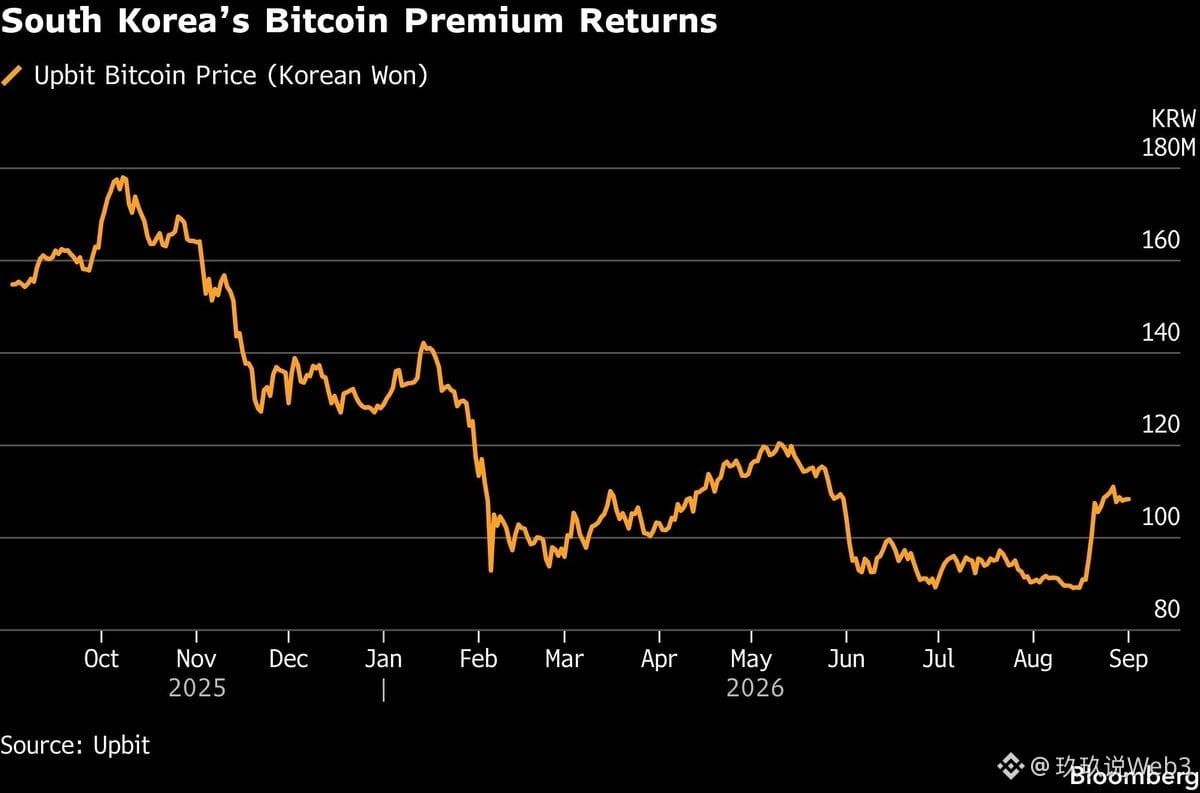
🚨Koreans are back: Bitcoin trades at a 1% premium on Upbit, not fading for a full week, setting the longest streak since May! Are Asian retail investors about to take the bag?
Group: 点击进入玖玖的粉丝群
Bitcoin’s won price on South Korea’s largest exchange Upbit is about 1% higher than Binance’s USD price—this premium has now lasted a full week, marking the longest positive premium since early May. To put it in perspective: the overall Korean average in August was still a discount of 0.25%, and in early June it even widened to a 3.1% discount. Now it has flipped to a premium directly.
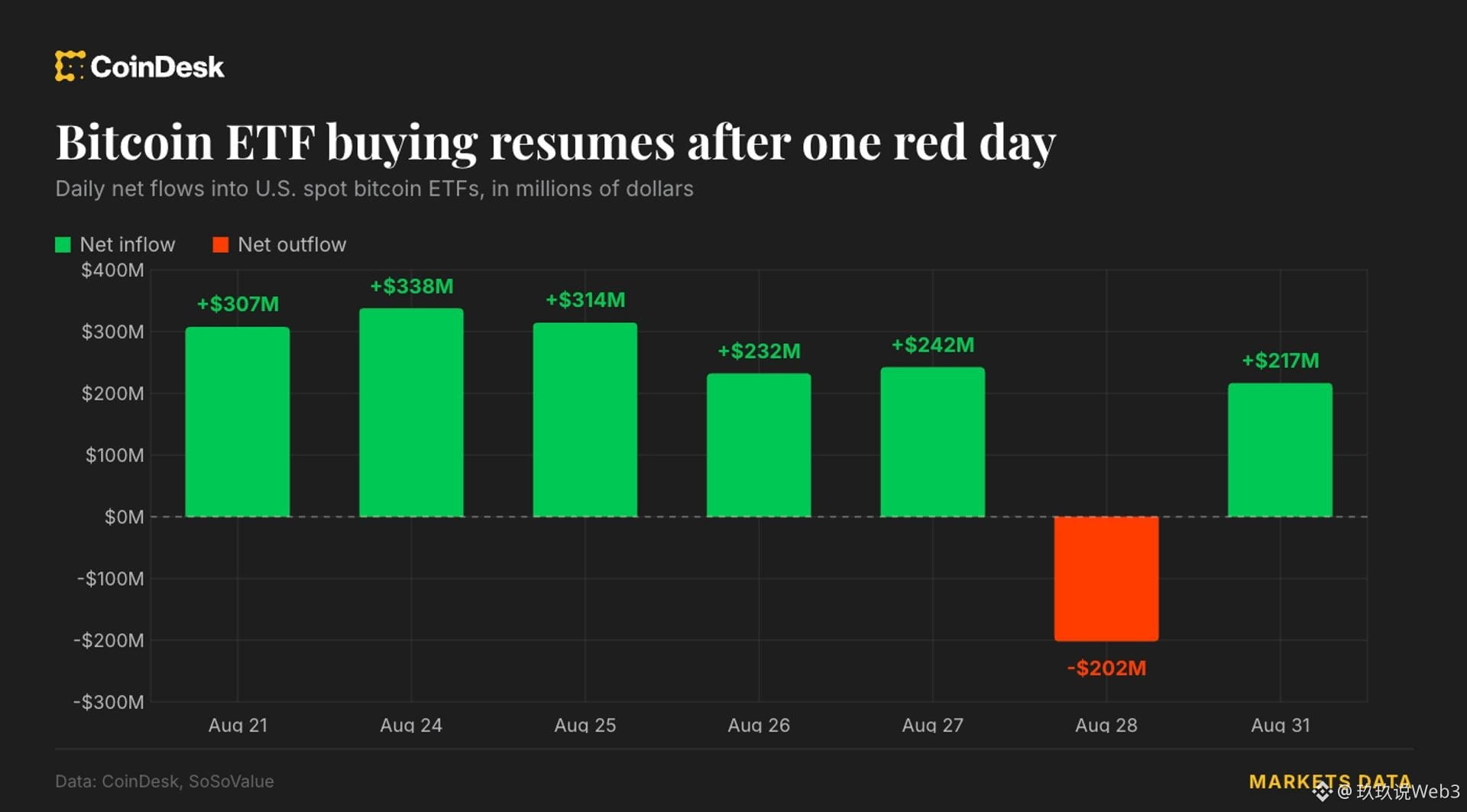
Making it concrete: During the same period, US spot BTC ETFs pulled in $1.92 billion in the week of August 17, the strongest weekly inflow in 10 months; last week added another $923 million. Although a $203 million one-day outflow on August 28 interrupted a nine-week run of inflows.
Cross analysis: The historical pattern is that “a shift from discount to premium” often comes ahead of stronger Bitcoin performance in the following weeks. Korean retail risk appetite is clearly returning. But analysts pour cold water: without supporting spot volume, Korea likely won’t be the main driver of any rebound—many Korean funds are still chasing AI stocks.
What’s truly worth watching isn’t the kimchi premium by itself, but the fact that both the US and Korea directions are flashing green at the same time: ETFs represent institutional money, while the premium reflects retail sentiment—the real signal is when both sides turn together.
Cold shower: A premium is a sentiment indicator, not a fundamental one; historically it’s often a short-term “hot flame.” By the end of August, ETF inflows have softened—this move may just be a relief of sell pressure in Korea, not the start of a new round of FOMO.
👀 Do you think this kimchi premium is a real signal this time, or just a false move?
Click the profile picture to watch the livestream, and join the Jiujiu chat group to get daily strategies 🚀
#比特币 #泡菜溢价 #ETF #韩国 #crypto market
Group: 点击进入玖玖的粉丝群
Bitcoin’s won price on South Korea’s largest exchange Upbit is about 1% higher than Binance’s USD price—this premium has now lasted a full week, marking the longest positive premium since early May. To put it in perspective: the overall Korean average in August was still a discount of 0.25%, and in early June it even widened to a 3.1% discount. Now it has flipped to a premium directly.
Making it concrete: During the same period, US spot BTC ETFs pulled in $1.92 billion in the week of August 17, the strongest weekly inflow in 10 months; last week added another $923 million. Although a $203 million one-day outflow on August 28 interrupted a nine-week run of inflows.
Cross analysis: The historical pattern is that “a shift from discount to premium” often comes ahead of stronger Bitcoin performance in the following weeks. Korean retail risk appetite is clearly returning. But analysts pour cold water: without supporting spot volume, Korea likely won’t be the main driver of any rebound—many Korean funds are still chasing AI stocks.
What’s truly worth watching isn’t the kimchi premium by itself, but the fact that both the US and Korea directions are flashing green at the same time: ETFs represent institutional money, while the premium reflects retail sentiment—the real signal is when both sides turn together.
Cold shower: A premium is a sentiment indicator, not a fundamental one; historically it’s often a short-term “hot flame.” By the end of August, ETF inflows have softened—this move may just be a relief of sell pressure in Korea, not the start of a new round of FOMO.
👀 Do you think this kimchi premium is a real signal this time, or just a false move?
Click the profile picture to watch the livestream, and join the Jiujiu chat group to get daily strategies 🚀
#比特币 #泡菜溢价 #ETF #韩国 #crypto market
🚨Singapore has made a move: stablecoin issuers must hold 100% reserves and are forbidden from paying interest! Will the world’s strictest stablecoin rules be coming soon?
Group: 点击进入玖玖的粉丝群
Today, the Monetary Authority of Singapore (MAS) released a consultation paper proposing amendments to the Payment Services Act, with the MAS-SCS stablecoin framework slated for official implementation. The core is just three rules: only licensed issuers may call themselves “MAS-regulated stablecoins”; reserves must cover 100% of the outstanding supply, held in safe and liquid assets; and users must be able to redeem at face value within five business days. The harshest rule is—no paying interest or any returns to holders.
Specific details: the pegged currencies are limited to the Singapore dollar or G10 currencies (US dollar, euro); if a token doesn’t meet the requirements, it can only be downgraded to be treated as a regular digital payment token. The consultation window closes on October 16, after which it will move into the legislative process.
Cross-analysis: these rules clearly align with the frameworks in the US and the EU—effectively, Asia’s financial hub is proactively giving stablecoins an official “stamp of legitimacy.” Issuers like Tether and Circle will see increased compliance costs in Singapore, but compliant stablecoins will instead get a passport for cross-border payments and tokenized finance.
What’s truly worth watching isn’t who gets restricted, but that MAS is granting an official identity to “regulated stablecoins”—which means banks and institutions will dare to onboard stablecoins at scale. This is the foundation of the RWA narrative.
A bucket of cold water: between consultation and final implementation there’s still the legislative process, and until October 16 everything is still variable. The ban on returns will deter some capital that wants to earn interest—so it may not be bullish in the short term.
👀 Do you think this round of Singapore’s regulation is a turning point that helps stablecoins break into the mainstream, or a tight set of reins for the industry?
Click the profile picture to watch the live stream, and join the Jiujiu chat group to get daily strategies 🚀
#稳定币 #新加坡 #MAS #加密监管 #RWA
Group: 点击进入玖玖的粉丝群
Today, the Monetary Authority of Singapore (MAS) released a consultation paper proposing amendments to the Payment Services Act, with the MAS-SCS stablecoin framework slated for official implementation. The core is just three rules: only licensed issuers may call themselves “MAS-regulated stablecoins”; reserves must cover 100% of the outstanding supply, held in safe and liquid assets; and users must be able to redeem at face value within five business days. The harshest rule is—no paying interest or any returns to holders.
Specific details: the pegged currencies are limited to the Singapore dollar or G10 currencies (US dollar, euro); if a token doesn’t meet the requirements, it can only be downgraded to be treated as a regular digital payment token. The consultation window closes on October 16, after which it will move into the legislative process.
Cross-analysis: these rules clearly align with the frameworks in the US and the EU—effectively, Asia’s financial hub is proactively giving stablecoins an official “stamp of legitimacy.” Issuers like Tether and Circle will see increased compliance costs in Singapore, but compliant stablecoins will instead get a passport for cross-border payments and tokenized finance.
What’s truly worth watching isn’t who gets restricted, but that MAS is granting an official identity to “regulated stablecoins”—which means banks and institutions will dare to onboard stablecoins at scale. This is the foundation of the RWA narrative.
A bucket of cold water: between consultation and final implementation there’s still the legislative process, and until October 16 everything is still variable. The ban on returns will deter some capital that wants to earn interest—so it may not be bullish in the short term.
👀 Do you think this round of Singapore’s regulation is a turning point that helps stablecoins break into the mainstream, or a tight set of reins for the industry?
Click the profile picture to watch the live stream, and join the Jiujiu chat group to get daily strategies 🚀
#稳定币 #新加坡 #MAS #加密监管 #RWA

🚨 Another listed company has heavily invested in Bitcoin!
$143 million injected, 23,156 BTC acquired!
Group: 点击进入玖玖的粉丝群
Corporate funds are back in action again 👀
Strive’s CEO Matt Cole announced that the company’s latest purchase was 1,800 bitcoins, totaling approximately $143 million, with an average cost of around $79,431. After this transaction was completed, Strive’s Bitcoin holdings reached 23,156 BTC. Based on the reference price at the time of disclosure, the total value is approximately $1.76 billion.
What’s truly worth paying attention to isn’t just how much Strive bought—it’s that institutional-grade capital is returning to the Bitcoin market. At the same time Strive announced its increase, Strategy also ended its nearly two-month pause and resumed investing approximately $370 million to buy Bitcoin.
On the other side, Bitmine recently also completed its largest ETH accumulation since June.
When these moves are viewed together, the market shows a clear shift:
Previously, corporate funds chose to stand by amid high-level volatility. But as the market becomes active again, some listed companies have started to expand their crypto asset reserves once more. 🔥
And Strive’s average buy price this time is about $79,431—actually slightly higher than the spot price of Bitcoin at that time. This suggests the company isn’t waiting for a clear deep pullback; instead, it’s expanding its long-term reserves directly in the current price range.
The logic behind this strategy is actually quite simple:
If Bitcoin continues to rise in the future, the company’s large BTC holdings could help lift both asset value and market valuation in tandem. But the other side is that if Bitcoin experiences sustained declines, the company’s balance sheet and stock price would face dual pressure. ⚠️ This is also the biggest controversy surrounding the “Bitcoin treasury company” model in recent years.
Companies can raise funds through the stock market, then convert that capital into Bitcoin—continuously expanding their holdings. But the problem is that once the market enters a downturn cycle, financing capacity, shareholder dilution, and BTC price volatility all become new pressures.
Tap the avatar to watch the livestream + join the Jiujiu chat group to get daily strategy 🚀
#BTC #Strive #strategy
$143 million injected, 23,156 BTC acquired!
Group: 点击进入玖玖的粉丝群
Corporate funds are back in action again 👀
Strive’s CEO Matt Cole announced that the company’s latest purchase was 1,800 bitcoins, totaling approximately $143 million, with an average cost of around $79,431. After this transaction was completed, Strive’s Bitcoin holdings reached 23,156 BTC. Based on the reference price at the time of disclosure, the total value is approximately $1.76 billion.
What’s truly worth paying attention to isn’t just how much Strive bought—it’s that institutional-grade capital is returning to the Bitcoin market. At the same time Strive announced its increase, Strategy also ended its nearly two-month pause and resumed investing approximately $370 million to buy Bitcoin.
On the other side, Bitmine recently also completed its largest ETH accumulation since June.
When these moves are viewed together, the market shows a clear shift:
Previously, corporate funds chose to stand by amid high-level volatility. But as the market becomes active again, some listed companies have started to expand their crypto asset reserves once more. 🔥
And Strive’s average buy price this time is about $79,431—actually slightly higher than the spot price of Bitcoin at that time. This suggests the company isn’t waiting for a clear deep pullback; instead, it’s expanding its long-term reserves directly in the current price range.
The logic behind this strategy is actually quite simple:
If Bitcoin continues to rise in the future, the company’s large BTC holdings could help lift both asset value and market valuation in tandem. But the other side is that if Bitcoin experiences sustained declines, the company’s balance sheet and stock price would face dual pressure. ⚠️ This is also the biggest controversy surrounding the “Bitcoin treasury company” model in recent years.
Companies can raise funds through the stock market, then convert that capital into Bitcoin—continuously expanding their holdings. But the problem is that once the market enters a downturn cycle, financing capacity, shareholder dilution, and BTC price volatility all become new pressures.
Tap the avatar to watch the livestream + join the Jiujiu chat group to get daily strategy 🚀
#BTC #Strive #strategy
🚨 Bitcoin ETFs Pull in $217 Million in a Single Day! Ethereum ETFs Keep Buying for 11 Straight Days—What Are Funds Rushing For?
Group: 点击进入玖玖的粉丝群
📊 Just happened: This past Monday, U.S. spot Bitcoin ETFs saw a net inflow of $217 million, instantly reversing last Friday’s slump.
Keep in mind: Last Friday, Bitcoin ETFs had just suffered a net outflow of $202 million—and that also ended a nine-day streak of gains that began on August 19. It was the longest consecutive buying run this year. Once the holiday was over, the funds rushed back immediately.
🐋 First, look at the overall picture.
As of the end of August, Bitcoin ETF net assets were hovering near the $100 billion mark—slightly below the level they just surpassed on August 27. Since listing in January 2024, Bitcoin ETFs have accumulated total net inflows of about $55 billion. August was also this year’s best-performing month: the inflow size was more than twice that of April.
📈 But there’s a detail to watch.
Even though August’s price action was hot, in 2026 overall Bitcoin ETFs are still in net outflow territory, with cumulative net outflows of about $2.5 billion. This suggests that capital has been moving around a lot this year—when external macro factors and sentiment shift, funds run back and forth.
🟣 What’s truly eye-catching is Ethereum ETFs.
On Monday, Ethereum ETFs recorded a net inflow of $88 million. The consecutive buying days extended to 11, with cumulative net inflows reaching $1.6 billion—this is the longest continuous buying cycle since the 20-day run in July 2025.
🔍 There’s a story behind this replenishment.
Last Friday’s outflows were linked to hawkish comments made by former Fed governor Warsh during the Jackson Hole meeting. At one point, the market worried that rate-hike expectations would heat up. But Monday’s fund return suggests institutions are treating this pullback as a short-term adjustment—not a trend reversal.
⚠️ But don’t get ahead of yourself.
ETF fund flows are heavily influenced by macro data. The key to whether this trend can continue is the set of economic data expected to be released later this week. If the data is hawkish, funds could retreat again at any time.
How long do you think this institutional fund comeback can last? Feel free to discuss in the comments below👇
Click the profile picture to watch the live stream + join the Jiuji Chat Group for daily strategy 🚀
#美国加密关联股指8月涨8.81% #比特币24小时跌3.4%至7.74万美元 #Fed September rate-hike probability rises to 57%
Group: 点击进入玖玖的粉丝群
📊 Just happened: This past Monday, U.S. spot Bitcoin ETFs saw a net inflow of $217 million, instantly reversing last Friday’s slump.
Keep in mind: Last Friday, Bitcoin ETFs had just suffered a net outflow of $202 million—and that also ended a nine-day streak of gains that began on August 19. It was the longest consecutive buying run this year. Once the holiday was over, the funds rushed back immediately.
🐋 First, look at the overall picture.
As of the end of August, Bitcoin ETF net assets were hovering near the $100 billion mark—slightly below the level they just surpassed on August 27. Since listing in January 2024, Bitcoin ETFs have accumulated total net inflows of about $55 billion. August was also this year’s best-performing month: the inflow size was more than twice that of April.
📈 But there’s a detail to watch.
Even though August’s price action was hot, in 2026 overall Bitcoin ETFs are still in net outflow territory, with cumulative net outflows of about $2.5 billion. This suggests that capital has been moving around a lot this year—when external macro factors and sentiment shift, funds run back and forth.
🟣 What’s truly eye-catching is Ethereum ETFs.
On Monday, Ethereum ETFs recorded a net inflow of $88 million. The consecutive buying days extended to 11, with cumulative net inflows reaching $1.6 billion—this is the longest continuous buying cycle since the 20-day run in July 2025.
🔍 There’s a story behind this replenishment.
Last Friday’s outflows were linked to hawkish comments made by former Fed governor Warsh during the Jackson Hole meeting. At one point, the market worried that rate-hike expectations would heat up. But Monday’s fund return suggests institutions are treating this pullback as a short-term adjustment—not a trend reversal.
⚠️ But don’t get ahead of yourself.
ETF fund flows are heavily influenced by macro data. The key to whether this trend can continue is the set of economic data expected to be released later this week. If the data is hawkish, funds could retreat again at any time.
How long do you think this institutional fund comeback can last? Feel free to discuss in the comments below👇
Click the profile picture to watch the live stream + join the Jiuji Chat Group for daily strategy 🚀
#美国加密关联股指8月涨8.81% #比特币24小时跌3.4%至7.74万美元 #Fed September rate-hike probability rises to 57%

#比特币24小时跌3.4%至7.74万美元
BlackRock cuts the in-kind conversion threshold fee for IBIT by 96%—the “last mile” for institutions buying Bitcoin has been cleared
👉 贝莱德砍费,进群看
BlackRock slashed IBIT’s in-kind conversion threshold fee from $25 million to $1 million, a 96% reduction. Most people didn’t notice this news, but it may be one of the most underappreciated variables in this bull cycle.
The in-kind conversion threshold fee is one of the costs for institutions to exchange real money for BTC spot. Cutting the fee by 96% means smaller institutions and wealth management firms can configure Bitcoin via IBIT at low cost—not by buying ETF shares, but by directly swapping for BTC spot.
Think it through: Why is BlackRock cutting it now? Because it has seen demand. Large institutions are already in; now it’s about opening up the market for “mid-tier” institutions. When the world’s largest asset manager proactively lowers the allocation threshold, it suggests it’s bullish on BTC’s long-term demand—not just chasing management fees.
More importantly, ETF flows are often mentioned, but “in-kind conversion” is the real, money-on-the-table BTC buying. After the threshold is lowered, the amount of in-kind conversions could rise significantly—this is the actual bid.
Is BlackRock cutting the conversion fee a bull-market signal or just normal business practice? Let’s discuss in the comments 👇
Click the avatar to watch the live stream and join the Jiujiu chat group to get daily strategy 🚀
#比特币24小时跌3.4%至7.74万美元 #Bitcoin #BlackRock #IBIT #ETF
BlackRock cuts the in-kind conversion threshold fee for IBIT by 96%—the “last mile” for institutions buying Bitcoin has been cleared
👉 贝莱德砍费,进群看
BlackRock slashed IBIT’s in-kind conversion threshold fee from $25 million to $1 million, a 96% reduction. Most people didn’t notice this news, but it may be one of the most underappreciated variables in this bull cycle.
The in-kind conversion threshold fee is one of the costs for institutions to exchange real money for BTC spot. Cutting the fee by 96% means smaller institutions and wealth management firms can configure Bitcoin via IBIT at low cost—not by buying ETF shares, but by directly swapping for BTC spot.
Think it through: Why is BlackRock cutting it now? Because it has seen demand. Large institutions are already in; now it’s about opening up the market for “mid-tier” institutions. When the world’s largest asset manager proactively lowers the allocation threshold, it suggests it’s bullish on BTC’s long-term demand—not just chasing management fees.
More importantly, ETF flows are often mentioned, but “in-kind conversion” is the real, money-on-the-table BTC buying. After the threshold is lowered, the amount of in-kind conversions could rise significantly—this is the actual bid.
Is BlackRock cutting the conversion fee a bull-market signal or just normal business practice? Let’s discuss in the comments 👇
Click the avatar to watch the live stream and join the Jiujiu chat group to get daily strategy 🚀
#比特币24小时跌3.4%至7.74万美元 #Bitcoin #BlackRock #IBIT #ETF
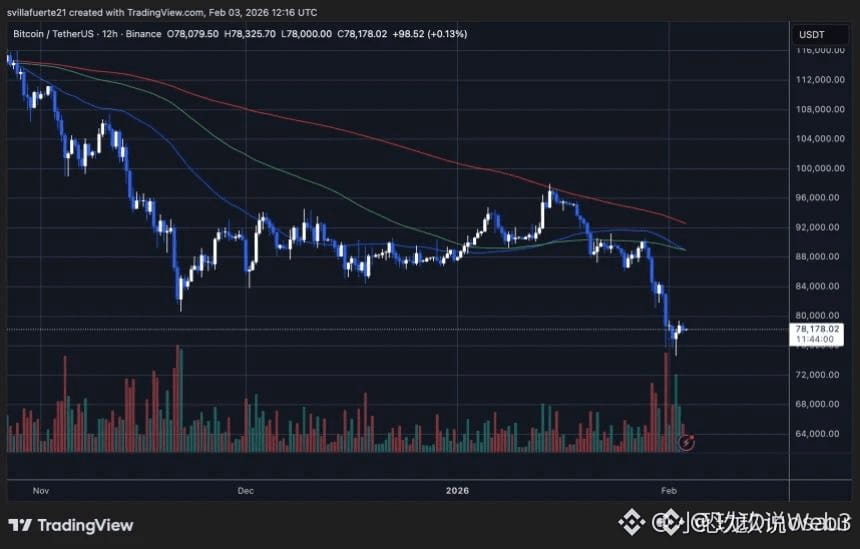
BTC-1.67%
IBITETF-2.15%
Verified
#布伦特原油涨破90美元
Tensions flare again in the Strait of Hormuz, oil prices surge past 91— but this “war premium” comes fast and disappears even faster
👉 油价冲91,进群看走势
More tense news out of the Strait of Hormuz: oil prices jumped straight to 91. One-fifth of the world’s oil has to pass through here—once anything stirs, prices react instantly. But the real question is: how long can this wave of “war premium” last?
The historical pattern is brutal: oil-price spikes from geopolitical conflicts usually fade quickly when the situation hasn’t escalated into a “supply disruption.” The market may price in a potential supply cutoff, but if it doesn’t actually happen, the premium gets squeezed out. During the Russia-Ukraine conflict in 2022, oil prices surged to 130—and later still fell back to 80.
Flip the perspective: for the crypto market, the real threat from oil-price increases isn’t oil itself—it’s that rising oil pushes inflation higher → the Fed dares not cut rates → liquidity tightens. So every 10% rise in oil adds another layer of macro pressure on BTC—“geopolitical immunity” has an expiration date.
Even more crucial: if the conflict drags on, high oil prices → stubborn inflation → expectations of further rate hikes. What crypto will face won’t be just a “risk-off narrative,” but the hard reality of “liquidity contraction.”
Oil is at 91 now—do you think the conflict will escalate or cool down? Discuss in the comments below 👇
Click the profile icon to watch the livestream, and join the Jiuji Chat Group to get daily strategies 🚀
#布伦特原油涨破90美元 #oil price #Hormuz #geopolitics #BTC
Tensions flare again in the Strait of Hormuz, oil prices surge past 91— but this “war premium” comes fast and disappears even faster
👉 油价冲91,进群看走势
More tense news out of the Strait of Hormuz: oil prices jumped straight to 91. One-fifth of the world’s oil has to pass through here—once anything stirs, prices react instantly. But the real question is: how long can this wave of “war premium” last?
The historical pattern is brutal: oil-price spikes from geopolitical conflicts usually fade quickly when the situation hasn’t escalated into a “supply disruption.” The market may price in a potential supply cutoff, but if it doesn’t actually happen, the premium gets squeezed out. During the Russia-Ukraine conflict in 2022, oil prices surged to 130—and later still fell back to 80.
Flip the perspective: for the crypto market, the real threat from oil-price increases isn’t oil itself—it’s that rising oil pushes inflation higher → the Fed dares not cut rates → liquidity tightens. So every 10% rise in oil adds another layer of macro pressure on BTC—“geopolitical immunity” has an expiration date.
Even more crucial: if the conflict drags on, high oil prices → stubborn inflation → expectations of further rate hikes. What crypto will face won’t be just a “risk-off narrative,” but the hard reality of “liquidity contraction.”
Oil is at 91 now—do you think the conflict will escalate or cool down? Discuss in the comments below 👇
Click the profile icon to watch the livestream, and join the Jiuji Chat Group to get daily strategies 🚀
#布伦特原油涨破90美元 #oil price #Hormuz #geopolitics #BTC
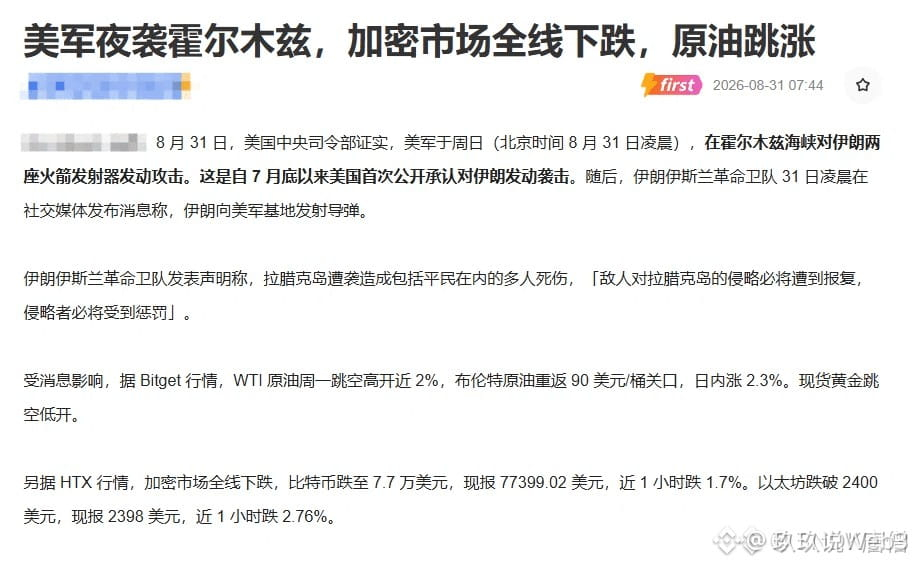
#比特币24小时跌3.4%至7.74万美元
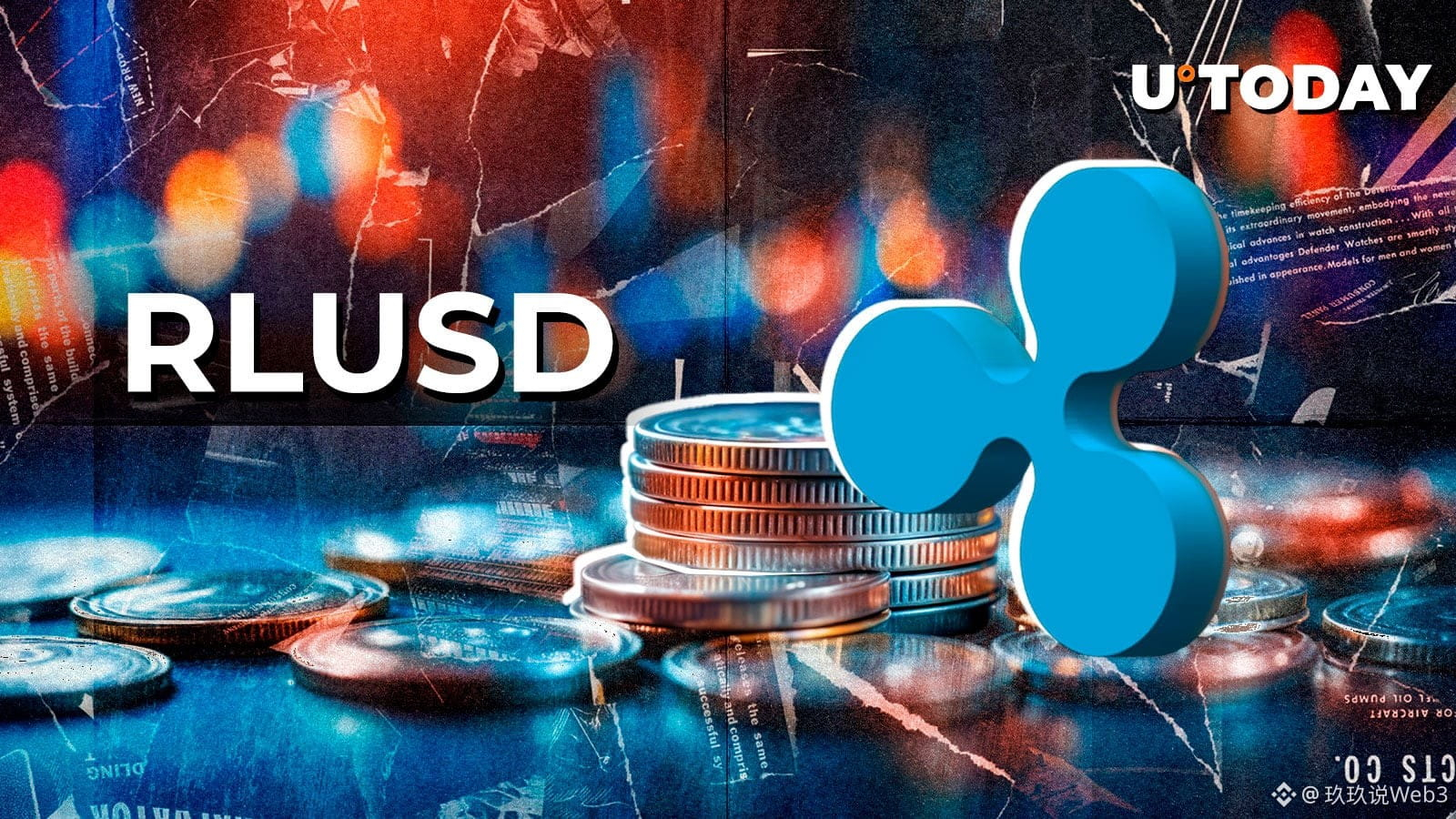
The stablecoin giants are疯狂ly minting—yet XRP isn’t rising. Is there really a connection between “printing money” and coin prices?
👉 RLUSD增发,进群看真相
In the past few days, the stablecoin market has been full of action: multiple issuers have been minting aggressively on-chain, creating tens of millions of tokens in just a few days. By common sense, more stablecoin issuance should mean more capital inflow—good news for the price. But XRP’s price hasn’t moved at all.
Why? Because stablecoin issuance doesn’t equal someone buying XRP. Stablecoins are used for payments and settlement—not as “fuel” to buy coins. Interpreting “minting” as “price-positive” is forcing two independent things together.
Think the other way around: the real meaning of stablecoin issuance is that issuers are fighting for market share. Besides the two major players, a third force is rising. That’s the long-term narrative: the more players in the stablecoin market, the more credible the “adoption story” of the payment network becomes—each new participant adds a bit more confidence.
But in the short term, issuance doesn’t directly lift the coin price. Anyone expecting “printing money = pump” may be disappointed. What you really need to watch is adoption: is it being used in real payments, or just sitting in wallets?
Stablecoins are being minted like crazy—do you think it’s bullish or just noise? Let’s discuss in the comments 👇
Click the profile picture to watch the livestream and join the Jiujiu chat group to get daily strategies 🚀
#比特币24小时跌3.4%至7.74万美元 #Stablecoin #XRP #Payments #CryptoMarket
The stablecoin giants are疯狂ly minting—yet XRP isn’t rising. Is there really a connection between “printing money” and coin prices?
👉 RLUSD增发,进群看真相
In the past few days, the stablecoin market has been full of action: multiple issuers have been minting aggressively on-chain, creating tens of millions of tokens in just a few days. By common sense, more stablecoin issuance should mean more capital inflow—good news for the price. But XRP’s price hasn’t moved at all.
Why? Because stablecoin issuance doesn’t equal someone buying XRP. Stablecoins are used for payments and settlement—not as “fuel” to buy coins. Interpreting “minting” as “price-positive” is forcing two independent things together.
Think the other way around: the real meaning of stablecoin issuance is that issuers are fighting for market share. Besides the two major players, a third force is rising. That’s the long-term narrative: the more players in the stablecoin market, the more credible the “adoption story” of the payment network becomes—each new participant adds a bit more confidence.
But in the short term, issuance doesn’t directly lift the coin price. Anyone expecting “printing money = pump” may be disappointed. What you really need to watch is adoption: is it being used in real payments, or just sitting in wallets?
Stablecoins are being minted like crazy—do you think it’s bullish or just noise? Let’s discuss in the comments 👇
Click the profile picture to watch the livestream and join the Jiujiu chat group to get daily strategies 🚀
#比特币24小时跌3.4%至7.74万美元 #Stablecoin #XRP #Payments #CryptoMarket
Log in to explore more content