
小恐龙说趋势
273 Posts

小恐龙说趋势
6 年市场经验,公众号.比特小恐龙,记录市场的真实逻辑,研究下一步会去哪
12 Following
1.9K+ Followers
1.6K+ Liked
Posts
All
Live
#sol本周上涨20%
💥 杠杆风险,群里提醒
Cronos chain directly comes to a halt—$75 million drained, with security alerts maxed out
A single public chain can just stop on a dime—can you believe it?
Cronos paused the entire network directly due to a vulnerability in the Tectonic lending protocol
Estimated loss: $75 million
This response was pretty quick
They found the vulnerability and immediately stopped the chain to prevent further fund leakage
But most of the attacker-controlled assets are still sitting on-chain
Whether they can be recovered is still unknown
Tectonic is a leading lending protocol in the Cronos ecosystem
The story is almost the same as the DeFi chain-reaction blowups back in 2023
Lending protocols are always a favorite target for hackers
Once there’s a flaw in the collateral pool or liquidation logic, losses can reach millions
This is already the second major security incident this week
Earlier, the Sandbox bridge was hacked; now, Cronos has stopped its chain
Security has once again become the industry’s biggest test
My view: stopping the chain to limit losses is a responsible move
But the underlying problem hasn’t been solved—code audits and bug bounties
These investments are always cheaper than patching holes after the fact
In the crypto industry, we keep paying tuition for security lessons—round after round
Let’s chat in the comments: do you think this money can be recovered?
Every day, I’ll help you follow security hotspots—not just what happened in the news, but also the logic and opportunities behind it 👀🚀
💥 杠杆风险,群里提醒
Cronos chain directly comes to a halt—$75 million drained, with security alerts maxed out
A single public chain can just stop on a dime—can you believe it?
Cronos paused the entire network directly due to a vulnerability in the Tectonic lending protocol
Estimated loss: $75 million
This response was pretty quick
They found the vulnerability and immediately stopped the chain to prevent further fund leakage
But most of the attacker-controlled assets are still sitting on-chain
Whether they can be recovered is still unknown
Tectonic is a leading lending protocol in the Cronos ecosystem
The story is almost the same as the DeFi chain-reaction blowups back in 2023
Lending protocols are always a favorite target for hackers
Once there’s a flaw in the collateral pool or liquidation logic, losses can reach millions
This is already the second major security incident this week
Earlier, the Sandbox bridge was hacked; now, Cronos has stopped its chain
Security has once again become the industry’s biggest test
My view: stopping the chain to limit losses is a responsible move
But the underlying problem hasn’t been solved—code audits and bug bounties
These investments are always cheaper than patching holes after the fact
In the crypto industry, we keep paying tuition for security lessons—round after round
Let’s chat in the comments: do you think this money can be recovered?
Every day, I’ll help you follow security hotspots—not just what happened in the news, but also the logic and opportunities behind it 👀🚀

Sandbox bridge hacked 14.7 million SAND drained—official immediately promises full 1:1 compensation
The platform Sandbox is in trouble
The treasury of the Ethereum bridge was attacked; 14.7 million SAND were taken
The official response was straightforward: eligible holders will receive full 1:1 reimbursement
This handling deserves praise
No dragging things out, no passing the buck—just paying directly
Using the project’s treasury funds to make victims whole
That kind of accountability is truly rare in the crypto space
Take a closer look at this attack
Yet again, it’s a vulnerability in a bridge contract—the same old familiar failure point
Cross-chain bridges are crypto’s biggest ATM
Breach it once, and it’s tens of millions of dollars in tuition
My take: after something goes wrong, look at the attitude—attitude determines the project’s fate
Sandbox’s crisis PR has won it some reputation
But as long as the bridge security issue isn’t fundamentally fixed, the risk will always remain
When users’ money is placed on a bridge, it’s always a dangling concern
Let’s chat in the comments: do you think full compensation can restore trust?
Every day, I’ll bring you updates on the ecosystem’s hot topics—not just what happened, but help you understand the logic and opportunities behind it 👀🚀
📢 官方动态群内跟进
The platform Sandbox is in trouble
The treasury of the Ethereum bridge was attacked; 14.7 million SAND were taken
The official response was straightforward: eligible holders will receive full 1:1 reimbursement
This handling deserves praise
No dragging things out, no passing the buck—just paying directly
Using the project’s treasury funds to make victims whole
That kind of accountability is truly rare in the crypto space
Take a closer look at this attack
Yet again, it’s a vulnerability in a bridge contract—the same old familiar failure point
Cross-chain bridges are crypto’s biggest ATM
Breach it once, and it’s tens of millions of dollars in tuition
My take: after something goes wrong, look at the attitude—attitude determines the project’s fate
Sandbox’s crisis PR has won it some reputation
But as long as the bridge security issue isn’t fundamentally fixed, the risk will always remain
When users’ money is placed on a bridge, it’s always a dangling concern
Let’s chat in the comments: do you think full compensation can restore trust?
Every day, I’ll bring you updates on the ecosystem’s hot topics—not just what happened, but help you understand the logic and opportunities behind it 👀🚀
📢 官方动态群内跟进

#sol本周上涨20%
💰 机构动向进群看
Tokenized stocks surge 415% in 30 days — Wall Street assets are moving
Tokenized stocks have been on fire lately: over the past 30 days, transfer volume hit $29.5 billion.
The number of holders reached 2.36 million—more than doubling.
This growth rate is so fast that even traditional exchanges would have to stay silent.
What are tokenized stocks?
It’s moving Nasdaq-listed US stocks onto the blockchain for trading.
24/7 trading, and you can also freely exchange them with crypto assets.
Wall Street assets are quietly getting tokenized and put on-chain.
Data doesn’t lie.
Active addresses have doubled, transfer volume has skyrocketed, and the number of holders has surged.
This isn’t concept hype—real money is relocating.
Big players like BlackRock are already positioning themselves; the size of tokenized assets is already $40 billion.
My take: this is the most undervalued trend of 2026.
The wall between crypto and traditional finance is being dismantled piece by piece.
When tokenized stocks and crypto seamlessly connect, the way the entire market works will be rewritten.
Let’s chat in the comments—would you buy tokenized stocks?
Every day, I’ll bring you updates on RWA hotspots. Not just what news happens, but helping you understand the logic and opportunities behind it 👀🚀
💰 机构动向进群看
Tokenized stocks surge 415% in 30 days — Wall Street assets are moving
Tokenized stocks have been on fire lately: over the past 30 days, transfer volume hit $29.5 billion.
The number of holders reached 2.36 million—more than doubling.
This growth rate is so fast that even traditional exchanges would have to stay silent.
What are tokenized stocks?
It’s moving Nasdaq-listed US stocks onto the blockchain for trading.
24/7 trading, and you can also freely exchange them with crypto assets.
Wall Street assets are quietly getting tokenized and put on-chain.
Data doesn’t lie.
Active addresses have doubled, transfer volume has skyrocketed, and the number of holders has surged.
This isn’t concept hype—real money is relocating.
Big players like BlackRock are already positioning themselves; the size of tokenized assets is already $40 billion.
My take: this is the most undervalued trend of 2026.
The wall between crypto and traditional finance is being dismantled piece by piece.
When tokenized stocks and crypto seamlessly connect, the way the entire market works will be rewritten.
Let’s chat in the comments—would you buy tokenized stocks?
Every day, I’ll bring you updates on RWA hotspots. Not just what news happens, but helping you understand the logic and opportunities behind it 👀🚀

#美国空袭伊朗火箭发射器
🏛️ 大环境怎么影响币圈,进群聊
The Middle East has fired again: US airstrikes hit rocket launchers near the Strait of Hormuz in Iran. Iran has issued a direct warning that it will retaliate, and the situation has tightened again overnight.
The immediate consequence of this is that oil prices first surged.
Brent crude jumped back toward around $90. Risk-aversion sentiment is at full tilt—money is starting to look for “safe havens.”
For the crypto market, this kind of geopolitical shock is a double-edged sword.
On one side, safe-haven funds may flow into Bitcoin.
On the other, global risk assets are shaken at the same time, and volatility will be amplified.
The key now is the Strait of Hormuz.
It’s the throat of global oil shipping routes—if something really happens, oil prices could run out of control. Then inflation would return, and expectations for rate hikes would have to swing back and forth again.
My take: with this kind of sudden breaking news, short-term sentiment dominates everything. Don’t rush to chase pumps or sell in panic—first see whether the situation will escalate.
Geopolitical risk comes fast and leaves fast, but each time it hurts.
Let’s discuss in the comments—do you think this standoff will escalate?
Every day I’ll take you to follow crypto hotspots—not just what’s happening in the news, but also help you understand the logic and opportunities behind it 👀🚀
🏛️ 大环境怎么影响币圈,进群聊
The Middle East has fired again: US airstrikes hit rocket launchers near the Strait of Hormuz in Iran. Iran has issued a direct warning that it will retaliate, and the situation has tightened again overnight.
The immediate consequence of this is that oil prices first surged.
Brent crude jumped back toward around $90. Risk-aversion sentiment is at full tilt—money is starting to look for “safe havens.”
For the crypto market, this kind of geopolitical shock is a double-edged sword.
On one side, safe-haven funds may flow into Bitcoin.
On the other, global risk assets are shaken at the same time, and volatility will be amplified.
The key now is the Strait of Hormuz.
It’s the throat of global oil shipping routes—if something really happens, oil prices could run out of control. Then inflation would return, and expectations for rate hikes would have to swing back and forth again.
My take: with this kind of sudden breaking news, short-term sentiment dominates everything. Don’t rush to chase pumps or sell in panic—first see whether the situation will escalate.
Geopolitical risk comes fast and leaves fast, but each time it hurts.
Let’s discuss in the comments—do you think this standoff will escalate?
Every day I’ll take you to follow crypto hotspots—not just what’s happening in the news, but also help you understand the logic and opportunities behind it 👀🚀

#美国约6700万人持有加密货币
⚖️ 进群聊数据动态
How many people in the United States are actually into crypto? Latest data is here
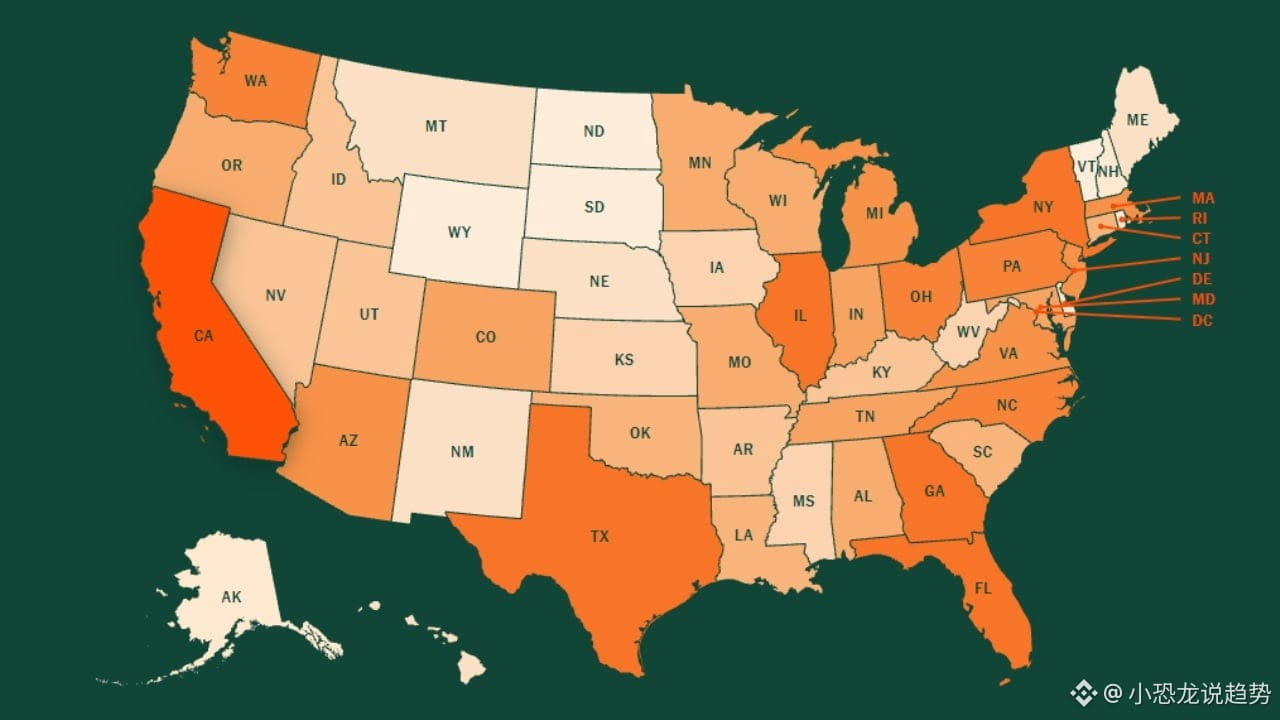
An interactive map shows that about 67 million people across the U.S. hold cryptocurrencies
The distribution by state and by district is clear at a glance
What does 67 million even mean
Among the adult population in the U.S., roughly one out of every four people has come into contact with crypto
This isn’t just a game for niche players anymore—it’s become standard for the mainstream
What’s even more intriguing is the distribution
Crypto holders aren’t concentrated only in Silicon Valley—they’re spread across the entire country
From California to Texas, from cities to rural areas, you can find them everywhere
This suggests crypto adoption has moved beyond the early adopter phase into mass popularity
My take: This kind of data is a real, concrete boost for the industry
More people means better liquidity and a more mature ecosystem
Policymakers also need to recognize this group—pretending not to see them just won’t cut it anymore
Drop a comment: In your circle, are there many people who play with crypto?
Every day I’ll bring you attention to crypto hotspots—not just what happens in the news, but help you understand the logic and opportunities behind it 👀🚀
⚖️ 进群聊数据动态
How many people in the United States are actually into crypto? Latest data is here
An interactive map shows that about 67 million people across the U.S. hold cryptocurrencies
The distribution by state and by district is clear at a glance
What does 67 million even mean
Among the adult population in the U.S., roughly one out of every four people has come into contact with crypto
This isn’t just a game for niche players anymore—it’s become standard for the mainstream
What’s even more intriguing is the distribution
Crypto holders aren’t concentrated only in Silicon Valley—they’re spread across the entire country
From California to Texas, from cities to rural areas, you can find them everywhere
This suggests crypto adoption has moved beyond the early adopter phase into mass popularity
My take: This kind of data is a real, concrete boost for the industry
More people means better liquidity and a more mature ecosystem
Policymakers also need to recognize this group—pretending not to see them just won’t cut it anymore
Drop a comment: In your circle, are there many people who play with crypto?
Every day I’ll bring you attention to crypto hotspots—not just what happens in the news, but help you understand the logic and opportunities behind it 👀🚀
Verified
Solana Is Finally Turning the Corner: A Record of Ten Months of Consecutive Declines Ends Directly in August
SOL rose nearly 46% this month and reclaimed the level above $100, with a high that touched $110.38.
Compared with June’s low point, it has rebounded 80%. The market cap is back around $61 billion—finally starting to look like a “king” among the copycats.
This rebound isn’t retail hype. Institutions are genuinely buying with real money.
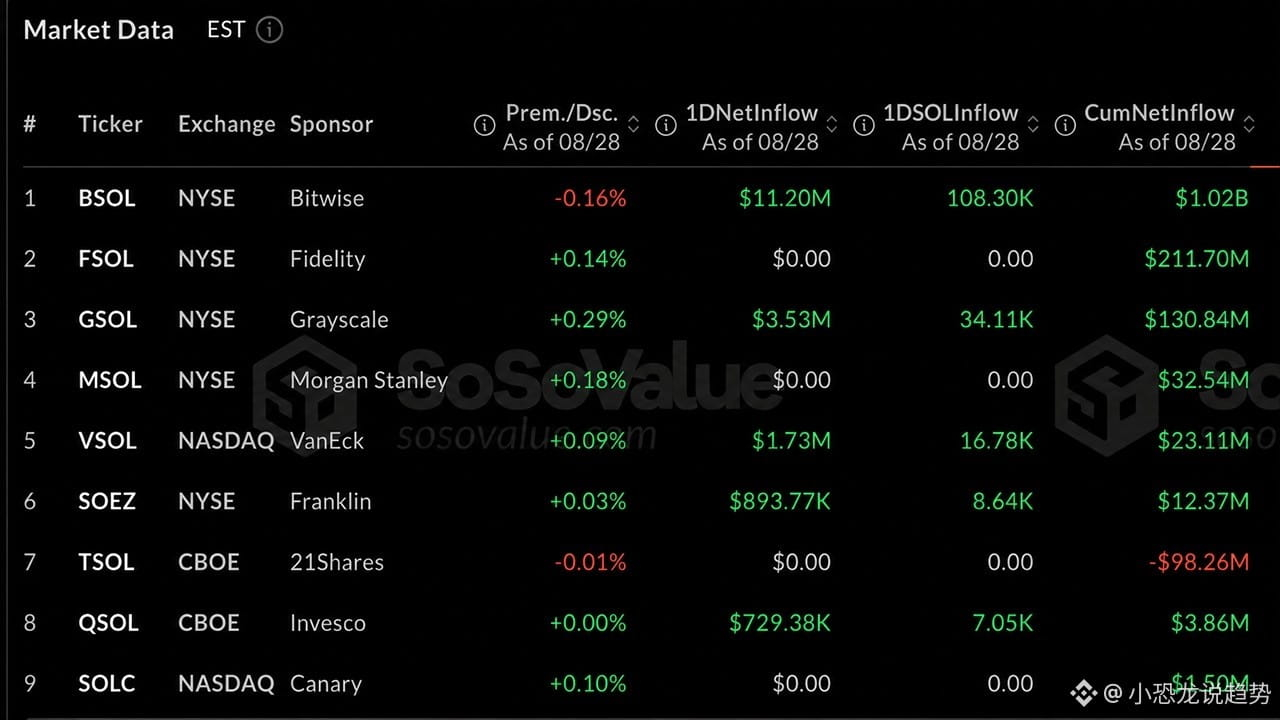
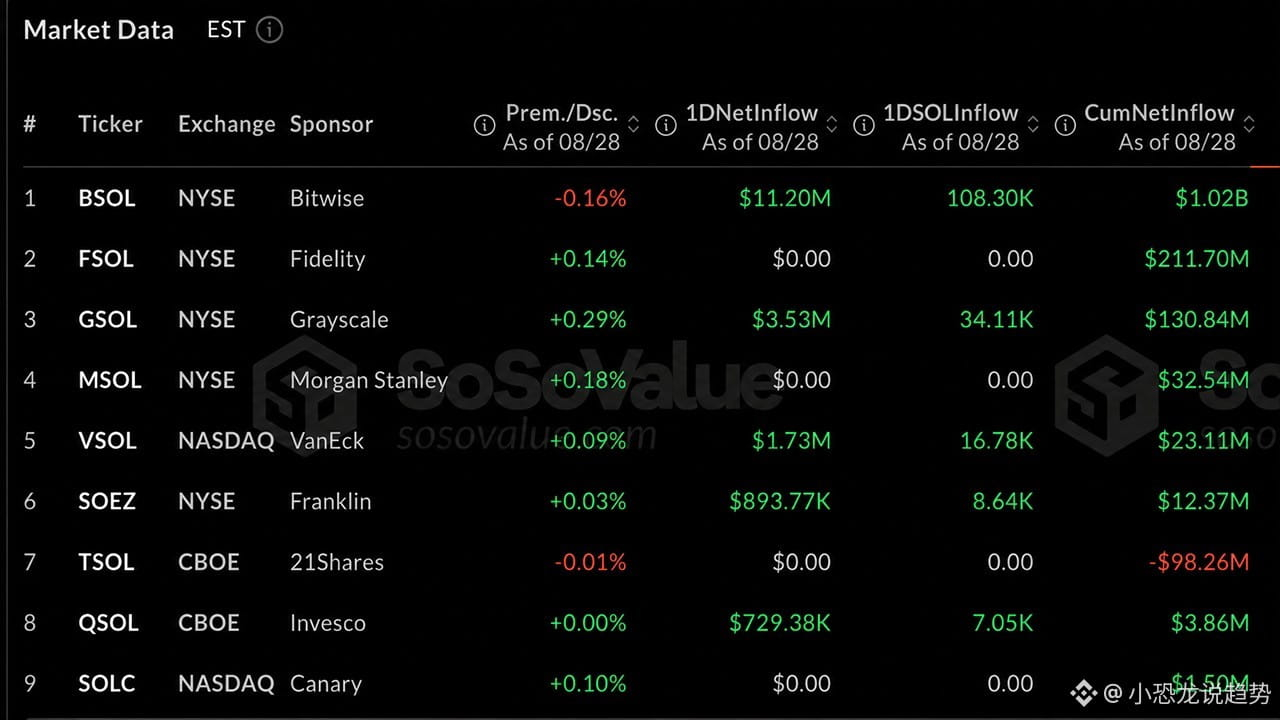
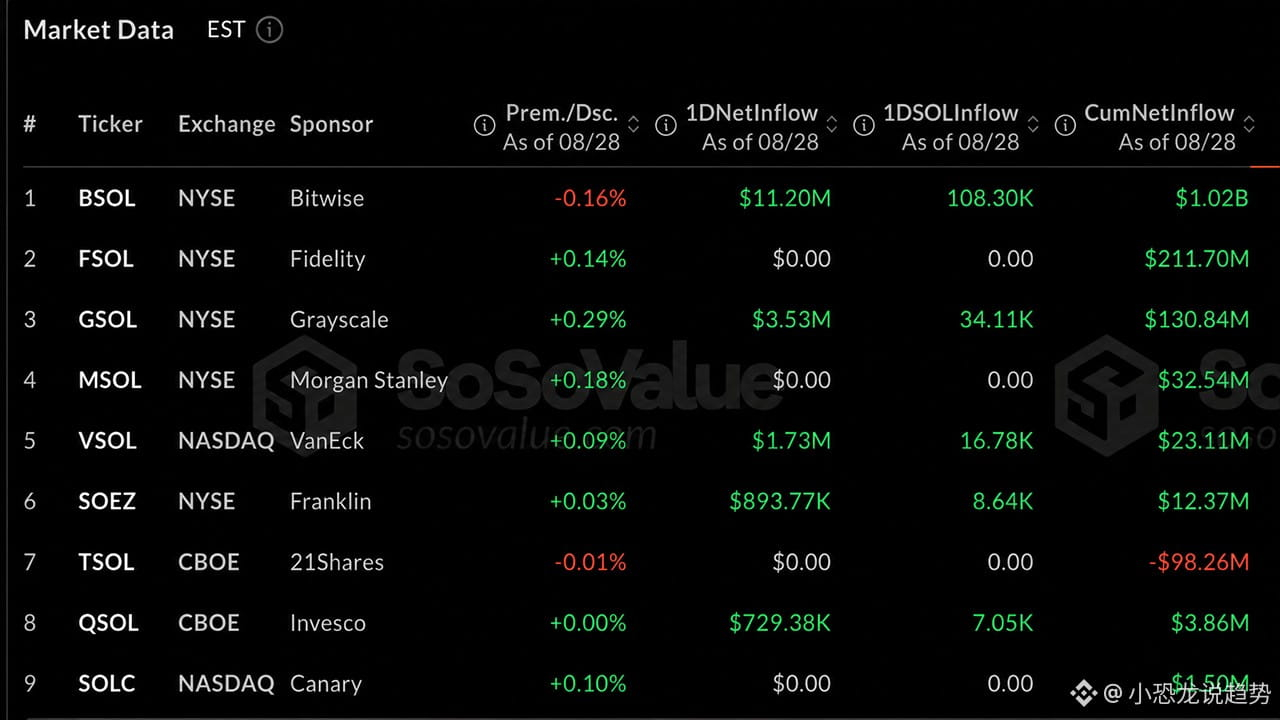
Since the launch of the U.S. Solana spot ETF, cumulative net inflows have reached $1.34 billion.
Bitwise’s SOL fund—featuring staking rewards—also surpassed the $1.0 billion mark, becoming the first product to meet that threshold.
Charles Schwab is even more aggressive: it announced plans to open this SOL channel to 39 million accounts. Once that door opens, the imagination runs wild.
On-chain data is also performing in sync. In July, Solana processed 4.2 billion transactions, setting a new all-time record.
In the third week of August, non-voting transactions reached 1.32 billion, again breaking the weekly record.
On September 9, there’s another big event: Transaction V1 goes live. The maximum single-transaction capacity increases from 1,232 bytes to 4,096 bytes.
The anti-inflation proposal also passed, meaning that over the next six years, the issuance of new SOL will be reduced by more than 18 million coins.
But let’s pour some cold water: SOL is still more than 60% away from its all-time high of 293.
This looks more like a rebound after an oversold drop than the start of a brand-new bull market.
Still, the trend is clearly changing. Institutional entry, tightening supply, and increasing on-chain activity—three layers of positive catalysts stacked together—naturally create more upside.
In the short term, if the rally is too sharp, a pullback is normal. The key is direction.
With Solana’s technology upgrade schedule lined up throughout the second half of the year, we’ll see whether it can ride and hold onto this wave of momentum.
Every day, I’ll keep you updated on crypto hot spots—not just what’s happening in the news, but also the logic and opportunities behind it 👀🚀
Click the link below to follow me 👇🏻加入小恐龙粉丝群
#Solana #SOL #crypto market
SOL rose nearly 46% this month and reclaimed the level above $100, with a high that touched $110.38.
Compared with June’s low point, it has rebounded 80%. The market cap is back around $61 billion—finally starting to look like a “king” among the copycats.
This rebound isn’t retail hype. Institutions are genuinely buying with real money.
Since the launch of the U.S. Solana spot ETF, cumulative net inflows have reached $1.34 billion.
Bitwise’s SOL fund—featuring staking rewards—also surpassed the $1.0 billion mark, becoming the first product to meet that threshold.
Charles Schwab is even more aggressive: it announced plans to open this SOL channel to 39 million accounts. Once that door opens, the imagination runs wild.
On-chain data is also performing in sync. In July, Solana processed 4.2 billion transactions, setting a new all-time record.
In the third week of August, non-voting transactions reached 1.32 billion, again breaking the weekly record.
On September 9, there’s another big event: Transaction V1 goes live. The maximum single-transaction capacity increases from 1,232 bytes to 4,096 bytes.
The anti-inflation proposal also passed, meaning that over the next six years, the issuance of new SOL will be reduced by more than 18 million coins.
But let’s pour some cold water: SOL is still more than 60% away from its all-time high of 293.
This looks more like a rebound after an oversold drop than the start of a brand-new bull market.
Still, the trend is clearly changing. Institutional entry, tightening supply, and increasing on-chain activity—three layers of positive catalysts stacked together—naturally create more upside.
In the short term, if the rally is too sharp, a pullback is normal. The key is direction.
With Solana’s technology upgrade schedule lined up throughout the second half of the year, we’ll see whether it can ride and hold onto this wave of momentum.
Every day, I’ll keep you updated on crypto hot spots—not just what’s happening in the news, but also the logic and opportunities behind it 👀🚀
Click the link below to follow me 👇🏻加入小恐龙粉丝群
#Solana #SOL #crypto market
Verified
#sol本周上涨20%
🏛️ 进群聊仓位动态
SOL finally gets to raise its head and breathe easy—after ten months, the monthly candle is turning green for the first time.
Over the weekend, it directly pushed the weekly gain up to 20%, breaking into the front ranks of the trend leaderboard.
Where does the confidence behind this surge come from?
First, the validators have just voted through an accelerated deflation proposal.
The year-over-year inflation reduction rate is doubled from 15% to 30%, meaning future supply will be tightened.
In crypto, inflation is what people fear most—when supply tightens, expectations move first.
Second, institutional funds are truly stepping in with real money.
For several consecutive weeks, there have been net inflows—ending that curse where a new monthly cycle always seemed to close red at month-end.
This time, it isn’t retail-fueled random hype. It’s big capital recalculating prices.
My view: with supply contraction plus institutional accumulation, this combo looks quite well put together.
But don’t get carried away—when it pumps harder, the pullback can hit harder.
After a 20% weekly jump, those who chase should weigh their position size first.
Let’s chat in the comments: do you think SOL can hold strong this time, or is this another round of a roller coaster?
Every day I’ll bring you SOL highlights—not just what’s happening in the news, but help you understand the logic and opportunities behind it 👀🚀
🏛️ 进群聊仓位动态
SOL finally gets to raise its head and breathe easy—after ten months, the monthly candle is turning green for the first time.
Over the weekend, it directly pushed the weekly gain up to 20%, breaking into the front ranks of the trend leaderboard.
Where does the confidence behind this surge come from?
First, the validators have just voted through an accelerated deflation proposal.
The year-over-year inflation reduction rate is doubled from 15% to 30%, meaning future supply will be tightened.
In crypto, inflation is what people fear most—when supply tightens, expectations move first.
Second, institutional funds are truly stepping in with real money.
For several consecutive weeks, there have been net inflows—ending that curse where a new monthly cycle always seemed to close red at month-end.
This time, it isn’t retail-fueled random hype. It’s big capital recalculating prices.
My view: with supply contraction plus institutional accumulation, this combo looks quite well put together.
But don’t get carried away—when it pumps harder, the pullback can hit harder.
After a 20% weekly jump, those who chase should weigh their position size first.
Let’s chat in the comments: do you think SOL can hold strong this time, or is this another round of a roller coaster?
Every day I’ll bring you SOL highlights—not just what’s happening in the news, but help you understand the logic and opportunities behind it 👀🚀
The record of Bitcoin ETF net inflows for 9 consecutive days was broken yesterday, with a single day seeing an outflow of $200 million.
This looks bearish, but don’t panic yet. First, take a look at what the Ethereum funds are doing. They’ve had 10 consecutive days of net inflows—no stop in between.
This scene is especially interesting: Bitcoin is taking a breather while Ethereum takes over.
The money isn’t running away—it’s just switching seats, moving from BTC over to ETH.
Why is this happening? Bitcoin has surged too quickly in recent days, and it’s normal for short-term funds to take profits.
For Ethereum, the narrative around spot ETFs is still unfolding, and the pace of institutional re-stocking simply won’t stop.
Actually, ETF fund flows don’t mean much when viewed day by day—you have to look at the trend.
The $200 million outflow on one day couldn’t even give back the “base” built up by 9 straight days of net inflows.
What you really need to watch out for is net outflows lasting more than a week—*that’s* when the money is truly withdrawing.
As this market has developed to where it is now, the logic is actually quite clear: institutions are entering gradually through ETFs.
What they’re buying is allocation, not short-term trading. That amount that flowed out today could just be the small leftover part that flows in again tomorrow.
For retail investors, the worst thing to do right now is to overreact to daily data. See outflows and panic-sell, see inflows and chase higher prices—getting slapped twice. You’ll end up paying fees very enthusiastically, though.
Hold your position, and keep an eye on the big weekly trend. Don’t let intraday noise set the pace.
In the ETF era, big money has more patience than you think.
Follow along with me every day to track crypto hotspots—not just to see what happens in the news, but to help you understand the underlying logic and opportunities ????
Click the link below to follow me????#BitcoinETF #Ethereum #crypto market加入小恐龙粉丝群
This looks bearish, but don’t panic yet. First, take a look at what the Ethereum funds are doing. They’ve had 10 consecutive days of net inflows—no stop in between.
This scene is especially interesting: Bitcoin is taking a breather while Ethereum takes over.
The money isn’t running away—it’s just switching seats, moving from BTC over to ETH.
Why is this happening? Bitcoin has surged too quickly in recent days, and it’s normal for short-term funds to take profits.
For Ethereum, the narrative around spot ETFs is still unfolding, and the pace of institutional re-stocking simply won’t stop.
Actually, ETF fund flows don’t mean much when viewed day by day—you have to look at the trend.
The $200 million outflow on one day couldn’t even give back the “base” built up by 9 straight days of net inflows.
What you really need to watch out for is net outflows lasting more than a week—*that’s* when the money is truly withdrawing.
As this market has developed to where it is now, the logic is actually quite clear: institutions are entering gradually through ETFs.
What they’re buying is allocation, not short-term trading. That amount that flowed out today could just be the small leftover part that flows in again tomorrow.
For retail investors, the worst thing to do right now is to overreact to daily data. See outflows and panic-sell, see inflows and chase higher prices—getting slapped twice. You’ll end up paying fees very enthusiastically, though.
Hold your position, and keep an eye on the big weekly trend. Don’t let intraday noise set the pace.
In the ETF era, big money has more patience than you think.
Follow along with me every day to track crypto hotspots—not just to see what happens in the news, but to help you understand the underlying logic and opportunities ????
Click the link below to follow me????#BitcoinETF #Ethereum #crypto market加入小恐龙粉丝群

Saylor, one shout—We’re Back. The whole market is energized. Last time he posted this was still two months ago, when he was preparing to bottom-buy.
This time his confidence is even stronger, because the Strategy wallet holds 840,000 bitcoins. Right now the unrealized profit has already surged to $2.8 billion. Their cost basis is locked down tight. The moment the coin price rebounds, the ledger flips instantly from green to red.
In the past few days, Bitcoin has directly pushed back above 79,000, and its market share has quietly crept past 60% as well. What do these numbers mean? It means in this round of momentum, Bitcoin is basically still shouldering the banner on its own—altcoins haven’t caught up to the pace yet.
The most interesting thing about Saylor is that he never hides anything. If he wants to buy, he says it plainly. After buying, he posts the screenshots. After posting, he keeps buying—one road all the way through. And somehow, it’s not just talk; he’s ended up being right.
Every time he makes a call, the market treats it like a weather vane. Whether this time he really brings in real money—will be clear by the end of this week.
But putting that aside, think about it: his $2.8 billion in unrealized profit is earned by holding actual bitcoin. When Bitcoin dropped to over 50,000, everyone online was laughing at him. He didn’t sell a single coin. Now looking back, the people who laughed are still looking for a car—he’s already sitting in the driver’s seat.
For us ordinary people, don’t rush to copy the playbook. Big institutions buying bitcoin is asset allocation; we buying bitcoin is living expenses. Different positioning means different moves—you can’t treat them the same way.
On Bitcoin, after 80,000, volatility will only get bigger. If you already have a position, hold. If you’re in cash, don’t chase the price.
Whether this is a brand-new main uptrend or just a rebound topping out—no one can know in advance. But one thing is very clear: big players are moving back in. That means they believe there’s profit to be made at this level. Follow the smart money—it's better than guessing wildly on your own.
Every day, I’ll guide you to watch the hot spots in Bitcoin—not just what happens in the news, but also help you understand the logic and opportunities behind it. ????
Click the link below to follow me????#Bitcoin #Saylor #加密市场加入小恐龙粉丝群
This time his confidence is even stronger, because the Strategy wallet holds 840,000 bitcoins. Right now the unrealized profit has already surged to $2.8 billion. Their cost basis is locked down tight. The moment the coin price rebounds, the ledger flips instantly from green to red.
In the past few days, Bitcoin has directly pushed back above 79,000, and its market share has quietly crept past 60% as well. What do these numbers mean? It means in this round of momentum, Bitcoin is basically still shouldering the banner on its own—altcoins haven’t caught up to the pace yet.
The most interesting thing about Saylor is that he never hides anything. If he wants to buy, he says it plainly. After buying, he posts the screenshots. After posting, he keeps buying—one road all the way through. And somehow, it’s not just talk; he’s ended up being right.
Every time he makes a call, the market treats it like a weather vane. Whether this time he really brings in real money—will be clear by the end of this week.
But putting that aside, think about it: his $2.8 billion in unrealized profit is earned by holding actual bitcoin. When Bitcoin dropped to over 50,000, everyone online was laughing at him. He didn’t sell a single coin. Now looking back, the people who laughed are still looking for a car—he’s already sitting in the driver’s seat.
For us ordinary people, don’t rush to copy the playbook. Big institutions buying bitcoin is asset allocation; we buying bitcoin is living expenses. Different positioning means different moves—you can’t treat them the same way.
On Bitcoin, after 80,000, volatility will only get bigger. If you already have a position, hold. If you’re in cash, don’t chase the price.
Whether this is a brand-new main uptrend or just a rebound topping out—no one can know in advance. But one thing is very clear: big players are moving back in. That means they believe there’s profit to be made at this level. Follow the smart money—it's better than guessing wildly on your own.
Every day, I’ll guide you to watch the hot spots in Bitcoin—not just what happens in the news, but also help you understand the logic and opportunities behind it. ????
Click the link below to follow me????#Bitcoin #Saylor #加密市场加入小恐龙粉丝群

Verified
Grant Credit Ratings to Tokens—Moody’s Is Speechless
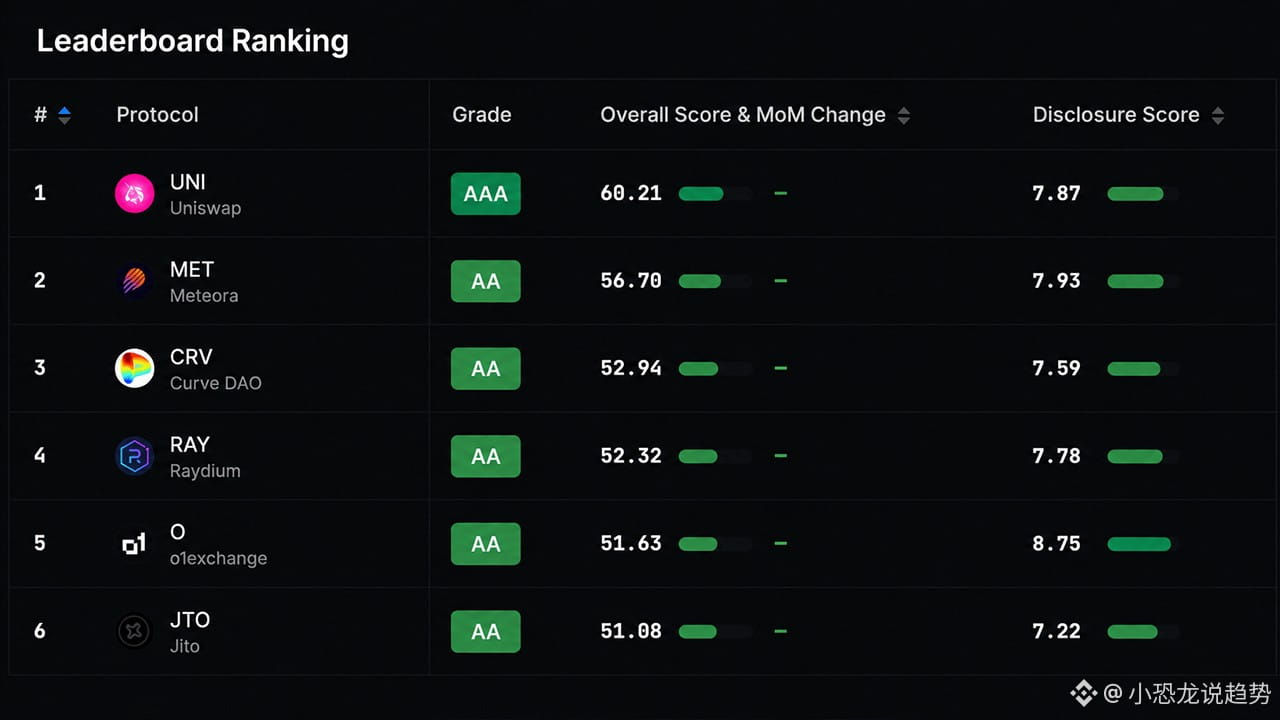
Defillama and the investment bank Forgd have teamed up to break some big news: they’ve issued credit ratings for 128 crypto assets, covering everything from AAA down to CCC. The playbook is basically a direct copy of an old-school institution. Moody’s has been rating bonds since 1909, and Fitch followed in 1924—now it’s time for tokens to get the same treatment.
Right now, the top student is UNI: the only AAA standout in the whole lineup. Behind it comes a long string of AA performers, and among them—surprisingly—DOGE (Dogecoin) has received an investment-grade rating. The scene is almost too beautiful to believe. Even Moody’s would need to stare for three full seconds.
The biggest difference from traditional rating systems is that this one is “alive.” Data is updated in real time. If a project’s market structure collapses, the rating can be downgraded on the very day—no need to wait for some annual report. As they put it, a rating isn’t something you just hand out and call it done; you have to earn it every day through performance.
My take: this is a double-edged sword. The good news is that institutions finally have standardized tools to screen projects, so they don’t have to rely on whitepapers and talk. The bad news is that ratings themselves can become a new target for manipulation. How traditional rating agencies got criticized back then—this crypto version could easily replay the same story, especially when you remember how many projects’ market caps and liquidity can’t possibly withstand a real credit stress test.
But the direction is right. Crypto is moving toward the maturity of traditional finance—from the frontier to ratings. That shift is, by itself, a sign the industry is growing up.
Will you buy something just because it has an AAA rating?
Click the avatar to watch the live stream.
Every day, I’ll take you through the rating headlines—not just what happened, but the logic and opportunities behind it 👉🦖
#DeFi #Rating
Defillama and the investment bank Forgd have teamed up to break some big news: they’ve issued credit ratings for 128 crypto assets, covering everything from AAA down to CCC. The playbook is basically a direct copy of an old-school institution. Moody’s has been rating bonds since 1909, and Fitch followed in 1924—now it’s time for tokens to get the same treatment.
Right now, the top student is UNI: the only AAA standout in the whole lineup. Behind it comes a long string of AA performers, and among them—surprisingly—DOGE (Dogecoin) has received an investment-grade rating. The scene is almost too beautiful to believe. Even Moody’s would need to stare for three full seconds.
The biggest difference from traditional rating systems is that this one is “alive.” Data is updated in real time. If a project’s market structure collapses, the rating can be downgraded on the very day—no need to wait for some annual report. As they put it, a rating isn’t something you just hand out and call it done; you have to earn it every day through performance.
My take: this is a double-edged sword. The good news is that institutions finally have standardized tools to screen projects, so they don’t have to rely on whitepapers and talk. The bad news is that ratings themselves can become a new target for manipulation. How traditional rating agencies got criticized back then—this crypto version could easily replay the same story, especially when you remember how many projects’ market caps and liquidity can’t possibly withstand a real credit stress test.
But the direction is right. Crypto is moving toward the maturity of traditional finance—from the frontier to ratings. That shift is, by itself, a sign the industry is growing up.
Will you buy something just because it has an AAA rating?
Click the avatar to watch the live stream.
Every day, I’ll take you through the rating headlines—not just what happened, but the logic and opportunities behind it 👉🦖
#DeFi #Rating
Verified
A $16.5B Big Move: Ethereum Shrinks Its Validators
Lido just did something big—moving over 8 million ETH onto the next-generation validators. At the current price, that’s about $16.5 billion, roughly one-fifth of the network’s total staked amount. This is the biggest core upgrade since Lido V2.
In plain language: Ethereum’s validator count needs to be cut by nearly a third. Before, each validator could manage up to 32 ETH. After the early-year upgrade, that limit jumped straight to 2048 ETH. Tasks that used to require thousands of nodes now only need a few hundred. The burden of processing consensus data drops a lot, block confirmation should be faster in theory, and operating costs are also lower.
There’s also an interesting mechanism change: for the first time in five years, Lido’s professional node operators are being required to stake ETH out of their own pocket as collateral. If something goes wrong, they get penalized. Previously, it relied on reputation; now it relies on real money. This kind of deterrent against lazy block production and malicious behavior is more effective than any whitepaper.
For regular users, you don’t need to do anything. If you hold stETH, just keep doing what you’re doing. Migration is the operators’ job—it has nothing to do with your positions.
My take: On the surface, this is a technical upgrade. In reality, it’s setting new rules for Ethereum’s staking ecosystem—fewer, more streamlined validators, plus real-money collateral. The network becomes more stable and the risks more controllable. In 2027, there will even be competition over operator fees. Who serves better, who charges less, and who gets to manage the funds—this industry is increasingly starting to look like real, proper finance.
Do you think fewer validators means it’s safer—or more centralized?
Click the avatar to watch the live stream.
Every day, I’ll bring you closer to Ethereum’s hottest topics—not just what’s happening in the news, but the logic and opportunities behind it 👉🦖
#以太坊 #质押
Lido just did something big—moving over 8 million ETH onto the next-generation validators. At the current price, that’s about $16.5 billion, roughly one-fifth of the network’s total staked amount. This is the biggest core upgrade since Lido V2.
In plain language: Ethereum’s validator count needs to be cut by nearly a third. Before, each validator could manage up to 32 ETH. After the early-year upgrade, that limit jumped straight to 2048 ETH. Tasks that used to require thousands of nodes now only need a few hundred. The burden of processing consensus data drops a lot, block confirmation should be faster in theory, and operating costs are also lower.
There’s also an interesting mechanism change: for the first time in five years, Lido’s professional node operators are being required to stake ETH out of their own pocket as collateral. If something goes wrong, they get penalized. Previously, it relied on reputation; now it relies on real money. This kind of deterrent against lazy block production and malicious behavior is more effective than any whitepaper.
For regular users, you don’t need to do anything. If you hold stETH, just keep doing what you’re doing. Migration is the operators’ job—it has nothing to do with your positions.
My take: On the surface, this is a technical upgrade. In reality, it’s setting new rules for Ethereum’s staking ecosystem—fewer, more streamlined validators, plus real-money collateral. The network becomes more stable and the risks more controllable. In 2027, there will even be competition over operator fees. Who serves better, who charges less, and who gets to manage the funds—this industry is increasingly starting to look like real, proper finance.
Do you think fewer validators means it’s safer—or more centralized?
Click the avatar to watch the live stream.
Every day, I’ll bring you closer to Ethereum’s hottest topics—not just what’s happening in the news, but the logic and opportunities behind it 👉🦖
#以太坊 #质押
Verified
SOL for the first time in ten months turns red in August
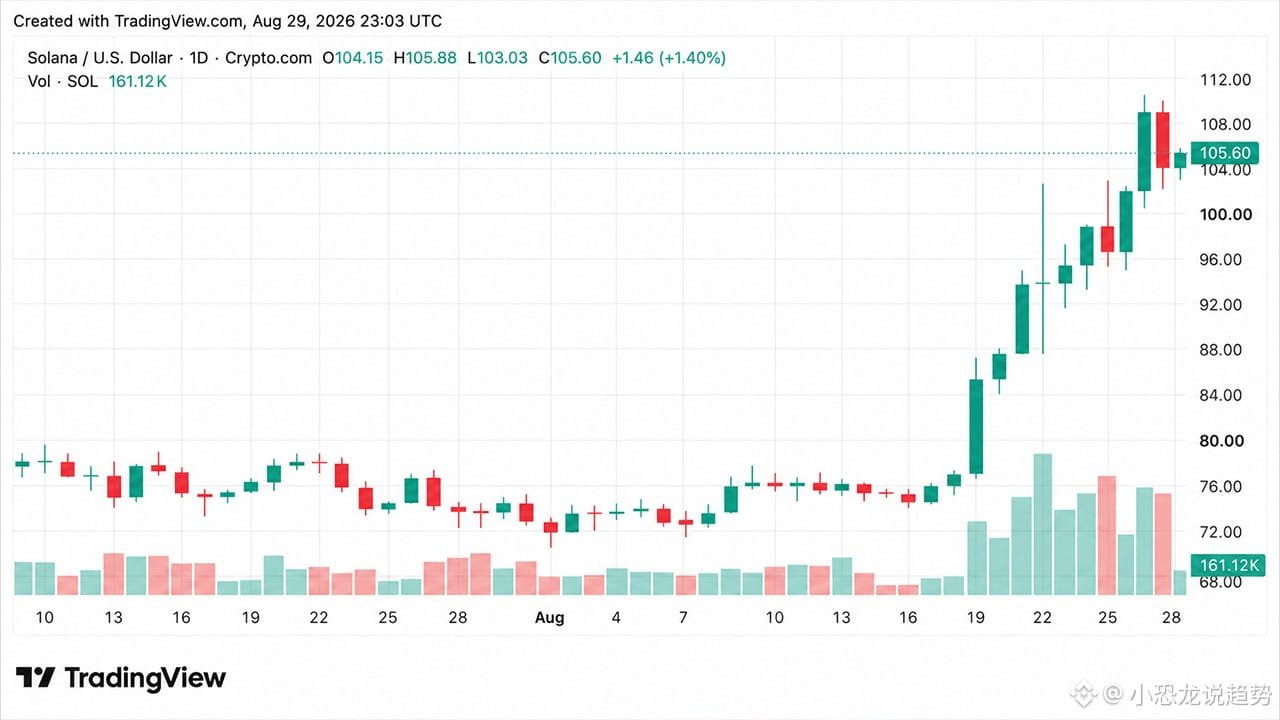
This August, SOL has really gone wild—up about 46% in a single month, directly ending ten straight months of monthly declines. Price has reclaimed the $100 mark, peaking at just over $110. From the June low, it has already rebounded by about 80%, and the market cap has returned to around $61 billion.
Don’t rush to call it “to the moon.” It still has more than 60% to go from the $293 historical high. This looks more like a bottoming-out rebound than a king returning.
The real intrigue is where the money is coming from. Charles Schwab announced it will list SOL, AVAX, and LINK—this is a giant that manages $12 trillion in assets and covers 39 million accounts. Spot SOL ETFs have pulled in $134 million in total inflows. Goldman also disclosed nearly $90 million in SOL ETF exposure. Wall Street money is rotating in.
On-chain, things aren’t quiet either. Solana completed the first ever history-making, binding on-chain governance vote—doubling the deflation speed. Over the next six years, the supply will have about 18.9 million fewer SOL issued. On top of that, July set a record of 4.2 billion transactions—network activity is undeniably strong.
Another big move is coming on September 9: Transaction V1 goes live. Per-transaction capacity increases from 1,232 bytes to 4,096 bytes, giving applications more room to pack data. “Rent” will be cut by 90%, and developer costs will drop directly.
My take: this SOL rebound has the full set—institutional capital, supply contraction, and a technical upgrade. But the historical highs are still looming overhead. Whether it can hold steady depends on how the key upgrades land in September.
Do you think SOL is in a reversal or just a rebound? Let me know in the comments.
Click the avatar to watch the live stream.
Every day, I’ll bring you the hottest public-chain developments—more than just watching what happened in the news, I’ll help you understand the logic and opportunities behind it 👉🦖
#Solana #公链
This August, SOL has really gone wild—up about 46% in a single month, directly ending ten straight months of monthly declines. Price has reclaimed the $100 mark, peaking at just over $110. From the June low, it has already rebounded by about 80%, and the market cap has returned to around $61 billion.
Don’t rush to call it “to the moon.” It still has more than 60% to go from the $293 historical high. This looks more like a bottoming-out rebound than a king returning.
The real intrigue is where the money is coming from. Charles Schwab announced it will list SOL, AVAX, and LINK—this is a giant that manages $12 trillion in assets and covers 39 million accounts. Spot SOL ETFs have pulled in $134 million in total inflows. Goldman also disclosed nearly $90 million in SOL ETF exposure. Wall Street money is rotating in.
On-chain, things aren’t quiet either. Solana completed the first ever history-making, binding on-chain governance vote—doubling the deflation speed. Over the next six years, the supply will have about 18.9 million fewer SOL issued. On top of that, July set a record of 4.2 billion transactions—network activity is undeniably strong.
Another big move is coming on September 9: Transaction V1 goes live. Per-transaction capacity increases from 1,232 bytes to 4,096 bytes, giving applications more room to pack data. “Rent” will be cut by 90%, and developer costs will drop directly.
My take: this SOL rebound has the full set—institutional capital, supply contraction, and a technical upgrade. But the historical highs are still looming overhead. Whether it can hold steady depends on how the key upgrades land in September.
Do you think SOL is in a reversal or just a rebound? Let me know in the comments.
Click the avatar to watch the live stream.
Every day, I’ll bring you the hottest public-chain developments—more than just watching what happened in the news, I’ll help you understand the logic and opportunities behind it 👉🦖
#Solana #公链
September Rate Hike: The Script Suddenly Flips
CME’s Fedwatch tool shows that the probability of the Federal Reserve raising rates by 25 basis points on September 16 has already surged to 57%. A week ago, the odds were only 39.9%. The tightening expectations have heated up—entirely because of Warsh’s hawkish speech at Jackson Hole.
This time, Warsh put his position very firmly: a 2% inflation target is a hard requirement—no discussion.
And the data he cited really does stand out. Year-over-year PCE inflation is 3.7%, and over the past six months it has jumped to 4.1%, far above the target.
Even tougher, he said the economy isn’t really under stress at all. Business investment has surged, boosted by AI. S&P 500 profits have risen 20% over the past year. The unemployment rate is holding steady at 4.1%. In other words: I’m confident enough to raise rates because the economy can handle it.
The market panicked instantly. Last week people were talking about rate cuts; this week it’s all about rate hikes. Expectations for interest rates have flipped faster than turning a page.
For BTC, the short-term pressure isn’t small. As the U.S. dollar interest rates move higher, risk assets are naturally “drained.”
But don’t rush to be pessimistic. During the previous rounds when rate-hike expectations were the strongest, it was actually the best window for BTC. When the market front-runs, it’s on to a whole new landscape.
We’ll know on September 16. In these two weeks, don’t just watch the excitement—focus on the data.
Every day, I’ll bring you the latest BTC headlines. It’s not only about what happens in the news—more importantly, it helps you understand the logic and opportunities behind it 👀🚀
Click the links below to follow me👇🏻#Bitcoin #FederalReserve #InterestRates加入小恐龙粉丝群
CME’s Fedwatch tool shows that the probability of the Federal Reserve raising rates by 25 basis points on September 16 has already surged to 57%. A week ago, the odds were only 39.9%. The tightening expectations have heated up—entirely because of Warsh’s hawkish speech at Jackson Hole.
This time, Warsh put his position very firmly: a 2% inflation target is a hard requirement—no discussion.
And the data he cited really does stand out. Year-over-year PCE inflation is 3.7%, and over the past six months it has jumped to 4.1%, far above the target.
Even tougher, he said the economy isn’t really under stress at all. Business investment has surged, boosted by AI. S&P 500 profits have risen 20% over the past year. The unemployment rate is holding steady at 4.1%. In other words: I’m confident enough to raise rates because the economy can handle it.
The market panicked instantly. Last week people were talking about rate cuts; this week it’s all about rate hikes. Expectations for interest rates have flipped faster than turning a page.
For BTC, the short-term pressure isn’t small. As the U.S. dollar interest rates move higher, risk assets are naturally “drained.”
But don’t rush to be pessimistic. During the previous rounds when rate-hike expectations were the strongest, it was actually the best window for BTC. When the market front-runs, it’s on to a whole new landscape.
We’ll know on September 16. In these two weeks, don’t just watch the excitement—focus on the data.
Every day, I’ll bring you the latest BTC headlines. It’s not only about what happens in the news—more importantly, it helps you understand the logic and opportunities behind it 👀🚀
Click the links below to follow me👇🏻#Bitcoin #FederalReserve #InterestRates加入小恐龙粉丝群
Up surged by 500 billion last week; this week it just went nowhere
The total crypto market cap closed at 2.73 trillion, down from 2.74 trillion at the start of the week. It dipped below 2.7 at one point, then bounced back to 2.79.
At the weekend, when everything was tallied, it was a week of fuss that was nearly flat.
Compared with last week’s seven-day run that added 500 billion, the contrast feels even sharper.
Bitcoin is up about 1% this week, and its cumulative gain for August is over 20%.
The highlights are all in the altcoin market: the sectors are highly split—some people are getting fed, others are getting hit.
SOL led the charge because Charles Schwab Wealth Management announced it would support SOL, AVAX, and LINK.
Privacy coin XMR rose from 425 to 463—up nearly 9% over the week.
Last week’s star, XRP, is down nearly 7% this week.
DOGE is also down 7.2%.
RAIN took the weekly crown, jumping 24%—every week in crypto comes with a new story.
One other change worth noting: Bitcoin and gold are moving up and down together.
Institutional views suggest this is no longer just a simple safe-haven narrative—it’s that scarce assets are being repriced.
Bitcoin is increasingly behaving like a macro asset, no longer only telling stories from the crypto world.
U.S. Treasuries, the dollar, and gold all now need to be put on the same watchlist.
High-level trading sideways is never the finish line—it’s a turnover.
Some people take profits and exit; others run in.
It all comes down to who grabs the last baton.
In moments like this, don’t just watch the excitement—watch the data.
When price is consolidating at high levels, are you adding more, or waiting for a pullback?
Click the avatar to watch the live stream.
Every day, I’ll guide you through Bitcoin’s key topics—helping you not just see what happened in the news, but understand the logic and opportunities behind it 👉🦖
#加密市场 #Bitcoin
The total crypto market cap closed at 2.73 trillion, down from 2.74 trillion at the start of the week. It dipped below 2.7 at one point, then bounced back to 2.79.
At the weekend, when everything was tallied, it was a week of fuss that was nearly flat.
Compared with last week’s seven-day run that added 500 billion, the contrast feels even sharper.
Bitcoin is up about 1% this week, and its cumulative gain for August is over 20%.
The highlights are all in the altcoin market: the sectors are highly split—some people are getting fed, others are getting hit.
SOL led the charge because Charles Schwab Wealth Management announced it would support SOL, AVAX, and LINK.
Privacy coin XMR rose from 425 to 463—up nearly 9% over the week.
Last week’s star, XRP, is down nearly 7% this week.
DOGE is also down 7.2%.
RAIN took the weekly crown, jumping 24%—every week in crypto comes with a new story.
One other change worth noting: Bitcoin and gold are moving up and down together.
Institutional views suggest this is no longer just a simple safe-haven narrative—it’s that scarce assets are being repriced.
Bitcoin is increasingly behaving like a macro asset, no longer only telling stories from the crypto world.
U.S. Treasuries, the dollar, and gold all now need to be put on the same watchlist.
High-level trading sideways is never the finish line—it’s a turnover.
Some people take profits and exit; others run in.
It all comes down to who grabs the last baton.
In moments like this, don’t just watch the excitement—watch the data.
When price is consolidating at high levels, are you adding more, or waiting for a pullback?
Click the avatar to watch the live stream.
Every day, I’ll guide you through Bitcoin’s key topics—helping you not just see what happened in the news, but understand the logic and opportunities behind it 👉🦖
#加密市场 #Bitcoin
Cosmos officially admits that before, it mistakenly passed a bug through—only for a hacker to spot it and take advantage.
Six chains were affected at the same time, resulting in a loss of $5.7 million—not a huge amount, but certainly not small.
The most awkward part is that this bug originally had a chance to be caught.
What cross-chain ecosystems fear most is this: when one chain slips, the whole network starts shaking.
This time the amount isn’t enormous, but what’s been exposed is the problem with the entire cross-chain security process.
During review, an oversight happens—and afterward it turns into “tuition fees” of millions of dollars.
If you ask me, cross-chain interconnection is a big trend, but the security baseline must keep up.
The deeper the connections between chains, the more seriously you need to treat vulnerability management.
The fact that the official can proactively acknowledge the mistake reflects a proper attitude—but it won’t be easy to restore users’ confidence.
Let’s take this as a case study. Next time, don’t let the same stone trip you up again.
When you look at a project, don’t just look at how fast it pumps—see how it handles things after it goes wrong. That’s far more reliable.
The danger in cross-chain lies in the fact that one vulnerability can hit multiple chains at once.
If one chain gets compromised, the impact is limited. But if a cross-chain link is compromised, it’s a whole string of chains shaking together.
Hackers are now specifically targeting places with strong “interactivity” like this—one arrow, multiple targets.
So every time a cross-chain protocol upgrades, you should treat it like a major exam.
The money on-chain is always more fragile than you’d think.
All the extra time spent on security audits is tuition paid now to save tuition later.
This lesson is worth every cross-chain participant remembering in their little notebook.
Every day, I’ll bring you cross-chain hot topics—not just what happened in the news, but the logic and opportunities behind it 👀🚀
Click the link below to follow me👇🏻加入小恐龙粉丝群
#跨链安全 #Cosmos #黑客攻击
Six chains were affected at the same time, resulting in a loss of $5.7 million—not a huge amount, but certainly not small.
The most awkward part is that this bug originally had a chance to be caught.
What cross-chain ecosystems fear most is this: when one chain slips, the whole network starts shaking.
This time the amount isn’t enormous, but what’s been exposed is the problem with the entire cross-chain security process.
During review, an oversight happens—and afterward it turns into “tuition fees” of millions of dollars.
If you ask me, cross-chain interconnection is a big trend, but the security baseline must keep up.
The deeper the connections between chains, the more seriously you need to treat vulnerability management.
The fact that the official can proactively acknowledge the mistake reflects a proper attitude—but it won’t be easy to restore users’ confidence.
Let’s take this as a case study. Next time, don’t let the same stone trip you up again.
When you look at a project, don’t just look at how fast it pumps—see how it handles things after it goes wrong. That’s far more reliable.
The danger in cross-chain lies in the fact that one vulnerability can hit multiple chains at once.
If one chain gets compromised, the impact is limited. But if a cross-chain link is compromised, it’s a whole string of chains shaking together.
Hackers are now specifically targeting places with strong “interactivity” like this—one arrow, multiple targets.
So every time a cross-chain protocol upgrades, you should treat it like a major exam.
The money on-chain is always more fragile than you’d think.
All the extra time spent on security audits is tuition paid now to save tuition later.
This lesson is worth every cross-chain participant remembering in their little notebook.
Every day, I’ll bring you cross-chain hot topics—not just what happened in the news, but the logic and opportunities behind it 👀🚀
Click the link below to follow me👇🏻加入小恐龙粉丝群
#跨链安全 #Cosmos #黑客攻击

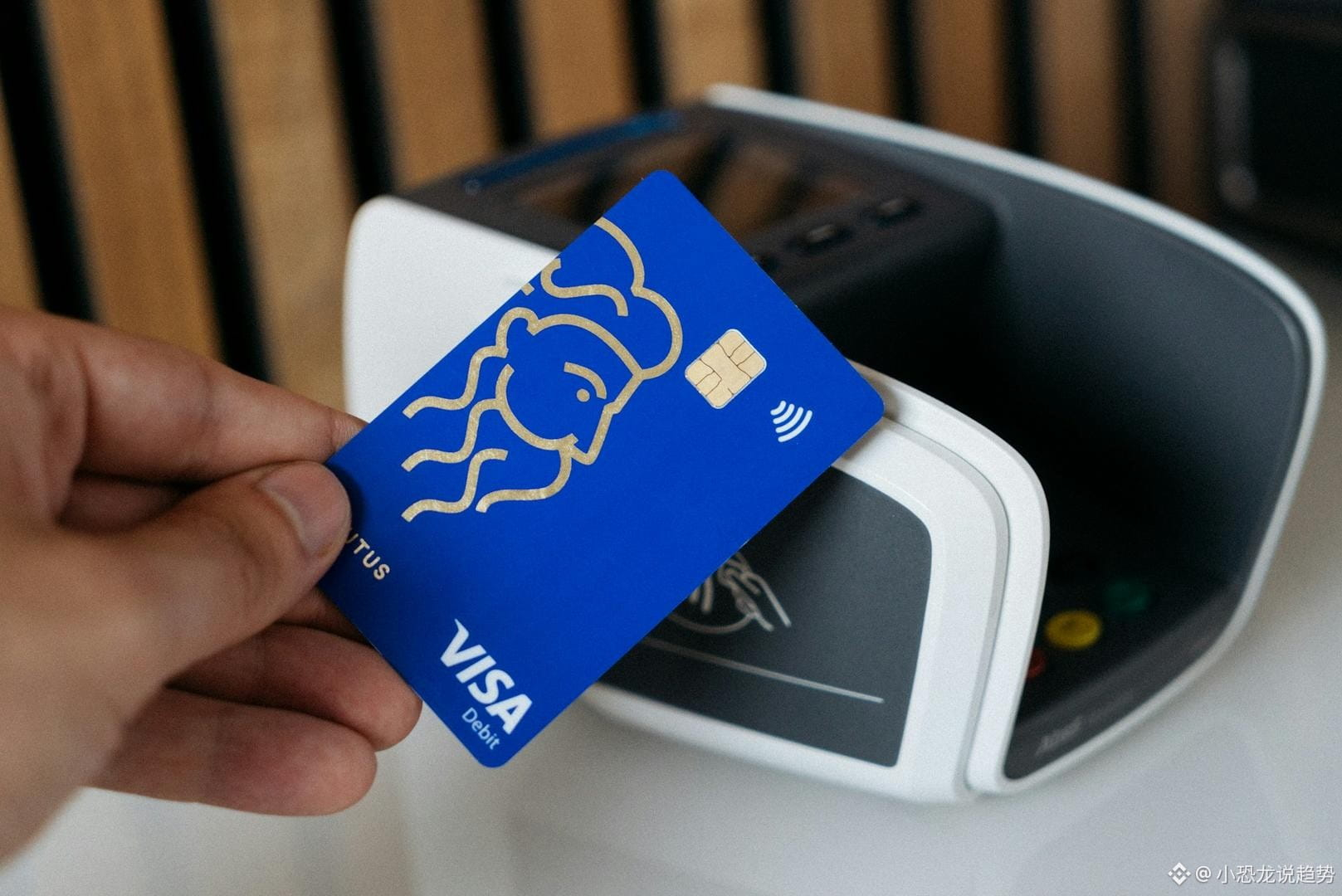
An encrypted bank card was hacked and stolen for $1.1 million — it directly knocked out a digital bank’s token
AVICI plunged 49% from its 24-hour high, hitting a historic low, and then only barely managed to crawl back up a bit
The moment the news broke, the comments section was full of question marks. These days even a single card can be milked like this
Take a close look at this exploit: the issue lies in the funding channel of the card scheme
Once the channel leaks, the tokens are the first to suffer — the bank gets blamed for the mess, but the coin holders end up paying
The coin price drops first as a greeting: retail investors are left baffled. Their token count doesn’t change, but their wallet value shrinks
This kind of “hacker attacks the card” plot has already played out several rounds in the crypto space
Every time it’s the same landmine: the middle step isn’t properly isolated, and when one point blows, it triggers a chain reaction
If you ask me, don’t just stare at prices. First figure out how the money actually went missing
Is the funding behind your crypto card properly isolated? If something goes wrong, who takes responsibility? Is there insurance?
These basics matter more than chasing pumps and dumping every day
Why do hackers target cards specifically? Because the card’s channel is closest to the money
Once a card is successfully skimmed, funds move out immediately — there’s no time to trace on-chain
This time, the $1.1 million may not sound like much, but the warning alarm it rings is worth more than the amount
If the channel design isn’t fixed, next time it could be in the ten-million range
There are on-chain security incidents every day. Learn to tell what’s real so you don’t keep paying tuition
Next time you see some coin mysteriously flash crash, first check whether it’s a security incident — then decide whether to panic
When it comes to safety, don’t wait until you’ve stepped into a trap to think about fixing it
Every day I bring you coverage of crypto hotspots — not just what happened in the news, but also the logic and opportunities behind it 👀🚀
Click the link below to follow me👇🏻加入小恐龙粉丝群
#CryptoSecurity #HackerAttack #CryptoCards
AVICI plunged 49% from its 24-hour high, hitting a historic low, and then only barely managed to crawl back up a bit
The moment the news broke, the comments section was full of question marks. These days even a single card can be milked like this
Take a close look at this exploit: the issue lies in the funding channel of the card scheme
Once the channel leaks, the tokens are the first to suffer — the bank gets blamed for the mess, but the coin holders end up paying
The coin price drops first as a greeting: retail investors are left baffled. Their token count doesn’t change, but their wallet value shrinks
This kind of “hacker attacks the card” plot has already played out several rounds in the crypto space
Every time it’s the same landmine: the middle step isn’t properly isolated, and when one point blows, it triggers a chain reaction
If you ask me, don’t just stare at prices. First figure out how the money actually went missing
Is the funding behind your crypto card properly isolated? If something goes wrong, who takes responsibility? Is there insurance?
These basics matter more than chasing pumps and dumping every day
Why do hackers target cards specifically? Because the card’s channel is closest to the money
Once a card is successfully skimmed, funds move out immediately — there’s no time to trace on-chain
This time, the $1.1 million may not sound like much, but the warning alarm it rings is worth more than the amount
If the channel design isn’t fixed, next time it could be in the ten-million range
There are on-chain security incidents every day. Learn to tell what’s real so you don’t keep paying tuition
Next time you see some coin mysteriously flash crash, first check whether it’s a security incident — then decide whether to panic
When it comes to safety, don’t wait until you’ve stepped into a trap to think about fixing it
Every day I bring you coverage of crypto hotspots — not just what happened in the news, but also the logic and opportunities behind it 👀🚀
Click the link below to follow me👇🏻加入小恐龙粉丝群
#CryptoSecurity #HackerAttack #CryptoCards
Bitcoin and Gold have it better now—goodbye to the U.S. stock market
Grayscale’s latest report: the correlation between Bitcoin and the Nasdaq 100 dropped from 60% to 33%
And the correlation with gold, which was nearly zero at the start of the year, has surged to above 50%
Plain translation: In the past, Bitcoin followed tech stocks. Now it’s following gold.
Why? Because the U.S. debt has broken past $4 trillion, and the Treasury still needs to borrow $739 billion in Q3.
The more money that gets printed, the bigger the debt gets—depreciation trades are back in focus.
Gold futures have already touched $4,730. As “digital gold,” Bitcoin naturally gets remembered.
In August, the Treasury re-financed again, issuing $125 billion in U.S. Treasuries in one go.
Borrow $739 billion in Q3, then borrow another $628 billion in Q4—debt issuance simply won’t stop.
Ray Dalio even weighed in, saying that in the next ten years, U.S. Treasuries could reach $5.5 to $6.0 trillion.
He added: in this kind of environment, both gold and Bitcoin should perform well.
That line from the old man carries more “value” than his Bridgewater fund.
For ordinary people, putting some Bitcoin in a portfolio is no longer just about taking cues from tech stocks.
It’s adding an asset-side hedge: when dollar assets shrink, this side can hold things up.
Of course, correlations can change overnight—don’t treat history like a rule carved in stone.
But the direction is worth paying attention to: capital is re-positioning Bitcoin.
In your current assets, which has the higher share—Bitcoin or gold?
Click the avatar to watch the live stream
Every day, I’ll guide you through macro headlines—not just what’s happening in the news, but the logic and opportunities behind it 👉🦖
#比特币 #macro
Grayscale’s latest report: the correlation between Bitcoin and the Nasdaq 100 dropped from 60% to 33%
And the correlation with gold, which was nearly zero at the start of the year, has surged to above 50%
Plain translation: In the past, Bitcoin followed tech stocks. Now it’s following gold.
Why? Because the U.S. debt has broken past $4 trillion, and the Treasury still needs to borrow $739 billion in Q3.
The more money that gets printed, the bigger the debt gets—depreciation trades are back in focus.
Gold futures have already touched $4,730. As “digital gold,” Bitcoin naturally gets remembered.
In August, the Treasury re-financed again, issuing $125 billion in U.S. Treasuries in one go.
Borrow $739 billion in Q3, then borrow another $628 billion in Q4—debt issuance simply won’t stop.
Ray Dalio even weighed in, saying that in the next ten years, U.S. Treasuries could reach $5.5 to $6.0 trillion.
He added: in this kind of environment, both gold and Bitcoin should perform well.
That line from the old man carries more “value” than his Bridgewater fund.
For ordinary people, putting some Bitcoin in a portfolio is no longer just about taking cues from tech stocks.
It’s adding an asset-side hedge: when dollar assets shrink, this side can hold things up.
Of course, correlations can change overnight—don’t treat history like a rule carved in stone.
But the direction is worth paying attention to: capital is re-positioning Bitcoin.
In your current assets, which has the higher share—Bitcoin or gold?
Click the avatar to watch the live stream
Every day, I’ll guide you through macro headlines—not just what’s happening in the news, but the logic and opportunities behind it 👉🦖
#比特币 #macro

Tokenized stocks: 30-day transfer volume surges 415%
In a month, reach $29.5 billion; active addresses triple to 1.3 million
Holder count climbs to 2.36 million. The total float was only 344 million a year ago—now it’s 2.54 billion
Wait—total market cap is only $2.5 billion, yet transfer volume is $29.5 billion. What does that mean?
It means people aren’t buying just to hold. They’re using it—for trading, for collateral, for lending—running across every scenario.
The top three platforms account for 81% of the market, with concentration pushed to the max.
Even trillion-dollar giants like BlackRock and Fidelity are also promoting tokenized funds—this race is visibly “juicy” to everyone watching.
Traditional U.S. equities: just one day of trading turnover hits over one trillion dollars. On-chain—this is only the beginning.
But growth of 415% is the best calling card.
What are institutions thinking? They open the market for 6 hours during the day and then sleep for 18 hours at night. That’s a huge waste.
On-chain, you get 24/7 for 7 days a week: it can serve as collateral, and it can also feed the DeFi machines.
That’s the real imagination behind tokenized stocks—not a copy of the stock market, but reinventing one.
Entering now is a bit like buying U.S. stocks in 2015—the early birds got the meat, the late ones just got the soup.
Retail users care most about the barrier: fractional shares, zero commission—global users everywhere can touch it.
Wall Street’s T+1 settlement? On-chain it’s just seconds.
The question is: would you be willing to swap the stocks in your hands for their on-chain versions?
Click the profile picture to watch the livestream
Every day, I’ll guide you to track tokenized highlights—more than just seeing what happened in the news. I’ll help you understand the underlying logic and opportunities 👉🦖
#代币化 #RWA
In a month, reach $29.5 billion; active addresses triple to 1.3 million
Holder count climbs to 2.36 million. The total float was only 344 million a year ago—now it’s 2.54 billion
Wait—total market cap is only $2.5 billion, yet transfer volume is $29.5 billion. What does that mean?
It means people aren’t buying just to hold. They’re using it—for trading, for collateral, for lending—running across every scenario.
The top three platforms account for 81% of the market, with concentration pushed to the max.
Even trillion-dollar giants like BlackRock and Fidelity are also promoting tokenized funds—this race is visibly “juicy” to everyone watching.
Traditional U.S. equities: just one day of trading turnover hits over one trillion dollars. On-chain—this is only the beginning.
But growth of 415% is the best calling card.
What are institutions thinking? They open the market for 6 hours during the day and then sleep for 18 hours at night. That’s a huge waste.
On-chain, you get 24/7 for 7 days a week: it can serve as collateral, and it can also feed the DeFi machines.
That’s the real imagination behind tokenized stocks—not a copy of the stock market, but reinventing one.
Entering now is a bit like buying U.S. stocks in 2015—the early birds got the meat, the late ones just got the soup.
Retail users care most about the barrier: fractional shares, zero commission—global users everywhere can touch it.
Wall Street’s T+1 settlement? On-chain it’s just seconds.
The question is: would you be willing to swap the stocks in your hands for their on-chain versions?
Click the profile picture to watch the livestream
Every day, I’ll guide you to track tokenized highlights—more than just seeing what happened in the news. I’ll help you understand the underlying logic and opportunities 👉🦖
#代币化 #RWA
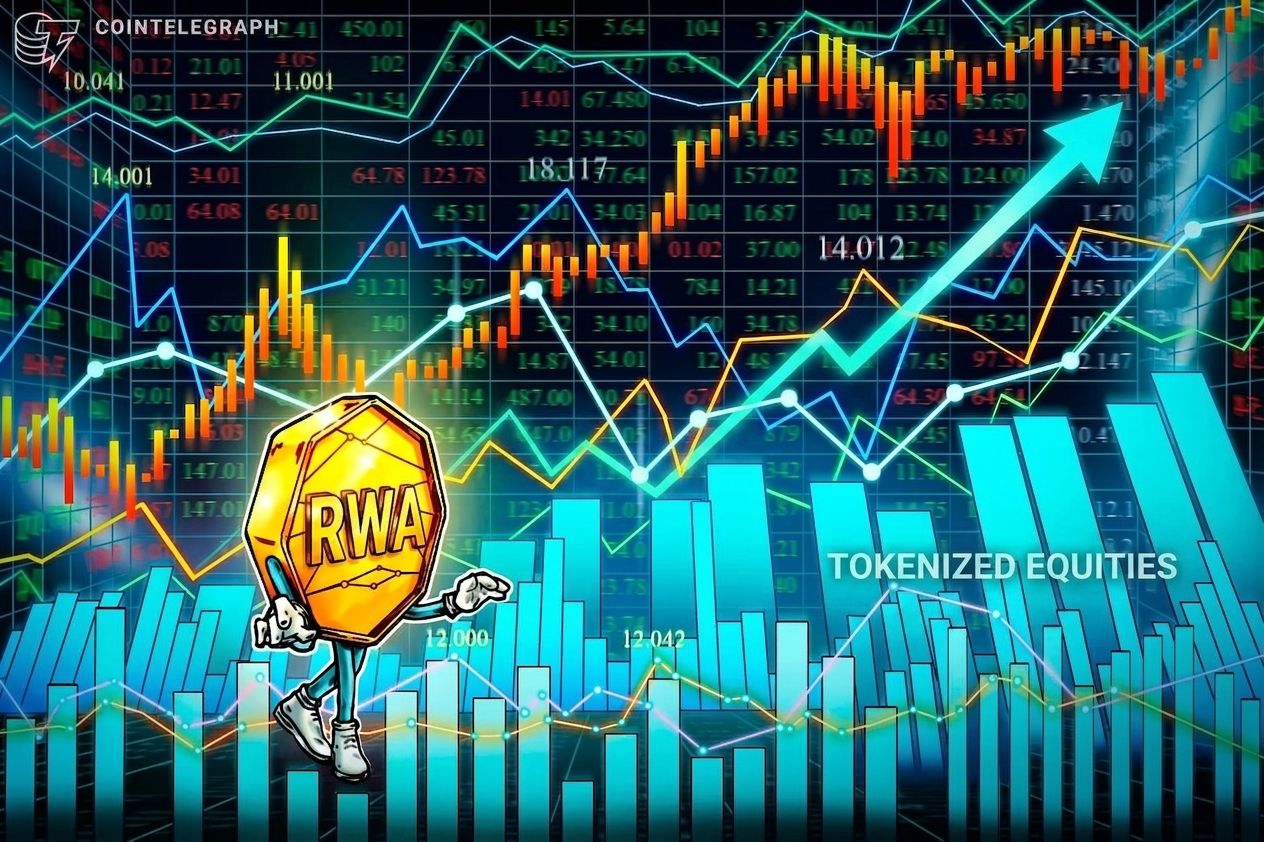
On-chain assets quadrupled in a year, nearing $4 billion
Only eight months into 2026, on-chain RWA surged from $870 million to $4 billion
Up 360% — giants like Franklin Templeton and Ondo are all issuing products on it
Not only are there U.S. Treasuries, but also Mexican government bonds and Brazilian government bonds — bond issuers from all over are lining up to put them on-chain
The wildest part: even DTCC has announced it will bring tokenization services to Stellar
By the first half of 2027, S&P 500 ETF and Russell 1000 constituent stocks could all be put on-chain
This is the so-called “national team” entering the game
Private credit is moving in too — Tradable plans to place up to $1 billion in privately financed assets onto Stellar
Even MoneyGram has issued its own dollar stablecoin on-chain — payment behemoths are starting to build on this chain
But you might ask: has XLM taken off along with it? Not really
This year the native token is down 11%, currently around $0.18
On-chain asset activity is booming, but the coin price is staying cold and quiet — that contrast really stings
It shows this RWA rally makes institutional money, not traders’ money
With more and more assets being put on-chain, it adds real-world application scenarios to the blockchain
But for the short term, don’t expect this to pump prices
Wait until one day U.S. Treasuries and stocks can trade on-chain — then it’ll truly be a turning point
RWA — who are you backing in this space?
Click the avatar to watch the livestream
Every day, I’ll take you to follow the RWA hot topics — not just what’s happening in the news, but also the logic and opportunities behind it 👉🦖
#RWA #Stellar
Only eight months into 2026, on-chain RWA surged from $870 million to $4 billion
Up 360% — giants like Franklin Templeton and Ondo are all issuing products on it
Not only are there U.S. Treasuries, but also Mexican government bonds and Brazilian government bonds — bond issuers from all over are lining up to put them on-chain
The wildest part: even DTCC has announced it will bring tokenization services to Stellar
By the first half of 2027, S&P 500 ETF and Russell 1000 constituent stocks could all be put on-chain
This is the so-called “national team” entering the game
Private credit is moving in too — Tradable plans to place up to $1 billion in privately financed assets onto Stellar
Even MoneyGram has issued its own dollar stablecoin on-chain — payment behemoths are starting to build on this chain
But you might ask: has XLM taken off along with it? Not really
This year the native token is down 11%, currently around $0.18
On-chain asset activity is booming, but the coin price is staying cold and quiet — that contrast really stings
It shows this RWA rally makes institutional money, not traders’ money
With more and more assets being put on-chain, it adds real-world application scenarios to the blockchain
But for the short term, don’t expect this to pump prices
Wait until one day U.S. Treasuries and stocks can trade on-chain — then it’ll truly be a turning point
RWA — who are you backing in this space?
Click the avatar to watch the livestream
Every day, I’ll take you to follow the RWA hot topics — not just what’s happening in the news, but also the logic and opportunities behind it 👉🦖
#RWA #Stellar

Verified
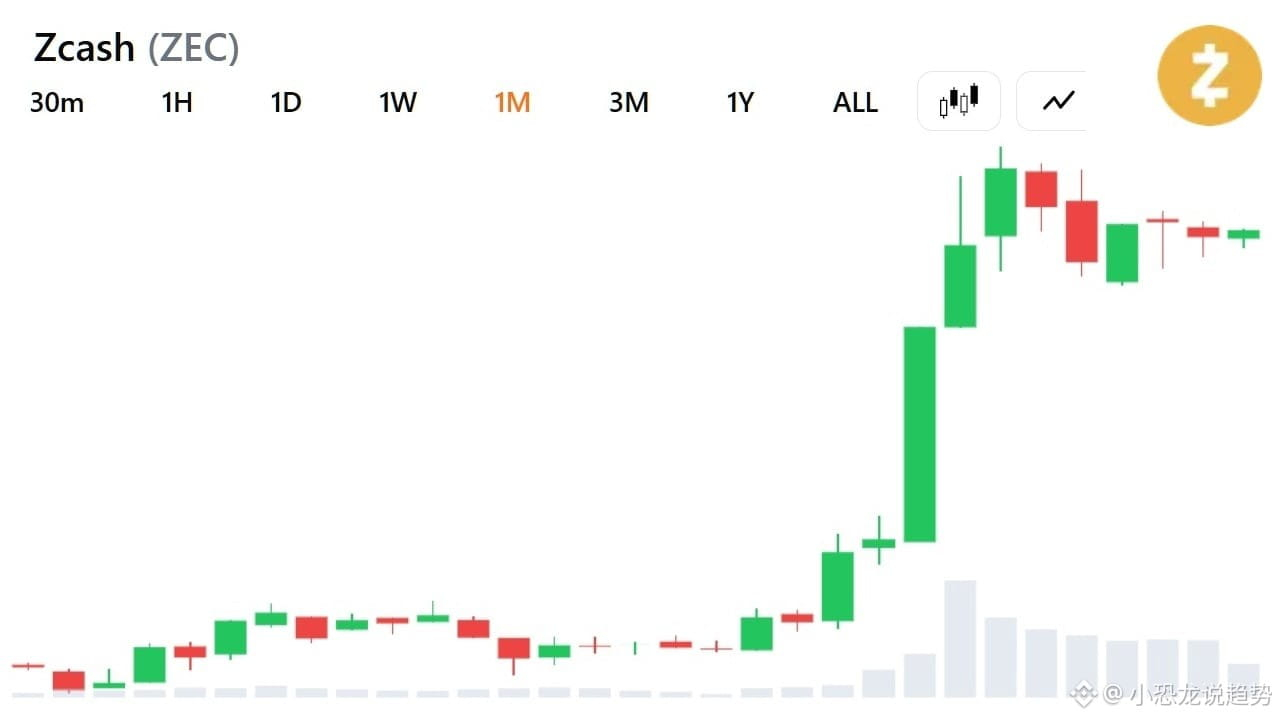
ZEC Surges 19-Fold in One Year—Big Institutions Still Calling It Undervalued
Grayscale’s research head personally steps in to publish a report, saying privacy coins are still a “bargain.”
Right now, ZEC’s market cap is only $13.7 billion—just 0.88% of Bitcoin’s.
Bitcoin’s market cap is $1.56 trillion—114 times that of ZEC.
Grayscale did the math: if ZEC can capture 5% of Bitcoin’s market cap in the future, the price would correspond to $4,054.
If it reaches 10%, that would be $8,109—still worlds away from where it is now.
Why so optimistic? It comes down to three selling points: financial privacy, anti-surveillance for the AI era, and cross-chain connectivity.
Plus, Grayscale’s ZEC spot ETF was just listed on the U.S. stock market last week—so the institutional entry channel is already in place.
Think about it: as AI gets better at scraping on-chain data, once addresses are linked, everything you buy and sell is exposed.
In that situation, a privacy coin that can hide transaction details really does sound compelling.
What’s more, ZEC—just like Bitcoin—uses a PoW consensus, with the same capped total supply of 21 million coins.
Grayscale also admits that ZEC’s “float” is small, so volatility is high and risks are elevated.
Translate it: in the short term, it could keep going crazy—but don’t let position sizing get out of hand.
After a 19-fold move in a year and they still dare to call it undervalued—this isn’t just big nerves; the narrative has genuinely changed.
Back then, everyone thought privacy coins were a gray-zone asset. Now they’re a candidate for hard currency in the AI era.
Comment below: do you buy this privacy narrative, or do you think the 19-fold run has already priced everything in?
Click the profile picture to watch the live stream.
Every day, I’ll help you track privacy-coin hotspots—not just what’s happening in the news, but also the logic and opportunities behind it 👉🦖
#Zcash #PrivacyCoin
Grayscale’s research head personally steps in to publish a report, saying privacy coins are still a “bargain.”
Right now, ZEC’s market cap is only $13.7 billion—just 0.88% of Bitcoin’s.
Bitcoin’s market cap is $1.56 trillion—114 times that of ZEC.
Grayscale did the math: if ZEC can capture 5% of Bitcoin’s market cap in the future, the price would correspond to $4,054.
If it reaches 10%, that would be $8,109—still worlds away from where it is now.
Why so optimistic? It comes down to three selling points: financial privacy, anti-surveillance for the AI era, and cross-chain connectivity.
Plus, Grayscale’s ZEC spot ETF was just listed on the U.S. stock market last week—so the institutional entry channel is already in place.
Think about it: as AI gets better at scraping on-chain data, once addresses are linked, everything you buy and sell is exposed.
In that situation, a privacy coin that can hide transaction details really does sound compelling.
What’s more, ZEC—just like Bitcoin—uses a PoW consensus, with the same capped total supply of 21 million coins.
Grayscale also admits that ZEC’s “float” is small, so volatility is high and risks are elevated.
Translate it: in the short term, it could keep going crazy—but don’t let position sizing get out of hand.
After a 19-fold move in a year and they still dare to call it undervalued—this isn’t just big nerves; the narrative has genuinely changed.
Back then, everyone thought privacy coins were a gray-zone asset. Now they’re a candidate for hard currency in the AI era.
Comment below: do you buy this privacy narrative, or do you think the 19-fold run has already priced everything in?
Click the profile picture to watch the live stream.
Every day, I’ll help you track privacy-coin hotspots—not just what’s happening in the news, but also the logic and opportunities behind it 👉🦖
#Zcash #PrivacyCoin
Log in to explore more content