
小恐龙说趋势
222 Posts

小恐龙说趋势
6 年市场经验,公众号.比特芒果,记录市场的真实逻辑,研究下一步会去哪
12 Following
1.9K+ Followers
1.5K+ Liked
Posts
All
Live
ETFs pull in more than $400 million in a day—BlackRock takes the lion’s share
Bitcoin and Ethereum spot ETF net inflows totaled $424 million yesterday
BlackRock alone contributed $323 million, accounting for most of it
For weeks now, Wall Street’s money has been gushing in like a faucet turned wide open
What’s interesting is that whenever the price dips, the internet fills with bearish voices
But the ETF subscription data has never cared about what the comment section thinks
The cadence of institutional capital entering the market is steady, like a monk in deep meditation
What does $323 million even mean?
In a single day, it’s like someone shoves a few thousand Bitcoins into a fund—then says, “Don’t touch it.”
This isn’t a trade based on tomorrow’s candlestick chart; it’s a multi-year script for the next three to five years
Retail investors are still debating whether today’s price is up or down, while institutions have already cast their votes with real money
And for a giant like BlackRock, position management is disciplined
It dares to add more at this level—there’s no way the research team behind it hasn’t done the math
They earn management fees and handle retirement assets; every step has to stand up to compliance review
So don’t ask why institutions aren’t afraid of pullbacks
Their cost basis has long been spread out over time
What we need to learn isn’t how to copy the play—it’s how to understand the logic behind their entry
Capital is the most honest thing—people can lie with words, but subscription orders won’t
Do you think this institutional buying is the start, or the top?
Click the profile to watch the live stream
Every day, I’ll take you to track the ETF capital-flow hot spots—not just what happened in the news, but the underlying logic and opportunities 👉🦖
#比特币ETF #资金流
Bitcoin and Ethereum spot ETF net inflows totaled $424 million yesterday
BlackRock alone contributed $323 million, accounting for most of it
For weeks now, Wall Street’s money has been gushing in like a faucet turned wide open
What’s interesting is that whenever the price dips, the internet fills with bearish voices
But the ETF subscription data has never cared about what the comment section thinks
The cadence of institutional capital entering the market is steady, like a monk in deep meditation
What does $323 million even mean?
In a single day, it’s like someone shoves a few thousand Bitcoins into a fund—then says, “Don’t touch it.”
This isn’t a trade based on tomorrow’s candlestick chart; it’s a multi-year script for the next three to five years
Retail investors are still debating whether today’s price is up or down, while institutions have already cast their votes with real money
And for a giant like BlackRock, position management is disciplined
It dares to add more at this level—there’s no way the research team behind it hasn’t done the math
They earn management fees and handle retirement assets; every step has to stand up to compliance review
So don’t ask why institutions aren’t afraid of pullbacks
Their cost basis has long been spread out over time
What we need to learn isn’t how to copy the play—it’s how to understand the logic behind their entry
Capital is the most honest thing—people can lie with words, but subscription orders won’t
Do you think this institutional buying is the start, or the top?
Click the profile to watch the live stream
Every day, I’ll take you to track the ETF capital-flow hot spots—not just what happened in the news, but the underlying logic and opportunities 👉🦖
#比特币ETF #资金流

Korean Financial Titans Declare They Will Build a $1 Billion Crypto Empire
Korean finance circles—an heavyweight player is moving in
Mirae Asset Financial Group, Korea’s top asset manager, has just acquired the digital asset platform Digital X
The founder personally drew up the blueprint for employees, with a target directly aimed at a $1 billion crypto landscape
Stablecoins, RWA, and security tokens—everything is going to be done
This isn’t hype about a small crypto project; it’s a financial group managing trillions in assets
Digital X is a long-established crypto platform in Korea. By buying it, Mirae Asset effectively gains local licenses and users
Next steps: issuing stablecoins, putting real-world assets on-chain, and tokenizing securities
Every move is made within the bounds regulators can accept
Koreans are always bold in execution—from semiconductors to K-Pop, and now to crypto finance
When traditional finance giants enter, it’s never just to trade coins—they’re here to fix and build infrastructure
My view: this is a signal that traditional finance across Asia is fully embracing crypto
Previously, crypto projects begged banks to open accounts. Now banking giants are stepping in and buying platforms themselves
Mirae Asset’s move is tantamount to admitting crypto is the main battlefield of the next round of finance
A $1 billion target sounds exaggerated, but they have real money and real licenses
For retail investors, when big players enter, the pie gets bigger—but the rules will also become more stringent
The era of rampant growth is being reshaped by capital
The next Asian giant to enter—who do you think it will be? Talk in the comments
Click the avatar to watch the livestream
Every day, take you to follow RWA trends—more than just seeing the news, it helps you understand the underlying logic and opportunities 👉🦖
#RWA #Korea
Korean finance circles—an heavyweight player is moving in
Mirae Asset Financial Group, Korea’s top asset manager, has just acquired the digital asset platform Digital X
The founder personally drew up the blueprint for employees, with a target directly aimed at a $1 billion crypto landscape
Stablecoins, RWA, and security tokens—everything is going to be done
This isn’t hype about a small crypto project; it’s a financial group managing trillions in assets
Digital X is a long-established crypto platform in Korea. By buying it, Mirae Asset effectively gains local licenses and users
Next steps: issuing stablecoins, putting real-world assets on-chain, and tokenizing securities
Every move is made within the bounds regulators can accept
Koreans are always bold in execution—from semiconductors to K-Pop, and now to crypto finance
When traditional finance giants enter, it’s never just to trade coins—they’re here to fix and build infrastructure
My view: this is a signal that traditional finance across Asia is fully embracing crypto
Previously, crypto projects begged banks to open accounts. Now banking giants are stepping in and buying platforms themselves
Mirae Asset’s move is tantamount to admitting crypto is the main battlefield of the next round of finance
A $1 billion target sounds exaggerated, but they have real money and real licenses
For retail investors, when big players enter, the pie gets bigger—but the rules will also become more stringent
The era of rampant growth is being reshaped by capital
The next Asian giant to enter—who do you think it will be? Talk in the comments
Click the avatar to watch the livestream
Every day, take you to follow RWA trends—more than just seeing the news, it helps you understand the underlying logic and opportunities 👉🦖
#RWA #Korea

Verified
On the eve of the global central bank conference, Bitcoin holds its ground at the threshold of 80,000
Jackson Hole: the Fed’s annual grand show begins tonight
Fed Chair Warsh is set to take the stage—crypto markets are all waiting
Bitcoin is now hovering around 80,000; the next move will depend entirely on what he says
Analysts generally expect he’ll speak tough on inflation
But the rate hike—at least—has to be delayed until after the midterm elections in mid-November
Translation: words may be tough, but hands don’t dare to move
Inflation hasn’t been fully stamped out, and the economy is starting to soften again—so the Fed is getting scolded from both sides
In this kind of situation, Bitcoin ends up in the most comfortable spot
They don’t dare to raise rates, and they don’t dare to pump liquidity—the market’s expectations for USD easing are back
Right now, the market script goes like this: if inflation data is good, BTC drops; if data is bad, BTC is undecided and gets stuck
The real direction has to wait until Warsh finishes his remarks
My view: don’t treat central bank speeches as trading instructions—treat them as a barometer of sentiment
Jackson Hole has long been a turning point for markets, and big swings often start here
But remember: a speech is only the spark, not the fuel
Fuel is liquidity expectations—the Fed’s actual moves over the next three months
After Bitcoin breaks above 80,000, every step it takes will depend on how the US dollar reacts
Someone is definitely going to lose sleep tonight—are you watching the show, or watching the order book?
Drop a comment and talk about your position logic
Click the avatar to watch the live stream
Every day, I’ll take you to follow Bitcoin’s hotspots—not just what the news says is happening, but also the logic and opportunities behind it 👉🦖
#比特币 #Federal Reserve
Jackson Hole: the Fed’s annual grand show begins tonight
Fed Chair Warsh is set to take the stage—crypto markets are all waiting
Bitcoin is now hovering around 80,000; the next move will depend entirely on what he says
Analysts generally expect he’ll speak tough on inflation
But the rate hike—at least—has to be delayed until after the midterm elections in mid-November
Translation: words may be tough, but hands don’t dare to move
Inflation hasn’t been fully stamped out, and the economy is starting to soften again—so the Fed is getting scolded from both sides
In this kind of situation, Bitcoin ends up in the most comfortable spot
They don’t dare to raise rates, and they don’t dare to pump liquidity—the market’s expectations for USD easing are back
Right now, the market script goes like this: if inflation data is good, BTC drops; if data is bad, BTC is undecided and gets stuck
The real direction has to wait until Warsh finishes his remarks
My view: don’t treat central bank speeches as trading instructions—treat them as a barometer of sentiment
Jackson Hole has long been a turning point for markets, and big swings often start here
But remember: a speech is only the spark, not the fuel
Fuel is liquidity expectations—the Fed’s actual moves over the next three months
After Bitcoin breaks above 80,000, every step it takes will depend on how the US dollar reacts
Someone is definitely going to lose sleep tonight—are you watching the show, or watching the order book?
Drop a comment and talk about your position logic
Click the avatar to watch the live stream
Every day, I’ll take you to follow Bitcoin’s hotspots—not just what the news says is happening, but also the logic and opportunities behind it 👉🦖
#比特币 #Federal Reserve
Verified
Bain Capital leading the way—laying the rails for tokenization settlement on Wall Street
Tokenization hasn’t officially started yet on Wall Street, but clearing firms are already taking the money
The US clearing and custody company RQD has just raised $74 million
Led by Bain Capital, the asset-management giant—signals are strong
What is this company going to do? Expand digital-asset and tokenization infrastructure
In plain terms: trading venues have been set up, and matching has been set up—but the settlement leg where money and goods are exchanged hasn’t been fully connected
RQD is here to plug that weak spot
Right now, traditional brokerages are quietly preparing for the tokenized market
Stocks, bonds, funds—everything gets put on-chain. Sounds great
But Wall Street’s old rules still apply: every trade ultimately has to be cleared and settled
Without the clearing rails, tokenization is just castles in the air
Bain’s $74 million buys tickets to the next round of infrastructure
Clearing firms are the arteries of the financial system—get the blood vessels open first, and then the blood flow moves fast
My take: this round’s funding amount isn’t huge; the signal matters much more than the number
Capital has already started positioning for the tokenization era
When tokenized stocks and bonds roll out across Wall Street, the first to collect will be those “shovels-for-hire” infrastructure providers
Clearing, custody, and post-trade processing—this is the safest business
Retail traders stare at the K-line every day; smart money is building the road
What you need to do isn’t guess whether tomorrow goes up or down—you need to see which direction the money is paving
When are you planning to board the tokenization train? Drop a comment—let’s talk in the comments
Click the avatar to watch the live stream
Every day I’ll bring you the latest RWA hotspots—not just reporting what happened, but helping you understand the logic and opportunities behind it 👉🦖
#RWA #Wall Street
Tokenization hasn’t officially started yet on Wall Street, but clearing firms are already taking the money
The US clearing and custody company RQD has just raised $74 million
Led by Bain Capital, the asset-management giant—signals are strong
What is this company going to do? Expand digital-asset and tokenization infrastructure
In plain terms: trading venues have been set up, and matching has been set up—but the settlement leg where money and goods are exchanged hasn’t been fully connected
RQD is here to plug that weak spot
Right now, traditional brokerages are quietly preparing for the tokenized market
Stocks, bonds, funds—everything gets put on-chain. Sounds great
But Wall Street’s old rules still apply: every trade ultimately has to be cleared and settled
Without the clearing rails, tokenization is just castles in the air
Bain’s $74 million buys tickets to the next round of infrastructure
Clearing firms are the arteries of the financial system—get the blood vessels open first, and then the blood flow moves fast
My take: this round’s funding amount isn’t huge; the signal matters much more than the number
Capital has already started positioning for the tokenization era
When tokenized stocks and bonds roll out across Wall Street, the first to collect will be those “shovels-for-hire” infrastructure providers
Clearing, custody, and post-trade processing—this is the safest business
Retail traders stare at the K-line every day; smart money is building the road
What you need to do isn’t guess whether tomorrow goes up or down—you need to see which direction the money is paving
When are you planning to board the tokenization train? Drop a comment—let’s talk in the comments
Click the avatar to watch the live stream
Every day I’ll bring you the latest RWA hotspots—not just reporting what happened, but helping you understand the logic and opportunities behind it 👉🦖
#RWA #Wall Street
The U.S. SEC is reopening old issues—crypto custody rules are back on the table 📋
Back in 2023, they already wanted to draw up guidelines for how crypto assets should be held by investment advisers. The plan didn’t get pushed through.
Now they’re taking a different approach and trying again. Exactly how things will change is still being kept tightly under wraps by officials.
Why should you keep an eye on this? Because custody is the entry ticket for institutional funds.
When big money moves into crypto, the first thing isn’t buying coins—it’s finding a compliant place to store them.
If individuals manage their own wallets, that’s one thing. But institutions don’t dare take risks—one mistake could mean an astronomical lawsuit.
Once custody rules are implemented, banks and brokerages will finally dare to handle customers’ crypto assets at scale.
What the previous administration couldn’t get done, this new one is picking up again. The direction alone can tell you something.
The rules haven’t been released yet, which suggests there’s still internal debate. But the fact that they’re going back and forth again and again is itself a signal:
Regulators are giving crypto a formal seat—not simply driving it away.
The version from back then drew too much criticism for being too strict. This time, it will likely be a bit looser—but nobody knows where the bottom line is.
For retail investors, custody rules may look unrelated to the market. In reality, they matter a lot.
When institutional money comes in, liquidity thickens—volatility will gradually be dampened.
Of course, don’t expect overnight changes. From when a rule is proposed to when it’s actually rolled out, the timeline is measured in years.
In the short term, with the rules still vague, it’s normal that the market doesn’t react.
In the long run, once custody becomes compliant, traditional large capital will finally have the courage to enter.
Standardized on-chain asset custody is one of the key prerequisites for institutions to really move in.
During this kind of “quiet period,” it’s basically waiting for a passcode.
Every day, I’ll help you track regulatory hot topics—not just what happens in the news, but the logic and opportunities behind it 👀🚀
Click the link below to follow me 👇🏻加入小恐龙粉丝群
#Regulation #CryptoCustody #SEC
Back in 2023, they already wanted to draw up guidelines for how crypto assets should be held by investment advisers. The plan didn’t get pushed through.
Now they’re taking a different approach and trying again. Exactly how things will change is still being kept tightly under wraps by officials.
Why should you keep an eye on this? Because custody is the entry ticket for institutional funds.
When big money moves into crypto, the first thing isn’t buying coins—it’s finding a compliant place to store them.
If individuals manage their own wallets, that’s one thing. But institutions don’t dare take risks—one mistake could mean an astronomical lawsuit.
Once custody rules are implemented, banks and brokerages will finally dare to handle customers’ crypto assets at scale.
What the previous administration couldn’t get done, this new one is picking up again. The direction alone can tell you something.
The rules haven’t been released yet, which suggests there’s still internal debate. But the fact that they’re going back and forth again and again is itself a signal:
Regulators are giving crypto a formal seat—not simply driving it away.
The version from back then drew too much criticism for being too strict. This time, it will likely be a bit looser—but nobody knows where the bottom line is.
For retail investors, custody rules may look unrelated to the market. In reality, they matter a lot.
When institutional money comes in, liquidity thickens—volatility will gradually be dampened.
Of course, don’t expect overnight changes. From when a rule is proposed to when it’s actually rolled out, the timeline is measured in years.
In the short term, with the rules still vague, it’s normal that the market doesn’t react.
In the long run, once custody becomes compliant, traditional large capital will finally have the courage to enter.
Standardized on-chain asset custody is one of the key prerequisites for institutions to really move in.
During this kind of “quiet period,” it’s basically waiting for a passcode.
Every day, I’ll help you track regulatory hot topics—not just what happens in the news, but the logic and opportunities behind it 👀🚀
Click the link below to follow me 👇🏻加入小恐龙粉丝群
#Regulation #CryptoCustody #SEC

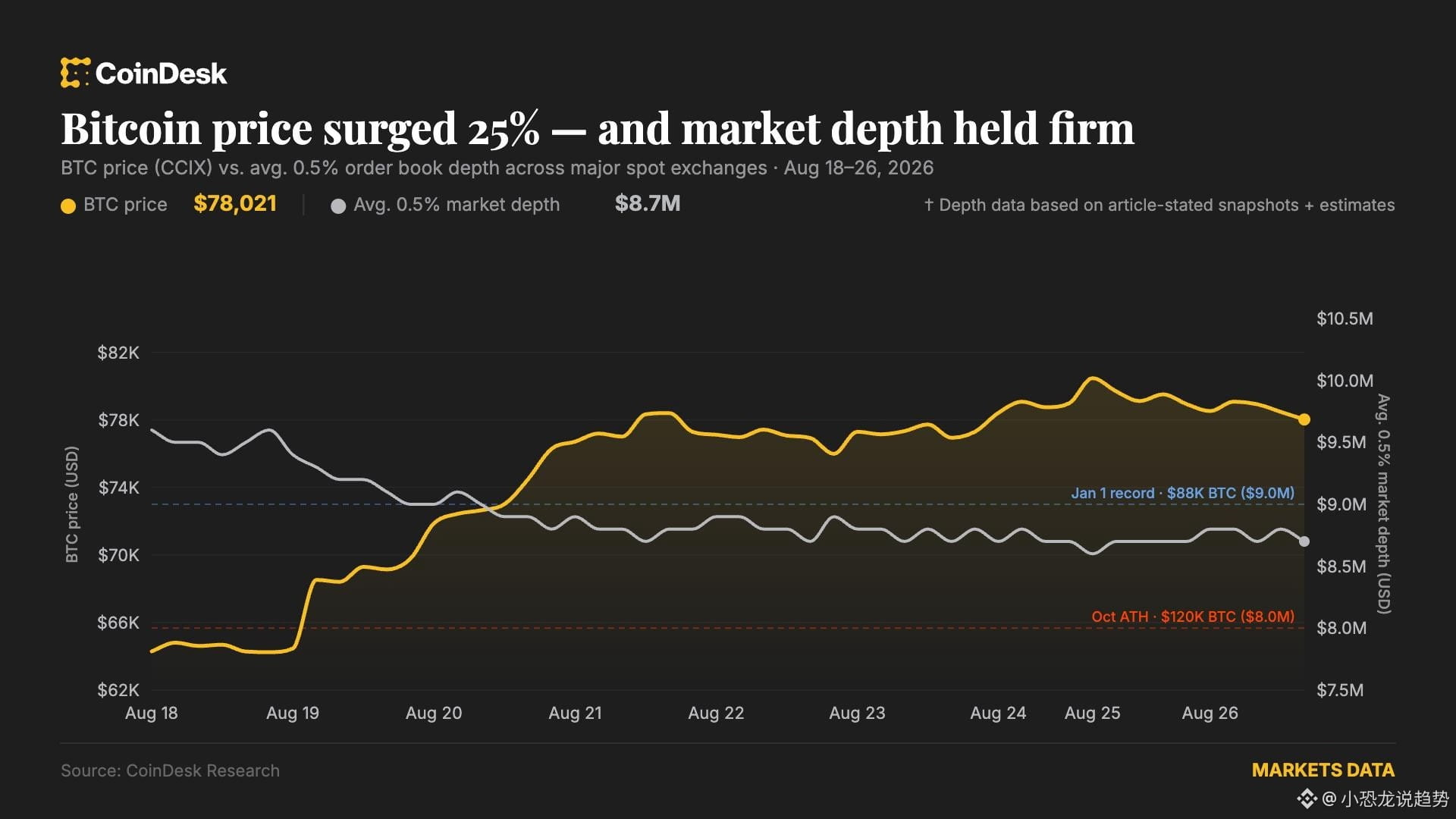
BTC went from 68,000 to 80,000 straight on the move—too fast. A lot of people’s first reaction is, “Fake, right?”
Since May, it’s the first time I’ve been able to touch 80,000. While I’m excited, my heart’s also uneasy.
Turns out a metric that usually almost no one watches quietly turned green 🔍
This “green light” measures whether large capital is continuously coming in with real money.
Once the light turns green, it effectively stamps this August rally—behind it, there’s real capital pushing, not emotion-driven pumping.
Some say, “The faster it rises, the less I believe it.” I get that—but money doesn’t lie.
Price can lie; capital flow usually doesn’t.
The same kind of rise—either real money lifts the carriage, or it’s just a rush of emotion. Two completely different storylines.
Why do some people always miss the move? Because they only watch the price and not the capital. By the time they figure it out, the train has already left.
This indicator isn’t commonly discussed on normal days because it isn’t “stimulating,” unlike the K-line charts that jump up and down.
But the less noticeable a signal is, the more it can explain what’s really going on.
Big money never makes a big show. By the time retail traders notice, the fish is already full.
Next, we’ll see how long this green light stays on.
If it’s still green, a pullback is an opportunity. If the light turns yellow, you need to become more cautious.
Remember: the market can be frantic—don’t be frantic with it. Use data; it’s more useful than watching the commotion.
One more thing: whether this move can hold above 80,000—there’s another important checkpoint on Friday.
The Federal Reserve’s new chair, Jackson Hole, makes his debut—everyone’s waiting for his signals.
When the two sides’ cues overlap, the direction may become clear very quickly. Don’t get distracted.
Every day I’ll guide you on BTC hotspots—not just what news happens, but also how to understand the logic and opportunities behind it 👀🚀
Click the link below to follow me 👇🏻加入小恐龙粉丝群
#Bitcoin #BTC #OnChainData
Since May, it’s the first time I’ve been able to touch 80,000. While I’m excited, my heart’s also uneasy.
Turns out a metric that usually almost no one watches quietly turned green 🔍
This “green light” measures whether large capital is continuously coming in with real money.
Once the light turns green, it effectively stamps this August rally—behind it, there’s real capital pushing, not emotion-driven pumping.
Some say, “The faster it rises, the less I believe it.” I get that—but money doesn’t lie.
Price can lie; capital flow usually doesn’t.
The same kind of rise—either real money lifts the carriage, or it’s just a rush of emotion. Two completely different storylines.
Why do some people always miss the move? Because they only watch the price and not the capital. By the time they figure it out, the train has already left.
This indicator isn’t commonly discussed on normal days because it isn’t “stimulating,” unlike the K-line charts that jump up and down.
But the less noticeable a signal is, the more it can explain what’s really going on.
Big money never makes a big show. By the time retail traders notice, the fish is already full.
Next, we’ll see how long this green light stays on.
If it’s still green, a pullback is an opportunity. If the light turns yellow, you need to become more cautious.
Remember: the market can be frantic—don’t be frantic with it. Use data; it’s more useful than watching the commotion.
One more thing: whether this move can hold above 80,000—there’s another important checkpoint on Friday.
The Federal Reserve’s new chair, Jackson Hole, makes his debut—everyone’s waiting for his signals.
When the two sides’ cues overlap, the direction may become clear very quickly. Don’t get distracted.
Every day I’ll guide you on BTC hotspots—not just what news happens, but also how to understand the logic and opportunities behind it 👀🚀
Click the link below to follow me 👇🏻加入小恐龙粉丝群
#Bitcoin #BTC #OnChainData
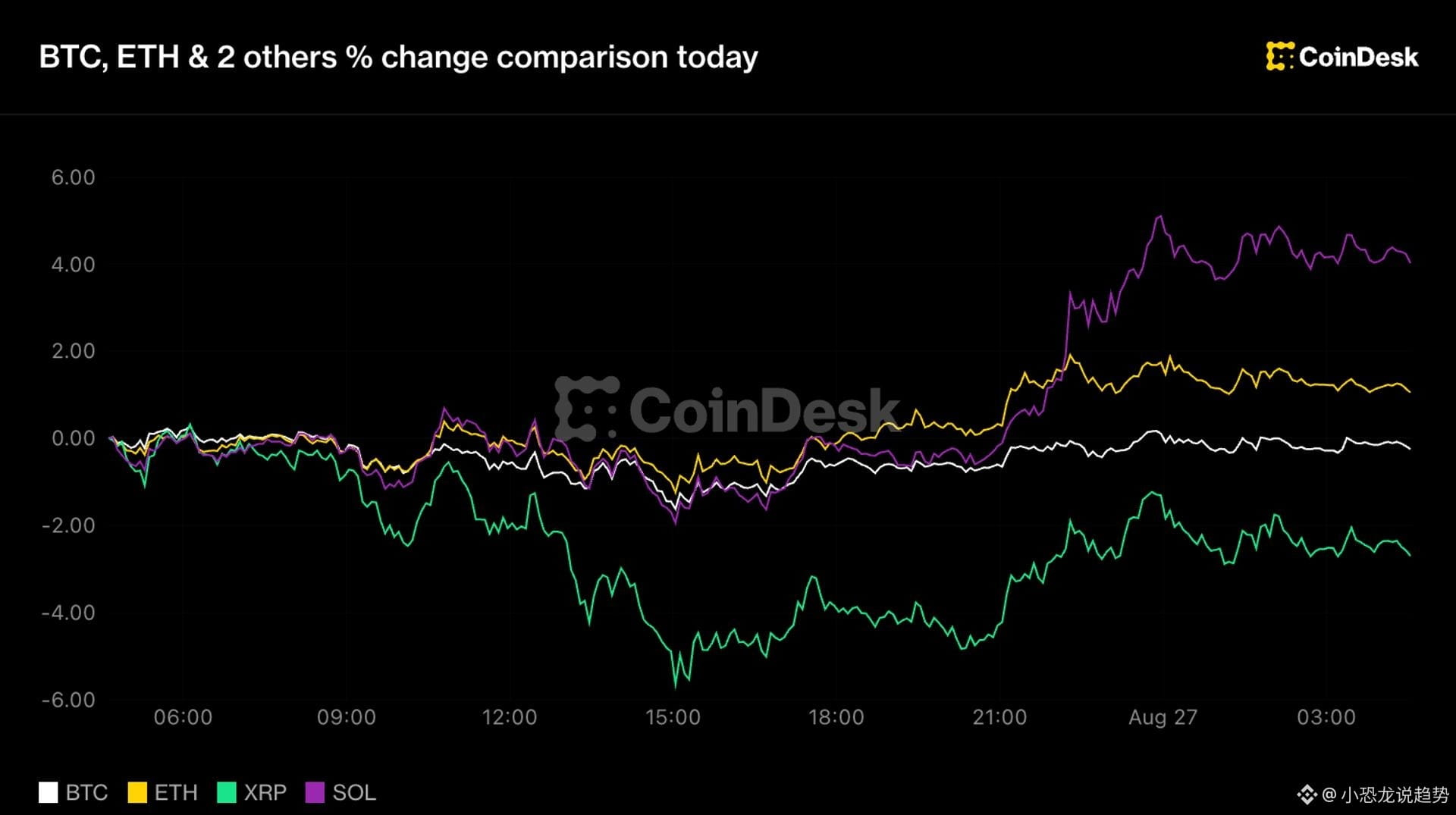
BTC just touched 80,000 then slid back below 79,000—two rides on the roller coaster in one day 🎢
XRP saw the biggest drop, down nearly 3% in 24 hours, but still up 28% over the week—the strongest to hold up
SOL, on the other hand, bucked the trend, rising nearly 4% and breaking through $101. ETH is slightly up, holding around the 2,490 level
HYPE and TRON also dipped a bit; overall, it’s simply a breather after too much of a rally
Last week, BTC was still stuck below 68,000—then within a week it surged to 80,000. That’s intense
Why the sudden loss of steam? The market is repricing the US Federal Reserve
Over the short term, US Treasuries fell last night; capital shifted toward further rate hikes—completely the opposite of last week’s easing expectations
As rate-hike expectations heat up, the cost of capital rises, and risk assets get hit first
On Friday, new Fed Chair Warsh made his first appearance in the role at Jackson Hole; everyone’s waiting to hear his tone and remarks
And here’s another thing: this rally is also shrinking in momentum
BTC’s 7-day gain has shrunk from 23% to 14%, and ETH from 29% to 11%
A rally that moves too fast always needs a pit stop—the key is where it goes after the break
Some analysts say if BTC holds above the May high at 82,820, then there’s a shot at 100,000
But open interest is falling—this move looks more like short-covering than fresh capital coming in
A rally that turns into a pullback isn’t necessarily a bad thing—after a washout, you’ll know who’s truly willing to buy 🤔
Every day I’ll bring you updates on BTC hotspots—not just what happened in the news, but also the logic and opportunities behind it 👀🚀
Click the link below to follow me👇🏻加入小恐龙粉丝群
#Bitcoin #BTC #FederalReserve #XRP
XRP saw the biggest drop, down nearly 3% in 24 hours, but still up 28% over the week—the strongest to hold up
SOL, on the other hand, bucked the trend, rising nearly 4% and breaking through $101. ETH is slightly up, holding around the 2,490 level
HYPE and TRON also dipped a bit; overall, it’s simply a breather after too much of a rally
Last week, BTC was still stuck below 68,000—then within a week it surged to 80,000. That’s intense
Why the sudden loss of steam? The market is repricing the US Federal Reserve
Over the short term, US Treasuries fell last night; capital shifted toward further rate hikes—completely the opposite of last week’s easing expectations
As rate-hike expectations heat up, the cost of capital rises, and risk assets get hit first
On Friday, new Fed Chair Warsh made his first appearance in the role at Jackson Hole; everyone’s waiting to hear his tone and remarks
And here’s another thing: this rally is also shrinking in momentum
BTC’s 7-day gain has shrunk from 23% to 14%, and ETH from 29% to 11%
A rally that moves too fast always needs a pit stop—the key is where it goes after the break
Some analysts say if BTC holds above the May high at 82,820, then there’s a shot at 100,000
But open interest is falling—this move looks more like short-covering than fresh capital coming in
A rally that turns into a pullback isn’t necessarily a bad thing—after a washout, you’ll know who’s truly willing to buy 🤔
Every day I’ll bring you updates on BTC hotspots—not just what happened in the news, but also the logic and opportunities behind it 👀🚀
Click the link below to follow me👇🏻加入小恐龙粉丝群
#Bitcoin #BTC #FederalReserve #XRP
Inflation won’t go away, growth is sputtering out. The Fed is forced to take flak from both ends.
The U.S. July PCE price index has been released: the month-over-month figure rose by 0.2%, while the year-over-year figure climbed to 3.7%.
Core PCE also increased by 0.2%. It’s still far from the Fed’s 2% target.
What’s even more worrying is that the household savings rate has dropped to 3%. Americans may be earning more, but they aren’t saving it.
One side is that prices can’t be brought down, and the other is that growth is slowing.
DeVere Group CEO said it plainly: this is the shadow of stagflation knocking at the door.
To rein in inflation, the Fed needs rate hikes. To support growth, it needs rate cuts. But right now it wants both—and can’t deliver on either.
His assessment is that the Fed can only hold steady. But the market reads “holding steady” as caution. What he sees is that the Fed has no good cards left.
Gold and silver have ticked slightly lower, while Bitcoin has been swinging between 77,000 and 79,000.
Next, the script depends entirely on Friday’s Jackson Hole—its first appearance for the newly appointed Fed chair—as well as the September FOMC meeting.
My take: with inflation this sticky, the room for “watering down” (loosening policy) has been squeezed to the limit.
Compared with scarce assets like Bitcoin, the short term is suppression—but in the long run, it’s the story.
Historically, every time sovereign currencies are battered by inflation, scarce assets get re-priced.
Will this time the script repeat? It depends on whether the Fed dares to admit it has run out of options.
If stagflation truly takes hold, do you think Bitcoin will be taken down along with everything else—or become the lifeline?
Click the avatar to watch the livestream.
Every day, I’ll take you to follow the Fed’s hot topics—not just what’s happening in the news, but also how to understand the underlying logic and opportunities 👉🦖
#比特币 #美联储
The U.S. July PCE price index has been released: the month-over-month figure rose by 0.2%, while the year-over-year figure climbed to 3.7%.
Core PCE also increased by 0.2%. It’s still far from the Fed’s 2% target.
What’s even more worrying is that the household savings rate has dropped to 3%. Americans may be earning more, but they aren’t saving it.
One side is that prices can’t be brought down, and the other is that growth is slowing.
DeVere Group CEO said it plainly: this is the shadow of stagflation knocking at the door.
To rein in inflation, the Fed needs rate hikes. To support growth, it needs rate cuts. But right now it wants both—and can’t deliver on either.
His assessment is that the Fed can only hold steady. But the market reads “holding steady” as caution. What he sees is that the Fed has no good cards left.
Gold and silver have ticked slightly lower, while Bitcoin has been swinging between 77,000 and 79,000.
Next, the script depends entirely on Friday’s Jackson Hole—its first appearance for the newly appointed Fed chair—as well as the September FOMC meeting.
My take: with inflation this sticky, the room for “watering down” (loosening policy) has been squeezed to the limit.
Compared with scarce assets like Bitcoin, the short term is suppression—but in the long run, it’s the story.
Historically, every time sovereign currencies are battered by inflation, scarce assets get re-priced.
Will this time the script repeat? It depends on whether the Fed dares to admit it has run out of options.
If stagflation truly takes hold, do you think Bitcoin will be taken down along with everything else—or become the lifeline?
Click the avatar to watch the livestream.
Every day, I’ll take you to follow the Fed’s hot topics—not just what’s happening in the news, but also how to understand the underlying logic and opportunities 👉🦖
#比特币 #美联储
Ten Days, Two-Tenths Up: Bitcoin Hits a Wall Near $79,000
How fierce was this run? Starting from August 17, the gain exceeded 20%.
But on Wednesday, it was immediately capped, stuck and churning between $77,000 and $79,000.
The high tapped $78,880—yet it still couldn’t break through the $79,000 threshold.
Data shows that every dip’s low point is shifting lower, and the bulls’ momentum is visibly weakening.
In the past day alone, Bitcoin liquidations totaled $88 million, of which long positions accounted for $77 million.
The whole market is even more dramatic—total liquidations across all assets have surpassed $300 million.
One analyst came out to emphasize this: Bitcoin must reclaim the range of $82,500 to $83,000.
That zone is a cost line for many ETF investors—only if price pushes through will fresh, out-of-market money be willing to enter.
But the risk is also obvious: the Fed Chair will speak at Jackson Hole on Friday.
If the tone is hawkish, this rally could directly unwind the gains.
My take: the market has switched from sprinting to uphill climbing—normal breathing.
The key is which way Friday’s Fed rhetoric leans.
The bulls are now in a tough spot: they need to guard against a profit-taking selloff, yet also wait for incremental capital to take the baton.
At the $83,000 level, it’s no longer just a technical point—it’s the psychological watershed between bulls and bears.
Looking back, the move from $64,000 to $80,000 was driven by the liquidity story sparked by Treasury bill repo.
The story is still unfolding, but the pace of the telling has slowed. This is exactly when unusual curveballs are most likely to happen.
Do you think this is a rest stop—or the end of the road?
Click the avatar to watch the livestream.
Every day, I’ll help you track Bitcoin market hot spots—not just what’s happening in the news, but also the logic and opportunities behind it 👉🦖
#比特币 #BTC
How fierce was this run? Starting from August 17, the gain exceeded 20%.
But on Wednesday, it was immediately capped, stuck and churning between $77,000 and $79,000.
The high tapped $78,880—yet it still couldn’t break through the $79,000 threshold.
Data shows that every dip’s low point is shifting lower, and the bulls’ momentum is visibly weakening.
In the past day alone, Bitcoin liquidations totaled $88 million, of which long positions accounted for $77 million.
The whole market is even more dramatic—total liquidations across all assets have surpassed $300 million.
One analyst came out to emphasize this: Bitcoin must reclaim the range of $82,500 to $83,000.
That zone is a cost line for many ETF investors—only if price pushes through will fresh, out-of-market money be willing to enter.
But the risk is also obvious: the Fed Chair will speak at Jackson Hole on Friday.
If the tone is hawkish, this rally could directly unwind the gains.
My take: the market has switched from sprinting to uphill climbing—normal breathing.
The key is which way Friday’s Fed rhetoric leans.
The bulls are now in a tough spot: they need to guard against a profit-taking selloff, yet also wait for incremental capital to take the baton.
At the $83,000 level, it’s no longer just a technical point—it’s the psychological watershed between bulls and bears.
Looking back, the move from $64,000 to $80,000 was driven by the liquidity story sparked by Treasury bill repo.
The story is still unfolding, but the pace of the telling has slowed. This is exactly when unusual curveballs are most likely to happen.
Do you think this is a rest stop—or the end of the road?
Click the avatar to watch the livestream.
Every day, I’ll help you track Bitcoin market hot spots—not just what’s happening in the news, but also the logic and opportunities behind it 👉🦖
#比特币 #BTC
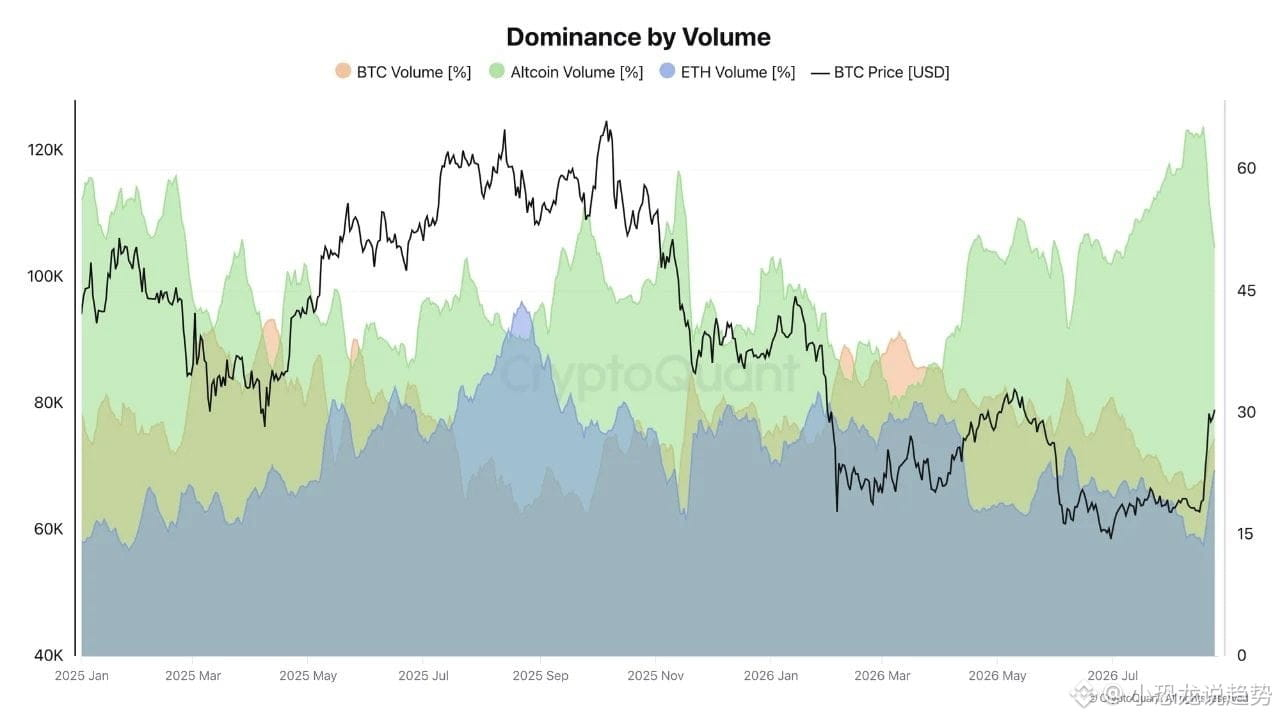
Binance’s 65% trading volume has been snatched away by copycat coins
According to CryptoQuant data, during this rally the share of altcoin trades surged to 65%, hitting a two-year high.
Bitcoin is left with only 21%, and Ethereum 13.6%.
In the same period, the total market value of altcoins rose by about $135 billion.
The whole crypto market bounced back from the lows, up a combined roughly $500 billion, with total market cap returning to $2.74 trillion.
Ethereum is up 31% over seven days—some coins have nearly doubled in just a few days.
But don’t rush to call it an “altseason.” The Altseason Index is only 37, still far from the 75 confirmation line.
On a 90-day basis, only a handful of coins have truly outperformed Bitcoin.
Analysts also remind us: high trading volume doesn’t necessarily mean fresh money is coming in— it may just be existing capital rotating around.
My take: this is an altcoin frenzy—either altcoins are running wild, or it’s a catch-up after Bitcoin has already risen too much. We need data to speak.
65% of trading volume sounds exciting, but the Altseason Index is still throwing cold water on it, suggesting the rotation may just be getting started.
My logic is simple: as long as Bitcoin holds steady, altcoins can sustain their money flow; once Bitcoin wobbles, altcoins are the first to run.
Historically, altcoin rallies have a pattern: they come fast, and the tide goes out even faster.
For those chasing the highs, weigh your position size yourself—don’t confuse the excitement with a long-term trend.
One more detail: when altcoins are rising the most aggressively, it’s often while Bitcoin is moving sideways—clear “seesaw” capital effects are visible.
My view: instead of chasing or panicking, focus on the leading indicator of trade share—once it changes, the wind changes too.
Do you think this altcoin rally is real or just an illusion? Let’s talk in the comments.
Click the avatar to watch the live stream.
Every day, I’ll guide you to the hottest altcoin topics— not just what’s happening in the news, but also the logic and opportunities behind it 👉🦖
#山寨币 #Market Analysis
According to CryptoQuant data, during this rally the share of altcoin trades surged to 65%, hitting a two-year high.
Bitcoin is left with only 21%, and Ethereum 13.6%.
In the same period, the total market value of altcoins rose by about $135 billion.
The whole crypto market bounced back from the lows, up a combined roughly $500 billion, with total market cap returning to $2.74 trillion.
Ethereum is up 31% over seven days—some coins have nearly doubled in just a few days.
But don’t rush to call it an “altseason.” The Altseason Index is only 37, still far from the 75 confirmation line.
On a 90-day basis, only a handful of coins have truly outperformed Bitcoin.
Analysts also remind us: high trading volume doesn’t necessarily mean fresh money is coming in— it may just be existing capital rotating around.
My take: this is an altcoin frenzy—either altcoins are running wild, or it’s a catch-up after Bitcoin has already risen too much. We need data to speak.
65% of trading volume sounds exciting, but the Altseason Index is still throwing cold water on it, suggesting the rotation may just be getting started.
My logic is simple: as long as Bitcoin holds steady, altcoins can sustain their money flow; once Bitcoin wobbles, altcoins are the first to run.
Historically, altcoin rallies have a pattern: they come fast, and the tide goes out even faster.
For those chasing the highs, weigh your position size yourself—don’t confuse the excitement with a long-term trend.
One more detail: when altcoins are rising the most aggressively, it’s often while Bitcoin is moving sideways—clear “seesaw” capital effects are visible.
My view: instead of chasing or panicking, focus on the leading indicator of trade share—once it changes, the wind changes too.
Do you think this altcoin rally is real or just an illusion? Let’s talk in the comments.
Click the avatar to watch the live stream.
Every day, I’ll guide you to the hottest altcoin topics— not just what’s happening in the news, but also the logic and opportunities behind it 👉🦖
#山寨币 #Market Analysis
Verified
Inflation again comes in hotter than expected: Bitcoin drops below 78,000
The U.S. July PCE inflation data is out. Year over year, it’s 3.7%, a bit higher than the market’s 3.6% forecast.
This is the inflation gauge the Federal Reserve cares about most.
As soon as the data hit, U.S. stocks opened lower, gold fell below $4,600, and Bitcoin slid about 1% on the day, losing the 78,000 level.
Keep in mind: June’s PCE had just shown the first month-over-month decline in six years, and everyone thought inflation was starting to cool down.
But July slapped that assumption in the face. One analyst even joked that inflation is now almost twice as high as the Fed’s 2% target.
On Friday, the Jackson Hole conference kicks off, and the Fed chair will deliver an important speech.
Tonight’s Nvidia earnings report is another big variable. The market expects quarterly revenue of $92.3 billion.
Two “triggers”—one data release and one tech giant—are both hitting within these two days.
My take: don’t rush to write off this pullback.
Bitcoin has gained nearly 30% over the past 10 days—taking a breather is completely normal.
When macro data disappoints, it actually gives the bulls a cold-water test of their mettle.
The 78,000 level was resistance last week; now it’s support. The test is just beginning.
Some analysts are watching the monthly close. They say that if it can’t hold above the key moving averages on a closing basis, then this move can only be counted as a rebound—not a reversal.
In the short term, whether inflation is a “paper tiger” or a “real tiger” will be decided after Friday’s speech.
For us, instead of guessing the direction, it’s better to focus on two signals: whether 78,000 holds, and how the market moves after Nvidia’s earnings.
Do you think tonight’s Nvidia earnings report can lift Bitcoin as well? Let’s chat in the comments.
Click the profile picture to watch the livestream.
Every day, I’ll help you stay on top of Bitcoin’s headlines—not just what’s happening, but also how to understand the logic and opportunities behind it 👉🦖
#比特币 #宏观经济
The U.S. July PCE inflation data is out. Year over year, it’s 3.7%, a bit higher than the market’s 3.6% forecast.
This is the inflation gauge the Federal Reserve cares about most.
As soon as the data hit, U.S. stocks opened lower, gold fell below $4,600, and Bitcoin slid about 1% on the day, losing the 78,000 level.
Keep in mind: June’s PCE had just shown the first month-over-month decline in six years, and everyone thought inflation was starting to cool down.
But July slapped that assumption in the face. One analyst even joked that inflation is now almost twice as high as the Fed’s 2% target.
On Friday, the Jackson Hole conference kicks off, and the Fed chair will deliver an important speech.
Tonight’s Nvidia earnings report is another big variable. The market expects quarterly revenue of $92.3 billion.
Two “triggers”—one data release and one tech giant—are both hitting within these two days.
My take: don’t rush to write off this pullback.
Bitcoin has gained nearly 30% over the past 10 days—taking a breather is completely normal.
When macro data disappoints, it actually gives the bulls a cold-water test of their mettle.
The 78,000 level was resistance last week; now it’s support. The test is just beginning.
Some analysts are watching the monthly close. They say that if it can’t hold above the key moving averages on a closing basis, then this move can only be counted as a rebound—not a reversal.
In the short term, whether inflation is a “paper tiger” or a “real tiger” will be decided after Friday’s speech.
For us, instead of guessing the direction, it’s better to focus on two signals: whether 78,000 holds, and how the market moves after Nvidia’s earnings.
Do you think tonight’s Nvidia earnings report can lift Bitcoin as well? Let’s chat in the comments.
Click the profile picture to watch the livestream.
Every day, I’ll help you stay on top of Bitcoin’s headlines—not just what’s happening, but also how to understand the logic and opportunities behind it 👉🦖
#比特币 #宏观经济
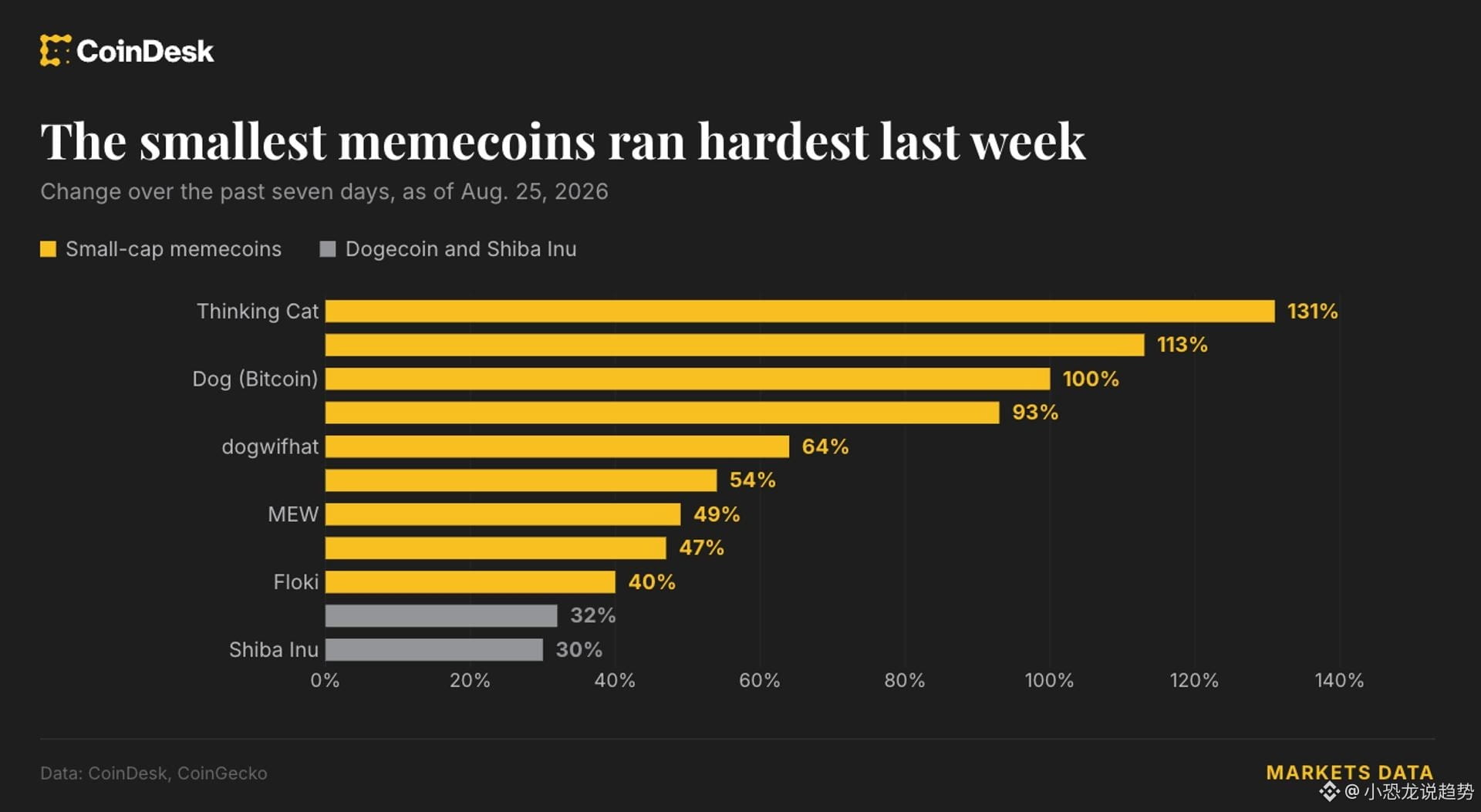
The main market rebounds—cats and dogs go wild first
This week, the little animal coins all held a party together: the Cat Coin surged more than 50% in a single day!
Several animal-themed coins rose 50% to 130% over the week; the ones with the biggest gains basically doubled in a week.
As soon as Bitcoin starts to flex, money begins to spill over to find fun
The first ones to rush in are always memes, because nobody talks fundamentals—people only talk emotions
When the mood hits, even dogs can go to the sky—this saying never goes out of style in crypto circles.
The cat coins on the Robinhood chain: up by half in a day—the cuter the name, the more savage the rise
This vibe—you get it if you know
In a bull market, memes are basically the thermometer for sentiment
To see how hot the market is, just look at how fast the cats and dogs are pumping
But Harmon-y has to be straight with you: meme cycles come fast and go even faster
Today it can double—tomorrow it can be cut in half vertically
You’re playing on heartbeats, not faith
In the last bull market, how many people crashed at the peak of the meme mountain—the memory is still fresh
If you can’t help yourself, remember these three things: don’t over-size your position, run when it’s time, and don’t “fall in love” with it
In a bull market, the worst isn’t missing the train—it’s becoming the bag-holder who ends up holding the bag at the summit, getting cooled off by the wind
Winning is luck; losing is a lesson
Don’t confuse luck with ability
If you really want to play, treat it like entertainment—win or lose, it shouldn’t affect your life
Memes are like fireworks—everyone wants to watch, but nobody wants to pick up money from the scraps after they blow up
You can enjoy the excitement, just don’t put all your net worth on the line
Only the clear-minded can make it through to the day the bull market finally wraps up
Memes are an appetizer—don’t make them your main meal
Every day, I’ll bring you coverage of crypto hot topics—not just what’s happening in the news, but also help you understand the logic and the opportunities behind it 👀🚀
Click the link below to follow me👇🏻加入小恐龙粉丝群
#meme coin #crypto market #bull market
This week, the little animal coins all held a party together: the Cat Coin surged more than 50% in a single day!
Several animal-themed coins rose 50% to 130% over the week; the ones with the biggest gains basically doubled in a week.
As soon as Bitcoin starts to flex, money begins to spill over to find fun
The first ones to rush in are always memes, because nobody talks fundamentals—people only talk emotions
When the mood hits, even dogs can go to the sky—this saying never goes out of style in crypto circles.
The cat coins on the Robinhood chain: up by half in a day—the cuter the name, the more savage the rise
This vibe—you get it if you know
In a bull market, memes are basically the thermometer for sentiment
To see how hot the market is, just look at how fast the cats and dogs are pumping
But Harmon-y has to be straight with you: meme cycles come fast and go even faster
Today it can double—tomorrow it can be cut in half vertically
You’re playing on heartbeats, not faith
In the last bull market, how many people crashed at the peak of the meme mountain—the memory is still fresh
If you can’t help yourself, remember these three things: don’t over-size your position, run when it’s time, and don’t “fall in love” with it
In a bull market, the worst isn’t missing the train—it’s becoming the bag-holder who ends up holding the bag at the summit, getting cooled off by the wind
Winning is luck; losing is a lesson
Don’t confuse luck with ability
If you really want to play, treat it like entertainment—win or lose, it shouldn’t affect your life
Memes are like fireworks—everyone wants to watch, but nobody wants to pick up money from the scraps after they blow up
You can enjoy the excitement, just don’t put all your net worth on the line
Only the clear-minded can make it through to the day the bull market finally wraps up
Memes are an appetizer—don’t make them your main meal
Every day, I’ll bring you coverage of crypto hot topics—not just what’s happening in the news, but also help you understand the logic and the opportunities behind it 👀🚀
Click the link below to follow me👇🏻加入小恐龙粉丝群
#meme coin #crypto market #bull market
Verified
Solana ETF funds have flowed in for 5 consecutive days, smashing a historic record
On Monday, inflows hit $33.5 million—still the highest single-day figure since December last year
Cumulative net inflows have surged to $1.22 billion, with trading volume also breaking 166 million
Without saying anything else, once these numbers come out, the faces of those who kept spreading bearish takes are swollen
They said, “No one buys SOL ETFs” and “All the money is running away”
Now the cash is lining up to get in—reality speaks louder than mouth-hard stubbornness
This round is kind of interesting: when the broader market rebounds, the funds specifically target assets with higher elasticity
SOL was always the vanguard of the rebound—climbing back from the bottom all the way up, with one of the strongest gains among major coins
And the ETF keeps adding fuel in the background, like someone constantly stoking the fire
More importantly, the way this money is entering looks like a “allocation trade,” not a “sentiment trade”
The rich don’t make noise—they stay quiet, and only after the data comes out do they shock you
A single day of $33.5 million isn’t “a lot” or “a little,” but it wins on one thing: consistency
Also don’t forget—SOL itself hasn’t been idle either this time
It climbed back from the bottom and has one of the top gain rates among major coins
Price action and fund flows mutually confirm each other—this is what you call solid, grounded movement
An ETF is a litmus test of institutional sentiment
A continuous 5-day streak of net inflows shows that Wall Street is voting for this rally with real money
It’s more effective than a hundred research reports
Heat is building, but chasing at the top always requires you to leave yourself a way out
Watch the data—don’t get carried away
That’s the way to survive to the end of a bull market
After all, these days, lasting longer matters more than getting up first
Every day, I’ll bring you coverage of crypto hotspots—not just what happened in the news, but also how to understand the underlying logic and opportunities 👀🚀
Click the link below to follow me 👇🏻加入小恐龙粉丝群
#Solana #ETF #InstitutionalFunds
On Monday, inflows hit $33.5 million—still the highest single-day figure since December last year
Cumulative net inflows have surged to $1.22 billion, with trading volume also breaking 166 million
Without saying anything else, once these numbers come out, the faces of those who kept spreading bearish takes are swollen
They said, “No one buys SOL ETFs” and “All the money is running away”
Now the cash is lining up to get in—reality speaks louder than mouth-hard stubbornness
This round is kind of interesting: when the broader market rebounds, the funds specifically target assets with higher elasticity
SOL was always the vanguard of the rebound—climbing back from the bottom all the way up, with one of the strongest gains among major coins
And the ETF keeps adding fuel in the background, like someone constantly stoking the fire
More importantly, the way this money is entering looks like a “allocation trade,” not a “sentiment trade”
The rich don’t make noise—they stay quiet, and only after the data comes out do they shock you
A single day of $33.5 million isn’t “a lot” or “a little,” but it wins on one thing: consistency
Also don’t forget—SOL itself hasn’t been idle either this time
It climbed back from the bottom and has one of the top gain rates among major coins
Price action and fund flows mutually confirm each other—this is what you call solid, grounded movement
An ETF is a litmus test of institutional sentiment
A continuous 5-day streak of net inflows shows that Wall Street is voting for this rally with real money
It’s more effective than a hundred research reports
Heat is building, but chasing at the top always requires you to leave yourself a way out
Watch the data—don’t get carried away
That’s the way to survive to the end of a bull market
After all, these days, lasting longer matters more than getting up first
Every day, I’ll bring you coverage of crypto hotspots—not just what happened in the news, but also how to understand the underlying logic and opportunities 👀🚀
Click the link below to follow me 👇🏻加入小恐龙粉丝群
#Solana #ETF #InstitutionalFunds

Verified
The American State Bankers Association is planning to band together to build a nationwide blockchain network
They’ve even picked a name—BankChain Alliance—with plans to launch in 2027
The banking industry can’t sit still this time
They want to push stablecoins, payments, and tokenized deposits—all onto their own regulated turf
Rather than watching the crypto world steal business from them, it’s better to step in and build a network themselves
Note: this isn’t one bank doing it alone—this is a collective effort by state-level associations
In effect, the traditional financial system is finally taking on-chain settlement seriously
If this succeeds, that high wall in traditional payments will start getting pulled down piece by piece
In plain terms, traditional finance doesn’t “not understand” blockchain—it’s afraid of falling behind
Even the bankers’ associations are uniting to build infrastructure; isn’t this signal obvious enough?
Once their network starts running, regulatory standards for stablecoins will likely be established alongside it
The stablecoin track has already shifted from a toy for retail users to a coveted prize banks are fighting for
Whoever can get it working first will secure a position in the next round of the payments revolution
The big money is getting serious—retail investors should also read the direction of the wind before jumping in
If banks really manage to run on-chain settlement, the old cross-border payments route—slow and expensive—may be doomed
Once “efficiency” is clearly compared, there’s no going back
Banks aren’t moving in to take away anyone’s bowl of food—they’re coming to catch up
The moment they acknowledge blockchain, it’s the biggest endorsement the industry could ask for
Every day, I’ll take you to watch crypto hotspots—not just what’s happening in the news, but also the logic and opportunities behind it 👀🚀
Click the link below to follow me👇🏻加入小恐龙粉丝群
#stablecoin #bank #blockchain
They’ve even picked a name—BankChain Alliance—with plans to launch in 2027
The banking industry can’t sit still this time
They want to push stablecoins, payments, and tokenized deposits—all onto their own regulated turf
Rather than watching the crypto world steal business from them, it’s better to step in and build a network themselves
Note: this isn’t one bank doing it alone—this is a collective effort by state-level associations
In effect, the traditional financial system is finally taking on-chain settlement seriously
If this succeeds, that high wall in traditional payments will start getting pulled down piece by piece
In plain terms, traditional finance doesn’t “not understand” blockchain—it’s afraid of falling behind
Even the bankers’ associations are uniting to build infrastructure; isn’t this signal obvious enough?
Once their network starts running, regulatory standards for stablecoins will likely be established alongside it
The stablecoin track has already shifted from a toy for retail users to a coveted prize banks are fighting for
Whoever can get it working first will secure a position in the next round of the payments revolution
The big money is getting serious—retail investors should also read the direction of the wind before jumping in
If banks really manage to run on-chain settlement, the old cross-border payments route—slow and expensive—may be doomed
Once “efficiency” is clearly compared, there’s no going back
Banks aren’t moving in to take away anyone’s bowl of food—they’re coming to catch up
The moment they acknowledge blockchain, it’s the biggest endorsement the industry could ask for
Every day, I’ll take you to watch crypto hotspots—not just what’s happening in the news, but also the logic and opportunities behind it 👀🚀
Click the link below to follow me👇🏻加入小恐龙粉丝群
#stablecoin #bank #blockchain

Verified
Economists warn: the Ministry of Finance is doing a large-scale QE
Bitcoin staged a deep V rebound on Monday, once dropping below 77,000 and then rallying all the way back to 79,989, setting a new August high. Over the past 24 hours, it rose about 3%, and its market value returned to $1.59 trillion. For the first time this year, its decline narrowed to within 10%.
Across the whole internet, $396 million was liquidated. Long story short: shorts got hit the hardest—of the shorts that were wiped out, $222 million were liquidated in just that batch.
The trigger was still that same thing: the Ministry of Finance announced an expansion of its long-term Treasury bond repurchase program to $4.0 billion, effective September 9. The finance minister also hinted that more will be added later. The market immediately treated it as disguised money printing and drove the rally.
Economist Peter Schiff stepped in to warn that this plan would shorten the average duration of Treasuries, making it harder for the Fed to raise rates—an “ingredient list” for large-scale QE and runaway inflation. He even asked whether everyone has been buying gold.
Bitcoin’s “digital gold” narrative was reignited by these macro expectations. Institutions and corporate treasury departments now have another reason to treat BTC as a reserve asset.
A Bitfinex analyst noted that this surge was mainly driven by short-squeeze mechanics, and that it needs real spot buying to take over afterward. Weekly support holding above 73,500 would be the confirmation. The next checkpoint is 86,500. If it falls back below 64,500, the rebound could be invalidated.
Harmony believes inflation anxiety is Bitcoin’s best friend. Every time money-printing expectations flare up, the “digital gold” story automatically loops again. But whether the story can be fulfilled depends on whether the money really comes.
The interactive question: If a real round of massive money-printing hits, would you add to your position? See you in the comments.
Click the profile picture to watch the livestream.
Every day, I’ll take you through macro hotspots—not just what happens in the news, but also how to understand the underlying logic and opportunities 👉🦖
#比特币 #Federal Reserve
Bitcoin staged a deep V rebound on Monday, once dropping below 77,000 and then rallying all the way back to 79,989, setting a new August high. Over the past 24 hours, it rose about 3%, and its market value returned to $1.59 trillion. For the first time this year, its decline narrowed to within 10%.
Across the whole internet, $396 million was liquidated. Long story short: shorts got hit the hardest—of the shorts that were wiped out, $222 million were liquidated in just that batch.
The trigger was still that same thing: the Ministry of Finance announced an expansion of its long-term Treasury bond repurchase program to $4.0 billion, effective September 9. The finance minister also hinted that more will be added later. The market immediately treated it as disguised money printing and drove the rally.
Economist Peter Schiff stepped in to warn that this plan would shorten the average duration of Treasuries, making it harder for the Fed to raise rates—an “ingredient list” for large-scale QE and runaway inflation. He even asked whether everyone has been buying gold.
Bitcoin’s “digital gold” narrative was reignited by these macro expectations. Institutions and corporate treasury departments now have another reason to treat BTC as a reserve asset.
A Bitfinex analyst noted that this surge was mainly driven by short-squeeze mechanics, and that it needs real spot buying to take over afterward. Weekly support holding above 73,500 would be the confirmation. The next checkpoint is 86,500. If it falls back below 64,500, the rebound could be invalidated.
Harmony believes inflation anxiety is Bitcoin’s best friend. Every time money-printing expectations flare up, the “digital gold” story automatically loops again. But whether the story can be fulfilled depends on whether the money really comes.
The interactive question: If a real round of massive money-printing hits, would you add to your position? See you in the comments.
Click the profile picture to watch the livestream.
Every day, I’ll take you through macro hotspots—not just what happens in the news, but also how to understand the underlying logic and opportunities 👉🦖
#比特币 #Federal Reserve
This sudden surge has nothing to do with Bitcoin itself.
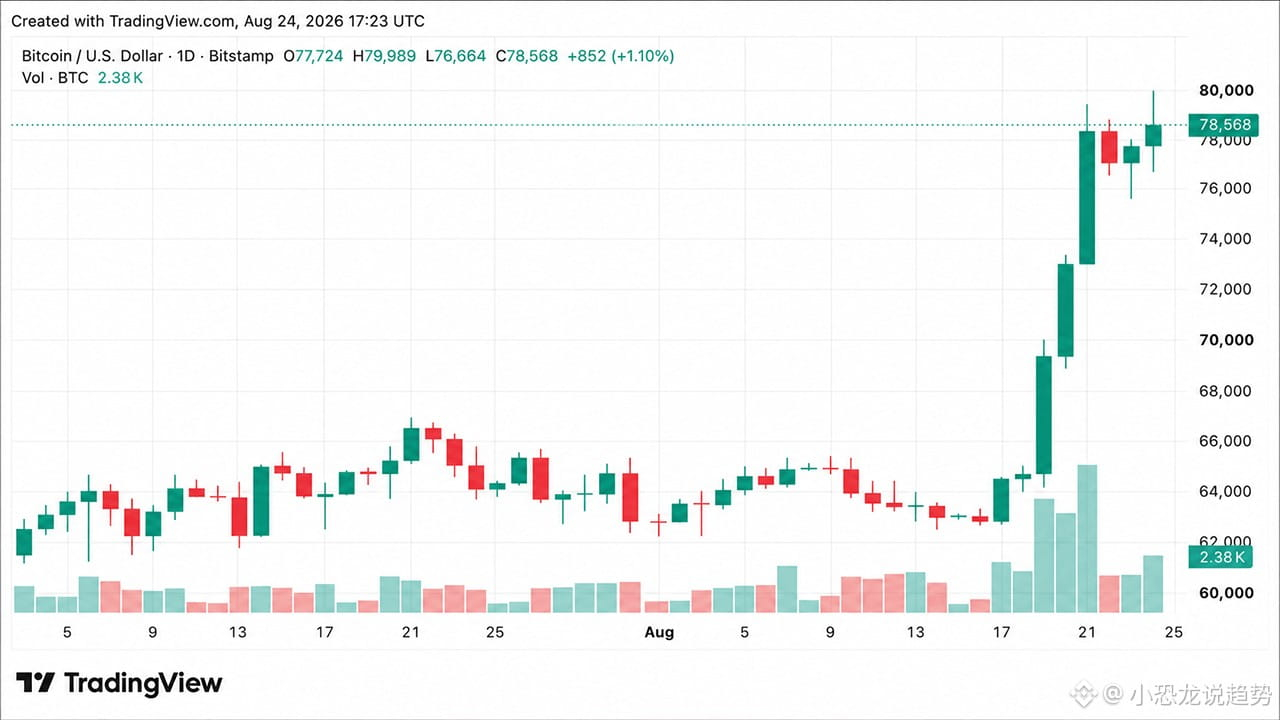
In a week, Bitcoin has jumped over 20%, climbing from above 60,000 all the way back to the 80,000 mark. But some people are pouring cold water on it, saying this rally has nothing to do with Bitcoin itself.
A CoinDesk news article lists a long string of reasons: Treasury buybacks, a weaker U.S. dollar, cooling inflation data, ETF inflows, fiat-currency depreciation anxiety, the return of the “digital gold” narrative, the AI profit boom, renewed institutional demand—everything points to external factors.
As for Bitcoin itself: the Coldcard wallet crisis, the BIP upgrade drama, declining hash rate, and the unresolved quantum-resistance question—these are all ignored by the market. It still goes up; it’s going to go up.
The article also cites research from the Cleveland Fed, saying that many investors treat crypto investments like speculation—when sentiment is hot, they rush in; when sentiment fades, they pull out. That’s why price is especially sensitive to macro news.
The conclusion is painful: Federal Reserve officials may have far more influence on crypto prices than Bitcoin developers do. A dovish shift in monetary policy this autumn could push things further. If inflation once again comes in above expectations, the effect could go the other way. As for any revolutionary self-custody solution— the market basically can’t be bothered to look.
Harmony thinks this round of Bitcoin is looking more and more like a puppet controlled by the macro market. The good news is that easy liquidity will be the first to benefit it. The bad news is that the moment liquidity tightens, it will be the first to take a hit. Instead of studying on-chain data, it’s better to watch the central bank’s mood.
An interactive question: For the next round of surge, who do you think will trigger it? Chat in the comments.
Click the avatar to watch the live stream.
Every day, I’ll take you to follow Bitcoin’s macro highlights—not just what’s happening in the news, but how to understand the logic and opportunities behind it 👉🦖
#比特币 #macroeconomics
In a week, Bitcoin has jumped over 20%, climbing from above 60,000 all the way back to the 80,000 mark. But some people are pouring cold water on it, saying this rally has nothing to do with Bitcoin itself.
A CoinDesk news article lists a long string of reasons: Treasury buybacks, a weaker U.S. dollar, cooling inflation data, ETF inflows, fiat-currency depreciation anxiety, the return of the “digital gold” narrative, the AI profit boom, renewed institutional demand—everything points to external factors.
As for Bitcoin itself: the Coldcard wallet crisis, the BIP upgrade drama, declining hash rate, and the unresolved quantum-resistance question—these are all ignored by the market. It still goes up; it’s going to go up.
The article also cites research from the Cleveland Fed, saying that many investors treat crypto investments like speculation—when sentiment is hot, they rush in; when sentiment fades, they pull out. That’s why price is especially sensitive to macro news.
The conclusion is painful: Federal Reserve officials may have far more influence on crypto prices than Bitcoin developers do. A dovish shift in monetary policy this autumn could push things further. If inflation once again comes in above expectations, the effect could go the other way. As for any revolutionary self-custody solution— the market basically can’t be bothered to look.
Harmony thinks this round of Bitcoin is looking more and more like a puppet controlled by the macro market. The good news is that easy liquidity will be the first to benefit it. The bad news is that the moment liquidity tightens, it will be the first to take a hit. Instead of studying on-chain data, it’s better to watch the central bank’s mood.
An interactive question: For the next round of surge, who do you think will trigger it? Chat in the comments.
Click the avatar to watch the live stream.
Every day, I’ll take you to follow Bitcoin’s macro highlights—not just what’s happening in the news, but how to understand the logic and opportunities behind it 👉🦖
#比特币 #macroeconomics
ZEC surges to $870 — dormant mining rigs have all been awakened
The privacy coin Zcash is a bit wild this time. Over the past three days, its price has been bouncing between $820 and $871. Across the entire network, hashrate has shot up vertically, climbing to 27–29 GSol/s and even pushing to a new all-time high.
The logic is simple: mining profits are outpacing electricity and hosting fees. Idle rigs are being turned from scrap into cash-printing machines. Owners have been booting up overnight, adding more hardware until the difficulty rises enough to erase the profit margins.
Zcash uses the Equihash algorithm, producing one block every 75 seconds—about 1,152 blocks per day. Currently, each block’s subsidy is 1.5625 ZEC. Miners take 80%, which is 1.25 ZEC plus fees. The rest is distributed to community grants and the protocol fund. After the subsidy halves by end of 2028, the subsidy will drop to 0.78125 ZEC.
The hardware sector has also been activated. Bitmain’s Antminer Z15 Pro, for example, delivers 840 kSol/s with a power draw of 2,780 watts. It’s a mainstay for professional mining farms. In the network’s total hashrate of 25 GSol/s, one unit accounts for only 0.00336%. To control 1% of the network hashrate, you’d need to buy nearly 300 units—stacking the machines is visible just from the cost alone.
What’s interesting is that different players’ hashrate dashboards don’t show the same numbers. Some display 24 GSol/s, others 28 GSol/s—because of different reporting windows and algorithms, the results naturally differ. Don’t get spooked by a single figure.
Harmony thinks this round of ZEC is “price first, hashrate later.” Miners are voting with their feet—the most honest kind of signal. After such a long period of silence in the privacy coin sector, we finally got a wave of attention backed by real money. But the halving is still more than two years away; enjoy the current heat while it lasts—mine while you can, and cherish it.
A question for engagement: how far can this privacy-coin wave go? Let’s chat in the comments.
Click the avatar to watch the live stream.
Every day, I’ll bring you ZEC hot topics—not just what’s happening, but help you understand the underlying logic and opportunities 👉🦖
#Zcash #隐私币
The privacy coin Zcash is a bit wild this time. Over the past three days, its price has been bouncing between $820 and $871. Across the entire network, hashrate has shot up vertically, climbing to 27–29 GSol/s and even pushing to a new all-time high.
The logic is simple: mining profits are outpacing electricity and hosting fees. Idle rigs are being turned from scrap into cash-printing machines. Owners have been booting up overnight, adding more hardware until the difficulty rises enough to erase the profit margins.
Zcash uses the Equihash algorithm, producing one block every 75 seconds—about 1,152 blocks per day. Currently, each block’s subsidy is 1.5625 ZEC. Miners take 80%, which is 1.25 ZEC plus fees. The rest is distributed to community grants and the protocol fund. After the subsidy halves by end of 2028, the subsidy will drop to 0.78125 ZEC.
The hardware sector has also been activated. Bitmain’s Antminer Z15 Pro, for example, delivers 840 kSol/s with a power draw of 2,780 watts. It’s a mainstay for professional mining farms. In the network’s total hashrate of 25 GSol/s, one unit accounts for only 0.00336%. To control 1% of the network hashrate, you’d need to buy nearly 300 units—stacking the machines is visible just from the cost alone.
What’s interesting is that different players’ hashrate dashboards don’t show the same numbers. Some display 24 GSol/s, others 28 GSol/s—because of different reporting windows and algorithms, the results naturally differ. Don’t get spooked by a single figure.
Harmony thinks this round of ZEC is “price first, hashrate later.” Miners are voting with their feet—the most honest kind of signal. After such a long period of silence in the privacy coin sector, we finally got a wave of attention backed by real money. But the halving is still more than two years away; enjoy the current heat while it lasts—mine while you can, and cherish it.
A question for engagement: how far can this privacy-coin wave go? Let’s chat in the comments.
Click the avatar to watch the live stream.
Every day, I’ll bring you ZEC hot topics—not just what’s happening, but help you understand the underlying logic and opportunities 👉🦖
#Zcash #隐私币
Verified
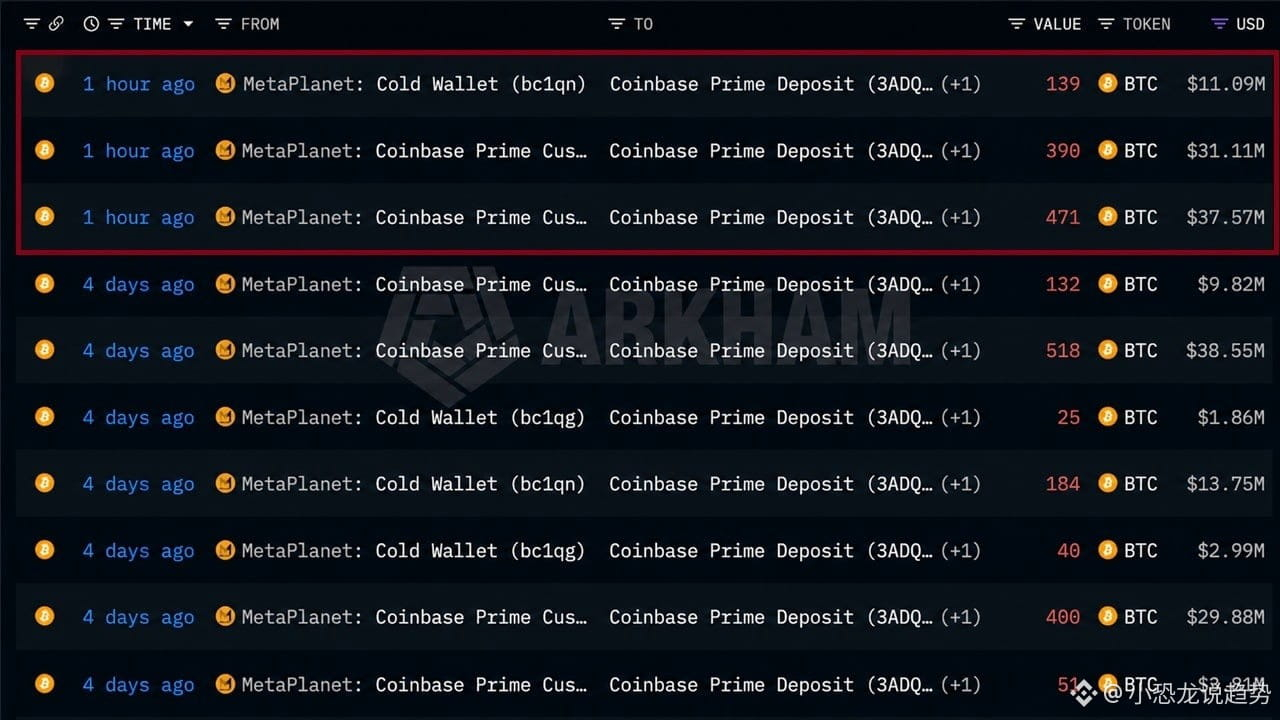
Asian Coin Hoarder King Has Moved Another 1,000 “Big Pancakes” Into Custody
Japanese listed company Metaplanet transferred 1,000 bitcoins to Coinbase Prime custody on August 25. Based on the current price, it’s about US$79.77 million. It recently announced that its holdings have surpassed 43,000 BTC, setting an Asian listed-company record.
Blockchain data firm Lookonchain calculated its average cost at roughly US$96,191 per coin, for total capital of about US$4.09 billion. Meanwhile, the current BTC price is still hovering around US$79,000—meaning the unrealized loss on its books is not small. But the company’s coin-hoarding rhythm hasn’t slipped at all.
The timeline is wild: by the end of 2024 it had only 1,761 BTC; in less than two years it rolled up to 40,177 BTC. Its most recent purchase was another US$225 million for 2,823 BTC, pushing its holdings directly above 43,000. Its target is to hoard 210,000 BTC by the end of 2027.
Transferring coins to Coinbase Prime doesn’t necessarily mean selling. Compliance-focused custody, OTC trading, and setting up for its subsidiary Superplanet platform are all common uses. Previously, it also injected 2,100 BTC into Super League Enterprise, a Nasdaq-listed company, working together to build a U.S. treasury platform.
What’s interesting is that with a cost around 96,000 and a current price around 79,000—this kind of deep unrealized loss—most companies would be criticized by shareholders if they behaved this way in traditional financial reports. But in the coin-hoarding world, this is called “faith.”
Harmonie thinks Metaplanet has turned into an Asia-version “mini Strategy”: buying BTC by issuing shares and structured products, turning the balance sheet into a Bitcoin billboard. Whether this route can truly work depends on whether it can actually gather 210,000 BTC by 2027.
Interactive question: With a 30% unrealized loss still holding and hoarding, are you convinced or not?
Click the avatar to watch the livestream.
Every day, I’ll guide you to track Bitcoin position-holding hotspots—not just what happened in the news, but also help you understand the underlying logic and opportunities 👉🦖
#比特币 #Metaplanet
Japanese listed company Metaplanet transferred 1,000 bitcoins to Coinbase Prime custody on August 25. Based on the current price, it’s about US$79.77 million. It recently announced that its holdings have surpassed 43,000 BTC, setting an Asian listed-company record.
Blockchain data firm Lookonchain calculated its average cost at roughly US$96,191 per coin, for total capital of about US$4.09 billion. Meanwhile, the current BTC price is still hovering around US$79,000—meaning the unrealized loss on its books is not small. But the company’s coin-hoarding rhythm hasn’t slipped at all.
The timeline is wild: by the end of 2024 it had only 1,761 BTC; in less than two years it rolled up to 40,177 BTC. Its most recent purchase was another US$225 million for 2,823 BTC, pushing its holdings directly above 43,000. Its target is to hoard 210,000 BTC by the end of 2027.
Transferring coins to Coinbase Prime doesn’t necessarily mean selling. Compliance-focused custody, OTC trading, and setting up for its subsidiary Superplanet platform are all common uses. Previously, it also injected 2,100 BTC into Super League Enterprise, a Nasdaq-listed company, working together to build a U.S. treasury platform.
What’s interesting is that with a cost around 96,000 and a current price around 79,000—this kind of deep unrealized loss—most companies would be criticized by shareholders if they behaved this way in traditional financial reports. But in the coin-hoarding world, this is called “faith.”
Harmonie thinks Metaplanet has turned into an Asia-version “mini Strategy”: buying BTC by issuing shares and structured products, turning the balance sheet into a Bitcoin billboard. Whether this route can truly work depends on whether it can actually gather 210,000 BTC by 2027.
Interactive question: With a 30% unrealized loss still holding and hoarding, are you convinced or not?
Click the avatar to watch the livestream.
Every day, I’ll guide you to track Bitcoin position-holding hotspots—not just what happened in the news, but also help you understand the underlying logic and opportunities 👉🦖
#比特币 #Metaplanet
Log in to explore more content