
520龙行天下
2.6k Posts

520龙行天下
 Square Verified+
21年进入币圈,专注资源整合,承接项目宣发、空投业务,承接项目专场AMA宣发
Open Trade

TAC Holder
High-Frequency Trader
5.3 Years
7.5K+ Following
72.1K+ Followers
71.7K+ Liked
Posts
Portfolio
All
Quotes
Live
PINNED
·
--
🎙️ Family members, I took a two-day break. I’m back now. Thank you for your support and trust.

End
8.2k

WLFI
Holding
+0.03
19
PINNED

易琳Ten
·
--
For the buy, I choose to go long on Ethereum. Even with bearish news, I still choose to go long—adding more on pullbacks.

DK短线复刻
·
--
Get notified to reply and collect red packets🎁🎁


艾雪XUE01688
·
--
How did it get wider?


心月势不可挡
·
--
Sing colorful songs for yourself; today is a day worth celebrating. I’ve finally put on a yellow crown—I'm also an Huang V now. Thank you, Binance Square, for building a platform for us to showcase our talents. In the future, I will be a loyal maintainer of Binance Square. Let’s all become better—better and better, more and more outstanding.🧧🧧🧧🧧🧧🧧🧧🧧🧧🧧🧧🧧🧧🧧🎉🎉🎉🎉🎉🎉🎉🎉🎉🌹🌹🌹🌹🌹🌹🌹🌹🌹

Arthur Mint
·
--
Bullish🎁 Community today sending you big surprise gift claim it and repost thanks.


jimwilldoit积木
·
--
Bullish$BTC The Bank of England keeps rates on hold this time!
The benchmark interest rate remains at 3.75%.
Global central banks’ timelines are starting to diverge clearly!
UK inflation in August has risen back to 3.1%.
High oil prices are pushing the room for rate cuts back down again!
On September 17, the Bank of England announced it would keep the Bank Rate unchanged at 3.75%. Currently, UK inflation has climbed to 3.1%, again above the 2% target. After geopolitical tensions in the Middle East boosted energy prices, the Bank of England expects inflation to continue rising. However, the so-called “second-round effects” from prices and wages remain relatively limited for now.
This pause looks more like an assessment of how long the energy shock can last. For BTC, the global liquidity story can no longer be viewed as only tied to the Fed: if high oil prices keep weighing on the UK and other central banks’ easing pace, a high-rate environment will be harder to end quickly. Conversely, only if energy prices continue to fall will there be a chance to reopen easing expectations.
The UK didn’t raise rates—but it also didn’t give the market any more dovish signals.
Whether oil prices can keep cooling will directly affect what comes next for global interest-rate trading!
Click the card below—go for it! 👇
$ETH $SNDK
The benchmark interest rate remains at 3.75%.
Global central banks’ timelines are starting to diverge clearly!
UK inflation in August has risen back to 3.1%.
High oil prices are pushing the room for rate cuts back down again!
On September 17, the Bank of England announced it would keep the Bank Rate unchanged at 3.75%. Currently, UK inflation has climbed to 3.1%, again above the 2% target. After geopolitical tensions in the Middle East boosted energy prices, the Bank of England expects inflation to continue rising. However, the so-called “second-round effects” from prices and wages remain relatively limited for now.
This pause looks more like an assessment of how long the energy shock can last. For BTC, the global liquidity story can no longer be viewed as only tied to the Fed: if high oil prices keep weighing on the UK and other central banks’ easing pace, a high-rate environment will be harder to end quickly. Conversely, only if energy prices continue to fall will there be a chance to reopen easing expectations.
The UK didn’t raise rates—but it also didn’t give the market any more dovish signals.
Whether oil prices can keep cooling will directly affect what comes next for global interest-rate trading!
Click the card below—go for it! 👇
$ETH $SNDK



virus币佬爷bensen
·
--
🧧🧧🧧🧧
#Virus
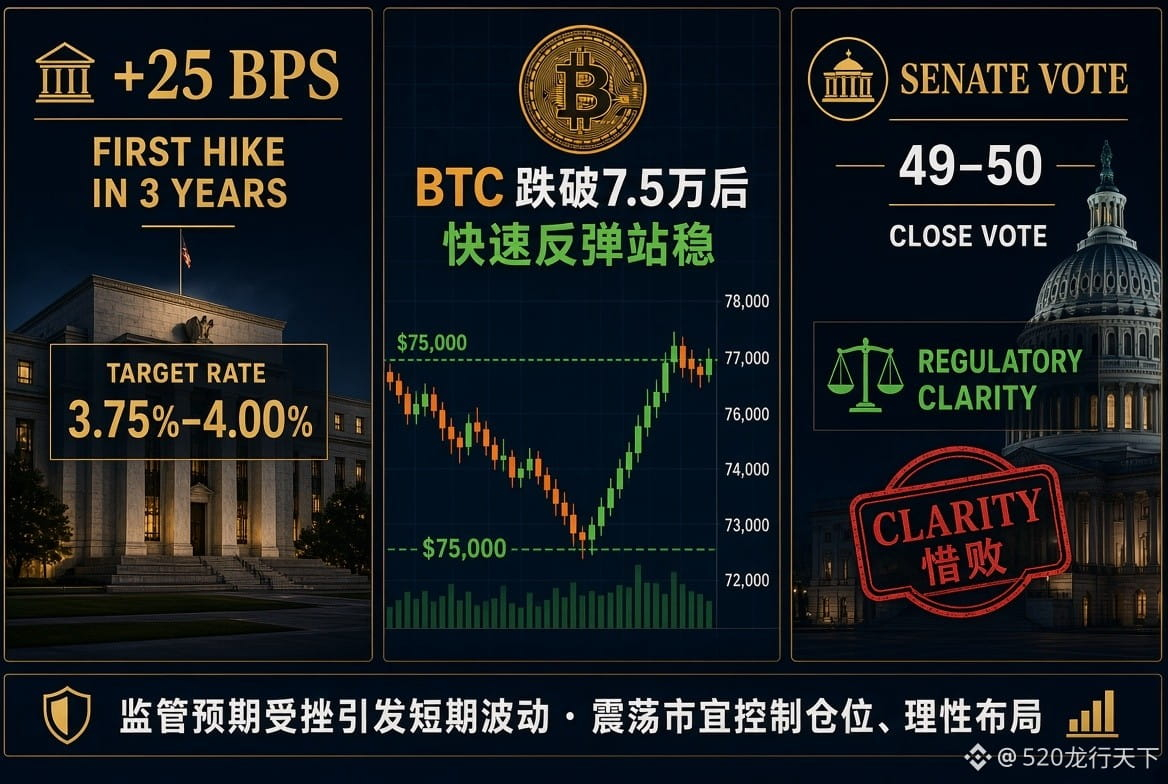
The “Clear Act” that was rejected—what exactly are they trying to do?
This bill’s full name is the “Clarity for Digital Assets Act.” Translated literally, it’s the “Digital Assets Clarity Act.” Just from the name, you can tell what it aims to solve: the biggest headache in the crypto world—unclear regulation.
How chaotic has the U.S. crypto market been over the past few years? The same token: the SEC says it’s a security, while the CFTC says it’s a commodity. The two agencies compete for territory, and no one gives a definitive answer. Without written legislation to set the boundaries, the entire industry lives under the shadow of “being fined at any time.”
And this bill would have been the first to categorize crypto assets: sufficiently decentralized assets like Bitcoin and Ethereum would be classified as digital commodities, under the CFTC; project tokens raised through financing would fall under the SEC; and stablecoins would have their own set of rules. It would also pave the way for exchanges like Coinbase to obtain a federal compliance license, so they wouldn’t have to fight the SEC in court every day.
More importantly, once the bill takes effect, massive pools of institutional capital—like pension funds and mutual funds—would have a compliant channel to enter the market and buy crypto. In plain terms, this is the “ticket for the official forces” that the crypto industry has been waiting for for years.
Trump’s “crypto business” became the bill’s death knell
So the question is: if it’s such a good bill, why was it killed? The opposition in Congress was very straightforward: Trump himself holds a large number of business interests related to cryptocurrencies, with income exceeding hundreds of millions of dollars.
And this bill didn’t include enough binding provisions to address conflicts of interest that would benefit Trump. Put simply: you’re a U.S. president, you have your own businesses in the crypto space, and you push a regulatory bill that favors you—how can anyone guarantee you’re not acting out of self-interest?
#Virus
The “Clear Act” that was rejected—what exactly are they trying to do?
This bill’s full name is the “Clarity for Digital Assets Act.” Translated literally, it’s the “Digital Assets Clarity Act.” Just from the name, you can tell what it aims to solve: the biggest headache in the crypto world—unclear regulation.
How chaotic has the U.S. crypto market been over the past few years? The same token: the SEC says it’s a security, while the CFTC says it’s a commodity. The two agencies compete for territory, and no one gives a definitive answer. Without written legislation to set the boundaries, the entire industry lives under the shadow of “being fined at any time.”
And this bill would have been the first to categorize crypto assets: sufficiently decentralized assets like Bitcoin and Ethereum would be classified as digital commodities, under the CFTC; project tokens raised through financing would fall under the SEC; and stablecoins would have their own set of rules. It would also pave the way for exchanges like Coinbase to obtain a federal compliance license, so they wouldn’t have to fight the SEC in court every day.
More importantly, once the bill takes effect, massive pools of institutional capital—like pension funds and mutual funds—would have a compliant channel to enter the market and buy crypto. In plain terms, this is the “ticket for the official forces” that the crypto industry has been waiting for for years.
Trump’s “crypto business” became the bill’s death knell
So the question is: if it’s such a good bill, why was it killed? The opposition in Congress was very straightforward: Trump himself holds a large number of business interests related to cryptocurrencies, with income exceeding hundreds of millions of dollars.
And this bill didn’t include enough binding provisions to address conflicts of interest that would benefit Trump. Put simply: you’re a U.S. president, you have your own businesses in the crypto space, and you push a regulatory bill that favors you—how can anyone guarantee you’re not acting out of self-interest?

心月势不可挡
·
--
Sing colorful songs for yourself; today is a day worth celebrating. I’ve finally put on a yellow crown—I'm also an Huang V now. Thank you, Binance Square, for building a platform for us to showcase our talents. In the future, I will be a loyal maintainer of Binance Square. Let’s all become better—better and better, more and more outstanding.🧧🧧🧧🧧🧧🧧🧧🧧🧧🧧🧧🧧🧧🧧🎉🎉🎉🎉🎉🎉🎉🎉🎉🌹🌹🌹🌹🌹🌹🌹🌹🌹

Baoluo币商资本
·
--
#美联储加息是否已成定局
#美联储加息25基点美股收跌
Rate hikes and cuts will affect all financial sectors. It may be good or bad, but the market continues to operate in an orderly manner and develop.$BTC
#美联储加息25基点美股收跌
Rate hikes and cuts will affect all financial sectors. It may be good or bad, but the market continues to operate in an orderly manner and develop.$BTC
Quoted content has been removed

Hawk自由哥
·
--
[Replay] 🎙️ Crypto market trends discussion; answers to questions from newcomers ✅ Building the Binance Plaza🦅 spreading the concept of freedom! Maintain ecological balance!
03 h 11 m 41 s · 9.4k listens

奋斗Hustle1688
·
--
[Replay] 🎙️ Build BNB together
03 h 37 m 09 s · 5.6k listens
·
--
🎙️ Crypto market trends discussion; answers to questions for newcomers ✅ build the Binance Plaza together 🦅 spread the spirit of freedom! maintain ecological balance!
End
03 h 11 m 41 s
9.1k
58

Quoted content has been removed
白鲨观点VN
·
--
One evening, Lý Dương asked me:
“Mr. Bai, what does it take to be considered a good trader? Is it all about making a lot of money?”
I smiled: “Maybe not for sure.”
At the beginning, Lý Dương only had a few tens of thousands of dollars. He traded very carefully—if he made a profit, he felt happy; if he lost, he would look for the reasons. But when his account grew to a few hundred thousand dollars, everything gradually changed.
He traded more, with larger volumes. The profit of 5k—something that once made him happy—now felt too small. Losing 10k no longer led him to analyze; he only wanted to quickly make it back.
One day, he said: “Earlier, I traded to make money. Now I trade like I’m trying to prove that I’m right.”
I fell silent.
After that, Lý Dương started reducing the frequency and volume of his trades, pulling back some profits and spending more time on his life.
A few months later, he said: “I’m not making money as fast as before, but I sleep better.”
I thought, that’s the real maturity of a trader. Making money is a skill. Not letting money and emotions control you—that’s real class.
“Mr. Bai, what does it take to be considered a good trader? Is it all about making a lot of money?”
I smiled: “Maybe not for sure.”
At the beginning, Lý Dương only had a few tens of thousands of dollars. He traded very carefully—if he made a profit, he felt happy; if he lost, he would look for the reasons. But when his account grew to a few hundred thousand dollars, everything gradually changed.
He traded more, with larger volumes. The profit of 5k—something that once made him happy—now felt too small. Losing 10k no longer led him to analyze; he only wanted to quickly make it back.
One day, he said: “Earlier, I traded to make money. Now I trade like I’m trying to prove that I’m right.”
I fell silent.
After that, Lý Dương started reducing the frequency and volume of his trades, pulling back some profits and spending more time on his life.
A few months later, he said: “I’m not making money as fast as before, but I sleep better.”
I thought, that’s the real maturity of a trader. Making money is a skill. Not letting money and emotions control you—that’s real class.


静心1688
·
--
💥Keep moving without stopping, strive without end. May you weather a thousand sails and finally reach what you desire.
#美联储加息是否已成定局 #比特币ETF净流出4.5亿美元
#美联储加息是否已成定局 #比特币ETF净流出4.5亿美元


生蚝哥Oyster
·
--
September 17|The Fed hikes rates again after three years, sparking a hawkish shock in the market
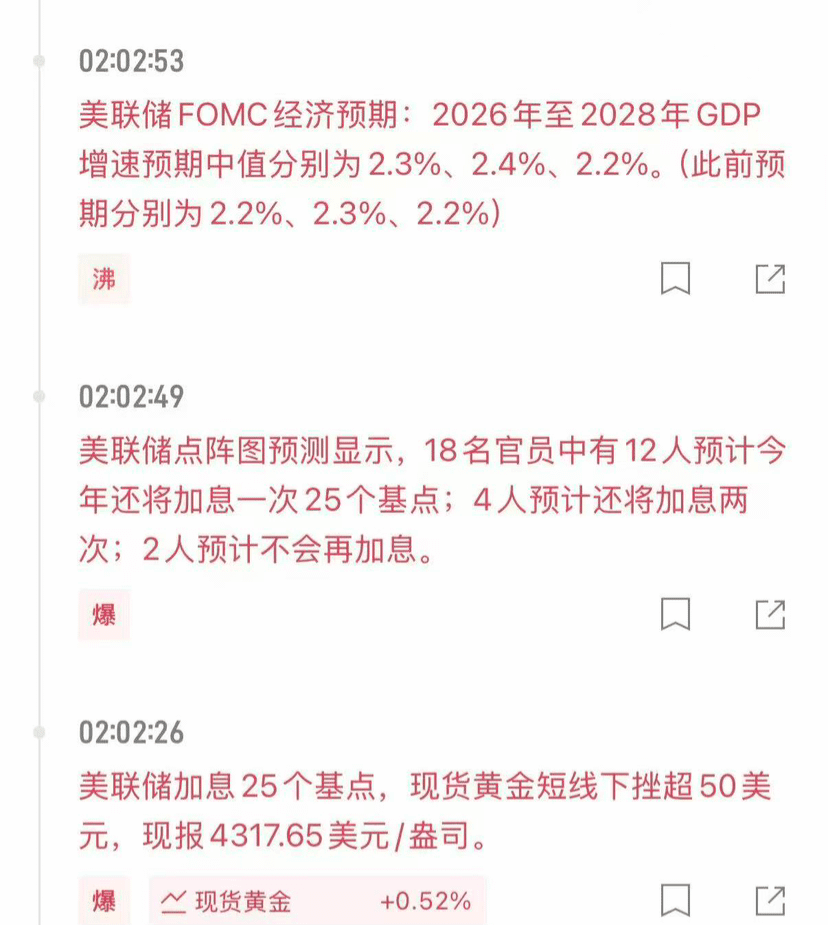
At the Fed FOMC meeting, all members voted in favor of a 25-basis-point rate hike. The target range for the federal funds rate has been raised to 3.75%‑4.00%, marking the first rate hike since July 2023.
The latest dot plot sends a clear signal: 16 officials believe there is a high probability of another rate hike within 2026. The median rate expectations for 2026 and 2027 remain at 4.1%.
After the meeting, Fed Chair Waller said the current U.S. economy and employment market are still very resilient, but the stubborn inflation problem has yet to be resolved. He noted that the committee has not yet seen convincing evidence that inflation is steadily moving back down toward the 2% target. He also said plainly that the key contradiction now is not economic growth, but persistently high inflation.
Regarding the rise in U.S. Treasury yields, Waller attributed it to three main factors: the strength of the U.S. economy, intensifying competition for capital, and geopolitical risk. While he did not directly comment on the U.S.-Iran conflict, he acknowledged that the geopolitical situation is reshaping economic assessments.
During the decision and press-conference phase, the market reaction was quite intense: spot gold briefly plunged by nearly $100; the U.S. dollar index surged by 40 points and climbed above the 100 level; the 2-year Treasury yield rose by 10 bps, and the 10-year yield increased by 5 bps, with equities across the board turning lower.
Rate-futures are being repriced: the market now expects a total of about 33 bps more rate hikes within 2026, up by 6 bps compared with before the decision. By next June, market pricing implies additional room for rate hikes totaling 75 bps, equivalent to three more 25-bp hikes.
At the Fed FOMC meeting, all members voted in favor of a 25-basis-point rate hike. The target range for the federal funds rate has been raised to 3.75%‑4.00%, marking the first rate hike since July 2023.
The latest dot plot sends a clear signal: 16 officials believe there is a high probability of another rate hike within 2026. The median rate expectations for 2026 and 2027 remain at 4.1%.
After the meeting, Fed Chair Waller said the current U.S. economy and employment market are still very resilient, but the stubborn inflation problem has yet to be resolved. He noted that the committee has not yet seen convincing evidence that inflation is steadily moving back down toward the 2% target. He also said plainly that the key contradiction now is not economic growth, but persistently high inflation.
Regarding the rise in U.S. Treasury yields, Waller attributed it to three main factors: the strength of the U.S. economy, intensifying competition for capital, and geopolitical risk. While he did not directly comment on the U.S.-Iran conflict, he acknowledged that the geopolitical situation is reshaping economic assessments.
During the decision and press-conference phase, the market reaction was quite intense: spot gold briefly plunged by nearly $100; the U.S. dollar index surged by 40 points and climbed above the 100 level; the 2-year Treasury yield rose by 10 bps, and the 10-year yield increased by 5 bps, with equities across the board turning lower.
Rate-futures are being repriced: the market now expects a total of about 33 bps more rate hikes within 2026, up by 6 bps compared with before the decision. By next June, market pricing implies additional room for rate hikes totaling 75 bps, equivalent to three more 25-bp hikes.

Log in to explore more content