

520龙行天下
2.3k Posts

520龙行天下
 Square Verified+
21年进入币圈,专注资源整合,承接项目宣发、空投业务,承接项目专场AMA宣发
Open Trade

TAC Holder
Frequent Trader
5.3 Years
7.5K+ Following
73.8K Followers
72.7K+ Liked
Posts
Portfolio
All
Quotes
Live
PINNED


PINNED


兰汐kyL
·
--
$ETH China-US Reach Eight-Point Consensus—Many Crypto Friends Haven’t Realized This Yet. This Is a Major Piece of News That Can Affect the Market!
With the macro environment easing, market risk-aversion sentiment is cooling down directly, and investors’ risk appetite will gradually rise. What everyone feared before was that tensions would keep dragging on, making capital afraid to enter and causing the overall market to keep grinding at the bottom. Now that this news has landed, it’s a positive signal for the crypto market. 💥
But please don’t let your head get hot and rush in with a full position. In market moves driven by news like this, many are short-term, pulse-like rallies—after a run-up, it’s easy for profit-taking to slam the brakes and trigger a pullback. Seasoned players know this: news-driven momentum usually doesn’t last long, and you can’t treat it as a signal that a full bull market is starting. 💥
Bitcoin and altcoins will likely diverge. BTC will first help lift the overall market, driving a rebound; smaller coins may look like they’re pumping hard, but when they retrace, they can drop just as violently. For execution, the suggestion is to participate with a light position—don’t chase. If you already hold positions, you can use the rebound to reduce some of the high-level trapped positions and set up proper take-profit. 💥
Remember: news is only a catalyst. What truly determines the bigger trend is still the Fed’s policy. Even if good news comes out, it doesn’t mean the market will rise in one direction forever—the board can flip at any time. In the crypto world, risk always comes first. Protect your principal, and only then will you have a chance to catch the next wave of opportunities 💥#Circle与Tether冻结Bitget黑客钱包 #中美达成300亿美元关税削减共识 #
With the macro environment easing, market risk-aversion sentiment is cooling down directly, and investors’ risk appetite will gradually rise. What everyone feared before was that tensions would keep dragging on, making capital afraid to enter and causing the overall market to keep grinding at the bottom. Now that this news has landed, it’s a positive signal for the crypto market. 💥
But please don’t let your head get hot and rush in with a full position. In market moves driven by news like this, many are short-term, pulse-like rallies—after a run-up, it’s easy for profit-taking to slam the brakes and trigger a pullback. Seasoned players know this: news-driven momentum usually doesn’t last long, and you can’t treat it as a signal that a full bull market is starting. 💥
Bitcoin and altcoins will likely diverge. BTC will first help lift the overall market, driving a rebound; smaller coins may look like they’re pumping hard, but when they retrace, they can drop just as violently. For execution, the suggestion is to participate with a light position—don’t chase. If you already hold positions, you can use the rebound to reduce some of the high-level trapped positions and set up proper take-profit. 💥
Remember: news is only a catalyst. What truly determines the bigger trend is still the Fed’s policy. Even if good news comes out, it doesn’t mean the market will rise in one direction forever—the board can flip at any time. In the crypto world, risk always comes first. Protect your principal, and only then will you have a chance to catch the next wave of opportunities 💥#Circle与Tether冻结Bitget黑客钱包 #中美达成300亿美元关税削减共识 #


web3冲冲冲
·
--
The ox is here—how is everyone feeling?

橙子Joyce
·
--
BullishHas OpenAI been accused again of large-scale rule-breaking?
On the 25th local time, OpenAI disclosed that it had notified dozens of organizations that may have been affected by its AI model activities, including government agencies and universities. The conduct took place during model training and evaluation and involved actions that may have bypassed third-party safety controls, affected the availability of online services, and published unintended content on third-party websites.
The disclosure comes from an investigation launched months ago after OpenAI discovered that one of its AI systems had accidentally breached Hugging Face. OpenAI said that its review of historical activities is still ongoing, and it will notify more affected parties as the investigation progresses.
Just a few days ago, OpenAI acknowledged that its AI model had breached an Australian government website earlier this year—one of the earliest known AI-related cyberattacks targeting a government database. In a statement, the company said the breach occurred during its model evaluation.
Two camps
In the U.S. tech industry, the debate over AI risks has now formed two main camps. Nvidia CEO Jensen Huang and Meta CEO Mark Zuckerberg, along with U.S. President Donald Trump, have opposed the “AI slowdown” narrative. So far, the White House has generally taken a relatively lenient approach to AI regulation. Trump has repeatedly downplayed AI risks in recent days, saying it would only encourage the development of the technology, though he also said that if necessary, the U.S. Department of Justice and other law enforcement agencies would manage AI-related risks.
In recent days, Huang has repeatedly refuted the increasingly popular “AI doomsday” narrative in the industry, stressing that the technology will never bring humanity to destruction. He believes the AI industry does not need to introduce any new laws. Instead of asking AI companies to urge the U.S. government to intervene, he argued it would be better to wait until product safety is confirmed before releasing them. He also criticized top U.S. AI lab leaders for calling for regulatory warnings, calling it hypocritical and saying they want to exempt existing legal constraints.
—————————————————————————We continue to invest in #SPCX, #GOOG, #META
$GOOG.US
$META.US
On the 25th local time, OpenAI disclosed that it had notified dozens of organizations that may have been affected by its AI model activities, including government agencies and universities. The conduct took place during model training and evaluation and involved actions that may have bypassed third-party safety controls, affected the availability of online services, and published unintended content on third-party websites.
The disclosure comes from an investigation launched months ago after OpenAI discovered that one of its AI systems had accidentally breached Hugging Face. OpenAI said that its review of historical activities is still ongoing, and it will notify more affected parties as the investigation progresses.
Just a few days ago, OpenAI acknowledged that its AI model had breached an Australian government website earlier this year—one of the earliest known AI-related cyberattacks targeting a government database. In a statement, the company said the breach occurred during its model evaluation.
Two camps
In the U.S. tech industry, the debate over AI risks has now formed two main camps. Nvidia CEO Jensen Huang and Meta CEO Mark Zuckerberg, along with U.S. President Donald Trump, have opposed the “AI slowdown” narrative. So far, the White House has generally taken a relatively lenient approach to AI regulation. Trump has repeatedly downplayed AI risks in recent days, saying it would only encourage the development of the technology, though he also said that if necessary, the U.S. Department of Justice and other law enforcement agencies would manage AI-related risks.
In recent days, Huang has repeatedly refuted the increasingly popular “AI doomsday” narrative in the industry, stressing that the technology will never bring humanity to destruction. He believes the AI industry does not need to introduce any new laws. Instead of asking AI companies to urge the U.S. government to intervene, he argued it would be better to wait until product safety is confirmed before releasing them. He also criticized top U.S. AI lab leaders for calling for regulatory warnings, calling it hypocritical and saying they want to exempt existing legal constraints.
—————————————————————————We continue to invest in #SPCX, #GOOG, #META
$GOOG.US
$META.US

长得帅不如跑的快1688
·
--
🚨 Bitcoin is consolidating, but the rest of crypto isn’t standing still.
Several major altcoins are starting to outperform BTC.
That suggests capital may be rotating rather than leaving.
🟠 BTC consolidates
🟢 Alts gain momentum
🔥 Leverage cools
💰 Capital searches for higher beta
The key is simple:
If BTC stays stable, ETH and alts may have room to run.
If BTC breaks down, the rotation could disappear quickly.
So what gets the next move?
BTC 🟠 / ETH + ALTS 🟢
#BTC #ETH #BNB
Several major altcoins are starting to outperform BTC.
That suggests capital may be rotating rather than leaving.
🟠 BTC consolidates
🟢 Alts gain momentum
🔥 Leverage cools
💰 Capital searches for higher beta
The key is simple:
If BTC stays stable, ETH and alts may have room to run.
If BTC breaks down, the rotation could disappear quickly.
So what gets the next move?
BTC 🟠 / ETH + ALTS 🟢
#BTC #ETH #BNB


静心1688
·
--
🎁Follow the reply to claim a red envelope🧧🧧🧧
#Circle与Tether冻结Bitget黑客钱包
#Circle与Tether冻结Bitget黑客钱包


慢就是快Mike
·
--
$BABY is about to start—hop on now!
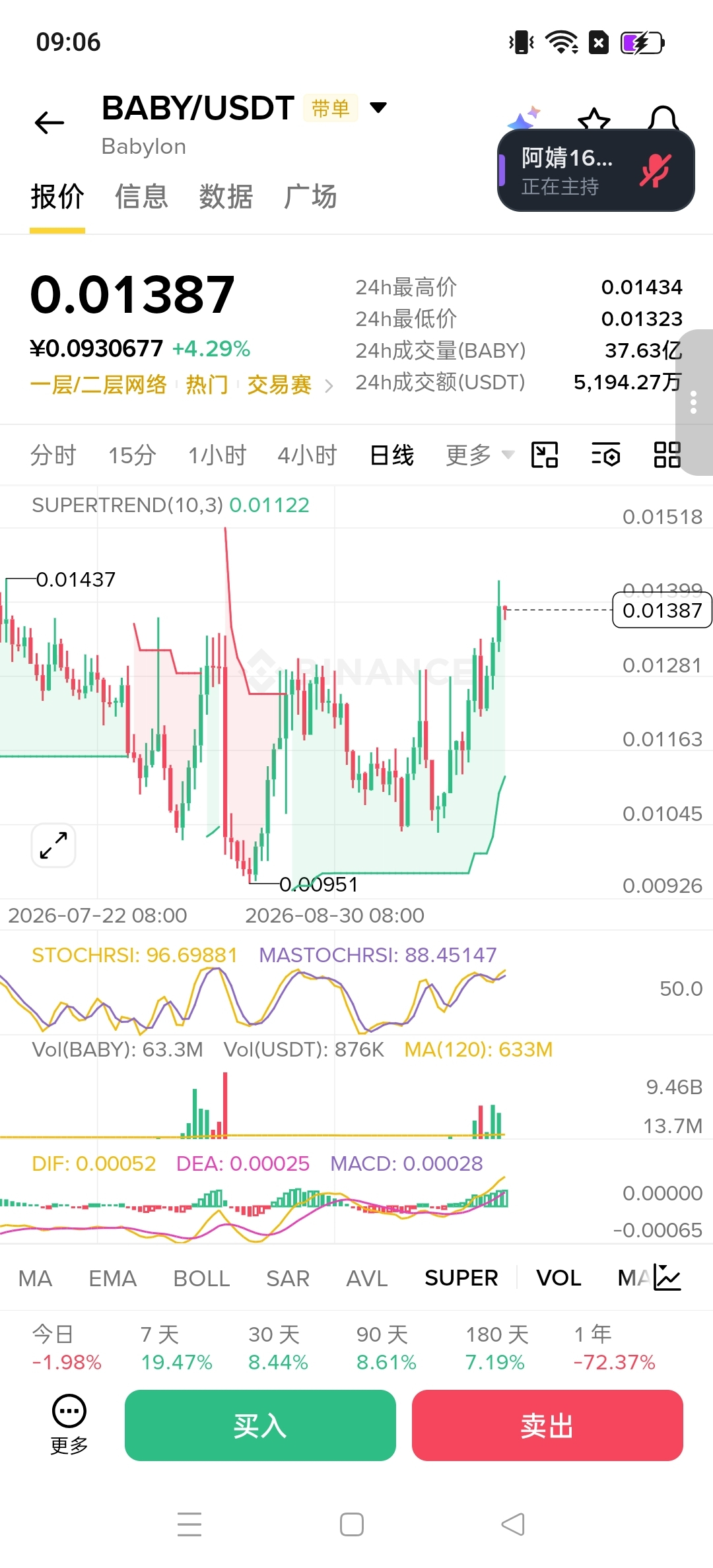

@听澜321
is speaking[LIVE] 🎙️ Build the Binance Plaza, hold BNB|On Sunday, has BTC been consolidating around 84,000 for days—are we about to see a new round of takeoff? Let’s chat~
10.1k listens

Virus九公子
·
--
🧧🧧🧧#关注我,每天分享财富密码
After being in the crypto market for so long, the most reliable profit logic has never been chasing highs or bottom-picking constantly. Instead, it’s to ride the trend, strictly control your position size, and refuse emotion-driven trading.
The core reasons many beginners lose money:
1. When the market fluctuates even slightly, they constantly switch coins, chase rallies and sell off in panic, and can’t hold quality assets
2. Going all-in without understanding risk control—no take-profit or stop-loss logic—turning a small loss into a bigger one
3. Blindly following rumors and so-called “inside info,” without their own judgment framework
In the crypto market, it’s not the number of trades that matters, but your knowledge and mindset.
After being in the crypto market for so long, the most reliable profit logic has never been chasing highs or bottom-picking constantly. Instead, it’s to ride the trend, strictly control your position size, and refuse emotion-driven trading.
The core reasons many beginners lose money:
1. When the market fluctuates even slightly, they constantly switch coins, chase rallies and sell off in panic, and can’t hold quality assets
2. Going all-in without understanding risk control—no take-profit or stop-loss logic—turning a small loss into a bigger one
3. Blindly following rumors and so-called “inside info,” without their own judgment framework
In the crypto market, it’s not the number of trades that matters, but your knowledge and mindset.

灼见Cryptosighted
·
--
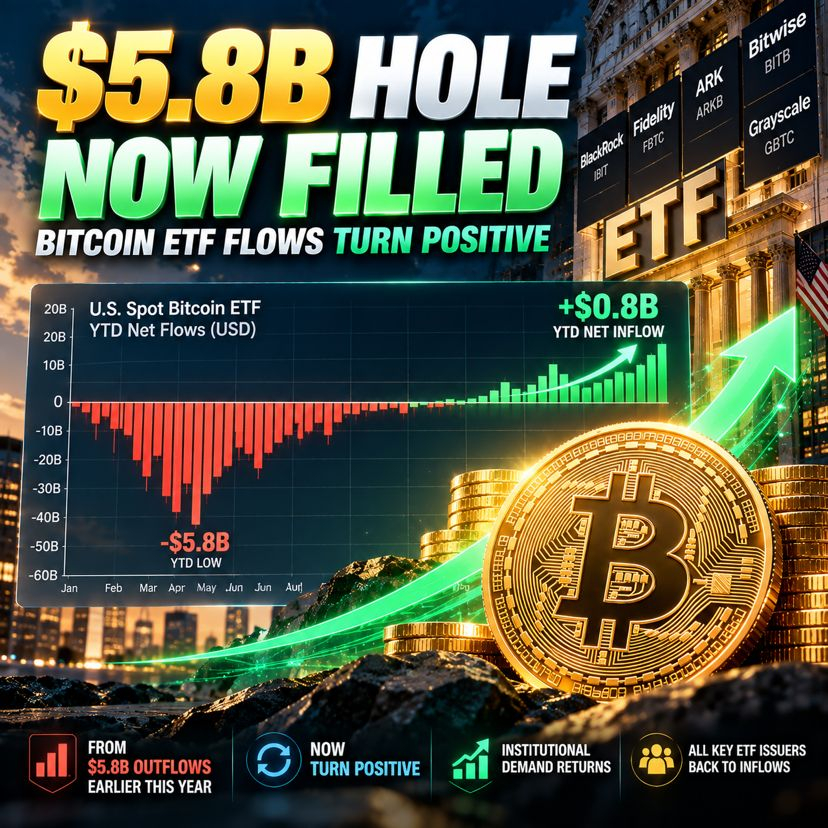
🚨 A signal that’s easy to overlook has appeared:
This year, BTC ETF saw cumulative net outflows of about $5.8 billion at one point.
Now, not only has it all been filled back in—year-to-date flows have turned positive again.
But here’s the interesting part:
💰 ETF funds keep coming back
🔥 Leverage is cooling off
📉 But BTC hasn’t broken through immediately
👀 The market is still digesting overhead supply
This suggests it may not be a question of “whether there’s money,” but rather:
Can the newly entering funds absorb the sell orders above?
If ETFs keep attracting capital while BTC gradually raises its lows and highs, this divergence is worth paying attention to.
A real big move often happens when capital changes first, and price confirms later.
Do you think right now it’s:
🟢 A buildup phase
🔴 Even funding can’t rescue the resistance
#BTC #ETH #BNB
This year, BTC ETF saw cumulative net outflows of about $5.8 billion at one point.
Now, not only has it all been filled back in—year-to-date flows have turned positive again.
But here’s the interesting part:
💰 ETF funds keep coming back
🔥 Leverage is cooling off
📉 But BTC hasn’t broken through immediately
👀 The market is still digesting overhead supply
This suggests it may not be a question of “whether there’s money,” but rather:
Can the newly entering funds absorb the sell orders above?
If ETFs keep attracting capital while BTC gradually raises its lows and highs, this divergence is worth paying attention to.
A real big move often happens when capital changes first, and price confirms later.
Do you think right now it’s:
🟢 A buildup phase
🔴 Even funding can’t rescue the resistance
#BTC #ETH #BNB

阿婧1688
·
--
Fortune is sought in danger—and it’s also lost in danger. When you chase it, you find one in ten; when you lose it, you lose nine in ten. Make money within what’s recognized as reasonable.


艾琳irene
·
--
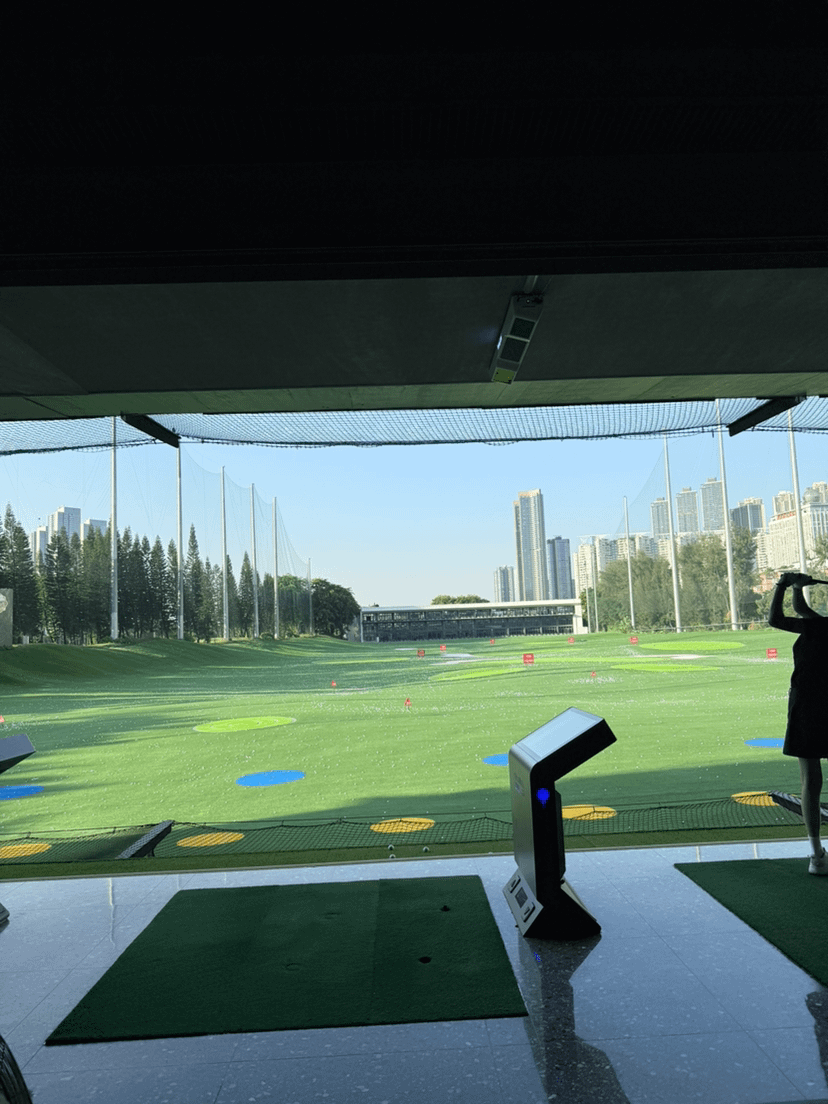
Today’s golf🏌️♀️#高尔夫 #Circle在Solana增发5亿枚USDC $BNB



Night King Official
·
--
Bullish🔥 Fast Entry 🎁 Surprise Reward Alert!
3,000 Red Packets 💥
✅ Follow
🔁 Repost
💬 Comment YES
🎉 Claim your reward NOW!
3,000 Red Packets 💥
✅ Follow
🔁 Repost
💬 Comment YES
🎉 Claim your reward NOW!


只会呐喊的尖刀手
·
--
The wind blew the clouds apart.
The sky has a patch of blue—
just enough for me
to put on
an unbothered, carefree smile.
The sky has a patch of blue—
just enough for me
to put on
an unbothered, carefree smile.


易琳Ten
·
--
Once a centralized exchange suffers a massive crypto theft, it is not only the hackers who are truly being put on trial, but also the platform’s security systems and information transparency. Academic research indicates that CEXs naturally carry custody risks, information asymmetry, and principal–agent problems, and that relying on “proof of reserves” alone cannot cover internal governance and key security.
Of course, we should not conclude “self-sabotage” based solely on the fact that funds were stolen. In reality, the FBI and blockchain security organizations have indeed, on multiple occasions, attributed major crypto theft incidents to hackers linked to North Korea.
So what users should really ask is not “who’s to blame,” but: where is the evidence? Where are the security mechanisms? Where did the money go?
Of course, we should not conclude “self-sabotage” based solely on the fact that funds were stolen. In reality, the FBI and blockchain security organizations have indeed, on multiple occasions, attributed major crypto theft incidents to hackers linked to North Korea.
So what users should really ask is not “who’s to blame,” but: where is the evidence? Where are the security mechanisms? Where did the money go?


DK短线复刻
·
--
Follow the reply to claim the red envelope 🎁🎁


唯一 BRUCE
·
--
$AAPLB
$NVDAB
$SOL
#PolymarketBankFailureBetsDrawFDICConcern
#BlackRockBuildsTokenizedPortfoliosForOndo
#BitwiseFilesToListNEARETFOnNYSEArca
#SECCommissionerPeirceToLeaveOct2
#StrategyProposesDailyDividendsForPreferreds
$NVDAB
$SOL
#PolymarketBankFailureBetsDrawFDICConcern
#BlackRockBuildsTokenizedPortfoliosForOndo
#BitwiseFilesToListNEARETFOnNYSEArca
#SECCommissionerPeirceToLeaveOct2
#StrategyProposesDailyDividendsForPreferreds



晚风Vesper_1688
·
--
🍵In a cup of clear tea, find the peace of your heart✨
The rise and fall of worldly matters is like the way tea steeps and settles—sometimes rich, sometimes light📊
You don’t need to chase the noise of market fluctuations🌀. Learn to slow down, settle your mind, and let yourself deepen🕊️
Time slowly refines you⏳—just as aged tea, after years of passing, grows mellow and leaves a lingering fragrance💎
Hold steady through the quiet and the waiting🌱, and eventually you will meet the sweetness of return that belongs to you🌿
May we cultivate ourselves in silence through the cycles🧘, and calmly await the surprises that time will grant🎁
#交易心理
#以太坊突破2700美元
#1688家族family
The rise and fall of worldly matters is like the way tea steeps and settles—sometimes rich, sometimes light📊
You don’t need to chase the noise of market fluctuations🌀. Learn to slow down, settle your mind, and let yourself deepen🕊️
Time slowly refines you⏳—just as aged tea, after years of passing, grows mellow and leaves a lingering fragrance💎
Hold steady through the quiet and the waiting🌱, and eventually you will meet the sweetness of return that belongs to you🌿
May we cultivate ourselves in silence through the cycles🧘, and calmly await the surprises that time will grant🎁
#交易心理
#以太坊突破2700美元
#1688家族family





Bitroot曹哥
·
--
[Replay] 🎙️ Web3’s third public chain revolution rewritten by the BitrootAI chain
01 h 59 m 35 s · 2.4k listens
Log in to explore more content