
520龙行天下
2.5k Posts

520龙行天下
 Square Verified+
21年进入币圈,专注资源整合,承接项目宣发、空投业务,承接项目专场AMA宣发
Open Trade

TAC Holder
High-Frequency Trader
5.3 Years
7.5K+ Following
72.1K+ Followers
71.7K+ Liked
Posts
Portfolio
All
Quotes
Live


@币盈Anna
is speaking[LIVE] 🎙️ Fed rate hike delivered, bulls and bears battle fiercely❗ Yesterday's long positions were all profitable, today we're continuing to stream in real time with key price levels
1.6k listens

周周1688
·
--
🇨🇳 Today|September 17 Crypto Market Brief
🔥 FOMC delivered results, and the market shifted from “waiting for answers” to “digesting the answers”
The Federal Reserve raised rates for the first time in three years by 25 basis points, bringing the federal funds rate to 3.75%–4.00%.
BTC briefly fell to around $75.3K, then regained and moved back above $76K.
📉 ETFs: about $746M outflow over two days
On September 15, spot BTC ETF net outflows were about $450M; on September 16, there was another outflow of about $296M.
Together, the two-day total is nearly $746M—one of the largest consecutive outflow streaks recently.
But this looks more like a concentrated reaction to blocked CLARITY momentum and the FOMC outcome, not simply a sign of long-term capital leaving.
🏛 US Regulation: the Senate and House head in different directions
The CLARITY Act did not receive the 60 votes needed to advance in the Senate.
Meanwhile, two related bills passed in the House committee:
American Reserve Modernization Act: 28–21
Digital Asset Tax Certainty Act: 38–5
Market-structure legislation is temporarily stalled, but BTC reserves and the digital asset tax framework are still moving forward.
⚡ Circle Arc Mainnet officially goes live
Circle launched an L1 Arc that uses USDC as gas, targeting sub-second finality.
Institutions including BlackRock, Visa, Mastercard, DTCC, and ICE participate in validating nodes, while 100+ apps and institutional projects enter the ecosystem in parallel.
🟢 ZEC becomes today’s standout mover
Zcash rose as much as about 18%–23%.
The NU7 upgrade will reduce target block time from 75 seconds to 25 seconds while keeping the existing halving mechanism.
📊 Market Snapshot
BTC ≈ $76.4K
ETH ≈ $2.44K
SOL ≈ $100
BNB ≈ $710+
XRP ≈ $1.29
🎯 Today’s key is not “whether rates will be raised,” but “what happens after the hike.”
The 25bp increase is already in the books.
Now the market is really watching the Dot Plot, the inflation path, and whether the remaining time through 2026 will still see tightening.
BTC is still looking for direction within the $75K–$80K range.
#1688家族family #蓝朋友1688 #CryptoWatchMay2024 #EthereumEFT #FOMC
🔥 FOMC delivered results, and the market shifted from “waiting for answers” to “digesting the answers”
The Federal Reserve raised rates for the first time in three years by 25 basis points, bringing the federal funds rate to 3.75%–4.00%.
BTC briefly fell to around $75.3K, then regained and moved back above $76K.
📉 ETFs: about $746M outflow over two days
On September 15, spot BTC ETF net outflows were about $450M; on September 16, there was another outflow of about $296M.
Together, the two-day total is nearly $746M—one of the largest consecutive outflow streaks recently.
But this looks more like a concentrated reaction to blocked CLARITY momentum and the FOMC outcome, not simply a sign of long-term capital leaving.
🏛 US Regulation: the Senate and House head in different directions
The CLARITY Act did not receive the 60 votes needed to advance in the Senate.
Meanwhile, two related bills passed in the House committee:
American Reserve Modernization Act: 28–21
Digital Asset Tax Certainty Act: 38–5
Market-structure legislation is temporarily stalled, but BTC reserves and the digital asset tax framework are still moving forward.
⚡ Circle Arc Mainnet officially goes live
Circle launched an L1 Arc that uses USDC as gas, targeting sub-second finality.
Institutions including BlackRock, Visa, Mastercard, DTCC, and ICE participate in validating nodes, while 100+ apps and institutional projects enter the ecosystem in parallel.
🟢 ZEC becomes today’s standout mover
Zcash rose as much as about 18%–23%.
The NU7 upgrade will reduce target block time from 75 seconds to 25 seconds while keeping the existing halving mechanism.
📊 Market Snapshot
BTC ≈ $76.4K
ETH ≈ $2.44K
SOL ≈ $100
BNB ≈ $710+
XRP ≈ $1.29
🎯 Today’s key is not “whether rates will be raised,” but “what happens after the hike.”
The 25bp increase is already in the books.
Now the market is really watching the Dot Plot, the inflation path, and whether the remaining time through 2026 will still see tightening.
BTC is still looking for direction within the $75K–$80K range.
#1688家族family #蓝朋友1688 #CryptoWatchMay2024 #EthereumEFT #FOMC


圣克斯Lucky1688
·
--
🧧🎁🧧🎁🧧🎁
Around September 18, a series of important infrastructure upgrades, project pivots, and industry ecosystem developments took place in the blockchain sector:
1. The Vanar chain completed a major migration and formally shut down its independent L1 mainnet Vanar project. On September 18, it officially initiated the shutdown and liquidation procedures for its original independent Layer 1 blockchain. Before that, on September 17, the project had completed the migration of its token contracts, and trading of VANRY tokens on Ethereum and Polygon was formally paused, fully transitioning to the Base chain. This move marks its departure from the early era of independent public chains. In the future, its strategy will fully shift toward an AI application ecosystem built on the Base chain and “AI Organizations” (AI orgs) platform (such as the Foundry platform planned for release on October 1).
2. In mid-September, the industry’s pragmatic shift toward real-world Web3 business adoption accelerated. The focus of discussions in the Web3 space is moving faster from pure token speculation and concept hype toward “eliminating real-world friction in commerce.” Developers and startups are increasingly inclined to apply blockchain technology to scenarios that truly require multi-party trust, tamper-proof credentials, supply-chain anti-counterfeiting, and digital identity verification—while keeping sensitive data and core business logic off-chain. The emphasis is on “trust infrastructure is better than token theater.”
3. Global regional Web3 and blockchain conferences continued to advance. With mid-September approaching, Web3 technical events and conferences combining academia and industry (such as regional tech events like Brazil’s Web3 PE, etc.) are also rolling out in close succession. These discussions mainly focus on concrete deployment cases of blockchain in areas such as the digital economy, compliant payments, and the creative industries. Overall, as of September 18, the Web3 industry is undergoing structural adjustments: public-chain ecosystems are converging toward mainstream high-performance networks (such as Base) through architectural upgrades, while the industry’s application layer is becoming more pragmatic and compliant.
Follow me and get the $SOL red envelope in Answer 1!
🧧🎁🧧🎁🧧🎁
Around September 18, a series of important infrastructure upgrades, project pivots, and industry ecosystem developments took place in the blockchain sector:
1. The Vanar chain completed a major migration and formally shut down its independent L1 mainnet Vanar project. On September 18, it officially initiated the shutdown and liquidation procedures for its original independent Layer 1 blockchain. Before that, on September 17, the project had completed the migration of its token contracts, and trading of VANRY tokens on Ethereum and Polygon was formally paused, fully transitioning to the Base chain. This move marks its departure from the early era of independent public chains. In the future, its strategy will fully shift toward an AI application ecosystem built on the Base chain and “AI Organizations” (AI orgs) platform (such as the Foundry platform planned for release on October 1).
2. In mid-September, the industry’s pragmatic shift toward real-world Web3 business adoption accelerated. The focus of discussions in the Web3 space is moving faster from pure token speculation and concept hype toward “eliminating real-world friction in commerce.” Developers and startups are increasingly inclined to apply blockchain technology to scenarios that truly require multi-party trust, tamper-proof credentials, supply-chain anti-counterfeiting, and digital identity verification—while keeping sensitive data and core business logic off-chain. The emphasis is on “trust infrastructure is better than token theater.”
3. Global regional Web3 and blockchain conferences continued to advance. With mid-September approaching, Web3 technical events and conferences combining academia and industry (such as regional tech events like Brazil’s Web3 PE, etc.) are also rolling out in close succession. These discussions mainly focus on concrete deployment cases of blockchain in areas such as the digital economy, compliant payments, and the creative industries. Overall, as of September 18, the Web3 industry is undergoing structural adjustments: public-chain ecosystems are converging toward mainstream high-performance networks (such as Base) through architectural upgrades, while the industry’s application layer is becoming more pragmatic and compliant.
Follow me and get the $SOL red envelope in Answer 1!
🧧🎁🧧🎁🧧🎁



奕泽YIZZE
·
--
🧧🔥 In the tide of the digital age, steadfast belief is the key to moving forward. Follow LUCIC exclusive card dividend updates—don’t blindly follow, don’t chase trends. Amid the interweaving of technological change and market shifts, stay confident in quality assets. Let’s explore together the possibilities ahead and seize today’s long-term opportunities.
Please follow, like, and share!
Please follow, like, and share!


大丽7613
·
--
The strategy direction is already clear:
Spot first—enter in batches at 75,000 and 73,000, further improving fault tolerance;
At the 75,000 level for futures, we’ve repeatedly “harvested” there multiple times. Missing once is fine—wait for stronger support at 73,000;
ETH support reference: 2360, 2200.
Once a deep drawdown of 20% or so arrives—like a sudden bloodbath—this kind of “golden falling” window must be boldly used to build positions.
Simplicity is the ultimate sophistication. This strategy is simple yet very effective: sell when crowds are loud, buy when no one is paying attention.
After successfully escaping the top at a high level, the main task now is to gradually take back the chips on dips.
After that, when you encounter good trading opportunities, jump right in. For long-term positioning, hold steadfast; for short-term gains, also seize the moment.
Spot first—enter in batches at 75,000 and 73,000, further improving fault tolerance;
At the 75,000 level for futures, we’ve repeatedly “harvested” there multiple times. Missing once is fine—wait for stronger support at 73,000;
ETH support reference: 2360, 2200.
Once a deep drawdown of 20% or so arrives—like a sudden bloodbath—this kind of “golden falling” window must be boldly used to build positions.
Simplicity is the ultimate sophistication. This strategy is simple yet very effective: sell when crowds are loud, buy when no one is paying attention.
After successfully escaping the top at a high level, the main task now is to gradually take back the chips on dips.
After that, when you encounter good trading opportunities, jump right in. For long-term positioning, hold steadfast; for short-term gains, also seize the moment.

晚风Vesper_1688
·
--
🍃Walk forward with the mountain breeze, and let yourself settle through each step⛰️
When climbing to see the scenery, what matters most is focus on your footing—trading and “cultivation” are the same📊.
Market ups and downs come and go swiftly—don’t let short-term fluctuations disrupt your rhythm🕊️.
Stay independent in thinking, keep your inner order, and don’t blindly follow the crowd or chase trends✨.
Accumulate understanding slowly, hold your impulses in check—opportunities will come in their own time💎.
Keep your passion, delve deeper inward, and along the way you’ll have your own rewards🌿
#交易心理
#Paradigm披露持有ZEC
#1688家族family
When climbing to see the scenery, what matters most is focus on your footing—trading and “cultivation” are the same📊.
Market ups and downs come and go swiftly—don’t let short-term fluctuations disrupt your rhythm🕊️.
Stay independent in thinking, keep your inner order, and don’t blindly follow the crowd or chase trends✨.
Accumulate understanding slowly, hold your impulses in check—opportunities will come in their own time💎.
Keep your passion, delve deeper inward, and along the way you’ll have your own rewards🌿
#交易心理
#Paradigm披露持有ZEC
#1688家族family





正乾商学--四条2
·
--
Are you really suited to make a living by trading?
Part Six
⑥ Finally, ask yourself one more question
Do you really spend a lot of time every day learning and analyzing?
Many people ask me:
“Why don’t I have results even after trading for a year?”
But if you dig in carefully:
How many hours do you actually spend learning every day?
Do you do a review afterward?
Do you keep a trading log?
Do you track your win rate, profit-to-loss ratio, and maximum drawdown?
Do you analyze what kinds of market conditions you are most likely to make mistakes in?
In the end, you’ll find that:
In fact, many people don’t really do it.
So some people say:
“I’m not good at trading, so trading isn’t for me.”
I think that conclusion was reached too quickly.
You should first ask yourself:
Have I really built a trading environment that suits me?
Have I really found a trading approach that fits my personality?
Have I really put in enough time to learn?
Have I systematically verified my method?
If these questions still haven’t been resolved,
then it’s time to say:
“Trading isn’t working.”
Actually, it’s still too early.
Finally, what I want to say is:
Many people understand “successful trading” as:
Finding a magical indicator.
But in reality, truly long-term, stable trading is more like a complete system:
your income structure
+your lifestyle
+your trading
+your personality
+a trading style that suits you
+knowledge
+risk management
+mental resilience
As long as any one of these elements has been a problem for a long time,
it may eventually show up in your trading results.
So before asking:
“Can I get rich by trading?”
first ask yourself:
“Is my current life really already prepared for me to become a trader?”
This may be far more important than learning another indicator.
If you’re interested in trading, feel free to leave a comment in the comment section or join the chat room to exchange ideas and learn together and grow together!
#Paradigm披露持有ZEC #Paradigm披露持有ZEC
Part Six
⑥ Finally, ask yourself one more question
Do you really spend a lot of time every day learning and analyzing?
Many people ask me:
“Why don’t I have results even after trading for a year?”
But if you dig in carefully:
How many hours do you actually spend learning every day?
Do you do a review afterward?
Do you keep a trading log?
Do you track your win rate, profit-to-loss ratio, and maximum drawdown?
Do you analyze what kinds of market conditions you are most likely to make mistakes in?
In the end, you’ll find that:
In fact, many people don’t really do it.
So some people say:
“I’m not good at trading, so trading isn’t for me.”
I think that conclusion was reached too quickly.
You should first ask yourself:
Have I really built a trading environment that suits me?
Have I really found a trading approach that fits my personality?
Have I really put in enough time to learn?
Have I systematically verified my method?
If these questions still haven’t been resolved,
then it’s time to say:
“Trading isn’t working.”
Actually, it’s still too early.
Finally, what I want to say is:
Many people understand “successful trading” as:
Finding a magical indicator.
But in reality, truly long-term, stable trading is more like a complete system:
your income structure
+your lifestyle
+your trading
+your personality
+a trading style that suits you
+knowledge
+risk management
+mental resilience
As long as any one of these elements has been a problem for a long time,
it may eventually show up in your trading results.
So before asking:
“Can I get rich by trading?”
first ask yourself:
“Is my current life really already prepared for me to become a trader?”
This may be far more important than learning another indicator.
If you’re interested in trading, feel free to leave a comment in the comment section or join the chat room to exchange ideas and learn together and grow together!
#Paradigm披露持有ZEC #Paradigm披露持有ZEC

静心1688
·
--
💥Chase the wind and race the moon—don’t pause. Strive right now, and live up to your youth, without letting yourself down.
#Arkham称贝莱德20天买入15亿美元ETH
#Arkham称贝莱德20天买入15亿美元ETH


全球零撸达人
·
--
Good afternoon🌞 #红包 h b#红包 🧧


Mira小白桃
·
--
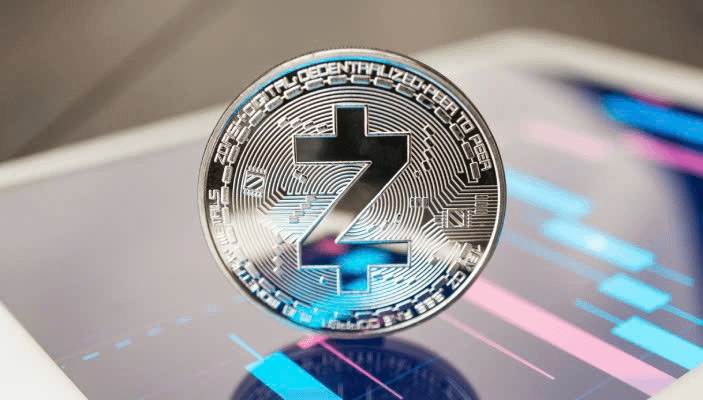
🔥$ZEC has rushed to 1500—can it still move higher from here?
This round of ZEC’s strength has indeed gone beyond many people’s expectations.
From breaking through a key resistance level and continuously setting new highs, it has now entered a very critical position:
The uptrend hasn’t shown obvious signs of being broken, but the short-term market has already entered a high-level standoff.
Currently, the market has a few viewpoints that are quite interesting.
Some traders believe that ZEC now looks more like high-level consolidation within a strong trend. As long as the core breakout zone can be defended, there’s still a possibility for further upward expansion.
But some analysts are starting to warn:
Rising too fast is itself a risk.
Derivatives positioning continues to increase, and technical indicators have also moved into a clearly overheated area.
So going forward, I won’t simply chase the number “1500.”
I’m watching three areas instead:
First, the breakout zone overhead.
If ZEC can continue to break the prior high with expanding volume, and after breaking out it can turn this zone into a new support level, then the strong uptrend still has room to continue.
For the next phase above, keep an eye on higher integer psychological levels.
Second, the pressure around 1500.
This is a very important psychological level.
If it spikes up and then quickly falls back, it suggests that profit-taking from higher levels has started to cash in.
In that case, the short term is more likely to enter consolidation rather than immediately pushing higher.
Third, the core support zone below.
Right now, market analysis is focused on the earlier breakout zone.
As long as this zone holds, ZEC is still in a strong structure.
But if it breaks down and the subsequent retest can’t reclaim it, then be careful—this rally may be entering a deeper correction. Earlier analysis also pointed to the next lower layer of support as an observation area if the trend starts to weaken.
So my conclusion is simple:
ZEC still has upside potential, but the risk of chasing after a spike is getting higher.
Strong breakout and holding firm → continue to look for trend extension.
Push high and then pull back at high levels → wait for the dip to confirm.
If core support is lost → guard against the uptrend structure weakening.
When the market is strong, you can’t rely on emotion to chase.
I’d rather wait for a comfortable entry point than FOMO just because I see 1500.
This round of ZEC’s strength has indeed gone beyond many people’s expectations.
From breaking through a key resistance level and continuously setting new highs, it has now entered a very critical position:
The uptrend hasn’t shown obvious signs of being broken, but the short-term market has already entered a high-level standoff.
Currently, the market has a few viewpoints that are quite interesting.
Some traders believe that ZEC now looks more like high-level consolidation within a strong trend. As long as the core breakout zone can be defended, there’s still a possibility for further upward expansion.
But some analysts are starting to warn:
Rising too fast is itself a risk.
Derivatives positioning continues to increase, and technical indicators have also moved into a clearly overheated area.
So going forward, I won’t simply chase the number “1500.”
I’m watching three areas instead:
First, the breakout zone overhead.
If ZEC can continue to break the prior high with expanding volume, and after breaking out it can turn this zone into a new support level, then the strong uptrend still has room to continue.
For the next phase above, keep an eye on higher integer psychological levels.
Second, the pressure around 1500.
This is a very important psychological level.
If it spikes up and then quickly falls back, it suggests that profit-taking from higher levels has started to cash in.
In that case, the short term is more likely to enter consolidation rather than immediately pushing higher.
Third, the core support zone below.
Right now, market analysis is focused on the earlier breakout zone.
As long as this zone holds, ZEC is still in a strong structure.
But if it breaks down and the subsequent retest can’t reclaim it, then be careful—this rally may be entering a deeper correction. Earlier analysis also pointed to the next lower layer of support as an observation area if the trend starts to weaken.
So my conclusion is simple:
ZEC still has upside potential, but the risk of chasing after a spike is getting higher.
Strong breakout and holding firm → continue to look for trend extension.
Push high and then pull back at high levels → wait for the dip to confirm.
If core support is lost → guard against the uptrend structure weakening.
When the market is strong, you can’t rely on emotion to chase.
I’d rather wait for a comfortable entry point than FOMO just because I see 1500.

慢就是快Mike
·
--
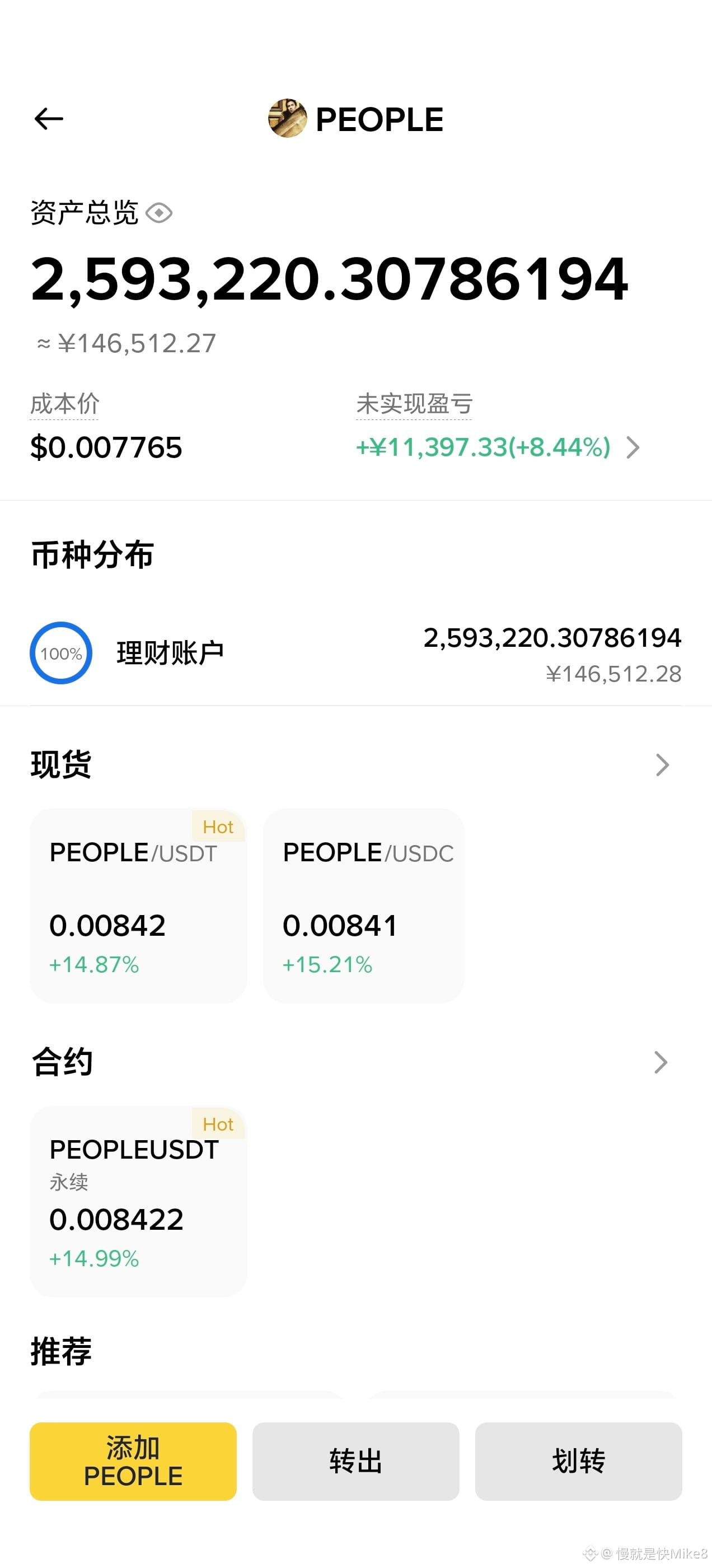
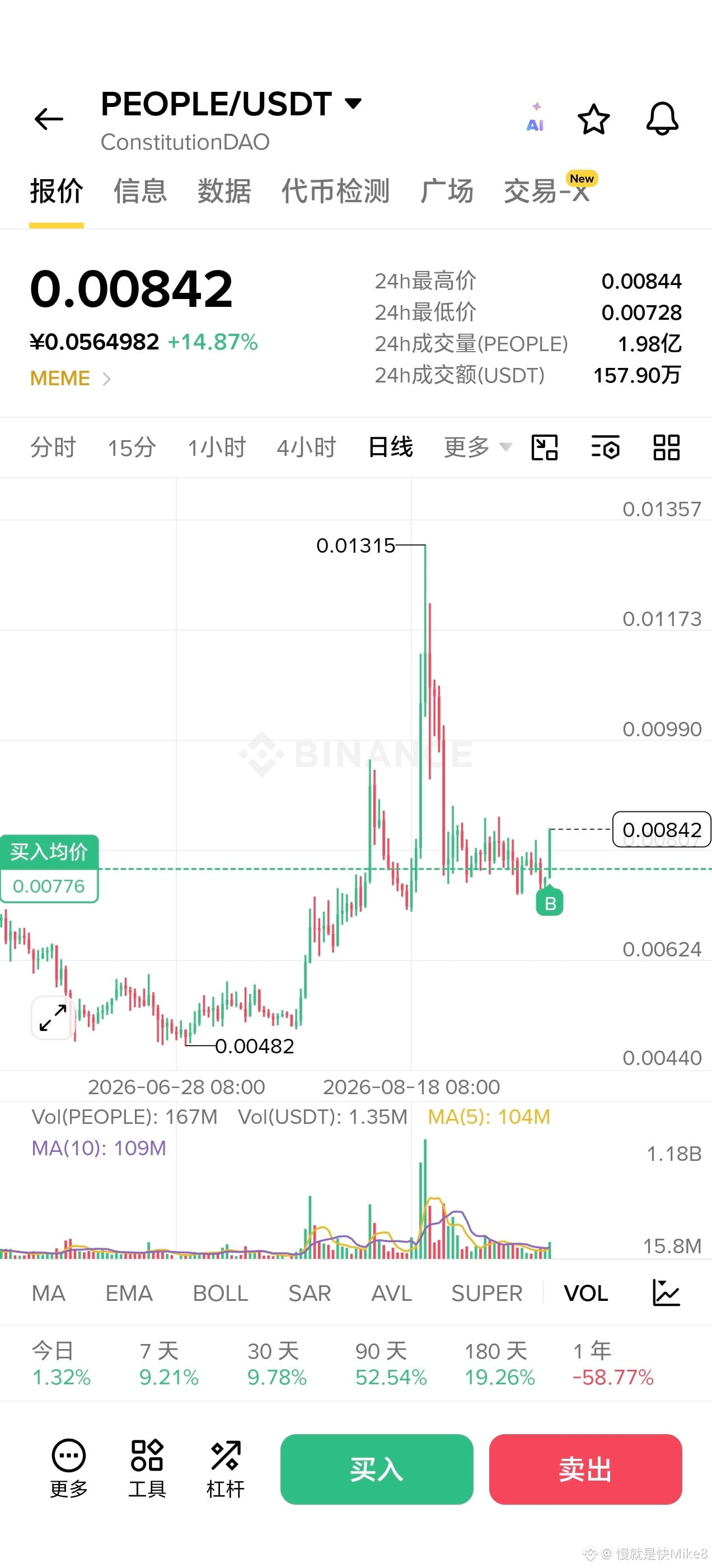
$PEOPLE Every year during the U.S. presidential election, this coin will have market action. “By the people, for the people” — you can stake a position in advance!

橙子Joyce
·
--
BullishWill the Federal Reserve raise rates as expected this week? Wall Street is debating: will it end the U.S. stock bull market?
After an unexpectedly strong U.S. CPI report came out last Friday, traders generally expect the Federal Reserve to begin raising rates at this week’s policy meeting—marking the first rate hike in more than three years.
Historically, previous rounds of rate hikes have offered a reference point for today’s market. Based on past experience (though history of course can’t guarantee the future), U.S. stocks may first weaken, then rebound.
Among the six tightening cycles since 1994, during the first four months after the rate-hike cycle began, the S&P 500’s average return was negative.
This suggests that once the “rate-hike shoe” drops, U.S. stocks may look lackluster through the beginning of next year.
As of the close last Friday, the benchmark U.S. equity index, the S&P 500, is up nearly 12% year to date. Strong corporate earnings and a fairly resilient economy have provided solid support for bulls in the stock market.
If you extend the time horizon, the S&P 500’s performance tends to improve gradually: in the 12 months after the start of a rate-hiking cycle, the index’s average return is close to 7%, with a median return of about 11%. (Using median-based statistics helps remove distortions from extreme outliers—for example, the index surged more than 40% after hikes began in March 1997.)
If the Federal Reserve implements a rate hike this Wednesday, it will be the first hike since July 2023—when the Fed raised rates to a range of 5.25% to 5.50%.
Currently, the federal funds rate in the U.S. is at 3.50% to 3.75%. According to the CME Group’s FedWatch tool, futures traders currently assign an 86% probability to a 25-basis-point hike this week.
One positive factor for the market is that mega-scale cloud service providers are still driving growth in excess returns through large-scale AI spending. The S&P 500 component stocks’ forecast for earnings growth in 2027 is expected to reach double digits. If the outlook for AI spending remains unchanged, it may be enough to offset any cooling in optimistic sentiment caused by the rate hikes.
Another bright spot for equities is that although inflation remains sticky, it appears to be slowing. The inflation rate has fallen from a May peak of 4.2%. This should allow the Federal Reserve to take a more gradual approach, and the data shows that the pace of rate hikes is crucial for stock performance—slower pacing gives investors more time to absorb policy changes!
$BZ
$CL
Energy
After an unexpectedly strong U.S. CPI report came out last Friday, traders generally expect the Federal Reserve to begin raising rates at this week’s policy meeting—marking the first rate hike in more than three years.
Historically, previous rounds of rate hikes have offered a reference point for today’s market. Based on past experience (though history of course can’t guarantee the future), U.S. stocks may first weaken, then rebound.
Among the six tightening cycles since 1994, during the first four months after the rate-hike cycle began, the S&P 500’s average return was negative.
This suggests that once the “rate-hike shoe” drops, U.S. stocks may look lackluster through the beginning of next year.
As of the close last Friday, the benchmark U.S. equity index, the S&P 500, is up nearly 12% year to date. Strong corporate earnings and a fairly resilient economy have provided solid support for bulls in the stock market.
If you extend the time horizon, the S&P 500’s performance tends to improve gradually: in the 12 months after the start of a rate-hiking cycle, the index’s average return is close to 7%, with a median return of about 11%. (Using median-based statistics helps remove distortions from extreme outliers—for example, the index surged more than 40% after hikes began in March 1997.)
If the Federal Reserve implements a rate hike this Wednesday, it will be the first hike since July 2023—when the Fed raised rates to a range of 5.25% to 5.50%.
Currently, the federal funds rate in the U.S. is at 3.50% to 3.75%. According to the CME Group’s FedWatch tool, futures traders currently assign an 86% probability to a 25-basis-point hike this week.
One positive factor for the market is that mega-scale cloud service providers are still driving growth in excess returns through large-scale AI spending. The S&P 500 component stocks’ forecast for earnings growth in 2027 is expected to reach double digits. If the outlook for AI spending remains unchanged, it may be enough to offset any cooling in optimistic sentiment caused by the rate hikes.
Another bright spot for equities is that although inflation remains sticky, it appears to be slowing. The inflation rate has fallen from a May peak of 4.2%. This should allow the Federal Reserve to take a more gradual approach, and the data shows that the pace of rate hikes is crucial for stock performance—slower pacing gives investors more time to absorb policy changes!
$BZ
$CL
Energy

路人1688luren
·
--
Thank you to all the fans who have walked with me every step of the way, thank you to all the Binance Square hosts I’ve met along the way, thank you for everything at the Binance Square... thank you. Zhouzhou 1688, Da Li 7613, Ying Hong, Long Xing Tianxia, Feng Dou 1688, Chao Ji Ba Dan, Tang Yuan, Ting Lan, Brother Ziyou, Help Help, Jing Jing, Myth... thank you $BNB ...

大丽7613
·
--
[Replay] 🎙️ Let's talk about the short-term BNB market
02 h 14 m 45 s · 8.8k listens

@K大宝
is speaking[LIVE] 🎙️ Maintain Ecological Balance and Build the Binance Plaza
7.3k listens

@Elena神话MUA
is speaking[LIVE] 🎙️ Building the Square, Air Drops Keep Coming, Want to Come?
2.8k listens

圣克斯Lucky1688
·
--
🧧🎁🧧🎁🧧🎁
Around September 18, a series of important infrastructure upgrades, project pivots, and industry ecosystem developments took place in the blockchain sector:
1. The Vanar chain completed a major migration and formally shut down its independent L1 mainnet Vanar project. On September 18, it officially initiated the shutdown and liquidation procedures for its original independent Layer 1 blockchain. Before that, on September 17, the project had completed the migration of its token contracts, and trading of VANRY tokens on Ethereum and Polygon was formally paused, fully transitioning to the Base chain. This move marks its departure from the early era of independent public chains. In the future, its strategy will fully shift toward an AI application ecosystem built on the Base chain and “AI Organizations” (AI orgs) platform (such as the Foundry platform planned for release on October 1).
2. In mid-September, the industry’s pragmatic shift toward real-world Web3 business adoption accelerated. The focus of discussions in the Web3 space is moving faster from pure token speculation and concept hype toward “eliminating real-world friction in commerce.” Developers and startups are increasingly inclined to apply blockchain technology to scenarios that truly require multi-party trust, tamper-proof credentials, supply-chain anti-counterfeiting, and digital identity verification—while keeping sensitive data and core business logic off-chain. The emphasis is on “trust infrastructure is better than token theater.”
3. Global regional Web3 and blockchain conferences continued to advance. With mid-September approaching, Web3 technical events and conferences combining academia and industry (such as regional tech events like Brazil’s Web3 PE, etc.) are also rolling out in close succession. These discussions mainly focus on concrete deployment cases of blockchain in areas such as the digital economy, compliant payments, and the creative industries. Overall, as of September 18, the Web3 industry is undergoing structural adjustments: public-chain ecosystems are converging toward mainstream high-performance networks (such as Base) through architectural upgrades, while the industry’s application layer is becoming more pragmatic and compliant.
Follow me and get the $SOL red envelope in Answer 1!
🧧🎁🧧🎁🧧🎁
Around September 18, a series of important infrastructure upgrades, project pivots, and industry ecosystem developments took place in the blockchain sector:
1. The Vanar chain completed a major migration and formally shut down its independent L1 mainnet Vanar project. On September 18, it officially initiated the shutdown and liquidation procedures for its original independent Layer 1 blockchain. Before that, on September 17, the project had completed the migration of its token contracts, and trading of VANRY tokens on Ethereum and Polygon was formally paused, fully transitioning to the Base chain. This move marks its departure from the early era of independent public chains. In the future, its strategy will fully shift toward an AI application ecosystem built on the Base chain and “AI Organizations” (AI orgs) platform (such as the Foundry platform planned for release on October 1).
2. In mid-September, the industry’s pragmatic shift toward real-world Web3 business adoption accelerated. The focus of discussions in the Web3 space is moving faster from pure token speculation and concept hype toward “eliminating real-world friction in commerce.” Developers and startups are increasingly inclined to apply blockchain technology to scenarios that truly require multi-party trust, tamper-proof credentials, supply-chain anti-counterfeiting, and digital identity verification—while keeping sensitive data and core business logic off-chain. The emphasis is on “trust infrastructure is better than token theater.”
3. Global regional Web3 and blockchain conferences continued to advance. With mid-September approaching, Web3 technical events and conferences combining academia and industry (such as regional tech events like Brazil’s Web3 PE, etc.) are also rolling out in close succession. These discussions mainly focus on concrete deployment cases of blockchain in areas such as the digital economy, compliant payments, and the creative industries. Overall, as of September 18, the Web3 industry is undergoing structural adjustments: public-chain ecosystems are converging toward mainstream high-performance networks (such as Base) through architectural upgrades, while the industry’s application layer is becoming more pragmatic and compliant.
Follow me and get the $SOL red envelope in Answer 1!
🧧🎁🧧🎁🧧🎁

听澜321
·
--
[Replay] 🎙️ Build the Binance Square, DCA BNB|Friday, the bill vote and rate hike news have landed, and BTC is trading back and forth around 76,400—will this weekend be a bit special? Let’s chat~
05 h 05 m 55 s · 9.6k listens
Log in to explore more content