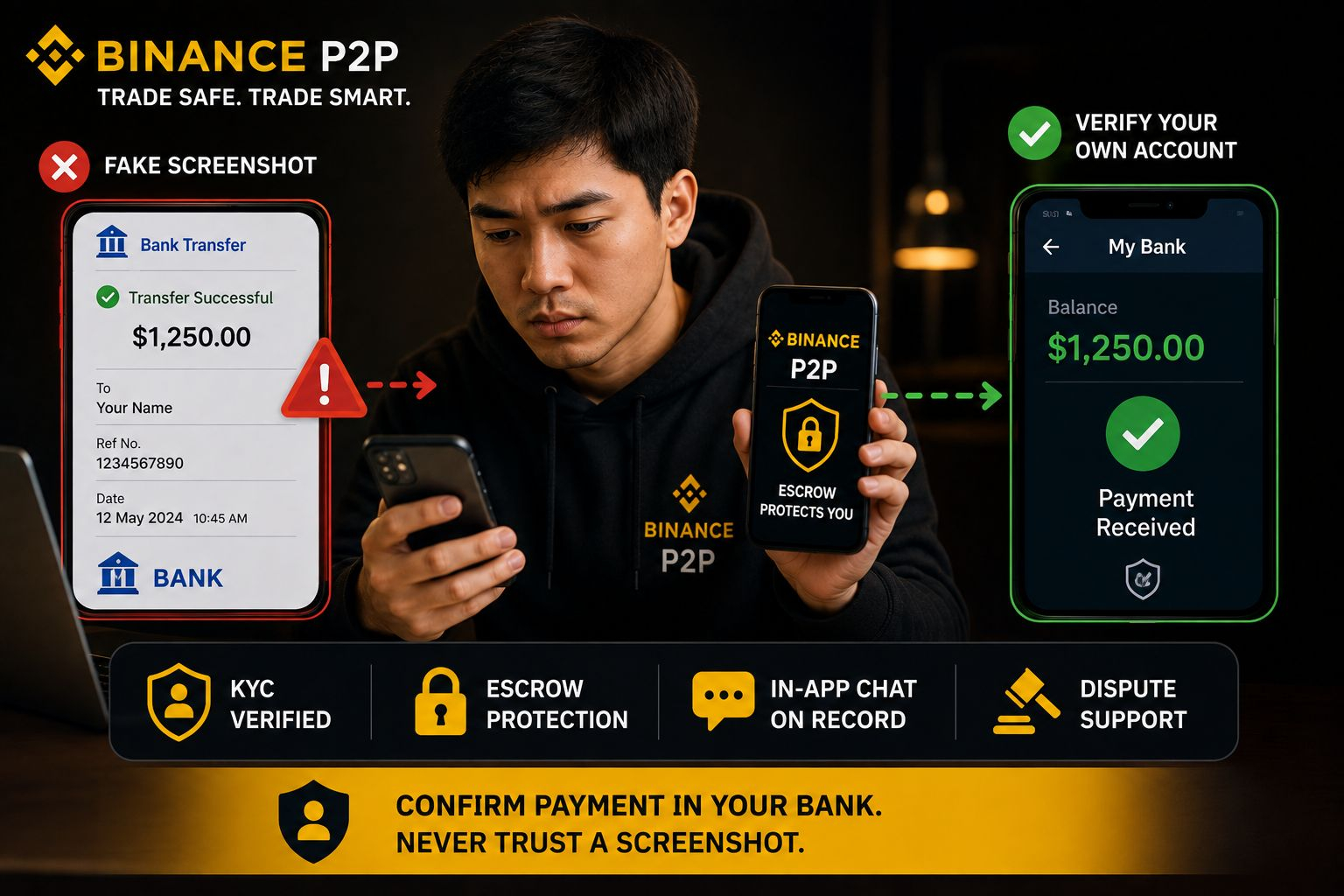
On Binance P2P, protection for sellers works just as much as it does for buyers. Every account is tied to a verified identity through KYC, and once I accept an order as a seller, my crypto asset sits in escrow rather than moving anywhere until the trade is actually finished. That escrow step matters because it gives me room to confirm payment properly instead of feeling pressured to release funds the second a message comes through. If a dispute ever happens, Binance keeps the full chat history on file, which becomes useful evidence during an appeal. A few months into trading, a buyer sent me what looked like a clean transfer screenshot within seconds of the order opening. It had my name, the right amount, even a transaction reference number. Something about the timing felt off though, so instead of releasing the crypto asset right away, I opened my banking app directly and searched for the transfer myself. Nothing had actually landed. I contacted the buyer, explained calmly that I could not find the payment yet, and gave them a short window to send it properly. A genuine transfer showed up 8 minutes later, and the order completed without any issue. That experience changed how I trade. A fabricated screenshot is one of the most common red flags on Binance P2P, and the resolution is always the same: check your own account, never someone else's image. I also started saving records of every completed order, including screenshots of the final confirmation and the chat log, because Binance support asked me for exactly that kind of documentation once during an unrelated dispute. Having it ready made the whole process faster. I also learned to trust my instincts about timing. A payment that arrives within seconds of an order opening, before a bank transfer could realistically process, is often a sign worth pausing over rather than dismissing as luck. Trusting that instinct once was enough to make it a permanent part of how I sell on Binance P2P.
@Binance Vietnam #BinanceP2PAnToan $BTW $HEMI $PORTAL
@Binance Vietnam #BinanceP2PAnToan $BTW $HEMI $PORTAL