The first time I entered P2P, I went in with the confident mindset that it’s just like buying and selling an item: as long as the money arrives in the account, you can confirm that everything is done.
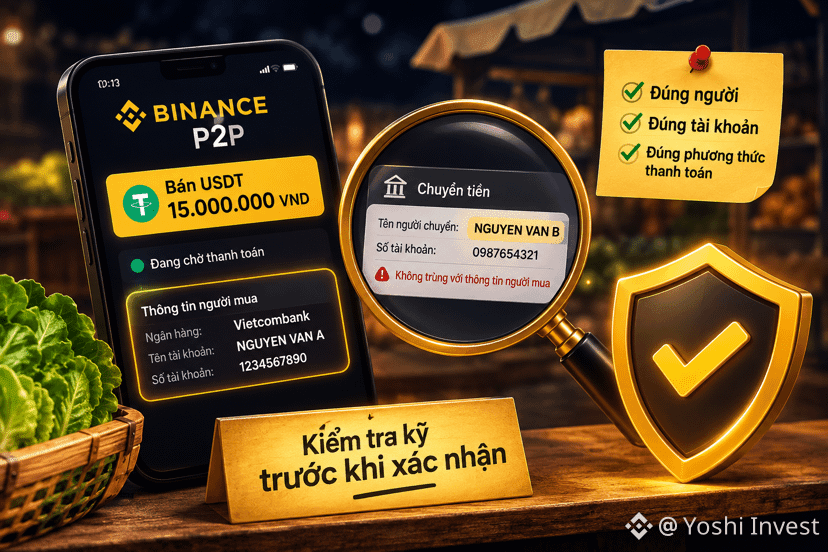
I remember placing a sell order for VND 15 million via P2P on Binance. While I sat, sipping my coffee, the money arrived exactly as expected. I was about to hit “confirm,” but then I saw two status notifications. I read both carefully and checked the transaction details in my bank app. That’s when I discovered that the information of the sender didn’t match the information of the buyer. Talk about pressure—what if something was wrong, right? That’s the question that flashed through my mind.
I looked into Binance’s P2P transactions in detail and found that Binance recommends that transaction information must match the information on the bank account.
No, that’s not just a normal suggestion—it’s a step to reduce risk during the transaction.
I immediately paused there and asked the buyer to provide proof of payment. The buyer refused.
15 million isn’t a small amount. My heart was pounding with anxiety. I reported it right away on Binance and provided all the relevant information and evidence, but I didn’t confirm that the transaction was completed.
About 10 minutes later, Binance finished verifying, and only then was the transaction marked as completed. I let out a sigh of relief—but it shattered my initial thoughts.
Maybe P2P transactions aren’t only about whether the money has arrived in your account.
Before confirming completion, you need to check the right person, the right account, and the right payment method.
That’s also a necessary step for P2P safety when trading on Binance.
@Binance Vietnam
#BinanceP2PAnToan
#p2p #P2P #antoan
I remember placing a sell order for VND 15 million via P2P on Binance. While I sat, sipping my coffee, the money arrived exactly as expected. I was about to hit “confirm,” but then I saw two status notifications. I read both carefully and checked the transaction details in my bank app. That’s when I discovered that the information of the sender didn’t match the information of the buyer. Talk about pressure—what if something was wrong, right? That’s the question that flashed through my mind.
I looked into Binance’s P2P transactions in detail and found that Binance recommends that transaction information must match the information on the bank account.
No, that’s not just a normal suggestion—it’s a step to reduce risk during the transaction.
I immediately paused there and asked the buyer to provide proof of payment. The buyer refused.
15 million isn’t a small amount. My heart was pounding with anxiety. I reported it right away on Binance and provided all the relevant information and evidence, but I didn’t confirm that the transaction was completed.
About 10 minutes later, Binance finished verifying, and only then was the transaction marked as completed. I let out a sigh of relief—but it shattered my initial thoughts.
Maybe P2P transactions aren’t only about whether the money has arrived in your account.
Before confirming completion, you need to check the right person, the right account, and the right payment method.
That’s also a necessary step for P2P safety when trading on Binance.
@Binance Vietnam
#BinanceP2PAnToan
#p2p #P2P #antoan