
六十LS
2.2k Posts

六十LS
 Square Verified+
永远别放弃做自己!币安钱包30%系统自动返佣码:LIUSHI
Open Trade

USD1 Holder
High-Frequency Trader
11.2 Months
5.4K+ Following
30.0K+ Followers
29.0K+ Liked
Posts
Portfolio
All
Quotes
Live
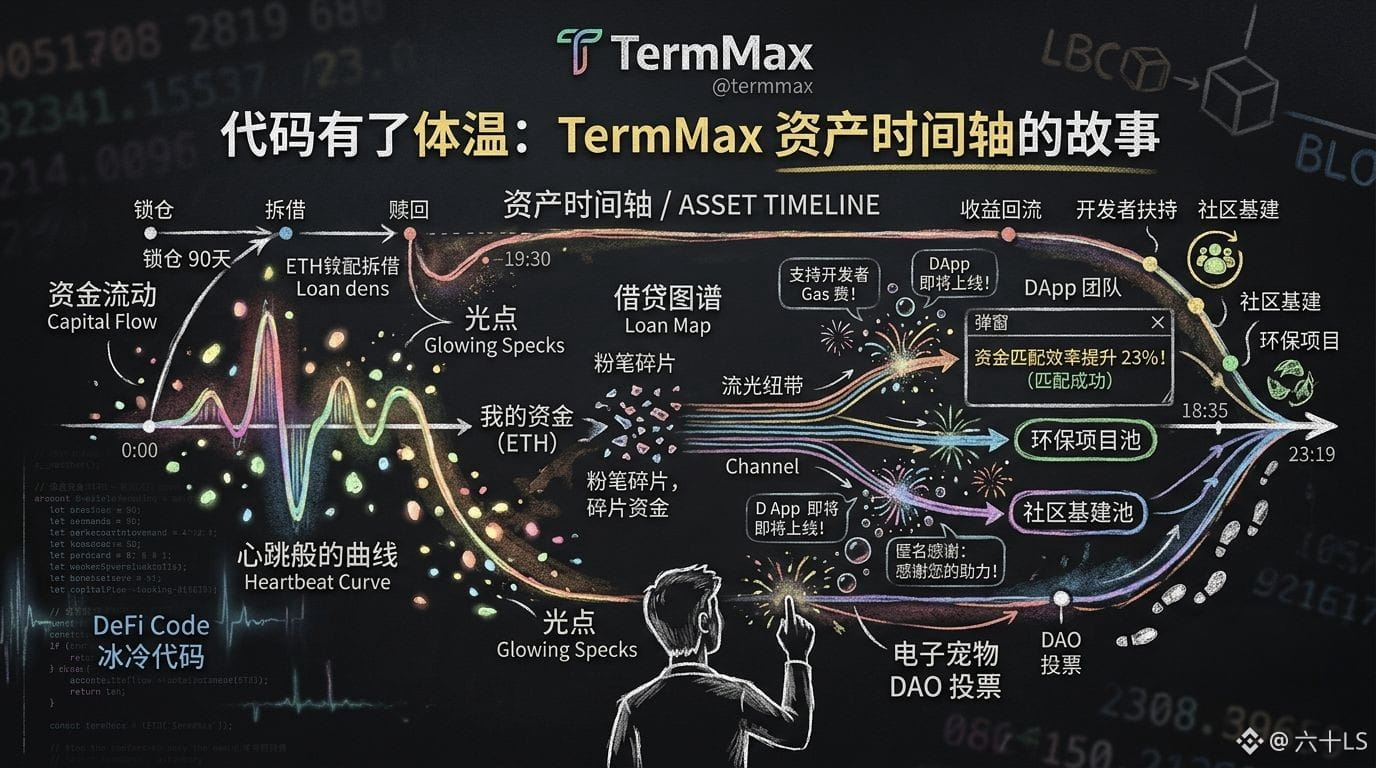
At midnight, I stared at the newly launched “Asset Timeline” for @TermMax . Funds flowed and turned into curves and luminous dots, linking lockups, borrowings, and redemptions like a string of moments. The operation log on the right looked like footprints in time; the curves on the left rose and fell like a heartbeat—cold DeFi code, yet somehow with a rhythm of breath.
Three weeks ago, the ETH I locked away simply lay in a 90-day contract. One day, a pop-up read: “Capital matching efficiency increased by 23%.” I opened the details and found that the funds had been split into multiple fragments, flowing into different lending pools. Their status updated in real time: matching successful, awaiting allocation, yield returning… Someone in the group joked that it was like a “financial jigsaw puzzle.” But I paused in front of a “lending map”: funds became green glowing dots, lending demand turned into red star-like lights, and the protocol channels connected like streams of light. When the fragments matched successfully, fireworks burst between the two points. A dialog box appeared: “Your funds are supporting a developer to pay Gas fees. Their DApp is about to launch.”
Suddenly, the code world had warmth. In traditional finance, deposits are silent numbers; but at TermMax, every payment comes with a story—where it goes, which projects it helps, and even anonymous thanks received. Behind it is the magic of a “capital narrative engine”: smart contracts bind transactions to specific scenarios. Choose the “developer support pool,” and the funds flow to the DApp team; the interface synchronizes the project’s progress. Contribute to the “community infrastructure pool,” and you can also gain DAO voting rights. Technical logic is rewritten into the language of experience, making users the “screenwriters” of capital movement.
In the community, users are voting to add a new “environmental protection project pool.” A user with the nickname “on-chain working person” said, “Watching the capital fragments jump around feels like I’ve kept electronic pets.” Isn’t this another possible side of DeFi? When complex financial engineering is translated into stories you can feel, and real faces appear behind the yield curves, the code finally gains body heat.
When I closed the page, the luminous dots on the asset timeline were still flickering. They were no longer just numbers, but countless gentle narratives created by individuals through capital. In the on-chain world, every single coin can become starlight that illuminates others.
#termmax
Three weeks ago, the ETH I locked away simply lay in a 90-day contract. One day, a pop-up read: “Capital matching efficiency increased by 23%.” I opened the details and found that the funds had been split into multiple fragments, flowing into different lending pools. Their status updated in real time: matching successful, awaiting allocation, yield returning… Someone in the group joked that it was like a “financial jigsaw puzzle.” But I paused in front of a “lending map”: funds became green glowing dots, lending demand turned into red star-like lights, and the protocol channels connected like streams of light. When the fragments matched successfully, fireworks burst between the two points. A dialog box appeared: “Your funds are supporting a developer to pay Gas fees. Their DApp is about to launch.”
Suddenly, the code world had warmth. In traditional finance, deposits are silent numbers; but at TermMax, every payment comes with a story—where it goes, which projects it helps, and even anonymous thanks received. Behind it is the magic of a “capital narrative engine”: smart contracts bind transactions to specific scenarios. Choose the “developer support pool,” and the funds flow to the DApp team; the interface synchronizes the project’s progress. Contribute to the “community infrastructure pool,” and you can also gain DAO voting rights. Technical logic is rewritten into the language of experience, making users the “screenwriters” of capital movement.
In the community, users are voting to add a new “environmental protection project pool.” A user with the nickname “on-chain working person” said, “Watching the capital fragments jump around feels like I’ve kept electronic pets.” Isn’t this another possible side of DeFi? When complex financial engineering is translated into stories you can feel, and real faces appear behind the yield curves, the code finally gains body heat.
When I closed the page, the luminous dots on the asset timeline were still flickering. They were no longer just numbers, but countless gentle narratives created by individuals through capital. In the on-chain world, every single coin can become starlight that illuminates others.
#termmax
开发者扶持池:用 Gas 费点亮下一个爆款 DApp
50%
社区基建池:锁定资金,换取 DAO 核心话语权
50%
环保项目池:养一只用链上收益发电的电子宠物
0%
2 votes • Voting closed
In the @TermMax document, there’s a passage about “one-click leverage” and the GT token. After reading it, I can’t shake the feeling that something is off.
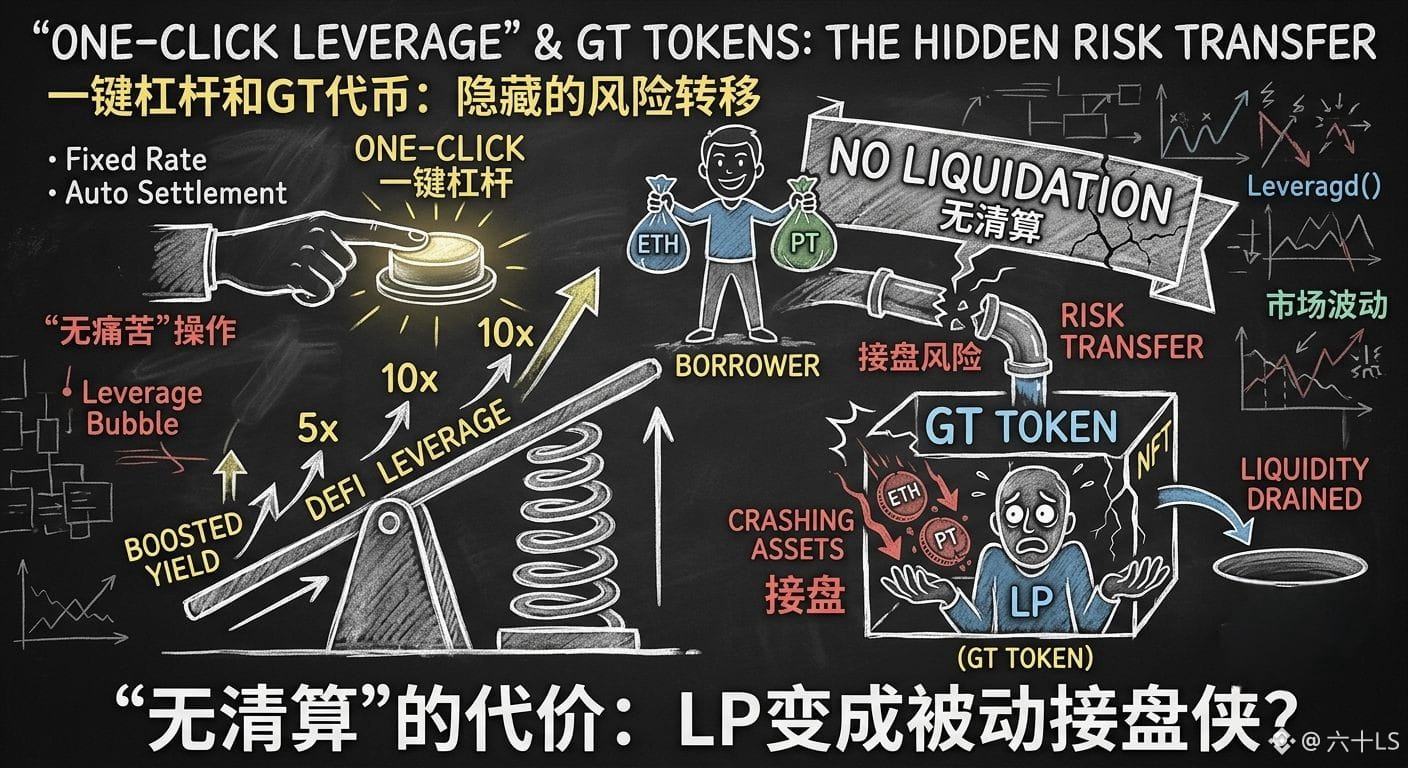
Let me reconstruct the scenario. You drop some ETH or PT into the pool, click a button, and the smart contract automatically takes out a loan, buys more yield-bearing assets, then re-collateralizes and borrows again—pushing the leverage directly to 5x or even 10x. The documentation is beautifully written: fixed interest rates throughout, no liquidation risk, and automatic settlement at maturity. While amplifying the收益, it also locks in the costs in advance. It sounds like someone took the complex machinery of traditional loop lending and wrapped it up into a one-click operation.
But the issue is that this “no liquidation” isn’t magic—it just relocates the risk. In essence, GT packages your collateral and debt into an NFT. The whole leverage relies on the over-collateralization inside it. When the market is calm, it’s probably fine. But if the underlying asset price suddenly crashes, or if there’s an oracle delay, and the value of the collateral in GT falls below the threshold, the system won’t force liquidation like Aave does. Instead, it goes through physical settlement—handing the collateral directly over to the LP.
LPs in DeFi aren’t a charity. They put money in for steady fixed returns, not to suddenly become holders of a token that has just suffered a brutal drop. The documentation emphasizes “limited losses” and “no liquidation,” but it doesn’t really mention the LP-side risk of being the one who gets stuck holding the assets. If the incoming assets have poor liquidity, or if there’s a problem with a cross-chain bridge, LPs may find it hard to liquidate or exit.
In traditional finance, when banks run leveraged lending, the risk is backed by things like risk reserves, margin call mechanisms, and central counterparty clearing. TermMax’s AMM pool doesn’t have these buffers—it relies purely on the contract rules to “tough it out.”
Even more subtly, one-click leverage lowers the operational barrier, attracting many users who want to chase higher yields. These users often aren’t very sensitive to volatility in the underlying assets. Once leverage is turned on, overexposure happens easily. Then when the market actually starts moving, as soon as physical settlement kicks in, liquidity instantly shifts from “you can borrow” to “you only get stuck holding the bag.” The fixed interest rate is still there, but available leverage capacity may already be gone.
My takeaway: the mechanism design does simplify complex looping strategies, and it does avoid the harshness of traditional liquidation. But behind “no liquidation,” the risk is simply moved from the borrower to the LP and the physical settlement process. The documentation describes one-click leverage like a pain-free operation, but it doesn’t explain clearly the game on the receiving side. #termmax
Let me reconstruct the scenario. You drop some ETH or PT into the pool, click a button, and the smart contract automatically takes out a loan, buys more yield-bearing assets, then re-collateralizes and borrows again—pushing the leverage directly to 5x or even 10x. The documentation is beautifully written: fixed interest rates throughout, no liquidation risk, and automatic settlement at maturity. While amplifying the收益, it also locks in the costs in advance. It sounds like someone took the complex machinery of traditional loop lending and wrapped it up into a one-click operation.
But the issue is that this “no liquidation” isn’t magic—it just relocates the risk. In essence, GT packages your collateral and debt into an NFT. The whole leverage relies on the over-collateralization inside it. When the market is calm, it’s probably fine. But if the underlying asset price suddenly crashes, or if there’s an oracle delay, and the value of the collateral in GT falls below the threshold, the system won’t force liquidation like Aave does. Instead, it goes through physical settlement—handing the collateral directly over to the LP.
LPs in DeFi aren’t a charity. They put money in for steady fixed returns, not to suddenly become holders of a token that has just suffered a brutal drop. The documentation emphasizes “limited losses” and “no liquidation,” but it doesn’t really mention the LP-side risk of being the one who gets stuck holding the assets. If the incoming assets have poor liquidity, or if there’s a problem with a cross-chain bridge, LPs may find it hard to liquidate or exit.
In traditional finance, when banks run leveraged lending, the risk is backed by things like risk reserves, margin call mechanisms, and central counterparty clearing. TermMax’s AMM pool doesn’t have these buffers—it relies purely on the contract rules to “tough it out.”
Even more subtly, one-click leverage lowers the operational barrier, attracting many users who want to chase higher yields. These users often aren’t very sensitive to volatility in the underlying assets. Once leverage is turned on, overexposure happens easily. Then when the market actually starts moving, as soon as physical settlement kicks in, liquidity instantly shifts from “you can borrow” to “you only get stuck holding the bag.” The fixed interest rate is still there, but available leverage capacity may already be gone.
My takeaway: the mechanism design does simplify complex looping strategies, and it does avoid the harshness of traditional liquidation. But behind “no liquidation,” the risk is simply moved from the borrower to the LP and the physical settlement process. The documentation describes one-click leverage like a pain-free operation, but it doesn’t explain clearly the game on the receiving side. #termmax
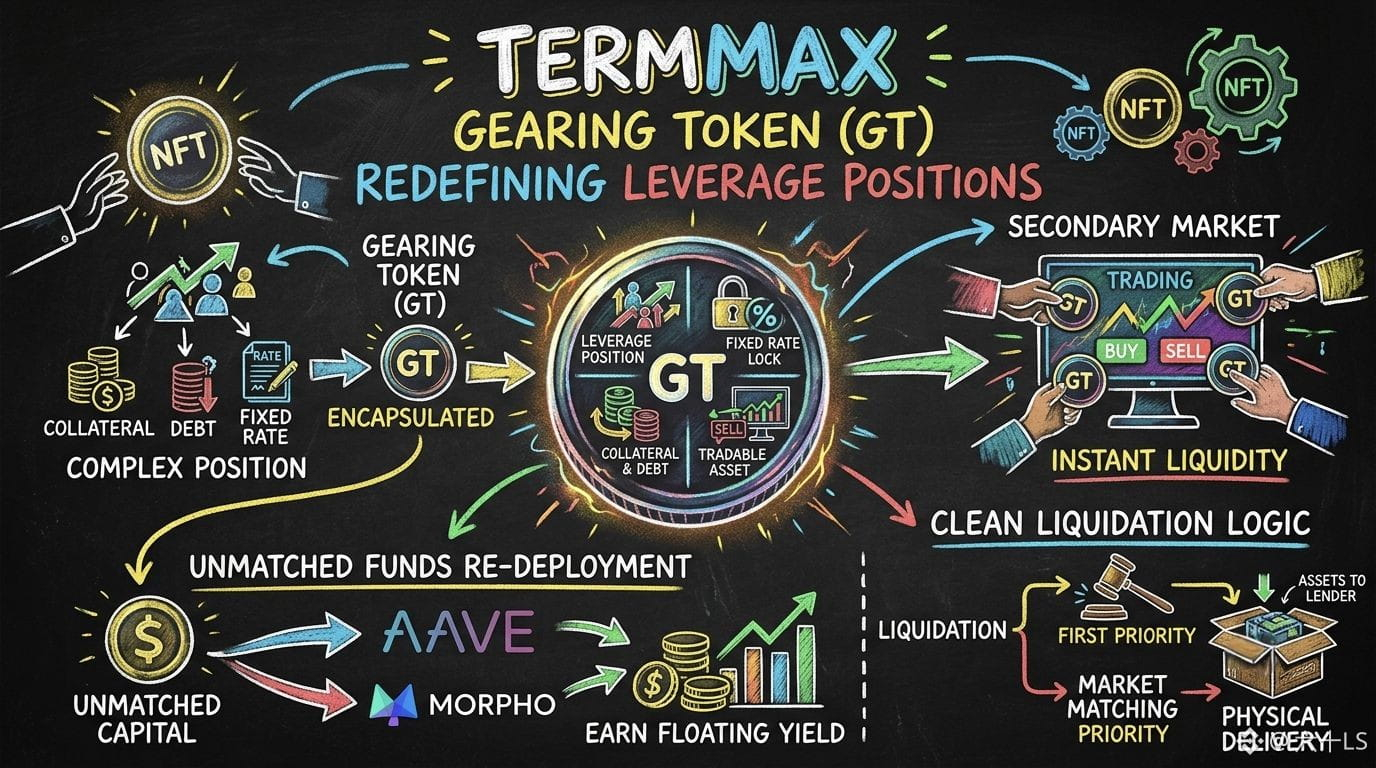
I went through the leverage process for @TermMax from scratch again. At first, I just wanted to figure out how Gearing Token actually packages complex positions into an NFT. But the more I looked, the more it seemed like what it truly solves isn’t “how to add leverage,” but compressing the entire sequence of borrowing, collateralization, and interest-rate locking into a single, tradable operation.
In the past, when I tried to do leverage in DeFi, I also stepped on plenty of landmines—looping borrows, moving funds across protocols, and then having to constantly watch floating rates and liquidation lines. The whole thing was fragmented and exhausting. TermMax encapsulates these steps directly into GT. After a user deposits collateral, the system automatically generates the corresponding debt position, locks a fixed interest rate, and finally records the entire position inside a single GT. After that, holders can buy and sell this NFT anytime in the secondary market—turning the leverage position itself into a transferable asset. Only then did I realize it’s essentially standardizing the “position” itself.
What also caught my attention is that any unmatched funds don’t just sit idle. The protocol automatically routes the idle capital into floating-rate pools like Aave and Morpho to keep generating yield. When someone comes to borrow, the funds are withdrawn again to complete the matching. This preserves the determinism on the fixed-rate side while also minimizing opportunity costs from idle capital.
Its liquidation logic is also cleaner than that of most protocols. Once liquidation is triggered, it first goes through market matching; if matching fails, it moves straight to physical settlement, handing the remaining collateral to the lender. The whole process bakes the “worst-case scenario” into the rules rather than leaving it to post-event negotiation.
By looking at GT’s packaging, the redeployment of idle funds, and the liquidation route all together, my understanding of TermMax has shifted from “a convenient leverage tool” to realizing that within a fixed-rate framework, it redefines how leverage positions can be composed and how liquid they are. It’s no longer just a lending tool—it turns terms, leverage, and risk exposure into standardized components that are tradable on-chain. #termmax
In the past, when I tried to do leverage in DeFi, I also stepped on plenty of landmines—looping borrows, moving funds across protocols, and then having to constantly watch floating rates and liquidation lines. The whole thing was fragmented and exhausting. TermMax encapsulates these steps directly into GT. After a user deposits collateral, the system automatically generates the corresponding debt position, locks a fixed interest rate, and finally records the entire position inside a single GT. After that, holders can buy and sell this NFT anytime in the secondary market—turning the leverage position itself into a transferable asset. Only then did I realize it’s essentially standardizing the “position” itself.
What also caught my attention is that any unmatched funds don’t just sit idle. The protocol automatically routes the idle capital into floating-rate pools like Aave and Morpho to keep generating yield. When someone comes to borrow, the funds are withdrawn again to complete the matching. This preserves the determinism on the fixed-rate side while also minimizing opportunity costs from idle capital.
Its liquidation logic is also cleaner than that of most protocols. Once liquidation is triggered, it first goes through market matching; if matching fails, it moves straight to physical settlement, handing the remaining collateral to the lender. The whole process bakes the “worst-case scenario” into the rules rather than leaving it to post-event negotiation.
By looking at GT’s packaging, the redeployment of idle funds, and the liquidation route all together, my understanding of TermMax has shifted from “a convenient leverage tool” to realizing that within a fixed-rate framework, it redefines how leverage positions can be composed and how liquid they are. It’s no longer just a lending tool—it turns terms, leverage, and risk exposure into standardized components that are tradable on-chain. #termmax
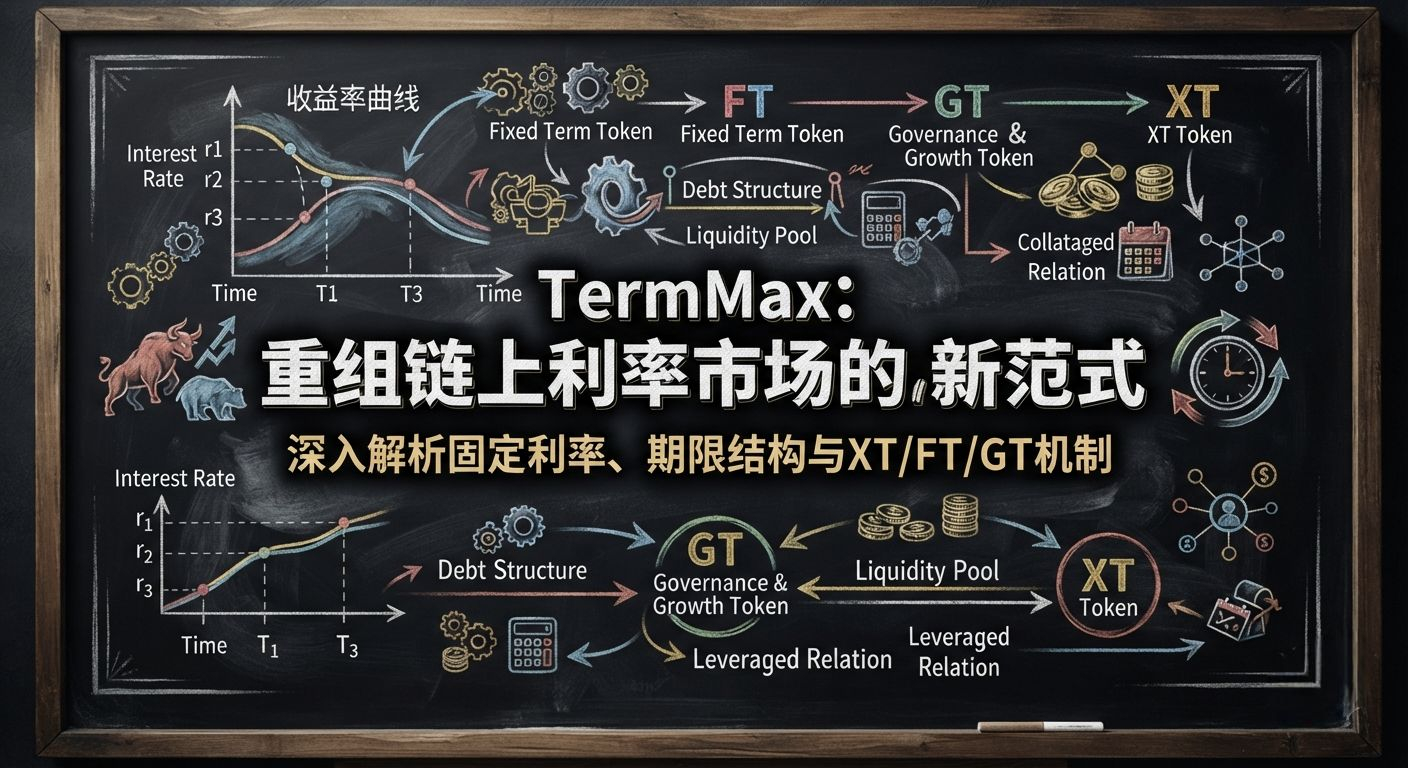
Revisit @TermMax . At first, I was only focused on how much fixed yield it could generate. But when I follow its matching mechanism and dig deeper, what interests me most is how it rebuilds on-chain interest rate pricing power.
After spending time researching, I found that one of the biggest pain points of many DeFi fixed-rate protocols in the past was liquidity fragmentation. Different maturity dates often require separate liquidity pools, which causes capital depth to be endlessly diluted and slippage to become severe.
TermMax avoids this traditional AMM route. Instead, it uses Range Orders and a customized pricing curve, showing me a possible way for both borrowers and lenders to express their expectations for “time and capital costs” within the same framework.
This gives me a fascinating shift in perspective: users are no longer passively accepting the fixed rate offered by the protocol. Rather, they’re participating in a more flexible interest-rate market. I noticed that borrowers can precisely lock in costs according to their funding cycle, while lenders can flexibly switch among different tenors and risk appetites. With this design, DeFi interest rates stop being an isolated feature of a single protocol, and I begin to see the early shape of a yield curve like in traditional finance.
Another detail that left a strong impression is its capital efficiency. I’ve seen many fixed-income protocols impose extremely strict collateralization ratios just to ensure principal repayment. This keeps capital utilization low for a long time. TermMax, by decoupling the debt structure and leverage relationship, allows funds with different risk preferences to each find their place within the protocol—whether it’s conservative capital seeking stable yields, or strategy participants looking to amplify leverage—there are corresponding asset roles to take on the risk.
Stepping back from a single product, my understanding of TermMax slowly turned into this: when, on-chain, borrowing is no longer limited to floating rates, what should DeFi’s credit market and derivatives ultimately look like. It isn’t in a hurry to build a flashy, mass-market treasury vault. Instead, it first lays down the toughest-to-build foundation—interest rate pricing and maturity matching—at the infrastructure level. That approach makes me feel this may indeed be the necessary path for on-chain fixed income to mature.#termmax
After spending time researching, I found that one of the biggest pain points of many DeFi fixed-rate protocols in the past was liquidity fragmentation. Different maturity dates often require separate liquidity pools, which causes capital depth to be endlessly diluted and slippage to become severe.
TermMax avoids this traditional AMM route. Instead, it uses Range Orders and a customized pricing curve, showing me a possible way for both borrowers and lenders to express their expectations for “time and capital costs” within the same framework.
This gives me a fascinating shift in perspective: users are no longer passively accepting the fixed rate offered by the protocol. Rather, they’re participating in a more flexible interest-rate market. I noticed that borrowers can precisely lock in costs according to their funding cycle, while lenders can flexibly switch among different tenors and risk appetites. With this design, DeFi interest rates stop being an isolated feature of a single protocol, and I begin to see the early shape of a yield curve like in traditional finance.
Another detail that left a strong impression is its capital efficiency. I’ve seen many fixed-income protocols impose extremely strict collateralization ratios just to ensure principal repayment. This keeps capital utilization low for a long time. TermMax, by decoupling the debt structure and leverage relationship, allows funds with different risk preferences to each find their place within the protocol—whether it’s conservative capital seeking stable yields, or strategy participants looking to amplify leverage—there are corresponding asset roles to take on the risk.
Stepping back from a single product, my understanding of TermMax slowly turned into this: when, on-chain, borrowing is no longer limited to floating rates, what should DeFi’s credit market and derivatives ultimately look like. It isn’t in a hurry to build a flashy, mass-market treasury vault. Instead, it first lays down the toughest-to-build foundation—interest rate pricing and maturity matching—at the infrastructure level. That approach makes me feel this may indeed be the necessary path for on-chain fixed income to mature.#termmax
Verified
I’m starting to think that what TermMax really wants to do isn’t “lending and borrowing.”
Recently I’ve been researching @TermMax , and the more I look at it, the more I feel that if you only understand it as a fixed-rate lending protocol, you’re underestimating it a bit.
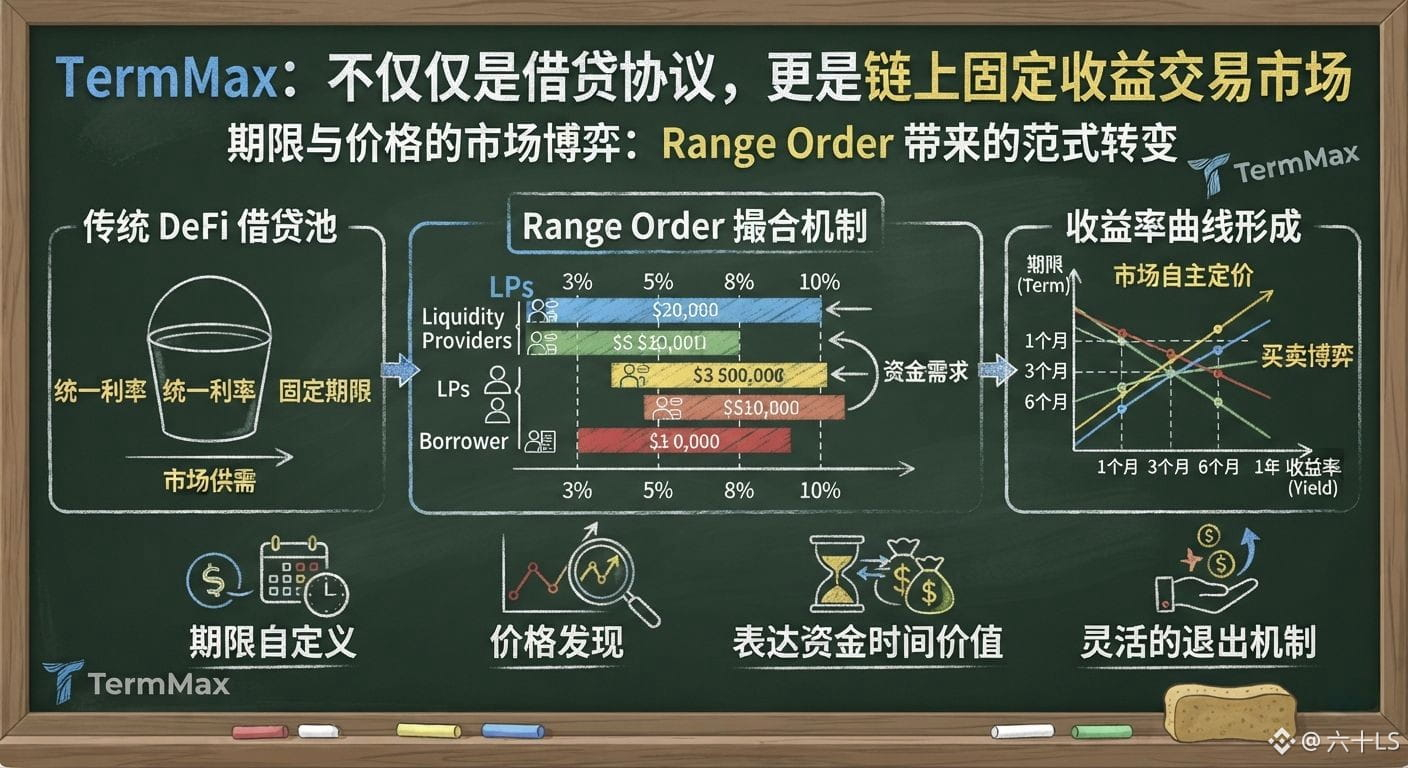
Traditional DeFi lending is relatively straightforward: funds go into a pool, borrowers take out loans, and the interest rate changes based on supply and demand. Convenient as it is, for people who want precise control over returns and terms, the choices aren’t that great.
What’s interesting about TermMax is that it gives “term” and “price” much more control to market participants themselves.
Lenders don’t have to accept a uniform interest rate set by the protocol—they can place orders based on the return rate and maturity time they’re willing to accept.
Borrowers, likewise, aren’t limited to simply choosing how much to borrow; they can also look for an appropriate term and rate based on their funding costs.
So I’m more inclined to think of it now as an on-chain fixed-income trading market.
Especially the Range Order.
It’s not just about posting a price. It provides liquidity providers with a range of interest rates, letting funds participate in matching within a certain interval.
That way, the market won’t have just one fixed answer.
As capital keeps flowing in and out and trades keep happening, prices will gradually form their own distribution, and participants will continuously adjust based on term, return, and risk.
This is somewhat similar to traditional financial markets, where buy-sell competition shapes the yield curve.
And for strategy players, what really matters has never been only whether the APY is high or not—it’s:
How long does that return correspond to?
What risks are being taken?
After interest rates move, can the capital still exit flexibly?
In the end, these questions will all show up in the market price.
So right now I care more about whether TermMax has the opportunity to become an on-chain “interest-rate market.”
If in the future stablecoins, RWA, and other assets all have mature maturity/term markets, what users will need won’t be just a lending pool, but a set of trading tools that can express the time value of money.
What TermMax is doing today—at least to some extent—is bringing that process onto the blockchain.
A mature fixed-income market shouldn’t have only one APY; it should allow the market to form its own prices.
That might be the part of TermMax that’s most worth paying attention to.#termmax
Recently I’ve been researching @TermMax , and the more I look at it, the more I feel that if you only understand it as a fixed-rate lending protocol, you’re underestimating it a bit.
Traditional DeFi lending is relatively straightforward: funds go into a pool, borrowers take out loans, and the interest rate changes based on supply and demand. Convenient as it is, for people who want precise control over returns and terms, the choices aren’t that great.
What’s interesting about TermMax is that it gives “term” and “price” much more control to market participants themselves.
Lenders don’t have to accept a uniform interest rate set by the protocol—they can place orders based on the return rate and maturity time they’re willing to accept.
Borrowers, likewise, aren’t limited to simply choosing how much to borrow; they can also look for an appropriate term and rate based on their funding costs.
So I’m more inclined to think of it now as an on-chain fixed-income trading market.
Especially the Range Order.
It’s not just about posting a price. It provides liquidity providers with a range of interest rates, letting funds participate in matching within a certain interval.
That way, the market won’t have just one fixed answer.
As capital keeps flowing in and out and trades keep happening, prices will gradually form their own distribution, and participants will continuously adjust based on term, return, and risk.
This is somewhat similar to traditional financial markets, where buy-sell competition shapes the yield curve.
And for strategy players, what really matters has never been only whether the APY is high or not—it’s:
How long does that return correspond to?
What risks are being taken?
After interest rates move, can the capital still exit flexibly?
In the end, these questions will all show up in the market price.
So right now I care more about whether TermMax has the opportunity to become an on-chain “interest-rate market.”
If in the future stablecoins, RWA, and other assets all have mature maturity/term markets, what users will need won’t be just a lending pool, but a set of trading tools that can express the time value of money.
What TermMax is doing today—at least to some extent—is bringing that process onto the blockchain.
A mature fixed-income market shouldn’t have only one APY; it should allow the market to form its own prices.
That might be the part of TermMax that’s most worth paying attention to.#termmax
#TradFi晒单 keep investing regularly; a few days ago tech stocks collectively surged, but it turned out to be a brief rally—it's not strong enough and it has dropped back again. I originally had a gain of over ten percentage points, but now I'm stuck with a loss of over ten percentage points. Still, I believe it can rise back. Hold firm and stay seated, and wait for the result.
800 again. Keep opening another 750, keep connecting. From 900 it dropped and kept going down—I'm stunned. It can't be this soft, right? In A-shares, Changxin also opened higher and kept pulling back—what’s going on? Hurry up and bounce back 😂#TradFi晒单
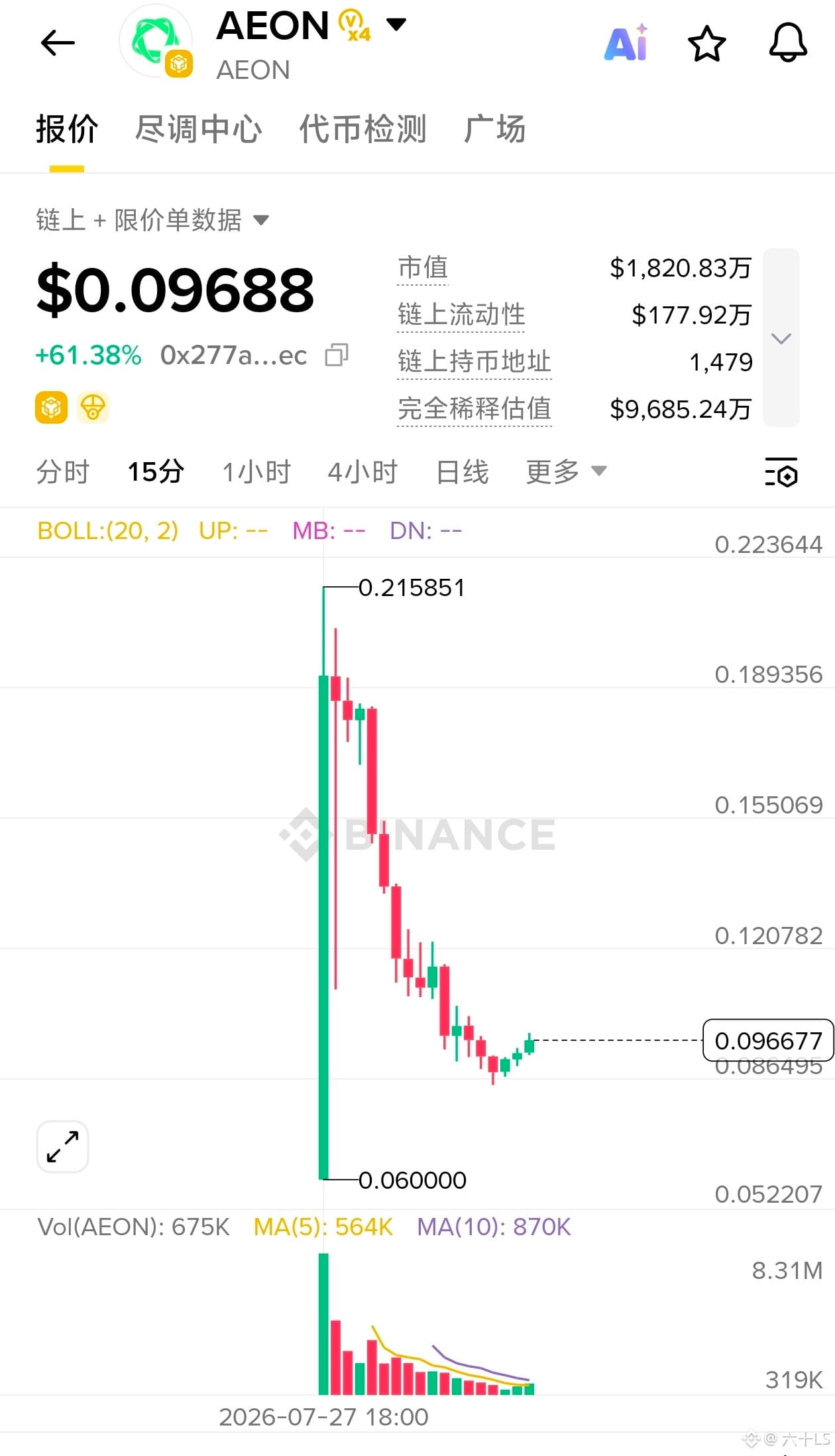
How are you, brothers with a big-picture mindset? 😂 Glad I ran away first thing—no big-picture at all
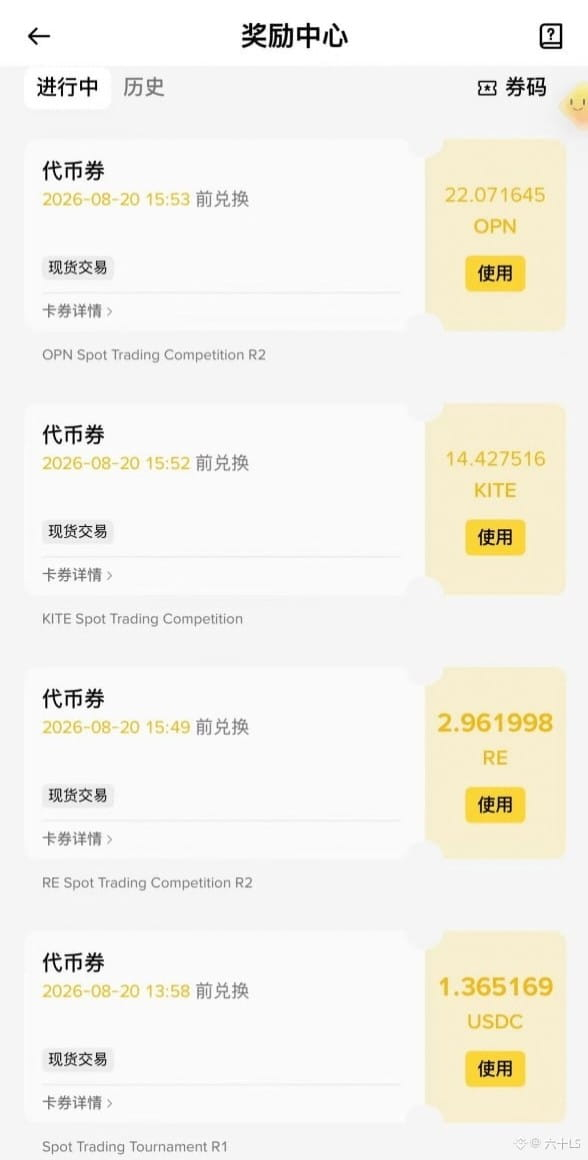
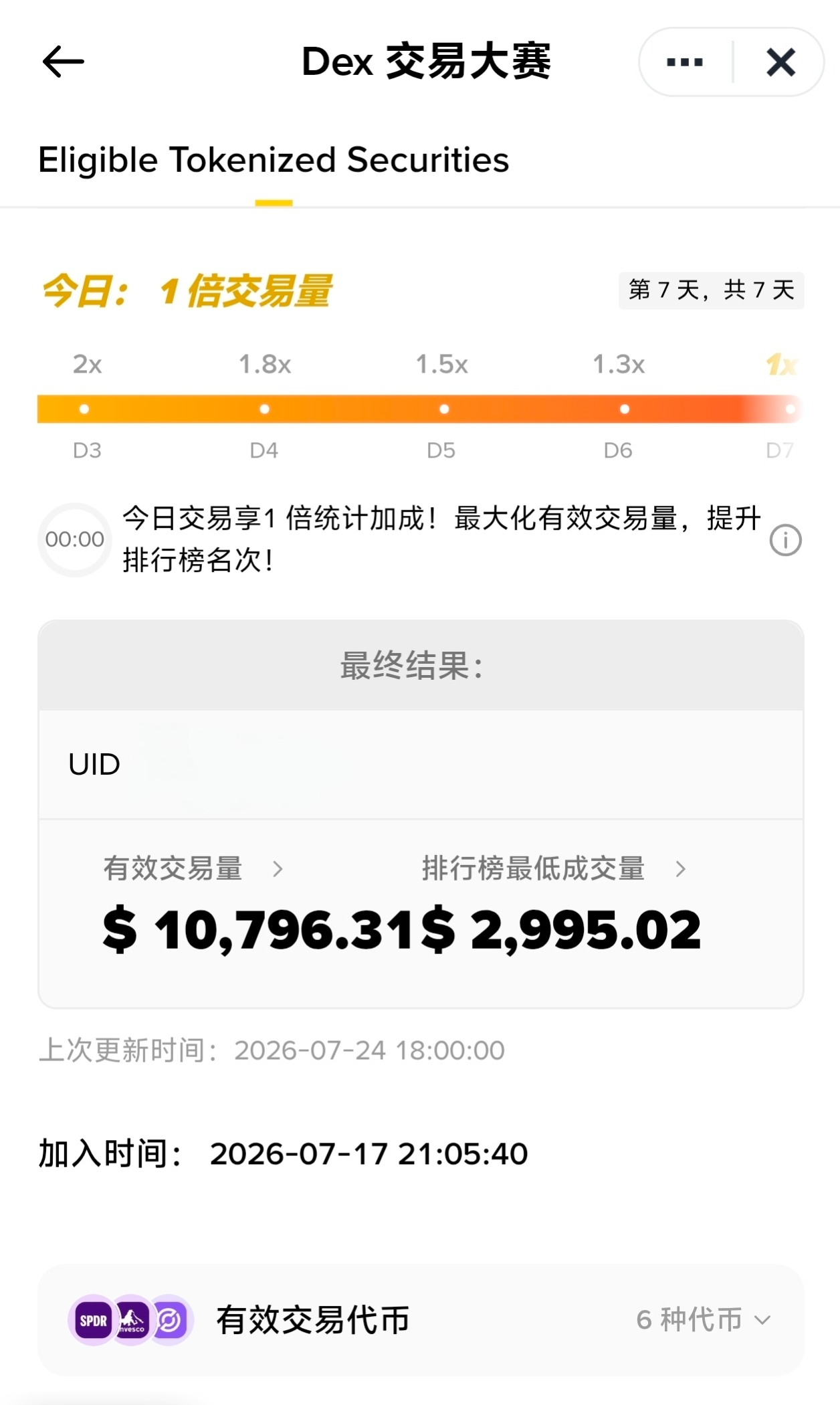
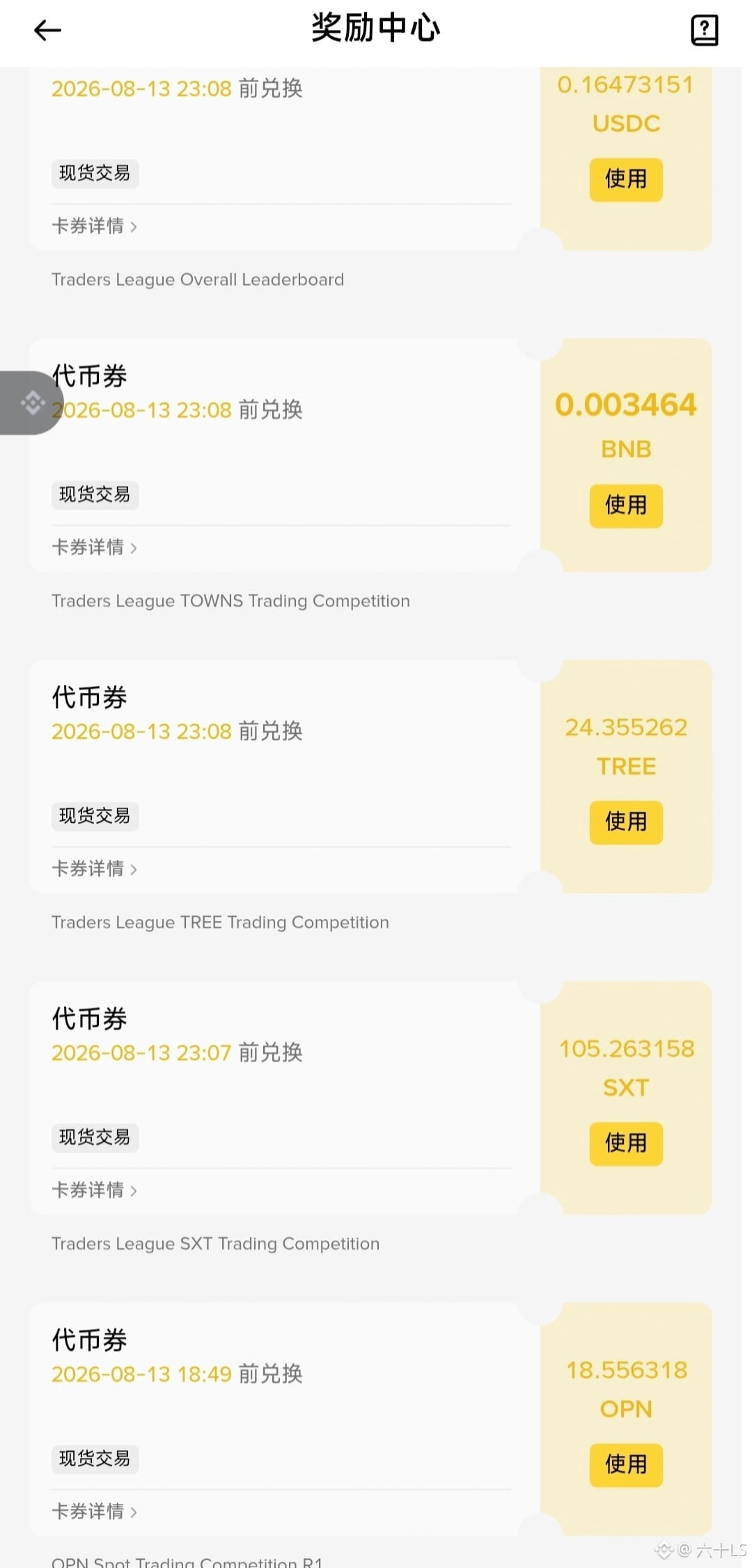
Who isn’t hustling? With just 3,000 trading volume, it’s already on the list. And now they’ve got pork knuckle rice again.
#交易竞赛
#交易竞赛
Verified
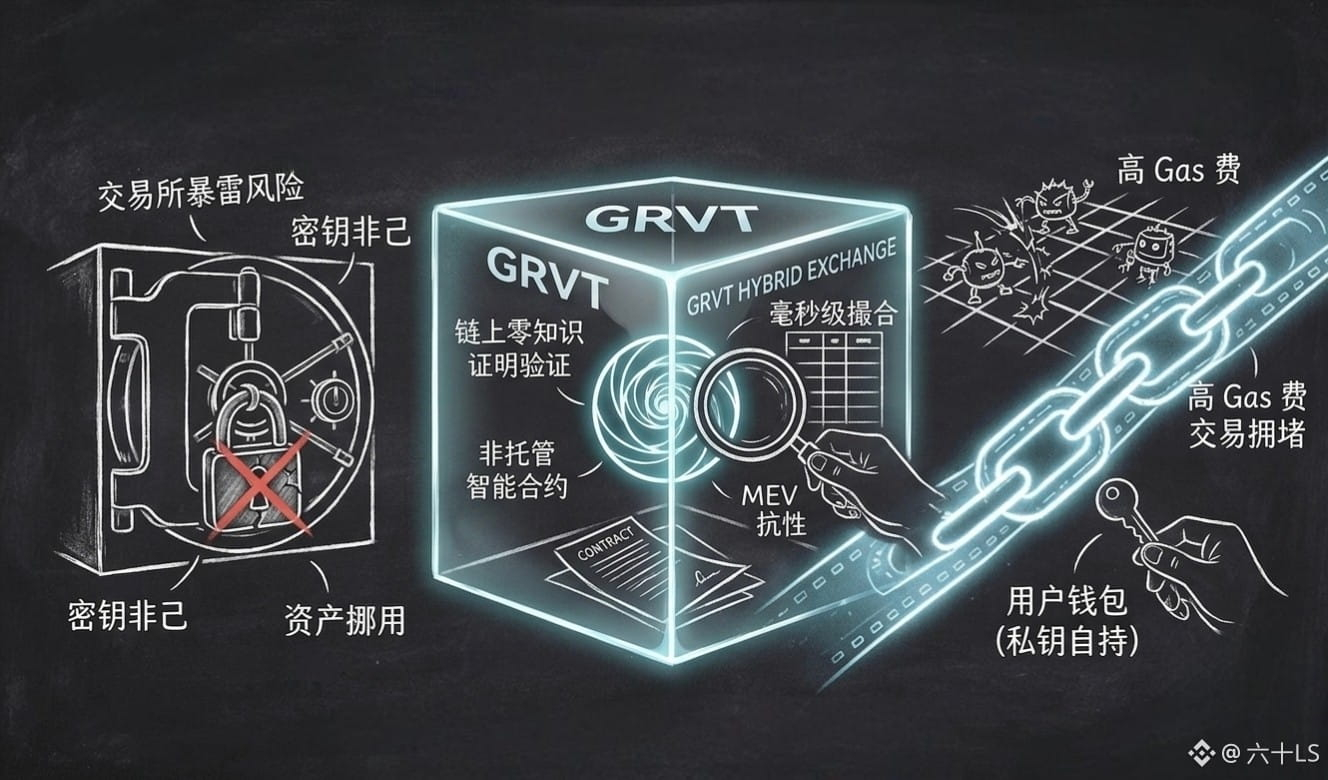
I couldn’t sleep at midnight, so I walked through the entire “hybrid exchange” lifecycle of GRVT on a whiteboard—from the user’s signature to the L1 state confirmation. My marker finally stopped on the words “off-chain matching.”
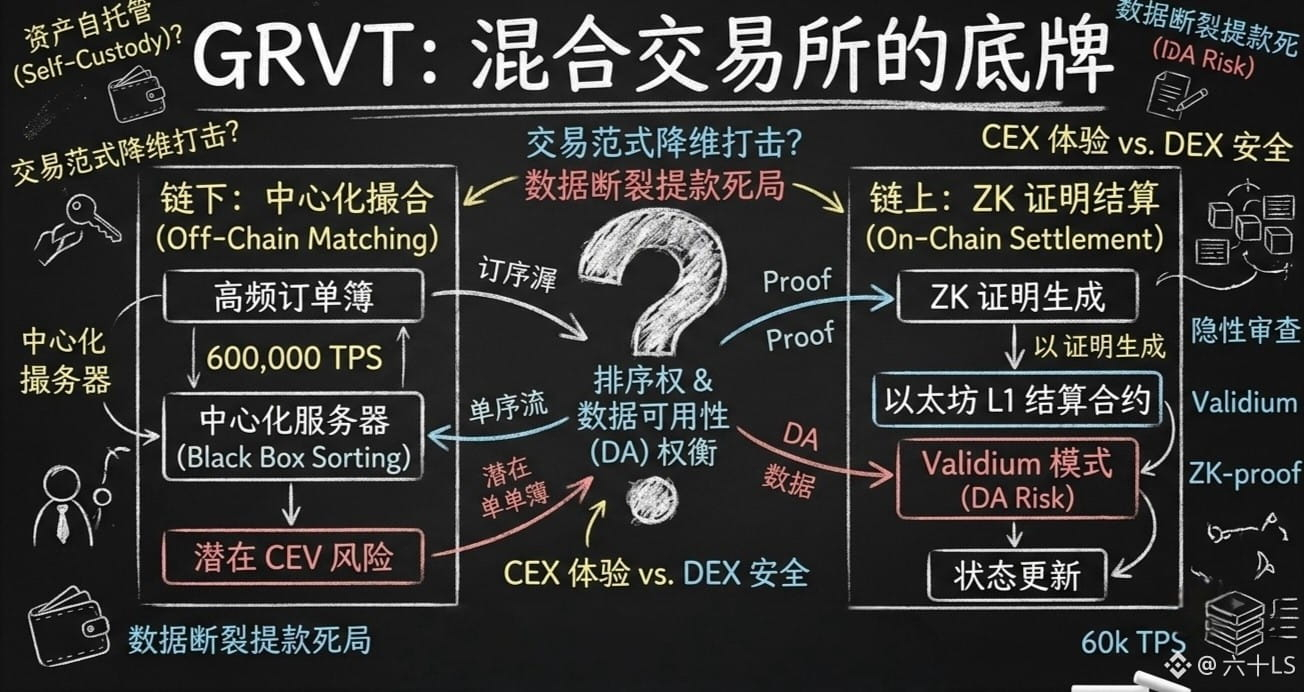
This model is indeed highly tempting. The official pitch is that it combines the CEX experience with the security of a DEX: a centralized high-frequency order book matching engine handles millisecond-level matching—claiming it can withstand 600,000 TPS. Meanwhile, users keep their own private keys; assets are settled into smart contracts, and batches are committed on-chain with ZK proofs. In a community that’s been tormented by black-box misuse of funds, this architecture—“no touching of funds, just handling trades”—is like a ultimate cure.
@grvt_io
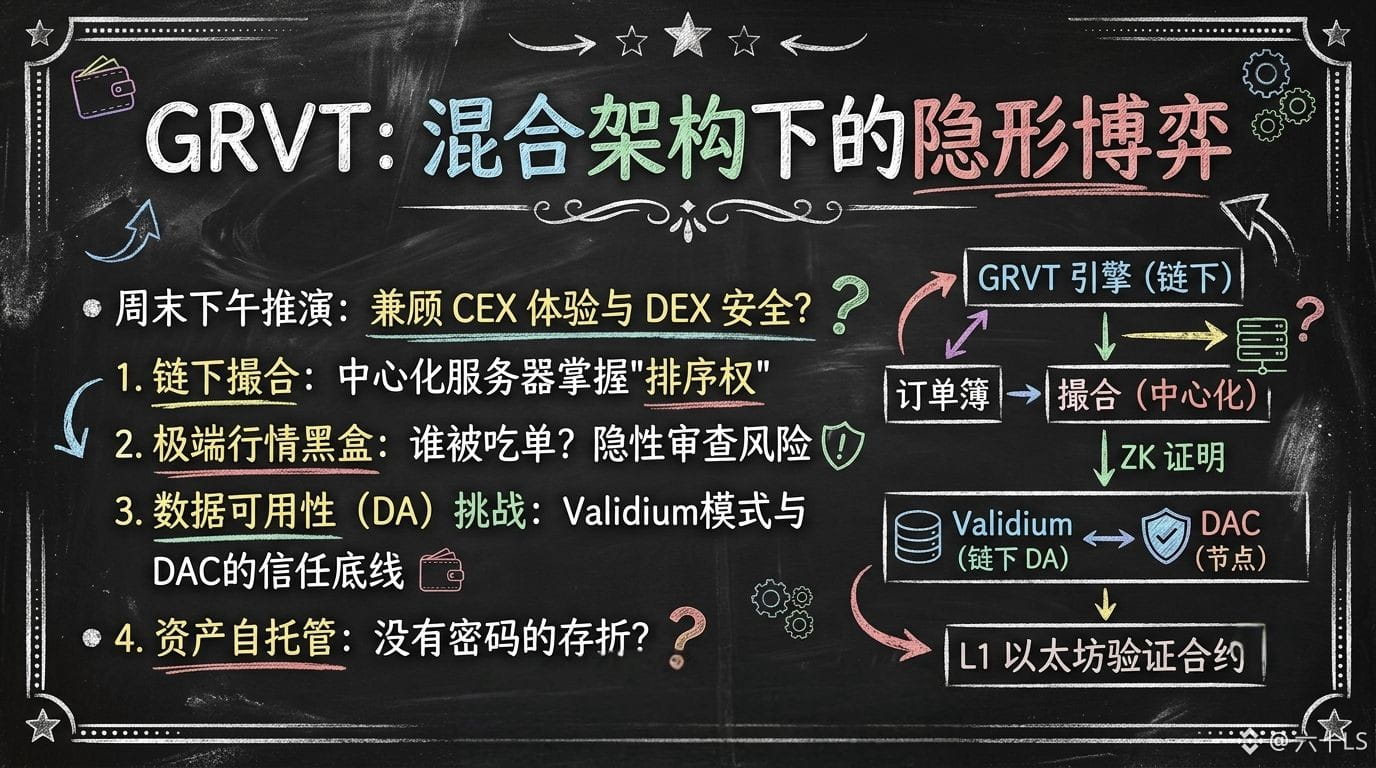
But if you trace the order flow further down and peel back the layers, the sense of disconnect becomes clear. Decoupling matching and settlement in essence hands over the most critical “ordering power” to a centralized server. Once orders enter the GRVT off-chain engine, who gets filled, and who bears the slippage—everything is a black box to outsiders. The project team may not be able to transfer your assets directly, but they hold absolute control over the flow direction of trades. When extreme market conditions arrive, will this opaque engine prioritize canceling orders from privileged market makers, so that retail stop-loss orders are forever stuck at “queued”? It prevents fund diversion, but it doesn’t prevent centralized extraction of value or implicit censorship.
What’s even more unsettling is the trade-off around data availability (DA). To chase ultra-low latency and zero gas experience, GRVT’s Validium model keeps a large portion of transaction ledger data off-chain, and only submits the state root and ZK proofs to L1. This looks efficient, but in reality it’s testing the boundaries of decentralization. If the nodes responsible for off-chain data (DACs) crash, collude, or are forced to “get pulled out” by uncontrollable circumstances, even if Ethereum mainnet’s ZK contracts are perfectly intact, users may be trapped in a dead end where they can’t force withdrawals—because they can’t reconstruct the Merkle tree state. “Self-custody of assets,” without underlying data support, could turn into a passwordless passbook at any moment.
The above is only my personal reasoning and does not constitute investment advice. DYOR. By forcibly stitching together CEX speed and DEX settlement, is this a dimensionality-reduction attack on trading paradigms—or is it just taking the old centralized road again under a Web3 disguise? Feel free to discuss in the comments. #grvt
This model is indeed highly tempting. The official pitch is that it combines the CEX experience with the security of a DEX: a centralized high-frequency order book matching engine handles millisecond-level matching—claiming it can withstand 600,000 TPS. Meanwhile, users keep their own private keys; assets are settled into smart contracts, and batches are committed on-chain with ZK proofs. In a community that’s been tormented by black-box misuse of funds, this architecture—“no touching of funds, just handling trades”—is like a ultimate cure.
@grvt_io
But if you trace the order flow further down and peel back the layers, the sense of disconnect becomes clear. Decoupling matching and settlement in essence hands over the most critical “ordering power” to a centralized server. Once orders enter the GRVT off-chain engine, who gets filled, and who bears the slippage—everything is a black box to outsiders. The project team may not be able to transfer your assets directly, but they hold absolute control over the flow direction of trades. When extreme market conditions arrive, will this opaque engine prioritize canceling orders from privileged market makers, so that retail stop-loss orders are forever stuck at “queued”? It prevents fund diversion, but it doesn’t prevent centralized extraction of value or implicit censorship.
What’s even more unsettling is the trade-off around data availability (DA). To chase ultra-low latency and zero gas experience, GRVT’s Validium model keeps a large portion of transaction ledger data off-chain, and only submits the state root and ZK proofs to L1. This looks efficient, but in reality it’s testing the boundaries of decentralization. If the nodes responsible for off-chain data (DACs) crash, collude, or are forced to “get pulled out” by uncontrollable circumstances, even if Ethereum mainnet’s ZK contracts are perfectly intact, users may be trapped in a dead end where they can’t force withdrawals—because they can’t reconstruct the Merkle tree state. “Self-custody of assets,” without underlying data support, could turn into a passwordless passbook at any moment.
The above is only my personal reasoning and does not constitute investment advice. DYOR. By forcibly stitching together CEX speed and DEX settlement, is this a dimensionality-reduction attack on trading paradigms—or is it just taking the old centralized road again under a Web3 disguise? Feel free to discuss in the comments. #grvt
Verified
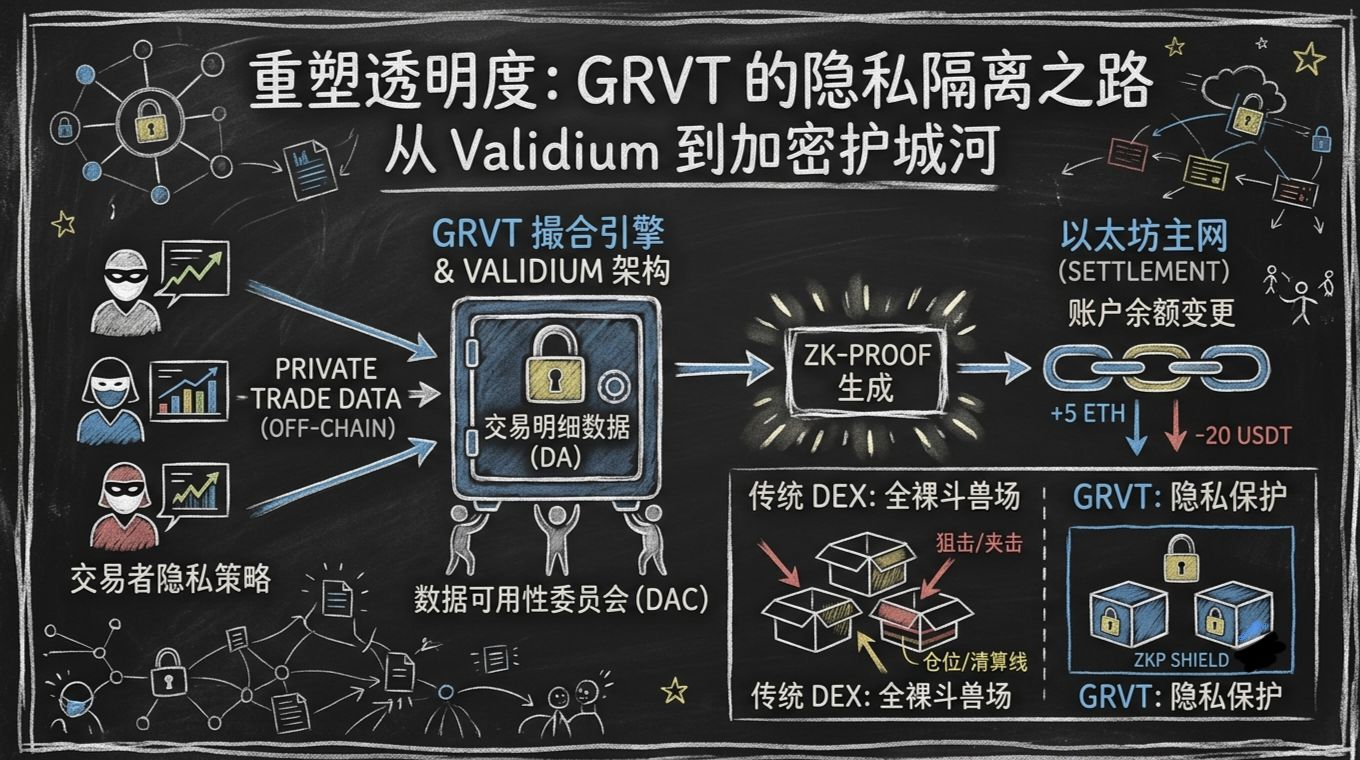
When people used to study decentralized derivatives, everyone would focus on TPS and gas fees, but when I broke down GRVT’s underlying ledger, I cared more about its “privacy isolation” logic. Traditional on-chain contracts are often like a fully exposed gladiator arena: users’ positions and liquidation lines are visible at a glance in the browser, making targeted sniping almost routine. @grvt_io
GRVT did not take the conventional ZK-Rollup route; instead, it switched to a Validium architecture. Simply put, trade matching and state computation happen off-chain, but it does not bundle all transaction detail data (DA) and dump it onto the Ethereum mainnet. Instead, it entrusts an independent Data Availability Committee (DAC) with custody.
This means that the hounds that stare at on-chain data to do reverse copy trading, or use MEV bots to play the sandwich game, lose their sense of smell here. In a pure DEX, when you play cards, your opponent can not only see your hand but also cut in ahead with high gas fees; but under GRVT’s mechanism, users’ holdings, resting orders, and trading trails are all hidden, and only the final changes in asset balances are confirmed immutably on-chain through zero-knowledge proofs (ZKP).
Looking at its centralized matching engine from this angle, everything becomes quite natural. Off-chain matching is not just about reducing latency to the millisecond level of traditional exchanges; more importantly, it works with Validium to build an institutional-grade privacy barrier. Hide the “process” of the trade and put only the “result” of settlement on-chain for self-verification. Split these two steps apart, and both performance and anti-peeking finally land at the same time.
I think GRVT’s ambition goes beyond simply recreating dYdX. It is actually trying to reshape the boundary of “transparency.” The on-chain world has long been too obsessed with absolute transparency, but real-world business competition and large-scale quantitative strategies naturally require a dark forest that won’t be disturbed.
Of course, entrusting data availability to DAC nodes still introduces trust assumptions. This tightrope walk between on-chain security and real trading experience will be tested when extreme market conditions hit, and whether the nodes’ synchronization and the matching engine can withstand the pressure will ultimately need the real market—and real money—to provide the answer. DYRO#grvt
GRVT did not take the conventional ZK-Rollup route; instead, it switched to a Validium architecture. Simply put, trade matching and state computation happen off-chain, but it does not bundle all transaction detail data (DA) and dump it onto the Ethereum mainnet. Instead, it entrusts an independent Data Availability Committee (DAC) with custody.
This means that the hounds that stare at on-chain data to do reverse copy trading, or use MEV bots to play the sandwich game, lose their sense of smell here. In a pure DEX, when you play cards, your opponent can not only see your hand but also cut in ahead with high gas fees; but under GRVT’s mechanism, users’ holdings, resting orders, and trading trails are all hidden, and only the final changes in asset balances are confirmed immutably on-chain through zero-knowledge proofs (ZKP).
Looking at its centralized matching engine from this angle, everything becomes quite natural. Off-chain matching is not just about reducing latency to the millisecond level of traditional exchanges; more importantly, it works with Validium to build an institutional-grade privacy barrier. Hide the “process” of the trade and put only the “result” of settlement on-chain for self-verification. Split these two steps apart, and both performance and anti-peeking finally land at the same time.
I think GRVT’s ambition goes beyond simply recreating dYdX. It is actually trying to reshape the boundary of “transparency.” The on-chain world has long been too obsessed with absolute transparency, but real-world business competition and large-scale quantitative strategies naturally require a dark forest that won’t be disturbed.
Of course, entrusting data availability to DAC nodes still introduces trust assumptions. This tightrope walk between on-chain security and real trading experience will be tested when extreme market conditions hit, and whether the nodes’ synchronization and the matching engine can withstand the pressure will ultimately need the real market—and real money—to provide the answer. DYRO#grvt
Verified
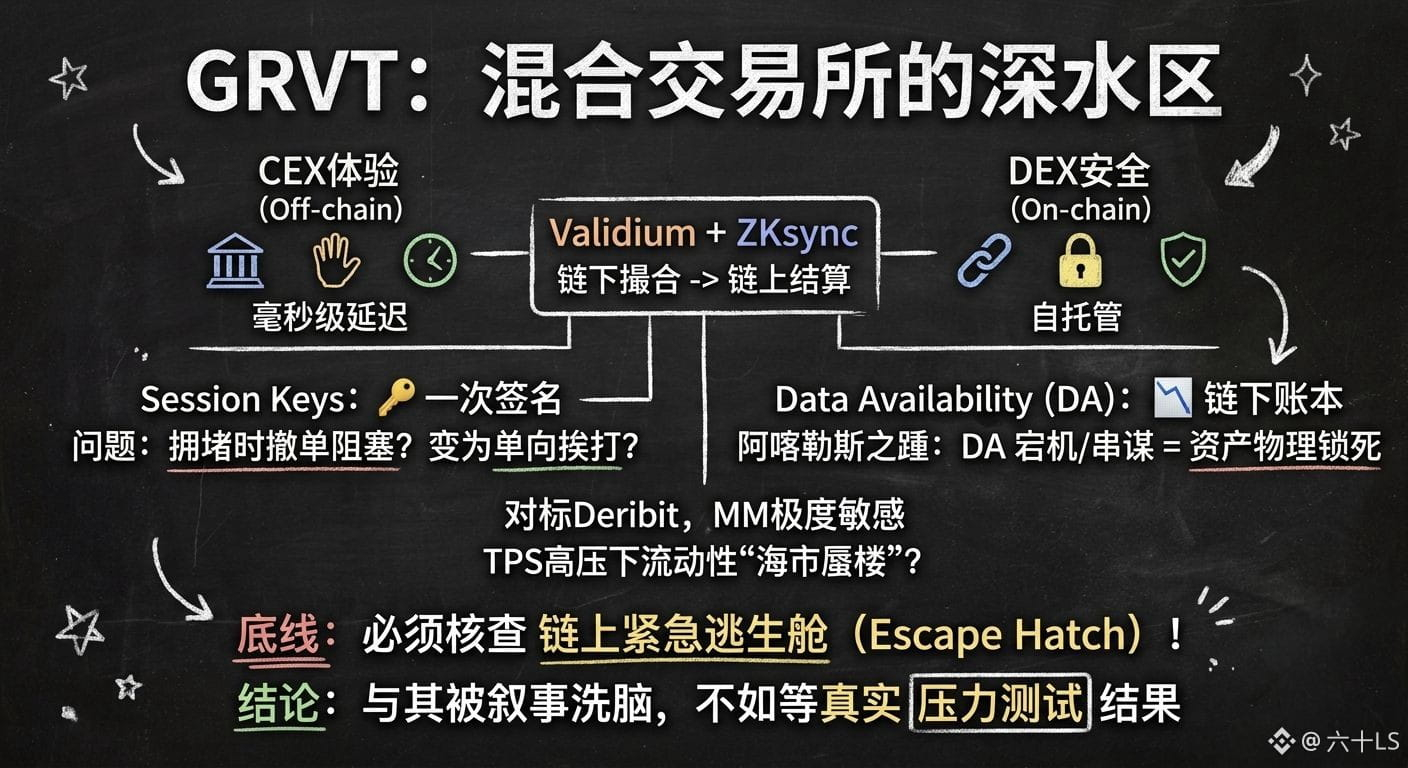
Peeling back the underlying architecture of @grvt_io — the deeper you go, the more you realize that the so-called “hybrid exchange (HEX)”, which touts “CEX experience + DEX security,” has water that runs deeper than you’d imagine.
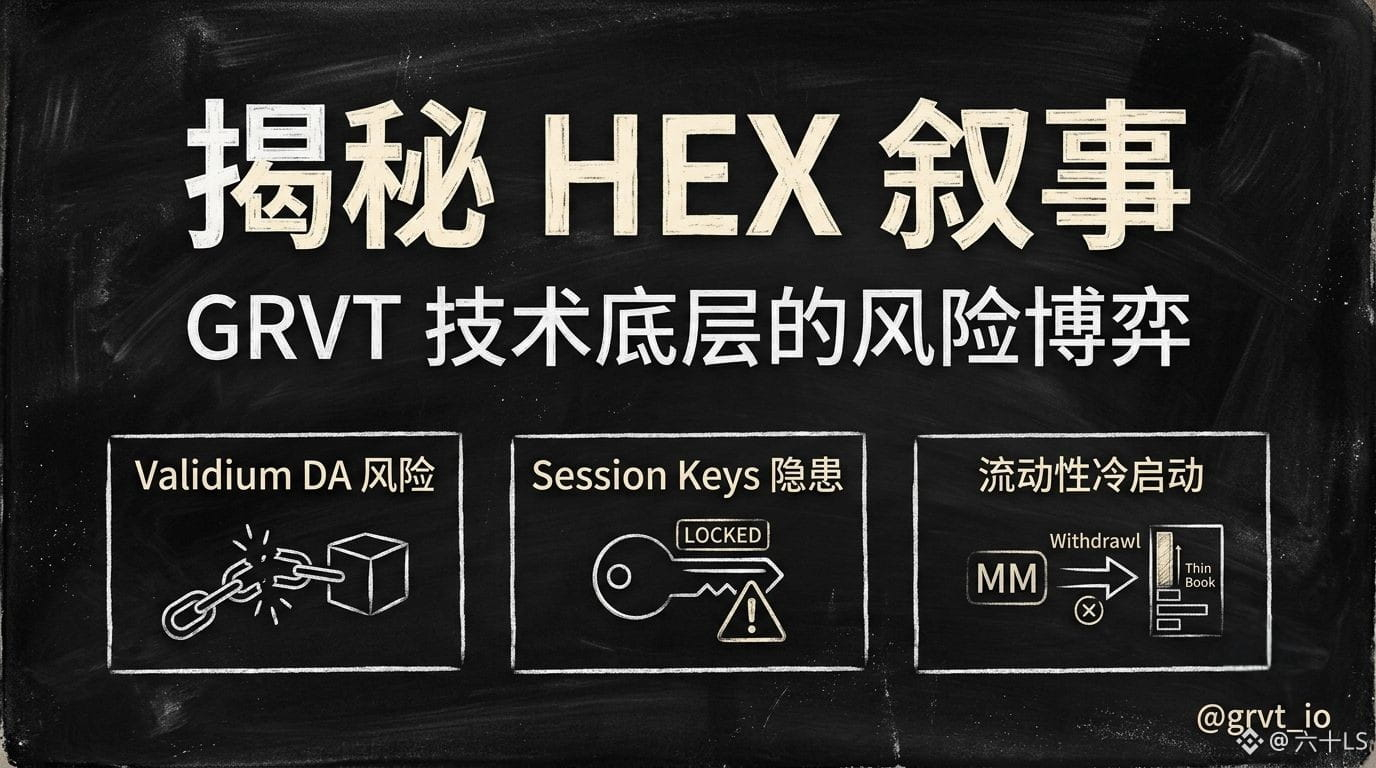
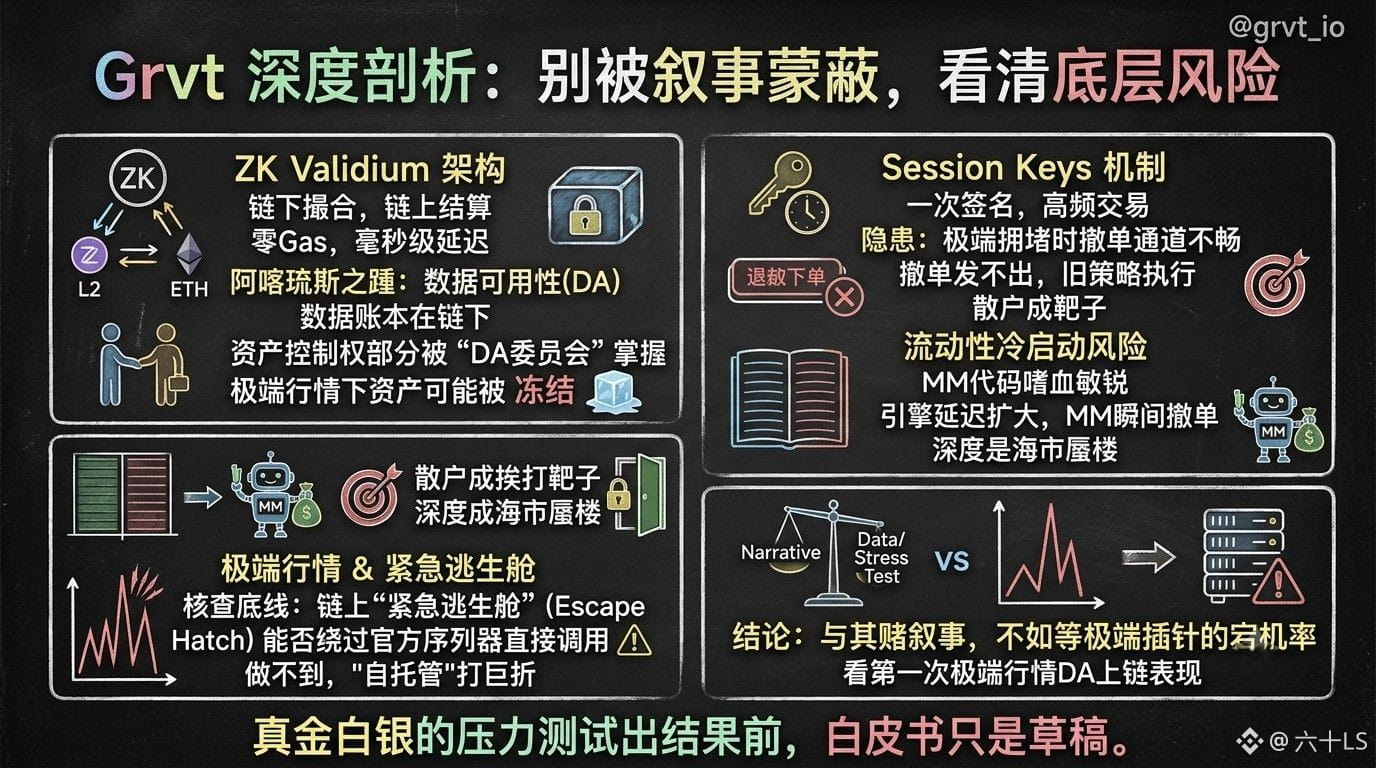
It’s based on ZKsync’s Validium, using off-chain matching and on-chain settlement. On paper it sounds perfect: zero Gas and millisecond-level latency. But Achilles’ heel is data availability (DA). With Validium, the ledger lives off-chain; only the state root and ZK proofs are posted on Ethereum. That means control over your assets is, in part, held by the off-chain “DA committee.” If you hit extreme one-sided market conditions and the DA layer goes down or nodes conspire, your funds aren’t cryptographically stolen—but they can be “frozen.” In high-leverage meat grinders like options and perpetuals, having assets locked for hours with no ability to top up margin is more maddening than getting drained by a hacker.
Next, take a closer look at its Session Keys mechanism. The official line is “one signature, high-frequency trading,” and the experience really is smooth. But the risk is this: when the network is severely congested, is the channel for revoking permissions still clear and functional? If the matching engine is hit by DDoS or the frontend freezes, you may not be able to send a cancel order command—yet the Session Key will still execute an old “eat orders” strategy underneath. That turns you into a live target getting hit from one direction. So my funding floor is: you must verify whether its on-chain emergency escape hatch (Escape Hatch) can bypass the official sequencer and be called directly. If it can’t, then “self-custody” has to be discounted heavily.
As for GRVT trying to hard-launch into Deribit’s options market, liquidity cold-start is a major weakness. Recruiting traditional market makers (MM) to provide order-book depth is standard practice, but MM code can be bloodthirsty and extremely sensitive. Once the off-chain matching engine, under high-pressure conditions of tens of thousands of TPS, experiences delay spikes of dozens of milliseconds, the MM scripts will instantly pull orders across the entire network. At that point, the “depth” retail traders see is only a mirage—market orders will slide straight up to the ceiling.
What I’m thinking is: rather than being brainwashed by the narratives of “ZK” and “account abstraction,” we should wait for mainnet launch and see its failure rate when it first faces extreme test needles, and how it performs on-chain for DA. Until real-world, hard-nosed pressure tests produce results, even the slickest whitepaper is still just a draft. #grvt
It’s based on ZKsync’s Validium, using off-chain matching and on-chain settlement. On paper it sounds perfect: zero Gas and millisecond-level latency. But Achilles’ heel is data availability (DA). With Validium, the ledger lives off-chain; only the state root and ZK proofs are posted on Ethereum. That means control over your assets is, in part, held by the off-chain “DA committee.” If you hit extreme one-sided market conditions and the DA layer goes down or nodes conspire, your funds aren’t cryptographically stolen—but they can be “frozen.” In high-leverage meat grinders like options and perpetuals, having assets locked for hours with no ability to top up margin is more maddening than getting drained by a hacker.
Next, take a closer look at its Session Keys mechanism. The official line is “one signature, high-frequency trading,” and the experience really is smooth. But the risk is this: when the network is severely congested, is the channel for revoking permissions still clear and functional? If the matching engine is hit by DDoS or the frontend freezes, you may not be able to send a cancel order command—yet the Session Key will still execute an old “eat orders” strategy underneath. That turns you into a live target getting hit from one direction. So my funding floor is: you must verify whether its on-chain emergency escape hatch (Escape Hatch) can bypass the official sequencer and be called directly. If it can’t, then “self-custody” has to be discounted heavily.
As for GRVT trying to hard-launch into Deribit’s options market, liquidity cold-start is a major weakness. Recruiting traditional market makers (MM) to provide order-book depth is standard practice, but MM code can be bloodthirsty and extremely sensitive. Once the off-chain matching engine, under high-pressure conditions of tens of thousands of TPS, experiences delay spikes of dozens of milliseconds, the MM scripts will instantly pull orders across the entire network. At that point, the “depth” retail traders see is only a mirage—market orders will slide straight up to the ceiling.
What I’m thinking is: rather than being brainwashed by the narratives of “ZK” and “account abstraction,” we should wait for mainnet launch and see its failure rate when it first faces extreme test needles, and how it performs on-chain for DA. Until real-world, hard-nosed pressure tests produce results, even the slickest whitepaper is still just a draft. #grvt
Verified
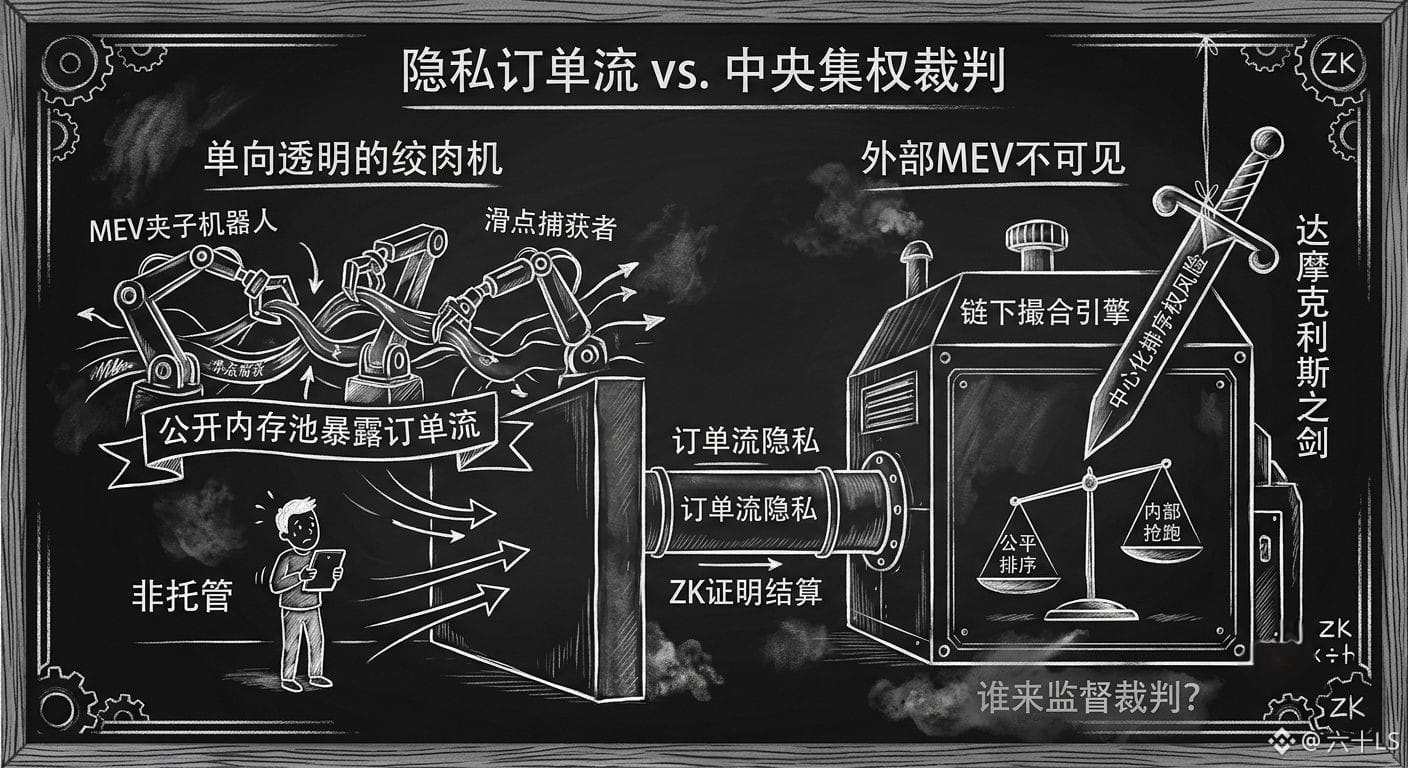
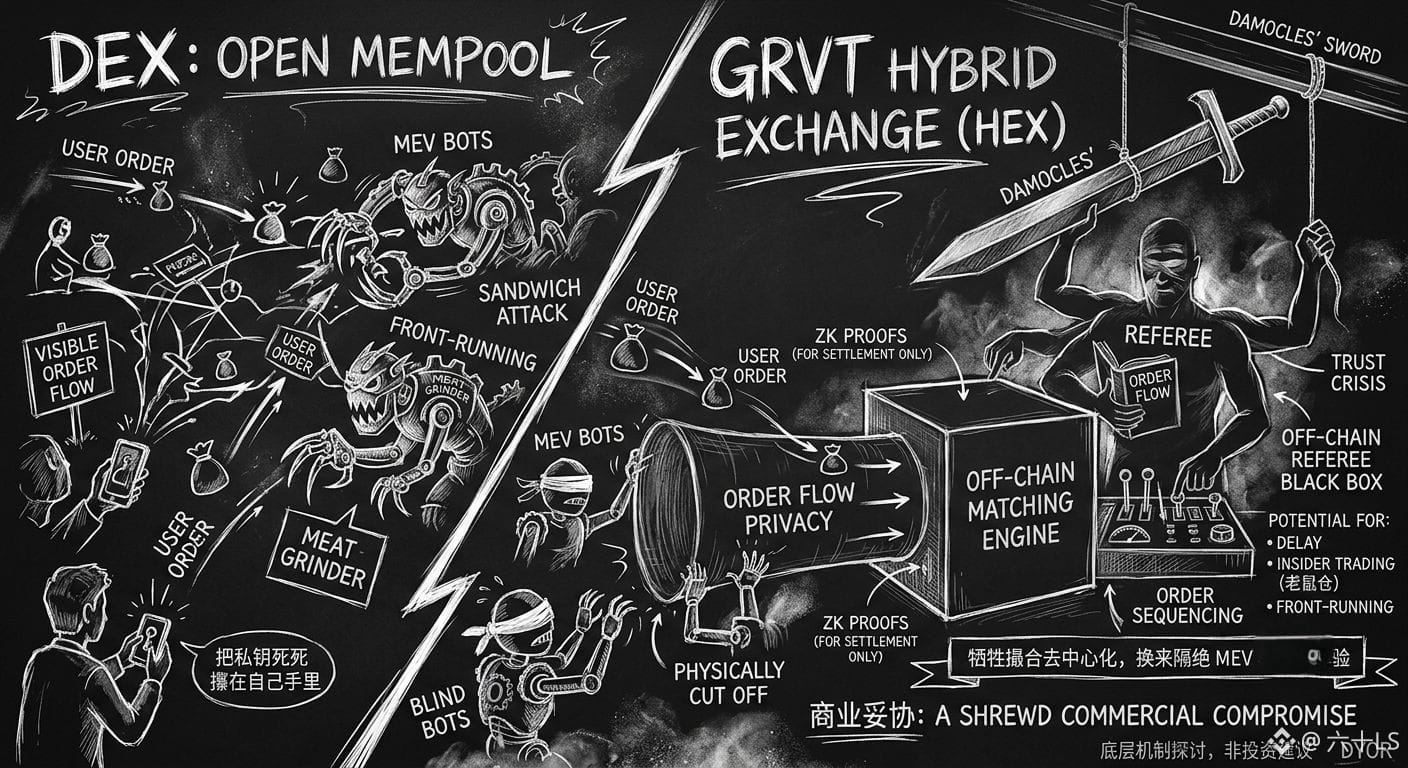
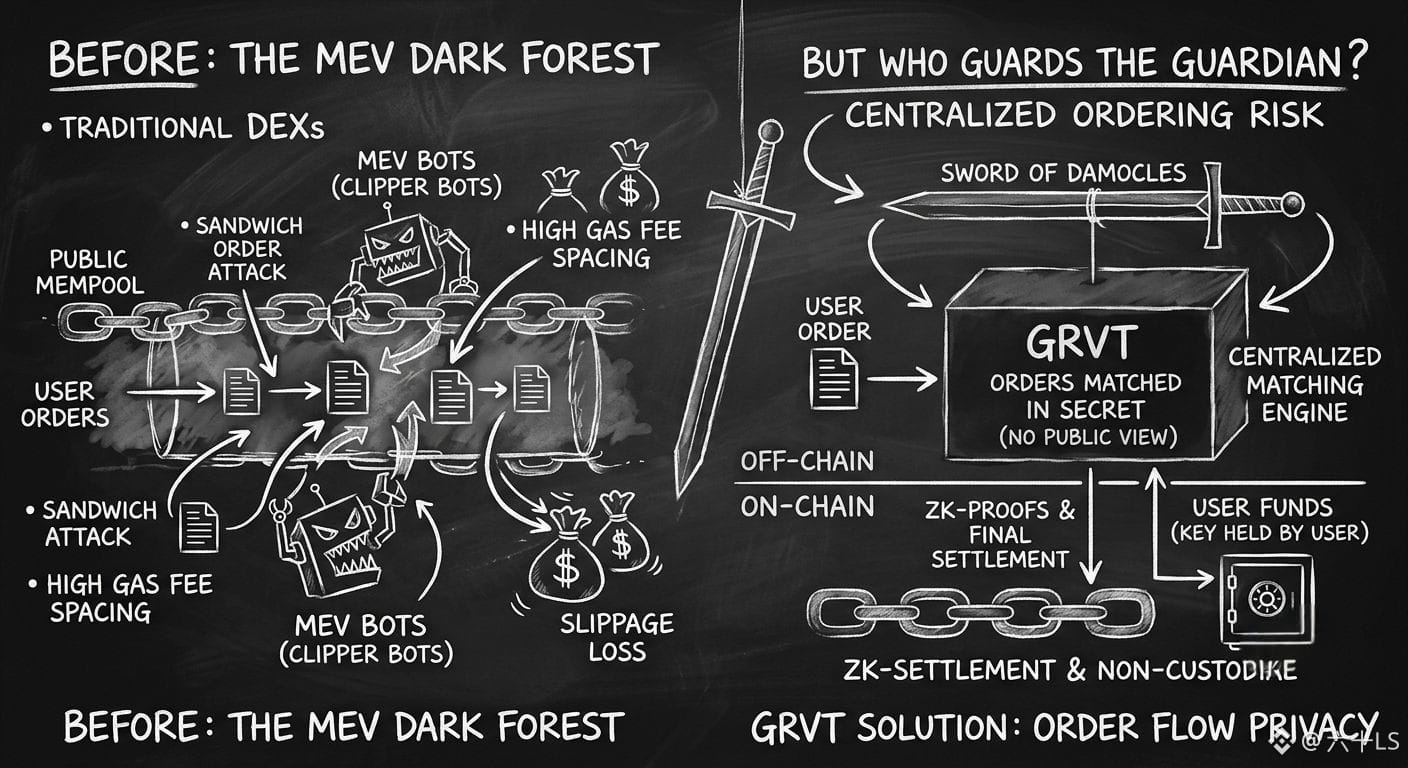
Having gone through the frequent blowups of top-tier institutions in the past few years, “keep the private keys tightly in your own hands” has become an unbreakable safety rule in the industry. However, anyone who has actually run large capital purely on-chain on DEXs understands this: the publicly broadcast, open mempool across the whole network is essentially a “one-way transparent meat grinder.” The moment your market order is signed, MEV (maximum extractable value) bot clippers can force their way in by driving up gas fees, chewing up your slippage to the last bite.
Recently, when I dug deep into @grvt_io , I found that its Exchange Hub (HEX) architecture did not obsess over underlying performance. Instead, it tried to break the deadlock from a rather tricky angle: “order flow privacy.” GRVT’s solution is very straightforward: separate the most easily targeted “order matching” from the blockchain, run it on a centralized off-chain engine, and have the on-chain portion only handle verifying ZK proofs and settlement. Because the matching happens instantly off-chain, your order placement action is never exposed in advance. External MEV bots become completely blind, and sandwich attacks are cut off from the physical layer.
While it keeps out the external wolves, a new trust crisis emerges: who will supervise this “off-chain judge”?
Although GRVT’s non-custodial design ensures the platform can never touch users’ principal, the centralized server that controls the order-sorting power naturally has the soil for wrongdoing. In the dark, will it delay broadcasting retail orders? Will it use internal accounts to run “front-running mouse accounts”? Before the matching logic is fully committed on-chain, existing ZK technology can only prove that settlement calculations are correct—it cannot prove that the absolute fairness of the ordering of orders entering the engine is guaranteed.
By sacrificing decentralized matching, GRVT gains a smooth trading experience that is comparable to CEX. It’s a smart business compromise—appealing to those who want the middle ground between fearing CEX funds misuse and being tired of clippers on-chain for ages. But for anyone who demands absolute fairness across the entire transaction process, this architecture that preserves a judge-in-the-black-box still leaves a Damocles’ sword hanging over your head. DYOR.#grvt
Recently, when I dug deep into @grvt_io , I found that its Exchange Hub (HEX) architecture did not obsess over underlying performance. Instead, it tried to break the deadlock from a rather tricky angle: “order flow privacy.” GRVT’s solution is very straightforward: separate the most easily targeted “order matching” from the blockchain, run it on a centralized off-chain engine, and have the on-chain portion only handle verifying ZK proofs and settlement. Because the matching happens instantly off-chain, your order placement action is never exposed in advance. External MEV bots become completely blind, and sandwich attacks are cut off from the physical layer.
While it keeps out the external wolves, a new trust crisis emerges: who will supervise this “off-chain judge”?
Although GRVT’s non-custodial design ensures the platform can never touch users’ principal, the centralized server that controls the order-sorting power naturally has the soil for wrongdoing. In the dark, will it delay broadcasting retail orders? Will it use internal accounts to run “front-running mouse accounts”? Before the matching logic is fully committed on-chain, existing ZK technology can only prove that settlement calculations are correct—it cannot prove that the absolute fairness of the ordering of orders entering the engine is guaranteed.
By sacrificing decentralized matching, GRVT gains a smooth trading experience that is comparable to CEX. It’s a smart business compromise—appealing to those who want the middle ground between fearing CEX funds misuse and being tired of clippers on-chain for ages. But for anyone who demands absolute fairness across the entire transaction process, this architecture that preserves a judge-in-the-black-box still leaves a Damocles’ sword hanging over your head. DYOR.#grvt
Verified
After experiencing the shocking, earth-shattering blowups from several top-tier institutions a few years back, even if I leave the U on a major exchange overnight, I still don’t feel at ease. The saying in the industry—“Not your keys, not your coins”—is an ironclad rule bought with countless people’s sweat and hard-earned money. For the sake of本金 security, I once moved my entire main position to a decentralized exchange (DEX), holding my own private keys to feel safe.
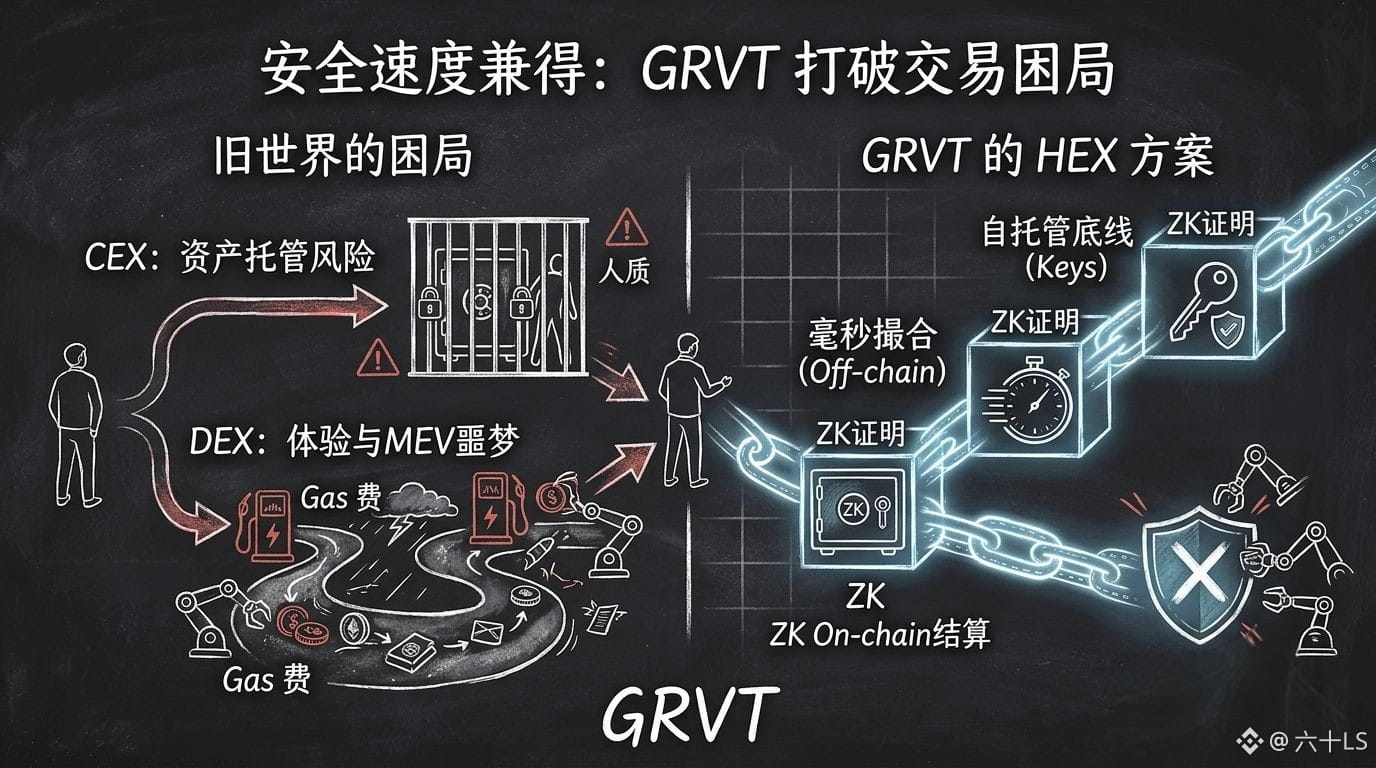
As it turned out, nobody could touch the funds—but the trading experience was nothing short of a disaster. Every time an extreme market move hits and you place a market order, you don’t just have to force through the congestion with pricey Gas fees; you’re also often ruthlessly targeted by the ever-present “traps” (MEV bots). If you set slippage low, the order can’t even get on-chain; set it high, and you’ll get squeezed and lose everything. The profits you earn while watching the charts are mostly handed over to the “on-chain scientists” as protection money.
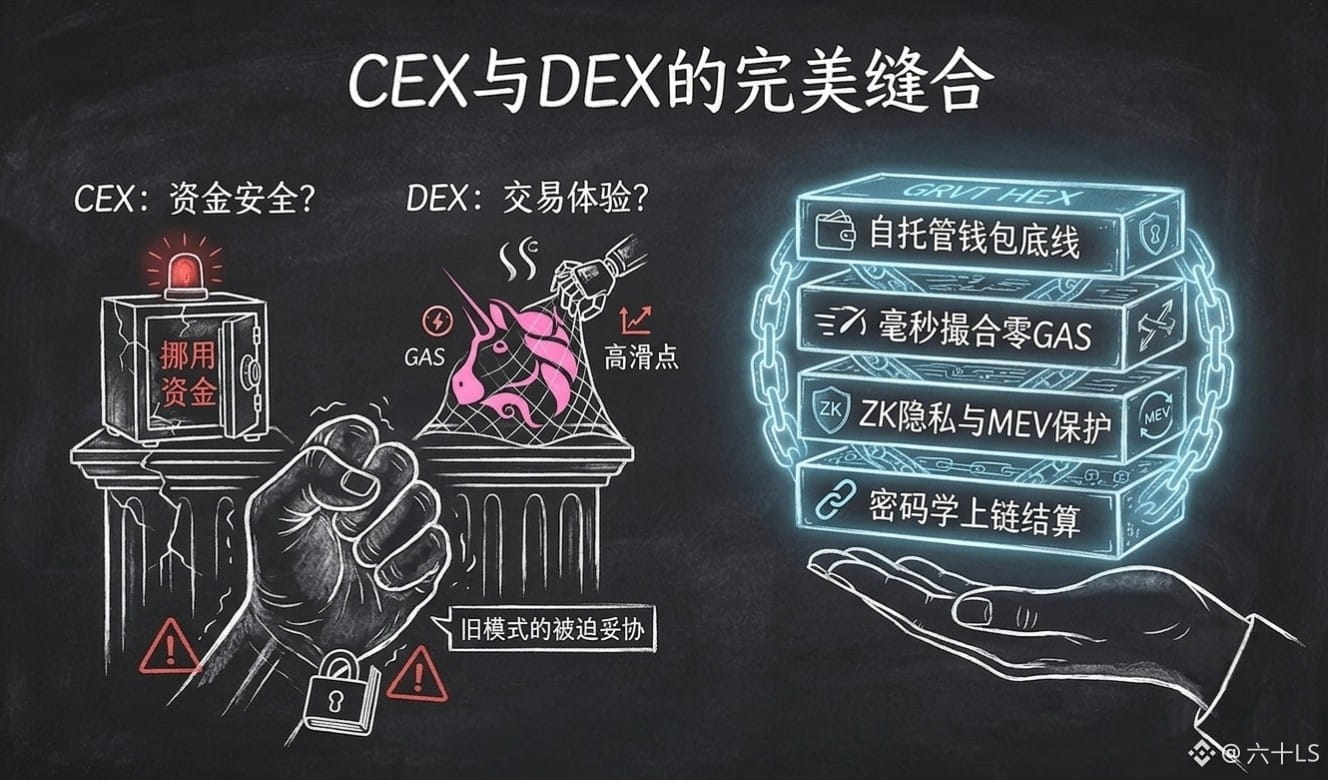
Until recently, after deep testing @grvt_io , I finally realized that in this extreme single-choice question between “fund safety” and “trading experience,” there really is a third path—Hybrid Exchange (HEX).
What really grabs me about GRVT is that it breaks the deadlock between CEX and DEX with technology. On GRVT, asset control is 100% in your wallet. The platform is essentially non-custodial smart contracts—it has no permission to move a single cent of users’ funds. At the physical layer, it cuts off the risk of a rug pull. But here’s the crucial point: it moves the most performance-intensive order matching off-chain.
How do you prevent an exchange from hiding things when matching happens off-chain? GRVT leans on zkSync and uses ZK (zero-knowledge proofs) with a Validium solution. Put simply, you get millisecond-level latency and seamless limit orders comparable to a traditional CEX, with essentially zero Gas costs for posting—while all settlement ultimately relies on cryptographic proofs submitted on-chain, ensuring the platform can’t misbehave.
Moreover, since the order flow isn’t directly broadcast across the whole network, the lurking MEV bots in GRVT are completely blind. You no longer have to fear large orders getting preemptively snatched before execution.
In the past, trading always meant compromising: either sacrifice safety for speed, or sacrifice the experience for a sense of security. GRVT uses an elegant architecture to perfectly fuse the “self-custody bottom line” with “centralized efficiency.” After experiencing this trustless hybrid model, how could you still dare to put your heavy position hostage in a platform that might pull the plug at any time? #grvt
As it turned out, nobody could touch the funds—but the trading experience was nothing short of a disaster. Every time an extreme market move hits and you place a market order, you don’t just have to force through the congestion with pricey Gas fees; you’re also often ruthlessly targeted by the ever-present “traps” (MEV bots). If you set slippage low, the order can’t even get on-chain; set it high, and you’ll get squeezed and lose everything. The profits you earn while watching the charts are mostly handed over to the “on-chain scientists” as protection money.
Until recently, after deep testing @grvt_io , I finally realized that in this extreme single-choice question between “fund safety” and “trading experience,” there really is a third path—Hybrid Exchange (HEX).
What really grabs me about GRVT is that it breaks the deadlock between CEX and DEX with technology. On GRVT, asset control is 100% in your wallet. The platform is essentially non-custodial smart contracts—it has no permission to move a single cent of users’ funds. At the physical layer, it cuts off the risk of a rug pull. But here’s the crucial point: it moves the most performance-intensive order matching off-chain.
How do you prevent an exchange from hiding things when matching happens off-chain? GRVT leans on zkSync and uses ZK (zero-knowledge proofs) with a Validium solution. Put simply, you get millisecond-level latency and seamless limit orders comparable to a traditional CEX, with essentially zero Gas costs for posting—while all settlement ultimately relies on cryptographic proofs submitted on-chain, ensuring the platform can’t misbehave.
Moreover, since the order flow isn’t directly broadcast across the whole network, the lurking MEV bots in GRVT are completely blind. You no longer have to fear large orders getting preemptively snatched before execution.
In the past, trading always meant compromising: either sacrifice safety for speed, or sacrifice the experience for a sense of security. GRVT uses an elegant architecture to perfectly fuse the “self-custody bottom line” with “centralized efficiency.” After experiencing this trustless hybrid model, how could you still dare to put your heavy position hostage in a platform that might pull the plug at any time? #grvt
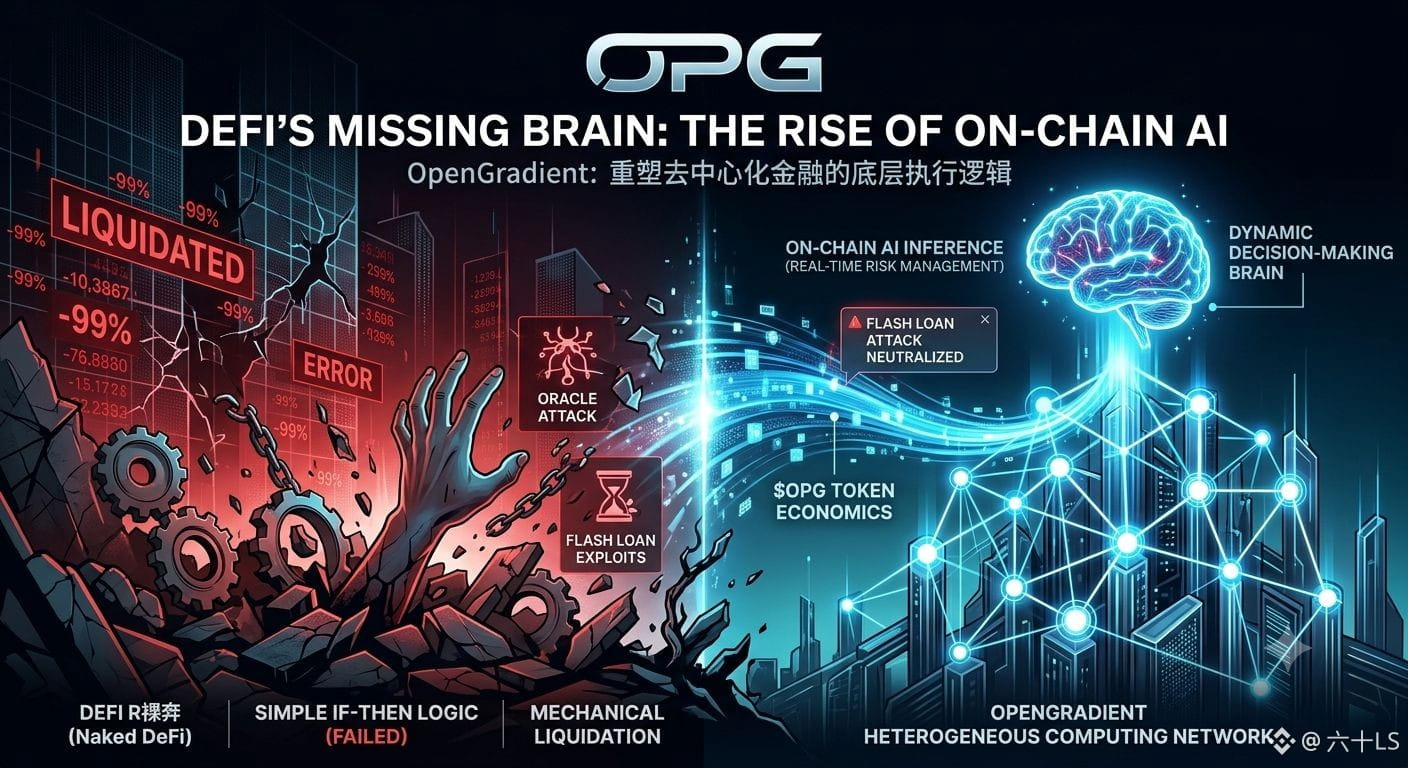
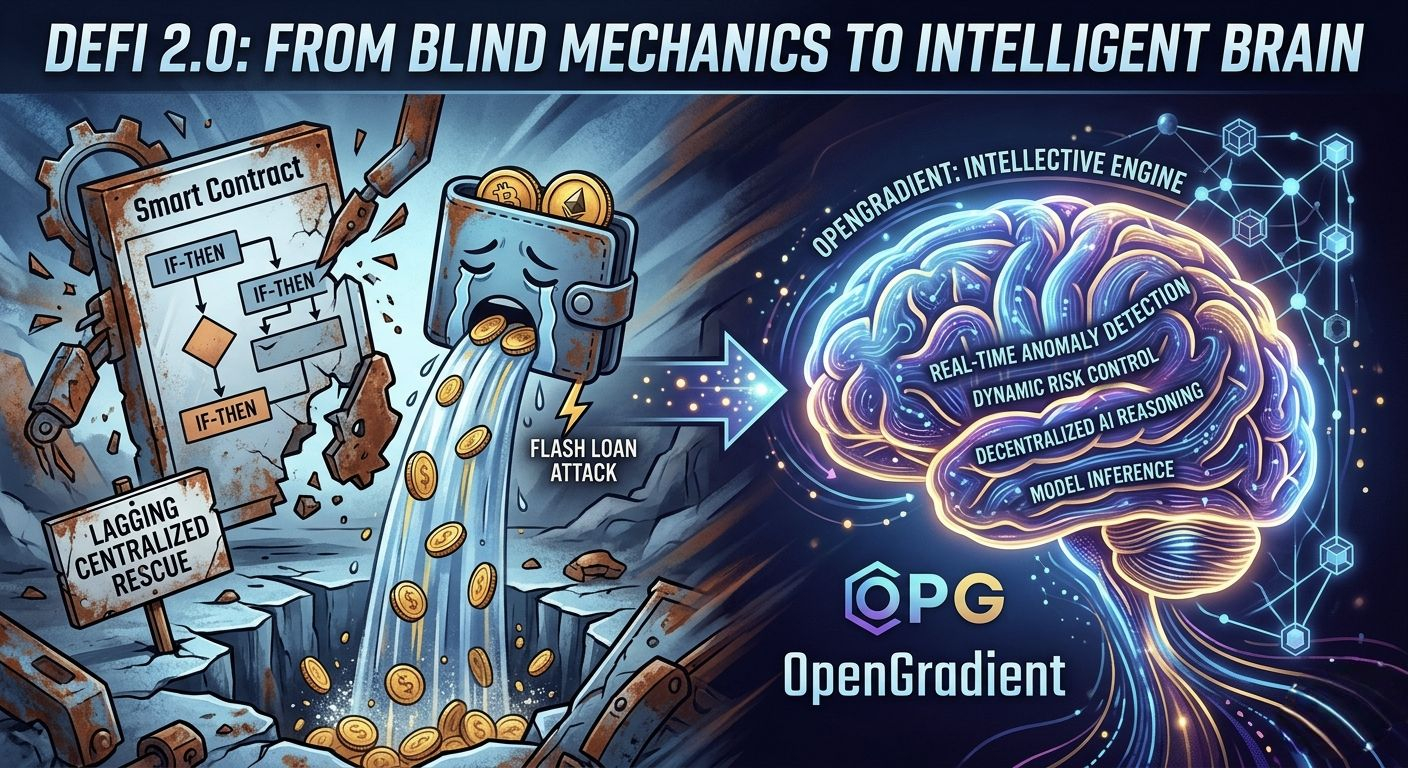
Last weekend, my heavily leveraged mining-lending protocol was emptied by a hacker using a flash loan. The project team usually talks big about how hard-core their risk controls are; but the moment the oracle was manipulated, the smart contract behaved like a clueless idiot with no pain—mechanically dumping and liquidating my collateral. Watching my wallet hit zero, I facepalmed: DeFi in extreme market conditions is basically running au natural! No real-time anomaly detection, no smart circuit breakers, and when things go wrong, everything relies on manual “multi-sig panic response” by the project team. This kind of “lagging centralized rescue” is nothing but a mockery of the decentralized vision.
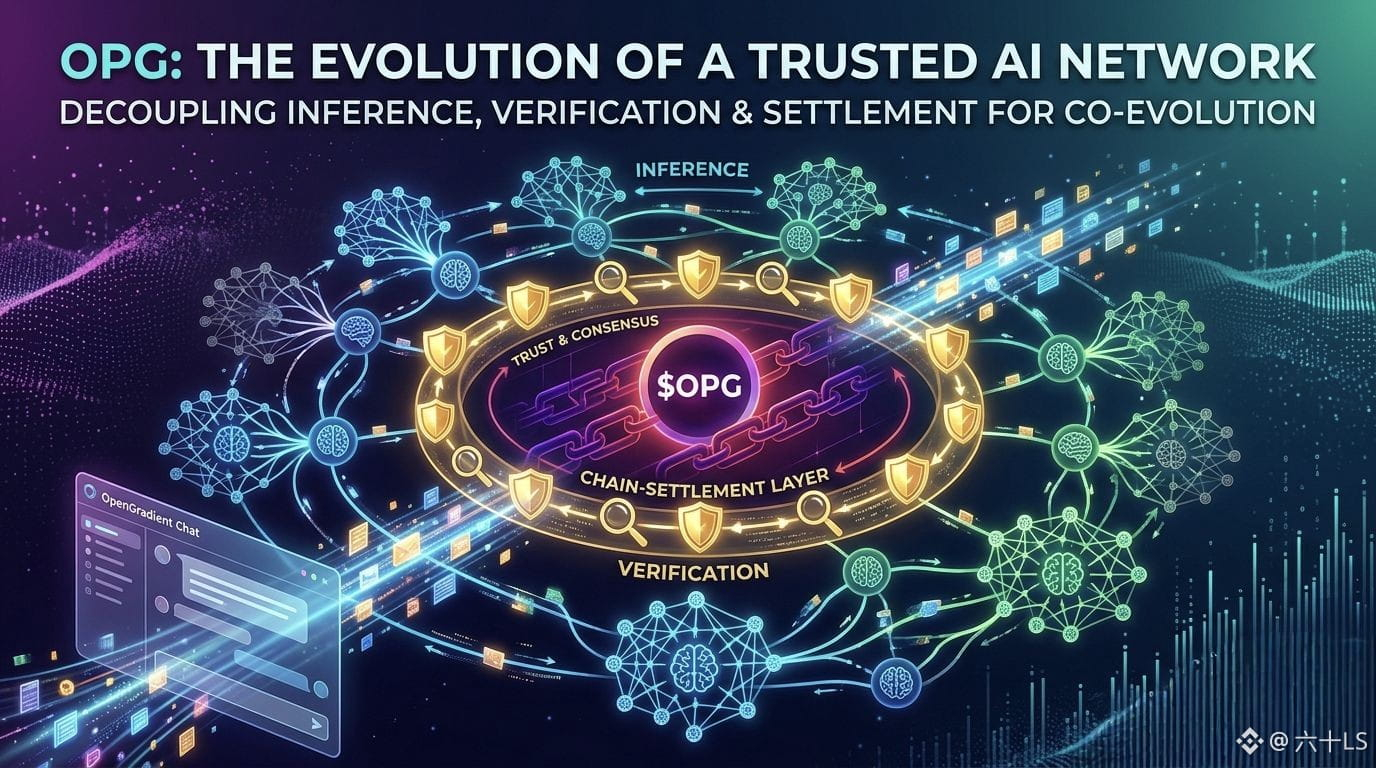
This incident forced me to dig into OpenGradient’s underlying architecture. The moment I saw the “AI + Crypto” tag, I assumed it was the usual stacked narrative about issuing tokens to raise money. But when I delved into the documentation, I found it tackles the most deadly blind spot in the on-chain world: truly bringing complex machine learning models into the on-chain execution layer. Previously, for on-chain risk control, you either ran the model on a centralized server—high black-box risk—or you did expensive, inefficient ZK circuit computations. OpenGradient’s heterogeneous computing network enables complex inference to be executed at low cost in a decentralized environment, while being verifiable on-chain. It’s like taking a “blind” contract that only executes rigid logic and installing a dynamic brain that can sense danger in real time.
The market is currently restless, and everyone would rather do PVP and gamble on shitcoins than pay attention to infrastructure. There is indeed a hurdle for developers to migrate complex logic to OpenGradient. But $OPG ’s economic model is doing hard and correct things: it’s not doing meaningless “air governance.” Instead, it uses token flows to tightly bind computing nodes, model developers, and DApp callers into the same incentive chain—running a real business closed loop for decentralized AI inference.
If Web3 forever stays at the stage of handling simple addition, subtraction, multiplication, and division, it can at most serve as a transparent ledger, and it definitely can’t carry the future’s complex business. I’m willing to bet because the next cycle’s killer applications will inevitably require a foundational engine with real-time sensing and dynamic handling capabilities.
@OpenGradient If they can truly drive down the cost of on-chain AI inference and make contracts genuinely “smart,” it would be a dimension-reducing blow to the existing public chain ecosystem. #opg $OPG
This incident forced me to dig into OpenGradient’s underlying architecture. The moment I saw the “AI + Crypto” tag, I assumed it was the usual stacked narrative about issuing tokens to raise money. But when I delved into the documentation, I found it tackles the most deadly blind spot in the on-chain world: truly bringing complex machine learning models into the on-chain execution layer. Previously, for on-chain risk control, you either ran the model on a centralized server—high black-box risk—or you did expensive, inefficient ZK circuit computations. OpenGradient’s heterogeneous computing network enables complex inference to be executed at low cost in a decentralized environment, while being verifiable on-chain. It’s like taking a “blind” contract that only executes rigid logic and installing a dynamic brain that can sense danger in real time.
The market is currently restless, and everyone would rather do PVP and gamble on shitcoins than pay attention to infrastructure. There is indeed a hurdle for developers to migrate complex logic to OpenGradient. But $OPG ’s economic model is doing hard and correct things: it’s not doing meaningless “air governance.” Instead, it uses token flows to tightly bind computing nodes, model developers, and DApp callers into the same incentive chain—running a real business closed loop for decentralized AI inference.
If Web3 forever stays at the stage of handling simple addition, subtraction, multiplication, and division, it can at most serve as a transparent ledger, and it definitely can’t carry the future’s complex business. I’m willing to bet because the next cycle’s killer applications will inevitably require a foundational engine with real-time sensing and dynamic handling capabilities.
@OpenGradient If they can truly drive down the cost of on-chain AI inference and make contracts genuinely “smart,” it would be a dimension-reducing blow to the existing public chain ecosystem. #opg $OPG
In the afternoon, I ducked into a café to wait out the rain. I’d planned to use my free time to skim the open-source code on GitHub—but before I knew it, I’d been staring at the screen for two or three hours. The iced Americano at hand turned bitter, yet the knot that had been stuck in my head for ages suddenly came undone. While looking at the developer documentation by @OpenGradient , I realized my understanding of “AI + Web3” had been stuck down a few overly narrow rabbit holes. #OPG
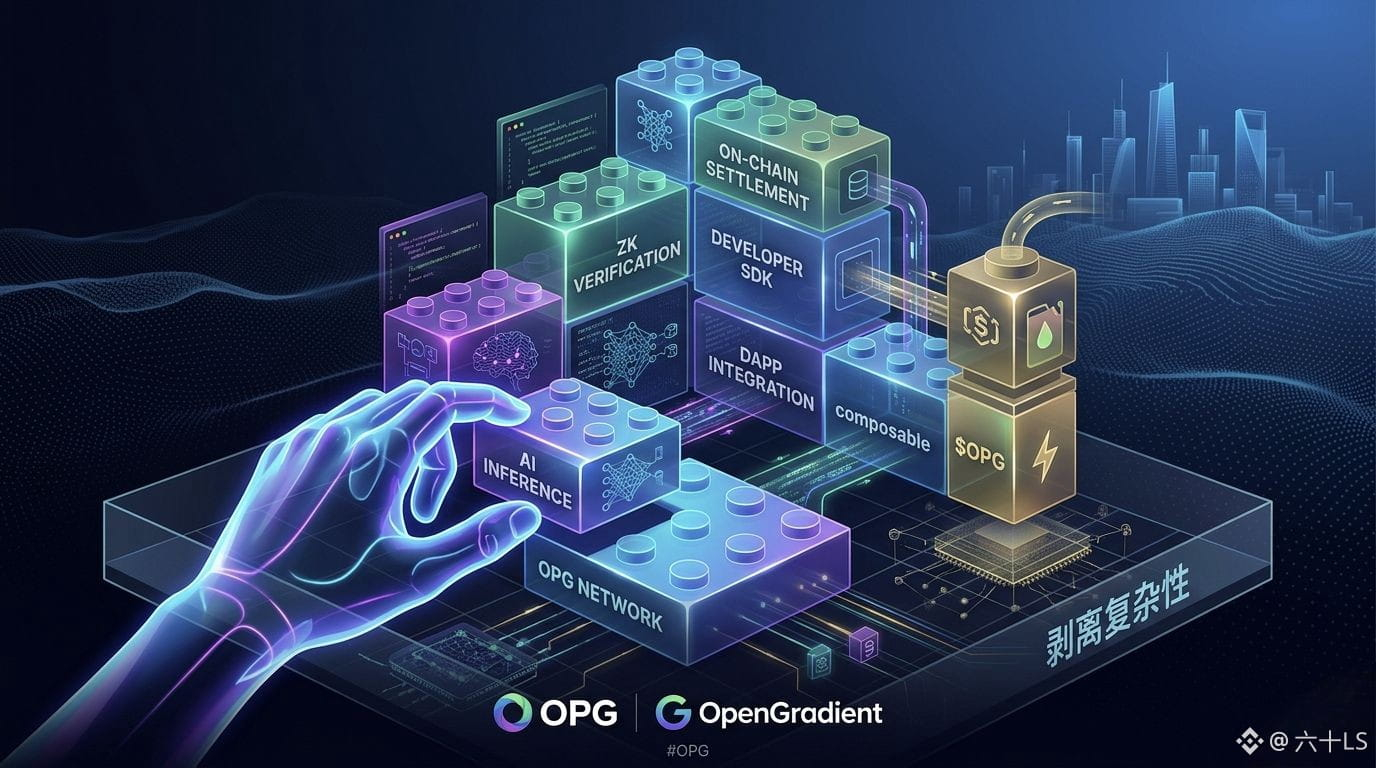
For a long time, I kept thinking the bottleneck for on-chain AI was either insufficient compute power or not-smart-enough models, so I always tried to dig into the project team’s parameters. But after re-sorting the underlying logic, I finally understood that OpenGradient’s real ace isn’t raw intelligence—it’s “stripping away complexity.” For ordinary developers, stuffing an AI module into a DApp is extremely high-friction—you need to understand machine learning and also handle off-chain computation plus tamper-proof proofs. OPG’s cleverness lies in packaging all those hard-core underlying computations and cryptographic verifications into ready-to-call “LEGO bricks.”
Following this line of thought, I also re-examined their tools and SDKs. This is definitely not just ordinary API integration—it’s a rework of the Web3 development paradigm through “composability.” Developers don’t need to wrestle with how to fine-tune models; with just a few lines of code, DeFi or GameFi protocols can instantly gain AI risk control and predictive capabilities. Heavy computations are securely handled by OPG, while the frontend stays light and agile. Once I figured this out, I got really excited. It breaks down technical barriers and drives innovation costs down dramatically—far more compelling than merely flashing benchmark-score “sexy” numbers.
Now when I look at @OpenGradient , the evaluation criteria have changed completely. I’m no longer fixated on new models; instead, I turn my attention to the developer community. How many native protocols have embedded these underlying capabilities? Is the toolchain actually seeing real growth? For infrastructure, the developer ecosystem is the barometer. Based on this logic, $OPG is not only about governance votes—it’s also the fuel that powers computation settlement, developer rewards, and the maintenance of trust within the “AI LEGO ecosystem.” If the breaking point for Web3 AI in the future lies in application deployment, I’ll bet on infrastructure networks like OPG. After all, a tool that’s genuinely useful is always more valuable in the long run than a gold mine that’s hard to dig. #opg $OPG
For a long time, I kept thinking the bottleneck for on-chain AI was either insufficient compute power or not-smart-enough models, so I always tried to dig into the project team’s parameters. But after re-sorting the underlying logic, I finally understood that OpenGradient’s real ace isn’t raw intelligence—it’s “stripping away complexity.” For ordinary developers, stuffing an AI module into a DApp is extremely high-friction—you need to understand machine learning and also handle off-chain computation plus tamper-proof proofs. OPG’s cleverness lies in packaging all those hard-core underlying computations and cryptographic verifications into ready-to-call “LEGO bricks.”
Following this line of thought, I also re-examined their tools and SDKs. This is definitely not just ordinary API integration—it’s a rework of the Web3 development paradigm through “composability.” Developers don’t need to wrestle with how to fine-tune models; with just a few lines of code, DeFi or GameFi protocols can instantly gain AI risk control and predictive capabilities. Heavy computations are securely handled by OPG, while the frontend stays light and agile. Once I figured this out, I got really excited. It breaks down technical barriers and drives innovation costs down dramatically—far more compelling than merely flashing benchmark-score “sexy” numbers.
Now when I look at @OpenGradient , the evaluation criteria have changed completely. I’m no longer fixated on new models; instead, I turn my attention to the developer community. How many native protocols have embedded these underlying capabilities? Is the toolchain actually seeing real growth? For infrastructure, the developer ecosystem is the barometer. Based on this logic, $OPG is not only about governance votes—it’s also the fuel that powers computation settlement, developer rewards, and the maintenance of trust within the “AI LEGO ecosystem.” If the breaking point for Web3 AI in the future lies in application deployment, I’ll bet on infrastructure networks like OPG. After all, a tool that’s genuinely useful is always more valuable in the long run than a gold mine that’s hard to dig. #opg $OPG
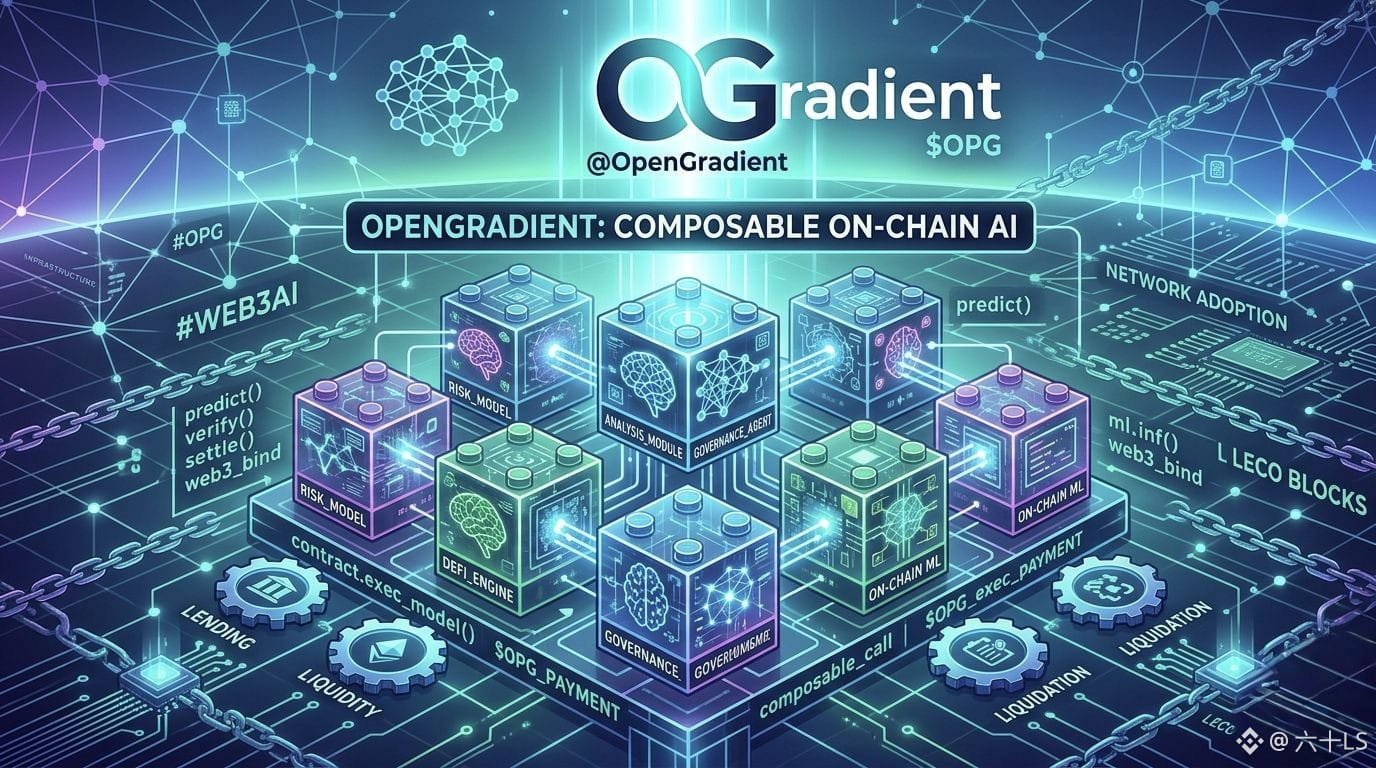
While recently browsing Web3+AI industry whitepapers, I have a fixed habit: I skip the grand narratives and go straight to studying SDK documentation and smart contract examples. Most projects in the market are essentially just wrapping Web2 model APIs, plus a token issuance logic. But when researching @OpenGradient , I was drawn to its obsession with “composability” in the underlying architecture. #opg
By digging deeper along the contract logic, I found that OpenGradient hasn’t poured all its resources into building all-purpose large models. Instead, it’s trying to make AI into “LEGO bricks” the way DeFi works. Over the past year, everyone in the space has been hyping AI agents, but most of it stays on the surface. The real on-chain pain point is: how can smart contracts call these complex computations in a trustless way? OpenGradient’s solution is to natively embed machine learning capabilities into the blockchain execution layer. This means lending protocols can directly call the risk assessment models from the OPG network within the contract to decide asset liquidations. At that point, AI stops being just a “chat box” outside the chain and becomes on-chain infrastructure.
From an ecosystem perspective, this addresses an invisible survival crisis. Many standalone AI applications eventually die because of “retention rate”—a single conversational tool is too easy to be replaced. But once OPG uses smart contracts to deeply bind AI reasoning with DeFi and full-chain games, what truly accumulates is inter-protocol interdependence, not loose C-end traffic.
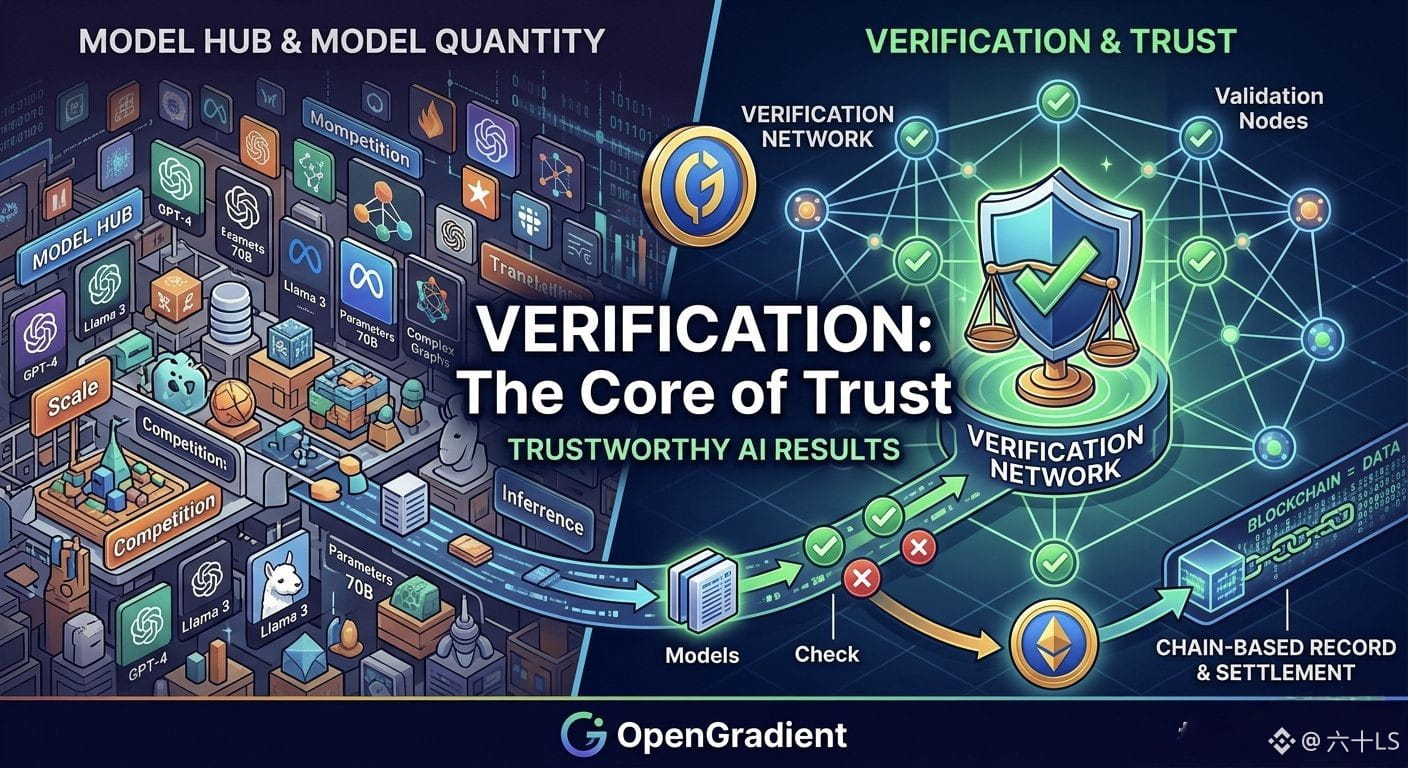
In my notes, I once recorded a viewpoint: “Isolated AI models compete on compute and parameters; AI integrated into the chain competes on how often it’s called by business.” Going forward, my tracking focus will be on how many real dApps have integrated the underlying model—not just on whether the Model Hub updates. The model itself has no moat. But once smart calling becomes an on-chain business requirement, this network stickiness will be extremely hard to break. Following this logic, $OPG is not merely a hype ticket—it’s the underlying fuel that drives intelligent modules to run.
@OpenGradient #opg $OPG
By digging deeper along the contract logic, I found that OpenGradient hasn’t poured all its resources into building all-purpose large models. Instead, it’s trying to make AI into “LEGO bricks” the way DeFi works. Over the past year, everyone in the space has been hyping AI agents, but most of it stays on the surface. The real on-chain pain point is: how can smart contracts call these complex computations in a trustless way? OpenGradient’s solution is to natively embed machine learning capabilities into the blockchain execution layer. This means lending protocols can directly call the risk assessment models from the OPG network within the contract to decide asset liquidations. At that point, AI stops being just a “chat box” outside the chain and becomes on-chain infrastructure.
From an ecosystem perspective, this addresses an invisible survival crisis. Many standalone AI applications eventually die because of “retention rate”—a single conversational tool is too easy to be replaced. But once OPG uses smart contracts to deeply bind AI reasoning with DeFi and full-chain games, what truly accumulates is inter-protocol interdependence, not loose C-end traffic.
In my notes, I once recorded a viewpoint: “Isolated AI models compete on compute and parameters; AI integrated into the chain competes on how often it’s called by business.” Going forward, my tracking focus will be on how many real dApps have integrated the underlying model—not just on whether the Model Hub updates. The model itself has no moat. But once smart calling becomes an on-chain business requirement, this network stickiness will be extremely hard to break. Following this logic, $OPG is not merely a hype ticket—it’s the underlying fuel that drives intelligent modules to run.
@OpenGradient #opg $OPG
Log in to explore more content