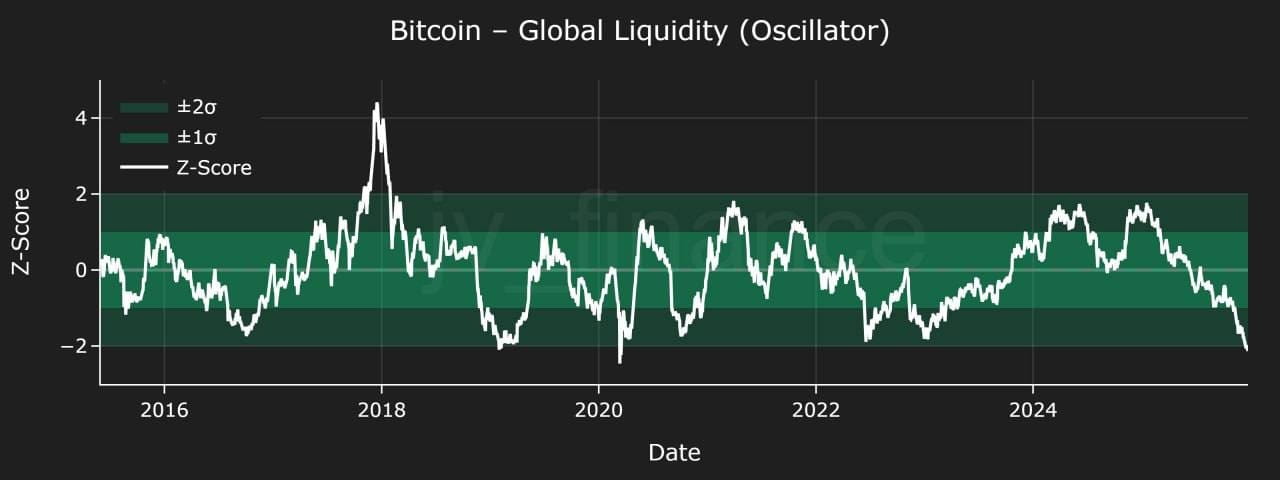
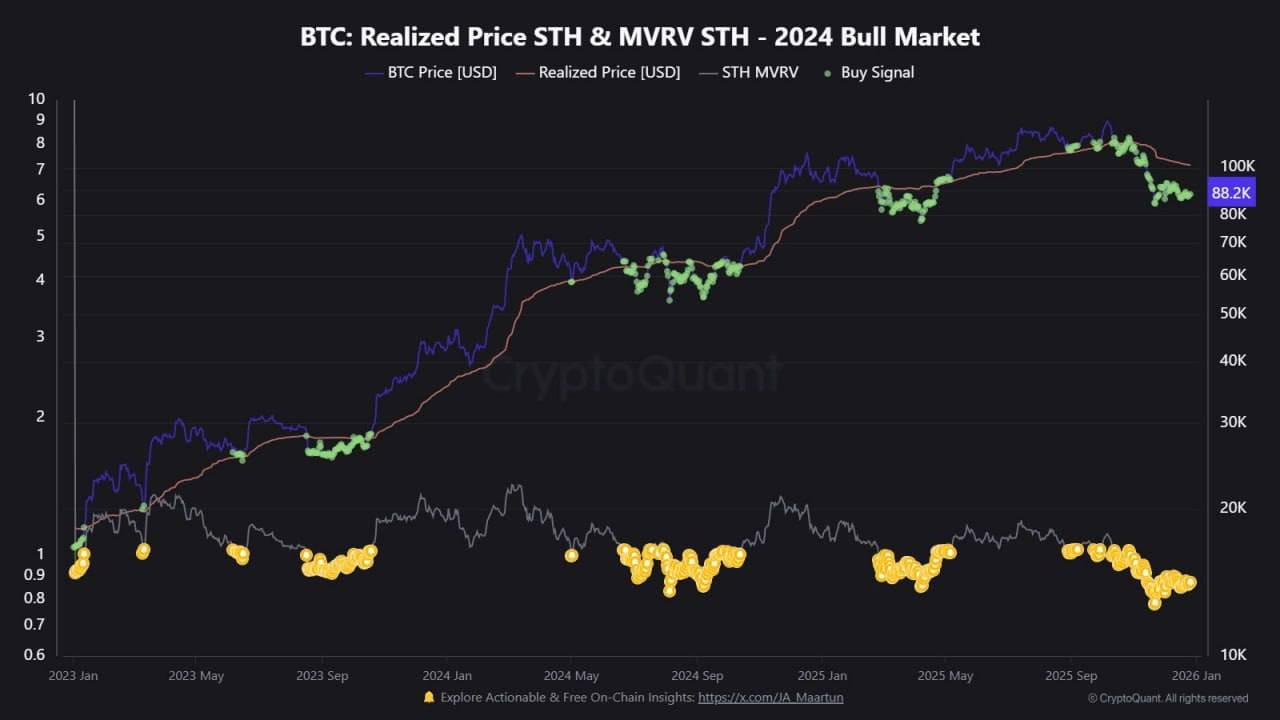
According to analysts, the fair value of Bitcoin in terms of global liquidity is currently around $185,000, while the market price is held around $87,000. Even the lower bound of the statistical range of valuation indicates values above current prices. This does not imply immediate growth but shows the scale of the divergence between price and long-term cash flows.
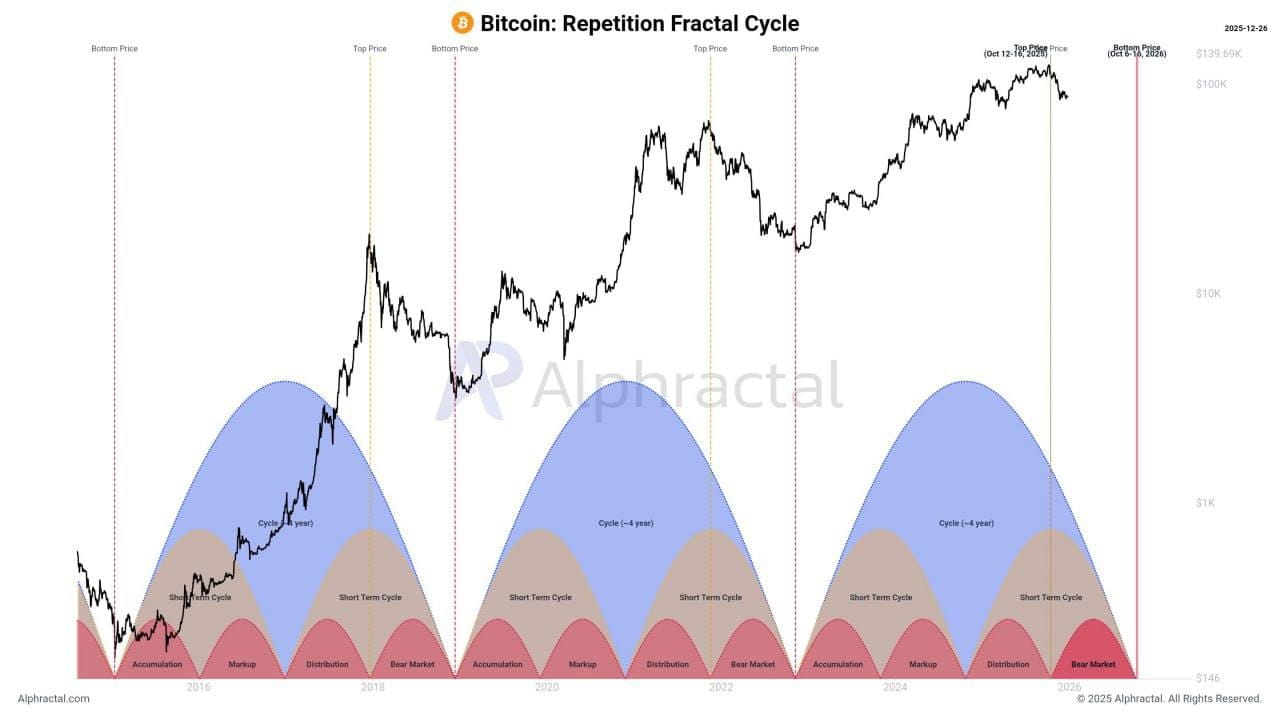
At the same time, fractal models indicate the possibility of a full cycle minimum forming closer to autumn 2026, with a potential price range significantly below current levels. Such estimates are not a forecast in the literal sense, but merely reflect historically recurring market structures.
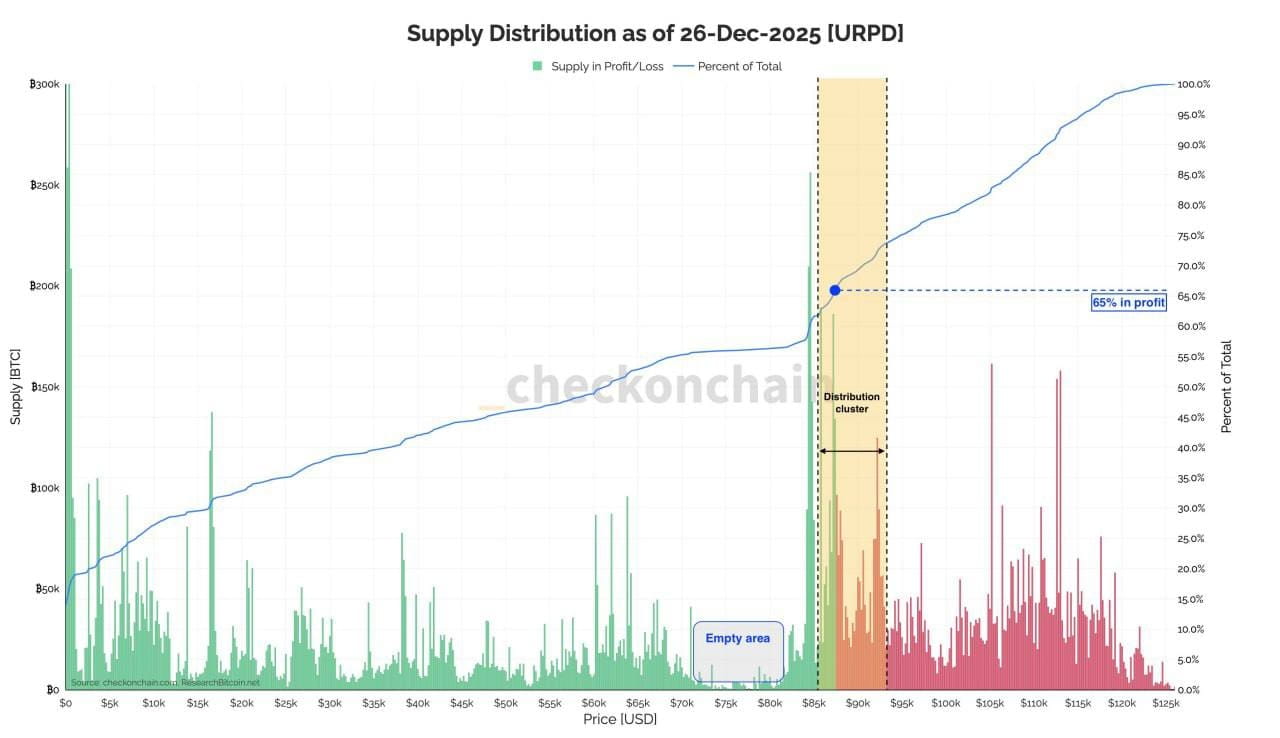
In the short term, Bitcoin continues to consolidate in the range of 85,000–92,000 dollars. The level of 85,000 remains an important support zone, while the area of 92,000 is used by many participants as an exit point. Sharp movements within the range, including spikes in volume due to large BTC movements from exchanges, do not change the overall picture.
It is important to note that about 65% of Bitcoin's supply is currently in profit. For a sustainable bull market, this is a relatively moderate figure, indicating weak euphoria and increased caution among participants.
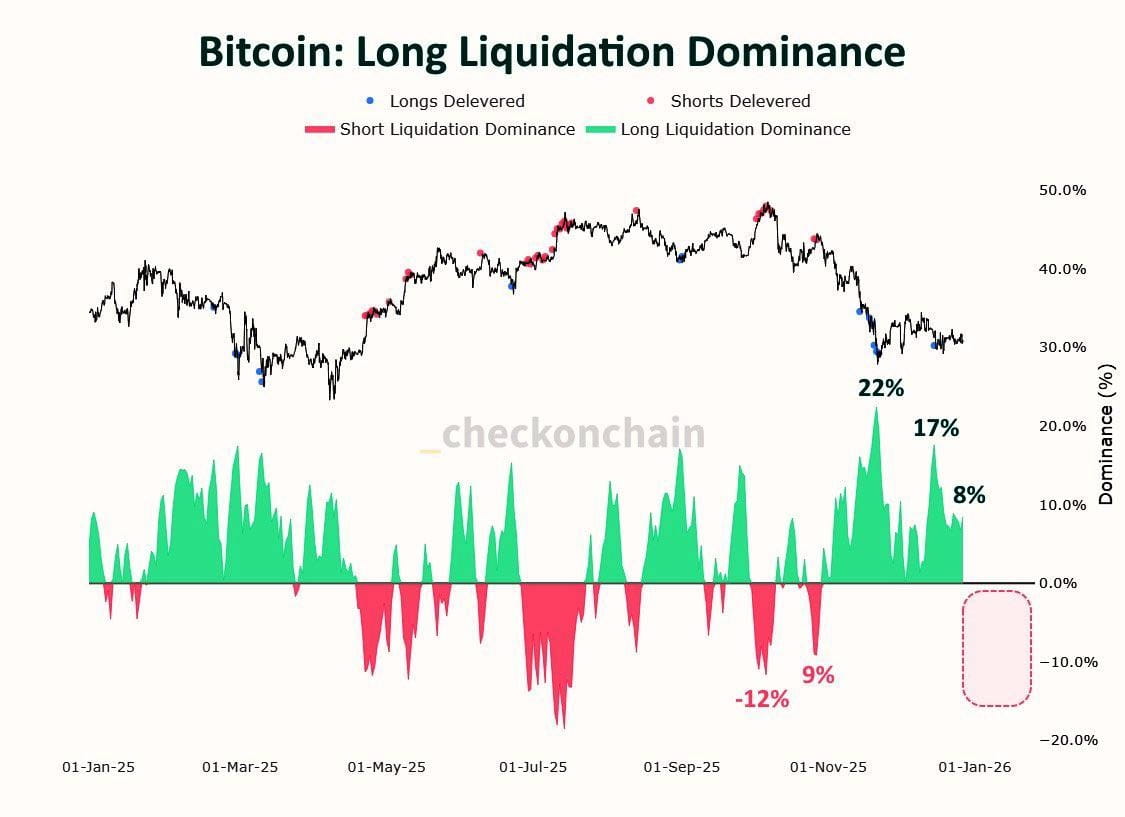
From the derivatives side, the typical bottom formation process continues: some traders hold long positions and get liquidated, then flip to shorts and get liquidated again. Such 'swings' often accompany transitional phases of the market.
Additionally, it should be noted that Bitcoin is still trading below the realized price of short-term holders. This means that most recent buyers are at a loss, which psychologically intensifies the pressure, but historically often coincides with accumulation (redistribution) zones.
Conclusion for newcomers
The market does not currently look either overheated or unequivocally bullish. We are in a compression phase where long-term valuations remain high while short-term participants feel pressure. During such periods, prices can move sharply and without obvious logic.
For newcomers, the key idea is simple: volatility and negative sentiment are a normal part of cycles. Bottom formation is rarely comfortable and almost never happens 'by the book.'