
Binance News
436.3k Posts

Binance News
 Binance Officially Verified Account
Report
Follow Binance News to stay on top of industry trends & news
9 Following
2.3M+ Followers
2.9M+ Liked
Top
Replies
Videos
·
--
Article
TradFi News | CoreWeave Jumps 10% on 168% Revenue Growth, Lifting AI Stocks as Bitcoin Holds Near $74,000CoreWeave’s third-quarter results brought some relief to AI stocks after last week’s selloff. Its shares rose 10% in pre-market trading on Wednesday, November 11, while bitcoin held steady near $74,000.
CoreWeave Raises 2026 Forecast to $13–13.3 Billion
CoreWeave, which rents cloud computing capacity to AI companies, said on Tuesday that third-quarter revenue grew 168% year over year. It raised its full-year revenue forecast to $13 billion to $13.3 billion.
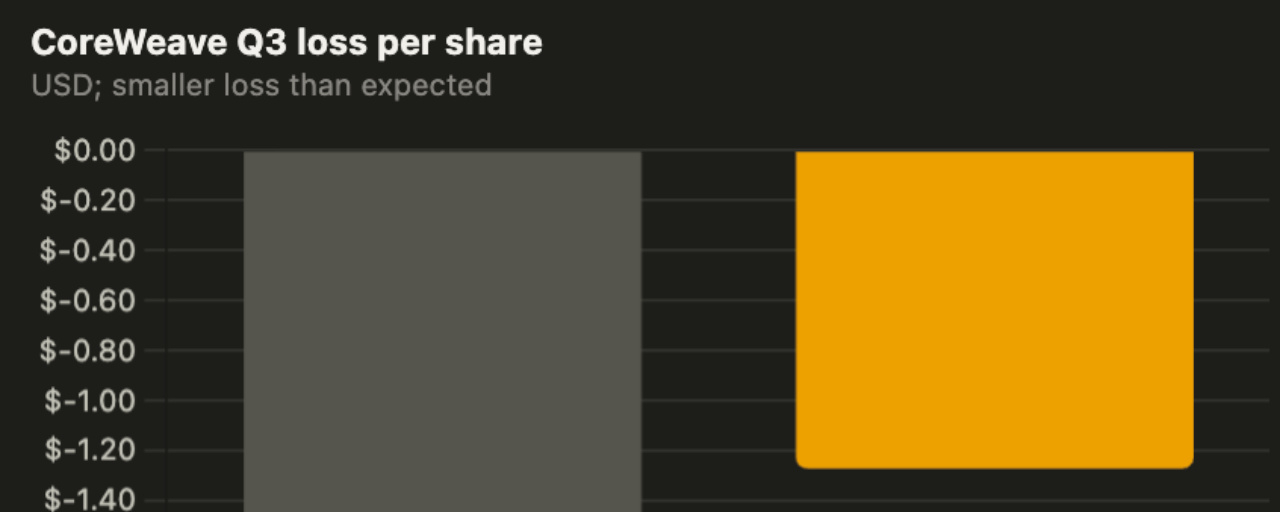
Its net loss widened to $709 million, or $1.27 a share, driven by higher interest costs. That was a smaller loss than the $1.53 per share analysts had expected.
AI Infrastructure Stocks Rally
The gains spread across AI infrastructure stocks:
IREN rose 6%Galaxy Digital (GLXY) rose 5%Cipher (CIFR) gained 7%Nasdaq 100 futures climbed more than 1.5%
Bitcoin and Gold Hold Steady
Bitcoin was little changed over 24 hours at around $74,000, and gold held near $4,000 an ounce.
The Dollar Index stayed above 102 after Tuesday’s hotter-than-expected inflation report strengthened expectations for higher US interest rates. Traders priced about an 86% chance of a quarter-point Fed rate hike on December 9 and a 14% chance of a half-point move.
Anthropic Considers Higher IPO Valuation
Anthropic’s bankers are considering an IPO valuation of $1.5 trillion or more, the Financial Times reported, citing people familiar with the matter. That would be above Tuesday’s target of about $1.4 trillion on a fully diluted basis. Anthropic’s filed price range is $70 to $78 a share.
Strategic partners including Google, Nvidia and Microsoft are set to invest $26 billion in a separate private placement at the IPO price.
TradFi News | CoreWeave Jumps 10% on 168% Revenue Growth, Lifting AI Stocks as Bitcoin Holds Near $74,000
CoreWeave’s third-quarter results brought some relief to AI stocks after last week’s selloff. Its shares rose 10% in pre-market trading on Wednesday, November 11, while bitcoin held steady near $74,000.
CoreWeave Raises 2026 Forecast to $13–13.3 Billion
CoreWeave, which rents cloud computing capacity to AI companies, said on Tuesday that third-quarter revenue grew 168% year over year. It raised its full-year revenue forecast to $13 billion to $13.3 billion.
Its net loss widened to $709 million, or $1.27 a share, driven by higher interest costs. That was a smaller loss than the $1.53 per share analysts had expected.
AI Infrastructure Stocks Rally
The gains spread across AI infrastructure stocks:
IREN rose 6%Galaxy Digital (GLXY) rose 5%Cipher (CIFR) gained 7%Nasdaq 100 futures climbed more than 1.5%
Bitcoin and Gold Hold Steady
Bitcoin was little changed over 24 hours at around $74,000, and gold held near $4,000 an ounce.
The Dollar Index stayed above 102 after Tuesday’s hotter-than-expected inflation report strengthened expectations for higher US interest rates. Traders priced about an 86% chance of a quarter-point Fed rate hike on December 9 and a 14% chance of a half-point move.
Anthropic Considers Higher IPO Valuation
Anthropic’s bankers are considering an IPO valuation of $1.5 trillion or more, the Financial Times reported, citing people familiar with the matter. That would be above Tuesday’s target of about $1.4 trillion on a fully diluted basis. Anthropic’s filed price range is $70 to $78 a share.
Strategic partners including Google, Nvidia and Microsoft are set to invest $26 billion in a separate private placement at the IPO price.
1
1
5
3.9k
·
--
Article
Bitcoin News | Bitcoin Holds $74,000 as Stocks Rebound and Bitcoin ETF Outflows Extend to Four Days; IBIT Hits EightBitcoin was little changed at around $74,000 since midnight UTC on Wednesday, November 11, after dipping to $72,700 on Tuesday. Ether held near $2,050. The CoinDesk Memecoin Index fell 1.2% and the CoinDesk 80 slipped 0.3%.
Crypto lagged a rebound in stock index futures. Nasdaq 100 futures rose 1.7% after AI cloud provider CoreWeave’s earnings beat estimates. Over 24 hours, bitcoin is down 0.7% and ether 1.7%.
ETF Outflows Extend to a Fourth Day
US spot bitcoin ETFs lost $95 million on Tuesday, according to SoSoValue, their fourth straight day of outflows. BlackRock’s IBIT accounted for $78 million, its eighth straight session of withdrawals.
Hot CPI Keeps a December Hike Fully Priced
Tuesday’s report showed US consumer prices rose 0.4% in October, more than forecast. Markets now fully price a Fed rate hike at the December 8–9 meeting, with about a 14% chance of a half-point move, according to CME FedWatch data. The US bond market is closed on Wednesday for Veterans Day.
Liquidations Jump 288% to $725 Million
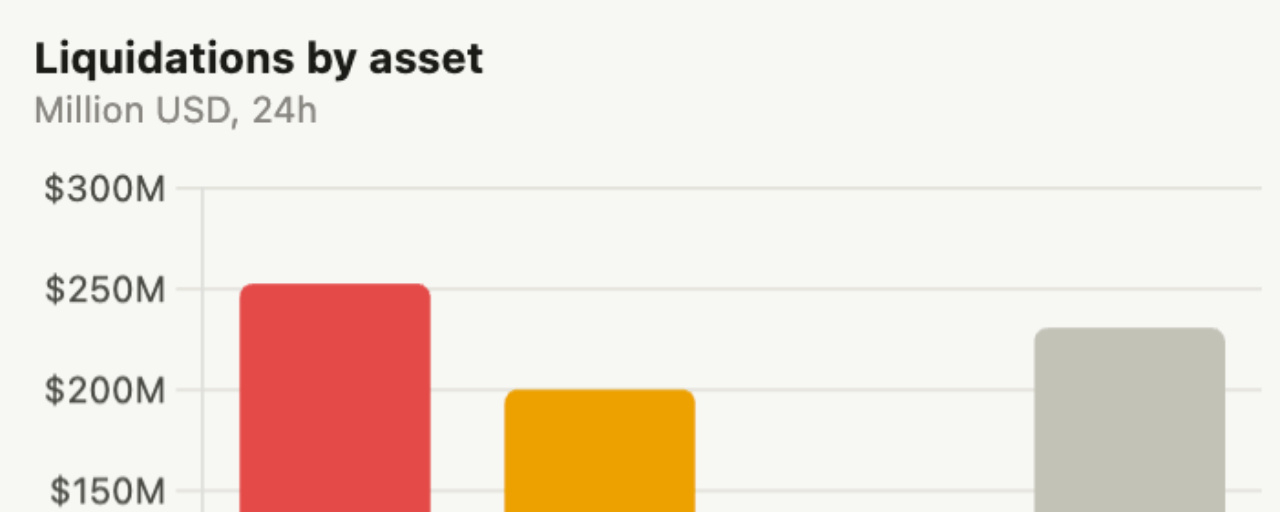
Crypto futures liquidations surged 288% to $725 million over 24 hours after the inflation data, according to CoinGlass. Trading volume rose 24% to $204.8 billion, while open interest slipped 1% to $127.2 billion, a sign that traders closed positions.
Bitcoin: liquidations were $200.5 million, 85% of them longs. Funding is positive but below baseline at 0.0078%, about 8.6% a year, so longs are still paying shorts but less than usual. Sellers lead, with a taker buy/sell ratio of 0.97.Ether: liquidations were larger, at $253 million, even though ether’s $25.2 billion in open interest is about half bitcoin’s. Open interest fell 3.6% on a 1.7% price drop, so money left.ZEC, XRP and HYPE: zcash led altcoin liquidations at $40.3 million, with open interest down 10.5%. XRP and HYPE open interest also fell more than their prices, which points to money leaving.
TradFi Perps Take Four of the Top 10 Spots
Four of the 10 most traded perpetual futures over 24 hours were linked to traditional assets, according to Coinalyze:
Direxion 3x semiconductor ETF (SOXL): $8.4 billion, more than solana or XRPSanDisk: $4.4 billionGold: $2.4 billionNvidia: $2.0 billion
Open interest in Nvidia perps rose 50% to $411 million after the stock fell 5.5% on Tuesday.
Options Traders Buy Protection
On Deribit, put volume was 1.5 times call volume for bitcoin options expiring between November 12 and 27. Eight of the 10 most active contracts are puts with strikes from $69,000 to $74,000, led by the November 27 $69,000 put. Puts are priced about 4 to 5 volatility points above calls, and at-the-money implied volatility is around 36% to 38%.
Friday’s expiry is dominated by far out-of-the-money calls, with the largest open interest at $81,000 (8,306 BTC) and $84,000 (5,231 BTC).
GRAM Leads; ZEC Slides 14%
GRAM, the renamed toncoin, led the CoinDesk 100 with a gain of about 5% since midnight UTC, after Telegram founder Pavel Durov said more than 700,000 wallets were created in the app within 48 hours.ZEC fell about 14% over 24 hours as leveraged longs were wiped out and money left Grayscale’s Zcash ETF.XMR rose 2% since midnight UTC.NIGHT, the Cardano-linked privacy chain, rose about 5% after its Ledger 9 upgrade went live on mainnet.
Bitcoin’s share of the total crypto market rose to 60.5% from 59.9% on Friday. CoinMarketCap’s altcoin season index fell to 40 out of 100, from 49 last Thursday, and the Fear and Greed Index is at 26, in fear territory.
Bitcoin News | Bitcoin Holds $74,000 as Stocks Rebound and Bitcoin ETF Outflows Extend to Four Days; IBIT Hits Eight
Bitcoin was little changed at around $74,000 since midnight UTC on Wednesday, November 11, after dipping to $72,700 on Tuesday. Ether held near $2,050. The CoinDesk Memecoin Index fell 1.2% and the CoinDesk 80 slipped 0.3%.
Crypto lagged a rebound in stock index futures. Nasdaq 100 futures rose 1.7% after AI cloud provider CoreWeave’s earnings beat estimates. Over 24 hours, bitcoin is down 0.7% and ether 1.7%.
ETF Outflows Extend to a Fourth Day
US spot bitcoin ETFs lost $95 million on Tuesday, according to SoSoValue, their fourth straight day of outflows. BlackRock’s IBIT accounted for $78 million, its eighth straight session of withdrawals.
Hot CPI Keeps a December Hike Fully Priced
Tuesday’s report showed US consumer prices rose 0.4% in October, more than forecast. Markets now fully price a Fed rate hike at the December 8–9 meeting, with about a 14% chance of a half-point move, according to CME FedWatch data. The US bond market is closed on Wednesday for Veterans Day.
Liquidations Jump 288% to $725 Million
Crypto futures liquidations surged 288% to $725 million over 24 hours after the inflation data, according to CoinGlass. Trading volume rose 24% to $204.8 billion, while open interest slipped 1% to $127.2 billion, a sign that traders closed positions.
Bitcoin: liquidations were $200.5 million, 85% of them longs. Funding is positive but below baseline at 0.0078%, about 8.6% a year, so longs are still paying shorts but less than usual. Sellers lead, with a taker buy/sell ratio of 0.97.Ether: liquidations were larger, at $253 million, even though ether’s $25.2 billion in open interest is about half bitcoin’s. Open interest fell 3.6% on a 1.7% price drop, so money left.ZEC, XRP and HYPE: zcash led altcoin liquidations at $40.3 million, with open interest down 10.5%. XRP and HYPE open interest also fell more than their prices, which points to money leaving.
TradFi Perps Take Four of the Top 10 Spots
Four of the 10 most traded perpetual futures over 24 hours were linked to traditional assets, according to Coinalyze:
Direxion 3x semiconductor ETF (SOXL): $8.4 billion, more than solana or XRPSanDisk: $4.4 billionGold: $2.4 billionNvidia: $2.0 billion
Open interest in Nvidia perps rose 50% to $411 million after the stock fell 5.5% on Tuesday.
Options Traders Buy Protection
On Deribit, put volume was 1.5 times call volume for bitcoin options expiring between November 12 and 27. Eight of the 10 most active contracts are puts with strikes from $69,000 to $74,000, led by the November 27 $69,000 put. Puts are priced about 4 to 5 volatility points above calls, and at-the-money implied volatility is around 36% to 38%.
Friday’s expiry is dominated by far out-of-the-money calls, with the largest open interest at $81,000 (8,306 BTC) and $84,000 (5,231 BTC).
GRAM Leads; ZEC Slides 14%
GRAM, the renamed toncoin, led the CoinDesk 100 with a gain of about 5% since midnight UTC, after Telegram founder Pavel Durov said more than 700,000 wallets were created in the app within 48 hours.ZEC fell about 14% over 24 hours as leveraged longs were wiped out and money left Grayscale’s Zcash ETF.XMR rose 2% since midnight UTC.NIGHT, the Cardano-linked privacy chain, rose about 5% after its Ledger 9 upgrade went live on mainnet.
Bitcoin’s share of the total crypto market rose to 60.5% from 59.9% on Friday. CoinMarketCap’s altcoin season index fell to 40 out of 100, from 49 last Thursday, and the Fear and Greed Index is at 26, in fear territory.
4
1.9k
·
--
Japan FSA Study Group Discusses DeFi Regulation and Gatekeeper ResponsibilitiesAccording to ChainCatcher citing CoinPost, Japan’s Financial Services Agency published minutes from the first meeting of its study group on approaches to digital and decentralized finance, held on October 20. The group discussed DeFi and decentralized exchanges, including how to assign gatekeeper responsibilities. Members said Japan should respond promptly to avoid becoming a regulatory void or a destination for regulatory arbitrage.
Japan FSA Study Group Discusses DeFi Regulation and Gatekeeper Responsibilities
According to ChainCatcher citing CoinPost, Japan’s Financial Services Agency published minutes from the first meeting of its study group on approaches to digital and decentralized finance, held on October 20. The group discussed DeFi and decentralized exchanges, including how to assign gatekeeper responsibilities. Members said Japan should respond promptly to avoid becoming a regulatory void or a destination for regulatory arbitrage.
1
1
7
6k
·
--
FSB Urges Turkey to Strengthen Crypto Rules and Establish Stablecoin FrameworkThe Financial Stability Board (FSB) has urged Turkey to strengthen its crypto-asset regulation and establish a dedicated stablecoin framework. According to Odaily, an FSB peer review found that Turkey has made substantial progress in regulating, supervising and reviewing crypto-asset markets in recent years, bringing most related activities under oversight and requiring crypto-asset service providers (CASPs) to register and obtain licenses. The report also noted that Turkey has separated the custody of assets, prohibited the use of crypto assets for domestic payments and established a centralized data platform to monitor related activity. The FSB said Turkey still needs to implement a financial stability monitoring framework, strengthen regulation and enforcement, and advance cross-border regulatory cooperation and information sharing.
FSB Urges Turkey to Strengthen Crypto Rules and Establish Stablecoin Framework
The Financial Stability Board (FSB) has urged Turkey to strengthen its crypto-asset regulation and establish a dedicated stablecoin framework. According to Odaily, an FSB peer review found that Turkey has made substantial progress in regulating, supervising and reviewing crypto-asset markets in recent years, bringing most related activities under oversight and requiring crypto-asset service providers (CASPs) to register and obtain licenses. The report also noted that Turkey has separated the custody of assets, prohibited the use of crypto assets for domestic payments and established a centralized data platform to monitor related activity. The FSB said Turkey still needs to implement a financial stability monitoring framework, strengthen regulation and enforcement, and advance cross-border regulatory cooperation and information sharing.
1
5
3.4k
·
--
Morgan Stanley Drops Nvidia From Top Picks List, Keeps Overweight RatingMorgan Stanley removed Nvidia (NVDA.O) from its list of top picks on November 11, while keeping an overweight rating on the stock.The move follows Citi’s cut to its Nvidia price target, from $315 to $285, on November 10. Nvidia shares fell 5.5% on Tuesday, and its board is investigating reports about CEO Jensen Huang.
Morgan Stanley Drops Nvidia From Top Picks List, Keeps Overweight Rating
Morgan Stanley removed Nvidia (NVDA.O) from its list of top picks on November 11, while keeping an overweight rating on the stock.The move follows Citi’s cut to its Nvidia price target, from $315 to $285, on November 10. Nvidia shares fell 5.5% on Tuesday, and its board is investigating reports about CEO Jensen Huang.
NVDA-0.14%
MSUS+1.22%
2
184
·
--
December Fed Hike “Virtually a Certainty,” WSJ’s Timiraos Says, as Focus Shifts to 25 vs 50 Basis PointsA Federal Reserve rate hike at the December 8–9 policy meeting is “virtually a certainty” after a third straight strong inflation report, The Wall Street Journal’s chief economics correspondent Nick Timiraos wrote on November 11. The bigger question, he said, is how fast the Fed will move.The Fed could raise rates by 25 basis points at each meeting, move by 50 basis points at once, or signal several 25 basis point hikes in a row. Timiraos said the choice will show whether this is still a mild adjustment, with the two or three more hikes many officials expect, or the start of a longer effort to slow the economy and bring down inflation.Fed Governor Christopher Waller, who had previously supported holding rates steady, said last week that a 50 basis point hike should be considered in December if core prices rose about 0.3% in October. Tuesday’s data showed exactly that. Dallas Fed President Lorie Logan also suggested after the release that the pace of hikes may need to speed up. Timiraos noted that such tactical decisions are often left to the Fed Chair, currently Kevin Warsh.Markets price about an 86% chance of a 25 basis point hike in December and a 14% chance of 50 basis points.
December Fed Hike “Virtually a Certainty,” WSJ’s Timiraos Says, as Focus Shifts to 25 vs 50 Basis Points
A Federal Reserve rate hike at the December 8–9 policy meeting is “virtually a certainty” after a third straight strong inflation report, The Wall Street Journal’s chief economics correspondent Nick Timiraos wrote on November 11. The bigger question, he said, is how fast the Fed will move.The Fed could raise rates by 25 basis points at each meeting, move by 50 basis points at once, or signal several 25 basis point hikes in a row. Timiraos said the choice will show whether this is still a mild adjustment, with the two or three more hikes many officials expect, or the start of a longer effort to slow the economy and bring down inflation.Fed Governor Christopher Waller, who had previously supported holding rates steady, said last week that a 50 basis point hike should be considered in December if core prices rose about 0.3% in October. Tuesday’s data showed exactly that. Dallas Fed President Lorie Logan also suggested after the release that the pace of hikes may need to speed up. Timiraos noted that such tactical decisions are often left to the Fed Chair, currently Kevin Warsh.Markets price about an 86% chance of a 25 basis point hike in December and a 14% chance of 50 basis points.
174
·
--
Bitmine Reports $6.3B Fiscal 2026 Loss as Ether Prices SlideBitmine Immersion Technologies reported a $6.3 billion net loss for the fiscal year ended Aug. 31, with falling Ether prices driving most of the decline. According to Cointelegraph, the company recorded a $6.2 billion unrealized loss on its digital assets, according to its Form 10-K filed Tuesday. Bitmine had posted a $348.6 million net profit in the previous fiscal year. At fiscal year-end, it reported $15.4 billion in total assets and $33.7 million in liabilities. Its holdings included 5.9 million Ether worth $14.6 billion, along with $545 million in cash and cash equivalents and 211 Bitcoin valued at $16.6 million. The company also held $186 million in Beast Industries shares and $77 million in Eightco Holdings shares. Revenue totaled $124.8 million, exceeding the $119.8 million average analyst estimate listed by Yahoo Finance. Staking and validation generated $121.4 million, accounting for 97% of revenue.
Bitmine shares closed 2.8% lower at $18.08 on Tuesday, bringing their year-to-date decline to 33%, according to Yahoo Finance. The company filed its 10-K after the market closed. Its year-end Ether balance differed from figures in a Monday update, when Bitmine said its holdings had grown to 6.07 million ETH, or 4.97% of the supply. The company estimated that the 5.23 million ETH it had staked would produce $309 million in annualized rewards. At a keynote at Token2049 in Singapore on Oct. 7, Bitmine Chairman Tom Lee called 5% of Ether’s supply a “hard cap” for the company’s holdings. The fiscal-year filing details the company’s assets and liabilities as of Aug. 31, while the Monday update provided a later account of its Ether holdings and staking position. Bitmine is the largest corporate Ether holder, according to the report.
Bitmine Reports $6.3B Fiscal 2026 Loss as Ether Prices Slide
Bitmine Immersion Technologies reported a $6.3 billion net loss for the fiscal year ended Aug. 31, with falling Ether prices driving most of the decline. According to Cointelegraph, the company recorded a $6.2 billion unrealized loss on its digital assets, according to its Form 10-K filed Tuesday. Bitmine had posted a $348.6 million net profit in the previous fiscal year. At fiscal year-end, it reported $15.4 billion in total assets and $33.7 million in liabilities. Its holdings included 5.9 million Ether worth $14.6 billion, along with $545 million in cash and cash equivalents and 211 Bitcoin valued at $16.6 million. The company also held $186 million in Beast Industries shares and $77 million in Eightco Holdings shares. Revenue totaled $124.8 million, exceeding the $119.8 million average analyst estimate listed by Yahoo Finance. Staking and validation generated $121.4 million, accounting for 97% of revenue.
Bitmine shares closed 2.8% lower at $18.08 on Tuesday, bringing their year-to-date decline to 33%, according to Yahoo Finance. The company filed its 10-K after the market closed. Its year-end Ether balance differed from figures in a Monday update, when Bitmine said its holdings had grown to 6.07 million ETH, or 4.97% of the supply. The company estimated that the 5.23 million ETH it had staked would produce $309 million in annualized rewards. At a keynote at Token2049 in Singapore on Oct. 7, Bitmine Chairman Tom Lee called 5% of Ether’s supply a “hard cap” for the company’s holdings. The fiscal-year filing details the company’s assets and liabilities as of Aug. 31, while the Monday update provided a later account of its Ether holdings and staking position. Bitmine is the largest corporate Ether holder, according to the report.
Bitmine shares closed 2.8% lower at $18.08 on Tuesday, bringing their year-to-date decline to 33%, according to Yahoo Finance. The company filed its 10-K after the market closed. Its year-end Ether balance differed from figures in a Monday update, when Bitmine said its holdings had grown to 6.07 million ETH, or 4.97% of the supply. The company estimated that the 5.23 million ETH it had staked would produce $309 million in annualized rewards. At a keynote at Token2049 in Singapore on Oct. 7, Bitmine Chairman Tom Lee called 5% of Ether’s supply a “hard cap” for the company’s holdings. The fiscal-year filing details the company’s assets and liabilities as of Aug. 31, while the Monday update provided a later account of its Ether holdings and staking position. Bitmine is the largest corporate Ether holder, according to the report.
1
10
4.4k
·
--
CryptoQuant: Bitcoin Analyst Sentiment Turns Clearly Bearish as Consensus Index Falls to −1.8σBitcoin analyst sentiment has entered a clearly bearish phase, CryptoQuant said on November 11. Its analyst consensus index fell from −1.0σ to −1.8σ over the past seven days, below the −1.5σ level the firm marks as significantly bearish. Bitcoin fell to around $73,000 over the same period.Of the analysts with a clear stance over the past week, 88 were bullish and 59 bearish, according to CryptoQuant. Bulls still make up about 60%, so the balance is slightly bullish, but that’s well below recent norms. CryptoQuant said ETF outflows, inflation concerns and a weaker Nasdaq weighed on sentiment, although Nasdaq futures rebounded on Wednesday.The index tracks bullish and bearish views on bitcoin from analysts on platforms including X, Seeking Alpha and Substack, counting one vote per person. It compares the current reading with the past 90 days, so a negative value means sentiment is more bearish than usual.
CryptoQuant: Bitcoin Analyst Sentiment Turns Clearly Bearish as Consensus Index Falls to −1.8σ
Bitcoin analyst sentiment has entered a clearly bearish phase, CryptoQuant said on November 11. Its analyst consensus index fell from −1.0σ to −1.8σ over the past seven days, below the −1.5σ level the firm marks as significantly bearish. Bitcoin fell to around $73,000 over the same period.Of the analysts with a clear stance over the past week, 88 were bullish and 59 bearish, according to CryptoQuant. Bulls still make up about 60%, so the balance is slightly bullish, but that’s well below recent norms. CryptoQuant said ETF outflows, inflation concerns and a weaker Nasdaq weighed on sentiment, although Nasdaq futures rebounded on Wednesday.The index tracks bullish and bearish views on bitcoin from analysts on platforms including X, Seeking Alpha and Substack, counting one vote per person. It compares the current reading with the past 90 days, so a negative value means sentiment is more bearish than usual.
1
148
·
--
Could MSCI Removal of Strategy Trigger Up to $2.8 Billion in Selling and Affect Bitcoin?Strategy, which holds more than 850,000 bitcoin, has appeared on MSCI's proposed removal list. According to PANews, MSCI is expected to announce its final decision after 6 a.m. on November 12; if Strategy is removed, passive funds may sell between $1.57 billion and $2.8 billion in MSTR shares by November 30, potentially weighing on Strategy's equity premium and its ability to buy bitcoin.
Could MSCI Removal of Strategy Trigger Up to $2.8 Billion in Selling and Affect Bitcoin?
Strategy, which holds more than 850,000 bitcoin, has appeared on MSCI's proposed removal list. According to PANews, MSCI is expected to announce its final decision after 6 a.m. on November 12; if Strategy is removed, passive funds may sell between $1.57 billion and $2.8 billion in MSTR shares by November 30, potentially weighing on Strategy's equity premium and its ability to buy bitcoin.
2
5
7.8k
·
--
ETF News | Bitcoin ETFs Lose $1.6 Billion in November as Stock ETF Investors Buy the DipUS spot bitcoin ETFs have lost about $1.6 billion in net outflows since the start of November, according to SoSoValue, while stock ETFs have drawn billions of dollars from investors buying the market dip.Bitcoin ETFs lost $95 million on Tuesday, the smallest daily outflow in four sessions.Stock ETF Investors Buy the DipUS-listed ETFs took in about $12 billion a day over the past five trading sessions, and all 17 of the top funds by inflows were stock funds, Bloomberg ETF analyst Eric Balchunas said on X. The biggest gainers included Vanguard’s S&P 500 ETF (VOO), Invesco’s Nasdaq-100 ETF (QQQ) and BlackRock’s iShares Core S&P 500 ETF (IVV).Bitcoin ETF Outflows Ease for Three SessionsDaily outflows from US spot bitcoin ETFs have shrunk for three straight sessions:DayNet outflowThursday, Nov 5$430 millionFriday, Nov 6$412 millionMonday, Nov 9$201 millionTuesday, Nov 10$95 millionBlackRock’s iShares Bitcoin Trust (IBIT) lost $78 million on Tuesday, its eighth straight session of outflows, bringing withdrawals over the streak to about $1.73 billion, according to Farside Investors. That’s more than the November total for all bitcoin ETFs, because IBIT’s streak began in late October and some other funds took in money. Morgan Stanley’s Bitcoin Trust ETF (MSBT), for example, attracted $20 million on Tuesday.CryptoQuant: Bull Score Falls to 20On-chain data still points to weak demand. CryptoQuant’s Bitcoin Bull Score Index fell to 20 on Monday from 90 on October 13, a reading it describes as “extremely bearish.”Apparent bitcoin demand shrank by 284,000 BTC over 30 days, the fastest pace since March 2025, according to CryptoQuant. The firm said similar conditions have come before local market bottoms in the past, but warned that a deeper correction is still possible. It identified $73,200 as key support for bitcoin, close to the 200-day moving average.Bitcoin traded at $73,998, down 1% over 24 hours and 5.2% over seven days, according to CoinGecko.
ETF News | Bitcoin ETFs Lose $1.6 Billion in November as Stock ETF Investors Buy the Dip
US spot bitcoin ETFs have lost about $1.6 billion in net outflows since the start of November, according to SoSoValue, while stock ETFs have drawn billions of dollars from investors buying the market dip.Bitcoin ETFs lost $95 million on Tuesday, the smallest daily outflow in four sessions.Stock ETF Investors Buy the DipUS-listed ETFs took in about $12 billion a day over the past five trading sessions, and all 17 of the top funds by inflows were stock funds, Bloomberg ETF analyst Eric Balchunas said on X. The biggest gainers included Vanguard’s S&P 500 ETF (VOO), Invesco’s Nasdaq-100 ETF (QQQ) and BlackRock’s iShares Core S&P 500 ETF (IVV).Bitcoin ETF Outflows Ease for Three SessionsDaily outflows from US spot bitcoin ETFs have shrunk for three straight sessions:DayNet outflowThursday, Nov 5$430 millionFriday, Nov 6$412 millionMonday, Nov 9$201 millionTuesday, Nov 10$95 millionBlackRock’s iShares Bitcoin Trust (IBIT) lost $78 million on Tuesday, its eighth straight session of outflows, bringing withdrawals over the streak to about $1.73 billion, according to Farside Investors. That’s more than the November total for all bitcoin ETFs, because IBIT’s streak began in late October and some other funds took in money. Morgan Stanley’s Bitcoin Trust ETF (MSBT), for example, attracted $20 million on Tuesday.CryptoQuant: Bull Score Falls to 20On-chain data still points to weak demand. CryptoQuant’s Bitcoin Bull Score Index fell to 20 on Monday from 90 on October 13, a reading it describes as “extremely bearish.”Apparent bitcoin demand shrank by 284,000 BTC over 30 days, the fastest pace since March 2025, according to CryptoQuant. The firm said similar conditions have come before local market bottoms in the past, but warned that a deeper correction is still possible. It identified $73,200 as key support for bitcoin, close to the 200-day moving average.Bitcoin traded at $73,998, down 1% over 24 hours and 5.2% over seven days, according to CoinGecko.
358
·
--
Nasdaq Futures Rise 2% as Chip, Memory and Optical Stocks Rally; Lumentum and Coherent Up 9%Nasdaq futures rose 2% in pre-market trading on November 11, according to market data, after CoreWeave’s earnings beat estimates. S&P 500 futures gained 0.9% and Dow futures rose 0.19%.Optical communication stocks led the gains:AXT (AXTI): +10.15%Lumentum (LITE): +9.47%Coherent (COHR): +9.40%Marvell Technology (MRVL): +8.09%Applied Optoelectronics (AAOI): +8.03%Ciena (CIEN): +7.27%Fabrinet (FN): +5.56%Semiconductor and memory stocks also rose:Seagate Technology (STX): +8.64%SanDisk (SNDK): +8.59%Western Digital (WDC): +7.29%AMD: +7.29%Micron Technology (MU): +6.88%Intel (INTC): +6.73%Nvidia (NVDA): +4.09%Crypto stocks edged higher:SharpLink (SBET): +1.88%Strategy (MSTR): +1.13%Circle (CRCL): +1.12%BitMine (BMNR): +0.64%
Nasdaq Futures Rise 2% as Chip, Memory and Optical Stocks Rally; Lumentum and Coherent Up 9%
Nasdaq futures rose 2% in pre-market trading on November 11, according to market data, after CoreWeave’s earnings beat estimates. S&P 500 futures gained 0.9% and Dow futures rose 0.19%.Optical communication stocks led the gains:AXT (AXTI): +10.15%Lumentum (LITE): +9.47%Coherent (COHR): +9.40%Marvell Technology (MRVL): +8.09%Applied Optoelectronics (AAOI): +8.03%Ciena (CIEN): +7.27%Fabrinet (FN): +5.56%Semiconductor and memory stocks also rose:Seagate Technology (STX): +8.64%SanDisk (SNDK): +8.59%Western Digital (WDC): +7.29%AMD: +7.29%Micron Technology (MU): +6.88%Intel (INTC): +6.73%Nvidia (NVDA): +4.09%Crypto stocks edged higher:SharpLink (SBET): +1.88%Strategy (MSTR): +1.13%Circle (CRCL): +1.12%BitMine (BMNR): +0.64%
1
110
·
--
Singapore Opens 500-Ton Gold Vault as Central Banks Sustain PurchasesThe Monetary Authority of Singapore launched a gold-vaulting service for foreign central banks. The facility can hold up to 500 tonnes and reflects expectations that central bank demand will continue, according to BeInCrypto. Singapore plans tax exemptions for wholesale gold services, including vaulting and refining, and its gold clearing system is expected to begin live trading in the first quarter of 2027. Metals Focus’ Nikolas Kavalis said storage alone would not create the liquidity needed to compete with London. In June, a record 45% of central banks said they planned to add gold, while 89% expected global holdings to rise, according to the World Gold Council (WGC). Central banks bought 321 tonnes in the third quarter, above the five-year quarterly average of 227 tonnes; the WGC expects 2026 purchases to at least match 2025. China added about 25.8 tonnes in October, its biggest monthly increase in three years. Gold traded at $4,043.27 on Wednesday, about 28% below its January record of $5,608.35 and down over 6% in 2026. It fell nearly 3% Tuesday after hotter-than-expected U.S. inflation, as markets priced in about a 100% chance of a December Federal Reserve rate hike. The WGC found a -0.7 correlation between central bank demand and gold’s quarterly returns since Q3 2022, but said the relationship is too unstable to establish a firm price floor.
Singapore Opens 500-Ton Gold Vault as Central Banks Sustain Purchases
The Monetary Authority of Singapore launched a gold-vaulting service for foreign central banks. The facility can hold up to 500 tonnes and reflects expectations that central bank demand will continue, according to BeInCrypto. Singapore plans tax exemptions for wholesale gold services, including vaulting and refining, and its gold clearing system is expected to begin live trading in the first quarter of 2027. Metals Focus’ Nikolas Kavalis said storage alone would not create the liquidity needed to compete with London. In June, a record 45% of central banks said they planned to add gold, while 89% expected global holdings to rise, according to the World Gold Council (WGC). Central banks bought 321 tonnes in the third quarter, above the five-year quarterly average of 227 tonnes; the WGC expects 2026 purchases to at least match 2025. China added about 25.8 tonnes in October, its biggest monthly increase in three years. Gold traded at $4,043.27 on Wednesday, about 28% below its January record of $5,608.35 and down over 6% in 2026. It fell nearly 3% Tuesday after hotter-than-expected U.S. inflation, as markets priced in about a 100% chance of a December Federal Reserve rate hike. The WGC found a -0.7 correlation between central bank demand and gold’s quarterly returns since Q3 2022, but said the relationship is too unstable to establish a firm price floor.
1
1
5
10.2k
·
--
XRP Ledger’s 2027 Roadmap Proposes ML-DSA-44 Quantum-Resistant SignaturesAccording to ChainCatcher citing the XRP Ledger Foundation, XRP Ledger’s 2027 roadmap proposes letting users register ML-DSA-44 quantum-resistant signing keys for existing accounts. The upgrade would add about 3.6 KB to each transaction, bringing storage requirements to roughly 3.1 times those of a standard payment, while leaving the base transaction fee unchanged. The article suggests native support for quantum-resistant signatures could become a key Layer 1 differentiator over the next one to two years.
XRP Ledger’s 2027 Roadmap Proposes ML-DSA-44 Quantum-Resistant Signatures
According to ChainCatcher citing the XRP Ledger Foundation, XRP Ledger’s 2027 roadmap proposes letting users register ML-DSA-44 quantum-resistant signing keys for existing accounts. The upgrade would add about 3.6 KB to each transaction, bringing storage requirements to roughly 3.1 times those of a standard payment, while leaving the base transaction fee unchanged. The article suggests native support for quantum-resistant signatures could become a key Layer 1 differentiator over the next one to two years.
1
12
14.8k
·
--
Binance Futures Will Launch HYPEUSDC and TRXUSDC Perpetual ContractsAccording to the announcement from Binance, Binance Futures will launch two USDⓈ-margined perpetual contracts on 2026-11-11. The HYPEUSDC contract is scheduled to launch at 2026-11-11 09:30 (UTC), followed by TRXUSDC at 2026-11-11 09:35 (UTC). Both contracts will offer maximum leverage of 75x and trade 24/7. HYPEUSDC’s underlying asset is HYPE (Hyperliquid), and its settlement asset is USDC. Its tick size is 0.001, minimum trade amount is 0.01 HYPE, and minimum notional value is 5 USDC. Its capped funding rate is 2.00% / -2.00%, with funding fees settled every four hours. TRXUSDC’s underlying asset is TRX (TRON), with USDC as its settlement asset. It has a tick size of 0.00001, a minimum trade amount of 1 TRX, and a minimum notional value of 5 USDC. Its capped funding rate is 0.4875% / -0.4875%, with funding fees settled every eight hours. Multi-Assets Mode will be supported for both contracts.
Binance Futures Will Launch HYPEUSDC and TRXUSDC Perpetual Contracts
According to the announcement from Binance, Binance Futures will launch two USDⓈ-margined perpetual contracts on 2026-11-11. The HYPEUSDC contract is scheduled to launch at 2026-11-11 09:30 (UTC), followed by TRXUSDC at 2026-11-11 09:35 (UTC). Both contracts will offer maximum leverage of 75x and trade 24/7. HYPEUSDC’s underlying asset is HYPE (Hyperliquid), and its settlement asset is USDC. Its tick size is 0.001, minimum trade amount is 0.01 HYPE, and minimum notional value is 5 USDC. Its capped funding rate is 2.00% / -2.00%, with funding fees settled every four hours. TRXUSDC’s underlying asset is TRX (TRON), with USDC as its settlement asset. It has a tick size of 0.00001, a minimum trade amount of 1 TRX, and a minimum notional value of 5 USDC. Its capped funding rate is 0.4875% / -0.4875%, with funding fees settled every eight hours. Multi-Assets Mode will be supported for both contracts.
1
2.9k
·
--
Binance Will Support Sandisk's 8-for-1 SNDKB Stock SplitAccording to the announcement from Binance, the exchange will support Sandisk Corporation’s 8-for-1 forward stock split through bStocks. Each eligible SNDKB holder will receive seven additional SNDKB for every token held, resulting in eight tokens for each pre-split token. On-chain holders will receive the additional tokens through a multiplier adjustment. The eligibility snapshot is scheduled for 2026-11-20 01:00 (UTC). When trading resumes, SNDKB will reflect a split-adjusted price of approximately one-eighth of its pre-split price.
Trading and services will be suspended and restored on a staggered schedule. At 2026-11-18 15:00 (UTC), SNDKB margin loans will be automatically closed and settled, and collateral in Cross Margin and Portfolio Margin accounts will be liquidated and converted into USDT or USDC. Buy & Sell Crypto will suspend SNDKB and associated pairs at 2026-11-19 23:30 (UTC). At 2026-11-20 00:30 (UTC), Binance will suspend SNDKB/USDT spot trading, Trading Bots, Convert, 1:1 token conversion, deposits and withdrawals. Spot trading, Convert, 1:1 conversion and deposits are scheduled to resume at 2026-11-20 09:00 (UTC), with withdrawals resuming at 2026-11-20 10:00 (UTC). Margin trading for SNDKB pairs is scheduled to resume after 2026-11-20 14:35, when SNDKB will again be eligible collateral. Split entitlements from assets held in other accounts will be credited to users’ Spot Accounts.
Binance Will Support Sandisk's 8-for-1 SNDKB Stock Split
According to the announcement from Binance, the exchange will support Sandisk Corporation’s 8-for-1 forward stock split through bStocks. Each eligible SNDKB holder will receive seven additional SNDKB for every token held, resulting in eight tokens for each pre-split token. On-chain holders will receive the additional tokens through a multiplier adjustment. The eligibility snapshot is scheduled for 2026-11-20 01:00 (UTC). When trading resumes, SNDKB will reflect a split-adjusted price of approximately one-eighth of its pre-split price.
Trading and services will be suspended and restored on a staggered schedule. At 2026-11-18 15:00 (UTC), SNDKB margin loans will be automatically closed and settled, and collateral in Cross Margin and Portfolio Margin accounts will be liquidated and converted into USDT or USDC. Buy & Sell Crypto will suspend SNDKB and associated pairs at 2026-11-19 23:30 (UTC). At 2026-11-20 00:30 (UTC), Binance will suspend SNDKB/USDT spot trading, Trading Bots, Convert, 1:1 token conversion, deposits and withdrawals. Spot trading, Convert, 1:1 conversion and deposits are scheduled to resume at 2026-11-20 09:00 (UTC), with withdrawals resuming at 2026-11-20 10:00 (UTC). Margin trading for SNDKB pairs is scheduled to resume after 2026-11-20 14:35, when SNDKB will again be eligible collateral. Split entitlements from assets held in other accounts will be credited to users’ Spot Accounts.
Trading and services will be suspended and restored on a staggered schedule. At 2026-11-18 15:00 (UTC), SNDKB margin loans will be automatically closed and settled, and collateral in Cross Margin and Portfolio Margin accounts will be liquidated and converted into USDT or USDC. Buy & Sell Crypto will suspend SNDKB and associated pairs at 2026-11-19 23:30 (UTC). At 2026-11-20 00:30 (UTC), Binance will suspend SNDKB/USDT spot trading, Trading Bots, Convert, 1:1 token conversion, deposits and withdrawals. Spot trading, Convert, 1:1 conversion and deposits are scheduled to resume at 2026-11-20 09:00 (UTC), with withdrawals resuming at 2026-11-20 10:00 (UTC). Margin trading for SNDKB pairs is scheduled to resume after 2026-11-20 14:35, when SNDKB will again be eligible collateral. Split entitlements from assets held in other accounts will be credited to users’ Spot Accounts.
6
3.2k
·
--
Zcash Falls Below $1,000 for First Time Since SeptemberZcash (ZEC) dropped to $962.85 on Wednesday, falling below $1,000 for the first time since September. According to Cointelegraph, the token’s 13.5% decline over 24 hours, recorded as of 12:20 pm UTC Wednesday, was the steepest among the 100 largest cryptocurrencies by market capitalization, while its seven-day loss reached 24.5%. The drop came amid a wider crypto market sell-off, with Bitcoin (BTC) down 5.8% and Ether (ETH) down 11.6% over the same period, according to CoinGecko. Crypto prices fell further Tuesday after US consumer prices rose 0.4% in October from the previous month, exceeding economists’ 0.3% forecast. Zcash supports shielded payments that conceal sender and recipient addresses as well as transaction amounts from public view. The cryptocurrency helped fuel this year’s privacy coin rally, gaining 138% in the 30 days to Sept. 7. It remains the largest privacy coin by market value, representing about 60% of the $28 billion category tracked by CoinGecko, whose total market value fell about 7% over 24 hours.
ZEC was trading above $1,370 as recently as Friday, when the network activated its NU7 upgrade. The update reduced the target time between blocks from 75 seconds to 25 seconds to speed up transaction confirmations, and made about 12,224 ZEC in the network’s original privacy pool unspendable. The price decline followed a pledge by Grayscale to contribute $1 million to nonprofits and projects supporting the Zcash network. Grayscale converted its Zcash Trust into a US spot exchange-traded fund that began trading on NYSE Arca on Aug. 25. The fund saw about $15 million in net outflows in November through Monday, after recording about $46 million in outflows in October, according to SoSoValue.
Zcash Falls Below $1,000 for First Time Since September
Zcash (ZEC) dropped to $962.85 on Wednesday, falling below $1,000 for the first time since September. According to Cointelegraph, the token’s 13.5% decline over 24 hours, recorded as of 12:20 pm UTC Wednesday, was the steepest among the 100 largest cryptocurrencies by market capitalization, while its seven-day loss reached 24.5%. The drop came amid a wider crypto market sell-off, with Bitcoin (BTC) down 5.8% and Ether (ETH) down 11.6% over the same period, according to CoinGecko. Crypto prices fell further Tuesday after US consumer prices rose 0.4% in October from the previous month, exceeding economists’ 0.3% forecast. Zcash supports shielded payments that conceal sender and recipient addresses as well as transaction amounts from public view. The cryptocurrency helped fuel this year’s privacy coin rally, gaining 138% in the 30 days to Sept. 7. It remains the largest privacy coin by market value, representing about 60% of the $28 billion category tracked by CoinGecko, whose total market value fell about 7% over 24 hours.
ZEC was trading above $1,370 as recently as Friday, when the network activated its NU7 upgrade. The update reduced the target time between blocks from 75 seconds to 25 seconds to speed up transaction confirmations, and made about 12,224 ZEC in the network’s original privacy pool unspendable. The price decline followed a pledge by Grayscale to contribute $1 million to nonprofits and projects supporting the Zcash network. Grayscale converted its Zcash Trust into a US spot exchange-traded fund that began trading on NYSE Arca on Aug. 25. The fund saw about $15 million in net outflows in November through Monday, after recording about $46 million in outflows in October, according to SoSoValue.
ZEC was trading above $1,370 as recently as Friday, when the network activated its NU7 upgrade. The update reduced the target time between blocks from 75 seconds to 25 seconds to speed up transaction confirmations, and made about 12,224 ZEC in the network’s original privacy pool unspendable. The price decline followed a pledge by Grayscale to contribute $1 million to nonprofits and projects supporting the Zcash network. Grayscale converted its Zcash Trust into a US spot exchange-traded fund that began trading on NYSE Arca on Aug. 25. The fund saw about $15 million in net outflows in November through Monday, after recording about $46 million in outflows in October, according to SoSoValue.
1
3
6.5k
·
--
Piero Cipollone Says Delayed Legislation Could Push Back Digital Euro's 2029 LaunchEuropean Central Bank Executive Board member Piero Cipollone said delays in digital euro legislation could postpone its planned 2029 launch. According to Odaily, he called on EU negotiators to reach an agreement on the legislation by the end of the year and said delays could deepen Europe's reliance on foreign payment providers.
If the EU passes the legislation this year, the ECB plans to prepare for a possible initial digital euro issuance in 2029. The ECB's Governing Council will decide whether to issue the digital currency and when, after the legislation is passed. The bank is preparing to begin a 12-month pilot in the second half of 2027.
Piero Cipollone Says Delayed Legislation Could Push Back Digital Euro's 2029 Launch
European Central Bank Executive Board member Piero Cipollone said delays in digital euro legislation could postpone its planned 2029 launch. According to Odaily, he called on EU negotiators to reach an agreement on the legislation by the end of the year and said delays could deepen Europe's reliance on foreign payment providers.
If the EU passes the legislation this year, the ECB plans to prepare for a possible initial digital euro issuance in 2029. The ECB's Governing Council will decide whether to issue the digital currency and when, after the legislation is passed. The bank is preparing to begin a 12-month pilot in the second half of 2027.
If the EU passes the legislation this year, the ECB plans to prepare for a possible initial digital euro issuance in 2029. The ECB's Governing Council will decide whether to issue the digital currency and when, after the legislation is passed. The bank is preparing to begin a 12-month pilot in the second half of 2027.
2
1.5k
·
--
Barclays Raises BlackRock Bitcoin ETF Stake 48% as Banks Expand HoldingsBarclays reported holding 3.94 million shares of BlackRock’s spot Bitcoin exchange-traded fund at the end of the third quarter, a 48% increase from the previous quarter. According to Cointelegraph, a Friday Form 13F filing showed the bank’s position in the iShares Bitcoin Trust ETF (IBIT) was worth about $187 million on Sept. 30, compared with $88.5 million for 2.66 million shares on June 30. Citigroup also disclosed increased exposure, reporting a new position worth about $119 million in the Fidelity Wise Origin Bitcoin Fund (FBTC) and raising its IBIT holdings 50% to about 521,000 shares from 347,000 at the end of June. Bitwise analyst Camran Khosravi said early indications suggest longer-term holders are making up a growing share of spot Bitcoin ETF investors, citing increased bank exposure. The filings provide an initial picture of institutional ownership, but major holders and hedge funds had yet to disclose their third-quarter positions. Institutional investment managers have until Monday to file their reports.
Bitwise data shared with Cointelegraph showed banks represented $258 million, or 4.9%, of reported spot Bitcoin ETF holdings among early third-quarter filers, up from $107 million, or 3.2%, in Q2. Investment advisers remained the largest group, with $3.5 billion, or 66.6%, of reported positions, compared with $2.2 billion in the previous quarter. The comparison covered 1,389 institutions that had filed third-quarter reports by Friday; their combined spot Bitcoin ETF holdings rose to $5.25 billion from $3.35 billion. Khosravi said financial advisers at major banks and wealth platforms can recommend Bitcoin ETFs to clients, a shift he expects to become more apparent in institutional filings over the coming quarters. PrimeXBT senior market analyst Jonatan Randin said higher ETF valuations do not necessarily indicate new institutional purchases, noting that IBIT gained about 41% in price in Q3. He said share counts are important to consider alongside dollar values. An October CoinShares survey found diversification accounted for 40% of responses on why investors held digital assets, compared with less than 9% for speculation. The filings reflect holdings as of Sept. 30, before Bitcoin’s subsequent decline and spot ETF outflows. US spot Bitcoin ETFs recorded about $6.34 billion in net inflows during the third quarter, followed by roughly $2.1 billion in net outflows in Q4 through Tuesday, according to SoSoValue data.
Barclays Raises BlackRock Bitcoin ETF Stake 48% as Banks Expand Holdings
Barclays reported holding 3.94 million shares of BlackRock’s spot Bitcoin exchange-traded fund at the end of the third quarter, a 48% increase from the previous quarter. According to Cointelegraph, a Friday Form 13F filing showed the bank’s position in the iShares Bitcoin Trust ETF (IBIT) was worth about $187 million on Sept. 30, compared with $88.5 million for 2.66 million shares on June 30. Citigroup also disclosed increased exposure, reporting a new position worth about $119 million in the Fidelity Wise Origin Bitcoin Fund (FBTC) and raising its IBIT holdings 50% to about 521,000 shares from 347,000 at the end of June. Bitwise analyst Camran Khosravi said early indications suggest longer-term holders are making up a growing share of spot Bitcoin ETF investors, citing increased bank exposure. The filings provide an initial picture of institutional ownership, but major holders and hedge funds had yet to disclose their third-quarter positions. Institutional investment managers have until Monday to file their reports.
Bitwise data shared with Cointelegraph showed banks represented $258 million, or 4.9%, of reported spot Bitcoin ETF holdings among early third-quarter filers, up from $107 million, or 3.2%, in Q2. Investment advisers remained the largest group, with $3.5 billion, or 66.6%, of reported positions, compared with $2.2 billion in the previous quarter. The comparison covered 1,389 institutions that had filed third-quarter reports by Friday; their combined spot Bitcoin ETF holdings rose to $5.25 billion from $3.35 billion. Khosravi said financial advisers at major banks and wealth platforms can recommend Bitcoin ETFs to clients, a shift he expects to become more apparent in institutional filings over the coming quarters. PrimeXBT senior market analyst Jonatan Randin said higher ETF valuations do not necessarily indicate new institutional purchases, noting that IBIT gained about 41% in price in Q3. He said share counts are important to consider alongside dollar values. An October CoinShares survey found diversification accounted for 40% of responses on why investors held digital assets, compared with less than 9% for speculation. The filings reflect holdings as of Sept. 30, before Bitcoin’s subsequent decline and spot ETF outflows. US spot Bitcoin ETFs recorded about $6.34 billion in net inflows during the third quarter, followed by roughly $2.1 billion in net outflows in Q4 through Tuesday, according to SoSoValue data.
Bitwise data shared with Cointelegraph showed banks represented $258 million, or 4.9%, of reported spot Bitcoin ETF holdings among early third-quarter filers, up from $107 million, or 3.2%, in Q2. Investment advisers remained the largest group, with $3.5 billion, or 66.6%, of reported positions, compared with $2.2 billion in the previous quarter. The comparison covered 1,389 institutions that had filed third-quarter reports by Friday; their combined spot Bitcoin ETF holdings rose to $5.25 billion from $3.35 billion. Khosravi said financial advisers at major banks and wealth platforms can recommend Bitcoin ETFs to clients, a shift he expects to become more apparent in institutional filings over the coming quarters. PrimeXBT senior market analyst Jonatan Randin said higher ETF valuations do not necessarily indicate new institutional purchases, noting that IBIT gained about 41% in price in Q3. He said share counts are important to consider alongside dollar values. An October CoinShares survey found diversification accounted for 40% of responses on why investors held digital assets, compared with less than 9% for speculation. The filings reflect holdings as of Sept. 30, before Bitcoin’s subsequent decline and spot ETF outflows. US spot Bitcoin ETFs recorded about $6.34 billion in net inflows during the third quarter, followed by roughly $2.1 billion in net outflows in Q4 through Tuesday, according to SoSoValue data.
IBITETF-0.28%
BLKUS+0.16%
FBTCETF-0.18%
1
687
·
--
South Korea's Ruling and Opposition Parties Tentatively Agree to Delay Crypto Tax by Two YearsAccording to ChainCatcher citing Yonhap News Agency, ruling and opposition parties in South Korea reached a consensus on postponing taxation of virtual asset income, with the government proposing a two-year delay. Oh Ki-hyung of the ruling Democratic Party said after a meeting of the National Assembly's Tax Subcommittee that there was little disagreement between the parties.
South Korea's Ruling and Opposition Parties Tentatively Agree to Delay Crypto Tax by Two Years
According to ChainCatcher citing Yonhap News Agency, ruling and opposition parties in South Korea reached a consensus on postponing taxation of virtual asset income, with the government proposing a two-year delay. Oh Ki-hyung of the ruling Democratic Party said after a meeting of the National Assembly's Tax Subcommittee that there was little disagreement between the parties.
2
792
·
--
Russia’s Central Bank Says Exchanges Could Begin Crypto Trading as Early as November 22, 2026Russian exchanges could begin cryptocurrency trading as early as November 22, 2026, provided they first agree on trading rules with the Bank of Russia. According to Foresight News, the central bank’s press service made the statement, which was reported by TASS.
A directive setting requirements for organized trading in digital currencies and digital rights has been registered with Russia’s Ministry of Justice. It requires exchanges to register participants in crypto trading, including brokers, trust managers and central counterparties; maintain records of orders and transactions; monitor trading; calculate current, weighted-average, market and closing prices; and report trading progress and results to the central bank under procedures used for other assets.
Russia’s Central Bank Says Exchanges Could Begin Crypto Trading as Early as November 22, 2026
Russian exchanges could begin cryptocurrency trading as early as November 22, 2026, provided they first agree on trading rules with the Bank of Russia. According to Foresight News, the central bank’s press service made the statement, which was reported by TASS.
A directive setting requirements for organized trading in digital currencies and digital rights has been registered with Russia’s Ministry of Justice. It requires exchanges to register participants in crypto trading, including brokers, trust managers and central counterparties; maintain records of orders and transactions; monitor trading; calculate current, weighted-average, market and closing prices; and report trading progress and results to the central bank under procedures used for other assets.
A directive setting requirements for organized trading in digital currencies and digital rights has been registered with Russia’s Ministry of Justice. It requires exchanges to register participants in crypto trading, including brokers, trust managers and central counterparties; maintain records of orders and transactions; monitor trading; calculate current, weighted-average, market and closing prices; and report trading progress and results to the central bank under procedures used for other assets.
202
·
--
Crude Supply Recovers While Diesel Prices Stay High as Oil Risk Premium RetreatsAccording to Jin10, crude supply recovery is occurring alongside high diesel prices as the oil risk premium retreats; attacks on Russian refineries, restricted diesel exports and tanker bottlenecks continue to slow fuel-market recovery, while oil markets shift from supply disruptions to a structural split between ample crude and tight refined products.
Crude Supply Recovers While Diesel Prices Stay High as Oil Risk Premium Retreats
According to Jin10, crude supply recovery is occurring alongside high diesel prices as the oil risk premium retreats; attacks on Russian refineries, restricted diesel exports and tanker bottlenecks continue to slow fuel-market recovery, while oil markets shift from supply disruptions to a structural split between ample crude and tight refined products.
2
2k
·
--
Deutsche Bank Launches Digital Asset Custody Service for BTC, ETHDeutsche Bank has launched its digital asset custody service, supporting Bitcoin, Ethereum and other digital assets. According to Foresight News, Reuters reported that the service is available to paying clients.
The bank announced in September that it planned to offer custody and storage services to institutional and corporate clients in Europe, subject to regulatory approval. Paul Maley, Deutsche Bank’s global head of trust and securities services, said the bank aims in the medium term to provide an integrated, regulated ecosystem for digital asset custody, tokenization and settlement.
Deutsche Bank has previously said it plans to expand the service to Asia. It has also signed a memorandum of understanding with its asset management subsidiary, Deutsche Asset Management, formerly DWS, to explore commercial and technical cooperation in digital assets.
Deutsche Bank Launches Digital Asset Custody Service for BTC, ETH
Deutsche Bank has launched its digital asset custody service, supporting Bitcoin, Ethereum and other digital assets. According to Foresight News, Reuters reported that the service is available to paying clients.
The bank announced in September that it planned to offer custody and storage services to institutional and corporate clients in Europe, subject to regulatory approval. Paul Maley, Deutsche Bank’s global head of trust and securities services, said the bank aims in the medium term to provide an integrated, regulated ecosystem for digital asset custody, tokenization and settlement.
Deutsche Bank has previously said it plans to expand the service to Asia. It has also signed a memorandum of understanding with its asset management subsidiary, Deutsche Asset Management, formerly DWS, to explore commercial and technical cooperation in digital assets.
5
6.9k
·
--
Abraxas Capital's Two ZEC Short Addresses Show $34.98 Million in Unrealized GainsTwo addresses linked to Abraxas Capital have about $34.98 million in unrealized gains on ZEC short positions on Hyperliquid after ZEC fell below $1,000. According to Foresight News, citing monitoring by Ember, the addresses have a combined $118 million in unrealized gains across all open positions.
Abraxas Capital's Two ZEC Short Addresses Show $34.98 Million in Unrealized Gains
Two addresses linked to Abraxas Capital have about $34.98 million in unrealized gains on ZEC short positions on Hyperliquid after ZEC fell below $1,000. According to Foresight News, citing monitoring by Ember, the addresses have a combined $118 million in unrealized gains across all open positions.
3
5.7k
·
--
AI TRENDS | Anthropic Discloses More Than $10 Billion in New Compute Deals With Microsoft and GoogleAnthropic plans to add about $10 billion in cloud-server leases with Microsoft and Google through 2033, beyond its previously disclosed spending plans. According to Sina Finance, a Tuesday regulatory filing raised Anthropic’s commitment to Microsoft Azure from $44.9 billion to $49.2 billion and its Google Cloud commitment from $114.5 billion to $121.6 billion, on top of a previously outlined cloud-services spending plan of about $650 billion.
The filing also said Anthropic’s $34.9 billion server-space lease agreement with Lambda could be canceled because Lambda missed the agreed deadline to build data centers. Anthropic said it has the right to cancel but currently has no intention of doing so. Other previously signed contracts remain unchanged: $161.2 billion for equipment from Broadcom, $120.5 billion for computing capacity from SpaceX, and $110 billion for cloud resources from Amazon, along with smaller agreements with other cloud providers.
Anthropic warned that it may sign more short-term compute contracts to meet business demand. These contracts cost substantially more than long-term agreements and could weigh on operating margins in the near term. The company reported a third-quarter operating loss of $567 million, compared with operating profit of $974 million in the previous quarter, attributing the reversal mainly to high-priced short-term compute purchases.
AI TRENDS | Anthropic Discloses More Than $10 Billion in New Compute Deals With Microsoft and Google
Anthropic plans to add about $10 billion in cloud-server leases with Microsoft and Google through 2033, beyond its previously disclosed spending plans. According to Sina Finance, a Tuesday regulatory filing raised Anthropic’s commitment to Microsoft Azure from $44.9 billion to $49.2 billion and its Google Cloud commitment from $114.5 billion to $121.6 billion, on top of a previously outlined cloud-services spending plan of about $650 billion.
The filing also said Anthropic’s $34.9 billion server-space lease agreement with Lambda could be canceled because Lambda missed the agreed deadline to build data centers. Anthropic said it has the right to cancel but currently has no intention of doing so. Other previously signed contracts remain unchanged: $161.2 billion for equipment from Broadcom, $120.5 billion for computing capacity from SpaceX, and $110 billion for cloud resources from Amazon, along with smaller agreements with other cloud providers.
Anthropic warned that it may sign more short-term compute contracts to meet business demand. These contracts cost substantially more than long-term agreements and could weigh on operating margins in the near term. The company reported a third-quarter operating loss of $567 million, compared with operating profit of $974 million in the previous quarter, attributing the reversal mainly to high-priced short-term compute purchases.
2
2.6k
·
--
Hotter-Than-Expected Inflation Triggers Treasury Selloff as Veterans Day Pauses TradingHawkish Federal Reserve remarks and U.S. inflation above expectations fueled a sharp Treasury selloff on Tuesday. According to Sina Finance, trading paused Wednesday for the Veterans Day holiday, giving Treasury investors a temporary respite. Fed Governor Christopher Waller said at a London conference that he supported a 25-basis-point rate hike in December, but significantly higher-than-expected inflation could require stronger action. October’s Consumer Price Index rose 0.4% month over month, exceeding economists’ 0.3% forecast; core inflation, which excludes food and energy, also came in above expectations, pushing yields higher.
BondBloxx Investment Management senior investment strategist JoAnne Bianco said markets had fully priced in at least a 25-basis-point December hike and were beginning to assign some probability to a 50-basis-point increase. BondBloxx’s base case remained a 25-basis-point hike in December, as the Fed could continue tightening at future meetings. Bianco said the path of monetary policy mattered more than the size of the next hike, and that economic data suggested rates might need to remain in restrictive territory longer than investors had expected.
London Stock Exchange Group data showed that, after the CPI release, markets priced in 28 basis points of tightening in December, indicating an increased perceived likelihood of a 50-basis-point hike. Macquarie Group maintained its forecast for a 25-basis-point hike in December and another in March next year. Chief economist David Doyle said stronger-than-expected core inflation had tilted the risk around the timing of a hike further toward January next year.
Hotter-Than-Expected Inflation Triggers Treasury Selloff as Veterans Day Pauses Trading
Hawkish Federal Reserve remarks and U.S. inflation above expectations fueled a sharp Treasury selloff on Tuesday. According to Sina Finance, trading paused Wednesday for the Veterans Day holiday, giving Treasury investors a temporary respite. Fed Governor Christopher Waller said at a London conference that he supported a 25-basis-point rate hike in December, but significantly higher-than-expected inflation could require stronger action. October’s Consumer Price Index rose 0.4% month over month, exceeding economists’ 0.3% forecast; core inflation, which excludes food and energy, also came in above expectations, pushing yields higher.
BondBloxx Investment Management senior investment strategist JoAnne Bianco said markets had fully priced in at least a 25-basis-point December hike and were beginning to assign some probability to a 50-basis-point increase. BondBloxx’s base case remained a 25-basis-point hike in December, as the Fed could continue tightening at future meetings. Bianco said the path of monetary policy mattered more than the size of the next hike, and that economic data suggested rates might need to remain in restrictive territory longer than investors had expected.
London Stock Exchange Group data showed that, after the CPI release, markets priced in 28 basis points of tightening in December, indicating an increased perceived likelihood of a 50-basis-point hike. Macquarie Group maintained its forecast for a 25-basis-point hike in December and another in March next year. Chief economist David Doyle said stronger-than-expected core inflation had tilted the risk around the timing of a hike further toward January next year.
TLTETF-0.11%
SHYETF-0.05%
IEFETF-0.11%
2
1.7k
·
--
Binance Announces Bangkok Discussion Featuring Crypto and Finance SpeakersBinance announced on X that Eowyn Chen (Binance), Dan Maley (BlackRock), Roger Bayston (Franklin Templeton), Ella Zhang (YZi Labs), and Catherine Chen (Binance) will speak at an event in Bangkok on Nov 28–29, 2026.
Binance Announces Bangkok Discussion Featuring Crypto and Finance Speakers
Binance announced on X that Eowyn Chen (Binance), Dan Maley (BlackRock), Roger Bayston (Franklin Templeton), Ella Zhang (YZi Labs), and Catherine Chen (Binance) will speak at an event in Bangkok on Nov 28–29, 2026.
1
4
6.6k
·
--
Hong Kong Police Arrest 22 in Crypto OTC Money Laundering Probe Involving HK$150 MillionHong Kong police arrested 22 people over a cross-border money laundering operation that allegedly handled more than HK$150 million in criminal proceeds over three months. According to Foresight News, citing Ming Pao, the group allegedly used cryptocurrency over-the-counter (OTC) shops as cover from August to October this year. Police said the group recruited mainland residents holding two-way permits to open bank accounts in Hong Kong, which were used to receive suspected criminal proceeds. Others withdrew cash from ATMs at different locations and banks to make the investigation more difficult. Runners then delivered the cash to an OTC shop operated by the alleged ringleader, where it was laundered through cryptocurrency transactions. Police conducted a two-day operation, starting November 10. They searched a guesthouse, a subdivided flat and the OTC shop, arresting 21 men and one woman aged 21 to 54. The suspects included two Hong Kong residents and 20 mainland residents holding two-way permits. Police seized more than 1,600 bank cards, about HK$5.85 million in cash and more than 200 mobile phones.
Hong Kong Police Arrest 22 in Crypto OTC Money Laundering Probe Involving HK$150 Million
Hong Kong police arrested 22 people over a cross-border money laundering operation that allegedly handled more than HK$150 million in criminal proceeds over three months. According to Foresight News, citing Ming Pao, the group allegedly used cryptocurrency over-the-counter (OTC) shops as cover from August to October this year. Police said the group recruited mainland residents holding two-way permits to open bank accounts in Hong Kong, which were used to receive suspected criminal proceeds. Others withdrew cash from ATMs at different locations and banks to make the investigation more difficult. Runners then delivered the cash to an OTC shop operated by the alleged ringleader, where it was laundered through cryptocurrency transactions. Police conducted a two-day operation, starting November 10. They searched a guesthouse, a subdivided flat and the OTC shop, arresting 21 men and one woman aged 21 to 54. The suspects included two Hong Kong residents and 20 mainland residents holding two-way permits. Police seized more than 1,600 bank cards, about HK$5.85 million in cash and more than 200 mobile phones.
980
·
--
Bitcoin Short-Term Holders Send 47,300 BTC to Exchanges at a Loss in 24 HoursAccording to ChainCatcher citing CryptoQuant analyst Darkfost, short-term Bitcoin holders sent 48,500 BTC to exchanges over the past 24 hours, including 47,300 BTC at a loss—one of the strongest short-term holder capitulation events in recent months. Bitcoin has undergone a distribution phase since October, contributing to a roughly 15% pullback. After a period of short-term holders taking profits, losses now predominate.
Bitcoin Short-Term Holders Send 47,300 BTC to Exchanges at a Loss in 24 Hours
According to ChainCatcher citing CryptoQuant analyst Darkfost, short-term Bitcoin holders sent 48,500 BTC to exchanges over the past 24 hours, including 47,300 BTC at a loss—one of the strongest short-term holder capitulation events in recent months. Bitcoin has undergone a distribution phase since October, contributing to a roughly 15% pullback. After a period of short-term holders taking profits, losses now predominate.
1
5
16k
·
--
Scroll Urgently Upgrades Proof Verifier to Fix Vulnerability, Says It Was Not ExploitedScroll said it upgraded its proof verifier to address a vulnerability and confirmed that the issue was not exploited on mainnet. According to Foresight News, Scroll received a bug bounty report on November 3 identifying a flaw in the bundle proof verifier deployed on Ethereum mainnet, and registered a patched verifier for batch version 10 on November 10.
The flaw could have allowed an old, valid proof to be accepted for new public inputs, potentially enabling arbitrary state and withdrawal roots to be finalized. Exploitation would have required the permissioned prover role or the forced-batch mode, which becomes available after seven days without finalization. Scroll said forced mode was never activated, all 748 finalizations during the period used normal proofs, and earlier verifier versions were unaffected.
Scroll Urgently Upgrades Proof Verifier to Fix Vulnerability, Says It Was Not Exploited
Scroll said it upgraded its proof verifier to address a vulnerability and confirmed that the issue was not exploited on mainnet. According to Foresight News, Scroll received a bug bounty report on November 3 identifying a flaw in the bundle proof verifier deployed on Ethereum mainnet, and registered a patched verifier for batch version 10 on November 10.
The flaw could have allowed an old, valid proof to be accepted for new public inputs, potentially enabling arbitrary state and withdrawal roots to be finalized. Exploitation would have required the permissioned prover role or the forced-batch mode, which becomes available after seven days without finalization. Scroll said forced mode was never activated, all 748 finalizations during the period used normal proofs, and earlier verifier versions were unaffected.
The flaw could have allowed an old, valid proof to be accepted for new public inputs, potentially enabling arbitrary state and withdrawal roots to be finalized. Exploitation would have required the permissioned prover role or the forced-batch mode, which becomes available after seven days without finalization. Scroll said forced mode was never activated, all 748 finalizations during the period used normal proofs, and earlier verifier versions were unaffected.
1
520
·
--
OpenAI to Retire ChatGPT’s Legacy Voice Modes on December 11, 2026According to ChainCatcher citing IT Home, OpenAI will discontinue ChatGPT’s Advanced Voice Mode and Standard Voice Mode on December 11, 2026, and focus development resources on GPT-Live. OpenAI began notifying users on November 10; both modes will remain available until December 11.
On that date, the modes will be removed from the Voice settings, and users who selected either one will switch automatically to GPT-Live. Past voice conversation records will be retained, and users can continue those conversations by text or with GPT-Live.
Because GPT-Live does not yet support real-time video or screen sharing, those features will continue to use Advanced Voice Mode. Voice conversations with custom GPTs will also continue to use Advanced Voice Mode until December 11.
OpenAI to Retire ChatGPT’s Legacy Voice Modes on December 11, 2026
According to ChainCatcher citing IT Home, OpenAI will discontinue ChatGPT’s Advanced Voice Mode and Standard Voice Mode on December 11, 2026, and focus development resources on GPT-Live. OpenAI began notifying users on November 10; both modes will remain available until December 11.
On that date, the modes will be removed from the Voice settings, and users who selected either one will switch automatically to GPT-Live. Past voice conversation records will be retained, and users can continue those conversations by text or with GPT-Live.
Because GPT-Live does not yet support real-time video or screen sharing, those features will continue to use Advanced Voice Mode. Voice conversations with custom GPTs will also continue to use Advanced Voice Mode until December 11.
2
2.1k
·
--
Binance Square to Host Fourth Nvidia Earnings Preview LivestreamBinance announced on X that Binance Square will host the fourth installment of its stock earnings season livestream on Nov. 12 at 20:00 (UTC+8), previewing Nvidia’s earnings and discussing AI valuations and market expectations.
The discussion will cover whether Nvidia’s recent share-price pullback reflects short-term sentiment or a reassessment of AI valuations, and how chip orders, cloud providers’ capital spending and competition from in-house chips could affect the company’s future growth. @Steam_Diary123 will be a guest, and @Beca_bn will host.
Binance Square to Host Fourth Nvidia Earnings Preview Livestream
Binance announced on X that Binance Square will host the fourth installment of its stock earnings season livestream on Nov. 12 at 20:00 (UTC+8), previewing Nvidia’s earnings and discussing AI valuations and market expectations.
The discussion will cover whether Nvidia’s recent share-price pullback reflects short-term sentiment or a reassessment of AI valuations, and how chip orders, cloud providers’ capital spending and competition from in-house chips could affect the company’s future growth. @Steam_Diary123 will be a guest, and @Beca_bn will host.
The discussion will cover whether Nvidia’s recent share-price pullback reflects short-term sentiment or a reassessment of AI valuations, and how chip orders, cloud providers’ capital spending and competition from in-house chips could affect the company’s future growth. @Steam_Diary123 will be a guest, and @Beca_bn will host.
5
3.2k
·
--
Trader 0xDa44 Deposits $380,000 and Opens 9x GRAM Long PositionTrader 0xDa4...8f00 deposited $380,000 into Aster DEX yesterday and opened a 9x leveraged long position in GRAM. According to Odaily, the position is valued at $3.86 million, with an unrealized profit of $404,800 and a return of 94.34%.
Trader 0xDa44 Deposits $380,000 and Opens 9x GRAM Long Position
Trader 0xDa4...8f00 deposited $380,000 into Aster DEX yesterday and opened a 9x leveraged long position in GRAM. According to Odaily, the position is valued at $3.86 million, with an unrealized profit of $404,800 and a return of 94.34%.
1
1.8k
·
--
Hyperwave to Cease Operations on December 16 as Vaults Switch to Withdrawals OnlyHyperwave, a DeFi project in the Hyperliquid ecosystem, said it will shut down its protocol, citing operating costs and regulatory uncertainty. According to Foresight News, the protocol will cease operations on December 16, and withdrawing before then is the fastest way for users to recover their funds. After the shutdown, the remaining net asset value will be returned to wallets holding vault tokens.
All vaults currently support withdrawals only, while GWAVE can be unstaked at any time. Until the shutdown, vaults will continue to generate yield and convert funds into underlying assets to support withdrawals. Before closure, 100% of vault revenue will be used to buy back and burn HWAVE.
Hyperwave to Cease Operations on December 16 as Vaults Switch to Withdrawals Only
Hyperwave, a DeFi project in the Hyperliquid ecosystem, said it will shut down its protocol, citing operating costs and regulatory uncertainty. According to Foresight News, the protocol will cease operations on December 16, and withdrawing before then is the fastest way for users to recover their funds. After the shutdown, the remaining net asset value will be returned to wallets holding vault tokens.
All vaults currently support withdrawals only, while GWAVE can be unstaked at any time. Until the shutdown, vaults will continue to generate yield and convert funds into underlying assets to support withdrawals. Before closure, 100% of vault revenue will be used to buy back and burn HWAVE.
All vaults currently support withdrawals only, while GWAVE can be unstaked at any time. Until the shutdown, vaults will continue to generate yield and convert funds into underlying assets to support withdrawals. Before closure, 100% of vault revenue will be used to buy back and burn HWAVE.
1
742
·
--
U.S. Treasury Discussed Bitcoin Purchase Routes as Government Holdings Face Second ReviewPatrick Witt said the Treasury has discussed several potential ways for the government to acquire Bitcoin, while U.S. agencies’ Bitcoin holdings are undergoing a second review. According to Odaily, the options include revaluing gold reserves, using the Exchange Stabilization Fund, converting other assets, and accepting Bitcoin for taxes and fees; each still requires further legal analysis.
The review aims to improve the accuracy of data on government-held Bitcoin, but officials have not decided whether to disclose specific holdings. The Treasury is also developing a custody framework that could combine self-custody with third-party custody.
No successor will be appointed to the White House executive director of the Crypto Council position. Its responsibilities will be distributed among departments including the White House Office of Legislative Affairs and the White House Counsel’s Office.
U.S. Treasury Discussed Bitcoin Purchase Routes as Government Holdings Face Second Review
Patrick Witt said the Treasury has discussed several potential ways for the government to acquire Bitcoin, while U.S. agencies’ Bitcoin holdings are undergoing a second review. According to Odaily, the options include revaluing gold reserves, using the Exchange Stabilization Fund, converting other assets, and accepting Bitcoin for taxes and fees; each still requires further legal analysis.
The review aims to improve the accuracy of data on government-held Bitcoin, but officials have not decided whether to disclose specific holdings. The Treasury is also developing a custody framework that could combine self-custody with third-party custody.
No successor will be appointed to the White House executive director of the Crypto Council position. Its responsibilities will be distributed among departments including the White House Office of Legislative Affairs and the White House Counsel’s Office.
1
5
5.1k
·
--
AI TRENDS | CoreWeave Raises 2026 Guidance as AI Stocks RallyU.S. stock futures jumped, with Nasdaq 100 futures up 1.85% and S&P 500 futures up 0.82%. According to Sina Finance, CoreWeave’s third-quarter revenue reached $3.661 billion, up 168% year over year and above the $3.55 billion market forecast, and the company raised its 2026 guidance. Its shares rose more than 15% in premarket trading, while Nebius gained more than 12% and IREN Ltd. rose more than 7%. CoreWeave’s results eased concerns about slowing investment in AI infrastructure and helped lift other technology stocks.
AI hardware stocks also climbed, led by memory, optical communications and semiconductor shares. SK Hynix, SanDisk, Lumentum and Coherent rose more than 8%. Micron Technology, Seagate Technology, Western Digital, Marvell Technology, Corning, Super Micro Computer, Dell Technologies, Intel and Arm gained more than 6%; Nvidia, AMD and Applied Materials rose more than 5%; and Oracle, Broadcom and ASML advanced more than 4%.
CoreWeave reported a third-quarter net loss of $709 million, compared with a $110 million loss a year earlier. Its adjusted loss per share was $0.95, narrower than the $1.16 loss expected by the market. Its adjusted operating margin rose from 1% in the first quarter to 5% in the second quarter and more than 10% in the third, reaching double digits one quarter ahead of plan.
The company now expects 2026 revenue of $13 billion to $13.3 billion, compared with its prior forecast of $12.4 billion to $13.2 billion. It expects adjusted operating profit of $1.275 billion to $1.375 billion, up from its previous outlook of $960 million to $1.15 billion. As of the end of September 2026, contracted revenue backlog stood at $132.5 billion, versus $104 billion at the end of June.
CoreWeave expects its adjusted net loss to fall significantly in 2027 and to turn into adjusted net income in the first half of 2028 and for the full year. Executives said the company had received upfront payments for 70% of its deals this year, with some customers paying as much as 100% of contract value in advance. They said demand for 2028 was several times current available capacity and that effective demand secured by the end of 2027 was 10 times that capacity.
CEO Michael Intrator said CoreWeave was raising GPU-compute rental prices, and older-generation GPUs remained commercially valuable. The company raised prices across product configurations by an average of about 25% in July and another 10% in the third quarter. Prices continued to rise in the fourth quarter, outpacing cost increases.
Separately, Goldman Sachs analysts projected that Anthropic’s revenue would reach $685 billion by the end of 2030, nearly 150 times its $4.59 billion in 2025. They said its spending on computing infrastructure could increase more than tenfold to nearly $400 billion, with computing profits expanding by roughly the same multiple. Media reports said Anthropic’s investment bankers were considering raising its IPO valuation to $1.5 trillion or more.
AI TRENDS | CoreWeave Raises 2026 Guidance as AI Stocks Rally
U.S. stock futures jumped, with Nasdaq 100 futures up 1.85% and S&P 500 futures up 0.82%. According to Sina Finance, CoreWeave’s third-quarter revenue reached $3.661 billion, up 168% year over year and above the $3.55 billion market forecast, and the company raised its 2026 guidance. Its shares rose more than 15% in premarket trading, while Nebius gained more than 12% and IREN Ltd. rose more than 7%. CoreWeave’s results eased concerns about slowing investment in AI infrastructure and helped lift other technology stocks.
AI hardware stocks also climbed, led by memory, optical communications and semiconductor shares. SK Hynix, SanDisk, Lumentum and Coherent rose more than 8%. Micron Technology, Seagate Technology, Western Digital, Marvell Technology, Corning, Super Micro Computer, Dell Technologies, Intel and Arm gained more than 6%; Nvidia, AMD and Applied Materials rose more than 5%; and Oracle, Broadcom and ASML advanced more than 4%.
CoreWeave reported a third-quarter net loss of $709 million, compared with a $110 million loss a year earlier. Its adjusted loss per share was $0.95, narrower than the $1.16 loss expected by the market. Its adjusted operating margin rose from 1% in the first quarter to 5% in the second quarter and more than 10% in the third, reaching double digits one quarter ahead of plan.
The company now expects 2026 revenue of $13 billion to $13.3 billion, compared with its prior forecast of $12.4 billion to $13.2 billion. It expects adjusted operating profit of $1.275 billion to $1.375 billion, up from its previous outlook of $960 million to $1.15 billion. As of the end of September 2026, contracted revenue backlog stood at $132.5 billion, versus $104 billion at the end of June.
CoreWeave expects its adjusted net loss to fall significantly in 2027 and to turn into adjusted net income in the first half of 2028 and for the full year. Executives said the company had received upfront payments for 70% of its deals this year, with some customers paying as much as 100% of contract value in advance. They said demand for 2028 was several times current available capacity and that effective demand secured by the end of 2027 was 10 times that capacity.
CEO Michael Intrator said CoreWeave was raising GPU-compute rental prices, and older-generation GPUs remained commercially valuable. The company raised prices across product configurations by an average of about 25% in July and another 10% in the third quarter. Prices continued to rise in the fourth quarter, outpacing cost increases.
Separately, Goldman Sachs analysts projected that Anthropic’s revenue would reach $685 billion by the end of 2030, nearly 150 times its $4.59 billion in 2025. They said its spending on computing infrastructure could increase more than tenfold to nearly $400 billion, with computing profits expanding by roughly the same multiple. Media reports said Anthropic’s investment bankers were considering raising its IPO valuation to $1.5 trillion or more.
2
970
·
--
AI TRENDS | Rain Launches Agent Vaults for AI Agent Payments, Supporting Card Payments and Stablecoin TransfersRain has launched Agent Vaults, a payments product that lets AI agents collect and spend money within authorized limits. According to Foresight News, businesses can use their own branding to embed payment functions in applications, allowing agents to collect funds, make purchases, and transfer money on behalf of users or companies. The product accepts funding through bank transfers, payment cards, or stablecoins, which can be held as fiat in bank accounts or as stablecoins in embedded wallets. Agents can pay with Visa or Mastercard cards, send funds to bank accounts, or transfer stablecoins directly. Users or platforms can set spending limits, specify merchants or recipients, and restrict payment times.
AI TRENDS | Rain Launches Agent Vaults for AI Agent Payments, Supporting Card Payments and Stablecoin Transfers
Rain has launched Agent Vaults, a payments product that lets AI agents collect and spend money within authorized limits. According to Foresight News, businesses can use their own branding to embed payment functions in applications, allowing agents to collect funds, make purchases, and transfer money on behalf of users or companies. The product accepts funding through bank transfers, payment cards, or stablecoins, which can be held as fiat in bank accounts or as stablecoins in embedded wallets. Agents can pay with Visa or Mastercard cards, send funds to bank accounts, or transfer stablecoins directly. Users or platforms can set spending limits, specify merchants or recipients, and restrict payment times.
1
3
1.6k
·
--
CoreWeave Raises 2026 Outlook to $13.3 Billion as Stock Rebounds From 52-Week LowCoreWeave stock rose 7.9% to $52.58 in after-hours trading Tuesday after the company raised its full-year 2026 revenue outlook to $13 billion to $13.3 billion, rebounding from a 52-week low of $40.58 on November 5. Third-quarter revenue climbed about 168% year over year to $3.66 billion, above the company’s $3.45 billion to $3.60 billion forecast, while its $1.27 per-share net loss was narrower than analysts’ expected $1.45 loss, according to BeInCrypto. Revenue backlog increased to about $132.5 billion from $104 billion in June, and the adjusted operating income target rose to $1.275 billion to $1.375 billion.
The quarter also showed mounting financing costs: net interest costs reached $846 million, up from $310 million a year earlier, while operating income was $207 million and the net loss was $709 million. CoreWeave expects fourth-quarter interest expense of $1.05 billion to $1.15 billion and now forecasts 2026 capital spending of $37 billion to $39 billion. CEO Michael Intrator said the company expects about $9 billion in customer prepayments and deposits within three months, while CFO Nitin Agrawal said it does not intend to issue more unsecured parent-level debt at current yields through 2027, though it plans debt tied to customer contracts in the coming weeks. The stock’s November 5 decline came amid a broader AI selloff, when the Nasdaq-100 fell 6.36%; Fundstrat’s Tom Lee linked the selloff to concerns that a Democratic Congress would curb AI spending.
CoreWeave Raises 2026 Outlook to $13.3 Billion as Stock Rebounds From 52-Week Low
CoreWeave stock rose 7.9% to $52.58 in after-hours trading Tuesday after the company raised its full-year 2026 revenue outlook to $13 billion to $13.3 billion, rebounding from a 52-week low of $40.58 on November 5. Third-quarter revenue climbed about 168% year over year to $3.66 billion, above the company’s $3.45 billion to $3.60 billion forecast, while its $1.27 per-share net loss was narrower than analysts’ expected $1.45 loss, according to BeInCrypto. Revenue backlog increased to about $132.5 billion from $104 billion in June, and the adjusted operating income target rose to $1.275 billion to $1.375 billion.
The quarter also showed mounting financing costs: net interest costs reached $846 million, up from $310 million a year earlier, while operating income was $207 million and the net loss was $709 million. CoreWeave expects fourth-quarter interest expense of $1.05 billion to $1.15 billion and now forecasts 2026 capital spending of $37 billion to $39 billion. CEO Michael Intrator said the company expects about $9 billion in customer prepayments and deposits within three months, while CFO Nitin Agrawal said it does not intend to issue more unsecured parent-level debt at current yields through 2027, though it plans debt tied to customer contracts in the coming weeks. The stock’s November 5 decline came amid a broader AI selloff, when the Nasdaq-100 fell 6.36%; Fundstrat’s Tom Lee linked the selloff to concerns that a Democratic Congress would curb AI spending.
The quarter also showed mounting financing costs: net interest costs reached $846 million, up from $310 million a year earlier, while operating income was $207 million and the net loss was $709 million. CoreWeave expects fourth-quarter interest expense of $1.05 billion to $1.15 billion and now forecasts 2026 capital spending of $37 billion to $39 billion. CEO Michael Intrator said the company expects about $9 billion in customer prepayments and deposits within three months, while CFO Nitin Agrawal said it does not intend to issue more unsecured parent-level debt at current yields through 2027, though it plans debt tied to customer contracts in the coming weeks. The stock’s November 5 decline came amid a broader AI selloff, when the Nasdaq-100 fell 6.36%; Fundstrat’s Tom Lee linked the selloff to concerns that a Democratic Congress would curb AI spending.
2
1.2k
·
--
US Mortgage Rates Extend Decline to Four Weeks as Purchase Applications ClimbUS mortgage rates fell for a fourth straight week, while home-purchase applications rose by the most since mid-April, according to Bloomberg. The increase offered a small lift to the deflated housing market.
US Mortgage Rates Extend Decline to Four Weeks as Purchase Applications Climb
US mortgage rates fell for a fourth straight week, while home-purchase applications rose by the most since mid-April, according to Bloomberg. The increase offered a small lift to the deflated housing market.
2
769
·
--
Hyperliquid Address Holds 12,863.9 ETH Short Position Worth $26.43 MillionAccording to ChainCatcher citing Liquid247.xyz, Hyperliquid address 0xecb63c...2b00 holds a short position of 12,863.9 ETH, with a notional value of $26.4315 million. At publication, ETH was trading at $2,054.70.
Hyperliquid Address Holds 12,863.9 ETH Short Position Worth $26.43 Million
According to ChainCatcher citing Liquid247.xyz, Hyperliquid address 0xecb63c...2b00 holds a short position of 12,863.9 ETH, with a notional value of $26.4315 million. At publication, ETH was trading at $2,054.70.
1
2.4k
·
--
SEC Enforcement Actions Fall 24% in Fiscal 2026 as Crypto Cases Take SpotlightThe US Securities and Exchange Commission (SEC) filed 348 enforcement actions in fiscal 2026, a 23.7% decline from 456 a year earlier. According to Cointelegraph, the agency’s annual results included cases involving alleged crypto fraud and failures in audits conducted for FTX. In its Tuesday release, the SEC said it charged three purported crypto trading platforms and four investment clubs in an alleged scheme that defrauded investors of at least $14 million. In a separate case, the agency accused the founder of a Bitcoin mining business of misappropriating $48.5 million after raising more than $95.6 million from about 6,400 investors. The cases featured in the SEC’s enforcement results alongside actions involving alleged securities fraud and other violations. Overall, the agency’s 348 actions represented its lowest total since 1991, according to a Reuters review of SEC records, while standalone actions declined to 235 from 303 a year earlier.
In April, the SEC settled charges against Francis Decker, the Prager Metis partner who led FTX’s audits, over failures to meet professional auditing standards. In February, a jury found Ismael Zarco Sanchez liable for securities fraud and registration violations related to his role in the $300 million CryptoFX Ponzi scheme. In July, a court ordered Michael Noble to pay $1.07 million in a case concerning his role promoting BitConnect’s crypto lending program. Fiscal 2026 was SEC Chair Paul Atkins’ first full fiscal year in office. The decline in crypto enforcement had already become apparent in 2025, when the SEC filed 13 crypto-related actions, down from 33 in 2024, according to Cornerstone Research. Five of those 13 actions were filed before former Chair Gary Gensler left office in January 2025. The SEC also said its new enforcement analytics office was using “blockchain and financial-flow analysis” to identify potential misconduct earlier.
SEC Enforcement Actions Fall 24% in Fiscal 2026 as Crypto Cases Take Spotlight
The US Securities and Exchange Commission (SEC) filed 348 enforcement actions in fiscal 2026, a 23.7% decline from 456 a year earlier. According to Cointelegraph, the agency’s annual results included cases involving alleged crypto fraud and failures in audits conducted for FTX. In its Tuesday release, the SEC said it charged three purported crypto trading platforms and four investment clubs in an alleged scheme that defrauded investors of at least $14 million. In a separate case, the agency accused the founder of a Bitcoin mining business of misappropriating $48.5 million after raising more than $95.6 million from about 6,400 investors. The cases featured in the SEC’s enforcement results alongside actions involving alleged securities fraud and other violations. Overall, the agency’s 348 actions represented its lowest total since 1991, according to a Reuters review of SEC records, while standalone actions declined to 235 from 303 a year earlier.
In April, the SEC settled charges against Francis Decker, the Prager Metis partner who led FTX’s audits, over failures to meet professional auditing standards. In February, a jury found Ismael Zarco Sanchez liable for securities fraud and registration violations related to his role in the $300 million CryptoFX Ponzi scheme. In July, a court ordered Michael Noble to pay $1.07 million in a case concerning his role promoting BitConnect’s crypto lending program. Fiscal 2026 was SEC Chair Paul Atkins’ first full fiscal year in office. The decline in crypto enforcement had already become apparent in 2025, when the SEC filed 13 crypto-related actions, down from 33 in 2024, according to Cornerstone Research. Five of those 13 actions were filed before former Chair Gary Gensler left office in January 2025. The SEC also said its new enforcement analytics office was using “blockchain and financial-flow analysis” to identify potential misconduct earlier.
In April, the SEC settled charges against Francis Decker, the Prager Metis partner who led FTX’s audits, over failures to meet professional auditing standards. In February, a jury found Ismael Zarco Sanchez liable for securities fraud and registration violations related to his role in the $300 million CryptoFX Ponzi scheme. In July, a court ordered Michael Noble to pay $1.07 million in a case concerning his role promoting BitConnect’s crypto lending program. Fiscal 2026 was SEC Chair Paul Atkins’ first full fiscal year in office. The decline in crypto enforcement had already become apparent in 2025, when the SEC filed 13 crypto-related actions, down from 33 in 2024, according to Cornerstone Research. Five of those 13 actions were filed before former Chair Gary Gensler left office in January 2025. The SEC also said its new enforcement analytics office was using “blockchain and financial-flow analysis” to identify potential misconduct earlier.
1
2
1.3k
Join global crypto users on Binance Square
⚡️ Get latest and useful information about crypto.
💬 Trusted by the world’s largest crypto exchange.
👍 Discover real insights from verified creators.
Email / Phone number
Trending Topics
HotCPIDecemberHikePriced
223,897 views
2,339 Discussing
CPI Market Watch | US CPI Rises 0.4% in October, Hotter Than 0.3% Forecast
Binance News
·31 Likes
·42.8k views
StrategyFaces$2.8BSelloffRiskFromMSCIRemoval
7,665 views
88 Discussing
AnthropicRejectsIPODelayValuationinQuestion
305,939 views
2,613 Discussing