
#supplychains
supplychains
9,534 views
30 Discussing
Hot
Latest

·
--
Bullish
China Tightens Dual-Use Export Controls on 40 Japanese Entities, Raising Strategic Supply Chain Tensions.
🔎 On February 24, China announced a full ban on dual-use exports to 20 Japanese entities and stricter monitoring for another 20, including major names tied to defense, aerospace, and industrial materials. The move is widely seen as a new escalation in Beijing–Tokyo tensions.
🧭 Beijing said the measures are aimed at protecting national security and fulfilling non-proliferation obligations, while also stressing the goal of curbing what it describes as Japan’s “remilitarization.” Japan responded strongly and called for the measures to be withdrawn.
⚠️ In the short term, the impact will likely be concentrated in defense supply chains and parts of the high-tech sector rather than broader civilian trade between China and Japan, while related stocks in Tokyo have shown mixed reactions. Over the medium term, this could further accelerate efforts to diversify critical minerals supply away from China.
#Geopolitics #SupplyChains
China Tightens Dual-Use Export Controls on 40 Japanese Entities, Raising Strategic Supply Chain Tensions.
🔎 On February 24, China announced a full ban on dual-use exports to 20 Japanese entities and stricter monitoring for another 20, including major names tied to defense, aerospace, and industrial materials. The move is widely seen as a new escalation in Beijing–Tokyo tensions.
🧭 Beijing said the measures are aimed at protecting national security and fulfilling non-proliferation obligations, while also stressing the goal of curbing what it describes as Japan’s “remilitarization.” Japan responded strongly and called for the measures to be withdrawn.
⚠️ In the short term, the impact will likely be concentrated in defense supply chains and parts of the high-tech sector rather than broader civilian trade between China and Japan, while related stocks in Tokyo have shown mixed reactions. Over the medium term, this could further accelerate efforts to diversify critical minerals supply away from China.
#Geopolitics #SupplyChains
🔎 On February 24, China announced a full ban on dual-use exports to 20 Japanese entities and stricter monitoring for another 20, including major names tied to defense, aerospace, and industrial materials. The move is widely seen as a new escalation in Beijing–Tokyo tensions.
🧭 Beijing said the measures are aimed at protecting national security and fulfilling non-proliferation obligations, while also stressing the goal of curbing what it describes as Japan’s “remilitarization.” Japan responded strongly and called for the measures to be withdrawn.
⚠️ In the short term, the impact will likely be concentrated in defense supply chains and parts of the high-tech sector rather than broader civilian trade between China and Japan, while related stocks in Tokyo have shown mixed reactions. Over the medium term, this could further accelerate efforts to diversify critical minerals supply away from China.
#Geopolitics #SupplyChains
10
6.9k

#HormuzTrafficRises
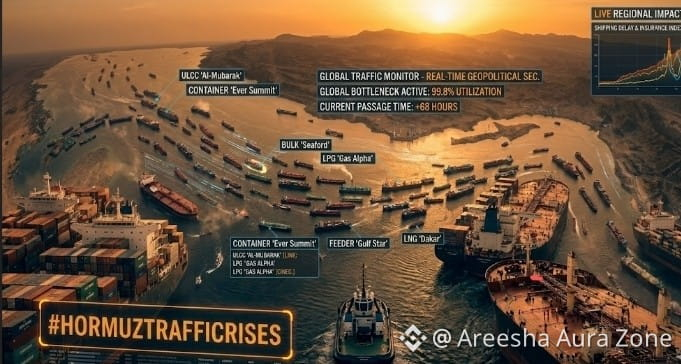
🚨 The 21-Mile Chokehold: Why the World is Watching the Strait of Hormuz Right Now?🤔
Right now, a massive surge in maritime traffic is bottlenecking through a tiny, 21-mile-wide strip of water. Why should you care? Because one in every five barrels of the world’s petroleum passes right through here.
If this strait breathes, the global economy moves. If it chokes, everything from your morning coffee delivery to global tech supply chains feels the shockwave.
📈 The Numbers Behind the Surge
20%+ of Global Oil: Liquid energy keeping the modern world moving.
Massive Congestion: Tankers, container ships, and naval escorts are sharing a hyper-narrow lane.
The Ripple Effect: High traffic means skyrocketing insurance premiums, delayed shipping routes, and a tense game of geopolitical chess.
This isn’t just about shipping lanes; it’s about the invisible threads that connect a oil well in the Gulf to a gas station in Ohio, a factory in Shanghai, and a supermarket in London.
The world is watching. The traffic is rising. What happens next matters to everyone.
👇 What’s your take? Will this traffic surge stabilize global markets, or are we looking at a major shipping bottleneck? Let's discuss.
{spot}(TSLABUSDT)
{spot}(SPCXBUSDT)
$SPCXB $TSLAB
#globaleconomy #SupplyChains #GeopoliticsNow #EnergyMarkets
#HormuzTrafficRises
🚨 The 21-Mile Chokehold: Why the World is Watching the Strait of Hormuz Right Now?🤔
Right now, a massive surge in maritime traffic is bottlenecking through a tiny, 21-mile-wide strip of water. Why should you care? Because one in every five barrels of the world’s petroleum passes right through here.
If this strait breathes, the global economy moves. If it chokes, everything from your morning coffee delivery to global tech supply chains feels the shockwave.
📈 The Numbers Behind the Surge
20%+ of Global Oil: Liquid energy keeping the modern world moving.
Massive Congestion: Tankers, container ships, and naval escorts are sharing a hyper-narrow lane.
The Ripple Effect: High traffic means skyrocketing insurance premiums, delayed shipping routes, and a tense game of geopolitical chess.
This isn’t just about shipping lanes; it’s about the invisible threads that connect a oil well in the Gulf to a gas station in Ohio, a factory in Shanghai, and a supermarket in London.
The world is watching. The traffic is rising. What happens next matters to everyone.
👇 What’s your take? Will this traffic surge stabilize global markets, or are we looking at a major shipping bottleneck? Let's discuss.
$SPCXB $TSLAB
#globaleconomy #SupplyChains #GeopoliticsNow #EnergyMarkets
🚨 The 21-Mile Chokehold: Why the World is Watching the Strait of Hormuz Right Now?🤔
Right now, a massive surge in maritime traffic is bottlenecking through a tiny, 21-mile-wide strip of water. Why should you care? Because one in every five barrels of the world’s petroleum passes right through here.
If this strait breathes, the global economy moves. If it chokes, everything from your morning coffee delivery to global tech supply chains feels the shockwave.
📈 The Numbers Behind the Surge
20%+ of Global Oil: Liquid energy keeping the modern world moving.
Massive Congestion: Tankers, container ships, and naval escorts are sharing a hyper-narrow lane.
The Ripple Effect: High traffic means skyrocketing insurance premiums, delayed shipping routes, and a tense game of geopolitical chess.
This isn’t just about shipping lanes; it’s about the invisible threads that connect a oil well in the Gulf to a gas station in Ohio, a factory in Shanghai, and a supermarket in London.
The world is watching. The traffic is rising. What happens next matters to everyone.
👇 What’s your take? Will this traffic surge stabilize global markets, or are we looking at a major shipping bottleneck? Let's discuss.
$SPCXB $TSLAB
#globaleconomy #SupplyChains #GeopoliticsNow #EnergyMarkets
93


·
--
🚨 SHOCKING MOVE: GM DITCHES CHINA, BRINGS PRODUCTION BACK TO AMERICA 🇺🇸
General Motors just made a move many said would never happen.
GM is shifting Buick Envision SUV production from China to Kansas, USA — a major reversal in global manufacturing strategy and a clear signal that the supply-chain era is changing.
Why this matters:
• More American manufacturing jobs
• Stronger domestic industrial base
• Reduced dependence on China
• Greater control, stability, and supply security
For years, cheaper overseas production dominated corporate strategy. Now, risk is more expensive than cost. Tariffs, geopolitics, and supply disruptions are forcing companies to rethink where “efficient” really is.
And the reaction?
China isn’t happy. Losing auto production isn’t just revenue — it’s influence.
This isn’t just a factory move.
It’s a power shift.
The experts doubted it.
The headlines dismissed it.
Reality just proved otherwise.
$ACU $ENSO $IN
#Macro #USManufacturing #SupplyChains #Geopolitics #Markets
{future}(ACUUSDT)
{spot}(ENSOUSDT)
{future}(INUSDT)
🚨 SHOCKING MOVE: GM DITCHES CHINA, BRINGS PRODUCTION BACK TO AMERICA 🇺🇸
General Motors just made a move many said would never happen.
GM is shifting Buick Envision SUV production from China to Kansas, USA — a major reversal in global manufacturing strategy and a clear signal that the supply-chain era is changing.
Why this matters:
• More American manufacturing jobs
• Stronger domestic industrial base
• Reduced dependence on China
• Greater control, stability, and supply security
For years, cheaper overseas production dominated corporate strategy. Now, risk is more expensive than cost. Tariffs, geopolitics, and supply disruptions are forcing companies to rethink where “efficient” really is.
And the reaction?
China isn’t happy. Losing auto production isn’t just revenue — it’s influence.
This isn’t just a factory move.
It’s a power shift.
The experts doubted it.
The headlines dismissed it.
Reality just proved otherwise.
$ACU $ENSO $IN
#Macro #USManufacturing #SupplyChains #Geopolitics #Markets
General Motors just made a move many said would never happen.
GM is shifting Buick Envision SUV production from China to Kansas, USA — a major reversal in global manufacturing strategy and a clear signal that the supply-chain era is changing.
Why this matters:
• More American manufacturing jobs
• Stronger domestic industrial base
• Reduced dependence on China
• Greater control, stability, and supply security
For years, cheaper overseas production dominated corporate strategy. Now, risk is more expensive than cost. Tariffs, geopolitics, and supply disruptions are forcing companies to rethink where “efficient” really is.
And the reaction?
China isn’t happy. Losing auto production isn’t just revenue — it’s influence.
This isn’t just a factory move.
It’s a power shift.
The experts doubted it.
The headlines dismissed it.
Reality just proved otherwise.
$ACU $ENSO $IN
#Macro #USManufacturing #SupplyChains #Geopolitics #Markets
4
817
Log in to explore more content
Join global crypto users on Binance Square
⚡️ Get latest and useful information about crypto.
💬 Trusted by the world’s largest crypto exchange.
👍 Discover real insights from verified creators.
Email / Phone number
Trending Topics
1
#FedRateWatch
286,374 views
1,805 Discussing
2
#BitcoinSlidesTo$76000
4,572 views
63 Discussing
3
#BitcoinReboundsTo$79K
51,372 views
365 Discussing
4
#StrategyMarketCapPassesFord
11,384 views
357 Discussing
5
#ClarityActOddsHalveOnPolymarket
8,457 views
279 Discussing
6
#US30YTreasuryYieldTops5.40%
10,971 views
238 Discussing
7
#BessentEndorsesFinalClarityActDraft
29,481 views
554 Discussing
8
#ZamaOpens16ConfidentialMorphoVaults
10,922 views
267 Discussing
9
#USDCOnChainVolumeTops$100Trillion
1,628 views
39 Discussing
10
#BitcoinSpotETFsNetInflow$160M
2,485 views
92 Discussing