

#rbi
rbi
61,285 views
133 Discussing
Hot
Latest


·
--
🚨 RBI Cracks Down on Crypto, Supports Tokenization!🇮🇳
The RBI has clearly stated that cryptocurrencies should not be used for payments and that banks should remain completely separate (isolated) to avoid contagion risk.
On the other hand, the RBI has fully supported Real World Asset (RWA) tokenization. According to the RBI, within a regulated framework, tokenized government bonds and corporate securities can be developed, which will encourage financial innovation.
Strategic Advice: This stance of the RBI makes it clear that speculative private crypto in India will always face setbacks, but legal growth related to real-world asset tokenization (RWA) and blockchain infrastructure is expected to come very rapidly.
Do you think the RBI’s decision to keep banks away from crypto is the right one? 👇
#RBI #RBIcryptoRevolution #RBICryptoUpdate #RWA! #TOKENIZED $BTC
{future}(BTCUSDT)
$SOL
{future}(SOLUSDT)
$ETH
{future}(ETHUSDT)
🚨 RBI Cracks Down on Crypto, Supports Tokenization!🇮🇳
The RBI has clearly stated that cryptocurrencies should not be used for payments and that banks should remain completely separate (isolated) to avoid contagion risk.
On the other hand, the RBI has fully supported Real World Asset (RWA) tokenization. According to the RBI, within a regulated framework, tokenized government bonds and corporate securities can be developed, which will encourage financial innovation.
Strategic Advice: This stance of the RBI makes it clear that speculative private crypto in India will always face setbacks, but legal growth related to real-world asset tokenization (RWA) and blockchain infrastructure is expected to come very rapidly.
Do you think the RBI’s decision to keep banks away from crypto is the right one? 👇
#RBI #RBIcryptoRevolution #RBICryptoUpdate #RWA! #TOKENIZED $BTC
$SOL
$ETH
The RBI has clearly stated that cryptocurrencies should not be used for payments and that banks should remain completely separate (isolated) to avoid contagion risk.
On the other hand, the RBI has fully supported Real World Asset (RWA) tokenization. According to the RBI, within a regulated framework, tokenized government bonds and corporate securities can be developed, which will encourage financial innovation.
Strategic Advice: This stance of the RBI makes it clear that speculative private crypto in India will always face setbacks, but legal growth related to real-world asset tokenization (RWA) and blockchain infrastructure is expected to come very rapidly.
Do you think the RBI’s decision to keep banks away from crypto is the right one? 👇
#RBI #RBIcryptoRevolution #RBICryptoUpdate #RWA! #TOKENIZED $BTC
$SOL
$ETH

1
68

·
--
Bullish
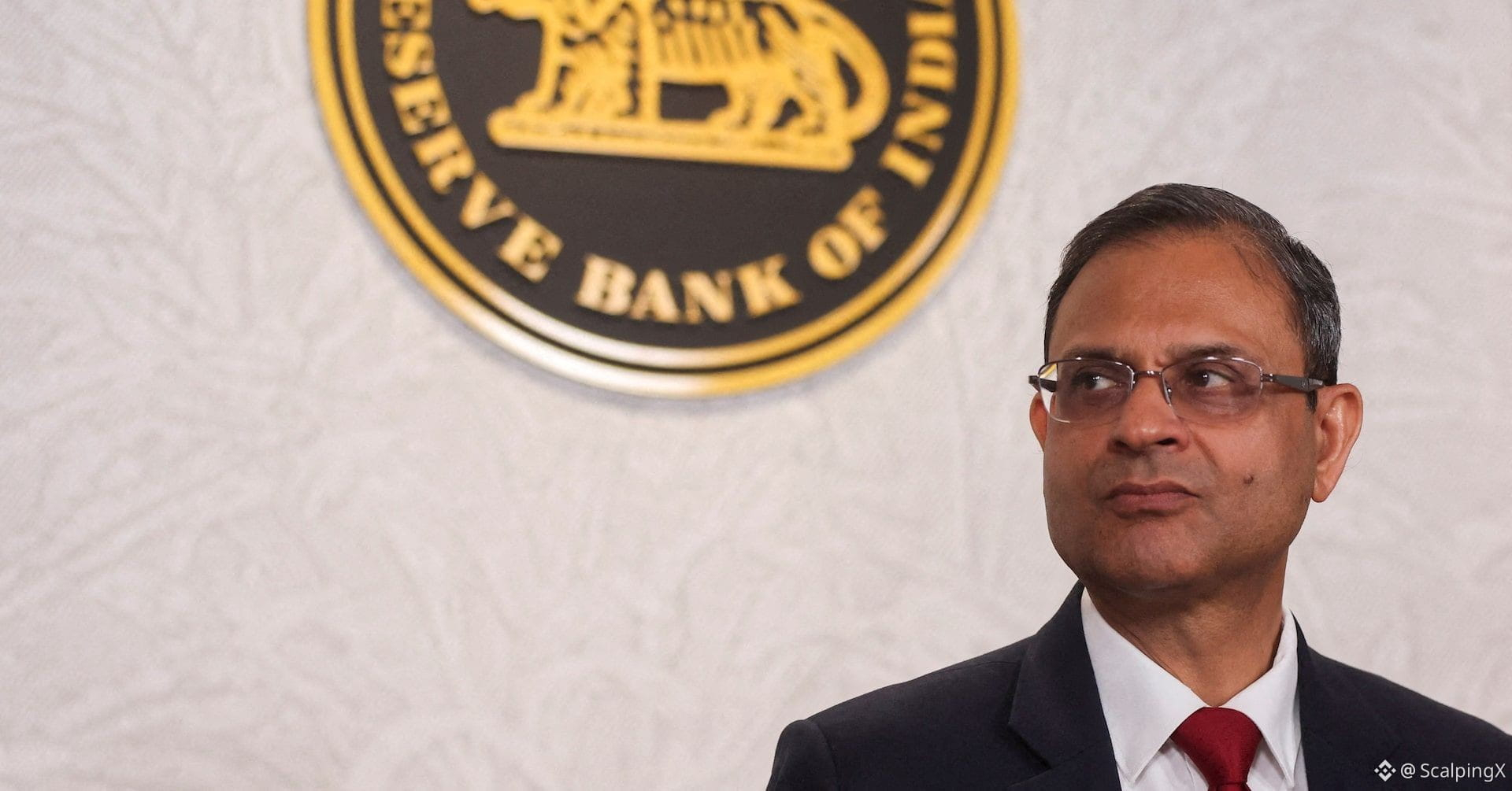
RBI cools rate-hike expectations as Governor Sanjay Malhotra says it is too early to discuss a new tightening cycle
🏦 RBI Governor Sanjay Malhotra said it is premature to talk about rate hikes at this stage, while India’s central bank continues to maintain a neutral policy stance.
📉 The message helps ease concerns that the RBI could shift quickly toward tighter policy, especially as markets remain focused on oil-price risks and a stronger US dollar.
🛢️ The RBI is still closely watching crude oil prices and the monsoon season, two key factors that could directly affect inflation in India if conditions turn unfavorable.
📌 Overall, the remarks carry a mildly dovish tone in the short term, supporting sentiment toward bonds and risk assets, but they do not fully remove inflation risks if external pressure returns.
#RBI $ID $IN $A
RBI cools rate-hike expectations as Governor Sanjay Malhotra says it is too early to discuss a new tightening cycle
🏦 RBI Governor Sanjay Malhotra said it is premature to talk about rate hikes at this stage, while India’s central bank continues to maintain a neutral policy stance.
📉 The message helps ease concerns that the RBI could shift quickly toward tighter policy, especially as markets remain focused on oil-price risks and a stronger US dollar.
🛢️ The RBI is still closely watching crude oil prices and the monsoon season, two key factors that could directly affect inflation in India if conditions turn unfavorable.
📌 Overall, the remarks carry a mildly dovish tone in the short term, supporting sentiment toward bonds and risk assets, but they do not fully remove inflation risks if external pressure returns.
#RBI $ID $IN $A
🏦 RBI Governor Sanjay Malhotra said it is premature to talk about rate hikes at this stage, while India’s central bank continues to maintain a neutral policy stance.
📉 The message helps ease concerns that the RBI could shift quickly toward tighter policy, especially as markets remain focused on oil-price risks and a stronger US dollar.
🛢️ The RBI is still closely watching crude oil prices and the monsoon season, two key factors that could directly affect inflation in India if conditions turn unfavorable.
📌 Overall, the remarks carry a mildly dovish tone in the short term, supporting sentiment toward bonds and risk assets, but they do not fully remove inflation risks if external pressure returns.
#RBI $ID $IN $A
1.4k

#BharatNews RBI Rate Status Quo and Market Divergence⚡
As of August 6, 2026, the Reserve Bank of India (RBI) kept its benchmark repo rate unchanged at 5.25% for the fourth consecutive meeting, maintaining a neutral stance as it monitors potential inflationary pressures from energy costs. Meanwhile, Indian equity benchmarks ended a mixed session: the BSE Sensex climbed 373.76 points (+0.48%) to settle at 78,954.76, supported by buying in heavyweights like Reliance Industries and ICICI Bank, while the Nifty 50 finished largely flat at 24,636.00 amid ongoing structural adjustments from the newly introduced Closing Auction Session (CAS).
$GOOGL.US $AAPL.US $MANTRA #NewsLine #CoinVahini #RBI #MarketUpdate
#BharatNews RBI Rate Status Quo and Market Divergence⚡
As of August 6, 2026, the Reserve Bank of India (RBI) kept its benchmark repo rate unchanged at 5.25% for the fourth consecutive meeting, maintaining a neutral stance as it monitors potential inflationary pressures from energy costs. Meanwhile, Indian equity benchmarks ended a mixed session: the BSE Sensex climbed 373.76 points (+0.48%) to settle at 78,954.76, supported by buying in heavyweights like Reliance Industries and ICICI Bank, while the Nifty 50 finished largely flat at 24,636.00 amid ongoing structural adjustments from the newly introduced Closing Auction Session (CAS).
$GOOGL.US $AAPL.US $MANTRA #NewsLine #CoinVahini #RBI #MarketUpdate
As of August 6, 2026, the Reserve Bank of India (RBI) kept its benchmark repo rate unchanged at 5.25% for the fourth consecutive meeting, maintaining a neutral stance as it monitors potential inflationary pressures from energy costs. Meanwhile, Indian equity benchmarks ended a mixed session: the BSE Sensex climbed 373.76 points (+0.48%) to settle at 78,954.76, supported by buying in heavyweights like Reliance Industries and ICICI Bank, while the Nifty 50 finished largely flat at 24,636.00 amid ongoing structural adjustments from the newly introduced Closing Auction Session (CAS).
$GOOGL.US $AAPL.US $MANTRA #NewsLine #CoinVahini #RBI #MarketUpdate
AAPLUS-0.11%
GOOGLUS+0.25%
1
40

·
--
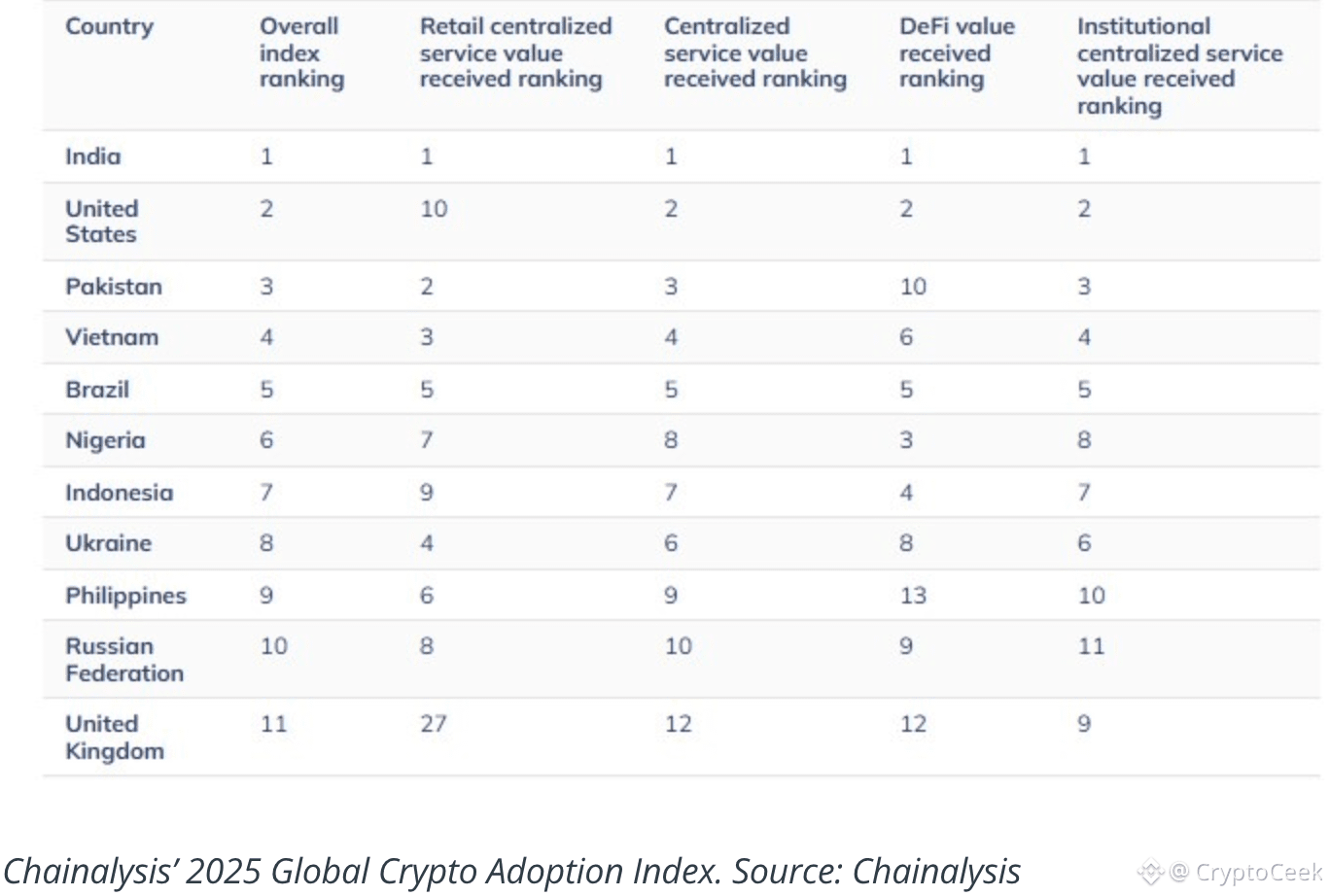
$BTC RBI is back on the offensive.
India’s central bank just told lawmakers it wants banks fully insulated from crypto and private stablecoins — while still keeping the door open for regulated tokenization of bonds and govt securities.
In plain language:
-> No crypto in payments and settlements.
-> No direct bank exposure to BTC, stablecoins or other private tokens.
-> Tokenized “real-world” assets can stay, speculative coins stay outside the banking wall.
This is the 2018 containment playbook all over again: choke off banking rails, avoid an outright ban — now refreshed for a world where India ranks at the top of global crypto adoption indexes.
If you’re building or trading in India, the message is clear:
-> Use compliant rails, separate your bank stack from pure crypto risk,
and expect tokenization, not private crypto, to get the friendlier policy treatment.
#India #RBI #BTC #bitcoin
$BTC RBI is back on the offensive.
India’s central bank just told lawmakers it wants banks fully insulated from crypto and private stablecoins — while still keeping the door open for regulated tokenization of bonds and govt securities.
In plain language:
-> No crypto in payments and settlements.
-> No direct bank exposure to BTC, stablecoins or other private tokens.
-> Tokenized “real-world” assets can stay, speculative coins stay outside the banking wall.
This is the 2018 containment playbook all over again: choke off banking rails, avoid an outright ban — now refreshed for a world where India ranks at the top of global crypto adoption indexes.
If you’re building or trading in India, the message is clear:
-> Use compliant rails, separate your bank stack from pure crypto risk,
and expect tokenization, not private crypto, to get the friendlier policy treatment.
#India #RBI #BTC #bitcoin
India’s central bank just told lawmakers it wants banks fully insulated from crypto and private stablecoins — while still keeping the door open for regulated tokenization of bonds and govt securities.
In plain language:
-> No crypto in payments and settlements.
-> No direct bank exposure to BTC, stablecoins or other private tokens.
-> Tokenized “real-world” assets can stay, speculative coins stay outside the banking wall.
This is the 2018 containment playbook all over again: choke off banking rails, avoid an outright ban — now refreshed for a world where India ranks at the top of global crypto adoption indexes.
If you’re building or trading in India, the message is clear:
-> Use compliant rails, separate your bank stack from pure crypto risk,
and expect tokenization, not private crypto, to get the friendlier policy treatment.
#India #RBI #BTC #bitcoin
106

·
--
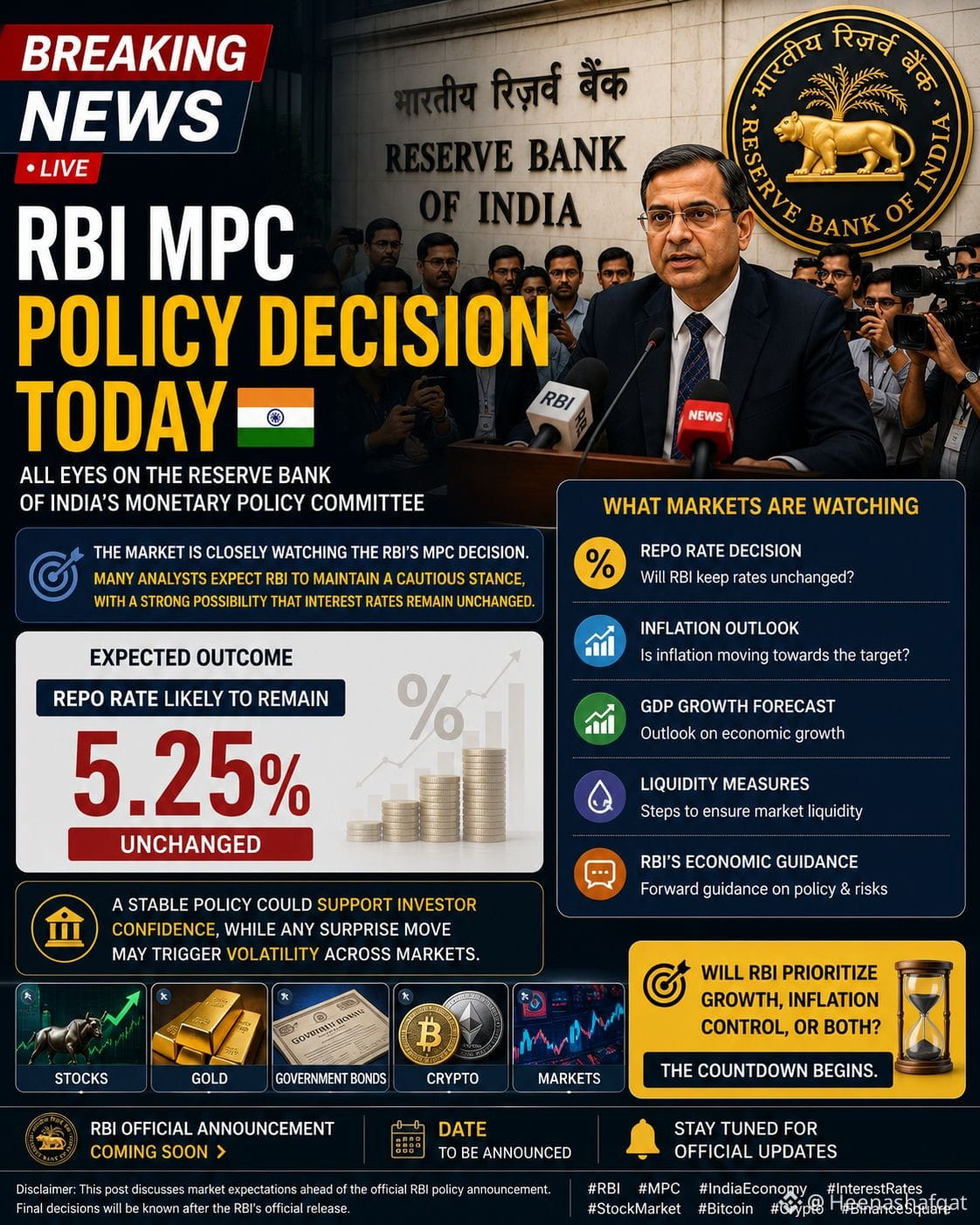
🚨 RBI MPC Policy Decision Today 🇮🇳
The market is closely watching the Reserve Bank of India's Monetary Policy Committee (MPC) decision. Based on current economic conditions, many analysts expect the RBI to maintain a cautious stance, with a strong possibility that interest rates remain unchanged.
📌 What Markets Are Watching: 🔹 Repo Rate Decision 🔹 Inflation Outlook 🔹 GDP Growth Forecast 🔹 Liquidity Measures 🔹 RBI's Economic Guidance
📊 A stable policy could support investor confidence, while any surprise move may trigger volatility across stocks, bonds, gold, and crypto markets.
👀 Will RBI prioritize growth, inflation control, or both?
⏳ All eyes are on the official RBI announcement.
#RBI #MPC #IndiaEconomy #InterestRates #stockmarketnews 🇮🇳📈🔥
Disclaimer: This post discusses market expectations ahead of the official RBI policy announcement. Final decisions will be known after the RBI's official release.
🚨 RBI MPC Policy Decision Today 🇮🇳
The market is closely watching the Reserve Bank of India's Monetary Policy Committee (MPC) decision. Based on current economic conditions, many analysts expect the RBI to maintain a cautious stance, with a strong possibility that interest rates remain unchanged.
📌 What Markets Are Watching: 🔹 Repo Rate Decision 🔹 Inflation Outlook 🔹 GDP Growth Forecast 🔹 Liquidity Measures 🔹 RBI's Economic Guidance
📊 A stable policy could support investor confidence, while any surprise move may trigger volatility across stocks, bonds, gold, and crypto markets.
👀 Will RBI prioritize growth, inflation control, or both?
⏳ All eyes are on the official RBI announcement.
#RBI #MPC #IndiaEconomy #InterestRates #stockmarketnews 🇮🇳📈🔥
Disclaimer: This post discusses market expectations ahead of the official RBI policy announcement. Final decisions will be known after the RBI's official release.
The market is closely watching the Reserve Bank of India's Monetary Policy Committee (MPC) decision. Based on current economic conditions, many analysts expect the RBI to maintain a cautious stance, with a strong possibility that interest rates remain unchanged.
📌 What Markets Are Watching: 🔹 Repo Rate Decision 🔹 Inflation Outlook 🔹 GDP Growth Forecast 🔹 Liquidity Measures 🔹 RBI's Economic Guidance
📊 A stable policy could support investor confidence, while any surprise move may trigger volatility across stocks, bonds, gold, and crypto markets.
👀 Will RBI prioritize growth, inflation control, or both?
⏳ All eyes are on the official RBI announcement.
#RBI #MPC #IndiaEconomy #InterestRates #stockmarketnews 🇮🇳📈🔥
Disclaimer: This post discusses market expectations ahead of the official RBI policy announcement. Final decisions will be known after the RBI's official release.
1
206

·
--

Article
STOCKS | Traders Say RBI Sold Dollars in FX Market to Support RupeeTraders have reported that the Reserve Bank of India (RBI) engaged in selling U.S. dollars in the foreign exchange market to support the rupee, according to Jin10. This intervention appears aimed at stabilizing the currency amidst fluctuating market conditions and maintaining export competitiveness.
The RBI’s move to sell dollars indicates a proactive approach to managing the exchange rate, especially in a context where the rupee has experienced volatility. By reducing dollar holdings in the FX market, the central bank seeks to curb excessive depreciation and support the rupee’s value.
This intervention underscores ongoing efforts by the RBI to balance external pressures and domestic economic priorities. Such actions are often taken to prevent sharp currency swings that could impact inflation, import costs, and overall economic stability.
Market participants will continue to monitor the RBI's foreign exchange activities closely, as they can influence currency trends and broader economic conditions. The central bank’s intervention reflects its commitment to maintaining stability and supporting the rupee amid external uncertainties. #RBI #ForexMarket #Rupert
STOCKS | Traders Say RBI Sold Dollars in FX Market to Support Rupee
Traders have reported that the Reserve Bank of India (RBI) engaged in selling U.S. dollars in the foreign exchange market to support the rupee, according to Jin10. This intervention appears aimed at stabilizing the currency amidst fluctuating market conditions and maintaining export competitiveness.
The RBI’s move to sell dollars indicates a proactive approach to managing the exchange rate, especially in a context where the rupee has experienced volatility. By reducing dollar holdings in the FX market, the central bank seeks to curb excessive depreciation and support the rupee’s value.
This intervention underscores ongoing efforts by the RBI to balance external pressures and domestic economic priorities. Such actions are often taken to prevent sharp currency swings that could impact inflation, import costs, and overall economic stability.
Market participants will continue to monitor the RBI's foreign exchange activities closely, as they can influence currency trends and broader economic conditions. The central bank’s intervention reflects its commitment to maintaining stability and supporting the rupee amid external uncertainties. #RBI #ForexMarket #Rupert
The RBI’s move to sell dollars indicates a proactive approach to managing the exchange rate, especially in a context where the rupee has experienced volatility. By reducing dollar holdings in the FX market, the central bank seeks to curb excessive depreciation and support the rupee’s value.
This intervention underscores ongoing efforts by the RBI to balance external pressures and domestic economic priorities. Such actions are often taken to prevent sharp currency swings that could impact inflation, import costs, and overall economic stability.
Market participants will continue to monitor the RBI's foreign exchange activities closely, as they can influence currency trends and broader economic conditions. The central bank’s intervention reflects its commitment to maintaining stability and supporting the rupee amid external uncertainties. #RBI #ForexMarket #Rupert
20


·
--
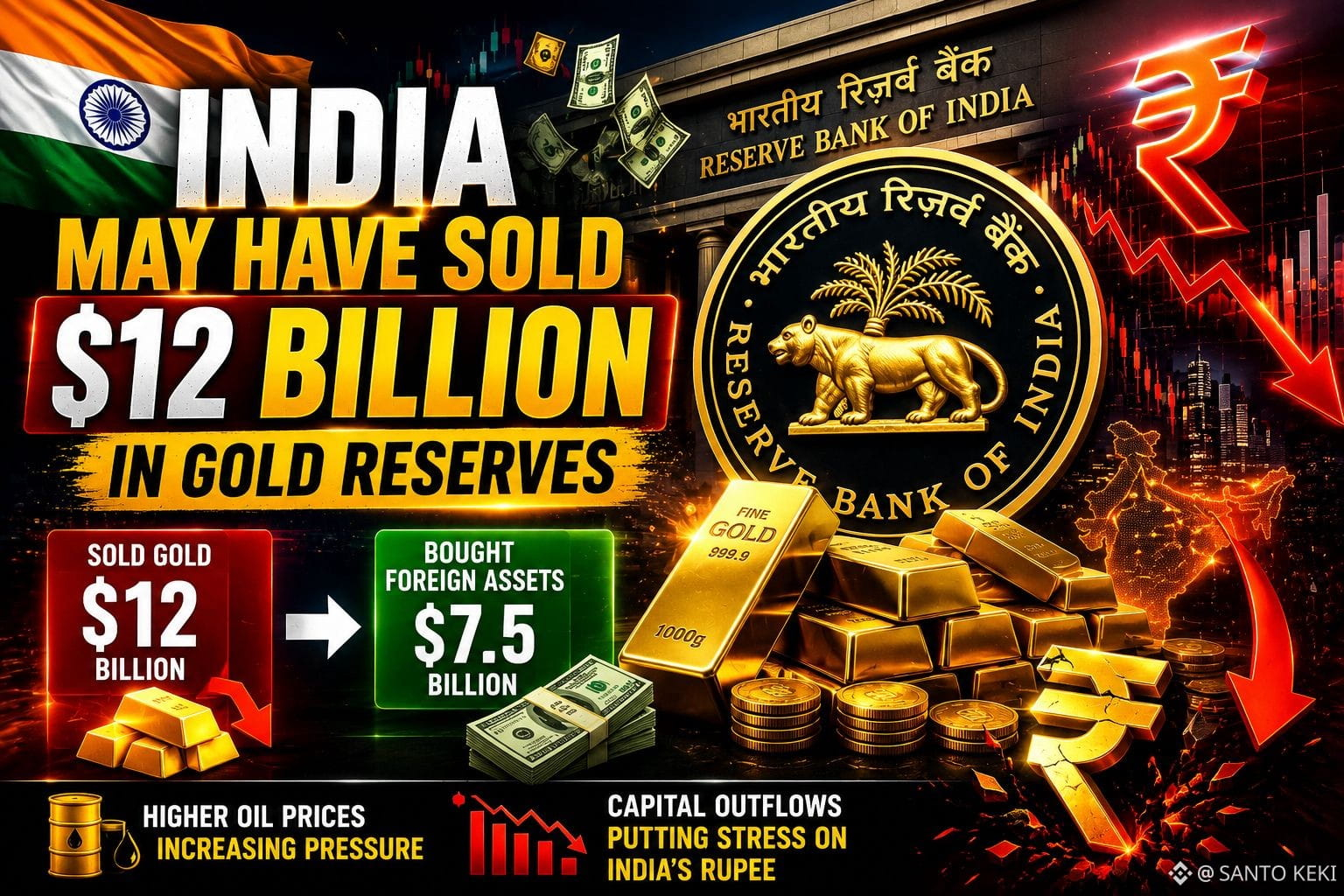
🇮🇳 India May Have Made a Major Gold Move
According to Bloomberg, the Reserve Bank of India (RBI) likely sold around $12 billion worth of gold reserves while simultaneously purchasing $7.5 billion in foreign-currency assets.
Why does this matter?
The move comes at a time when rising oil prices and capital outflows are putting pressure on the Indian rupee. By adjusting its reserve holdings, the RBI may be taking steps to strengthen liquidity and manage growing economic challenges.
📉 Gold Sold: $12 Billion
💵 Foreign Assets Bought: $7.5 Billion
⛽ Higher Oil Prices Increasing Pressure
💸 Capital Outflows Affecting the Rupee
Gold is often viewed as a safe-haven asset, so any large-scale change in central bank reserves immediately grabs market attention. Traders, economists, and investors are now watching closely to understand what this could signal for India's financial strategy.
👀 Is this a temporary adjustment, or the start of a broader shift in reserve management?
One thing is clear: when a major economy moves billions in reserves, global markets take notice.
⚡ Big money. Big decisions. Big impact.
$HOME
{spot}(HOMEUSDT)
$BSB
{future}(BSBUSDT)
#India #RBI #Gold #Economy #Markets #Finance #Investing #Rupee #GlobalMarkets
🇮🇳 India May Have Made a Major Gold Move
According to Bloomberg, the Reserve Bank of India (RBI) likely sold around $12 billion worth of gold reserves while simultaneously purchasing $7.5 billion in foreign-currency assets.
Why does this matter?
The move comes at a time when rising oil prices and capital outflows are putting pressure on the Indian rupee. By adjusting its reserve holdings, the RBI may be taking steps to strengthen liquidity and manage growing economic challenges.
📉 Gold Sold: $12 Billion
💵 Foreign Assets Bought: $7.5 Billion
⛽ Higher Oil Prices Increasing Pressure
💸 Capital Outflows Affecting the Rupee
Gold is often viewed as a safe-haven asset, so any large-scale change in central bank reserves immediately grabs market attention. Traders, economists, and investors are now watching closely to understand what this could signal for India's financial strategy.
👀 Is this a temporary adjustment, or the start of a broader shift in reserve management?
One thing is clear: when a major economy moves billions in reserves, global markets take notice.
⚡ Big money. Big decisions. Big impact.
$HOME
$BSB
#India #RBI #Gold #Economy #Markets #Finance #Investing #Rupee #GlobalMarkets
According to Bloomberg, the Reserve Bank of India (RBI) likely sold around $12 billion worth of gold reserves while simultaneously purchasing $7.5 billion in foreign-currency assets.
Why does this matter?
The move comes at a time when rising oil prices and capital outflows are putting pressure on the Indian rupee. By adjusting its reserve holdings, the RBI may be taking steps to strengthen liquidity and manage growing economic challenges.
📉 Gold Sold: $12 Billion
💵 Foreign Assets Bought: $7.5 Billion
⛽ Higher Oil Prices Increasing Pressure
💸 Capital Outflows Affecting the Rupee
Gold is often viewed as a safe-haven asset, so any large-scale change in central bank reserves immediately grabs market attention. Traders, economists, and investors are now watching closely to understand what this could signal for India's financial strategy.
👀 Is this a temporary adjustment, or the start of a broader shift in reserve management?
One thing is clear: when a major economy moves billions in reserves, global markets take notice.
⚡ Big money. Big decisions. Big impact.
$HOME
$BSB
#India #RBI #Gold #Economy #Markets #Finance #Investing #Rupee #GlobalMarkets
4
514

·
--
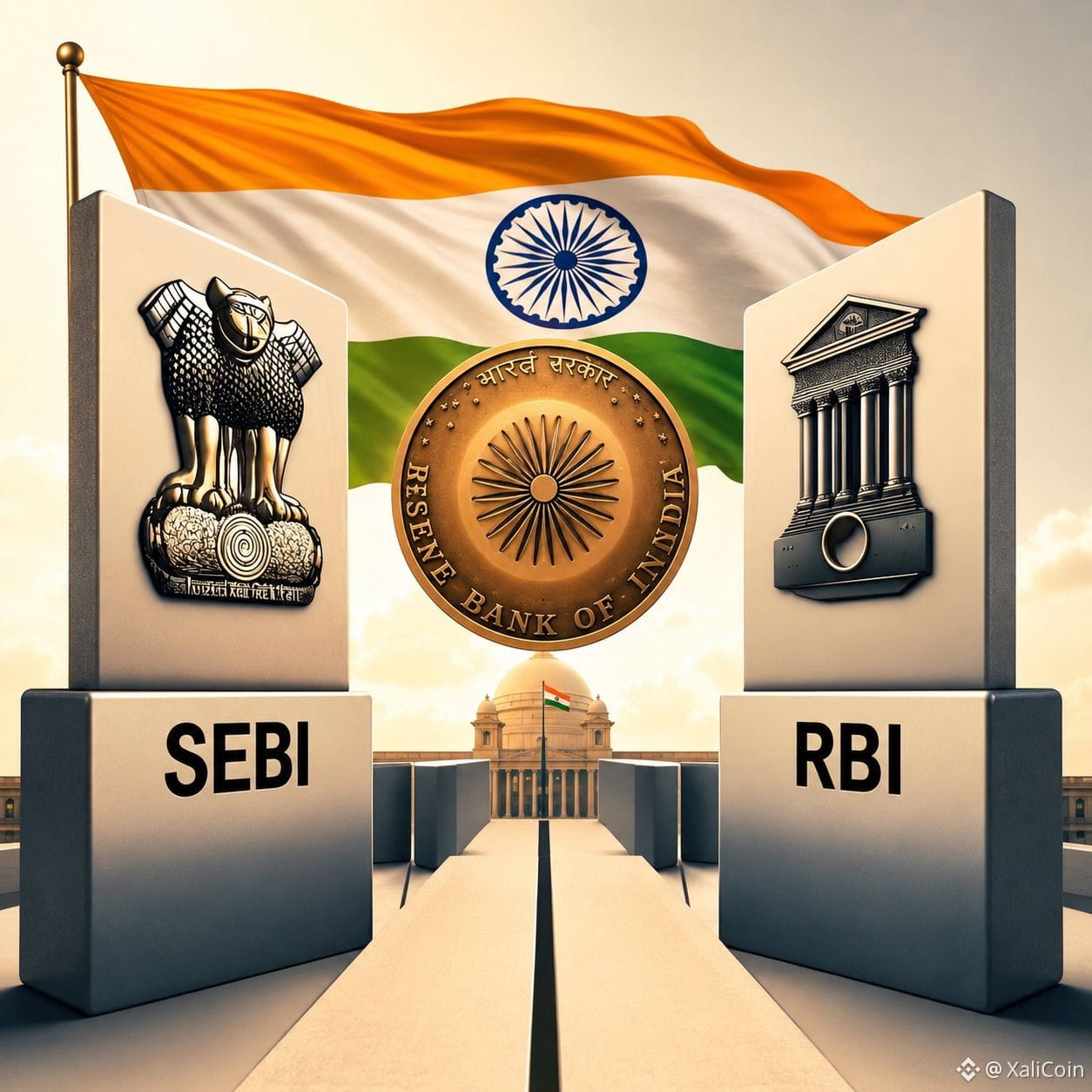
The Ministry of Finance #India has requested that the RBI and SEBI regulate crypto is not true according to an official clarification from the Government of India. However, discussions about crypto regulation in India are indeed ongoing at the level of parliament and regulators, so policy changes in the future remain possible.
For the global crypto market, if India ultimately chooses regulation (rather than a ban), sentiment is likely to turn bullish, as India is one of the countries with the largest crypto user base in the world. Conversely, if India follows the RBI’s recommendation to tighten or restrict access to crypto, the impact would be more bearish, especially for exchanges with large exposure to the Indian market.
#RBI #SEBI
{spot}(POLUSDT)
{spot}(PUMPUSDT)
The Ministry of Finance #India has requested that the RBI and SEBI regulate crypto is not true according to an official clarification from the Government of India. However, discussions about crypto regulation in India are indeed ongoing at the level of parliament and regulators, so policy changes in the future remain possible.
For the global crypto market, if India ultimately chooses regulation (rather than a ban), sentiment is likely to turn bullish, as India is one of the countries with the largest crypto user base in the world. Conversely, if India follows the RBI’s recommendation to tighten or restrict access to crypto, the impact would be more bearish, especially for exchanges with large exposure to the Indian market.
#RBI #SEBI
For the global crypto market, if India ultimately chooses regulation (rather than a ban), sentiment is likely to turn bullish, as India is one of the countries with the largest crypto user base in the world. Conversely, if India follows the RBI’s recommendation to tighten or restrict access to crypto, the impact would be more bearish, especially for exchanges with large exposure to the Indian market.
#RBI #SEBI
1
111

·
--
Article
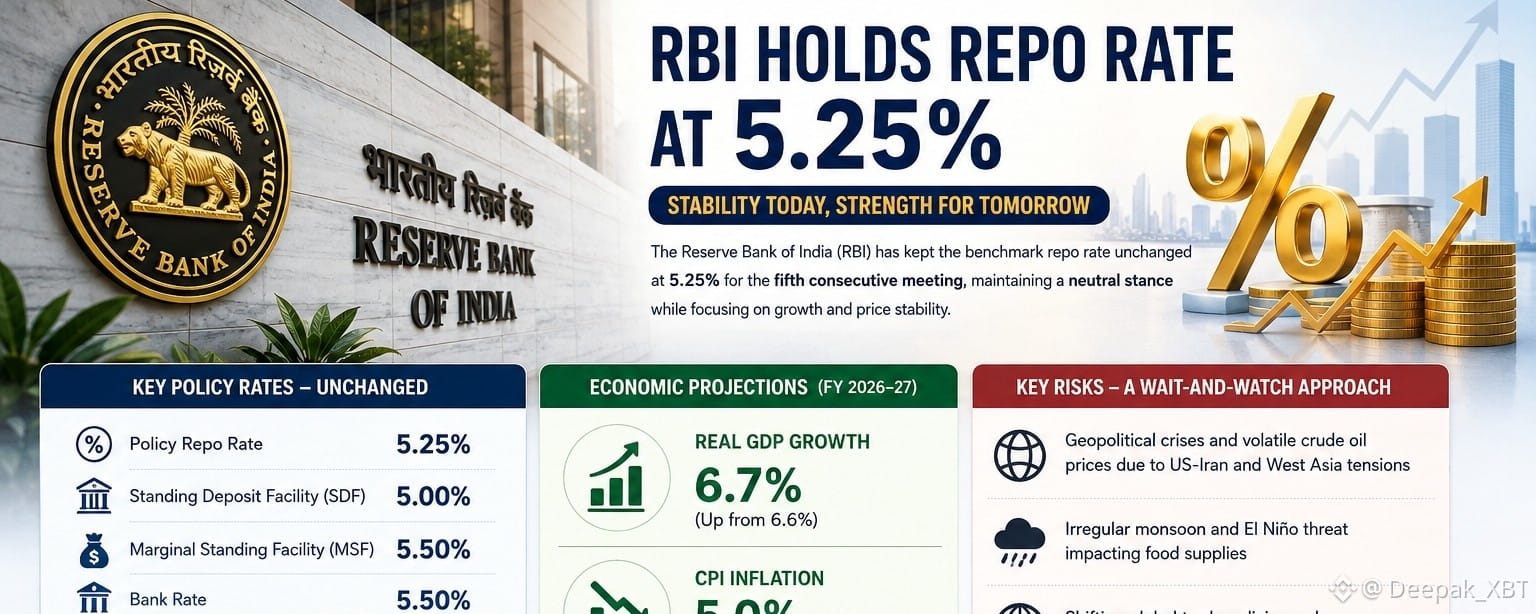
RBI Holds Repo Rate at 5.25%: What the Latest Policy Means for India's EconomyBefore the next financial year begins, one of the biggest questions for households and businesses alike is whether borrowing costs will change. For now, the Reserve Bank of India (RBI) has decided to stay the course. In its Monetary Policy Committee (MPC) meeting held on August 5, 2026, the central bank kept the repo rate unchanged at 5.25%. Led by Governor Sanjay Malhotra, all six MPC members unanimously supported the decision, marking the fifth consecutive meeting with no change in policy rates. The RBI also retained its neutral policy stance, indicating that future decisions will depend on incoming economic data rather than any fixed direction.
The decision reflects a careful balancing act. On one hand, India's economy continues to show resilience through strong domestic demand, infrastructure investment, and steady manufacturing activity. On the other, inflation risks and global uncertainties remain significant enough to justify a cautious approach instead of an immediate rate cut or hike.
Along with the repo rate, all major policy rates remain unchanged. The Standing Deposit Facility (SDF) stays at 5.00%, while both the Marginal Standing Facility (MSF) and the Bank Rate remain at 5.50%. The Cash Reserve Ratio (CRR) has also been maintained at 3.00%, ensuring stability in liquidity conditions across the banking system.
The RBI also revised its economic outlook for the current financial year. It now expects India's real GDP to grow by 6.7%, slightly higher than the previous estimate of 6.6%. While the increase appears modest, it reflects confidence in the country's growth momentum. Continued public infrastructure spending, healthy consumer demand, and resilient industrial production are expected to support economic activity despite an uncertain global backdrop.
Inflation projections also moved in a positive direction. The RBI lowered its forecast for Consumer Price Index (CPI) inflation to 5.0%, compared with the earlier estimate of 5.1%. Core inflation, which excludes volatile items such as precious metals, is expected to remain around 4.3%. Although inflation is still above the RBI's long-term target of 4%, the revised outlook suggests that price pressures are gradually easing.
Despite these encouraging indicators, the central bank made it clear that several risks continue to demand close attention. Geopolitical tensions in West Asia, particularly developments involving the US and Iran, could create fresh volatility in crude oil prices. Since India imports a large share of its energy needs, any sharp rise in oil prices could quickly feed into domestic inflation.
Weather conditions are another major concern. The possibility of an irregular southwest monsoon and the continued threat of an El Niño cycle could affect agricultural production and food supplies. Given the importance of food prices in India's inflation basket, weather-related disruptions remain a key factor influencing future monetary policy decisions.
Global trade uncertainty also remains on the RBI's radar. Changing tariff policies, weaker international demand, and slower global economic growth may affect exports and business confidence. These external risks explain why the central bank prefers a data-driven approach instead of making premature policy changes.
Beyond interest rates, the RBI announced several important regulatory initiatives. One of the most notable is the introduction of polymer currency notes, with tenders already floated for production. These notes are expected to last longer, remain cleaner, and offer better protection against counterfeiting when introduced in the early part of FY28.
The central bank also plans to introduce a standardized framework for lending rate transparency across financial institutions, making loan pricing easier for customers to understand. Additionally, draft guidelines for new Urban Cooperative Bank licenses and updated credit monitoring rules for Rural Cooperative Banks aim to strengthen governance while expanding financial inclusion.
For ordinary citizens, the immediate impact is reassuring. Borrowers with floating-rate home, vehicle, or personal loans are unlikely to see any change in their monthly EMIs. At the same time, fixed deposit investors should not expect significant changes in interest rates. Overall, the RBI's latest policy reflects a commitment to maintaining stability while remaining prepared to respond as economic conditions evolve.
#RBI
RBI Holds Repo Rate at 5.25%: What the Latest Policy Means for India's Economy
Before the next financial year begins, one of the biggest questions for households and businesses alike is whether borrowing costs will change. For now, the Reserve Bank of India (RBI) has decided to stay the course. In its Monetary Policy Committee (MPC) meeting held on August 5, 2026, the central bank kept the repo rate unchanged at 5.25%. Led by Governor Sanjay Malhotra, all six MPC members unanimously supported the decision, marking the fifth consecutive meeting with no change in policy rates. The RBI also retained its neutral policy stance, indicating that future decisions will depend on incoming economic data rather than any fixed direction.
The decision reflects a careful balancing act. On one hand, India's economy continues to show resilience through strong domestic demand, infrastructure investment, and steady manufacturing activity. On the other, inflation risks and global uncertainties remain significant enough to justify a cautious approach instead of an immediate rate cut or hike.
Along with the repo rate, all major policy rates remain unchanged. The Standing Deposit Facility (SDF) stays at 5.00%, while both the Marginal Standing Facility (MSF) and the Bank Rate remain at 5.50%. The Cash Reserve Ratio (CRR) has also been maintained at 3.00%, ensuring stability in liquidity conditions across the banking system.
The RBI also revised its economic outlook for the current financial year. It now expects India's real GDP to grow by 6.7%, slightly higher than the previous estimate of 6.6%. While the increase appears modest, it reflects confidence in the country's growth momentum. Continued public infrastructure spending, healthy consumer demand, and resilient industrial production are expected to support economic activity despite an uncertain global backdrop.
Inflation projections also moved in a positive direction. The RBI lowered its forecast for Consumer Price Index (CPI) inflation to 5.0%, compared with the earlier estimate of 5.1%. Core inflation, which excludes volatile items such as precious metals, is expected to remain around 4.3%. Although inflation is still above the RBI's long-term target of 4%, the revised outlook suggests that price pressures are gradually easing.
Despite these encouraging indicators, the central bank made it clear that several risks continue to demand close attention. Geopolitical tensions in West Asia, particularly developments involving the US and Iran, could create fresh volatility in crude oil prices. Since India imports a large share of its energy needs, any sharp rise in oil prices could quickly feed into domestic inflation.
Weather conditions are another major concern. The possibility of an irregular southwest monsoon and the continued threat of an El Niño cycle could affect agricultural production and food supplies. Given the importance of food prices in India's inflation basket, weather-related disruptions remain a key factor influencing future monetary policy decisions.
Global trade uncertainty also remains on the RBI's radar. Changing tariff policies, weaker international demand, and slower global economic growth may affect exports and business confidence. These external risks explain why the central bank prefers a data-driven approach instead of making premature policy changes.
Beyond interest rates, the RBI announced several important regulatory initiatives. One of the most notable is the introduction of polymer currency notes, with tenders already floated for production. These notes are expected to last longer, remain cleaner, and offer better protection against counterfeiting when introduced in the early part of FY28.
The central bank also plans to introduce a standardized framework for lending rate transparency across financial institutions, making loan pricing easier for customers to understand. Additionally, draft guidelines for new Urban Cooperative Bank licenses and updated credit monitoring rules for Rural Cooperative Banks aim to strengthen governance while expanding financial inclusion.
For ordinary citizens, the immediate impact is reassuring. Borrowers with floating-rate home, vehicle, or personal loans are unlikely to see any change in their monthly EMIs. At the same time, fixed deposit investors should not expect significant changes in interest rates. Overall, the RBI's latest policy reflects a commitment to maintaining stability while remaining prepared to respond as economic conditions evolve.
#RBI
The decision reflects a careful balancing act. On one hand, India's economy continues to show resilience through strong domestic demand, infrastructure investment, and steady manufacturing activity. On the other, inflation risks and global uncertainties remain significant enough to justify a cautious approach instead of an immediate rate cut or hike.
Along with the repo rate, all major policy rates remain unchanged. The Standing Deposit Facility (SDF) stays at 5.00%, while both the Marginal Standing Facility (MSF) and the Bank Rate remain at 5.50%. The Cash Reserve Ratio (CRR) has also been maintained at 3.00%, ensuring stability in liquidity conditions across the banking system.
The RBI also revised its economic outlook for the current financial year. It now expects India's real GDP to grow by 6.7%, slightly higher than the previous estimate of 6.6%. While the increase appears modest, it reflects confidence in the country's growth momentum. Continued public infrastructure spending, healthy consumer demand, and resilient industrial production are expected to support economic activity despite an uncertain global backdrop.
Inflation projections also moved in a positive direction. The RBI lowered its forecast for Consumer Price Index (CPI) inflation to 5.0%, compared with the earlier estimate of 5.1%. Core inflation, which excludes volatile items such as precious metals, is expected to remain around 4.3%. Although inflation is still above the RBI's long-term target of 4%, the revised outlook suggests that price pressures are gradually easing.
Despite these encouraging indicators, the central bank made it clear that several risks continue to demand close attention. Geopolitical tensions in West Asia, particularly developments involving the US and Iran, could create fresh volatility in crude oil prices. Since India imports a large share of its energy needs, any sharp rise in oil prices could quickly feed into domestic inflation.
Weather conditions are another major concern. The possibility of an irregular southwest monsoon and the continued threat of an El Niño cycle could affect agricultural production and food supplies. Given the importance of food prices in India's inflation basket, weather-related disruptions remain a key factor influencing future monetary policy decisions.
Global trade uncertainty also remains on the RBI's radar. Changing tariff policies, weaker international demand, and slower global economic growth may affect exports and business confidence. These external risks explain why the central bank prefers a data-driven approach instead of making premature policy changes.
Beyond interest rates, the RBI announced several important regulatory initiatives. One of the most notable is the introduction of polymer currency notes, with tenders already floated for production. These notes are expected to last longer, remain cleaner, and offer better protection against counterfeiting when introduced in the early part of FY28.
The central bank also plans to introduce a standardized framework for lending rate transparency across financial institutions, making loan pricing easier for customers to understand. Additionally, draft guidelines for new Urban Cooperative Bank licenses and updated credit monitoring rules for Rural Cooperative Banks aim to strengthen governance while expanding financial inclusion.
For ordinary citizens, the immediate impact is reassuring. Borrowers with floating-rate home, vehicle, or personal loans are unlikely to see any change in their monthly EMIs. At the same time, fixed deposit investors should not expect significant changes in interest rates. Overall, the RBI's latest policy reflects a commitment to maintaining stability while remaining prepared to respond as economic conditions evolve.
#RBI
276

·
--
India Demat 2.0: Corporate bonds booked natively on the ledger, settled with central bank digital currencyPoint first here: India isn’t just launching another “tokenization sandbox demo”; instead, it records corporate bonds natively on the distributed ledger of the statutory depository, with the funds leg settled atomically via the RBI wholesale CBDC (e₹).
SEBI press release (PR No. 56/2026, 10 September, jointly announced at the Mumbai Global FinTech Fest by RBI Governor Sanjay Malhotra and SEBI Chairman Tuhin Kanta Pandey) is written pretty strongly—pilot named Demat 2.0: issue/hold securities on a permissioned DLT where the securities are held by depository participants; money goes through a unified market interface into a wholesale e₹ wallet, with securities and funds transferred simultaneously.
India Demat 2.0: Corporate bonds booked natively on the ledger, settled with central bank digital currency
Point first here: India isn’t just launching another “tokenization sandbox demo”; instead, it records corporate bonds natively on the distributed ledger of the statutory depository, with the funds leg settled atomically via the RBI wholesale CBDC (e₹).
SEBI press release (PR No. 56/2026, 10 September, jointly announced at the Mumbai Global FinTech Fest by RBI Governor Sanjay Malhotra and SEBI Chairman Tuhin Kanta Pandey) is written pretty strongly—pilot named Demat 2.0: issue/hold securities on a permissioned DLT where the securities are held by depository participants; money goes through a unified market interface into a wholesale e₹ wallet, with securities and funds transferred simultaneously.
SEBI press release (PR No. 56/2026, 10 September, jointly announced at the Mumbai Global FinTech Fest by RBI Governor Sanjay Malhotra and SEBI Chairman Tuhin Kanta Pandey) is written pretty strongly—pilot named Demat 2.0: issue/hold securities on a permissioned DLT where the securities are held by depository participants; money goes through a unified market interface into a wholesale e₹ wallet, with securities and funds transferred simultaneously.
1
78

·
--
Rupee under pressure, but RBI unlikely to rush into rate hikes 📉
The Indian rupee has been facing significant pressure in recent times, driven by a combination of factors including a strong US dollar and rising crude oil prices. This has led to concerns about the impact on the country's trade deficit and overall economic growth. However, despite these challenges, the Reserve Bank of India (RBI) is unlikely to rush into raising interest rates. The RBI is expected to maintain a cautious approach, weighing the need to support economic growth against the need to manage inflation and stabilize the currency. The market is closely watching the RBI's next move, as any change in interest rates could have a significant impact on the value of the rupee and the overall direction of the economy.
#Crypto #Markets #Forex #IndiaEconomy #RBI
Rupee under pressure, but RBI unlikely to rush into rate hikes 📉
The Indian rupee has been facing significant pressure in recent times, driven by a combination of factors including a strong US dollar and rising crude oil prices. This has led to concerns about the impact on the country's trade deficit and overall economic growth. However, despite these challenges, the Reserve Bank of India (RBI) is unlikely to rush into raising interest rates. The RBI is expected to maintain a cautious approach, weighing the need to support economic growth against the need to manage inflation and stabilize the currency. The market is closely watching the RBI's next move, as any change in interest rates could have a significant impact on the value of the rupee and the overall direction of the economy.
#Crypto #Markets #Forex #IndiaEconomy #RBI
The Indian rupee has been facing significant pressure in recent times, driven by a combination of factors including a strong US dollar and rising crude oil prices. This has led to concerns about the impact on the country's trade deficit and overall economic growth. However, despite these challenges, the Reserve Bank of India (RBI) is unlikely to rush into raising interest rates. The RBI is expected to maintain a cautious approach, weighing the need to support economic growth against the need to manage inflation and stabilize the currency. The market is closely watching the RBI's next move, as any change in interest rates could have a significant impact on the value of the rupee and the overall direction of the economy.
#Crypto #Markets #Forex #IndiaEconomy #RBI
149

·
--
Bullish
Indian Rupee Hits Record Low Against US Dollar Amid Economic Pressures
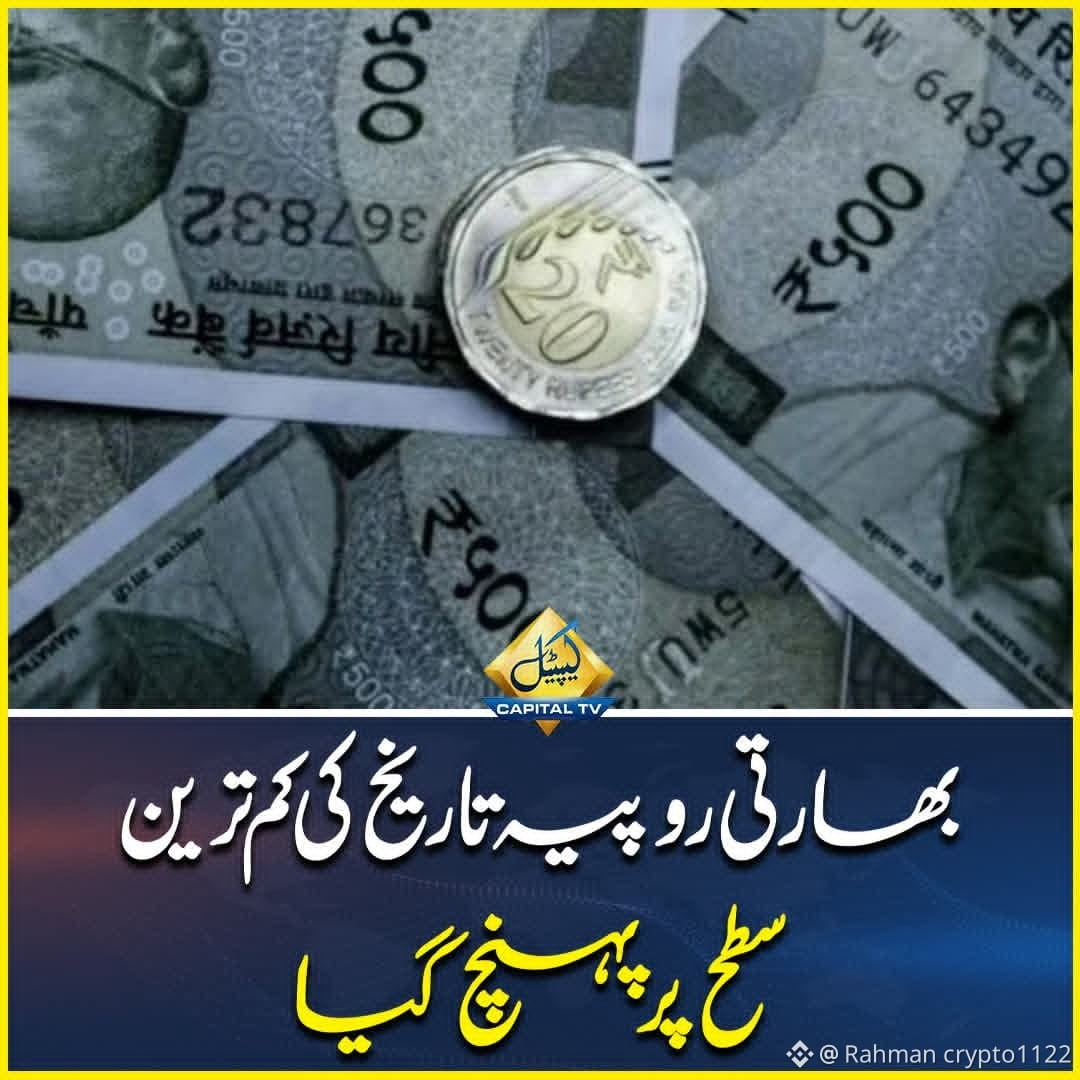
The Indian rupee has fallen to a historic low, with the exchange rate approaching ₹97 per US dollar for the first time, reflecting growing pressure on India’s currency market.
According to reports, the Reserve Bank of India (RBI) intervened in the foreign exchange market to support the rupee and limit excessive volatility. The currency had previously touched a record low of ₹96.96 per dollar in May 2026.
Analysts point to several factors behind the rupee’s weakness, including:
• Rising global crude oil prices increasing India’s import bill
• Strong demand for the US dollar
• Foreign capital outflows from Indian markets
• Wider trade and current account pressures
As India remains one of the world’s largest energy importers, fluctuations in oil prices and global financial conditions continue to play a major role in determining the rupee’s direction.
The currency movement highlights the challenges faced by emerging markets amid a stronger dollar environment and uncertain global economic conditions.
Reference: Reserve Bank of India (RBI) foreign exchange market updates; international financial market reports (Reuters/Bloomberg).
#ForexMarket #RBI #IndiaEconomy #GlobalMarkets #CurrencyMarket
$EUR $EURI $ESP
Indian Rupee Hits Record Low Against US Dollar Amid Economic Pressures
The Indian rupee has fallen to a historic low, with the exchange rate approaching ₹97 per US dollar for the first time, reflecting growing pressure on India’s currency market.
According to reports, the Reserve Bank of India (RBI) intervened in the foreign exchange market to support the rupee and limit excessive volatility. The currency had previously touched a record low of ₹96.96 per dollar in May 2026.
Analysts point to several factors behind the rupee’s weakness, including:
• Rising global crude oil prices increasing India’s import bill
• Strong demand for the US dollar
• Foreign capital outflows from Indian markets
• Wider trade and current account pressures
As India remains one of the world’s largest energy importers, fluctuations in oil prices and global financial conditions continue to play a major role in determining the rupee’s direction.
The currency movement highlights the challenges faced by emerging markets amid a stronger dollar environment and uncertain global economic conditions.
Reference: Reserve Bank of India (RBI) foreign exchange market updates; international financial market reports (Reuters/Bloomberg).
#ForexMarket #RBI #IndiaEconomy #GlobalMarkets #CurrencyMarket
$EUR $EURI $ESP
The Indian rupee has fallen to a historic low, with the exchange rate approaching ₹97 per US dollar for the first time, reflecting growing pressure on India’s currency market.
According to reports, the Reserve Bank of India (RBI) intervened in the foreign exchange market to support the rupee and limit excessive volatility. The currency had previously touched a record low of ₹96.96 per dollar in May 2026.
Analysts point to several factors behind the rupee’s weakness, including:
• Rising global crude oil prices increasing India’s import bill
• Strong demand for the US dollar
• Foreign capital outflows from Indian markets
• Wider trade and current account pressures
As India remains one of the world’s largest energy importers, fluctuations in oil prices and global financial conditions continue to play a major role in determining the rupee’s direction.
The currency movement highlights the challenges faced by emerging markets amid a stronger dollar environment and uncertain global economic conditions.
Reference: Reserve Bank of India (RBI) foreign exchange market updates; international financial market reports (Reuters/Bloomberg).
#ForexMarket #RBI #IndiaEconomy #GlobalMarkets #CurrencyMarket
$EUR $EURI $ESP

44

·
--
India's E-Rupee Expanding vs. Falling Circulation 🇮🇳📉🇮🇳RBI is planning to expand the digital rupee for welfare payments and test its use in cross-border transactions.
Despite expansion plans, e-rupee circulation fell from ₹10.16 billion to ₹7.71 billion, declined by about 24% compared to last year.#DigitalRupee #CBDC #CryptoNews #DigitalIndia
#RBI
India's E-Rupee Expanding vs. Falling Circulation 🇮🇳📉
🇮🇳RBI is planning to expand the digital rupee for welfare payments and test its use in cross-border transactions.
Despite expansion plans, e-rupee circulation fell from ₹10.16 billion to ₹7.71 billion, declined by about 24% compared to last year.#DigitalRupee #CBDC #CryptoNews #DigitalIndia
#RBI
Despite expansion plans, e-rupee circulation fell from ₹10.16 billion to ₹7.71 billion, declined by about 24% compared to last year.#DigitalRupee #CBDC #CryptoNews #DigitalIndia
#RBI
141

·
--
Is India ever going to make up its mind, or is "mixed signals" just their official crypto policy now? 🇮🇳🤔
The RBI is still out here acting like crypto is a systemic ticking time bomb, yet millions of Indians are trading away like nothing happened. 💣📈
$SUI
{future}(SUIUSDT)
It’s a beautiful mess where the central bank warns of doom while the massive user base keeps the exchanges thriving. We’re living in a giant "gray area" where the rules change depending on which way the wind blows in New Delhi. 🌬️🤷♂️
$ETH
{future}(ETHUSDT)
It’s almost impressive how they managed to maintain such a perfect state of confusion for years. No ban, no embrace, just pure legal chaos to keep everyone on their toes! 🎢🤡
$SOL
{future}(SOLUSDT)
Who needs clarity when you have a billion people and a dream, right? 🇮🇳✨
#IndiaCrypto #RBI #CryptoNews #RegulatoryChaos
Is India ever going to make up its mind, or is "mixed signals" just their official crypto policy now? 🇮🇳🤔
The RBI is still out here acting like crypto is a systemic ticking time bomb, yet millions of Indians are trading away like nothing happened. 💣📈
$SUI
It’s a beautiful mess where the central bank warns of doom while the massive user base keeps the exchanges thriving. We’re living in a giant "gray area" where the rules change depending on which way the wind blows in New Delhi. 🌬️🤷♂️
$ETH
It’s almost impressive how they managed to maintain such a perfect state of confusion for years. No ban, no embrace, just pure legal chaos to keep everyone on their toes! 🎢🤡
$SOL
Who needs clarity when you have a billion people and a dream, right? 🇮🇳✨
#IndiaCrypto #RBI #CryptoNews #RegulatoryChaos
The RBI is still out here acting like crypto is a systemic ticking time bomb, yet millions of Indians are trading away like nothing happened. 💣📈
$SUI
It’s a beautiful mess where the central bank warns of doom while the massive user base keeps the exchanges thriving. We’re living in a giant "gray area" where the rules change depending on which way the wind blows in New Delhi. 🌬️🤷♂️
$ETH
It’s almost impressive how they managed to maintain such a perfect state of confusion for years. No ban, no embrace, just pure legal chaos to keep everyone on their toes! 🎢🤡
$SOL
Who needs clarity when you have a billion people and a dream, right? 🇮🇳✨
#IndiaCrypto #RBI #CryptoNews #RegulatoryChaos
126

India: The central bank still wants to ban cryptocurrencies to curb tax evasion
- The Reserve Bank of India (RBI) continues to support a complete ban on cryptocurrencies.
- The main reason cited is to prevent tax evasion.
- This hardline stance is maintained despite global trends toward accepting digital assets and blockchain technology.
- Indian regulators remain cautious about cryptocurrencies.
#CryptoNews #ẤnĐộ #RBI #CryptoRegulations
$btc $eth
#vlikevn Titanbot
Source: CoinDesk
India: The central bank still wants to ban cryptocurrencies to curb tax evasion
- The Reserve Bank of India (RBI) continues to support a complete ban on cryptocurrencies.
- The main reason cited is to prevent tax evasion.
- This hardline stance is maintained despite global trends toward accepting digital assets and blockchain technology.
- Indian regulators remain cautious about cryptocurrencies.
#CryptoNews #ẤnĐộ #RBI #CryptoRegulations
$btc $eth
#vlikevn Titanbot
Source: CoinDesk
- The Reserve Bank of India (RBI) continues to support a complete ban on cryptocurrencies.
- The main reason cited is to prevent tax evasion.
- This hardline stance is maintained despite global trends toward accepting digital assets and blockchain technology.
- Indian regulators remain cautious about cryptocurrencies.
#CryptoNews #ẤnĐộ #RBI #CryptoRegulations
$btc $eth
#vlikevn Titanbot
Source: CoinDesk
80

🇮🇳 RBI Shifts Strategy: Less U.S. Bonds, More Gold
India’s central bank has lowered its holdings of U.S. Treasury bonds to a 5-year low and added more gold to its reserves. This is done to support the rupee and reduce risk from global uncertainty.
Buying gold shows RBI prefers a safer option than long-term U.S. bonds during unstable times. This could make gold more in demand worldwide.
For crypto, this move hints that big institutions are looking beyond traditional bonds. If this trend grows, digital currencies might get more attention as part of diversified investments.
$DASH | $AXS | $2Z
#RBI #Gold #Crypto #Finance #USDebt
🇮🇳 RBI Shifts Strategy: Less U.S. Bonds, More Gold
India’s central bank has lowered its holdings of U.S. Treasury bonds to a 5-year low and added more gold to its reserves. This is done to support the rupee and reduce risk from global uncertainty.
Buying gold shows RBI prefers a safer option than long-term U.S. bonds during unstable times. This could make gold more in demand worldwide.
For crypto, this move hints that big institutions are looking beyond traditional bonds. If this trend grows, digital currencies might get more attention as part of diversified investments.
$DASH | $AXS | $2Z
#RBI #Gold #Crypto #Finance #USDebt
India’s central bank has lowered its holdings of U.S. Treasury bonds to a 5-year low and added more gold to its reserves. This is done to support the rupee and reduce risk from global uncertainty.
Buying gold shows RBI prefers a safer option than long-term U.S. bonds during unstable times. This could make gold more in demand worldwide.
For crypto, this move hints that big institutions are looking beyond traditional bonds. If this trend grows, digital currencies might get more attention as part of diversified investments.
$DASH | $AXS | $2Z
#RBI #Gold #Crypto #Finance #USDebt

1
2
646

·
--
$INR: RBI just opened a controlled pressure valve 🔥
RBI’s partial easing on INR derivatives reads like a clean shift from panic mode to managed normalization. Banks can hedge again, offshore NDF liquidity should improve, and the daily position cap keeps the speculative heat from coming back too fast.
The tell here is simple: when a central bank loosens rules but keeps guardrails tight, it usually means real demand is returning while froth stays boxed out. That’s how liquidity starts breathing normally again, and that’s what institutional desks will be watching.
Not financial advice. Manage your risk and protect your capital.
#Forex #RBI #INR #Liquidity #Macro
⚡
$INR: RBI just opened a controlled pressure valve 🔥
RBI’s partial easing on INR derivatives reads like a clean shift from panic mode to managed normalization. Banks can hedge again, offshore NDF liquidity should improve, and the daily position cap keeps the speculative heat from coming back too fast.
The tell here is simple: when a central bank loosens rules but keeps guardrails tight, it usually means real demand is returning while froth stays boxed out. That’s how liquidity starts breathing normally again, and that’s what institutional desks will be watching.
Not financial advice. Manage your risk and protect your capital.
#Forex #RBI #INR #Liquidity #Macro
⚡
RBI’s partial easing on INR derivatives reads like a clean shift from panic mode to managed normalization. Banks can hedge again, offshore NDF liquidity should improve, and the daily position cap keeps the speculative heat from coming back too fast.
The tell here is simple: when a central bank loosens rules but keeps guardrails tight, it usually means real demand is returning while froth stays boxed out. That’s how liquidity starts breathing normally again, and that’s what institutional desks will be watching.
Not financial advice. Manage your risk and protect your capital.
#Forex #RBI #INR #Liquidity #Macro
⚡
34

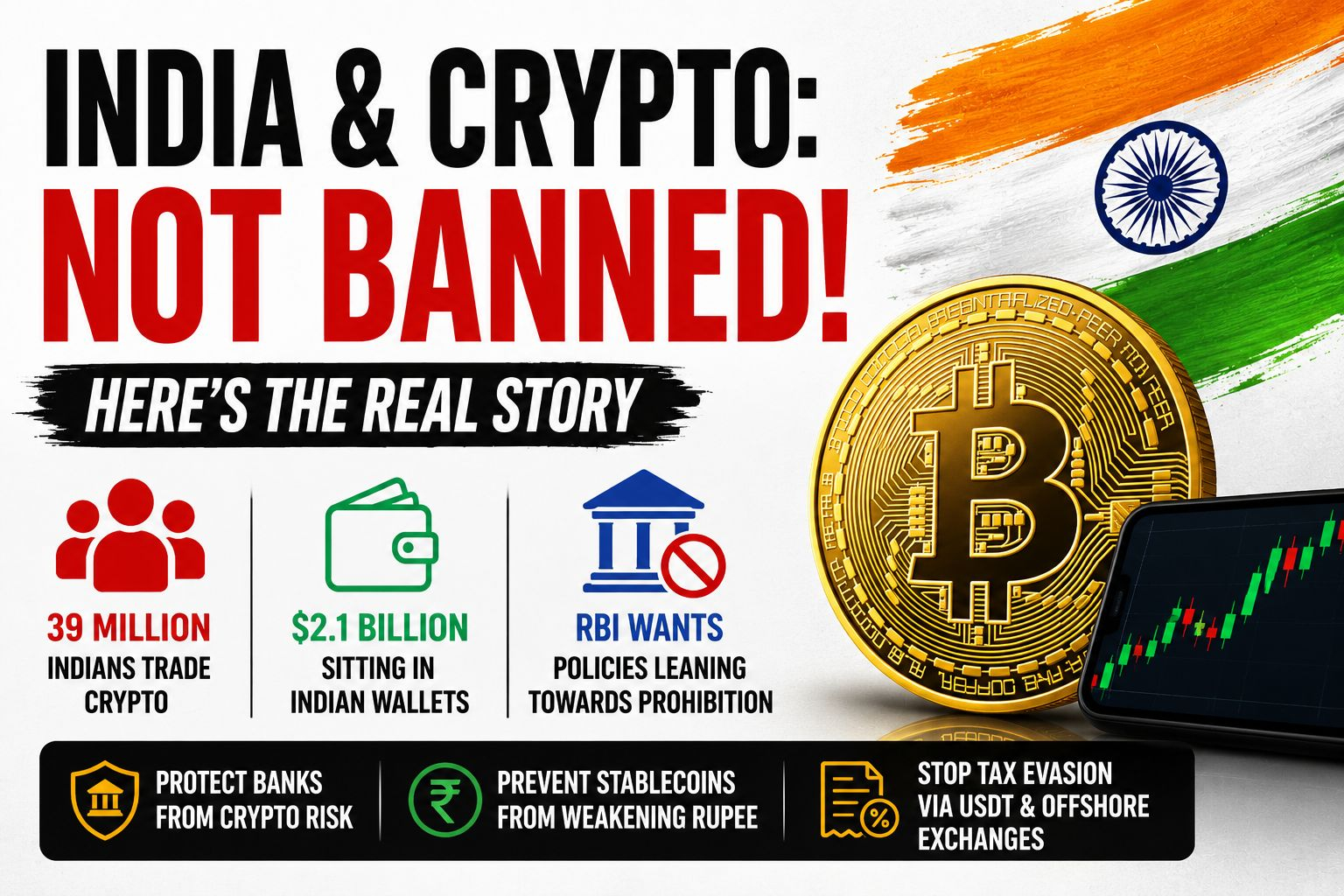
🚨 The headlines are more dramatic than the reality.
Yes, 39 million Indians own crypto, with an estimated $2.1 billion held in digital assets.
But India hasn't banned crypto.
The RBI has asked regulators to consider policies "leaning toward prohibition," mainly to prevent banks and regulated financial institutions from holding or offering exposure to crypto—not to outlaw individual ownership.
This isn't new. A similar banking restriction was introduced in 2018, but India's Supreme Court struck it down in 2020, leaving crypto in a regulatory grey area.
📌 What's driving the RBI's concerns?
• 🏦 Protecting banks from crypto-related financial risks.
• 💵 Preventing stablecoins like USDT from reducing demand for the Indian rupee.
• 📊 Improving tax compliance, especially for transactions routed through offshore exchanges.
The debate in India isn't simply "crypto vs. no crypto." It's about balancing innovation, financial stability, and tax enforcement.
💬 Do you think India will eventually regulate crypto with clear rules—or continue operating in a grey zone?
#Bitcoin #Crypto #India #RBI #USDT
🚨 The headlines are more dramatic than the reality.
Yes, 39 million Indians own crypto, with an estimated $2.1 billion held in digital assets.
But India hasn't banned crypto.
The RBI has asked regulators to consider policies "leaning toward prohibition," mainly to prevent banks and regulated financial institutions from holding or offering exposure to crypto—not to outlaw individual ownership.
This isn't new. A similar banking restriction was introduced in 2018, but India's Supreme Court struck it down in 2020, leaving crypto in a regulatory grey area.
📌 What's driving the RBI's concerns?
• 🏦 Protecting banks from crypto-related financial risks.
• 💵 Preventing stablecoins like USDT from reducing demand for the Indian rupee.
• 📊 Improving tax compliance, especially for transactions routed through offshore exchanges.
The debate in India isn't simply "crypto vs. no crypto." It's about balancing innovation, financial stability, and tax enforcement.
💬 Do you think India will eventually regulate crypto with clear rules—or continue operating in a grey zone?
#Bitcoin #Crypto #India #RBI #USDT
Yes, 39 million Indians own crypto, with an estimated $2.1 billion held in digital assets.
But India hasn't banned crypto.
The RBI has asked regulators to consider policies "leaning toward prohibition," mainly to prevent banks and regulated financial institutions from holding or offering exposure to crypto—not to outlaw individual ownership.
This isn't new. A similar banking restriction was introduced in 2018, but India's Supreme Court struck it down in 2020, leaving crypto in a regulatory grey area.
📌 What's driving the RBI's concerns?
• 🏦 Protecting banks from crypto-related financial risks.
• 💵 Preventing stablecoins like USDT from reducing demand for the Indian rupee.
• 📊 Improving tax compliance, especially for transactions routed through offshore exchanges.
The debate in India isn't simply "crypto vs. no crypto." It's about balancing innovation, financial stability, and tax enforcement.
💬 Do you think India will eventually regulate crypto with clear rules—or continue operating in a grey zone?
#Bitcoin #Crypto #India #RBI #USDT
17

📉 The Indian rupee is nearing a historic low: Will the central bank intervene?
The Indian rupee is witnessing a sharp decline to reach record-low levels against the dollar, raising questions about the nature of the Reserve Bank of India’s intervention. This situation leaves traders on edge, watching anxiously about the currency’s future.
━━━━━━━━━━━━━━
📊 Impact: 📈 High
🏷️ OTHER
#IndianRupee #RBI #Forex #Currencies #EconomicNews
🔗 Source: https://cryptobriefing.com/indian-rupee-record-lows-rbi-intervention/
📉 The Indian rupee is nearing a historic low: Will the central bank intervene?
The Indian rupee is witnessing a sharp decline to reach record-low levels against the dollar, raising questions about the nature of the Reserve Bank of India’s intervention. This situation leaves traders on edge, watching anxiously about the currency’s future.
━━━━━━━━━━━━━━
📊 Impact: 📈 High
🏷️ OTHER
#IndianRupee #RBI #Forex #Currencies #EconomicNews
🔗 Source: https://cryptobriefing.com/indian-rupee-record-lows-rbi-intervention/
The Indian rupee is witnessing a sharp decline to reach record-low levels against the dollar, raising questions about the nature of the Reserve Bank of India’s intervention. This situation leaves traders on edge, watching anxiously about the currency’s future.
━━━━━━━━━━━━━━
📊 Impact: 📈 High
🏷️ OTHER
#IndianRupee #RBI #Forex #Currencies #EconomicNews
🔗 Source: https://cryptobriefing.com/indian-rupee-record-lows-rbi-intervention/
13
Log in to explore more content
Join global crypto users on Binance Square
⚡️ Get latest and useful information about crypto.
💬 Trusted by the world’s largest crypto exchange.
👍 Discover real insights from verified creators.
Email / Phone number
Trending Topics
1
#BitcoinSpotETFsNetInflow$191M
175 views
31 Discussing
2
#CFTCUpdatesGuidanceOnTokenizedAssets
5,410 views
328 Discussing
3
#BitgetSays$352MAffectedInHack
655 views
22 Discussing
4
#BinanceWillListHyperliquid(HYPE)
179,387 views
2,934 Discussing
5
#BrazilOrdersReportingOf$10KSelfCustodyTransfers
560 views
21 Discussing
6
#FedProposesRulesForBankIssuedStablecoins
6,940 views
273 Discussing
7
#OndoFinanceSoughtSaleAfterFoundersDeath
5,268 views
191 Discussing
8
#FedOctoberRateHikeOddsRiseTo69.7%
67,673 views
1,260 Discussing
9
#BitcoinFallsBelow$83,000
4,820 views
20 Discussing
10
#BitcoinFallsToAround$84,600ThisWeek
0 views
0 Discussing