

#magiclabs
magiclabs
5,130 views
16 Discussing
Hot
Latest

·
--
Partly True
Article
The Frictionless Fallacy: Analyzing the Magic Labs Integration@NewtonProtocol
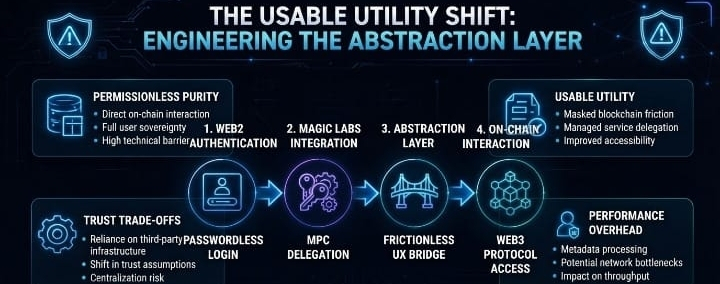
In the architecture of decentralized systems user experience is often a euphemism for hiding the complexity of private key management. The recent partnership with Magic Labs promises a seamless transition from Web2 authentication to Web3 interaction but as protocol engineers. We must look past the marketing layer to the on chain reality. The promise is a passwordless familiar login experience. The reality is an abstraction layer that introduces new dependencies.
At the technical core the integration operates by delegating key management to a managed service. While this effectively solves the bonboarding drop off problem moving users away from seed phrase management it forces a trade off in trust. In theory the whitepaper suggests full decentralization via non custodial Delegated Key Management System (DKMS) schemes. In practice the protocol must now account for the availability and integrity of the Magic Labs infrastructure. If the authentication provider experiences downtime or a security compromise, the on chain reality is that user assets while technically on chain become functionally inaccessible. We have swapped the risk of user negligence (losing a seed phrase) for the risk of centralized dependency (infrastructure failure).
Furthermore the abstraction of signing transactions adds a layer of metadata processing that, if not optimized, can bloat transaction validation times. While the onboarding flow looks sleek, the overhead of verifying the cryptographic proofs generated by the Magic Labs SDK must be processed by the network nodes. If this verification overhead scales linearly with user count the protocol faces a potential bottleneck that could increase gas costs or latency for all participants.
Market Context: $NEWT [+2.93%]
NEWT
The current market momentum shows that solid technology and real utility are finally getting the recognition they deserve.
#bullish #newton #MagicLabs #BlockchainEngineering
Conclusion
We are witnessing a shift from
permissionless purity to usable utility. The Magic Labs integration successfully masks the friction of blockchain interaction. But engineers should remain vigilant. Convenience is rarely free. It is usually paid for in either trust or performance overhead. Do not mistake a cleaner UI for a more decentralized protocol the abstraction layer is a bridge not the destination.
The Frictionless Fallacy: Analyzing the Magic Labs Integration
@NewtonProtocol
In the architecture of decentralized systems user experience is often a euphemism for hiding the complexity of private key management. The recent partnership with Magic Labs promises a seamless transition from Web2 authentication to Web3 interaction but as protocol engineers. We must look past the marketing layer to the on chain reality. The promise is a passwordless familiar login experience. The reality is an abstraction layer that introduces new dependencies.
At the technical core the integration operates by delegating key management to a managed service. While this effectively solves the bonboarding drop off problem moving users away from seed phrase management it forces a trade off in trust. In theory the whitepaper suggests full decentralization via non custodial Delegated Key Management System (DKMS) schemes. In practice the protocol must now account for the availability and integrity of the Magic Labs infrastructure. If the authentication provider experiences downtime or a security compromise, the on chain reality is that user assets while technically on chain become functionally inaccessible. We have swapped the risk of user negligence (losing a seed phrase) for the risk of centralized dependency (infrastructure failure).
Furthermore the abstraction of signing transactions adds a layer of metadata processing that, if not optimized, can bloat transaction validation times. While the onboarding flow looks sleek, the overhead of verifying the cryptographic proofs generated by the Magic Labs SDK must be processed by the network nodes. If this verification overhead scales linearly with user count the protocol faces a potential bottleneck that could increase gas costs or latency for all participants.
Market Context: $NEWT [+2.93%]
NEWT
The current market momentum shows that solid technology and real utility are finally getting the recognition they deserve.
#bullish #newton #MagicLabs #BlockchainEngineering
Conclusion
We are witnessing a shift from
permissionless purity to usable utility. The Magic Labs integration successfully masks the friction of blockchain interaction. But engineers should remain vigilant. Convenience is rarely free. It is usually paid for in either trust or performance overhead. Do not mistake a cleaner UI for a more decentralized protocol the abstraction layer is a bridge not the destination.
In the architecture of decentralized systems user experience is often a euphemism for hiding the complexity of private key management. The recent partnership with Magic Labs promises a seamless transition from Web2 authentication to Web3 interaction but as protocol engineers. We must look past the marketing layer to the on chain reality. The promise is a passwordless familiar login experience. The reality is an abstraction layer that introduces new dependencies.
At the technical core the integration operates by delegating key management to a managed service. While this effectively solves the bonboarding drop off problem moving users away from seed phrase management it forces a trade off in trust. In theory the whitepaper suggests full decentralization via non custodial Delegated Key Management System (DKMS) schemes. In practice the protocol must now account for the availability and integrity of the Magic Labs infrastructure. If the authentication provider experiences downtime or a security compromise, the on chain reality is that user assets while technically on chain become functionally inaccessible. We have swapped the risk of user negligence (losing a seed phrase) for the risk of centralized dependency (infrastructure failure).
Furthermore the abstraction of signing transactions adds a layer of metadata processing that, if not optimized, can bloat transaction validation times. While the onboarding flow looks sleek, the overhead of verifying the cryptographic proofs generated by the Magic Labs SDK must be processed by the network nodes. If this verification overhead scales linearly with user count the protocol faces a potential bottleneck that could increase gas costs or latency for all participants.
Market Context: $NEWT [+2.93%]
NEWT
The current market momentum shows that solid technology and real utility are finally getting the recognition they deserve.
#bullish #newton #MagicLabs #BlockchainEngineering
Conclusion
We are witnessing a shift from
permissionless purity to usable utility. The Magic Labs integration successfully masks the friction of blockchain interaction. But engineers should remain vigilant. Convenience is rarely free. It is usually paid for in either trust or performance overhead. Do not mistake a cleaner UI for a more decentralized protocol the abstraction layer is a bridge not the destination.
4
1
109

·
--
Beyond Smart Contracts: How Newton Protocol ($NEWT) Solves the On-Chain Authorization Gap 🔒⚙️While decentralized finance (DeFi) has mastered automated execution, a glaring limitation remains: traditional smart contracts are "blind" to off-chain context. They can validate assets, but they cannot authorize transactions based on real-world constraints like corporate policies or compliance rules before final settlement. This is exactly where Newton Protocol ($NEWT), engineered by the Magic Labs team, steps in as a vital infrastructure layer.
Newton functions as a programmable policy layer that introduces "compliance-as-code" directly into Web3. Instead of managing regulations post-transaction through rollbacks or manual freezes, Newton screens every transaction intent against pre-defined rules in real-time. This structural safeguard prevents exploits, handles risk parameters, and accommodates institutional requirements cleanly.
The architecture is built for maximum privacy and decentralization. A network of node operators evaluates policies inside secure, hardware-isolated Trusted Execution Environments (TEEs). To protect private data, only cryptographic commitments and Zero-Knowledge Proofs (ZKPs) are published on-chain, proving a check was performed accurately without exposing sensitive inputs.
Backed by a total maximum supply of 1 billion tokens, the $NEWT token serves as the essential gas engine powering these policy computations. Node operators are also required to stake $NEWT as collateral, aligning network security with economic incentives. As institutional capital and real-world assets continue migrating on-chain, secure authorization primitives like Newton will likely shift from optional features to fundamental industry standards.
#Newt $NEWT #MagicLabs #Web3Security #EigenLayer
Beyond Smart Contracts: How Newton Protocol ($NEWT) Solves the On-Chain Authorization Gap 🔒⚙️
While decentralized finance (DeFi) has mastered automated execution, a glaring limitation remains: traditional smart contracts are "blind" to off-chain context. They can validate assets, but they cannot authorize transactions based on real-world constraints like corporate policies or compliance rules before final settlement. This is exactly where Newton Protocol ($NEWT ), engineered by the Magic Labs team, steps in as a vital infrastructure layer.
Newton functions as a programmable policy layer that introduces "compliance-as-code" directly into Web3. Instead of managing regulations post-transaction through rollbacks or manual freezes, Newton screens every transaction intent against pre-defined rules in real-time. This structural safeguard prevents exploits, handles risk parameters, and accommodates institutional requirements cleanly.
The architecture is built for maximum privacy and decentralization. A network of node operators evaluates policies inside secure, hardware-isolated Trusted Execution Environments (TEEs). To protect private data, only cryptographic commitments and Zero-Knowledge Proofs (ZKPs) are published on-chain, proving a check was performed accurately without exposing sensitive inputs.
Backed by a total maximum supply of 1 billion tokens, the $NEWT token serves as the essential gas engine powering these policy computations. Node operators are also required to stake $NEWT as collateral, aligning network security with economic incentives. As institutional capital and real-world assets continue migrating on-chain, secure authorization primitives like Newton will likely shift from optional features to fundamental industry standards.
#Newt $NEWT #MagicLabs #Web3Security #EigenLayer
Newton functions as a programmable policy layer that introduces "compliance-as-code" directly into Web3. Instead of managing regulations post-transaction through rollbacks or manual freezes, Newton screens every transaction intent against pre-defined rules in real-time. This structural safeguard prevents exploits, handles risk parameters, and accommodates institutional requirements cleanly.
The architecture is built for maximum privacy and decentralization. A network of node operators evaluates policies inside secure, hardware-isolated Trusted Execution Environments (TEEs). To protect private data, only cryptographic commitments and Zero-Knowledge Proofs (ZKPs) are published on-chain, proving a check was performed accurately without exposing sensitive inputs.
Backed by a total maximum supply of 1 billion tokens, the $NEWT token serves as the essential gas engine powering these policy computations. Node operators are also required to stake $NEWT as collateral, aligning network security with economic incentives. As institutional capital and real-world assets continue migrating on-chain, secure authorization primitives like Newton will likely shift from optional features to fundamental industry standards.
#Newt $NEWT #MagicLabs #Web3Security #EigenLayer
2
86
·
--
Article
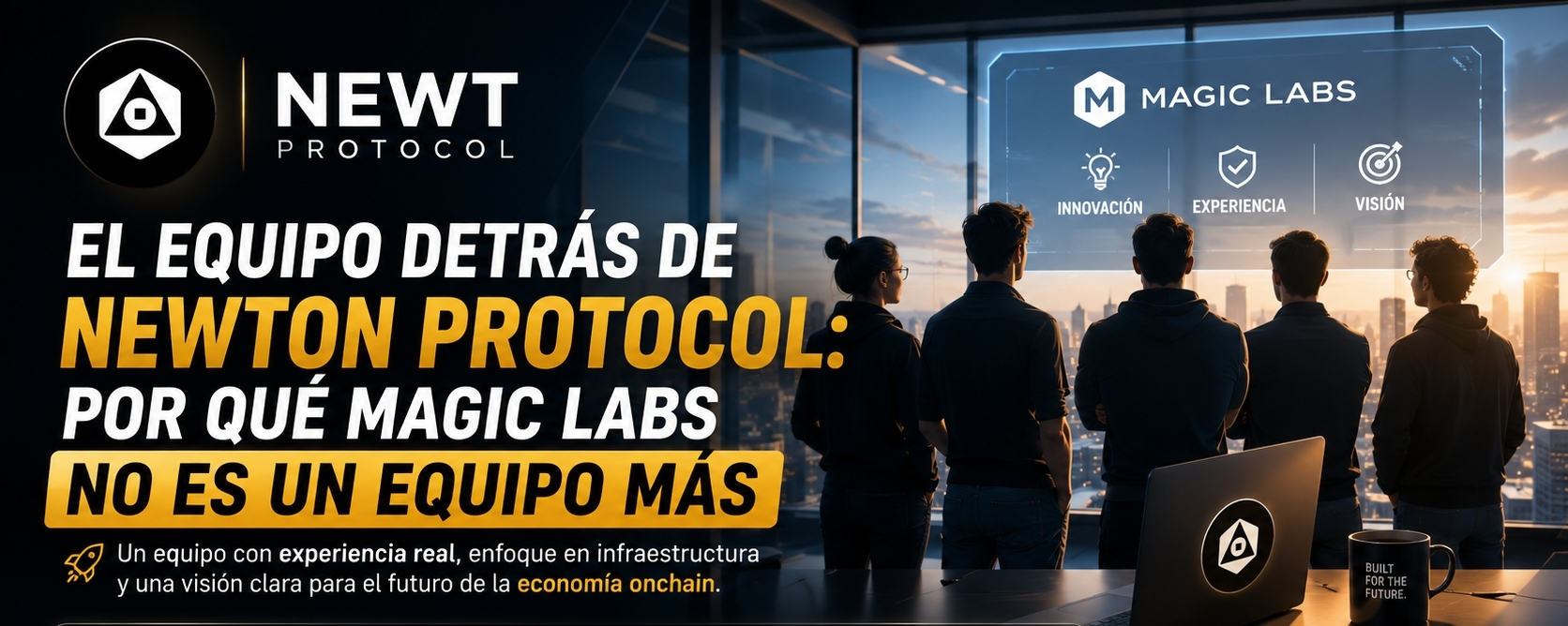
The team behind Newton Protocol: why Magic Labs isn’t just another teamIn the crypto ecosystem, one of the most important questions you can ask yourself before following any project is: who is building it, and what have they built before?
With @NewtonProtocol this question has an answer worth knowing.
Magic Labs: more than a decade building real infrastructure
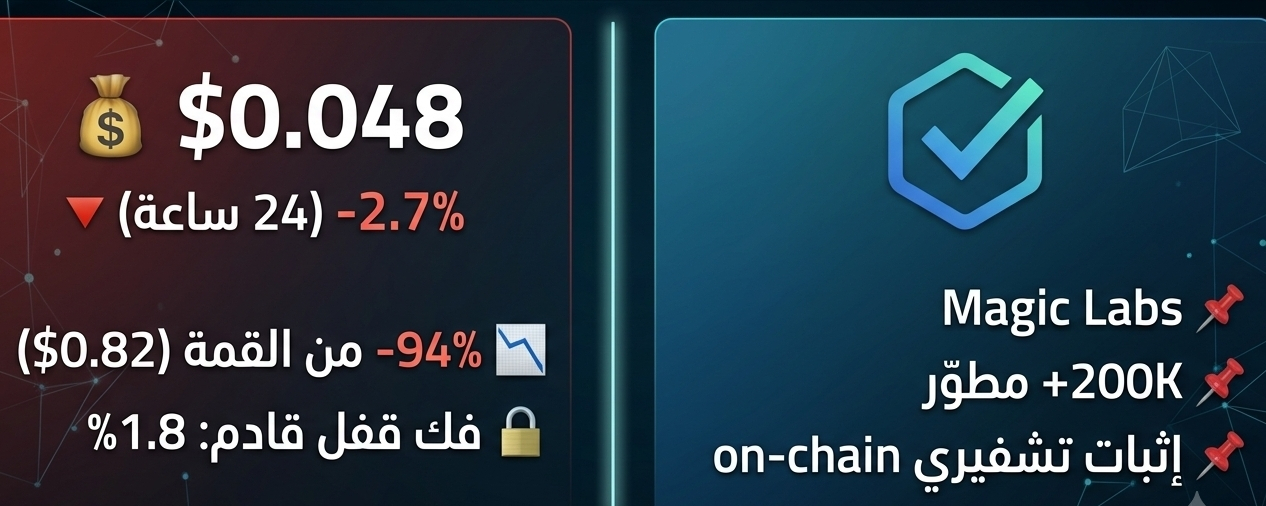
Newton Protocol is developed by Magic Labs, a company that doesn’t need to build credibility from scratch. Its best-known product, Magic (formerly Magic Link), is the infrastructure for embedded wallets that today powers more than 57 million wallets and is used by over 200,000 developers around the world.
The team behind Newton Protocol: why Magic Labs isn’t just another team
In the crypto ecosystem, one of the most important questions you can ask yourself before following any project is: who is building it, and what have they built before?
With @NewtonProtocol this question has an answer worth knowing.
Magic Labs: more than a decade building real infrastructure
Newton Protocol is developed by Magic Labs, a company that doesn’t need to build credibility from scratch. Its best-known product, Magic (formerly Magic Link), is the infrastructure for embedded wallets that today powers more than 57 million wallets and is used by over 200,000 developers around the world.
With @NewtonProtocol this question has an answer worth knowing.
Magic Labs: more than a decade building real infrastructure
Newton Protocol is developed by Magic Labs, a company that doesn’t need to build credibility from scratch. Its best-known product, Magic (formerly Magic Link), is the infrastructure for embedded wallets that today powers more than 57 million wallets and is used by over 200,000 developers around the world.
4
2
93

·
--
Verified
Most People often assume the team building compliance infrastructure for institutions is some specialized RegTech shop, deep in regulatory work but new to consumer-scale crypto infrastructure. Usually a safe assumption for this kind of product.
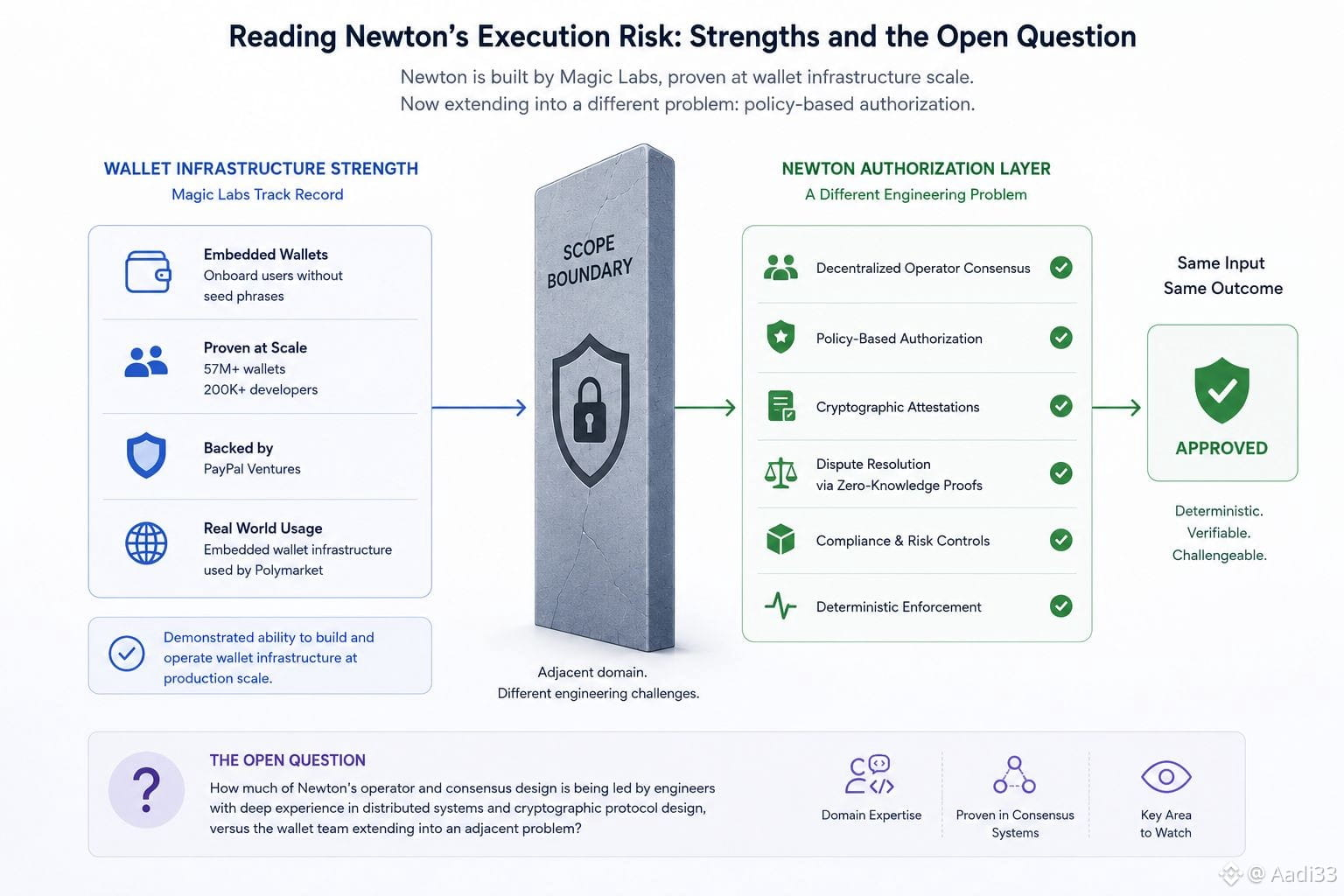
Not the case with @NewtonProtocol though. The core developer is Magic Labs and I hadn't connected this until I looked into who's actually behind it. They built embedded wallets the kind of infrastructure that lets an app onboard users without ever showing them a seed phrase. Backed by PayPal Ventures, already running at real scale, over 57 million wallets, more than 200,000 developers, and it's the wallet layer powering Polymarket.
That changes how I read Newton's execution risk. A lot of compliance focused crypto infrastructure gets built by teAms strong on the regulatory side but relatively new to shipping at meaningful scale. Magic Labs is the opposite, they've already solved distribution and reliability for wallet infrastructure specifically. Newton isn't a new team's first attempt at real transaction volume, it's an established team extending into an adjacent problem.
What I'd flag though is that embedded wallets and policy-based authorization are genuinely different engineering problems. Wallet infrastructure is mostly key management and uptime. Newton's authorization layer means decentralized 0perator consensus, cryptographic attestations, dispute resolution through zero-knowledge proofs. Proven expertise in one doesn't automatically transfer to the other.
Not a weakness,.. just worth being precise about. I'd be curious how much of Newton's operator and consensus design is being led by people with a track record in that specific area, versus the wallet side of the team extending into it.
@NewtonProtocol $NEWT #Newt
#Polymarket #MagicLabs #zkProofs
$SXT $LAB
Most People often assume the team building compliance infrastructure for institutions is some specialized RegTech shop, deep in regulatory work but new to consumer-scale crypto infrastructure. Usually a safe assumption for this kind of product.
Not the case with @NewtonProtocol though. The core developer is Magic Labs and I hadn't connected this until I looked into who's actually behind it. They built embedded wallets the kind of infrastructure that lets an app onboard users without ever showing them a seed phrase. Backed by PayPal Ventures, already running at real scale, over 57 million wallets, more than 200,000 developers, and it's the wallet layer powering Polymarket.
That changes how I read Newton's execution risk. A lot of compliance focused crypto infrastructure gets built by teAms strong on the regulatory side but relatively new to shipping at meaningful scale. Magic Labs is the opposite, they've already solved distribution and reliability for wallet infrastructure specifically. Newton isn't a new team's first attempt at real transaction volume, it's an established team extending into an adjacent problem.
What I'd flag though is that embedded wallets and policy-based authorization are genuinely different engineering problems. Wallet infrastructure is mostly key management and uptime. Newton's authorization layer means decentralized 0perator consensus, cryptographic attestations, dispute resolution through zero-knowledge proofs. Proven expertise in one doesn't automatically transfer to the other.
Not a weakness,.. just worth being precise about. I'd be curious how much of Newton's operator and consensus design is being led by people with a track record in that specific area, versus the wallet side of the team extending into it.
@NewtonProtocol $NEWT #Newt
#Polymarket #MagicLabs #zkProofs
$SXT $LAB
Not the case with @NewtonProtocol though. The core developer is Magic Labs and I hadn't connected this until I looked into who's actually behind it. They built embedded wallets the kind of infrastructure that lets an app onboard users without ever showing them a seed phrase. Backed by PayPal Ventures, already running at real scale, over 57 million wallets, more than 200,000 developers, and it's the wallet layer powering Polymarket.
That changes how I read Newton's execution risk. A lot of compliance focused crypto infrastructure gets built by teAms strong on the regulatory side but relatively new to shipping at meaningful scale. Magic Labs is the opposite, they've already solved distribution and reliability for wallet infrastructure specifically. Newton isn't a new team's first attempt at real transaction volume, it's an established team extending into an adjacent problem.
What I'd flag though is that embedded wallets and policy-based authorization are genuinely different engineering problems. Wallet infrastructure is mostly key management and uptime. Newton's authorization layer means decentralized 0perator consensus, cryptographic attestations, dispute resolution through zero-knowledge proofs. Proven expertise in one doesn't automatically transfer to the other.
Not a weakness,.. just worth being precise about. I'd be curious how much of Newton's operator and consensus design is being led by people with a track record in that specific area, versus the wallet side of the team extending into it.
@NewtonProtocol $NEWT #Newt
#Polymarket #MagicLabs #zkProofs
$SXT $LAB
40
32
366

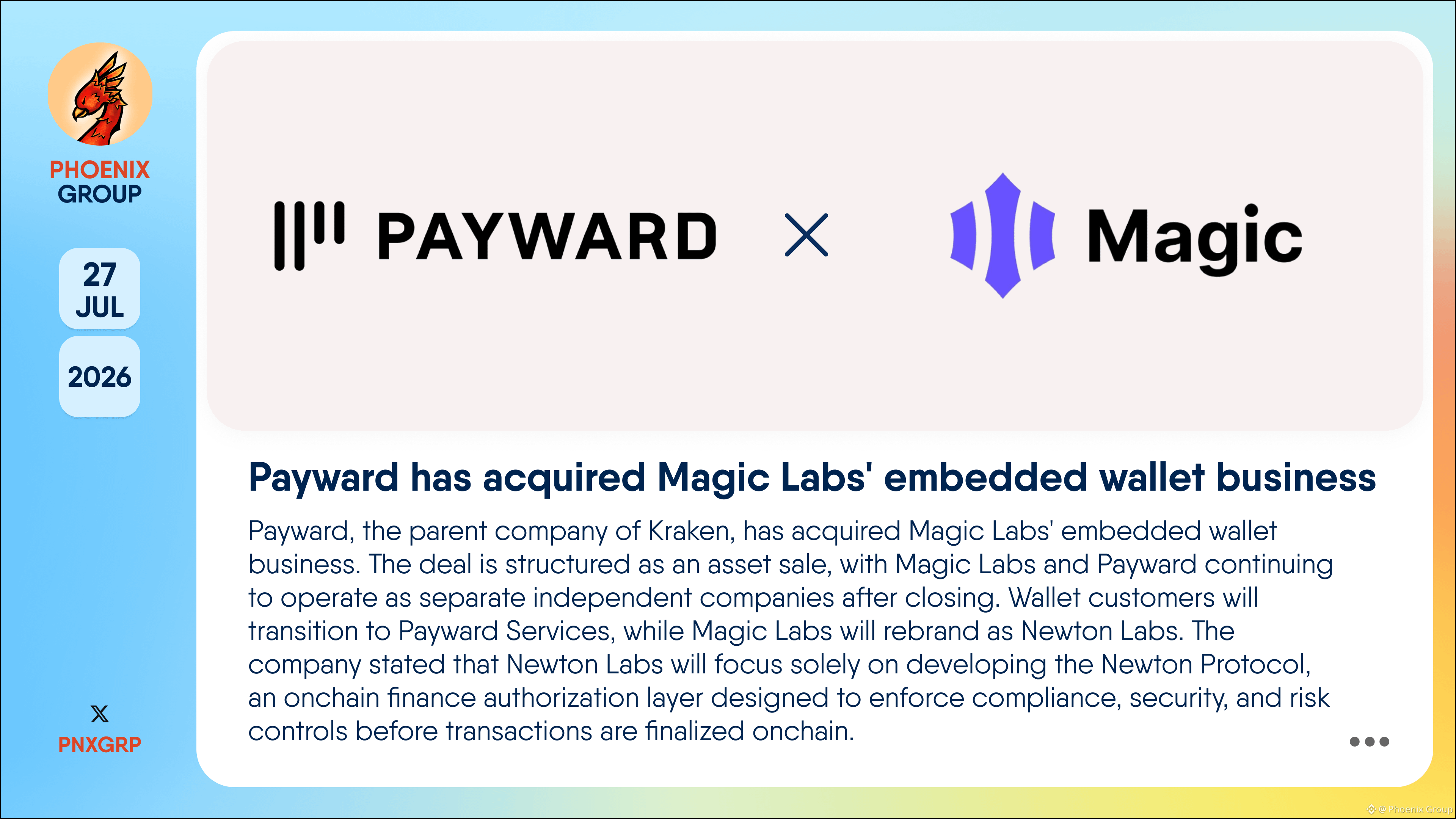
Payward has acquired Magic Labs' embedded wallet business
#Payward , the parent company of Kraken, has acquired Magic Labs' embedded wallet business. The deal is structured as an asset sale, with #MagicLabs and Payward continuing to operate as separate independent companies after closing. Wallet customers will transition to Payward Services, while Magic Labs will rebrand as #NewtonLabs.
The company stated that Newton Labs will focus solely on developing the Newton Protocol, an onchain finance authorization layer designed to enforce compliance, security, and risk controls before transactions are finalized onchain.
👉 theblock.co/post/409705/kraken-parent-payward-acquires-magic-labs-embedded-wallet-business
Payward has acquired Magic Labs' embedded wallet business
#Payward , the parent company of Kraken, has acquired Magic Labs' embedded wallet business. The deal is structured as an asset sale, with #MagicLabs and Payward continuing to operate as separate independent companies after closing. Wallet customers will transition to Payward Services, while Magic Labs will rebrand as #NewtonLabs.
The company stated that Newton Labs will focus solely on developing the Newton Protocol, an onchain finance authorization layer designed to enforce compliance, security, and risk controls before transactions are finalized onchain.
👉 theblock.co/post/409705/kraken-parent-payward-acquires-magic-labs-embedded-wallet-business
#Payward , the parent company of Kraken, has acquired Magic Labs' embedded wallet business. The deal is structured as an asset sale, with #MagicLabs and Payward continuing to operate as separate independent companies after closing. Wallet customers will transition to Payward Services, while Magic Labs will rebrand as #NewtonLabs.
The company stated that Newton Labs will focus solely on developing the Newton Protocol, an onchain finance authorization layer designed to enforce compliance, security, and risk controls before transactions are finalized onchain.
👉 theblock.co/post/409705/kraken-parent-payward-acquires-magic-labs-embedded-wallet-business
132

Article
Newton Protocol.. a strong technical project, but the market still doesn’t believe it? ⚠️Whenever we talk about NEWT, we focus on the price, but this time we’ll understand together why this project is different—and why the market isn’t fully convinced yet.
🧩 What is Newton, exactly?
It’s not a meme coin or a project with no goal. Newton Protocol is a decentralized verification layer (Compliance Layer) that verifies the validity of any on-chain transaction before it’s executed. It does this through a network of decentralized operators that use trusted execution environments (TEEs) and cryptographically prove every operation, so anyone can verify it themselves. Simply put: an “enforcement/compliance” layer built on the blockchain—not a centralized company that watches over everything.
Newton Protocol.. a strong technical project, but the market still doesn’t believe it? ⚠️
Whenever we talk about NEWT, we focus on the price, but this time we’ll understand together why this project is different—and why the market isn’t fully convinced yet.
🧩 What is Newton, exactly?
It’s not a meme coin or a project with no goal. Newton Protocol is a decentralized verification layer (Compliance Layer) that verifies the validity of any on-chain transaction before it’s executed. It does this through a network of decentralized operators that use trusted execution environments (TEEs) and cryptographically prove every operation, so anyone can verify it themselves. Simply put: an “enforcement/compliance” layer built on the blockchain—not a centralized company that watches over everything.
🧩 What is Newton, exactly?
It’s not a meme coin or a project with no goal. Newton Protocol is a decentralized verification layer (Compliance Layer) that verifies the validity of any on-chain transaction before it’s executed. It does this through a network of decentralized operators that use trusted execution environments (TEEs) and cryptographically prove every operation, so anyone can verify it themselves. Simply put: an “enforcement/compliance” layer built on the blockchain—not a centralized company that watches over everything.
3
2
106

·
--
#newt $NEWT @NewtonProtocol
{future}(NEWTUSDT)
Many conversations about blockchain focus on new applications, but I think the infrastructure behind them deserves just as much attention. A decentralized app can offer great ideas, yet its success often depends on whether the underlying network can handle growing demand without becoming too expensive or slow.
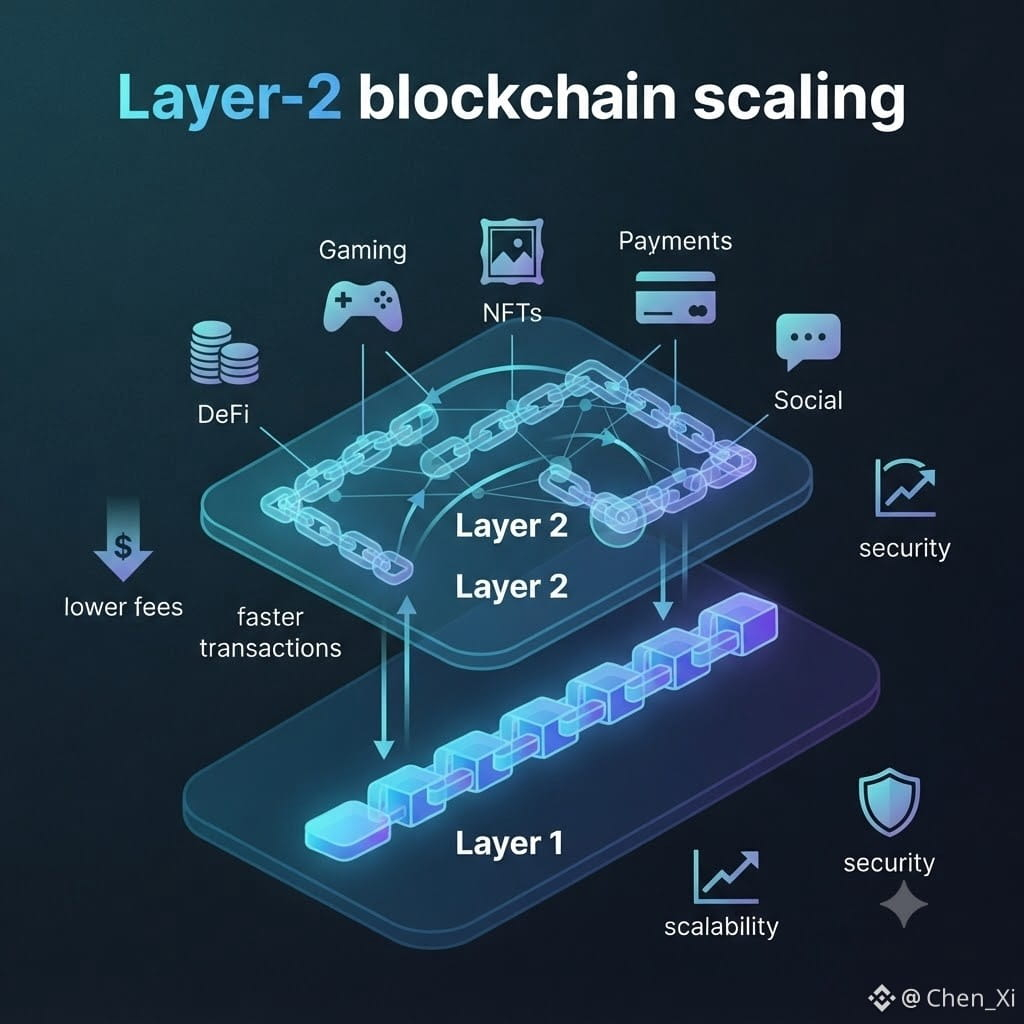
While reading about Layer-2 scaling, one detail that stood out to me was that these networks are not trying to replace the base blockchain. Instead, they aim to process activity more efficiently while still relying on the main chain for security. That makes the discussion less about competition and more about collaboration between different layers of the ecosystem.
Based on publicly available information, there is no single Layer-2 design that solves every challenge. Optimistic rollups, zero-knowledge rollups, and other approaches each make different technical trade-offs. Understanding those differences seems more useful than assuming one model will fit every application.
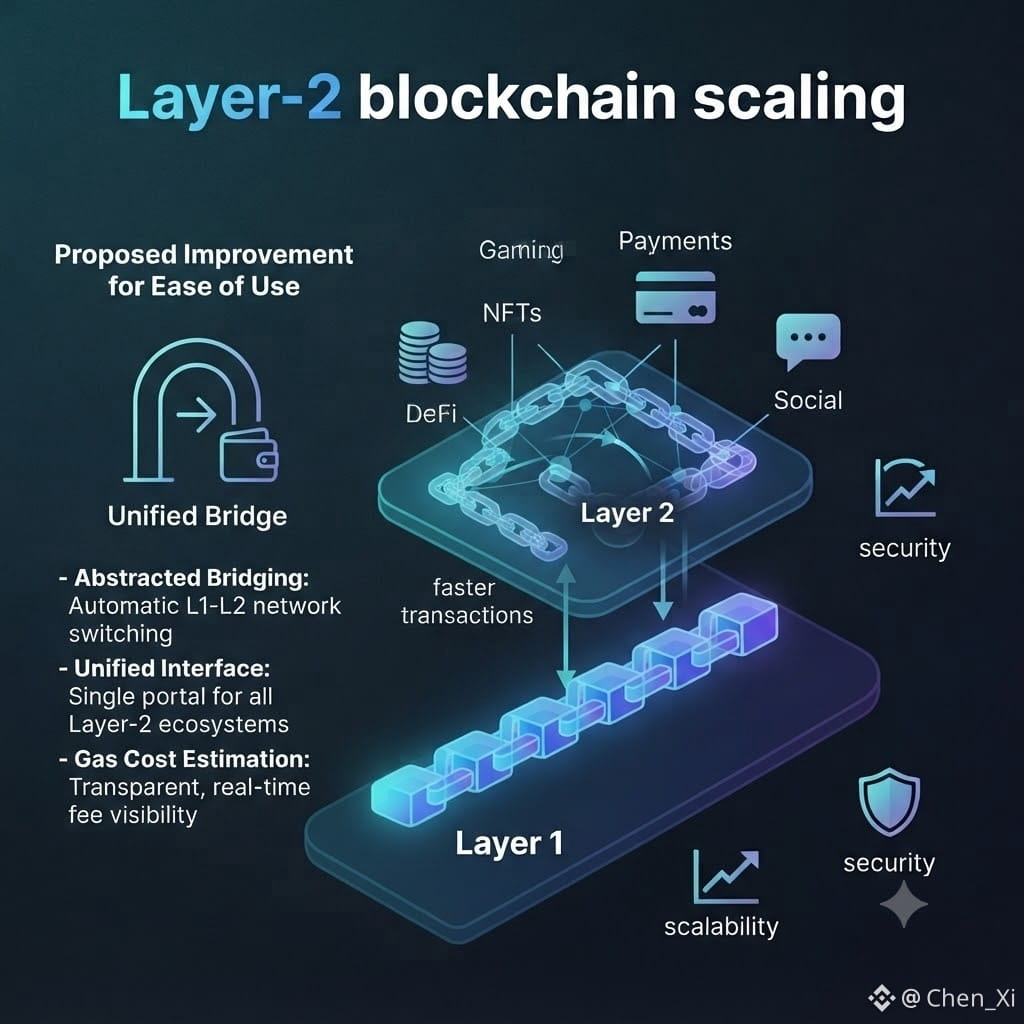
I also think user experience will become increasingly important. Faster transactions and lower costs matter, but so does making it easier to move between networks without adding unnecessary complexity. If blockchain technology is meant to support everyday use, simplicity may become just as valuable as raw performance.
Scalability is still evolving, and the most interesting developments may come from how these technologies work together rather than individually. What improvement do you think would make Layer-2 networks easier for everyday users to adopt?
$NEWT #NewtonProtocol #Newt #ComplianceAsCode #MagicLabs
#newt $NEWT @NewtonProtocol
Many conversations about blockchain focus on new applications, but I think the infrastructure behind them deserves just as much attention. A decentralized app can offer great ideas, yet its success often depends on whether the underlying network can handle growing demand without becoming too expensive or slow.
While reading about Layer-2 scaling, one detail that stood out to me was that these networks are not trying to replace the base blockchain. Instead, they aim to process activity more efficiently while still relying on the main chain for security. That makes the discussion less about competition and more about collaboration between different layers of the ecosystem.
Based on publicly available information, there is no single Layer-2 design that solves every challenge. Optimistic rollups, zero-knowledge rollups, and other approaches each make different technical trade-offs. Understanding those differences seems more useful than assuming one model will fit every application.
I also think user experience will become increasingly important. Faster transactions and lower costs matter, but so does making it easier to move between networks without adding unnecessary complexity. If blockchain technology is meant to support everyday use, simplicity may become just as valuable as raw performance.
Scalability is still evolving, and the most interesting developments may come from how these technologies work together rather than individually. What improvement do you think would make Layer-2 networks easier for everyday users to adopt?
$NEWT #NewtonProtocol #Newt #ComplianceAsCode #MagicLabs
Many conversations about blockchain focus on new applications, but I think the infrastructure behind them deserves just as much attention. A decentralized app can offer great ideas, yet its success often depends on whether the underlying network can handle growing demand without becoming too expensive or slow.
While reading about Layer-2 scaling, one detail that stood out to me was that these networks are not trying to replace the base blockchain. Instead, they aim to process activity more efficiently while still relying on the main chain for security. That makes the discussion less about competition and more about collaboration between different layers of the ecosystem.
Based on publicly available information, there is no single Layer-2 design that solves every challenge. Optimistic rollups, zero-knowledge rollups, and other approaches each make different technical trade-offs. Understanding those differences seems more useful than assuming one model will fit every application.
I also think user experience will become increasingly important. Faster transactions and lower costs matter, but so does making it easier to move between networks without adding unnecessary complexity. If blockchain technology is meant to support everyday use, simplicity may become just as valuable as raw performance.
Scalability is still evolving, and the most interesting developments may come from how these technologies work together rather than individually. What improvement do you think would make Layer-2 networks easier for everyday users to adopt?
$NEWT #NewtonProtocol #Newt #ComplianceAsCode #MagicLabs
4
2
148
·
--
🧵 60 seconds to understand Newton | Part 4
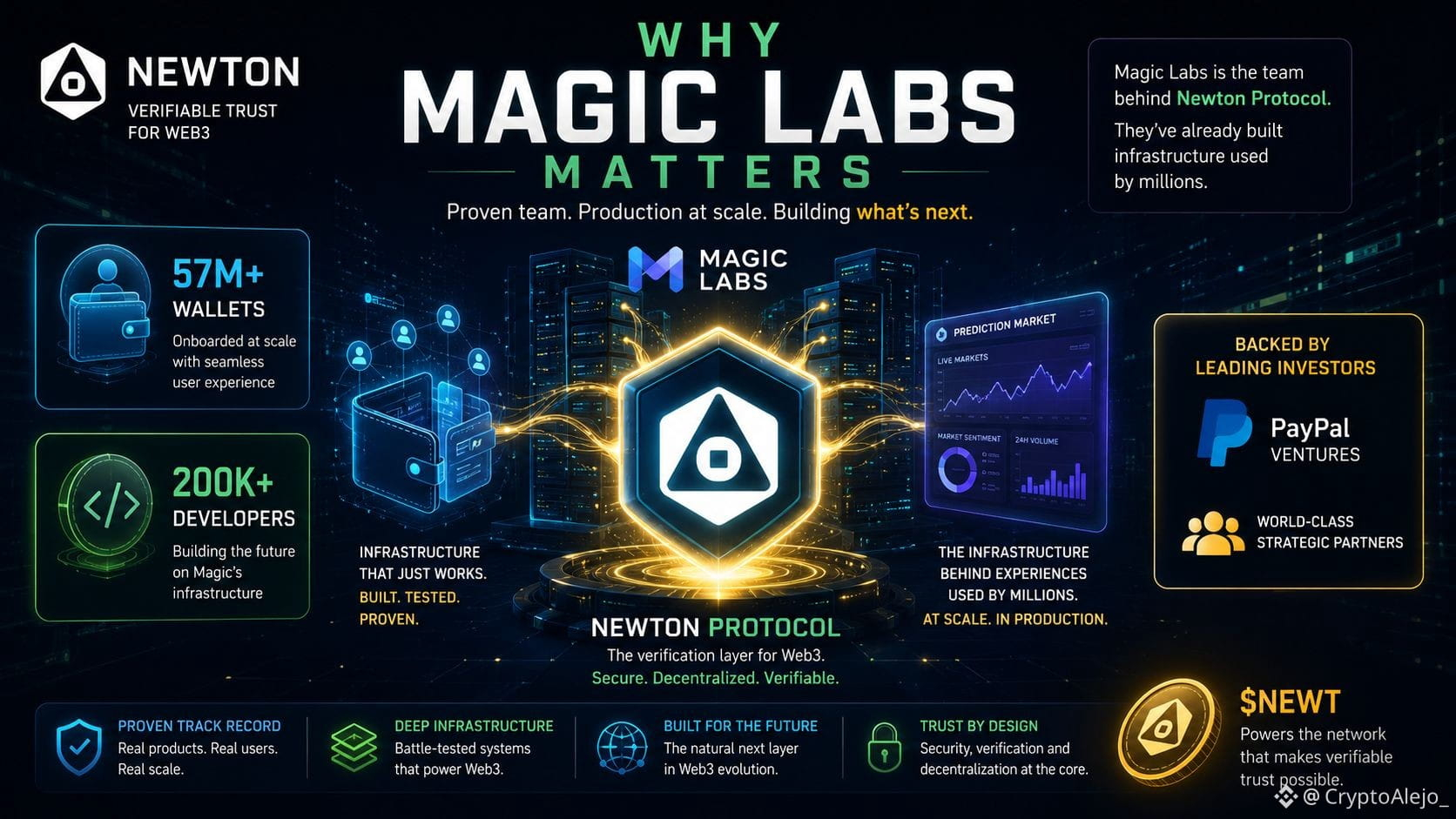
Why does Magic Labs matter?
In crypto, the team behind a project matters more than most admit.
Anyone can write a whitepaper. Anyone can launch a token. Very few can show 57 million wallets in production and 200,000 developers using their infrastructure before rolling out a new protocol.
That’s exactly what Magic Labs has—the company behind @NewtonProtocol.
If you’ve ever used Polymarket, the wallet infrastructure that made that experience possible was built by Magic Labs. Without you noticing. Without friction. Working at real scale with real users.
That’s not a small detail. It’s the difference between a team that promises to build infrastructure and one that already has.
Newton isn’t Magic Labs’ first attempt in this space. It’s the natural next layer from a team that already understands—better than almost anyone—how infrastructure is built that millions of people use without realizing it.
And they’re backed by PayPal Ventures, one of the most selective investors in digital payments infrastructure in the world.
$NEWT is the token that powers what this team is building right now.
@NewtonProtocol #Newt #NewtonProtocol #Web3 #MagicLabs
Did you know the team behind Newton already built Polymarket’s wallet infrastructure? Does that change your perspective on the project? 👇
#newt $NEWT
🧵 60 seconds to understand Newton | Part 4
Why does Magic Labs matter?
In crypto, the team behind a project matters more than most admit.
Anyone can write a whitepaper. Anyone can launch a token. Very few can show 57 million wallets in production and 200,000 developers using their infrastructure before rolling out a new protocol.
That’s exactly what Magic Labs has—the company behind @NewtonProtocol.
If you’ve ever used Polymarket, the wallet infrastructure that made that experience possible was built by Magic Labs. Without you noticing. Without friction. Working at real scale with real users.
That’s not a small detail. It’s the difference between a team that promises to build infrastructure and one that already has.
Newton isn’t Magic Labs’ first attempt in this space. It’s the natural next layer from a team that already understands—better than almost anyone—how infrastructure is built that millions of people use without realizing it.
And they’re backed by PayPal Ventures, one of the most selective investors in digital payments infrastructure in the world.
$NEWT is the token that powers what this team is building right now.
@NewtonProtocol #Newt #NewtonProtocol #Web3 #MagicLabs
Did you know the team behind Newton already built Polymarket’s wallet infrastructure? Does that change your perspective on the project? 👇
#newt $NEWT
Why does Magic Labs matter?
In crypto, the team behind a project matters more than most admit.
Anyone can write a whitepaper. Anyone can launch a token. Very few can show 57 million wallets in production and 200,000 developers using their infrastructure before rolling out a new protocol.
That’s exactly what Magic Labs has—the company behind @NewtonProtocol.
If you’ve ever used Polymarket, the wallet infrastructure that made that experience possible was built by Magic Labs. Without you noticing. Without friction. Working at real scale with real users.
That’s not a small detail. It’s the difference between a team that promises to build infrastructure and one that already has.
Newton isn’t Magic Labs’ first attempt in this space. It’s the natural next layer from a team that already understands—better than almost anyone—how infrastructure is built that millions of people use without realizing it.
And they’re backed by PayPal Ventures, one of the most selective investors in digital payments infrastructure in the world.
$NEWT is the token that powers what this team is building right now.
@NewtonProtocol #Newt #NewtonProtocol #Web3 #MagicLabs
Did you know the team behind Newton already built Polymarket’s wallet infrastructure? Does that change your perspective on the project? 👇
#newt $NEWT
2
1
160
$NEWT IS BUILT BY THE TEAM BEHIND 57 MILLION WALLETS 🔥
The team behind $NEWT isn't new to this. Magic Labs has already built the wallet infrastructure used by 57 million people and 200k developers. Polymarket—the largest prediction market—runs on their tech. That's not a testnet. That's production at scale.
Newton applies that same reliability to onchain policy enforcement before settlement. The vault SDK is just the start—roadmap includes RWAs, stablecoins, AI agents. Do you think infrastructure teams with proven track records are the ones that win long-term?
Not financial advice. Always manage your risk.
#NEWT #CryptoInfrastructure #DeFi #Polymarket #MagicLabs
🔥
$NEWT IS BUILT BY THE TEAM BEHIND 57 MILLION WALLETS 🔥
The team behind $NEWT isn't new to this. Magic Labs has already built the wallet infrastructure used by 57 million people and 200k developers. Polymarket—the largest prediction market—runs on their tech. That's not a testnet. That's production at scale.
Newton applies that same reliability to onchain policy enforcement before settlement. The vault SDK is just the start—roadmap includes RWAs, stablecoins, AI agents. Do you think infrastructure teams with proven track records are the ones that win long-term?
Not financial advice. Always manage your risk.
#NEWT #CryptoInfrastructure #DeFi #Polymarket #MagicLabs
🔥
The team behind $NEWT isn't new to this. Magic Labs has already built the wallet infrastructure used by 57 million people and 200k developers. Polymarket—the largest prediction market—runs on their tech. That's not a testnet. That's production at scale.
Newton applies that same reliability to onchain policy enforcement before settlement. The vault SDK is just the start—roadmap includes RWAs, stablecoins, AI agents. Do you think infrastructure teams with proven track records are the ones that win long-term?
Not financial advice. Always manage your risk.
#NEWT #CryptoInfrastructure #DeFi #Polymarket #MagicLabs
🔥
24
Log in to explore more content
Join global crypto users on Binance Square
⚡️ Get latest and useful information about crypto.
💬 Trusted by the world’s largest crypto exchange.
👍 Discover real insights from verified creators.
Email / Phone number
Trending Topics
1
#BinancePick
3.2M views
158,104 Discussing
2
#EarningsSeason
5.4M views
26,303 Discussing
3
#BitmineAdds10452ETH
56 views
19 Discussing
4
#SouthKoreaConsidersEducationTaxOnCryptoExchanges
400 views
37 Discussing
5
#OCCUrgesCommunityBanksToEnterStablecoinPayments
199 views
27 Discussing
6
#RippleWinsFullApprovalAsNationalTrustBank
210 views
28 Discussing
7
#AkashSelectsSolanaAsMigrationTarget
37 views
6 Discussing
8
#OndoToOpenSubscriptionsForOpenAIPreIPOTokenizedNotes
25 views
3 Discussing
9
#AnthropicTTMRevenueGrewAbout1200%
44,260 views
512 Discussing
10
#AnthropicS1ExpectedToday
36,094 views
402 Discussing