

#cantonnetwork
cantonnetwork
25,198 views
211 Discussing
Hot
Latest

·
--
Bearish
🌐 VISA + BLOCKCHAIN: Traditional Finance Is Moving On-Chain!
Did you know Visa has joined the Canton Network as a Super Validator?
This is an important development for institutional blockchain adoption.
🔥 Why is this interesting?
Canton Network is designed for financial institutions that need privacy, security and regulatory controls while using blockchain infrastructure.
Visa's involvement could help support:
✅ Privacy-focused blockchain payments
✅ Institutional settlement infrastructure
✅ Stablecoin payment use cases
✅ On-chain financial services
💡 My Take:
The future of blockchain is not just about cryptocurrency trading. Real-world financial infrastructure, institutional payments and tokenized assets could become major parts of the next adoption cycle.
The bigger question is: Which blockchain ecosystems will successfully connect traditional finance with Web3?
What do you think about Canton Network?
#CantonNetwork #Visa #blockchains #web3_binance #Stablecoins #RWA #CryptoAdoption #BinanceSquare

167

·
--
Article
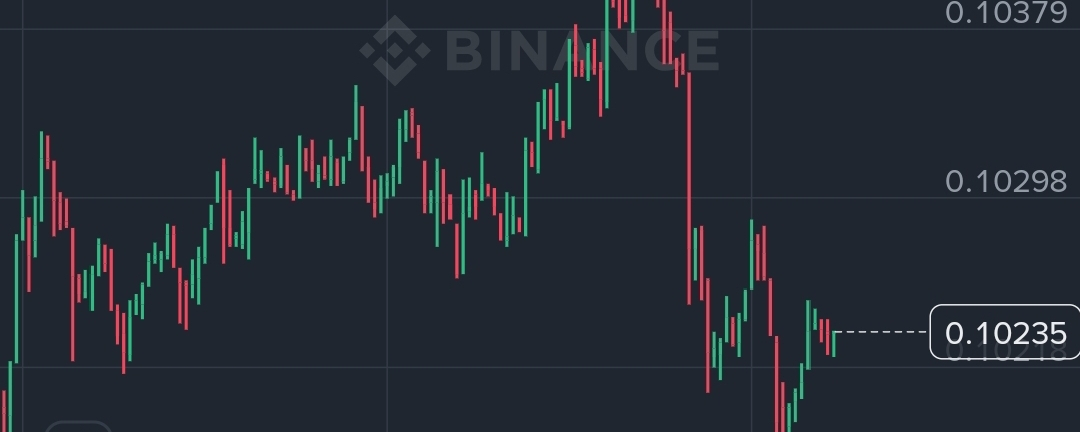
CCUSDT.... $$Canton Network ($CC ) is experiencing heightened upward market pressure and price volatility near the $0.10 baseline. The momentum is primarily driven by massive, history-making traditional finance (TradFi) production rollouts and ecosystem funding milestones.
Key Drivers Behind the $CC Token Momentum
DTCC Tokenization Service Launch: In a massive fundamental milestone on October 28, 2026, the Depository Trust & Clearing Corporation (DTCC)—which custodies over $114 trillion in assets—officially launched its live Tokenization Service (DTS). Canton Network was selected as a primary launch blockchain to handle "digital twin" ledger settlements for U.S. Treasuries and equities with banking giants like JPMorgan, Bank of America, and Fidelity.Burn-Mint Equilibrium Action: This massive wave of multi-trillion dollar institutional activity directly feeds into Canton's network utility. Since 100% of network fees on the platform are structurally burned, traders are heavily accumulating CC to front-run the massive long-term deflationary pressure expected from institutional transaction velocity.RedStone Grant and CAPS Rollout: The Canton Foundation explicitly approved a 15.8 million $CC token grant to Oracle provider RedStone. This funds the new Canton Access and Privacy Standard (CAPS), a specialized open-source pricing tool allowing global banks (including Goldman Sachs and BNY) to value private-market assets and tokenized funds securely without leaking settlement values.
#CantonNetwork #CC #realworldassets #cryptopump #TradFi
CCUSDT.... $$
Canton Network ($CC ) is experiencing heightened upward market pressure and price volatility near the $0.10 baseline. The momentum is primarily driven by massive, history-making traditional finance (TradFi) production rollouts and ecosystem funding milestones.
Key Drivers Behind the $CC Token Momentum
DTCC Tokenization Service Launch: In a massive fundamental milestone on October 28, 2026, the Depository Trust & Clearing Corporation (DTCC)—which custodies over $114 trillion in assets—officially launched its live Tokenization Service (DTS). Canton Network was selected as a primary launch blockchain to handle "digital twin" ledger settlements for U.S. Treasuries and equities with banking giants like JPMorgan, Bank of America, and Fidelity.Burn-Mint Equilibrium Action: This massive wave of multi-trillion dollar institutional activity directly feeds into Canton's network utility. Since 100% of network fees on the platform are structurally burned, traders are heavily accumulating CC to front-run the massive long-term deflationary pressure expected from institutional transaction velocity.RedStone Grant and CAPS Rollout: The Canton Foundation explicitly approved a 15.8 million $CC token grant to Oracle provider RedStone. This funds the new Canton Access and Privacy Standard (CAPS), a specialized open-source pricing tool allowing global banks (including Goldman Sachs and BNY) to value private-market assets and tokenized funds securely without leaking settlement values.
#CantonNetwork #CC #realworldassets #cryptopump #TradFi
101

·
--
Uber put its weekend cash to work—a pilot on Canton Network with HSBC and Franklin Templeton: using tokenized deposits to buy a tokenized money market fund on Thursday, then selling some on Sunday, earning about 1.5 extra days of yield. Traditional corporate treasuries are already moving to 24/7 settlement. The RWA wave is really taking shape.
#代币化 #RWA #CantonNetwork
#代币化 #RWA #CantonNetwork
UBERUS-0.63%
2

·
--
Cancore raised $7.2 million in a seed round. Its goal isn’t to build “yet another cross-chain bridge,” but to solve the liquidity coordination problem for tokenized assets.
Built on Canton Network, the protocol positions itself as a non-custodial cross-chain trading and liquidity layer. On one side, it connects Canton-native assets and tokenized RWAs; on the other, it taps into liquidity across public chains including Ethereum, Arbitrum, BNB Chain, and TRON. Key features include atomic settlement, smart routing, self-custody wallets, and trading capabilities designed for automated strategies and agents.
For institutional capital, the key considerations aren’t just returns, but whether trades can settle simultaneously, whether failures can trigger a full rollback, and whether assets remain in wallets under the owners’ control at all times. By making these core features defaults, Cancore signals that RWA infrastructure is moving beyond “issuing assets on-chain” toward making them tradable, routable, and composable.
Investors in this round include Paper Ventures, dao5, ArkStream Capital, and MH Ventures. The next things to watch are the mainnet launch, the scale of asset integrations, and whether traditional institutions and on-chain capital actually use the protocol to execute trades.
https://cancore.io/
#RWA #CantonNetwork #cross-chain
2

·
--
Cancore has completed a $7.2 million seed round, with participation from Paper Ventures, dao5, ArkStream Capital, and MH Ventures.
It targets one of the most awkward gaps in RWA tokenization today: assets are issued on permissioned chains, while liquidity remains on public blockchains, leaving the two markets disconnected.
Built on Canton Network, Cancore positions itself as the “liquidity operating system for tokenized finance,” connecting Canton-native assets, including tokenized RWAs, with liquidity on public blockchains such as Ethereum, Arbitrum, BNB Chain, and TRON.
A few noteworthy design features:
1. Atomic settlement—both parties either complete the transaction simultaneously or it is rolled back entirely, eliminating counterparty risk in cross-chain transactions;
2. A non-custodial architecture and self-custody wallets, so control of assets always remains in users’ hands;
3. Smart routing, automated strategies, and agent-based trading, offering institutions and AI agents a composable entry point.
For the RWA narrative to move from “assets can be put on-chain” to “assets can be traded and circulated,” what’s missing is middleware at the settlement and liquidity layer. Whether Cancore can make it work in practice will depend on how quickly institutional asset providers come on board and whether public chains can offer genuine depth rather than TVL on paper.
#RWA #CantonNetwork #DeFi
1
Cancore has completed a $7.2 million seed round, with participation from Paper Ventures, dao5, ArkStream Capital, and MH Ventures.
It isn’t trying to build yet another blockchain. Instead, it aims to address the liquidity gap in tokenized assets: built on Canton Network, it connects institutional-grade native assets such as RWAs to public blockchains including Ethereum, Arbitrum, BNB Chain, and TRON. Through non-custodial wallets, smart routing, and atomic settlement, cross-chain transactions either complete simultaneously or roll back entirely.
The round’s significance lies in what happens as the volume of on-chain RWAs grows: the real bottlenecks will shift to settlement, routing, and composable liquidity. Cancore aims to build a “liquidity operating system for tokenized finance,” at the intersection of institutional on-chain finance and public-chain DeFi. Whether it succeeds will depend on the breadth of asset integrations, the depth of institutional partnerships, and the reliability of atomic settlement across complex, multi-chain environments.
#RWA #CantonNetwork #DeFi

·
--
For tokenized assets to truly go mainstream, what’s missing isn’t more blockchains—it’s a settlement layer that can seamlessly connect liquidity. Cancore has just completed a $7.2 million seed round, with participation from Paper Ventures, dao5, ArkStream Capital, and MH Ventures.
Built on Canton Network, it positions itself as the “liquidity operating system for tokenized finance”: connecting Canton-native assets and RWAs to liquidity on public blockchains including Ethereum, Arbitrum, BNB Chain, Robinhood Chain, and TRON, while offering non-custodial trading, smart routing, atomic settlement, automated strategies, and agent-based trading.
The key highlight is atomic settlement: either both sides complete the trade simultaneously, or the entire transaction is rolled back—reducing cross-chain execution and counterparty risk. As institutional RWAs move on-chain at an accelerating pace, this kind of infrastructure could become a vital conduit between traditional assets and DeFi liquidity.
#RWA #跨链 #CantonNetwork
5

New financing disclosure in Canton’s tokenized-finance space: The Block published an exclusive at 16:59:10 UTC reporting that Cancore raised $7.2M in seed funding at a $60M fully diluted valuation for its planned CNRX token. CEO Wasif Rashid told the outlet the round closed in mid-September, so this is a new disclosure—not a raise today. Paper Ventures, dao5, ArkStream Capital, X Ventures, MH Ventures and Proof of Talk backed it; Paper and dao5 took the largest allocations.
Cancore’s site describes a self-custody platform connecting Canton assets with public-chain liquidity; The Block reports Ethereum and other networks are supported. The financing terms are attributed to the CEO; I found no first-party funding announcement. CNRX is planned, and Binance Spot has no CNRX pair.
Sources: [The Block exclusive](https://www.theblock.co/news/deals/2026-10-27-canton-based-trading-platform-cancore-raises-7-2-million-60-million-token-valuation-431906); [Cancore product site](https://cancore.io).
This is a funding report, not a price catalyst. What matters most for tokenized finance: asset access, settlement, or liquidity routing?
Conclusion: The story concerns Cancore’s planned CNRX token, not an ETH price signal. $ETH is included only because Ethereum is one supported network; the chart is network context, not a proxy for CNRX. Official Binance ETH/USDT spot chart: https://www.binance.com/en/trade/ETH_USDT?type=spot. Check the chart for yourself, do your own research, and trade responsibly. #CantonNetwork #TokenizedFinance #CryptoFunding #Ethereum #RWA

36
·
--
The real bottleneck for tokenized finance isn’t whether assets can be put on-chain, but whether they can be traded and settled safely and quickly across chains once they are.
Cancore announced the completion of a $7.2M seed round, with participation from Paper Ventures, dao5, ArkStream Capital, MH Ventures, and others. Built on Canton Network, the project is positioning itself as the “liquidity operating system for tokenized finance,” connecting Canton-native assets and tokenized RWAs with liquidity on public blockchains including Ethereum, Arbitrum, BNB Chain, and TRON.
Key features include non-custodial trading, atomic settlement, smart routing, self-custody wallets, and automated strategies and agent-based trading. In short, institutional tokenized assets can seek liquidity across different networks while minimizing counterparty risk during execution.
I’m most focused on three things: whether real institutional assets can continue to come onboard, whether the security model for cross-chain settlement can withstand scrutiny, and whether liquidity aggregation can generate network effects. In the next phase of RWA, infrastructure may matter more than the assets themselves.
#RWA #CantonNetwork #DeFi
2
Cancore has completed a $7.2 million seed round, with participation from Paper Ventures, dao5, ArkStream Capital, and MH Ventures.
The project is a non-custodial cross-chain trading and liquidity protocol on Canton Network, which can also be thought of as a “liquidity operating system” for tokenized finance. It aims to solve a straightforward problem: how to securely connect native assets and tokenized RWAs in the Canton ecosystem to liquidity on public chains such as Ethereum, Arbitrum, BNB Chain, and TRON.
A key feature is atomic settlement: either both sides of a transaction complete simultaneously, or the entire transaction is rolled back, reducing cross-chain counterparty risk. Other features include smart routing, self-custodial wallets, automated strategies, and agent-based trading.
For now, the project is primarily focused on infrastructure. The team has not disclosed any token details. Key things to watch going forward are the scale of Canton asset integrations, public chain coverage, and actual settlement volume.
🔗 cancore.io
#RWA #跨链 #CantonNetwork

S&P Global Moves On Chain with Ripple
S&P Global completed a historic on chain swap using a tokenized index on the Canton Network. This follows the rollout of Ripple's new custodial gateway, signaling massive institutional interest in RWA.
#TokenizedRWA #CantonNetwork
S&P Global Moves On Chain with Ripple
S&P Global completed a historic on chain swap using a tokenized index on the Canton Network. This follows the rollout of Ripple's new custodial gateway, signaling massive institutional interest in RWA.
#TokenizedRWA #CantonNetwork
S&P Global completed a historic on chain swap using a tokenized index on the Canton Network. This follows the rollout of Ripple's new custodial gateway, signaling massive institutional interest in RWA.
#TokenizedRWA #CantonNetwork

64
DRW and Marex have completed the first OTC swap referencing a tokenized index via the Canton Network.
#TokenizedRWA #CantonNetwork
DRW and Marex have completed the first OTC swap referencing a tokenized index via the Canton Network.
#TokenizedRWA #CantonNetwork
#TokenizedRWA #CantonNetwork
21

·
--
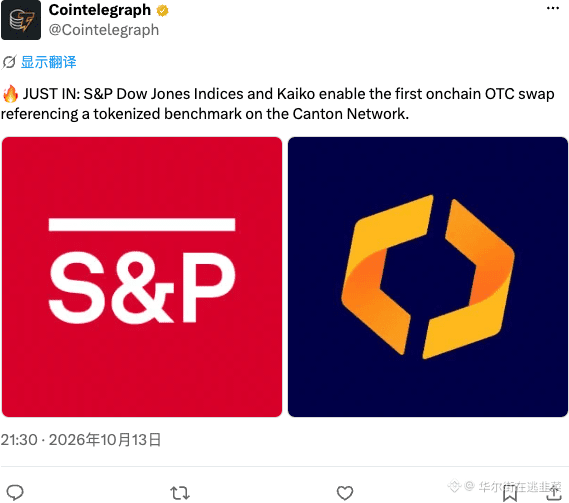
S&P Dow Jones Indices and Kaiko join forces to bring the first on-chain OTC swap to Canton Network, directly linked to a tokenized benchmark index.
Traditional financial benchmark indices are coming on-chain—and this is no small step. On-chain derivatives are expanding beyond crypto-native assets to include compliant benchmarks, adding another building block to the RWA narrative. Short-term sentiment may not move prices, but in the long run, this is laying the tracks for institutional investors to come aboard. The real signals have never been in the candlestick charts.
$BTC $ETH #RWA #CantonNetwork #S&PDowJones
259

·
--
🚨 LITECOIN IS MOVING TOWARD INSTITUTIONAL MARKETS
A new Litecoin development is taking shape on the Canton Network.
The Litecoin Foundation and Greywick Digital have signed an MOU to develop cLTC, a representation of Litecoin designed for institutional use cases on Canton. The project is currently progressing on Canton’s testnet, with a potential launch targeted for the end of 2026.
But this is important: cLTC is not live yet. The project still needs to finalize reserve addresses, attestations and launch arrangements before release.
Meanwhile, Litecoin Core v0.21.5.8 was released in September with improvements to MWEB validation, transaction relay, mining and resource management.
So the latest LTC story has two sides: institutional infrastructure is being built, while the core network keeps getting maintained.
Click the $LTC widget below and check the latest Litecoin developments.
$LTC
{future}(LTCUSDT)
.
.
#Litecoin #CantonNetwork #write2earn
Not financial advice. DYOR.
🚨 LITECOIN IS MOVING TOWARD INSTITUTIONAL MARKETS
A new Litecoin development is taking shape on the Canton Network.
The Litecoin Foundation and Greywick Digital have signed an MOU to develop cLTC, a representation of Litecoin designed for institutional use cases on Canton. The project is currently progressing on Canton’s testnet, with a potential launch targeted for the end of 2026.
But this is important: cLTC is not live yet. The project still needs to finalize reserve addresses, attestations and launch arrangements before release.
Meanwhile, Litecoin Core v0.21.5.8 was released in September with improvements to MWEB validation, transaction relay, mining and resource management.
So the latest LTC story has two sides: institutional infrastructure is being built, while the core network keeps getting maintained.
Click the $LTC widget below and check the latest Litecoin developments.
$LTC
.
.
#Litecoin #CantonNetwork #write2earn
Not financial advice. DYOR.

1
476

·
--
Bullish
Verified
New development for Litecoin
Litecoin Foundation signed a memorandum of understanding with Greywick Digital to explore introducing $LTC to the Canton Network via the $cLTC version.
Goal: Expand the use of Litecoin within an enterprise financial infrastructure built on blockchain.
📌 No launch date has been set yet.
Could this be an important step toward institutional adoption of $LTC ?
#LTC #Litecoin #CantonNetwork #crypto
2
174

·
--
Bullish
🔥RWA机构 public chain sees a surge in performance—$CC fees crush leading DeFi blue chips
According to DefiLlama’s latest data: Canton Network’s total fees across the network in the past 30 days reached as high as $58.48 million, with weekly fees of $12.03 million.
Fee revenue has already surpassed $UNI swap、$AAVE 、Morpho’s three major top-tier DeFi protocols CryptoBene.
Backed by more than 700 traditional financial institutions such as Goldman Sachs, JPMorgan, and DTCC, it focuses on compliant RWA asset tokenization and cross-border settlement. As business in tokenized U.S. Treasuries and securities continues to grow, fees keep rising. Fees use a CC burn mechanism, strengthening the deflationary fundamental outlook—Sina Finance.
{future}(MORPHOUSDT)
{future}(UNIUSDT)
{future}(CCUSDT)
Do you think Canton will become the biggest winner in the 2026 L1 race?
#CC #CantonNetwork #RWA #机构公链
🔥RWA机构 public chain sees a surge in performance—$CC fees crush leading DeFi blue chips
According to DefiLlama’s latest data: Canton Network’s total fees across the network in the past 30 days reached as high as $58.48 million, with weekly fees of $12.03 million.
Fee revenue has already surpassed $UNI swap、$AAVE 、Morpho’s three major top-tier DeFi protocols CryptoBene.
Backed by more than 700 traditional financial institutions such as Goldman Sachs, JPMorgan, and DTCC, it focuses on compliant RWA asset tokenization and cross-border settlement. As business in tokenized U.S. Treasuries and securities continues to grow, fees keep rising. Fees use a CC burn mechanism, strengthening the deflationary fundamental outlook—Sina Finance.
Do you think Canton will become the biggest winner in the 2026 L1 race?
#CC #CantonNetwork #RWA #机构公链
343

·
--

Article
Cross-Chain Liquidity Poised for Major ShiftThe fragmented nature of crypto liquidity has long been a bottleneck for institutional adoption and seamless asset transfer. Today, Interstice Digital's launch of its non-custodial cross-chain swap engine, powered by FalconX's deep liquidity, directly addresses this critical pain point. This isn't just another bridge; it's a foundational piece of infrastructure designed to unlock significant capital across disparate ecosystems. By connecting the Canton Network with Ethereum, Solana, and the Robinhood Chain, this engine promises to drastically reduce slippage and improve execution efficiency for large trades, a move that has been keenly anticipated by sophisticated market participants. The implication is clear: as friction decreases, capital will flow more freely, likely leading to increased trading volume and tighter spreads across these integrated networks. Smart money is already positioning itself to capitalize on this newfound efficiency.
Watch for increased activity on #CantonNetwork and $SOL as this engine gains traction. The ability to execute large cross-chain swaps without intermediaries has been a holy grail, and FalconX's involvement signals a serious commitment to institutional-grade liquidity. The real test will be scalability and security under heavy load, but the potential for improved capital efficiency across these key blockchains is immense.
The next major catalyst will be the onboarding of additional L1s and L2s into the Canton Network, which could further cement this engine's position as a dominant cross-chain liquidity solution. Keep a close eye on the $ETH ecosystem as inter-ecosystem capital flows begin to accelerate.
How quickly do you think this will impact the TVL across these integrated chains?
Cross-Chain Liquidity Poised for Major Shift
The fragmented nature of crypto liquidity has long been a bottleneck for institutional adoption and seamless asset transfer. Today, Interstice Digital's launch of its non-custodial cross-chain swap engine, powered by FalconX's deep liquidity, directly addresses this critical pain point. This isn't just another bridge; it's a foundational piece of infrastructure designed to unlock significant capital across disparate ecosystems. By connecting the Canton Network with Ethereum, Solana, and the Robinhood Chain, this engine promises to drastically reduce slippage and improve execution efficiency for large trades, a move that has been keenly anticipated by sophisticated market participants. The implication is clear: as friction decreases, capital will flow more freely, likely leading to increased trading volume and tighter spreads across these integrated networks. Smart money is already positioning itself to capitalize on this newfound efficiency.
Watch for increased activity on #CantonNetwork and $SOL as this engine gains traction. The ability to execute large cross-chain swaps without intermediaries has been a holy grail, and FalconX's involvement signals a serious commitment to institutional-grade liquidity. The real test will be scalability and security under heavy load, but the potential for improved capital efficiency across these key blockchains is immense.
The next major catalyst will be the onboarding of additional L1s and L2s into the Canton Network, which could further cement this engine's position as a dominant cross-chain liquidity solution. Keep a close eye on the $ETH ecosystem as inter-ecosystem capital flows begin to accelerate.
How quickly do you think this will impact the TVL across these integrated chains?
28

Grayscale is reportedly applying for a CantonNetwork spot ETF, and the market's focus is quickly shifting to its ecosystem token $CC. If the application moves into substantial progress, it could have two-fold effects: first, it would boost CantonNetwork's visibility in the compliant asset narrative; second, it might trigger early pricing of related ecosystem assets.
However, an ETF application doesn’t equal approval. After a short-term sentiment spike, there’s a risk of profit-taking volatility. Moving forward, we need to keep an eye on official document progress, regulatory feedback, and whether trading volume can sustain growth. Chasing the hype is fine, but don't overlook rhythm and position management.
#CantonNetwork #ETF #altcoins
Grayscale is reportedly applying for a CantonNetwork spot ETF, and the market's focus is quickly shifting to its ecosystem token $CC . If the application moves into substantial progress, it could have two-fold effects: first, it would boost CantonNetwork's visibility in the compliant asset narrative; second, it might trigger early pricing of related ecosystem assets.
However, an ETF application doesn’t equal approval. After a short-term sentiment spike, there’s a risk of profit-taking volatility. Moving forward, we need to keep an eye on official document progress, regulatory feedback, and whether trading volume can sustain growth. Chasing the hype is fine, but don't overlook rhythm and position management.
#CantonNetwork #ETF #altcoins
81
·
--
Grayscale's application for a Canton Network spot ETF is generating buzz, and the immediate focus isn't on whether it will get approved right away, but rather on whether traditional asset management firms are incorporating compliant chains and institutional-grade settlement networks into the new ETF narrative.
If the market starts to reprice around the Canton ecosystem, $CC could see an emotional premium; however, there's still uncertainty from the application to approval process, so before chasing highs, we should pay attention to volume continuity, funding rates, and the pacing of news confirmations.
#CantonNetwork #ETF #Altcoin
70

·
--
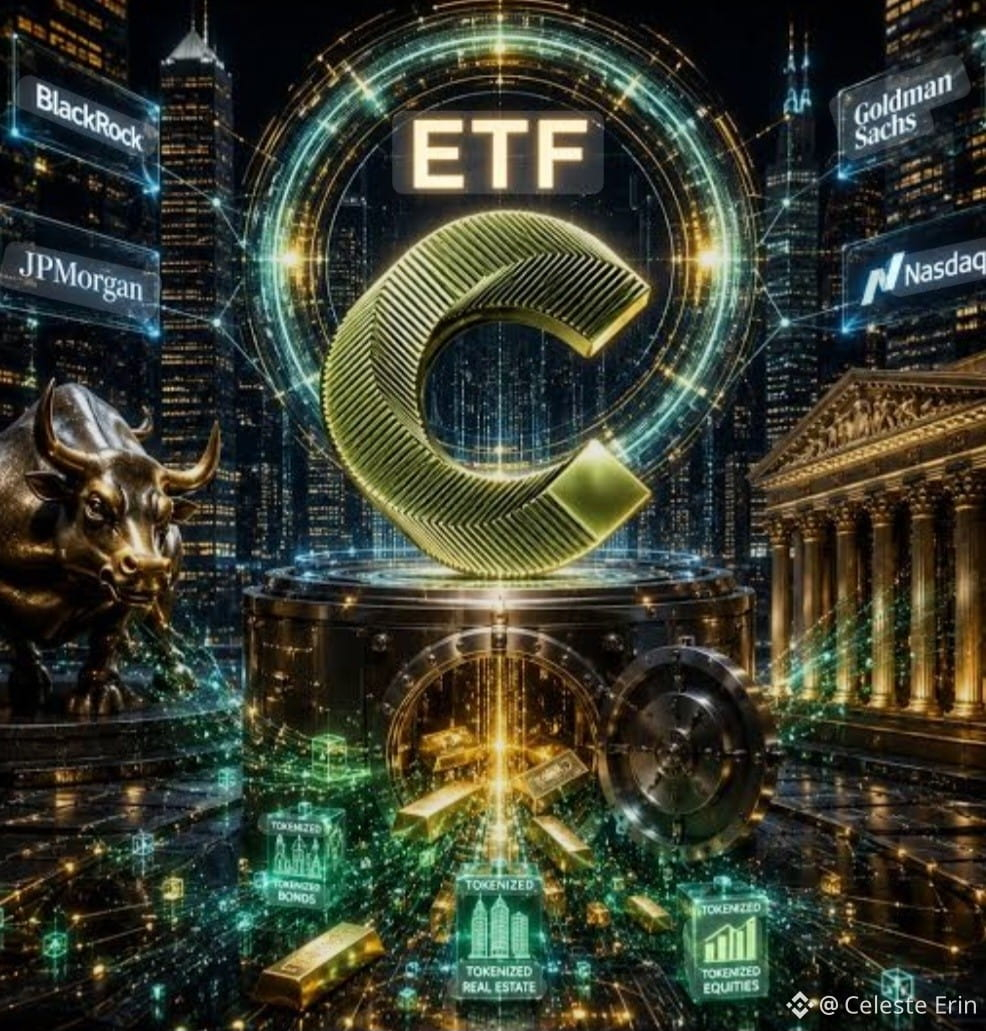
📈 GRAYSCALE FILES FOR CANTON ETF AND THE CC TOKEN DRIVES THE RALLY
Grayscale shook up the institutional market by officially filing Form S-1 with the SEC to launch a Spot ETF based on the Canton Network (CC), the blockchain network focused on privacy for major financial firms.
What you need to know:
📃 Key step: The application aims to allow Wall Street investors to trade the CC token in a regulated and direct manner.
⚡ Immediate reaction: Following the news of the paperwork, the CC token reacted strongly, jumping over 10% and surpassing the $0.16 mark.
🏛️ Institutional frenzy: With this move, Grayscale expands crypto funds into the realm of real-world assets (RWA) and corporate infrastructure.
🔥 The appetite from big funds continues to break barriers. Institutional gems are gaining ground against the traditional market.
#Grayscale #CantonNetwork #CryptoETF #Binance
📊 HOW DOES THE CC CHART REACT?
The strong buying momentum has broken immediate resistances. Whales and institutional money are starting to eye new support blocks for potential accumulation.
👇 Check the charts below to monitor prices in real-time 👇
$BTC $CC
{future}(CCUSDT)
{spot}(BTCUSDT)
📈 GRAYSCALE FILES FOR CANTON ETF AND THE CC TOKEN DRIVES THE RALLY
Grayscale shook up the institutional market by officially filing Form S-1 with the SEC to launch a Spot ETF based on the Canton Network (CC), the blockchain network focused on privacy for major financial firms.
What you need to know:
📃 Key step: The application aims to allow Wall Street investors to trade the CC token in a regulated and direct manner.
⚡ Immediate reaction: Following the news of the paperwork, the CC token reacted strongly, jumping over 10% and surpassing the $0.16 mark.
🏛️ Institutional frenzy: With this move, Grayscale expands crypto funds into the realm of real-world assets (RWA) and corporate infrastructure.
🔥 The appetite from big funds continues to break barriers. Institutional gems are gaining ground against the traditional market.
#Grayscale #CantonNetwork #CryptoETF #Binance
📊 HOW DOES THE CC CHART REACT?
The strong buying momentum has broken immediate resistances. Whales and institutional money are starting to eye new support blocks for potential accumulation.
👇 Check the charts below to monitor prices in real-time 👇
$BTC $CC
1
127
Log in to explore more content
Join global crypto users on Binance Square
⚡️ Get latest and useful information about crypto.
💬 Trusted by the world’s largest crypto exchange.
👍 Discover real insights from verified creators.
Email / Phone number
Trending Topics
1
#BinanceProcesses$4.65BWithdrawals
4,412 views
60 Discussing
2
#WithdrawalsBack: 15 networks live
4,591 views
102 Discussing
3
#BinanceUpdatesProofofReservesAddresses
87,735 views
1,307 Discussing
4
#BinanceToResumePhaseOneOfWithdrawals
127,191 views
1,446 Discussing
5
#BinanceHadAlreadyCovered$6BofHackLoss
8,731 views
129 Discussing
6
#FBIConfirmsNorthKoreaIsResponsibleForBinanceCryptoHack
43,875 views
140 Discussing
7
#CZDismissesClaimsBinanceHackWasPredicted
62,398 views
654 Discussing
8
#B14gReportsUnauthorizedTransferOfAbout97MCORE
19,772 views
322 Discussing
9
#USSpotETHETFsPost23StraightDaysOfNetOutflows
23,092 views
292 Discussing
10
#IntelHasItsWorstDaySince1974
113,407 views
902 Discussing